As nights turn cold in October and November, many poultry farmers hear it first: a rattling, gurgling sound from the chicks at night, sneezing all over the shed, and birds huddling near the brooder. In layer farms the first sign is often different: eggs suddenly drop, and the ones that come are thin-shelled, rough or misshapen. One common cause of both is infectious bronchitis (IB), a fast-spreading viral disease of chickens. IB has no medicine that kills the virus, so prevention, early recognition and good supportive care decide how much you lose. Here is how to spot it, how vaccination works, and what to do when it hits.
What is infectious bronchitis?
IB is caused by a coronavirus that affects only chickens. It is not the same virus as human COVID and does not infect people. The virus attacks the lining of the windpipe and airways first, and some strains also damage the kidneys or the egg-laying tract (oviduct).
- It spreads very fast through the air, from bird to bird, and on shoes, crates, egg trays, vehicles and people. A whole shed can show signs within 1–2 days.
- All ages are affected. Young chicks suffer most with breathing trouble; in laying hens the bigger loss is eggs.
- On its own IB kills few birds. The real losses come when bacteria such as E. coli and Mycoplasma enter the damaged airways. This mixed infection (often called CRD complex) is what causes high mortality, poor weight and heavy culls in broilers.
Why IB is worse in winter
In winter, farmers close curtains to keep the shed warm. That is right for the chicks, but with too little fresh air, ammonia from wet litter and dust build up. Ammonia damages the hair-like cells that keep the airways clean, so the virus and bacteria settle easily. Cold draughts at bird level, large temperature swings between day and night, and crowding all add stress. If your litter is getting wet and smelly, read our guide on wet litter in broilers in winter first, and keep a minimum fresh-air flow as explained in poultry ventilation management.
Signs of IB: broilers and chicks
- Rattling or gurgling sound (rales), best heard at night when the shed is quiet
- Sneezing, head shaking, gasping with an open beak and stretched neck
- Wet eyes, watery nasal discharge, sometimes slightly swollen face
- Chicks huddle near the heat, eat and drink less, and growth slows
- Kidney form: some strains damage the kidneys. Birds look dull and dehydrated, droppings are wet with a lot of white urates, and dead birds show swollen, pale kidneys
- Uneven flock, poor FCR, and more culls and condemnations at the end of the batch
For other causes of chick losses in the first days, see early chick mortality.
Signs of IB: laying hens
- Sudden egg drop, often over a few days, and it can take weeks to come back
- Thin, soft, rough or wrinkled shells, misshapen eggs and shell-less eggs
- Lighter shell colour in brown eggs
- Watery egg white: break an egg on a plate, and the thick white spreads out like water
- Mild breathing signs that many farmers miss
- False layers: if pullets get IB in the first 2–3 weeks of life, the oviduct can be damaged for good. These birds look healthy and have a red comb but never lay properly. This is one big reason to vaccinate chicks on time.
More on layer nutrition and production in our layer poultry farming guide.
IB or something else? Do not guess
Several winter diseases look alike. Rough guide only; a vet and a lab test (post-mortem, PCR or blood test) are needed to be sure:
| Disease | What points to it |
|---|---|
| Infectious bronchitis (IB) | Spreads through the whole shed in 1–2 days, rattling sound, egg drop with poor shells and watery whites, wet droppings with urates in kidney form |
| Ranikhet / Newcastle disease (ND) | Much higher deaths, greenish droppings, twisted neck, paralysis, bleeding spots in the gut |
| CRD (Mycoplasma) | Slower spread over weeks, long-lasting rattle, foamy eyes, often follows stress or IB |
| Infectious coryza | Swollen face and wattles, sticky bad-smelling nasal discharge |
| Avian influenza | Sudden heavy deaths, blue comb and wattles, swollen head. Report to the veterinary department at once |
Read more on respiratory diseases and CRD in poultry and Ranikhet disease.
1. Prevention starts with vaccination
Since no medicine kills the IB virus, vaccination is the main protection.
- Chicks: IB live vaccine is usually given in the first days of life (at the hatchery or on the farm), often combined with ND vaccine, with a booster later. Ask your hatchery what was already given to your chicks.
- Layers and breeders: live vaccines during rearing, then a killed (oil) vaccine before the start of lay, gives longer protection to the egg tract.
- Follow the schedule from your vet or vaccine company for your area, because the strains in each region differ. Our broiler 42 days medicine schedule and poultry vaccination guide show where IB fits.
- Vaccine handling matters as much as the vaccine. Keep it cold, use clean water without chlorine or sanitizer on vaccination day, give it in the morning, and make sure every bird drinks it within 1–2 hours. Use the full bottle once opened.
- Some birds sneeze for a few days after a live IB vaccine. That is a normal vaccine reaction. Good air quality keeps it mild.
2. Shed management in cold weather
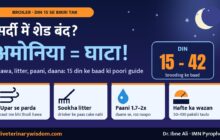
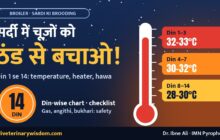
- Keep chicks warm at their level, but give a minimum fresh-air flow every hour, even on cold nights. If your eyes sting or you smell ammonia when you enter, it is too much. Our winter broiler brooding guide covers temperature by age.
- Stop cold draughts at bird level. Open curtains from the top, not the bottom.
- Keep the litter dry and loose. Remove wet patches near drinkers.
- Do not overcrowd. Follow all-in all-out, and clean and disinfect between batches.
- Biosecurity: separate footwear for each shed, limit visitors, and keep egg trays, crates and vehicles from other farms away from the sheds.
- Give clean, fresh drinking water. See water quality for poultry.
3. If IB hits: supportive care
Once birds are sick, the aim is to keep them eating and drinking, cut stress, and stop secondary infections from taking over.
- Raise brooding temperature a little for young chicks, but do not shut the shed completely.
- Keep feed and water easy to reach. Sick birds will not walk far.
- In the kidney form, make sure clean water is always available. Ask your vet about lowering protein or calcium in the feed for a short time.
- Give herbal supportive care with antioxidants and vitamins, early in the outbreak:
Viral outbreak support
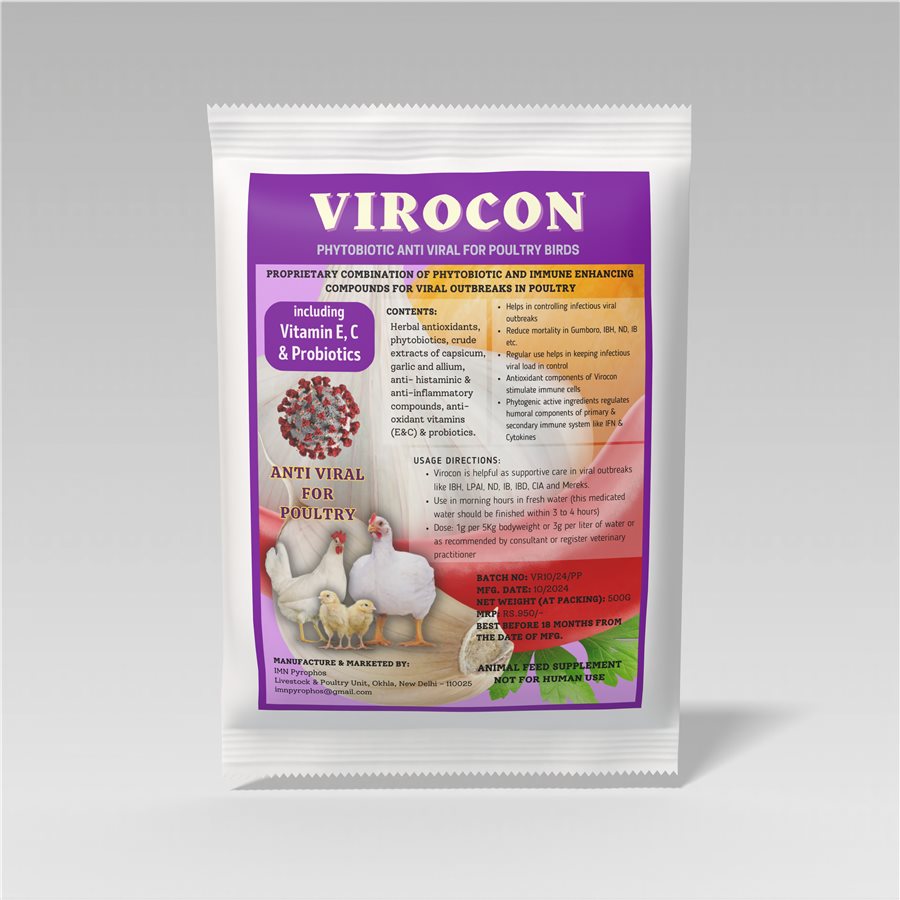
Virocon
Phytobiotic support with herbal antioxidants, capsicum, garlic and allium extracts, anti-inflammatory herbs, vitamins E and C and probiotics. Supportive care in viral outbreaks such as IB, ND, IBD, IBH, LPAI, CIA and Marek’s, and helps reduce mortality.
Dose: 1 g per 5 kg body weight or 3 g per litre of water. Give in the morning in fresh water so the birds finish it within 3–4 hours.
500 g ₹579MRP ₹950
Virocon is supportive care, not a vaccine and not a cure. It works best alongside vaccination and good shed management. Product details: Virocon.
- Antibiotics do not kill the IB virus. If E. coli or Mycoplasma come in on top of IB (rising deaths, cloudy air sacs, fibrin on the heart and liver at post-mortem), your vet may prescribe a suitable antibiotic. Do not start antibiotics on guesswork, and keep withdrawal periods before sale.
- Do not vaccinate a flock that is already sick unless your vet advises it.
4. Immunity: around vaccination and during an outbreak
IB spreads fast in winter, and stressed birds with weak immunity suffer the most. Strong immunity around vaccination helps the vaccine “take”, and during an outbreak it helps the flock fight back, along with Virocon and your vet’s advice.
Immune booster
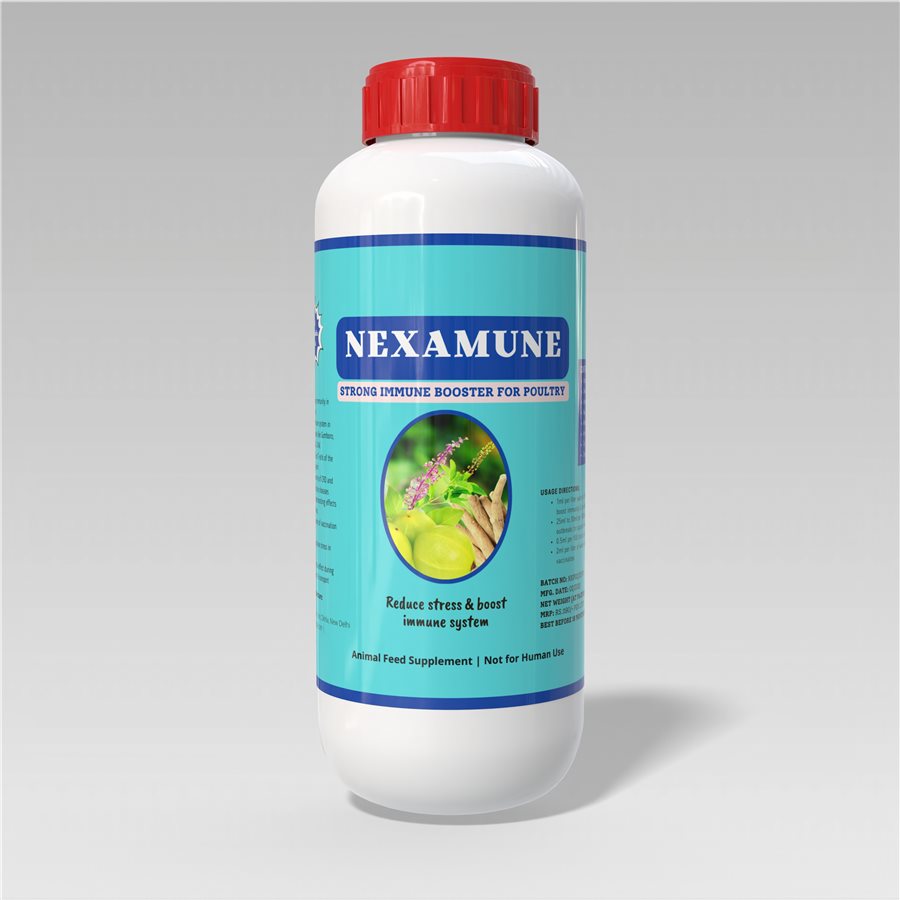
Nexamune
Vitamin E, selenium, amla, tulsi and ashwagandha extracts, vitamin C, vitamin D and niacin: an antioxidant shield that supports immunity. Supports the immune system in outbreaks like IB, ND, Gumboro, IBH and LPAI, reduces the severity of CRD and other respiratory problems, and helps reduce the chance of vaccination failure.
Dose: 1 ml per litre of water or 15 ml per 100 birds for immunity and stress; 2 ml per litre of water before and after vaccination; 25–30 ml per 100 birds during viral outbreaks.
1 L ₹644MRP ₹1,190
Product details: Nexamune. For layers, egg numbers and shell quality usually improve over several weeks after IB; eggs from birds damaged as young chicks may never fully recover, so watch for false layers and plan culling with your vet.
When to call the vet urgently
Call the vet straight away if:
- Daily deaths keep rising for 2 days or more
- You see twisted necks, paralysis or green droppings (think of Ranikhet)
- Many birds die suddenly with blue combs or swollen heads (report possible bird flu to the veterinary department)
- Egg production falls sharply in a laying flock
- Breathing signs last more than a week or come back after the batch looked better
Do not give medicines or injections on guesswork. Diagnosis first, then treatment.
IB winter checklist
| When | What to do |
|---|---|
| Before chicks arrive | Clean and disinfected shed, dry litter, ask the hatchery which vaccines were given |
| First 2–3 weeks | IB vaccine on schedule, warm at bird level, minimum fresh air every hour |
| Every night | Listen for rattling sounds, check for ammonia smell and cold draughts |
| Layers | Killed vaccine before lay, track daily egg count and shell quality |
| Outbreak | Vet and post-mortem first, herbal supportive care, no antibiotics on guesswork |
| Immunity | Boost immunity around vaccination and in outbreaks; watch egg numbers and false layers |
Also read: poultry respiratory diseases · winter broiler brooding · wet litter in winter · poultry ventilation · broiler 42 days medicine schedule · water quality for poultry · IMN products
मुर्गियों में इंफेक्शियस ब्रोंकाइटिस (IB): लक्षण, टीका और सर्दी में देखभाल
अक्टूबर-नवंबर में रातें ठंडी होते ही कई पोल्ट्री किसान सबसे पहले यह सुनते हैं: रात में चूज़ों से घर्र-घर्र, गुड़गुड़ की आवाज़, पूरे शेड में छींकें, और ब्रूडर के पास सिमटे हुए चूज़े। लेयर फार्म में पहला संकेत अक्सर अलग होता है: अंडे अचानक घट जाते हैं, और जो आते हैं उनका छिलका पतला, खुरदरा या टेढ़ा-मेढ़ा होता है। दोनों का एक आम कारण इंफेक्शियस ब्रोंकाइटिस (IB) है, मुर्गियों की तेज़ी से फैलने वाली वायरल बीमारी। IB के वायरस को मारने वाली कोई दवा नहीं है, इसलिए नुकसान कितना होगा यह बचाव, जल्दी पहचान और अच्छी सहायक देखभाल पर निर्भर करता है। इसे कैसे पहचानें, टीका कैसे काम करता है, और बीमारी आने पर क्या करें, यहाँ पढ़ें।
इंफेक्शियस ब्रोंकाइटिस क्या है?
IB एक कोरोना वायरस से होता है जो सिर्फ मुर्गियों को लगता है। यह इंसानों वाला COVID वायरस नहीं है और इंसानों को नहीं लगता। वायरस सबसे पहले साँस की नली और श्वास मार्ग की अंदरूनी परत पर हमला करता है, और कुछ स्ट्रेन किडनी या अंडा बनाने वाली नली (ओविडक्ट) को भी नुकसान पहुँचाते हैं।
- यह हवा से, एक पक्षी से दूसरे में, और जूतों, क्रेट, अंडे की ट्रे, गाड़ियों और लोगों के साथ बहुत तेज़ी से फैलता है। 1–2 दिन में पूरे शेड में लक्षण दिख सकते हैं।
- हर उम्र के पक्षी प्रभावित होते हैं। छोटे चूज़ों को साँस की सबसे ज़्यादा तकलीफ होती है; अंडे देने वाली मुर्गियों में बड़ा नुकसान अंडों का होता है।
- अकेले IB से कम पक्षी मरते हैं। असली नुकसान तब होता है जब E. coli और माइकोप्लाज़्मा जैसे बैक्टीरिया खराब हुई श्वास नली में घुस जाते हैं। यह मिला-जुला इन्फेक्शन (जिसे अक्सर CRD कॉम्प्लेक्स कहते हैं) ब्रॉयलर में ज़्यादा मौतें, कम वज़न और ज़्यादा छँटनी का कारण बनता है।
सर्दी में IB ज़्यादा क्यों बिगड़ता है
सर्दी में किसान शेड गर्म रखने के लिए पर्दे बंद कर देते हैं। चूज़ों के लिए यह सही है, पर ताज़ी हवा बहुत कम हो तो गीले लिटर से अमोनिया गैस और धूल जमा हो जाती है। अमोनिया साँस की नली को साफ रखने वाली बारीक रोएँदार कोशिकाओं को नुकसान पहुँचाती है, जिससे वायरस और बैक्टीरिया आसानी से बैठ जाते हैं। पक्षियों की ऊँचाई पर ठंडी हवा के झोंके, दिन-रात के तापमान में बड़ा फर्क और भीड़, ये सब तनाव बढ़ाते हैं। अगर आपका लिटर गीला और बदबूदार हो रहा है, तो पहले हमारी गाइड सर्दी में ब्रॉयलर का गीला लिटर पढ़ें, और पोल्ट्री वेंटिलेशन मैनेजमेंट में बताए अनुसार कम से कम ताज़ी हवा का बहाव बनाए रखें।
IB के लक्षण: ब्रॉयलर और चूज़े
- घर्र-घर्र या गुड़गुड़ की आवाज़, जो रात में शेड शांत होने पर सबसे अच्छी सुनाई देती है
- छींकना, सिर झटकना, चोंच खोलकर और गर्दन तानकर हाँफना
- गीली आँखें, नाक से पानी जैसा स्राव, कभी-कभी चेहरे पर हल्की सूजन
- चूज़े गर्मी के पास सिमट जाते हैं, कम खाते-पीते हैं, और बढ़वार धीमी हो जाती है
- किडनी वाला रूप: कुछ स्ट्रेन किडनी खराब करते हैं। पक्षी सुस्त और पानी की कमी वाले दिखते हैं, बीट गीली और उसमें बहुत ज़्यादा सफेद हिस्सा (यूरेट) होता है, और मरे पक्षियों में किडनी सूजी हुई और पीली दिखती है
- फ्लॉक का वज़न असमान, खराब FCR, और बैच के अंत में ज़्यादा छँटनी
शुरुआती दिनों में चूज़ों की मौत के दूसरे कारण जानने के लिए देखें चूज़ों की शुरुआती मृत्यु।
IB के लक्षण: अंडे देने वाली मुर्गियाँ
- अंडों में अचानक गिरावट, अक्सर कुछ ही दिनों में, और वापस आने में हफ्ते लग सकते हैं
- पतला, नरम, खुरदरा या झुर्रीदार छिलका, टेढ़े-मेढ़े अंडे और बिना छिलके के अंडे
- भूरे अंडों का रंग फीका पड़ना
- पानी जैसी सफेदी: एक अंडा प्लेट पर तोड़ें, गाढ़ी सफेदी पानी की तरह फैल जाती है
- साँस के हल्के लक्षण, जिन्हें कई किसान देख नहीं पाते
- फॉल्स लेयर (नकली लेयर): अगर पुलेट को ज़िंदगी के पहले 2–3 हफ्तों में IB हो जाए, तो ओविडक्ट हमेशा के लिए खराब हो सकती है। ये पक्षी स्वस्थ दिखते हैं और कलगी लाल होती है, पर कभी ठीक से अंडा नहीं देते। चूज़ों को समय पर टीका लगाने का यह एक बड़ा कारण है।
लेयर के पोषण और उत्पादन के बारे में और जानकारी हमारी लेयर पोल्ट्री फार्मिंग गाइड में है।
IB है या कुछ और? अंदाज़े से न चलें
सर्दी की कई बीमारियाँ एक जैसी दिखती हैं। नीचे सिर्फ मोटा अंदाज़ा है; पक्का पता करने के लिए डॉक्टर और लैब जाँच (पोस्टमार्टम, PCR या खून की जाँच) ज़रूरी है:
| बीमारी | किस बात से शक हो |
|---|---|
| इंफेक्शियस ब्रोंकाइटिस (IB) | 1–2 दिन में पूरे शेड में फैलना, घर्र-घर्र आवाज़, अंडों में गिरावट के साथ खराब छिलका और पानी जैसी सफेदी, किडनी वाले रूप में यूरेट वाली गीली बीट |
| रानीखेत / न्यूकैसल डिज़ीज़ (ND) | बहुत ज़्यादा मौतें, हरी बीट, गर्दन मुड़ना, लकवा, आँतों में खून के धब्बे |
| CRD (माइकोप्लाज़्मा) | हफ्तों में धीरे-धीरे फैलना, लंबे समय तक घर्र-घर्र, आँखों में झाग, अक्सर तनाव या IB के बाद |
| इंफेक्शियस कोराइज़ा | चेहरे और लटकन (वैटल) में सूजन, नाक से चिपचिपा बदबूदार स्राव |
| बर्ड फ्लू (एवियन इन्फ्लुएंज़ा) | अचानक भारी मौतें, कलगी और लटकन नीली, सिर में सूजन। तुरंत पशुपालन विभाग को सूचना दें |
और पढ़ें: पोल्ट्री में साँस की बीमारियाँ और CRD और रानीखेत बीमारी।
1. बचाव की शुरुआत टीके से
क्योंकि IB के वायरस को कोई दवा नहीं मारती, टीका ही मुख्य सुरक्षा है।
- चूज़े: IB का जीवित (लाइव) टीका आमतौर पर ज़िंदगी के पहले दिनों में (हैचरी में या फार्म पर) दिया जाता है, अक्सर ND टीके के साथ, और बाद में बूस्टर। अपनी हैचरी से पूछें कि आपके चूज़ों को कौन से टीके पहले ही लग चुके हैं।
- लेयर और ब्रीडर: पालन के दौरान लाइव टीके, फिर अंडा शुरू होने से पहले मरा हुआ (ऑयल) टीका, जो अंडा नली को लंबी सुरक्षा देता है।
- अपने इलाके के लिए अपने डॉक्टर या टीका कंपनी का शेड्यूल मानें, क्योंकि हर इलाके में स्ट्रेन अलग होते हैं। हमारा ब्रॉयलर 42 दिन दवा शेड्यूल और पोल्ट्री टीकाकरण गाइड बताते हैं कि IB कहाँ आता है।
- टीके को सँभालना उतना ही ज़रूरी है जितना टीका। उसे ठंडा रखें, टीके वाले दिन बिना क्लोरीन या सैनिटाइज़र वाला साफ पानी इस्तेमाल करें, सुबह दें, और पक्का करें कि हर पक्षी 1–2 घंटे में पी ले। बोतल खुलने के बाद पूरी इस्तेमाल करें।
- लाइव IB टीके के बाद कुछ पक्षी कुछ दिन छींकते हैं। यह टीके की सामान्य प्रतिक्रिया है। अच्छी हवा इसे हल्का रखती है।
2. ठंड में शेड का प्रबंधन
- चूज़ों को उनकी ऊँचाई पर गर्म रखें, पर ठंडी रातों में भी हर घंटे कम से कम ताज़ी हवा दें। शेड में घुसते ही आँखें जलें या अमोनिया की गंध आए, तो अमोनिया ज़्यादा है। उम्र के हिसाब से तापमान हमारी सर्दी में ब्रॉयलर ब्रूडिंग गाइड में है।
- पक्षियों की ऊँचाई पर ठंडी हवा के झोंके रोकें। पर्दे नीचे से नहीं, ऊपर से खोलें।
- लिटर सूखा और भुरभुरा रखें। ड्रिंकर के पास के गीले हिस्से निकाल दें।
- भीड़ न करें। ऑल-इन ऑल-आउट अपनाएँ, और दो बैच के बीच शेड साफ और कीटाणुरहित करें।
- बायोसिक्योरिटी: हर शेड के लिए अलग जूते, बाहरी लोगों का आना कम, और दूसरे फार्मों की अंडा ट्रे, क्रेट और गाड़ियाँ शेड से दूर रखें।
- साफ, ताज़ा पीने का पानी दें। देखें पोल्ट्री के लिए पानी की गुणवत्ता।
3. IB आ जाए तो: सहायक देखभाल
पक्षी बीमार हो जाएँ तो लक्ष्य है कि वे खाते-पीते रहें, तनाव कम हो, और दूसरे इन्फेक्शन हावी न हों।
- छोटे चूज़ों के लिए ब्रूडिंग तापमान थोड़ा बढ़ाएँ, पर शेड पूरी तरह बंद न करें।
- दाना और पानी आसानी से पहुँच में रखें। बीमार पक्षी दूर तक नहीं चलते।
- किडनी वाले रूप में साफ पानी हर समय मिलता रहे। कुछ समय के लिए दाने में प्रोटीन या कैल्शियम कम करने के बारे में अपने डॉक्टर से पूछें।
- बीमारी की शुरुआत में ही एंटीऑक्सीडेंट और विटामिन वाली हर्बल सहायक देखभाल दें:
वायरल बीमारी में सहारा
Virocon
हर्बल एंटीऑक्सीडेंट, कैप्सिकम, लहसुन और एलियम एक्सट्रैक्ट, सूजन-रोधी जड़ी-बूटियाँ, विटामिन E और C और प्रोबायोटिक वाला फाइटोबायोटिक सहारा। IB, ND, IBD, IBH, LPAI, CIA और मारेक्स जैसी वायरल बीमारियों में सहायक देखभाल, और मौतें कम करने में मदद करता है।
मात्रा: 1 ग्राम प्रति 5 किलो वज़न या 3 ग्राम प्रति लीटर पानी। सुबह ताज़े पानी में दें, ताकि पक्षी 3–4 घंटे में पूरा पी लें।
500 g ₹579MRP ₹950
Virocon सहायक देखभाल है, यह न टीका है और न इलाज। यह टीके और अच्छे शेड प्रबंधन के साथ सबसे अच्छा काम करता है। प्रोडक्ट की जानकारी: Virocon।
- एंटीबायोटिक IB के वायरस को नहीं मारती। अगर IB के ऊपर E. coli या माइकोप्लाज़्मा आ जाए (मौतें बढ़ना, पोस्टमार्टम में धुंधली एयर सैक, दिल और लिवर पर सफेद परत), तो डॉक्टर सही एंटीबायोटिक लिख सकते हैं। अंदाज़े से एंटीबायोटिक शुरू न करें, और बिक्री से पहले विदड्रॉल समय का पालन करें।
- पहले से बीमार फ्लॉक को टीका न लगाएँ, जब तक डॉक्टर न कहें।
4. इम्यूनिटी: टीके के आसपास और बीमारी फैलने पर
सर्दी में IB तेज़ी से फैलता है, और तनाव में कमज़ोर इम्यूनिटी वाले पक्षी सबसे ज़्यादा झेलते हैं। टीके के आसपास अच्छी इम्यूनिटी से टीका ठीक से असर करता है, और बीमारी फैलने पर Virocon और डॉक्टर की सलाह के साथ फ्लॉक को लड़ने में मदद मिलती है।
इम्यूनिटी बूस्टर
Nexamune
विटामिन E, सेलेनियम, आँवला, तुलसी और अश्वगंधा एक्सट्रैक्ट, विटामिन C, विटामिन D और नियासिन: इम्यूनिटी को सहारा देने वाली एंटीऑक्सीडेंट ढाल। IB, ND, गम्बोरो, IBH और LPAI जैसी बीमारियों में इम्यून सिस्टम को सहारा, CRD और साँस की दूसरी दिक्कतों की गंभीरता कम करता है, और टीका फेल होने की संभावना घटाने में मदद करता है।
मात्रा: इम्यूनिटी और तनाव के लिए 1 ml प्रति लीटर पानी या 15 ml प्रति 100 पक्षी; टीके से पहले और बाद 2 ml प्रति लीटर पानी; वायरल बीमारी फैलने पर 25–30 ml प्रति 100 पक्षी।
1 L ₹644MRP ₹1,190
प्रोडक्ट की जानकारी: Nexamune। लेयर में IB के बाद अंडों की संख्या और छिलके की क्वालिटी आमतौर पर कई हफ्तों में सुधरती है; जो पक्षी छोटी उम्र में खराब हो गए, वे शायद पूरी तरह ठीक न हों, इसलिए फॉल्स लेयर पर नज़र रखें और डॉक्टर के साथ छँटनी की योजना बनाएँ।
डॉक्टर को तुरंत कब बुलाएँ
तुरंत डॉक्टर को बुलाएँ अगर:
- रोज़ की मौतें 2 दिन या उससे ज़्यादा लगातार बढ़ रही हों
- गर्दन मुड़ना, लकवा या हरी बीट दिखे (रानीखेत का शक)
- बहुत से पक्षी अचानक मरें और कलगी नीली या सिर सूजा हो (संभावित बर्ड फ्लू की सूचना पशुपालन विभाग को दें)
- लेयर फ्लॉक में अंडा उत्पादन तेज़ी से गिरे
- साँस के लक्षण एक हफ्ते से ज़्यादा रहें या बैच ठीक दिखने के बाद फिर लौट आएँ
अंदाज़े से दवा या इंजेक्शन न दें। पहले जाँच, फिर इलाज।
सर्दी में IB से बचाव की चेकलिस्ट
| कब | क्या करें |
|---|---|
| चूज़े आने से पहले | साफ और कीटाणुरहित शेड, सूखा लिटर, हैचरी से पूछें कौन से टीके लगे हैं |
| पहले 2–3 हफ्ते | शेड्यूल पर IB टीका, पक्षियों की ऊँचाई पर गर्मी, हर घंटे कम से कम ताज़ी हवा |
| हर रात | घर्र-घर्र आवाज़ सुनें, अमोनिया की गंध और ठंडी हवा के झोंके जाँचें |
| लेयर | अंडा शुरू होने से पहले मरा हुआ टीका, रोज़ अंडों की गिनती और छिलके की क्वालिटी नोट करें |
| बीमारी आने पर | पहले डॉक्टर और पोस्टमार्टम, हर्बल सहायक देखभाल, अंदाज़े से एंटीबायोटिक नहीं |
| रिकवरी | आँत और भूख ठीक करें, FCR, अंडों की संख्या और फॉल्स लेयर पर नज़र रखें |
यह भी पढ़ें: पोल्ट्री में साँस की बीमारियाँ · सर्दी में ब्रॉयलर ब्रूडिंग · सर्दी में गीला लिटर · पोल्ट्री वेंटिलेशन · ब्रॉयलर 42 दिन दवा शेड्यूल · पोल्ट्री के लिए पानी · IMN प्रोडक्ट
Murgiyon me Infectious Bronchitis (IB): lakshan, teeka aur sardi me dekhbhal
October-November me raatein thandi hote hi kai poultry kisan sabse pehle ye sunte hain: raat me choozon se gharr-gharr, gudgud ki awaaz, poore shed me chheenkein, aur brooder ke paas simte hue chooze. Layer farm me pehla sanket aksar alag hota hai: ande achanak ghat jaate hain, aur jo aate hain unka chhilka patla, khurdura ya tedha-medha hota hai. Dono ka ek aam kaaran Infectious Bronchitis (IB) hai, murgiyon ki tezi se phailne wali viral beemari. IB ke virus ko maarne wali koi dawa nahi hai, isliye nuksan kitna hoga ye bachav, jaldi pehchaan aur achhi sahayak dekhbhal par nirbhar karta hai. Ise kaise pehchanein, teeka kaise kaam karta hai, aur beemari aane par kya karein, yahan padhiye.
Infectious Bronchitis kya hai?
IB ek corona virus se hota hai jo sirf murgiyon ko lagta hai. Ye insaano wala COVID virus nahi hai aur insaano ko nahi lagta. Virus sabse pehle saans ki nali ki andar ki parat par hamla karta hai, aur kuch strain kidney ya anda banane wali nali (oviduct) ko bhi nuksan pahunchate hain.
- Ye hawa se, ek pakshi se doosre me, aur jooton, crate, ande ki tray, gaadiyon aur logon ke saath bahut tezi se phailta hai. 1–2 din me poore shed me lakshan dikh sakte hain.
- Har umar ke pakshi prabhavit hote hain. Chhote choozon ko saans ki sabse zyada takleef hoti hai; ande dene wali murgiyon me bada nuksan andon ka hota hai.
- Akele IB se kam pakshi marte hain. Asli nuksan tab hota hai jab E. coli aur Mycoplasma jaise bacteria kharab hui saans ki nali me ghus jaate hain. Ye mila-jula infection (jise aksar CRD complex kehte hain) broiler me zyada maut, kam wazan aur zyada chhantni ka kaaran banta hai.
Sardi me IB zyada kyon bigadta hai
Sardi me kisan shed garam rakhne ke liye parde band kar dete hain. Choozon ke liye ye sahi hai, par taazi hawa bahut kam ho to geele litter se ammonia gas aur dhool jama ho jaati hai. Ammonia saans ki nali ko saaf rakhne wali baareek roendar koshikaon ko nuksan pahunchati hai, jisse virus aur bacteria aasani se baith jaate hain. Pakshiyon ki oonchai par thandi hawa ke jhonke, din-raat ke taapmaan me bada farq aur bheed, ye sab tanaav badhate hain. Agar aapka litter geela aur badboodaar ho raha hai, to pehle hamari guide sardi me broiler ka geela litter padhiye, aur poultry ventilation management me bataye anusaar kam se kam taazi hawa ka bahaav banaye rakhiye.
IB ke lakshan: broiler aur chooze
- Gharr-gharr ya gudgud ki awaaz, jo raat me shed shaant hone par sabse achhi sunai deti hai
- Chheenkna, sir jhatakna, chonch khol kar aur gardan taan kar haanfna
- Geeli aankhein, naak se paani jaisa srav, kabhi-kabhi chehre par halki soojan
- Chooze garmi ke paas simat jaate hain, kam khate-peete hain, aur badhwaar dheemi ho jaati hai
- Kidney wala roop: kuch strain kidney kharab karte hain. Pakshi sust aur paani ki kami wale dikhte hain, beet geeli aur usme bahut zyada safed hissa (urate) hota hai, aur mare pakshiyon me kidney sooji hui aur peeli dikhti hai
- Flock ka wazan asmaan, kharab FCR, aur batch ke ant me zyada chhantni
Shuruaati dinon me choozon ki maut ke doosre kaaran jaanne ke liye dekhiye choozon ki shuruaati mrityu.
IB ke lakshan: ande dene wali murgiyan
- Andon me achanak giravat, aksar kuch hi dinon me, aur wapas aane me hafte lag sakte hain
- Patla, naram, khurdura ya jhurridaar chhilka, tedhe-medhe ande aur bina chhilke ke ande
- Bhoore andon ka rang pheeka padna
- Paani jaisi safedi: ek anda plate par todiye, gaadhi safedi paani ki tarah phail jaati hai
- Saans ke halke lakshan, jinhe kai kisan dekh nahi paate
- False layer (nakli layer): agar pullet ko zindagi ke pehle 2–3 hafton me IB ho jaye, to oviduct hamesha ke liye kharab ho sakti hai. Ye pakshi swasth dikhte hain aur kalgi laal hoti hai, par kabhi theek se anda nahi dete. Choozon ko samay par teeka lagane ka ye ek bada kaaran hai.
Layer ke poshan aur utpadan ke baare me aur jaankari hamari layer poultry farming guide me hai.
IB hai ya kuch aur? Andaaze se mat chaliye
Sardi ki kai beemariyan ek jaisi dikhti hain. Neeche sirf mota andaaza hai; pakka pata karne ke liye doctor aur lab jaanch (postmortem, PCR ya khoon ki jaanch) zaroori hai:
| Beemari | Kis baat se shak ho |
|---|---|
| Infectious Bronchitis (IB) | 1–2 din me poore shed me phailna, gharr-gharr awaaz, andon me giravat ke saath kharab chhilka aur paani jaisi safedi, kidney wale roop me urate wali geeli beet |
| Ranikhet / Newcastle Disease (ND) | Bahut zyada maut, hari beet, gardan mudna, lakwa, aanton me khoon ke dhabbe |
| CRD (Mycoplasma) | Hafton me dheere-dheere phailna, lambe samay tak gharr-gharr, aankhon me jhaag, aksar tanaav ya IB ke baad |
| Infectious coryza | Chehre aur latkan (wattle) me soojan, naak se chipchipa badboodaar srav |
| Bird flu (avian influenza) | Achanak bhaari maut, kalgi aur latkan neeli, sir me soojan. Turant pashupalan vibhag ko soochna dijiye |
Aur padhiye: poultry me saans ki beemariyan aur CRD aur Ranikhet beemari.
1. Bachav ki shuruaat teeke se
Kyonki IB ke virus ko koi dawa nahi maarti, teeka hi mukhya suraksha hai.
- Chooze: IB ka live teeka aam taur par zindagi ke pehle dinon me (hatchery me ya farm par) diya jaata hai, aksar ND teeke ke saath, aur baad me booster. Apni hatchery se poochhiye ki aapke choozon ko kaun se teeke pehle hi lag chuke hain.
- Layer aur breeder: paalan ke dauraan live teeke, phir anda shuru hone se pehle killed (oil) teeka, jo anda nali ko lambi suraksha deta hai.
- Apne ilaake ke liye apne doctor ya teeka company ka schedule maaniye, kyonki har ilaake me strain alag hote hain. Hamara broiler 42 din dawa schedule aur poultry teekakaran guide batate hain ki IB kahan aata hai.
- Teeke ko sambhalna utna hi zaroori hai jitna teeka. Use thanda rakhiye, teeke wale din bina chlorine ya sanitizer wala saaf paani istemal kariye, subah dijiye, aur pakka kariye ki har pakshi 1–2 ghante me pee le. Bottle khulne ke baad poori istemal kariye.
- Live IB teeke ke baad kuch pakshi kuch din chheenkte hain. Ye teeke ki saamanya pratikriya hai. Achhi hawa ise halka rakhti hai.
2. Thand me shed ka prabandhan
- Choozon ko unki oonchai par garam rakhiye, par thandi raaton me bhi har ghante kam se kam taazi hawa dijiye. Shed me ghuste hi aankhein jalein ya ammonia ki gandh aaye, to ammonia zyada hai. Umar ke hisaab se taapmaan hamari sardi me broiler brooding guide me hai.
- Pakshiyon ki oonchai par thandi hawa ke jhonke rokiye. Parde neeche se nahi, upar se kholiye.
- Litter sookha aur bhurbhura rakhiye. Drinker ke paas ke geele hisse nikaal dijiye.
- Bheed mat kariye. All-in all-out apnaiye, aur do batch ke beech shed saaf aur keetanurahit kariye.
- Biosecurity: har shed ke liye alag joote, baahri logon ka aana kam, aur doosre farmon ki anda tray, crate aur gaadiyan shed se door rakhiye.
- Saaf, taaza peene ka paani dijiye. Dekhiye poultry ke liye paani ki quality.
3. IB aa jaye to: sahayak dekhbhal
Pakshi beemar ho jaayein to lakshya hai ki ve khate-peete rahein, tanaav kam ho, aur doosre infection haavi na hon.
- Chhote choozon ke liye brooding taapmaan thoda badhaiye, par shed poori tarah band mat kariye.
- Daana aur paani aasani se pahunch me rakhiye. Beemar pakshi door tak nahi chalte.
- Kidney wale roop me saaf paani har samay milta rahe. Kuch samay ke liye daane me protein ya calcium kam karne ke baare me apne doctor se poochhiye.
- Beemari ki shuruaat me hi antioxidant aur vitamin wali herbal sahayak dekhbhal dijiye:
Viral beemari me sahara
Virocon
Herbal antioxidant, capsicum, lehsun aur allium extract, soojan-rodhi jadi-bootiyan, vitamin E aur C aur probiotic wala phytobiotic sahara. IB, ND, IBD, IBH, LPAI, CIA aur Marek’s jaisi viral beemariyon me sahayak dekhbhal, aur maut kam karne me madad karta hai.
Matra: 1 g prati 5 kg wazan ya 3 g prati litre paani. Subah taaze paani me dijiye, taaki pakshi 3–4 ghante me poora pee lein.
500 g ₹579MRP ₹950
Virocon sahayak dekhbhal hai, ye na teeka hai na ilaaj. Ye teeke aur achhe shed prabandhan ke saath sabse achha kaam karta hai. Product ki jaankari: Virocon.
- Antibiotic IB ke virus ko nahi maarti. Agar IB ke upar E. coli ya Mycoplasma aa jaye (maut badhna, postmortem me dhundhli air sac, dil aur liver par safed parat), to doctor sahi antibiotic likh sakte hain. Andaaze se antibiotic shuru mat kariye, aur bikri se pehle withdrawal samay ka paalan kariye.
- Pehle se beemar flock ko teeka mat lagaiye, jab tak doctor na kahein.
4. Immunity: teeke ke aas-paas aur beemari failne par
Sardi me IB tezi se failta hai, aur tanav me kamzor immunity wale pakshi sabse zyada jhelte hain. Teeke ke aas-paas achhi immunity se teeka theek se asar karta hai, aur beemari failne par Virocon aur doctor ki salah ke saath flock ko ladne me madad milti hai.
Immunity booster
Nexamune
Vitamin E, selenium, amla, tulsi aur ashwagandha extract, vitamin C, vitamin D aur niacin: immunity ko sahara dene wali antioxidant dhaal. IB, ND, Gumboro, IBH aur LPAI jaisi beemariyon me immune system ko sahara, CRD aur saans ki doosri dikkaton ki gambhirta kam karta hai, aur teeka fail hone ki sambhavna ghatane me madad karta hai.
Matra: Immunity aur tanav ke liye 1 ml prati litre paani ya 15 ml prati 100 pakshi; teeke se pehle aur baad 2 ml prati litre paani; viral beemari failne par 25–30 ml prati 100 pakshi.
1 L ₹644MRP ₹1,190
Product ki jaankari: Nexamune. Layer me IB ke baad andon ki sankhya aur chhilke ki quality aam taur par kai hafton me sudharti hai; jo pakshi chhoti umar me kharab ho gaye, ve shayad poori tarah theek na hon, isliye false layer par nazar rakhiye aur doctor ke saath chhantni ki yojana banaiye.
Doctor ko turant kab bulayein
Turant doctor ko bulaiye agar:
- Roz ki maut 2 din ya usse zyada lagataar badh rahi ho
- Gardan mudna, lakwa ya hari beet dikhe (Ranikhet ka shak)
- Bahut se pakshi achanak marein aur kalgi neeli ya sir sooja ho (sambhavit bird flu ki soochna pashupalan vibhag ko dijiye)
- Layer flock me anda utpadan tezi se gire
- Saans ke lakshan ek hafte se zyada rahein ya batch theek dikhne ke baad phir laut aayein
Andaaze se dawa ya injection mat dijiye. Pehle jaanch, phir ilaaj.
Sardi me IB se bachav ki checklist
| Kab | Kya karein |
|---|---|
| Chooze aane se pehle | Saaf aur keetanurahit shed, sookha litter, hatchery se poochhiye kaun se teeke lage hain |
| Pehle 2–3 hafte | Schedule par IB teeka, pakshiyon ki oonchai par garmi, har ghante kam se kam taazi hawa |
| Har raat | Gharr-gharr awaaz suniye, ammonia ki gandh aur thandi hawa ke jhonke jaanchiye |
| Layer | Anda shuru hone se pehle killed teeka, roz andon ki ginti aur chhilke ki quality note kariye |
| Beemari aane par | Pehle doctor aur postmortem, herbal sahayak dekhbhal, andaaze se antibiotic nahi |
| Recovery | Aant aur bhookh theek kariye, FCR, andon ki sankhya aur false layer par nazar rakhiye |
Ye bhi padhiye: poultry me saans ki beemariyan · sardi me broiler brooding · sardi me geela litter · poultry ventilation · broiler 42 din dawa schedule · poultry ke liye paani · IMN products