Overview of Water Quality for Poultry
- Importance of Water ( Water Quality Poultry) : Water is the most crucial nutrient for poultry, with birds drinking about twice the amount of feed consumed. Water is crucial for biological processes in birds, making up 50-70% of their body weight. Water quality affects the transmission of microbes, fungi, parasites, and pollutant. Good water quality is essential, especially in antibiotic-free production, as contaminants can affect performance.
- Water Quality Criteria: The two basic things are physicochemical and bacteriological criteria for water potability, emphasizing the need to understand water's chemical and biological characteristics at the source.
- Water Management Practices: Proper management includes tightly closing tanks, avoiding water stagnation, and ensuring the presence of active disinfectants like chlorine. Filtration and treatment systems are recommended to maintain water quality.
- Water Hardness: Hard water can lead to scale buildup and affect the effectiveness of medications. High magnesium sulfate levels can increase water consumption and cause wet droppings.
- Contaminants and Effects: High sulfate levels can cause laxative effects and interfere with mineral absorption. Iron can promote bacterial growth, leading to diarrhea.
- Total Dissolved Solids (TDS, tds level for poultry): High TDS levels, primarily from calcium, magnesium, and sodium salts, are common contaminants affecting poultry.
- Water Quality Factors: Important factors include color, taste, and odor. Water should be clear, tasteless, odorless, and colorless.
- Chemical Treatments: Chlorination is used to control bacterial contamination, with specific guidelines for its application. Monitoring chlorine and pH levels is essential for effective disinfection. A pH lower than 6.5 is critical for chlorine's effectiveness.
- Additional Indicators: Colors and odors can indicate specific contaminants, such as iron or hydrogen sulfide.
- pH and Turbidity: pH levels vary by water source, and high turbidity indicates contamination. Turbid water can be filtered to prevent clogging.
- Other Contaminants: Pesticides, heavy metals, and industrial residues are harder to detect and require costly testing.
- Potential Issues: High levels of iron and manganese can degrade water quality, affecting taste and chlorination effectiveness, and may lead to microbial growth in pipes.
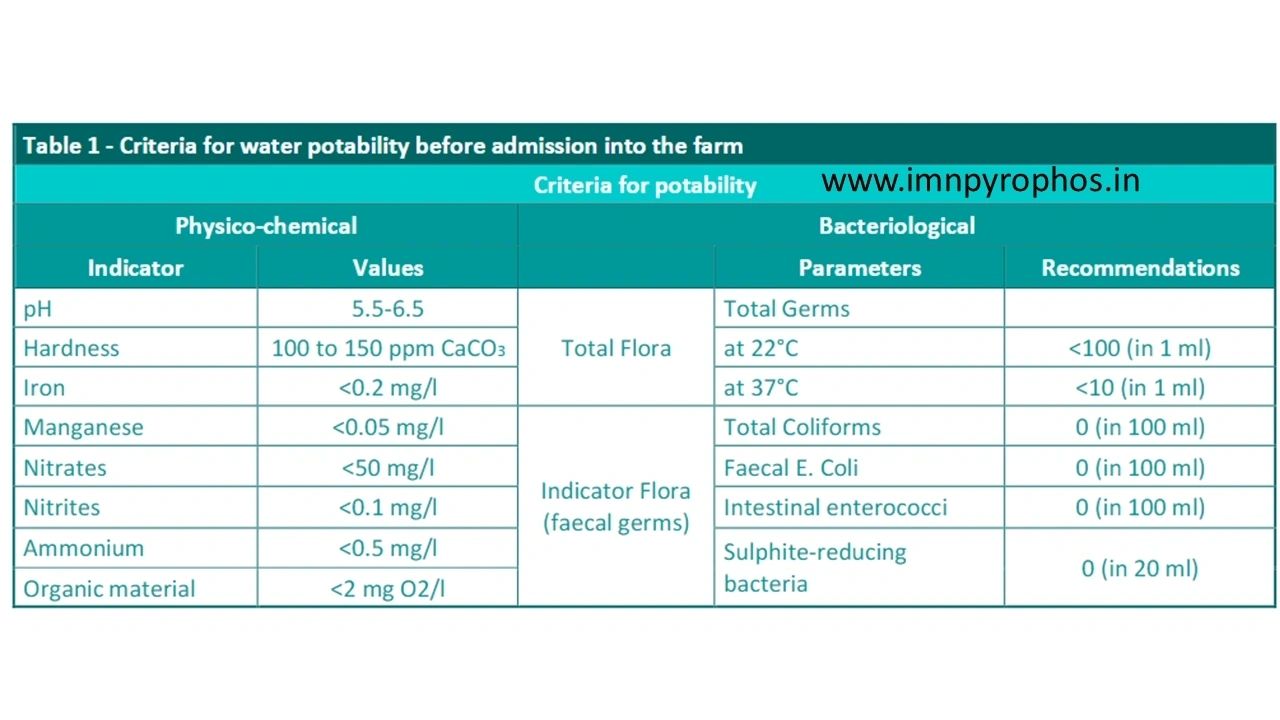
The table outlining the criteria for water potability before admission into the farm, divided into physico-chemical and bacteriological standards.
- Physico-chemical Indicators:
- pH: 5.5-6.5
- Hardness: 100 to 150 ppm CaCO₃
- Iron: <0.2 mg/l
- Manganese: <0.05 mg/l
- Nitrates: <50 mg/l
- Nitrites: <0.1 mg/l
- Ammonium: <0.5 mg/l
- Organic material: <2 mg O₂/l
- Bacteriological Parameters and Recommendations:
- Total Germs at 22°C: <100 in 1 ml
- Total Germs at 37°C: <10 in 1 ml
- Total Coliforms: 0 in 100 ml
- Faecal E. Coli: 0 in 100 ml
- Intestinal enterococci: 0 in 100 ml
- Sulphite-reducing bacteria: 0 in 20 ml
Important Results and Conclusions:
- The table sets stringent limits for both chemical and biological contaminants to ensure water safety.
- Zero tolerance for coliforms and E. coli highlights the emphasis on preventing gastrointestinal diseases.
- The specific thresholds for chemical indicators like nitrates and nitrites are crucial for preventing toxicity.
- This comprehensive standard ensures the water's safety and suitability for farm use, impacting overall farm health and productivity.
- Undesired effects in case components do not meet water quality standards
What is pH?
- pH is a way to measure how acidic or basic water is. It uses a scale from 0 to 14. A pH of 7 is neutral, like pure water. Below 7 is acidic, and above 7 is basic (or alkaline).
Ideal pH Range for Poultry (5.5 < pH < 6.5):
- More than 5.5 and less than 6.5 range is considered good for water quality. It means the water is slightly acidic but not too much. This balance is important for many biological processes in animals, like birds.
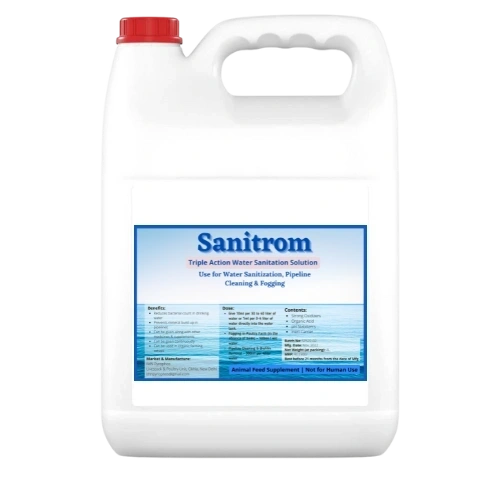
Our Product Sanitrom which disinfectant for poultry is also optimize pH of water Click here to buy.
Higher pH Values (> 8):
- Decreased Solubility of Some Antibiotics: When pH is too high, some medicines used to treat infections in animals might not dissolve well in water. This means they might not work as effectively.
- Inhibition of Vaccines: Vaccines, which help prevent diseases, might not work properly if the pH is too high.
- Increased Proliferation of Gram-Negative Bacteria: These are a type of bacteria that can cause diseases. High pH levels can make it easier for them to grow.
- Lowering the Effectiveness of Chlorination: Chlorination is a method to kill germs in water. If the pH is too high, chlorine might not work as well.
Lower pH Values (< 5):
- Urinary or Digestive Disorders: Very acidic water can cause health problems in animals, like issues with their stomach or bladder.
- Weakening of the Skeleton: Acidic water can affect bones, making them weaker.
- Decreased Solubility of Some Acidic Antibiotics: Just like with high pH, some medicines might not dissolve well if the water is too acidic.
- Corrosion: Acidic water can damage pipes and equipment by causing them to rust or wear away.
Why is pH Important?
- Keeping the pH in the right range is crucial for the health of animals and the effectiveness of treatments. It also helps maintain equipment and infrastructure by preventing damage.
Understanding Water Hardness in context of Poultry Farming in Simple Terms
What is Water Hardness?
- Water hardness is about how much calcium carbonate (CaCO3) is in the water. It's measured in parts per million (ppm). water tds for poultry.
Hardness Levels:
- 100 to 150 ppm CaCO3: This is a moderate level of hardness. It's like having just the right amount of sugar in your tea—not too much, not too little.
Higher Hardness (> 200 ppm):
- Lower Absorption of Trace Elements: When water is too hard, it can be harder for poultry to absorb important tiny nutrients, like iron or zinc, from their food.
- Decreased Solubility of Antibiotics and Vitamins: Hard water makes it difficult for some medicines and vitamins to dissolve. Imagine trying to dissolve a sugar cube in cold tea—it takes longer.
- Insoluble Complexes: Calcium and magnesium in hard water can stick to antibiotic molecules, making them useless. It's like glue sticking to a piece of paper.
- Scaling of Equipment: Hard water can leave lime deposits, like the white crust you see on old kettles. This can damage machines.
- Detergent Precipitation: Hard water can make soap less bubbly and effective, like when soap doesn't lather well in a bath.
Lower Hardness (< 60 ppm):
- Deficiencies in Trace Elements: If water is too soft, animals might not get enough of those tiny nutrients they need.
- Influence on Eggshell Quality: Soft water can affect how strong an eggshell is, like how a weak eggshell can break easily.
- Decreased Solubility of Sulphonamides: These are a type of medicine. In soft water, they don't dissolve well, like trying to mix oil and water.
- Corrosion: Soft water can eat away at metal pipes, like rusting an old car.
- Heavy Metal Solubilisation: Soft water can dissolve harmful metals, like lead, making them more dangerous. It's like sugar dissolving in tea, but with bad stuff instead of sugar.
By understanding these points, we can see how the hardness of water affects many things, from animal health to equipment maintenance.
Understanding Iron and Manganese in Water in Poultry Farming
Iron and Manganese Levels:
- Iron (< 0.2 mg/l) and Manganese (< 0.05 mg/l): These are the safe levels of iron and manganese in water. "mg/l" means milligrams per liter, which is a way to measure how much of a substance is in a certain amount of water.
- Higher Levels (Iron > 1 mg/l and/or Manganese > 0.15 mg/l): When the amount of iron is more than 1 mg/l or manganese is more than 0.15 mg/l, it becomes a problem.
Effects on Water Quality:
- Degradation of Appearance and Taste: High levels of iron and manganese can make water look and taste bad. The water might turn a rusty color, like when metal gets wet and rusty. It can also taste unpleasant, making poultry not want to drink it.
- Decreased Effectiveness of Chlorination: Chlorination is a process where chlorine is added to water to kill germs. If there is too much iron or manganese, chlorine doesn't work as well.
Impact on Water Pipes:
- Development of Microorganisms: When iron and manganese levels are high, tiny living things like bacteria can grow inside water pipes. These microorganisms can stick to the inside of the pipes, like how mold grows on old bread.
- Risk of Clogging: Over time, the buildup of iron, manganese, and microorganisms can block the pipes. This is similar to how hair and soap can clog a bathroom drain, stopping water from flowing smoothly.
By keeping iron and manganese levels low, we ensure that water stays clean, tastes good, and flows easily through pipes. This is important for both health and the proper functioning of water systems.
Understanding Nitrates and Nitrites in Water in Poultry Farming
Nitrates:
- What are Nitrates? Nitrates are a type of chemical found in water. They are often used in fertilizers to help plants grow. In water, they are measured in milligrams per liter (mg/l).
- Safe Levels: The safe level of nitrates in water is less than 50 mg/l. This means that if you have a liter of water, it should have less than 50 milligrams of nitrates to be considered safe.
- Higher Levels: If the nitrate level is higher than 50 mg/l, it can indicate that the water is contaminated. Contamination means that something harmful has gotten into the water.
- Health Effects: Drinking water with very high nitrate levels can cause digestive problems. This means it can upset poultry's stomach or cause other issues with their digestion.
- Impact on Vaccines: High nitrate levels can also make vaccines less effective. Vaccines are medicines that help prevent diseases, and if they don't work well, it can be a problem for health.
Nitrites:
- What are Nitrites? Nitrites are similar to nitrates but are even more reactive & harmful. They are also measured in mg/l in water.
- Safe Levels: The safe level of nitrites in water is less than 0.1 mg/l. This is a very small amount, showing that nitrites are more dangerous even at low levels.
- Higher Levels: If nitrite levels are higher, it often means there is a lot of organic matter in the water. Organic matter is anything that comes from living things, like plants or animals.
- Biofilm Development: High nitrite levels can help biofilms grow. A biofilm is a slimy layer of bacteria that sticks to surfaces, like the inside of pipes.
- Toxicity: Nitrites are toxic, which means they can be harmful or even deadly, even at low concentrations. This is why it's important to keep their levels very low in water.
By understanding these points, we can see why it's important to monitor and control nitrate and nitrite levels in water to keep it safe for drinking and other uses.
Understanding Ammonium & Organic Matter Contamination in Poultry Drinking Water
Ammonium Levels:
- Definition: Ammonium is a type of nitrogen found in water. It is often a sign of pollution.
- Safe Limit: The safe amount of ammonium in water is less than 0.5 milligrams per liter (mg/l).
- High Levels: If there is more ammonium than this, it usually means there is a lot of organic matter, like leaves or waste, in the water.
- Biofilm Development: High ammonium can help biofilms grow. Biofilms are slimy layers of bacteria that stick to surfaces, like the inside of pipes.
- Chlorination Issues: When biofilms grow, it makes it harder for chlorine, a chemical used to clean water, to work well. This means the water might not be as clean.
Organic Matter Levels:
- Definition: Organic matter is anything that was once alive, like plants or animals, that is now in the water.
- Safe Limit: The safe amount of organic matter is less than 2 milligrams of oxygen per liter (mg O2/l). This measures how much oxygen is needed to break down the organic matter.
- High Levels: If the organic matter is more than 5 mg O2/l, it is a sign of a problem. This is like having too many leaves in a pond, making it dirty.
- Investigating Contamination: When there is too much organic matter, it is important to find out why. It could be because surface water, like rain or river water, is getting into the water source. Or, it could be because biofilms are growing.
Examples and Analogies:
- Ammonium Example: Imagine a fish tank. If you don’t clean it, fish waste builds up, which is like having high ammonium levels.
- Organic Matter Example: Think of a compost pile. It’s full of leaves and food scraps, which is like having high organic matter in water.
- Biofilm Analogy: Biofilms are like the slimy stuff you find on rocks in a stream. They can make it hard for cleaners to work, just like they make it hard for chlorine to clean water.
By understanding these indicators, we can keep water safe and clean for everyone to use.
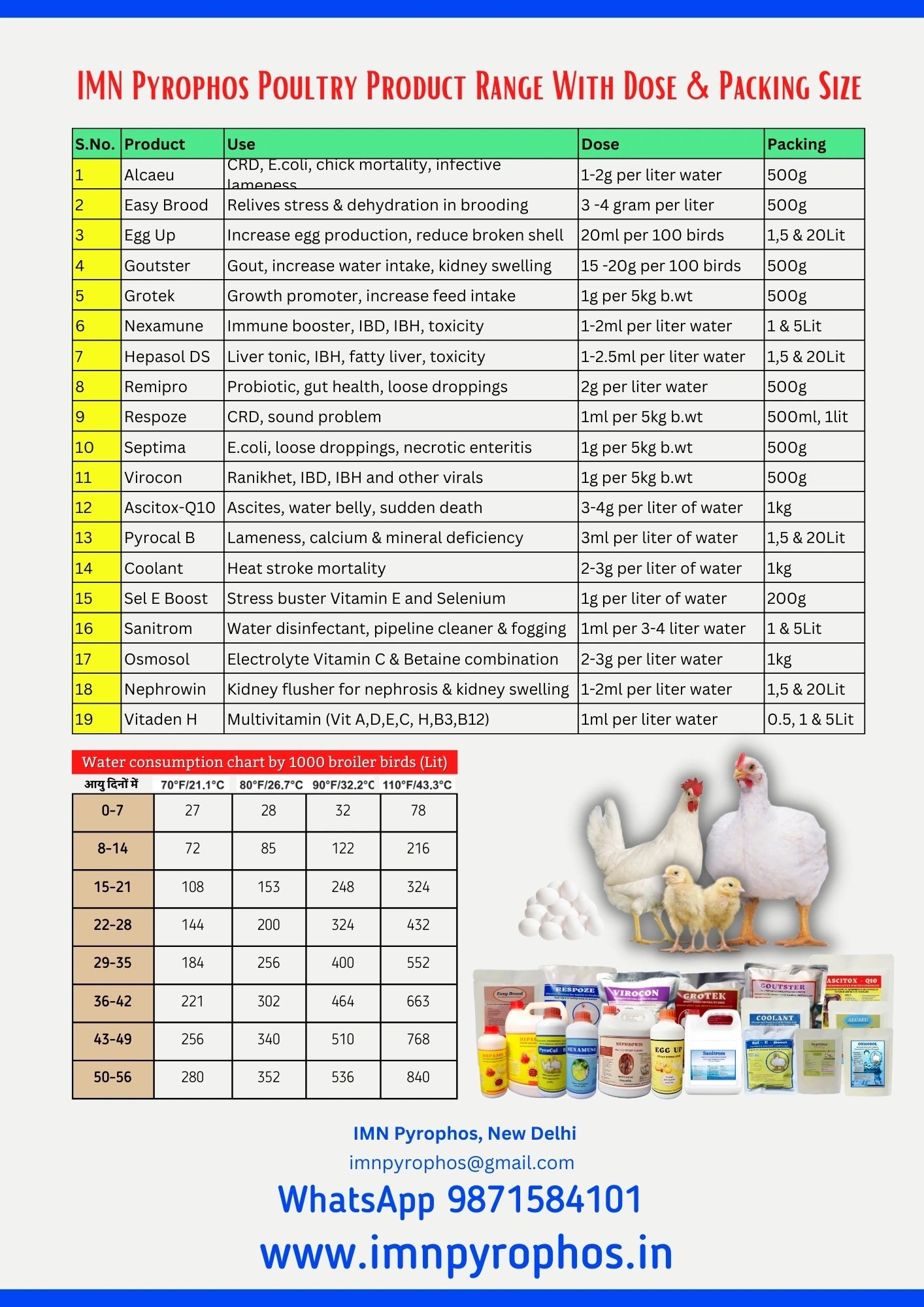
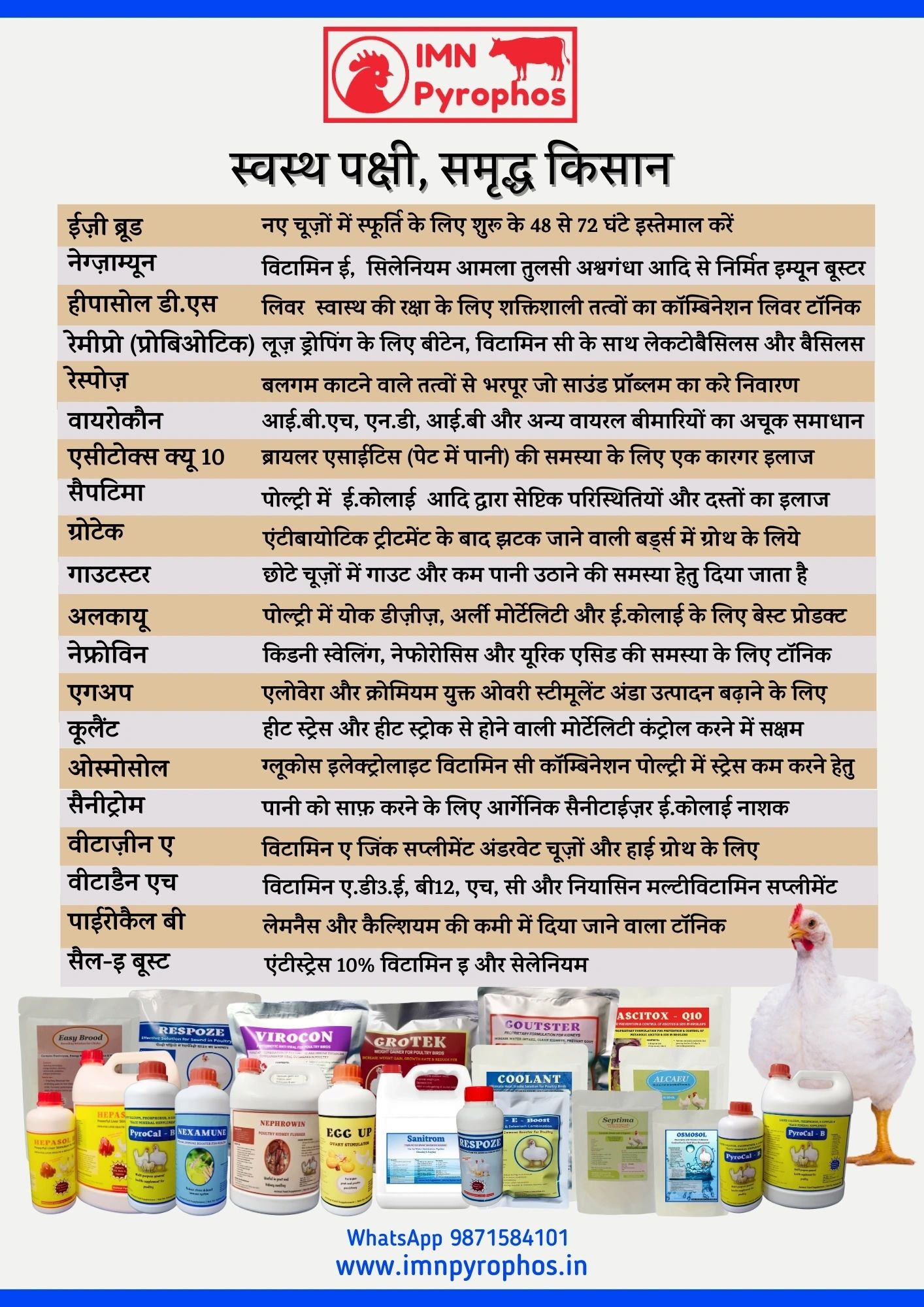
Hope this information would be very helpful for people doing poultry farming. My dear readers if you are doing poultry farming use our products for best results. Click here for poultry products.
Problem in your flock? Send photos of the birds and droppings on WhatsApp for a first opinion from Dr. Ibne Ali.
WhatsApp: 98715 84101पोल्ट्री के लिए पानी की क्वालिटी: एक नज़र में
- पानी का महत्व ( पोल्ट्री में पानी की क्वालिटी) : पोल्ट्री के लिए पानी सबसे ज़रूरी पोषक तत्व है; पक्षी जितना feed खाते हैं, उसका लगभग दोगुना पानी पीते हैं। पक्षियों के शरीर की जैविक प्रक्रियाओं के लिए पानी बहुत ज़रूरी है, और उनके शरीर के वज़न का 50-70% पानी होता है। पानी की क्वालिटी से कीटाणु, फंगस, परजीवी (parasites) और प्रदूषण फैलने पर असर पड़ता है। अच्छी क्वालिटी का पानी ज़रूरी है, ख़ासकर antibiotic-free उत्पादन में, क्योंकि गंदगी परफ़ॉर्मेंस पर असर डाल सकती है।
- पानी की क्वालिटी के मापदंड: पीने लायक पानी के लिए दो बुनियादी चीज़ें हैं: physicochemical (भौतिक-रासायनिक) और bacteriological (बैक्टीरिया से जुड़े) मापदंड। इसलिए ज़रूरी है कि पानी के स्रोत पर ही उसकी रासायनिक और जैविक ख़ासियतें समझी जाएँ।
- पानी के मैनेजमेंट के तरीके: सही मैनेजमेंट में टंकियों को कसकर बंद रखना, पानी को रुकने न देना, और chlorine जैसे असरदार disinfectant का मौजूद होना पक्का करना शामिल है। पानी की क्वालिटी बनाए रखने के लिए filtration और treatment सिस्टम की सलाह दी जाती है।
- पानी का खारापन (Hardness): खारे (hard) पानी से पाइप में पपड़ी (scale) जमती है और दवाइयों का असर कम हो सकता है। Magnesium sulfate ज़्यादा होने से पानी की खपत बढ़ सकती है और बीट गीली हो सकती है।
- गंदगी और उनके असर: Sulfate ज़्यादा होने से दस्त जैसा (laxative) असर हो सकता है और मिनरल्स का सोखना कम हो सकता है। Iron से बैक्टीरिया बढ़ सकते हैं, जिससे दस्त (diarrhea) हो सकता है।
- Total Dissolved Solids (TDS, पोल्ट्री के लिए TDS लेवल): TDS ज़्यादा होना आम समस्या है, जो मुख्य रूप से calcium, magnesium और sodium के नमक से होता है और पोल्ट्री पर असर डालता है।
- पानी की क्वालिटी के कारक: रंग, स्वाद और गंध ज़रूरी कारक हैं। पानी साफ़, बिना स्वाद, बिना गंध और बिना रंग का होना चाहिए।
- केमिकल ट्रीटमेंट: बैक्टीरिया की गंदगी कंट्रोल करने के लिए chlorination किया जाता है, जिसके इस्तेमाल के तय निर्देश हैं। असरदार disinfection के लिए chlorine और pH लेवल की जाँच ज़रूरी है। Chlorine के असर के लिए pH 6.5 से कम होना बहुत ज़रूरी है।
- दूसरे संकेत: पानी का रंग और गंध ख़ास गंदगी का संकेत दे सकते हैं, जैसे iron या hydrogen sulfide।
- pH और गंदलापन (Turbidity): pH पानी के स्रोत के हिसाब से अलग होता है, और ज़्यादा गंदलापन गंदगी का संकेत है। गंदले पानी को filter किया जा सकता है ताकि पाइप/निप्पल जाम न हों।
- दूसरी गंदगी: कीटनाशक (pesticides), heavy metals और फ़ैक्ट्री के अवशेष पकड़ना मुश्किल होता है और इनकी जाँच महँगी होती है।
- संभावित समस्याएँ: Iron और manganese ज़्यादा होने से पानी की क्वालिटी ख़राब हो सकती है, स्वाद और chlorination के असर पर फ़र्क पड़ता है, और पाइपों में कीटाणु बढ़ सकते हैं।
फ़ार्म में आने से पहले पानी पीने लायक है या नहीं, इसके मापदंडों की तालिका, जो physico-chemical और bacteriological स्टैंडर्ड में बँटी है।
- Physico-chemical संकेतक:
- pH: 5.5-6.5
- Hardness: 100 से 150 ppm CaCO₃
- Iron: <0.2 mg/l
- Manganese: <0.05 mg/l
- Nitrates: <50 mg/l
- Nitrites: <0.1 mg/l
- Ammonium: <0.5 mg/l
- Organic material: <2 mg O₂/l
- Bacteriological मापदंड और सुझाव:
- 22°C पर Total Germs: 1 ml में <100
- 37°C पर Total Germs: 1 ml में <10
- Total Coliforms: 100 ml में 0
- Faecal E. Coli: 100 ml में 0
- Intestinal enterococci: 100 ml में 0
- Sulphite-reducing bacteria: 20 ml में 0
ज़रूरी नतीजे और निष्कर्ष:
- पानी सुरक्षित रहे, इसके लिए यह तालिका रासायनिक और जैविक दोनों तरह की गंदगी की सख़्त सीमा तय करती है।
- Coliforms और E. coli के लिए ज़ीरो (बिल्कुल भी नहीं) की सीमा दिखाती है कि पेट और आंत की बीमारियाँ रोकने पर कितना ज़ोर है।
- Nitrates और nitrites जैसे रासायनिक संकेतकों की तय सीमाएँ ज़हरीलेपन (toxicity) से बचाने के लिए बहुत ज़रूरी हैं।
- यह पूरा स्टैंडर्ड पक्का करता है कि पानी फ़ार्म के इस्तेमाल के लिए सुरक्षित और सही है, जिसका असर पूरे फ़ार्म की सेहत और उत्पादन पर पड़ता है।
- अगर पानी के तत्व क्वालिटी स्टैंडर्ड पर खरे न उतरें तो होने वाले बुरे असर
pH क्या है?
- pH से पता चलता है कि पानी कितना अम्लीय (acidic) या क्षारीय (basic) है। इसका पैमाना 0 से 14 तक होता है। pH 7 neutral है, जैसे शुद्ध पानी। 7 से नीचे acidic है, और 7 से ऊपर basic (या alkaline)।
पोल्ट्री के लिए सही pH रेंज (5.5 < pH < 6.5):
- 5.5 से ज़्यादा और 6.5 से कम की रेंज पानी की क्वालिटी के लिए अच्छी मानी जाती है। इसका मतलब पानी थोड़ा acidic है, लेकिन बहुत ज़्यादा नहीं। यह संतुलन पक्षियों जैसे जानवरों की कई जैविक प्रक्रियाओं के लिए ज़रूरी है।
हमारा प्रोडक्ट Sanitrom, जो पोल्ट्री के लिए disinfectant है, पानी का pH भी सही करता है। ख़रीदने के लिए यहाँ क्लिक करें।
ज़्यादा pH (> 8):
- कुछ antibiotics कम घुलते हैं: pH बहुत ज़्यादा होने पर पक्षियों के इन्फेक्शन के इलाज की कुछ दवाइयाँ पानी में ठीक से नहीं घुलतीं। इसका मतलब वे पूरा असर नहीं करतीं।
- Vaccine पर असर: बीमारी से बचाने वाली vaccine, pH बहुत ज़्यादा होने पर ठीक से काम नहीं कर सकती।
- Gram-Negative बैक्टीरिया ज़्यादा बढ़ते हैं: ये बीमारी करने वाले बैक्टीरिया की एक किस्म है। ज़्यादा pH में ये आसानी से बढ़ते हैं।
- Chlorination का असर कम होना: Chlorination पानी के कीटाणु मारने का तरीका है। pH बहुत ज़्यादा हो तो chlorine ठीक से काम नहीं करता।
कम pH (< 5):
- पेशाब या पाचन की बीमारियाँ: बहुत acidic पानी से पक्षियों में पेट या मूत्राशय जैसी सेहत की दिक्कतें हो सकती हैं।
- हड्डियाँ कमज़ोर होना: Acidic पानी हड्डियों पर असर डालकर उन्हें कमज़ोर कर सकता है।
- कुछ acidic antibiotics कम घुलते हैं: जैसे ज़्यादा pH में, वैसे ही बहुत acidic पानी में भी कुछ दवाइयाँ ठीक से नहीं घुलतीं।
- Corrosion (गलन): Acidic पानी पाइप और उपकरणों में जंग लगाकर या उन्हें घिसकर नुकसान पहुँचा सकता है।
pH क्यों ज़रूरी है?
- पक्षियों की सेहत और इलाज के असर के लिए pH को सही रेंज में रखना बहुत ज़रूरी है। इससे उपकरण और ढाँचे भी नुकसान से बचे रहते हैं।
पोल्ट्री फ़ार्मिंग में पानी का खारापन (Hardness) आसान भाषा में
Water Hardness क्या है?
- Water hardness का मतलब है पानी में कितना calcium carbonate (CaCO3) है। इसे parts per million (ppm) में मापा जाता है। पोल्ट्री के लिए पानी का TDS।
Hardness के लेवल:
- 100 से 150 ppm CaCO3: यह hardness का मध्यम लेवल है। जैसे चाय में चीनी बिल्कुल सही हो, न ज़्यादा, न कम।
ज़्यादा Hardness (> 200 ppm):
- Trace elements कम सोखे जाते हैं: पानी बहुत खारा हो तो पोल्ट्री के लिए खाने से iron या zinc जैसे छोटे पर ज़रूरी पोषक तत्व सोखना मुश्किल हो जाता है।
- Antibiotics और vitamins कम घुलते हैं: खारे पानी में कुछ दवाइयाँ और vitamins घुलने में दिक्कत होती है। जैसे ठंडी चाय में चीनी का क्यूब घोलने की कोशिश करें, ज़्यादा समय लगता है।
- न घुलने वाले मिश्रण (Insoluble Complexes): खारे पानी का calcium और magnesium antibiotic के अणुओं से चिपककर उन्हें बेकार कर सकता है। जैसे गोंद काग़ज़ से चिपक जाता है।
- उपकरणों में पपड़ी जमना: खारे पानी से चूने की परत जम सकती है, जैसी पुरानी केतली में सफ़ेद पपड़ी दिखती है। इससे मशीनें ख़राब हो सकती हैं।
- Detergent का बेअसर होना: खारे पानी में साबुन कम झाग देता है और कम असर करता है, जैसे नहाते समय साबुन का झाग ठीक से न बनना।
कम Hardness (< 60 ppm):
- Trace elements की कमी: पानी बहुत नरम (soft) हो तो पक्षियों को ज़रूरी छोटे पोषक तत्व पूरे नहीं मिल पाते।
- अंडे के छिलके की क्वालिटी पर असर: नरम पानी अंडे के छिलके की मज़बूती पर असर डाल सकता है, जैसे कमज़ोर छिलका आसानी से टूट जाता है।
- Sulphonamides कम घुलते हैं: ये एक तरह की दवाई हैं। नरम पानी में ये ठीक से नहीं घुलतीं, जैसे तेल और पानी को मिलाने की कोशिश करना।
- Corrosion (गलन): नरम पानी धातु के पाइपों को खा सकता है, जैसे पुरानी गाड़ी में जंग लग जाती है।
- Heavy metals का घुलना: नरम पानी lead जैसी नुकसानदायक धातुओं को घोल सकता है, जिससे वे और ख़तरनाक हो जाती हैं। जैसे चाय में चीनी घुलती है, बस यहाँ चीनी की जगह बुरी चीज़ें घुलती हैं।
इन बातों को समझकर हम देख सकते हैं कि पानी का खारापन पक्षियों की सेहत से लेकर उपकरणों की देखभाल तक कई चीज़ों पर असर डालता है।
पोल्ट्री फ़ार्मिंग में पानी में Iron और Manganese
Iron और Manganese के लेवल:
- Iron (< 0.2 mg/l) और Manganese (< 0.05 mg/l): पानी में iron और manganese के ये सुरक्षित लेवल हैं। "mg/l" का मतलब है milligram प्रति लीटर, यानी तय मात्रा के पानी में कोई चीज़ कितनी है, यह मापने का तरीका।
- ज़्यादा लेवल (Iron > 1 mg/l और/या Manganese > 0.15 mg/l): जब iron 1 mg/l से ज़्यादा या manganese 0.15 mg/l से ज़्यादा हो, तो यह समस्या बन जाता है।
पानी की क्वालिटी पर असर:
- रंग-रूप और स्वाद ख़राब होना: Iron और manganese ज़्यादा होने से पानी देखने और स्वाद में ख़राब हो सकता है। पानी जंग जैसे रंग का हो सकता है, जैसे लोहा गीला होकर जंग खा जाता है। इसका स्वाद भी बुरा हो सकता है, जिससे पक्षी पानी पीना नहीं चाहते।
- Chlorination का असर कम होना: Chlorination में कीटाणु मारने के लिए पानी में chlorine डाला जाता है। Iron या manganese ज़्यादा हो तो chlorine ठीक से काम नहीं करता।
पानी के पाइपों पर असर:
- कीटाणुओं का बढ़ना: Iron और manganese ज़्यादा हों तो पाइपों के अंदर बैक्टीरिया जैसे छोटे जीव बढ़ सकते हैं। ये कीटाणु पाइप के अंदर चिपक जाते हैं, जैसे पुरानी ब्रेड पर फफूंद लग जाती है।
- पाइप जाम होने का खतरा: समय के साथ iron, manganese और कीटाणुओं के जमने से पाइप बंद हो सकते हैं। जैसे बाथरूम की नाली में बाल और साबुन फँसकर पानी का बहाव रोक देते हैं।
Iron और manganese को कम रखकर हम पक्का करते हैं कि पानी साफ़ रहे, स्वाद अच्छा रहे और पाइपों में आसानी से बहे। यह सेहत और पानी के सिस्टम के ठीक से चलने, दोनों के लिए ज़रूरी है।
पोल्ट्री फ़ार्मिंग में पानी में Nitrates और Nitrites
Nitrates:
- Nitrates क्या हैं? Nitrates पानी में पाया जाने वाला एक तरह का केमिकल है। पौधों की बढ़त के लिए ये अक्सर खाद (fertilizer) में इस्तेमाल होते हैं। पानी में इन्हें milligram प्रति लीटर (mg/l) में मापा जाता है।
- सुरक्षित लेवल: पानी में nitrates का सुरक्षित लेवल 50 mg/l से कम है। यानी एक लीटर पानी में 50 milligram से कम nitrates हों, तभी पानी सुरक्षित माना जाता है।
- ज़्यादा लेवल: अगर nitrate 50 mg/l से ज़्यादा हो, तो यह पानी के दूषित होने का संकेत हो सकता है। दूषित होने का मतलब है कि पानी में कोई नुकसानदायक चीज़ मिल गई है।
- सेहत पर असर: बहुत ज़्यादा nitrate वाला पानी पीने से पाचन की समस्याएँ हो सकती हैं। यानी पोल्ट्री का पेट ख़राब हो सकता है या पाचन में दूसरी दिक्कतें हो सकती हैं।
- Vaccine पर असर: Nitrate ज़्यादा होने से vaccine का असर भी कम हो सकता है। Vaccine बीमारियों से बचाने वाली दवा है, और अगर वह ठीक से काम न करे तो सेहत के लिए समस्या बन सकती है।
Nitrites:
- Nitrites क्या हैं? Nitrites, nitrates जैसे ही हैं, लेकिन और ज़्यादा reactive और नुकसानदायक हैं। इन्हें भी पानी में mg/l में मापा जाता है।
- सुरक्षित लेवल: पानी में nitrites का सुरक्षित लेवल 0.1 mg/l से कम है। यह बहुत छोटी मात्रा है, जिससे पता चलता है कि nitrites कम मात्रा में भी ज़्यादा ख़तरनाक हैं।
- ज़्यादा लेवल: Nitrite ज़्यादा हो तो अक्सर इसका मतलब है कि पानी में organic matter बहुत है। Organic matter यानी जीवित चीज़ों, जैसे पौधों या जानवरों, से आने वाली कोई भी चीज़।
- Biofilm बनना: ज़्यादा nitrite से biofilm बढ़ने में मदद मिलती है। Biofilm बैक्टीरिया की चिपचिपी परत है जो सतहों पर चिपक जाती है, जैसे पाइपों के अंदर।
- ज़हरीलापन: Nitrites ज़हरीले होते हैं, यानी कम मात्रा में भी नुकसानदायक या जानलेवा हो सकते हैं। इसीलिए पानी में इनका लेवल बहुत कम रखना ज़रूरी है।
इन बातों को समझकर हम देख सकते हैं कि पानी को पीने और दूसरे इस्तेमाल के लिए सुरक्षित रखने के लिए nitrate और nitrite के लेवल की जाँच और कंट्रोल क्यों ज़रूरी है।
पोल्ट्री के पीने के पानी में Ammonium और Organic Matter की गंदगी
Ammonium के लेवल:
- परिभाषा: Ammonium पानी में पाया जाने वाला nitrogen का एक रूप है। यह अक्सर प्रदूषण का संकेत होता है।
- सुरक्षित सीमा: पानी में ammonium की सुरक्षित मात्रा 0.5 milligram प्रति लीटर (mg/l) से कम है।
- ज़्यादा लेवल: इससे ज़्यादा ammonium हो तो आमतौर पर इसका मतलब है कि पानी में पत्तियाँ या कचरे जैसा बहुत सारा organic matter है।
- Biofilm बनना: ज़्यादा ammonium से biofilm बढ़ सकते हैं। Biofilm बैक्टीरिया की चिपचिपी परतें हैं जो सतहों पर चिपक जाती हैं, जैसे पाइपों के अंदर।
- Chlorination में दिक्कत: Biofilm बढ़ने से पानी साफ़ करने वाले केमिकल chlorine का ठीक से काम करना मुश्किल हो जाता है। इसका मतलब पानी उतना साफ़ नहीं रहता।
Organic Matter के लेवल:
- परिभाषा: Organic matter वह हर चीज़ है जो कभी जीवित थी, जैसे पौधे या जानवर, और अब पानी में है।
- सुरक्षित सीमा: Organic matter की सुरक्षित मात्रा 2 milligram oxygen प्रति लीटर (mg O2/l) से कम है। इससे मापा जाता है कि organic matter को तोड़ने के लिए कितनी oxygen चाहिए।
- ज़्यादा लेवल: Organic matter 5 mg O2/l से ज़्यादा हो तो यह समस्या का संकेत है। जैसे तालाब में बहुत ज़्यादा पत्तियाँ हों और वह गंदा हो जाए।
- गंदगी की जाँच: Organic matter बहुत ज़्यादा हो तो इसकी वजह पता करना ज़रूरी है। हो सकता है ऊपर का पानी, जैसे बारिश या नदी का पानी, पानी के स्रोत में मिल रहा हो। या फिर biofilm बढ़ रहे हों।
उदाहरण और तुलना:
- Ammonium का उदाहरण: एक मछली के टैंक के बारे में सोचें। अगर आप उसे साफ़ नहीं करते, तो मछलियों की गंदगी जमा होती जाती है, यह ज़्यादा ammonium जैसा है।
- Organic Matter का उदाहरण: खाद के ढेर (compost) के बारे में सोचें। वह पत्तियों और खाने के बचे हिस्सों से भरा होता है, यह पानी में ज़्यादा organic matter जैसा है।
- Biofilm की तुलना: Biofilm वैसी ही चिपचिपी चीज़ है जो नदी-नालों के पत्थरों पर दिखती है। ये साफ़ करने वाली चीज़ों का काम मुश्किल कर देते हैं, जैसे ये chlorine के लिए पानी साफ़ करना मुश्किल कर देते हैं।
इन संकेतकों को समझकर हम पानी को सबके इस्तेमाल के लिए सुरक्षित और साफ़ रख सकते हैं।
उम्मीद है यह जानकारी पोल्ट्री फ़ार्मिंग करने वालों के लिए बहुत काम की होगी। मेरे प्रिय पाठकों, अगर आप पोल्ट्री फ़ार्मिंग कर रहे हैं तो सबसे अच्छे नतीजों के लिए हमारे प्रोडक्ट इस्तेमाल करें। पोल्ट्री प्रोडक्ट्स के लिए यहाँ क्लिक करें।
फ़ार्म में कोई दिक्कत? पक्षियों और बीट की फ़ोटो WhatsApp पर भेजिए, डॉ. इब्ने अली से पहली राय लीजिए।
WhatsApp: 98715 84101Poultry ke liye paani ki quality: ek nazar me
- Paani ka mahatva ( Poultry me paani ki quality) : Poultry ke liye paani sabse zaroori nutrient hai; birds jitna feed khate hain, uska lagbhag double paani peete hain. Birds ke body ke biological processes ke liye paani bahut zaroori hai, aur unke body weight ka 50-70% paani hota hai. Paani ki quality se keetanu, fungus, parasites aur pollution failne par asar padta hai. Achhi quality ka paani zaroori hai, khaas kar antibiotic-free production me, kyunki gandagi performance par asar dal sakti hai.
- Paani ki quality ke criteria: Peene layak paani ke liye do basic cheezein hain: physicochemical aur bacteriological criteria. Isliye zaroori hai ki paani ke source par hi uski chemical aur biological khasiyat samjhi jaye.
- Paani ke management ke tareeke: Sahi management me tankiyon ko kaskar band rakhna, paani ko rukne na dena, aur chlorine jaise asardaar disinfectant ka hona pakka karna shamil hai. Paani ki quality banaye rakhne ke liye filtration aur treatment system ki salah di jati hai.
- Paani ka khara-pan (Hardness): Hard (khare) paani se pipe me scale (papdi) jamti hai aur dawaiyon ka asar kam ho sakta hai. Magnesium sulfate zyada hone se paani ki khapat badh sakti hai aur beet geeli ho sakti hai.
- Gandagi aur unke asar: Sulfate zyada hone se laxative (dast jaisa) asar ho sakta hai aur minerals ka absorption kam ho sakta hai. Iron se bacteria badh sakte hain, jisse diarrhea (dast) ho sakta hai.
- Total Dissolved Solids (TDS, poultry ke liye TDS level): TDS zyada hona aam problem hai, jo main roop se calcium, magnesium aur sodium ke namak se hota hai aur poultry par asar dalta hai.
- Paani ki quality ke factors: Rang, swad aur gandh zaroori factors hain. Paani saaf, bina swad, bina gandh aur bina rang ka hona chahiye.
- Chemical treatment: Bacteria ki gandagi control karne ke liye chlorination kiya jata hai, jiske use ki tay guidelines hain. Asardaar disinfection ke liye chlorine aur pH level check karna zaroori hai. Chlorine ke asar ke liye pH 6.5 se kam hona bahut zaroori hai.
- Doosre sign: Paani ka rang aur gandh khaas gandagi ka sign de sakte hain, jaise iron ya hydrogen sulfide.
- pH aur Turbidity (gandlapan): pH paani ke source ke hisaab se alag hota hai, aur zyada gandlapan gandagi ka sign hai. Gandle paani ko filter kiya ja sakta hai taaki pipe/nipple jam na hon.
- Doosri gandagi: Pesticides, heavy metals aur factory ke residues pakadna mushkil hota hai aur inki testing mehngi hoti hai.
- Possible problems: Iron aur manganese zyada hone se paani ki quality kharab ho sakti hai, swad aur chlorination ke asar par farak padta hai, aur pipes me keetanu badh sakte hain.
Farm me aane se pehle paani peene layak hai ya nahi, iske criteria ki table, jo physico-chemical aur bacteriological standards me bati hai.
- Physico-chemical indicators:
- pH: 5.5-6.5
- Hardness: 100 se 150 ppm CaCO₃
- Iron: <0.2 mg/l
- Manganese: <0.05 mg/l
- Nitrates: <50 mg/l
- Nitrites: <0.1 mg/l
- Ammonium: <0.5 mg/l
- Organic material: <2 mg O₂/l
- Bacteriological parameters aur suggestions:
- 22°C par Total Germs: 1 ml me <100
- 37°C par Total Germs: 1 ml me <10
- Total Coliforms: 100 ml me 0
- Faecal E. Coli: 100 ml me 0
- Intestinal enterococci: 100 ml me 0
- Sulphite-reducing bacteria: 20 ml me 0
Zaroori results aur nishkarsh:
- Paani safe rahe, iske liye ye table chemical aur biological dono tarah ki gandagi ki sakht limit tay karti hai.
- Coliforms aur E. coli ke liye zero tolerance dikhata hai ki pet aur aant ki bimariyan rokne par kitna zor hai.
- Nitrates aur nitrites jaise chemical indicators ki tay limits toxicity (zehar) se bachane ke liye bahut zaroori hain.
- Ye pura standard pakka karta hai ki paani farm ke use ke liye safe aur sahi hai, jiska asar pure farm ki health aur production par padta hai.
- Agar paani ke components quality standards par khare na utrein to hone wale bure asar
pH kya hai?
- pH se pata chalta hai ki paani kitna acidic ya basic hai. Iska scale 0 se 14 tak hota hai. pH 7 neutral hai, jaise shuddh paani. 7 se neeche acidic hai, aur 7 se upar basic (ya alkaline).
Poultry ke liye sahi pH range (5.5 < pH < 6.5):
- 5.5 se zyada aur 6.5 se kam ki range paani ki quality ke liye achhi mani jati hai. Iska matlab paani thoda acidic hai, lekin bahut zyada nahi. Ye balance birds jaise janwaron ke kai biological processes ke liye zaroori hai.
Hamara product Sanitrom, jo poultry ke liye disinfectant hai, paani ka pH bhi sahi karta hai. Kharidne ke liye yahan click karo.
Zyada pH (> 8):
- Kuch antibiotics kam ghulte hain: pH bahut zyada hone par birds ke infection ke ilaj ki kuch dawaiyan paani me theek se nahi ghultin. Iska matlab wo pura asar nahi kartin.
- Vaccine par asar: Bimari se bachane wali vaccine, pH bahut zyada hone par theek se kaam nahi kar sakti.
- Gram-Negative bacteria zyada badhte hain: Ye bimari karne wale bacteria ki ek kism hai. Zyada pH me ye aasani se badhte hain.
- Chlorination ka asar kam hona: Chlorination paani ke keetanu marne ka tareeka hai. pH bahut zyada ho to chlorine theek se kaam nahi karta.
Kam pH (< 5):
- Peshab ya digestion ki bimariyan: Bahut acidic paani se birds me pet ya bladder jaisi health problems ho sakti hain.
- Haddiyan kamzor hona: Acidic paani haddiyon par asar dalkar unhe kamzor kar sakta hai.
- Kuch acidic antibiotics kam ghulte hain: Jaise zyada pH me, waise hi bahut acidic paani me bhi kuch dawaiyan theek se nahi ghultin.
- Corrosion (galan): Acidic paani pipe aur equipment me jung lagakar ya unhe ghiskar nuksaan kar sakta hai.
pH kyun zaroori hai?
- Birds ki health aur ilaj ke asar ke liye pH ko sahi range me rakhna bahut zaroori hai. Isse equipment aur infrastructure bhi nuksaan se bache rehte hain.
Poultry farming me paani ki Hardness aasan bhasha me
Water Hardness kya hai?
- Water hardness ka matlab hai paani me kitna calcium carbonate (CaCO3) hai. Ise parts per million (ppm) me mapa jata hai. Poultry ke liye paani ka TDS.
Hardness ke level:
- 100 se 150 ppm CaCO3: Ye hardness ka medium level hai. Jaise chai me cheeni bilkul sahi ho, na zyada, na kam.
Zyada Hardness (> 200 ppm):
- Trace elements kam absorb hote hain: Paani bahut hard ho to poultry ke liye khane se iron ya zinc jaise chhote par zaroori nutrients absorb karna mushkil ho jata hai.
- Antibiotics aur vitamins kam ghulte hain: Hard paani me kuch dawaiyan aur vitamins ghulne me dikkat hoti hai. Jaise thandi chai me cheeni ka cube gholne ki koshish karo, zyada time lagta hai.
- Insoluble complexes (na ghulne wale mixture): Hard paani ka calcium aur magnesium antibiotic ke molecules se chipak kar unhe bekaar kar sakta hai. Jaise gond kagaz se chipak jata hai.
- Equipment me scale jamna: Hard paani se choone ki parat jam sakti hai, jaisi purani kettle me safed papdi dikhti hai. Isse machines kharab ho sakti hain.
- Detergent ka beasar hona: Hard paani me sabun kam jhaag deta hai aur kam asar karta hai, jaise nahate time sabun ka jhaag theek se na banna.
Kam Hardness (< 60 ppm):
- Trace elements ki kami: Paani bahut soft ho to birds ko zaroori chhote nutrients pure nahi mil pate.
- Ande ke chhilke ki quality par asar: Soft paani ande ke chhilke ki mazbooti par asar dal sakta hai, jaise kamzor chhilka aasani se toot jata hai.
- Sulphonamides kam ghulte hain: Ye ek tarah ki dawai hain. Soft paani me ye theek se nahi ghultin, jaise tel aur paani ko milane ki koshish karna.
- Corrosion (galan): Soft paani metal ke pipes ko kha sakta hai, jaise purani gaadi me jung lag jati hai.
- Heavy metals ka ghulna: Soft paani lead jaise nuksaan wale metals ko ghol sakta hai, jisse wo aur khatarnak ho jate hain. Jaise chai me cheeni ghulti hai, bas yahan cheeni ki jagah buri cheezein ghulti hain.
In baaton ko samajhkar hum dekh sakte hain ki paani ki hardness birds ki health se lekar equipment ki dekhbhal tak kai cheezon par asar dalti hai.
Poultry farming me paani me Iron aur Manganese
Iron aur Manganese ke level:
- Iron (< 0.2 mg/l) aur Manganese (< 0.05 mg/l): Paani me iron aur manganese ke ye safe level hain. "mg/l" ka matlab hai milligram per liter, yani tay matra ke paani me koi cheez kitni hai, ye napne ka tareeka.
- Zyada level (Iron > 1 mg/l aur/ya Manganese > 0.15 mg/l): Jab iron 1 mg/l se zyada ya manganese 0.15 mg/l se zyada ho, to ye problem ban jata hai.
Paani ki quality par asar:
- Rang-roop aur swad kharab hona: Iron aur manganese zyada hone se paani dekhne aur swad me kharab ho sakta hai. Paani jung jaise rang ka ho sakta hai, jaise loha geela hokar jung kha jata hai. Iska swad bhi bura ho sakta hai, jisse birds paani peena nahi chahte.
- Chlorination ka asar kam hona: Chlorination me keetanu marne ke liye paani me chlorine dala jata hai. Iron ya manganese zyada ho to chlorine theek se kaam nahi karta.
Paani ke pipes par asar:
- Keetanuon ka badhna: Iron aur manganese zyada hon to pipes ke andar bacteria jaise chhote jeev badh sakte hain. Ye keetanu pipe ke andar chipak jate hain, jaise purani bread par fafoond lag jati hai.
- Pipe jam hone ka khatra: Time ke saath iron, manganese aur keetanuon ke jamne se pipe band ho sakte hain. Jaise bathroom ki naali me baal aur sabun fanskar paani ka flow rok dete hain.
Iron aur manganese ko kam rakhkar hum pakka karte hain ki paani saaf rahe, swad achha rahe aur pipes me aasani se bahe. Ye health aur paani ke system ke theek se chalne, dono ke liye zaroori hai.
Poultry farming me paani me Nitrates aur Nitrites
Nitrates:
- Nitrates kya hain? Nitrates paani me paya jane wala ek tarah ka chemical hai. Paudhon ki growth ke liye ye aksar fertilizer (khaad) me use hote hain. Paani me inhe milligram per liter (mg/l) me mapa jata hai.
- Safe level: Paani me nitrates ka safe level 50 mg/l se kam hai. Yani ek liter paani me 50 milligram se kam nitrates hon, tabhi paani safe mana jata hai.
- Zyada level: Agar nitrate 50 mg/l se zyada ho, to ye paani ke contaminated (dushit) hone ka sign ho sakta hai. Contamination ka matlab hai ki paani me koi nuksaan wali cheez mil gayi hai.
- Health par asar: Bahut zyada nitrate wala paani peene se digestion ki problems ho sakti hain. Yani poultry ka pet kharab ho sakta hai ya digestion me doosri dikkatein ho sakti hain.
- Vaccine par asar: Nitrate zyada hone se vaccine ka asar bhi kam ho sakta hai. Vaccine bimariyon se bachane wali dawa hai, aur agar wo theek se kaam na kare to health ke liye problem ban sakti hai.
Nitrites:
- Nitrites kya hain? Nitrites, nitrates jaise hi hain, lekin aur zyada reactive aur nuksaan wale hain. Inhe bhi paani me mg/l me mapa jata hai.
- Safe level: Paani me nitrites ka safe level 0.1 mg/l se kam hai. Ye bahut chhoti matra hai, jisse pata chalta hai ki nitrites kam matra me bhi zyada khatarnak hain.
- Zyada level: Nitrite zyada ho to aksar iska matlab hai ki paani me organic matter bahut hai. Organic matter yani jeevit cheezon, jaise paudhon ya janwaron, se aane wali koi bhi cheez.
- Biofilm banna: Zyada nitrite se biofilm badhne me madad milti hai. Biofilm bacteria ki chipchipi parat hai jo surface par chipak jati hai, jaise pipes ke andar.
- Zehrilapan (Toxicity): Nitrites zehrile hote hain, yani kam matra me bhi nuksaan wale ya jaanleva ho sakte hain. Isiliye paani me inka level bahut kam rakhna zaroori hai.
In baaton ko samajhkar hum dekh sakte hain ki paani ko peene aur doosre use ke liye safe rakhne ke liye nitrate aur nitrite ke level ki checking aur control kyun zaroori hai.
Poultry ke peene ke paani me Ammonium aur Organic Matter ki gandagi
Ammonium ke level:
- Matlab: Ammonium paani me paya jane wala nitrogen ka ek roop hai. Ye aksar pollution ka sign hota hai.
- Safe limit: Paani me ammonium ki safe matra 0.5 milligram per liter (mg/l) se kam hai.
- Zyada level: Isse zyada ammonium ho to aam taur par iska matlab hai ki paani me pattiyan ya kachre jaisa bahut saara organic matter hai.
- Biofilm banna: Zyada ammonium se biofilm badh sakte hain. Biofilm bacteria ki chipchipi paraten hain jo surface par chipak jati hain, jaise pipes ke andar.
- Chlorination me dikkat: Biofilm badhne se paani saaf karne wale chemical chlorine ka theek se kaam karna mushkil ho jata hai. Iska matlab paani utna saaf nahi rehta.
Organic Matter ke level:
- Matlab: Organic matter wo har cheez hai jo kabhi jeevit thi, jaise paudhe ya janwar, aur ab paani me hai.
- Safe limit: Organic matter ki safe matra 2 milligram oxygen per liter (mg O2/l) se kam hai. Isse mapa jata hai ki organic matter ko todne ke liye kitni oxygen chahiye.
- Zyada level: Organic matter 5 mg O2/l se zyada ho to ye problem ka sign hai. Jaise talab me bahut zyada pattiyan hon aur wo ganda ho jaye.
- Gandagi ki jaanch: Organic matter bahut zyada ho to iski wajah pata karna zaroori hai. Ho sakta hai upar ka paani, jaise baarish ya nadi ka paani, paani ke source me mil raha ho. Ya phir biofilm badh rahe hon.
Examples aur tulna:
- Ammonium ka example: Ek fish tank ke baare me socho. Agar aap use saaf nahi karte, to machhliyon ki gandagi jama hoti jati hai, ye zyada ammonium jaisa hai.
- Organic Matter ka example: Compost (khaad) ke dher ke baare me socho. Wo pattiyon aur khane ke bache hisson se bhara hota hai, ye paani me zyada organic matter jaisa hai.
- Biofilm ki tulna: Biofilm waisi hi chipchipi cheez hai jo nadi-naalon ke pattharon par dikhti hai. Ye saaf karne wali cheezon ka kaam mushkil kar dete hain, jaise ye chlorine ke liye paani saaf karna mushkil kar dete hain.
In indicators ko samajhkar hum paani ko sabke use ke liye safe aur saaf rakh sakte hain.
Ummeed hai ye jaankari poultry farming karne walon ke liye bahut kaam ki hogi. Mere pyare readers, agar aap poultry farming kar rahe hain to best results ke liye hamare products use karo. Poultry products ke liye yahan click karo.
Farm me koi dikkat? Pakshiyon aur beet ki photo WhatsApp par bhejiye, Dr. Ibne Ali se pehli raay lijiye.
WhatsApp: 98715 84101