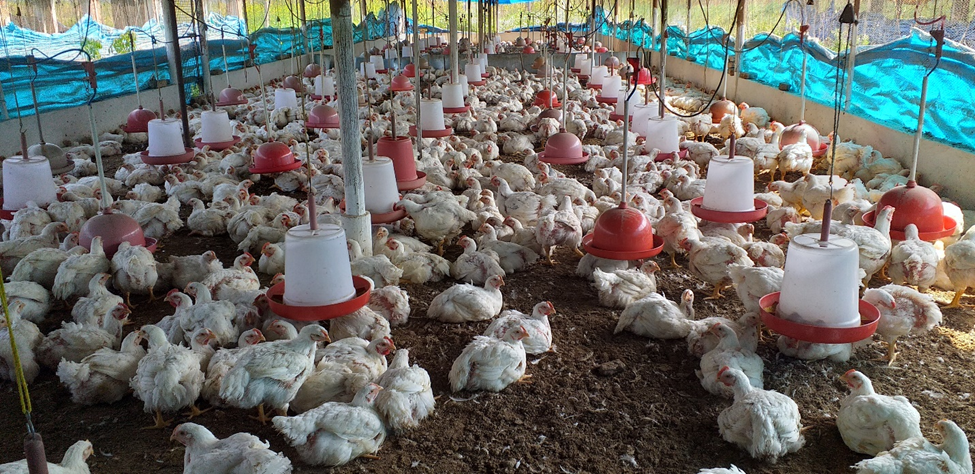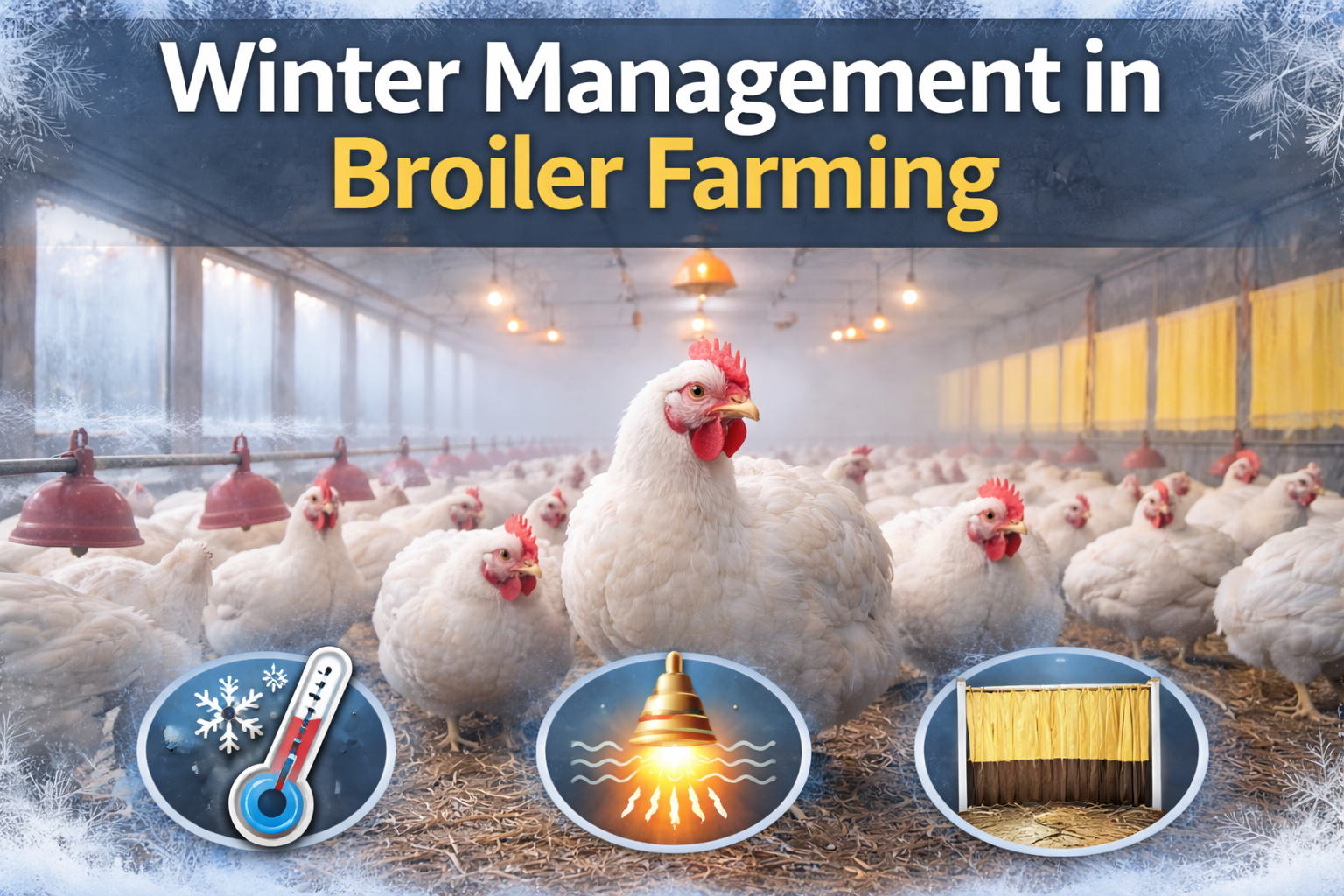


In winter, many broiler farmers close every curtain to keep the shed warm, and within a week the litter turns wet and sticky. Wet litter is not just a dirty floor. It releases ammonia that burns the eyes and lungs, it is the perfect home for coccidia, it causes breast blisters and foot burns, and it quietly spoils FCR. Usually wet litter has more than one cause. Here is how to find yours and fix it.
First, check your litter in 10 seconds
Pick up a handful of litter from the middle of the shed and squeeze it.
- It breaks apart loosely: good.
- It sticks together in a ball: too wet. Act today.
- It is dusty and does not hold at all: too dry; birds may get dust problems.
Also check by smell: if your eyes sting when you enter the shed in the morning, ammonia is too high.
1. Ventilate, even in winter
Birds breathe out a lot of moisture, and their droppings are mostly water. If the shed is closed tight, this moisture has nowhere to go and settles in the litter. Keep a small opening at the top of the curtains on both sides so moist air can escape, and open more during the warm afternoon hours. A little fresh air costs far less than wet litter.
2. Fix leaking drinkers first
- Set drinker height to the birds’ back level and raise it as they grow.
- For nipple lines, check that the pressure is not too high and that no nipple is dripping.
- Look under every drinker. A wet ring around one drinker is a drinker problem, not a disease.
3. Remove caked patches and add fresh litter
Do not just spread new husk on top of wet litter. Take out the caked, wet patches (especially near drinkers and walls), rake the rest every day, and then add dry rice husk or sawdust. Turning the litter lets the trapped moisture escape.
4. Check the feed
Too much salt in the feed makes birds drink more and pass watery droppings. So can poor-quality or rancid oil and sudden feed changes. If loose droppings started right after a new feed lot, talk to your feed supplier.
5. Keep the gut healthy
Loose, watery or brown “coffee” droppings often mean the gut is upset. A healthy gut absorbs water and nutrients properly; an upset gut sends them straight to the litter. Probiotics and prebiotics help restore good gut bacteria.
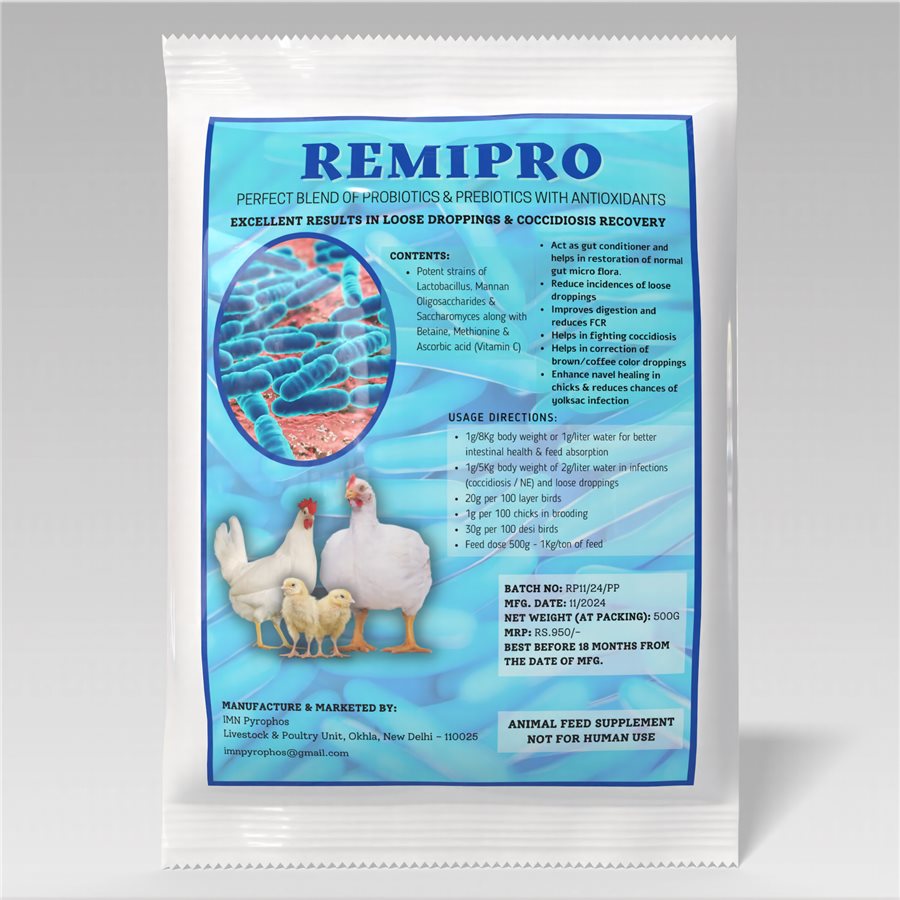
Gut health · bestseller
Remipro
Probiotics, prebiotics (MOS) and Saccharomyces with betaine, methionine and vitamin C. Restores normal gut flora, reduces loose droppings, improves digestion and FCR, helps in coccidiosis recovery and corrects brown/coffee coloured droppings.
Dose: 1 g per 8 kg body weight or 1 g per litre of water for routine gut health; 1 g per 5 kg body weight or 2 g per litre during loose droppings and infections; 1 g per 100 chicks in brooding.
500 g ₹626MRP ₹950
6. Watch for coccidiosis and bacterial infection
Wet litter and coccidiosis feed each other: wet litter helps coccidia multiply, and coccidiosis makes droppings wetter. Signs to watch are bloody or mucus-filled droppings, birds sitting puffed up, and sudden deaths. In such cases call your vet. Diagnosis comes first, then treatment.
Alongside the vet’s treatment, an anti-diarrhoeal support helps birds recover faster.
Loose droppings · bestseller
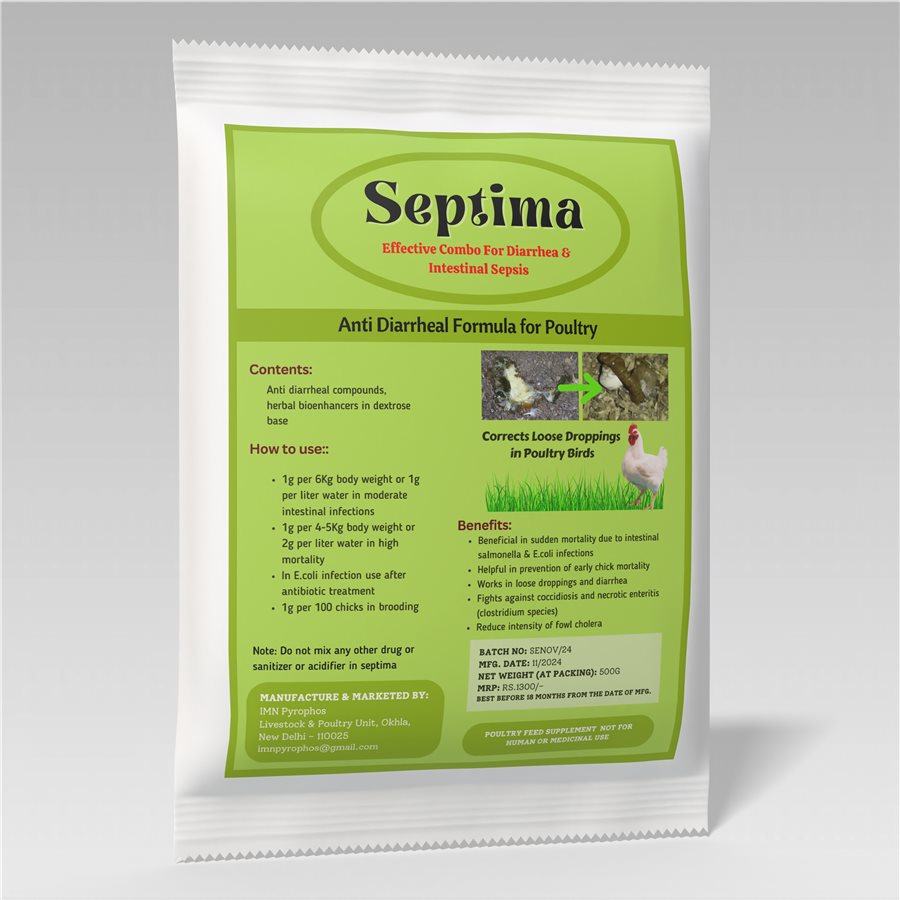
Septima
Anti-diarrhoeal combination with herbal bioenhancers in a dextrose base. Corrects loose droppings and is helpful in sudden mortality from intestinal Salmonella and E. coli, in early chick mortality, and against coccidiosis and necrotic enteritis.
Dose: 1 g per 6 kg body weight or 1 g per litre for moderate cases; 1 g per 4–5 kg body weight or 2 g per litre in high mortality. In E. coli infection, use after the antibiotic course. Do not mix with other drugs, sanitizers or acidifiers.
500 g ₹793MRP ₹1,300
7. Don’t forget the heart and lungs
Closed sheds with high ammonia and cold nights also raise the risk of ascites (water belly) in fast-growing broilers. Read our guide on broiler ascites treatment. For prevention, Ascitox Q10 is given at night on fixed days of the batch (2–4, 13–15 and 23–25). See Ascitox Q10.
Daily winter litter checklist
| Morning | Afternoon |
|---|---|
| Squeeze test in 3 spots | Open curtains a little more for fresh air |
| Smell check for ammonia | Rake the litter, remove caked patches |
| Look under every drinker | Add dry husk where needed |
| Check droppings colour | Note mortality and call the vet if it rises |
Also read: broiler 42 days medicine schedule · broiler management and disease manual · lameness in poultry
सर्दी में ब्रॉयलर का गीला लिटर और पतली बीट: कारण और 7 उपाय
सर्दी में कई ब्रॉयलर फार्मर शेड को गर्म रखने के लिए सारे पर्दे बंद कर देते हैं, और एक हफ्ते में लिटर गीला और चिपचिपा हो जाता है। गीला लिटर सिर्फ गंदा फर्श नहीं है। इससे अमोनिया गैस निकलती है जो आँखों और फेफड़ों को जलाती है, कॉक्सीडिया को पनपने का पूरा मौका मिलता है, छाती पर छाले और पैरों में जलन होती है, और FCR चुपचाप बिगड़ता जाता है। गीले लिटर के अक्सर एक से ज़्यादा कारण होते हैं। अपने शेड का कारण ऐसे पहचानें और ठीक करें।
पहले 10 सेकंड में लिटर जाँचें
शेड के बीच से एक मुट्ठी लिटर उठाइए और दबाइए।
- हल्का-सा बिखर जाए: ठीक है।
- गोला बन कर चिपक जाए: बहुत गीला है। आज ही कदम उठाइए।
- धूल जैसा, बिल्कुल न जुड़े: बहुत सूखा है; पक्षियों को धूल की दिक्कत हो सकती है।
सुबह शेड में घुसते ही अगर आँखों में जलन हो, तो अमोनिया बहुत ज़्यादा है।
1. सर्दी में भी हवा का रास्ता रखें
पक्षी साँस से बहुत नमी छोड़ते हैं और उनकी बीट में भी ज़्यादातर पानी होता है। शेड पूरा बंद हो तो ये नमी बाहर नहीं जाती और लिटर में बैठ जाती है। दोनों तरफ पर्दों के ऊपर थोड़ी जगह खुली रखें ताकि नम हवा निकल सके, और दोपहर की धूप में थोड़ा ज़्यादा खोलें। थोड़ी ताज़ा हवा गीले लिटर से बहुत सस्ती पड़ती है।
2. पहले टपकते ड्रिंकर ठीक करें
- ड्रिंकर की ऊँचाई पक्षी की पीठ के बराबर रखें और बढ़ते पक्षी के साथ ऊपर करते रहें।
- निप्पल लाइन में प्रेशर ज़्यादा न हो और कोई निप्पल टपक न रहा हो।
- हर ड्रिंकर के नीचे देखें। एक ड्रिंकर के चारों ओर गीला घेरा बीमारी नहीं, ड्रिंकर की खराबी है।
3. जमी हुई परतें हटाएँ, नया लिटर डालें
गीले लिटर के ऊपर सिर्फ नया भूसा न बिछाएँ। ड्रिंकर और दीवारों के पास की जमी, गीली परतें निकालें, बाकी लिटर को रोज़ पलटें, फिर सूखी चावल की भूसी या बुरादा डालें। पलटने से अंदर फँसी नमी निकल जाती है।
4. फीड जाँचें
फीड में नमक ज़्यादा हो तो पक्षी ज़्यादा पानी पीते हैं और पतली बीट करते हैं। खराब या बासी तेल और अचानक फीड बदलने से भी ऐसा होता है। अगर नई फीड आते ही बीट पतली हुई, तो अपने फीड सप्लायर से बात करें।
5. आँत को स्वस्थ रखें
पतली, पानी जैसी या भूरी “कॉफी” रंग की बीट का मतलब अक्सर आँत खराब होना है। स्वस्थ आँत पानी और पोषण सोख लेती है; खराब आँत उन्हें सीधे लिटर में भेज देती है। प्रोबायोटिक और प्रीबायोटिक अच्छे बैक्टीरिया वापस लाने में मदद करते हैं।
आँत की सेहत · बेस्टसेलर
Remipro
प्रोबायोटिक, प्रीबायोटिक (MOS) और Saccharomyces, साथ में बीटेन, मेथियोनीन और विटामिन C। आँत के अच्छे बैक्टीरिया लौटाता है, पतली बीट घटाता है, पाचन और FCR सुधारता है, कॉक्सीडियोसिस से उबरने में मदद करता है और भूरी/कॉफी रंग की बीट ठीक करता है।
मात्रा: रोज़ की आँत सेहत के लिए 1 ग्राम प्रति 8 किलो वज़न या 1 ग्राम प्रति लीटर पानी; पतली बीट और इन्फेक्शन में 1 ग्राम प्रति 5 किलो वज़न या 2 ग्राम प्रति लीटर; ब्रूडिंग में 1 ग्राम प्रति 100 चूज़े।
500 g ₹626MRP ₹950
6. कॉक्सीडियोसिस और बैक्टीरियल इन्फेक्शन पर नज़र रखें
गीला लिटर और कॉक्सीडियोसिस एक-दूसरे को बढ़ाते हैं: गीले लिटर में कॉक्सीडिया बढ़ते हैं, और कॉक्सीडियोसिस से बीट और गीली होती है। खून या म्यूकस वाली बीट, फूले पंख लेकर बैठे पक्षी और अचानक मौतें दिखें तो अपने डॉक्टर को बुलाइए। पहले जाँच, फिर इलाज।
डॉक्टर के इलाज के साथ दस्त रोकने वाला सपोर्ट पक्षियों को जल्दी ठीक होने में मदद करता है।
पतली बीट · बेस्टसेलर
Septima
डेक्सट्रोज़ बेस में हर्बल बायोएन्हांसर के साथ दस्त-रोधी कॉम्बिनेशन। पतली बीट ठीक करता है; आँत के Salmonella और E. coli से अचानक मौतों, शुरुआती चूज़ा मृत्यु, कॉक्सीडियोसिस और नेक्रोटिक एंटेराइटिस में मददगार।
मात्रा: सामान्य केस में 1 ग्राम प्रति 6 किलो वज़न या 1 ग्राम प्रति लीटर; ज़्यादा मौतों में 1 ग्राम प्रति 4–5 किलो वज़न या 2 ग्राम प्रति लीटर। E. coli में एंटीबायोटिक कोर्स के बाद दें। दूसरी दवा, सैनिटाइज़र या एसिडिफायर के साथ न मिलाएँ।
500 g ₹793MRP ₹1,300
7. दिल और फेफड़ों को न भूलें
बंद शेड, ज़्यादा अमोनिया और ठंडी रातें तेज़ी से बढ़ने वाले ब्रॉयलर में एसाइटिस (पेट में पानी) का खतरा भी बढ़ाती हैं। हमारा लेख पढ़ें: ब्रॉयलर एसाइटिस का इलाज। बचाव के लिए Ascitox Q10 बैच के तय दिनों (2–4, 13–15 और 23–25) पर रात में दिया जाता है। Ascitox Q10 देखें।
सर्दी में रोज़ की लिटर चेकलिस्ट
| सुबह | दोपहर |
|---|---|
| 3 जगह मुट्ठी वाली जाँच | ताज़ा हवा के लिए पर्दे थोड़े और खोलें |
| अमोनिया की गंध जाँचें | लिटर पलटें, जमी परतें हटाएँ |
| हर ड्रिंकर के नीचे देखें | ज़रूरत हो तो सूखी भूसी डालें |
| बीट का रंग देखें | मौतें लिखें, बढ़ें तो डॉक्टर बुलाएँ |
यह भी पढ़ें: ब्रॉयलर 42 दिन दवा शेड्यूल · ब्रॉयलर मैनेजमेंट और बीमारी मैनुअल · पोल्ट्री में लंगड़ापन
Sardi me broiler ka geela litter aur patli beet: kaaran aur 7 upay
Sardi me kai broiler farmer shed garam rakhne ke liye saare parde band kar dete hain, aur ek hafte me litter geela aur chipchipa ho jata hai. Geela litter sirf ganda farsh nahi hai. Isse ammonia gas nikalti hai jo aankh aur phephdon ko jalati hai, coccidia ko panapne ka poora mauka milta hai, chhati par chhale aur pairon me jalan hoti hai, aur FCR chupchap bigadta jata hai. Geele litter ke aksar ek se zyada kaaran hote hain. Apne shed ka kaaran aise pehchaniye aur theek kariye.
Pehle 10 second me litter jaanchiye
Shed ke beech se ek mutthi litter uthaiye aur dabaiye.
- Halka sa bikhar jaye: theek hai.
- Gola ban kar chipak jaye: bahut geela hai. Aaj hi kadam uthaiye.
- Dhool jaisa, bilkul na jude: bahut sookha hai; pakshiyon ko dhool ki dikkat ho sakti hai.
Subah shed me ghuste hi aankhon me jalan ho, to ammonia bahut zyada hai.
1. Sardi me bhi hawa ka raasta rakhiye
Pakshi saans se bahut nami chhodte hain aur unki beet me bhi zyadatar paani hota hai. Shed poora band ho to ye nami bahar nahi jaati aur litter me baith jaati hai. Dono taraf pardon ke upar thodi jagah khuli rakhiye taaki nam hawa nikal sake, aur dopahar ki dhoop me thoda zyada kholiye. Thodi taaza hawa geele litter se bahut sasti padti hai.
2. Pehle tapakte drinker theek kariye
- Drinker ki unchai pakshi ki peeth ke barabar rakhiye aur badhte pakshi ke saath upar karte rahiye.
- Nipple line me pressure zyada na ho aur koi nipple tapak na raha ho.
- Har drinker ke neeche dekhiye. Ek drinker ke chaaron or geela ghera bimari nahi, drinker ki kharabi hai.
3. Jami hui parat hataiye, naya litter daaliye
Geele litter ke upar sirf naya bhoosa mat bichhaiye. Drinker aur deewar ke paas ki jami, geeli parat nikaliye, baaki litter ko roz palatiye, phir sookhi chawal ki bhoosi ya buraada daaliye. Palatne se andar phansi nami nikal jaati hai.
4. Feed jaanchiye
Feed me namak zyada ho to pakshi zyada paani peete hain aur patli beet karte hain. Kharab ya baasi tel aur achanak feed badalne se bhi aisa hota hai. Nayi feed aate hi beet patli hui, to apne feed supplier se baat kariye.
5. Aant ko swasth rakhiye
Patli, paani jaisi ya bhoori “coffee” rang ki beet ka matlab aksar aant kharab hona hai. Swasth aant paani aur poshan sokh leti hai; kharab aant unhe seedhe litter me bhej deti hai. Probiotic aur prebiotic achhe bacteria wapas laane me madad karte hain.
Aant ki sehat · bestseller
Remipro
Probiotic, prebiotic (MOS) aur Saccharomyces, saath me betaine, methionine aur vitamin C. Aant ke achhe bacteria lautata hai, patli beet ghatata hai, pachan aur FCR sudharta hai, coccidiosis se ubharne me madad karta hai aur bhoori/coffee rang ki beet theek karta hai.
Matra: Roz ki aant sehat ke liye 1 g prati 8 kg wazan ya 1 g prati litre paani; patli beet aur infection me 1 g prati 5 kg wazan ya 2 g prati litre; brooding me 1 g prati 100 chooze.
500 g ₹626MRP ₹950
6. Coccidiosis aur bacterial infection par nazar rakhiye
Geela litter aur coccidiosis ek-doosre ko badhate hain: geele litter me coccidia badhte hain, aur coccidiosis se beet aur geeli hoti hai. Khoon ya mucus wali beet, phoole pankh lekar baithe pakshi aur achanak maut dikhe to apne doctor ko bulaiye. Pehle jaanch, phir ilaaj.
Doctor ke ilaaj ke saath dast rokne wala support pakshiyon ko jaldi theek hone me madad karta hai.
Patli beet · bestseller
Septima
Dextrose base me herbal bioenhancer ke saath dast-rodhi combination. Patli beet theek karta hai; aant ke Salmonella aur E. coli se achanak maut, shuruaati chooza mrityu, coccidiosis aur necrotic enteritis me madadgaar.
Matra: Saamanya case me 1 g prati 6 kg wazan ya 1 g prati litre; zyada maut me 1 g prati 4–5 kg wazan ya 2 g prati litre. E. coli me antibiotic course ke baad dijiye. Doosri dawa, sanitizer ya acidifier ke saath mat milaiye.
500 g ₹793MRP ₹1,300
7. Dil aur phephde ko mat bhooliye
Band shed, zyada ammonia aur thandi raatein tezi se badhne wale broiler me ascites (pet me paani) ka khatra bhi badhati hain. Hamara lekh padhiye: broiler ascites ka ilaaj. Bachav ke liye Ascitox Q10 batch ke tay dino (2–4, 13–15 aur 23–25) par raat me diya jata hai. Ascitox Q10 dekhiye.
Sardi me roz ki litter checklist
| Subah | Dopahar |
|---|---|
| 3 jagah mutthi wali jaanch | Taaza hawa ke liye parde thode aur kholiye |
| Ammonia ki gandh jaanchiye | Litter palatiye, jami parat hataiye |
| Har drinker ke neeche dekhiye | Zarurat ho to sookhi bhoosi daaliye |
| Beet ka rang dekhiye | Maut likhiye, badhe to doctor bulaiye |
Ye bhi padhiye: broiler 42 din dawa schedule · broiler management aur bimari manual · poultry me langdapan