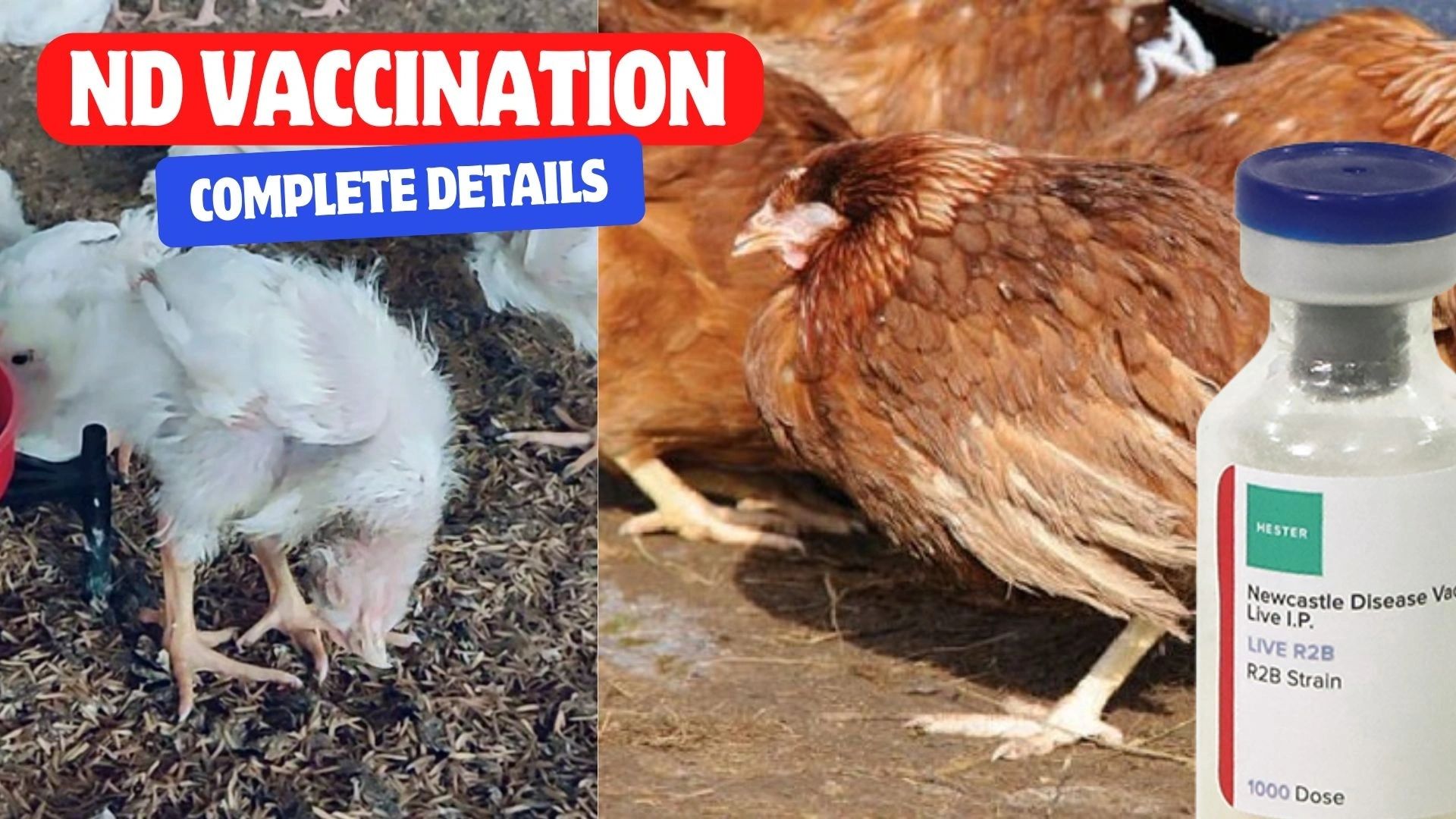
Newcastle Disease (ND) is a highly contagious and often fatal viral disease affecting poultry and a wide range of other bird species. Recognized globally as a significant threat to poultry production, understanding ND is crucial for poultry owners, from large commercial farms to backyard enthusiasts. This article will delve into the key aspects of Newcastle Disease, drawing upon the latest research and guidelines to provide a comprehensive overview for effective prevention and control.
Understanding the Enemy: What is Newcastle Disease?
Newcastle Disease is caused by an avian paramyxovirus serotype 1 (APMV-1), commonly referred to as Newcastle Disease Virus (NDV). What makes ND so challenging is the enormous variation in its clinical manifestations, ranging from mild or subclinical infections to highly virulent forms causing rapid mortality. Based on their pathogenicity, NDV strains are classified into five pathotypes:
- Velogenic viscerotropic: Highly pathogenic with very high mortality (up to 100%) and hemorrhagic lesions in the gastrointestinal tract.
- Velogenic neurotropic: Very pathogenic with high mortality, featuring both respiratory and nervous system symptoms.
- Mesogenic: Moderately pathogenic, causing respiratory symptoms and occasional nervous signs, with low mortality in adults but significant losses in young birds. Historically and in some regions like Asia (including India), mesogenic strains (e.g., Komarov and R2B) have been used as vaccines to evoke a stronger immune response. However, their use is not acceptable in Europe and the United States currently.
- Lentogenic: Non-pathogenic or causing only mild respiratory infections. Lentogenic strains (e.g., Hitchner, La Sota, Ulster, B1, F) are globally used for live vaccines due to their low virulence.
- Asymptomatic: Non-pathogenic, resulting in subclinical intestinal infections.
The virulence of NDV is primarily determined by the amino acid sequence at the F (fusion) protein cleavage site. Virulent ND viruses typically possess at least three basic amino acids in positions 113-116 and phenylalanine at position 117, allowing the F0 precursor protein to be cleaved by proteases found in many tissues, leading to systemic infection.
NDV is an RNA virus and possesses a lipid envelope, making it sensitive to common disinfectants, fatty solvents (chloroform, ether, alcohol), low or high pH, UV rays, and sunlight. However, complete inactivation requires sufficient contact time, and a single disinfection may not be enough. Notably, the OIE specifies minimum inactivation times in poultry meat (574 seconds at 70°C) and whole eggs (674 seconds at 59°C).
The host range of NDV is remarkably broad, capable of infecting approximately 241 species across 27 orders of birds, including domesticated poultry (chickens, turkeys, ducks, pigeons, etc.) and many wild bird species. Pigeons, in particular, are known to be susceptible and have played a role in the spread of ND, leading to specific regulations in some countries.
Newcastle Disease is endemic in many parts of the world, including most of Africa, Asia, and Latin America, significantly impacting rural poultry production. Even in developed countries with control measures, outbreaks can occur, highlighting the persistent challenge posed by this virus. The economic losses associated with ND can be severe due to high mortality, reduced egg production (rough, misshapen, or thin-shelled eggs, or even shell-less eggs), trade restrictions, and the costs of control measures.
Recognizing the Signs: Clinical Manifestations and Diagnosis
Clinical signs of ND can be highly variable depending on the virulence of the virus, the age and species of the bird, and its immune status. In unvaccinated flocks, you might observe:
- Respiratory issues: Rales, wheezes, and shortness of breath.
- Nervous symptoms: Paralysis, neck twisting (torticollis), convulsions, incoordination (ataxia).
- Gastrointestinal signs: Diarrhea.
- Sudden drop in egg production (30-50% or more), with abnormal eggshells or shell-less eggs.
- Increased mortality.
- Decreased feed and water intake.
- Cyanosis and petechiae (small hemorrhages).
It's important to note that in vaccinated flocks, the clinical signs can be atypical or even absent, with only subtle changes like a decrease in egg production or discolored eggs. This makes laboratory confirmation crucial.
Typical anatomopathological changes can include inflammation of the trachea, pneumonia, air sac deposits, petechiae in the glandular stomach, and ulcers in the small intestines.
According to EU regulations, ND is a notifiable disease. Suspicion of ND requires immediate notification to the veterinary authorities and diagnostic testing to isolate and characterize the virus. Laboratory diagnosis involves virus isolation from tracheal or cloacal swabs or brain tissue, followed by pathogenicity testing, often using the intracerebral pathogenicity index (ICPI) in day-old chicks. An ICPI of 0.7 or greater, or the presence of specific multiple basic amino acids at the F protein cleavage site, defines a virus as virulent. Serological testing to detect NDV-specific antibodies can also be helpful, especially when high titers are observed. Molecular diagnostic methods are essential for differentiating NDV from other respiratory and enteric diseases like infectious laryngotracheitis, infectious bronchitis, avian influenza, fowl cholera, and Mycoplasma infections.
Strategies for Control and Prevention: A Multi-pronged Approach
Controlling Newcastle Disease requires a comprehensive strategy involving strict biosecurity, vaccination, and, in case of outbreaks, potentially culling and movement restrictions.
Biosecurity: Your First Line of Defense
Biosecurity measures are fundamental in preventing the introduction and spread of NDV. This includes:
- Accurate record keeping: Tracking mortality, necropsy findings, and diagnostic reports for early detection.
- Proper carcass disposal: Immediate incineration or deep burial of dead birds to prevent environmental contamination.
- Controlling movement: Restricting the entry of vehicles and personnel onto poultry premises.
- Sanitation and disinfection: Regularly cleaning and disinfecting housing, equipment, and vehicles.
- Source of birds: Purchasing birds from reputable sources with known health status.
- Quarantine: Isolating new or returning birds before introducing them to the main flock.
- Exclusion of other species: Preventing contact with wild birds (especially pigeons and waterfowl), rodents, and insects that can act as disease carriers.
However, implementing stringent biosecurity in backyard poultry farming systems can be challenging due to free-ranging birds, lack of proper housing, and limited resources. Awareness programs and community participation are crucial to improve biosecurity practices in these settings.
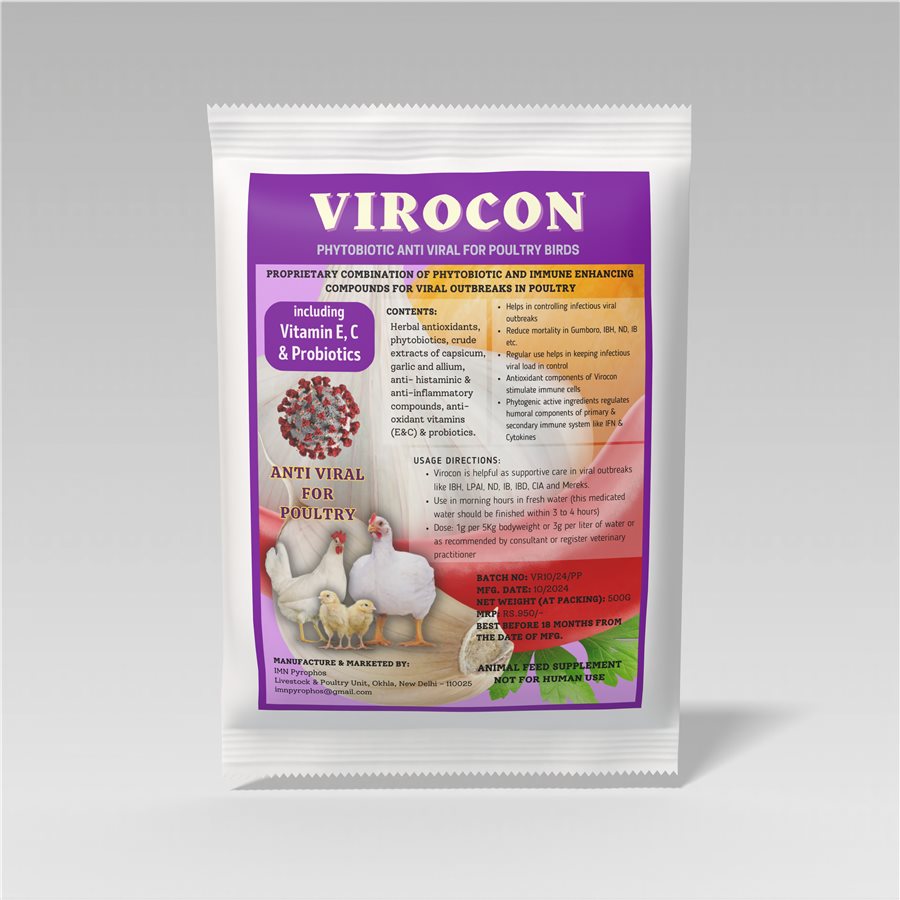
Viral outbreak support
Virocon
Phytobiotic support with herbal antioxidants, capsicum, garlic and allium extracts, vitamins E and C and probiotics. Supportive care in viral outbreaks such as ND, IB, IBD, IBH, LPAI, CIA and Marek’s; helps reduce mortality.
Dose: 1 g per 5 kg body weight or 3 g per litre. Give in the morning in fresh water and let birds finish it in 3–4 hours.
500 g ₹579MRP ₹950
Vaccination: Building Immunity
Vaccination is a cornerstone of ND control, especially in areas with high poultry density or where NDV is endemic. The primary goals of vaccination are to reduce the risk of infection and viral transmission, prevent clinical signs, and decrease mortality. Vaccination strategies depend on the regional ND status (endemic or not) and the perceived risk of introduction.
Various types of ND vaccines are available:
- Live Vaccines: Typically use lentogenic strains (B1, La Sota, F, Ulster) administered via eye drop, nasal spray, drinking water, or spray. Mesogenic strains (Komarov, R2B) are still used in some Asian countries like India for a stronger immune response, particularly in older birds or high-risk areas. Live vaccines stimulate both humoral and cell-mediated immunity.
- Inactivated Vaccines: Contain killed NDV and are usually administered by injection. They generally induce a strong humoral antibody response and are often used as boosters, especially in long-lived birds like layers and breeders.
- Recombinant Vector Vaccines: Utilize a live virus (the vector, such as fowlpox virus (FPV) or turkey herpesvirus (HVT)) to carry and express the protective antigens (e.g., the fusion (F) protein) of NDV. These vaccines can offer protection against multiple diseases simultaneously and can overcome maternal antibody interference to some extent. NDV itself can also be engineered as a vector to express foreign genes.
- Antigenically Matched Vaccines (Homologous Vaccines): Utilize NDV strains closely related to the circulating field strains to potentially improve protection and reduce viral shedding. These are used in some regions like Mexico.
Proper vaccine administration (with priming and nd booster shot) and achieving herd immunity (at least 85% of the flock with protective antibody levels) are critical for effective protection. Factors such as the age and health of the birds, the presence of maternal antibodies, and environmental conditions can influence the immune response. In broilers, vaccination is often recommended at day 1 of age followed by boosters. Layers typically receive multiple live and sometimes inactivated vaccines throughout their lifespan.
Challenges in ND vaccination, particularly in backyard poultry, include:
- Maintaining the cold chain for conventional vaccines.
- Large dose sizes in commercial packaging leading to wastage for small flocks.
- Lack of awareness and documentation of vaccination practices.
- Difficulty in handling and administering vaccines to free-ranging birds.
To address these challenges, research is focusing on thermotolerant ND vaccines (like the I-2 strain) that do not require strict cold chain maintenance. Efforts are also being made to develop small-dose, user-friendly vaccine formulations suitable for backyard poultry.
Current vaccination programs may not always prevent infection or field virus excretion. This has led to the concept of an "ideal vaccine" that would not only protect against disease but also inhibit virus spread with minimal effort for farmers. Research is ongoing to better understand the mechanisms of immunity induced by vaccination, including cell-mediated and local immune responses, to aid in the development of such vaccines.
Novel vaccine approaches under development include:
- Adjuvants: Substances that enhance the immune response to vaccines, such as Toll-like receptor (TLR) ligands (e.g., resiquimod, CpG ODNs).
- Nanoparticle vaccines: Utilizing biodegradable nanomaterials for antigen delivery, offering benefits like protection from maternal antibodies and enhanced immune responses.
- mRNA-based vaccines: Offering rapid development and production potential against emerging strains.
- Virus-like particle (VLP) vaccines: Non-infectious particles mimicking the virus structure, eliciting strong immune responses.
Outbreak Control: Containment and Eradication
In the event of an ND outbreak, strict measures are typically implemented to contain and eradicate the disease. These may include:
- Slaughter (culling) of all infected and in-contact poultry flocks.
- Proper disposal of carcasses through incineration or deep burial.
- Imposition of poultry movement restrictions in the affected areas.
- Enhanced biosecurity measures.
- Ring vaccination around the affected area to create a buffer of immune birds.
- Trade restrictions prohibiting the purchase of poultry products from protected areas.
There is no treatment for Newcastle Disease. The focus remains on prevention and rapid response to outbreaks.
Newcastle Disease in Northeastern India: A Specific Challenge
The northeastern states of India have a significant backyard poultry population, often consisting of indigenous breeds raised with low inputs. This region faces unique challenges in controlling ND due to the nature of backyard farming, including:
- Free-ranging birds and difficulty in monitoring health status.
- Lack of proper housing and biosecurity practices.
- Challenges in maintaining the cold chain for vaccines.
- Small flock sizes making bulk vaccine packaging impractical.
- Limited awareness and adoption of vaccination practices.
Therefore, control strategies in this region emphasize:
- Awareness programs to educate rural communities about ND and biosecurity.
- Promoting the use of thermotolerant ND vaccines like the I-2 strain or thermostable LaSota vaccine.
- Strengthening the infrastructure of animal health services and engaging community volunteers for vaccination efforts.
- Establishing mechanisms for local vaccine production and distribution in smaller doses.
- Improving diagnostic capabilities to identify circulating NDV strains and inform vaccine selection.
Studies in India have shown the persistence of genotype IV NDV strains, and the effectiveness of conventional vaccines (genotype II strains like F and R2B) against challenge with different genotypes needs further evaluation.
Conclusion: A Persistent Threat Requiring Vigilance
Newcastle Disease remains a significant threat to poultry health and global food security. Effective control requires a holistic approach combining stringent biosecurity practices with well-implemented vaccination programs tailored to the specific needs and challenges of different poultry production systems. Ongoing research into novel vaccines and adjuvants holds promise for enhancing protection and simplifying administration, particularly in challenging environments like backyard poultry farming. Continued vigilance, early detection, and coordinated efforts among poultry owners, animal health professionals, vaccine manufacturers, and policymakers are essential to mitigate the impact of this devastating disease.
Problem in your flock? Send photos of the birds and droppings on WhatsApp for a first opinion from Dr. Ibne Ali.
WhatsApp: 98715 84101Newcastle Disease (ND) एक बहुत तेज़ी से फैलने वाली और अक्सर जानलेवा viral बीमारी है जो मुर्गियों और कई दूसरे पक्षियों को होती है। पूरी दुनिया में इसे poultry उत्पादन के लिए बड़ा खतरा माना जाता है, इसलिए बड़े commercial farm से लेकर घर के पीछे मुर्गी पालने वालों तक, सबके लिए ND को समझना ज़रूरी है। इस लेख में ताज़ा research और दिशानिर्देशों के आधार पर Newcastle Disease की मुख्य बातें बताई गई हैं, ताकि इससे बचाव और नियंत्रण अच्छे से हो सके।
दुश्मन को पहचानिए: Newcastle Disease क्या है?
Newcastle Disease, avian paramyxovirus serotype 1 (APMV-1) से होती है, जिसे आम तौर पर Newcastle Disease Virus (NDV) कहते हैं। ND को मुश्किल बनाने वाली बात है इसके लक्षणों में बहुत ज़्यादा फ़र्क, हल्के या बिना लक्षण वाले (subclinical) infection से लेकर बहुत खतरनाक रूप तक जो तेज़ी से मौतें करते हैं। बीमारी पैदा करने की ताक़त (pathogenicity) के आधार पर NDV strains को पाँच pathotypes में बाँटा जाता है:
- Velogenic viscerotropic: बहुत खतरनाक, मौत की दर बहुत ज़्यादा (100% तक) और पाचन तंत्र (gastrointestinal tract) में खून के धब्बे/घाव।
- Velogenic neurotropic: बहुत खतरनाक, मौत की दर ज़्यादा, साँस और नसों (nervous system) दोनों के लक्षण।
- Mesogenic: मध्यम खतरनाक, साँस के लक्षण और कभी-कभी नसों के लक्षण; बड़े पक्षियों में मौतें कम लेकिन छोटे चूज़ों में काफ़ी नुकसान। पहले से और Asia (भारत समेत) के कुछ इलाकों में mesogenic strains (जैसे Komarov और R2B) को ज़्यादा मज़बूत immunity के लिए vaccine के रूप में इस्तेमाल किया जाता रहा है। लेकिन Europe और United States में अभी इनका इस्तेमाल मान्य नहीं है।
- Lentogenic: बीमारी नहीं करते या सिर्फ़ हल्का साँस का infection करते हैं। Lentogenic strains (जैसे Hitchner, La Sota, Ulster, B1, F) कम खतरनाक होने की वजह से दुनिया भर में live vaccine के लिए इस्तेमाल होते हैं।
- Asymptomatic: बीमारी नहीं करते, सिर्फ़ आँतों में बिना लक्षण वाला infection होता है।
NDV कितना खतरनाक है, यह मुख्य रूप से F (fusion) protein के cleavage site पर amino acid के क्रम से तय होता है। खतरनाक ND virus में आम तौर पर 113-116 positions पर कम से कम तीन basic amino acids और 117 position पर phenylalanine होता है, जिससे F0 precursor protein को कई tissues में मौजूद proteases काट देते हैं, और infection पूरे शरीर में फैल जाता है।
NDV एक RNA virus है और इस पर चर्बी (lipid) की परत होती है, इसलिए यह आम disinfectants, चर्बी घोलने वाले solvents (chloroform, ether, alcohol), बहुत कम या बहुत ज़्यादा pH, UV rays, और धूप से खत्म हो जाता है। लेकिन पूरी तरह खत्म करने के लिए काफ़ी देर तक संपर्क ज़रूरी है, और एक बार का disinfection काफ़ी नहीं हो सकता। ध्यान देने वाली बात है कि OIE ने poultry मांस (70°C पर 574 seconds) और पूरे अंडे (59°C पर 674 seconds) में virus खत्म करने का न्यूनतम समय तय किया है।
NDV बहुत सारे पक्षियों को संक्रमित कर सकता है, पक्षियों के 27 orders की लगभग 241 प्रजातियों को, जिसमें पालतू poultry (मुर्गी, turkey, बत्तख, कबूतर आदि) और कई जंगली पक्षी शामिल हैं। खासकर कबूतरों को यह आसानी से होता है और ND फैलाने में उनकी भूमिका रही है, इसलिए कुछ देशों में इसके लिए खास नियम बने हैं।
Newcastle Disease दुनिया के कई हिस्सों में हमेशा मौजूद (endemic) है, जिसमें ज़्यादातर Africa, Asia, और Latin America शामिल हैं, और यह गाँव के मुर्गी पालन को बहुत नुकसान पहुँचाती है। नियंत्रण के उपायों वाले विकसित देशों में भी इसके प्रकोप हो सकते हैं, जो दिखाता है कि यह virus लगातार चुनौती बना हुआ है। ND से आर्थिक नुकसान बहुत भारी हो सकता है, क्योंकि मौतें ज़्यादा होती हैं, अंडा उत्पादन घटता है (खुरदरे, टेढ़े-मेढ़े या पतले छिलके वाले अंडे, या बिना छिलके के अंडे), व्यापार पर रोक लगती है, और नियंत्रण के उपायों का खर्च भी आता है।
लक्षण पहचानिए: बीमारी के लक्षण और जाँच
ND के लक्षण virus की ताक़त, पक्षी की उम्र और प्रजाति, और उसकी immunity के हिसाब से बहुत अलग हो सकते हैं। बिना vaccine वाले flock में आपको ये दिख सकते हैं:
- साँस की दिक्कत: घरघराहट (rales), सीटी जैसी आवाज़ (wheezes), और साँस फूलना।
- नसों के लक्षण: लकवा (paralysis), गर्दन मुड़ना (torticollis), झटके (convulsions), चलने में तालमेल न होना (ataxia)।
- पेट के लक्षण: दस्त।
- अंडा उत्पादन में अचानक गिरावट (30-50% या उससे ज़्यादा), साथ में खराब छिलके वाले या बिना छिलके के अंडे।
- मौतें बढ़ना।
- Feed और पानी कम खाना-पीना।
- नीलापन (cyanosis) और petechiae (छोटे-छोटे खून के धब्बे)।
ध्यान रखें कि vaccine लगे flock में लक्षण अलग तरह के हो सकते हैं या दिख भी नहीं सकते, बस अंडा उत्पादन में थोड़ी कमी या अंडों का रंग बदलना जैसे छोटे बदलाव दिखते हैं। इसलिए lab से पुष्टि कराना बहुत ज़रूरी है।
Post-mortem में आम तौर पर दिखने वाले बदलाव (anatomopathological changes) हैं: श्वास नली (trachea) में सूजन, pneumonia, air sac में जमाव, glandular stomach (proventriculus) में खून के धब्बे, और छोटी आँत में घाव (ulcers)।
EU नियमों के अनुसार ND एक notifiable बीमारी है, यानी इसकी सूचना देना ज़रूरी है। ND का शक होने पर तुरंत पशु चिकित्सा अधिकारियों को बताना और virus को अलग करके पहचानने के लिए जाँच करानी होती है। Lab जाँच में श्वास नली या cloaca के swab या दिमाग के tissue से virus को अलग किया जाता है, फिर उसकी pathogenicity की जाँच की जाती है, अक्सर एक दिन के चूज़ों में intracerebral pathogenicity index (ICPI) से। ICPI 0.7 या उससे ज़्यादा हो, या F protein cleavage site पर खास कई basic amino acids मौजूद हों, तो virus को खतरनाक (virulent) माना जाता है। NDV के खिलाफ़ antibodies पता करने के लिए serological जाँच भी काम की है, खासकर जब titer ज़्यादा आए। NDV को साँस और आँतों की दूसरी बीमारियों जैसे infectious laryngotracheitis, infectious bronchitis, avian influenza, fowl cholera, और Mycoplasma infection से अलग पहचानने के लिए molecular जाँच ज़रूरी है।
नियंत्रण और बचाव के तरीके: हर तरफ़ से तैयारी
Newcastle Disease पर काबू पाने के लिए पूरी रणनीति चाहिए, जिसमें सख़्त biosecurity, vaccination, और प्रकोप होने पर ज़रूरत पड़े तो पक्षियों को मारना (culling) और आवाजाही पर रोक शामिल है।
Biosecurity: बचाव की पहली दीवार
NDV को फार्म में आने और फैलने से रोकने के लिए biosecurity के उपाय सबसे बुनियादी हैं। इनमें शामिल हैं:
- सही रिकॉर्ड रखना: जल्दी पहचान के लिए मौतों, post-mortem के नतीजों, और जाँच रिपोर्ट का हिसाब रखना।
- मरे पक्षियों का सही निपटान: वातावरण गंदा न हो, इसलिए मरे पक्षियों को तुरंत जलाना या गहरा गाड़ना।
- आवाजाही पर नियंत्रण: Poultry फार्म पर गाड़ियों और लोगों का आना-जाना सीमित करना।
- सफ़ाई और disinfection: Shed, उपकरण और गाड़ियों की नियमित सफ़ाई और disinfection।
- पक्षी कहाँ से लें: भरोसेमंद जगह से पक्षी खरीदें जिनकी सेहत की जानकारी हो।
- Quarantine: नए या वापस आए पक्षियों को मुख्य flock में मिलाने से पहले अलग रखना।
- दूसरे जीवों को दूर रखना: जंगली पक्षियों (खासकर कबूतर और पानी वाले पक्षी), चूहों, और कीड़ों से संपर्क रोकना, जो बीमारी फैला सकते हैं।
लेकिन घर के पीछे वाले (backyard) मुर्गी पालन में सख़्त biosecurity लागू करना मुश्किल हो सकता है, क्योंकि पक्षी खुले घूमते हैं, सही आवास नहीं होता, और साधन कम होते हैं। ऐसी जगहों पर biosecurity सुधारने के लिए जागरूकता कार्यक्रम और गाँव वालों की भागीदारी बहुत ज़रूरी है।
वायरल बीमारी में सहारा
Virocon
हर्बल एंटीऑक्सीडेंट, कैप्सिकम, लहसुन और एलियम एक्सट्रैक्ट, विटामिन E और C और प्रोबायोटिक वाला फाइटोबायोटिक। ND, IB, IBD, IBH, LPAI, CIA और मैरेक्स जैसी वायरल बीमारियों में सहायक इलाज; मृत्यु घटाने में मदद करता है।
मात्रा: 1 ग्राम प्रति 5 किलो वज़न या 3 ग्राम प्रति लीटर। सुबह ताज़े पानी में दें और 3–4 घंटे में खत्म होने दें।
500 g ₹579MRP ₹950
Vaccination: immunity बनाना
ND नियंत्रण की नींव vaccination है, खासकर उन इलाकों में जहाँ poultry ज़्यादा घनी है या NDV हमेशा मौजूद रहता है। Vaccination के मुख्य लक्ष्य हैं infection और virus फैलने का खतरा कम करना, लक्षण आने से रोकना, और मौतें घटाना। Vaccination की रणनीति इस पर निर्भर करती है कि इलाके में ND की स्थिति क्या है (endemic है या नहीं) और बीमारी आने का खतरा कितना है।
ND vaccine कई तरह की मिलती हैं:
- Live vaccines: आम तौर पर lentogenic strains (B1, La Sota, F, Ulster) होते हैं, जो आँख में बूँद (eye drop), नाक में spray, पीने के पानी, या spray से दिए जाते हैं। भारत जैसे कुछ एशियाई देशों में ज़्यादा मज़बूत immunity के लिए mesogenic strains (Komarov, R2B) अब भी इस्तेमाल होते हैं, खासकर बड़े पक्षियों में या ज़्यादा खतरे वाले इलाकों में। Live vaccines humoral और cell-mediated दोनों तरह की immunity बनाती हैं।
- Inactivated (killed) vaccines: इनमें मरा हुआ NDV होता है और आम तौर पर injection से दी जाती हैं। ये आम तौर पर मज़बूत humoral antibody बनाती हैं और अक्सर booster के रूप में दी जाती हैं, खासकर layer और breeder जैसे लंबे समय तक रहने वाले पक्षियों में।
- Recombinant vector vaccines: इनमें एक ज़िंदा virus (vector, जैसे fowlpox virus (FPV) या turkey herpesvirus (HVT)) NDV के बचाव वाले antigens (जैसे fusion (F) protein) को लेकर चलता और बनाता है। ये vaccines एक साथ कई बीमारियों से बचाव दे सकती हैं और कुछ हद तक माँ से मिली antibodies (maternal antibodies) की रुकावट को पार कर सकती हैं। NDV को खुद भी vector बनाकर दूसरे genes बनवाने के लिए तैयार किया जा सकता है।
- Antigenically matched vaccines (homologous vaccines): इनमें ऐसे NDV strains होते हैं जो फ़ील्ड में घूम रहे strains से बहुत मिलते-जुलते हैं, ताकि बचाव बेहतर हो और virus का बाहर निकलना (shedding) कम हो। ये Mexico जैसे कुछ इलाकों में इस्तेमाल होती हैं।
सही तरीके से vaccine देना (priming और ND booster shot के साथ) और herd immunity हासिल करना (flock के कम से कम 85% पक्षियों में बचाव लायक antibody) असरदार सुरक्षा के लिए बहुत ज़रूरी है। पक्षियों की उम्र और सेहत, maternal antibodies की मौजूदगी, और वातावरण की स्थिति immunity पर असर डाल सकती है। Broiler में अक्सर पहले दिन vaccination और फिर booster की सलाह दी जाती है। Layer को आम तौर पर पूरी ज़िंदगी में कई live और कभी-कभी inactivated vaccine दी जाती हैं।
ND vaccination में दिक्कतें, खासकर backyard मुर्गी पालन में:
- आम vaccines के लिए cold chain बनाए रखना।
- Commercial पैकिंग में बहुत ज़्यादा doses होना, जिससे छोटे flock में vaccine बर्बाद होती है।
- Vaccination के बारे में जानकारी और रिकॉर्ड की कमी।
- खुले घूमने वाले पक्षियों को पकड़कर vaccine देने में मुश्किल।
इन दिक्कतों को दूर करने के लिए research गर्मी सहने वाली (thermotolerant) ND vaccines (जैसे I-2 strain) पर ध्यान दे रही है, जिन्हें सख़्त cold chain की ज़रूरत नहीं होती। Backyard poultry के लिए कम dose वाली, इस्तेमाल में आसान vaccine बनाने की कोशिशें भी हो रही हैं।
मौजूदा vaccination कार्यक्रम हमेशा infection या फ़ील्ड virus के बाहर निकलने को नहीं रोक पाते। इसी से एक “आदर्श vaccine” का विचार आया है, जो न सिर्फ़ बीमारी से बचाए बल्कि किसान की कम मेहनत में virus का फैलना भी रोके। ऐसी vaccines बनाने में मदद के लिए vaccination से बनने वाली immunity, जिसमें cell-mediated और local immunity शामिल है, को बेहतर समझने पर research चल रही है।
तैयार हो रहे नए vaccine तरीके:
- Adjuvants: ऐसे पदार्थ जो vaccine से बनने वाली immunity को बढ़ाते हैं, जैसे Toll-like receptor (TLR) ligands (जैसे resiquimod, CpG ODNs)।
- Nanoparticle vaccines: Antigen पहुँचाने के लिए अपने-आप घुलने वाले (biodegradable) nanomaterials का इस्तेमाल, जिससे maternal antibodies से बचाव और बेहतर immunity जैसे फ़ायदे मिलते हैं।
- mRNA-based vaccines: नए strains के खिलाफ़ जल्दी विकसित और तैयार करने की क्षमता।
- Virus-like particle (VLP) vaccines: Virus जैसी बनावट वाले लेकिन infection न करने वाले कण, जो मज़बूत immunity बनाते हैं।
प्रकोप पर नियंत्रण: रोकथाम और खात्मा
ND का प्रकोप होने पर बीमारी को रोकने और खत्म करने के लिए आम तौर पर सख़्त कदम उठाए जाते हैं। इनमें शामिल हो सकते हैं:
- सभी संक्रमित और उनके संपर्क में आए poultry flocks को मारना (culling)।
- मरे पक्षियों को जलाकर या गहरा गाड़कर सही निपटान।
- प्रभावित इलाकों में poultry की आवाजाही पर रोक।
- Biosecurity के उपाय और कड़े करना।
- प्रभावित इलाके के चारों ओर ring vaccination, ताकि immune पक्षियों की एक सुरक्षा पट्टी बन जाए।
- व्यापार पर रोक, जिसमें सुरक्षित घोषित इलाकों से poultry उत्पाद खरीदने की मनाही होती है।
Newcastle Disease का कोई इलाज नहीं है। ध्यान बचाव और प्रकोप पर तुरंत कार्रवाई पर ही रहता है।
उत्तर-पूर्व भारत में Newcastle Disease: एक खास चुनौती
भारत के उत्तर-पूर्वी राज्यों में backyard मुर्गियों की संख्या काफ़ी है, जिनमें ज़्यादातर देसी नस्लें कम खर्च में पाली जाती हैं। Backyard पालन के तरीके की वजह से इस इलाके में ND पर काबू पाने में खास दिक्कतें हैं, जैसे:
- पक्षी खुले घूमते हैं और उनकी सेहत पर नज़र रखना मुश्किल है।
- सही आवास और biosecurity की कमी।
- Vaccines के लिए cold chain बनाए रखने में दिक्कत।
- छोटे flock होने से बड़ी पैकिंग वाली vaccine काम की नहीं।
- Vaccination के बारे में कम जानकारी और कम अपनाना।
इसलिए इस इलाके में नियंत्रण की रणनीति इन बातों पर ज़ोर देती है:
- गाँव के लोगों को ND और biosecurity के बारे में सिखाने के लिए जागरूकता कार्यक्रम।
- I-2 strain या thermostable LaSota vaccine जैसी गर्मी सहने वाली ND vaccines को बढ़ावा देना।
- पशु स्वास्थ्य सेवाओं का ढाँचा मज़बूत करना और vaccination के काम में गाँव के स्वयंसेवकों को जोड़ना।
- छोटे doses में लोकल स्तर पर vaccine बनाने और बाँटने की व्यवस्था।
- घूम रहे NDV strains को पहचानने और सही vaccine चुनने के लिए जाँच की क्षमता सुधारना।
भारत में हुए अध्ययनों में genotype IV NDV strains लगातार मिलते रहे हैं, और अलग-अलग genotypes के हमले के खिलाफ़ आम vaccines (F और R2B जैसे genotype II strains) कितनी असरदार हैं, इसकी और जाँच ज़रूरी है।
निष्कर्ष: एक लगातार खतरा, जिस पर नज़र रखनी होगी
Newcastle Disease मुर्गियों की सेहत और दुनिया की खाद्य सुरक्षा के लिए अब भी बड़ा खतरा है। असरदार नियंत्रण के लिए सख़्त biosecurity और अच्छे से लागू किए गए vaccination कार्यक्रम को मिलाकर पूरा तरीका अपनाना होगा, जो अलग-अलग poultry उत्पादन सिस्टम की ज़रूरतों और दिक्कतों के हिसाब से हो। नई vaccines और adjuvants पर चल रही research से बचाव बेहतर होने और vaccine देना आसान होने की उम्मीद है, खासकर backyard मुर्गी पालन जैसी मुश्किल जगहों पर। इस विनाशकारी बीमारी का असर कम करने के लिए लगातार सतर्कता, जल्दी पहचान, और मुर्गी पालकों, पशु स्वास्थ्य विशेषज्ञों, vaccine बनाने वालों और नीति बनाने वालों के बीच मिलकर काम करना ज़रूरी है।
फ़ार्म में कोई दिक्कत? पक्षियों और बीट की फ़ोटो WhatsApp पर भेजिए, डॉ. इब्ने अली से पहली राय लीजिए।
WhatsApp: 98715 84101Newcastle Disease (ND) ek bahut tezi se failne wali aur aksar jaanleva viral bimari hai jo murgiyon aur kai doosre pakshiyon ko hoti hai. Poori duniya me ise poultry production ke liye bada khatra maana jaata hai, isliye bade commercial farm se lekar ghar ke peechhe murgi paalne walon tak, sabke liye ND ko samajhna zaruri hai. Is article me latest research aur guidelines ke basis par Newcastle Disease ki main baatein batayi gayi hain, taaki isse bachav aur control achhe se ho sake.
Dushman ko pehchaniye: Newcastle Disease kya hai?
Newcastle Disease, avian paramyxovirus serotype 1 (APMV-1) se hoti hai, jise aam taur par Newcastle Disease Virus (NDV) kehte hain. ND ko mushkil banane wali baat hai iske lakshano me bahut zyada farak, halke ya bina lakshan wale (subclinical) infection se lekar bahut khatarnak roop tak jo tezi se maut karte hain. Bimari karne ki taakat (pathogenicity) ke basis par NDV strains ko paanch pathotypes me baanta jaata hai:
- Velogenic viscerotropic: Bahut khatarnak, mortality bahut zyada (100% tak) aur pet-aant (gastrointestinal tract) me khoon ke dhabbe/ghaav.
- Velogenic neurotropic: Bahut khatarnak, mortality zyada, saans aur nervous system dono ke lakshan.
- Mesogenic: Medium khatarnak, saans ke lakshan aur kabhi-kabhi nervous lakshan; bade birds me maut kam lekin chhote chooze me kaafi nuksaan. Pehle se aur Asia (India samet) ke kuch ilakon me mesogenic strains (jaise Komarov aur R2B) ko zyada mazboot immunity ke liye vaccine ke roop me use kiya jaata raha hai. Lekin Europe aur United States me abhi inka use maanya nahi hai.
- Lentogenic: Bimari nahi karte ya sirf halka saans ka infection karte hain. Lentogenic strains (jaise Hitchner, La Sota, Ulster, B1, F) kam khatarnak hone ki wajah se duniya bhar me live vaccine ke liye use hote hain.
- Asymptomatic: Bimari nahi karte, sirf aanton me bina lakshan wala infection hota hai.
NDV kitna khatarnak hai, ye mainly F (fusion) protein ke cleavage site par amino acid ke order se tay hota hai. Khatarnak ND virus me aam taur par 113-116 positions par kam se kam teen basic amino acids aur 117 position par phenylalanine hota hai, jisse F0 precursor protein ko kai tissues me maujood proteases kaat dete hain, aur infection poore sharir me fail jaata hai.
NDV ek RNA virus hai aur iske upar charbi (lipid) ki parat hoti hai, isliye ye aam disinfectants, charbi gholne wale solvents (chloroform, ether, alcohol), bahut kam ya bahut zyada pH, UV rays, aur dhoop se khatam ho jaata hai. Lekin poori tarah khatam karne ke liye kaafi der tak contact zaruri hai, aur ek baar ka disinfection kaafi nahi ho sakta. Dhyan dene wali baat hai ki OIE ne poultry meat (70°C par 574 seconds) aur poore ande (59°C par 674 seconds) me virus khatam karne ka minimum time tay kiya hai.
NDV bahut saare pakshiyon ko infect kar sakta hai, pakshiyon ke 27 orders ki lagbhag 241 species ko, jisme paaltu poultry (murgi, turkey, batakh, kabootar wagairah) aur kai jangli pakshi shamil hain. Khaas kar kabootaron ko ye aasaani se hota hai aur ND failane me unka role raha hai, isliye kuch deshon me iske liye khaas niyam bane hain.
Newcastle Disease duniya ke kai hisson me hamesha maujood (endemic) hai, jisme zyadatar Africa, Asia, aur Latin America shamil hain, aur ye gaon ke murgi palan ko bahut nuksaan pahunchati hai. Control ke upay wale developed deshon me bhi iske outbreak ho sakte hain, jo dikhata hai ki ye virus lagatar challenge bana hua hai. ND se paison ka nuksaan bahut bhaari ho sakta hai, kyunki mortality zyada hoti hai, egg production ghatta hai (khurdure, tedhe-medhe ya patle chhilke wale ande, ya bina chhilke ke ande), trade par rok lagti hai, aur control ke upayon ka kharch bhi aata hai.
Lakshan pehchaniye: bimari ke lakshan aur jaanch
ND ke lakshan virus ki taakat, bird ki umar aur species, aur uski immunity ke hisaab se bahut alag ho sakte hain. Bina vaccine wale flock me aapko ye dikh sakte hain:
- Saans ki dikkat: Ghar-ghar ki aawaz (rales), seeti jaisi aawaz (wheezes), aur saans phoolna.
- Nervous lakshan: Lakwa (paralysis), gardan mudna (torticollis), jhatke (convulsions), chalne me balance na hona (ataxia).
- Pet ke lakshan: Dast.
- Egg production me achanak girawat (30-50% ya usse zyada), saath me kharab chhilke wale ya bina chhilke ke ande.
- Mortality badhna.
- Feed aur paani kam khana-peena.
- Neelapan (cyanosis) aur petechiae (chhote-chhote khoon ke dhabbe).
Dhyan rakhein ki vaccine lage flock me lakshan alag tarah ke ho sakte hain ya dikh bhi nahi sakte, bas egg production me thodi kami ya ande ka rang badalna jaise chhote badlav dikhte hain. Isliye lab se confirm karana bahut zaruri hai.
Post-mortem me aam taur par dikhne wale badlav (anatomopathological changes) hain: saans ki nali (trachea) me sujan, pneumonia, air sac me jamav, glandular stomach (proventriculus) me khoon ke dhabbe, aur chhoti aant me ghaav (ulcers).
EU niyamon ke hisaab se ND ek notifiable bimari hai, yaani iski soochna dena zaruri hai. ND ka shak hone par turant veterinary adhikariyon ko batana aur virus ko alag karke pehchanne ke liye jaanch karani hoti hai. Lab jaanch me trachea ya cloaca ke swab ya dimaag ke tissue se virus ko alag kiya jaata hai, phir uski pathogenicity ki jaanch hoti hai, aksar ek din ke choozon me intracerebral pathogenicity index (ICPI) se. ICPI 0.7 ya usse zyada ho, ya F protein cleavage site par khaas kai basic amino acids maujood hon, to virus ko khatarnak (virulent) maana jaata hai. NDV ke khilaf antibodies pata karne ke liye serological jaanch bhi kaam ki hai, khaas kar jab titer zyada aaye. NDV ko saans aur aanton ki doosri bimariyon jaise infectious laryngotracheitis, infectious bronchitis, avian influenza, fowl cholera, aur Mycoplasma infection se alag pehchanne ke liye molecular jaanch zaruri hai.
Control aur bachav ke tareeke: har taraf se taiyari
Newcastle Disease ko control karne ke liye poori strategy chahiye, jisme sakht biosecurity, vaccination, aur outbreak hone par zarurat pade to birds ko maarna (culling) aur aawajahi par rok shamil hai.
Biosecurity: bachav ki pehli deewar
NDV ko farm me aane aur failne se rokne ke liye biosecurity ke upay sabse buniyadi hain. Isme shamil hain:
- Sahi record rakhna: Jaldi pehchan ke liye mortality, post-mortem ke result, aur jaanch report ka hisaab rakhna.
- Mare birds ka sahi nipataan: Mahaul ganda na ho, isliye mare birds ko turant jalana ya gehra gaadna.
- Aawajahi par control: Poultry farm par gaadiyon aur logon ka aana-jaana limit karna.
- Safai aur disinfection: Shed, equipment aur gaadiyon ki regular safai aur disinfection.
- Birds kahan se lein: Bharosemand jagah se birds kharidein jinki health ki jaankari ho.
- Quarantine: Naye ya wapas aaye birds ko main flock me milane se pehle alag rakhna.
- Doosre jeevon ko door rakhna: Jangli pakshiyon (khaas kar kabootar aur paani wale pakshi), chuhon, aur keedon se contact rokna, jo bimari faila sakte hain.
Lekin backyard (ghar ke peechhe wale) murgi palan me sakht biosecurity laagu karna mushkil ho sakta hai, kyunki birds khule ghoomte hain, sahi housing nahi hoti, aur saadhan kam hote hain. Aisi jagahon par biosecurity sudhaarne ke liye awareness programs aur gaon walon ki bhagidari bahut zaruri hai.
Viral bimari me sahara
Virocon
Herbal antioxidant, capsicum, lehsun aur allium extract, vitamin E aur C aur probiotic wala phytobiotic. ND, IB, IBD, IBH, LPAI, CIA aur Marek’s jaisi viral bimariyon me sahayak ilaaj; maut ghatane me madad karta hai.
Matra: 1 g prati 5 kg wazan ya 3 g prati litre. Subah taaze paani me dijiye aur 3–4 ghante me khatam hone dijiye.
500 g ₹579MRP ₹950
Vaccination: immunity banana
ND control ki neev vaccination hai, khaas kar un ilakon me jahan poultry zyada ghani hai ya NDV hamesha maujood rehta hai. Vaccination ke main goal hain infection aur virus failne ka khatra kam karna, lakshan aane se rokna, aur mortality ghatana. Vaccination ki strategy is par depend karti hai ki ilake me ND ki sthiti kya hai (endemic hai ya nahi) aur bimari aane ka khatra kitna hai.
ND vaccine kai tarah ki milti hain:
- Live vaccines: Aam taur par lentogenic strains (B1, La Sota, F, Ulster) hote hain, jo aankh me boond (eye drop), naak me spray, peene ke paani, ya spray se diye jaate hain. India jaise kuch Asian deshon me zyada mazboot immunity ke liye mesogenic strains (Komarov, R2B) ab bhi use hote hain, khaas kar bade birds me ya zyada khatre wale ilakon me. Live vaccines humoral aur cell-mediated dono tarah ki immunity banati hain.
- Inactivated (killed) vaccines: Inme mara hua NDV hota hai aur aam taur par injection se di jaati hain. Ye aam taur par mazboot humoral antibody banati hain aur aksar booster ke roop me di jaati hain, khaas kar layer aur breeder jaise lambe samay tak rehne wale birds me.
- Recombinant vector vaccines: Inme ek zinda virus (vector, jaise fowlpox virus (FPV) ya turkey herpesvirus (HVT)) NDV ke bachav wale antigens (jaise fusion (F) protein) ko lekar chalta aur banata hai. Ye vaccines ek saath kai bimariyon se bachav de sakti hain aur kuch had tak maa se mili antibodies (maternal antibodies) ki rukawat ko paar kar sakti hain. NDV ko khud bhi vector bana kar doosre genes banwane ke liye taiyar kiya ja sakta hai.
- Antigenically matched vaccines (homologous vaccines): Inme aise NDV strains hote hain jo field me ghoom rahe strains se bahut milte-julte hain, taaki bachav behtar ho aur virus ka bahar nikalna (shedding) kam ho. Ye Mexico jaise kuch ilakon me use hoti hain.
Sahi tareeke se vaccine dena (priming aur ND booster shot ke saath) aur herd immunity paana (flock ke kam se kam 85% birds me bachav layak antibody) asardar suraksha ke liye bahut zaruri hai. Birds ki umar aur sehat, maternal antibodies ki maujoodgi, aur mahaul ki sthiti immunity par asar daal sakti hai. Broiler me aksar pehle din vaccination aur phir booster ki salah di jaati hai. Layer ko aam taur par poori zindagi me kai live aur kabhi-kabhi inactivated vaccine di jaati hain.
ND vaccination me dikkatein, khaas kar backyard murgi palan me:
- Aam vaccines ke liye cold chain banaye rakhna.
- Commercial packing me bahut zyada doses hona, jisse chhote flock me vaccine barbaad hoti hai.
- Vaccination ke baare me jaankari aur record ki kami.
- Khule ghoomne wale birds ko pakad kar vaccine dene me mushkil.
In dikkaton ko door karne ke liye research garmi sehne wali (thermotolerant) ND vaccines (jaise I-2 strain) par dhyan de rahi hai, jinhe sakht cold chain ki zarurat nahi hoti. Backyard poultry ke liye kam dose wali, use me aasaan vaccine banane ki koshishein bhi ho rahi hain.
Abhi ke vaccination programs hamesha infection ya field virus ke bahar nikalne ko nahi rok paate. Isi se ek “ideal vaccine” ka idea aaya hai, jo na sirf bimari se bachaye balki kisan ki kam mehnat me virus ka failna bhi roke. Aisi vaccines banane me madad ke liye vaccination se banne wali immunity, jisme cell-mediated aur local immunity shamil hai, ko behtar samajhne par research chal rahi hai.
Taiyar ho rahe naye vaccine tareeke:
- Adjuvants: Aise padarth jo vaccine se banne wali immunity ko badhate hain, jaise Toll-like receptor (TLR) ligands (jaise resiquimod, CpG ODNs).
- Nanoparticle vaccines: Antigen pahunchane ke liye apne-aap ghulne wale (biodegradable) nanomaterials ka use, jisse maternal antibodies se bachav aur behtar immunity jaise fayde milte hain.
- mRNA-based vaccines: Naye strains ke khilaf jaldi develop aur taiyar karne ki kshamta.
- Virus-like particle (VLP) vaccines: Virus jaisi banawat wale lekin infection na karne wale kan, jo mazboot immunity banate hain.
Outbreak control: rok-thaam aur khaatma
ND ka outbreak hone par bimari ko rokne aur khatam karne ke liye aam taur par sakht kadam uthaye jaate hain. Isme shamil ho sakte hain:
- Sabhi infected aur unke contact me aaye poultry flocks ko maarna (culling).
- Mare birds ko jala kar ya gehra gaad kar sahi nipataan.
- Prabhavit ilakon me poultry ki aawajahi par rok.
- Biosecurity ke upay aur kade karna.
- Prabhavit ilake ke chaaron taraf ring vaccination, taaki immune birds ki ek suraksha patti ban jaye.
- Trade par rok, jisme protected ilakon se poultry products kharidne ki manahi hoti hai.
Newcastle Disease ka koi ilaaj nahi hai. Dhyan bachav aur outbreak par turant action par hi rehta hai.
North-East India me Newcastle Disease: ek khaas challenge
India ke North-East rajyon me backyard murgiyon ki sankhya kaafi hai, jinme zyadatar desi nasl kam kharch me paali jaati hain. Backyard palan ke tareeke ki wajah se is ilake me ND control karne me khaas dikkatein hain, jaise:
- Birds khule ghoomte hain aur unki health par nazar rakhna mushkil hai.
- Sahi housing aur biosecurity ki kami.
- Vaccines ke liye cold chain banaye rakhne me dikkat.
- Chhote flock hone se badi packing wali vaccine kaam ki nahi.
- Vaccination ke baare me kam jaankari aur kam apnana.
Isliye is ilake me control ki strategy in baaton par zor deti hai:
- Gaon ke logon ko ND aur biosecurity ke baare me sikhane ke liye awareness programs.
- I-2 strain ya thermostable LaSota vaccine jaisi garmi sehne wali ND vaccines ko badhawa dena.
- Animal health services ka dhaancha mazboot karna aur vaccination ke kaam me gaon ke volunteers ko jodna.
- Chhote doses me local level par vaccine banane aur baantne ki vyavastha.
- Ghoom rahe NDV strains ko pehchanne aur sahi vaccine chunne ke liye jaanch ki kshamta sudhaarna.
India me hui studies me genotype IV NDV strains lagatar milte rahe hain, aur alag-alag genotypes ke hamle ke khilaf aam vaccines (F aur R2B jaise genotype II strains) kitni asardar hain, iski aur jaanch zaruri hai.
Conclusion: ek lagatar khatra, jis par nazar rakhni hogi
Newcastle Disease murgiyon ki health aur duniya ki food security ke liye ab bhi bada khatra hai. Asardar control ke liye sakht biosecurity aur achhe se laagu kiye gaye vaccination program ko mila kar poora tareeka apnana hoga, jo alag-alag poultry production system ki zaruraton aur dikkaton ke hisaab se ho. Nayi vaccines aur adjuvants par chal rahi research se bachav behtar hone aur vaccine dena aasaan hone ki ummeed hai, khaas kar backyard murgi palan jaisi mushkil jagahon par. Is tabahi wali bimari ka asar kam karne ke liye lagatar satarkta, jaldi pehchan, aur murgi palakon, animal health experts, vaccine banane walon aur policy banane walon ke beech milkar kaam karna zaruri hai.
Farm me koi dikkat? Pakshiyon aur beet ki photo WhatsApp par bhejiye, Dr. Ibne Ali se pehli raay lijiye.
WhatsApp: 98715 84101