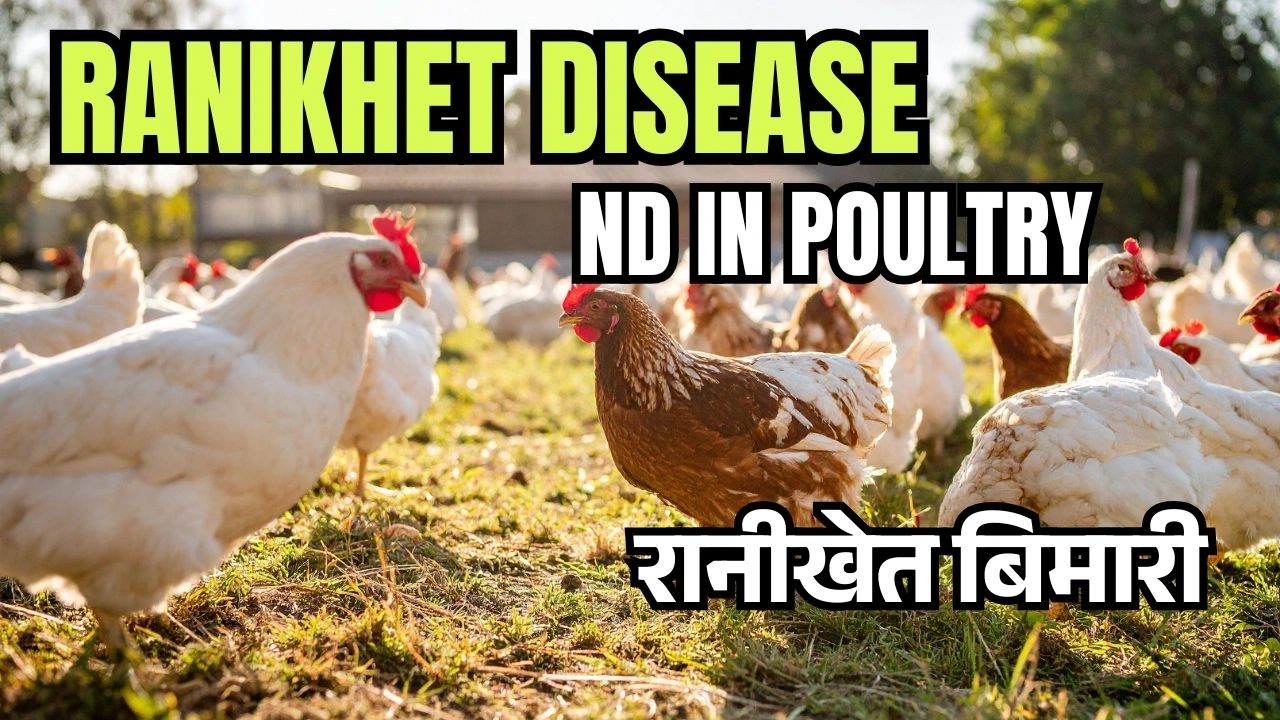
Newcastle Disease (Ranikhet Disease) in Poultry: Complete Indian Field Guide on Symptoms, Lesions, Vaccination, Diagnosis & Economic Losses
Newcastle Disease (ND), commonly known in India as Ranikhet Disease, is one of the most destructive viral diseases affecting poultry production worldwide. In India, it remains a constant threat to both commercial poultry farms and backyard village poultry, despite decades of vaccination efforts. Every year, thousands of poultry farmers suffer heavy economic losses due to sudden mortality, egg production crashes, poor growth, and long-term farm instability caused by this disease.
From small backyard flocks in rural villages to large integrated commercial operations, Newcastle Disease continues to circulate as an endemic infection across most Indian states. The challenge is not just the presence of the virus, but also the changing genetics of the virus, vaccination failures, poor biosecurity, climate stress, and gaps in disease monitoring.
This detailed guide explains everything about Newcastle Disease in poultry with a strong Indian field perspective—including virus types, epidemiology in India, clinical signs, post-mortem lesions, lab diagnosis, antibody titers, vaccination protocols, reasons for vaccine failure, and practical control strategies. (Simple samajhne ke liye beech-beech me Roman Hindi explanation bhi diya gaya hai.)
What is Newcastle Disease (Ranikhet Disease)?
Newcastle Disease is a highly contagious viral disease of birds caused by Avian Paramyxovirus Type-1 (APMV-1). It affects chickens most severely, but turkeys, ducks, pigeons, quail, and many wild birds can also be infected. The virus attacks the respiratory system, digestive system, and nervous system, depending on its strain and the immunity level of the bird.
In India, the disease is popularly called Ranikhet Disease, named after the location where it was first reported. It is listed as a notifiable disease because of its ability to cause mass mortality and trade restrictions.
Simple words me: Ranikhet ek bahut tez failne wali viral bimari hai jo saans, pet aur nervous system teenon ko nuksan pahuncha sakti hai.
Global and Indian Epidemiology of Newcastle Disease
Global Scenario
Newcastle Disease is present on every continent except a few free zones with strict eradication policies. The disease has caused multiple global panzootics since the 1920s. Even today, it remains endemic in:
- South Asia
- Southeast Asia
- Africa
- Middle East
- Parts of Latin America
Despite widespread vaccination, the virus continues to circulate because vaccination prevents clinical disease but does not always stop infection and virus shedding.
Indian Epidemiology: Why ND Never Disappears
In India, Newcastle Disease has been reported for nearly a century and is considered permanently endemic. Outbreaks occur every year in almost all states, including:
- Uttar Pradesh
- Haryana
- Punjab
- Telangana
- Tamil Nadu
- West Bengal
- Assam
- Maharashtra
- Gujarat
Both commercial poultry and backyard desi birds act as important reservoirs of infection.
ND Virus Genotypes in India
Molecular studies in recent years have shown that:
- Most Indian outbreaks are caused by Class II, Genotype XIII Newcastle Disease Virus.
- A newer Genotype XXII has also been detected in parts of North-East India.
Most traditional vaccines (LaSota, B1, R2B) belong to Genotype II, which explains why vaccinated flocks still sometimes show outbreaks—a phenomenon known as genotype mismatch.
Aasaan bhasha me: Hamare farm me jo vaccine lagti hai wo purane virus type par bani hoti hai, jabki field me naya virus ghoom raha hota hai.
Seasonal Pattern in India
Although ND can occur throughout the year, outbreaks are more common during:
- Winter months – cold stress and poor ventilation
- Peak summer – heat stress and dehydration
- Post-monsoon period – high humidity and poor litter quality
Stress weakens immunity and allows the virus to multiply rapidly.
Economic Losses Due to Newcastle Disease in India
Newcastle Disease is not just a health problem—it is a major financial disaster for poultry farmers.
Major Types of Economic Losses
High Mortality: In velogenic outbreaks, mortality can reach 80–100% in susceptible flocks.
Drop in Egg Production: Layers may show a 30–70% sudden drop in egg production within 2–4 days.
Poor Growth & Feed Conversion (FCR): Survivors show stunted growth and poor weight gain.
Cost of Emergency Treatment & Disinfection
Loss of Market Reputation & Trade Restrictions
Indian Field Reality
Several Indian studies and farm reports have shown that:
- Medium layer farms can lose ₹20–40 lakh per outbreak.
- Broiler farms may lose entire sheds within 3–5 days.
- In backyard poultry, ND can destroy a family’s entire year’s protein and income source in one week.
Gaon me jab Ranikhet failta hai, to logon ki saari murgiyan ek hi saath mar jaati hain – isse ghar ka poora khana aur paisa dono khatam ho jata hai.
Transmission and Risk Factors on Indian Farms
How Newcastle Disease Spreads
The virus spreads through:
- Respiratory secretions
- Faeces
- Contaminated feed and water
- Equipment, crates, vehicles, footwear
- Live bird markets
- Wild birds and pigeons
The virus survives for long periods in cool, moist environments and in organic matter like litter and manure.
Major Indian Farm Risk Factors
- Multi-age farming systems
- Poor boundary fencing
- Live bird movement without quarantine
- Poor cold chain for vaccines
- Irregular vaccination in backyard poultry
- High stocking density
- Poor ventilation
- Heat stress and mycotoxins in feed
Simple baat: Safai, alag-alag age ke birds ko mix na karna, aur sahi tarike se vaccination hi ND se bachne ka sabse bada tareeka hai.
Clinical Forms and Symptoms of Newcastle Disease
The severity of symptoms depends on:
- Virus strain (lentogenic, mesogenic, velogenic)
- Bird age
- Immune status
- Presence of other infections (IB, IBD, Mycoplasma)
1. Per-acute or Velogenic Form
- Sudden deaths without warning
- High fever
- Severe depression
- Greenish watery diarrhoea
- Cyanosis of comb and wattles
- Almost 100% mortality in unvaccinated flocks
2. Respiratory Form
- Coughing and sneezing
- Nasal discharge
- Open-mouth breathing
- Rales and gasping
- Conjunctivitis and swollen eyes
3. Nervous Form (Most Feared)
- Twisting of neck (torticollis)
- Tremors and shivering
- Paralysis of wings and legs
- Circling movements
- Loss of balance
Is stage par murghi gardan hilaane lagti hai aur khadi bhi nahi ho paati – ye nervous sign ND ka bahut important indicator hai.
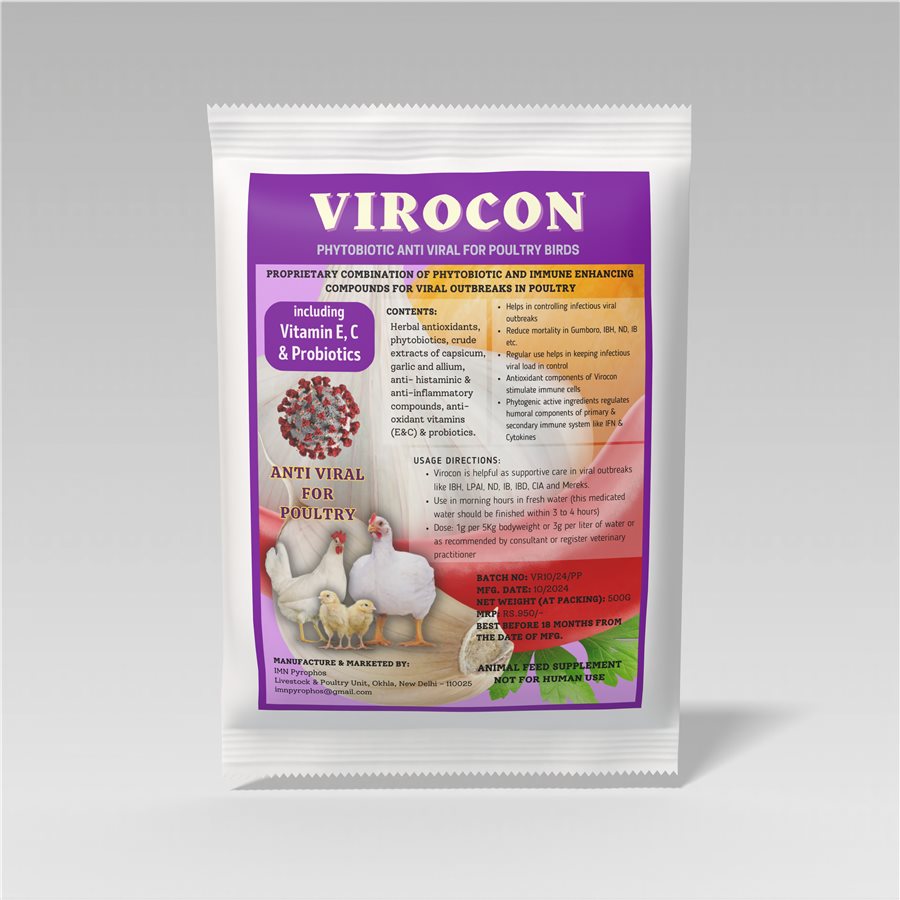
Viral outbreak support
Virocon
Phytobiotic support with herbal antioxidants, capsicum, garlic and allium extracts, vitamins E and C and probiotics. Supportive care in viral outbreaks such as ND, IB, IBD, IBH, LPAI, CIA and Marek’s; helps reduce mortality.
Dose: 1 g per 5 kg body weight or 3 g per litre. Give in the morning in fresh water and let birds finish it in 3–4 hours.
500 g ₹579MRP ₹950
4. Visceral (Digestive) Form
- Profuse green diarrhoea
- Severe dehydration
- Blood in droppings occasionally
- Rapid body weight loss
5. Signs in Layers & Breeders
- Sudden sharp egg drop
- Thin-shelled and misshapen eggs
- Drop in feed intake
- Egg peritonitis
- Infertility and poor hatchability
Most real field outbreaks show mixed respiratory, digestive, and nervous signs together.
Post-Mortem (PM) or Gross Lesions of Newcastle Disease
Post-mortem findings are very important for field diagnosis.
Respiratory System
- Congestion of trachea
- Mucus or blood in trachea
- Thickened and cloudy air sacs
Digestive System (Hallmark Lesions)
- Pin-point hemorrhages at proventriculus-gizzard junction
- Hemorrhages in intestine
- Swollen and hemorrhagic caecal tonsils
- Necrotic patches in intestine
Nervous System
- Brain congestion and swelling (microscopic lesions are more important)
Reproductive System (Layers)
- Ruptured ovarian follicles
- Blood clots in abdomen
- Yolk-colored peritonitis
- Flaccid ovaries
Agar PM me proventriculus aur caecal tonsil par khoon ke nishaan mil rahe ho, aur saath me egg drop bhi ho, to ND ka strong doubt hota hai.
Field Diagnosis and Differential Diagnosis
Field Suspicion is Based on:
- Sudden rapid spread in flock
- High mortality and egg drop
- Green diarrhoea + nervous signs
- Typical hemorrhages on PM
Important Differential Diagnoses
DiseaseHow It DiffersAvian InfluenzaMore severe edema, cyanosis, multi-organ hemorrhageInfectious BronchitisKidney lesions, watery egg whitesILTBloody mucus from mouth, severe dyspneaFowl CholeraSepticemic lesions, enlarged liverIB + E. coliRespiratory but no nervous signs
Final confirmation always requires laboratory testing.
Laboratory Diagnosis of Newcastle Disease
Sample Collection
- Tracheal and cloacal swabs
- Lung, spleen, brain, caecal tonsil tissues
- Blood for serology
Transport samples in viral transport medium under cold chain (4°C).
Virus Detection Tests
- RT-PCR / Real-time PCR – most sensitive and rapid
- Virus isolation in embryonated eggs
- Haemagglutination (HA) and Haemagglutination Inhibition (HI) tests
Pathotyping
- F-protein cleavage site sequencing
- Intracerebral Pathogenicity Index (ICPI)
Antibody Titers and Seromonitoring
What is HI Titer?
HI titer measures the level of protective antibodies against ND virus in the blood.
Protective Level
- HI titer ≥ log₂ 4 (1:16 dilution) is considered protective.
- At least 80–85% of birds in a flock should have protective titers.
Importance of Seromonitoring in India
- Helps detect vaccination failure early
- Guides booster scheduling
- Identifies uneven vaccine distribution
- Supports disease forecasting
Agar 100 birds ka sample liya aur sirf 40 birds me protective titer mila, to outbreak ka risk bahut zyada hota hai – chahe vaccine lag chuki ho.
Vaccination of Newcastle Disease in India
Types of ND Vaccines
- Live Lentogenic Vaccines – LaSota, B1, F strain
- Live Mesogenic Vaccines – R2B
- Inactivated (Killed) Vaccines – Oil adjuvant
- Recombinant Vector Vaccines – HVT-ND, FP-ND
Vaccines prevent clinical disease and mortality, but do not always prevent infection or virus shedding.
Typical Indian Vaccination Schedules
Broilers
- Day 5–7: Live ND (LaSota / F1 / B1) – eye drop
- Day 18–21: Booster via drinking water or spray
Commercial Layers
- Day 5–7: Live ND (eye drop)
- 4–6 weeks: Live booster
- 8 weeks: R2B (IM/SC)
- 16–18 weeks: Inactivated ND + R2B booster
- Every 2–3 months during lay: Live ND via drinking water/spray
Backyard Poultry
- Day 7–10: Thermostable ND (I-2 strain)
- Booster every 2–3 months
Why Newcastle Disease Vaccination Fails in India
Major reasons include:
- Maternal antibody interference
- Poor cold chain maintenance
- Improper dilution and uneven dosing
- Dirty drinking water
- Mycotoxin contamination
- Concurrent infections like IBD, IB
- Genotype mismatch between vaccine and field virus
- Poor biosecurity allowing heavy virus challenge
Sirf vaccine lagana kaafi nahi hota, vaccine ko sahi tarike se lagana aur farm ki safai bhi utni hi zaroori hoti hai.
Practical Control Strategy for Indian Poultry Farms
Strict Biosecurity
- Foot dips, visitor restriction, shed-wise clothing
- Vehicle disinfection
Regular Vaccination & Seromonitoring
- Schedule based on local risk
- Quarterly antibody profiling
Backyard Poultry Vaccination Programs
- Community-level mass vaccination
Rapid Reporting and Isolation
- Early detection and movement control
Safe Disposal of Dead Birds
- Deep burial or incineration only
Frequently Asked Questions (FAQs)
1. What is the most common symptom of Newcastle Disease in chickens?
Respiratory distress combined with green diarrhoea and nervous signs like twisted neck are the most common field symptoms.
2. Can Newcastle Disease affect humans?
The virus can cause mild conjunctivitis in humans handling infected birds, but it is not a serious zoonotic disease.
3. Can vaccinated birds still get Newcastle Disease?
Yes. Vaccination mainly prevents death and severe disease, but birds can still get subclinical infection and shed virus.
4. How long does Newcastle virus survive in the environment?
The virus can survive for weeks in cool, moist litter and manure, but is destroyed by common disinfectants after proper cleaning.
5. What is the difference between Ranikhet and Bird Flu?
Ranikhet is caused by paramyxovirus, while Bird Flu is caused by influenza virus. Both cause similar signs but are genetically different diseases.
6. Which vaccine is best for Newcastle Disease in India?
No single vaccine fits all farms. A combination of live + killed vaccine with proper boosters based on local risk is most effective.
7. How often should ND antibody titers be checked?
For layers and breeders, every 3–4 months is ideal. For broilers, periodic monitoring is done at company level.
8. Can desi backyard poultry spread Newcastle Disease to commercial farms?
Yes. Backyard poultry often act as silent carriers due to poor vaccination and can transmit the virus to commercial farms.
9. What is the mortality rate of Newcastle Disease?
Mortality can range from 10% to 100%, depending on virus strain and immunity status.
10. Is Newcastle Disease completely curable?
There is no treatment for the virus itself. Only supportive therapy and secondary infection control are possible. Prevention through vaccination is the only real solution.
Final Words
Newcastle Disease (Ranikhet Disease) remains one of the greatest biological and economic threats to the Indian poultry industry. Despite decades of vaccination, changing virus genotypes, uneven farm practices, and backyard poultry reservoirs continue to fuel outbreaks.
A successful ND control program in India must combine:
- Scientific vaccination schedules
- Regular antibody monitoring
- Strong biosecurity
- Backyard poultry inclusion
- Early laboratory confirmation
Only an integrated national and farm-level approach can reduce the devastating economic and livelihood impact of this disease.
Problem in your flock? Send photos of the birds and droppings on WhatsApp for a first opinion from Dr. Ibne Ali.
WhatsApp: 98715 84101मुर्गियों में Newcastle Disease (रानीखेत रोग): लक्षण, घाव (lesions), vaccination, जाँच और आर्थिक नुकसान पर पूरी भारतीय फील्ड गाइड
Newcastle Disease (ND), जिसे भारत में आम तौर पर रानीखेत रोग (Ranikhet Disease) कहा जाता है, पूरी दुनिया में poultry उत्पादन को नुकसान पहुँचाने वाली सबसे खतरनाक viral बीमारियों में से एक है। भारत में दशकों से vaccination होने के बावजूद यह commercial poultry farms और गाँव की देसी backyard मुर्गियों, दोनों के लिए लगातार खतरा बनी हुई है। हर साल हज़ारों poultry किसान इस बीमारी की वजह से अचानक मौतों, अंडा उत्पादन के गिरने, कमज़ोर बढ़वार और farm की लंबी अस्थिरता के कारण भारी आर्थिक नुकसान उठाते हैं।
गाँव के छोटे backyard झुंडों से लेकर बड़े integrated commercial farms तक, Newcastle Disease भारत के ज़्यादातर राज्यों में एक endemic संक्रमण के रूप में घूमती रहती है। समस्या सिर्फ virus के मौजूद होने की नहीं है, बल्कि virus की बदलती genetics, vaccination का फेल होना, कमज़ोर biosecurity, मौसम का stress और बीमारी की निगरानी में कमियाँ भी हैं।
यह विस्तृत गाइड मुर्गियों में Newcastle Disease के बारे में सब कुछ एक मज़बूत भारतीय फील्ड नज़रिए से समझाती है—जिसमें virus के प्रकार, भारत में epidemiology, लक्षण, post-mortem घाव, lab जाँच, antibody titers, vaccination schedule, vaccine फेल होने के कारण और बचाव के व्यावहारिक तरीके शामिल हैं। (आसानी से समझने के लिए बीच-बीच में सरल हिंदी में explanation भी दिया गया है।)
Newcastle Disease (रानीखेत रोग) क्या है?
Newcastle Disease पक्षियों की एक बहुत तेज़ी से फैलने वाली viral बीमारी है, जो Avian Paramyxovirus Type-1 (APMV-1) से होती है। यह सबसे ज़्यादा मुर्गियों को नुकसान पहुँचाती है, लेकिन टर्की, बत्तख, कबूतर, बटेर और कई जंगली पक्षी भी इससे संक्रमित हो सकते हैं। Virus के strain और पक्षी की immunity के हिसाब से यह साँस की प्रणाली, पाचन तंत्र और nervous system पर हमला करता है।
भारत में यह बीमारी रानीखेत रोग के नाम से मशहूर है, जो उस जगह के नाम पर रखा गया है जहाँ यह सबसे पहले रिपोर्ट हुई थी। इसे notifiable disease की सूची में रखा गया है, क्योंकि यह बड़े पैमाने पर मौतें और व्यापार पर पाबंदियाँ ला सकती है।
सीधी भाषा में: रानीखेत एक बहुत तेज़ फैलने वाली viral बीमारी है जो साँस, पेट और nervous system तीनों को नुकसान पहुँचा सकती है।
Newcastle Disease की दुनिया और भारत में epidemiology
दुनिया की स्थिति
Newcastle Disease हर महाद्वीप पर मौजूद है, सिवाय कुछ ऐसे free zones के जहाँ इसे खत्म करने की सख्त नीतियाँ लागू हैं। 1920 के दशक से यह बीमारी कई बार दुनिया भर में फैलने वाली महामारी (panzootics) बन चुकी है। आज भी यह इन जगहों पर endemic है:
- दक्षिण एशिया
- दक्षिण-पूर्व एशिया
- अफ्रीका
- मध्य पूर्व (Middle East)
- लैटिन अमेरिका के कुछ हिस्से
बड़े पैमाने पर vaccination के बावजूद virus घूमता रहता है, क्योंकि vaccination बीमारी के लक्षण तो रोकता है, लेकिन हमेशा संक्रमण और virus के बाहर निकलने (shedding) को नहीं रोकता।
भारत में epidemiology: ND कभी खत्म क्यों नहीं होती
भारत में Newcastle Disease लगभग एक सदी से रिपोर्ट हो रही है और इसे स्थायी रूप से endemic माना जाता है। लगभग सभी राज्यों में हर साल outbreaks होते हैं, जैसे:
- उत्तर प्रदेश
- हरियाणा
- पंजाब
- तेलंगाना
- तमिलनाडु
- पश्चिम बंगाल
- असम
- महाराष्ट्र
- गुजरात
Commercial poultry और backyard देसी मुर्गियाँ, दोनों ही संक्रमण के महत्वपूर्ण भंडार (reservoir) का काम करती हैं।
भारत में ND virus के genotypes
पिछले कुछ सालों की molecular स्टडीज़ से पता चला है कि:
- भारत के ज़्यादातर outbreaks Class II, Genotype XIII Newcastle Disease Virus से होते हैं।
- उत्तर-पूर्व भारत के कुछ हिस्सों में एक नया Genotype XXII भी पाया गया है।
ज़्यादातर पुरानी vaccines (LaSota, B1, R2B) Genotype II की हैं, इसी से समझ आता है कि vaccinated झुंडों में भी कभी-कभी outbreak क्यों हो जाता है—इसे genotype mismatch कहते हैं।
आसान भाषा में: हमारे farm में जो vaccine लगती है वो पुराने virus type पर बनी होती है, जबकि field में नया virus घूम रहा होता है।
भारत में मौसम के हिसाब से पैटर्न
ND साल भर कभी भी हो सकती है, लेकिन outbreaks इन समयों में ज़्यादा होते हैं:
- सर्दी के महीने – ठंड का stress और खराब ventilation
- भीषण गर्मी – heat stress और पानी की कमी (dehydration)
- बरसात के बाद का समय – ज़्यादा नमी और खराब litter
Stress से immunity कमज़ोर होती है और virus तेज़ी से बढ़ने लगता है।
भारत में Newcastle Disease से आर्थिक नुकसान
Newcastle Disease सिर्फ सेहत की समस्या नहीं है—यह poultry किसानों के लिए एक बड़ी आर्थिक तबाही है।
आर्थिक नुकसान के मुख्य प्रकार
ज़्यादा मृत्यु दर (Mortality): Velogenic outbreaks में, जिन झुंडों में immunity नहीं है वहाँ mortality 80–100% तक पहुँच सकती है।
अंडा उत्पादन में गिरावट: Layers में 2–4 दिन के अंदर अंडा उत्पादन में 30–70% की अचानक गिरावट आ सकती है।
कमज़ोर बढ़वार और खराब FCR: जो पक्षी बच जाते हैं उनकी बढ़वार रुक जाती है और वज़न ठीक से नहीं बढ़ता।
आपातकालीन इलाज और disinfection का खर्च
बाज़ार में साख का नुकसान और व्यापार पर पाबंदियाँ
भारत की फील्ड हकीकत
भारत की कई स्टडीज़ और farm रिपोर्ट्स से पता चला है कि:
- मध्यम आकार के layer farms को हर outbreak में ₹20–40 लाख तक का नुकसान हो सकता है।
- Broiler farms के पूरे shed 3–5 दिन में खत्म हो सकते हैं।
- Backyard poultry में ND एक परिवार के पूरे साल के protein और कमाई के साधन को एक हफ्ते में खत्म कर सकती है।
गाँव में जब रानीखेत फैलता है, तो लोगों की सारी मुर्गियाँ एक ही साथ मर जाती हैं – इससे घर का पूरा खाना और पैसा दोनों खत्म हो जाता है।
भारतीय farms पर बीमारी कैसे फैलती है और जोखिम के कारण
Newcastle Disease कैसे फैलती है
Virus इन रास्तों से फैलता है:
- साँस से निकलने वाला स्राव
- बीट (मल)
- दूषित feed और पानी
- उपकरण, crates, गाड़ियाँ, जूते-चप्पल
- ज़िंदा मुर्गियों के बाज़ार
- जंगली पक्षी और कबूतर
Virus ठंडे, नम माहौल में और litter व खाद जैसे organic पदार्थ में लंबे समय तक ज़िंदा रहता है।
भारतीय farms पर जोखिम के मुख्य कारण
- एक ही farm पर अलग-अलग उम्र के पक्षी रखना (multi-age farming)
- farm की बाउंड्री/बाड़ कमज़ोर होना
- बिना quarantine के ज़िंदा पक्षियों की आवाजाही
- Vaccines की cold chain ठीक न होना
- Backyard poultry में अनियमित vaccination
- एक जगह बहुत ज़्यादा पक्षी रखना (high stocking density)
- खराब ventilation
- Heat stress और feed में mycotoxins
सीधी बात: सफाई, अलग-अलग उम्र के पक्षियों को मिक्स न करना, और सही तरीके से vaccination ही ND से बचने का सबसे बड़ा तरीका है।
Newcastle Disease के रूप और लक्षण
लक्षण कितने गंभीर होंगे, यह इन बातों पर निर्भर करता है:
- Virus का strain (lentogenic, mesogenic, velogenic)
- पक्षी की उम्र
- Immunity की स्थिति
- दूसरे संक्रमणों की मौजूदगी (IB, IBD, Mycoplasma)
1. Per-acute या Velogenic रूप
- बिना किसी चेतावनी के अचानक मौतें
- तेज़ बुखार
- पक्षी बहुत सुस्त हो जाना
- हरे रंग के पतले दस्त
- कलगी (comb) और गलकंबल (wattles) का नीला पड़ना (cyanosis)
- बिना vaccination वाले झुंडों में लगभग 100% mortality
2. साँस वाला रूप (Respiratory Form)
- खाँसी और छींक
- नाक से पानी आना
- मुँह खोलकर साँस लेना
- साँस में घरघराहट (rales) और हाँफना
- आँख आना (conjunctivitis) और आँखों में सूजन
3. Nervous रूप (सबसे ज़्यादा डराने वाला)
- गर्दन का मुड़ जाना (torticollis)
- कंपकंपी और काँपना
- पंखों और टाँगों में लकवा
- गोल-गोल घूमना
- संतुलन बिगड़ जाना
इस stage पर मुर्गी गर्दन हिलाने लगती है और खड़ी भी नहीं हो पाती – यह nervous sign ND का बहुत important संकेत है।
वायरल बीमारी में सहारा
Virocon
हर्बल एंटीऑक्सीडेंट, कैप्सिकम, लहसुन और एलियम एक्सट्रैक्ट, विटामिन E और C और प्रोबायोटिक वाला फाइटोबायोटिक। ND, IB, IBD, IBH, LPAI, CIA और मैरेक्स जैसी वायरल बीमारियों में सहायक इलाज; मृत्यु घटाने में मदद करता है।
मात्रा: 1 ग्राम प्रति 5 किलो वज़न या 3 ग्राम प्रति लीटर। सुबह ताज़े पानी में दें और 3–4 घंटे में खत्म होने दें।
500 g ₹579MRP ₹950
4. Visceral (पाचन वाला) रूप
- बहुत ज़्यादा हरे दस्त
- शरीर में पानी की गंभीर कमी
- कभी-कभी बीट में खून
- शरीर का वज़न तेज़ी से घटना
5. Layers और Breeders में लक्षण
- अंडा उत्पादन में अचानक तेज़ गिरावट
- पतले छिलके वाले और बेढंगे अंडे
- Feed खाना कम हो जाना
- Egg peritonitis
- बाँझपन (infertility) और खराब hatchability
फील्ड में ज़्यादातर असली outbreaks में साँस, पाचन और nervous लक्षण एक साथ मिले-जुले दिखते हैं।
Newcastle Disease के Post-Mortem (PM) या बाहरी घाव (Gross Lesions)
फील्ड में जाँच के लिए post-mortem के निष्कर्ष बहुत ज़रूरी हैं।
साँस की प्रणाली
- सांस नली (trachea) में खून जमाव (congestion)
- Trachea में बलगम या खून
- मोटी और धुंधली air sacs
पाचन तंत्र (पहचान वाले खास घाव)
- Proventriculus और gizzard के जोड़ पर सुई की नोक जैसे खून के धब्बे (pin-point hemorrhages)
- आँतों में खून के धब्बे
- Caecal tonsils में सूजन और खून के धब्बे
- आँतों में सड़े हुए (necrotic) धब्बे
Nervous System
- दिमाग में खून जमाव और सूजन (microscopic घाव ज़्यादा महत्वपूर्ण होते हैं)
प्रजनन तंत्र (Layers)
- अंडाशय के follicles फट जाना
- पेट में खून के थक्के
- Yolk के रंग की peritonitis
- ढीले-ढाले (flaccid) अंडाशय
अगर PM में proventriculus और caecal tonsil पर खून के निशान मिल रहे हों, और साथ में egg drop भी हो, तो ND का पक्का शक होता है।
फील्ड जाँच और मिलती-जुलती बीमारियों से अंतर (Differential Diagnosis)
फील्ड में शक इन बातों पर होता है:
- झुंड में अचानक तेज़ी से फैलना
- ज़्यादा mortality और egg drop
- हरे दस्त + nervous लक्षण
- PM में खास तरह के खून के धब्बे
मिलती-जुलती महत्वपूर्ण बीमारियाँ
बीमारीकैसे अलग हैAvian Influenzaज़्यादा गंभीर सूजन (edema), नीलापन (cyanosis), कई अंगों में खून के धब्बेInfectious Bronchitisकिडनी में घाव, अंडे की सफेदी पानी जैसीILTमुँह से खून वाला बलगम, साँस लेने में भारी तकलीफFowl CholeraSepticemic घाव, बढ़ा हुआ liverIB + E. coliसाँस के लक्षण लेकिन कोई nervous लक्षण नहीं
अंतिम पुष्टि के लिए हमेशा laboratory जाँच ज़रूरी है।
Newcastle Disease की Laboratory जाँच
Sample लेना
- Trachea और cloaca के swabs
- फेफड़े, spleen, दिमाग, caecal tonsil के tissues
- Serology के लिए खून
Samples को viral transport medium में cold chain (4°C) के तहत भेजें।
Virus पहचानने के tests
- RT-PCR / Real-time PCR – सबसे संवेदनशील और जल्दी नतीजा देने वाला
- Embryonated eggs में virus isolation
- Haemagglutination (HA) और Haemagglutination Inhibition (HI) tests
Pathotyping
- F-protein cleavage site sequencing
- Intracerebral Pathogenicity Index (ICPI)
Antibody Titers और Seromonitoring
HI Titer क्या है?
HI titer खून में ND virus के खिलाफ बचाव करने वाली antibodies का स्तर मापता है।
बचाव देने वाला स्तर (Protective Level)
- HI titer ≥ log₂ 4 (1:16 dilution) को protective माना जाता है।
- झुंड के कम से कम 80–85% पक्षियों में protective titers होने चाहिए।
भारत में Seromonitoring का महत्व
- Vaccination फेल होने का जल्दी पता चलता है
- Booster कब देना है, यह तय करने में मदद मिलती है
- Vaccine ठीक से सब पक्षियों तक न पहुँचने का पता चलता है
- बीमारी का पहले से अनुमान लगाने में मदद मिलती है
अगर 100 पक्षियों का sample लिया और सिर्फ 40 पक्षियों में protective titer मिला, तो outbreak का खतरा बहुत ज़्यादा होता है – चाहे vaccine लग चुकी हो।
भारत में Newcastle Disease का Vaccination
ND Vaccines के प्रकार
- Live Lentogenic Vaccines – LaSota, B1, F strain
- Live Mesogenic Vaccines – R2B
- Inactivated (Killed) Vaccines – Oil adjuvant
- Recombinant Vector Vaccines – HVT-ND, FP-ND
Vaccines बीमारी के लक्षण और मौतों को रोकती हैं, लेकिन हमेशा संक्रमण या virus shedding को नहीं रोकतीं।
भारत में आम Vaccination Schedules
Broilers
- दिन 5–7: Live ND (LaSota / F1 / B1) – आँख में ड्रॉप
- दिन 18–21: पीने के पानी या spray से booster
Commercial Layers
- दिन 5–7: Live ND (आँख में ड्रॉप)
- 4–6 हफ्ते: Live booster
- 8 हफ्ते: R2B (IM/SC)
- 16–18 हफ्ते: Inactivated ND + R2B booster
- अंडा देने के दौरान हर 2–3 महीने: पीने के पानी/spray से Live ND
Backyard Poultry
- दिन 7–10: Thermostable ND (I-2 strain)
- हर 2–3 महीने में booster
भारत में Newcastle Disease का Vaccination क्यों फेल होता है
मुख्य कारण हैं:
- माँ से मिली antibodies (maternal antibody) की रुकावट
- Cold chain का ठीक से पालन न होना
- गलत dilution और असमान dose
- गंदा पीने का पानी
- Mycotoxin का दूषण
- साथ में दूसरे संक्रमण जैसे IBD, IB
- Vaccine और field virus के बीच genotype mismatch
- कमज़ोर biosecurity, जिससे virus का भारी हमला होता है
सिर्फ vaccine लगाना काफी नहीं होता, vaccine को सही तरीके से लगाना और farm की सफाई भी उतनी ही ज़रूरी होती है।
भारतीय Poultry Farms के लिए बचाव की व्यावहारिक रणनीति
सख्त Biosecurity
- Foot dips, बाहरी लोगों के आने पर रोक, हर shed के लिए अलग कपड़े
- गाड़ियों का disinfection
नियमित Vaccination और Seromonitoring
- इलाके के जोखिम के हिसाब से schedule
- हर तीन महीने में antibody profiling
Backyard Poultry Vaccination कार्यक्रम
- समुदाय (गाँव) स्तर पर सामूहिक vaccination
तुरंत रिपोर्ट करना और अलग करना (Isolation)
- जल्दी पहचान और आवाजाही पर नियंत्रण
मरे हुए पक्षियों का सुरक्षित निपटान
- सिर्फ गहरा गड्ढा खोदकर दबाना या जलाना (incineration)
अक्सर पूछे जाने वाले सवाल (FAQs)
1. मुर्गियों में Newcastle Disease का सबसे आम लक्षण क्या है?
साँस की तकलीफ के साथ हरे दस्त और गर्दन मुड़ने जैसे nervous लक्षण फील्ड में सबसे आम लक्षण हैं।
2. क्या Newcastle Disease इंसानों को हो सकती है?
संक्रमित पक्षियों को संभालने वाले इंसानों में यह virus हल्की आँख आने (mild conjunctivitis) की समस्या कर सकता है, लेकिन यह इंसानों के लिए गंभीर zoonotic बीमारी नहीं है।
3. क्या vaccinated पक्षियों को भी Newcastle Disease हो सकती है?
हाँ। Vaccination मुख्य रूप से मौत और गंभीर बीमारी को रोकता है, लेकिन पक्षियों में फिर भी बिना लक्षण वाला (subclinical) संक्रमण हो सकता है और वे virus बाहर निकाल (shed) सकते हैं।
4. Newcastle virus माहौल में कितने समय तक ज़िंदा रहता है?
Virus ठंडे, नम litter और खाद में कई हफ्तों तक ज़िंदा रह सकता है, लेकिन अच्छी सफाई के बाद आम disinfectants से खत्म हो जाता है।
5. रानीखेत और Bird Flu में क्या अंतर है?
रानीखेत paramyxovirus से होता है, जबकि Bird Flu influenza virus से होता है। दोनों के लक्षण मिलते-जुलते हैं, लेकिन genetically ये अलग-अलग बीमारियाँ हैं।
6. भारत में Newcastle Disease के लिए सबसे अच्छी vaccine कौन सी है?
कोई एक vaccine सभी farms के लिए सही नहीं होती। इलाके के जोखिम के हिसाब से live + killed vaccine का combination और सही boosters सबसे असरदार होता है।
7. ND antibody titers कितनी बार जाँचने चाहिए?
Layers और breeders के लिए हर 3–4 महीने सबसे अच्छा है। Broilers के लिए समय-समय पर monitoring company के स्तर पर की जाती है।
8. क्या देसी backyard मुर्गियाँ commercial farms में Newcastle Disease फैला सकती हैं?
हाँ। कमज़ोर vaccination की वजह से backyard मुर्गियाँ अक्सर चुपचाप बीमारी ढोने वाली (silent carriers) होती हैं और commercial farms तक virus पहुँचा सकती हैं।
9. Newcastle Disease में mortality rate कितना होता है?
Virus के strain और immunity की स्थिति के हिसाब से mortality 10% से 100% तक हो सकती है।
10. क्या Newcastle Disease पूरी तरह ठीक हो सकती है?
Virus का अपना कोई इलाज नहीं है। सिर्फ सहायक इलाज (supportive therapy) और secondary infection पर नियंत्रण ही संभव है। Vaccination से बचाव ही असली समाधान है।
आखिरी बात
Newcastle Disease (रानीखेत रोग) आज भी भारतीय poultry उद्योग के लिए सबसे बड़े जैविक और आर्थिक खतरों में से एक है। दशकों के vaccination के बावजूद, बदलते virus genotypes, farms के अलग-अलग तौर-तरीके और backyard poultry के भंडार outbreaks को बढ़ावा देते रहते हैं।
भारत में ND पर सफल नियंत्रण कार्यक्रम में ये सब एक साथ होना चाहिए:
- वैज्ञानिक vaccination schedules
- नियमित antibody monitoring
- मज़बूत biosecurity
- Backyard poultry को भी शामिल करना
- Laboratory से जल्दी पुष्टि
सिर्फ एक राष्ट्रीय और farm स्तर का मिला-जुला (integrated) तरीका ही इस बीमारी के भारी आर्थिक और रोज़ी-रोटी पर पड़ने वाले असर को कम कर सकता है।
फ़ार्म में कोई दिक्कत? पक्षियों और बीट की फ़ोटो WhatsApp पर भेजिए, डॉ. इब्ने अली से पहली राय लीजिए।
WhatsApp: 98715 84101Murgiyon me Newcastle Disease (Ranikhet Disease): Lakshan, Lesions, Vaccination, Diagnosis aur Aarthik Nuksan par Poori Indian Field Guide
Newcastle Disease (ND), jise India me aam taur par Ranikhet Disease kaha jata hai, poori duniya me poultry production ko nuksan pahunchane wali sabse khatarnak viral bimariyon me se ek hai. India me dashakon se vaccination hone ke bawajood ye commercial poultry farms aur gaon ki backyard murgiyon, dono ke liye lagatar khatra bani hui hai. Har saal hazaron poultry farmers is bimari ki wajah se achanak maut, egg production girne, kamzor growth aur farm ki lambi asthirta ke karan bhari aarthik nuksan uthate hain.
Gaon ke chhote backyard jhundon se lekar bade integrated commercial farms tak, Newcastle Disease India ke zyadatar rajyon me ek endemic infection ki tarah ghoomti rehti hai. Problem sirf virus ke hone ki nahi hai, balki virus ki badalti genetics, vaccination fail hona, kamzor biosecurity, mausam ka stress aur bimari ki monitoring me kamiyan bhi hain.
Ye detailed guide murgiyon me Newcastle Disease ke baare me sab kuch ek mazboot Indian field nazariye se samjhati hai—jisme virus ke types, India me epidemiology, lakshan, post-mortem lesions, lab diagnosis, antibody titers, vaccination schedule, vaccine fail hone ke karan aur bachav ke practical tareeke shamil hain. (Simple samajhne ke liye beech-beech me Roman Hindi explanation bhi diya gaya hai.)
Newcastle Disease (Ranikhet Disease) kya hai?
Newcastle Disease pakshiyon ki ek bahut tezi se failne wali viral bimari hai jo Avian Paramyxovirus Type-1 (APMV-1) se hoti hai. Ye sabse zyada murgiyon ko nuksan karti hai, lekin turkey, batakh, kabootar, bater aur kai jungli pakshi bhi isse infect ho sakte hain. Virus ke strain aur bird ki immunity ke hisaab se ye saans ke system, pet (digestive system) aur nervous system par attack karta hai.
India me ye bimari Ranikhet Disease ke naam se mashhoor hai, jo us jagah ke naam par pada jahan ye sabse pehle report hui thi. Ise notifiable disease ki list me rakha gaya hai kyunki ye bade paimane par maut aur trade par pabandiyan la sakti hai.
Simple words me: Ranikhet ek bahut tez failne wali viral bimari hai jo saans, pet aur nervous system teenon ko nuksan pahuncha sakti hai.
Newcastle Disease ki Duniya aur India me Epidemiology
Duniya ki sthiti
Newcastle Disease har mahadweep (continent) par maujood hai, sirf kuch free zones ko chhodkar jahan ise khatam karne ki sakht policy lagu hai. 1920 ke dashak se ye bimari kai baar duniya bhar me failne wali mahamari (panzootics) ban chuki hai. Aaj bhi ye in jagahon par endemic hai:
- South Asia
- Southeast Asia
- Africa
- Middle East
- Latin America ke kuch hisse
Bade paimane par vaccination ke bawajood virus ghoomta rehta hai, kyunki vaccination bimari ke lakshan to rokta hai, lekin hamesha infection aur virus shedding ko nahi rokta.
India me Epidemiology: ND kabhi khatam kyun nahi hoti
India me Newcastle Disease lagbhag ek sadi (century) se report ho rahi hai aur ise permanently endemic mana jata hai. Lagbhag sabhi rajyon me har saal outbreak hote hain, jaise:
- Uttar Pradesh
- Haryana
- Punjab
- Telangana
- Tamil Nadu
- West Bengal
- Assam
- Maharashtra
- Gujarat
Commercial poultry aur backyard desi murgiyan, dono hi infection ke important reservoir ka kaam karti hain.
India me ND Virus ke Genotypes
Pichhle kuch saalon ki molecular studies se pata chala hai ki:
- India ke zyadatar outbreaks Class II, Genotype XIII Newcastle Disease Virus se hote hain.
- North-East India ke kuch hisson me ek naya Genotype XXII bhi mila hai.
Zyadatar purani vaccines (LaSota, B1, R2B) Genotype II ki hain, isi se samajh aata hai ki vaccinated flock me bhi kabhi-kabhi outbreak kyun ho jata hai—ise genotype mismatch kehte hain.
Aasaan bhasha me: Hamare farm me jo vaccine lagti hai wo purane virus type par bani hoti hai, jabki field me naya virus ghoom raha hota hai.
India me Mausam ke hisaab se Pattern
ND saal bhar kabhi bhi ho sakti hai, lekin outbreak in samay me zyada hote hain:
- Sardi ke mahine – thand ka stress aur kharab ventilation
- Tez garmi – heat stress aur dehydration
- Baarish ke baad ka samay – zyada nami (humidity) aur kharab litter
Stress se immunity kamzor hoti hai aur virus tezi se badhne lagta hai.
India me Newcastle Disease se Aarthik Nuksan
Newcastle Disease sirf health ki problem nahi hai—ye poultry farmers ke liye ek badi financial tabahi hai.
Aarthik Nuksan ke Mukhya Prakar
Zyada Mortality: Velogenic outbreak me, jin flocks me immunity nahi hai, wahan mortality 80–100% tak pahunch sakti hai.
Egg Production me Girawat: Layers me 2–4 din ke andar egg production me 30–70% ki achanak girawat aa sakti hai.
Kamzor Growth aur Kharab FCR: Jo birds bach jaate hain unki growth ruk jaati hai aur weight theek se nahi badhta.
Emergency Treatment aur Disinfection ka Kharcha
Market me Saakh ka Nuksan aur Trade par Pabandiyan
Indian Field ki Haqeeqat
India ki kai studies aur farm reports se pata chala hai ki:
- Medium layer farms ko har outbreak me ₹20–40 lakh tak ka nuksan ho sakta hai.
- Broiler farms ke poore shed 3–5 din me khatam ho sakte hain.
- Backyard poultry me ND ek parivar ke poore saal ke protein aur kamai ke saadhan ko ek hafte me khatam kar sakti hai.
Gaon me jab Ranikhet failta hai, to logon ki saari murgiyan ek hi saath mar jaati hain – isse ghar ka poora khana aur paisa dono khatam ho jata hai.
Indian Farms par Bimari kaise Failti hai aur Risk Factors
Newcastle Disease kaise failti hai
Virus in raston se failta hai:
- Saans se nikalne wala discharge
- Beet (faeces)
- Contaminated feed aur paani
- Equipment, crates, gaadiyan, joote-chappal
- Live bird markets
- Jungli pakshi aur kabootar
Virus thande, nam mahaul me aur litter aur khaad (manure) jaise organic matter me lambe samay tak zinda rehta hai.
Indian Farms par Mukhya Risk Factors
- Ek hi farm par alag-alag age ke birds rakhna (multi-age farming)
- Farm ki boundary/fencing kamzor hona
- Bina quarantine ke live birds ka aana-jana
- Vaccines ki cold chain theek na hona
- Backyard poultry me irregular vaccination
- Ek jagah bahut zyada birds rakhna (high stocking density)
- Kharab ventilation
- Heat stress aur feed me mycotoxins
Simple baat: Safai, alag-alag age ke birds ko mix na karna, aur sahi tarike se vaccination hi ND se bachne ka sabse bada tareeka hai.
Newcastle Disease ke Roop aur Lakshan
Lakshan kitne serious honge, ye in baaton par depend karta hai:
- Virus ka strain (lentogenic, mesogenic, velogenic)
- Bird ki age
- Immunity ki sthiti
- Doosre infections ka hona (IB, IBD, Mycoplasma)
1. Per-acute ya Velogenic Roop
- Bina kisi warning ke achanak maut
- Tez bukhar
- Bird bahut sust ho jana
- Hare rang ke patle dast
- Kalgi (comb) aur wattles ka neela padna (cyanosis)
- Bina vaccination wale flock me lagbhag 100% mortality
2. Saans wala Roop (Respiratory Form)
- Khansi aur chheenk
- Naak se paani aana
- Munh khol kar saans lena
- Saans me ghar-ghar ki awaaz (rales) aur hanfna
- Aankh aana (conjunctivitis) aur aankhon me sujan
3. Nervous Roop (Sabse zyada darane wala)
- Gardan mud jana (torticollis)
- Kanpkanpi aur kaanpna
- Pankh aur taangon me lakwa (paralysis)
- Gol-gol ghoomna
- Balance bigad jana
Is stage par murghi gardan hilaane lagti hai aur khadi bhi nahi ho paati – ye nervous sign ND ka bahut important indicator hai.
Viral bimari me sahara
Virocon
Herbal antioxidant, capsicum, lehsun aur allium extract, vitamin E aur C aur probiotic wala phytobiotic. ND, IB, IBD, IBH, LPAI, CIA aur Marek’s jaisi viral bimariyon me sahayak ilaaj; maut ghatane me madad karta hai.
Matra: 1 g prati 5 kg wazan ya 3 g prati litre. Subah taaze paani me dijiye aur 3–4 ghante me khatam hone dijiye.
500 g ₹579MRP ₹950
4. Visceral (Digestive) Roop
- Bahut zyada hare dast
- Body me paani ki serious kami (dehydration)
- Kabhi-kabhi beet me khoon
- Body weight tezi se ghatna
5. Layers aur Breeders me Lakshan
- Egg production me achanak tez girawat
- Patle chhilke wale aur tedhe-medhe ande
- Feed khana kam ho jana
- Egg peritonitis
- Infertility aur kharab hatchability
Field me zyadatar asli outbreaks me saans, pet aur nervous lakshan ek saath mile-jule dikhte hain.
Newcastle Disease ke Post-Mortem (PM) ya Gross Lesions
Field diagnosis ke liye post-mortem findings bahut zaroori hain.
Saans ka System
- Trachea (saans nali) me congestion
- Trachea me balgam ya khoon
- Moti aur dhundhli air sacs
Digestive System (Pehchan wale khaas lesions)
- Proventriculus aur gizzard ke jod par sui ki nok jaise khoon ke dhabbe (pin-point hemorrhages)
- Aanton me khoon ke dhabbe
- Caecal tonsils me sujan aur khoon ke dhabbe
- Aanton me sade hue (necrotic) patches
Nervous System
- Dimaag me congestion aur sujan (microscopic lesions zyada important hote hain)
Reproductive System (Layers)
- Ovary ke follicles phat jana
- Pet me khoon ke thakke
- Yolk ke rang ki peritonitis
- Dheeli-dhaali (flaccid) ovaries
Agar PM me proventriculus aur caecal tonsil par khoon ke nishaan mil rahe ho, aur saath me egg drop bhi ho, to ND ka strong doubt hota hai.
Field Diagnosis aur Differential Diagnosis
Field me shak in baaton par hota hai:
- Flock me achanak tezi se failna
- Zyada mortality aur egg drop
- Hare dast + nervous lakshan
- PM me typical khoon ke dhabbe
Important Differential Diagnoses (milti-julti bimariyan)
BimariKaise alag haiAvian InfluenzaZyada serious sujan (edema), neelapan (cyanosis), kai organs me khoon ke dhabbeInfectious BronchitisKidney me lesions, ande ki safedi paani jaisiILTMunh se khoon wala balgam, saans lene me bhari takleefFowl CholeraSepticemic lesions, bada hua liverIB + E. coliSaans ke lakshan lekin koi nervous lakshan nahi
Final confirmation ke liye hamesha laboratory testing zaroori hai.
Newcastle Disease ka Laboratory Diagnosis
Sample Collection
- Trachea aur cloaca ke swabs
- Lung, spleen, brain, caecal tonsil ke tissues
- Serology ke liye khoon
Samples ko viral transport medium me cold chain (4°C) ke saath bhejein.
Virus Detection Tests
- RT-PCR / Real-time PCR – sabse sensitive aur jaldi result dene wala
- Embryonated eggs me virus isolation
- Haemagglutination (HA) aur Haemagglutination Inhibition (HI) tests
Pathotyping
- F-protein cleavage site sequencing
- Intracerebral Pathogenicity Index (ICPI)
Antibody Titers aur Seromonitoring
HI Titer kya hai?
HI titer khoon me ND virus ke khilaf bachav karne wali antibodies ka level naapta hai.
Protective Level
- HI titer ≥ log₂ 4 (1:16 dilution) ko protective mana jata hai.
- Flock ke kam se kam 80–85% birds me protective titers hone chahiye.
India me Seromonitoring ki Importance
- Vaccination fail hone ka jaldi pata chalta hai
- Booster kab dena hai, ye tay karne me madad milti hai
- Vaccine sab birds tak barabar na pahunchne ka pata chalta hai
- Bimari ka pehle se andaza lagane me madad milti hai
Agar 100 birds ka sample liya aur sirf 40 birds me protective titer mila, to outbreak ka risk bahut zyada hota hai – chahe vaccine lag chuki ho.
India me Newcastle Disease ka Vaccination
ND Vaccines ke Types
- Live Lentogenic Vaccines – LaSota, B1, F strain
- Live Mesogenic Vaccines – R2B
- Inactivated (Killed) Vaccines – Oil adjuvant
- Recombinant Vector Vaccines – HVT-ND, FP-ND
Vaccines bimari ke lakshan aur maut ko rokti hain, lekin hamesha infection ya virus shedding ko nahi rokti.
India me Aam Vaccination Schedules
Broilers
- Day 5–7: Live ND (LaSota / F1 / B1) – eye drop
- Day 18–21: Peene ke paani ya spray se booster
Commercial Layers
- Day 5–7: Live ND (eye drop)
- 4–6 hafte: Live booster
- 8 hafte: R2B (IM/SC)
- 16–18 hafte: Inactivated ND + R2B booster
- Laying ke dauran har 2–3 mahine: Peene ke paani/spray se Live ND
Backyard Poultry
- Day 7–10: Thermostable ND (I-2 strain)
- Har 2–3 mahine me booster
India me Newcastle Disease ka Vaccination kyun Fail hota hai
Mukhya karan hain:
- Maa se mili antibodies (maternal antibody) ki rukawat
- Cold chain theek se maintain na hona
- Galat dilution aur barabar dose na milna
- Ganda peene ka paani
- Mycotoxin contamination
- Saath me doosre infection jaise IBD, IB
- Vaccine aur field virus ke beech genotype mismatch
- Kamzor biosecurity, jisse virus ka bhari attack hota hai
Sirf vaccine lagana kaafi nahi hota, vaccine ko sahi tarike se lagana aur farm ki safai bhi utni hi zaroori hoti hai.
Indian Poultry Farms ke liye Practical Control Strategy
Sakht Biosecurity
- Foot dips, bahar ke logon ke aane par rok, har shed ke liye alag kapde
- Gaadiyon ka disinfection
Regular Vaccination aur Seromonitoring
- Ilaake ke risk ke hisaab se schedule
- Har 3 mahine me antibody profiling
Backyard Poultry Vaccination Programs
- Gaon (community) level par mass vaccination
Jaldi Reporting aur Isolation
- Jaldi pehchan aur aane-jaane par control
Mare hue Birds ka Safe Disposal
- Sirf gehra gaddha khod kar dabana ya jalana (incineration)
Aksar Poochhe Jaane Wale Sawal (FAQs)
1. Murgiyon me Newcastle Disease ka sabse common lakshan kya hai?
Saans ki takleef ke saath hare dast aur gardan mudna jaise nervous lakshan field me sabse common lakshan hain.
2. Kya Newcastle Disease insaanon ko ho sakti hai?
Infected birds ko handle karne wale insaanon me ye virus halki aankh aane (mild conjunctivitis) ki problem kar sakta hai, lekin ye serious zoonotic bimari nahi hai.
3. Kya vaccinated birds ko bhi Newcastle Disease ho sakti hai?
Haan. Vaccination mainly maut aur serious bimari ko rokta hai, lekin birds me phir bhi bina lakshan wala (subclinical) infection ho sakta hai aur wo virus shed kar sakte hain.
4. Newcastle virus mahaul me kitne samay tak zinda rehta hai?
Virus thande, nam litter aur khaad me kai hafton tak zinda reh sakta hai, lekin achhi safai ke baad common disinfectants se khatam ho jata hai.
5. Ranikhet aur Bird Flu me kya fark hai?
Ranikhet paramyxovirus se hota hai, jabki Bird Flu influenza virus se hota hai. Dono ke lakshan milte-julte hain, lekin genetically ye alag-alag bimariyan hain.
6. India me Newcastle Disease ke liye sabse achhi vaccine kaun si hai?
Koi ek vaccine sab farms ke liye sahi nahi hoti. Ilaake ke risk ke hisaab se live + killed vaccine ka combination aur sahi boosters sabse zyada asardar hota hai.
7. ND antibody titers kitni baar check karne chahiye?
Layers aur breeders ke liye har 3–4 mahine sabse sahi hai. Broilers ke liye samay-samay par monitoring company level par hoti hai.
8. Kya desi backyard murgiyan commercial farms me Newcastle Disease faila sakti hain?
Haan. Kamzor vaccination ki wajah se backyard murgiyan aksar silent carriers hoti hain aur commercial farms tak virus pahuncha sakti hain.
9. Newcastle Disease me mortality rate kitna hota hai?
Virus strain aur immunity ki sthiti ke hisaab se mortality 10% se 100% tak ho sakti hai.
10. Kya Newcastle Disease poori tarah theek ho sakti hai?
Virus ka khud ka koi ilaaj nahi hai. Sirf supportive therapy aur secondary infection ka control hi possible hai. Vaccination se bachav hi asli solution hai.
Aakhri Baat
Newcastle Disease (Ranikhet Disease) aaj bhi Indian poultry industry ke liye sabse bade biological aur aarthik khatron me se ek hai. Dashakon ke vaccination ke bawajood, badalte virus genotypes, farms ke alag-alag tareeke aur backyard poultry ke reservoir outbreaks ko badhava dete rehte hain.
India me ND ka safal control program in sab ko saath lekar chalna chahiye:
- Scientific vaccination schedules
- Regular antibody monitoring
- Mazboot biosecurity
- Backyard poultry ko bhi shamil karna
- Laboratory se jaldi confirmation
Sirf ek national aur farm level ka integrated tareeka hi is bimari ke bhari aarthik aur rozi-roti par padne wale asar ko kam kar sakta hai.
Farm me koi dikkat? Pakshiyon aur beet ki photo WhatsApp par bhejiye, Dr. Ibne Ali se pehli raay lijiye.
WhatsApp: 98715 84101