
Cold nights, closed curtains and ammonia make winter the season of CRD, E. coli, IB, Ranikhet, ascites and kidney trouble in broilers. Many farmers react by buying whatever the shop suggests on the day a problem shows up. A fixed plan works better: you know on day 1 what goes into the water on every day of the batch, what it is for, and roughly what it will cost. This page gives you exactly that, the official IMN Pyrophos 42-Day Winter Broiler Preventive Medicine Schedule for Winter 2026, made for farmers with EC (environment-controlled) sheds, followed by the reason behind every product in it.
In short: the schedule costs about ₹4,860 per 1,000 birds for the full 42 days, about ₹4.9 per chick (vaccine cost extra). It has the ND-IB vaccine on day 4, six plain-water days, and no antibiotics. Antibiotics stay what they should be: a vet’s decision when a bacterial disease is diagnosed.
How to read this table
- All quantities are per 1,000 birds. Scale them for your flock: 5,000 birds = 5 times the quantity, 2,500 birds = 2.5 times.
- First water (Entry 1) is the first water of the day, given in the morning. Next water (Entry 2) is the water you give after the first one is finished.
- Dissolve each day’s quantity in the amount of water the birds finish in 3–4 hours in winter. Measure it: note how much the flock drank in the first 3–4 hours yesterday.
- Where two products are joined with “+”, they go in the same water, as the schedule shows. Do not add other products of your own.
- Never mix any product in vaccine water. On day 4 the first water is the ND-IB vaccine only; Alceau goes in the next water.
- Plain-water days (day 23, 31, 35, 37, 39 and 40) are on purpose: they give the gut and the kidneys a rest. Give clean drinking water only.
- In winter, water from an overhead tank can be very cold at dawn. Let it come to shed temperature before chicks drink it; cold water cuts drinking and chills the chicks.
IMN Pyrophos winter 2026 broiler medicine schedule: day 1 to 42
Quantities per 1,000 birds. Cost is the approximate cost of the products for that day, in rupees per 1,000 birds.
| Day | First water (Entry 1) | Next water (Entry 2) | Cost ₹/1,000 birds |
|---|---|---|---|
| Week 1 (day 1–7): arrival, ND-IB vaccine, early protection | ₹488 | ||
| 1 | Easy Brood 70 g (as soon as chicks arrive) | Vitaden H 30 ml | ₹111 |
| 2 | Easy Brood 70 g | Alceau 15 g | ₹101 |
| 3 | Pyrocal B 40 ml | Alceau 15 g | ₹41 |
| 4 | ND-IB vaccine only (no product in vaccine water) | Alceau 15 g | ₹22 |
| 5 | Vitaden H 35 ml | Pyrocal B 45 ml | ₹59 |
| 6 | Sel-E Boost 25 g + Nexamune 20 ml | Pyrocal B 50 ml | ₹62 |
| 7 | Sel-E Boost 25 g + Nexamune 20 ml | Vitaden H 50 ml | ₹92 |
| Week 2 (day 8–14): kidney, liver, gut, immunity | ₹775 | ||
| 8 | Nephrowin 50 ml | Hepasol DS 50 ml | ₹51 |
| 9 | Nephrowin 50 ml + Grotek 30 g | Hepasol DS 50 ml | ₹92 |
| 10 | Remipro 25 g + Grotek 30 g | Vitaden H 50 ml | ₹126 |
| 11 | Septima 70 g | Pyrocal B 60 ml | ₹139 |
| 12 | Septima 70 g | Ascitox Q10 90 g | ₹174 |
| 13 | Hepasol DS 50 ml | Ascitox Q10 90 g + Sel-E Boost 35 g | ₹124 |
| 14 | Pyrocal B 70 ml | Sel-E Boost 35 g | ₹69 |
| Week 3 (day 15–21): fast growth, breathing, ascites watch | ₹1,297 | ||
| 15 | Pyrocal B 70 ml | Remipro 50 g | ₹95 |
| 16 | Respoze 50 ml | Nexamune 50 ml | ₹78 |
| 17 | Respoze 50 ml | Vitaden H 75 ml | ₹126 |
| 18 | Hepasol DS 100 ml | Grotek 100 g | ₹187 |
| 19 | Septima 120 g | Goutster 80 g | ₹266 |
| 20 | Septima 120 g | Grotek 80 g | ₹299 |
| 21 | Alceau 100 g | Ascitox Q10 140 g | ₹246 |
| Week 4 (day 22–28): ascites, kidney, liver | ₹829 | ||
| 22 | Ascitox Q10 140 g | – | ₹98 |
| 23 | Plain water (no product) | – | ₹0 |
| 24 | Respoze 100 ml | Grotek 80 g | ₹201 |
| 25 | Goutster 100 g | – | ₹94 |
| 26 | Hepasol DS 120 ml | – | ₹62 |
| 27 | Septima 150 g | – | ₹238 |
| 28 | Grotek 100 g | – | ₹136 |
| Week 5 (day 29–35): weight and gut | ₹839 | ||
| 29 | Remipro 150 g | Grotek 100 g | ₹324 |
| 30 | Ascitox Q10 180 g | – | ₹126 |
| 31 | Plain water (no product) | – | ₹0 |
| 32 | Nexamune 120 ml | Hepasol DS 120 ml | ₹139 |
| 33 | Remipro 150 g | – | ₹188 |
| 34 | Hepasol DS 120 ml | – | ₹62 |
| 35 | Plain water (no product) | – | ₹0 |
| Week 6 (day 36–42): finishing | ₹631 | ||
| 36 | Ascitox Q10 200 g | – | ₹140 |
| 37 | Plain water (no product) | – | ₹0 |
| 38 | Grotek 120 g | – | ₹163 |
| 39 | Plain water (no product) | – | ₹0 |
| 40 | Plain water (no product) | – | ₹0 |
| 41 | Remipro 150 g | – | ₹188 |
| 42 | Ascitox Q10 200 g | – | ₹140 |
| Total day 1–42: about ₹4,860 per 1,000 birds (about ₹4.9 per chick); vaccine extra | ≈ ₹4,860 | ||
Scroll the table sideways on mobile. Total of the daily costs: ₹4,859, so about ₹4,860 per 1,000 birds, or about ₹4.9 per chick for 42 days. Vaccine cost is extra.
⬇ Download PDF (free) Or ask on WhatsApp
Why each product is in the schedule
Every product has a job at a certain age. Click a name to see the full product page.
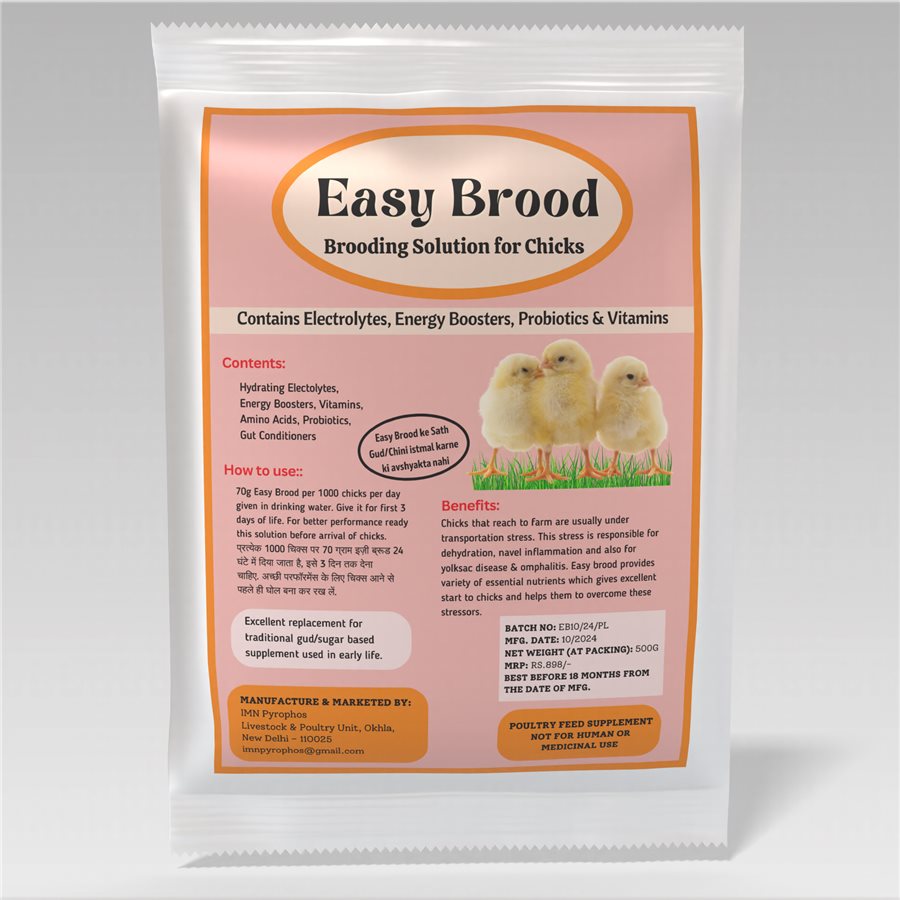
Easy Brood (day 1–2, first water)
A start-up supplement for chicks with electrolytes, osmolytes, glucose for energy, vitamins, amino acids and probiotics. It replaces jaggery, sugar or salt water, whose sucrose feeds gut bacteria that can infect the yolk sac. It reduces transport stress and dehydration, helps early navel healing and lowers the chance of yolk sac infection. Prepare the solution before the chicks arrive and give it as soon as they reach the shed.
Day 1–2 · in place of jaggery water
Easy Brood
Start-up solution for chicks: electrolytes, osmolytes, glucose for energy, vitamins C and B, betaine, glycine and probiotics. Reduces transport stress and dehydration, helps early navel healing, lowers the chance of yolk sac infection and early mortality. No need for jaggery, sugar or salt solutions. Antibiotic free. 250 g pack ₹295.
Dose: in the IMN winter schedule, 70 g per 1,000 chicks in the first water on day 1 (as soon as chicks arrive) and day 2. Label: 3–4 g per litre of drinking water, i.e. 50–70 g per 1,000 chicks per day. Prepare the solution before the chicks arrive.
500 g ₹565MRP ₹898
Vitaden H (day 1, 5, 7, 10, 17)
A multivitamin with seven vitamins: A, E, D3, B12, C, biotin and niacin. In the schedule it comes on arrival day, around the vaccine (day 5 and 7) and in the fast-growth weeks (day 10 and 17), with the quantity going up as the birds grow.
Alceau (day 2–4 next water, day 21)
A herbal formula made from onion, garlic, tulsi and cinnamon extracts. It helps prevent early chick mortality in brooding (day 2 to 7) and helps yolk dissolution, which is why it sits in the next water on day 2, 3 and 4, including vaccine day after the vaccine water is finished. On day 21 a larger quantity helps against respiratory infections like CRD and secondary bacterial infections as winter pressure builds.
Pyrocal B (day 3, 5, 6, 11, 14, 15)
Liquid calcium and phosphorus with B complex vitamins, iron and trace minerals, and an appetite stimulant. It reduces the chance of lameness, helps weight gain and helps bring uniformity in the flock, which is why it appears through the first two weeks of fast bone growth.
Sel-E Boost (day 6–7, 13–14)
Vitamin E and selenium, time-tested stress relievers that reduce oxidative stress. It reduces the chances of vaccination failure and is helpful during brooding, which is why it comes right after the day 4 ND-IB vaccine, together with Nexamune.
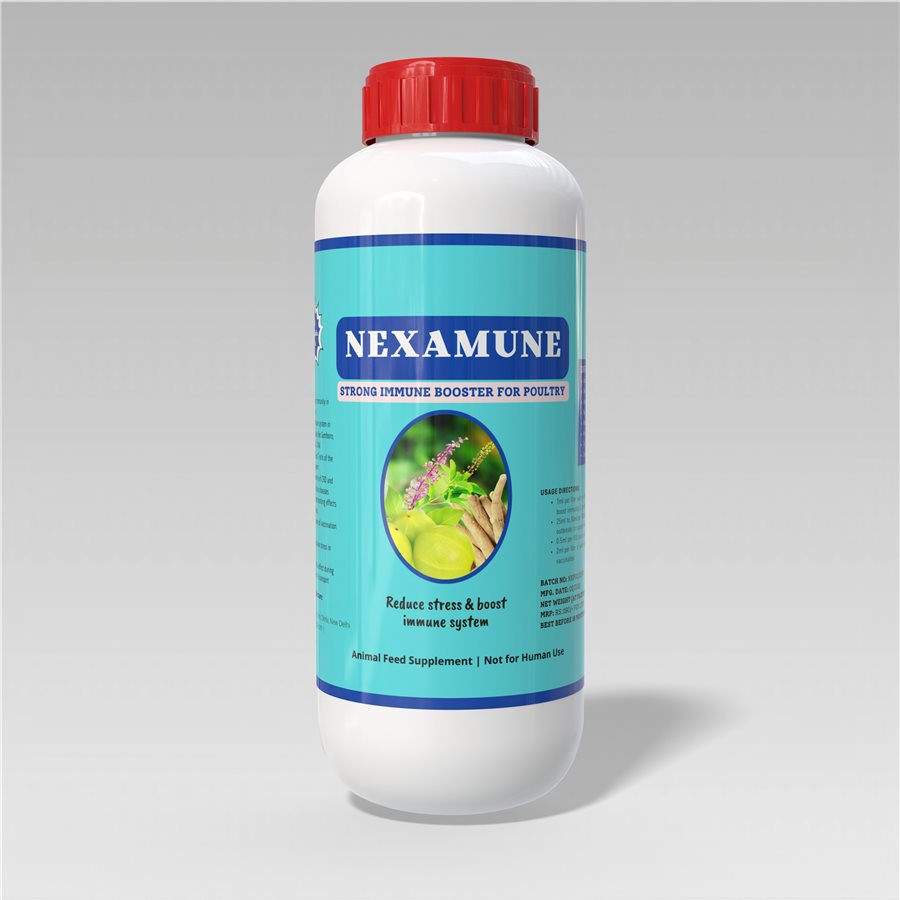
Nexamune (day 6–7, 16, 32)
Vitamin E, selenium, amla, tulsi and ashwagandha extracts, vitamin C, vitamin D and niacin: an antioxidant shield that supports immunity. On day 6–7 it supports immunity after the day 4 vaccine and reduces the chances of vaccination failure. The later doses support the immune system against outbreaks like Gumboro, IB and ND and reduce the severity of CRD and other respiratory problems.
Immunity and vaccination support
Nexamune
Vitamin E, selenium, amla, tulsi and ashwagandha extracts, vitamin C, vitamin D and niacin: an antioxidant shield that supports immunity. Helps reduce the chance of vaccination failure, supports the immune system in outbreaks like IB, ND, Gumboro, IBH and LPAI, and reduces the severity of CRD and other respiratory problems.
Dose: in the IMN winter schedule, per 1,000 birds: 20 ml on day 6 and 7, 50 ml on day 16, 120 ml on day 32. Label: 1 ml per litre of water or 15 ml per 100 birds for immunity and stress; 2 ml per litre before and after vaccination; 25–30 ml per 100 birds during viral outbreaks.
1 L ₹644MRP ₹1,190
Nephrowin (day 8–9)
A kidney flusher tonic. Poultry kidneys pass out uric acid, which does not dissolve well and can cause trouble on high-protein feed. Nephrowin helps flush uric acid and other toxins, helps prevent gout and reduces the chance of baby chick nephropathy, which is why it comes early, while chicks are on high-protein starter feed.
Hepasol DS (day 8, 9, 13, 18, 26, 32, 34)
A liver tonic with silymarin and liquorice extracts, choline chloride, B vitamins, liver and yeast extracts, methyl donors and methionine. It reduces fatty liver conditions, increases the liver’s detoxification power, increases feed intake and reduces FCR. Silymarin helps in toxicity, and feed stored in damp winter weather can carry toxins, so the liver gets regular support up to day 34.
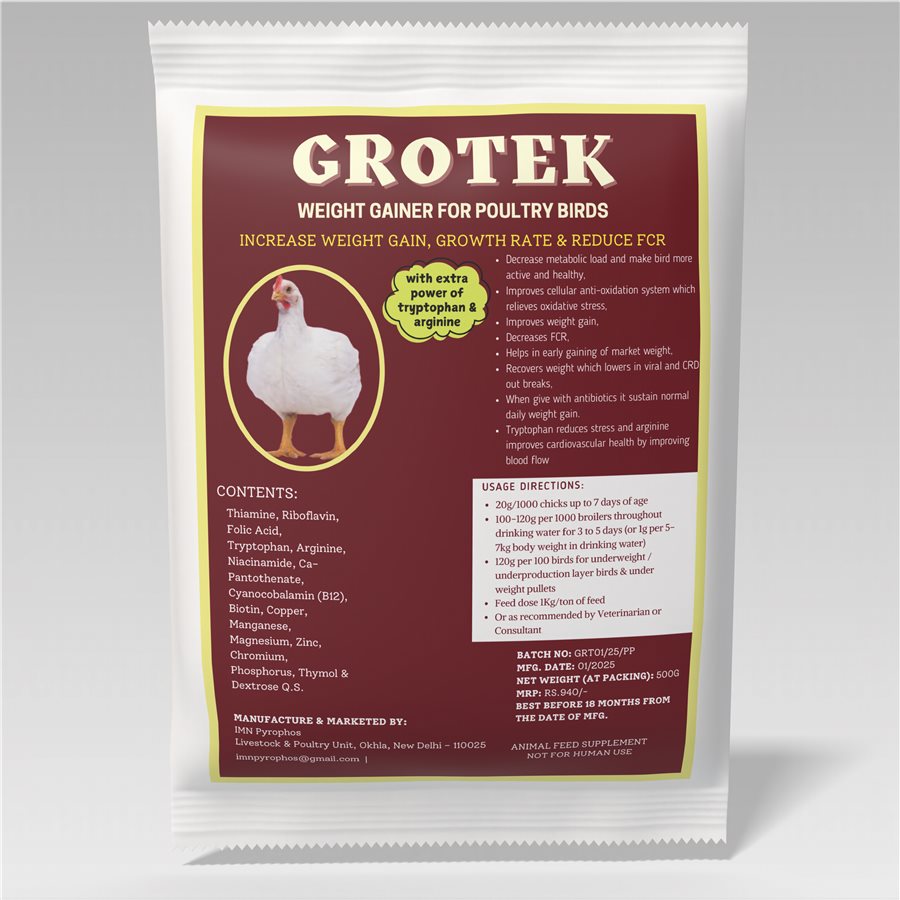
Grotek (day 9, 10, 18, 20, 24, 28, 29, 38)
B group vitamins, minerals and herbal antioxidants. It improves feed intake and reduces FCR, increases growth rate so birds reach market weight earlier, supports the liver, and helps keep weight during infections and regain it after viral or CRD outbreaks. It is the most-used product in the schedule, because weight is what you sell.
Weight and growth
Grotek
B group vitamins, minerals and herbal antioxidants (amla, ashwagandha, tulsi). Improves feed intake and reduces FCR, increases growth rate to reach market weight early, supports the liver, and helps keep weight during infections and antibiotic use and regain it after viral or CRD outbreaks. Contains no iron.
Dose: in the IMN winter schedule, per 1,000 birds: 30 g on day 9 and 10, 80 g on day 20 and 24, 100 g on day 18, 28 and 29, 120 g on day 38. Label: 1–2 g per litre of water for 15–18 hours a day for 5 days; during or after infections 1 g per 5 kg body weight.
500 g ₹679MRP ₹940
Remipro (day 10, 15, 29, 33, 41)
A probiotic and prebiotic blend with antioxidants. It acts as a gut conditioner, restores normal gut flora, reduces loose droppings, improves digestion and FCR, and helps fight coccidiosis and necrotic enteritis, two problems that follow wet winter litter. The Septima page advises using Septima once before Remipro for better results against loose droppings, and the schedule follows that pattern: Septima on day 11–12, Remipro on day 15.
Septima (day 11–12, 19–20, 27)
A herbal combination (curcumin, ursolic acid, eugenol) for intestinal sepsis, which comes from poor feed, birds eating litter or contaminated water. Septima helps in sudden mortality from Clostridium, Salmonella and E. coli, works in necrotic enteritis and coccidiosis, and helps prevent loose droppings. In the schedule it is always the only product in the first water.
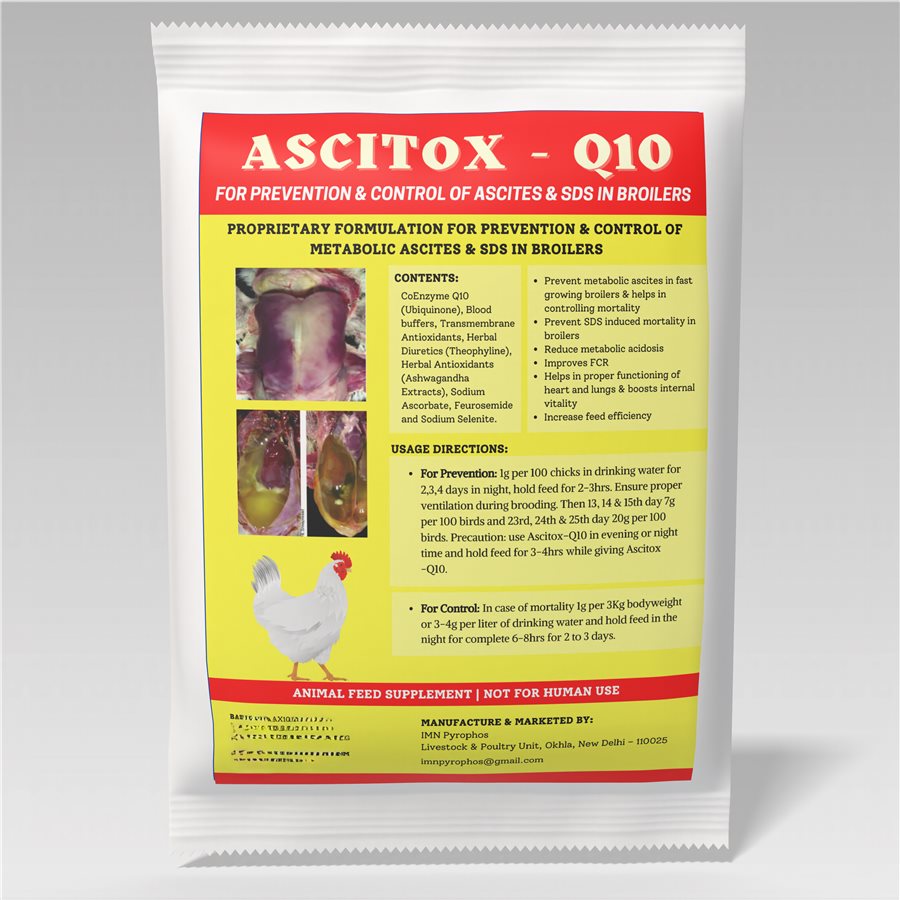
Ascitox Q10 (day 12, 13, 21, 22, 30, 36, 42)
A formula for managing ascites (water belly) in fast-growing broilers, especially in winter. It helps prevent metabolic ascites, reduces SDS (sudden death) mortality, reduces metabolic acidosis and supports the heart and lungs. Closed winter sheds mean less oxygen and more ammonia, and heavy birds in weeks 4–6 suffer most, so the quantity rises from 90 g to 200 g per 1,000 birds as the birds grow.
Ascites and SDS prevention
Ascitox Q10
For the management of ascites in fast-growing broilers, especially in winter. Helps prevent metabolic ascites, helps control mortality, reduces SDS-related mortality and metabolic acidosis, and supports proper working of the heart and lungs.
Dose: in the IMN winter schedule, per 1,000 birds: 90 g on day 12 and 13, 140 g on day 21 and 22, 180 g on day 30, 200 g on day 36 and 42. If ascites starts (label): 3–4 g per litre of night-time drinking water for 3 to 5 days, holding feed while giving.
1 kg ₹698MRP ₹1,080
Respoze (day 16–17, 24)
A herbal solution for respiratory sounds in poultry, with ginger, tulsi, thyme and garlic extracts and camphor. Dust, ammonia and germs in closed winter sheds make thick mucus in the airway; Respoze helps thin the phlegm and open the airway. The schedule gives 50 ml per 1,000 birds on day 16 and 17 and 100 ml on day 24.
Goutster (day 19, 25)
An anti-gout combination. When the kidneys are overloaded, urates can settle in the kidneys and other organs and cause gout or kidney stones. Goutster increases water intake and kidney efficiency and helps dissolve uric acid so it is flushed out. Birds drink less in winter, which makes this kidney support useful.
Vaccination in this schedule
The IMN schedule fixes one vaccine day: ND-IB (Newcastle disease + infectious bronchitis) on day 4. The other common broiler vaccines depend on your hatchery, your area and your vet.
At the hatchery (day 0–1)
Many hatcheries give Marek’s vaccine, and some give an ND+IB spray or injection before the chicks leave. Practice differs between hatcheries. Ask for it in writing with the chick bill. If ND+IB was already given at the hatchery, your vet may change or skip the day 4 dose.
ND-IB live (day 4)
Protects against Ranikhet (Newcastle disease) and infectious bronchitis, the two big viral breathing diseases of winter. On day 4 the first water is vaccine water only, with nothing else in it. Alceau 15 g per 1,000 birds goes in the next water, after the vaccine water is finished. Read more about IB in poultry.
Gumboro (IBD) and ND LaSota booster
Gumboro damages the bursa, the organ that builds immunity in young chicks; its timing depends on the mother flock’s antibodies, so the day differs between hatcheries. Common windows are around day 12–14 for intermediate IBD and around day 18–24 for the LaSota booster, but follow your hatchery and vet. Some vets add a second IBD dose in areas with a history of Gumboro. On any vaccine day, the vaccine goes in the first water alone; give that day’s schedule products in the next water after the vaccine water is finished. If you are unsure how to fit a vaccine day into the chart, ask on WhatsApp.
Vaccine handling in winter: where most vaccines fail
A vaccine that is handled badly does not protect, even if it was given on the right day. Cold weather brings its own problems: birds drink less, and farmers are tempted to warm the water or add many products together.
Cold chain
- Live freeze-dried vaccines must stay at 2–8 °C, from the shop to your fridge. Carry them in an ice box with ice packs, not loose in a pocket or a bag.
- Do not let them freeze, and do not keep them in a fridge door that opens all day.
- Check the expiry date and the batch number, and write them in your register.
Water vaccination step by step
- Stop chlorine, sanitisers and acidifiers in the water from the day before, and do not restart until the vaccine water is finished. Chlorinated water kills live vaccine. Never use chlorinated tap water to mix vaccine.
- Clean the drinkers with plain water only, no soap or disinfectant.
- Withhold water for about 1–2 hours in the early morning so the birds are thirsty. In winter, birds drink slowly, so do not stretch this beyond 2 hours for young chicks under brooders.
- Add skim milk powder (commonly about 2 g per litre) or a vaccine stabiliser as per its label, and stir it into the water 15–20 minutes before the vaccine. It protects the virus from any traces of chlorine.
- Open the vial under the water, mix well, and use it at once. Use clean, cool water; never add hot water to make it “comfortable”.
- Give only as much water as the birds will finish in 1.5–2 hours. In winter this is usually less than you think, so measure yesterday’s morning intake.
- Make sure there are enough drinkers so all birds can drink at the same time. Raise the brooder heat slightly so birds are not too cold to walk to the water.
- After the vaccine water is finished, give the next water of the schedule (on day 4: Alceau). Never put vitamins, herbal products, antibiotics or anything else in the vaccine water.
Eye or nose drop
Put one drop in one eye or nostril, and hold the chick until the drop is taken in. Use the dropper and diluent that come with the vaccine, and keep the mixed vaccine cool and in the shade while you work.
Coccidiosis prevention: check your feed bag first
- Most commercial broiler feeds in India already contain a coccidiostat. Read the feed bag label or ask your feed supplier which one and at what level.
- Do not add another anticoccidial in water “for safety” while the feed already has one. Double dosing can harm the birds and adds residue risk. Give a water anticoccidial only when your vet confirms coccidiosis.
- Some coccidiostats (ionophores) react badly with certain antibiotics such as tiamulin. Always tell your vet which feed you are using before any treatment.
- In winter, coccidiosis follows wet litter. Fix leaking drinkers and damp patches early: see wet litter and loose droppings in winter.
Antibiotics: not in the schedule, only on diagnosis
Many printed “42 days schedules” include antibiotics on fixed days. The IMN winter schedule does not, and we do not recommend it.
- Antibiotics do not kill viruses. They do nothing against ND, IB or Gumboro themselves.
- Routine use breeds resistant bacteria, so when you really need a medicine it may not work.
- Use an antibiotic only when your vet diagnoses a bacterial problem (for example E. coli or CRD), ideally after a post-mortem, at the correct dose and for the full course.
- Respect the withdrawal period written on the label before sale. Meat with residues is unsafe for consumers and bad for your name with buyers.
- Colistin is banned in India for food-producing animals and poultry. Do not buy it, even if it is offered.
- Write every product, medicine, dose, day and withdrawal period in your farm register.
Winter disease watch-list
A schedule supports the flock; it does not replace your eyes. Walk the shed every morning and again at night, when the birds are quiet and breathing sounds are easy to hear. Rough guide only; a vet and post-mortem confirm the cause.
| Disease | Signs to watch | What to do |
|---|---|---|
| CRD (Mycoplasma) | Rattling at night, sneezing, foamy eyes, slow growth; often after vaccine stress or high ammonia | Improve fresh air, cut ammonia, call vet; antibiotic only if prescribed |
| E. coli (colibacillosis) | Dull, fluffed birds, rising deaths; at post-mortem cloudy air sacs, white layer on heart and liver | Post-mortem and vet; clean water lines; treatment as prescribed, keep withdrawal |
| Infectious bronchitis (IB) | Whole shed sneezing within 1–2 days, gasping, wet eyes; kidney form: wet droppings with lots of white urates | Vet, warmth without closing the shed fully, immunity and kidney support |
| Ranikhet / ND | Green watery droppings, twisted neck, paralysis, sharply rising deaths | Call vet the same day; strict biosecurity; follow vet’s emergency plan |
| Ascites / SDS | Swollen, fluid-filled belly, bluish comb, hard breathing; heavy birds dead on their back | More fresh air, avoid chilling, Ascitox Q10 control dose with vet’s advice |
| Gout / kidney trouble | Chalky white urates, dull birds, low water intake | Check water intake, call vet |
| Coccidiosis (wet litter) | Bloody, orange or mucous droppings, huddled birds, poor feed intake | Vet confirmation, fix wet litter, anticoccidial only if diagnosed, no double dosing |
If an outbreak is diagnosed, do not change the schedule on your own. Send the details on WhatsApp so the team can tell you what to pause and what to continue alongside your vet’s treatment.
Water medication rules in cold weather
In winter, broilers drink less than in summer. If you mix a product for the “book” water intake, the birds may not drink the full dose. Follow these rules:
- First water in the morning, when birds are active and drinking. Give the next water only when the first one is finished.
- Measure actual intake. Note how many litres the flock drank yesterday, and how much of it in the first 3–4 hours after lights on.
- Dissolve the day’s quantity in the water they will really drink in 3–4 hours. Example: 1,000 birds drank 120 litres yesterday, about 40 litres of it in the first 3–4 hours. The day’s product goes into those 40 litres, not into 120 litres.
- Stir well, and check that the product dissolves. Undissolved powder settles in tanks and blocks nipples.
- Combine products only where the schedule joins them with “+”. Do not add your own extras.
- Keep plain-water days plain.
- Flush water lines after each product and before vaccination.
Printable shed checklist
- Schedule chart pinned in the shed; each day ticked off after giving
- Quantities multiplied for your bird count (chart is per 1,000 birds)
- Hatchery vaccine details written in the register
- Day 4 ND-IB: vaccine water only, Alceau in the next water
- Gumboro and LaSota days fixed with your vet and marked on the wall calendar
- Vaccines carried in an ice box; chlorine stopped the day before each vaccine
- Skim milk or stabiliser ready; vaccine water finished within 1.5–2 hours
- Plain-water days 23, 31, 35, 37, 39, 40 kept plain
- Feed bag label checked for coccidiostat; no extra anticoccidial without vet
- No antibiotic without a vet’s diagnosis; withdrawal period noted
- Daily water intake and deaths written down
- Weekly weight on day 7, 14, 21, 28, 35
Keep your costs in view too: our poultry cost and profit calculator shows how medicine spend and mortality change your margin.
Common mistakes with a winter medicine schedule
- Mixing a product into vaccine water. Vaccine water has only the vaccine plus skim milk or stabiliser.
- Not scaling the quantity. The chart is per 1,000 birds; 4,000 birds need 4 times the quantity.
- Dissolving in a full day’s water. The birds get only part of the dose. Use the water they finish in 3–4 hours.
- Giving the next water before the first is finished, or mixing both entries in one tank.
- Skipping plain-water days to “add something extra”. They are rest days for the gut and kidneys.
- Antibiotics on fixed days “for prevention”. Wasted money, resistance and residues.
- Double anticoccidial: one in feed, another in water.
- Closing the shed fully at night. Ammonia and low oxygen bring CRD, E. coli and ascites, and no product fixes bad air.
- Selling birds before a vet-prescribed medicine’s withdrawal period is over.
Frequently asked questions
Is this schedule for 1,000 birds only?
The quantities are per 1,000 birds. Multiply for your flock: 3,000 birds = 3 times, 10,000 birds = 10 times.
What is the total cost?
About ₹4,860 per 1,000 birds for 42 days, about ₹4.9 per chick. The ND-IB vaccine and any other vaccines your vet adds are extra.
My hatchery already gave ND+IB. Do I still vaccinate on day 4?
Day 4 is the day the IMN schedule sets for ND-IB. If your hatchery already gave ND+IB, ask your vet whether to keep or shift it.
Can I add a product to the vaccine water to “prevent reaction”?
No. Nothing goes in vaccine water except skim milk or stabiliser. Give the schedule’s next water after the vaccine water is finished. A mild sneeze after IB or ND vaccine is usually a normal reaction that settles in a few days with good ventilation. If deaths rise, call your vet.
What do I do on the Gumboro or LaSota day?
Vaccine water first, alone. Then give that day’s schedule products in the next water. Ask on WhatsApp if you are unsure.
Why are some days plain water?
Day 23, 31, 35, 37, 39 and 40 are rest days for the gut and kidneys. Give clean drinking water only.
My feed has a coccidiostat. Do I still need a coccidiosis medicine?
Not as routine. Keep the litter dry and watch droppings. If you see bloody or mucous droppings and dull birds, call your vet; a water treatment is given only on diagnosis.
Can I use this schedule in an open shed?
It is made for EC farmers. If you run an open-sided shed, ask the team on WhatsApp before you start.
Related winter broiler guides
Winter broiler brooding guide: temperature, litter and first week care
Winter broiler management guide: ventilation, litter and feed through 42 days
Also read: winter management in poultry farming · infectious bronchitis in poultry · wet litter in winter · aaj ka broiler rate · IMN poultry products
सर्दी 2026 ब्रॉयलर दवा शेड्यूल (दिन 1–42): IMN Pyrophos
ठंडी रातें, बंद पर्दे और अमोनिया गैस सर्दी को ब्रॉयलर में CRD, E. coli, IB, रानीखेत, जलोदर (एसाइटिस) और किडनी की दिक्कतों का मौसम बना देते हैं। कई किसान दिक्कत दिखने वाले दिन दुकान वाला जो कहे वही खरीद लेते हैं। तय योजना इससे बेहतर है: पहले दिन से ही पता हो कि बैच के हर दिन पानी में क्या जाएगा, किस लिए, और लगभग कितना खर्च होगा। यह पेज आपको यही देता है: IMN Pyrophos का आधिकारिक 42 दिन का सर्दी ब्रॉयलर बचाव दवा शेड्यूल, सर्दी 2026, जो EC (बंद, कंट्रोल वाले) शेड के किसानों के लिए बना है। साथ में हर प्रोडक्ट का कारण भी समझाया गया है।
छोटे में: पूरे 42 दिन का खर्च लगभग ₹4,860 प्रति 1000 पक्षी, यानी लगभग ₹4.9 प्रति चूज़ा (टीके का खर्च अलग)। इसमें दिन 4 को ND-IB टीका है, छह दिन सादा पानी है, और कोई एंटीबायोटिक नहीं है। एंटीबायोटिक सिर्फ तब, जब डॉक्टर बैक्टीरिया वाली बीमारी पकड़ें।
यह टेबल कैसे पढ़ें
- सारी मात्रा 1000 पक्षियों के लिए है। अपने फ्लॉक के हिसाब से गुणा करें: 5000 पक्षी = 5 गुना, 2500 पक्षी = ढाई गुना।
- पहला पानी (Entry 1) दिन का पहला पानी है, जो सुबह दिया जाता है। अगला पानी (Entry 2) वह है जो पहला पानी खत्म होने के बाद दिया जाता है।
- हर दिन की मात्रा उतने पानी में घोलें जितना पक्षी सर्दी में 3–4 घंटे में खत्म कर दें। इसे नापें: कल पहले 3–4 घंटे में फ्लॉक ने कितना पानी पिया।
- जहाँ दो प्रोडक्ट “+” से जुड़े हैं, वे एक ही पानी में जाते हैं, जैसा शेड्यूल में लिखा है। अपनी तरफ़ से और कुछ न मिलाएँ।
- टीके के पानी में कभी कोई प्रोडक्ट न मिलाएँ। दिन 4 को पहला पानी सिर्फ ND-IB टीके का है; Alceau अगले पानी में जाता है।
- सादे पानी वाले दिन (दिन 23, 31, 35, 37, 39 और 40) जानबूझकर रखे गए हैं: इनसे आँत और किडनी को आराम मिलता है। इन दिनों सिर्फ साफ़ पीने का पानी दें।
- सर्दी में सुबह छत की टंकी का पानी बहुत ठंडा होता है। पानी को शेड के तापमान पर आने दें, फिर चूज़ों को पिलाएँ; ठंडा पानी पीना कम करता है और चूज़ों को ठंड लगाता है।
IMN Pyrophos सर्दी 2026 ब्रॉयलर दवा शेड्यूल: दिन 1 से 42
मात्रा प्रति 1000 पक्षी। खर्च उस दिन के प्रोडक्ट का लगभग खर्च है, रुपये प्रति 1000 पक्षी।
| दिन | पहला पानी (Entry 1) | अगला पानी (Entry 2) | खर्च ₹/1000 पक्षी |
|---|---|---|---|
| हफ़्ता 1 (दिन 1–7): चूज़े आना, ND-IB टीका, शुरुआती बचाव | ₹488 | ||
| 1 | Easy Brood 70 ग्राम (चूज़े आते ही) | Vitaden H 30 ml | ₹111 |
| 2 | Easy Brood 70 ग्राम | Alceau 15 ग्राम | ₹101 |
| 3 | Pyrocal B 40 ml | Alceau 15 ग्राम | ₹41 |
| 4 | सिर्फ ND-IB टीका (टीके के पानी में कोई दवा नहीं) | Alceau 15 ग्राम | ₹22 |
| 5 | Vitaden H 35 ml | Pyrocal B 45 ml | ₹59 |
| 6 | Sel-E Boost 25 ग्राम + Nexamune 20 ml | Pyrocal B 50 ml | ₹62 |
| 7 | Sel-E Boost 25 ग्राम + Nexamune 20 ml | Vitaden H 50 ml | ₹92 |
| हफ़्ता 2 (दिन 8–14): किडनी, लिवर, आँत, इम्यूनिटी | ₹775 | ||
| 8 | Nephrowin 50 ml | Hepasol DS 50 ml | ₹51 |
| 9 | Nephrowin 50 ml + Grotek 30 ग्राम | Hepasol DS 50 ml | ₹92 |
| 10 | Remipro 25 ग्राम + Grotek 30 ग्राम | Vitaden H 50 ml | ₹126 |
| 11 | Septima 70 ग्राम | Pyrocal B 60 ml | ₹139 |
| 12 | Septima 70 ग्राम | Ascitox Q10 90 ग्राम | ₹174 |
| 13 | Hepasol DS 50 ml | Ascitox Q10 90 ग्राम + Sel-E Boost 35 ग्राम | ₹124 |
| 14 | Pyrocal B 70 ml | Sel-E Boost 35 ग्राम | ₹69 |
| हफ़्ता 3 (दिन 15–21): तेज़ बढ़वार, साँस, जलोदर पर नज़र | ₹1,297 | ||
| 15 | Pyrocal B 70 ml | Remipro 50 ग्राम | ₹95 |
| 16 | Respoze 50 ml | Nexamune 50 ml | ₹78 |
| 17 | Respoze 50 ml | Vitaden H 75 ml | ₹126 |
| 18 | Hepasol DS 100 ml | Grotek 100 ग्राम | ₹187 |
| 19 | Septima 120 ग्राम | Goutster 80 ग्राम | ₹266 |
| 20 | Septima 120 ग्राम | Grotek 80 ग्राम | ₹299 |
| 21 | Alceau 100 ग्राम | Ascitox Q10 140 ग्राम | ₹246 |
| हफ़्ता 4 (दिन 22–28): जलोदर, किडनी, लिवर | ₹829 | ||
| 22 | Ascitox Q10 140 ग्राम | – | ₹98 |
| 23 | सादा पानी (कोई दवा नहीं) | – | ₹0 |
| 24 | Respoze 100 ml | Grotek 80 ग्राम | ₹201 |
| 25 | Goutster 100 ग्राम | – | ₹94 |
| 26 | Hepasol DS 120 ml | – | ₹62 |
| 27 | Septima 150 ग्राम | – | ₹238 |
| 28 | Grotek 100 ग्राम | – | ₹136 |
| हफ़्ता 5 (दिन 29–35): वज़न और आँत | ₹839 | ||
| 29 | Remipro 150 ग्राम | Grotek 100 ग्राम | ₹324 |
| 30 | Ascitox Q10 180 ग्राम | – | ₹126 |
| 31 | सादा पानी (कोई दवा नहीं) | – | ₹0 |
| 32 | Nexamune 120 ml | Hepasol DS 120 ml | ₹139 |
| 33 | Remipro 150 ग्राम | – | ₹188 |
| 34 | Hepasol DS 120 ml | – | ₹62 |
| 35 | सादा पानी (कोई दवा नहीं) | – | ₹0 |
| हफ़्ता 6 (दिन 36–42): फ़िनिशिंग | ₹631 | ||
| 36 | Ascitox Q10 200 ग्राम | – | ₹140 |
| 37 | सादा पानी (कोई दवा नहीं) | – | ₹0 |
| 38 | Grotek 120 ग्राम | – | ₹163 |
| 39 | सादा पानी (कोई दवा नहीं) | – | ₹0 |
| 40 | सादा पानी (कोई दवा नहीं) | – | ₹0 |
| 41 | Remipro 150 ग्राम | – | ₹188 |
| 42 | Ascitox Q10 200 ग्राम | – | ₹140 |
| दिन 1–42 का कुल: लगभग ₹4,860 प्रति 1000 पक्षी (लगभग ₹4.9 प्रति चूज़ा); टीका अलग | ≈ ₹4,860 | ||
मोबाइल पर टेबल को बगल में खिसकाकर देखें। रोज़ के खर्च का जोड़: ₹4,859, यानी लगभग ₹4,860 प्रति 1000 पक्षी, या 42 दिन में लगभग ₹4.9 प्रति चूज़ा। टीके का खर्च अलग है।
⬇ PDF डाउनलोड करें (मुफ़्त) या WhatsApp पर पूछें
शेड्यूल में हर प्रोडक्ट क्यों है
हर प्रोडक्ट का एक खास उम्र पर एक काम है। पूरी जानकारी के लिए नाम पर क्लिक करें।
Easy Brood (दिन 1–2, पहला पानी)
चूज़ों का स्टार्ट-अप सप्लीमेंट, जिसमें इलेक्ट्रोलाइट, ऑस्मोलाइट, ऊर्जा के लिए ग्लूकोज़, विटामिन, अमीनो एसिड और प्रोबायोटिक हैं। यह गुड़, चीनी या नमक के पानी की जगह लेता है; उनकी चीनी आँत के बैक्टीरिया को खिलाती है, जो योक सैक (ज़र्दी की थैली) में इन्फेक्शन कर सकते हैं। सफ़र का तनाव और पानी की कमी घटाता है, नाभि जल्दी सूखने में मदद करता है और योक सैक इन्फेक्शन का खतरा कम करता है। घोल चूज़े आने से पहले बना लें और चूज़े पहुँचते ही दें।
दिन 1–2 · गुड़ के घोल की जगह
Easy Brood
चूज़ों का स्टार्ट-अप घोल: इलेक्ट्रोलाइट, ऑस्मोलाइट, ग्लूकोज़ (ऊर्जा), विटामिन C और B, बीटेन, ग्लाइसीन और प्रोबायोटिक। सफर का तनाव और पानी की कमी घटाता है, नाभि जल्दी सूखने में मदद करता है, योक सैक इन्फेक्शन और शुरुआती मौत का खतरा कम करता है। गुड़, चीनी या नमक के घोल की ज़रूरत नहीं। एंटीबायोटिक मुक्त। 250 g पैक ₹295।
मात्रा: IMN सर्दी शेड्यूल में दिन 1 और 2 को पहले पानी में 70 ग्राम प्रति 1000 चूज़े (दिन 1 को चूज़े आते ही)। लेबल: 3–4 ग्राम प्रति लीटर पीने का पानी, यानी 50–70 ग्राम प्रति 1000 चूज़े प्रति दिन। चूज़े आने से पहले घोल बना कर रखें।
500 g ₹565MRP ₹898
Vitaden H (दिन 1, 5, 7, 10, 17)
सात विटामिन वाला मल्टीविटामिन: A, E, D3, B12, C, बायोटिन और नियासिन। शेड्यूल में यह चूज़े आने के दिन, टीके के आसपास (दिन 5 और 7) और तेज़ बढ़वार के दिनों (दिन 10 और 17) में आता है, और पक्षी बढ़ने के साथ मात्रा बढ़ती है।
Alceau (दिन 2–4 अगला पानी, दिन 21)
प्याज़, लहसुन, तुलसी और दालचीनी के एक्सट्रैक्ट से बना हर्बल फ़ॉर्मूला। ब्रूडिंग में शुरुआती चूज़ा मृत्यु (दिन 2 से 7) से बचाव और ज़र्दी घुलने में मदद करता है, इसलिए दिन 2, 3 और 4 को अगले पानी में है, टीके वाले दिन भी, जब टीके का पानी खत्म हो जाए। दिन 21 को बड़ी मात्रा CRD जैसे साँस के इन्फेक्शन और बैक्टीरिया के दूसरे इन्फेक्शन से बचाव में मदद करती है, जब सर्दी का दबाव बढ़ता है।
Pyrocal B (दिन 3, 5, 6, 11, 14, 15)
तरल कैल्शियम और फ़ॉस्फ़ोरस, साथ में B कॉम्प्लेक्स विटामिन, आयरन, ट्रेस मिनरल और भूख बढ़ाने वाला तत्व। लंगड़ापन का खतरा घटाता है, वज़न बढ़ाने में मदद करता है और फ्लॉक को एक जैसा (बराबर) बनाने में मदद करता है। इसलिए हड्डियों की तेज़ बढ़वार वाले पहले दो हफ़्तों में बार-बार आता है।
Sel-E Boost (दिन 6–7, 13–14)
विटामिन E और सेलेनियम, जो पुराने आज़माए हुए तनाव घटाने वाले तत्व हैं और ऑक्सीडेटिव तनाव कम करते हैं। टीका फेल होने की संभावना घटाता है और ब्रूडिंग में मददगार है, इसलिए दिन 4 के ND-IB टीके के ठीक बाद Nexamune के साथ आता है।
Nexamune (दिन 6–7, 16, 32)
विटामिन E, सेलेनियम, आँवला, तुलसी और अश्वगंधा एक्सट्रैक्ट, विटामिन C, विटामिन D और नियासिन: इम्यूनिटी को सहारा देने वाली एंटीऑक्सीडेंट ढाल। दिन 6–7 को यह दिन 4 के टीके के बाद इम्यूनिटी को सहारा देता है और टीका फेल होने की संभावना घटाता है। बाद की खुराकें गम्बोरो, IB और ND जैसी बीमारियों में इम्यून सिस्टम को सहारा देती हैं और CRD व साँस की दूसरी दिक्कतों की गंभीरता कम करती हैं।
इम्यूनिटी और टीके का सहारा
Nexamune
विटामिन E, सेलेनियम, आँवला, तुलसी और अश्वगंधा एक्सट्रैक्ट, विटामिन C, विटामिन D और नियासिन: इम्यूनिटी को सहारा देने वाली एंटीऑक्सीडेंट ढाल। IB, ND, गम्बोरो, IBH और LPAI जैसी बीमारियों में इम्यून सिस्टम को सहारा, CRD और साँस की दूसरी दिक्कतों की गंभीरता कम करता है, और टीका फेल होने की संभावना घटाने में मदद करता है।
मात्रा: IMN सर्दी शेड्यूल में प्रति 1000 पक्षी: दिन 6 और 7 को 20 ml, दिन 16 को 50 ml, दिन 32 को 120 ml। लेबल: इम्यूनिटी और तनाव के लिए 1 ml प्रति लीटर पानी या 15 ml प्रति 100 पक्षी; टीके से पहले और बाद 2 ml प्रति लीटर; वायरल बीमारी फैलने पर 25–30 ml प्रति 100 पक्षी।
1 L ₹644MRP ₹1,190
Nephrowin (दिन 8–9)
किडनी साफ़ करने वाला टॉनिक। मुर्गी की किडनी यूरिक एसिड बाहर निकालती है, जो ठीक से घुलता नहीं और ज़्यादा प्रोटीन वाले दाने पर दिक्कत करता है। Nephrowin यूरिक एसिड और दूसरे ज़हरीले तत्व बाहर निकालने में मदद करता है, गाउट से बचाव करता है और छोटे चूज़ों में किडनी की बीमारी (नेफ़्रोपैथी) का खतरा घटाता है। इसलिए यह जल्दी आता है, जब चूज़े ज़्यादा प्रोटीन वाले स्टार्टर दाने पर होते हैं।
Hepasol DS (दिन 8, 9, 13, 18, 26, 32, 34)
लिवर टॉनिक, जिसमें सिलिमेरिन और मुलेठी के एक्सट्रैक्ट, कोलीन क्लोराइड, B विटामिन, लिवर और यीस्ट एक्सट्रैक्ट, मिथाइल डोनर और मेथियोनीन हैं। फैटी लिवर घटाता है, लिवर की ज़हर साफ़ करने की ताकत बढ़ाता है, दाना खाना बढ़ाता है और FCR घटाता है। सिलिमेरिन ज़हर (टॉक्सिसिटी) में मदद करता है, और सर्दी की नमी में रखे दाने में ज़हरीले तत्व आ सकते हैं, इसलिए दिन 34 तक लिवर को बार-बार सहारा मिलता है।
Grotek (दिन 9, 10, 18, 20, 24, 28, 29, 38)
B ग्रुप विटामिन, मिनरल और हर्बल एंटीऑक्सीडेंट। दाना खाना बढ़ाता है और FCR घटाता है, बढ़वार तेज़ करता है ताकि बाज़ार का वज़न जल्दी आए, लिवर को सहारा देता है, और इन्फेक्शन के दौरान वज़न बचाने और वायरल या CRD के बाद वज़न लौटाने में मदद करता है। शेड्यूल में सबसे ज़्यादा दिन यही है, क्योंकि आप वज़न ही बेचते हैं।
वज़न और बढ़वार
Grotek
B ग्रुप विटामिन, मिनरल और हर्बल एंटीऑक्सीडेंट (आँवला, अश्वगंधा, तुलसी)। दाना खाना बढ़ाता है और FCR घटाता है, बढ़वार तेज़ करता है ताकि बाज़ार का वज़न जल्दी आए, लिवर को सहारा देता है, और इन्फेक्शन व एंटीबायोटिक के दौरान वज़न बचाने और वायरल/CRD के बाद वज़न लौटाने में मदद करता है। इसमें आयरन नहीं है।
मात्रा: IMN सर्दी शेड्यूल में प्रति 1000 पक्षी: दिन 9 और 10 को 30 ग्राम, दिन 20 और 24 को 80 ग्राम, दिन 18, 28 और 29 को 100 ग्राम, दिन 38 को 120 ग्राम। लेबल: 1–2 ग्राम प्रति लीटर पानी, रोज़ 15–18 घंटे, 5 दिन; इन्फेक्शन के दौरान या बाद 1 ग्राम प्रति 5 किलो वज़न।
500 g ₹679MRP ₹940
Remipro (दिन 10, 15, 29, 33, 41)
एंटीऑक्सीडेंट के साथ प्रोबायोटिक और प्रीबायोटिक का मिश्रण। आँत को ठीक रखता है, आँत के अच्छे बैक्टीरिया लौटाता है, पतली बीट घटाता है, पाचन और FCR सुधारता है, और कॉक्सीडियोसिस व नेक्रोटिक एंटेराइटिस से लड़ने में मदद करता है, जो सर्दी के गीले लिटर के बाद आती हैं। Septima के पेज पर लिखा है कि पतली बीट में बेहतर नतीजे के लिए Remipro से पहले एक बार Septima दें; शेड्यूल भी ऐसा ही है: दिन 11–12 को Septima, दिन 15 को Remipro।
Septima (दिन 11–12, 19–20, 27)
आँत के सेप्सिस (आँत में ज़हरीला इन्फेक्शन) के लिए हर्बल कॉम्बिनेशन (करक्यूमिन, उर्सोलिक एसिड, यूजेनॉल)। आँत का सेप्सिस खराब दाने, पक्षियों के लिटर खाने या गंदे पानी से होता है। Septima Clostridium, Salmonella और E. coli से अचानक मौतों में, नेक्रोटिक एंटेराइटिस और कॉक्सीडियोसिस में मदद करता है, और पतली बीट से बचाव करता है। शेड्यूल में यह हमेशा पहले पानी में अकेला है।
Ascitox Q10 (दिन 12, 13, 21, 22, 30, 36, 42)
तेज़ बढ़ने वाले ब्रॉयलर में, खासकर सर्दी में, जलोदर (पेट में पानी भरना) के प्रबंधन का फ़ॉर्मूला। मेटाबॉलिक जलोदर से बचाव, अचानक मौत (SDS) घटाने, मेटाबॉलिक एसिडोसिस कम करने और दिल व फेफड़ों को सहारा देने में मदद करता है। सर्दी में बंद शेड में ऑक्सीजन कम और अमोनिया ज़्यादा होती है, और चौथे से छठे हफ़्ते के भारी पक्षी सबसे ज़्यादा प्रभावित होते हैं, इसलिए पक्षी बढ़ने के साथ मात्रा 90 ग्राम से 200 ग्राम प्रति 1000 पक्षी तक जाती है।
एसाइटिस और SDS से बचाव
Ascitox Q10
तेज़ बढ़ने वाले ब्रॉयलर में, खासकर सर्दी में, एसाइटिस (पेट में पानी भरना) के प्रबंधन का फ़ॉर्मूला। मेटाबॉलिक एसाइटिस से बचाव, मौतें काबू करने, SDS (अचानक मौत) घटाने और मेटाबॉलिक एसिडोसिस कम करने में मदद करता है, और दिल व फेफड़ों के सही काम को सहारा देता है।
मात्रा: IMN सर्दी शेड्यूल में प्रति 1000 पक्षी: दिन 12 और 13 को 90 ग्राम, दिन 21 और 22 को 140 ग्राम, दिन 30 को 180 ग्राम, दिन 36 और 42 को 200 ग्राम। पेट में पानी भरने लगे तो (लेबल): रात के पीने के पानी में 3–4 ग्राम प्रति लीटर, 3 से 5 दिन, देते समय दाना रोकें।
1 kg ₹698MRP ₹1,080
Respoze (दिन 16–17, 24)
मुर्गियों में साँस की आवाज़ (घर्र-घर्र) के लिए हर्बल घोल, जिसमें अदरक, तुलसी, थाइम और लहसुन के एक्सट्रैक्ट और कपूर हैं। बंद शेड की धूल, अमोनिया और कीटाणु साँस की नली में गाढ़ा बलगम बनाते हैं; Respoze बलगम को पतला करने और नली खोलने में मदद करता है। शेड्यूल में दिन 16 और 17 को 50 ml और दिन 24 को 100 ml प्रति 1000 पक्षी है।
Goutster (दिन 19, 25)
गाउट-रोधी कॉम्बिनेशन। जब किडनी पर ज़्यादा बोझ हो, तो यूरेट किडनी और दूसरे अंगों में जम सकते हैं और गाउट या पथरी कर सकते हैं। Goutster पानी पीना और किडनी का काम बढ़ाता है और यूरिक एसिड घुलाकर बाहर निकालने में मदद करता है। सर्दी में पक्षी कम पानी पीते हैं, इसलिए किडनी का यह सहारा काम का है।
इस शेड्यूल में टीकाकरण
IMN शेड्यूल में एक टीके का दिन तय है: दिन 4 को ND-IB (रानीखेत + इंफेक्शियस ब्रोंकाइटिस)। बाकी आम टीके आपकी हैचरी, इलाके और डॉक्टर पर निर्भर हैं।
हैचरी में (दिन 0–1)
कई हैचरी मारेक्स का टीका देती हैं, और कुछ चूज़े भेजने से पहले ND+IB का स्प्रे या इंजेक्शन भी देती हैं। हर हैचरी का तरीका अलग है। चूज़ों के बिल के साथ लिखित में माँगें। अगर हैचरी में ND+IB लग चुका है, तो डॉक्टर दिन 4 वाला टीका बदल या छोड़ सकते हैं।
ND-IB लाइव (दिन 4)
रानीखेत (न्यूकैसल डिज़ीज़) और इंफेक्शियस ब्रोंकाइटिस से बचाता है, जो सर्दी की दो बड़ी वायरल साँस की बीमारियाँ हैं। दिन 4 को पहला पानी सिर्फ टीके का है, उसमें और कुछ नहीं। टीके का पानी खत्म होने के बाद अगले पानी में Alceau 15 ग्राम प्रति 1000 पक्षी। और पढ़ें: मुर्गियों में IB।
गम्बोरो (IBD) और ND लासोटा बूस्टर
गम्बोरो बर्सा को नुकसान पहुँचाता है, जो छोटे चूज़ों में इम्यूनिटी बनाने वाला अंग है। इसका सही दिन माँ मुर्गी से आई एंटीबॉडी पर निर्भर है, इसलिए हैचरी के हिसाब से दिन बदलता है। आम तौर पर IBD इंटरमीडिएट लगभग दिन 12–14 और लासोटा बूस्टर लगभग दिन 18–24 के बीच दिया जाता है, लेकिन अपनी हैचरी और डॉक्टर की बात मानें। जहाँ पहले गम्बोरो हुआ हो, वहाँ कुछ डॉक्टर दूसरा IBD टीका जोड़ते हैं। किसी भी टीके वाले दिन टीका पहले पानी में अकेला जाता है; उस दिन के शेड्यूल वाले प्रोडक्ट टीके का पानी खत्म होने के बाद अगले पानी में दें। टीके का दिन चार्ट में कैसे बिठाएँ, समझ न आए तो WhatsApp पर पूछें।
सर्दी में टीके को संभालना: ज़्यादातर टीके यहीं फ़ेल होते हैं
गलत तरीके से संभाला गया टीका बचाव नहीं करता, चाहे सही दिन पर दिया गया हो। सर्दी की अपनी दिक्कतें हैं: पक्षी कम पानी पीते हैं, और किसान पानी गर्म करने या कई चीज़ें एक साथ मिलाने का सोचते हैं।
कोल्ड चेन (ठंडा रखना)
- लाइव टीके दुकान से आपके फ्रिज तक 2–8 °C पर रहने चाहिए। इन्हें बर्फ़ के पैक वाले आइस बॉक्स में लाएँ, जेब या थैले में खुला नहीं।
- इन्हें जमने न दें, और फ्रिज के दरवाज़े में न रखें जो दिन भर खुलता है।
- एक्सपायरी डेट और बैच नंबर देखें, और रजिस्टर में लिखें।
पानी से टीका: कदम-दर-कदम
- पानी में क्लोरीन, सैनिटाइज़र और एसिडिफायर एक दिन पहले से बंद करें, और टीके का पानी खत्म होने तक फिर शुरू न करें। क्लोरीन वाला पानी लाइव टीके को मार देता है। टीका घोलने के लिए क्लोरीन वाला नल का पानी कभी इस्तेमाल न करें।
- पानी के बर्तन सिर्फ सादे पानी से धोएँ, साबुन या दवा से नहीं।
- सुबह-सुबह लगभग 1–2 घंटे पानी रोकें, ताकि पक्षियों को प्यास लगे। सर्दी में पक्षी धीरे पीते हैं, इसलिए ब्रूडर के नीचे छोटे चूज़ों के लिए 2 घंटे से ज़्यादा न रोकें।
- स्किम मिल्क पाउडर (आम तौर पर लगभग 2 ग्राम प्रति लीटर) या टीका स्टेबलाइज़र उसके लेबल के अनुसार, टीके से 15–20 मिनट पहले पानी में घोलें। यह क्लोरीन के बचे अंश से वायरस को बचाता है।
- शीशी को पानी के अंदर खोलें, अच्छे से मिलाएँ और तुरंत इस्तेमाल करें। साफ़, ठंडा पानी लें; “आराम” के लिए गर्म पानी कभी न मिलाएँ।
- सिर्फ उतना पानी दें जितना पक्षी 1.5–2 घंटे में खत्म कर दें। सर्दी में यह आपके अंदाज़े से कम होता है, इसलिए कल सुबह की खपत नापें।
- पानी के बर्तन इतने हों कि सब पक्षी एक साथ पी सकें। ब्रूडर की गर्मी थोड़ी बढ़ाएँ ताकि पक्षी ठंड के कारण पानी तक जाने से न रुकें।
- टीके का पानी खत्म होने के बाद शेड्यूल का अगला पानी दें (दिन 4 को: Alceau)। टीके के पानी में विटामिन, हर्बल प्रोडक्ट, एंटीबायोटिक या कोई भी चीज़ कभी न मिलाएँ।
आँख या नाक में बूँद
एक आँख या नाक के छेद में एक बूँद डालें, और चूज़े को तब तक पकड़े रखें जब तक बूँद अंदर न चली जाए। टीके के साथ आया ड्रॉपर और घोल (डाइल्यूएंट) ही इस्तेमाल करें, और घुला हुआ टीका काम के दौरान ठंडी और छाँव वाली जगह पर रखें।
कॉक्सीडियोसिस से बचाव: पहले दाने का बोरा देखें
- भारत में ज़्यादातर कमर्शियल ब्रॉयलर दाने में पहले से कॉक्सीडियोस्टैट होता है। दाने के बोरे का लेबल पढ़ें या अपने फ़ीड सप्लायर से पूछें कि कौन-सा और कितनी मात्रा में है।
- दाने में पहले से हो तो “सुरक्षा के लिए” पानी में दूसरी कॉक्सी की दवा न डालें। दोहरी खुराक पक्षियों को नुकसान पहुँचा सकती है और दवा के अंश का खतरा बढ़ाती है। पानी में कॉक्सी की दवा तभी दें जब डॉक्टर कॉक्सीडियोसिस पक्की करें।
- कुछ कॉक्सीडियोस्टैट (आयनोफ़ोर) कुछ एंटीबायोटिक, जैसे टियामुलिन, के साथ नुकसान करते हैं। किसी भी इलाज से पहले डॉक्टर को हमेशा बताएँ कि आप कौन-सा दाना दे रहे हैं।
- सर्दी में कॉक्सीडियोसिस गीले लिटर के बाद आता है। टपकते बर्तन और गीली जगह जल्दी ठीक करें: देखें सर्दी में गीला लिटर और पतली बीट।
एंटीबायोटिक: शेड्यूल में नहीं, सिर्फ जाँच के बाद
कई छपे हुए “42 दिन के शेड्यूल” में तय दिनों पर एंटीबायोटिक लिखी होती है। IMN सर्दी शेड्यूल में ऐसा नहीं है, और हम इसकी सलाह नहीं देते।
- एंटीबायोटिक वायरस को नहीं मारती। ND, IB या गम्बोरो पर इसका खुद कोई असर नहीं होता।
- रूटीन इस्तेमाल से दवा-प्रतिरोधी बैक्टीरिया बनते हैं, और जब सच में दवा की ज़रूरत हो तब वह काम नहीं करती।
- एंटीबायोटिक तभी दें जब डॉक्टर बैक्टीरिया वाली बीमारी (जैसे E. coli या CRD) पकड़ें, अच्छा हो कि पोस्टमार्टम के बाद, सही मात्रा में और पूरा कोर्स।
- बिक्री से पहले लेबल पर लिखा विदड्रॉल समय ज़रूर पूरा करें। दवा के अंश वाला मीट खाने वालों के लिए असुरक्षित है और खरीदारों में आपका नाम खराब करता है।
- भारत में कोलिस्टिन पोल्ट्री और मीट वाले पशुओं के लिए प्रतिबंधित है। कोई दे तब भी न खरीदें।
- हर प्रोडक्ट, दवा, मात्रा, दिन और विदड्रॉल समय फार्म रजिस्टर में लिखें।
सर्दी की बीमारियों पर नज़र
शेड्यूल फ्लॉक को सहारा देता है, आपकी आँखों की जगह नहीं लेता। हर सुबह और फिर रात में शेड का चक्कर लगाएँ, जब पक्षी शांत हों और साँस की आवाज़ आसानी से सुनाई दे। नीचे सिर्फ मोटा अंदाज़ा है; पक्का कारण डॉक्टर और पोस्टमार्टम ही बताते हैं।
| बीमारी | किन लक्षणों पर नज़र रखें | क्या करें |
|---|---|---|
| CRD (माइकोप्लाज़्मा) | रात में घर्र-घर्र, छींक, आँखों में झाग, धीमी बढ़वार; अक्सर टीके के तनाव या ज़्यादा अमोनिया के बाद | ताज़ी हवा बढ़ाएँ, अमोनिया घटाएँ, डॉक्टर को बुलाएँ; एंटीबायोटिक सिर्फ लिखे जाने पर |
| E. coli (कोलीबैसिलोसिस) | सुस्त, फूले पंख वाले पक्षी, बढ़ती मौतें; पोस्टमार्टम में धुंधली एयर सैक, दिल और लिवर पर सफ़ेद परत | पोस्टमार्टम और डॉक्टर; पानी की लाइन साफ़ करें; लिखा हुआ इलाज, विदड्रॉल पूरा करें |
| इंफेक्शियस ब्रोंकाइटिस (IB) | 1–2 दिन में पूरे शेड में छींक, हाँफना, गीली आँखें; किडनी वाले रूप में बहुत सफ़ेद हिस्से वाली गीली बीट | डॉक्टर, शेड पूरा बंद किए बिना गर्मी, इम्यूनिटी और किडनी का सहारा |
| रानीखेत / ND | हरी पानी जैसी बीट, गर्दन मुड़ना, लकवा, तेज़ी से बढ़ती मौतें | उसी दिन डॉक्टर को बुलाएँ; सख़्त बायोसिक्योरिटी; डॉक्टर की इमरजेंसी योजना मानें |
| जलोदर / SDS | फूला, पानी भरा पेट, नीली कलगी, साँस फूलना; भारी पक्षी पीठ के बल मरे | ज़्यादा ताज़ी हवा, ठंड से बचाएँ, डॉक्टर की सलाह से Ascitox Q10 की कंट्रोल खुराक |
| गाउट / किडनी की दिक्कत | चूने जैसी सफ़ेद बीट, सुस्त पक्षी, कम पानी पीना | पानी की खपत जाँचें, डॉक्टर को बुलाएँ |
| कॉक्सीडियोसिस (गीला लिटर) | खून वाली, नारंगी या चिपचिपी बीट, सिमटे पक्षी, कम दाना खाना | डॉक्टर से पक्का कराएँ, गीला लिटर ठीक करें, दवा सिर्फ जाँच के बाद, दोहरी खुराक नहीं |
बीमारी पक्की हो जाए तो शेड्यूल अपने आप न बदलें। WhatsApp पर पूरी बात भेजें, ताकि टीम बता सके कि डॉक्टर के इलाज के साथ क्या रोकना है और क्या जारी रखना है।
ठंड में पानी से दवा देने के नियम
सर्दी में ब्रॉयलर गर्मी से कम पानी पीते हैं। अगर आप “किताबी” पानी की खपत के हिसाब से प्रोडक्ट घोलेंगे, तो पक्षी पूरी खुराक नहीं पी पाएँगे। ये नियम मानें:
- पहला पानी सुबह दें, जब पक्षी चुस्त हों और पानी पी रहे हों। अगला पानी तभी दें जब पहला खत्म हो जाए।
- असली खपत नापें। लिखें कि कल फ्लॉक ने कितने लीटर पानी पिया, और रोशनी जलने के बाद पहले 3–4 घंटे में कितना।
- दिन की मात्रा उतने पानी में घोलें जितना पक्षी सच में 3–4 घंटे में पिएँगे। उदाहरण: 1000 पक्षियों ने कल 120 लीटर पानी पिया, जिसमें से लगभग 40 लीटर पहले 3–4 घंटे में। उस दिन का प्रोडक्ट उन 40 लीटर में जाएगा, 120 लीटर में नहीं।
- अच्छे से घोलें और देखें कि प्रोडक्ट पूरा घुल गया। बिना घुला पाउडर टंकी में बैठ जाता है और निप्पल बंद करता है।
- प्रोडक्ट तभी साथ मिलाएँ जहाँ शेड्यूल में “+” लिखा है। अपनी तरफ़ से कुछ और न जोड़ें।
- सादे पानी वाले दिन पानी सादा ही रखें।
- हर प्रोडक्ट के बाद और टीके से पहले पानी की लाइन धोएँ।
प्रिंट करने लायक शेड चेकलिस्ट
- शेड्यूल चार्ट शेड में लगा; देने के बाद हर दिन पर निशान
- मात्रा अपने पक्षियों की गिनती से गुणा की (चार्ट 1000 पक्षी के लिए है)
- हैचरी के टीकों की जानकारी रजिस्टर में लिखी
- दिन 4 ND-IB: सिर्फ टीके का पानी, Alceau अगले पानी में
- गम्बोरो और लासोटा के दिन डॉक्टर से तय करके दीवार के कैलेंडर पर
- टीका आइस बॉक्स में लाया; हर टीके से एक दिन पहले क्लोरीन बंद
- स्किम मिल्क या स्टेबलाइज़र तैयार; टीके का पानी 1.5–2 घंटे में खत्म
- दिन 23, 31, 35, 37, 39, 40 को सिर्फ सादा पानी
- दाने के बोरे पर कॉक्सीडियोस्टैट देखा; डॉक्टर के बिना कॉक्सी की और दवा नहीं
- डॉक्टर की जाँच के बिना एंटीबायोटिक नहीं; विदड्रॉल समय लिखा
- रोज़ पानी की खपत और मौतें लिखीं
- दिन 7, 14, 21, 28, 35 पर हफ़्तेवार वज़न
खर्च पर भी नज़र रखें: हमारा पोल्ट्री लागत और मुनाफ़ा कैलकुलेटर दिखाता है कि दवा का खर्च और मौतें आपका मुनाफ़ा कैसे बदलती हैं।
सर्दी के दवा शेड्यूल में आम गलतियाँ
- टीके के पानी में कोई प्रोडक्ट मिलाना। टीके के पानी में सिर्फ टीका और स्किम मिल्क या स्टेबलाइज़र।
- मात्रा गुणा न करना। चार्ट 1000 पक्षी का है; 4000 पक्षी को 4 गुना चाहिए।
- पूरे दिन के पानी में घोल देना। पक्षियों को खुराक का एक हिस्सा ही मिलता है। उतना पानी लें जितना 3–4 घंटे में खत्म हो।
- पहला पानी खत्म होने से पहले अगला पानी देना, या दोनों को एक ही टंकी में मिलाना।
- सादे पानी वाले दिन “कुछ और” डाल देना। ये आँत और किडनी के आराम के दिन हैं।
- “बचाव के लिए” तय दिनों पर एंटीबायोटिक। पैसे की बर्बादी, प्रतिरोध और दवा के अंश।
- दोहरी कॉक्सी दवा: एक दाने में, दूसरी पानी में।
- रात में शेड पूरा बंद करना। अमोनिया और कम ऑक्सीजन CRD, E. coli और जलोदर लाते हैं, और कोई प्रोडक्ट खराब हवा को ठीक नहीं करता।
- डॉक्टर की लिखी दवा का विदड्रॉल समय पूरा होने से पहले पक्षी बेचना।
अक्सर पूछे जाने वाले सवाल
क्या यह शेड्यूल सिर्फ 1000 पक्षियों के लिए है?
मात्रा 1000 पक्षियों के लिए लिखी है। अपने फ्लॉक के हिसाब से गुणा करें: 3000 पक्षी = 3 गुना, 10,000 पक्षी = 10 गुना।
कुल खर्च कितना है?
42 दिन में लगभग ₹4,860 प्रति 1000 पक्षी, यानी लगभग ₹4.9 प्रति चूज़ा। ND-IB टीका और डॉक्टर के बताए दूसरे टीके अलग हैं।
हैचरी ने ND+IB पहले ही दे दिया। क्या दिन 4 को फिर भी टीका दें?
IMN शेड्यूल में ND-IB का दिन 4 तय है। अगर हैचरी पहले ही ND+IB दे चुकी है, तो डॉक्टर से पूछें कि इसे रखें या खिसकाएँ।
क्या “रिएक्शन रोकने” के लिए टीके के पानी में कुछ मिला सकते हैं?
नहीं। टीके के पानी में स्किम मिल्क या स्टेबलाइज़र के अलावा कुछ न मिलाएँ। टीके का पानी खत्म होने के बाद शेड्यूल का अगला पानी दें। IB या ND टीके के बाद हल्की छींक आम तौर पर सामान्य रिएक्शन है, जो अच्छी हवा के साथ कुछ दिन में ठीक हो जाती है। मौतें बढ़ें तो डॉक्टर को बुलाएँ।
गम्बोरो या लासोटा वाले दिन क्या करें?
पहले टीके का पानी, अकेला। फिर उस दिन के शेड्यूल वाले प्रोडक्ट अगले पानी में। समझ न आए तो WhatsApp पर पूछें।
कुछ दिन सिर्फ सादा पानी क्यों है?
दिन 23, 31, 35, 37, 39 और 40 आँत और किडनी के आराम के दिन हैं। इन दिनों सिर्फ साफ़ पीने का पानी दें।
मेरे दाने में कॉक्सीडियोस्टैट है। क्या फिर भी कॉक्सी की दवा चाहिए?
रूटीन में नहीं। लिटर सूखा रखें और बीट पर नज़र रखें। खून या चिपचिपी बीट और सुस्त पक्षी दिखें तो डॉक्टर को बुलाएँ; पानी वाला इलाज सिर्फ जाँच के बाद।
क्या खुले शेड में यह शेड्यूल चला सकते हैं?
यह EC फार्म के किसानों के लिए बना है। आपका शेड खुला है, तो शुरू करने से पहले WhatsApp पर टीम से पूछें।
सर्दी में ब्रॉयलर की और गाइड
सर्दी में ब्रॉयलर ब्रूडिंग गाइड: तापमान, लिटर और पहले हफ़्ते की देखभाल
यह भी पढ़ें: सर्दी में पोल्ट्री फार्म प्रबंधन · मुर्गियों में IB · सर्दी में गीला लिटर · आज का ब्रॉयलर रेट · IMN पोल्ट्री प्रोडक्ट
Sardi 2026 broiler dawa schedule (din 1–42): IMN Pyrophos
Thandi raatein, band parde aur ammonia gas sardi ko broiler me CRD, E. coli, IB, Ranikhet, jalodar (ascites) aur kidney ki dikkaton ka mausam bana dete hain. Kai kisan dikkat dikhne wale din dukaan wala jo kahe wahi khareed lete hain. Tay yojana isse behtar hai: pehle din se hi pata ho ki batch ke har din paani me kya jaayega, kis liye, aur lagbhag kitna kharch hoga. Ye page aapko yahi deta hai: IMN Pyrophos ka official 42 din ka sardi broiler bachav dawa schedule, Winter 2026, jo EC (band, control wale) shed ke kisanon ke liye bana hai. Saath me har product ka kaaran bhi samjhaya gaya hai.
Chhote me: poore 42 din ka kharch lagbhag ₹4,860 prati 1000 pakshi, yaani lagbhag ₹4.9 prati chooza (teeke ka kharch alag). Isme din 4 ko ND-IB teeka hai, chhah din saada paani hai, aur koi antibiotic nahi hai. Antibiotic sirf tab, jab doctor bacteria wali beemari pakdein.
Ye table kaise padhein
- Saari matra 1000 pakshiyon ke liye hai. Apne flock ke hisaab se guna kijiye: 5000 pakshi = 5 guna, 2500 pakshi = dhaai guna.
- Pehla paani (Entry 1) din ka pehla paani hai, jo subah diya jaata hai. Agla paani (Entry 2) wo hai jo pehla paani khatam hone ke baad diya jaata hai.
- Har din ki matra utne paani me gholiye jitna pakshi sardi me 3–4 ghante me khatam kar dein. Ise naapiye: kal pehle 3–4 ghante me flock ne kitna paani piya.
- Jahan do product “+” se jude hain, wo ek hi paani me jaate hain, jaisa schedule me likha hai. Apni taraf se aur kuch mat milaiye.
- Teeke ke paani me kabhi koi product mat milaiye. Din 4 ko pehla paani sirf ND-IB teeke ka hai; Alceau agle paani me jaata hai.
- Saade paani wale din (din 23, 31, 35, 37, 39 aur 40) jaanbujh kar rakhe gaye hain: inse aant aur kidney ko aaram milta hai. In dinon sirf saaf peene ka paani dijiye.
- Sardi me subah chhat ki tanki ka paani bahut thanda hota hai. Paani ko shed ke tapmaan par aane dijiye, phir choozon ko pilaiye; thanda paani peena kam karta hai aur choozon ko thand lagata hai.
IMN Pyrophos sardi 2026 broiler dawa schedule: din 1 se 42
Matra prati 1000 pakshi. Kharch us din ke products ka lagbhag kharch hai, rupaye prati 1000 pakshi.
| Din | Pehla paani (Entry 1) | Agla paani (Entry 2) | Kharch ₹/1000 pakshi |
|---|---|---|---|
| Hafta 1 (din 1–7): chooze aana, ND-IB teeka, shuruaati bachav | ₹488 | ||
| 1 | Easy Brood 70 g (chooze aate hi) | Vitaden H 30 ml | ₹111 |
| 2 | Easy Brood 70 g | Alceau 15 g | ₹101 |
| 3 | Pyrocal B 40 ml | Alceau 15 g | ₹41 |
| 4 | Sirf ND-IB teeka (teeke ke paani me koi dawa nahi) | Alceau 15 g | ₹22 |
| 5 | Vitaden H 35 ml | Pyrocal B 45 ml | ₹59 |
| 6 | Sel-E Boost 25 g + Nexamune 20 ml | Pyrocal B 50 ml | ₹62 |
| 7 | Sel-E Boost 25 g + Nexamune 20 ml | Vitaden H 50 ml | ₹92 |
| Hafta 2 (din 8–14): kidney, liver, aant, immunity | ₹775 | ||
| 8 | Nephrowin 50 ml | Hepasol DS 50 ml | ₹51 |
| 9 | Nephrowin 50 ml + Grotek 30 g | Hepasol DS 50 ml | ₹92 |
| 10 | Remipro 25 g + Grotek 30 g | Vitaden H 50 ml | ₹126 |
| 11 | Septima 70 g | Pyrocal B 60 ml | ₹139 |
| 12 | Septima 70 g | Ascitox Q10 90 g | ₹174 |
| 13 | Hepasol DS 50 ml | Ascitox Q10 90 g + Sel-E Boost 35 g | ₹124 |
| 14 | Pyrocal B 70 ml | Sel-E Boost 35 g | ₹69 |
| Hafta 3 (din 15–21): tez badhwar, saans, jalodar par nazar | ₹1,297 | ||
| 15 | Pyrocal B 70 ml | Remipro 50 g | ₹95 |
| 16 | Respoze 50 ml | Nexamune 50 ml | ₹78 |
| 17 | Respoze 50 ml | Vitaden H 75 ml | ₹126 |
| 18 | Hepasol DS 100 ml | Grotek 100 g | ₹187 |
| 19 | Septima 120 g | Goutster 80 g | ₹266 |
| 20 | Septima 120 g | Grotek 80 g | ₹299 |
| 21 | Alceau 100 g | Ascitox Q10 140 g | ₹246 |
| Hafta 4 (din 22–28): jalodar, kidney, liver | ₹829 | ||
| 22 | Ascitox Q10 140 g | – | ₹98 |
| 23 | Saada paani (koi dawa nahi) | – | ₹0 |
| 24 | Respoze 100 ml | Grotek 80 g | ₹201 |
| 25 | Goutster 100 g | – | ₹94 |
| 26 | Hepasol DS 120 ml | – | ₹62 |
| 27 | Septima 150 g | – | ₹238 |
| 28 | Grotek 100 g | – | ₹136 |
| Hafta 5 (din 29–35): wazan aur aant | ₹839 | ||
| 29 | Remipro 150 g | Grotek 100 g | ₹324 |
| 30 | Ascitox Q10 180 g | – | ₹126 |
| 31 | Saada paani (koi dawa nahi) | – | ₹0 |
| 32 | Nexamune 120 ml | Hepasol DS 120 ml | ₹139 |
| 33 | Remipro 150 g | – | ₹188 |
| 34 | Hepasol DS 120 ml | – | ₹62 |
| 35 | Saada paani (koi dawa nahi) | – | ₹0 |
| Hafta 6 (din 36–42): finishing | ₹631 | ||
| 36 | Ascitox Q10 200 g | – | ₹140 |
| 37 | Saada paani (koi dawa nahi) | – | ₹0 |
| 38 | Grotek 120 g | – | ₹163 |
| 39 | Saada paani (koi dawa nahi) | – | ₹0 |
| 40 | Saada paani (koi dawa nahi) | – | ₹0 |
| 41 | Remipro 150 g | – | ₹188 |
| 42 | Ascitox Q10 200 g | – | ₹140 |
| Din 1–42 ka kul: lagbhag ₹4,860 prati 1000 pakshi (lagbhag ₹4.9 prati chooza); teeka alag | ≈ ₹4,860 | ||
Mobile par table ko bagal me khiska kar dekhiye. Roz ke kharch ka jod: ₹4,859, yaani lagbhag ₹4,860 prati 1000 pakshi, ya 42 din me lagbhag ₹4.9 prati chooza. Teeke ka kharch alag hai.
⬇ PDF download kariye (free) Ya WhatsApp par poochhiye
Schedule me har product kyon hai
Har product ka ek khaas umar par ek kaam hai. Poori jaankari ke liye naam par click kijiye.
Easy Brood (din 1–2, pehla paani)
Choozon ka start-up supplement, jisme electrolyte, osmolyte, urja ke liye glucose, vitamin, amino acid aur probiotic hain. Ye gud, cheeni ya namak ke paani ki jagah leta hai; unki cheeni aant ke bacteria ko khilati hai, jo yolk sac (zardi ki thaili) me infection kar sakte hain. Safar ka tanav aur paani ki kami ghatata hai, naabhi jaldi sookhne me madad karta hai aur yolk sac infection ka khatra kam karta hai. Ghol chooze aane se pehle bana lijiye aur chooze pahunchte hi dijiye.
Din 1–2 · gud ke ghol ki jagah
Easy Brood
Choozon ka start-up ghol: electrolyte, osmolyte, glucose (urja), vitamin C aur B, betaine, glycine aur probiotic. Safar ka tanav aur paani ki kami ghatata hai, naabhi jaldi sookhne me madad karta hai, yolk sac infection aur shuruaati maut ka khatra kam karta hai. Gud, cheeni ya namak ke ghol ki zaroorat nahi. Antibiotic mukt. 250 g pack ₹295.
Matra: IMN sardi schedule me din 1 aur 2 ko pehle paani me 70 g prati 1000 chooze (din 1 ko chooze aate hi). Label: 3–4 g prati litre peene ka paani, yaani 50–70 g prati 1000 chooze prati din. Chooze aane se pehle ghol bana kar rakhiye.
500 g ₹565MRP ₹898
Vitaden H (din 1, 5, 7, 10, 17)
Saat vitamin wala multivitamin: A, E, D3, B12, C, biotin aur niacin. Schedule me ye chooze aane ke din, teeke ke aaspaas (din 5 aur 7) aur tez badhwar ke dinon (din 10 aur 17) me aata hai, aur pakshi badhne ke saath matra badhti hai.
Alceau (din 2–4 agla paani, din 21)
Pyaaz, lehsun, tulsi aur daalchini ke extract se bana herbal formula. Brooding me shuruaati chooza mrityu (din 2 se 7) se bachav aur zardi ghulne me madad karta hai, isliye din 2, 3 aur 4 ko agle paani me hai, teeke wale din bhi, jab teeke ka paani khatam ho jaaye. Din 21 ko badi matra CRD jaise saans ke infection aur bacteria ke doosre infection se bachav me madad karti hai, jab sardi ka dabav badhta hai.
Pyrocal B (din 3, 5, 6, 11, 14, 15)
Liquid calcium aur phosphorus, saath me B complex vitamin, iron, trace mineral aur bhookh badhane wala tatva. Langdepan ka khatra ghatata hai, wazan badhane me madad karta hai aur flock ko ek jaisa (barabar) banane me madad karta hai. Isliye haddiyon ki tez badhwar wale pehle do hafton me baar-baar aata hai.
Sel-E Boost (din 6–7, 13–14)
Vitamin E aur selenium, jo purane aazmaye hue tanav ghatane wale tatva hain aur oxidative stress kam karte hain. Teeka fail hone ki sambhavna ghatata hai aur brooding me madadgaar hai, isliye din 4 ke ND-IB teeke ke theek baad Nexamune ke saath aata hai.
Nexamune (din 6–7, 16, 32)
Vitamin E, selenium, amla, tulsi aur ashwagandha extract, vitamin C, vitamin D aur niacin: immunity ko sahara dene wali antioxidant dhaal. Din 6–7 ko ye din 4 ke teeke ke baad immunity ko sahara deta hai aur teeka fail hone ki sambhavna ghatata hai. Baad ki khuraak Gumboro, IB aur ND jaisi beemariyon me immune system ko sahara deti hain aur CRD va saans ki doosri dikkaton ki gambhirta kam karti hain.
Immunity aur teeke ka sahara
Nexamune
Vitamin E, selenium, amla, tulsi aur ashwagandha extract, vitamin C, vitamin D aur niacin: immunity ko sahara dene wali antioxidant dhaal. IB, ND, Gumboro, IBH aur LPAI jaisi beemariyon me immune system ko sahara, CRD aur saans ki doosri dikkaton ki gambhirta kam karta hai, aur teeka fail hone ki sambhavna ghatane me madad karta hai.
Matra: IMN sardi schedule me prati 1000 pakshi: din 6 aur 7 ko 20 ml, din 16 ko 50 ml, din 32 ko 120 ml. Label: immunity aur tanav ke liye 1 ml prati litre paani ya 15 ml prati 100 pakshi; teeke se pehle aur baad 2 ml prati litre; viral beemari failne par 25–30 ml prati 100 pakshi.
1 L ₹644MRP ₹1,190
Nephrowin (din 8–9)
Kidney saaf karne wala tonic. Murgi ki kidney uric acid bahar nikalti hai, jo theek se ghulta nahi aur zyada protein wale daane par dikkat karta hai. Nephrowin uric acid aur doosre zehreele tatva bahar nikalne me madad karta hai, gout se bachav karta hai aur chhote choozon me kidney ki beemari (nephropathy) ka khatra ghatata hai. Isliye ye jaldi aata hai, jab chooze zyada protein wale starter daane par hote hain.
Hepasol DS (din 8, 9, 13, 18, 26, 32, 34)
Liver tonic, jisme silymarin aur mulethi ke extract, choline chloride, B vitamin, liver aur yeast extract, methyl donor aur methionine hain. Fatty liver ghatata hai, liver ki zehar saaf karne ki taakat badhata hai, daana khana badhata hai aur FCR ghatata hai. Silymarin zehar (toxicity) me madad karta hai, aur sardi ki nami me rakhe daane me zehreele tatva aa sakte hain, isliye din 34 tak liver ko baar-baar sahara milta hai.
Grotek (din 9, 10, 18, 20, 24, 28, 29, 38)
B group vitamin, mineral aur herbal antioxidant. Daana khana badhata hai aur FCR ghatata hai, badhwar tez karta hai taaki bazaar ka wazan jaldi aaye, liver ko sahara deta hai, aur infection ke dauran wazan bachane aur viral ya CRD ke baad wazan lautane me madad karta hai. Schedule me sabse zyada din yahi hai, kyonki aap wazan hi bechte hain.
Wazan aur badhwar
Grotek
B group vitamin, mineral aur herbal antioxidant (amla, ashwagandha, tulsi). Daana khana badhata hai aur FCR ghatata hai, badhwar tez karta hai taaki bazaar ka wazan jaldi aaye, liver ko sahara deta hai, aur infection va antibiotic ke dauran wazan bachane aur viral/CRD ke baad wazan lautane me madad karta hai. Isme iron nahi hai.
Matra: IMN sardi schedule me prati 1000 pakshi: din 9 aur 10 ko 30 g, din 20 aur 24 ko 80 g, din 18, 28 aur 29 ko 100 g, din 38 ko 120 g. Label: 1–2 g prati litre paani, roz 15–18 ghante, 5 din; infection ke dauran ya baad 1 g prati 5 kg wazan.
500 g ₹679MRP ₹940
Remipro (din 10, 15, 29, 33, 41)
Antioxidant ke saath probiotic aur prebiotic ka mishran. Aant ko theek rakhta hai, aant ke achhe bacteria lautata hai, patli beet ghatata hai, pachan aur FCR sudharta hai, aur coccidiosis va necrotic enteritis se ladne me madad karta hai, jo sardi ke geele litter ke baad aati hain. Septima ke page par likha hai ki patli beet me behtar natije ke liye Remipro se pehle ek baar Septima dijiye; schedule bhi aisa hi hai: din 11–12 ko Septima, din 15 ko Remipro.
Septima (din 11–12, 19–20, 27)
Aant ke sepsis (aant me zehreela infection) ke liye herbal combination (curcumin, ursolic acid, eugenol). Aant ka sepsis kharab daane, pakshiyon ke litter khane ya gande paani se hota hai. Septima Clostridium, Salmonella aur E. coli se achanak maut me, necrotic enteritis aur coccidiosis me madad karta hai, aur patli beet se bachav karta hai. Schedule me ye hamesha pehle paani me akela hai.
Ascitox Q10 (din 12, 13, 21, 22, 30, 36, 42)
Tez badhne wale broiler me, khaaskar sardi me, jalodar (pet me paani bharna) ke prabandhan ka formula. Metabolic jalodar se bachav, achanak maut (SDS) ghatane, metabolic acidosis kam karne aur dil va phephdon ko sahara dene me madad karta hai. Sardi me band shed me oxygen kam aur ammonia zyada hoti hai, aur chauthe se chhathe hafte ke bhaari pakshi sabse zyada prabhavit hote hain, isliye pakshi badhne ke saath matra 90 g se 200 g prati 1000 pakshi tak jaati hai.
Ascites aur SDS se bachav
Ascitox Q10
Tez badhne wale broiler me, khaaskar sardi me, ascites (pet me paani bharna) ke prabandhan ka formula. Metabolic ascites se bachav, maut kaabu karne, SDS (achanak maut) ghatane aur metabolic acidosis kam karne me madad karta hai, aur dil va phephdon ke sahi kaam ko sahara deta hai.
Matra: IMN sardi schedule me prati 1000 pakshi: din 12 aur 13 ko 90 g, din 21 aur 22 ko 140 g, din 30 ko 180 g, din 36 aur 42 ko 200 g. Pet me paani bharne lage to (label): raat ke peene ke paani me 3–4 g prati litre, 3 se 5 din, dete samay daana rokiye.
1 kg ₹698MRP ₹1,080
Respoze (din 16–17, 24)
Murgiyon me saans ki awaaz (gharr-gharr) ke liye herbal ghol, jisme adrak, tulsi, thyme aur lehsun ke extract aur kapoor hain. Band shed ki dhool, ammonia aur keetanu saans ki nali me gaadha balgam banate hain; Respoze balgam ko patla karne aur nali kholne me madad karta hai. Schedule me din 16 aur 17 ko 50 ml aur din 24 ko 100 ml prati 1000 pakshi hai.
Goutster (din 19, 25)
Gout-rodhi combination. Jab kidney par zyada bojh ho, to urate kidney aur doosre angon me jam sakte hain aur gout ya pathri kar sakte hain. Goutster paani peena aur kidney ka kaam badhata hai aur uric acid ghula kar bahar nikalne me madad karta hai. Sardi me pakshi kam paani peete hain, isliye kidney ka ye sahara kaam ka hai.
Is schedule me teekakaran
IMN schedule me ek teeke ka din tay hai: din 4 ko ND-IB (Ranikhet + infectious bronchitis). Baaki aam teeke aapki hatchery, ilaake aur doctor par nirbhar hain.
Hatchery me (din 0–1)
Kai hatchery Marek’s ka teeka deti hain, aur kuch chooze bhejne se pehle ND+IB ka spray ya injection bhi deti hain. Har hatchery ka tareeka alag hai. Choozon ke bill ke saath likhit me maangiye. Agar hatchery me ND+IB lag chuka hai, to doctor din 4 wala teeka badal ya chhod sakte hain.
ND-IB live (din 4)
Ranikhet (Newcastle disease) aur infectious bronchitis se bachata hai, jo sardi ki do badi viral saans ki beemariyan hain. Din 4 ko pehla paani sirf teeke ka hai, usme aur kuch nahi. Teeke ka paani khatam hone ke baad agle paani me Alceau 15 g prati 1000 pakshi. Aur padhiye: murgiyon me IB.
Gumboro (IBD) aur ND LaSota booster
Gumboro bursa ko nuksaan pahunchata hai, jo chhote choozon me immunity banane wala ang hai. Iska sahi din maa murgi se aayi antibody par nirbhar hai, isliye hatchery ke hisaab se din badalta hai. Aam taur par IBD intermediate lagbhag din 12–14 aur LaSota booster lagbhag din 18–24 ke beech diya jaata hai, lekin apni hatchery aur doctor ki baat maniye. Jahan pehle Gumboro hua ho, wahan kuch doctor doosra IBD teeka jodte hain. Kisi bhi teeke wale din teeka pehle paani me akela jaata hai; us din ke schedule wale products teeke ka paani khatam hone ke baad agle paani me dijiye. Teeke ka din chart me kaise bithayein, samajh na aaye to WhatsApp par poochhiye.
Sardi me teeke ko sambhalna: zyadatar teeke yahin fail hote hain
Galat tareeke se sambhala gaya teeka bachav nahi karta, chahe sahi din par diya gaya ho. Sardi ki apni dikkatein hain: pakshi kam paani peete hain, aur kisan paani garam karne ya kai cheezein ek saath milane ka sochte hain.
Cold chain (thanda rakhna)
- Live teeke dukaan se aapke fridge tak 2–8 °C par rehne chahiye. Inhe barf ke pack wale ice box me laiye, jeb ya thaile me khula nahi.
- Inhe jamne mat dijiye, aur fridge ke darwaze me mat rakhiye jo din bhar khulta hai.
- Expiry date aur batch number dekhiye, aur register me likhiye.
Paani se teeka: kadam-dar-kadam
- Paani me chlorine, sanitizer aur acidifier ek din pehle se band kijiye, aur teeke ka paani khatam hone tak phir shuru mat kijiye. Chlorine wala paani live teeke ko maar deta hai. Teeka gholne ke liye chlorine wala nal ka paani kabhi istemal mat kijiye.
- Paani ke bartan sirf saade paani se dhoiye, saabun ya dawa se nahi.
- Subah-subah lagbhag 1–2 ghante paani rokiye, taaki pakshiyon ko pyaas lage. Sardi me pakshi dheere peete hain, isliye brooder ke neeche chhote choozon ke liye 2 ghante se zyada mat rokiye.
- Skim milk powder (aam taur par lagbhag 2 g prati litre) ya teeka stabiliser uske label ke anusaar, teeke se 15–20 minute pehle paani me gholiye. Ye chlorine ke bache ansh se virus ko bachata hai.
- Sheeshi ko paani ke andar kholiye, achhe se milaiye aur turant istemal kijiye. Saaf, thanda paani lijiye; “aaram” ke liye garam paani kabhi mat milaiye.
- Sirf utna paani dijiye jitna pakshi 1.5–2 ghante me khatam kar dein. Sardi me ye aapke andaaze se kam hota hai, isliye kal subah ki khapat naapiye.
- Paani ke bartan itne hon ki sab pakshi ek saath pee sakein. Brooder ki garmi thodi badhaiye taaki pakshi thand ke kaaran paani tak jaane se na rukein.
- Teeke ka paani khatam hone ke baad schedule ka agla paani dijiye (din 4 ko: Alceau). Teeke ke paani me vitamin, herbal product, antibiotic ya koi bhi cheez kabhi mat milaiye.
Aankh ya naak me boond
Ek aankh ya naak ke chhed me ek boond daaliye, aur chooze ko tab tak pakde rakhiye jab tak boond andar na chali jaaye. Teeke ke saath aaya dropper aur ghol (diluent) hi istemal kijiye, aur ghula hua teeka kaam ke dauran thandi aur chhaon wali jagah par rakhiye.
Coccidiosis se bachav: pehle daane ka bora dekhiye
- Bharat me zyadatar commercial broiler daane me pehle se coccidiostat hota hai. Daane ke bore ka label padhiye ya apne feed supplier se poochhiye ki kaun-sa aur kitni matra me hai.
- Daane me pehle se ho to “suraksha ke liye” paani me doosri cocci ki dawa mat daaliye. Dohri khuraak pakshiyon ko nuksaan pahuncha sakti hai aur dawa ke ansh ka khatra badhati hai. Paani me cocci ki dawa tabhi dijiye jab doctor coccidiosis pakki karein.
- Kuch coccidiostat (ionophore) kuch antibiotic, jaise tiamulin, ke saath nuksaan karte hain. Kisi bhi ilaaj se pehle doctor ko hamesha bataiye ki aap kaun-sa daana de rahe hain.
- Sardi me coccidiosis geele litter ke baad aata hai. Tapakte bartan aur geeli jagah jaldi theek kijiye: dekhiye sardi me geela litter aur patli beet.
Antibiotic: schedule me nahi, sirf jaanch ke baad
Kai chhape hue “42 din ke schedule” me tay dinon par antibiotic likhi hoti hai. IMN sardi schedule me aisa nahi hai, aur hum iski salah nahi dete.
- Antibiotic virus ko nahi maarti. ND, IB ya Gumboro par iska khud koi asar nahi hota.
- Routine istemal se dawa-pratirodhi bacteria bante hain, aur jab sach me dawa ki zaroorat ho tab wo kaam nahi karti.
- Antibiotic tabhi dijiye jab doctor bacteria wali beemari (jaise E. coli ya CRD) pakdein, achha ho ki postmortem ke baad, sahi matra me aur poora course.
- Bikri se pehle label par likha withdrawal samay zaroor poora kijiye. Dawa ke ansh wala meat khane walon ke liye asurakshit hai aur khareedaron me aapka naam kharab karta hai.
- Bharat me colistin poultry aur meat wale pashuon ke liye pratibandhit hai. Koi de tab bhi mat khareediye.
- Har product, dawa, matra, din aur withdrawal samay farm register me likhiye.
Sardi ki beemariyon par nazar
Schedule flock ko sahara deta hai, aapki aankhon ki jagah nahi leta. Har subah aur phir raat me shed ka chakkar lagaiye, jab pakshi shaant hon aur saans ki awaaz aasani se sunai de. Neeche sirf mota andaza hai; pakka kaaran doctor aur postmortem hi batate hain.
| Beemari | Kin lakshanon par nazar rakhein | Kya karein |
|---|---|---|
| CRD (Mycoplasma) | Raat me gharr-gharr, chheenk, aankhon me jhaag, dheemi badhwar; aksar teeke ke tanav ya zyada ammonia ke baad | Taazi hawa badhaiye, ammonia ghataiye, doctor ko bulaiye; antibiotic sirf likhe jaane par |
| E. coli (colibacillosis) | Sust, phoole pankh wale pakshi, badhti maut; postmortem me dhundhli air sac, dil aur liver par safed parat | Postmortem aur doctor; paani ki line saaf kijiye; likha hua ilaaj, withdrawal poora kijiye |
| Infectious bronchitis (IB) | 1–2 din me poore shed me chheenk, haanfna, geeli aankhein; kidney wale roop me bahut safed hisse wali geeli beet | Doctor, shed poora band kiye bina garmi, immunity aur kidney ka sahara |
| Ranikhet / ND | Hari paani jaisi beet, gardan mudna, lakwa, tezi se badhti maut | Usi din doctor ko bulaiye; sakht biosecurity; doctor ki emergency yojana maniye |
| Jalodar / SDS | Phoola, paani bhara pet, neeli kalgi, saans phoolna; bhaari pakshi peeth ke bal mare | Zyada taazi hawa, thand se bachaiye, doctor ki salah se Ascitox Q10 ki control khuraak |
| Gout / kidney ki dikkat | Choone jaisi safed beet, sust pakshi, kam paani peena | Paani ki khapat jaanchiye, doctor ko bulaiye |
| Coccidiosis (geela litter) | Khoon wali, narangi ya chipchipi beet, simte pakshi, kam daana khana | Doctor se pakka karaiye, geela litter theek kijiye, dawa sirf jaanch ke baad, dohri khuraak nahi |
Beemari pakki ho jaaye to schedule apne aap mat badaliye. WhatsApp par poori baat bhejiye, taaki team bata sake ki doctor ke ilaaj ke saath kya rokna hai aur kya jaari rakhna hai.
Thand me paani se dawa dene ke niyam
Sardi me broiler garmi se kam paani peete hain. Agar aap “kitaabi” paani ki khapat ke hisaab se product gholenge, to pakshi poori khuraak nahi pee paayenge. Ye niyam maniye:
- Pehla paani subah dijiye, jab pakshi chust hon aur paani pee rahe hon. Agla paani tabhi dijiye jab pehla khatam ho jaaye.
- Asli khapat naapiye. Likhiye ki kal flock ne kitne litre paani piya, aur roshni jalne ke baad pehle 3–4 ghante me kitna.
- Din ki matra utne paani me gholiye jitna pakshi sach me 3–4 ghante me piyenge. Udaharan: 1000 pakshiyon ne kal 120 litre paani piya, jisme se lagbhag 40 litre pehle 3–4 ghante me. Us din ka product un 40 litre me jaayega, 120 litre me nahi.
- Achhe se gholiye aur dekhiye ki product poora ghul gaya. Bina ghula powder tanki me baith jaata hai aur nipple band karta hai.
- Products tabhi saath milaiye jahan schedule me “+” likha hai. Apni taraf se kuch aur mat jodiye.
- Saade paani wale din paani saada hi rakhiye.
- Har product ke baad aur teeke se pehle paani ki line dhoiye.
Print karne layak shed checklist
- Schedule chart shed me laga; dene ke baad har din par nishaan
- Matra apne pakshiyon ki ginti se guna ki (chart 1000 pakshi ke liye hai)
- Hatchery ke teekon ki jaankari register me likhi
- Din 4 ND-IB: sirf teeke ka paani, Alceau agle paani me
- Gumboro aur LaSota ke din doctor se tay karke deewar ke calendar par
- Teeka ice box me laaya; har teeke se ek din pehle chlorine band
- Skim milk ya stabiliser taiyaar; teeke ka paani 1.5–2 ghante me khatam
- Din 23, 31, 35, 37, 39, 40 ko sirf saada paani
- Daane ke bore par coccidiostat dekha; doctor ke bina cocci ki aur dawa nahi
- Doctor ki jaanch ke bina antibiotic nahi; withdrawal samay likha
- Roz paani ki khapat aur maut likhi
- Din 7, 14, 21, 28, 35 par haftevaar wazan
Kharch par bhi nazar rakhiye: hamara poultry laagat aur munafa calculator dikhata hai ki dawa ka kharch aur maut aapka munafa kaise badalti hain.
Sardi ke dawa schedule me aam galtiyan
- Teeke ke paani me koi product milana. Teeke ke paani me sirf teeka aur skim milk ya stabiliser.
- Matra guna na karna. Chart 1000 pakshi ka hai; 4000 pakshi ko 4 guna chahiye.
- Poore din ke paani me ghol dena. Pakshiyon ko khuraak ka ek hissa hi milta hai. Utna paani lijiye jitna 3–4 ghante me khatam ho.
- Pehla paani khatam hone se pehle agla paani dena, ya dono ko ek hi tanki me milana.
- Saade paani wale din “kuch aur” daal dena. Ye aant aur kidney ke aaram ke din hain.
- “Bachav ke liye” tay dinon par antibiotic. Paise ki barbaadi, pratirodh aur dawa ke ansh.
- Dohri cocci dawa: ek daane me, doosri paani me.
- Raat me shed poora band karna. Ammonia aur kam oxygen CRD, E. coli aur jalodar laate hain, aur koi product kharab hawa ko theek nahi karta.
- Doctor ki likhi dawa ka withdrawal samay poora hone se pehle pakshi bechna.
Aksar poochhe jaane wale sawaal
Kya ye schedule sirf 1000 pakshiyon ke liye hai?
Matra 1000 pakshiyon ke liye likhi hai. Apne flock ke hisaab se guna kijiye: 3000 pakshi = 3 guna, 10,000 pakshi = 10 guna.
Kul kharch kitna hai?
42 din me lagbhag ₹4,860 prati 1000 pakshi, yaani lagbhag ₹4.9 prati chooza. ND-IB teeka aur doctor ke bataye doosre teeke alag hain.
Hatchery ne ND+IB pehle hi de diya. Kya din 4 ko phir bhi teeka dein?
IMN schedule me ND-IB ka din 4 tay hai. Agar hatchery pehle hi ND+IB de chuki hai, to doctor se poochhiye ki ise rakhein ya khiskayein.
Kya “reaction rokne” ke liye teeke ke paani me kuch mila sakte hain?
Nahi. Teeke ke paani me skim milk ya stabiliser ke alawa kuch mat milaiye. Teeke ka paani khatam hone ke baad schedule ka agla paani dijiye. IB ya ND teeke ke baad halki chheenk aam taur par saamanya reaction hai, jo achhi hawa ke saath kuch din me theek ho jaati hai. Maut badhe to doctor ko bulaiye.
Gumboro ya LaSota wale din kya karein?
Pehle teeke ka paani, akela. Phir us din ke schedule wale products agle paani me. Samajh na aaye to WhatsApp par poochhiye.
Kuch din sirf saada paani kyon hai?
Din 23, 31, 35, 37, 39 aur 40 aant aur kidney ke aaram ke din hain. In dinon sirf saaf peene ka paani dijiye.
Mere daane me coccidiostat hai. Kya phir bhi cocci ki dawa chahiye?
Routine me nahi. Litter sookha rakhiye aur beet par nazar rakhiye. Khoon ya chipchipi beet aur sust pakshi dikhein to doctor ko bulaiye; paani wala ilaaj sirf jaanch ke baad.
Kya khule shed me ye schedule chala sakte hain?
Ye EC farm ke kisanon ke liye bana hai. Aapka shed khula hai, to shuru karne se pehle WhatsApp par team se poochhiye.
Sardi me broiler ki aur guide
Sardi me broiler brooding guide: tapmaan, litter aur pehle hafte ki dekhbhal
Sardi me broiler management guide: 42 din tak hawa, litter aur daana
Ye bhi padhiye: sardi me poultry farm prabandhan · murgiyon me IB · sardi me geela litter · aaj ka broiler rate · IMN poultry products