Rumen Microbiology and Feeding Strategies for Dairy Animals and Goats in India
The rumen, a complex microbial ecosystem, plays a pivotal role in the digestion and nutrient assimilation of ruminants like dairy cows and goats. Understanding rumen microbiology is essential for designing effective feeding programs, particularly in the Indian context, where diverse agro-climatic conditions and resource constraints influence livestock management. This article explores the ruminal ecosystem, its microbial components, their interactions, and practical feeding strategies to optimize productivity in dairy animals and goats.
Rumen microbiology, Dairy animal feeding, Goat nutrition India, Ruminant digestion, Microbial fermentation, Feeding programs for dairy cows, Goat farming India, Rumen health, Livestock nutrition, Sustainable dairy farming
The Ruminal Ecosystem: A Biological Fermentation Unit
The rumen, often likened to a "chemostat," is a continuous culture system where microbes ferment ingested feed under anaerobic conditions. With a capacity of 50–100 liters in adult cattle, the rumen maintains a stable temperature (36–40°C), a moist environment from saliva and water, and constant mixing through ruminal contractions. These conditions foster a diverse microbial population that degrades complex feed components into volatile fatty acids (VFAs), gases, and microbial protein.
Example: In a dairy cow consuming a mixed diet of forage and grain, the rumen’s motility ensures microbes access fresh substrates, while VFAs like acetate, propionate, and butyrate are absorbed as energy sources, and gases like methane are eructed.
Practical Relevance: In India, where forages like straws (rice, wheat) are staples, ensuring adequate ruminal buffering through saliva (stimulated by chewing) is critical to maintain pH and prevent acidosis, especially when supplementing with grains.
Anaerobiosis and Its Implications
The rumen’s anaerobic environment, with a redox potential of -150 to -350 mV, limits energy yield to 4 ATP per mole of glucose (compared to 38 in aerobic systems). This results in partial substrate oxidation, producing VFAs that ruminants absorb for energy and reduced products like methane.
Example: Methanogens convert hydrogen and carbon dioxide into methane, reducing the accumulation of inhibitory hydrogen and supporting fermentation efficiency.
Practical Relevance: Methane production, while a natural outcome, represents an energy loss (2–12% of gross energy). Feeding strategies in India should incorporate methane-mitigating additives like tannins (from tree leaves like neem) or ionophores, where feasible, to enhance energy efficiency.
Symbiotic Host-Microbe Interactions
The ruminant and its microbes share a symbiotic relationship. The host provides a conducive environment and nutrients, while microbes supply VFAs, microbial protein, and vitamins.
Example: Saliva’s bicarbonate buffers ruminal pH, enabling microbes to thrive, while microbes digest cellulose (indigestible by the host) into VFAs, providing up to 70% of the animal’s energy.
Practical Relevance: In India, feeding urea-treated straw enhances microbial protein synthesis by providing ammonia, a key nitrogen source for microbes, improving protein availability for animals on low-protein diets like crop residues.
Ruminal Microorganisms: Diversity and Roles
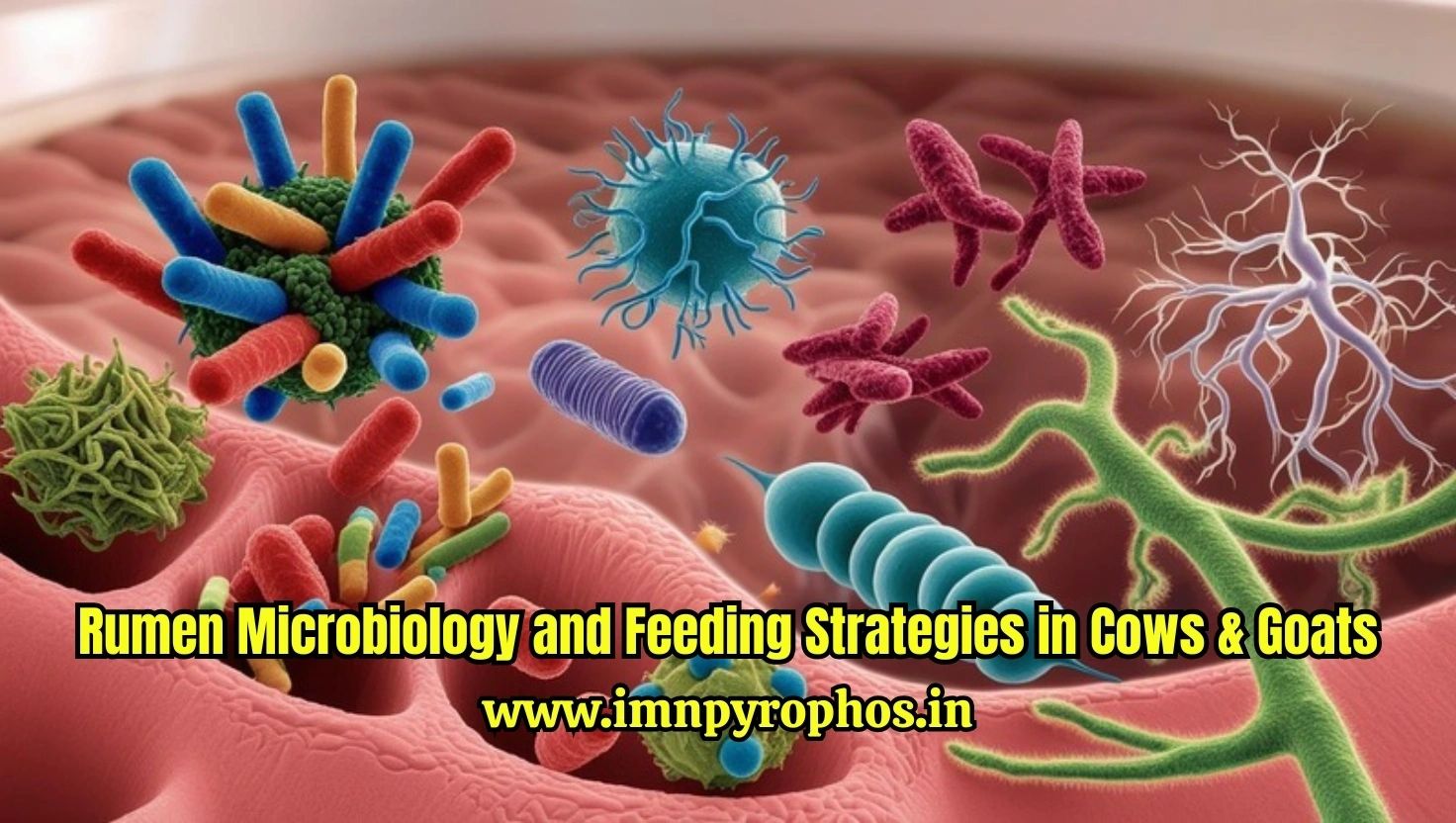
The rumen hosts bacteria, methanogens, protozoa, fungi, and bacteriophages, each contributing uniquely to digestion.
Ruminal Bacteria
Bacteria (10^8–10^11 per g) dominate, with gram-negative, anaerobic species like Fibrobacter succinogenes and Ruminococcus spp. degrading cellulose and hemicellulose. Grain-based diets increase bacterial density due to higher digestibility.
Example: Prevotella spp. digest starch and proteins, producing propionate, a key gluconeogenic precursor for milk production.
Methanogens
Methanogens (2–4% of microbial mass) produce methane from hydrogen and carbon dioxide, maintaining low hydrogen levels for efficient fermentation.
Example: Methanobrevibacter ruminantium is prevalent, using hydrogen to reduce CO2, aiding in the disposal of reducing equivalents.
Protozoa
Ciliated protozoa (10^4–10^6 per ml) ferment starch, sugars, and cellulose. Entodiniomorphs like Entodinium stabilize fermentation by slowing starch digestion, while holotrichs utilize soluble sugars.
Example: In grain-fed cows, protozoa engulf starch granules, reducing the risk of rapid acid production and acidosis.
Fungi
Anaerobic fungi (up to 10% of microbial mass) degrade fibrous plant material through rhizoidal penetration, enhancing forage digestion.
Example: Neocallimastix spp. break down lignin-hemicellulose cross-links, improving access to digestible carbohydrates in straw-based diets.
Rumen health
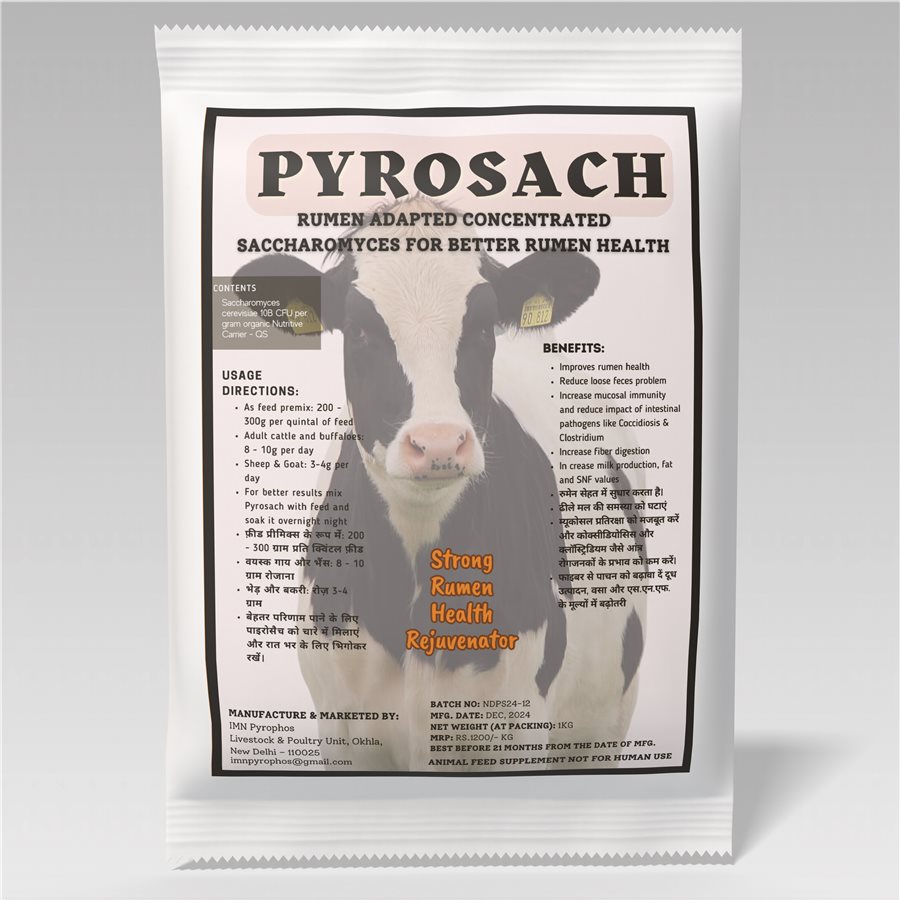
Pyrosach
Rumen-adapted Saccharomyces cerevisiae (10 billion CFU per gram). Improves fibre digestion and rumen health, reduces loose dung, and supports milk, fat and SNF.
Dose: 8–10 g per adult cow or buffalo per day; 3–4 g per sheep or goat; or 200–300 g per quintal of feed. Mix with feed and soak overnight for best results.
1 kg ₹700MRP ₹1,200
Bacteriophages
Bacteriophages (10^7–10^11 per ml) influence bacterial populations through lysis, potentially aiding nutrient recycling.
Example: Lytic phages targeting Streptococcus bovis may reduce lactic acid production during high-grain feeding, mitigating acidosis.
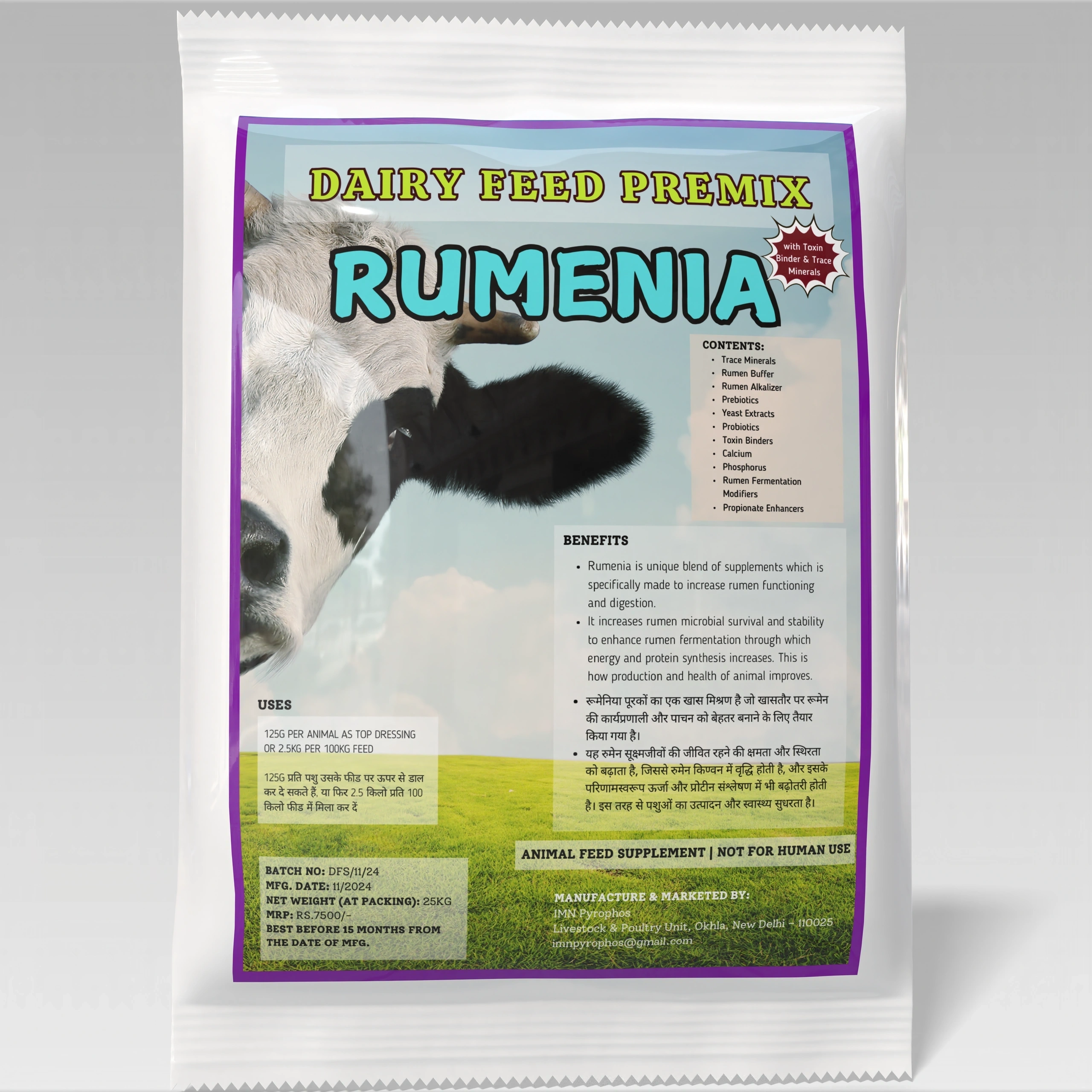
Practical Relevance of Rumenia in Maintaining Microbiological Diversity and Health: In India, where low-quality forages dominate, fungi and cellulolytic bacteria are critical. Feeding programs should include fibrous roughages (e.g., green fodder, straw) to support these microbes, supplemented with concentrates to boost bacterial activity. Products like Rumenia from IMN Pyrophos can further enhance rumen microbial diversity and function. Rumenia, a blend of probiotics, prebiotics, and rumen conditioners, promotes the growth of beneficial bacteria and methanogens while stabilizing pH, as seen in its ability to increase milk yield by 10–15% in dairy cows. By fostering a balanced microbial ecosystem, Rumenia improves fiber digestion (e.g., +20% NDF digestibility) and reduces methane emissions, making it a valuable tool for Indian farmers relying on straw-based diets.
Find out more about Rumenia in this video
Microbial Interactions: Enhancing Digestion
Microbial interactions like cross-feeding and interspecies hydrogen transfer optimize nutrient utilization.
Example: Fibrolytic bacteria produce succinate, which Selenomonas ruminantium converts to propionate, preventing succinate accumulation and enhancing energy yield.
Practical Relevance: Supplementing low-quality forages with molasses or urea stimulates fibrolytic bacteria, leveraging interactions to improve fiber digestion and VFA production.
Ruminal Development in Calves
In newborn calves, the rumen is sterile but rapidly colonizes with bacteria, methanogens, fungi, and protozoa within days to months, driven by diet and contact with mature ruminants.
Example: Cellulolytic bacteria appear by day 3, enabling early fiber digestion, while protozoa like Entodinium establish by 1–2 weeks with faunated contact.
Practical Relevance: In India, early weaning onto starter feeds with green fodder and exposure to adult animals accelerates rumen development, reducing dependency on milk and lowering rearing costs.
Learn Dairy Cow Nutrition in this video
Feeding Program Design for Dairy Animals and Goats in India
Designing feeding programs for dairy cows and goats in India requires balancing rumen health, microbial activity, and resource availability. Key considerations include:
- Forage-Based Diets: Use locally available roughages like rice/wheat straw, green fodder (berseem, maize), and tree leaves (neem, subabul). These support fibrolytic microbes and fungi, enhancing fiber digestion.
- Example: Feeding 15–20 kg of green fodder daily to dairy cows ensures adequate fiber, stimulating chewing and saliva production for pH buffering.
- Concentrate Supplementation: Provide 2–4 kg of concentrate (maize, wheat bran, oil cakes) per cow daily, adjusted for milk yield (1 kg per 2.5–3 liters of milk). For goats, offer 200–400 g daily. This boosts amylolytic bacteria and propionate production.
- Example: A dairy cow yielding 10 liters daily requires 4 kg specially formulated concentrate alongside forage to meet energy demands.
- Non-Protein Nitrogen (NPN): Treat straw with 4% urea to enhance microbial protein synthesis, especially for low-protein diets common in India.
- Example: Urea-treated wheat straw fed to goats increases crude protein content from 3% to 8–10%, improving growth rates.
- Methane Mitigation: Incorporate tannin-rich feeds (e.g., tamarind seeds, neem leaves) or commercial additives to reduce methane losses and improve energy efficiency.
- Example: Adding 5% tamarind seed powder to goat diets reduces methane by 10–15% while maintaining digestibility.
- Calf Nutrition: Introduce starter feeds (18–20% crude protein) by 2 weeks, alongside green fodder, to promote rumen development. Ensure contact with adult animals for microbial inoculation.
- Example: Feeding 500 g of calf starter daily from week 2 supports bacterial colonization and rumen papillae growth.
- Water and Mineral Supply: Provide clean water (40–60 liters/day for cows, 3–5 liters for goats) and trace mineral mixture Pyromin (10 g/day for cows, 3g for goats) to support microbial growth and prevent deficiencies.
- Example: A mineral mix with calcium, phosphorus, and trace minerals enhances microbial enzyme activity and VFA absorption.
- Feeding Frequency: Offer feed 2–3 times daily to maintain consistent substrate availability, reducing pH fluctuations and supporting microbial stability.
- Example: Splitting concentrate into two meals (morning and evening) for dairy cows minimizes acidosis risk during peak fermentation.
Regional Considerations: In arid regions like Rajasthan, rely on drought-resistant fodders (e.g., bajra stover) and conserved silage. In coastal areas, use paddy straw and fish meal as protein sources. Tailor concentrate ratios to local grain availability (e.g., maize in North India, sorghum in South India).
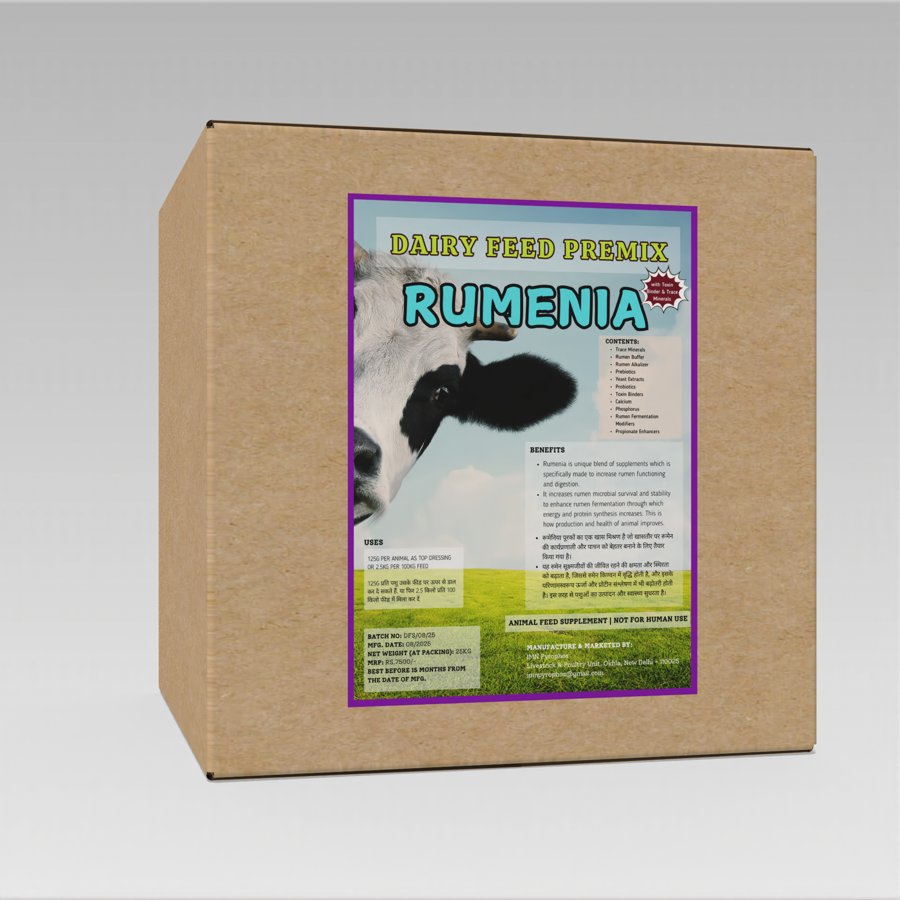
Dairy feed premix · top seller
Rumenia
Trace minerals, rumen buffer, prebiotics, yeast extracts, probiotics, toxin binders, calcium, phosphorus and rumen fermentation modifiers. Improves rumen function, microbial stability, fermentation and energy and protein synthesis. 25 kg bag ₹5,625.
Dose: 2.5 kg per 100 kg feed.
5 kg ₹1,400MRP ₹1,800
Conclusion
Rumen microbiology underpins ruminant productivity by enabling the digestion of complex feeds into usable nutrients. In India, feeding programs must leverage this microbial ecosystem by balancing fibrous forages, concentrates, and supplements like urea to optimize VFA production, microbial protein synthesis, and rumen health. By integrating local resources and sustainable practices, dairy farmers and goat keepers can enhance productivity while addressing environmental concerns like methane emissions. Tailored nutrition strategies, grounded in rumen microbiology, are key to sustainable livestock farming in India’s diverse agricultural landscape.
For feed formulation consultation contact us on 9871584101
Need help with feeding or a health problem in your cows or buffaloes? Message Dr. Ibne Ali on WhatsApp.
WhatsApp: 98715 84101भारत में डेयरी पशुओं और बकरियों के लिए रूमेन माइक्रोबायोलॉजी और फीडिंग की रणनीतियाँ
रूमेन (पेट का पहला बड़ा हिस्सा) सूक्ष्म जीवों (microbes) का एक जटिल तंत्र है, जो डेयरी गाय और बकरी जैसे जुगाली करने वाले पशुओं में चारे के पाचन और पोषक तत्वों को शरीर में लगाने में सबसे अहम भूमिका निभाता है। असरदार फीडिंग प्रोग्राम बनाने के लिए रूमेन माइक्रोबायोलॉजी को समझना ज़रूरी है, खासकर भारत में, जहाँ अलग-अलग जलवायु और खेती की परिस्थितियाँ और संसाधनों की कमी पशुपालन पर असर डालती हैं। यह लेख रूमेन के तंत्र, उसके सूक्ष्म जीवों, उनके आपसी संबंधों और डेयरी पशुओं व बकरियों में उत्पादन बढ़ाने के लिए प्रैक्टिकल फीडिंग तरीकों के बारे में बताता है।
रूमेन माइक्रोबायोलॉजी, डेयरी पशु फीडिंग, भारत में बकरी पोषण, जुगाली करने वाले पशुओं का पाचन, माइक्रोबियल फर्मेंटेशन, डेयरी गायों के लिए फीडिंग प्रोग्राम, भारत में बकरी पालन, रूमेन हेल्थ, पशु पोषण, टिकाऊ डेयरी फार्मिंग
रूमेन का तंत्र: एक जैविक फर्मेंटेशन यूनिट
रूमेन को अक्सर एक "chemostat" जैसा कहा जाता है, यानी एक लगातार चलने वाला कल्चर सिस्टम, जहाँ सूक्ष्म जीव बिना ऑक्सीजन (anaerobic) के खाए गए चारे का फर्मेंटेशन करते हैं। बड़े पशु में रूमेन की क्षमता 50–100 लीटर होती है। रूमेन का तापमान स्थिर (36–40°C) रहता है, लार और पानी से अंदर नमी बनी रहती है, और रूमेन की सिकुड़न (contractions) से लगातार मिक्सिंग होती रहती है। ये परिस्थितियाँ तरह-तरह के सूक्ष्म जीवों को पनपने देती हैं, जो चारे के जटिल हिस्सों को तोड़कर volatile fatty acids (VFAs), गैसें और माइक्रोबियल प्रोटीन बनाते हैं।
उदाहरण: जो डेयरी गाय हरा-सूखा चारा और दाना मिलाकर खा रही है, उसके रूमेन की हलचल से सूक्ष्म जीवों को ताज़ा चारा मिलता रहता है, जबकि acetate, propionate और butyrate जैसे VFAs ऊर्जा के स्रोत के रूप में सोख लिए जाते हैं, और methane जैसी गैसें डकार के ज़रिए बाहर निकल जाती हैं।
प्रैक्टिकल महत्व: भारत में, जहाँ भूसा/पुआल (धान, गेहूँ) मुख्य चारा है, चबाने से बनने वाली लार के ज़रिए रूमेन में पर्याप्त बफरिंग पक्की करना बहुत ज़रूरी है, ताकि pH बना रहे और एसिडोसिस न हो, खासकर जब दाना ऊपर से दिया जा रहा हो।
बिना ऑक्सीजन का माहौल (Anaerobiosis) और उसका असर
रूमेन का बिना ऑक्सीजन वाला माहौल, जिसका redox potential -150 से -350 mV होता है, ग्लूकोज़ के प्रति मोल से ऊर्जा को सिर्फ 4 ATP तक सीमित कर देता है (ऑक्सीजन वाले सिस्टम में यह 38 होता है)। इससे चारे का आंशिक ऑक्सीकरण होता है, जिससे VFAs बनते हैं जिन्हें पशु ऊर्जा के लिए सोख लेता है, और methane जैसे reduced उत्पाद बनते हैं।
उदाहरण: Methanogens हाइड्रोजन और कार्बन डाइऑक्साइड को methane में बदल देते हैं, जिससे रुकावट डालने वाली हाइड्रोजन जमा नहीं होती और फर्मेंटेशन अच्छे से चलता है।
प्रैक्टिकल महत्व: Methane बनना एक कुदरती प्रक्रिया है, फिर भी यह ऊर्जा का नुकसान है (कुल ऊर्जा का 2–12%)। भारत में फीडिंग के तरीकों में, जहाँ संभव हो, methane कम करने वाले एडिटिव जैसे टैनिन (नीम जैसे पेड़ों की पत्तियों से) या ionophores शामिल करने चाहिए, ताकि ऊर्जा का बेहतर इस्तेमाल हो।
पशु और सूक्ष्म जीवों के बीच आपसी फायदे का रिश्ता
जुगाली करने वाले पशु और उसके सूक्ष्म जीवों के बीच आपसी फायदे (symbiotic) का रिश्ता होता है। पशु उन्हें रहने के लिए अनुकूल माहौल और पोषक तत्व देता है, और सूक्ष्म जीव बदले में VFAs, माइक्रोबियल प्रोटीन और विटामिन देते हैं।
उदाहरण: लार का बाइकार्बोनेट रूमेन के pH को बफर करता है, जिससे सूक्ष्म जीव अच्छे से पनपते हैं, और सूक्ष्म जीव सेल्यूलोज़ (जिसे पशु खुद नहीं पचा सकता) को पचाकर VFAs बनाते हैं, जो पशु की 70% तक ऊर्जा देते हैं।
प्रैक्टिकल महत्व: भारत में यूरिया से उपचारित भूसा खिलाने से अमोनिया मिलता है, जो सूक्ष्म जीवों के लिए नाइट्रोजन का मुख्य स्रोत है। इससे माइक्रोबियल प्रोटीन ज़्यादा बनता है और फसल अवशेष जैसे कम प्रोटीन वाले चारे पर पल रहे पशुओं को ज़्यादा प्रोटीन मिलता है।
रूमेन के सूक्ष्म जीव: विविधता और भूमिका
रूमेन में बैक्टीरिया, methanogens, protozoa, फंगस और bacteriophages रहते हैं, और हर एक पाचन में अपना अलग योगदान देता है।
रूमेन के बैक्टीरिया
बैक्टीरिया (10^8–10^11 प्रति ग्राम) सबसे ज़्यादा होते हैं। Fibrobacter succinogenes और Ruminococcus spp. जैसी gram-negative, anaerobic प्रजातियाँ सेल्यूलोज़ और हेमीसेल्यूलोज़ को तोड़ती हैं। दाने वाली खुराक से बैक्टीरिया की संख्या बढ़ जाती है, क्योंकि वह ज़्यादा आसानी से पचती है।
उदाहरण: Prevotella spp. स्टार्च और प्रोटीन पचाते हैं और propionate बनाते हैं, जो दूध उत्पादन के लिए ग्लूकोज़ बनाने का मुख्य कच्चा माल है।
Methanogens
Methanogens (माइक्रोबियल मास का 2–4%) हाइड्रोजन और कार्बन डाइऑक्साइड से methane बनाते हैं, और हाइड्रोजन का स्तर कम रखते हैं ताकि फर्मेंटेशन अच्छे से हो।
उदाहरण: Methanobrevibacter ruminantium सबसे आम है, जो हाइड्रोजन का इस्तेमाल करके CO2 को reduce करता है और reducing equivalents को निपटाने में मदद करता है।
Protozoa
Ciliated protozoa (10^4–10^6 प्रति ml) स्टार्च, शुगर और सेल्यूलोज़ का फर्मेंटेशन करते हैं। Entodinium जैसे Entodiniomorphs स्टार्च का पाचन धीमा करके फर्मेंटेशन को स्थिर रखते हैं, जबकि holotrichs घुलनशील शुगर का इस्तेमाल करते हैं।
उदाहरण: दाना खाने वाली गायों में protozoa स्टार्च के दानों को निगल लेते हैं, जिससे तेज़ी से एसिड बनने और एसिडोसिस का खतरा कम होता है।
फंगस (Fungi)
Anaerobic फंगस (माइक्रोबियल मास का 10% तक) rhizoidal penetration (जड़ जैसे धागों से अंदर घुसकर) के ज़रिए रेशेदार पौधों के हिस्सों को तोड़ते हैं, जिससे चारे का पाचन बढ़ता है।
उदाहरण: Neocallimastix spp. लिग्निन-हेमीसेल्यूलोज़ के आपसी जोड़ों को तोड़ते हैं, जिससे भूसे वाली खुराक में पचने लायक कार्बोहाइड्रेट तक पहुँच आसान होती है।
रुमेन की सेहत
Pyrosach
रुमेन के अनुकूल Saccharomyces cerevisiae (1000 करोड़ CFU प्रति ग्राम)। रेशे का पाचन और रुमेन की सेहत सुधारता है, पतला गोबर घटाता है, दूध, फैट और SNF में सहायक।
मात्रा: 8–10 ग्राम प्रति वयस्क गाय या भैंस प्रति दिन; भेड़ या बकरी को 3–4 ग्राम; या 200–300 ग्राम प्रति क्विंटल दाना। अच्छे नतीजे के लिए दाने में मिलाकर रात भर भिगोएँ।
1 kg ₹700MRP ₹1,200
Bacteriophages
Bacteriophages (10^7–10^11 प्रति ml) बैक्टीरिया को तोड़कर (lysis) उनकी आबादी पर असर डालते हैं, जिससे पोषक तत्वों की रिसाइक्लिंग में मदद हो सकती है।
उदाहरण: Streptococcus bovis को निशाना बनाने वाले lytic phages ज़्यादा दाना खिलाने के दौरान लैक्टिक एसिड बनना कम कर सकते हैं, जिससे एसिडोसिस घटता है।
रूमेन के माइक्रोबियल संतुलन और सेहत को बनाए रखने में Rumenia का प्रैक्टिकल महत्व: भारत में, जहाँ ज़्यादातर कम गुणवत्ता वाला चारा मिलता है, फंगस और सेल्यूलोज़ तोड़ने वाले बैक्टीरिया बहुत ज़रूरी हैं। फीडिंग प्रोग्राम में इन सूक्ष्म जीवों को सहारा देने के लिए रेशेदार चारा (जैसे हरा चारा, भूसा) शामिल होना चाहिए, और बैक्टीरिया की गतिविधि बढ़ाने के लिए साथ में दाना (concentrate) देना चाहिए। IMN Pyrophos का Rumenia जैसा प्रोडक्ट रूमेन के सूक्ष्म जीवों की विविधता और काम को और बढ़ा सकता है। Rumenia, probiotics, prebiotics और rumen conditioners का मिश्रण है, जो pH को स्थिर रखते हुए फायदेमंद बैक्टीरिया और methanogens की बढ़त को बढ़ावा देता है, जैसा कि डेयरी गायों में दूध 10–15% तक बढ़ाने की इसकी क्षमता में दिखता है। सूक्ष्म जीवों का संतुलित तंत्र बनाकर Rumenia रेशे का पाचन सुधारता है (जैसे NDF पाचन +20%) और methane उत्सर्जन कम करता है, इसलिए यह भूसे वाली खुराक पर निर्भर भारतीय किसानों के लिए एक कीमती साधन है।
Rumenia के बारे में और जानकारी इस वीडियो में देखें
सूक्ष्म जीवों के आपसी संबंध: पाचन को बेहतर बनाना
Cross-feeding (एक का बनाया उत्पाद दूसरे का खाना) और interspecies hydrogen transfer जैसे आपसी संबंध पोषक तत्वों के इस्तेमाल को बेहतर बनाते हैं।
उदाहरण: रेशा तोड़ने वाले बैक्टीरिया succinate बनाते हैं, जिसे Selenomonas ruminantium propionate में बदल देता है, इससे succinate जमा नहीं होता और ऊर्जा ज़्यादा मिलती है।
प्रैक्टिकल महत्व: कम गुणवत्ता वाले चारे के साथ शीरा (molasses) या यूरिया देने से रेशा तोड़ने वाले बैक्टीरिया सक्रिय होते हैं, और इन आपसी संबंधों का फायदा उठाकर रेशे का पाचन और VFA उत्पादन बढ़ता है।
बछड़ों में रूमेन का विकास
नवजात बछड़ों में रूमेन बिल्कुल साफ (sterile) होता है, लेकिन कुछ दिनों से लेकर कुछ महीनों के अंदर उसमें बैक्टीरिया, methanogens, फंगस और protozoa तेज़ी से बस जाते हैं। यह खुराक और बड़े पशुओं के संपर्क पर निर्भर करता है।
उदाहरण: सेल्यूलोज़ तोड़ने वाले बैक्टीरिया तीसरे दिन तक आ जाते हैं, जिससे जल्दी रेशे का पाचन शुरू हो जाता है, जबकि Entodinium जैसे protozoa बड़े पशुओं (जिनमें protozoa हों) के संपर्क से 1–2 हफ्ते में बस जाते हैं।
प्रैक्टिकल महत्व: भारत में जल्दी दूध छुड़ाकर हरे चारे के साथ स्टार्टर फीड पर लाने और बड़े पशुओं के संपर्क में रखने से रूमेन का विकास तेज़ होता है, दूध पर निर्भरता कम होती है और पालने का खर्च घटता है।
डेयरी गाय का पोषण इस वीडियो में सीखें
भारत में डेयरी पशुओं और बकरियों के लिए फीडिंग प्रोग्राम कैसे बनाएँ
भारत में डेयरी गायों और बकरियों के लिए फीडिंग प्रोग्राम बनाते समय रूमेन की सेहत, सूक्ष्म जीवों की गतिविधि और उपलब्ध संसाधनों के बीच संतुलन रखना पड़ता है। मुख्य बातें ये हैं:
- चारे पर आधारित खुराक: स्थानीय रूप से मिलने वाला सूखा-हरा चारा इस्तेमाल करें, जैसे धान/गेहूँ का भूसा, हरा चारा (बरसीम, मक्का), और पेड़ों की पत्तियाँ (नीम, सुबबूल)। ये रेशा तोड़ने वाले सूक्ष्म जीवों और फंगस को सहारा देते हैं और रेशे का पाचन बढ़ाते हैं।
- उदाहरण: डेयरी गायों को रोज़ 15–20 kg हरा चारा खिलाने से पर्याप्त रेशा मिलता है, जिससे जुगाली और लार बनना बढ़ता है और pH बफर होता है।
- दाने (Concentrate) की पूर्ति: हर गाय को रोज़ 2–4 kg दाना (मक्का, गेहूँ का चोकर, खली) दें, दूध के हिसाब से बदलते हुए (हर 2.5–3 लीटर दूध पर 1 kg)। बकरियों को रोज़ 200–400 g दें। इससे स्टार्च पचाने वाले बैक्टीरिया और propionate का उत्पादन बढ़ता है।
- उदाहरण: रोज़ 10 लीटर दूध देने वाली डेयरी गाय को ऊर्जा की ज़रूरत पूरी करने के लिए चारे के साथ 4 kg खास तौर पर बनाया गया दाना चाहिए।
- Non-Protein Nitrogen (NPN): भूसे को 4% यूरिया से उपचारित करें, ताकि माइक्रोबियल प्रोटीन ज़्यादा बने, खासकर भारत में आम कम प्रोटीन वाली खुराक में।
- उदाहरण: बकरियों को यूरिया से उपचारित गेहूँ का भूसा खिलाने से crude protein 3% से बढ़कर 8–10% हो जाता है और बढ़वार बेहतर होती है।
- Methane कम करना: टैनिन वाले चारे (जैसे इमली के बीज, नीम की पत्तियाँ) या कमर्शियल एडिटिव शामिल करें, ताकि methane से होने वाला नुकसान घटे और ऊर्जा का बेहतर इस्तेमाल हो।
- उदाहरण: बकरियों की खुराक में 5% इमली के बीज का पाउडर मिलाने से पाचन बनाए रखते हुए methane 10–15% तक कम होती है।
- बछड़ों का पोषण: 2 हफ्ते की उम्र तक हरे चारे के साथ स्टार्टर फीड (18–20% crude protein) शुरू कर दें, ताकि रूमेन का विकास हो। सूक्ष्म जीव पहुँचाने के लिए बछड़ों को बड़े पशुओं के संपर्क में रखें।
- उदाहरण: दूसरे हफ्ते से रोज़ 500 g काफ स्टार्टर खिलाने से बैक्टीरिया का बसना और रूमेन के papillae (अंदर के छोटे उभार) की बढ़त होती है।
- पानी और मिनरल की पूर्ति: साफ पानी (गायों के लिए 40–60 लीटर/दिन, बकरियों के लिए 3–5 लीटर) और ट्रेस मिनरल मिक्सचर Pyromin (गायों के लिए 10 g/दिन, बकरियों के लिए 3g) दें, ताकि सूक्ष्म जीवों की बढ़त हो और कमी न हो।
- उदाहरण: कैल्शियम, फॉस्फोरस और ट्रेस मिनरल वाला मिनरल मिक्स सूक्ष्म जीवों के एंज़ाइम की गतिविधि और VFA के सोखने को बढ़ाता है।
- खिलाने की बारंबारता: दिन में 2–3 बार खाना दें, ताकि सूक्ष्म जीवों को लगातार खुराक मिलती रहे, pH में उतार-चढ़ाव कम हो और सूक्ष्म जीव स्थिर रहें।
- उदाहरण: डेयरी गायों का दाना दो बार (सुबह और शाम) में बाँटकर देने से फर्मेंटेशन के चरम समय में एसिडोसिस का खतरा कम होता है।
क्षेत्र के हिसाब से ध्यान देने वाली बातें: राजस्थान जैसे सूखे इलाकों में सूखा सहने वाले चारे (जैसे बाजरे की कड़बी) और संरक्षित साइलेज पर निर्भर रहें। तटीय इलाकों में प्रोटीन के लिए धान का पुआल और फिश मील इस्तेमाल करें। दाने का अनुपात स्थानीय अनाज की उपलब्धता के हिसाब से तय करें (जैसे उत्तर भारत में मक्का, दक्षिण भारत में ज्वार)।
डेयरी फीड प्रीमिक्स · टॉप सेलर
Rumenia
ट्रेस मिनरल, रुमेन बफर, प्रीबायोटिक, यीस्ट एक्सट्रैक्ट, प्रोबायोटिक, टॉक्सिन बाइंडर, कैल्शियम, फॉस्फोरस और रुमेन फर्मेंटेशन मॉडिफायर। रुमेन का काम, माइक्रोब की स्थिरता, फर्मेंटेशन और ऊर्जा व प्रोटीन बनना सुधारता है। 25 किलो बैग ₹5,625।
मात्रा: 2.5 किलो प्रति 100 किलो दाना।
5 kg ₹1,400MRP ₹1,800
निष्कर्ष
रूमेन माइक्रोबायोलॉजी ही जुगाली करने वाले पशुओं के उत्पादन की नींव है, क्योंकि यह जटिल चारे को काम के पोषक तत्वों में पचाने में मदद करती है। भारत में फीडिंग प्रोग्राम को इस माइक्रोबियल तंत्र का फायदा उठाना चाहिए, यानी रेशेदार चारा, दाना और यूरिया जैसे सप्लीमेंट को संतुलित करके VFA उत्पादन, माइक्रोबियल प्रोटीन बनना और रूमेन की सेहत को बेहतर बनाना चाहिए। स्थानीय संसाधनों और टिकाऊ तरीकों को अपनाकर डेयरी किसान और बकरी पालक उत्पादन बढ़ा सकते हैं और साथ ही methane उत्सर्जन जैसी पर्यावरण की चिंताओं को भी संभाल सकते हैं। रूमेन माइक्रोबायोलॉजी पर आधारित, ज़रूरत के हिसाब से बनी पोषण रणनीतियाँ ही भारत की विविध खेती में टिकाऊ पशुपालन की कुंजी हैं।
फीड फॉर्मूलेशन की सलाह के लिए हमसे 9871584101 पर संपर्क करें
गाय-भैंस के दाने या बीमारी में मदद चाहिए? डॉ. इब्ने अली को WhatsApp कीजिए।
WhatsApp: 98715 84101India me Dairy Pashu aur Bakriyon ke liye Rumen Microbiology aur Feeding Strategies
Rumen (pet ka pehla bada hissa) microbes ka ek complex system hai, jo dairy gaay aur bakri jaise jugaali karne wale pashuon me chaare ke pachan aur nutrients ko body me lagane me sabse important role nibhata hai. Achha feeding program banane ke liye rumen microbiology samajhna zaroori hai, khaas kar India me, jahan alag-alag mausam aur kheti ki conditions aur resources ki kami pashupalan par asar daalti hai. Ye article rumen ke system, uske microbes, unke aapas ke rishte, aur dairy pashu aur bakriyon me production badhane ke practical feeding tarike batata hai.
Rumen microbiology, dairy pashu feeding, India me bakri nutrition, jugaali pashu ka pachan, microbial fermentation, dairy gaay ke liye feeding program, India me goat farming, rumen health, pashu nutrition, sustainable dairy farming
Rumen ka System: Ek Biological Fermentation Unit
Rumen ko aksar ek "chemostat" jaisa kaha jata hai, yaani lagatar chalne wala culture system, jahan microbes bina oxygen (anaerobic) ke khaye gaye chaare ka fermentation karte hain. Bade pashu me rumen ki capacity 50–100 liter hoti hai. Rumen ka temperature stable (36–40°C) rehta hai, laar aur paani se andar nami bani rehti hai, aur rumen ke contractions se lagatar mixing hoti rehti hai. In conditions me tarah-tarah ke microbes palte hain, jo chaare ke complex hisson ko todkar volatile fatty acids (VFAs), gas aur microbial protein banate hain.
Example: Jo dairy gaay chaara aur daana mila kar kha rahi hai, uske rumen ki movement se microbes ko fresh chaara milta rehta hai, aur acetate, propionate aur butyrate jaise VFAs energy ke liye absorb ho jaate hain, aur methane jaisi gas dakaar ke through bahar nikal jaati hai.
Practical Relevance: India me, jahan bhusa/parali (dhaan, gehun) main chaara hai, chabaane se banne wali laar ke through rumen me poori buffering zaroori hai, taaki pH bana rahe aur acidosis na ho, khaas kar jab upar se daana diya ja raha ho.
Bina Oxygen ka Mahaul (Anaerobiosis) aur Uska Asar
Rumen ka bina oxygen wala mahaul, jiska redox potential -150 se -350 mV hota hai, glucose ke har mole se energy ko sirf 4 ATP tak limit kar deta hai (oxygen wale system me ye 38 hota hai). Isse chaare ka partial oxidation hota hai, jisse VFAs bante hain jinhe pashu energy ke liye absorb karta hai, aur methane jaise reduced products bante hain.
Example: Methanogens hydrogen aur carbon dioxide ko methane me badal dete hain, jisse rukawat daalne wali hydrogen jama nahi hoti aur fermentation achhe se chalta hai.
Practical Relevance: Methane banna natural hai, phir bhi ye energy ka nuksan hai (gross energy ka 2–12%). India me feeding strategies me, jahan possible ho, methane kam karne wale additives jaise tannins (neem jaise pedon ki pattiyon se) ya ionophores daalne chahiye, taaki energy ka better use ho.
Pashu aur Microbes ka Aapsi Fayde wala Rishta
Jugaali pashu aur uske microbes ka symbiotic (aapsi fayde ka) rishta hota hai. Pashu unhe rehne ke liye achha mahaul aur nutrients deta hai, aur microbes badle me VFAs, microbial protein aur vitamins dete hain.
Example: Laar ka bicarbonate rumen ke pH ko buffer karta hai, jisse microbes achhe se palte hain, aur microbes cellulose (jise pashu khud nahi pacha sakta) ko pachakar VFAs banate hain, jo pashu ki 70% tak energy dete hain.
Practical Relevance: India me urea-treated bhusa khilane se ammonia milta hai, jo microbes ke liye nitrogen ka main source hai. Isse microbial protein zyada banta hai aur fasal ke avshesh jaise low-protein chaare par pal rahe pashuon ko zyada protein milta hai.
Rumen ke Microbes: Variety aur Role
Rumen me bacteria, methanogens, protozoa, fungi aur bacteriophages rehte hain, aur har ek pachan me apna alag contribution deta hai.
Rumen ke Bacteria
Bacteria (10^8–10^11 per g) sabse zyada hote hain. Fibrobacter succinogenes aur Ruminococcus spp. jaisi gram-negative, anaerobic species cellulose aur hemicellulose ko todti hain. Daane wali diet se bacteria ki ginti badh jaati hai kyunki wo aasani se pachti hai.
Example: Prevotella spp. starch aur protein pachate hain aur propionate banate hain, jo doodh production ke liye glucose banane ka main raw material hai.
Methanogens
Methanogens (microbial mass ka 2–4%) hydrogen aur carbon dioxide se methane banate hain, aur hydrogen level kam rakhte hain taaki fermentation achhe se ho.
Example: Methanobrevibacter ruminantium sabse common hai, jo hydrogen use karke CO2 ko reduce karta hai aur reducing equivalents ko nipatane me madad karta hai.
Protozoa
Ciliated protozoa (10^4–10^6 per ml) starch, sugar aur cellulose ka fermentation karte hain. Entodinium jaise Entodiniomorphs starch ka pachan dheema karke fermentation ko stable rakhte hain, jabki holotrichs ghulne wali sugar use karte hain.
Example: Daana khane wali gaayon me protozoa starch ke daano ko nigal lete hain, jisse tezi se acid banne aur acidosis ka khatra kam hota hai.
Fungi
Anaerobic fungi (microbial mass ka 10% tak) rhizoidal penetration (jad jaise dhaagon se andar ghuskar) ke through resha wale paudhon ke hisson ko todte hain, jisse chaare ka pachan badhta hai.
Example: Neocallimastix spp. lignin-hemicellulose ke cross-links todte hain, jisse bhuse wali diet me pachne layak carbohydrates tak pahunch aasan hoti hai.
Rumen ki sehat
Pyrosach
Rumen ke anukool Saccharomyces cerevisiae (1000 crore CFU prati gram). Reshe ka pachan aur rumen ki sehat sudharta hai, patla gobar ghatata hai, doodh, fat aur SNF me sahayak.
Matra: 8–10 g prati vayask gaay ya bhains prati din; bhed ya bakri ko 3–4 g; ya 200–300 g prati quintal daana. Achhe natije ke liye daane me mila kar raat bhar bhigoiye.
1 kg ₹700MRP ₹1,200
Bacteriophages
Bacteriophages (10^7–10^11 per ml) bacteria ko todkar (lysis) unki population par asar daalte hain, jisse nutrients ki recycling me madad ho sakti hai.
Example: Streptococcus bovis ko target karne wale lytic phages zyada daana khilane ke time lactic acid banna kam kar sakte hain, jisse acidosis ghatta hai.
Rumen ki Microbial Diversity aur Health Banaye Rakhne me Rumenia ka Practical Role: India me, jahan zyada tar low-quality chaara milta hai, fungi aur cellulose todne wale bacteria bahut zaroori hain. Feeding program me in microbes ko support karne ke liye reshedar chaara (jaise hara chaara, bhusa) hona chahiye, aur bacteria ki activity badhane ke liye saath me concentrate dena chahiye. IMN Pyrophos ka Rumenia jaisa product rumen ke microbes ki diversity aur kaam ko aur badha sakta hai. Rumenia probiotics, prebiotics aur rumen conditioners ka blend hai, jo pH ko stable rakhte hue faydemand bacteria aur methanogens ki growth badhata hai, jaisa dairy gaayon me doodh 10–15% tak badhane ki iski capacity me dikhta hai. Microbes ka balanced system banakar Rumenia resha ka pachan sudharta hai (jaise NDF digestibility +20%) aur methane emission kam karta hai, isliye ye bhuse wali diet par chalne wale Indian farmers ke liye ek kaam ka tool hai.
Rumenia ke baare me aur jaankari is video me dekhein
Microbes ke Aapsi Rishte: Pachan ko Better Banana
Cross-feeding (ek ka banaya product doosre ka khana) aur interspecies hydrogen transfer jaise aapsi rishte nutrients ke use ko better banate hain.
Example: Resha todne wale bacteria succinate banate hain, jise Selenomonas ruminantium propionate me badal deta hai, isse succinate jama nahi hota aur energy zyada milti hai.
Practical Relevance: Low-quality chaare ke saath sheera (molasses) ya urea dene se resha todne wale bacteria active hote hain, aur in aapsi rishton ka fayda uthakar resha ka pachan aur VFA production badhta hai.
Bachhdon me Rumen ka Development
Naye paida bachhdon me rumen bilkul sterile hota hai, lekin kuch dinon se lekar kuch mahino me usme bacteria, methanogens, fungi aur protozoa tezi se bas jaate hain. Ye diet aur bade pashuon ke contact par depend karta hai.
Example: Cellulose todne wale bacteria teesre din tak aa jaate hain, jisse jaldi resha ka pachan shuru ho jaata hai, jabki Entodinium jaise protozoa bade pashuon (jinme protozoa hon) ke contact se 1–2 hafte me bas jaate hain.
Practical Relevance: India me jaldi doodh chhudakar hare chaare ke saath starter feed par laane aur bade pashuon ke contact me rakhne se rumen ka development tez hota hai, doodh par dependency kam hoti hai aur paalne ka kharcha ghatta hai.
Dairy gaay ka nutrition is video me seekhein
India me Dairy Pashu aur Bakriyon ke liye Feeding Program Kaise Banayein
India me dairy gaay aur bakriyon ka feeding program banate time rumen health, microbes ki activity aur available resources ke beech balance rakhna padta hai. Main baatein ye hain:
- Chaare par Based Diet: Local milne wala chaara use karein, jaise dhaan/gehun ka bhusa, hara chaara (berseem, makka), aur pedon ki pattiyan (neem, subabul). Ye resha todne wale microbes aur fungi ko support karte hain aur resha ka pachan badhate hain.
- Example: Dairy gaayon ko roz 15–20 kg hara chaara khilane se poora resha milta hai, jisse jugaali aur laar banna badhta hai aur pH buffer hota hai.
- Concentrate (Daana) Supplementation: Har gaay ko roz 2–4 kg daana (makka, gehun ka chokar, khal) do, doodh ke hisaab se adjust karke (har 2.5–3 liter doodh par 1 kg). Bakriyon ko roz 200–400 g do. Isse starch pachane wale bacteria aur propionate production badhta hai.
- Example: Roz 10 liter doodh dene wali dairy gaay ko energy ki zaroorat poori karne ke liye chaare ke saath 4 kg specially formulated daana chahiye.
- Non-Protein Nitrogen (NPN): Bhuse ko 4% urea se treat karo, taaki microbial protein zyada bane, khaas kar India me common low-protein diet me.
- Example: Bakriyon ko urea-treated gehun ka bhusa khilane se crude protein 3% se badhkar 8–10% ho jaata hai aur growth better hoti hai.
- Methane Kam Karna: Tannin wale chaare (jaise imli ke beej, neem ki pattiyan) ya commercial additives daalo, taaki methane se hone wala nuksan ghate aur energy ka better use ho.
- Example: Bakriyon ki diet me 5% imli ke beej ka powder milane se pachan banaye rakhte hue methane 10–15% tak kam hoti hai.
- Bachhdon ka Nutrition: 2 hafte tak hare chaare ke saath starter feed (18–20% crude protein) shuru kar do, taaki rumen ka development ho. Microbes pahunchane ke liye bachhdon ko bade pashuon ke contact me rakho.
- Example: Doosre hafte se roz 500 g calf starter khilane se bacteria ka basna aur rumen papillae ki growth hoti hai.
- Paani aur Mineral Supply: Saaf paani (gaayon ke liye 40–60 liter/din, bakriyon ke liye 3–5 liter) aur trace mineral mixture Pyromin (gaayon ke liye 10 g/din, bakriyon ke liye 3g) do, taaki microbes ki growth ho aur kami na ho.
- Example: Calcium, phosphorus aur trace minerals wala mineral mix microbes ke enzyme ki activity aur VFA absorption badhata hai.
- Khilane ki Frequency: Din me 2–3 baar feed do, taaki microbes ko lagatar khuraak milti rahe, pH ka upar-neeche kam ho aur microbes stable rahein.
- Example: Dairy gaayon ka daana do baar (subah aur shaam) me baant kar dene se peak fermentation ke time acidosis ka risk kam hota hai.
Area ke Hisaab se Dhyan Dene wali Baatein: Rajasthan jaise sookhe ilaakon me sookha sehne wale chaare (jaise bajre ki kadbi) aur store kiye silage par depend raho. Coastal ilaakon me protein ke liye dhaan ki parali aur fish meal use karo. Daane ka ratio local anaaj ki availability ke hisaab se rakho (jaise North India me makka, South India me jowar).
Dairy feed premix · top seller
Rumenia
Trace mineral, rumen buffer, prebiotic, yeast extract, probiotic, toxin binder, calcium, phosphorus aur rumen fermentation modifier. Rumen ka kaam, microbes ki sthirta, fermentation aur urja va protein banna sudharta hai. 25 kg bag ₹5,625.
Matra: 2.5 kg prati 100 kg daana.
5 kg ₹1,400MRP ₹1,800
Conclusion
Rumen microbiology hi jugaali pashuon ke production ki neev hai, kyunki ye complex chaare ko kaam ke nutrients me pachane me madad karti hai. India me feeding program ko is microbial system ka fayda uthana chahiye, yaani reshedar chaara, daana aur urea jaise supplements ko balance karke VFA production, microbial protein banna aur rumen health ko better banana chahiye. Local resources aur sustainable tarike apnakar dairy farmers aur bakri paalak production badha sakte hain aur saath me methane emission jaisi environment ki chinta ko bhi sambhal sakte hain. Rumen microbiology par based, zaroorat ke hisaab se bani nutrition strategies hi India ki alag-alag kheti me sustainable pashupalan ki chaabi hain.
Feed formulation consultation ke liye humse 9871584101 par contact karein
Gaay-bhains ke daane ya bimari me madad chahiye? Dr. Ibne Ali ko WhatsApp kijiye.
WhatsApp: 98715 84101