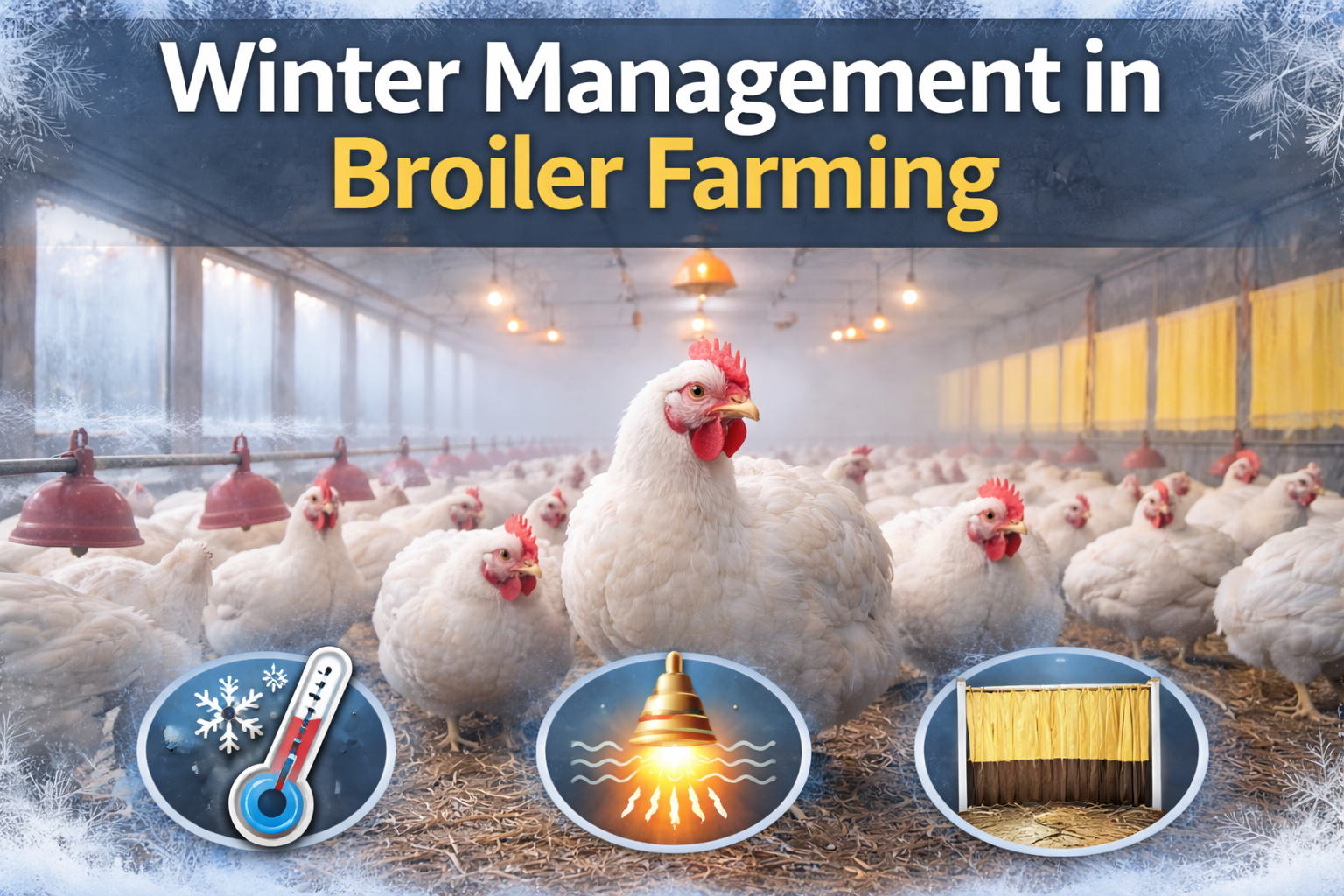
Winter Management in Poultry Farming – How to Manage a Broiler Shed in the Cold Season — The Perfect Formula for Ventilation, Temperature, Litter and Nutrition
As soon as winter arrives, most poultry farmers get worried about the same thing —
“the chicks are catching cold, they are eating less feed, growth has stopped and the shed smells.”
The real point is that the biggest challenge of winter poultry farming is not the cold, it is wrong management. In winter, birds do not need only warmth; they need clean air + dry litter + comfortable humidity. If you balance all four, the profit from broiler farming stays at its maximum even in winter.
The most common mistake in winter is that farmers switch on the heater and shut off ventilation. On the surface it looks like the heater is making heat and switching off the fans is saving it. But in reality, shutting off ventilation makes CO₂ and ammonia (NH₃) start rising inside the shed, humidity goes up, and the litter becomes wet. For a while things seem fine, then the birds start huddling, they have trouble breathing, feed intake drops, growth slows, and then infections begin, such as Mycoplasma and E. coli, followed by CRD and CCRD.
That is why the first rule of winter broiler management is — the heater and ventilation must run together. The idea that running fans will bring in cold is wrong. No, friends, if you switch the fans off completely, the birds will be hit not by the air but by gas and moisture. Minimum ventilation must run 24×7, no matter how severe the cold is.
Remember that with closed curtains the first 10 days pass without trouble because the birds’ requirements are not that high, but after that conditions start getting worse under poor ventilation. For the first 10 days a bird cannot regulate its own body temperature, so closing the farm to build up heat does not do much harm. But after that the bird’s oxygen requirement starts to rise and it also starts regulating its body temperature, so the farmer should take advantage of this, meaning ventilation should be started little by little, for example by lifting the curtains from the top.
An important point – the cold floor
In winter, chicks feel the cold first not from the air but from the cold floor. You must have felt it yourself: if you do not wear socks, the cold does not stop no matter how many sweaters and jackets you wear on top. The same happens with chickens.
Many people are happy just looking at the air temperature — “the shed temperature is 32 degrees, everything must be fine” — but if the floor is cold, the chicks’ behaviour goes bad instantly. In proper brooding, the floor has to be pre-heated to 28–30°C, starting 24–36 hours in advance. When the floor is warm, the birds spread out evenly, eating and drinking are normal, and growth moves at rocket speed right from the start.
Humidity also becomes the biggest villain in winter. As soon as humidity goes above 70%, the litter becomes wet → ammonia rises → respiratory infection → feed intake drops. When the farm is completely closed, humidity rises very fast, as you can see in this video.
The right humidity in winter is 50–65%. If RH is rising, increase the fans’ ON time slightly, but do not switch off the heater. This “drying ventilation” is a golden trick in winter — the bird stays warm and the shed stays dry.
Respiratory problems, CRD, E. coli, loose droppings, “yellow bird”, leg weakness, lameness, rattling breath — in winter all of these mostly happen because of ventilation + humidity + ammonia. They cannot be controlled with medicines alone until the environment is corrected. But giving the right nutritional support and supplements keeps the birds’ immunity and digestion strong, and you see full growth.
This medicine schedule has been made keeping winter problems in mind. If you use it, you get rid of early infections and growth challenges to a large extent. If used along with following the management described here, this medicine schedule helps improve mortality by 3-4% and FCR by 0.05 to 0.1.
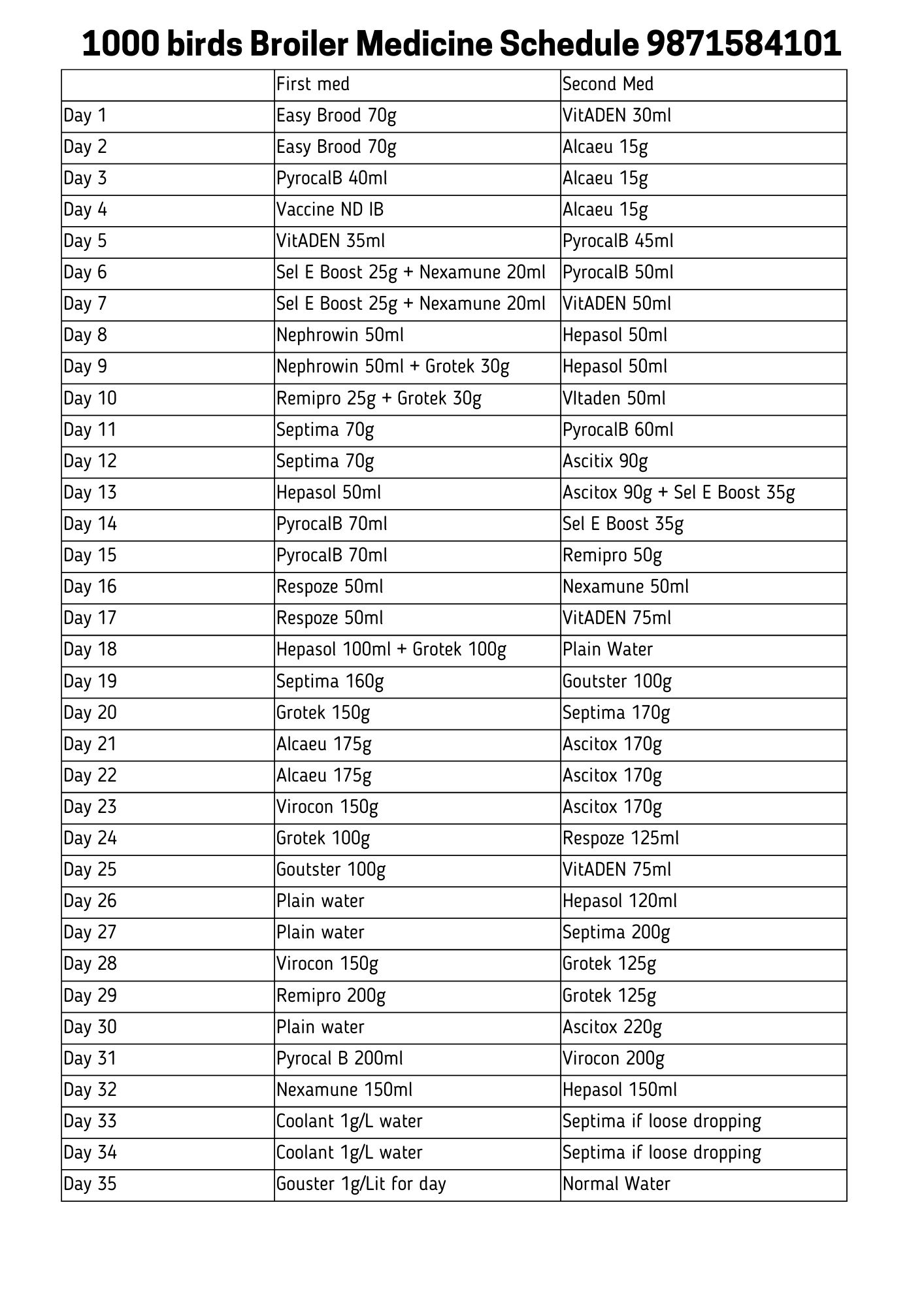
In this medicine schedule, giving Easy Brood, Alcaeu, VitADEN, Pyrocal-B, Nexamune, Grotek, Nephrowin, Hepasol, Virocon Septima, Sel E Boost, Ascitox is the safest and most practical combination for winter. It makes the birds tough, keeps feed intake steady and gives more growth.
The winter season has one more problem — the habit of keeping the shed closed. But a poultry house is not a closed box; it is a science lab of ventilation + temperature + humidity. The shed should not be locked up; there should be controlled air circulation. Keep the inlets open less at the bottom and more at the top so that the air does not hit the chicks’ heads directly but mixes near the ceiling and then comes down.
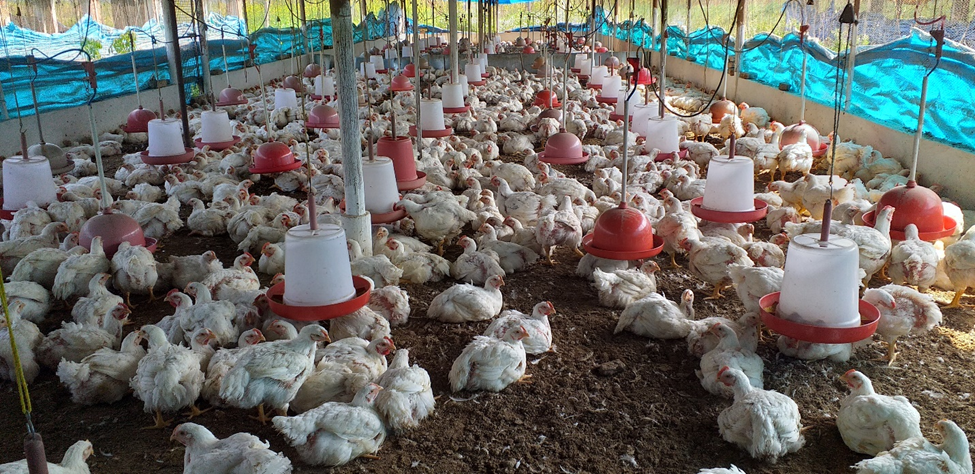
If you see the birds sticking right under the heater, it means the floor is cold. If the birds are gathered in one corner of the shed, the air flow is wrong. If the birds are sitting evenly all around, the system is running perfectly. The bird’s behaviour is the biggest sensor — the thermometer and hygrometer come after that.
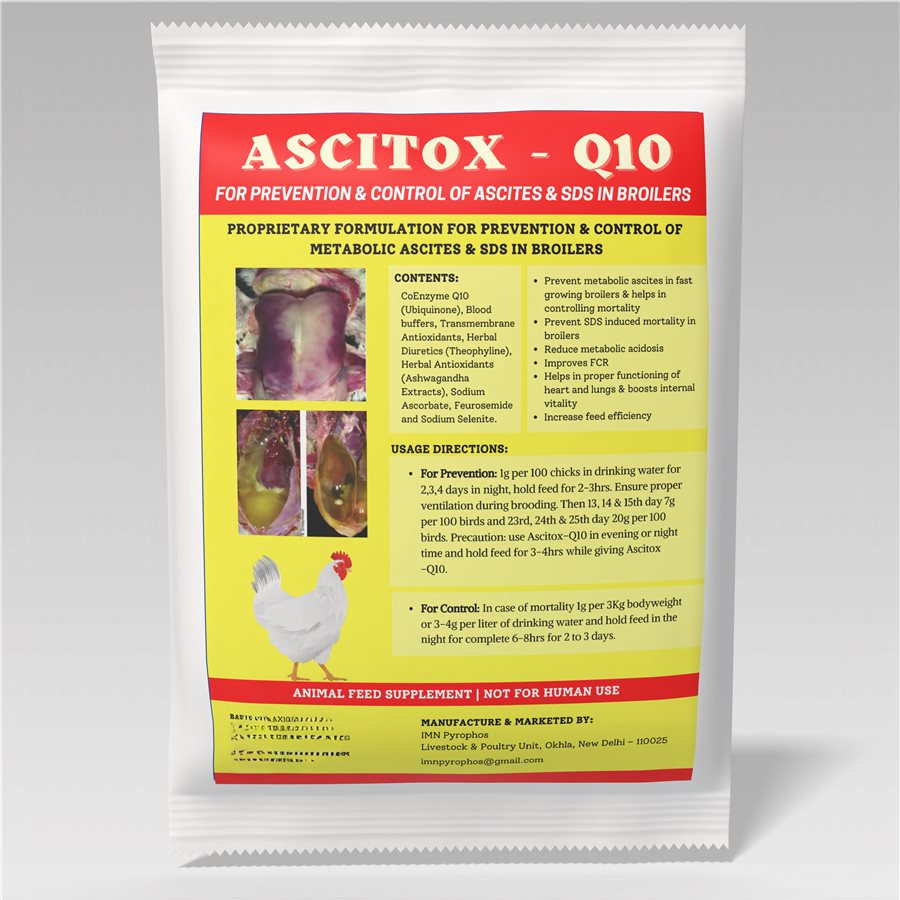
Ascites and SDS in broilers
Ascitox Q10
CoQ10 with blood buffers, antioxidants, herbal diuretics, sodium ascorbate and selenite for prevention and control of metabolic ascites and sudden death syndrome in fast-growing broilers, especially in winter.
Dose: Prevention: 1 g per 100 chicks on day 2–4 at night (hold feed 2–3 h), 7 g per 100 birds on day 13–15, 20 g per 100 birds on day 23–25, in the evening or at night. Control: 1 g per 3 kg body weight or 3–4 g per litre, holding feed 6–8 h at night for 2–3 days.
1 kg ₹698MRP ₹1,080
Simply put:
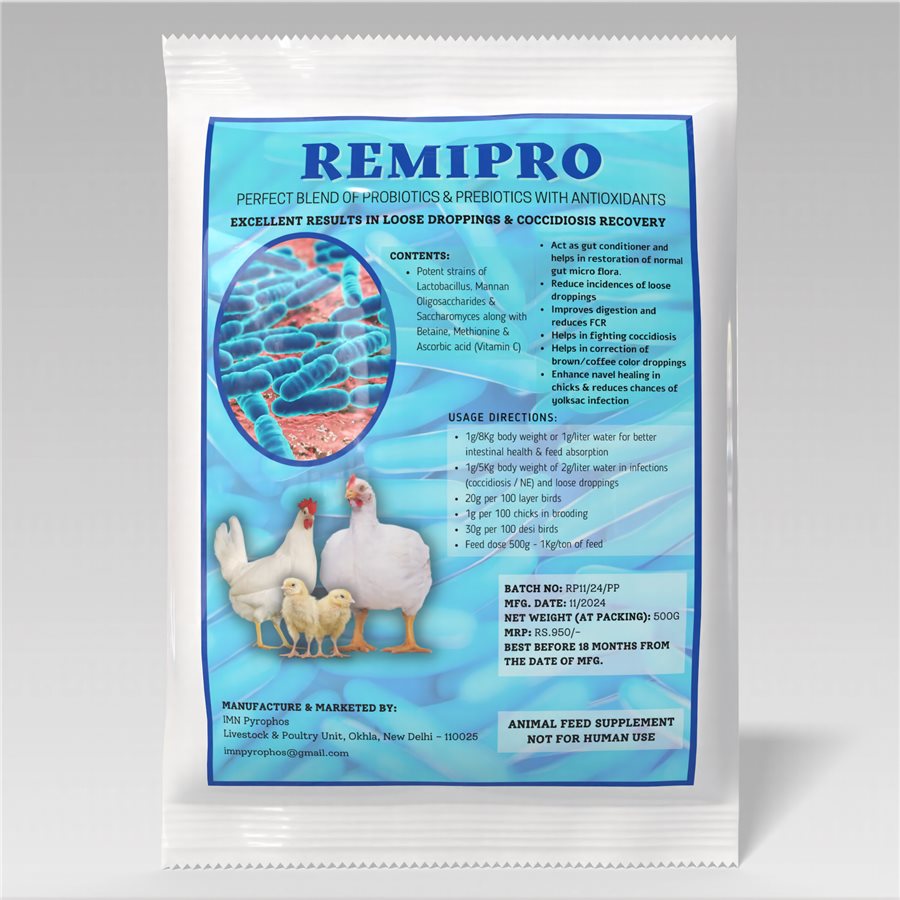
Gut health · bestseller
Remipro
Probiotics, prebiotics (MOS) and Saccharomyces with betaine, methionine and vitamin C. Restores normal gut flora, reduces loose droppings, improves digestion and FCR, helps in coccidiosis recovery and corrects brown/coffee coloured droppings.
Dose: 1 g per 8 kg body weight or 1 g per litre of water for routine gut health; 1 g per 5 kg body weight or 2 g per litre during loose droppings and infections; 1 g per 100 chicks in brooding.
500 g ₹626MRP ₹950
✔ Ventilation shut → ammonia up → infection up → mortality up → profit down
✔ Ventilation running → fresh air → dry litter → strong immunity → fast growth → high profit
So the real winter formula is not rocket science: Warm floor + controlled ventilation + dry litter + stable humidity + smart supplements = winter profit guaranteed
If the birds are comfortable, they will eat, put on weight and reach market weight sooner. And when the bird grows fast, FCR falls, feed is saved and profit rises — that is the whole target of broiler farming.
poultry farming winter management, broiler ventilation in winter, minimum ventilation winter, poultry shed heating, broiler floor temperature, wet litter ammonia problem, winter broiler feed intake, broiler immunity winter, poultry farm humidity control, cold weather poultry solutions, poultry best growth promoter grotek, loose dropping solution septima, best poultry probiotics remipro, poultry viral treatment virocon.
Problem in your flock? Send photos of the birds and droppings on WhatsApp for a first opinion from Dr. Ibne Ali.
WhatsApp: 98715 84101पोल्ट्री फार्मिंग में विंटर मैनेजमेंट – सर्दी के मौसम में ब्रॉयलर शेड कैसे संभालें — वेंटिलेशन, तापमान, लिटर और न्यूट्रिशन का परफेक्ट फॉर्मूला
सर्दी का मौसम आते ही ज़्यादातर पोल्ट्री किसान एक ही चीज़ से परेशान हो जाते हैं —
“चूज़ों को ठंड लग जाती है, feed कम खा रहे हैं, ग्रोथ रुक गई है और शेड में बदबू आ रही है।”
असली बात ये है कि सर्दी की पोल्ट्री फार्मिंग की सबसे बड़ी चुनौती ठंड नहीं, गलत मैनेजमेंट होता है। सर्दी में पक्षियों को सिर्फ गर्मी नहीं चाहिए, साफ हवा + सूखा litter + आरामदायक नमी (humidity) चाहिए। अगर इन चारों को बैलेंस कर लिया, तो ब्रॉयलर फार्मिंग का मुनाफा सर्दी में भी सबसे ज़्यादा रहता है।
सर्दी में सबसे आम गलती ये होती है कि किसान हीटर चालू कर लेते हैं और वेंटिलेशन बंद कर देते हैं। ऊपर से देखने पर लगता है कि हीटर से गर्मी बन रही है और पंखे बंद करके गर्मी बच रही है। लेकिन असल में वेंटिलेशन बंद करने से शेड के अंदर CO₂ और अमोनिया (NH₃) बढ़ना शुरू हो जाते हैं, नमी बढ़ जाती है, और litter गीला हो जाता है। थोड़े समय तो ठीक लगता है, फिर पक्षी एक जगह झुंड बनाकर सिमटने लगते हैं, सांस लेने में तकलीफ, feed intake कम, ग्रोथ धीमी और फिर इन्फेक्शन शुरू जैसे Mycoplasma और E. coli, फिर CRD और CCRD।
इसलिए सर्दी में ब्रॉयलर मैनेजमेंट का पहला नियम — हीटर और वेंटिलेशन दोनों साथ चलने चाहिए। ये सोच गलत है कि पंखे चलाने से ठंड आएगी। नहीं दोस्तों, अगर पंखे बिल्कुल बंद कर दोगे तो पक्षी हवा से नहीं, गैस और नमी से मार खाएंगे। मिनिमम वेंटिलेशन 24×7 चलना ही चाहिए, चाहे सर्दी कितनी भी ज़्यादा हो।
ये बात याद रखो कि बंद पर्दों में शुरू के 10 दिन तो कट जाते हैं क्योंकि पक्षियों की इतनी ज़रूरतें नहीं होतीं, लेकिन उसके बाद खराब वेंटिलेशन में हालत खराब होने लगती है। 10 दिन तक पक्षी अपने शरीर का तापमान खुद कंट्रोल नहीं कर पाता, इसलिए फार्म बंद करके गर्मी बनाने में ज़्यादा नुकसान नहीं होता। लेकिन उसके बाद पक्षी की ऑक्सीजन की ज़रूरत बढ़ने लगती है और वह शरीर का तापमान भी खुद कंट्रोल करने लगता है, तो इस बात का फायदा किसान को उठाना चाहिए, मतलब थोड़ा-थोड़ा वेंटिलेशन शुरू कर देना चाहिए, जैसे पर्दों को ऊपर से थोड़ा उठा देना।
एक ज़रूरी बात – ठंडा फर्श
सर्दी में चूज़ों को ठंड सबसे पहले हवा से नहीं, ठंडे फर्श से लगती है। आपने खुद महसूस किया होगा कि अगर मोज़े न पहनो तो चाहे ऊपर से कितने भी स्वेटर और जैकेट पहने हों, ठंड नहीं रुकती। ऐसा ही मुर्गी के साथ होता है।
बहुत लोग हवा का तापमान देखकर खुश हो जाते हैं — “शेड का तापमान 32 डिग्री है, सब ठीक होगा” — लेकिन फर्श ठंडा हो तो चूज़ों का व्यवहार तुरंत खराब हो जाता है। सही brooding में फर्श को 28–30°C तक pre-heat करना पड़ता है, 24–36 घंटे पहले से। जब फर्श गर्म होता है तो पक्षी बराबर फैले रहते हैं, खाना-पीना नॉर्मल होता है, और ग्रोथ शुरू से ही रॉकेट की स्पीड में रहती है।
सर्दी में नमी (humidity) भी सबसे बड़ी विलेन बन जाती है। Humidity 70% के ऊपर जाते ही litter गीला हो जाता है → अमोनिया बढ़ता है → सांस का इन्फेक्शन → feed intake कम। जब फार्म पूरी तरह बंद होता है तो humidity बहुत तेज़ी से बढ़ती है, आप इस वीडियो में देख सकते हैं।
सर्दी में सही humidity 50–65% रहेगी। अगर RH बढ़ रहा है तो पंखों का ON टाइम थोड़ा सा बढ़ाओ, हीटर बंद मत करो। ये “ड्राइंग वेंटिलेशन” सर्दी में सोने जैसी ट्रिक है — पक्षी गर्म भी रहता है और शेड सूखा भी।
सांस की समस्या, CRD, E. coli, पतली बीट (loose dropping), “पीले पक्षी” (yellow bird), पैरों की कमज़ोरी, लंगड़ापन, खरखराहट — ये सब सर्दी में ज़्यादातर वेंटिलेशन + नमी + अमोनिया की वजह से होता है। सिर्फ दवाइयों से कंट्रोल नहीं होता जब तक माहौल ठीक न हो। लेकिन सही न्यूट्रिशन सपोर्ट और सप्लीमेंट देने से पक्षियों की इम्युनिटी और पाचन मज़बूत रहता है और भरपूर ग्रोथ देखने को मिलती है।
ये मेडिसिन शेड्यूल सर्दी की समस्याओं को ध्यान में रखकर बनाया गया है। आप इसे इस्तेमाल करते हैं तो शुरुआती इन्फेक्शन और ग्रोथ की चुनौतियों से काफी हद तक छुटकारा मिल जाता है। यहाँ बताए गए मैनेजमेंट को फॉलो करने के साथ अगर इसे इस्तेमाल करें, तो ये मेडिसिन शेड्यूल mortality को 3-4% तक और FCR को भी 0.05 से 0.1 तक सुधारने में मदद करता है।
इस मेडिसिन शेड्यूल में Easy Brood, Alcaeu, VitADEN, Pyrocal-B, Nexamune, Grotek, Nephrowin, Hepasol, Virocon Septima, Sel E Boost, Ascitox देना सर्दी में सबसे सुरक्षित और प्रैक्टिकल कॉम्बिनेशन है। इससे पक्षी मज़बूत हो जाते हैं, feed intake बना रहता है और ग्रोथ ज़्यादा होती है।
सर्दी के मौसम में एक और समस्या होती है — शेड बंद रखने की आदत। लेकिन पोल्ट्री हाउस कोई बंद डिब्बा नहीं, वेंटिलेशन + तापमान + नमी की साइंस लैब होता है। शेड ताला-बंद नहीं होगा, कंट्रोल्ड हवा का सर्कुलेशन होगा। Inlets को नीचे से कम और ऊपर से ज़्यादा खुला रखो ताकि हवा चूज़ों के सिर पर न लगे, सीधे छत (ceiling) से मिक्स होकर नीचे आए।
अगर आप देखते हो कि पक्षी हीटर के बिल्कुल नीचे चिपक रहे हैं तो मतलब फर्श ठंडा है। अगर पक्षी शेड के एक कोने में इकट्ठा हैं तो हवा का फ्लो गलत है। अगर पक्षी चारों तरफ बराबर बैठे हैं तो सिस्टम परफेक्ट चल रहा है। पक्षी का व्यवहार ही सबसे बड़ा सेंसर है — थर्मामीटर और हाइग्रोमीटर उसके बाद।
ब्रॉयलर में जलोदर (ascites) और SDS
Ascitox Q10
CoQ10 के साथ ब्लड बफर, एंटीऑक्सीडेंट, हर्बल मूत्रवर्धक, सोडियम एस्कॉर्बेट और सेलेनाइट। तेज़ बढ़ने वाले ब्रॉयलर में, खासकर सर्दी में, मेटाबॉलिक ascites और अचानक मौत (SDS) से बचाव और कंट्रोल के लिए।
मात्रा: बचाव: दिन 2–4 रात में 1 ग्राम प्रति 100 चूज़े (2–3 घंटे दाना रोकें), दिन 13–15 पर 7 ग्राम प्रति 100 पक्षी, दिन 23–25 पर 20 ग्राम प्रति 100 पक्षी, शाम या रात में। कंट्रोल: 1 ग्राम प्रति 3 किलो वज़न या 3–4 ग्राम प्रति लीटर, 2–3 दिन रात में 6–8 घंटे दाना रोक कर।
1 kg ₹698MRP ₹1,080
सीधी सी बात:
आँत की सेहत · बेस्टसेलर
Remipro
प्रोबायोटिक, प्रीबायोटिक (MOS) और Saccharomyces, साथ में बीटेन, मेथियोनीन और विटामिन C। आँत के अच्छे बैक्टीरिया लौटाता है, पतली बीट घटाता है, पाचन और FCR सुधारता है, कॉक्सीडियोसिस से उबरने में मदद करता है और भूरी/कॉफी रंग की बीट ठीक करता है।
मात्रा: रोज़ की आँत सेहत के लिए 1 ग्राम प्रति 8 किलो वज़न या 1 ग्राम प्रति लीटर पानी; पतली बीट और इन्फेक्शन में 1 ग्राम प्रति 5 किलो वज़न या 2 ग्राम प्रति लीटर; ब्रूडिंग में 1 ग्राम प्रति 100 चूज़े।
500 g ₹626MRP ₹950
✔ वेंटिलेशन बंद किया → अमोनिया ऊपर → इन्फेक्शन ऊपर → mortality ऊपर → मुनाफा नीचे
✔ वेंटिलेशन चलाया → हवा ताज़ा → litter सूखा → इम्युनिटी मज़बूत → ग्रोथ तेज़ → मुनाफा ज़्यादा
तो सर्दी का असली फॉर्मूला कोई रॉकेट साइंस नहीं है: गर्म फर्श + कंट्रोल्ड वेंटिलेशन + सूखा litter + स्थिर humidity + स्मार्ट सप्लीमेंट = सर्दी में पक्का मुनाफा
अगर पक्षी आराम में हैं तो वो खाएंगे, वज़न बनाएंगे, और मार्केट वज़न जल्दी पकड़ेंगे। और जब पक्षी तेज़ी से बढ़ेगा तो FCR गिरता है, feed बचती है और मुनाफा बढ़ता है — यही ब्रॉयलर फार्मिंग का टारगेट है।
पोल्ट्री फार्मिंग विंटर मैनेजमेंट, सर्दी में ब्रॉयलर वेंटिलेशन, सर्दी में मिनिमम वेंटिलेशन, पोल्ट्री शेड हीटिंग, ब्रॉयलर फर्श का तापमान, गीला litter और अमोनिया की समस्या, सर्दी में ब्रॉयलर feed intake, सर्दी में ब्रॉयलर इम्युनिटी, पोल्ट्री फार्म humidity कंट्रोल, ठंड के मौसम में पोल्ट्री के समाधान, पोल्ट्री का बेस्ट ग्रोथ प्रमोटर grotek, पतली बीट (loose dropping) का समाधान septima, बेस्ट पोल्ट्री probiotics remipro, पोल्ट्री वायरल ट्रीटमेंट virocon.
फ़ार्म में कोई दिक्कत? पक्षियों और बीट की फ़ोटो WhatsApp पर भेजिए, डॉ. इब्ने अली से पहली राय लीजिए।
WhatsApp: 98715 84101Winter Management in Poultry Farming – Sardi ke Mausam me Broiler Shed Kaise Sambhalein — Ventilation, Temperature, Litter Aur Nutrition Ka Perfect Formula
Sardi ka mausam aate hi zyada tar poultry farmers ek hi cheez se pareshaan ho jaate hain —
“chicks ko thand lag jaati hai, feed kam kha rahe hain, growth ruk gayi hai aur shed me smell aa rahi hai.”
Asli baat ye hai ki winter poultry farming ka sabse bada challenge thand nahi, galat management hota hai. Sardi me birds ko sirf garmi nahi chahiye, saaf hawa + dry litter + comfortable humidity chahiye. Agar in chaaron ko balance kar liya, to broiler farming ka profit winter me bhi maximum rehta hai.
Winter me sabse common mistake ye hoti hai ki farmers heater chalu kar lete hain aur ventilation band kar dete hain. Upar se dekhne par lagta hai ki heater se garmi ban rahi hai aur fans band karke garmi bach rahi hai. Lekin actual me ventilation band karne se shed ke andar CO₂ aur ammonia (NH₃) badhna shuru ho jaate hain, humidity badh jaati hai, aur litter geela ho jaata hai. Thoda time to theek lagta hai, phir birds huddle hone lagte hain, saans lene me takleef, feed intake kam, growth slow aur phir infection shuru jaise Mycoplasma aur E. coli, phir CRD aur CCRD.
Isliye winter broiler management ka pehla rule — heater aur ventilation dono saath chalne chahiye. Ye soch galat hai ki fans chalane se thand aayegi. Nahi doston, agar fans bilkul band kar doge to birds hawa se nahi, gas aur nami se maar khayenge. Minimum ventilation 24×7 chalna hi chahiye, chahe sardi kitni bhi zyada ho.
Ye baat yaad rakho ki band pardon me shuru ke 10 din to kat jaate hain kyunki birds ki itni requirements nahi hoti, lekin uske baad kharab ventilation me halat kharab hone lagti hai. 10 din tak bird apni body ka temperature regulate nahi kar pata, isliye farm band karke heat banane me zyada nuksan nahi hota. Lekin uske baad bird ki oxygen requirement badhne lagti hai aur body temperature bhi regulate hone lagta hai, to is baat ka fayda farmer ko uthana chahiye, matlab thoda thoda ventilation shuru kar dena chahiye, jaise pardon ko upar se utha dena.
Ek important point – thanda farsh
Sardi me chicks ko thand sabse pehle hawa se nahi, thande floor se lagti hai. Aapne khud feel kiya hoga ki agar socks (moze) na pehno to chahe upar se kitne sweater aur jacket pehne ho, thand nahi rukti. Aisa hi murgi ke saath hota hai.
Bahut log air temperature dekhke khush ho jaate hain — “shed ka temp 32 degree hai, sab theek hoga” — lekin floor thanda ho to chicks ka behaviour turant kharab ho jaata hai. Sahi brooding me floor ko 28–30°C tak pre-heat karna padta hai, 24–36 ghante pehle se. Jab floor warm hota hai to birds evenly spread hote hain, khana peena normal hota hai, aur growth shuru se hi rocket speed me rehti hai.
Humidity bhi winter me sabse bada villain ban jaati hai. Humidity 70% ke upar jaate hi litter geela ho jaata hai → ammonia rise → respiratory infection → feed intake kam. Farm jab poori tarah band hota hai to humidity bahut tezi se badhti hai, aap is video me dekh sakte hain.
Sahi humidity winter me 50–65% rahegi. Agar RH badh raha hai to fans ka ON time thoda sa increase karo, heater band mat karo. Ye “drying ventilation” winter me gold trick hai — bird warm bhi rehta hai aur shed dry bhi.
Respiratory problem, CRD, E. coli, loose dropping, “yellow bird”, leg weakness, lameness, kharkhar — ye sab winter me mostly ventilation + humidity + ammonia ki wajah se hota hai. Sirf medicines se control nahi hota jab tak environment theek na ho. Lekin sahi nutrition support aur supplements dene se birds ki immunity aur digestion strong rehti hai aur bharpur growth dekhne ko milti hai.
Ye medicine schedule winter problems ko dhyan me rakh kar banaya gaya hai. Aap ise use karte hain to shuruaati infection aur growth challenges se kaafi had tak chhutkara mil jaata hai. Yahan bataye gaye management ko follow karne ke saath agar ise use karein, to ye medicine schedule mortality ko 3-4% tak aur FCR ko bhi 0.05 se 0.1 tak improve karne me madad karta hai.
Is medicine schedule me Easy Brood, Alcaeu, VitADEN, Pyrocal-B, Nexamune, Grotek, Nephrowin, Hepasol, Virocon Septima, Sel E Boost, Ascitox dena winter me sabse safe aur practical combination hai. Isse birds tough ho jaate hain, feed intake maintain rehta hai aur growth zyada hoti hai.
Sardi ke season me ek aur problem hoti hai — shed band rakhne ki aadat. Lekin poultry house ek closed dabba nahi, ventilation + temperature + humidity ka science lab hota hai. Shed locked nahi hoga, controlled hawa circulation hoga. Inlets ko neeche se kam aur upar se zyada open rakho taaki hawa chick ke sar par na lage, seedhe ceiling se mix hokar neeche aaye.
Agar aap dekhte ho ki birds heater ke bilkul neeche chipak rahe hain to matlab floor thanda hai. Agar birds shed ke ek kone me ikattha hain to hawa ka flow galat hai. Agar birds chaaron taraf evenly baithe hain to system perfect chal raha hai. Bird ka behaviour hi sabse bada sensor hai — thermometer aur hygrometer uske baad.
Broiler me ascites (pet me paani) aur SDS
Ascitox Q10
CoQ10 ke saath blood buffer, antioxidant, herbal diuretic, sodium ascorbate aur selenite. Tez badhne wale broiler me, khaas kar sardi me, metabolic ascites aur achanak maut (SDS) se bachav aur control ke liye.
Matra: Bachav: din 2–4 raat me 1 g prati 100 chooze (2–3 ghante daana rokiye), din 13–15 par 7 g prati 100 pakshi, din 23–25 par 20 g prati 100 pakshi, shaam ya raat me. Control: 1 g prati 3 kg wazan ya 3–4 g prati litre, 2–3 din raat me 6–8 ghante daana rok kar.
1 kg ₹698MRP ₹1,080
Seedhi si baat:
Aant ki sehat · bestseller
Remipro
Probiotic, prebiotic (MOS) aur Saccharomyces, saath me betaine, methionine aur vitamin C. Aant ke achhe bacteria lautata hai, patli beet ghatata hai, pachan aur FCR sudharta hai, coccidiosis se ubharne me madad karta hai aur bhoori/coffee rang ki beet theek karta hai.
Matra: Roz ki aant sehat ke liye 1 g prati 8 kg wazan ya 1 g prati litre paani; patli beet aur infection me 1 g prati 5 kg wazan ya 2 g prati litre; brooding me 1 g prati 100 chooze.
500 g ₹626MRP ₹950
✔ Ventilation band kiya → ammonia upar → infection upar → mortality upar → profit down
✔ Ventilation chalaya → air fresh → litter dry → immunity strong → growth fast → profit high
To winter ka asli formula koi rocket science nahi hai: Warm floor + controlled ventilation + dry litter + stable humidity + smart supplements = winter profit guaranteed
Agar birds comfortable hain to wo khayenge, wazan banayenge, aur market weight jaldi pakdenge. Aur jab bird fast grow karega to FCR girta hai, feed bachti hai aur munafa badhta hai — yahi broiler farming ka target hai.
poultry farming winter management, sardi me broiler ventilation, sardi me minimum ventilation, poultry shed heating, broiler floor ka temperature, geela litter aur ammonia ki problem, sardi me broiler feed intake, sardi me broiler immunity, poultry farm humidity control, thand ke mausam me poultry solutions, poultry ka best growth promoter grotek, loose dropping ka solution septima, best poultry probiotics remipro, poultry viral treatment virocon.
Farm me koi dikkat? Pakshiyon aur beet ki photo WhatsApp par bhejiye, Dr. Ibne Ali se pehli raay lijiye.
WhatsApp: 98715 84101