Pullorum Disease: A Major Threat to Poultry Health and Profitability
Pullorum disease (PD), also known as Bacillary White Diarrhea (BWD), is a serious bacterial infection that can devastate poultry flocks, especially young chicks. While it has been eliminated from commercial poultry in some developed regions like the United States, Canada, Australia, and Western Europe, it remains a common and economically important disease in many parts of the world, including India. This article explains what Pullorum disease is, how it spreads, its effects, how to diagnose it, and most importantly, how to prevent and control it, especially highlighting its impact in regions like India where it continues to pose a significant challenge.
What is Pullorum Disease?
Pullorum disease is a septicemic bacterial disease, meaning the bacteria spread throughout the bird's bloodstream. It is caused by the bacterium Salmonella Pullorum. This bacterium is highly adapted to poultry. While primarily affecting chickens and turkeys, other birds like quails, pheasants, ducks, peacocks, and guinea fowls are also susceptible.
Salmonella Pullorum is closely related to Salmonella Gallinarum, which causes Fowl Typhoid (FT). In fact, these two bacteria are now considered a single species, S. enterica serovar Gallinarum-pullorum. They are both Gram-negative, non-motile rods. A key biochemical difference is that S. Pullorum rapidly produces gas from ornithine, which S. Gallinarum does not.
How Does Pullorum Disease Spread? Epidemiology
Understanding how PD spreads is crucial for control. The bacteria can spread in several ways:
- Vertical Transmission (Egg-borne): This is considered the most important mode of transmission. Infected breeder hens can carry the bacteria in their reproductive organs, particularly the ovary and oviduct. The bacteria can infect the developing egg before the shell is formed, contaminating the yolk or albumen. Chicks hatched from infected eggs are already infected.
- Horizontal Transmission: The disease can also spread between birds through contaminated feed, water, and feces. Infected birds shed the bacteria in their droppings. Contact with contaminated litter, equipment, or even other birds (like cannibalism or mating) can spread the infection. Hatcheries are a common place for transmission, as chicks can be infected from contaminated eggs or from other infected chicks. Wild birds, rodents, insects, and contaminated vehicles or personnel can also introduce the bacteria into a flock.
Age and Susceptibility: Pullorum disease is usually most severe in young birds, typically under 3 weeks of age. Mortality can be very high, even up to 100% in young chicks. Older birds can become infected but often show less severe signs or may be asymptomatic carriers. These carriers are critical in spreading the disease, especially vertically through eggs. Lighter breeds, such as Leghorns, may be more resistant than heavier breeds.
Risk Factors: Several factors increase the risk and severity of PD:
- Age: Younger birds are more susceptible and experience higher mortality.
- Stress: Crowding, malnutrition, poor ventilation, and other stressful conditions can worsen the disease and increase mortality.
- Hygiene: Poor sanitation in housing, hatcheries, and equipment facilitates horizontal spread.
- Source of Birds: Obtaining chicks or eggs from infected flocks is a major risk.
- Concurrent Infections: Other diseases can weaken birds and make them more susceptible.
- Environmental Persistence: Salmonella Pullorum can survive in the environment for months or even years under favorable conditions, contributing to persistent infection issues.
Geographic Distribution, including India: While eliminated from commercial poultry in some developed countries, Pullorum disease is still widely distributed throughout the world, particularly in developing nations. Sources specifically mention Latin America, the Middle East, the Indian subcontinent, Africa, and other parts of the world where S. pullorum infections are common and Pullorum disease remains among the principal disease threats to poultry producers. In areas where it's absent from commercial farms, it may still be found in backyard flocks and wild birds. A study in Bangladesh, part of the Indian subcontinent, highlights local isolates and vaccine development efforts, suggesting the ongoing presence and impact in the region. Studies in Ethiopia also demonstrate high prevalence, indicating the challenges faced in African countries, which share similarities in disease persistence with other developing regions like India.
What Does Pullorum Disease Look Like? Clinical Signs
The signs of PD vary depending on the age of the bird:
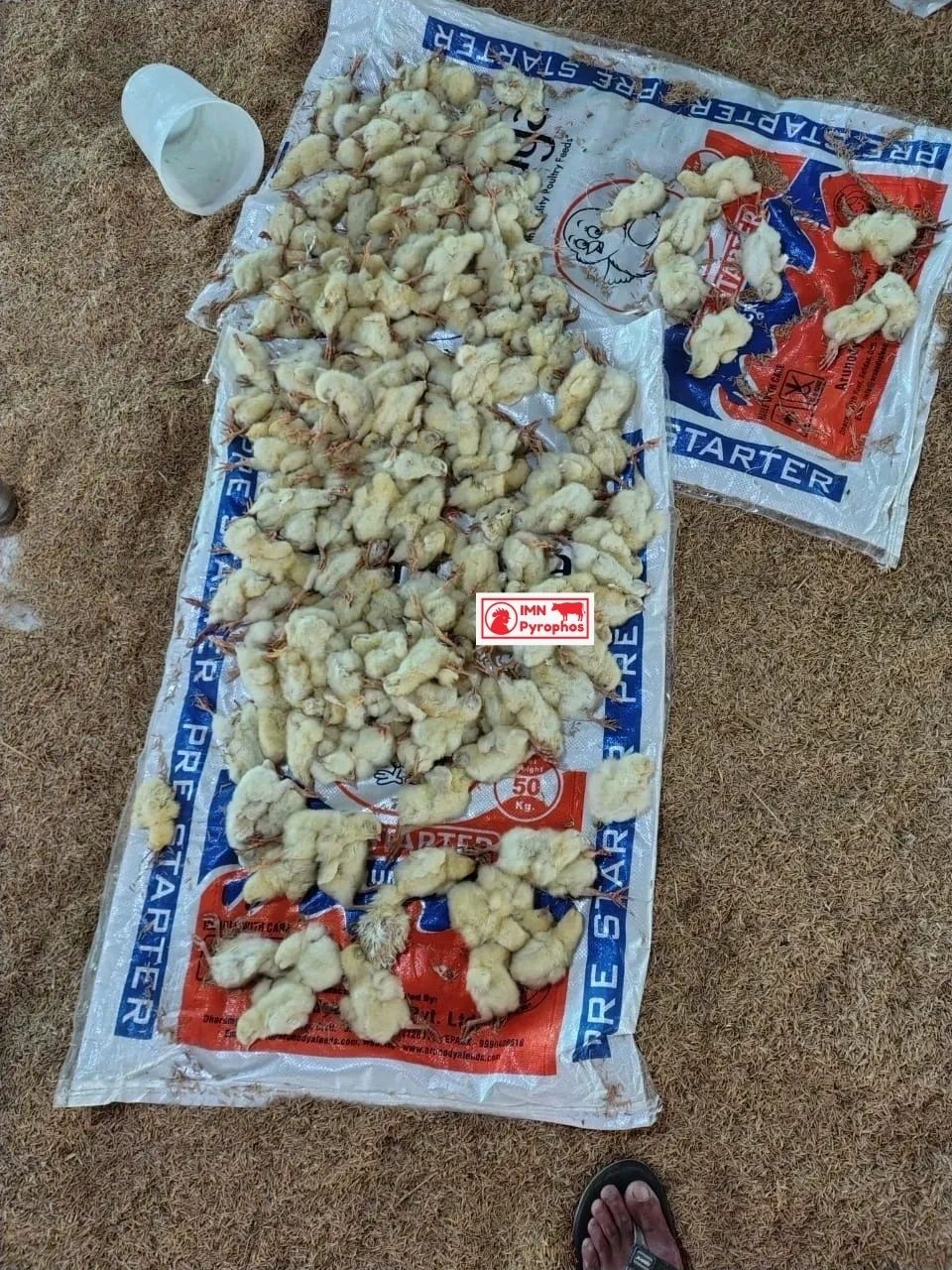
- Young Chicks (most commonly 2-3 weeks old): This is where the disease is often acute and severe.
- Anorexia (loss of appetite)
- Huddling together near heat sources
- Droopy wings
- Dehydration
- Diarrhea, often appearing whitish
- Pasted-down vent feathers due to diarrhea (bacillary white diarrhoea)
- Increased mortality, which can be very high (up to 100%)
- Other possible signs: Dyspnea (difficulty breathing), blindness, swelling of hock joints. Excessive numbers of dead embryos or dead-in-shell chicks may also be observed.
- Older Birds (Growers and Adults): Signs may be less apparent or minimal.
- Declining feed consumption
- Droopy appearance and ruffled feathers
- Pale and shrunken combs (especially in chronic Fowl Typhoid, which is clinically similar).
- Decreased egg production
- Poor fertility and hatchability
Birds that survive an infection, particularly mature birds, can become carriers and appear healthy while still harboring the bacteria.
What Do You See Inside the Bird? Lesions (Necropsy Findings)
Examining birds after death (necropsy) can reveal characteristic changes, although these can vary depending on the severity and duration of the disease.
Young Chicks:
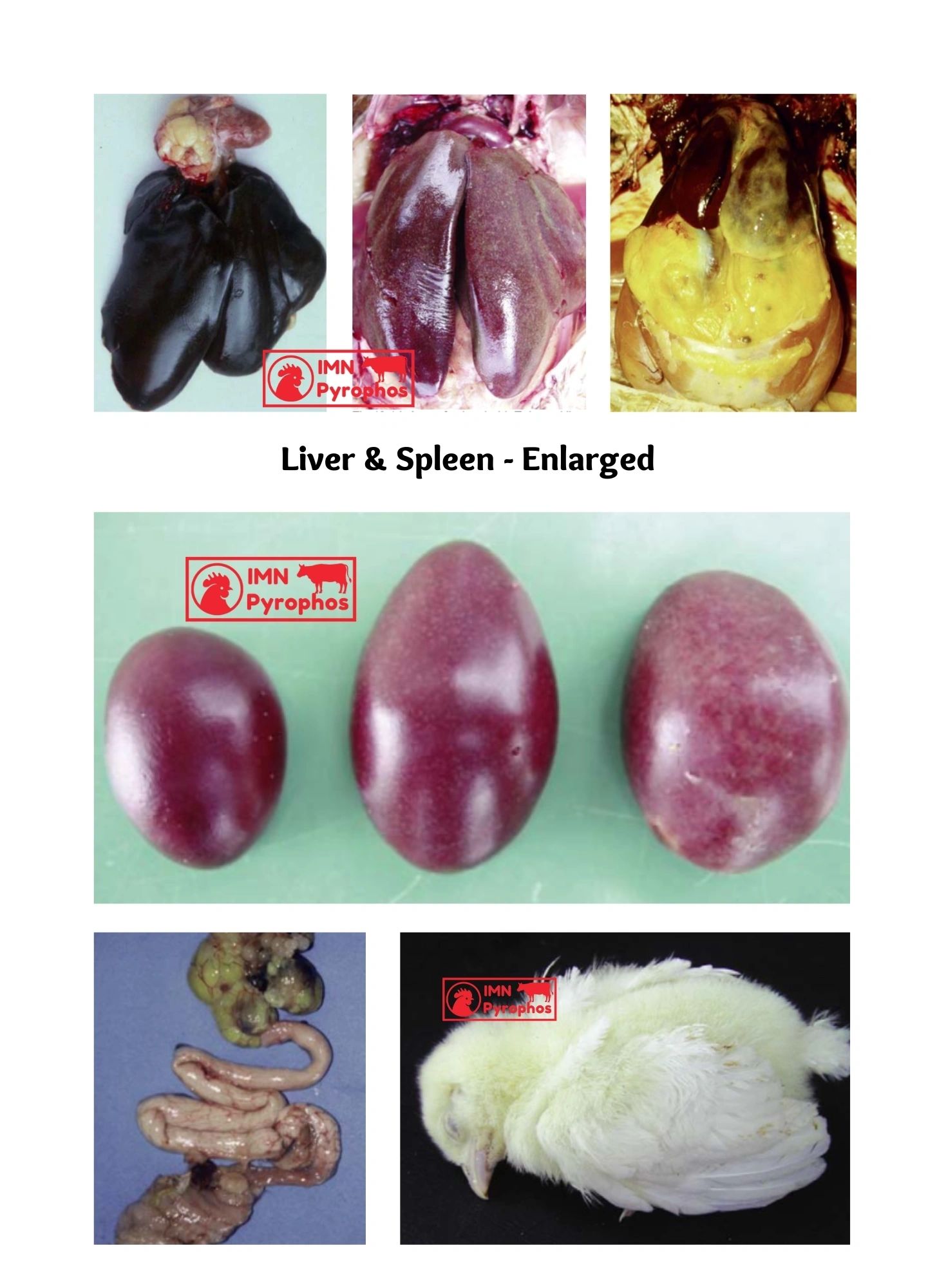
- Enlarged and congested liver, spleen, and kidneys in acute cases. The liver may have white foci of necrosis (areas of dead tissue). Spleens may be enlarged and appear mottled white.
- Unabsorbed yolk sacs are common.
- Coagulated yolk sac contents with fibrinous exudate (a yellowish, sticky material) around the heart (pericardium), on the liver capsule, and in the abdomen (peritoneum).
- Grey-whitish nodules of various sizes may be found in organs like the gizzard wall, epicardium and myocardium (heart muscle), pancreas, lung, and muscle. In the heart, these can sometimes look like tumors.
- The ceca (two pouches off the intestine) may contain caseous cores (cheese-like material) in the lumen. Diarrhea and pasted-down vent feathers are also observed externally. Swelling of joints may be seen.
Adult Birds (often carriers or chronic cases):
- Lesions tend to be more localized, especially in the reproductive tract.
- Minimal lesions in some cases.
- Most prominent lesions are misshapen and discolored nodular ovarian follicles, sometimes attached to the ovary by a long stalk. These can appear like thickened, pendulous masses with a "cooked" aspect. Misshapen ovaries with atrophic (shrunken) follicles are common.
- The oviduct (tube carrying eggs) often contains caseous exudate.
- Fibrinous exudate in the peritoneum and on the liver capsule may also be observed.
- In males, the testes may have white foci or nodules.
Histologically (examining tissues under a microscope), acute cases show necrosis in the liver with inflammation and fibrin. Nodules in the heart contain macrophages, while ovarian nodules in adults show severe inflammation with many bacteria.
Loose droppings · bestseller
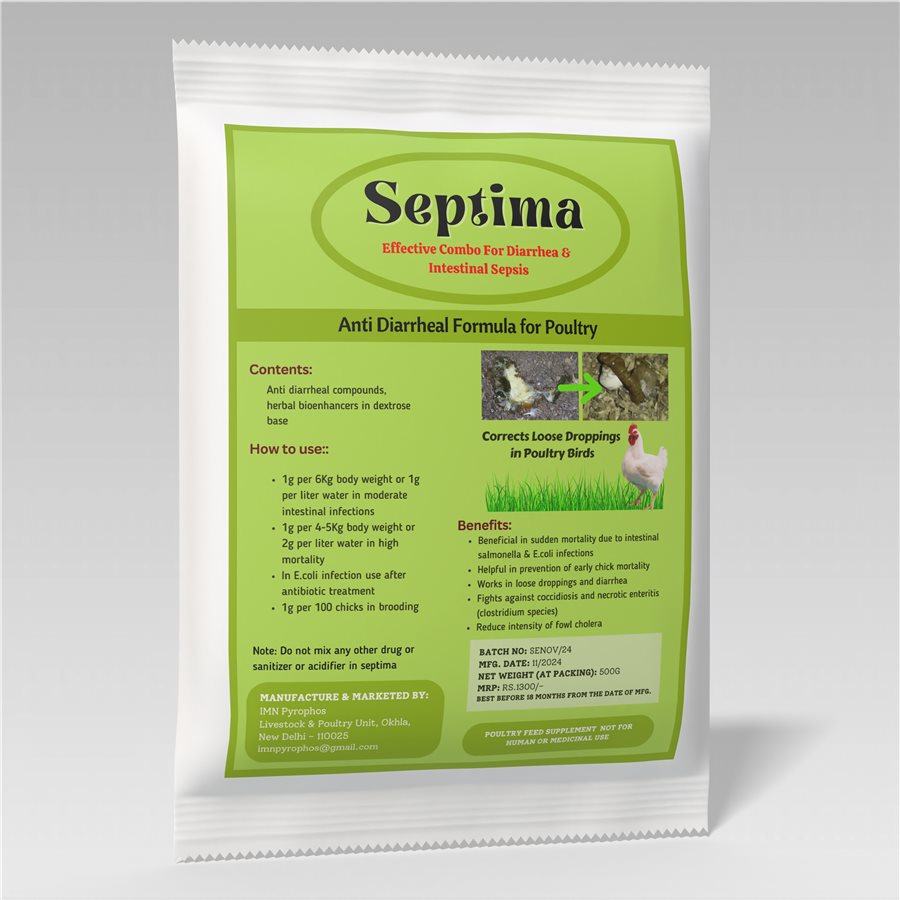
Septima
Anti-diarrhoeal combination with herbal bioenhancers in a dextrose base. Corrects loose droppings and is helpful in sudden mortality from intestinal Salmonella and E. coli, in early chick mortality, and against coccidiosis and necrotic enteritis.
Dose: 1 g per 6 kg body weight or 1 g per litre for moderate cases; 1 g per 4–5 kg body weight or 2 g per litre in high mortality. In E. coli infection, use after the antibiotic course. Do not mix with other drugs, sanitizers or acidifiers.
500 g ₹793MRP ₹1,300
How Do You Know It's Pullorum Disease? Diagnosis
Diagnosing Pullorum disease involves several steps, starting with what you observe on the farm and confirming with laboratory tests.
- Tentative Diagnosis: This is based on the flock history (e.g., source of chicks, recent introductions), the clinical signs observed (especially in young chicks), mortality rates, and post-mortem lesions seen during necropsy. However, these signs and lesions can be similar to other diseases, including Fowl Typhoid and even Marek's disease or Yersiniosis, so laboratory confirmation is necessary.
- Confirmatory Diagnosis: This requires laboratory work to identify the specific bacteria, Salmonella Pullorum.
- Isolation and Identification: This is the definitive diagnosis. Samples like liver, spleen, yolk sac, and ceca from chicks are preferred for culture. In mature birds, reproductive organs, ovarian follicles, and testes can be cultured. The bacteria are cultured on specific media like Brilliant Green agar or MacConkey agar. S. Pullorum colonies are typically small and pale on Brilliant Green agar and small and colorless on MacConkey agar. They are non-motile. Biochemical tests are used to differentiate S. Pullorum from other Salmonella species and other bacteria like E. coli or Citrobacter. For example, S. Pullorum ferments dextrose and mannitol producing acid and gas, but does not ferment lactose or sucrose. It also produces rapid decarboxylation of ornithine, unlike S. Gallinarum.
- Serological Tests: These tests detect antibodies against Salmonella Pullorum in the blood or egg yolk. They are very useful for screening flocks and identifying carriers, especially in breeding stock. Common tests include the Rapid Serum Agglutination Test, Stained Antigen Whole Blood Test, Microagglutination test, and ELISA. A crucial point is that antigens used in these tests can cross-react with antibodies from birds infected with other Salmonella species, especially Salmonella Enteritidis, so a positive serological test should ideally be followed by bacterial isolation for confirmation, particularly in eradication programs. Serological tests are considered satisfactory for establishing presence and estimating prevalence in a flock.
How Do You Deal with Pullorum Disease? Treatment and Control
Treatment should be the last option, and the primary goal is to eradicate the disease.
- Treatment (Antibiotics): Various antibiotics have been used to reduce mortality from PD, including sulfonamides, nitrofurans, furaltodone, furazolidone, chloramphenicol, biomycin, apramycin, and chlorotetracycline. However, antibiotic treatment does not eliminate the carrier state, meaning treated birds can survive but still carry and shed the bacteria, continuing to spread the infection. Resistance to some antibiotics has also been reported. Withdrawal of antibiotics can lead to a resurgence in bacterial shedding. Therefore, treatment is generally not recommended as a control strategy, and in many countries, it's not feasible or desirable. Antibiotic therapy should ideally follow an antimicrobial susceptibility test.
- Control and Prevention Strategies: These are the most effective methods. The focus is on biosecurity, hygiene, testing, and elimination of carriers.
- Establish Infection-Free Flocks: This is fundamental. Purchase poultry and hatching eggs only from sources certified to be free of Pullorum disease.
- Routine Serological Testing: Regularly test breeding flocks and commercial layers using agglutination tests or ELISA to identify carrier birds.
- Elimination of Carriers: Birds identified as carriers through testing should be removed (culled/slaughtered) from the flock immediately.
- Strict Biosecurity: Prevent the introduction of the disease into the farm. This includes controlling access to the farm, using footbaths and clean clothing/footwear for personnel, disinfecting vehicles and equipment, and ensuring feed and water sources are not contaminated. Houses should be designed to exclude rodents, wild birds, and other animals that can carry the bacteria.
- Cleaning and Disinfection: Thoroughly clean and disinfect poultry houses and equipment between flocks. Disinfectants effective against Salmonella should be used, ensuring they are not inactivated by organic matter.
- Hatchery Hygiene: Since egg transmission and hatchery spread are critical, strict hygiene in hatcheries is essential. Only eggs from PD-free flocks should be incubated.
- Vaccination: In countries where eradication is not practiced or where the disease is endemic, vaccination can be used to reduce clinical disease and mortality. Live attenuated vaccines (like the 9R strain for Fowl Typhoid, which offers some protection against PD) and killed vaccines have been developed. Vaccination of layer or breeder flocks is considered an important tool.
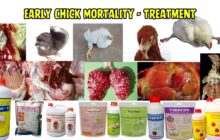
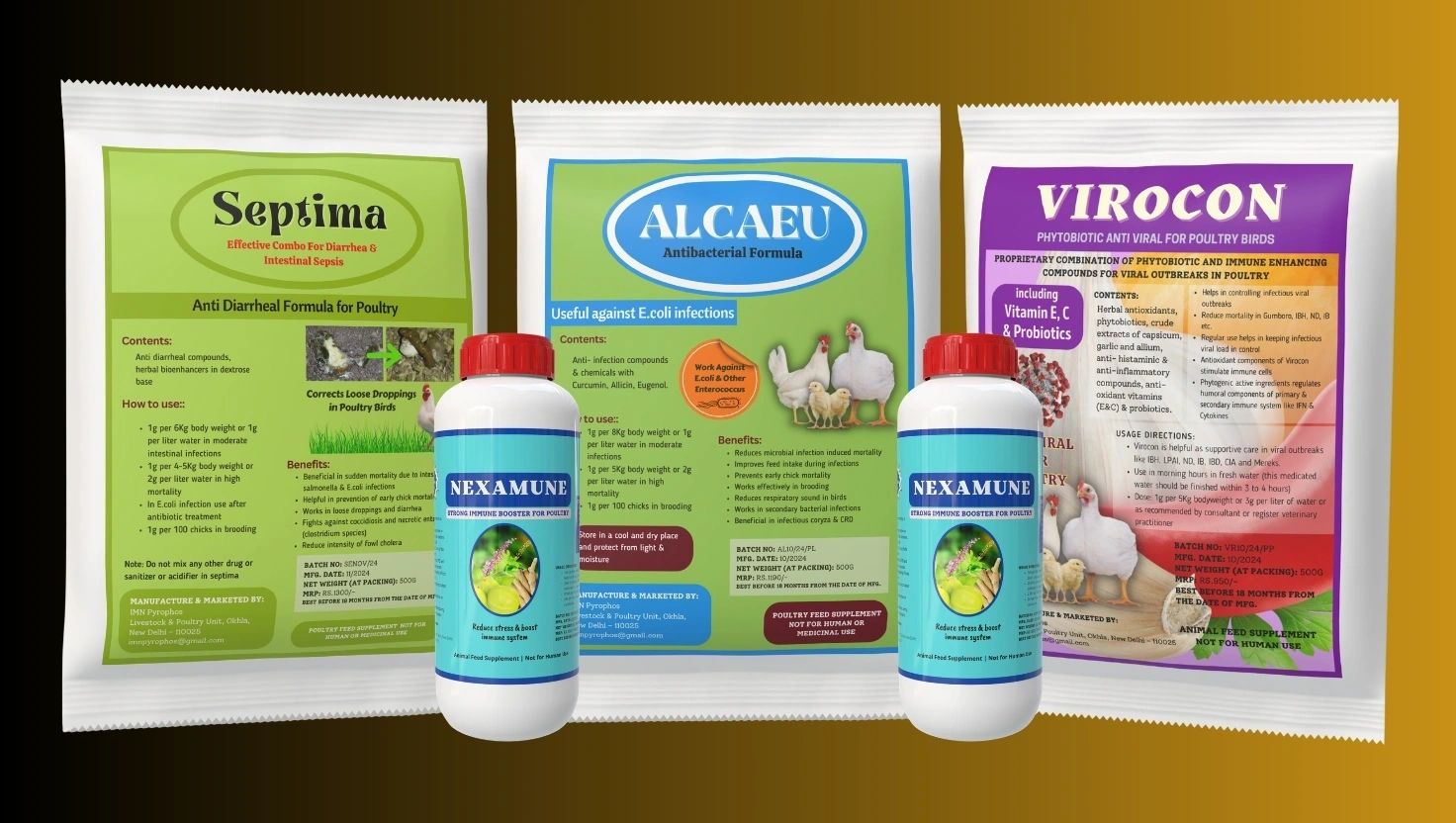
IMN Pyrophos line of treatment to control mortality in chicks ( bacillary white diarrhoea in poultry treatment)
Alcaeu, Septima and Virocon: These 3 medicines are main products suggest by our experts to use in case of mortality and you would get quite good relief from losses.
Why is Pullorum Disease Important? Economic Impact
Pullorum disease causes huge economic losses in the poultry industry, particularly in countries where it is still prevalent.
- High Mortality: The most significant economic loss is the high mortality rate, which can reach up to 100% in young chicks. This directly reduces the number of birds available for meat or egg production.
- Reduced Production: In surviving birds, especially adults, the disease leads to a decrease in egg production, poor hatchability, and reduced fertility. This impacts the supply of chicks and marketable eggs.
- Culling of Carriers: Eradication programs require the testing and slaughter of carrier birds, which represents a direct loss of valuable stock.
- Cost of Control: Implementing biosecurity measures, routine serological testing, and cleaning/disinfection programs involves significant costs.
- Medication Costs: While treatment is not ideal, attempts to reduce mortality using antibiotics add to the economic burden.
- Trade Restrictions: Countries free of Pullorum disease may impose restrictions on the import of poultry and eggs from affected regions, impacting international trade.
- Loss of Confidence: Outbreaks can damage the reputation of a farm or region, leading to reduced demand.
In regions like India, where backyard farming is common and intensive production is expanding, the disease remains a main problem causing heavy economic loss. The lack of consistent biosecurity, potential presence in backyard flocks and wild birds, and challenges in implementing widespread testing and culling programs contribute to its persistence and economic impact. Studies in Ethiopia highlight significant seroprevalence, demonstrating similar economic threats in other developing regions.
Gut health · bestseller
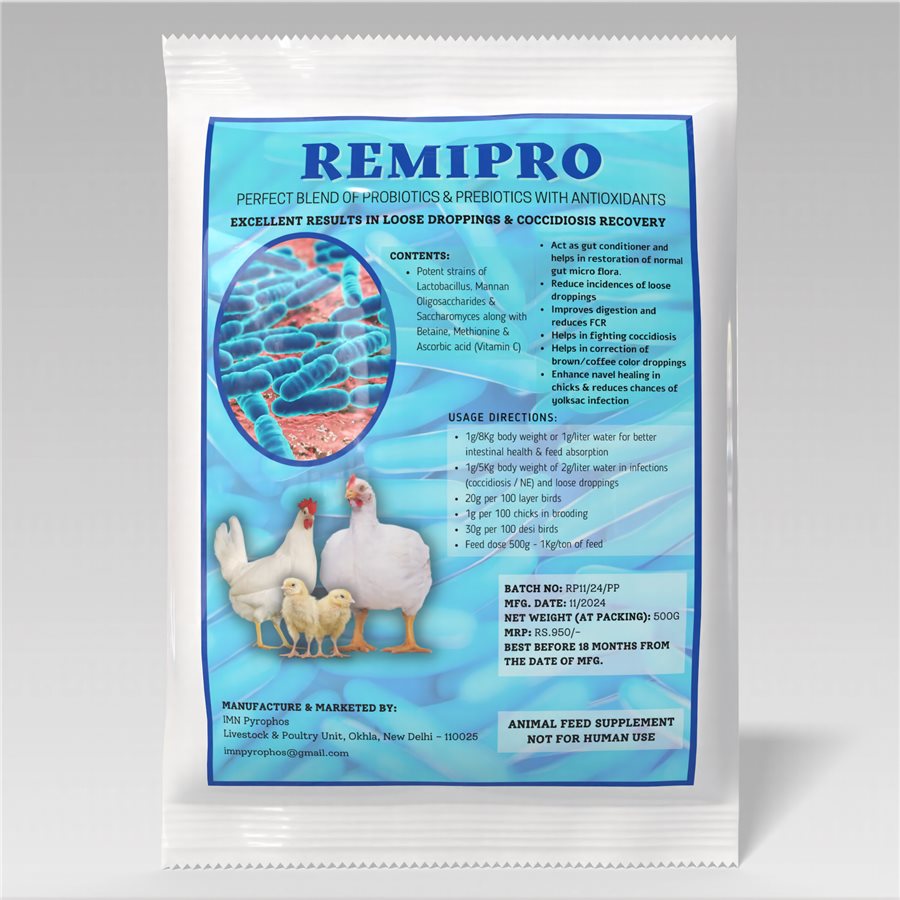
Remipro
Probiotics, prebiotics (MOS) and Saccharomyces with betaine, methionine and vitamin C. Restores normal gut flora, reduces loose droppings, improves digestion and FCR, helps in coccidiosis recovery and corrects brown/coffee coloured droppings.
Dose: 1 g per 8 kg body weight or 1 g per litre of water for routine gut health; 1 g per 5 kg body weight or 2 g per litre during loose droppings and infections; 1 g per 100 chicks in brooding.
500 g ₹626MRP ₹950
Can Humans Get Pullorum Disease? Public Health Importance
While Salmonella Typhimurium and Salmonella Enteritidis are the most common causes of food-borne illness in humans related to poultry products, Salmonella Pullorum is not typically associated with human food poisoning. However, sources indicate that Salmonella Pullorum can occasionally cause acute, self-limiting enteritis in people who eat massively contaminated food. So, while less common than other Salmonella serovars, it still has potential public health relevance.
Conclusion and Recommendations
Pullorum disease is a serious and highly contagious bacterial disease caused by Salmonella Pullorum, primarily affecting young poultry and causing high mortality. It is transmitted mainly through infected eggs (vertical) and contact with contaminated sources (horizontal). The disease causes significant economic losses due to death, reduced production, and control costs, particularly in regions like India where it is still prevalent. Treatment with antibiotics is generally ineffective in eliminating the carrier state and is not a sustainable control strategy.
For farmers and field technicians, the key takeaway is that prevention and control through strict biosecurity, regular testing, and elimination of infected birds are the most effective ways to manage Pullorum disease.
Recommendations:
- Source Birds Carefully: Always purchase chicks and hatching eggs only from certified Pullorum-free flocks.
- Implement Strict Biosecurity: Prevent introduction and spread of the bacteria. Control access to your farm, use disinfectants, keep wild birds, rodents, and other animals out of poultry houses, and clean and disinfect equipment and vehicles regularly.
- Regularly Test Your Flock: Participate in routine serological testing programs to identify and remove carrier birds, especially in breeding and laying flocks.
- Cull Infected/Carrier Birds: Promptly remove and humanely cull birds identified as infected or carriers through testing.
- Maintain Good Hygiene: Keep housing, feed, and water sources clean and sanitized. Hatchery hygiene is critical.
- Optimize Management: Avoid overcrowding and minimize stress factors like poor ventilation or malnutrition to keep birds healthy and more resistant.
- Consider Vaccination: In areas where the disease is common and eradication is not feasible, discuss vaccination options with your veterinary professional.
- Avoid Relying on Antibiotics: Understand that antibiotics do not cure the carrier state and contribute to resistance issues. If treatment is necessary to reduce acute mortality, follow veterinary guidance and antibiotic susceptibility testing, but recognize the limitation.
By focusing on these preventative measures, farmers and field technicians can significantly reduce the risk and impact of Pullorum disease on their flocks and livelihoods.
For consultation call or whatsapp – 9871584101
Problem in your flock? Send photos of the birds and droppings on WhatsApp for a first opinion from Dr. Ibne Ali.
WhatsApp: 98715 84101Pullorum रोग: Poultry की सेहत और मुनाफे के लिए एक बड़ा खतरा
Pullorum रोग (PD), जिसे Bacillary White Diarrhea (BWD) यानी सफेद दस्त भी कहते हैं, एक गंभीर bacterial infection है जो पूरे flock को बर्बाद कर सकता है, खासकर छोटे चूज़ों को। United States, Canada, Australia और Western Europe जैसे कुछ विकसित इलाकों में commercial poultry से यह खत्म हो चुका है, लेकिन India समेत दुनिया के कई हिस्सों में यह अभी भी आम और आर्थिक रूप से बहुत अहम बीमारी है। इस लेख में बताया गया है कि Pullorum रोग क्या है, कैसे फैलता है, इसका क्या असर होता है, इसकी पहचान कैसे करें, और सबसे ज़रूरी, इससे बचाव और नियंत्रण कैसे करें, खासकर India जैसे इलाकों में इसके असर पर ध्यान देते हुए, जहाँ यह अभी भी बड़ी चुनौती बना हुआ है।
Pullorum रोग क्या है?
Pullorum रोग एक septicemic bacterial बीमारी है, यानी bacteria पक्षी के पूरे खून में फैल जाते हैं। यह Salmonella Pullorum नाम के bacteria से होता है। यह bacteria poultry में रहने के लिए पूरी तरह ढला हुआ है। यह मुख्य रूप से मुर्गियों और turkeys को प्रभावित करता है, लेकिन बटेर (quail), तीतर (pheasant), बत्तख, मोर और guinea fowl जैसे दूसरे पक्षियों को भी हो सकता है।
Salmonella Pullorum का करीबी रिश्तेदार है Salmonella Gallinarum, जो Fowl Typhoid (FT) करता है। असल में अब इन दोनों bacteria को एक ही species माना जाता है, S. enterica serovar Gallinarum-pullorum। दोनों Gram-negative, न हिलने वाले (non-motile) rods हैं। एक मुख्य biochemical फर्क यह है कि S. Pullorum ornithine से जल्दी gas बनाता है, जबकि S. Gallinarum ऐसा नहीं करता।
Pullorum रोग कैसे फैलता है? Epidemiology
नियंत्रण के लिए यह समझना ज़रूरी है कि PD कैसे फैलता है। Bacteria कई तरीकों से फैल सकते हैं:
- Vertical Transmission (अंडे से): इसे फैलने का सबसे अहम तरीका माना जाता है। Infected breeder मुर्गियाँ अपने प्रजनन अंगों, खासकर ovary और oviduct में bacteria रख सकती हैं। Shell बनने से पहले ही bacteria बनते हुए अंडे को infect कर सकते हैं, जिससे yolk या albumen (सफेदी) दूषित हो जाता है। Infected अंडों से निकले चूज़े पहले से ही infected होते हैं।
- Horizontal Transmission: यह बीमारी दूषित feed, पानी और बीट के ज़रिए एक पक्षी से दूसरे में भी फैल सकती है। Infected पक्षी अपनी बीट में bacteria निकालते हैं। दूषित litter, उपकरण, या दूसरे पक्षियों के संपर्क (जैसे एक-दूसरे को नोचना/cannibalism या mating) से भी infection फैल सकता है। Hatchery फैलने की एक आम जगह है, क्योंकि चूज़े दूषित अंडों से या दूसरे infected चूज़ों से infect हो सकते हैं। जंगली पक्षी, चूहे, कीड़े, और दूषित गाड़ियाँ या लोग भी flock में bacteria ला सकते हैं।
उम्र और खतरा: Pullorum रोग आम तौर पर छोटे पक्षियों में, अक्सर 3 हफ्ते से कम उम्र में सबसे गंभीर होता है। मृत्यु दर बहुत ज़्यादा हो सकती है, छोटे चूज़ों में 100% तक भी। बड़े पक्षी भी infect हो सकते हैं लेकिन उनमें अक्सर हल्के लक्षण होते हैं या वे बिना लक्षण के carrier बन जाते हैं। ये carriers बीमारी फैलाने में बहुत अहम हैं, खासकर अंडों के ज़रिए। हल्की नस्लें, जैसे Leghorn, भारी नस्लों से ज़्यादा प्रतिरोधी हो सकती हैं।
Risk Factors: कई कारण PD का खतरा और गंभीरता बढ़ाते हैं:
- उम्र: छोटे पक्षियों को बीमारी जल्दी पकड़ती है और उनमें मृत्यु दर ज़्यादा होती है।
- Stress: भीड़, कुपोषण, खराब ventilation और दूसरी तनाव वाली स्थितियाँ बीमारी को बढ़ा सकती हैं और मृत्यु दर बढ़ा सकती हैं।
- साफ-सफाई: शेड, hatchery और उपकरणों में खराब सफाई से horizontal फैलाव आसान होता है।
- पक्षियों का स्रोत: Infected flocks से चूज़े या अंडे लेना बड़ा खतरा है।
- साथ में दूसरी बीमारियाँ: दूसरी बीमारियाँ पक्षियों को कमज़ोर करके उन्हें ज़्यादा संवेदनशील बना सकती हैं।
- वातावरण में टिके रहना: Salmonella Pullorum अनुकूल हालात में महीनों या सालों तक वातावरण में ज़िंदा रह सकता है, जिससे infection की समस्या बार-बार बनी रहती है।
भौगोलिक फैलाव, India समेत: कुछ विकसित देशों में commercial poultry से खत्म होने के बावजूद, Pullorum रोग अभी भी पूरी दुनिया में बड़े पैमाने पर फैला हुआ है, खासकर विकासशील देशों में। स्रोत खास तौर पर Latin America, Middle East, भारतीय उपमहाद्वीप, Africa और दुनिया के दूसरे हिस्सों का ज़िक्र करते हैं जहाँ S. pullorum infection आम है और Pullorum रोग poultry farmers के लिए मुख्य बीमारी के खतरों में से एक बना हुआ है। जिन इलाकों में commercial farms पर यह नहीं है, वहाँ भी यह backyard flocks और जंगली पक्षियों में मिल सकता है। Bangladesh, जो भारतीय उपमहाद्वीप का हिस्सा है, में एक study स्थानीय isolates और vaccine बनाने की कोशिशों को दिखाती है, जिससे पता चलता है कि यह इलाके में अभी भी मौजूद है और असर डाल रहा है। Ethiopia की studies भी ज़्यादा prevalence दिखाती हैं, जो African देशों की चुनौतियाँ बताती हैं, और बीमारी के टिके रहने में ये India जैसे दूसरे विकासशील इलाकों से मिलते-जुलते हैं।
Pullorum रोग कैसा दिखता है? लक्षण
PD के लक्षण पक्षी की उम्र के हिसाब से अलग होते हैं:
- छोटे चूज़े (ज़्यादातर 2-3 हफ्ते के): इसी उम्र में बीमारी अक्सर तेज़ और गंभीर होती है।
- भूख न लगना (Anorexia)
- गर्मी के स्रोत (brooder) के पास झुंड बनाकर सिमटे रहना
- पंख लटके हुए
- पानी की कमी (Dehydration)
- दस्त, अक्सर सफेद रंग के
- दस्त की वजह से vent (मलद्वार) के पंख चिपक जाना (bacillary white diarrhoea)
- मृत्यु दर बढ़ना, जो बहुत ज़्यादा (100% तक) हो सकती है
- दूसरे संभावित लक्षण: सांस लेने में तकलीफ (Dyspnea), अंधापन, hock जोड़ों में सूजन। बहुत ज़्यादा मरे हुए embryo या अंडे के अंदर मरे चूज़े (dead-in-shell) भी दिख सकते हैं।
- बड़े पक्षी (Growers और Adults): लक्षण कम दिखते हैं या बहुत हल्के होते हैं।
- Feed खाना कम होना
- सुस्त दिखना और पंख बिखरे हुए
- कलगी (comb) पीली और सिकुड़ी हुई (खासकर chronic Fowl Typhoid में, जो लक्षणों में इससे मिलता-जुलता है)।
- अंडा उत्पादन घटना
- Fertility और hatchability खराब होना
जो पक्षी infection से बच जाते हैं, खासकर बड़े पक्षी, वे carrier बन सकते हैं और स्वस्थ दिखते हुए भी अपने अंदर bacteria रखते हैं।
पक्षी के अंदर क्या दिखता है? घाव (Postmortem / Necropsy में)
मौत के बाद पक्षी की जांच (necropsy) करने पर खास बदलाव दिख सकते हैं, हालांकि ये बीमारी की गंभीरता और अवधि के हिसाब से अलग हो सकते हैं।
छोटे चूज़े:
- तेज़ (acute) केस में liver, spleen (तिल्ली) और kidneys बढ़े हुए और खून से भरे (congested)। Liver पर सफेद necrosis के धब्बे (मरे हुए tissue के हिस्से) हो सकते हैं। Spleen बढ़ा हुआ और सफेद चितकबरा दिख सकता है।
- Yolk sac का absorb न होना आम है।
- Yolk sac का सामान जमा हुआ, और दिल के चारों ओर (pericardium), liver की झिल्ली पर और पेट में (peritoneum) fibrinous exudate (पीला, चिपचिपा पदार्थ)।
- Gizzard की दीवार, epicardium और myocardium (दिल की मांसपेशी), pancreas, फेफड़े और muscle जैसे अंगों में अलग-अलग आकार की भूरी-सफेद गांठें (nodules) मिल सकती हैं। दिल में ये कभी-कभी tumor जैसी दिखती हैं।
- Ceca (आंत से निकली दो थैलियाँ) के अंदर caseous cores (पनीर जैसा पदार्थ) हो सकता है। बाहर से दस्त और vent के चिपके पंख भी दिखते हैं। जोड़ों में सूजन दिख सकती है।
बड़े पक्षी (अक्सर carrier या chronic केस):
- घाव ज़्यादातर एक जगह तक सीमित होते हैं, खासकर प्रजनन अंगों में।
- कुछ केस में बहुत कम घाव।
- सबसे खास घाव हैं बेडौल और बदरंग गांठदार ovarian follicles, जो कभी-कभी लंबे डंठल से ovary से जुड़े होते हैं। ये मोटे, लटकते हुए गोलों जैसे दिख सकते हैं जो "पके हुए" जैसे लगते हैं। सिकुड़े (atrophic) follicles वाली बेडौल ovary आम है।
- Oviduct (अंडा ले जाने वाली नली) में अक्सर caseous exudate होता है।
- Peritoneum में और liver की झिल्ली पर fibrinous exudate भी दिख सकता है।
- नर पक्षियों में testes पर सफेद धब्बे या गांठें हो सकती हैं।
Histology में (microscope से tissue देखने पर), acute केस में liver में necrosis के साथ सूजन और fibrin दिखता है। दिल की गांठों में macrophages होते हैं, जबकि बड़े पक्षियों की ovary की गांठों में बहुत सारे bacteria के साथ गंभीर सूजन दिखती है।
पतली बीट · बेस्टसेलर
Septima
डेक्सट्रोज़ बेस में हर्बल बायोएन्हांसर के साथ दस्त-रोधी कॉम्बिनेशन। पतली बीट ठीक करता है; आँत के Salmonella और E. coli से अचानक मौतों, शुरुआती चूज़ा मृत्यु, कॉक्सीडियोसिस और नेक्रोटिक एंटेराइटिस में मददगार।
मात्रा: सामान्य केस में 1 ग्राम प्रति 6 किलो वज़न या 1 ग्राम प्रति लीटर; ज़्यादा मौतों में 1 ग्राम प्रति 4–5 किलो वज़न या 2 ग्राम प्रति लीटर। E. coli में एंटीबायोटिक कोर्स के बाद दें। दूसरी दवा, सैनिटाइज़र या एसिडिफायर के साथ न मिलाएँ।
500 g ₹793MRP ₹1,300
कैसे पता करें कि यह Pullorum रोग है? Diagnosis
Pullorum रोग की पहचान कई कदमों में होती है, farm पर जो दिखता है उससे शुरू करके laboratory tests से पक्की पुष्टि तक।
- अनुमानित पहचान (Tentative Diagnosis): यह flock के इतिहास (जैसे चूज़ों का स्रोत, हाल में लाए गए पक्षी), दिखे हुए लक्षण (खासकर छोटे चूज़ों में), मृत्यु दर, और necropsy में दिखे postmortem घावों पर आधारित होती है। लेकिन ये लक्षण और घाव दूसरी बीमारियों जैसे Fowl Typhoid और यहाँ तक कि Marek's disease या Yersiniosis से मिलते-जुलते हो सकते हैं, इसलिए laboratory से पुष्टि ज़रूरी है।
- पक्की पहचान (Confirmatory Diagnosis): इसके लिए laboratory में खास bacteria, Salmonella Pullorum, की पहचान करनी पड़ती है।
- Isolation और Identification: यही पक्की पहचान है। Culture के लिए चूज़ों के liver, spleen, yolk sac और ceca के sample अच्छे रहते हैं। बड़े पक्षियों में प्रजनन अंग, ovarian follicles और testes का culture किया जा सकता है। Bacteria को Brilliant Green agar या MacConkey agar जैसे खास media पर उगाया जाता है। S. Pullorum की colonies Brilliant Green agar पर आम तौर पर छोटी और हल्के रंग की, और MacConkey agar पर छोटी और बिना रंग की होती हैं। ये non-motile होते हैं। S. Pullorum को दूसरी Salmonella species और E. coli या Citrobacter जैसे दूसरे bacteria से अलग करने के लिए biochemical tests किए जाते हैं। जैसे, S. Pullorum dextrose और mannitol को ferment करके acid और gas बनाता है, लेकिन lactose या sucrose को ferment नहीं करता। यह S. Gallinarum के उलट ornithine का decarboxylation भी जल्दी करता है।
- Serological Tests: ये tests खून या अंडे की yolk में Salmonella Pullorum के खिलाफ antibodies पकड़ते हैं। ये flocks की screening और carriers पहचानने में बहुत काम के हैं, खासकर breeding stock में। आम tests हैं Rapid Serum Agglutination Test, Stained Antigen Whole Blood Test, Microagglutination test और ELISA। एक बहुत ज़रूरी बात यह है कि इन tests में इस्तेमाल होने वाले antigens दूसरी Salmonella species से infected पक्षियों की antibodies से भी cross-react कर सकते हैं, खासकर Salmonella Enteritidis, इसलिए serological test positive आने के बाद पुष्टि के लिए bacteria का isolation भी करना चाहिए, खासकर eradication (जड़ से खत्म करने के) programs में। किसी flock में बीमारी की मौजूदगी पता करने और prevalence का अंदाज़ा लगाने के लिए serological tests ठीक माने जाते हैं।
Pullorum रोग से कैसे निपटें? इलाज और नियंत्रण
इलाज आखिरी विकल्प होना चाहिए, और मुख्य लक्ष्य बीमारी को जड़ से खत्म करना है।
- इलाज (Antibiotics): PD से मृत्यु दर कम करने के लिए कई antibiotics इस्तेमाल हुए हैं, जैसे sulfonamides, nitrofurans, furaltodone, furazolidone, chloramphenicol, biomycin, apramycin और chlorotetracycline। लेकिन antibiotic इलाज से carrier की स्थिति खत्म नहीं होती, यानी इलाज वाले पक्षी बच तो जाते हैं लेकिन bacteria अपने अंदर रखते और निकालते रहते हैं, और infection फैलाते रहते हैं। कुछ antibiotics के खिलाफ resistance भी देखा गया है। Antibiotics बंद करने पर bacteria का निकलना फिर से बढ़ सकता है। इसलिए इलाज को आम तौर पर नियंत्रण का तरीका नहीं माना जाता, और कई देशों में यह संभव या सही नहीं है। Antibiotic therapy से पहले antimicrobial susceptibility test करवाना बेहतर है।
- नियंत्रण और बचाव के तरीके: ये सबसे असरदार तरीके हैं। ध्यान biosecurity, साफ-सफाई, testing और carriers को हटाने पर होता है।
- Infection-free flocks बनाएं: यह बुनियादी बात है। Poultry और hatching अंडे सिर्फ उन्हीं स्रोतों से खरीदें जो Pullorum रोग से मुक्त होने के लिए certified हों।
- नियमित Serological Testing: Carrier पक्षियों को पहचानने के लिए breeding flocks और commercial layers की agglutination tests या ELISA से नियमित जांच करें।
- Carriers को हटाना: Testing में carrier पाए गए पक्षियों को तुरंत flock से हटा दें (cull/slaughter)।
- सख्त Biosecurity: Farm में बीमारी आने से रोकें। इसमें farm में आने-जाने पर नियंत्रण, लोगों के लिए footbath और साफ कपड़े/जूते, गाड़ियों और उपकरणों को disinfect करना, और feed व पानी के स्रोत दूषित न हों यह पक्का करना शामिल है। शेड ऐसे बनाए जाएं कि चूहे, जंगली पक्षी और bacteria ला सकने वाले दूसरे जानवर अंदर न आ सकें।
- सफाई और Disinfection: हर flock के बीच शेड और उपकरणों को अच्छी तरह साफ और disinfect करें। Salmonella पर असर करने वाले disinfectants इस्तेमाल करें, और ध्यान रखें कि गंदगी (organic matter) से उनका असर खत्म न हो।
- Hatchery की साफ-सफाई: क्योंकि अंडे से फैलाव और hatchery में फैलाव बहुत अहम हैं, hatchery में सख्त सफाई ज़रूरी है। सिर्फ PD-free flocks के अंडे ही incubate करें।
- Vaccination: जिन देशों में eradication नहीं किया जाता या जहाँ बीमारी आम (endemic) है, वहाँ बीमारी और मृत्यु दर कम करने के लिए vaccination किया जा सकता है। Live attenuated vaccines (जैसे Fowl Typhoid का 9R strain, जो PD से भी कुछ सुरक्षा देता है) और killed vaccines बनाए गए हैं। Layer या breeder flocks का vaccination एक अहम हथियार माना जाता है।
चूज़ों में मृत्यु दर नियंत्रित करने के लिए IMN Pyrophos का इलाज (poultry में bacillary white diarrhoea का इलाज)
Alcaeu, Septima और Virocon: ये 3 दवाइयाँ हमारे experts द्वारा mortality होने पर इस्तेमाल के लिए सुझाए गए मुख्य products हैं, और इनसे आपको नुकसान में काफी अच्छी राहत मिलेगी।
Pullorum रोग क्यों अहम है? आर्थिक नुकसान
Pullorum रोग poultry industry में भारी आर्थिक नुकसान करता है, खासकर उन देशों में जहाँ यह अभी भी आम है।
- ज़्यादा मृत्यु दर: सबसे बड़ा आर्थिक नुकसान ज़्यादा मृत्यु दर है, जो छोटे चूज़ों में 100% तक पहुँच सकती है। इससे मीट या अंडा उत्पादन के लिए पक्षियों की संख्या सीधे कम हो जाती है।
- उत्पादन में कमी: बचे हुए पक्षियों में, खासकर बड़े पक्षियों में, बीमारी से अंडा उत्पादन घटता है, hatchability खराब होती है और fertility कम होती है। इससे चूज़ों और बिकने वाले अंडों की सप्लाई पर असर पड़ता है।
- Carriers की culling: Eradication programs में carrier पक्षियों की testing और उन्हें मारना ज़रूरी होता है, जो कीमती stock का सीधा नुकसान है।
- नियंत्रण का खर्च: Biosecurity उपाय, नियमित serological testing और सफाई/disinfection programs लागू करने में काफी खर्च आता है।
- दवाइयों का खर्च: इलाज आदर्श नहीं है, फिर भी antibiotics से मृत्यु दर घटाने की कोशिशें आर्थिक बोझ बढ़ाती हैं।
- व्यापार पर रोक: Pullorum-मुक्त देश प्रभावित इलाकों से poultry और अंडों के आयात पर रोक लगा सकते हैं, जिससे अंतरराष्ट्रीय व्यापार पर असर पड़ता है।
- भरोसा टूटना: Outbreaks से किसी farm या इलाके की साख खराब हो सकती है, जिससे demand घट जाती है।
India जैसे इलाकों में, जहाँ backyard farming आम है और बड़े पैमाने का उत्पादन बढ़ रहा है, यह बीमारी भारी आर्थिक नुकसान करने वाली मुख्य समस्या बनी हुई है। लगातार biosecurity की कमी, backyard flocks और जंगली पक्षियों में इसकी संभावित मौजूदगी, और बड़े पैमाने पर testing और culling programs लागू करने में मुश्किलें इसके टिके रहने और आर्थिक असर की वजह हैं। Ethiopia की studies काफी ज़्यादा seroprevalence दिखाती हैं, जो दूसरे विकासशील इलाकों में भी ऐसे ही आर्थिक खतरे दिखाती हैं।
आँत की सेहत · बेस्टसेलर
Remipro
प्रोबायोटिक, प्रीबायोटिक (MOS) और Saccharomyces, साथ में बीटेन, मेथियोनीन और विटामिन C। आँत के अच्छे बैक्टीरिया लौटाता है, पतली बीट घटाता है, पाचन और FCR सुधारता है, कॉक्सीडियोसिस से उबरने में मदद करता है और भूरी/कॉफी रंग की बीट ठीक करता है।
मात्रा: रोज़ की आँत सेहत के लिए 1 ग्राम प्रति 8 किलो वज़न या 1 ग्राम प्रति लीटर पानी; पतली बीट और इन्फेक्शन में 1 ग्राम प्रति 5 किलो वज़न या 2 ग्राम प्रति लीटर; ब्रूडिंग में 1 ग्राम प्रति 100 चूज़े।
500 g ₹626MRP ₹950
क्या इंसानों को Pullorum रोग हो सकता है? जन स्वास्थ्य में महत्व
Poultry products से इंसानों में होने वाली food-borne बीमारी के सबसे आम कारण Salmonella Typhimurium और Salmonella Enteritidis हैं, जबकि Salmonella Pullorum आम तौर पर इंसानों के food poisoning से नहीं जुड़ा है। फिर भी स्रोत बताते हैं कि Salmonella Pullorum कभी-कभी बहुत ज़्यादा दूषित खाना खाने वाले लोगों में तेज़ लेकिन अपने आप ठीक हो जाने वाला enteritis (आंतों की सूजन) कर सकता है। यानी दूसरे Salmonella serovars से कम आम होने के बावजूद, जन स्वास्थ्य के लिए इसका महत्व है।
निष्कर्ष और सुझाव
Pullorum रोग Salmonella Pullorum से होने वाली एक गंभीर और बहुत तेज़ी से फैलने वाली bacterial बीमारी है, जो मुख्य रूप से छोटे पक्षियों को प्रभावित करती है और ज़्यादा मृत्यु दर करती है। यह मुख्य रूप से infected अंडों (vertical) और दूषित स्रोतों के संपर्क (horizontal) से फैलती है। यह बीमारी मौत, उत्पादन में कमी और नियंत्रण के खर्च की वजह से भारी आर्थिक नुकसान करती है, खासकर India जैसे इलाकों में जहाँ यह अभी भी आम है। Antibiotics से इलाज आम तौर पर carrier की स्थिति खत्म करने में बेअसर है और नियंत्रण का टिकाऊ तरीका नहीं है।
किसानों और field technicians के लिए सबसे ज़रूरी बात यह है कि सख्त biosecurity, नियमित testing और infected पक्षियों को हटाकर बचाव और नियंत्रण करना ही Pullorum रोग से निपटने का सबसे असरदार तरीका है।
सुझाव:
- पक्षी सोच-समझकर लें: चूज़े और hatching अंडे हमेशा सिर्फ certified Pullorum-free flocks से ही खरीदें।
- सख्त Biosecurity लागू करें: Bacteria को आने और फैलने से रोकें। Farm में आने-जाने पर नियंत्रण रखें, disinfectants इस्तेमाल करें, जंगली पक्षियों, चूहों और दूसरे जानवरों को शेड से बाहर रखें, और उपकरणों व गाड़ियों को नियमित साफ और disinfect करें।
- अपने Flock की नियमित जांच करें: Carrier पक्षियों को पहचानने और हटाने के लिए नियमित serological testing programs में हिस्सा लें, खासकर breeding और laying flocks में।
- Infected/Carrier पक्षियों को cull करें: Testing में infected या carrier पाए गए पक्षियों को तुरंत हटाएं और मानवीय तरीके से cull करें।
- अच्छी साफ-सफाई रखें: शेड, feed और पानी के स्रोत साफ और sanitized रखें। Hatchery की सफाई बहुत ज़रूरी है।
- प्रबंधन बेहतर करें: भीड़ से बचें और खराब ventilation या कुपोषण जैसे stress के कारणों को कम करें ताकि पक्षी स्वस्थ और ज़्यादा प्रतिरोधी रहें।
- Vaccination पर विचार करें: जिन इलाकों में बीमारी आम है और eradication संभव नहीं है, वहाँ अपने veterinary डॉक्टर से vaccination के विकल्पों पर बात करें।
- Antibiotics पर निर्भर न रहें: समझें कि antibiotics carrier की स्थिति ठीक नहीं करते और resistance की समस्या बढ़ाते हैं। अगर तेज़ मृत्यु दर घटाने के लिए इलाज ज़रूरी हो, तो veterinary सलाह और antibiotic susceptibility testing के हिसाब से चलें, लेकिन इसकी सीमा को समझें।
इन बचाव के उपायों पर ध्यान देकर किसान और field technicians अपने flocks और रोज़ी-रोटी पर Pullorum रोग के खतरे और असर को काफी कम कर सकते हैं।
सलाह के लिए call या whatsapp करें – 9871584101
फ़ार्म में कोई दिक्कत? पक्षियों और बीट की फ़ोटो WhatsApp पर भेजिए, डॉ. इब्ने अली से पहली राय लीजिए।
WhatsApp: 98715 84101Pullorum Bimari: Poultry ki sehat aur munafe ke liye ek bada khatra
Pullorum bimari (PD), jise Bacillary White Diarrhea (BWD) yani safed dast bhi kehte hain, ek serious bacterial infection hai jo poore flock ko barbaad kar sakta hai, khaas kar chhote chuzon ko. United States, Canada, Australia aur Western Europe jaise kuch developed jagahon me commercial poultry se ye khatam ho chuka hai, lekin India samet duniya ke kai hisson me ye abhi bhi aam aur paise ke hisaab se bahut important bimari hai. Is article me bataya gaya hai ki Pullorum bimari kya hai, kaise failti hai, iska kya asar hota hai, iski pehchan kaise karein, aur sabse zaroori, isse bachav aur control kaise karein, khaas kar India jaisi jagahon par iske asar par dhyan dete hue, jahan ye abhi bhi badi chunauti bani hui hai.
Pullorum bimari kya hai?
Pullorum bimari ek septicemic bacterial bimari hai, yani bacteria bird ke poore khoon me fail jate hain. Ye Salmonella Pullorum naam ke bacteria se hoti hai. Ye bacteria poultry me rehne ke liye poori tarah dhala hua hai. Ye mainly murgiyon aur turkeys ko pakadta hai, lekin bater (quail), teetar (pheasant), batakh, mor aur guinea fowl jaise dusre pakshiyon ko bhi ho sakta hai.
Salmonella Pullorum ka kareebi rishtedar hai Salmonella Gallinarum, jo Fowl Typhoid (FT) karta hai. Asal me ab in dono bacteria ko ek hi species maana jata hai, S. enterica serovar Gallinarum-pullorum. Dono Gram-negative, na hilne wale (non-motile) rods hain. Ek main biochemical fark ye hai ki S. Pullorum ornithine se jaldi gas banata hai, jabki S. Gallinarum aisa nahi karta.
Pullorum bimari kaise failti hai? Epidemiology
Control ke liye ye samajhna zaroori hai ki PD kaise failti hai. Bacteria kai tareekon se fail sakte hain:
- Vertical Transmission (ande se): Ise failne ka sabse important tareeka maana jata hai. Infected breeder murgiyan apne prajanan angon, khaas kar ovary aur oviduct me bacteria rakh sakti hain. Shell banne se pehle hi bacteria bante hue ande ko infect kar sakte hain, jisse yolk ya albumen (safedi) doshit ho jata hai. Infected andon se nikle chuze pehle se hi infected hote hain.
- Horizontal Transmission: Ye bimari doshit feed, paani aur beet ke zariye ek bird se dusre me bhi fail sakti hai. Infected birds apni beet me bacteria nikalte hain. Doshit litter, equipment, ya dusre birds ke contact (jaise ek dusre ko nochna/cannibalism ya mating) se bhi infection fail sakta hai. Hatchery failne ki ek aam jagah hai, kyunki chuze doshit andon se ya dusre infected chuzon se infect ho sakte hain. Jungli pakshi, chuhe, keede, aur doshit gaadiyan ya log bhi flock me bacteria la sakte hain.
Umar aur khatra: Pullorum bimari aam taur par chhote birds me, aksar 3 hafte se kam umar me sabse serious hoti hai. Mortality bahut zyada ho sakti hai, chhote chuzon me 100% tak bhi. Bade birds bhi infect ho sakte hain lekin unme aksar halke lakshan hote hain ya wo bina lakshan ke carrier ban jate hain. Ye carriers bimari failane me bahut important hain, khaas kar andon ke zariye. Halki nasl, jaise Leghorn, bhaari nasl se zyada resistant ho sakti hai.
Risk Factors: Kai cheezein PD ka khatra aur gambhirta badhati hain:
- Umar: Chhote birds ko bimari jaldi pakadti hai aur unme mortality zyada hoti hai.
- Stress: Bheed, kuposhan, kharab ventilation aur dusri stress wali halaat bimari ko badha sakti hain aur mortality badha sakti hain.
- Saaf-safai: Shed, hatchery aur equipment me kharab safai se horizontal failav aasaan hota hai.
- Birds ka source: Infected flocks se chuze ya ande lena bada khatra hai.
- Saath me dusri bimariyan: Dusri bimariyan birds ko kamzor karke unhe zyada sensitive bana sakti hain.
- Mahaul me tike rehna: Salmonella Pullorum anukool halaat me mahino ya saalon tak mahaul me zinda reh sakta hai, jisse infection ki problem baar-baar bani rehti hai.
Kahan-kahan failti hai, India samet: Kuch developed deshon me commercial poultry se khatam hone ke bawajood, Pullorum bimari abhi bhi poori duniya me bade level par faili hui hai, khaas kar developing deshon me. Sources khaas taur par Latin America, Middle East, Bharatiya upmahadweep (Indian subcontinent), Africa aur duniya ke dusre hisson ka zikr karte hain jahan S. pullorum infection aam hai aur Pullorum bimari poultry farmers ke liye main bimari ke khatron me se ek bani hui hai. Jin jagahon par commercial farms par ye nahi hai, wahan bhi ye backyard flocks aur jungli pakshiyon me mil sakti hai. Bangladesh, jo Indian subcontinent ka hissa hai, me ek study local isolates aur vaccine banane ki koshishon ko dikhati hai, jisse pata chalta hai ki ye ilake me abhi bhi maujood hai aur asar daal rahi hai. Ethiopia ki studies bhi zyada prevalence dikhati hain, jo African deshon ki chunautiyan batati hain, aur bimari ke tike rehne me ye India jaise dusre developing ilakon se milte-julte hain.
Pullorum bimari kaisi dikhti hai? Lakshan
PD ke lakshan bird ki umar ke hisaab se alag hote hain:
- Chhote chuze (zyadatar 2-3 hafte ke): Isi umar me bimari aksar tez aur serious hoti hai.
- Bhookh na lagna (Anorexia)
- Garmi ke source (brooder) ke paas jhund bana kar simte rehna
- Pankh latke hue
- Paani ki kami (Dehydration)
- Dast, aksar safed rang ke
- Dast ki wajah se vent (maldwar) ke pankh chipak jana (bacillary white diarrhoea)
- Mortality badhna, jo bahut zyada (100% tak) ho sakti hai
- Dusre sambhavit lakshan: saans lene me takleef (Dyspnea), andhapan, hock joints me sujan. Bahut zyada mare hue embryo ya ande ke andar mare chuze (dead-in-shell) bhi dikh sakte hain.
- Bade birds (Growers aur Adults): Lakshan kam dikhte hain ya bahut halke hote hain.
- Feed khana kam hona
- Sust dikhna aur pankh bikhre hue
- Kalgi (comb) peeli aur sikudi hui (khaas kar chronic Fowl Typhoid me, jo lakshanon me isse milta-julta hai).
- Anda production ghatna
- Fertility aur hatchability kharab hona
Jo birds infection se bach jate hain, khaas kar bade birds, wo carrier ban sakte hain aur healthy dikhte hue bhi apne andar bacteria rakhte hain.
Bird ke andar kya dikhta hai? Ghav (Postmortem / Necropsy me)
Maut ke baad bird ki jaanch (necropsy) karne par khaas badlav dikh sakte hain, halanki ye bimari ki gambhirta aur kitne din se hai uske hisaab se alag ho sakte hain.
Chhote chuze:
- Tez (acute) case me liver, spleen (tilli) aur kidneys bade hue aur khoon se bhare (congested). Liver par safed necrosis ke dhabbe (mare hue tissue ke hisse) ho sakte hain. Spleen bada hua aur safed chitkabra dikh sakta hai.
- Yolk sac ka absorb na hona aam hai.
- Yolk sac ka saaman jama hua, aur dil ke charon taraf (pericardium), liver ki jhilli par aur pet me (peritoneum) fibrinous exudate (peela, chipchipa padarth).
- Gizzard ki deewar, epicardium aur myocardium (dil ki muscle), pancreas, fefde aur muscle jaise angon me alag-alag size ki bhoori-safed gaanthein (nodules) mil sakti hain. Dil me ye kabhi-kabhi tumor jaisi dikhti hain.
- Ceca (aant se nikli do thailiyan) ke andar caseous cores (paneer jaisa padarth) ho sakta hai. Bahar se dast aur vent ke chipke pankh bhi dikhte hain. Jodon me sujan dikh sakti hai.
Bade birds (aksar carrier ya chronic case):
- Ghav zyadatar ek jagah tak seemit hote hain, khaas kar prajanan angon me.
- Kuch case me bahut kam ghav.
- Sabse khaas ghav hain bedaul aur badrang gaanth wale ovarian follicles, jo kabhi-kabhi lambe danthal se ovary se jude hote hain. Ye mote, latakte hue golon jaise dikh sakte hain jo "pake hue" jaise lagte hain. Sikude (atrophic) follicles wali bedaul ovary aam hai.
- Oviduct (anda le jane wali nali) me aksar caseous exudate hota hai.
- Peritoneum me aur liver ki jhilli par fibrinous exudate bhi dikh sakta hai.
- Nar birds me testes par safed dhabbe ya gaanthein ho sakti hain.
Histology me (microscope se tissue dekhne par), acute case me liver me necrosis ke saath sujan aur fibrin dikhta hai. Dil ki gaanthon me macrophages hote hain, jabki bade birds ki ovary ki gaanthon me bahut saare bacteria ke saath serious sujan dikhti hai.
Patli beet · bestseller
Septima
Dextrose base me herbal bioenhancer ke saath dast-rodhi combination. Patli beet theek karta hai; aant ke Salmonella aur E. coli se achanak maut, shuruaati chooza mrityu, coccidiosis aur necrotic enteritis me madadgaar.
Matra: Saamanya case me 1 g prati 6 kg wazan ya 1 g prati litre; zyada maut me 1 g prati 4–5 kg wazan ya 2 g prati litre. E. coli me antibiotic course ke baad dijiye. Doosri dawa, sanitizer ya acidifier ke saath mat milaiye.
500 g ₹793MRP ₹1,300
Kaise pata karein ki ye Pullorum bimari hai? Diagnosis
Pullorum bimari ki pehchan kai steps me hoti hai, farm par jo dikhta hai usse shuru karke laboratory tests se pakki pushti tak.
- Andaza (Tentative Diagnosis): Ye flock ki history (jaise chuzon ka source, haal me laaye gaye birds), dikhe hue lakshan (khaas kar chhote chuzon me), mortality rate, aur necropsy me dikhe postmortem ghav par based hota hai. Lekin ye lakshan aur ghav dusri bimariyon jaise Fowl Typhoid aur yahan tak ki Marek's disease ya Yersiniosis se milte-julte ho sakte hain, isliye laboratory se pushti zaroori hai.
- Pakki pehchan (Confirmatory Diagnosis): Iske liye laboratory me khaas bacteria, Salmonella Pullorum, ki pehchan karni padti hai.
- Isolation aur Identification: Yahi pakki pehchan hai. Culture ke liye chuzon ke liver, spleen, yolk sac aur ceca ke sample achhe rehte hain. Bade birds me prajanan ang, ovarian follicles aur testes ka culture kiya ja sakta hai. Bacteria ko Brilliant Green agar ya MacConkey agar jaise khaas media par ugaya jata hai. S. Pullorum ki colonies Brilliant Green agar par aam taur par chhoti aur halke rang ki, aur MacConkey agar par chhoti aur bina rang ki hoti hain. Ye non-motile hote hain. S. Pullorum ko dusri Salmonella species aur E. coli ya Citrobacter jaise dusre bacteria se alag karne ke liye biochemical tests kiye jate hain. Jaise, S. Pullorum dextrose aur mannitol ko ferment karke acid aur gas banata hai, lekin lactose ya sucrose ko ferment nahi karta. Ye S. Gallinarum ke ulat ornithine ka decarboxylation bhi jaldi karta hai.
- Serological Tests: Ye tests khoon ya ande ki yolk me Salmonella Pullorum ke khilaf antibodies pakadte hain. Ye flocks ki screening aur carriers pehchanne me bahut kaam ke hain, khaas kar breeding stock me. Aam tests hain Rapid Serum Agglutination Test, Stained Antigen Whole Blood Test, Microagglutination test aur ELISA. Ek bahut zaroori baat ye hai ki in tests me use hone wale antigens dusri Salmonella species se infected birds ki antibodies se bhi cross-react kar sakte hain, khaas kar Salmonella Enteritidis, isliye serological test positive aane ke baad pushti ke liye bacteria ka isolation bhi karna chahiye, khaas kar eradication (jad se khatam karne ke) programs me. Kisi flock me bimari hai ya nahi aur prevalence ka andaza lagane ke liye serological tests theek maane jate hain.
Pullorum bimari se kaise niptein? Ilaaj aur Control
Ilaaj aakhri option hona chahiye, aur main lakshya bimari ko jad se khatam karna hai.
- Ilaaj (Antibiotics): PD se mortality kam karne ke liye kai antibiotics use hue hain, jaise sulfonamides, nitrofurans, furaltodone, furazolidone, chloramphenicol, biomycin, apramycin aur chlorotetracycline. Lekin antibiotic ilaaj se carrier wali halat khatam nahi hoti, yani ilaaj wale birds bach to jate hain lekin bacteria apne andar rakhte aur nikalte rehte hain, aur infection failate rehte hain. Kuch antibiotics ke khilaf resistance bhi dekha gaya hai. Antibiotics band karne par bacteria ka nikalna phir se badh sakta hai. Isliye ilaaj ko aam taur par control ka tareeka nahi maana jata, aur kai deshon me ye sambhav ya sahi nahi hai. Antibiotic therapy se pehle antimicrobial susceptibility test karwana behtar hai.
- Control aur bachav ke tareeke: Ye sabse asardaar tareeke hain. Dhyan biosecurity, saaf-safai, testing aur carriers ko hatane par hota hai.
- Infection-free flocks banayein: Ye buniyadi baat hai. Poultry aur hatching ande sirf unhi sources se khareedein jo Pullorum bimari se mukt hone ke liye certified hon.
- Regular Serological Testing: Carrier birds pehchanne ke liye breeding flocks aur commercial layers ki agglutination tests ya ELISA se regular jaanch karein.
- Carriers ko hatana: Testing me carrier paye gaye birds ko turant flock se hata dein (cull/slaughter).
- Sakht Biosecurity: Farm me bimari aane se rokein. Isme farm me aane-jane par control, logon ke liye footbath aur saaf kapde/joote, gaadiyon aur equipment ko disinfect karna, aur feed aur paani ke source doshit na hon ye pakka karna shamil hai. Shed aise banaye jayein ki chuhe, jungli pakshi aur bacteria la sakne wale dusre janwar andar na aa sakein.
- Safai aur Disinfection: Har flock ke beech shed aur equipment ko achhi tarah saaf aur disinfect karein. Salmonella par asar karne wale disinfectants use karein, aur dhyan rakhein ki gandagi (organic matter) se unka asar khatam na ho.
- Hatchery ki saaf-safai: Kyunki ande se failav aur hatchery me failav bahut important hain, hatchery me sakht safai zaroori hai. Sirf PD-free flocks ke ande hi incubate karein.
- Vaccination: Jin deshon me eradication nahi kiya jata ya jahan bimari aam (endemic) hai, wahan bimari aur mortality kam karne ke liye vaccination kiya ja sakta hai. Live attenuated vaccines (jaise Fowl Typhoid ka 9R strain, jo PD se bhi kuch suraksha deta hai) aur killed vaccines banaye gaye hain. Layer ya breeder flocks ka vaccination ek important hathiyar maana jata hai.
Chuzon me mortality control karne ke liye IMN Pyrophos ka ilaaj (poultry me bacillary white diarrhoea ka ilaaj)
Alcaeu, Septima aur Virocon: Ye 3 dawaiyan hamare experts dwara mortality hone par use karne ke liye suggest kiye gaye main products hain, aur inse aapko nuksaan me kaafi achhi raahat milegi.
Pullorum bimari kyun important hai? Aarthik nuksaan
Pullorum bimari poultry industry me bhaari aarthik nuksaan karti hai, khaas kar un deshon me jahan ye abhi bhi aam hai.
- Zyada mortality: Sabse bada aarthik nuksaan zyada mortality hai, jo chhote chuzon me 100% tak pahunch sakti hai. Isse meat ya anda production ke liye birds ki ginti seedhe kam ho jati hai.
- Production me kami: Bache hue birds me, khaas kar bade birds me, bimari se anda production ghatta hai, hatchability kharab hoti hai aur fertility kam hoti hai. Isse chuzon aur bikne wale andon ki supply par asar padta hai.
- Carriers ki culling: Eradication programs me carrier birds ki testing aur unhe maarna zaroori hota hai, jo keemti stock ka seedha nuksaan hai.
- Control ka kharcha: Biosecurity upay, regular serological testing aur safai/disinfection programs lagu karne me kaafi kharcha aata hai.
- Dawaiyon ka kharcha: Ilaaj ideal nahi hai, phir bhi antibiotics se mortality ghatane ki koshishein aarthik bojh badhati hain.
- Vyapar par rok: Pullorum-mukt desh prabhavit ilakon se poultry aur andon ke import par rok laga sakte hain, jisse international trade par asar padta hai.
- Bharosa tootna: Outbreaks se kisi farm ya ilake ki saakh kharab ho sakti hai, jisse demand ghat jati hai.
India jaise ilakon me, jahan backyard farming aam hai aur bade level ka production badh raha hai, ye bimari bhaari aarthik nuksaan karne wali main problem bani hui hai. Lagatar biosecurity ki kami, backyard flocks aur jungli pakshiyon me iski sambhavit maujoodgi, aur bade level par testing aur culling programs lagu karne me mushkilein iske tike rehne aur aarthik asar ki wajah hain. Ethiopia ki studies kaafi zyada seroprevalence dikhati hain, jo dusre developing ilakon me bhi aise hi aarthik khatre dikhati hain.
Aant ki sehat · bestseller
Remipro
Probiotic, prebiotic (MOS) aur Saccharomyces, saath me betaine, methionine aur vitamin C. Aant ke achhe bacteria lautata hai, patli beet ghatata hai, pachan aur FCR sudharta hai, coccidiosis se ubharne me madad karta hai aur bhoori/coffee rang ki beet theek karta hai.
Matra: Roz ki aant sehat ke liye 1 g prati 8 kg wazan ya 1 g prati litre paani; patli beet aur infection me 1 g prati 5 kg wazan ya 2 g prati litre; brooding me 1 g prati 100 chooze.
500 g ₹626MRP ₹950
Kya insaano ko Pullorum bimari ho sakti hai? Public health me mahatva
Poultry products se insaano me hone wali food-borne bimari ke sabse aam kaaran Salmonella Typhimurium aur Salmonella Enteritidis hain, jabki Salmonella Pullorum aam taur par insaano ke food poisoning se juda nahi hai. Phir bhi sources batate hain ki Salmonella Pullorum kabhi-kabhi bahut zyada doshit khana khane walon me tez lekin apne aap theek ho jane wala enteritis (aanton ki sujan) kar sakta hai. Yani dusre Salmonella serovars se kam aam hone ke bawajood, public health ke liye iska mahatva hai.
Nishkarsh aur sujhav
Pullorum bimari Salmonella Pullorum se hone wali ek serious aur bahut tezi se failne wali bacterial bimari hai, jo mainly chhote birds ko pakadti hai aur zyada mortality karti hai. Ye mainly infected andon (vertical) aur doshit sources ke contact (horizontal) se failti hai. Ye bimari maut, production me kami aur control ke kharche ki wajah se bhaari aarthik nuksaan karti hai, khaas kar India jaise ilakon me jahan ye abhi bhi aam hai. Antibiotics se ilaaj aam taur par carrier wali halat khatam karne me beasar hai aur control ka tikau tareeka nahi hai.
Farmers aur field technicians ke liye sabse zaroori baat ye hai ki sakht biosecurity, regular testing aur infected birds ko hata kar bachav aur control karna hi Pullorum bimari se niptne ka sabse asardaar tareeka hai.
Sujhav:
- Birds soch-samajh kar lein: Chuze aur hatching ande hamesha sirf certified Pullorum-free flocks se hi khareedein.
- Sakht Biosecurity lagu karein: Bacteria ko aane aur failne se rokein. Farm me aane-jane par control rakhein, disinfectants use karein, jungli pakshiyon, chuhon aur dusre janwaron ko shed se bahar rakhein, aur equipment aur gaadiyon ko regular saaf aur disinfect karein.
- Apne flock ki regular jaanch karein: Carrier birds pehchanne aur hatane ke liye regular serological testing programs me hissa lein, khaas kar breeding aur laying flocks me.
- Infected/Carrier birds ko cull karein: Testing me infected ya carrier paye gaye birds ko turant hatayein aur insaniyat wale tareeke se cull karein.
- Achhi saaf-safai rakhein: Shed, feed aur paani ke source saaf aur sanitized rakhein. Hatchery ki safai bahut zaroori hai.
- Management behtar karein: Bheed se bachein aur kharab ventilation ya kuposhan jaise stress ke kaaran kam karein taaki birds healthy aur zyada resistant rahein.
- Vaccination ke baare me sochein: Jin ilakon me bimari aam hai aur eradication sambhav nahi hai, wahan apne veterinary doctor se vaccination ke options par baat karein.
- Antibiotics par nirbhar na rahein: Samjhein ki antibiotics carrier wali halat theek nahi karte aur resistance ki problem badhate hain. Agar tez mortality ghatane ke liye ilaaj zaroori ho, to veterinary salah aur antibiotic susceptibility testing ke hisaab se chalein, lekin iski seema ko samjhein.
In bachav ke upayon par dhyan dekar farmers aur field technicians apne flocks aur rozi-roti par Pullorum bimari ke khatre aur asar ko kaafi kam kar sakte hain.
Salah ke liye call ya whatsapp karein – 9871584101
Farm me koi dikkat? Pakshiyon aur beet ki photo WhatsApp par bhejiye, Dr. Ibne Ali se pehli raay lijiye.
WhatsApp: 98715 84101