Meat Cum Bone Meal (MBM): Exploring its Role and Challenges in Poultry Nutrition
Poultry meat constitutes a significant portion of overall meat production and consumption, accounting for 51.14%. With the global population increasing, the demand for poultry meat is expected to rise correspondingly. The poultry sector is growing rapidly, experiencing a Compound Annual Growth Rate (CAGR) of 8%. However, approximately 80% of poultry production costs are attributed to feed. The feed composition is heavily reliant on Maize and Soybean Meal (SBM), which collectively constitute about 90% of the feed ingredients.
The meat industry, including the sourcing of feed ingredients like SBM, is under scrutiny for environmental impacts, particularly the conversion of thousands of hectares of forests annually to cultivate soybeans for animal feed. This overreliance on single ingredients not only depletes forest reserves but also disrupts ecosystems. Addressing this dependency is crucial for economic, environmental, and sustainability reasons. Two main strategies for this are exploring alternative ingredients and enhancing the efficiency of existing alternatives. One such promising alternative ingredient is Meat cum Bone Meal (MBM).
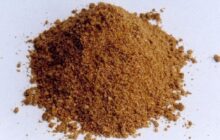
MBM is prepared from slaughterhouse wastes and dead animals, including portions not suitable for human consumption like carcass trimmings, condemned carcasses and livers, inedible offal, and bones. Normally, hair, hooves, and blood are not included. MBM can be produced from rendered carcasses of animals that have died.
Nutritional Benefits of MBM
MBM offers several nutritional advantages that make it a potential alternative in poultry feed:
- Potent Protein Source: MBM is a potent protein source, with crude protein (CP) content typically ranging from 42-45%, and in some sources, even up to 55%. Its amino acid composition closely mirrors the ideal amino acid profile, contributing to optimal protein utilization. MBM can be a viable alternative to SBM in poultry feed formulations at an inclusion rate of up to 5%. It is described as an excellent source of supplemental protein with a well-balanced amino acid profile. The digestibility of the protein fraction is normally quite high, ranging from 81 to 87%.
- Source of Macro Minerals: MBM is rich in Calcium (Ca) and Phosphorus (P), providing an efficient source of these essential macro minerals. Calcium content typically ranges from 7 to 10 %, and phosphorus from 4.5 to 6 %. Standard shows a minimum Calcium content of 10% and minimum Phosphorus content of 5% for MBM. By incorporating MBM at a 3% inclusion level, the need for inorganic phosphorus sources like Dicalcium Phosphate (DCP) and Monocalcium Phosphate (MCP) can be significantly reduced, potentially replacing 50% and above of inorganic phosphorus sources in feed. The calcium to phosphorus ratio in MBM with bone should be around 2:1.
- Metabolizable Energy: MBM has a substantial Metabolizable Energy (ME) value, typically ranging from 2200-2400 Kcal/kg. Another source lists ME values of 2450 – 2850 kcal/kg. Recent evidence suggests the metabolizable energy content of meat meal may be higher than past estimates, especially at lower inclusion levels (5-10%).
- Least Cost Formulation: The strategic inclusion of MBM as a substitute for SBM in feed formulations can lead to a notable reduction in production costs without compromising performance. One article highlighted how MBM can save approximately INR 0.35 per kg feed.
- Environmental Benefits and Circular Economy: Utilizing meat industry by-products like MBM effectively aligns with the principles of a circular economy. This approach minimizes waste and maximizes resource efficiency, offering dual benefits for the poultry and meat industries and the environment.
Practical Constraints of MBM Usage
Despite its benefits, the use of MBM in poultry feed is often limited due to several practical constraints:
- Inconsistent Quality: The nutrient quality of MBM can be significantly variable. This variability is primarily attributed to inconsistencies in the composition of the offals used and the temperature, time, and pressure conditions employed during the preparation process. There can be wide variation between plants and batches in the raw materials used. Variation in calcium and phosphorus content is still problematic.
- Microbial Contamination: MBM is susceptible to microbial contamination, posing significant risks to both poultry and human health. Salmonella, E. coli, and Clostridium are bacteria of particular concern due to their potential impact on bird performance and health, and the risk of transmission to humans. While conventional rendering reduces Salmonella and E. coli, Clostridium is more resilient. The presence of these bacteria is a major limiting factor for increasing MBM inclusion levels. The incidence of contamination, especially with Salmonella, remains a concern, though surveys show it has declined. Recontamination after emerging from cooking chambers is a common problem. The acceptable total bacterial count should be less than 10*10³ CFU per gram.
- Limited Shelf Life: MBM's rich fat content makes it prone to oxidative damage, threatening its shelf life. The combination of high nutrient content and a conducive environment encourages rapid bacterial proliferation, intensifying the risk of spoilage over time, which can seriously affect bird health and performance.
- Demand and Supply: Compared to SBM, MBM has comparatively lower availability. As demand for MBM increases with its greater use, the price may also rise, potentially impacting its cost-effectiveness. MBM poultry feed price vary according to demand and soybean meal supply rate.
- Nutrient Availability Variability: There is variability in nutrient availability in conventionally rendered MBM. For instance, lysine digestibility can vary from 70% to 88%, and this variability is not strongly correlated with simple in vitro assays. Excessive heating during processing can reduce protein digestibility, particularly lysine availability. Lysine, methionine, and threonine (for swine) or methionine and cystine (for poultry) can be limiting amino acids when MBM is combined with cereal grains. Protein quality can be lower than fish meal or soybean meal when used to supplement cereal-based diets.
- Regulatory Restrictions: Meat and bone meal and other processed animal proteins were identified as vectors for Bovine Spongiform Encephalopathy (BSE). For this reason, many countries have restricted or banned the feeding of MBM to livestock. For example, the use of MBM for livestock feeding was banned in the European Union in 2002. Where authorized, proper heat treatment is required to control disease agents like BSE and Salmonella.
Precautions for Farmers When Using Feed Containing MBM
Given the constraints, farmers should take certain precautions:
- Source MBM from Reliable Suppliers: Due to the significant variability in quality and potential for contamination, it is crucial to obtain MBM from suppliers with established quality control procedures.
- Check Quality and Consistency: Ideally, implement quality control checks on received MBM batches, particularly regarding nutrient composition (protein, ash, calcium, phosphorus) and microbial load. Ensure the calcium to phosphorus ratio is around 2:1, as deviations can indicate adulteration. The ash content can indicate the amount of bone present; higher ash suggests more bone.
- Be Aware of Contamination Risks: While processing aims to reduce bacterial loads, recontamination is possible. Store MBM properly to minimize further microbial growth and oxidative damage.
- Adhere to Inclusion Levels: Be mindful of recommended maximum inclusion levels in feed formulations, especially concerning calcium and phosphorus content and potential nutrient availability variability. Excessively high calcium levels from MBM can cause problems with fat utilization. Typical formulation constraints suggest maximum inclusion levels of 6% for birds 0-4 weeks and 8% for birds >4 weeks, with the main concern being Ca and P levels and ash.
- Consider Additives: The sources mention that exploring additives like organic acids and enzymes could potentially help increase MBM usage by inhibiting bacterial growth and improving digestibility. Discuss with your feed formulator the potential use of such additives.
- Check Local Regulations: It is strongly recommended that potential users check their country's regulations regarding the utilization of meat and bone meal in livestock feeding.
MBM holds potential to improve production efficiency, reduce feed costs, and contribute to a circular economy. However, optimizing its usage requires addressing its current limitations through continuous, strategic processes. Innovations in processing technologies, feed additives, supplements, and packaging technology are seen as promising areas for future study to effectively utilize MBM and overcome its challenges. The future of poultry, as mentioned by Mr. Balram Singh Yadhav, lies with those who work efficiently. Utilizing MBM efficiently is seen not just as an option, but a mandate to address increasing SBM demand, reduce reliance on limited natural resources, and facilitate a circular economy.
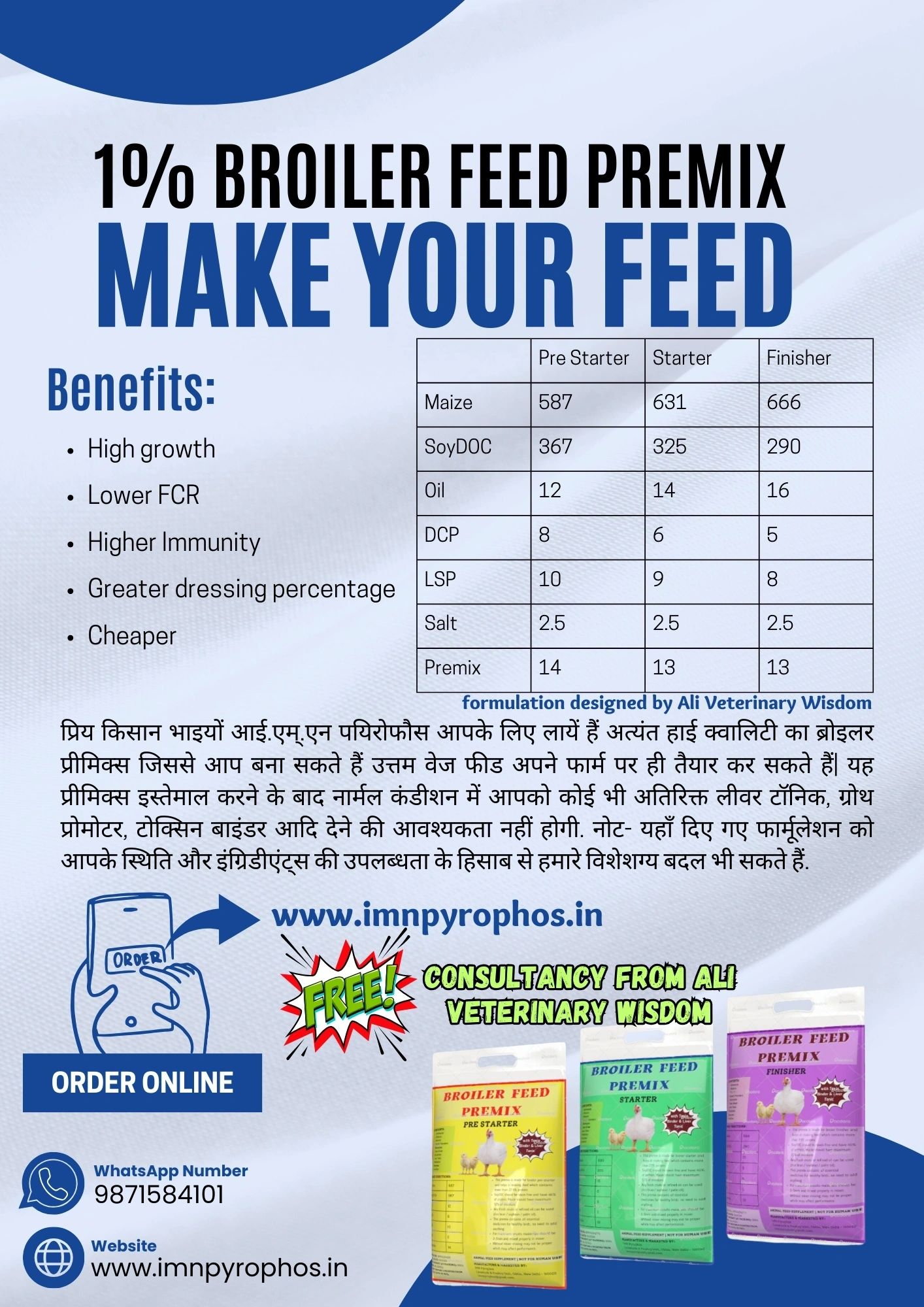
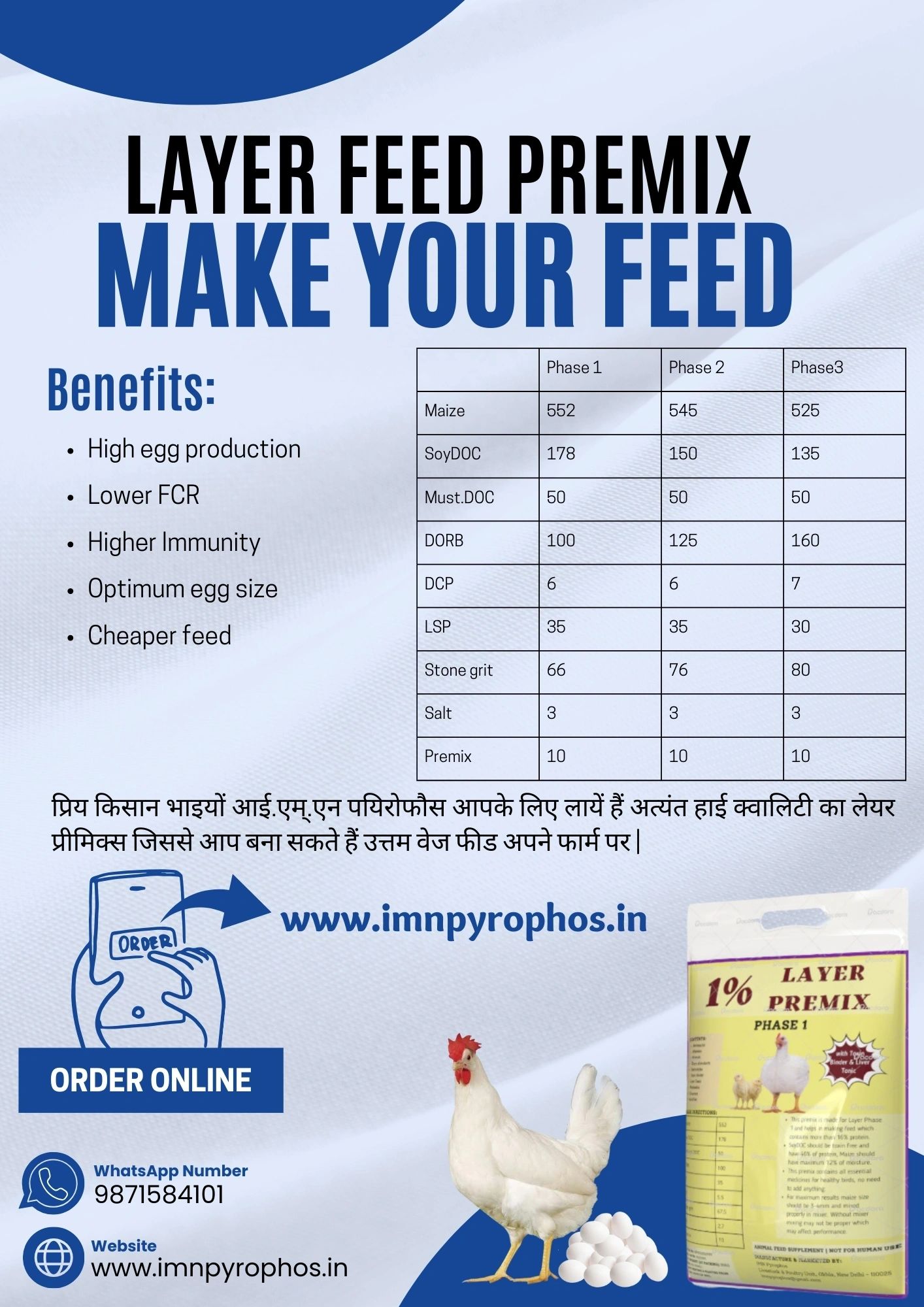
Try our best quality broiler and layer premix call 9871584101
Problem in your flock? Send photos of the birds and droppings on WhatsApp for a first opinion from Dr. Ibne Ali.
WhatsApp: 98715 84101मीट कम बोन मील (MBM): पोल्ट्री न्यूट्रिशन में इसकी भूमिका और चुनौतियाँ
कुल मीट उत्पादन और खपत में पोल्ट्री मीट का हिस्सा बहुत बड़ा है, लगभग 51.14%। दुनिया की आबादी बढ़ने के साथ पोल्ट्री मीट की माँग भी उसी हिसाब से बढ़ने की उम्मीद है। पोल्ट्री सेक्टर तेज़ी से बढ़ रहा है और इसकी Compound Annual Growth Rate (CAGR) 8% है। लेकिन पोल्ट्री उत्पादन की लगभग 80% लागत feed की होती है। Feed ज़्यादातर मक्का (Maize) और सोयाबीन मील (SBM) पर टिका है, जो मिलकर feed की सामग्री का लगभग 90% हिस्सा बनाते हैं।
मीट इंडस्ट्री, और SBM जैसी feed सामग्री की ख़रीद, पर्यावरण पर असर की वजह से सवालों के घेरे में है, ख़ासकर इसलिए कि जानवरों के feed के लिए सोयाबीन उगाने के लिए हर साल हज़ारों हेक्टेयर जंगल काटे जाते हैं। एक ही सामग्री पर इतनी ज़्यादा निर्भरता से जंगल तो ख़त्म होते ही हैं, साथ में पूरा पारिस्थितिक तंत्र (ecosystem) भी बिगड़ता है। आर्थिक, पर्यावरण और टिकाऊपन के कारणों से इस निर्भरता को कम करना ज़रूरी है। इसके दो मुख्य तरीके हैं: दूसरी सामग्री (alternative ingredients) तलाशना और मौजूदा विकल्पों का बेहतर इस्तेमाल करना। ऐसी ही एक अच्छी वैकल्पिक सामग्री है मीट कम बोन मील (MBM)।
MBM बूचड़खाने के कचरे और मरे हुए जानवरों से बनाया जाता है, जिसमें वे हिस्से शामिल हैं जो इंसान के खाने लायक नहीं होते, जैसे carcass की कटिंग, रिजेक्ट किए गए carcass और लीवर, न खाने लायक अंदरूनी अंग (offal), और हड्डियाँ। आमतौर पर बाल, खुर और खून इसमें नहीं डाले जाते। MBM मरे हुए जानवरों के rendered carcass से भी बनाया जा सकता है।
MBM के न्यूट्रिशन से जुड़े फ़ायदे
MBM में कई न्यूट्रिशन वाले फ़ायदे हैं, जिनकी वजह से यह पोल्ट्री feed में एक अच्छा विकल्प बन सकता है:
- प्रोटीन का अच्छा स्रोत: MBM प्रोटीन का अच्छा स्रोत है, जिसमें crude protein (CP) आमतौर पर 42-45% होता है, और कुछ स्रोतों में 55% तक भी। इसका amino acid कंपोज़िशन ideal amino acid profile के काफ़ी करीब है, जिससे प्रोटीन का अच्छा इस्तेमाल होता है। पोल्ट्री feed फ़ॉर्मूलेशन में 5% तक डालने पर MBM, SBM का अच्छा विकल्प बन सकता है। इसे अच्छे संतुलित amino acid profile वाला supplemental protein का बढ़िया स्रोत बताया गया है। इसके प्रोटीन की पाचन क्षमता (digestibility) आमतौर पर काफ़ी ज़्यादा होती है, 81 से 87% तक।
- मैक्रो मिनरल का स्रोत: MBM में कैल्शियम (Ca) और फ़ॉस्फ़ोरस (P) भरपूर होते हैं, यानी यह इन ज़रूरी macro minerals का अच्छा स्रोत है। कैल्शियम आमतौर पर 7 से 10 % और फ़ॉस्फ़ोरस 4.5 से 6 % होता है। Standard के अनुसार MBM में कम से कम 10% कैल्शियम और कम से कम 5% फ़ॉस्फ़ोरस होना चाहिए। MBM को 3% की मात्रा में डालने से Dicalcium Phosphate (DCP) और Monocalcium Phosphate (MCP) जैसे inorganic phosphorus स्रोतों की ज़रूरत काफ़ी कम हो सकती है, और feed में inorganic phosphorus स्रोतों का 50% और उससे ज़्यादा हिस्सा बदला जा सकता है। हड्डी वाले MBM में कैल्शियम और फ़ॉस्फ़ोरस का अनुपात लगभग 2:1 होना चाहिए।
- Metabolizable Energy: MBM की Metabolizable Energy (ME) अच्छी होती है, आमतौर पर 2200-2400 Kcal/kg। एक दूसरे स्रोत में ME 2450 – 2850 kcal/kg बताई गई है। हाल के सबूत बताते हैं कि meat meal की metabolizable energy पहले के अनुमानों से ज़्यादा हो सकती है, ख़ासकर कम मात्रा (5-10%) में डालने पर।
- Least Cost Formulation: Feed फ़ॉर्मूलेशन में SBM की जगह सोच-समझकर MBM डालने से उत्पादन लागत काफ़ी कम हो सकती है, वो भी परफ़ॉर्मेंस पर असर डाले बिना। एक लेख में बताया गया कि MBM से प्रति kg feed लगभग INR 0.35 की बचत हो सकती है।
- पर्यावरण के फ़ायदे और Circular Economy: MBM जैसे मीट इंडस्ट्री के by-products का सही इस्तेमाल circular economy के सिद्धांतों के अनुसार है। इससे कचरा कम होता है और संसाधनों का पूरा इस्तेमाल होता है, जिससे पोल्ट्री और मीट इंडस्ट्री के साथ-साथ पर्यावरण को भी दोहरा फ़ायदा मिलता है।
MBM इस्तेमाल करने में व्यावहारिक दिक्कतें
फ़ायदों के बावजूद, कई व्यावहारिक दिक्कतों की वजह से पोल्ट्री feed में MBM का इस्तेमाल अक्सर सीमित रहता है:
- क्वालिटी एक जैसी नहीं: MBM की पोषक क्वालिटी में काफ़ी फ़र्क हो सकता है। इसकी मुख्य वजह है इस्तेमाल किए गए offal की बनावट में फ़र्क, और बनाने के दौरान तापमान, समय और प्रेशर की स्थितियों में फ़र्क। अलग-अलग प्लांट और बैच के कच्चे माल में बहुत फ़र्क हो सकता है। कैल्शियम और फ़ॉस्फ़ोरस की मात्रा में फ़र्क अभी भी एक समस्या है।
- कीटाणुओं से संक्रमण: MBM में कीटाणुओं (microbial) का संक्रमण आसानी से हो जाता है, जो पोल्ट्री और इंसान दोनों की सेहत के लिए बड़ा खतरा है। Salmonella, E. coli और Clostridium ऐसे बैक्टीरिया हैं जिन पर ख़ास चिंता है, क्योंकि ये पक्षियों की परफ़ॉर्मेंस और सेहत पर असर डाल सकते हैं और इंसानों तक भी पहुँच सकते हैं। सामान्य rendering से Salmonella और E. coli कम हो जाते हैं, लेकिन Clostridium ज़्यादा टिकाऊ होता है। इन बैक्टीरिया की मौजूदगी MBM की मात्रा बढ़ाने में सबसे बड़ी रुकावट है। संक्रमण के मामले, ख़ासकर Salmonella के, अभी भी चिंता की बात हैं, हालाँकि सर्वे बताते हैं कि ये कम हुए हैं। पकाने वाले चैंबर से निकलने के बाद दोबारा संक्रमण (recontamination) एक आम समस्या है। मान्य total bacterial count 10*10³ CFU प्रति ग्राम से कम होना चाहिए।
- कम Shelf Life: MBM में फ़ैट ज़्यादा होने से यह oxidative damage का शिकार जल्दी होता है, जिससे इसकी shelf life को खतरा रहता है। ज़्यादा पोषक तत्व और अनुकूल माहौल मिलकर बैक्टीरिया को तेज़ी से बढ़ने देते हैं, जिससे समय के साथ ख़राब होने का खतरा बढ़ता है, और इसका पक्षियों की सेहत और परफ़ॉर्मेंस पर गंभीर असर पड़ सकता है।
- माँग और सप्लाई: SBM के मुकाबले MBM कम मिलता है। जैसे-जैसे इसका इस्तेमाल बढ़ेगा और MBM की माँग बढ़ेगी, इसकी कीमत भी बढ़ सकती है, जिससे इसका सस्ता होने का फ़ायदा कम हो सकता है। MBM वाले पोल्ट्री feed की कीमत माँग और सोयाबीन मील की सप्लाई रेट के हिसाब से बदलती रहती है।
- पोषक तत्वों की उपलब्धता में फ़र्क: सामान्य तरीके से rendered MBM में पोषक तत्वों की उपलब्धता में फ़र्क रहता है। जैसे lysine की digestibility 70% से 88% तक बदल सकती है, और यह फ़र्क आसान in vitro जाँचों से ठीक से पता नहीं चलता। Processing के दौरान ज़्यादा गर्म करने से प्रोटीन की digestibility, ख़ासकर lysine की उपलब्धता, कम हो सकती है। जब MBM को अनाज के साथ मिलाया जाता है, तो lysine, methionine और threonine (सूअर के लिए) या methionine और cystine (पोल्ट्री के लिए) limiting amino acid बन सकते हैं। अनाज वाली डाइट में supplement के रूप में इस्तेमाल करने पर इसकी प्रोटीन क्वालिटी fish meal या soybean meal से कम हो सकती है।
- कानूनी पाबंदियाँ: Meat and bone meal और दूसरे processed animal proteins को Bovine Spongiform Encephalopathy (BSE) फैलाने वाला माध्यम पाया गया था। इसी वजह से कई देशों ने पशुओं को MBM खिलाने पर रोक या पाबंदी लगाई है। जैसे European Union में 2002 में पशुओं के feed में MBM के इस्तेमाल पर रोक लगा दी गई थी। जहाँ इसकी अनुमति है, वहाँ BSE और Salmonella जैसे बीमारी के कारकों को कंट्रोल करने के लिए सही heat treatment ज़रूरी है।
MBM वाला feed इस्तेमाल करते समय किसानों के लिए सावधानियाँ
इन दिक्कतों को देखते हुए किसानों को कुछ सावधानियाँ रखनी चाहिए:
- भरोसेमंद सप्लायर से MBM लें: क्वालिटी में ज़्यादा फ़र्क और संक्रमण के खतरे की वजह से MBM ऐसे सप्लायर से लेना बहुत ज़रूरी है जिनके पास पक्का quality control सिस्टम हो।
- क्वालिटी और एकरूपता जाँचें: सबसे अच्छा यह है कि आने वाले हर MBM बैच की क्वालिटी जाँच हो, ख़ासकर पोषक तत्व (प्रोटीन, ash, कैल्शियम, फ़ॉस्फ़ोरस) और कीटाणुओं की मात्रा (microbial load)। ध्यान रखें कि कैल्शियम और फ़ॉस्फ़ोरस का अनुपात लगभग 2:1 हो, क्योंकि इसमें गड़बड़ी मिलावट का संकेत हो सकती है। Ash की मात्रा से पता चलता है कि हड्डी कितनी है; ज़्यादा ash मतलब ज़्यादा हड्डी।
- संक्रमण के खतरे का ध्यान रखें: Processing से बैक्टीरिया कम होते हैं, लेकिन दोबारा संक्रमण हो सकता है। MBM को सही तरीके से स्टोर करें ताकि कीटाणु और oxidative damage और न बढ़ें।
- तय मात्रा का पालन करें: Feed फ़ॉर्मूलेशन में सुझाई गई अधिकतम मात्रा का ध्यान रखें, ख़ासकर कैल्शियम और फ़ॉस्फ़ोरस की मात्रा और पोषक तत्वों की उपलब्धता में फ़र्क को देखते हुए। MBM से कैल्शियम बहुत ज़्यादा हो जाए तो फ़ैट के इस्तेमाल में दिक्कत आ सकती है। आम फ़ॉर्मूलेशन नियमों के अनुसार 0-4 हफ़्ते के पक्षियों के लिए अधिकतम 6% और >4 हफ़्ते के पक्षियों के लिए अधिकतम 8%, जिसमें मुख्य चिंता Ca और P का लेवल और ash है।
- Additives पर विचार करें: स्रोतों में बताया गया है कि organic acids और enzymes जैसे additives बैक्टीरिया को बढ़ने से रोककर और digestibility सुधारकर MBM का इस्तेमाल बढ़ाने में मदद कर सकते हैं। ऐसे additives के इस्तेमाल के बारे में अपने feed formulator से बात करें।
- लोकल नियम जाँचें: इस्तेमाल करने वालों को ज़ोर देकर सलाह दी जाती है कि पशुओं के feed में meat and bone meal के इस्तेमाल को लेकर अपने देश के नियम ज़रूर जाँच लें।
MBM में उत्पादन क्षमता बढ़ाने, feed की लागत घटाने और circular economy में योगदान देने की क्षमता है। लेकिन इसका सबसे अच्छा इस्तेमाल करने के लिए लगातार और सोची-समझी प्रक्रियाओं से इसकी मौजूदा कमियों को दूर करना होगा। Processing टेक्नोलॉजी, feed additives, supplements और packaging टेक्नोलॉजी में नए प्रयोग, MBM के सही इस्तेमाल और इसकी चुनौतियों से निपटने के लिए भविष्य की रिसर्च के अच्छे क्षेत्र माने जाते हैं। जैसा कि श्री बलराम सिंह यादव ने कहा, पोल्ट्री का भविष्य उन्हीं का है जो कुशलता से काम करते हैं। MBM का कुशल इस्तेमाल सिर्फ़ एक विकल्प नहीं, बल्कि ज़रूरत माना जाता है, ताकि SBM की बढ़ती माँग को संभाला जा सके, सीमित प्राकृतिक संसाधनों पर निर्भरता कम हो और circular economy को बढ़ावा मिले।
हमारा बेहतरीन क्वालिटी का broiler और layer premix आज़माएँ, कॉल करें 9871584101
फ़ार्म में कोई दिक्कत? पक्षियों और बीट की फ़ोटो WhatsApp पर भेजिए, डॉ. इब्ने अली से पहली राय लीजिए।
WhatsApp: 98715 84101Meat Cum Bone Meal (MBM): Poultry nutrition me iska role aur challenges
Kul meat production aur khapat me poultry meat ka hissa bahut bada hai, lagbhag 51.14%. Duniya ki aabadi badhne ke saath poultry meat ki demand bhi usi hisaab se badhne ki ummeed hai. Poultry sector tezi se badh raha hai aur iski Compound Annual Growth Rate (CAGR) 8% hai. Lekin poultry production ki lagbhag 80% lagat feed ki hoti hai. Feed zyada tar Maize (makka) aur Soybean Meal (SBM) par tika hai, jo milkar feed ingredients ka lagbhag 90% hissa banate hain.
Meat industry, aur SBM jaise feed ingredients ki kharid, environment par asar ki wajah se sawalon ke ghere me hai, khaas kar isliye ki janwaron ke feed ke liye soybean ugane ke liye har saal hazaron hectare jungle kaate jate hain. Ek hi ingredient par itni zyada nirbharta se jungle to khatam hote hi hain, saath me pura ecosystem bhi bigadta hai. Economic, environment aur sustainability ke kaaranon se is nirbharta ko kam karna zaroori hai. Iske do main tareeke hain: doosre alternative ingredients dhoondhna aur maujooda options ka behtar use karna. Aisa hi ek achha alternative ingredient hai Meat cum Bone Meal (MBM).
MBM slaughterhouse ke kachre aur mare hue janwaron se banaya jata hai, jisme wo hisse shamil hain jo insaan ke khane layak nahi hote, jaise carcass ki cutting, reject kiye gaye carcass aur liver, na khane layak offal, aur haddiyan. Aam taur par baal, khur aur khoon isme nahi dale jate. MBM mare hue janwaron ke rendered carcass se bhi banaya ja sakta hai.
MBM ke nutrition wale fayde
MBM me kai nutrition wale fayde hain, jinki wajah se ye poultry feed me ek achha option ban sakta hai:
- Protein ka achha source: MBM protein ka achha source hai, jisme crude protein (CP) aam taur par 42-45% hota hai, aur kuch sources me 55% tak bhi. Iska amino acid composition ideal amino acid profile ke kaafi kareeb hai, jisse protein ka achha use hota hai. Poultry feed formulation me 5% tak dalne par MBM, SBM ka achha alternative ban sakta hai. Ise achhe balanced amino acid profile wala supplemental protein ka badhiya source bataya gaya hai. Iske protein ki digestibility aam taur par kaafi zyada hoti hai, 81 se 87% tak.
- Macro minerals ka source: MBM me Calcium (Ca) aur Phosphorus (P) bharpoor hote hain, yani ye in zaroori macro minerals ka achha source hai. Calcium aam taur par 7 se 10 % aur phosphorus 4.5 se 6 % hota hai. Standard ke hisaab se MBM me kam se kam 10% calcium aur kam se kam 5% phosphorus hona chahiye. MBM ko 3% dalne se Dicalcium Phosphate (DCP) aur Monocalcium Phosphate (MCP) jaise inorganic phosphorus sources ki zaroorat kaafi kam ho sakti hai, aur feed me inorganic phosphorus sources ka 50% aur usse zyada hissa replace kiya ja sakta hai. Haddi wale MBM me calcium aur phosphorus ka ratio lagbhag 2:1 hona chahiye.
- Metabolizable Energy: MBM ki Metabolizable Energy (ME) achhi hoti hai, aam taur par 2200-2400 Kcal/kg. Ek doosre source me ME 2450 – 2850 kcal/kg batayi gayi hai. Haal ke saboot batate hain ki meat meal ki metabolizable energy pehle ke anumaan se zyada ho sakti hai, khaas kar kam matra (5-10%) me dalne par.
- Least Cost Formulation: Feed formulation me SBM ki jagah soch-samajhkar MBM dalne se production cost kaafi kam ho sakti hai, wo bhi performance par asar dale bina. Ek article me bataya gaya ki MBM se per kg feed lagbhag INR 0.35 ki bachat ho sakti hai.
- Environment ke fayde aur Circular Economy: MBM jaise meat industry ke by-products ka sahi use circular economy ke principles ke hisaab se hai. Isse kachra kam hota hai aur resources ka pura use hota hai, jisse poultry aur meat industry ke saath-saath environment ko bhi double fayda milta hai.
MBM use karne me practical dikkatein
Faydon ke bawajood, kai practical dikkaton ki wajah se poultry feed me MBM ka use aksar limited rehta hai:
- Quality ek jaisi nahi: MBM ki nutrient quality me kaafi farak ho sakta hai. Iski main wajah hai use kiye gaye offal ki banawat me farak, aur banane ke dauran temperature, time aur pressure ki conditions me farak. Alag-alag plant aur batch ke raw material me bahut farak ho sakta hai. Calcium aur phosphorus ki matra me farak abhi bhi ek problem hai.
- Microbial contamination: MBM me keetanuon ka contamination aasani se ho jata hai, jo poultry aur insaan dono ki health ke liye bada khatra hai. Salmonella, E. coli aur Clostridium aise bacteria hain jin par khaas chinta hai, kyunki ye birds ki performance aur health par asar dal sakte hain aur insaanon tak bhi pahunch sakte hain. Normal rendering se Salmonella aur E. coli kam ho jate hain, lekin Clostridium zyada tikau hota hai. In bacteria ka hona MBM ki matra badhane me sabse badi rukawat hai. Contamination ke cases, khaas kar Salmonella ke, abhi bhi chinta ki baat hain, haalanki survey batate hain ki ye kam hue hain. Cooking chamber se nikalne ke baad dobara contamination (recontamination) ek aam problem hai. Sahi total bacterial count 10*10³ CFU per gram se kam hona chahiye.
- Kam Shelf Life: MBM me fat zyada hone se ye oxidative damage ka shikar jaldi hota hai, jisse iski shelf life ko khatra rehta hai. Zyada nutrients aur anukool mahaul milkar bacteria ko tezi se badhne dete hain, jisse time ke saath kharab hone ka khatra badhta hai, aur iska birds ki health aur performance par serious asar pad sakta hai.
- Demand aur Supply: SBM ke mukable MBM kam milta hai. Jaise-jaise iska use badhega aur MBM ki demand badhegi, iski keemat bhi badh sakti hai, jisse iske saste hone ka fayda kam ho sakta hai. MBM wale poultry feed ki keemat demand aur soybean meal ki supply rate ke hisaab se badalti rehti hai.
- Nutrients ki availability me farak: Normal tareeke se rendered MBM me nutrients ki availability me farak rehta hai. Jaise lysine ki digestibility 70% se 88% tak badal sakti hai, aur ye farak simple in vitro test se theek se pata nahi chalta. Processing ke dauran zyada garam karne se protein ki digestibility, khaas kar lysine ki availability, kam ho sakti hai. Jab MBM ko anaaj (cereal grains) ke saath milaya jata hai, to lysine, methionine aur threonine (suar ke liye) ya methionine aur cystine (poultry ke liye) limiting amino acid ban sakte hain. Anaaj wali diet me supplement ke roop me use karne par iski protein quality fish meal ya soybean meal se kam ho sakti hai.
- Kanooni pabandiyan: Meat and bone meal aur doosre processed animal proteins ko Bovine Spongiform Encephalopathy (BSE) failane wala madhyam paya gaya tha. Isi wajah se kai deshon ne pashuon ko MBM khilane par rok ya pabandi lagayi hai. Jaise European Union me 2002 me pashuon ke feed me MBM ke use par rok laga di gayi thi. Jahan iski permission hai, wahan BSE aur Salmonella jaise bimari ke kaarakon ko control karne ke liye sahi heat treatment zaroori hai.
MBM wala feed use karte time farmers ke liye savdhaniyan
In dikkaton ko dekhte hue farmers ko kuch savdhaniyan rakhni chahiye:
- Bharosemand supplier se MBM lo: Quality me zyada farak aur contamination ke khatre ki wajah se MBM aise supplier se lena bahut zaroori hai jinke paas pakka quality control system ho.
- Quality aur consistency check karo: Sabse achha ye hai ki aane wale har MBM batch ki quality check ho, khaas kar nutrients (protein, ash, calcium, phosphorus) aur microbial load. Dhyan rakho ki calcium aur phosphorus ka ratio lagbhag 2:1 ho, kyunki isme gadbad milawat ka sign ho sakti hai. Ash ki matra se pata chalta hai ki haddi kitni hai; zyada ash matlab zyada haddi.
- Contamination ke khatre ka dhyan rakho: Processing se bacteria kam hote hain, lekin dobara contamination ho sakta hai. MBM ko sahi tareeke se store karo taaki keetanu aur oxidative damage aur na badhein.
- Tay matra follow karo: Feed formulation me suggest ki gayi maximum matra ka dhyan rakho, khaas kar calcium aur phosphorus ki matra aur nutrients ki availability me farak ko dekhte hue. MBM se calcium bahut zyada ho jaye to fat ke use me dikkat aa sakti hai. Aam formulation rules ke hisaab se 0-4 hafte ke birds ke liye maximum 6% aur >4 hafte ke birds ke liye maximum 8%, jisme main chinta Ca aur P ka level aur ash hai.
- Additives ke baare me socho: Sources me bataya gaya hai ki organic acids aur enzymes jaise additives bacteria ko badhne se rokkar aur digestibility sudharkar MBM ka use badhane me madad kar sakte hain. Aise additives ke use ke baare me apne feed formulator se baat karo.
- Local rules check karo: Use karne walon ko zor dekar salah di jati hai ki pashuon ke feed me meat and bone meal ke use ko lekar apne desh ke rules zaroor check kar lein.
MBM me production efficiency badhane, feed ki lagat ghatane aur circular economy me yogdan dene ki kshamta hai. Lekin iska sabse achha use karne ke liye lagatar aur soch-samjhe process se iski maujooda kamiyon ko door karna hoga. Processing technology, feed additives, supplements aur packaging technology me naye prayog, MBM ke sahi use aur iski challenges se nipatne ke liye future research ke achhe area mane jate hain. Jaisa ki Mr. Balram Singh Yadhav ne kaha, poultry ka future unhi ka hai jo efficiently kaam karte hain. MBM ka efficient use sirf ek option nahi, balki zaroorat mana jata hai, taaki SBM ki badhti demand ko sambhala ja sake, limited natural resources par nirbharta kam ho aur circular economy ko badhawa mile.
Hamara best quality broiler aur layer premix try karo, call karo 9871584101
Farm me koi dikkat? Pakshiyon aur beet ki photo WhatsApp par bhejiye, Dr. Ibne Ali se pehli raay lijiye.
WhatsApp: 98715 84101