The Importance of Vitamin A in Poultry Nutrition
Vitamin A, also known as retinol, plays a crucial role in various physiological functions in poultry, including vision, immunity, growth, reproduction, and bone development. While feedstuffs commonly used in poultry diets often lack sufficient retinol, poultry can convert certain plant pigments called carotenoids, such as β-carotene, into retinoids to exhibit vitamin A activity. However, the contribution of carotenoids to the overall vitamin A status of poultry is minimal, necessitating the supplementation of synthetic retinyl acetate in commercial poultry diets.
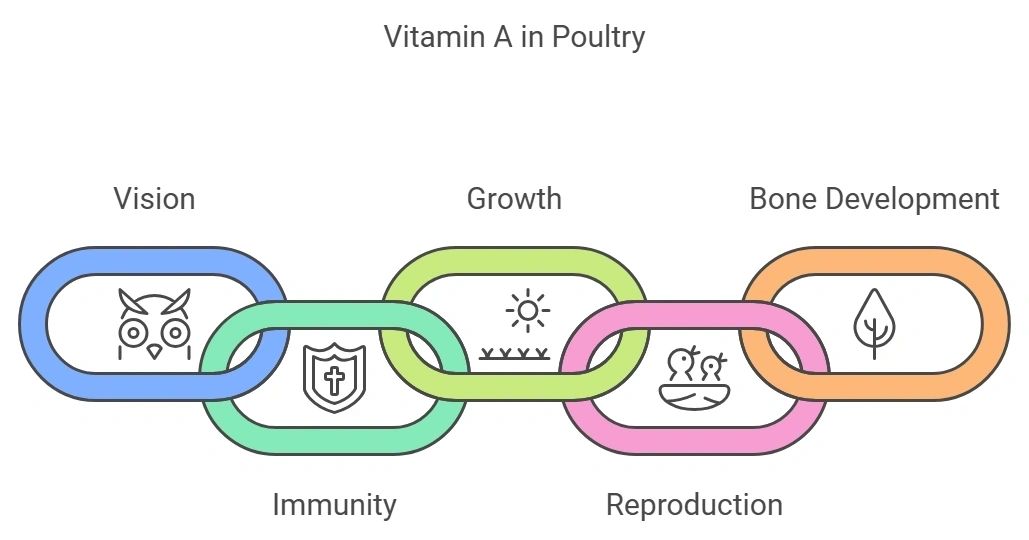
To ensure an adequate supply of vitamin A for domestic fowl, it's crucial to understand how this vitamin is metabolized and utilized within their bodies. Crucial in poultry nutrition among all best vitamins for chickens vitamin A is essential.
How Poultry Metabolize Vitamin A
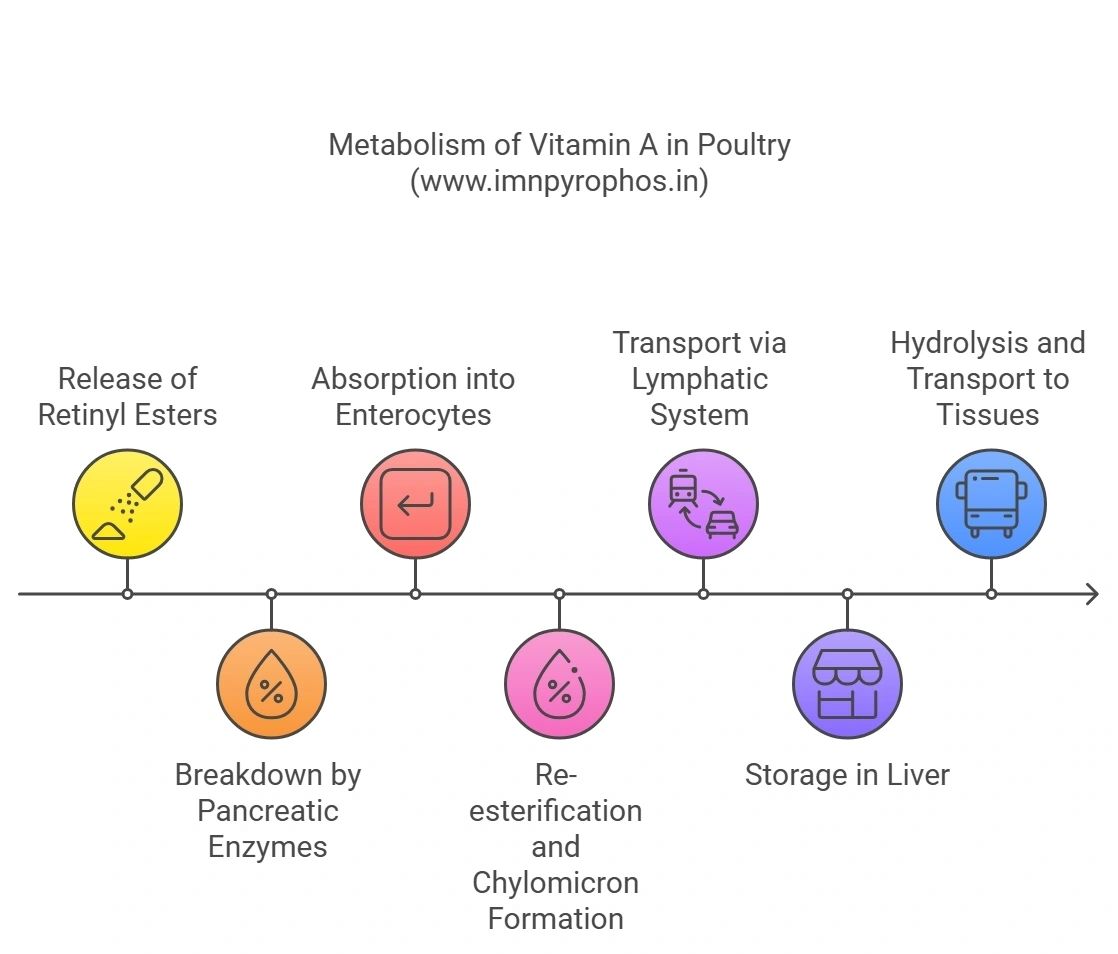
- The process starts in the proventriculus and gizzard, where mechanical grinding and acidic conditions release fats and fat-soluble substances like retinyl esters from the feed matrix.
- Moving to the small intestine, pancreatic enzymes break down retinyl esters into free retinol and fatty acids.
- Free retinol is then absorbed into the enterocytes (cells lining the intestine) primarily in the duodenum and upper jejunum.
- After absorption, retinol undergoes re-esterification within the enterocytes and gets incorporated into chylomicrons that transport it through the lymphatic system and bloodstream to the liver.
- In the liver, specialized cells called stellate cells store vitamin A in the form of retinyl esters.
- When needed, retinyl esters are hydrolyzed to release retinol, which is then transported to other tissues by plasma retinol-binding protein.
Once inside a cell, retinol is bound to cellular retinol-binding protein and can undergo various metabolic transformations to meet the specific needs of that cell. One pathway involves the oxidation of retinol to retinaldehyde, a precursor for the synthesis of ATRA. ATRA is the active form of vitamin A and acts as a ligand for nuclear receptors that regulate gene expression.
Benefits of Vitamin A Supplementation
The sources highlight several ways in which vitamin A supplementation can benefit poultry health and performance:
- Immune Function: ATRA modulates the immune system by promoting the differentiation of regulatory T cells, modulating cytokine production, and enhancing innate immune cell activity. Studies have shown that vitamin A supplementation can enhance immune responses to vaccinations and infections.
- Antioxidant Capacity: Oxidative stress occurs when the production of reactive oxygen species (ROS) exceeds the body's ability to neutralize them. Retinol and ATRA exhibit antioxidant properties and help regulate genes involved in antioxidant defense mechanisms.
- Reproductive Performance: Vitamin A is essential for reproductive processes in both male and female poultry. ATRA regulates gonadal development, hormone synthesis, and the maintenance of reproductive tissues. Studies have shown that vitamin A supplementation can improve egg production and fertility in breeding and laying hens.
Considerations for Vitamin A Supplementation
While the sources primarily focus on the benefits of vitamin A, it's important to remember that excessive vitamin A intake can have adverse effects. The sources recommend adhering to local regulatory requirements and conditions of use for supplemental vitamin A. They also note that hypervitaminosis A (vitamin A toxicity) is unlikely in practical poultry farming settings due to the stringent regulation of vitamin A levels in poultry feed.
When determining optimal vitamin A supplementation levels, several factors should be considered:
- Genetics: Different poultry breeds may have varying vitamin A requirements.
- Carry-over from the mother: Chicks can receive vitamin A from their mothers, which can influence their needs for supplementation.
- Bioavailability: Different sources of vitamin A may have different levels of bioavailability, meaning the amount of vitamin A actually absorbed and utilized by the body can vary.
- Losses during storage and processing: Retinyl acetate, the commonly used form of supplemental vitamin A, is susceptible to degradation during storage and processing, potentially reducing its effectiveness.
- Factors affecting digestion and absorption: Intestinal parasites, mycotoxins, and inadequate dietary fat can hinder the absorption of vitamin A.
- Stress and illness: Stressful conditions and diseases can increase the demand for vitamin A.
The sources suggest consulting feeding guidelines provided by poultry breeding companies to gain insights into actual vitamin A requirements. These guidelines typically incorporate safety margins to account for potential losses and variations in requirements, making them valuable resources for poultry producers.
Effect of Vitamin A Supplementation on Immune Function
- Vitamin A was identified as playing an important role in immune system modulation ("the anti-infective vitamin").
- ATRA enhances immune function through:
- Promoting differentiation of regulatory T cells
- Modulating cytokine production
- Enhancing innate immune cell activity
- Adequate vitamin A helps regulate immune responses and maintain immune homeostasis.
- ATRA binds to RARs within immune cells, activating gene transcription and production of proteins essential for immune cell function (e.g., Interferon Regulatory Factors).
- Studies in laying hens showed that:
- Dietary vitamin A supplementation improved immune response to Newcastle disease virus vaccination.
- The amount of retinol required for optimal immune function under stress may be higher than current requirement estimates.
- In White Leghorn chickens, oral vitamin A supplementation improved immune response to infectious bronchitis virus infection, resulting in:
- Reduced viral replication
- Increased serum IgG levels
- Decreased inflammatory response
- Studies on broiler chickens and turkey poults suggest that higher vitamin A levels than those recommended by NASEM may be required for optimal immune function:
- Antibody production and T cell proliferative response were maximized at higher vitamin A intakes.
- Non-challenged birds also experienced positive immune function outcomes with vitamin A supplementation, including:
- Increased serum immune factors (IL-1, IL-2, IL-6, TNF-α) in broilers.
- Improved FCR and body weight gain.
- Enhanced intestinal structure and elevated serum levels of immunoglobulin A and G in goslings.
- Both maternal and offspring vitamin A supplementation has been shown to positively influence immune function:
- In goslings, maternal vitamin A supplementation improved offspring immune function and organ development.
- Offspring vitamin A supplementation also enhanced immune markers.
- In broiler chickens, vitamin A supplementation increased the relative bursa of Fabricius ratio, indicating improved immune function.
Effect of Supplemental Vitamin A on Antioxidant Capacity
- Oxidative stress occurs when the production of reactive oxygen species (ROS) overwhelms the organism's ability to neutralize them.
- ROS are generated as byproducts of cellular metabolism and play roles in signaling pathways and defense mechanisms.
- Excessive ROS buildup in poultry can be caused by various factors, including environmental stressors, inadequate free radical elimination, diseases, and feed components.
- Vitamin A has been shown to alleviate the negative effects of heat, cold, and vaccination stress on poultry performance.
- Retinol has direct antioxidant properties, attributed to its structure which can neutralize thiyl radicals and stabilize peroxyl radicals.
- Retinol's antioxidant role is most effective within physiological oxygen tensions found in tissues.
- ATRA's antioxidant defense involves upregulating genes encoding antioxidant enzymes, leading to increased enzyme levels and enhanced cellular antioxidant capacity.
- ATRA influences genes involved in:
- Glutathione metabolism
- Superoxide dismutase activity
- Pathways responding to oxidative stress
- Research has shown that ATRA can:
- Increase expression of genes associated with glutathione activity, such as glutathione peroxidase and glutathione reductase.
- Reduce the expression of NADPH oxidase genes involved in ROS generation.
- ATRA can enhance the antioxidative capacity of mitochondria.
- ATRA triggers autophagy and promotes cell death via the Bcl-2/Beclin1 pathway.
- Studies in geese demonstrated the positive effects of vitamin A supplementation on antioxidant status:
- Improved levels of antioxidant enzymes like glutathione peroxidase, superoxide dismutase, total antioxidant capacity, and catalase.
- Increased tissue retinol content.
- Reduced levels of malondialdehyde (a marker for lipid peroxidation).
- Maternal and offspring vitamin A supplementation had interactive effects on weight gain, tissue retinol content, and antioxidant enzyme levels in goslings.
- In broiler chickens, supplementing either maternal or offspring diets with vitamin A alone did not affect serum total SOD and GSH-PX activities.
- A statistically significant interaction was found between maternal and offspring vitamin A levels on serum GSH-Px activity.
- Very high vitamin A supplementation (71,000 IU/kg feed) has been shown to have negative effects on antioxidant defenses in broiler chickens, suggesting the potential for prooxidant activity at excessive doses.
Effect on Reproductive Performance
- Vitamin A is essential for reproductive processes in both male and female poultry, as well as embryonic development.
- ATRA's impact on reproduction has been observed in Japanese quail.
- ATRA influences reproduction by:
- Regulating gonadal development and sexual differentiation
- Influencing reproductive hormone synthesis and secretion
- It is important to note that this finding is based on in vitro studies in rats, and further research is needed to confirm the effects in poultry.
- Maintaining the functional integrity of reproductive tissues
- Higher vitamin A levels have been shown to improve reproductive performance in breeding and laying hens, including:
- Increased egg weight, egg number, egg mass, egg yield, fertility, and albumen quality
- Improved reproductive organ development
- A study by Abd El-Hack et al. demonstrated that vitamin A supplementation up to 16,000 IU/kg diet positively impacted egg number, egg mass, and albumen quality in laying hens.
- Excessive vitamin A supplementation may negatively affect reproductive performance:
- A study by Yuan et al. found that high levels of vitamin A supplementation reduced fertile egg percentage in broiler breeders.
Fine-tuning Vitamin A Supplementation
- The current vitamin A requirement estimates for poultry, established by NASEM in 1994, may not be sufficient for modern poultry production due to advancements in genetics, productivity, and nutritional demands.
- Stress, infection, and illness can increase vitamin A requirements.
- Studies have shown that optimal levels of vitamin A for immune function and antioxidant capacity may be higher than current recommendations.
- Practical vitamin A requirements should consider factors such as genetics, carry-over from the laying hen to chick, bioavailability of different vitamin A sources, potential losses during storage and processing, destruction in the gastrointestinal tract, absorption issues, protein or lipid status, and stress levels.
Conclusions
- Vitamin A is an essential nutrient for poultry that must be supplemented in the diet.
- Adequate vitamin A levels are crucial for optimizing performance and maintaining health.
- Supplementation can enhance:
- Reproductive performance
- Antioxidant capacity
- Growth
- Immunity
- Breeder recommendations can be useful in determining appropriate supplementation levels.
- Further research is needed to:
- Fully understand the role of vitamin A in poultry physiology
- Optimize feed supplementation strategies
- Investigate potential interactions with other feed components
- Updated vitamin A requirement estimates from scientific committees are needed to reflect current knowledge and practices.
Problem in your flock? Send photos of the birds and droppings on WhatsApp for a first opinion from Dr. Ibne Ali.
WhatsApp: 98715 84101Poultry पोषण में Vitamin A का महत्व
Vitamin A, जिसे retinol भी कहते हैं, poultry में शरीर के कई कामों में बहुत ज़रूरी भूमिका निभाता है, जैसे देखना (नज़र), immunity, बढ़वार, प्रजनन और हड्डियों का विकास। Poultry की खुराक में आम तौर पर इस्तेमाल होने वाले feed के कच्चे माल में अक्सर पर्याप्त retinol नहीं होता, लेकिन poultry कुछ पौधों के रंग वाले तत्वों, जिन्हें carotenoids कहते हैं (जैसे β-carotene), को retinoids में बदलकर vitamin A का असर पा सकती है। फिर भी poultry के कुल vitamin A स्तर में carotenoids का योगदान बहुत कम होता है, इसलिए commercial poultry खुराक में synthetic retinyl acetate मिलाना ज़रूरी होता है।
पालतू मुर्गियों को पर्याप्त vitamin A मिले, यह पक्का करने के लिए यह समझना बहुत ज़रूरी है कि यह vitamin उनके शरीर में कैसे पचता और इस्तेमाल होता है। मुर्गियों के लिए सबसे अच्छे vitamins में से, poultry पोषण में vitamin A बहुत ज़रूरी है।
Poultry के शरीर में Vitamin A कैसे पचता और काम करता है
- यह प्रक्रिया proventriculus और gizzard से शुरू होती है, जहाँ पीसने की क्रिया और अम्लीय (acidic) माहौल feed से fats और fat में घुलने वाले पदार्थ, जैसे retinyl esters, अलग करते हैं।
- छोटी आँत में पहुँचकर, pancreas के enzymes retinyl esters को free retinol और fatty acids में तोड़ देते हैं।
- इसके बाद free retinol को enterocytes (आँत की अंदरूनी परत की cells) सोख लेती हैं, मुख्य रूप से duodenum और ऊपरी jejunum में।
- सोखने के बाद, enterocytes के अंदर retinol फिर से ester बनता है (re-esterification) और chylomicrons में शामिल हो जाता है, जो इसे lymphatic system और खून के रास्ते liver तक ले जाते हैं।
- Liver में, stellate cells नाम की खास cells vitamin A को retinyl esters के रूप में जमा करती हैं।
- ज़रूरत पड़ने पर retinyl esters टूटकर retinol छोड़ते हैं, जिसे फिर plasma retinol-binding protein दूसरे tissues तक पहुँचाता है।
Cell के अंदर पहुँचने पर retinol, cellular retinol-binding protein से जुड़ जाता है और उस cell की खास ज़रूरतों के हिसाब से कई तरह के metabolic बदलावों से गुज़र सकता है। एक रास्ते में retinol का oxidation होकर retinaldehyde बनता है, जो ATRA बनाने का कच्चा माल (precursor) है। ATRA, vitamin A का सक्रिय (active) रूप है और nuclear receptors के लिए ligand का काम करता है, जो genes के काम (gene expression) को नियंत्रित करते हैं।
Vitamin A Supplementation के फायदे
स्रोत कई तरीके बताते हैं जिनसे vitamin A देने से poultry की सेहत और performance को फायदा हो सकता है:
- Immunity का काम: ATRA regulatory T cells के बनने को बढ़ावा देकर, cytokines के बनने को नियंत्रित करके और innate immune cells की सक्रियता बढ़ाकर immune system को संतुलित करता है। स्टडीज़ में पाया गया है कि vitamin A देने से vaccination और संक्रमण के प्रति immune response बेहतर हो सकता है।
- Antioxidant क्षमता: Oxidative stress तब होता है जब reactive oxygen species (ROS) का बनना शरीर की उन्हें बेअसर करने की क्षमता से ज़्यादा हो जाता है। Retinol और ATRA में antioxidant गुण होते हैं और ये antioxidant बचाव से जुड़े genes को नियंत्रित करने में मदद करते हैं।
- प्रजनन performance: नर और मादा, दोनों poultry में प्रजनन के लिए vitamin A ज़रूरी है। ATRA प्रजनन अंगों (gonads) के विकास, hormones के बनने और प्रजनन tissues को ठीक बनाए रखने को नियंत्रित करता है। स्टडीज़ में पाया गया है कि vitamin A देने से breeding और laying मुर्गियों में अंडा उत्पादन और fertility बेहतर हो सकती है।
Vitamin A Supplementation में ध्यान रखने वाली बातें
हालाँकि स्रोत मुख्य रूप से vitamin A के फायदों पर ध्यान देते हैं, यह याद रखना ज़रूरी है कि बहुत ज़्यादा vitamin A के बुरे असर भी हो सकते हैं। स्रोत सलाह देते हैं कि vitamin A देने के लिए स्थानीय नियमों और इस्तेमाल की शर्तों का पालन करें। वे यह भी बताते हैं कि असली poultry farming में hypervitaminosis A (vitamin A का ज़हरीलापन) होने की संभावना कम है, क्योंकि poultry feed में vitamin A के स्तर पर सख्त नियम हैं।
Vitamin A की सही मात्रा तय करते समय कई बातों पर ध्यान देना चाहिए:
- Genetics: अलग-अलग poultry नस्लों की vitamin A की ज़रूरत अलग-अलग हो सकती है।
- माँ से मिला हिस्सा (Carry-over): चूज़ों को उनकी माँ से vitamin A मिल सकता है, जिससे उनकी supplementation की ज़रूरत पर असर पड़ता है।
- Bioavailability: Vitamin A के अलग-अलग स्रोतों की bioavailability अलग हो सकती है, यानी शरीर असल में कितना vitamin A सोखता और इस्तेमाल करता है, यह बदल सकता है।
- भंडारण और processing के दौरान नुकसान: Retinyl acetate, जो vitamin A देने का आम रूप है, भंडारण और processing के दौरान खराब हो सकता है, जिससे इसका असर कम हो सकता है।
- पाचन और सोखने पर असर डालने वाली बातें: आँतों के परजीवी, mycotoxins और खुराक में कम fat, vitamin A के सोखने में रुकावट डाल सकते हैं।
- Stress और बीमारी: Stress वाली स्थितियाँ और बीमारियाँ vitamin A की माँग बढ़ा सकती हैं।
स्रोत सलाह देते हैं कि vitamin A की असली ज़रूरत समझने के लिए poultry breeding companies की feeding guidelines देखें। इन guidelines में आम तौर पर संभावित नुकसान और ज़रूरतों के अंतर को ध्यान में रखकर safety margin रखा जाता है, इसलिए ये poultry उत्पादकों के लिए काम की जानकारी हैं।
Immunity पर Vitamin A Supplementation का असर
- Vitamin A को immune system को नियंत्रित करने में अहम भूमिका निभाने वाला माना गया है ("संक्रमण-रोधी vitamin")।
- ATRA इन तरीकों से immunity बढ़ाता है:
- Regulatory T cells के बनने को बढ़ावा देकर
- Cytokines के बनने को नियंत्रित करके
- Innate immune cells की सक्रियता बढ़ाकर
- पर्याप्त vitamin A immune responses को नियंत्रित करने और immunity का संतुलन (homeostasis) बनाए रखने में मदद करता है।
- ATRA immune cells के अंदर RARs से जुड़ता है, जिससे genes सक्रिय होते हैं और immune cells के काम के लिए ज़रूरी proteins बनते हैं (जैसे Interferon Regulatory Factors)।
- Laying मुर्गियों पर हुई स्टडीज़ में पाया गया कि:
- खुराक में vitamin A देने से Newcastle disease virus vaccination के प्रति immune response बेहतर हुआ।
- Stress के दौरान सबसे अच्छी immunity के लिए ज़रूरी retinol की मात्रा, अभी के तय अनुमानों से ज़्यादा हो सकती है।
- White Leghorn मुर्गियों में मुँह से vitamin A देने से infectious bronchitis virus संक्रमण के प्रति immune response बेहतर हुआ, जिससे:
- Virus का बढ़ना कम हुआ
- Serum IgG का स्तर बढ़ा
- सूजन (inflammatory response) कम हुई
- Broiler मुर्गियों और turkey poults पर हुई स्टडीज़ बताती हैं कि सबसे अच्छी immunity के लिए NASEM की सलाह से ज़्यादा vitamin A की ज़रूरत हो सकती है:
- ज़्यादा vitamin A देने पर antibodies का बनना और T cells की बढ़ोतरी सबसे ज़्यादा रही।
- जिन पक्षियों को कोई संक्रमण नहीं दिया गया (non-challenged), उनमें भी vitamin A देने से immunity पर अच्छे नतीजे मिले, जैसे:
- Broilers में serum immune factors (IL-1, IL-2, IL-6, TNF-α) बढ़े।
- FCR और वज़न बढ़ना बेहतर हुआ।
- हंस के बच्चों (goslings) में आँतों की बनावट बेहतर हुई और serum में immunoglobulin A और G का स्तर बढ़ा।
- माँ और बच्चे, दोनों को vitamin A देने से immunity पर अच्छा असर दिखा है:
- Goslings में, माँ को vitamin A देने से बच्चों की immunity और अंगों का विकास बेहतर हुआ।
- बच्चों को vitamin A देने से भी immune markers बेहतर हुए।
- Broiler मुर्गियों में vitamin A देने से bursa of Fabricius का relative अनुपात बढ़ा, जो बेहतर immunity बताता है।
Antioxidant क्षमता पर Vitamin A Supplementation का असर
- Oxidative stress तब होता है जब reactive oxygen species (ROS) का बनना शरीर की उन्हें बेअसर करने की क्षमता पर भारी पड़ जाता है।
- ROS cells के metabolism के दौरान बाई-प्रोडक्ट के रूप में बनते हैं और signaling रास्तों और बचाव प्रणालियों में भूमिका निभाते हैं।
- Poultry में ROS का ज़्यादा जमा होना कई कारणों से हो सकता है, जैसे माहौल का stress, free radicals का ठीक से न हटना, बीमारियाँ और feed के कुछ तत्व।
- Vitamin A, poultry की performance पर गर्मी, ठंड और vaccination के stress के बुरे असर को कम करता पाया गया है।
- Retinol में सीधे antioxidant गुण होते हैं, जो उसकी बनावट की वजह से हैं, जो thiyl radicals को बेअसर कर सकती है और peroxyl radicals को स्थिर कर सकती है।
- Retinol का antioxidant काम tissues में पाई जाने वाली सामान्य oxygen मात्रा (physiological oxygen tension) में सबसे असरदार होता है।
- ATRA का antioxidant बचाव, antioxidant enzymes बनाने वाले genes को सक्रिय करके होता है, जिससे enzymes का स्तर बढ़ता है और cells की antioxidant क्षमता बढ़ती है।
- ATRA इन कामों से जुड़े genes पर असर डालता है:
- Glutathione metabolism
- Superoxide dismutase की सक्रियता
- Oxidative stress का जवाब देने वाले रास्ते
- Research में पाया गया है कि ATRA:
- Glutathione से जुड़े genes, जैसे glutathione peroxidase और glutathione reductase, की सक्रियता बढ़ा सकता है।
- ROS बनाने वाले NADPH oxidase genes की सक्रियता कम कर सकता है।
- ATRA mitochondria की antioxidant क्षमता बढ़ा सकता है।
- ATRA, Bcl-2/Beclin1 रास्ते से autophagy शुरू करता है और cell death को बढ़ावा देता है।
- हंसों पर हुई स्टडीज़ में antioxidant स्थिति पर vitamin A देने का अच्छा असर दिखा:
- Glutathione peroxidase, superoxide dismutase, total antioxidant capacity और catalase जैसे antioxidant enzymes के स्तर बेहतर हुए।
- Tissues में retinol की मात्रा बढ़ी।
- Malondialdehyde (lipid peroxidation का marker) का स्तर कम हुआ।
- माँ और बच्चों को vitamin A देने का goslings में वज़न बढ़ने, tissues में retinol की मात्रा और antioxidant enzymes के स्तर पर आपस में जुड़ा (interactive) असर दिखा।
- Broiler मुर्गियों में, सिर्फ माँ या सिर्फ बच्चों की खुराक में vitamin A देने से serum total SOD और GSH-PX की सक्रियता पर कोई असर नहीं पड़ा।
- Serum GSH-Px की सक्रियता पर माँ और बच्चों के vitamin A स्तरों के बीच statistically significant interaction पाया गया।
- बहुत ज़्यादा vitamin A (71,000 IU/kg feed) देने से broiler मुर्गियों के antioxidant बचाव पर बुरा असर देखा गया है, जिससे लगता है कि बहुत ज़्यादा dose पर यह उल्टा prooxidant असर कर सकता है।
प्रजनन Performance पर असर
- नर और मादा, दोनों poultry में प्रजनन और भ्रूण (embryo) के विकास के लिए vitamin A ज़रूरी है।
- Japanese quail (बटेर) में प्रजनन पर ATRA का असर देखा गया है।
- ATRA इन तरीकों से प्रजनन पर असर डालता है:
- प्रजनन अंगों (gonads) के विकास और लिंग निर्धारण (sexual differentiation) को नियंत्रित करके
- प्रजनन hormones के बनने और निकलने पर असर डालकर
- ध्यान दें कि यह नतीजा चूहों पर हुई in vitro स्टडीज़ पर आधारित है, और poultry में इसके असर की पुष्टि के लिए और research की ज़रूरत है।
- प्रजनन tissues को ठीक से काम करने लायक बनाए रखकर
- ज़्यादा vitamin A से breeding और laying मुर्गियों में प्रजनन performance बेहतर होती पाई गई है, जैसे:
- अंडे का वज़न, अंडों की संख्या, egg mass, egg yield, fertility और albumen (सफेदी) की quality बढ़ी
- प्रजनन अंगों का विकास बेहतर हुआ
- Abd El-Hack et al. की एक स्टडी में पाया गया कि laying मुर्गियों में 16,000 IU/kg खुराक तक vitamin A देने से अंडों की संख्या, egg mass और albumen quality पर अच्छा असर पड़ा।
- बहुत ज़्यादा vitamin A देने से प्रजनन performance पर बुरा असर पड़ सकता है:
- Yuan et al. की एक स्टडी में पाया गया कि broiler breeders में ज़्यादा vitamin A देने से fertile अंडों का प्रतिशत कम हुआ।
Vitamin A Supplementation को सही तरह से तय करना
- NASEM द्वारा 1994 में तय किए गए poultry के लिए vitamin A की ज़रूरत के मौजूदा अनुमान, genetics, उत्पादकता और पोषण की माँग में हुई तरक्की की वजह से आज के poultry उत्पादन के लिए काफी नहीं हो सकते।
- Stress, संक्रमण और बीमारी से vitamin A की ज़रूरत बढ़ सकती है।
- स्टडीज़ में पाया गया है कि immunity और antioxidant क्षमता के लिए vitamin A का सबसे अच्छा स्तर मौजूदा सलाह से ज़्यादा हो सकता है।
- व्यावहारिक vitamin A की ज़रूरत तय करते समय genetics, laying मुर्गी से चूज़े तक पहुँचने वाला हिस्सा (carry-over), अलग-अलग vitamin A स्रोतों की bioavailability, भंडारण और processing के दौरान संभावित नुकसान, पाचन तंत्र में नष्ट होना, सोखने की समस्याएँ, protein या lipid की स्थिति, और stress के स्तर जैसी बातों पर ध्यान देना चाहिए।
निष्कर्ष
- Vitamin A poultry के लिए एक ज़रूरी पोषक तत्व है, जिसे खुराक में अलग से मिलाना ज़रूरी है।
- सबसे अच्छी performance और सेहत बनाए रखने के लिए पर्याप्त vitamin A बहुत ज़रूरी है।
- Supplementation से ये बेहतर हो सकते हैं:
- प्रजनन performance
- Antioxidant क्षमता
- बढ़वार
- Immunity
- सही supplementation स्तर तय करने में breeder companies की सलाह काम आ सकती है।
- और research की ज़रूरत है ताकि:
- Poultry के शरीर में vitamin A की भूमिका पूरी तरह समझी जा सके
- Feed supplementation की रणनीतियाँ बेहतर की जा सकें
- Feed के दूसरे तत्वों के साथ संभावित interactions की जाँच की जा सके
- आज की जानकारी और तरीकों के हिसाब से वैज्ञानिक समितियों को vitamin A की ज़रूरत के नए अनुमान तय करने की ज़रूरत है।
फ़ार्म में कोई दिक्कत? पक्षियों और बीट की फ़ोटो WhatsApp पर भेजिए, डॉ. इब्ने अली से पहली राय लीजिए।
WhatsApp: 98715 84101Poultry Nutrition me Vitamin A ki Importance
Vitamin A, jise retinol bhi kehte hain, poultry me body ke kai kaamon me bahut zaroori role nibhata hai, jaise nazar (vision), immunity, growth, reproduction aur haddiyon ka vikas. Poultry ki khurak me aam taur par use hone wale feed ingredients me aksar kaafi retinol nahi hota, lekin poultry kuch paudhon ke rang wale tatv, jinhe carotenoids kehte hain (jaise β-carotene), ko retinoids me badal kar vitamin A ka asar pa sakti hai. Phir bhi poultry ke total vitamin A status me carotenoids ka yogdan bahut kam hota hai, isliye commercial poultry khurak me synthetic retinyl acetate milana zaroori hota hai.
Paltu murgiyon ko kaafi vitamin A mile, ye pakka karne ke liye ye samajhna bahut zaroori hai ki ye vitamin unki body me kaise pachta aur use hota hai. Murgiyon ke liye sabse achhe vitamins me se, poultry nutrition me vitamin A bahut zaroori hai.
Poultry ki Body me Vitamin A kaise Pachta aur Kaam karta hai
- Ye process proventriculus aur gizzard se shuru hota hai, jahan peesne ki kriya aur acidic mahaul feed se fats aur fat me ghulne wale padarth, jaise retinyl esters, alag karte hain.
- Chhoti aant (small intestine) me pahunch kar, pancreas ke enzymes retinyl esters ko free retinol aur fatty acids me tod dete hain.
- Iske baad free retinol ko enterocytes (aant ki andar ki parat ki cells) sokh leti hain, mainly duodenum aur upar wale jejunum me.
- Sokhne ke baad, enterocytes ke andar retinol phir se ester banta hai (re-esterification) aur chylomicrons me shamil ho jata hai, jo ise lymphatic system aur khoon ke raste liver tak le jaate hain.
- Liver me stellate cells naam ki khaas cells vitamin A ko retinyl esters ke roop me jama karti hain.
- Zaroorat padne par retinyl esters tootkar retinol chhodte hain, jise phir plasma retinol-binding protein doosre tissues tak pahunchata hai.
Cell ke andar pahunchne par retinol, cellular retinol-binding protein se jud jata hai aur us cell ki khaas zaroorat ke hisaab se kai tarah ke metabolic badlav se guzar sakta hai. Ek raste me retinol ka oxidation hokar retinaldehyde banta hai, jo ATRA banane ka precursor hai. ATRA, vitamin A ka active roop hai aur nuclear receptors ke liye ligand ka kaam karta hai, jo gene expression ko control karte hain.
Vitamin A Supplementation ke Fayde
Sources kai tareeke batate hain jinse vitamin A dene se poultry ki health aur performance ko fayda ho sakta hai:
- Immune Function: ATRA regulatory T cells ke banne ko badhava dekar, cytokine production ko control karke aur innate immune cells ki activity badha kar immune system ko balance karta hai. Studies me paya gaya hai ki vitamin A dene se vaccination aur infection ke against immune response behtar ho sakta hai.
- Antioxidant Kshamta: Oxidative stress tab hota hai jab reactive oxygen species (ROS) ka banna body ki unhe neutralize karne ki kshamta se zyada ho jata hai. Retinol aur ATRA me antioxidant gun hote hain aur ye antioxidant bachav se jude genes ko control karne me madad karte hain.
- Reproductive Performance: Nar aur maada, dono poultry me reproduction ke liye vitamin A zaroori hai. ATRA gonads ke vikas, hormones ke banne aur reproductive tissues ko theek banaye rakhne ko control karta hai. Studies me paya gaya hai ki vitamin A dene se breeding aur laying murgiyon me egg production aur fertility behtar ho sakti hai.
Vitamin A Supplementation me Dhyan Rakhne Wali Baatein
Waise sources mainly vitamin A ke faydon par focus karte hain, lekin ye yaad rakhna zaroori hai ki bahut zyada vitamin A ke bure asar bhi ho sakte hain. Sources salah dete hain ki vitamin A dene ke liye local niyamon aur use ki sharton ka paalan karein. Wo ye bhi batate hain ki asli poultry farming me hypervitaminosis A (vitamin A ki toxicity) hone ki sambhavna kam hai, kyunki poultry feed me vitamin A ke level par sakht niyam hain.
Vitamin A ki sahi matra tay karte samay kai baaton par dhyan dena chahiye:
- Genetics: Alag-alag poultry breeds ki vitamin A ki zaroorat alag-alag ho sakti hai.
- Maa se mila hissa (Carry-over): Chuzon ko unki maa se vitamin A mil sakta hai, jisse unki supplementation ki zaroorat par asar padta hai.
- Bioavailability: Vitamin A ke alag-alag sources ki bioavailability alag ho sakti hai, yaani body asal me kitna vitamin A sokhti aur use karti hai, ye badal sakta hai.
- Storage aur processing ke dauran nuksan: Retinyl acetate, jo vitamin A dene ka common roop hai, storage aur processing ke dauran kharab ho sakta hai, jisse iska asar kam ho sakta hai.
- Pachan aur sokhne par asar daalne wali baatein: Aanton ke parasites, mycotoxins aur khurak me kam fat, vitamin A ke sokhne me rukawat daal sakte hain.
- Stress aur bimari: Stress wali situations aur bimariyan vitamin A ki demand badha sakti hain.
Sources salah dete hain ki vitamin A ki asli zaroorat samajhne ke liye poultry breeding companies ki feeding guidelines dekhein. In guidelines me aam taur par possible nuksan aur zaroorat ke fark ko dhyan me rakh kar safety margin rakha jata hai, isliye ye poultry producers ke liye kaam ki jaankari hain.
Immune Function par Vitamin A Supplementation ka Asar
- Vitamin A ko immune system ko control karne me important role nibhane wala mana gaya hai ("the anti-infective vitamin").
- ATRA in tareekon se immunity badhata hai:
- Regulatory T cells ke banne ko badhava dekar
- Cytokine production ko control karke
- Innate immune cells ki activity badha kar
- Kaafi vitamin A immune responses ko control karne aur immunity ka balance (homeostasis) banaye rakhne me madad karta hai.
- ATRA immune cells ke andar RARs se judta hai, jisse genes active hote hain aur immune cells ke kaam ke liye zaroori proteins bante hain (jaise Interferon Regulatory Factors).
- Laying murgiyon par hui studies me paya gaya ki:
- Khurak me vitamin A dene se Newcastle disease virus vaccination ke against immune response behtar hua.
- Stress ke dauran sabse achhi immunity ke liye zaroori retinol ki matra, abhi ke requirement estimates se zyada ho sakti hai.
- White Leghorn murgiyon me munh se vitamin A dene se infectious bronchitis virus infection ke against immune response behtar hua, jisse:
- Virus ka badhna kam hua
- Serum IgG level badha
- Sujan (inflammatory response) kam hui
- Broiler murgiyon aur turkey poults par hui studies batati hain ki sabse achhi immunity ke liye NASEM ki salah se zyada vitamin A ki zaroorat ho sakti hai:
- Zyada vitamin A dene par antibody production aur T cells ki badhotri sabse zyada rahi.
- Jin birds ko koi infection nahi diya gaya (non-challenged), unme bhi vitamin A dene se immunity par achhe nateeje mile, jaise:
- Broilers me serum immune factors (IL-1, IL-2, IL-6, TNF-α) badhe.
- FCR aur body weight gain behtar hua.
- Hans ke bachchon (goslings) me aanton ki banawat behtar hui aur serum me immunoglobulin A aur G ka level badha.
- Maa aur bachche, dono ko vitamin A dene se immunity par achha asar dikha hai:
- Goslings me, maa ko vitamin A dene se bachchon ki immunity aur organs ka vikas behtar hua.
- Bachchon ko vitamin A dene se bhi immune markers behtar hue.
- Broiler murgiyon me vitamin A dene se bursa of Fabricius ka relative ratio badha, jo behtar immunity batata hai.
Antioxidant Kshamta par Vitamin A Supplementation ka Asar
- Oxidative stress tab hota hai jab reactive oxygen species (ROS) ka banna body ki unhe neutralize karne ki kshamta par bhari pad jata hai.
- ROS cells ke metabolism ke dauran byproduct ke roop me bante hain aur signaling pathways aur bachav system me role nibhate hain.
- Poultry me ROS ka zyada jama hona kai karanon se ho sakta hai, jaise mahaul ka stress, free radicals ka theek se na hatna, bimariyan aur feed ke kuch tatv.
- Vitamin A, poultry performance par garmi, thand aur vaccination ke stress ke bure asar ko kam karta paya gaya hai.
- Retinol me seedhe antioxidant gun hote hain, jo uski banawat ki wajah se hain, jo thiyl radicals ko neutralize kar sakti hai aur peroxyl radicals ko stable kar sakti hai.
- Retinol ka antioxidant kaam tissues me milne wali normal oxygen matra (physiological oxygen tension) me sabse asardar hota hai.
- ATRA ka antioxidant bachav, antioxidant enzymes banane wale genes ko active karke hota hai, jisse enzymes ka level badhta hai aur cells ki antioxidant kshamta badhti hai.
- ATRA in kaamon se jude genes par asar daalta hai:
- Glutathione metabolism
- Superoxide dismutase activity
- Oxidative stress ka jawab dene wale pathways
- Research me paya gaya hai ki ATRA:
- Glutathione se jude genes, jaise glutathione peroxidase aur glutathione reductase, ki activity badha sakta hai.
- ROS banane wale NADPH oxidase genes ki activity kam kar sakta hai.
- ATRA mitochondria ki antioxidant kshamta badha sakta hai.
- ATRA, Bcl-2/Beclin1 pathway se autophagy shuru karta hai aur cell death ko badhava deta hai.
- Hanson (geese) par hui studies me antioxidant status par vitamin A dene ka achha asar dikha:
- Glutathione peroxidase, superoxide dismutase, total antioxidant capacity aur catalase jaise antioxidant enzymes ke level behtar hue.
- Tissues me retinol ki matra badhi.
- Malondialdehyde (lipid peroxidation ka marker) ka level kam hua.
- Maa aur bachchon ko vitamin A dene ka goslings me weight gain, tissues me retinol ki matra aur antioxidant enzymes ke level par aapas me juda (interactive) asar dikha.
- Broiler murgiyon me, sirf maa ya sirf bachchon ki khurak me vitamin A dene se serum total SOD aur GSH-PX activity par koi asar nahi pada.
- Serum GSH-Px activity par maa aur bachchon ke vitamin A levels ke beech statistically significant interaction paya gaya.
- Bahut zyada vitamin A (71,000 IU/kg feed) dene se broiler murgiyon ke antioxidant bachav par bura asar dekha gaya hai, jisse lagta hai ki bahut zyada dose par ye ulta prooxidant asar kar sakta hai.
Reproductive Performance par Asar
- Nar aur maada, dono poultry me reproduction aur embryo ke vikas ke liye vitamin A zaroori hai.
- Japanese quail (bater) me reproduction par ATRA ka asar dekha gaya hai.
- ATRA in tareekon se reproduction par asar daalta hai:
- Gonads ke vikas aur sexual differentiation ko control karke
- Reproductive hormones ke banne aur nikalne par asar daal kar
- Dhyan dein ki ye nateeja chuhon par hui in vitro studies par based hai, aur poultry me iske asar ki confirmation ke liye aur research ki zaroorat hai.
- Reproductive tissues ko theek se kaam karne layak banaye rakh kar
- Zyada vitamin A se breeding aur laying murgiyon me reproductive performance behtar hoti payi gayi hai, jaise:
- Ande ka weight, ando ki sankhya, egg mass, egg yield, fertility aur albumen (safedi) ki quality badhi
- Reproductive organs ka vikas behtar hua
- Abd El-Hack et al. ki ek study me paya gaya ki laying murgiyon me 16,000 IU/kg diet tak vitamin A dene se ando ki sankhya, egg mass aur albumen quality par achha asar pada.
- Bahut zyada vitamin A dene se reproductive performance par bura asar pad sakta hai:
- Yuan et al. ki ek study me paya gaya ki broiler breeders me zyada vitamin A dene se fertile ando ka percentage kam hua.
Vitamin A Supplementation ko Fine-tune karna
- NASEM dwara 1994 me tay kiye gaye poultry ke liye vitamin A requirement ke maujooda estimates, genetics, productivity aur nutrition ki demand me hui tarakki ki wajah se aaj ke poultry production ke liye kaafi nahi ho sakte.
- Stress, infection aur bimari se vitamin A ki zaroorat badh sakti hai.
- Studies me paya gaya hai ki immunity aur antioxidant kshamta ke liye vitamin A ka sabse achha level maujooda recommendations se zyada ho sakta hai.
- Practical vitamin A requirement tay karte samay genetics, laying murghi se chuze tak pahunchne wala hissa (carry-over), alag-alag vitamin A sources ki bioavailability, storage aur processing ke dauran possible nuksan, digestive tract me nasht hona, absorption ki problems, protein ya lipid status, aur stress level jaisi baaton par dhyan dena chahiye.
Conclusions
- Vitamin A poultry ke liye ek zaroori nutrient hai, jise khurak me alag se milana zaroori hai.
- Sabse achhi performance aur health banaye rakhne ke liye kaafi vitamin A bahut zaroori hai.
- Supplementation se ye behtar ho sakte hain:
- Reproductive performance
- Antioxidant kshamta
- Growth
- Immunity
- Sahi supplementation level tay karne me breeder companies ki recommendations kaam aa sakti hain.
- Aur research ki zaroorat hai taaki:
- Poultry ki body me vitamin A ka role poori tarah samjha ja sake
- Feed supplementation strategies behtar ki ja sakein
- Feed ke doosre tatvon ke saath possible interactions ki jaanch ki ja sake
- Aaj ki jaankari aur tareekon ke hisaab se scientific committees ko vitamin A requirement ke naye estimates tay karne ki zaroorat hai.
Farm me koi dikkat? Pakshiyon aur beet ki photo WhatsApp par bhejiye, Dr. Ibne Ali se pehli raay lijiye.
WhatsApp: 98715 84101