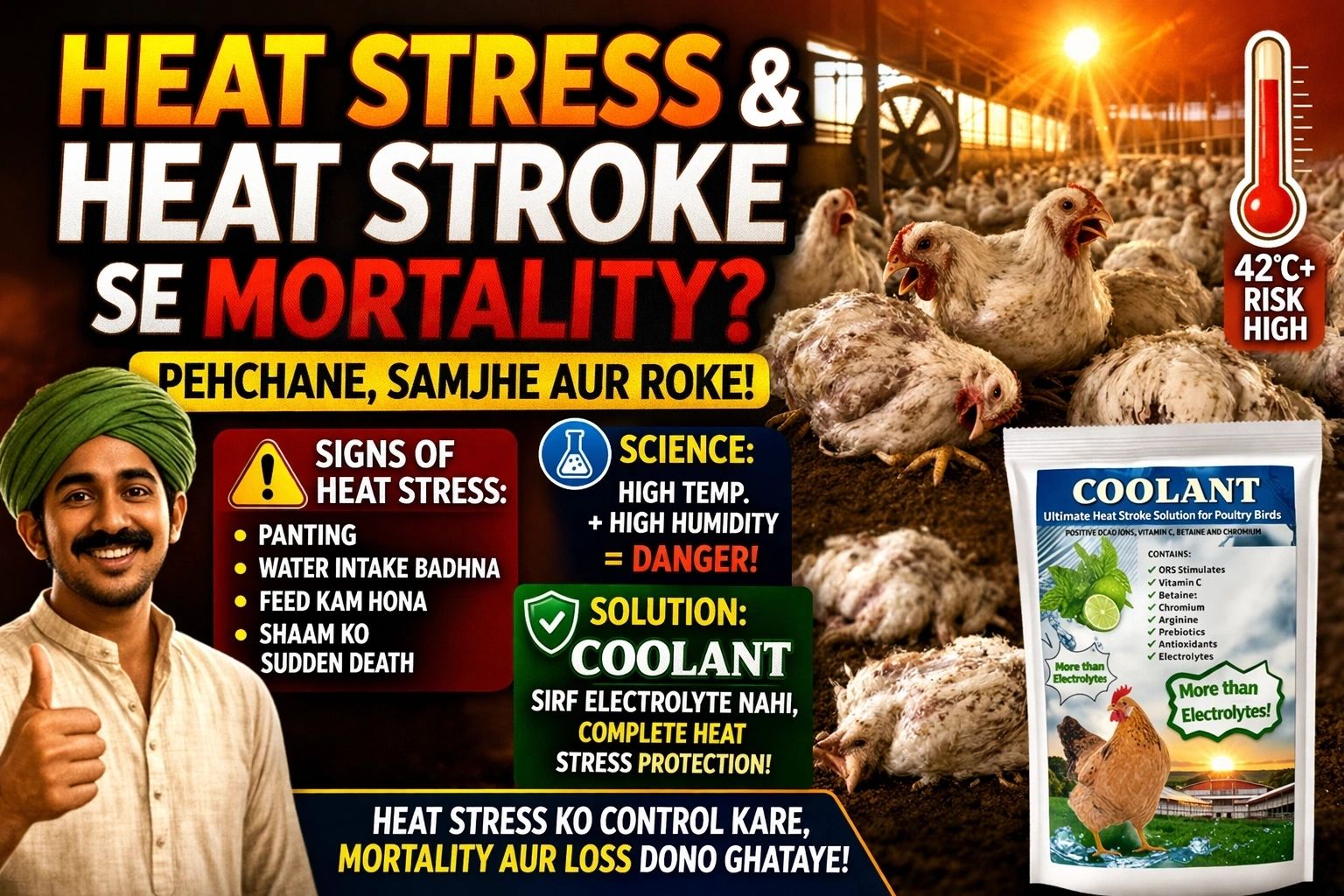
🌡️ Heat Stress and Heat Stroke in Poultry: How to Recognise, Understand and Control Them (Complete Guide for Farmers)
Heat Stroke in Poultry – The summer season is the most challenging time for poultry farming. The problem seen most often in this period is heat stress and heat stroke, which directly affect both mortality and performance.
Many times the farmer feels that everything is going normally: the birds are active and eating feed. But suddenly, in the evening, sudden mortality starts, and by then it is already too late.
In this article we will understand in detail why heat stress happens, how heat stroke develops, and how you can protect your farm scientifically.
🔍 What is heat stress and how is it different from heat stroke?
Heat stress is a condition in which the bird’s body temperature control system comes under pressure. The bird tries to get rid of its body heat, but the environment does not support it.
Heat stroke is one step beyond this.
Heat stroke happens when body temperature goes out of control and the internal systems start to fail. At this stage recovery is difficult and mortality rises fast.
To put it simply:
- Heat stress = warning stage
- Heat stroke = damage stage
That is why, if heat stress is not controlled in time, heat stroke is almost guaranteed.
🐔 Early signs every farmer should know
The most dangerous aspect of heat stress is that its early stage gets ignored. But the birds give us signals.
If you observe carefully, you will start to see these signs:
- Birds are seen breathing with their mouths open, which is called panting. This is their natural cooling mechanism.
- Water intake suddenly increases.
- Feed intake gradually starts to drop.
- Birds start gathering in one place, especially in cooler areas.
- Activity level goes down.
All these signals show that the bird is already under stress.
💧 Water intake: the earliest indicator
A very important but often ignored parameter in poultry farming is water intake.
Under normal conditions, water consumption increases steadily with age. But if you keep a daily record, you will see that sudden spikes or drops give very important signals.
A sudden rise in water intake is often the first indicator of heat stress. The bird drinks more water to control its body temperature.
In the same way, a drop in water intake can also be a signal — either there is a system issue or the bird is unhealthy.
The biggest mistake made on farms is weekly monitoring. Weekly data only shows the average, and the daily fluctuations stay hidden. Because of this, the problem is caught 5–7 days late.
Feed intake pattern: a silent signal
Feed intake is also an important indicator, but it reacts a little later than water intake.
Under normal conditions feed intake should increase smoothly. If you see a plateau or a drop, that is a clear stress signal.
But one important point needs to be understood here:
Not every drop in feed is caused by disease.
Sometimes it can be a system issue, such as:
- High stocking density
- Too little feeder space
- Water line leakage
So you should not draw conclusions just from the symptom. It is always necessary to check the system.
🌡️ Temperature is not everything
Most farmers link heat stress only to temperature. But the scientific reality is different.
The real stress factor is:
👉 Temperature + Relative Humidity
Warm air behaves like a sponge. It holds moisture. When the temperature falls, the air contracts and releases moisture.
This means:
In the evening, when the temperature drops a little, humidity rises rapidly.
And this is where the problem starts.
🌫️ The hidden danger of humidity
A bird controls its body heat mainly through evaporation. When the bird pants, it releases heat.
But if humidity becomes high, the evaporation process stops.
That means:
The bird is generating heat, but it cannot release it.
This situation is very dangerous.
This is why farmers are often confused: the temperature is not that high, so why is mortality happening?
🌆 Why is the evening the riskiest time?
This is a very important and counter-intuitive fact.
Heat stress often does not happen at peak temperature.
It happens in the evening.
During the day the temperature is high but humidity is relatively low. The bird manages somehow.
In the evening the temperature falls but humidity rises. Evaporation fails.
Result:
Heat builds up inside the body and sudden deaths start.
🔬 What damage happens inside the body?
Heat stress is not only an external problem. It creates internal physiological damage.
Body temperature goes to 42°C or above. Dehydration starts. Electrolyte imbalance occurs. Blood viscosity increases. Cells start getting damaged.
At necropsy, signs of body congestion and internal heat damage are often found.
All of this together affects the bird’s growth, immunity and survival.
❌ Why is giving only electrolytes not enough?
The most common approach in the field is:
“It’s hot, so give electrolytes”
But the problem is that electrolytes solve only one part.
The main job of electrolytes is to restore lost salts. But in heat stress, salt loss is not the only problem.
The actual problems are:
- Cellular dehydration
- Internal heat load
- Tissue damage
If only electrolytes are given, these deeper issues are not solved.
That is why farmers often say:
“I gave electrolytes, but mortality still wasn’t controlled”
✅ What should the scientific approach be?
To control heat stress effectively, a multi-level approach is necessary.
First, hydration should be fast. Second, electrolyte balance should be maintained. And third — most important — the body’s cells should be protected from heat damage.
At the same time, it is also necessary to reduce internal heat build-up.
This combined approach is the actual solution.
🌿 What works in the field?
These days it has been clearly seen in the field that better results than a simple electrolyte approach come when the formulation is a little more advanced.
Solutions that:
- Provide rapid hydration
- Restore electrolyte balance
- Give protection at the cellular level
- Counter heat build-up
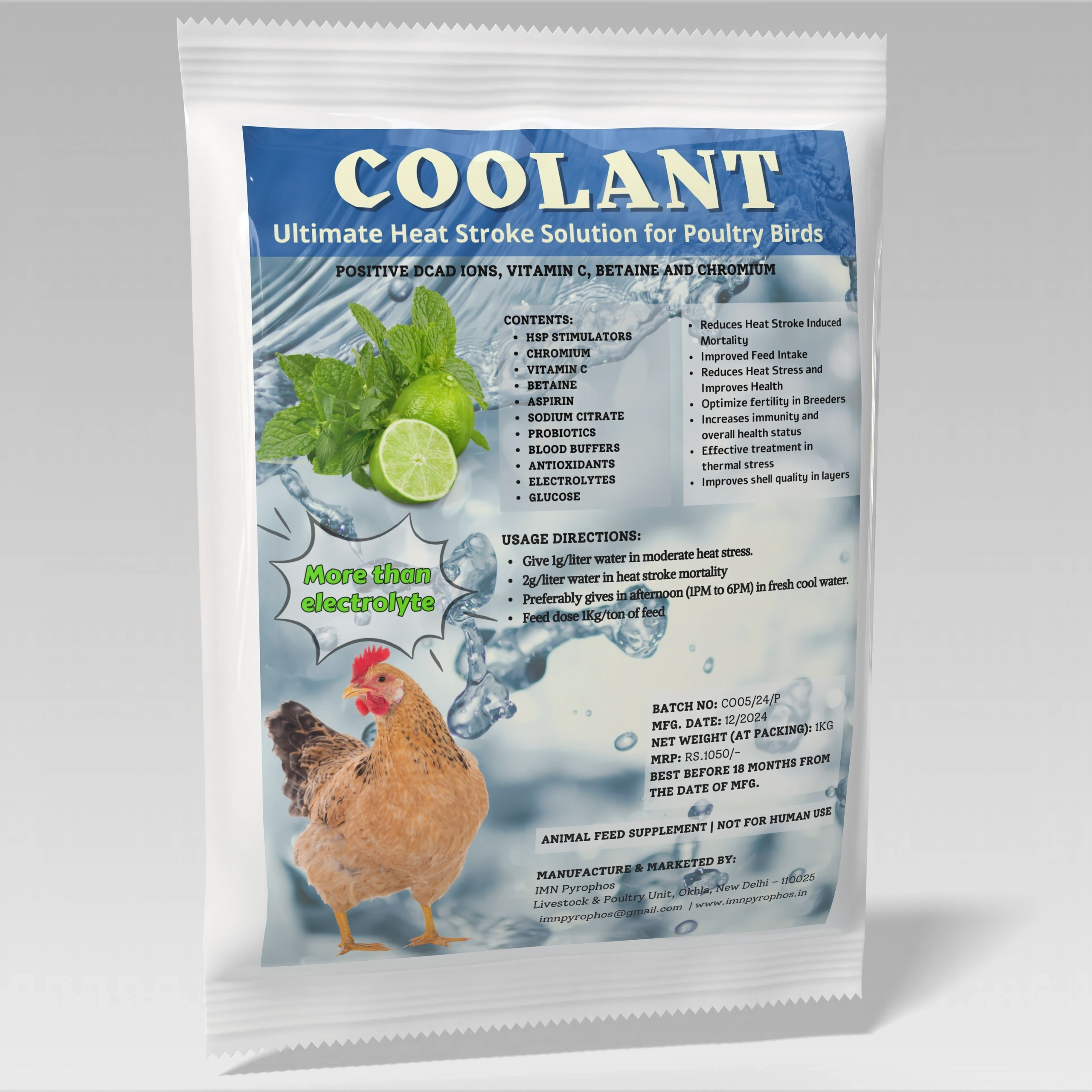
are more effective, especially in extreme summer conditions. Coolant has been made keeping exactly these points in mind.
This kind of approach does not just let the birds survive; it also maintains their performance.
💨 The role of ventilation (don’t ignore it)
Ventilation is the most critical factor in environment control.
The job of ventilation is not just to supply air. Its job is:
- Oxygen supply
- Moisture removal
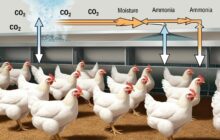
- CO₂ and ammonia control
If ventilation is not proper, humidity will build up and heat stress will get worse.
Systems like tunnel ventilation are effective at high temperatures because they increase air velocity and create a cooling effect.
🌬️ Air velocity and wind chill
Air speed also plays a very important role.
High air velocity makes the bird feel cooler. This is called the wind chill effect.
But misusing it can also be dangerous, especially in young chicks, where sensitivity to draughts is high.
That is why airflow must be managed properly.
🧠 What does a smart farmer do?
A smart farmer does not react just by looking at symptoms.
He understands patterns.
He monitors water intake. He observes the feed pattern. He identifies the evening risk. He controls ventilation and humidity.
And most important — he uses a preventive approach.
💰 Understand the economic impact
Heat stress is not only a biological problem. It is a direct financial loss.
If it is not controlled, per 1000 birds:
there can be a loss of ₹5,000 to ₹10,000.
And this loss is silent — it also comes in the form of a drop in performance.
🎯 Final Conclusion
Heat stress is an unavoidable part of poultry farming, but heat stroke can be avoided — if you work with an understanding of the system.
Just watching the temperature is not enough. Just giving electrolytes is not enough. Just treating symptoms is not enough.
The real solution lies in an integrated approach that covers all three: hydration, electrolyte balance and cellular protection.
Heat stress is not the problem; late action is the problem
And the farmer who understands the early signs and uses the scientifically correct approach is the one who controls his mortality and keeps his profit stable.
Problem in your flock? Send photos of the birds and droppings on WhatsApp for a first opinion from Dr. Ibne Ali.
WhatsApp: 98715 84101🌡️ पोल्ट्री में हीट स्ट्रेस और हीट स्ट्रोक: कैसे पहचानें, समझें और कंट्रोल करें (किसानों के लिए पूरी गाइड)
पोल्ट्री में हीट स्ट्रोक – गर्मी का मौसम पोल्ट्री फार्मिंग के लिए सबसे मुश्किल समय होता है। इस समय सबसे ज़्यादा जो समस्या देखने को मिलती है वो है हीट स्ट्रेस और हीट स्ट्रोक, जो सीधे मृत्यु दर (mortality) और परफॉर्मेंस दोनों पर असर डालती है।
बहुत बार किसान को लगता है कि सब कुछ ठीक चल रहा है, पक्षी एक्टिव हैं, feed भी ले रहे हैं। लेकिन अचानक शाम के समय अचानक मौतें शुरू हो जाती हैं और तब तक बहुत देर हो चुकी होती है।
इस लेख में हम विस्तार से समझेंगे कि हीट स्ट्रेस होता क्यों है, हीट स्ट्रोक कैसे बनता है, और आप वैज्ञानिक तरीके से अपने फार्म को कैसे बचा सकते हैं।
🔍 हीट स्ट्रेस क्या है और हीट स्ट्रोक से कैसे अलग है?
हीट स्ट्रेस एक ऐसी स्थिति है जहाँ पक्षी के शरीर का तापमान कंट्रोल करने वाला सिस्टम दबाव में आ जाता है। पक्षी अपने शरीर की गर्मी को बाहर निकालने की कोशिश करता है लेकिन वातावरण उसका साथ नहीं देता।
हीट स्ट्रोक इससे एक कदम आगे है।
जब शरीर का तापमान बेकाबू हो जाता है और अंदर के सिस्टम फेल होने लगते हैं, तब हीट स्ट्रोक होता है। इस स्टेज पर ठीक होना मुश्किल होता है और मृत्यु दर तेज़ी से बढ़ती है।
आसान भाषा में समझें तो:
- हीट स्ट्रेस = चेतावनी की स्टेज
- हीट स्ट्रोक = नुकसान की स्टेज
इसलिए अगर हीट स्ट्रेस को समय पर कंट्रोल नहीं किया गया तो हीट स्ट्रोक होना लगभग तय है।
🐔 शुरुआती लक्षण जो हर किसान को पता होने चाहिए
हीट स्ट्रेस की सबसे खतरनाक बात यह है कि इसकी शुरुआती स्टेज नज़रअंदाज़ हो जाती है। लेकिन पक्षी हमें संकेत देते हैं।
अगर आप ध्यान से देखें तो आपको ये लक्षण दिखने लगेंगे:
- पक्षी मुँह खोलकर साँस लेते हुए दिखते हैं, जिसे panting कहते हैं। यह उनका प्राकृतिक ठंडा होने का तरीका है।
- पानी पीना अचानक बढ़ जाता है।
- Feed खाना धीरे-धीरे कम होने लगता है।
- पक्षी एक जगह इकट्ठा होने लगते हैं, खासकर ठंडी जगहों पर।
- पक्षियों की हलचल (activity) कम हो जाती है।
ये सब संकेत बताते हैं कि पक्षी पहले से ही स्ट्रेस में है।
💧 पानी की खपत: सबसे पहला संकेत
पोल्ट्री फार्मिंग में एक बहुत ज़रूरी लेकिन अक्सर नज़रअंदाज़ किया जाने वाला पैमाना है — पानी की खपत (water intake)।
सामान्य स्थिति में पानी की खपत उम्र के साथ धीरे-धीरे बढ़ती है। लेकिन अगर आप रोज़ का रिकॉर्ड रखें तो आपको पता चलेगा कि अचानक बढ़ना या घटना बहुत ज़रूरी संकेत देते हैं।
अचानक पानी की खपत का बढ़ना अक्सर हीट स्ट्रेस का पहला संकेत होता है। पक्षी अपने शरीर का तापमान कंट्रोल करने के लिए ज़्यादा पानी पीता है।
इसी तरह पानी की खपत का कम होना भी एक संकेत हो सकता है — या तो सिस्टम में कोई दिक्कत है या पक्षी बीमार है।
फार्मों में सबसे बड़ी गलती होती है हफ्ते में एक बार निगरानी करना। हफ्ते का डेटा सिर्फ औसत दिखाता है, लेकिन रोज़ के उतार-चढ़ाव छुप जाते हैं। और इसी वजह से समस्या 5–7 दिन देर से पकड़ में आती है।
Feed खाने का पैटर्न: चुपचाप मिलने वाला संकेत
Feed intake भी एक ज़रूरी संकेत है, लेकिन यह पानी की खपत से थोड़ा देर से असर दिखाता है।
सामान्य स्थिति में feed intake आराम से बढ़ना चाहिए। अगर आपको यह रुका हुआ (plateau) या गिरता हुआ दिख रहा है, तो यह स्ट्रेस का साफ संकेत है।
लेकिन यहाँ एक ज़रूरी बात समझनी ज़रूरी है:
हर बार feed कम होने की वजह बीमारी नहीं होती।
कभी-कभी सिस्टम की दिक्कत भी हो सकती है, जैसे:
- ज़्यादा stocking density (शेड में ज़्यादा पक्षी)
- Feed की जगह कम होना
- Water line में लीकेज
इसलिए सिर्फ लक्षण देखकर नतीजा नहीं निकालना चाहिए। हमेशा सिस्टम को चेक करना ज़रूरी है।
🌡️ तापमान ही सब कुछ नहीं है
ज़्यादातर किसान हीट स्ट्रेस को सिर्फ तापमान से जोड़ते हैं। लेकिन वैज्ञानिक सच्चाई कुछ और है।
असली स्ट्रेस की वजह होती है:
👉 तापमान + सापेक्ष आर्द्रता (Relative Humidity)
गर्म हवा एक स्पंज की तरह काम करती है। यह नमी को पकड़कर रखती है। जब तापमान कम होता है, हवा सिकुड़ती है और नमी छोड़ देती है।
इसका मतलब:
शाम के समय जब तापमान थोड़ा गिरता है, humidity तेज़ी से बढ़ जाती है।
और यहीं से समस्या शुरू होती है।
🌫️ Humidity का छुपा हुआ खतरा
पक्षी अपने शरीर की गर्मी को मुख्य रूप से वाष्पीकरण (evaporation) के ज़रिए कंट्रोल करता है। जब पक्षी panting करता है तो वह गर्मी बाहर निकालता है।
लेकिन अगर humidity ज़्यादा हो जाए तो evaporation का काम रुक जाता है।
मतलब:
पक्षी गर्मी पैदा कर रहा है, लेकिन उसे बाहर नहीं निकाल पा रहा।
यह स्थिति बहुत खतरनाक होती है।
इसी वजह से कई बार किसान उलझन में पड़ जाते हैं कि तापमान तो उतना ज़्यादा नहीं है फिर भी मौतें क्यों हो रही हैं।
🌆 शाम का समय सबसे ज़्यादा खतरे वाला क्यों होता है?
यह एक बहुत ज़रूरी और उल्टी लगने वाली बात है।
हीट स्ट्रेस अक्सर सबसे ज़्यादा तापमान के समय नहीं होता।
वह होता है शाम के समय।
दिन में तापमान ज़्यादा होता है लेकिन humidity तुलना में कम होती है। पक्षी किसी तरह संभाल लेता है।
शाम को तापमान गिरता है लेकिन humidity बढ़ती है। Evaporation फेल हो जाता है।
नतीजा:
शरीर के अंदर गर्मी जमा होती है और अचानक मौतें शुरू हो जाती हैं।
🔬 शरीर के अंदर क्या नुकसान होता है?
हीट स्ट्रेस सिर्फ बाहरी समस्या नहीं है। यह शरीर के अंदर नुकसान पैदा करता है।
शरीर का तापमान 42°C या उससे ऊपर चला जाता है। पानी की कमी (dehydration) शुरू होती है। Electrolyte का संतुलन बिगड़ता है। खून गाढ़ा हो जाता है। कोशिकाएँ (cells) खराब होने लगती हैं।
पोस्टमार्टम (necropsy) में अक्सर शरीर में खून जमाव (congestion) और अंदरूनी गर्मी से हुए नुकसान के निशान मिलते हैं।
ये सब मिलकर पक्षी की ग्रोथ, इम्युनिटी और ज़िंदा रहने की क्षमता पर असर डालते हैं।
❌ सिर्फ Electrolyte देना काफी क्यों नहीं होता?
फील्ड में सबसे आम तरीका होता है:
“गर्मी है तो electrolyte दे दो”
लेकिन समस्या यह है कि electrolyte सिर्फ एक हिस्सा हल करता है।
Electrolyte का मुख्य काम होता है खोए हुए नमक (salts) की भरपाई करना। लेकिन हीट स्ट्रेस में सिर्फ नमक की कमी ही समस्या नहीं होती।
असली समस्या होती है:
- कोशिकाओं के अंदर पानी की कमी (cellular dehydration)
- शरीर के अंदर गर्मी का बोझ
- ऊतकों (tissues) का नुकसान
अगर सिर्फ electrolyte दिया जाए तो ये गहरी समस्याएँ हल नहीं होतीं।
इसलिए कई बार किसान कहता है:
“Electrolyte दिया फिर भी मौतें कंट्रोल नहीं हुईं”
✅ वैज्ञानिक तरीका क्या होना चाहिए?
हीट स्ट्रेस को असरदार तरीके से कंट्रोल करने के लिए कई स्तर पर काम करना ज़रूरी है।
सबसे पहले शरीर में पानी की भरपाई (hydration) जल्दी होनी चाहिए। दूसरा, electrolyte का संतुलन बना रहना चाहिए। और तीसरा — सबसे ज़रूरी — शरीर की कोशिकाओं को गर्मी के नुकसान से बचाना चाहिए।
साथ ही शरीर के अंदर जमा हो रही गर्मी को कम करना भी ज़रूरी है।
यह मिला-जुला तरीका ही असली समाधान है।
🌿 फील्ड में क्या काम करता है?
आजकल फील्ड में यह साफ देखा गया है कि सादे electrolyte से बेहतर नतीजे तब मिलते हैं जब फॉर्मूलेशन थोड़ा एडवांस होता है।
ऐसे समाधान जो:
- तेज़ी से hydration दें
- Electrolyte का संतुलन वापस लाएँ
- कोशिका (cell) के स्तर पर सुरक्षा दें
- शरीर में गर्मी जमा होने को रोकें
वो ज़्यादा असरदार होते हैं, खासकर बहुत ज़्यादा गर्मी में। Coolant इन्हीं बातों को ध्यान में रखकर बनाया गया है।
इस तरह का तरीका पक्षियों को सिर्फ ज़िंदा ही नहीं रखता, बल्कि उनकी परफॉर्मेंस भी बनाए रखता है।
💨 वेंटिलेशन की भूमिका (नज़रअंदाज़ मत करो)
शेड का माहौल कंट्रोल करने में वेंटिलेशन सबसे ज़रूरी चीज़ है।
वेंटिलेशन का काम सिर्फ हवा देना नहीं है। इसका काम है:
- ऑक्सीजन की सप्लाई
- नमी को बाहर निकालना
- CO₂ और अमोनिया को कंट्रोल करना
अगर वेंटिलेशन ठीक नहीं है तो humidity जमा होगी और हीट स्ट्रेस और बिगड़ेगा।
टनल वेंटिलेशन जैसे सिस्टम ज़्यादा तापमान में असरदार होते हैं क्योंकि ये हवा की रफ़्तार बढ़ाते हैं और ठंडक का असर पैदा करते हैं।
🌬️ हवा की रफ़्तार और Wind Chill
हवा की रफ़्तार की भी बहुत ज़रूरी भूमिका होती है।
तेज़ हवा से पक्षी को ठंडक महसूस होती है। इसे wind chill effect कहते हैं।
लेकिन इसका गलत इस्तेमाल भी खतरनाक हो सकता है, खासकर छोटे चूज़ों में जो हवा के झोंके (draft) से जल्दी प्रभावित होते हैं।
इसलिए हवा के बहाव को सही तरह से मैनेज करना ज़रूरी है।
🧠 समझदार किसान क्या करता है?
समझदार किसान सिर्फ लक्षण देखकर प्रतिक्रिया नहीं करता।
वह पैटर्न समझता है।
वह पानी की खपत पर नज़र रखता है। Feed का पैटर्न देखता है। शाम के खतरे को पहचानता है। वेंटिलेशन और humidity को कंट्रोल करता है।
और सबसे ज़रूरी — वह बचाव (preventive) का तरीका अपनाता है।
💰 आर्थिक असर को समझो
हीट स्ट्रेस सिर्फ जैविक समस्या नहीं है। यह सीधा पैसे का नुकसान है।
अगर कंट्रोल नहीं हुआ तो हर 1000 पक्षियों पर:
₹5,000 से ₹10,000 तक का नुकसान हो सकता है।
और यह नुकसान चुपचाप होता है — परफॉर्मेंस गिरने के रूप में भी आता है।
🎯 आखिरी निष्कर्ष
हीट स्ट्रेस पोल्ट्री फार्मिंग का ऐसा हिस्सा है जिससे बचा नहीं जा सकता, लेकिन हीट स्ट्रोक से बचा जा सकता है — अगर आप सिस्टम को समझकर काम करें।
सिर्फ तापमान देखना काफी नहीं है। सिर्फ electrolyte देना काफी नहीं है। सिर्फ लक्षणों का इलाज करना काफी नहीं है।
असली समाधान एक मिले-जुले तरीके में है जहाँ hydration, electrolyte संतुलन और कोशिकाओं की सुरक्षा तीनों शामिल हों।
हीट स्ट्रेस समस्या नहीं है, देर से कदम उठाना समस्या है
और जो किसान शुरुआती लक्षण समझ लेता है और वैज्ञानिक रूप से सही तरीका अपनाता है, वही अपनी मृत्यु दर कंट्रोल करता है और मुनाफा स्थिर रखता है।
फ़ार्म में कोई दिक्कत? पक्षियों और बीट की फ़ोटो WhatsApp पर भेजिए, डॉ. इब्ने अली से पहली राय लीजिए।
WhatsApp: 98715 84101🌡️ Poultry me Heat Stress aur Heat Stroke: Kaise Pehchane, Samjhe aur Control Kare (Complete Guide for Farmers)
Heat Stroke in Poultry – Garmi ka season poultry farming ke liye sabse challenging time hota hai. Is period me sabse zyada jo problem dekhne ko milti hai wo hai heat stress aur heat stroke, jo directly mortality aur performance dono ko affect karti hai.
Bahut baar farmer ko lagta hai ki sab kuch normal chal raha hai, birds active hain, feed bhi le rahe hain. Lekin achanak shaam ke time sudden mortality start ho jati hai aur tab tak bahut der ho chuki hoti hai.
Is article me hum detail me samjhenge ki heat stress hota kyun hai, heat stroke kaise develop hota hai, aur kaise aap scientifically apne farm ko protect kar sakte hain.
🔍 Heat Stress kya hai aur Heat Stroke se kaise alag hai?
Heat stress ek aisi condition hai jahan bird ka body temperature control system pressure me aa jata hai. Bird apne body heat ko bahar nikalne ki koshish karta hai lekin environment usko support nahi karta.
Heat stroke isse ek step aage hai.
Jab body ka temperature uncontrolled ho jata hai aur internal systems fail hone lagte hain, tab heat stroke hota hai. Is stage par recovery mushkil hoti hai aur mortality fast increase hoti hai.
Simple language me samjhe to:
- Heat stress = warning stage
- Heat stroke = damage stage
Isliye agar heat stress ko time par control nahi kiya gaya to heat stroke almost guaranteed hai.
🐔 Early Signs jo har farmer ko pata hone chahiye
Heat stress ka sabse dangerous aspect ye hai ki iska early stage ignore ho jata hai. Lekin birds hume signals dete hain.
Agar aap dhyan se observe karein to aapko ye signs dikhne lagenge:
- Birds muh khol kar saans lete hue dikhte hain, jise panting kehte hain. Yeh unka natural cooling mechanism hai.
- Water intake achanak badh jata hai.
- Feed intake gradually kam hone lagta hai.
- Birds ek jagah jama hone lagte hain, especially cooler areas me.
- Activity level kam ho jata hai.
Yeh sab signals batate hain ki bird already stress me hai.
💧 Water Intake: Sabse Early Indicator
Poultry farming me ek bahut important lekin often ignore kiya jane wala parameter hai — water intake.
Normal condition me water consumption age ke saath steadily increase karta hai. Lekin agar aap daily basis par record karein to aapko pata chalega ki sudden spikes ya drops bahut important signals dete hain.
Achanak water intake ka badhna aksar heat stress ka first indicator hota hai. Bird apne body temperature ko control karne ke liye zyada paani leta hai.
Isi tarah water intake ka kam hona bhi ek signal ho sakta hai — ya to system issue hai ya bird unhealthy hai.
Sabse badi galti jo farms me hoti hai wo hai weekly monitoring. Weekly data sirf average dikhata hai, lekin daily fluctuations chhup jate hain. Aur isi wajah se problem 5–7 din delay se pakdi jati hai.
Feed Intake Pattern: Silent Signal
Feed intake bhi ek important indicator hai, lekin water intake se thoda late react karta hai.
Normal condition me feed intake smooth increase hona chahiye. Agar aapko plateau ya drop dikh raha hai, to ye ek clear stress signal hai.
Lekin yahan ek important baat samajhni zaroori hai:
Har feed drop ka reason disease nahi hota.
Kabhi kabhi system issue bhi ho sakta hai, jaise:
- High stocking density
- Feed space kam hona
- Water line leakage
Isliye sirf symptom dekh kar conclusion nahi nikalna chahiye. Hamesha system ko check karna zaroori hai.
🌡️ Temperature hi sab kuch nahi hai
Zyadatar farmers heat stress ko sirf temperature se relate karte hain. Lekin scientific reality kuch aur hai.
Real stress factor hota hai:
👉 Temperature + Relative Humidity
Garam hawa ek sponge ki tarah behave karti hai. Ye moisture ko hold karti hai. Jab temperature kam hota hai, hawa contract hoti hai aur moisture release karti hai.
Iska matlab:
Shaam ke time jab temperature thoda girta hai, humidity rapidly badh jati hai.
Aur yahin se problem start hoti hai.
🌫️ Humidity ka hidden danger
Bird apni body heat ko primarily evaporation ke through control karta hai. Jab bird panting karta hai to wo heat release karta hai.
Lekin agar humidity high ho jaye to evaporation process ruk jata hai.
Matlab:
Bird heat generate kar raha hai, lekin usko release nahi kar pa raha.
Yeh situation bahut dangerous hoti hai.
Isi wajah se kai baar farmers confuse ho jate hain ki temperature to utna high nahi hai phir bhi mortality kyun ho rahi hai.
🌆 Shaam ka time sabse risky kyun hota hai?
Yeh ek bahut important aur counter-intuitive fact hai.
Heat stress aksar peak temperature par nahi hota.
Wo hota hai shaam ke time.
Din me temperature high hota hai lekin humidity relatively low hoti hai. Bird kisi tarah manage kar leta hai.
Shaam ko temperature girta hai lekin humidity increase hoti hai. Evaporation fail ho jata hai.
Result:
Body ke andar heat build-up hota hai aur sudden death start ho jati hai.
🔬 Body ke andar kya damage hota hai?
Heat stress sirf external problem nahi hai. Yeh internal physiological damage create karta hai.
Body temperature 42°C ya usse upar chala jata hai. Dehydration start hota hai. Electrolyte imbalance hota hai. Blood viscosity badh jati hai. Cells damage hone lagte hain.
Necropsy me aksar body congestion aur internal heat damage ke signs milte hain.
Yeh sab milkar bird ki growth, immunity aur survival ko affect karte hain.
❌ Sirf Electrolyte dena kaafi kyun nahi hota?
Field me sabse common approach hota hai:
“Garmi hai to electrolyte de do”
Lekin problem yeh hai ki electrolyte sirf ek part solve karta hai.
Electrolyte ka main kaam hota hai lost salts ko restore karna. Lekin heat stress me sirf salt loss hi problem nahi hoti.
Actual problem hoti hai:
- Cellular dehydration
- Internal heat load
- Tissue damage
Agar sirf electrolyte diya jaye to yeh deeper issues solve nahi hote.
Isliye kai baar farmer bolta hai:
“Electrolyte diya phir bhi mortality control nahi hui”
✅ Scientific Approach kya hona chahiye?
Heat stress ko effectively control karne ke liye ek multi-level approach zaroori hai.
Sabse pehle hydration fast hona chahiye. Doosra electrolyte balance maintain hona chahiye. Aur teesra — sabse important — body cells ko heat damage se protect karna chahiye.
Saath hi internal heat build-up ko reduce karna bhi zaroori hai.
Yeh combination approach hi actual solution hai.
🌿 Field me kya kaam karta hai?
Aaj kal field me ye clearly dekha gaya hai ki simple electrolyte approach se better results tab milte hain jab formulation thoda advanced hota hai.
Aise solutions jo:
- Rapid hydration provide kare
- Electrolyte balance restore kare
- Cellular level par protection de
- Heat build-up ko counter kare
Wo zyada effective hote hain, especially extreme summer conditions me. Coolant inhi baato ko dhyan me rakhkar banaya gaya hai.
Is tarah ka approach birds ko sirf survive nahi karne deta, balki performance ko bhi maintain karta hai.
💨 Ventilation ka role (ignore mat karo)
Environment control me ventilation sabse critical factor hai.
Ventilation ka kaam sirf hawa dena nahi hai. Iska kaam hai:
- Oxygen supply
- Moisture removal
- CO₂ aur ammonia control
Agar ventilation proper nahi hai to humidity build-up hogi aur heat stress worsen hoga.
Tunnel ventilation jaise systems high temperature me effective hote hain kyunki ye air velocity increase karte hain aur cooling effect create karte hain.
🌬️ Air Velocity aur Wind Chill
Air speed ka bhi bahut important role hota hai.
High air velocity se bird ko cooling feel hoti hai. Isko wind chill effect kehte hain.
Lekin iska misuse bhi dangerous ho sakta hai, especially young chicks me jahan draft sensitivity high hoti hai.
Isliye airflow ko properly manage karna zaroori hai.
🧠 Smart Farmer kya karta hai?
Smart farmer sirf symptoms dekhkar react nahi karta.
Wo patterns samajhta hai.
Wo water intake monitor karta hai. Feed pattern observe karta hai. Evening risk ko identify karta hai. Ventilation aur humidity ko control karta hai.
Aur sabse important — wo preventive approach use karta hai.
💰 Economic impact ko samjho
Heat stress sirf biological problem nahi hai. Yeh direct financial loss hai.
Agar control nahi hua to per 1000 birds:
₹5,000 se ₹10,000 tak ka nuksan ho sakta hai.
Aur ye loss silent hota hai — performance drop ke form me bhi aata hai.
🎯 Final Conclusion
Heat stress poultry farming ka unavoidable part hai, lekin heat stroke avoid kiya ja sakta hai — agar aap system ko samajhkar kaam karein.
Sirf temperature dekhna kaafi nahi hai. Sirf electrolyte dena kaafi nahi hai. Sirf symptoms treat karna kaafi nahi hai.
Real solution ek integrated approach me hai jahan hydration, electrolyte balance aur cellular protection tino cover ho.
Heat stress problem nahi hai, late action problem hai
Aur jo farmer early signs samajh leta hai aur scientifically correct approach use karta hai, wahi apni mortality control karta hai aur profit stable rakhta hai.
Farm me koi dikkat? Pakshiyon aur beet ki photo WhatsApp par bhejiye, Dr. Ibne Ali se pehli raay lijiye.
WhatsApp: 98715 84101