Introduction
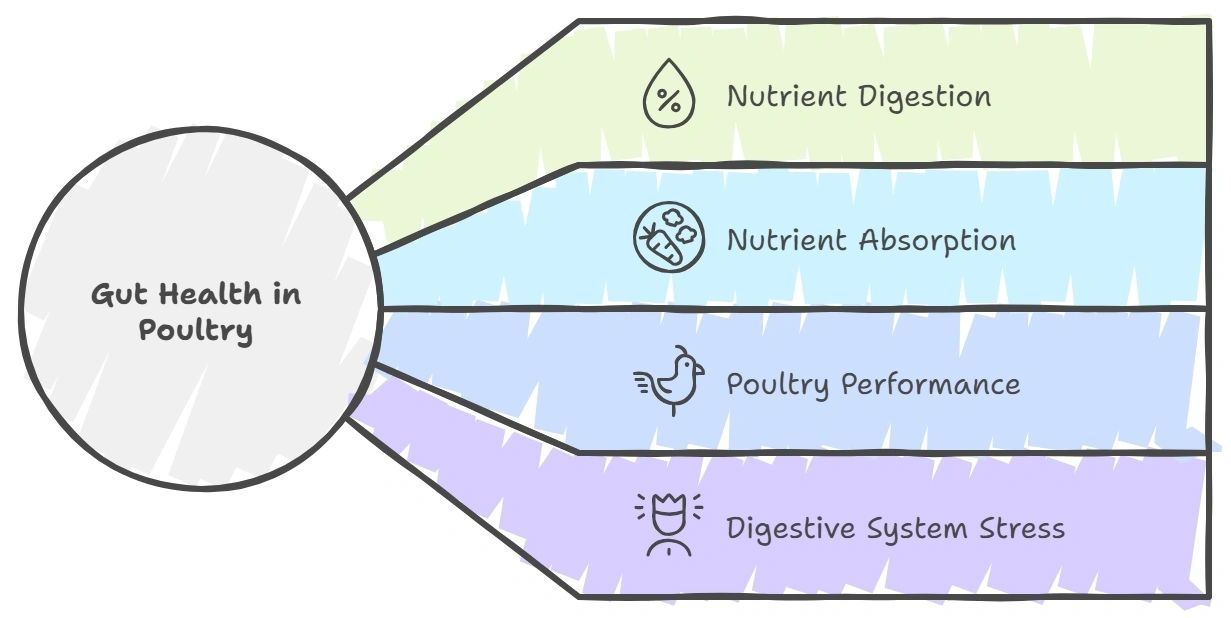
- Intestinal health is crucial for nutrient digestion and absorption, directly impacting poultry performance.
- High-performing poultry lines often face gut health challenges due to high feed intake, which stresses the digestive system, mainly broiler gut health is more researched.
- Excess undigested nutrients in the small intestine can lead to dysbiosis – a shift in the gut microbiota composition.
- Dysbiosis and other stressors can cause inflammation and weaken the tight junctions between epithelial cells, resulting in gut leakage.
Historical Context
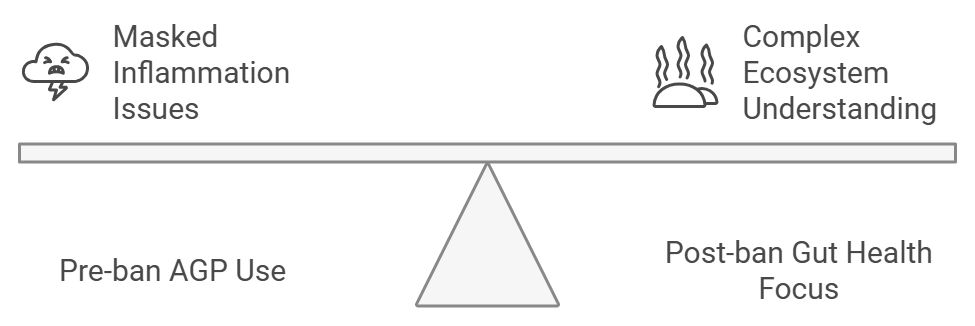
- The ban on antimicrobial growth promoters (AGP) in 2006 in the EU brought gut health issues to the forefront.
- AGPs seemed to mask gut health problems by reducing intestinal inflammation.
- This ban sparked renewed interest in understanding the complexities of gut health, shifting the focus from just pathogens to the intricate interactions within the intestinal ecosystem.
Physiology of Gut Health
- Modern broilers' high feed intake puts a strain on their gastrointestinal (GI) tracts, which evolved to maximize nutrient extraction from limited, low-quality feed.
- The avian GI tract comprises:
- Foregut: Oral cavity, esophagus, crop, proventriculus, and gizzard. Focuses on feed preparation through moisturizing, acidification, and particle size reduction.
- Small Intestine: Duodenum, jejunum, and ileum. Primary site for nutrient digestion and absorption.
- Hindgut: Caeca, colon, and cloaca. Major site of microbial fermentation.
- Nutrient absorption in the small intestine is a transcellular process, relying on specific receptors and tight junctions that prevent harmful substances from entering the bloodstream.
- Practical Point: Maintaining the integrity of these tight junctions is crucial for preventing gut leakage. Factors like stress and nutrient deficiencies can compromise these junctions.
- Glutamine is a vital energy source for intestinal epithelial cells.
- Practical Point: Ensuring adequate glutamine supply can support gut health, especially under challenging conditions.
- High feed intake necessitates continuous renewal of intestinal epithelial cells.
- Practical Point: The villus to crypt ratio is a useful indicator of intestinal health, reflecting the balance between cell loss and renewal.
- The caeca are the primary site for microbial fermentation in birds.
- Practical Point: The caecal microbiome plays a critical role in gut health and can be modulated through dietary interventions.
Immunology of Gut Health
- The gut immune system balances defense against pathogens with tolerance towards beneficial microbes and feed antigens.
- Oral tolerance, the suppression of immune responses to ingested antigens, is crucial for gut health.
- Butyrate-producing bacteria like Ruminococcaceae and Lachnospiraceae likely play a role in inducing oral tolerance in chickens, similar to their role in mammals.
- Practical Point: Promoting the growth of these beneficial bacteria through dietary strategies can enhance gut health.
- The gut barrier comprises multiple layers of defense, including:
- Mucus: Prevents microorganism adhesion and permeation.
- Epithelial cells and intraepithelial lymphocytes: Provide a physical and immunological barrier.
- Innate immune mechanisms: Offer protection against pathogens and harmful substances.
- Practical Point: Supporting these innate defenses, particularly under stress, can enhance gut health.
Intestinal Health and the Microbiome
- The microbiota plays a vital role in gut health.
- The caecal microbiome is a complex ecosystem with significant implications for poultry health.
- Early colonization by Enterobacteriaceae is gradually replaced by beneficial butyrate-producing bacteria.
- Practical Point: Understanding the dynamics of caecal microbiome establishment can guide early interventions to promote a healthy gut.
- Microbial metabolites act as signaling molecules, influencing gut health.
- Short-chain fatty acids (SCFAs)like butyrate, propionate, and acetate: Important energy sources for epithelial cells and play a role in gut health and immunity.
- Practical Point: Strategies to increase SCFA production, particularly butyrate, can benefit gut health.
- Indole: Synthesized from tryptophan, exhibits immunomodulatory effects and can protect against intestinal damage.
- Practical Point: Indole and its derivatives can be explored as potential feed additives to enhance gut health.
- Lactate: Can be beneficial or harmful depending on its concentration. Moderate levels support butyrate production, while excess can promote inflammation.
- Practical Point: Maintaining a balance in lactate production is crucial for gut health.
- Succinate: Contributes to intestinal gluconeogenesis and exhibits beneficial effects on gut health.
- Practical Point: Promoting the growth of succinate-producing bacteria could be a strategy for improving gut health.
- Dysbiosis disrupts the balance of microbial populations, often leading to an increase in pro-inflammatory signals.
- Practical Point: Recognizing the signs of dysbiosis, such as changes in droppings, is essential for timely interventions.
Intestinal Inflammation and Gut Leakage
Gut health · bestseller
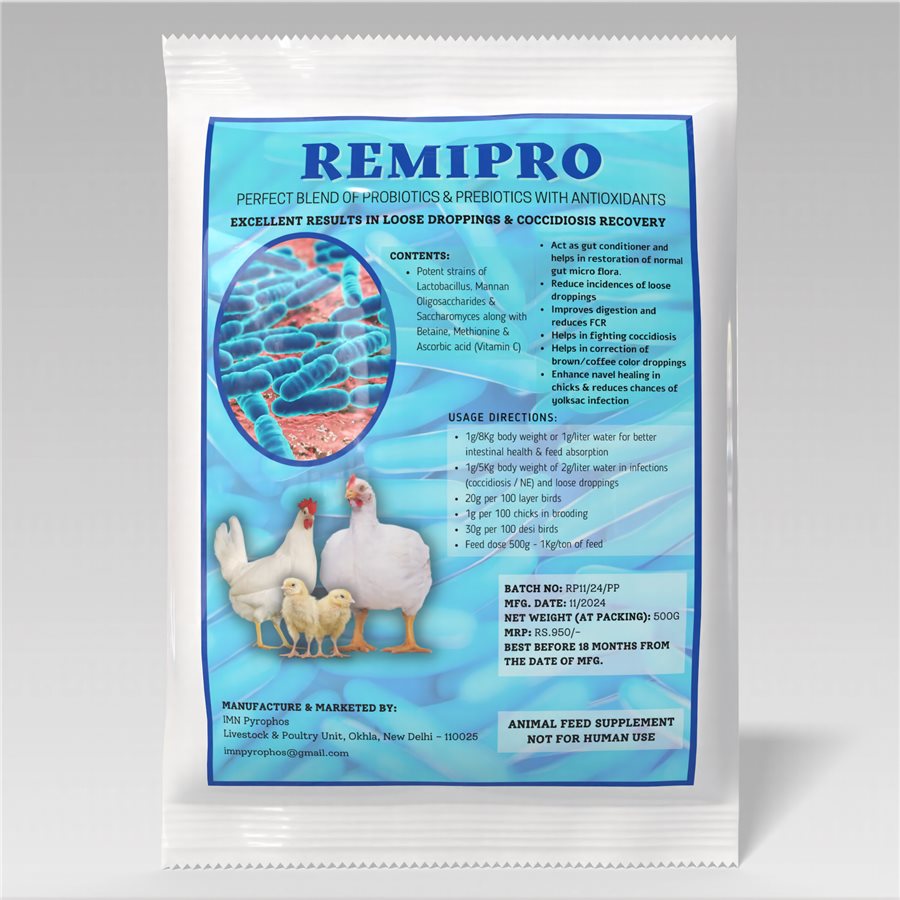
Remipro
Probiotics, prebiotics (MOS) and Saccharomyces with betaine, methionine and vitamin C. Restores normal gut flora, reduces loose droppings, improves digestion and FCR, helps in coccidiosis recovery and corrects brown/coffee coloured droppings.
Dose: 1 g per 8 kg body weight or 1 g per litre of water for routine gut health; 1 g per 5 kg body weight or 2 g per litre during loose droppings and infections; 1 g per 100 chicks in brooding.
500 g ₹626MRP ₹950
- Even healthy animals have a baseline level of “physiologic inflammation” in the gut for rapid response to threats.
- Various stressors, including pathogens, environmental factors, and nutritional imbalances, can trigger excessive inflammation.
- Practical Point: Minimizing stressors can help maintain a healthy level of gut inflammation.
- Anti-inflammatory signals help regulate gut inflammation.
- Practical Point: Supporting these mechanisms through dietary strategies can dampen excessive inflammation.
- Chronic inflammation can create a vicious cycle, leading to gut leakage, dysbiosis, and further inflammation.
- Practical Point: Early intervention to break this cycle is crucial for restoring gut health.
Steering the Microbiome for Improved Gut Health
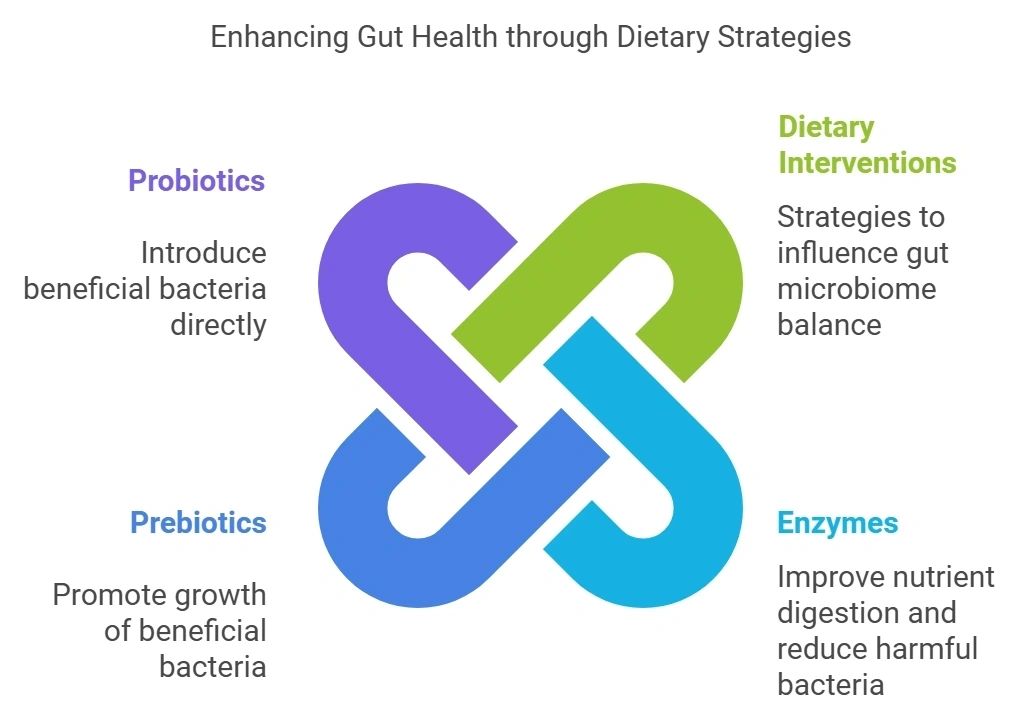
- Dietary interventions can modulate the gut microbiome, promoting a healthy balance of microbial populations.
- Enzymes: Can improve nutrient digestion, reducing the substrate for harmful bacteria.
- Prebiotics: Promote the growth of beneficial bacteria.
- Probiotics: Introduce beneficial bacteria directly.
- Feed protein and non-starch polysaccharides (NSPs) are crucial factors influencing the gut microbiome.
- Practical Point: Optimizing protein digestion and including appropriate fiber sources can help prevent dysbiosis and support beneficial microbial populations.
Beyond the Gut
- Gut health impacts overall health and performance.
- Gut leakage allows harmful substances to enter the bloodstream, affecting other organs like the liver.
- Practical Point: Addressing gut health issues can prevent systemic complications.
- Gut health also influences meat quality.
- Practical Point: Maintaining good gut health contributes to improved product quality.
Conclusions and Perspectives
- Understanding the complex interplay between the host, microbiota, and environment is crucial for maintaining poultry gut health.
- Nutritional interventions can play a significant role in shaping the gut microbiome and promoting a healthy gut.
- Focusing on early intervention and minimizing stressors is essential for preventing and managing gut health issues.
These lecture notes provide a framework for understanding the complexities of poultry gut health. By emphasizing the practical points derived from the review paper, this lecture aims to provide actionable insights for improving poultry production and well-being.
Remipro
Remipro is a powerful synbiotic that combines a robust mixture of probiotics and prebiotics, enhanced with antioxidants and osmolytes. Intestinal infections, such as cocci or clostridium, can cause inflammation, swelling and leakage in the intestines, which is where Vitamin C and Betaine play a crucial role in promoting healing. This exceptional formulation of Remipro significantly benefits intestinal health in poultry; it aids in balancing gut microbiology and restore healthy microbiota, leading to improved digestion and nutrient absorption. Additionally, beta glucans bolster mucosal immunity, while the antioxidants in Remipro combat oxidants that may result from low-quality feed.
Buy Remipro Online Click Here
Buy Septima Online Click Here
Problem in your flock? Send photos of the birds and droppings on WhatsApp for a first opinion from Dr. Ibne Ali.
WhatsApp: 98715 84101परिचय
- आंतों की सेहत (intestinal health) पोषक तत्वों के पाचन और सोखने (absorption) के लिए बहुत ज़रूरी है, और इसका सीधा असर पोल्ट्री की परफ़ॉर्मेंस पर पड़ता है।
- ज़्यादा परफ़ॉर्मेंस वाली पोल्ट्री नस्लों में अक्सर gut health की दिक्कतें आती हैं, क्योंकि वे feed ज़्यादा खाती हैं जिससे पाचन तंत्र पर दबाव पड़ता है; ख़ासकर broiler gut health पर ज़्यादा रिसर्च हुई है।
- छोटी आंत में बिना पचे पोषक तत्व ज़्यादा होने से dysbiosis हो सकता है, यानी आंत के माइक्रोबायोटा (gut microbiota) की बनावट में बदलाव।
- Dysbiosis और दूसरे stress से सूजन (inflammation) हो सकती है और epithelial cells के बीच के tight junctions कमज़ोर हो सकते हैं, जिसका नतीजा होता है gut leakage।
पुराना संदर्भ
- EU में 2006 में antimicrobial growth promoters (AGP) पर पाबंदी लगने के बाद gut health की समस्याएँ खुलकर सामने आईं।
- ऐसा लगता है कि AGP आंत की सूजन कम करके gut health की समस्याओं को छुपा देते थे।
- इस पाबंदी के बाद gut health की बारीकियों को समझने में फिर से दिलचस्पी बढ़ी, और ध्यान सिर्फ़ कीटाणुओं (pathogens) से हटकर आंत के अंदर के पूरे ecosystem के आपसी तालमेल पर गया।
Gut Health की फ़िज़ियोलॉजी
- आजकल के broiler ज़्यादा feed खाते हैं, जिससे उनके पाचन तंत्र (gastrointestinal / GI tract) पर दबाव पड़ता है, जबकि यह तंत्र कम और घटिया क्वालिटी के feed से ज़्यादा से ज़्यादा पोषण निकालने के लिए विकसित हुआ था।
- पक्षियों के GI tract में ये हिस्से होते हैं:
- Foregut: मुँह, ग्रासनली (esophagus), crop, proventriculus और gizzard। इसका काम feed को तैयार करना है: गीला करना, अम्लीय (acidic) बनाना और कणों का साइज़ छोटा करना।
- छोटी आंत (Small Intestine): Duodenum, jejunum और ileum। यह पोषक तत्वों के पाचन और सोखने की मुख्य जगह है।
- Hindgut: Caeca, colon और cloaca। यहाँ मुख्य रूप से microbial fermentation होता है।
- छोटी आंत में पोषक तत्वों का सोखना एक transcellular प्रक्रिया है, जो ख़ास receptors और tight junctions पर टिकी है; ये tight junctions नुकसानदायक चीज़ों को खून में जाने से रोकते हैं।
- काम की बात: Gut leakage रोकने के लिए इन tight junctions को मज़बूत बनाए रखना बहुत ज़रूरी है। Stress और पोषक तत्वों की कमी जैसे कारण इन junctions को कमज़ोर कर सकते हैं।
- Glutamine आंत की epithelial cells के लिए ऊर्जा का एक ज़रूरी स्रोत है।
- काम की बात: पूरी मात्रा में glutamine देने से gut health को सहारा मिल सकता है, ख़ासकर मुश्किल हालात में।
- ज़्यादा feed खाने की वजह से आंत की epithelial cells को लगातार नया बनना पड़ता है।
- काम की बात: Villus और crypt का अनुपात (villus to crypt ratio) आंत की सेहत का अच्छा संकेत है, जो cells के ख़त्म होने और नए बनने के बीच संतुलन दिखाता है।
- पक्षियों में caeca microbial fermentation की मुख्य जगह है।
- काम की बात: Caeca का microbiome gut health में बहुत बड़ी भूमिका निभाता है और इसे डाइट में बदलाव से बदला जा सकता है।
Gut Health की इम्यूनोलॉजी
- आंत का immune system एक तरफ़ कीटाणुओं से बचाव करता है और दूसरी तरफ़ फ़ायदेमंद microbes और feed antigens को सहन करता है, दोनों में संतुलन रखता है।
- Oral tolerance, यानी खाए गए antigens के ख़िलाफ़ immune response को दबाना, gut health के लिए बहुत ज़रूरी है।
- Butyrate बनाने वाले बैक्टीरिया जैसे Ruminococcaceae और Lachnospiraceae मुर्गियों में oral tolerance पैदा करने में शायद वैसी ही भूमिका निभाते हैं जैसी स्तनधारियों में।
- काम की बात: डाइट के तरीकों से इन फ़ायदेमंद बैक्टीरिया को बढ़ावा देकर gut health सुधारी जा सकती है।
- Gut barrier में बचाव की कई परतें होती हैं, जैसे:
- Mucus: कीटाणुओं को चिपकने और अंदर घुसने से रोकता है।
- Epithelial cells और intraepithelial lymphocytes: शारीरिक और immune दोनों तरह की रुकावट बनाते हैं।
- Innate immune mechanisms: कीटाणुओं और नुकसानदायक चीज़ों से सुरक्षा देते हैं।
- काम की बात: इन प्राकृतिक (innate) बचाव तंत्रों को सहारा देने से, ख़ासकर stress में, gut health बेहतर हो सकती है।
आंत की सेहत और Microbiome
- Microbiota gut health में बहुत अहम भूमिका निभाता है।
- Caeca का microbiome एक जटिल ecosystem है, जिसका पोल्ट्री की सेहत पर बड़ा असर होता है।
- शुरुआत में आंत में Enterobacteriaceae बसते हैं, जिनकी जगह धीरे-धीरे butyrate बनाने वाले फ़ायदेमंद बैक्टीरिया ले लेते हैं।
- काम की बात: Caeca में microbiome कैसे बसता है, यह समझकर शुरुआत में ही ऐसे कदम उठाए जा सकते हैं जिनसे आंत स्वस्थ रहे।
- Microbes से बनने वाले metabolites सिग्नल देने वाले अणुओं की तरह काम करते हैं और gut health पर असर डालते हैं।
- Short-chain fatty acids (SCFAs)जैसे butyrate, propionate और acetate: epithelial cells के लिए ऊर्जा के ज़रूरी स्रोत हैं और gut health व immunity में भूमिका निभाते हैं।
- काम की बात: SCFA, ख़ासकर butyrate, का उत्पादन बढ़ाने वाले तरीके gut health के लिए फ़ायदेमंद हो सकते हैं।
- Indole: tryptophan से बनता है, immune system को संतुलित करता है (immunomodulatory) और आंत को नुकसान से बचा सकता है।
- काम की बात: Indole और इससे बनी चीज़ों को gut health सुधारने वाले feed additive के रूप में आज़माया जा सकता है।
- Lactate: इसकी मात्रा के हिसाब से यह फ़ायदेमंद भी हो सकता है और नुकसानदायक भी। सही मात्रा butyrate बनने में मदद करती है, जबकि ज़्यादा मात्रा सूजन बढ़ा सकती है।
- काम की बात: Gut health के लिए lactate के उत्पादन में संतुलन रखना बहुत ज़रूरी है।
- Succinate: आंत में gluconeogenesis में मदद करता है और gut health पर अच्छा असर दिखाता है।
- काम की बात: Succinate बनाने वाले बैक्टीरिया को बढ़ावा देना gut health सुधारने का एक तरीका हो सकता है।
- Dysbiosis में microbes की आबादी का संतुलन बिगड़ जाता है, जिससे अक्सर सूजन बढ़ाने वाले सिग्नल बढ़ जाते हैं।
- काम की बात: समय पर इलाज के लिए dysbiosis के लक्षण पहचानना ज़रूरी है, जैसे बीट (droppings) में बदलाव।
आंत की सूजन और Gut Leakage
आँत की सेहत · बेस्टसेलर
Remipro
प्रोबायोटिक, प्रीबायोटिक (MOS) और Saccharomyces, साथ में बीटेन, मेथियोनीन और विटामिन C। आँत के अच्छे बैक्टीरिया लौटाता है, पतली बीट घटाता है, पाचन और FCR सुधारता है, कॉक्सीडियोसिस से उबरने में मदद करता है और भूरी/कॉफी रंग की बीट ठीक करता है।
मात्रा: रोज़ की आँत सेहत के लिए 1 ग्राम प्रति 8 किलो वज़न या 1 ग्राम प्रति लीटर पानी; पतली बीट और इन्फेक्शन में 1 ग्राम प्रति 5 किलो वज़न या 2 ग्राम प्रति लीटर; ब्रूडिंग में 1 ग्राम प्रति 100 चूज़े।
500 g ₹626MRP ₹950
- स्वस्थ पक्षियों की आंत में भी हल्की “physiologic inflammation” हमेशा रहती है, ताकि खतरे पर तुरंत जवाब दिया जा सके।
- कई तरह के stress, जैसे कीटाणु, माहौल से जुड़े कारण और पोषण में असंतुलन, ज़्यादा सूजन पैदा कर सकते हैं।
- काम की बात: Stress कम रखने से आंत में सूजन का लेवल सही बना रह सकता है।
- सूजन कम करने वाले (anti-inflammatory) सिग्नल आंत की सूजन को कंट्रोल करने में मदद करते हैं।
- काम की बात: डाइट के तरीकों से इन तंत्रों को सहारा देकर ज़्यादा सूजन को कम किया जा सकता है।
- लंबे समय की (chronic) सूजन एक दुष्चक्र बना सकती है, जिससे gut leakage, dysbiosis और फिर और सूजन होती है।
- काम की बात: Gut health वापस लाने के लिए इस चक्र को जल्दी तोड़ना बहुत ज़रूरी है।
बेहतर Gut Health के लिए Microbiome को सही दिशा देना
- डाइट में बदलाव से gut microbiome को बदला जा सकता है, जिससे microbes की आबादी में स्वस्थ संतुलन बनता है।
- Enzymes: पोषक तत्वों का पाचन सुधार सकते हैं, जिससे नुकसानदायक बैक्टीरिया को मिलने वाला खाना (substrate) कम होता है।
- Prebiotics: फ़ायदेमंद बैक्टीरिया को बढ़ावा देते हैं।
- Probiotics: फ़ायदेमंद बैक्टीरिया सीधे आंत में पहुँचाते हैं।
- Feed का प्रोटीन और non-starch polysaccharides (NSPs) gut microbiome पर असर डालने वाले ख़ास कारण हैं।
- काम की बात: प्रोटीन का पाचन सुधारने और सही fiber स्रोत डालने से dysbiosis रोकने और फ़ायदेमंद microbes को सहारा देने में मदद मिल सकती है।
आंत से आगे
- Gut health का असर पूरी सेहत और परफ़ॉर्मेंस पर पड़ता है।
- Gut leakage से नुकसानदायक चीज़ें खून में पहुँच जाती हैं, जिससे लीवर जैसे दूसरे अंगों पर असर पड़ता है।
- काम की बात: Gut health की समस्याओं को ठीक करने से पूरे शरीर की जटिलताओं से बचा जा सकता है।
- Gut health का असर मीट की क्वालिटी पर भी पड़ता है।
- काम की बात: अच्छी gut health बनाए रखने से प्रोडक्ट की क्वालिटी बेहतर होती है।
निष्कर्ष और आगे की सोच
- पोल्ट्री की gut health बनाए रखने के लिए पक्षी (host), microbiota और माहौल के बीच के जटिल तालमेल को समझना ज़रूरी है।
- पोषण से जुड़े कदम gut microbiome को सही आकार देने और आंत को स्वस्थ रखने में बड़ी भूमिका निभा सकते हैं।
- Gut health की समस्याओं को रोकने और संभालने के लिए जल्दी कदम उठाना और stress कम रखना ज़रूरी है।
ये लेक्चर नोट्स पोल्ट्री gut health की बारीकियों को समझने का एक ढाँचा देते हैं। Review paper से निकली काम की बातों पर ज़ोर देकर, इस लेक्चर का मकसद पोल्ट्री उत्पादन और पक्षियों की भलाई सुधारने के लिए ऐसी जानकारी देना है जिस पर अमल किया जा सके।
Remipro
Remipro एक दमदार synbiotic है, जिसमें probiotics और prebiotics का मज़बूत मिश्रण है, साथ में antioxidants और osmolytes भी हैं। आंत के इन्फेक्शन, जैसे cocci या clostridium, आंतों में सूजन, फुलाव और leakage कर सकते हैं, और यहीं Vitamin C और Betaine ठीक होने में अहम भूमिका निभाते हैं। Remipro का यह ख़ास फ़ॉर्मूलेशन पोल्ट्री की आंत की सेहत को काफ़ी फ़ायदा देता है; यह gut microbiology को संतुलित करने और स्वस्थ microbiota वापस लाने में मदद करता है, जिससे पाचन और पोषक तत्वों का सोखना बेहतर होता है। साथ ही, beta glucans mucosal immunity को मज़बूत करते हैं, और Remipro के antioxidants उन oxidants से लड़ते हैं जो घटिया क्वालिटी के feed से बन सकते हैं।
Remipro ऑनलाइन ख़रीदने के लिए यहाँ क्लिक करें
Septima ऑनलाइन ख़रीदने के लिए यहाँ क्लिक करें
फ़ार्म में कोई दिक्कत? पक्षियों और बीट की फ़ोटो WhatsApp पर भेजिए, डॉ. इब्ने अली से पहली राय लीजिए।
WhatsApp: 98715 84101Introduction
- Aant ki health (intestinal health) nutrients ke digestion aur absorption ke liye bahut zaroori hai, aur iska seedha asar poultry ki performance par padta hai.
- Zyada performance wali poultry lines me aksar gut health ki dikkatein aati hain, kyunki wo feed zyada khati hain jisse digestive system par pressure padta hai; khaas kar broiler gut health par zyada research hui hai.
- Chhoti aant me bina pache nutrients zyada hone se dysbiosis ho sakta hai, yani gut microbiota ki banawat me badlav.
- Dysbiosis aur doosre stress se inflammation (sujan) ho sakti hai aur epithelial cells ke beech ke tight junctions kamzor ho sakte hain, jiska nateeja hota hai gut leakage.
Purana context
- EU me 2006 me antimicrobial growth promoters (AGP) par ban lagne ke baad gut health ki problems khulkar saamne aayin.
- Aisa lagta hai ki AGP aant ki sujan kam karke gut health ki problems ko chhupa dete the.
- Is ban ke baad gut health ki baarikiyan samajhne me phir se interest badha, aur dhyan sirf pathogens (keetanu) se hatkar aant ke andar ke pure ecosystem ke aapsi taalmel par gaya.
Gut Health ki Physiology
- Aajkal ke broiler zyada feed khate hain, jisse unke gastrointestinal (GI) tract par pressure padta hai, jabki ye tract kam aur ghatiya quality ke feed se zyada se zyada nutrition nikalne ke liye bana tha.
- Birds ke GI tract me ye hisse hote hain:
- Foregut: Munh, esophagus (bhojan nali), crop, proventriculus aur gizzard. Iska kaam feed ko taiyar karna hai: geela karna, acidic banana aur particle size chhota karna.
- Small Intestine (chhoti aant): Duodenum, jejunum aur ileum. Ye nutrients ke digestion aur absorption ki main jagah hai.
- Hindgut: Caeca, colon aur cloaca. Yahan main roop se microbial fermentation hota hai.
- Chhoti aant me nutrients ka absorption ek transcellular process hai, jo khaas receptors aur tight junctions par tika hai; ye tight junctions nuksaan wali cheezon ko khoon me jane se rokte hain.
- Kaam ki baat: Gut leakage rokne ke liye in tight junctions ko mazboot banaye rakhna bahut zaroori hai. Stress aur nutrients ki kami jaise kaaran in junctions ko kamzor kar sakte hain.
- Glutamine aant ki epithelial cells ke liye energy ka ek zaroori source hai.
- Kaam ki baat: Puri matra me glutamine dene se gut health ko sahara mil sakta hai, khaas kar mushkil halat me.
- Zyada feed khane ki wajah se aant ki epithelial cells ko lagatar naya banna padta hai.
- Kaam ki baat: Villus to crypt ratio aant ki health ka achha indicator hai, jo cells ke khatam hone aur naye banne ke beech balance dikhata hai.
- Birds me caeca microbial fermentation ki main jagah hai.
- Kaam ki baat: Caeca ka microbiome gut health me bahut bada role nibhata hai aur ise diet me badlav se badla ja sakta hai.
Gut Health ki Immunology
- Aant ka immune system ek taraf pathogens se bachav karta hai aur doosri taraf faydemand microbes aur feed antigens ko sehan karta hai, dono me balance rakhta hai.
- Oral tolerance, yani khaye gaye antigens ke khilaf immune response ko dabana, gut health ke liye bahut zaroori hai.
- Butyrate banane wale bacteria jaise Ruminococcaceae aur Lachnospiraceae murgiyon me oral tolerance paida karne me shayad waisa hi role nibhate hain jaisa mammals me.
- Kaam ki baat: Diet ke tareekon se in faydemand bacteria ko badhawa dekar gut health sudhari ja sakti hai.
- Gut barrier me bachav ki kai layers hoti hain, jaise:
- Mucus: Keetanuon ko chipakne aur andar ghusne se rokta hai.
- Epithelial cells aur intraepithelial lymphocytes: Physical aur immune dono tarah ki rukawat banate hain.
- Innate immune mechanisms: Pathogens aur nuksaan wali cheezon se suraksha dete hain.
- Kaam ki baat: In innate defenses ko sahara dene se, khaas kar stress me, gut health behtar ho sakti hai.
Aant ki Health aur Microbiome
- Microbiota gut health me bahut important role nibhata hai.
- Caeca ka microbiome ek complex ecosystem hai, jiska poultry ki health par bada asar hota hai.
- Shuru me aant me Enterobacteriaceae baste hain, jinki jagah dheere-dheere butyrate banane wale faydemand bacteria le lete hain.
- Kaam ki baat: Caeca me microbiome kaise basta hai, ye samajhkar shuru me hi aise kadam uthaye ja sakte hain jisse aant healthy rahe.
- Microbes se banne wale metabolites signal dene wale molecules ki tarah kaam karte hain aur gut health par asar dalte hain.
- Short-chain fatty acids (SCFAs)jaise butyrate, propionate aur acetate: epithelial cells ke liye energy ke zaroori source hain aur gut health aur immunity me role nibhate hain.
- Kaam ki baat: SCFA, khaas kar butyrate, ka production badhane wale tareeke gut health ke liye faydemand ho sakte hain.
- Indole: Tryptophan se banta hai, immunomodulatory asar dikhata hai aur aant ko nuksaan se bacha sakta hai.
- Kaam ki baat: Indole aur isse bani cheezon ko gut health sudharne wale feed additive ke roop me try kiya ja sakta hai.
- Lactate: Iski matra ke hisaab se ye faydemand bhi ho sakta hai aur nuksaan wala bhi. Sahi matra butyrate banne me madad karti hai, jabki zyada matra sujan badha sakti hai.
- Kaam ki baat: Gut health ke liye lactate ke production me balance rakhna bahut zaroori hai.
- Succinate: Aant me gluconeogenesis me madad karta hai aur gut health par achha asar dikhata hai.
- Kaam ki baat: Succinate banane wale bacteria ko badhawa dena gut health sudharne ka ek tareeka ho sakta hai.
- Dysbiosis me microbes ki aabadi ka balance bigad jata hai, jisse aksar sujan badhane wale signal badh jate hain.
- Kaam ki baat: Time par ilaj ke liye dysbiosis ke lakshan pehchanna zaroori hai, jaise beet (droppings) me badlav.
Aant ki Sujan aur Gut Leakage
Aant ki sehat · bestseller
Remipro
Probiotic, prebiotic (MOS) aur Saccharomyces, saath me betaine, methionine aur vitamin C. Aant ke achhe bacteria lautata hai, patli beet ghatata hai, pachan aur FCR sudharta hai, coccidiosis se ubharne me madad karta hai aur bhoori/coffee rang ki beet theek karta hai.
Matra: Roz ki aant sehat ke liye 1 g prati 8 kg wazan ya 1 g prati litre paani; patli beet aur infection me 1 g prati 5 kg wazan ya 2 g prati litre; brooding me 1 g prati 100 chooze.
500 g ₹626MRP ₹950
- Healthy birds ki aant me bhi halki “physiologic inflammation” hamesha rehti hai, taaki khatre par turant jawab diya ja sake.
- Kai tarah ke stress, jaise pathogens, mahaul se jude kaaran aur nutrition me imbalance, zyada sujan paida kar sakte hain.
- Kaam ki baat: Stress kam rakhne se aant me sujan ka level sahi bana reh sakta hai.
- Anti-inflammatory signal aant ki sujan ko control karne me madad karte hain.
- Kaam ki baat: Diet ke tareekon se in mechanisms ko sahara dekar zyada sujan ko kam kiya ja sakta hai.
- Lambe time ki (chronic) sujan ek vicious cycle bana sakti hai, jisse gut leakage, dysbiosis aur phir aur sujan hoti hai.
- Kaam ki baat: Gut health wapas lane ke liye is cycle ko jaldi todna bahut zaroori hai.
Behtar Gut Health ke liye Microbiome ko sahi disha dena
- Diet me badlav se gut microbiome ko badla ja sakta hai, jisse microbes ki aabadi me healthy balance banta hai.
- Enzymes: Nutrients ka digestion sudhar sakte hain, jisse nuksaan wale bacteria ko milne wala khana (substrate) kam hota hai.
- Prebiotics: Faydemand bacteria ko badhawa dete hain.
- Probiotics: Faydemand bacteria seedhe aant me pahunchate hain.
- Feed ka protein aur non-starch polysaccharides (NSPs) gut microbiome par asar dalne wale khaas factors hain.
- Kaam ki baat: Protein ka digestion sudharne aur sahi fiber source dalne se dysbiosis rokne aur faydemand microbes ko sahara dene me madad mil sakti hai.
Aant se aage
- Gut health ka asar puri health aur performance par padta hai.
- Gut leakage se nuksaan wali cheezein khoon me pahunch jati hain, jisse liver jaise doosre organs par asar padta hai.
- Kaam ki baat: Gut health ki problems theek karne se pure body ki complications se bacha ja sakta hai.
- Gut health ka asar meat ki quality par bhi padta hai.
- Kaam ki baat: Achhi gut health banaye rakhne se product ki quality behtar hoti hai.
Nishkarsh aur aage ki soch
- Poultry ki gut health banaye rakhne ke liye bird (host), microbiota aur mahaul ke beech ke complex taalmel ko samajhna zaroori hai.
- Nutrition se jude kadam gut microbiome ko sahi shape dene aur aant ko healthy rakhne me bada role nibha sakte hain.
- Gut health ki problems ko rokne aur sambhalne ke liye jaldi kadam uthana aur stress kam rakhna zaroori hai.
Ye lecture notes poultry gut health ki baarikiyon ko samajhne ka ek framework dete hain. Review paper se nikli kaam ki baaton par zor dekar, is lecture ka maksad poultry production aur birds ki bhalai sudharne ke liye aisi jaankari dena hai jis par amal kiya ja sake.
Remipro
Remipro ek damdar synbiotic hai, jisme probiotics aur prebiotics ka mazboot mixture hai, saath me antioxidants aur osmolytes bhi hain. Aant ke infection, jaise cocci ya clostridium, aanton me sujan, phulav aur leakage kar sakte hain, aur yahin Vitamin C aur Betaine theek hone me important role nibhate hain. Remipro ka ye khaas formulation poultry ki aant ki health ko kaafi fayda deta hai; ye gut microbiology ko balance karne aur healthy microbiota wapas lane me madad karta hai, jisse digestion aur nutrients ka absorption behtar hota hai. Saath hi, beta glucans mucosal immunity ko mazboot karte hain, aur Remipro ke antioxidants un oxidants se ladte hain jo ghatiya quality ke feed se ban sakte hain.
Remipro online kharidne ke liye yahan click karo
Septima online kharidne ke liye yahan click karo
Farm me koi dikkat? Pakshiyon aur beet ki photo WhatsApp par bhejiye, Dr. Ibne Ali se pehli raay lijiye.
WhatsApp: 98715 84101