The Goat's Unique Digestive System: A Ruminant
What is a Ruminant?
A ruminant is a mammal that has a specialized digestive system adapted for eating and digesting fibrous plant materials like grass. The name "ruminant" comes from their characteristic ability to ruminate, which means they regurgitate, re-masticate (re-chew), re-insalivate, and re-swallow their feed, often called chewing their cud.
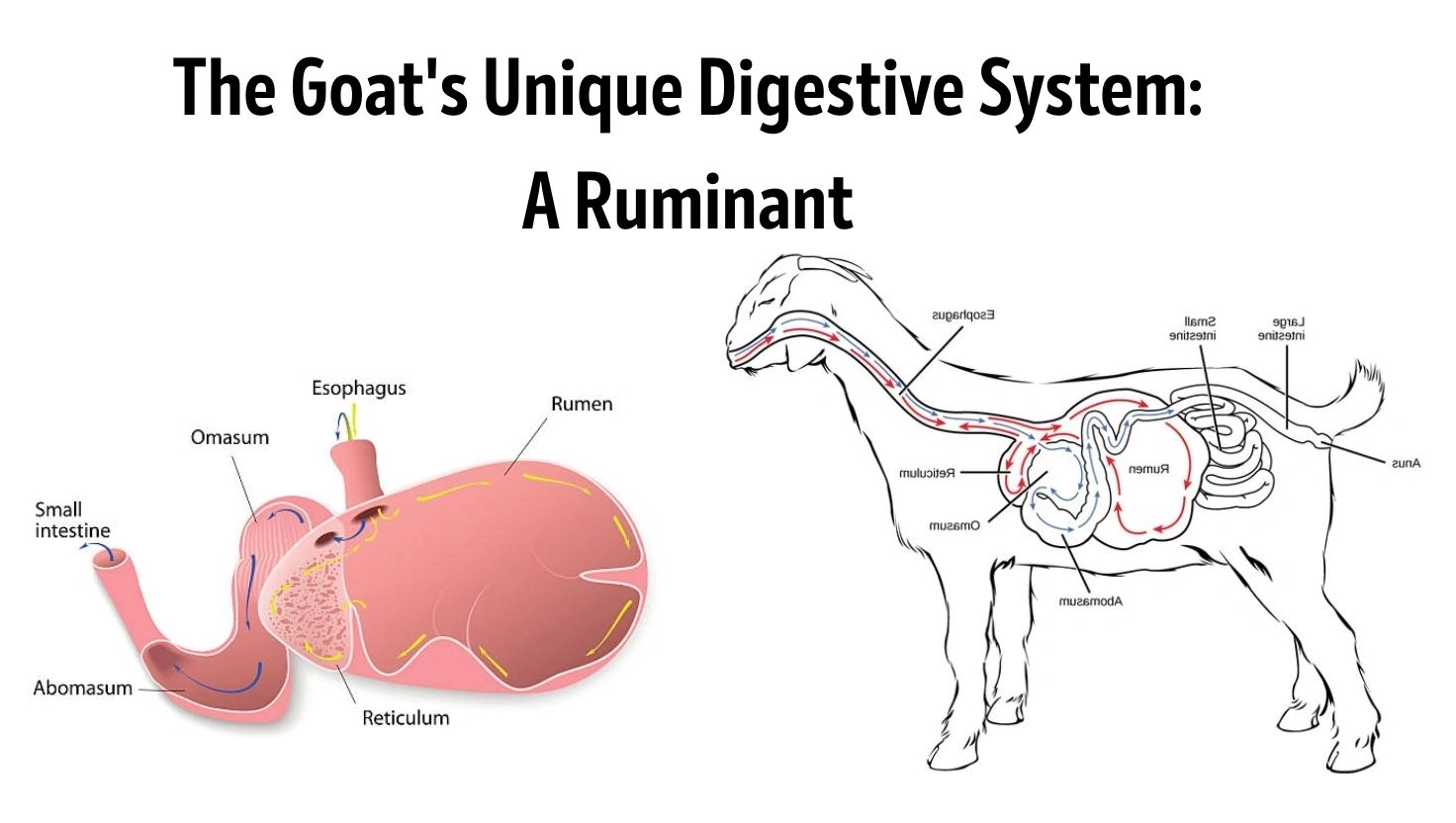
Unlike animals with a single stomach (monogastrics), ruminants possess a unique multicompartment digestive system located before their "true" stomach. These compartments are often referred to as the four 'stomach chambers', although technically only one is a true stomach. These four compartments are the: goat digestive system (goat digestive tract)
- Rumen
- Reticulum
- Omasum
- Abomasum
This complex system supports microbial fermentation, allowing herbivores like goats to efficiently digest diets very rich in fibrous plant cell walls.
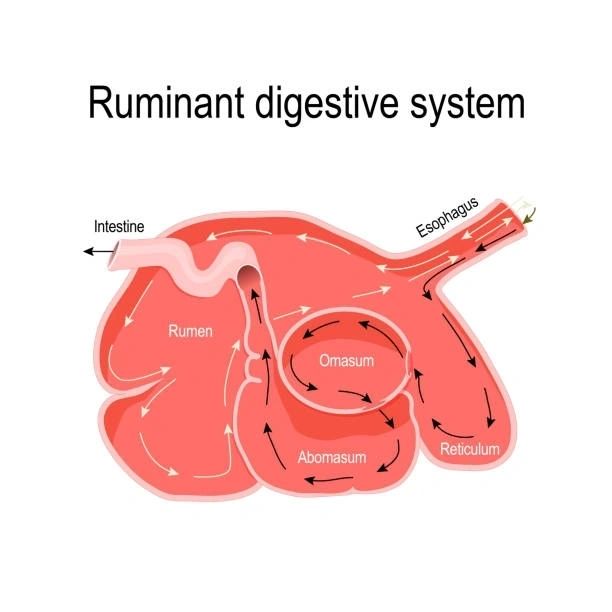
Goats are mammals classified as ruminants. Ruminants possess a specialist digestive system that enables them to digest high-fibre diets, such as grass. This system is characterized by having four compartments: the rumen, reticulum, omasum, and abomasum, often referred to as the four ‘stomach chambers’. Unlike monogastric animals like pigs and horses, where food passes directly from the mouth to the stomach, ruminants have these chambers before the "true stomach".
The digestive process begins in the mouth, where goats briefly chew feed into 1–5cm lengths and add large amounts of saliva before swallowing it via the oesophagus into the rumen. The amount of saliva produced is related to the type of diet, particularly its fibre content. Saliva contains significant quantities of salts like phosphorus, bicarbonate, and urea. Bicarbonate in saliva is essential for maintaining rumen pH at desirable levels to begin digestion4. For instance, adequate fibre in grain-based diets is essential to avoid acidosis, and rumen pH must be maintained above 6.04. Rumen pH on pasture diets is commonly around 6.5–7.4. Much of the saliva is absorbed as water and recycled.
The oesophagus transfers food to the stomach via muscular contractions. It also moves digesta (cud) from the rumen back to the mouth for further grinding, a process called rumination. Chewing during rumination stimulates saliva production, ensuring adequate bicarbonate is produced.
The first two compartments, the rumen and reticulum, function together as fermentation vats where plant material is broken down by millions of microorganisms. The oesophagus opens into the reticulum. The rumen is the largest of these chambers and develops as a kid grows, becoming fully functional by about 8–10 weeks of age. Between 60 and 70% of all digestion occurs in the rumen.
The rumen houses vast numbers of microorganisms, including bacteria, protozoa, and fungi. Bacteria are the most numerous, with 1–10 billion per millilitre of rumen fluid. Protozoa can make up to 50% of the microbial mass and eat bacteria and plant matter, especially starch, sugars, and protein. Fungi, making up 8% of the microbial mass, break down very fibrous material, making it more accessible to bacteria. The numbers and types of these microorganisms vary with the diet. To function properly, rumen microorganisms require specific conditions: slightly acid rumen fluid (pH 6.5 to 7.0), a plentiful supply of ammonia and carbohydrates, and an anaerobic (oxygen-free) environment. The type of feed significantly influences these factors. For example, high-grain diets can lead to high acidity (low pH), which is toxic to many rumen microorganisms and inhibits microbial growth and digestion. Starch-digesting microbes prefer a pH of 5.5–7.0, while fibre-digesting microbes prefer 6.2–7.09.
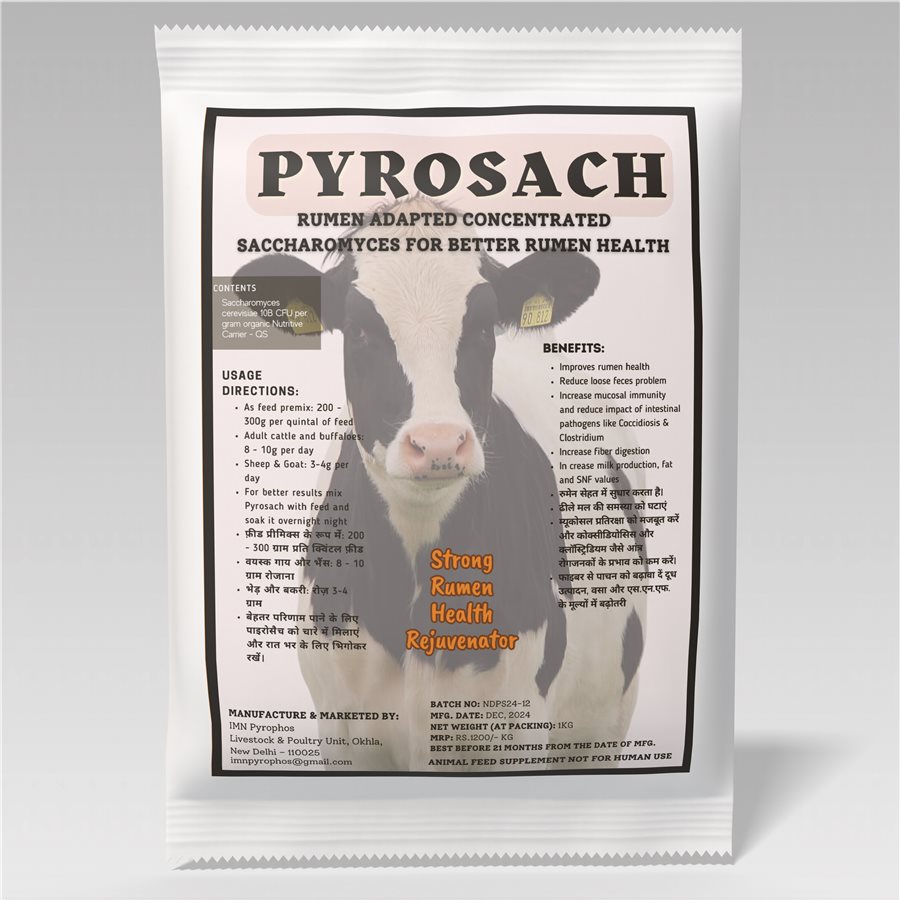
Rumen health
Pyrosach
Rumen-adapted Saccharomyces cerevisiae (10 billion CFU per gram). Improves fibre digestion and rumen health, reduces loose dung, and supports milk, fat and SNF.
Dose: 8–10 g per adult cow or buffalo per day; 3–4 g per sheep or goat; or 200–300 g per quintal of feed. Mix with feed and soak overnight for best results.
1 kg ₹700MRP ₹1,200
In the rumen, fibre is broken down, and much of the eaten protein is converted to microbial protein. Carbohydrates are fermented to volatile fatty acids (VFAs), which are then absorbed across the rumen wall into the bloodstream. The main VFAs produced are acetic, propionic, and butyric acid. Propionic acid production is favoured by significant starch and sugar fermentation but occurs even on high-fibre diets. It is largely transferred to the liver and converted to glucose, a primary energy source for the animal, providing components for fat synthesis and being important for liveweight gain and milk production. Butyric acid is converted into ketone bodies, used as an energy source during diet energy deficiency.
Rumen microorganisms digest the forage to supply nutrients for their own growth and reproduction. Nutrients that the microbes don’t use, along with the microbes themselves, supply the nutrients for the animal’s growth and reproduction13. Microbial protein (MCP), synthesized by the microbes, generally supplies most of the animal's metabolisable protein requirements, except in young growing animals and females in late pregnancy or lactation, who may need additional 'bypass' protein14. The microbial population in the rumen degrades Rumen Degradable Protein (RDP) to simpler nitrogenous molecules, mostly ammonia, which are used for MCP synthesis. Undegraded Dietary Protein (UDP) passes through the rumen and is digested later in the abomasum or small intestine. Energy is needed to drive MCP production in the rumen. If protein is deficient, surplus energy is used inefficiently. If energy is deficient, surplus ammonia is not captured by microbes and can be lost via urinary excretion. Goats are more efficient at nitrogen recycling than cattle and sheep.
After the rumen and reticulum, digesta passes into the omasum. The omasum seems to be involved in reducing the amount of water leaving the rumen, further grinding food, and squeezing digesta towards the abomasum.
The abomasum is the true, gastric stomach, similar to that of monogastrics. Here, protein and some fats are digested with the help of hydrochloric acid and enzymes.
The small intestine is the main site for absorption of amino acids, fats, and limited glucose. It is also the main site for phosphorus absorption. Bile and pancreatic ducts deliver enzymes, solvents, buffers (like sodium bicarbonate), and other agents to aid digestion here.
The large intestine, consisting of the caecum, colon, rectum, and anus, sees some microbial breakdown of feed, but the products are generally not absorbed. Its primary role is to absorb water and collect waste material before defecation.
Goats outperform other domesticated ruminants in harsh environments. They have evolved to digest high-fibre, low-nitrogen diets efficiently and are better able to adapt than most other species. Their physiological basis for superior digestion includes their ability to recycle nitrogen and their more efficient use of water. Given the opportunity, goats maintain intake of 'browse' sufficiently to preserve their acclimatisation to tannin-rich food. Consequently, they suffer less during drought when quality pasture is scarce. This makes them particularly suited to much of Australia's grazing lands. Goats eat larger amounts of herbages and legumes than grasses because they are more readily broken down during chewing, leading to shorter rumen retention time.
Issues like acidosis (also known as 'grain poisoning') can occur if large quantities of starch and sugar are fed, causing low rumen pH, proliferation of Streptococcus bovis, and lactic acid build-up. Bloat can occur if milk ferments in the rumen of kids (due to the oesophageal groove not closing) or from consuming large amounts of lush, leguminous feed. Maintaining adequate fibre and gradual ration changes are important preventative strategies.
In summary, the goat's digestive system is uniquely adapted through its four-compartment stomach and reliance on microbial fermentation in the rumen, allowing it to efficiently process high-fibre diets that are indigestible to many other animals. This system requires careful management to ensure the needs of both the animal and its resident microbial population are met.
Connect us with for goat feeding and nutrition consultancy 9871584101
Starting or running a goat farm? Ask Dr. Ibne Ali on WhatsApp about feeding, minerals and health.
WhatsApp: 98715 84101बकरी का अनोखा पाचन तंत्र: एक Ruminant
Ruminant क्या होता है?
Ruminant यानी जुगाली करने वाला ऐसा स्तनधारी पशु जिसका पाचन तंत्र घास जैसी रेशेदार (fibrous) वनस्पति खाने और पचाने के लिए खास तरह से बना होता है। "Ruminant" नाम उनकी खास क्षमता ruminate यानी जुगाली करने से आया है, जिसका मतलब है कि वे अपना चारा वापस मुँह में लाते हैं (regurgitate), फिर से चबाते हैं (re-masticate), उसमें फिर से लार मिलाते हैं (re-insalivate) और फिर से निगलते हैं, जिसे आम भाषा में जुगाली करना कहते हैं।
एक पेट वाले पशुओं (monogastrics) के उलट, ruminants में अपने "असली" पेट से पहले एक खास कई खानों वाला (multicompartment) पाचन तंत्र होता है। इन खानों को अक्सर चार 'पेट के खाने' कहा जाता है, हालांकि तकनीकी रूप से इनमें से सिर्फ एक ही असली पेट है। ये चार खाने हैं: बकरी का पाचन तंत्र (goat digestive tract)
- Rumen
- Reticulum
- Omasum
- Abomasum
यह जटिल तंत्र microbial fermentation (सूक्ष्म जीवों द्वारा किण्वन) में मदद करता है, जिससे बकरी जैसे शाकाहारी पशु ऐसे आहार को अच्छी तरह पचा पाते हैं जिसमें पौधों की रेशेदार cell walls बहुत ज़्यादा होती हैं।
बकरियाँ स्तनधारी हैं जिन्हें ruminants में गिना जाता है। Ruminants का पाचन तंत्र खास होता है जिससे वे ज़्यादा fibre वाला आहार पचा पाते हैं, जैसे घास। इस तंत्र की पहचान है इसके चार खाने: rumen, reticulum, omasum और abomasum, जिन्हें अक्सर चार ‘पेट के खाने’ कहा जाता है। सूअर और घोड़े जैसे एक पेट वाले पशुओं में खाना मुँह से सीधे पेट में जाता है, लेकिन ruminants में ये खाने "असली पेट" से पहले होते हैं।
पाचन की शुरुआत मुँह से होती है, जहाँ बकरियाँ चारे को थोड़ा चबाकर 1–5cm के टुकड़ों में करती हैं और उसमें बहुत सारी लार मिलाकर भोजन नली (oesophagus) से rumen में निगल लेती हैं। कितनी लार बनेगी यह आहार के प्रकार, खासकर उसमें fibre की मात्रा पर निर्भर करता है। लार में phosphorus, bicarbonate और urea जैसे लवण काफी मात्रा में होते हैं। पाचन शुरू करने के लिए rumen का pH सही स्तर पर रखने में लार का bicarbonate बहुत ज़रूरी है4। जैसे, दाने (grain) वाले आहार में acidosis से बचने के लिए पर्याप्त fibre ज़रूरी है, और rumen का pH 6.04 से ऊपर रखना चाहिए। चरागाह वाले आहार पर rumen का pH आम तौर पर लगभग 6.5–7.4 होता है। लार का ज़्यादातर हिस्सा पानी के रूप में वापस सोख लिया जाता है और फिर से इस्तेमाल होता है।
Oesophagus (भोजन नली) मांसपेशियों के सिकुड़ने से खाने को पेट तक पहुँचाती है। यह digesta (जुगाली का कौर/cud) को rumen से वापस मुँह तक भी लाती है ताकि उसे और पीसा जा सके, इस प्रक्रिया को rumination (जुगाली) कहते हैं। जुगाली के दौरान चबाने से लार बनती है, जिससे पर्याप्त bicarbonate बनना सुनिश्चित होता है।
पहले दो खाने, rumen और reticulum, मिलकर fermentation के टैंक की तरह काम करते हैं जहाँ लाखों-करोड़ों सूक्ष्म जीव (microorganisms) वनस्पति को तोड़ते हैं। Oesophagus reticulum में खुलती है। Rumen इन खानों में सबसे बड़ा है और मेमने (kid) के बढ़ने के साथ विकसित होता है, और लगभग 8–10 हफ्ते की उम्र तक पूरी तरह काम करने लगता है। कुल पाचन का 60 से 70% rumen में होता है।
Rumen में बहुत बड़ी संख्या में सूक्ष्म जीव रहते हैं, जिनमें bacteria, protozoa और fungi शामिल हैं। Bacteria सबसे ज़्यादा होते हैं, rumen के हर millilitre तरल में 1–10 billion। Protozoa सूक्ष्म जीवों के कुल वज़न का 50% तक हो सकते हैं और bacteria व वनस्पति, खासकर starch, sugars और protein खाते हैं। Fungi, जो सूक्ष्म जीवों के वज़न का 8% होते हैं, बहुत रेशेदार चीज़ों को तोड़ते हैं जिससे bacteria उन्हें आसानी से पचा पाते हैं। इन सूक्ष्म जीवों की संख्या और प्रकार आहार के हिसाब से बदलते हैं। सही तरह काम करने के लिए rumen के सूक्ष्म जीवों को खास हालात चाहिए: हल्का अम्लीय rumen तरल (pH 6.5 से 7.0), ammonia और carbohydrates की भरपूर सप्लाई, और बिना oxygen वाला (anaerobic) माहौल। चारे का प्रकार इन बातों पर बहुत असर डालता है। जैसे, ज़्यादा दाने वाला आहार ज़्यादा अम्लता (कम pH) कर सकता है, जो rumen के कई सूक्ष्म जीवों के लिए ज़हरीला है और उनकी बढ़त और पाचन को रोकता है। Starch पचाने वाले सूक्ष्म जीव 5.5–7.0 pH पसंद करते हैं, जबकि fibre पचाने वाले 6.2–7.09 पसंद करते हैं।
रुमेन की सेहत
Pyrosach
रुमेन के अनुकूल Saccharomyces cerevisiae (1000 करोड़ CFU प्रति ग्राम)। रेशे का पाचन और रुमेन की सेहत सुधारता है, पतला गोबर घटाता है, दूध, फैट और SNF में सहायक।
मात्रा: 8–10 ग्राम प्रति वयस्क गाय या भैंस प्रति दिन; भेड़ या बकरी को 3–4 ग्राम; या 200–300 ग्राम प्रति क्विंटल दाना। अच्छे नतीजे के लिए दाने में मिलाकर रात भर भिगोएँ।
1 kg ₹700MRP ₹1,200
Rumen में fibre टूटता है, और खाए गए protein का बड़ा हिस्सा microbial protein में बदल जाता है। Carbohydrates का fermentation होकर volatile fatty acids (VFAs) बनते हैं, जो rumen की दीवार से होकर खून में सोख लिए जाते हैं। मुख्य VFAs हैं acetic, propionic और butyric acid। ज़्यादा starch और sugar के fermentation से propionic acid ज़्यादा बनता है, लेकिन ज़्यादा fibre वाले आहार पर भी बनता है। इसका ज़्यादातर हिस्सा liver में जाकर glucose में बदलता है, जो पशु की ऊर्जा का मुख्य स्रोत है, चर्बी बनाने के लिए सामग्री देता है और वज़न बढ़ने व दूध उत्पादन के लिए ज़रूरी है। Butyric acid ketone bodies में बदलता है, जो आहार में ऊर्जा की कमी के समय ऊर्जा के स्रोत के रूप में इस्तेमाल होते हैं।
Rumen के सूक्ष्म जीव चारे को पचाकर अपनी बढ़त और प्रजनन के लिए पोषक तत्व लेते हैं। जो पोषक तत्व सूक्ष्म जीव इस्तेमाल नहीं करते, वे और खुद सूक्ष्म जीव मिलकर पशु की बढ़त और प्रजनन के लिए पोषण देते हैं13। सूक्ष्म जीवों द्वारा बनाया गया Microbial protein (MCP) आम तौर पर पशु की metabolisable protein की ज़्यादातर ज़रूरत पूरी करता है, सिवाय छोटे बढ़ते पशुओं और आखिरी गर्भावस्था या दूध देने वाली मादाओं के, जिन्हें अतिरिक्त 'bypass' protein की ज़रूरत हो सकती है14। Rumen के सूक्ष्म जीव Rumen Degradable Protein (RDP) को सरल nitrogen वाले अणुओं, ज़्यादातर ammonia, में तोड़ते हैं, जो MCP बनाने में इस्तेमाल होता है। Undegraded Dietary Protein (UDP) rumen से होकर आगे निकल जाता है और बाद में abomasum या छोटी आंत में पचता है। Rumen में MCP बनाने के लिए ऊर्जा चाहिए। अगर protein कम है, तो बची हुई ऊर्जा ठीक से इस्तेमाल नहीं होती। अगर ऊर्जा कम है, तो बचा हुआ ammonia सूक्ष्म जीव नहीं पकड़ पाते और यह पेशाब के रास्ते बर्बाद हो सकता है। बकरियाँ गाय-भैंस और भेड़ से ज़्यादा अच्छी तरह nitrogen को दोबारा इस्तेमाल (recycle) करती हैं।
Rumen और reticulum के बाद digesta omasum में जाता है। Omasum का काम rumen से निकलने वाले पानी की मात्रा कम करना, खाने को और पीसना, और digesta को abomasum की ओर दबाकर भेजना लगता है।
Abomasum ही असली, पाचक (gastric) पेट है, जो एक पेट वाले पशुओं के पेट जैसा होता है। यहाँ hydrochloric acid और enzymes की मदद से protein और कुछ चर्बी पचती है।
छोटी आंत amino acids, चर्बी और थोड़े glucose को सोखने की मुख्य जगह है। Phosphorus भी मुख्य रूप से यहीं सोखा जाता है। पित्त (bile) और pancreas की नलियाँ यहाँ पाचन में मदद के लिए enzymes, घोलने वाले पदार्थ, buffers (जैसे sodium bicarbonate) और दूसरे तत्व पहुँचाती हैं।
बड़ी आंत, जिसमें caecum, colon, rectum और anus शामिल हैं, में सूक्ष्म जीवों द्वारा चारे का कुछ टूटना होता है, लेकिन उससे बने पदार्थ आम तौर पर सोखे नहीं जाते। इसका मुख्य काम पानी सोखना और मल त्याग से पहले कचरा इकट्ठा करना है।
कठिन हालात में बकरियाँ दूसरे पालतू ruminants से बेहतर प्रदर्शन करती हैं। ये ज़्यादा fibre और कम nitrogen वाले आहार को अच्छी तरह पचाने के लिए विकसित हुई हैं और ज़्यादातर दूसरी प्रजातियों से बेहतर ढल जाती हैं। इनके बेहतर पाचन की शारीरिक वजहों में nitrogen को recycle करने की क्षमता और पानी का ज़्यादा कुशल इस्तेमाल शामिल है। मौका मिलने पर बकरियाँ 'browse' (झाड़ियों और पेड़ों की पत्तियाँ) इतना खाती रहती हैं कि tannin से भरपूर खाने की आदत बनी रहे। इसलिए सूखे के समय जब अच्छा चारा कम होता है, तब इन्हें कम परेशानी होती है। इसी वजह से ये Australia के ज़्यादातर चरागाहों के लिए खास तौर पर उपयुक्त हैं। बकरियाँ घास से ज़्यादा जड़ी-बूटियाँ (herbages) और फलीदार (legumes) पौधे खाती हैं क्योंकि ये चबाने में आसानी से टूट जाते हैं, जिससे ये rumen में कम समय रुकते हैं।
अगर बहुत ज़्यादा starch और sugar खिलाया जाए तो acidosis (जिसे 'grain poisoning' भी कहते हैं) जैसी समस्या हो सकती है, जिससे rumen का pH कम होता है, Streptococcus bovis बढ़ जाता है और lactic acid जमा होता है। Bloat (अफारा) तब हो सकता है जब मेमनों के rumen में दूध सड़ने (ferment) लगे (oesophageal groove बंद न होने की वजह से) या बहुत ज़्यादा हरा, रसीला फलीदार चारा खाने से। पर्याप्त fibre देना और आहार धीरे-धीरे बदलना बचाव के अहम तरीके हैं।
कुल मिलाकर, बकरी का पाचन तंत्र अपने चार खानों वाले पेट और rumen में सूक्ष्म जीवों के fermentation पर निर्भरता के ज़रिए खास तरह से ढला हुआ है, जिससे यह ज़्यादा fibre वाले ऐसे आहार को अच्छी तरह पचा पाती है जिसे कई दूसरे पशु नहीं पचा सकते। इस तंत्र को सावधानी से संभालने की ज़रूरत है ताकि पशु और उसमें रहने वाले सूक्ष्म जीवों, दोनों की ज़रूरतें पूरी हों।
बकरी के आहार और पोषण पर सलाह के लिए हमसे संपर्क करें 9871584101
बकरी फ़ार्म शुरू कर रहे हैं या चला रहे हैं? दाना, मिनरल और सेहत के बारे में डॉ. इब्ने अली से WhatsApp पर पूछिए।
WhatsApp: 98715 84101Bakri ka anokha pachan tantra: Ek Ruminant
Ruminant kya hota hai?
Ruminant yani jugali karne wala aisa stanpayi pashu jiska pachan tantra ghaas jaisi reshedar (fibrous) vanaspati khane aur pachane ke liye khaas tarah se bana hota hai. "Ruminant" naam unki khaas kshamta ruminate yani jugali karne se aaya hai, jiska matlab hai ki wo apna chara wapas munh me late hain (regurgitate), phir se chabate hain (re-masticate), usme phir se laar milate hain (re-insalivate) aur phir se nigalte hain, jise aam bhasha me jugali karna kehte hain.
Ek pet wale pashuon (monogastrics) ke ulat, ruminants me apne "asli" pet se pehle ek khaas kai khano wala (multicompartment) pachan tantra hota hai. In khano ko aksar chaar 'pet ke khane' kaha jata hai, halanki technically inme se sirf ek hi asli pet hai. Ye chaar khane hain: bakri ka pachan tantra (goat digestive tract)
- Rumen
- Reticulum
- Omasum
- Abomasum
Ye complex tantra microbial fermentation (sookshm jeevon dwara kinvan) me madad karta hai, jisse bakri jaise shakahari pashu aisa aahar achhi tarah pacha pate hain jisme paudhon ki reshedar cell walls bahut zyada hoti hain.
Bakriyan stanpayi hain jinhe ruminants me gina jata hai. Ruminants ka pachan tantra khaas hota hai jisse wo zyada fibre wala aahar pacha pate hain, jaise ghaas. Is tantra ki pehchan hai iske chaar khane: rumen, reticulum, omasum aur abomasum, jinhe aksar chaar ‘pet ke khane’ kaha jata hai. Suar aur ghode jaise ek pet wale pashuon me khana munh se seedha pet me jata hai, lekin ruminants me ye khane "asli pet" se pehle hote hain.
Pachan ki shuruat munh se hoti hai, jahan bakriyan chare ko thoda chaba kar 1–5cm ke tukdon me karti hain aur usme bahut saari laar mila kar bhojan nali (oesophagus) se rumen me nigal leti hain. Kitni laar banegi ye aahar ke type, khaas kar usme fibre ki matra par depend karta hai. Laar me phosphorus, bicarbonate aur urea jaise salts kaafi matra me hote hain. Pachan shuru karne ke liye rumen ka pH sahi level par rakhne me laar ka bicarbonate bahut zaroori hai4. Jaise, daane (grain) wale aahar me acidosis se bachne ke liye kaafi fibre zaroori hai, aur rumen ka pH 6.04 se upar rakhna chahiye. Charagah wale aahar par rumen ka pH aam taur par lagbhag 6.5–7.4 hota hai. Laar ka zyadatar hissa paani ke roop me wapas sokh liya jata hai aur phir se use hota hai.
Oesophagus (bhojan nali) muscles ke sikudne se khane ko pet tak pahunchati hai. Ye digesta (jugali ka kaur/cud) ko rumen se wapas munh tak bhi lati hai taaki use aur peesa ja sake, is process ko rumination (jugali) kehte hain. Jugali ke dauran chabane se laar banti hai, jisse kaafi bicarbonate banna pakka hota hai.
Pehle do khane, rumen aur reticulum, milkar fermentation ke tank ki tarah kaam karte hain jahan karodon sookshm jeev (microorganisms) vanaspati ko todte hain. Oesophagus reticulum me khulti hai. Rumen in khano me sabse bada hai aur memne (kid) ke badhne ke saath develop hota hai, aur lagbhag 8–10 hafte ki umar tak poori tarah kaam karne lagta hai. Kul pachan ka 60 se 70% rumen me hota hai.
Rumen me bahut badi sankhya me sookshm jeev rehte hain, jinme bacteria, protozoa aur fungi shamil hain. Bacteria sabse zyada hote hain, rumen ke har millilitre taral me 1–10 billion. Protozoa sookshm jeevon ke kul wazan ka 50% tak ho sakte hain aur bacteria aur vanaspati, khaas kar starch, sugars aur protein khate hain. Fungi, jo sookshm jeevon ke wazan ka 8% hote hain, bahut reshedar cheezon ko todte hain jisse bacteria unhe aasani se pacha pate hain. In sookshm jeevon ki sankhya aur type aahar ke hisaab se badalte hain. Sahi tarah kaam karne ke liye rumen ke sookshm jeevon ko khaas halaat chahiye: halka khatta (acidic) rumen taral (pH 6.5 se 7.0), ammonia aur carbohydrates ki bharpoor supply, aur bina oxygen wala (anaerobic) mahaul. Chare ka type in baaton par bahut asar dalta hai. Jaise, zyada daane wala aahar zyada acidity (kam pH) kar sakta hai, jo rumen ke kai sookshm jeevon ke liye zehreela hai aur unki growth aur pachan ko rokta hai. Starch pachane wale sookshm jeev 5.5–7.0 pH pasand karte hain, jabki fibre pachane wale 6.2–7.09 pasand karte hain.
Rumen ki sehat
Pyrosach
Rumen ke anukool Saccharomyces cerevisiae (1000 crore CFU prati gram). Reshe ka pachan aur rumen ki sehat sudharta hai, patla gobar ghatata hai, doodh, fat aur SNF me sahayak.
Matra: 8–10 g prati vayask gaay ya bhains prati din; bhed ya bakri ko 3–4 g; ya 200–300 g prati quintal daana. Achhe natije ke liye daane me mila kar raat bhar bhigoiye.
1 kg ₹700MRP ₹1,200
Rumen me fibre tootta hai, aur khaye gaye protein ka bada hissa microbial protein me badal jata hai. Carbohydrates ka fermentation hokar volatile fatty acids (VFAs) bante hain, jo rumen ki deewar se hokar khoon me sokh liye jate hain. Main VFAs hain acetic, propionic aur butyric acid. Zyada starch aur sugar ke fermentation se propionic acid zyada banta hai, lekin zyada fibre wale aahar par bhi banta hai. Iska zyadatar hissa liver me jakar glucose me badalta hai, jo pashu ki energy ka main source hai, charbi banane ke liye saamagri deta hai aur wazan badhne aur doodh production ke liye zaroori hai. Butyric acid ketone bodies me badalta hai, jo aahar me energy ki kami ke samay energy source ke roop me use hote hain.
Rumen ke sookshm jeev chare ko pacha kar apni growth aur prajanan ke liye nutrients lete hain. Jo nutrients sookshm jeev use nahi karte, wo aur khud sookshm jeev milkar pashu ki growth aur prajanan ke liye poshan dete hain13. Sookshm jeevon dwara banaya gaya Microbial protein (MCP) aam taur par pashu ki metabolisable protein ki zyadatar zaroorat poori karta hai, siwaye chhote badhte pashuon aur aakhri garbhavastha ya doodh dene wali madaon ke, jinhe extra 'bypass' protein ki zaroorat ho sakti hai14. Rumen ke sookshm jeev Rumen Degradable Protein (RDP) ko saral nitrogen wale anuon, zyadatar ammonia, me todte hain, jo MCP banane me use hota hai. Undegraded Dietary Protein (UDP) rumen se hokar aage nikal jata hai aur baad me abomasum ya chhoti aant me pachta hai. Rumen me MCP banane ke liye energy chahiye. Agar protein kam hai, to bachi hui energy theek se use nahi hoti. Agar energy kam hai, to bacha hua ammonia sookshm jeev nahi pakad pate aur ye peshab ke raaste barbaad ho sakta hai. Bakriyan gaay-bhains aur bhed se zyada achhi tarah nitrogen ko dobara use (recycle) karti hain.
Rumen aur reticulum ke baad digesta omasum me jata hai. Omasum ka kaam rumen se nikalne wale paani ki matra kam karna, khane ko aur peesna, aur digesta ko abomasum ki taraf daba kar bhejna lagta hai.
Abomasum hi asli, pachak (gastric) pet hai, jo ek pet wale pashuon ke pet jaisa hota hai. Yahan hydrochloric acid aur enzymes ki madad se protein aur kuch charbi pachti hai.
Chhoti aant amino acids, charbi aur thode glucose ko sokhne ki main jagah hai. Phosphorus bhi mainly yahin sokha jata hai. Pitt (bile) aur pancreas ki naliyan yahan pachan me madad ke liye enzymes, gholne wale padarth, buffers (jaise sodium bicarbonate) aur dusre tatva pahunchati hain.
Badi aant, jisme caecum, colon, rectum aur anus shamil hain, me sookshm jeevon dwara chare ka kuch tootna hota hai, lekin usse bane padarth aam taur par sokhe nahi jate. Iska main kaam paani sokhna aur gobar/mal tyag se pehle kachra ikattha karna hai.
Kathin halaat me bakriyan dusre paltu ruminants se behtar performance deti hain. Ye zyada fibre aur kam nitrogen wale aahar ko achhi tarah pachane ke liye develop hui hain aur zyadatar dusri prajatiyon se behtar dhal jati hain. Inke behtar pachan ki shareerik wajahon me nitrogen ko recycle karne ki kshamta aur paani ka zyada achha use shamil hai. Mauka milne par bakriyan 'browse' (jhadiyon aur pedon ki pattiyan) itna khati rehti hain ki tannin se bharpoor khane ki aadat bani rahe. Isliye sookhe ke time jab achha chara kam hota hai, tab inhe kam pareshani hoti hai. Isi wajah se ye Australia ke zyadatar charagahon ke liye khaas taur par sahi hain. Bakriyan ghaas se zyada jadi-bootiyan (herbages) aur faliyon wale (legumes) paudhe khati hain kyunki ye chabane me aasani se toot jate hain, jisse ye rumen me kam samay rukte hain.
Agar bahut zyada starch aur sugar khilaya jaye to acidosis (jise 'grain poisoning' bhi kehte hain) jaisi problem ho sakti hai, jisse rumen ka pH kam hota hai, Streptococcus bovis badh jata hai aur lactic acid jama hota hai. Bloat (afara) tab ho sakta hai jab memnon ke rumen me doodh sadne (ferment) lage (oesophageal groove band na hone ki wajah se) ya bahut zyada hara, raseela faliyon wala chara khane se. Kaafi fibre dena aur aahar dheere-dheere badalna bachav ke important tareeke hain.
Kul milakar, bakri ka pachan tantra apne chaar khano wale pet aur rumen me sookshm jeevon ke fermentation par nirbharta ke zariye khaas tarah se dhala hua hai, jisse ye zyada fibre wale aise aahar ko achhi tarah pacha pati hai jise kai dusre pashu nahi pacha sakte. Is tantra ko dhyan se sambhalne ki zaroorat hai taaki pashu aur usme rehne wale sookshm jeevon, dono ki zarooratein poori hon.
Bakri ke aahar aur poshan par salah ke liye humse contact karein 9871584101
Bakri farm shuru kar rahe hain ya chala rahe hain? Daana, mineral aur sehat ke baare me Dr. Ibne Ali se WhatsApp par poochiye.
WhatsApp: 98715 84101