How to Start Goat Farming Business in India: A Comprehensive Guide
Introduction
Goat farming is a cornerstone of India’s agricultural economy, supporting millions of small and marginal farmers with its low investment and high returns. With over 150 million goats, India leads globally in goat population, driven by rising demand for goat meat (chevon) and milk. Goats are adaptable to diverse climates, making them ideal for various regions, from arid deserts to hilly terrains. This article provides a detailed, fact-based guide to starting a goat farming business in India, drawing on authentic sources like the Indian Journal of Small Ruminants and ICAR publications. It covers a step-by-step approach, breed selection for different climatic zones, estimated costs, and a balance sheet with fixed and running costs to ensure financial clarity.
Step-by-Step Approach to Starting a Goat Farm
1. Market Research and Planning
Before starting, assess the local demand for goat products, including meat, milk, and by-products like hides. Identify potential buyers, such as local markets, butcheries, restaurants, or dairy processors.
An important point is that when you think to enter in this business try to comprehend the point whether you have to do a breeding farm or you want to kept for festival purpose. Rearing festival goats is bit easy but expansive.
Develop a business plan outlining your goals, breed selection, and financial projections. Contact your local animal husbandry department to secure necessary licenses (like NOC from Gram Panchayat or Nagar Palika, wherever your farm located). Commercial farming is agriculture activity but may require GST number and current account. A well-structured plan is crucial for accessing loans or subsidies from institutions like NABARD (NABARD Goat Farming).
2. Breed Selection
Choosing the right breed is critical for success, as it depends on your purpose (meat, milk, or dual-purpose) and the climatic conditions of your region. Below are recommended breeds for India’s climatic zones, based on a review from Small Ruminant Research (Climate Resilience):
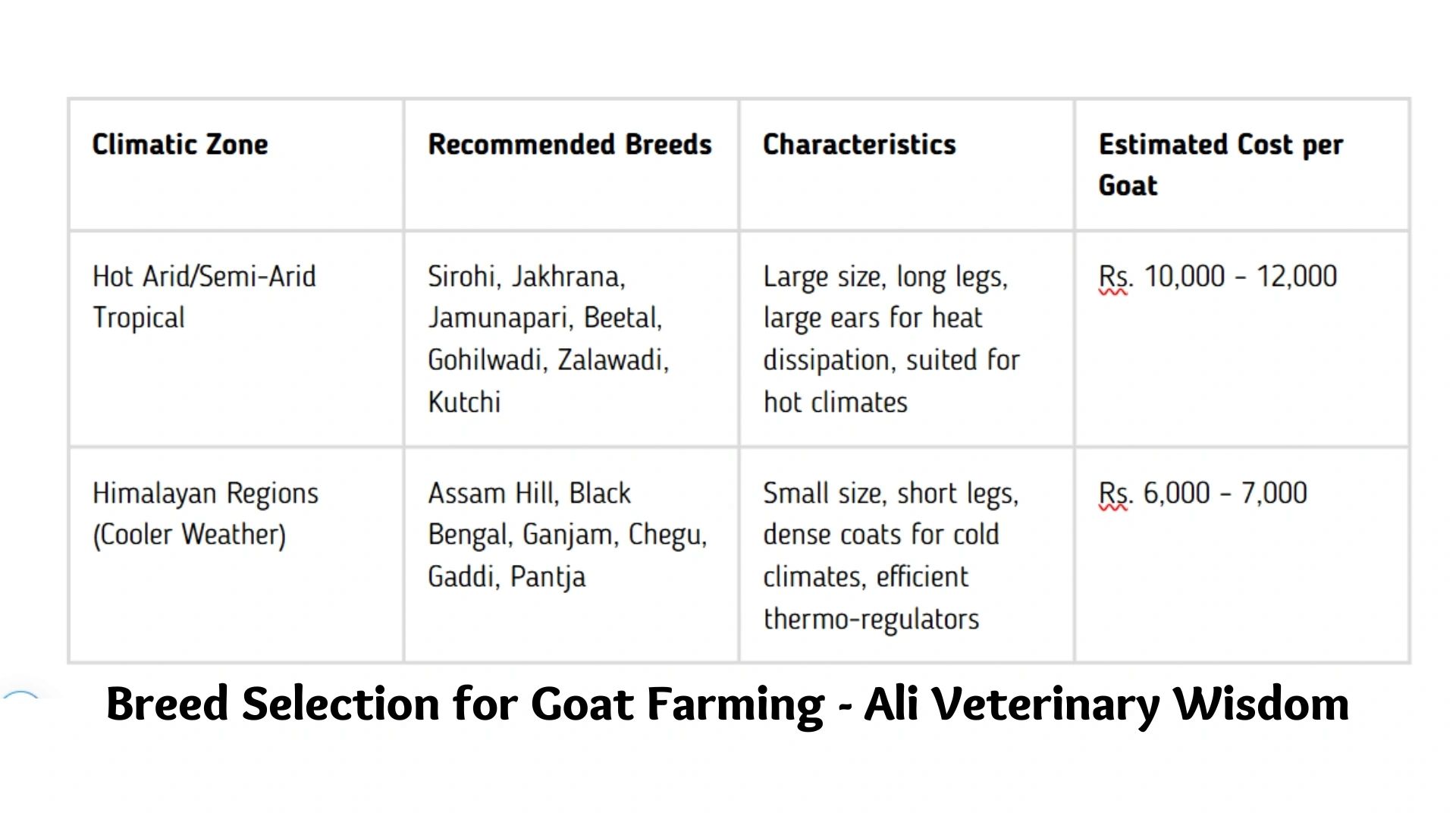
- Sirohi: Ideal for meat production, heat-resistant, found in Rajasthan and Uttar Pradesh.
- Jamunapari: Known for high milk yield (3.5 kg/day), suitable for semi-arid regions like Western UP, Haryana, Northern Rajasthan.
- Black Bengal: Excellent for meat, thrives in cooler, humid eastern India like Bihar, West Bengal & Odisha.
- Note: Black-coated breeds are better thermo-regulators in hot climates, while white-coated breeds may suit cooler areas.
3. Location and Land Requirements
Select a location with a warm, well-drained area to prevent waterlogging, ideally away from urban pollution. It should be away from residential location by at least 500m. Ensure access to clean ground water, fodder, and labor. Water up to 3000 TDS can be used but it should not be saline (khara pani). For a unit of 50 goats, approximately 1 acre is sufficient, including space for sheds and grazing. Larger units (e.g., 500 goats) may require 10 acres. Proximity to markets facilitates easy transportation of animals and products. For more details you can join our online app based training on Ali Veterinary Wisdom Training App.
Sample Video from Training
4. Housing and Shed Construction
Goats need shelter to protect them from harsh weather and predators. Construct sheds with proper ventilation and bedding materials like straw, hay, or wood chips. Key shed types include:
- General flock shed
- Attendant’s room
- Ram/buck shed
- Lamb/kid shed
- Shearing/store room
- Lambing/kidding shed
- Sick animal shed Regular cleaning prevents disease outbreaks. A shed for 50 does, 2 bucks, and their kids costs approximately Rs. 150,000-200,000 at Rs. 175-225/sq.ft.
5. Feeding and Nutrition
Goats are versatile feeders, consuming agricultural by-products and waste, but require a balanced diet for optimal growth. In commercial settings feeding has major role in deciding whether farm would go in profits or not, it is because 70% of the running cost would go into feeding and nutrition. Well fed animals have better immunity and fertility, they give birth to healthy kids.
Most of the farms which gets closed have mismanaged their goat's nutrition, which is seen as weaken immunity and disease outbreaks. So, developing cheap yet responsive diet plan have to be created by farmers.
Adult goat requires around 800g to 1200g dry matter depending upon the weight.
Daily requirements include:
- 5–7 kg green fodder per goat, although we recommend to follow straw based feeding system which is convenient and more healthy for goats.
- Under normal weather conditions 3-5L water per kg dry matter intake.
- Concentrate feed: 100 gm/day for growers, 200–250 gm/day for adults. For fodder cultivation 1 acre land would be required to feed 35 goats. You cultivate fodder like oats, maize, chari, bajra, sorghum etc. Although goats relish tree leaves than any green fodder but arrangement of tree leaves is quite expansive. For concentrate feed (which would be the back bone of the productive flock) we need grains like maize, wheat and barley and oil/deoiled cakes like soydoc and mustard doc. Complete goat feed premix Rumenia G is essential to get performance from high nutrient dense goat feed. Minerals (e.g., iodized salt, bone meal) are vital, especially for pregnant and lactating females which is present in Rumenia-G as well as in Pyromin. Feed costs vary, with does requiring Rs. 12-30/ and bucks Rs. 22.5/day.
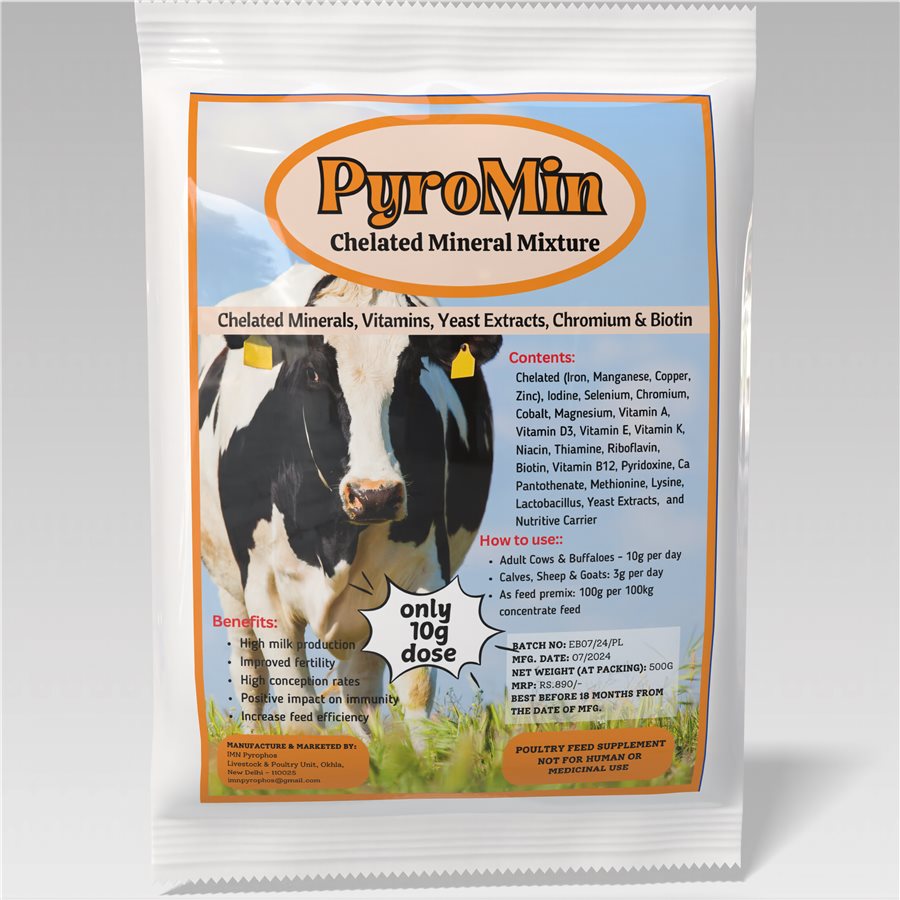
Chelated minerals
Pyromin
Chelated mineral mixture with iron, manganese, copper, zinc, iodine, selenium, chromium, cobalt and magnesium, vitamins A, D3, E, K and B vitamins, biotin, methionine, lysine, lactobacillus and yeast extract. Supports milk production, fertility, conception, immunity and feed efficiency.
Dose: Adult cow or buffalo 10 g per day; calves, sheep and goats 3 g per day. As a premix, 100 g per 100 kg of concentrate.
1 kg ₹655MRP ₹1,190
6. Breeding and Reproduction
Goats can be bred at 8–9 months, though 1 year is ideal for better health. The gestation period is 150 days, with breeding seasons in April and August, peaking in kidding from October to January. Kids are weaned at 2 months and separated at 2–4 months. Breeds like Sirohi are prolific, with does birthing twice yearly (40% singles, 60% twins). Consult a veterinarian for out-of-season breeding using hormones.
7. Health Care and Disease Management
Regular vaccination and deworming every 3–4 months are essential to prevent diseases. Maintain shed hygiene and ensure a veterinarian is available for emergencies. Dehorn goats at 1 week to reduce aggression. Veterinary charges for 52 animals are approximately Rs. 1,040/year at Rs. 20/adult.
8. Marketing and Sales
Establish relationships with local butchers, restaurants, and dairy processors. Direct sales to consumers can yield higher profits. Selling prices range from Rs. 120–200/kg live weight, contributing to annual gross revenue of Rs. 4–5 lakhs for a 50-goat unit. Explore value-added products like goat milk or cheese if feasible (ICAR Commercial Goat Farming).
Financial Aspects
For a unit of 50 does + 2 bucks, the financial breakdown is based on NABARD guidelines and ICAR data, ensuring accuracy for Indian farmers.
Fixed Costs (Initial Investment)
Item
Cost (Rs.)
Shed Constructionm – 1.5-2L
Equipment – 5520
Cost of Animals (50 does, 2 bucks) 4.5-5L
Insurance – 3,376
Total Capital Cost – 7-8L
Running Costs (Annual)
Item
Cost (Rs.)
Green Fodder Cultivation – 30,000
Feed Cost (Bucks, Does, Kids) – 3-3.5L
Medicines/Veterinary Charges – 1,0400
Insurance – 3,376
Miscellaneous (water/electricity) – 5500
Labour Wages – 144,000
Total Recurring Expenses – 35,424–36,624
Revenue and Profit Projections
- Annual Gross Revenue: 90 kids and goats would be available to sale generate Rs. 12-13L (based on selling goats at Rs. 300-400/kg live weight).
- Annual Net Income: Rs. 4-5 lakhs after deducting expenses.
- Profitability Metrics:
- Net Present Value (NPV) at 15% discount factor: Rs. 41,703
- Benefit-Cost Ratio (BCR) at 15% discount factor: 1.18:1
- Internal Rate of Return (IRR): 25%
These figures assume proper management and market access. Scaling up can improve economies of scale but requires higher initial investment.
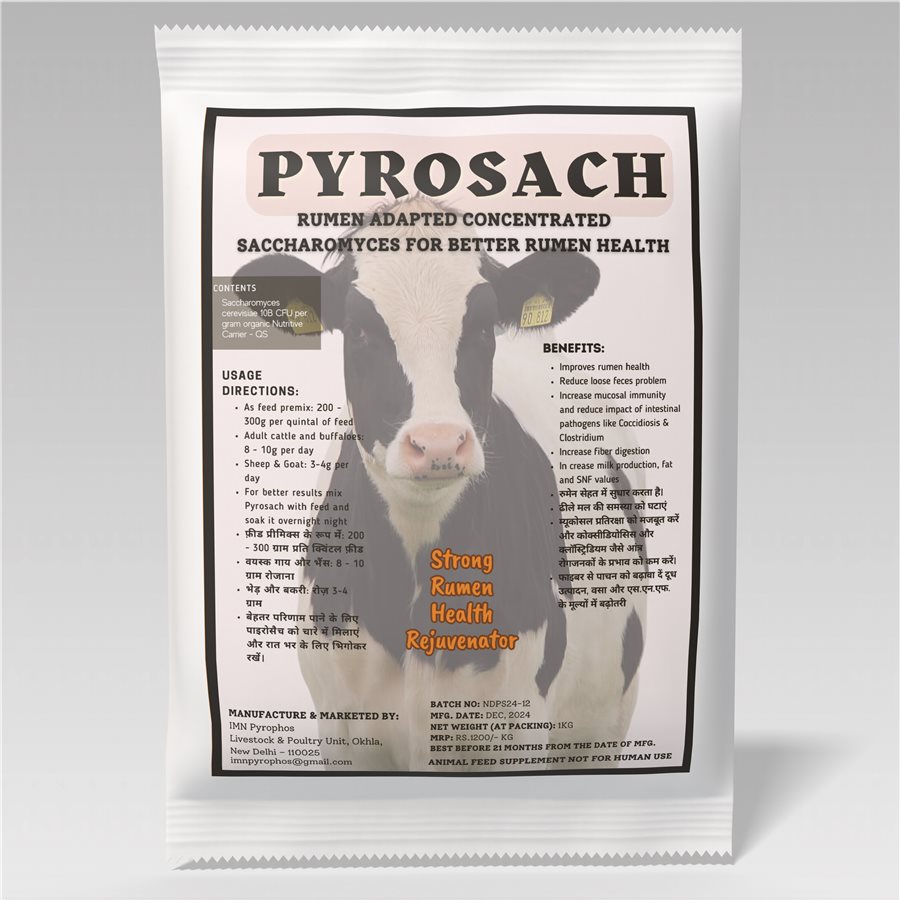
Rumen health
Pyrosach
Rumen-adapted Saccharomyces cerevisiae (10 billion CFU per gram). Improves fibre digestion and rumen health, reduces loose dung, and supports milk, fat and SNF.
Dose: 8–10 g per adult cow or buffalo per day; 3–4 g per sheep or goat; or 200–300 g per quintal of feed. Mix with feed and soak overnight for best results.
1 kg ₹700MRP ₹1,200
Breed Selection and Costs
The choice of breed significantly impacts profitability. Below are estimated costs per goat for key breeds:
- Sirohi: Rs. 9,000–12,000, ideal for meat in hot climates.
- Jamunapari: Rs. 10,000–15,000, high milk yield for semi-arid regions.
- Beetal: Rs. 10,000–15,000, dual-purpose for northwestern India.
- Black Bengal: Rs. 6,000–7,000, meat-focused for cooler eastern regions.
- Ganjam: Rs. 6,000–7,000, suited for eastern India’s humid climate. Costs vary based on age, health, and market availability. Contact local livestock associations for current prices.
Additional Considerations
- Training: Attend programs at ICAR’s Central Institute for Research on Goats (CIRG) in Mathura, Uttar Pradesh, for hands-on learning (CIRG Training).
- Subsidies and Loans: NABARD offers subsidies (40% for general category, 50% for SC/ST/women) and loans through banks like SBI or ICICI. The National Livestock Mission (NLM) supports infrastructure and feed management (Sharda Associates).
- Challenges: High initial mortality (10% adults, 40% kids) can be reduced to 3–8% with proper care (with our comprehensive feeding schedule and Probium Probiotek you can reduce mortality by many times), as demonstrated by successful farms (ICAR Commercial Goat Farming).
- Regional Variations: Costs and breed suitability may differ by state. For example, Rajasthan favors Sirohi, while West Bengal prefers Black Bengal.
Conclusion
Goat farming in India is a viable and rewarding business, offering sustainable income for farmers with limited resources. By selecting climate-appropriate breeds, following scientific rearing practices, and managing finances effectively, you can achieve significant profits. Start small with a unit of 50 goats, gain experience, and expand gradually. Stay informed through training programs and market trends to ensure long-term success. With careful planning and dedication, your goat farm can thrive in India’s dynamic agricultural landscape.
For complete consultation on goat farming and goat feeding guidance contact us call or whatsapp – 9871584101
Key searches – goat farming in India, how to start goat farming in India how to start goat farming in bihar
Starting or running a goat farm? Ask Dr. Ibne Ali on WhatsApp about feeding, minerals and health.
WhatsApp: 98715 84101भारत में बकरी पालन का बिज़नेस कैसे शुरू करें: एक पूरी गाइड
परिचय
बकरी पालन भारत की खेती-किसानी वाली अर्थव्यवस्था की एक मज़बूत नींव है। कम लागत और अच्छे मुनाफ़े की वजह से यह लाखों छोटे और सीमांत किसानों का सहारा है। 150 million से ज़्यादा बकरियों के साथ भारत बकरियों की संख्या में दुनिया में सबसे आगे है, और इसकी वजह है बकरे के मांस (chevon) और दूध की बढ़ती माँग। बकरियाँ अलग-अलग मौसम में ढल जाती हैं, इसलिए सूखे रेगिस्तान से लेकर पहाड़ी इलाकों तक हर जगह पाली जा सकती हैं। यह लेख Indian Journal of Small Ruminants और ICAR प्रकाशनों जैसे भरोसेमंद स्रोतों के आधार पर भारत में बकरी पालन बिज़नेस शुरू करने की तथ्यों पर आधारित पूरी गाइड देता है। इसमें कदम-दर-कदम तरीका, अलग-अलग मौसम वाले इलाकों के लिए नस्ल का चुनाव, अनुमानित खर्च, और fixed व running cost वाली balance sheet दी गई है, ताकि पैसों का हिसाब साफ़ रहे।
बकरी फार्म शुरू करने का कदम-दर-कदम तरीका
1. बाज़ार की जानकारी और योजना
शुरू करने से पहले अपने इलाके में बकरी के उत्पादों की माँग देखिए, जैसे मांस, दूध, और खाल जैसे by-products। संभावित खरीदारों को पहचानिए, जैसे लोकल मंडी, कसाई की दुकानें, रेस्टोरेंट, या dairy processors।
एक ज़रूरी बात यह है कि जब आप इस बिज़नेस में आने की सोचें, तो पहले यह साफ़ कर लें कि आपको breeding farm करना है या त्योहार (festival) के लिए बकरे पालने हैं। त्योहार वाले बकरे पालना थोड़ा आसान है लेकिन महँगा है।
एक business plan बनाइए जिसमें आपके लक्ष्य, नस्ल का चुनाव, और पैसों का अनुमान लिखा हो। ज़रूरी licence के लिए अपने लोकल पशुपालन विभाग से संपर्क करें (जैसे Gram Panchayat या Nagar Palika से NOC, जहाँ भी आपका फार्म हो)। Commercial farming खेती की गतिविधि है, लेकिन इसके लिए GST number और current account की ज़रूरत पड़ सकती है। NABARD जैसी संस्थाओं से loan या subsidy लेने के लिए अच्छी तरह बना plan बहुत ज़रूरी है (NABARD Goat Farming)।
2. नस्ल का चुनाव
सही नस्ल चुनना सफलता के लिए बहुत ज़रूरी है, और यह आपके मकसद (मांस, दूध, या दोनों) और आपके इलाके के मौसम पर निर्भर करता है। नीचे Small Ruminant Research (Climate Resilience) की एक review के आधार पर भारत के अलग-अलग मौसम वाले इलाकों के लिए सुझाई गई नस्लें दी गई हैं:
- Sirohi: मांस के लिए बढ़िया, गर्मी सह लेती है, राजस्थान और उत्तर प्रदेश में मिलती है।
- Jamunapari: ज़्यादा दूध (3.5 kg/day) के लिए जानी जाती है, पश्चिमी UP, हरियाणा, उत्तरी राजस्थान जैसे अर्ध-सूखे इलाकों के लिए सही।
- Black Bengal: मांस के लिए बहुत अच्छी, बिहार, पश्चिम बंगाल और ओडिशा जैसे ठंडे और नमी वाले पूर्वी भारत में अच्छी पनपती है।
- ध्यान दें: गर्म इलाकों में काले रंग वाली नस्लें शरीर का तापमान बेहतर संभालती हैं, जबकि सफ़ेद रंग वाली नस्लें ठंडे इलाकों में ठीक रहती हैं।
3. जगह और ज़मीन की ज़रूरत
ऐसी जगह चुनें जो गर्म हो और जहाँ पानी अच्छे से निकल जाए ताकि पानी न भरे, और शहर के प्रदूषण से दूर हो। यह रिहायशी इलाके से कम से कम 500m दूर होनी चाहिए। साफ़ ज़मीनी पानी, चारा और मज़दूर आसानी से मिलें, यह पक्का करें। 3000 TDS तक का पानी इस्तेमाल हो सकता है लेकिन वह खारा पानी नहीं होना चाहिए। 50 बकरियों की यूनिट के लिए लगभग 1 acre काफ़ी है, जिसमें shed और चराई की जगह शामिल है। बड़ी यूनिट (जैसे 500 बकरियाँ) के लिए 10 acre चाहिए हो सकते हैं। बाज़ार पास हो तो पशुओं और उत्पादों को लाना-ले जाना आसान रहता है। ज़्यादा जानकारी के लिए आप Ali Veterinary Wisdom Training App पर हमारी online app based training से जुड़ सकते हैं।
Training का sample video
4. आवास और shed बनाना
बकरियों को खराब मौसम और जंगली जानवरों से बचाने के लिए छत चाहिए। Shed में हवा का अच्छा इंतज़ाम हो और बिछावन के लिए पुआल, सूखी घास (hay) या लकड़ी का बुरादा (wood chips) हो। मुख्य shed इस तरह के होते हैं:
- आम झुंड का shed
- देखभाल करने वाले (attendant) का कमरा
- बकरे (ram/buck) का shed
- मेमनों/बच्चों (lamb/kid) का shed
- बाल कटाई/स्टोर रूम
- ब्याने (lambing/kidding) का shed
- बीमार पशुओं का shed। नियमित सफ़ाई से बीमारियाँ फैलने से रुकती हैं। 50 बकरियों, 2 बकरों और उनके बच्चों के shed का खर्च Rs. 175-225/sq.ft. के हिसाब से लगभग Rs. 150,000-200,000 आता है।
5. खिलाई-पिलाई और पोषण
बकरियाँ हर तरह का खा लेती हैं, खेती के by-products और बचा हुआ माल भी, लेकिन अच्छी बढ़वार के लिए उन्हें संतुलित आहार चाहिए। Commercial फार्म में खिलाई-पिलाई ही तय करती है कि फार्म मुनाफ़े में जाएगा या नहीं, क्योंकि running cost का 70% हिस्सा feed और पोषण में जाता है। अच्छे से खिलाए गए पशुओं की immunity और fertility बेहतर होती है, और वे स्वस्थ बच्चे देते हैं।
जो फार्म बंद हो जाते हैं, उनमें से ज़्यादातर ने बकरियों के पोषण में गड़बड़ी की होती है, जो कमज़ोर immunity और बीमारियों के फैलने के रूप में दिखती है। इसलिए किसानों को सस्ता लेकिन असरदार diet plan बनाना होगा।
एक बड़ी बकरी को वज़न के हिसाब से लगभग 800g से 1200g dry matter चाहिए।
रोज़ की ज़रूरतें:
- हर बकरी को 5–7 kg हरा चारा, हालाँकि हम straw (भूसा) आधारित feeding system अपनाने की सलाह देते हैं, जो आसान है और बकरियों के लिए ज़्यादा सेहतमंद है।
- सामान्य मौसम में हर kg dry matter खाने पर 3-5L पानी।
- Concentrate feed (दाना): बढ़ते बच्चों (growers) के लिए 100 gm/day, बड़ी बकरियों के लिए 200–250 gm/day। चारा उगाने के लिए 35 बकरियों पर 1 acre ज़मीन चाहिए। आप oats, मक्का, चरी, बाजरा, ज्वार (sorghum) आदि चारा उगा सकते हैं। वैसे बकरियाँ किसी भी हरे चारे से ज़्यादा पेड़ की पत्तियाँ पसंद करती हैं, लेकिन पत्तियों का इंतज़ाम काफ़ी महँगा पड़ता है। Concentrate feed (जो उत्पादक झुंड की रीढ़ होगा) के लिए मक्का, गेहूँ और जौ जैसे अनाज और soydoc व mustard doc जैसी खल/deoiled cake चाहिए। पोषक तत्वों से भरपूर goat feed से पूरा performance लेने के लिए complete goat feed premix Rumenia G ज़रूरी है। Minerals (जैसे iodized नमक, bone meal) बहुत ज़रूरी हैं, खासकर गाभिन और दूध देने वाली बकरियों के लिए, जो Rumenia-G और Pyromin दोनों में मौजूद हैं। Feed का खर्च अलग-अलग होता है: बकरियों (does) पर Rs. 12-30/ और बकरों (bucks) पर Rs. 22.5/day।
चिलेटेड मिनरल
Pyromin
चिलेटेड आयरन, मैंगनीज़, कॉपर, ज़िंक, आयोडीन, सेलेनियम, क्रोमियम, कोबाल्ट और मैग्नीशियम, विटामिन A, D3, E, K और B विटामिन, बायोटिन, मेथियोनीन, लाइसीन, लैक्टोबैसिलस और यीस्ट एक्सट्रैक्ट वाला मिनरल मिक्सचर। दूध उत्पादन, प्रजनन, गर्भधारण, इम्युनिटी और चारे के बेहतर उपयोग में सहायक।
मात्रा: वयस्क गाय या भैंस को 10 ग्राम प्रति दिन; बछड़े, भेड़ और बकरी को 3 ग्राम प्रति दिन। प्रीमिक्स के रूप में 100 ग्राम प्रति 100 किलो दाना।
1 kg ₹655MRP ₹1,190
6. प्रजनन (breeding)
बकरियों को 8–9 महीने पर breed कराया जा सकता है, लेकिन बेहतर सेहत के लिए 1 साल सबसे सही है। गर्भ का समय 150 दिन है; breeding का मौसम अप्रैल और अगस्त में होता है, और ज़्यादातर ब्यांत अक्टूबर से जनवरी तक होता है। बच्चों का दूध 2 महीने पर छुड़ाया जाता है और 2–4 महीने पर अलग किया जाता है। Sirohi जैसी नस्लें ज़्यादा बच्चे देती हैं, साल में दो बार ब्याती हैं (40% एक बच्चा, 60% जुड़वाँ)। बेमौसम breeding के लिए hormones इस्तेमाल करने हों तो पशु डॉक्टर से सलाह लें।
7. स्वास्थ्य देखभाल और बीमारी प्रबंधन
बीमारियों से बचाव के लिए नियमित vaccination और हर 3–4 महीने पर कृमिनाशक (deworming) ज़रूरी है। Shed साफ़ रखें और इमरजेंसी के लिए पशु डॉक्टर उपलब्ध रहे, यह पक्का करें। आक्रामकता कम करने के लिए 1 हफ़्ते की उम्र पर सींग हटा (dehorn) दें। 52 पशुओं का veterinary खर्च Rs. 20/बड़े पशु के हिसाब से लगभग Rs. 1,040/साल आता है।
8. मार्केटिंग और बिक्री
लोकल कसाइयों, रेस्टोरेंट और dairy processors से संबंध बनाइए। सीधे ग्राहकों को बेचने से ज़्यादा मुनाफ़ा मिल सकता है। बिक्री का भाव Rs. 120–200/kg जीवित वज़न रहता है, जिससे 50 बकरियों की यूनिट से सालाना Rs. 4–5 lakh की कुल आमदनी होती है। अगर हो सके तो बकरी का दूध या पनीर (cheese) जैसे value-added उत्पाद भी आज़माएँ (ICAR Commercial Goat Farming)।
पैसों का हिसाब
50 बकरियों + 2 बकरों की यूनिट के लिए यह हिसाब NABARD दिशानिर्देशों और ICAR आँकड़ों पर आधारित है, ताकि भारतीय किसानों को सही जानकारी मिले।
Fixed cost (शुरुआती निवेश)
मद
खर्च (Rs.)
Shed बनाना – 1.5-2L
उपकरण – 5520
पशुओं की कीमत (50 बकरियाँ, 2 बकरे) 4.5-5L
बीमा (insurance) – 3,376
कुल पूँजी खर्च – 7-8L
Running cost (सालाना)
मद
खर्च (Rs.)
हरा चारा उगाना – 30,000
Feed खर्च (बकरे, बकरियाँ, बच्चे) – 3-3.5L
दवाइयाँ/veterinary खर्च – 1,0400
बीमा (insurance) – 3,376
अन्य (पानी/बिजली) – 5500
मज़दूरी – 144,000
कुल सालाना खर्च – 35,424–36,624
आमदनी और मुनाफ़े का अनुमान
- सालाना कुल आमदनी: बिक्री के लिए 90 बच्चे और बकरियाँ उपलब्ध होंगी, जिनसे Rs. 12-13L मिलेंगे (Rs. 300-400/kg जीवित वज़न के भाव पर)।
- सालाना शुद्ध आमदनी: खर्च घटाने के बाद Rs. 4-5 lakh।
- मुनाफ़े के पैमाने:
- 15% discount factor पर Net Present Value (NPV): Rs. 41,703
- 15% discount factor पर Benefit-Cost Ratio (BCR): 1.18:1
- Internal Rate of Return (IRR): 25%
ये आँकड़े सही प्रबंधन और बाज़ार तक पहुँच मानकर दिए गए हैं। यूनिट बड़ी करने से बड़े पैमाने का फ़ायदा मिलता है, लेकिन शुरुआती निवेश ज़्यादा लगता है।
रुमेन की सेहत
Pyrosach
रुमेन के अनुकूल Saccharomyces cerevisiae (1000 करोड़ CFU प्रति ग्राम)। रेशे का पाचन और रुमेन की सेहत सुधारता है, पतला गोबर घटाता है, दूध, फैट और SNF में सहायक।
मात्रा: 8–10 ग्राम प्रति वयस्क गाय या भैंस प्रति दिन; भेड़ या बकरी को 3–4 ग्राम; या 200–300 ग्राम प्रति क्विंटल दाना। अच्छे नतीजे के लिए दाने में मिलाकर रात भर भिगोएँ।
1 kg ₹700MRP ₹1,200
नस्ल का चुनाव और कीमत
नस्ल का चुनाव मुनाफ़े पर बहुत असर डालता है। नीचे मुख्य नस्लों की प्रति बकरी अनुमानित कीमत दी गई है:
- Sirohi: Rs. 9,000–12,000, गर्म इलाकों में मांस के लिए बढ़िया।
- Jamunapari: Rs. 10,000–15,000, अर्ध-सूखे इलाकों के लिए ज़्यादा दूध वाली।
- Beetal: Rs. 10,000–15,000, उत्तर-पश्चिम भारत के लिए दोनों काम (मांस और दूध) वाली।
- Black Bengal: Rs. 6,000–7,000, ठंडे पूर्वी इलाकों के लिए मांस वाली।
- Ganjam: Rs. 6,000–7,000, पूर्वी भारत के नमी वाले मौसम के लिए सही। कीमत उम्र, सेहत और बाज़ार में उपलब्धता के हिसाब से बदलती है। मौजूदा भाव के लिए लोकल पशुपालक संघों से संपर्क करें।
कुछ और ज़रूरी बातें
- ट्रेनिंग: हाथ से सीखने के लिए मथुरा, उत्तर प्रदेश में ICAR के Central Institute for Research on Goats (CIRG) के कार्यक्रमों में जाएँ (CIRG Training)।
- सब्सिडी और लोन: NABARD सब्सिडी देता है (general category के लिए 40%, SC/ST/महिलाओं के लिए 50%) और SBI या ICICI जैसे बैंकों से loan मिलता है। National Livestock Mission (NLM) ढाँचे और feed प्रबंधन में मदद करता है (Sharda Associates)।
- चुनौतियाँ: शुरुआत में मौत की दर ज़्यादा (बड़ी बकरियों में 10%, बच्चों में 40%) होती है, जिसे सही देखभाल से 3–8% तक लाया जा सकता है (हमारे पूरे feeding schedule और Probium Probiotek से आप mortality कई गुना कम कर सकते हैं), जैसा सफल फार्मों ने दिखाया है (ICAR Commercial Goat Farming)।
- क्षेत्रीय फ़र्क: खर्च और नस्ल की उपयुक्तता राज्य के हिसाब से अलग हो सकती है। जैसे, राजस्थान में Sirohi पसंद की जाती है, जबकि पश्चिम बंगाल में Black Bengal।
निष्कर्ष
भारत में बकरी पालन एक चलने लायक और फ़ायदेमंद बिज़नेस है, जो कम साधन वाले किसानों को टिकाऊ आमदनी देता है। मौसम के हिसाब से सही नस्ल चुनकर, वैज्ञानिक तरीके से पालन करके, और पैसों का सही प्रबंधन करके आप अच्छा मुनाफ़ा कमा सकते हैं। 50 बकरियों की छोटी यूनिट से शुरू करें, अनुभव लें, और धीरे-धीरे बढ़ाएँ। लंबे समय की सफलता के लिए ट्रेनिंग कार्यक्रमों और बाज़ार के रुझानों से जुड़े रहें। सोच-समझकर योजना और लगन से आपका बकरी फार्म भारत की बदलती खेती में खूब फल-फूल सकता है।
बकरी पालन पर पूरी सलाह और goat feeding मार्गदर्शन के लिए हमें call या whatsapp करें – 9871584101
मुख्य खोज शब्द – भारत में बकरी पालन, भारत में बकरी पालन कैसे शुरू करें, बिहार में बकरी पालन कैसे शुरू करें
बकरी फ़ार्म शुरू कर रहे हैं या चला रहे हैं? दाना, मिनरल और सेहत के बारे में डॉ. इब्ने अली से WhatsApp पर पूछिए।
WhatsApp: 98715 84101India me bakri palan (goat farming) ka business kaise shuru karein: ek poori guide
Introduction
Bakri palan India ki kheti-kisani wali economy ki ek mazboot neev hai. Kam investment aur achhe munafe ki wajah se ye lakhon chhote aur seemant kisano ka sahara hai. 150 million se zyada bakriyon ke saath India bakri sankhya me duniya me sabse aage hai, aur iski wajah hai bakre ke meat (chevon) aur doodh ki badhti demand. Bakriyan alag-alag mausam me dhal jaati hain, isliye sookhe registan se lekar pahadi ilakon tak har jagah paali ja sakti hain. Ye article Indian Journal of Small Ruminants aur ICAR publications jaise bharosemand sources ke basis par India me goat farming business shuru karne ki facts par based poori guide deta hai. Isme step-by-step tareeka, alag mausam wale ilakon ke liye nasl (breed) ka chunav, andazan kharch, aur fixed aur running cost wali balance sheet di gayi hai, taaki paison ka hisaab saaf rahe.
Bakri farm shuru karne ka step-by-step tareeka
1. Market research aur planning
Shuru karne se pehle apne ilake me bakri products ki demand dekhiye, jaise meat, doodh, aur khaal jaise by-products. Kharidne walon ko pehchaniye, jaise local mandi, kasai ki dukaan, restaurant, ya dairy processors.
Ek zaruri baat ye hai ki jab aap is business me aane ki sochein, to pehle ye clear kar lein ki aapko breeding farm karna hai ya tyohar (festival) ke liye bakre paalne hain. Festival wale bakre paalna thoda aasaan hai lekin mehenga hai.
Ek business plan banaiye jisme aapke goals, breed ka chunav, aur paison ka andaza likha ho. Zaruri licence ke liye apne local pashupalan vibhag se contact karein (jaise Gram Panchayat ya Nagar Palika se NOC, jahan bhi aapka farm ho). Commercial farming kheti ki activity hai, lekin iske liye GST number aur current account ki zarurat pad sakti hai. NABARD jaisi sansthaon se loan ya subsidy lene ke liye achhi tarah bana plan bahut zaruri hai (NABARD Goat Farming).
2. Breed ka chunav
Sahi nasl chunna success ke liye bahut zaruri hai, aur ye aapke maqsad (meat, doodh, ya dono) aur aapke ilake ke mausam par depend karta hai. Neeche Small Ruminant Research (Climate Resilience) ki ek review ke basis par India ke alag mausam wale ilakon ke liye suggest ki gayi nasl di gayi hain:
- Sirohi: Meat ke liye badhiya, garmi seh leti hai, Rajasthan aur Uttar Pradesh me milti hai.
- Jamunapari: Zyada doodh (3.5 kg/day) ke liye jaani jaati hai, Western UP, Haryana, Northern Rajasthan jaise semi-arid ilakon ke liye sahi.
- Black Bengal: Meat ke liye bahut achhi, Bihar, West Bengal aur Odisha jaise thande aur nami wale purvi India me achhi panapti hai.
- Dhyan dein: Garam ilakon me kaale rang wali nasl body temperature behtar sambhalti hai, jabki safed rang wali nasl thande ilakon me theek rehti hai.
3. Jagah aur zameen ki zarurat
Aisi jagah chunein jo garam ho aur jahan paani achhe se nikal jaye taaki paani na bhare, aur sheher ke pollution se door ho. Ye residential ilake se kam se kam 500m door honi chahiye. Saaf ground water, chara aur labour aasaani se milein, ye pakka karein. 3000 TDS tak ka paani use ho sakta hai lekin wo khara pani nahi hona chahiye. 50 bakriyon ki unit ke liye lagbhag 1 acre kaafi hai, jisme shed aur charai ki jagah shamil hai. Badi unit (jaise 500 bakriyan) ke liye 10 acre chahiye ho sakte hain. Market paas ho to pashu aur products laana-le jaana aasaan rehta hai. Zyada jaankari ke liye aap Ali Veterinary Wisdom Training App par hamari online app based training se jud sakte hain.
Training ka sample video
4. Housing aur shed banana
Bakriyon ko kharab mausam aur jangli jaanwaron se bachane ke liye chhat chahiye. Shed me hawa ka achha intezaam ho aur bichhawan ke liye puaal, sookhi ghaas (hay) ya wood chips ho. Main shed is tarah ke hote hain:
- General jhund ka shed
- Attendant (dekhbhaal karne wale) ka kamra
- Bakre (ram/buck) ka shed
- Memne/bachhon (lamb/kid) ka shed
- Baal katai/store room
- Byane (lambing/kidding) ka shed
- Bimar pashuon ka shed. Regular safai se bimariyan failne se rukti hain. 50 bakriyon, 2 bakron aur unke bachhon ke shed ka kharch Rs. 175-225/sq.ft. ke hisaab se lagbhag Rs. 150,000-200,000 aata hai.
5. Feeding aur nutrition
Bakriyan har tarah ka kha leti hain, kheti ke by-products aur bacha hua maal bhi, lekin achhi growth ke liye unhe balanced diet chahiye. Commercial farm me feeding hi tay karti hai ki farm profit me jayega ya nahi, kyunki running cost ka 70% hissa feed aur nutrition me jaata hai. Achhe se khilaye gaye pashuon ki immunity aur fertility behtar hoti hai, aur wo healthy bachhe dete hain.
Jo farm band ho jaate hain, unme se zyadatar ne bakriyon ke nutrition me gadbad ki hoti hai, jo kamzor immunity aur bimariyon ke failne ke roop me dikhti hai. Isliye kisano ko sasta lekin asardar diet plan banana hoga.
Ek badi bakri ko weight ke hisaab se lagbhag 800g se 1200g dry matter chahiye.
Roz ki zaruratein:
- Har bakri ko 5–7 kg hara chara, haalanki hum straw (bhoosa) based feeding system apnane ki salah dete hain, jo aasaan hai aur bakriyon ke liye zyada healthy hai.
- Normal mausam me har kg dry matter khane par 3-5L paani.
- Concentrate feed (dana): growers ke liye 100 gm/day, badi bakriyon ke liye 200–250 gm/day. Chara ugane ke liye 35 bakriyon par 1 acre zameen chahiye. Aap oats, makka, chari, bajra, jowar (sorghum) wagairah chara uga sakte hain. Waise bakriyan kisi bhi hare chare se zyada ped ki pattiyan pasand karti hain, lekin pattiyon ka intezaam kaafi mehenga padta hai. Concentrate feed (jo productive jhund ki reedh hoga) ke liye makka, gehun aur jau jaise anaaj aur soydoc aur mustard doc jaisi khal/deoiled cake chahiye. Nutrient se bharpoor goat feed se poora performance lene ke liye complete goat feed premix Rumenia G zaruri hai. Minerals (jaise iodized namak, bone meal) bahut zaruri hain, khaas kar gaabhin aur doodh dene wali bakriyon ke liye, jo Rumenia-G aur Pyromin dono me maujood hain. Feed ka kharch alag-alag hota hai: bakriyon (does) par Rs. 12-30/ aur bakron (bucks) par Rs. 22.5/day.
Chelated mineral
Pyromin
Chelated iron, manganese, copper, zinc, iodine, selenium, chromium, cobalt aur magnesium, vitamin A, D3, E, K aur B vitamin, biotin, methionine, lysine, lactobacillus aur yeast extract wala mineral mixture. Doodh utpadan, prajanan, garbh thaharne, immunity aur chaare ke behtar upyog me sahayak.
Matra: Vayask gaay ya bhains ko 10 g prati din; bachhde, bhed aur bakri ko 3 g prati din. Premix ke roop me 100 g prati 100 kg daana.
1 kg ₹655MRP ₹1,190
6. Breeding aur prajanan
Bakriyon ko 8–9 mahine par breed karaya ja sakta hai, lekin behtar sehat ke liye 1 saal sabse sahi hai. Garbh ka samay 150 din hai; breeding ka season April aur August me hota hai, aur zyadatar byaant October se January tak hota hai. Bachhon ka doodh 2 mahine par chhudaya jaata hai aur 2–4 mahine par alag kiya jaata hai. Sirohi jaisi nasl zyada bachhe deti hai, saal me do baar byaati hai (40% ek bachha, 60% judwa). Be-mausam breeding ke liye hormones use karne hon to vet doctor se salah lein.
7. Health care aur bimari management
Bimariyon se bachav ke liye regular vaccination aur har 3–4 mahine par deworming (pet ke keede ki dawa) zaruri hai. Shed saaf rakhein aur emergency ke liye vet doctor available rahe, ye pakka karein. Aggression kam karne ke liye 1 hafte ki umar par seeng hata (dehorn) dein. 52 pashuon ka veterinary kharch Rs. 20/bade pashu ke hisaab se lagbhag Rs. 1,040/saal aata hai.
8. Marketing aur sale
Local kasaiyon, restaurant aur dairy processors se rishta banaiye. Seedhe customer ko bechne se zyada munafa mil sakta hai. Bikri ka bhav Rs. 120–200/kg live weight rehta hai, jisse 50 bakriyon ki unit se saal ki Rs. 4–5 lakh ki gross kamai hoti hai. Agar ho sake to bakri ka doodh ya cheese jaise value-added products bhi try karein (ICAR Commercial Goat Farming).
Paison ka hisaab
50 bakriyon + 2 bakron ki unit ke liye ye hisaab NABARD guidelines aur ICAR data par based hai, taaki Indian kisano ko sahi jaankari mile.
Fixed cost (shuru ka investment)
Item
Kharch (Rs.)
Shed banana – 1.5-2L
Equipment – 5520
Pashuon ki keemat (50 bakriyan, 2 bakre) 4.5-5L
Insurance – 3,376
Total capital kharch – 7-8L
Running cost (saal ka)
Item
Kharch (Rs.)
Hara chara ugana – 30,000
Feed kharch (bakre, bakriyan, bachhe) – 3-3.5L
Dawaiyan/veterinary kharch – 1,0400
Insurance – 3,376
Baaki (paani/bijli) – 5500
Labour ki mazdoori – 144,000
Total saal ka kharch – 35,424–36,624
Kamai aur profit ka andaza
- Saal ki gross kamai: Bechne ke liye 90 bachhe aur bakriyan available hongi, jinse Rs. 12-13L milenge (Rs. 300-400/kg live weight ke bhav par).
- Saal ki net kamai: Kharch ghatane ke baad Rs. 4-5 lakh.
- Profit ke paimane:
- 15% discount factor par Net Present Value (NPV): Rs. 41,703
- 15% discount factor par Benefit-Cost Ratio (BCR): 1.18:1
- Internal Rate of Return (IRR): 25%
Ye figures sahi management aur market tak pahunch maan kar diye gaye hain. Unit badi karne se bade paimane ka fayda milta hai, lekin shuru ka investment zyada lagta hai.
Rumen ki sehat
Pyrosach
Rumen ke anukool Saccharomyces cerevisiae (1000 crore CFU prati gram). Reshe ka pachan aur rumen ki sehat sudharta hai, patla gobar ghatata hai, doodh, fat aur SNF me sahayak.
Matra: 8–10 g prati vayask gaay ya bhains prati din; bhed ya bakri ko 3–4 g; ya 200–300 g prati quintal daana. Achhe natije ke liye daane me mila kar raat bhar bhigoiye.
1 kg ₹700MRP ₹1,200
Breed ka chunav aur keemat
Nasl ka chunav profit par bahut asar daalta hai. Neeche main nasl ki per bakri andazan keemat di gayi hai:
- Sirohi: Rs. 9,000–12,000, garam ilakon me meat ke liye badhiya.
- Jamunapari: Rs. 10,000–15,000, semi-arid ilakon ke liye zyada doodh wali.
- Beetal: Rs. 10,000–15,000, north-west India ke liye dual-purpose (meat aur doodh dono).
- Black Bengal: Rs. 6,000–7,000, thande purvi ilakon ke liye meat wali.
- Ganjam: Rs. 6,000–7,000, purvi India ke nami wale mausam ke liye sahi. Keemat umar, sehat aur market me availability ke hisaab se badalti hai. Abhi ke bhav ke liye local livestock associations se contact karein.
Kuch aur zaruri baatein
- Training: Haath se seekhne ke liye Mathura, Uttar Pradesh me ICAR ke Central Institute for Research on Goats (CIRG) ke programs me jaayein (CIRG Training).
- Subsidy aur loan: NABARD subsidy deta hai (general category ke liye 40%, SC/ST/mahilaon ke liye 50%) aur SBI ya ICICI jaise banks se loan milta hai. National Livestock Mission (NLM) infrastructure aur feed management me madad karta hai (Sharda Associates).
- Challenges: Shuru me mortality zyada (badi bakriyon me 10%, bachhon me 40%) hoti hai, jise sahi dekhbhaal se 3–8% tak laaya ja sakta hai (hamare poore feeding schedule aur Probium Probiotek se aap mortality kai guna kam kar sakte hain), jaisa successful farms ne dikhaya hai (ICAR Commercial Goat Farming).
- Region ka farak: Kharch aur nasl ki suitability state ke hisaab se alag ho sakti hai. Jaise, Rajasthan me Sirohi pasand ki jaati hai, jabki West Bengal me Black Bengal.
Conclusion
India me bakri palan ek chalne layak aur fayde wala business hai, jo kam saadhan wale kisano ko tikau kamai deta hai. Mausam ke hisaab se sahi nasl chun kar, scientific tareeke se palan karke, aur paison ka sahi management karke aap achha profit kama sakte hain. 50 bakriyon ki chhoti unit se shuru karein, experience lein, aur dheere-dheere badhayein. Lambe samay ki success ke liye training programs aur market trends se jude rahein. Soch-samajh kar planning aur lagan se aapka bakri farm India ki badalti kheti me khoob phal-phool sakta hai.
Bakri palan par poori salah aur goat feeding guidance ke liye hume call ya whatsapp karein – 9871584101
Main search words – India me bakri palan, India me goat farming kaise shuru karein, Bihar me goat farming kaise shuru karein
Bakri farm shuru kar rahe hain ya chala rahe hain? Daana, mineral aur sehat ke baare me Dr. Ibne Ali se WhatsApp par poochiye.
WhatsApp: 98715 84101