Every year, many farmers ask the same question just before filling the pit: “Is it worth buying a silage additive, or is good packing enough?” The honest answer is that silage additives are tools, not magic. A good silage inoculant can give a faster, cleaner fermentation or silage that stays cool at the feed face. A poor choice, or the right product used in the wrong situation, gives you nothing for your money. This guide explains what silage additives are, the main types (lactic acid bacteria inoculants, L. buchneri, chemical preservatives, enzymes), what the research of Muck and co-authors (2018) actually found, when additives pay and when they do not, how to apply them, and how to think about cost and benefit. We also clear up one common confusion: products like Rumenia and Pyrosach are given to the cow, they are not silage additives.
Silage additives: what they are and the four categories
A silage additive is anything added to the chopped crop at filling time to change how it ferments or how well it keeps. It does not replace the basics: the right harvest stage, a short chop, hard packing and a quick, tight seal. Our guide to how to make corn silage covers those basics, and an additive can only improve silage that is already made properly.
Research reviews sort silage additives into four groups by what they do inside the silo:
Make the fermentation faster and more efficient, so pH falls quickly
2. Fermentation inhibitors
Formic acid and its salts, nitrite, some acid mixtures
Directly suppress clostridia and other bad bacteria, protect protein
3. Aerobic deterioration inhibitors
L. buchneri inoculants, sorbate, benzoate, propionate, acetic acid
Keep yeasts and moulds down so silage does not heat and spoil after opening
4. Nutrients and absorbents
Molasses, grain or bran, dry straw or chaff
Add sugar or starch for fermentation, or soak up excess moisture
Some products work in more than one group. The research review by Muck and others (Journal of Dairy Science, 2018) also regroups additives the way a producer sees them: homofermentative LAB, obligate heterofermentative LAB, combination inoculants, other inoculants, chemicals and enzymes. We follow that practical order below.
Important: a silage additive goes on the crop at the chopper or the pit. Products that you feed to the cow, such as a premix, yeast or mineral mixture, are a different category. See the section “Silage additive vs cow ko dene wali supplement” below.
What happens in the silo, and where an additive can help
Silage is made by lactic acid bacteria that live naturally on the plant. Without air, they eat the plant sugars, make lactic acid, and the pH falls. At low pH the crop is “pickled” and stable. An additive can help at three moments:
The first days. If the natural bacteria are slow, other microbes (enterobacteria, clostridia) get a chance to waste dry matter and break down protein. A fast-starting inoculant or an acid-type additive targets this stage. Research notes that protein breakdown speeds up as temperature rises between 10 and 38 degrees C, so a rapid fermentation matters more in hot, humid weather, and fast-growing homolactic inoculants are a recommended practice there (Borreani and others, 2018).
The storage months. Mostly the silage just sits. Stable silage needs a good seal and no air.
The feed-out stage. When you open the face, air comes in. Lactate-eating yeasts wake up first, pH rises, and the silage heats. This is where aerobic stability additives work. Drier silage is more porous and has less natural acetic acid, so it spoils faster after opening (Kung and others, 2018).
Silage inoculant: homofermentative LAB (the “fast starter”)
The oldest and most common silage inoculant contains homofermentative lactic acid bacteria, often Lactobacillus plantarum, Pediococcus or Enterococcus species. In simple words, they turn sugar almost entirely into lactic acid, the strongest acid in the silo, so the pH drops quickly. This is what people mean by “lactic acid bacteria silage”.
What research found:
Silage treated with these bacteria is often lower in pH, acetic acid, butyric acid and ammonia, higher in lactic acid, and often shows better dry matter recovery.
A large meta-analysis of 130 articles (Oliveira and others, 2017, cited by Muck and others, 2018) showed the result depends on the crop. Inoculation lowered pH in grasses and legumes, but not in corn, sorghum or sugarcane silage. Dry matter recovery was about 2.8 percentage units higher in grass silages, but did not improve in corn and sorghum, and was 2.4 percentage units lower in sugarcane silage.
The drop in butyric acid and ammonia and the rise in lactic acid happened whatever the forage.
In a meta-analysis of 31 studies on lactating dairy cattle, cows fed inoculated silage gave about 0.37 kg more milk per day on average, with only a trend for more dry matter intake. The reason is still not clear to scientists. The effect did not depend on forage type, bacteria species or the level of milk production.
One risk: in about a third of the studies reviewed in an older summary, these inoculants reduced aerobic stability, mostly in corn silage. The newer meta-analysis found no average effect on stability, but yeast counts were higher in inoculated silage.
Practical reading: a homofermentative inoculant is mainly an insurance for the fermentation phase. It is most useful on crops that ferment less reliably (grasses, legumes, wet or low-sugar crops, hot humid weather). On good-sugar corn that you chop and pack well, the gain in the silo may be small. It is not a guaranteed milk booster.
Heterofermentative inoculants: L. buchneri and aerobic stability
Lactobacillus buchneri is the main bacterium in “obligate heterofermentative” inoculants. It behaves differently: during storage it slowly converts some lactic acid into acetic acid and 1,2-propanediol. Acetic acid is antifungal, so yeasts and moulds find it hard to grow when air enters. The result is silage that stays cool longer when you open the pit, which is exactly what you want in an Indian summer.
What research found:
In a meta-analysis of 43 laboratory experiments, aerobic stability of untreated corn silage was 25 hours (time to warm 2 degrees C above room temperature). It was 35 hours with a low dose of L. buchneri (up to 100,000 cfu per gram of fresh crop) and about 503 hours with a higher dose (above 100,000 cfu per gram). The effect is dose-dependent and strain-specific.
Commercial products use a wide range of final rates, roughly 100,000 to 400,000 cfu per gram of fresh forage. This is why you must read the label for the cfu number and the strain.
Field results agree. A survey of 42 farm silos found stability linked to lower yeast counts in L. buchneri-treated corn silage.
Worries about intake were not borne out. In 12 studies on dairy cattle and sheep, dry matter intake did not differ with L. buchneri silage, and a field summary of 39 Danish farms found no harm to intake, milk, health or fertility.
L. buchneri silage has moderately higher acetic acid (around 3 to 4 percent in silage dry matter, according to Kung and others, 2018). Dry matter loss in the silo may be about 1 percentage point higher at the higher doses, which is small if it saves spoilage at feed-out.
L. buchneri does not improve animal production. Muck and others (2018) say it has no effect on animal productivity. Its value is in keeping the silage fresh, not in making more milk.
Time: the conversion is slow. It takes about 30 to 60 days (the review also says 45 to 60 days) before aerobic stability clearly improves. If you must open the silo within a few weeks, L. buchneri will not help yet.
Muck and others also note that a conversion to acetic acid must happen to get the benefit. In a few trials, untreated silage already had a lot of natural acetic acid, so the inoculant had nothing extra to add.
Combination inoculants, other microbes and enzymes
Combination inoculants pair a fast homofermentative LAB (for the first week) with L. buchneri (for later stability). The idea is to get both benefits in one product. Over two dozen studies exist. In most, the pH fell faster than in untreated silage, and aerobic stability improved with longer storage (typically 90 to 120 days in the trials). For example, in whole-plant corn a combination of L. buchneri with Pediococcus or L. plantarum gave aerobic stability above 500 hours compared with 180 hours untreated (Reich and Kung, 2010). But the review also lists failures: an inoculant can be overwhelmed by the natural bacteria on the crop, or the untreated silage already has high acetic acid. Whether combination products raise milk yield is not yet known, because there are too few cow feeding studies.
Other microbes. Propionibacterium (makes propionic acid) and Bacillus subtilis (makes yeast-inhibiting compounds) have helped stability in some studies but not in others. Streptococcus bovis is being studied as a fast starter. Research on adding yeast at ensiling is early; in one corn study one yeast strain even made silage spoil faster after opening. This is why we say below that you should not sprinkle feed yeast on silage.
Enzymes (cellulase, hemicellulase) break down plant fibre to release sugar for the bacteria. The review says they have been more successful in helping fermentation than in raising fibre digestibility, and extra free sugar can sometimes reduce aerobic stability because spoilage yeasts use it. Enzymes are almost always sold together with an inoculant.
Chemical additives: acids and salts
Chemical additives are acids and their salts, often sold as mixtures.
Formic acid (and formate, nitrite, hexamine salts): acidify the crop directly, restrict the bad bacteria, reduce protein breakdown. It is typical in northern Europe for wet or hard-to-ensile crops. In the research reviewed, formic acid-based products were applied at about 3 to 6 litres per tonne of grass.
Sorbate, benzoate, propionate, acetic acid: inhibit yeasts and moulds at feed-out. For buffered propionic acid on corn silage, 2 to 3 kg per tonne of fresh crop was needed to improve stability consistently; low doses did not work. Potassium sorbate at about 1 kg per tonne of fresh matter was effective in several trials, and very low levels (91 mg per kg) even increased yeast counts.
Muck and others conclude that chemical additives should give a more consistent return than inoculants because they depend less on living bacteria, but the higher up-front cost is a barrier. They must be used at the full effective dose; a “pinch” does not work. Many are corrosive or irritating, so follow the label, wear protection and use only products sold for silage. We do not give a chemical dosage for your farm; ask the supplier for the label rate.
Nutrients and absorbents: molasses, grain and dry material
This fourth category is the simplest. Practical guidance, not from the review: farmers in India often add molasses, a little grain meal or bran to sugar-poor crops so the bacteria have fuel, and add dry chaff or straw to a very wet crop to soak up juice. These are old low-tech methods. They help only when sugar is truly short or the crop is too wet (for example jowar or napier chopped very young, or a rain-soaked crop). Maize at the proper dough stage already has enough sugar, and extra molasses there is mostly a waste. Never add so much dry material that the crop becomes too dry to pack tightly.
Which additive for which problem: quick table
Your situation
Option that fits
What to expect
What it will not fix
Grass, napier, jowar or legume, risk of slow fermentation, hot humid weather
Homofermentative LAB inoculant
Faster pH drop, less ammonia, sometimes better dry matter recovery
Poor packing or a slow seal
Corn silage, hot summer, pit or bunker face is opened slowly, silage heats at the face
L. buchneri or combination inoculant (or a chemical stability additive)
Silage stays cool longer after opening, but the effect needs 30 to 60 days of storage
No milk boost; does not rescue a too-dry crop packed loosely
Very wet crop (rain, harvested too young)
Better still: wilt first. Acid-type additive or absorbent if you must
Less clostridial risk
Heavy effluent loss if you chop at very low dry matter
Small farmer, 1 to 2 animals, bag silage, high-quality sealing
Often none; invest in a tight, quick seal
Cost per tonne is higher at small scale
An additive cannot replace tight sealing
Fed within 3 to 4 weeks of filling
Homofermentative LAB, not L. buchneri
Stability effect of L. buchneri is not ready yet
–
Long storage, opened in the next summer or monsoon
L. buchneri or combination inoculant
Time for the slow stability effect to arrive
Air leaks; they spoil any silage
When silage additives pay, and when they do not
Additives are most likely to pay when:
the crop is a grass, legume or other crop with variable fermentation, or the weather is hot and humid;
you are making a big volume, so the cost per tonne is small and one saved batch pays for the season;
the silage is high value (for high-yielding cows) and the face is open for many days, so spoilage at the face is a real loss;
the silage is dry-ish, stored for months and opened in summer;
you have records of heating or mould in previous years.
Additives are unlikely to pay when:
the fundamentals are missing: late or very early harvest, long chop, loose packing, slow or leaky cover. An additive cannot repair these;
the crop is good corn at the right dry matter and you finish a pit face quickly (for example, a small herd cutting 30 cm or more per day, which is a practical rule of thumb, not research);
you open the silo in 3 to 4 weeks and bought L. buchneri;
the product is of unknown strain, no cfu stated, or has been stored hot;
the expectation is “more milk guaranteed”. Inoculant milk gains are small on average (about 0.37 kg per cow per day in the meta-analysis), and L. buchneri does not raise milk at all.
Rule of thumb: spend first on harvest timing, chop length, packing and sealing. Our guides on making corn silage and reducing dry matter loss will give you a bigger return than any bottle. Add an additive only to solve a specific problem you can name.
How to apply a silage inoculant: step by step
Practical guidance (follow your product label first):
Choose the product for the problem. Fast fermentation (homofermentative) or stability (L. buchneri or a combination). Check the label for species, the cfu per gram at the final rate, the crop it is meant for and the expiry date.
Store it as the label says. Live bacteria die in heat. Keep sachets cool and out of the sun, and do not use after expiry.
Dissolve in clean water. Chlorinated tap water can harm bacteria; many companies advise using clean, de-chlorinated water. Use the water volume the label gives, so the product spreads evenly.
Apply as the crop is chopped. The best place is a sprayer at the chopper outlet, or a sprinkler on each layer while the pit is filled. Spread evenly, not in one spot. A mix that is not uniform is the main reason inoculants “fail”.
Apply in the shade, not in sun. Do not mix in a metal drum left in direct summer heat.
Use the full dose per tonne. Less than label rate means less than the research dose, especially for L. buchneri where the dose matters most.
Pack and seal quickly. Packing as the crop comes in, tyres or heavy roller, and an airtight cover. See the corn silage how-to.
Record it. Write the product, batch, date, tonnes treated and which pit was treated. Leave one pit or bag part untreated to compare.
Wait for the effect. For L. buchneri, plan to open no earlier than 6 to 8 weeks. See when to open silage.
Cost-benefit thinking: how to decide, with simple arithmetic
Do not compare the product price per packet. Compare the cost per tonne of silage treated with what it saves. Ask the supplier for the label rate per tonne and the pack price, then work through this:
Cost per tonne = pack price divided by tonnes of fresh crop the pack treats.
Total cost = cost per tonne multiplied by tonnes you will fill.
Possible gain: every 1 percentage point of dry matter saved on 100 tonnes of fresh silage is about 1 tonne of silage. Multiply by the value of a tonne of your silage. Research on L. buchneri shows about 1 percentage point extra loss at high doses, and homofermentative LAB shows up to about 2.8 points better recovery in grass silage, but none in corn. Use these as a guide for what is plausible, not a promise.
Feed-out gain: estimate what part of your pit face you usually throw away because of heating or mould. If your waste is low, an aerobic stability additive has little to save.
Milk gain: count it as zero for L. buchneri and as a small bonus for homofermentative inoculants.
Fill in your numbers
Your value
Pack price
Rs ____
Tonnes treated by one pack (label rate)
____ t
Cost per tonne (pack price / tonnes)
Rs ____
Tonnes you will fill
____ t
Total additive cost
Rs ____
Silage you wasted last year (heating, mould) in tonnes
____ t
Value of that waste at your silage price
Rs ____
If last year’s waste was worth clearly more than the additive’s total cost, and the cause was spoilage at feed-out, a stability additive is worth a trial. If the waste was from poor packing or leaks, spend on a roller and a better cover first. Always compare an untreated pit with a treated one on the same farm, in the same week, and let your own records decide.
Silage additive vs cow ko dene wali supplement: do not mix them up
This is the most common confusion we hear on WhatsApp, so we state it clearly.
Silage additive / inoculant
Supplement given to the cow
Where it goes
On the chopped crop at the chopper or in the pit
In the ration: concentrate, TMR or top dressing, as per its label
When
Once, at filling time
Daily, while the animal is eating
What it changes
How the silage ferments and keeps
How the rumen works, minerals and vitamins the cow receives
Examples
LAB inoculant, L. buchneri, formic or propionic acid mixtures, sorbate or benzoate salts, enzymes
Rumenia, Pyrosach, Pyromin, Bionice, Sel E Boost (Dairy)
Rumenia and Pyrosach are animal feed supplements. They are not silage additives, and adding them to the pit will not make better silage. They are given to the cow or buffalo, in the feed, after the silage is made. Please do not sprinkle them on the chopped crop.
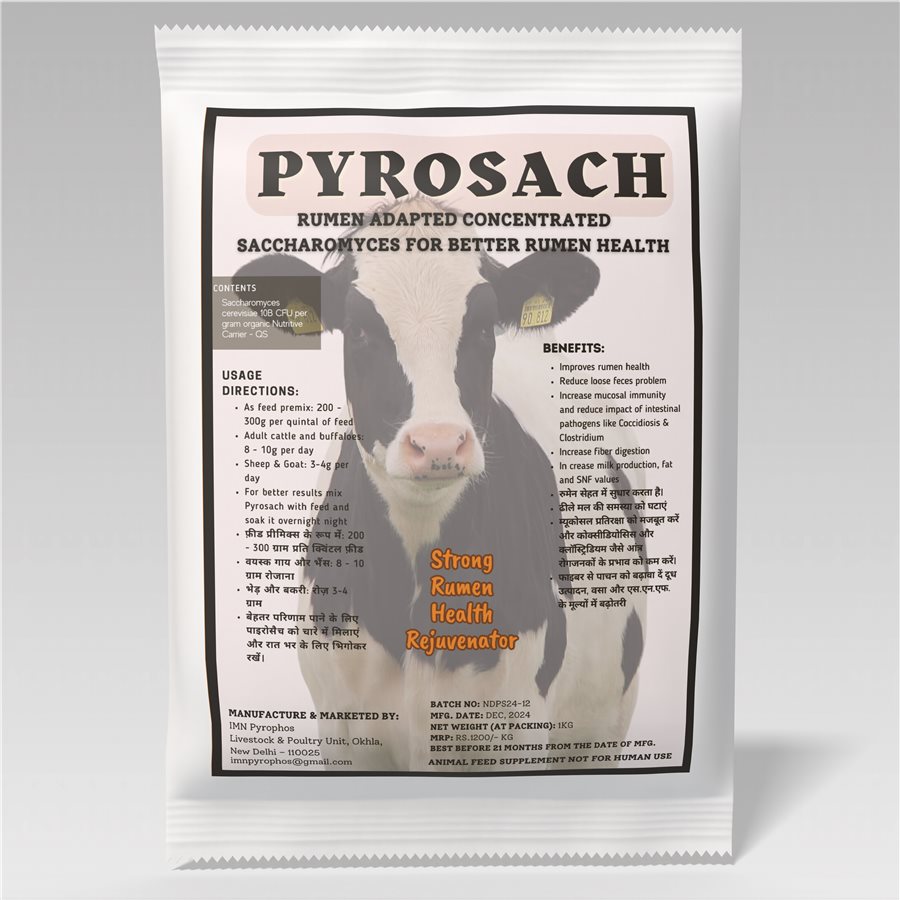
Pyrosach is a rumen-adapted live yeast (Saccharomyces cerevisiae). It is meant to be fed: adult cattle and buffalo 8 to 10 g per day, mixed with feed. Research on adding yeast at ensiling is still early and mixed, and in one corn study one yeast strain made the silage deteriorate faster once air entered. So Pyrosach belongs in the animal’s ration, not in the silo.
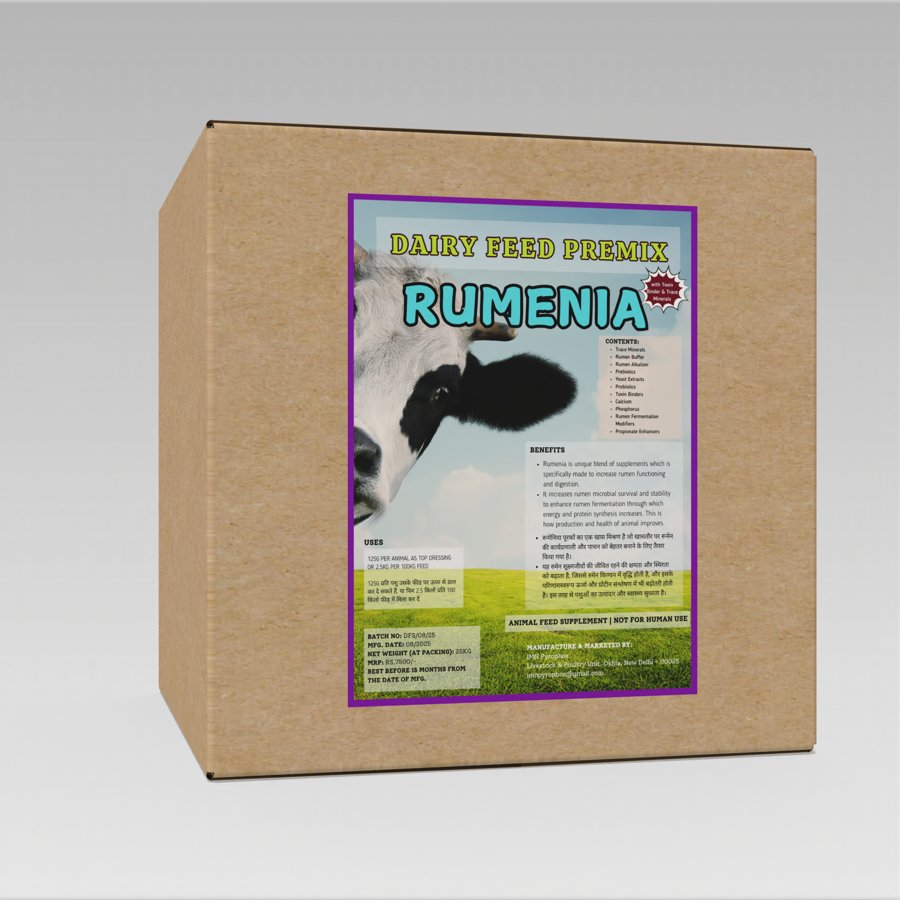
Rumenia is a dairy feed premix (trace minerals, rumen buffer, yeast extracts, probiotics, toxin binder and more) mixed into the concentrate or TMR at 2.5-3 kg per ton of feed, which is 2.5-3 g per kg of feed. On 5 kg of feed a cow gets 12.5-15 g a day.
Fed to the cow, not a silage additive
Pyrosach
Rumen-adapted Saccharomyces cerevisiae (10 billion CFU per gram). Supports rumen health, fibre digestion and loose-dung control, and supports milk, fat and SNF. Given in the daily ration.
Dose: 8-10 g per adult cow or buffalo per day. Mix with feed and soak overnight.
Dairy feed premix with trace minerals, rumen buffer, prebiotics, yeast extracts, probiotics, toxin binders, calcium and phosphorus. Mixed in the concentrate or TMR. It supports rumen function and fermentation in the animal.
Dose: 2.5-3 kg per ton of feed (2.5-3 g per kg feed).
These supplements support the animal; they do not repair bad silage. If silage is spoiled, moldy or butyric, throw out the bad part first. We never recommend feeding mouldy silage to “cover” with a binder or additive.
Common mistakes with silage additives
Buying an additive to fix poor packing. Air is the bigger enemy than any missing bacteria.
Using L. buchneri and opening in 2 weeks. The stability effect needs 30 to 60 days.
Under-dosing to save money. Half the dose can give half or no effect, especially for stability.
Uneven application. Pouring on top of the heap instead of spraying evenly.
Hot or old stock. Live bacteria die; check expiry and storage.
Chlorinated water or hot water. Can kill the bacteria.
Expecting more milk. The average inoculant milk effect is small, and L. buchneri has none.
No control. If you treat everything, you cannot know whether it paid.
Mixing “feed supplements” into the silo. Premix, yeast and minerals go to the animal, not into the pit.
Using an additive as an excuse to skip the seal.
Pre-filling checklist
Crop at the right stage and dry matter; chop length set; chaff cutter blades sharp.
Pit, bunker or bag clean, with a plan to fill and seal in the shortest possible time.
Additive chosen for one clear problem; label read for cfu, species, crop and dose per tonne.
Stock fresh, cool and within expiry; clean, non-chlorinated water ready; sprayer working.
Application point fixed at the chopper or on each layer.
Records sheet ready; one pit or bag part kept as untreated control.
Plastic cover, weights and edge sealing ready before the first load.
Myths and facts about silage additives
Myth
Fact
An additive makes good silage from any crop.
It cannot fix wrong harvest time, loose packing or a leaky seal.
Inoculants always raise milk.
A meta-analysis of 31 studies found about 0.37 kg more milk per day on average for homofermentative inoculants, with trends only for fat and protein. L. buchneri had no effect on productivity.
L. buchneri works immediately.
It takes about 30 to 60 days of storage.
L. buchneri cuts intake because of acetic acid.
In 12 studies dry matter intake did not differ.
Homofermentative inoculants always lower pH.
Not in corn, sorghum and sugarcane in the meta-analysis; they did in grasses and legumes.
Chemical additives are old-fashioned.
They give a more consistent result because they do not depend on living bacteria, but they cost more and need full dose.
Pyrosach or Rumenia can be added to the pit.
They are animal feed supplements for the ration, not silage additives.
More additive is always better.
Use the label dose; low dose may not work, and very low sorbate dose increased yeast in one trial.
Frequently asked questions
What is a silage inoculant (silage inoculant kya hai)?
A silage inoculant is a powder or liquid containing selected live lactic acid bacteria that you apply to the chopped crop at filling. The bacteria help the fermentation start faster (homofermentative types) or help the silage stay stable after opening (L. buchneri types). It is added to the crop, not given to the animal.
Do silage additives really work?
Sometimes. Research shows consistent effects of some additives on specific problems: homofermentative LAB can lower pH and ammonia, L. buchneri can greatly lengthen aerobic stability, and chemical preservatives are fairly consistent at full doses. But results vary by crop, strain and dose, and some trials show no benefit. Treat it as a tool for a named problem.
Do I need an additive for corn silage?
Not always. Good corn has plenty of sugar and often ferments well without help; the meta-analysis found no lower pH from homofermentative LAB in corn. A stability additive makes more sense if your corn silage heats at the face in summer, or the face is opened slowly.
What is the difference between homofermentative and heterofermentative LAB?
Homofermentative bacteria turn sugar almost entirely into lactic acid, a fast pH drop. Heterofermentative bacteria such as L. buchneri slowly convert some lactic acid to acetic acid, which fights yeasts and moulds and keeps silage cool at feed-out.
How long before an L. buchneri inoculant works?
About 30 to 60 days of storage before the aerobic stability benefit is clear. If you will open earlier, choose a different approach or wait.
Will an additive increase my milk?
Do not count on it. Inoculants with homofermentative LAB averaged about 0.37 kg more milk per cow per day across studies, and the mechanism is unclear. L. buchneri is used for stability, not for milk. Your ration and management decide the milk.
Can I use molasses as a silage additive?
Molasses is a nutrient additive that gives sugar to the bacteria. In practice it can help low-sugar crops, but good-sugar maize does not need it. Use it only for a clear reason and keep the crop packable. This is practical guidance rather than a result from the review.
Can I add Pyrosach, Rumenia or a mineral mixture to the silage?
No. They are feed supplements for the animal. Pyrosach is a live yeast given at 8 to 10 g per adult animal per day, and Rumenia is mixed into the concentrate or TMR at 2.5-3 kg per ton. Silage additives are a different type of product, applied to the crop at filling.
Is it safe for cows to eat silage made with additives?
Silage additives that are sold for the purpose are used at approved doses and, in the research reviewed, L. buchneri did not reduce intake or harm health in a farm summary of 39 farms. Follow the label, and ask your supplier for the product’s feeding guidance.
Where can I get help choosing for my farm?
Send your crop, pit or bag size, filling date and problem on WhatsApp +91 98715 84101, and Dr. Ibne Ali’s team will help you decide whether you need an additive at all.
Conclusion: first the basics, then an additive for a named problem
Silage additives can help, but the strongest effect comes from the basics: harvest at the right stage, chop and pack well, and seal quickly. Use a homofermentative LAB inoculant to speed up fermentation where it is slow, L. buchneri or a combination product (or a chemical) when your silage heats after opening and will be stored for more than 2 months, and keep an untreated pit to check your result. Remember the difference: a silage additive goes on the crop; Rumenia and Pyrosach go in the cow’s ration. Once the silage is good, they help you feed it with a steady rumen.
Ask on WhatsApp for your silage plan. Send your crop, quantity, number of animals and daily milk on WhatsApp +91 98715 84101. Dr. Ibne Ali’s team will help with the ration and the dose. Ask on WhatsApp
Sources (research): Muck and others, 2018, Journal of Dairy Science, “Silage review: Recent advances and future uses of silage additives”. Borreani and others, 2018, J. Dairy Sci., “Silage review: Factors affecting dry matter and quality losses in silages”. Kung and others, 2018, J. Dairy Sci., “Silage review: Interpretation of chemical, microbial and organoleptic components of silages”. Tips on bunker, bag, chaff cutter and summer use are practical guidance, not research results.
हर साल पिट भरने से पहले कई किसान एक ही सवाल पूछते हैं: “silage additive खरीदना चाहिए या अच्छी packing ही काफ़ी है?” सच यह है कि silage additives एक औज़ार हैं, जादू नहीं। एक अच्छा silage inoculant (साइलेज इनोकुलेंट) fermentation को तेज़ और साफ़ बना सकता है, या पिट खुलने के बाद साइलेज को देर तक ठंडा रख सकता है। लेकिन ग़लत product, या सही product ग़लत जगह पर, पैसा बर्बाद करा देता है। इस गाइड में हम समझाएँगे कि silage additives क्या हैं, कितने तरह के होते हैं (lactic acid bacteria inoculant, L. buchneri, chemical preservative, enzyme), Muck और साथियों (2018) की research में क्या मिला, additive कब पैसा वापस देता है और कब नहीं, कैसे लगाएँ, और cost-benefit कैसे सोचें। एक आम confusion भी साफ़ करेंगे: Rumenia और Pyrosach जैसे product गाय को खिलाए जाते हैं, ये silage additive नहीं हैं।
Silage additives क्या हैं और उनकी 4 category
Silage additive वह चीज़ है जो कटे हुए चारे में पिट भरते समय डाली जाती है, ताकि fermentation या साइलेज के टिकने का तरीक़ा बदले। यह बुनियादी चीज़ों की जगह नहीं लेता: सही harvest stage, छोटा chop, कसकर packing और जल्दी tight seal। इन basics के लिए हमारी गाइड कॉर्न साइलेज कैसे बनाएँ पढ़ें। Additive सिर्फ़ उस साइलेज को बेहतर कर सकता है जो पहले से ठीक से बनी हो।
Research reviews silage additives को silo के अंदर उनके काम के हिसाब से 4 group में बाँटते हैं:
Category
उदाहरण
मुख्य काम
1. Fermentation stimulants
Homofermentative lactic acid bacteria (LAB) inoculant, enzymes, sugar के source
Fermentation तेज़ और efficient बनाना, pH जल्दी गिराना
2. Fermentation inhibitors
Formic acid और उसके salt, nitrite, कुछ acid mixtures
Clostridia और दूसरे ख़राब bacteria को सीधे रोकना, protein बचाना
3. Aerobic deterioration inhibitors
L. buchneri inoculant, sorbate, benzoate, propionate, acetic acid
Yeast और mold कम रखना, ताकि खुलने के बाद साइलेज गर्म होकर ख़राब न हो
4. Nutrients और absorbents
Molasses (शीरा), दाना या चोकर, सूखा भूसा
Fermentation के लिए sugar/starch देना, या ज़्यादा नमी सोखना
कुछ product एक से ज़्यादा group में काम करते हैं। Muck और साथियों का review (Journal of Dairy Science, 2018) additives को producer की नज़र से भी बाँटता है: homofermentative LAB, obligate heterofermentative LAB, combination inoculants, दूसरे inoculants, chemicals और enzymes। हम नीचे इसी practical क्रम में चलेंगे।
ज़रूरी बात: silage additive chopper पर या पिट में चारे पर लगता है। जो चीज़ आप गाय को खिलाते हैं, जैसे premix, yeast या mineral mixture, वह अलग category है। नीचे वाला section “Silage additive vs गाय को दी जाने वाली supplement” ज़रूर पढ़ें।
Silo में क्या होता है और additive कहाँ मदद करता है
साइलेज उन lactic acid bacteria से बनती है जो पौधे पर पहले से रहते हैं। हवा न हो तो ये bacteria पौधे की sugar खाकर lactic acid बनाते हैं और pH गिरता है। कम pH पर चारा “अचार की तरह” सुरक्षित हो जाता है। Additive तीन मौक़ों पर मदद कर सकता है:
शुरू के दिन। अगर natural bacteria धीमे हैं तो दूसरे microbes (enterobacteria, clostridia) dry matter बर्बाद करते हैं और protein तोड़ते हैं। तेज़ शुरू होने वाला inoculant या acid-type additive इसी stage को target करता है। Research बताती है कि 10 से 38 डिग्री C के बीच temperature बढ़ने पर protein का breakdown तेज़ होता है, इसलिए गर्म और humid मौसम में तेज़ fermentation ज़्यादा ज़रूरी है, और वहाँ fast-growing homolactic inoculant एक recommended practice है (Borreani और साथी, 2018)।
Storage के महीने। ज़्यादातर साइलेज बस पड़ी रहती है। Stable साइलेज के लिए अच्छी seal और हवा का न होना चाहिए।
Feed-out का stage। पिट खुलते ही हवा अंदर आती है। Lactate खाने वाले yeast सबसे पहले जागते हैं, pH बढ़ता है और साइलेज गर्म होती है। Aerobic stability additive यहीं काम करते हैं। सूखी साइलेज ज़्यादा porous होती है और उसमें natural acetic acid कम होता है, इसलिए खुलने के बाद जल्दी ख़राब होती है (Kung और साथी, 2018)।
Silage inoculant: homofermentative LAB (“तेज़ शुरुआत वाला”)
सबसे पुराना और आम silage inoculant homofermentative lactic acid bacteria का होता है, जैसे Lactobacillus plantarum, Pediococcus या Enterococcus। सरल भाषा में, ये sugar को लगभग पूरी तरह lactic acid में बदलते हैं, जो silo का सबसे strong acid है, इसलिए pH जल्दी गिरता है। इसी को लोग “lactic acid bacteria silage” कहते हैं।
Research में क्या मिला:
इन bacteria से treat हुई साइलेज में अक्सर pH, acetic acid, butyric acid और ammonia कम, lactic acid ज़्यादा, और कई बार dry matter recovery बेहतर मिलती है।
130 articles के एक बड़े meta-analysis (Oliveira और साथी, 2017, Muck और साथियों 2018 में cited) के मुताबिक़ असर crop पर depend करता है। Inoculation से pH grass और legume में कम हुआ, लेकिन corn, sorghum और sugarcane साइलेज में नहीं। Dry matter recovery grass साइलेज में लगभग 2.8 percentage unit बेहतर रही, corn और sorghum में बेहतर नहीं हुई, और sugarcane साइलेज में 2.4 percentage unit कम रही।
Butyric acid और ammonia में कमी और lactic acid में बढ़त चारे के type पर depend नहीं थी।
दूध देने वाली गायों के 31 studies के meta-analysis में inoculated साइलेज खाने वाली गायों ने औसतन लगभग 0.37 kg/दिन ज़्यादा दूध दिया, dry matter intake में सिर्फ़ trend दिखा। वैज्ञानिक अभी इसका कारण पक्का नहीं जानते। यह असर forage type, bacteria species या दूध के level पर depend नहीं था।
एक risk: पुराने summary में लगभग एक-तिहाई studies में इन inoculants ने aerobic stability कम की, ज़्यादातर corn साइलेज में। नए meta-analysis में stability पर औसत असर नहीं मिला, पर inoculated साइलेज में yeast count ज़्यादा था।
Practical मतलब: homofermentative inoculant मुख्य रूप से fermentation phase का बीमा है। यह उन crops में सबसे काम का है जहाँ fermentation कम भरोसेमंद है (grass, legume, गीला या कम sugar वाला crop, गर्म-humid मौसम)। अच्छी sugar वाली corn को अगर आप ठीक से chop और pack करते हैं तो silo में फ़ायदा छोटा हो सकता है। यह guaranteed दूध बढ़ाने वाला नहीं है।
Heterofermentative inoculant: L. buchneri और aerobic stability
Lactobacillus buchneri “obligate heterofermentative” inoculant का मुख्य bacteria है। यह अलग तरह से काम करता है: storage के दौरान यह धीरे-धीरे कुछ lactic acid को acetic acid और 1,2-propanediol में बदल देता है। Acetic acid antifungal है, इसलिए हवा अंदर आने पर yeast और mold को बढ़ना मुश्किल होता है। नतीजा: पिट खोलने पर साइलेज देर तक ठंडी रहती है, जो भारत की गर्मी में बिल्कुल वही है जो चाहिए।
Research में क्या मिला:
43 laboratory experiments के meta-analysis में बिना treat की corn साइलेज की aerobic stability 25 घंटे थी (कमरे के temperature से 2 डिग्री C गर्म होने में लगने वाला समय)। L. buchneri की कम dose (100,000 cfu per gram fresh crop तक) पर 35 घंटे, और ज़्यादा dose (100,000 cfu per gram से ऊपर) पर लगभग 503 घंटे। असर dose पर और strain पर depend करता है।
Commercial products में final rate का range लगभग 100,000 से 400,000 cfu per gram fresh forage है। इसलिए label पर cfu का नंबर और strain ज़रूर पढ़ें।
Field में भी यही दिखा। 42 farm silos के survey में L. buchneri से treat हुई corn साइलेज में stability और कम yeast count का रिश्ता मिला।
Intake की चिंता सही नहीं निकली। Dairy cattle और sheep की 12 studies में L. buchneri साइलेज से dry matter intake अलग नहीं था, और Denmark के 39 farms के field summary में intake, दूध, health या fertility पर कोई नुक़सान नहीं दिखा।
L. buchneri साइलेज में acetic acid थोड़ा ज़्यादा होता है (Kung और साथी, 2018 के मुताबिक़ silage dry matter का लगभग 3 से 4 percent)। ज़्यादा dose पर silo में dry matter loss लगभग 1 percentage point ज़्यादा हो सकता है, जो feed-out पर ख़राबी बचने के सामने छोटा है।
L. buchneri animal production नहीं बढ़ाता। Muck और साथी कहते हैं कि इसका animal productivity पर कोई असर नहीं। इसकी value साइलेज ताज़ा रखने में है, ज़्यादा दूध बनाने में नहीं।
Time: conversion धीमा है। Aerobic stability साफ़ बढ़ने में लगभग 30 से 60 दिन लगते हैं (review में 45 से 60 दिन भी लिखा है)। अगर silo कुछ हफ़्तों में खोलना है तो L. buchneri अभी मदद नहीं करेगा।
Muck और साथी यह भी कहते हैं कि फ़ायदे के लिए acetic acid में conversion होना ज़रूरी है। कुछ trials में बिना treat की साइलेज में पहले से natural acetic acid ज़्यादा था, इसलिए inoculant के पास जोड़ने को कुछ नहीं था।
Combination inoculant, दूसरे microbes और enzymes
Combination inoculant में तेज़ homofermentative LAB (पहले हफ़्ते के लिए) और L. buchneri (बाद की stability के लिए) साथ होते हैं। Idea यह है कि एक product में दोनों फ़ायदे मिल जाएँ। दो दर्जन से ज़्यादा studies हैं। ज़्यादातर में pH बिना treat की साइलेज से तेज़ गिरा, और लंबी storage (trials में आम तौर पर 90 से 120 दिन) के साथ aerobic stability बढ़ी। उदाहरण: whole-plant corn में L. buchneri को Pediococcus या L. plantarum के साथ देने पर aerobic stability 500 घंटे से ऊपर रही, जबकि बिना treat वाली 180 घंटे थी (Reich और Kung, 2010)। लेकिन review ने failures भी लिखे हैं: inoculant crop के natural bacteria से हार सकता है, या बिना treat की साइलेज में पहले से acetic acid ज़्यादा होता है। Combination products दूध बढ़ाते हैं या नहीं, यह अभी पता नहीं, क्योंकि गाय पर feeding studies कम हैं।
दूसरे microbes। Propionibacterium (propionic acid बनाता है) और Bacillus subtilis (yeast रोकने वाले compounds बनाता है) ने कुछ studies में stability में मदद की, कुछ में नहीं। Streptococcus bovis को तेज़ starter के रूप में देखा जा रहा है। Ensiling के समय yeast मिलाने पर research अभी शुरुआती है; एक corn study में एक yeast strain ने तो खुलने के बाद साइलेज को और जल्दी ख़राब कर दिया। इसीलिए नीचे हम कहते हैं कि साइलेज पर feed yeast न छिड़कें।
Enzymes (cellulase, hemicellulase) पौधे के fibre को तोड़कर bacteria के लिए sugar छोड़ते हैं। Review कहता है कि ये fermentation में मदद करने में fibre digestibility बढ़ाने से ज़्यादा सफल रहे, और ज़्यादा free sugar कभी-कभी aerobic stability घटा सकती है क्योंकि spoilage yeast उसे खा लेते हैं। Enzymes लगभग हमेशा inoculant के साथ ही बिकते हैं।
Chemical additives: acid और उनके salt
Chemical additives acid और उनके salt होते हैं, अक्सर mixture में बिकते हैं।
Formic acid (और formate, nitrite, hexamine salts): चारे को सीधे acidify करते हैं, ख़राब bacteria रोकते हैं, protein breakdown कम करते हैं। Northern Europe में गीले या मुश्किल से silage होने वाले crops के लिए आम है। Review की research में formic acid वाले products grass पर लगभग 3 से 6 litre per tonne लगाए गए।
Sorbate, benzoate, propionate, acetic acid: feed-out पर yeast और mold रोकते हैं। Corn साइलेज में buffered propionic acid को stability में लगातार सुधार के लिए 2 से 3 kg per tonne fresh crop चाहिए था; कम dose ने काम नहीं किया। Potassium sorbate लगभग 1 kg per tonne fresh matter पर कई trials में असरदार था, और बहुत कम level (91 mg per kg) पर yeast count उल्टा बढ़ गया।
Muck और साथी निष्कर्ष निकालते हैं कि chemical additives से inoculants के मुक़ाबले ज़्यादा लगातार return मिलना चाहिए क्योंकि ये जीवित bacteria पर कम depend करते हैं, लेकिन शुरुआती ख़र्च ज़्यादा होने से लोग पीछे हट जाते हैं। इन्हें पूरी effective dose पर ही लगाना होता है; “चुटकी भर” काम नहीं करता। कई product corrosive या irritant होते हैं, इसलिए label follow करें, सुरक्षा पहनें और सिर्फ़ साइलेज के लिए बिकने वाले product इस्तेमाल करें। आपके farm के लिए chemical की dose हम नहीं लिखते; supplier से label rate पूछें।
Nutrients और absorbents: molasses, दाना और सूखा material
यह चौथी category सबसे सरल है। Practical guidance (review से नहीं): भारत में किसान अक्सर कम sugar वाले crop में bacteria को खुराक देने के लिए molasses (शीरा), थोड़ा दाना या चोकर डालते हैं, और बहुत गीले crop में रस सोखने के लिए सूखा भूसा या chaff डालते हैं। ये पुराने low-tech तरीक़े हैं। ये तभी काम के हैं जब sugar सच में कम हो या crop बहुत गीला हो (जैसे बहुत छोटी उम्र में कटा ज्वार या नैपियर, या बारिश में भीगा crop)। सही dough stage की मक्का में पहले से काफ़ी sugar होती है, वहाँ extra molasses ज़्यादातर बेकार है। इतना सूखा material कभी न डालें कि crop packing के लिए बहुत सूखा हो जाए।
कौन सा additive किस समस्या के लिए: quick table
आपकी स्थिति
कौन सा option fit है
क्या असर expect करें
क्या ठीक नहीं करेगा
Grass, नैपियर, ज्वार या legume; धीमे fermentation का risk; गर्म-humid मौसम
Homofermentative LAB inoculant
pH जल्दी गिरेगा, ammonia कम, कभी dry matter recovery बेहतर
ख़राब packing या देर से seal
Corn साइलेज, गर्मी, पिट या bunker का face धीरे खुलता है, face पर साइलेज गर्म होती है
L. buchneri या combination inoculant (या chemical stability additive)
खुलने के बाद साइलेज देर तक ठंडी, पर असर के लिए 30 से 60 दिन storage चाहिए
दूध नहीं बढ़ेगा; बहुत सूखे और ढीले pack crop को नहीं बचाएगा
बहुत गीला crop (बारिश, बहुत जल्दी कटा)
बेहतर: पहले मुरझाने दें (wilt)। ज़रूरत हो तो acid-type additive या absorbent
Clostridia का risk कम
बहुत कम dry matter पर chop करने पर effluent loss बहुत होगा
छोटा किसान, 1-2 पशु, bag साइलेज, अच्छी sealing
अक्सर कोई नहीं; tight और जल्दी seal पर पैसा लगाएँ
छोटे scale पर cost per tonne ज़्यादा
Additive tight sealing की जगह नहीं ले सकता
भरने के 3-4 हफ़्ते में खिलाना है
Homofermentative LAB, L. buchneri नहीं
L. buchneri का stability effect अभी तैयार नहीं
–
लंबी storage, अगली गर्मी या monsoon में खुलेगी
L. buchneri या combination inoculant
धीमे stability effect के लिए समय मिल जाता है
हवा का रिसाव; यह किसी भी साइलेज को ख़राब कर देता है
Silage additives कब पैसा वापस देते हैं और कब नहीं
Additive तब ज़्यादा काम का है जब:
crop grass, legume या ऐसा है जिसकी fermentation variable रहती है, या मौसम गर्म और humid है;
volume बड़ा है, इसलिए cost per tonne कम पड़ती है और एक बची हुई batch पूरे season का ख़र्च निकाल देती है;
साइलेज high value की है (high-yielding गायों के लिए) और face कई दिन खुला रहता है, तो face पर ख़राबी असली नुक़सान है;
साइलेज थोड़ी सूखी है, महीनों store होगी और गर्मी में खुलेगी;
पिछले सालों में heating या mold का record है।
Additive काम का नहीं होगा जब:
basics ग़ायब हैं: बहुत देर या बहुत जल्दी harvest, लंबा chop, ढीली packing, धीमा या leak होने वाला cover। Additive इन्हें ठीक नहीं करता;
crop अच्छी corn है, सही dry matter पर, और face जल्दी ख़त्म होती है (जैसे छोटा herd रोज़ 30 cm या ज़्यादा काट लेता है; यह practical rule of thumb है, research नहीं);
आप 3-4 हफ़्ते में silo खोलते हैं और L. buchneri ख़रीदा है;
product का strain पता नहीं, cfu लिखा नहीं, या गर्मी में रखा हुआ है;
उम्मीद “पक्का ज़्यादा दूध” की है। Inoculant से दूध का फ़ायदा औसत छोटा है (meta-analysis में लगभग 0.37 kg per गाय per दिन), और L. buchneri दूध बिल्कुल नहीं बढ़ाता।
Rule of thumb: पहले harvest timing, chop length, packing और sealing पर ख़र्च करें। हमारी guides कॉर्न साइलेज बनाने और dry matter loss कम करने पर किसी भी बोतल से ज़्यादा return देंगी। Additive तभी लगाएँ जब आप एक ख़ास समस्या का नाम ले सकें।
Silage inoculant कैसे लगाएँ: step by step
Practical guidance (पहले अपने product का label follow करें):
समस्या के हिसाब से product चुनें। तेज़ fermentation (homofermentative) या stability (L. buchneri या combination)। Label पर species, final rate पर cfu per gram, किस crop के लिए है और expiry date देखें।
Label के हिसाब से store करें। जीवित bacteria गर्मी में मर जाते हैं। Sachet ठंडा और धूप से दूर रखें, expiry के बाद use न करें।
साफ़ पानी में घोलें। Chlorine वाला नल का पानी bacteria को नुक़सान पहुँचा सकता है; कई companies साफ़, बिना chlorine वाला पानी use करने को कहती हैं। Label में जितना पानी लिखा है उतना लें, ताकि product बराबर फैले।
काटते समय लगाएँ। सबसे अच्छा chopper के outlet पर sprayer, या पिट भरते समय हर layer पर sprinkler। बराबर फैलाकर, एक जगह नहीं। बराबर न मिलना inoculant के “fail” होने का सबसे बड़ा कारण है।
छाँव में लगाएँ, धूप में नहीं। गर्मी की सीधी धूप में रखे धातु के drum में न मिलाएँ।
पूरी dose per tonne लें। Label rate से कम मतलब research dose से कम, ख़ासकर L. buchneri में जहाँ dose सबसे ज़्यादा matter करता है।
जल्दी pack और seal करें। Crop आते ही packing, tyre या भारी roller, और airtight cover। corn silage how-to देखें।
Record लिखें। Product, batch, तारीख़, कितने tonne treat किए, कौन सा पिट treat हुआ। एक पिट या bag का हिस्सा बिना treat छोड़ें ताकि तुलना हो सके।
असर का इंतज़ार करें। L. buchneri के लिए 6 से 8 हफ़्ते से पहले न खोलें। साइलेज कब खोलनी चाहिए पढ़ें।
Cost-benefit कैसे सोचें: सादा गणित
Packet के दाम की तुलना न करें। Per tonne treat साइलेज की cost की तुलना उससे करें जो वह बचाता है। Supplier से label rate per tonne और pack का दाम पूछें, फिर यह हिसाब लगाएँ:
Cost per tonne = pack का दाम divided by वे tonnes जितना एक pack treat करता है।
कुल cost = cost per tonne multiplied by जितने tonne आप भरेंगे।
संभावित फ़ायदा: 100 tonne fresh साइलेज पर हर 1 percentage point dry matter बचना लगभग 1 tonne साइलेज है। इसे अपनी साइलेज के एक tonne के दाम से गुणा करें। L. buchneri research में ज़्यादा dose पर लगभग 1 percentage point extra loss दिखा, और homofermentative LAB में grass साइलेज में recovery लगभग 2.8 point तक बेहतर, पर corn में नहीं। इसे सिर्फ़ “क्या संभव है” का अंदाज़ा मानें, वादा नहीं।
Feed-out का फ़ायदा: अंदाज़ा लगाएँ कि face का कितना हिस्सा आप गर्मी या mold की वजह से फेंकते हैं। अगर आपका waste कम है तो aerobic stability additive के पास बचाने को कम है।
दूध का फ़ायदा: L. buchneri के लिए zero मानें, homofermentative inoculant के लिए छोटा bonus।
अपने numbers भरें
आपकी value
Pack का दाम
Rs ____
एक pack कितने tonne treat करता है (label rate)
____ t
Cost per tonne (pack दाम / tonne)
Rs ____
आप कितने tonne भरेंगे
____ t
Additive की कुल cost
Rs ____
पिछले साल कितनी साइलेज बर्बाद हुई (heating, mold), tonne में
____ t
उस waste की value आपकी साइलेज के दाम पर
Rs ____
अगर पिछले साल का waste additive की कुल cost से साफ़ ज़्यादा का था, और कारण feed-out पर ख़राबी थी, तो stability additive एक trial के लायक़ है। अगर waste ख़राब packing या leak से था, तो पहले roller और बेहतर cover पर ख़र्च करें। हमेशा एक untreated पिट को treated पिट से उसी farm पर, उसी हफ़्ते compare करें, और अपने records को फ़ैसला करने दें।
Silage additive vs गाय को दी जाने वाली supplement: दोनों को mix न करें
WhatsApp पर यह सबसे आम confusion है, इसलिए हम साफ़ लिख रहे हैं।
Silage additive / inoculant
गाय को दी जाने वाली supplement
कहाँ जाता है
कटे हुए चारे पर, chopper पर या पिट में
Ration में: concentrate, TMR या top dressing, label के हिसाब से
कब
एक बार, पिट भरते समय
रोज़, जब पशु खा रहा हो
क्या बदलता है
साइलेज कैसे ferment होती है और कैसे टिकती है
Rumen कैसे काम करता है, गाय को कौन से mineral और vitamin मिलते हैं
उदाहरण
LAB inoculant, L. buchneri, formic या propionic acid mixture, sorbate या benzoate salt, enzymes
Rumenia, Pyrosach, Pyromin, Bionice, Sel E Boost (Dairy)
Rumenia और Pyrosach animal feed supplements हैं। ये silage additive नहीं हैं, और इन्हें पिट में डालने से साइलेज बेहतर नहीं बनेगी। ये साइलेज बनने के बाद गाय या भैंस को feed में दिए जाते हैं। कृपया इन्हें कटे हुए चारे पर न छिड़कें।
Pyrosach एक rumen-adapted live yeast (Saccharomyces cerevisiae) है। इसे खिलाने के लिए बनाया गया है: adult cattle और buffalo को 8 से 10 g per दिन, feed में मिलाकर। Ensiling के समय yeast मिलाने पर research अभी शुरुआती और मिली-जुली है, और एक corn study में एक yeast strain ने हवा आने पर साइलेज को और जल्दी ख़राब कर दिया। इसलिए Pyrosach पशु के ration में जाता है, silo में नहीं।
Rumenia एक dairy feed premix है (trace minerals, rumen buffer, yeast extracts, probiotics, toxin binder और भी) जो concentrate या TMR में 2.5-3 kg per ton feed की दर से मिलाया जाता है, यानी 2.5-3 g per kg feed। 5 kg feed पर गाय को 12.5-15 g per दिन मिलता है।
रुमेन की सेहत
Pyrosach
रुमेन के अनुकूल Saccharomyces cerevisiae (1000 करोड़ CFU प्रति ग्राम)। रेशे का पाचन और रुमेन की सेहत सुधारता है, पतला गोबर घटाता है, दूध, फैट और SNF में सहायक।
मात्रा: 8–10 ग्राम प्रति वयस्क गाय या भैंस प्रति दिन, या 200–300 ग्राम प्रति क्विंटल दाना। अच्छे नतीजे के लिए दाने में मिलाकर रात भर भिगोएँ।
Trace minerals, rumen buffer, prebiotics, yeast extracts, probiotics, toxin binders, कैल्शियम और फॉस्फोरस वाला डेयरी फीड प्रीमिक्स। rumen का काम, microbes की स्थिरता और fermentation बढ़ाता है, जिससे ऊर्जा और प्रोटीन का संश्लेषण बढ़ता है।
मात्रा: 2.5-3 किलो प्रति टन फ़ीड (2.5-3 ग्राम प्रति किलो फ़ीड)।
ये supplements पशु को support करते हैं; ख़राब साइलेज को ठीक नहीं करते। अगर साइलेज ख़राब, mold वाली या butyric है, तो पहले ख़राब हिस्सा फेंकें। हम mold वाली साइलेज को binder या additive से “ढककर” खिलाने की सलाह कभी नहीं देते।
Silage additives में आम ग़लतियाँ
ख़राब packing को additive से ठीक करने की कोशिश। हवा किसी भी ग़ायब bacteria से बड़ा दुश्मन है।
L. buchneri लगाकर 2 हफ़्ते में खोलना। Stability असर को 30 से 60 दिन चाहिए।
पैसे बचाने के लिए कम dose। आधी dose आधा या zero असर दे सकती है, ख़ासकर stability में।
बराबर न लगाना। Heap के ऊपर उड़ेल देना, spray न करना।
गर्म या पुराना stock। जीवित bacteria मर जाते हैं; expiry और storage देखें।
Chlorine वाला या गर्म पानी। Bacteria को मार सकता है।
ज़्यादा दूध की उम्मीद। Inoculant का दूध असर औसत छोटा है, और L. buchneri में नहीं है।
Control के बिना। सब कुछ treat कर दिया तो पता नहीं चलेगा कि पैसा वापस आया या नहीं।
“Feed supplement” को silo में डालना। Premix, yeast और mineral पशु को जाते हैं, पिट में नहीं।
Additive को seal छोड़ने का बहाना बनाना।
पिट भरने से पहले checklist
Crop सही stage और dry matter पर; chop length set; chaff cutter के blade तेज़।
पिट, bunker या bag साफ़, और सबसे कम समय में भरने और seal करने की planning।
Additive एक साफ़ समस्या के लिए चुना; label से cfu, species, crop और dose per tonne पढ़ा।
Stock ताज़ा, ठंडा और expiry के अंदर; साफ़, बिना chlorine का पानी; sprayer चालू।
लगाने की जगह chopper पर या हर layer पर तय।
Record sheet तैयार; एक पिट या bag का हिस्सा untreated control के रूप में।
Plastic cover, weights और edge sealing पहली load से पहले तैयार।
Silage additives: myths और facts
Myth
Fact
Additive किसी भी crop से अच्छी साइलेज बना देता है।
यह ग़लत harvest time, ढीली packing या leak वाली seal को ठीक नहीं कर सकता।
Inoculant हमेशा दूध बढ़ाते हैं।
31 studies के meta-analysis में homofermentative inoculant से औसत लगभग 0.37 kg ज़्यादा दूध/दिन मिला, fat और protein में सिर्फ़ trend। L. buchneri का productivity पर कोई असर नहीं था।
L. buchneri तुरंत काम करता है।
इसे लगभग 30 से 60 दिन storage चाहिए।
L. buchneri में acetic acid से intake कम होता है।
12 studies में dry matter intake अलग नहीं था।
Homofermentative inoculant हमेशा pH गिराता है।
Meta-analysis में corn, sorghum और sugarcane में नहीं; grass और legume में किया।
Chemical additive पुराने ज़माने के हैं।
ये ज़्यादा लगातार result देते हैं क्योंकि जीवित bacteria पर depend नहीं, पर महँगे हैं और पूरी dose चाहिए।
Pyrosach या Rumenia पिट में डाल सकते हैं।
ये animal feed supplements हैं जो ration में जाते हैं, silage additive नहीं।
ज़्यादा additive हमेशा बेहतर।
Label dose लें; कम dose काम न करे, और एक trial में बहुत कम sorbate dose से yeast उल्टा बढ़ा।
अक्सर पूछे जाने वाले सवाल (FAQ)
Silage inoculant क्या है (silage inoculant kya hai)?
Silage inoculant एक powder या liquid है जिसमें चुने हुए जीवित lactic acid bacteria होते हैं, जो पिट भरते समय कटे चारे पर लगाए जाते हैं। ये bacteria fermentation जल्दी शुरू करने (homofermentative type) या खुलने के बाद साइलेज को stable रखने (L. buchneri type) में मदद करते हैं। यह चारे में डाला जाता है, पशु को नहीं दिया जाता।
क्या silage additives सच में काम करते हैं?
कभी-कभी। Research में कुछ additives का ख़ास समस्या पर लगातार असर दिखता है: homofermentative LAB pH और ammonia कम कर सकता है, L. buchneri aerobic stability बहुत बढ़ा सकता है, और chemical preservatives पूरी dose पर काफ़ी लगातार हैं। पर result crop, strain और dose पर depend करता है, और कुछ trials में कोई फ़ायदा नहीं दिखा। इसे नाम ली गई समस्या के औज़ार की तरह देखें।
क्या corn साइलेज के लिए additive ज़रूरी है?
हमेशा नहीं। अच्छी corn में sugar काफ़ी होती है और अक्सर बिना मदद के अच्छे से ferment होती है; meta-analysis में corn में homofermentative LAB से pH कम नहीं हुआ। Stability additive तब समझदारी है जब गर्मी में आपकी corn साइलेज face पर गर्म होती है या face धीरे खुलता है।
Homofermentative और heterofermentative LAB में क्या फ़र्क़ है?
Homofermentative bacteria sugar को लगभग पूरी तरह lactic acid बनाते हैं, pH जल्दी गिरता है। L. buchneri जैसे heterofermentative bacteria धीरे-धीरे कुछ lactic acid को acetic acid में बदलते हैं, जो yeast और mold से लड़ता है और feed-out पर साइलेज ठंडी रखता है।
L. buchneri inoculant कितने दिन में काम करता है?
Aerobic stability का फ़ायदा साफ़ दिखने में लगभग 30 से 60 दिन storage लगते हैं। अगर पहले खोलना है तो दूसरा तरीक़ा चुनें या रुक जाएँ।
क्या additive से दूध बढ़ेगा?
इसके भरोसे न रहें। Homofermentative LAB वाले inoculants ने studies में औसत लगभग 0.37 kg per गाय per दिन ज़्यादा दूध दिया, और कारण साफ़ नहीं है। L. buchneri stability के लिए है, दूध के लिए नहीं। दूध आपका ration और management तय करते हैं।
क्या molasses को silage additive की तरह use कर सकते हैं?
Molasses एक nutrient additive है जो bacteria को sugar देता है। Practice में कम sugar वाले crop में मदद कर सकता है, पर अच्छी sugar वाली मक्का को इसकी ज़रूरत नहीं। सिर्फ़ साफ़ वजह पर use करें और crop packable रखें। यह practical guidance है, review का result नहीं।
क्या Pyrosach, Rumenia या mineral mixture साइलेज में डाल सकते हैं?
नहीं। ये पशु के feed supplements हैं। Pyrosach एक live yeast है जो adult पशु को 8 से 10 g per दिन दिया जाता है, और Rumenia concentrate या TMR में 2.5-3 kg per ton की दर से मिलता है। Silage additive अलग type का product है जो भरते समय चारे पर लगता है।
क्या additive वाली साइलेज गाय को खिलाना सुरक्षित है?
साइलेज के लिए बिकने वाले additive तय dose पर use होते हैं, और review की research में L. buchneri से 39 farms के summary में intake या health पर नुक़सान नहीं दिखा। Label follow करें और supplier से product की feeding guidance पूछें।
अपने farm के लिए चुनने में मदद कहाँ से मिलेगी?
अपना crop, पिट या bag का size, भरने की तारीख़ और समस्या WhatsApp +91 98715 84101 पर भेजें; डॉ. इब्ने अली की team बताएगी कि आपको additive की ज़रूरत है भी या नहीं।
निष्कर्ष: पहले basics, फिर किसी नाम ली गई समस्या के लिए additive
Silage additives मदद कर सकते हैं, पर सबसे बड़ा असर basics से आता है: सही stage पर harvest, अच्छा chop और pack, और जल्दी seal। जहाँ fermentation धीमी हो वहाँ homofermentative LAB inoculant लें; जब साइलेज खुलने के बाद गर्म होती हो और 2 महीने से ज़्यादा store होगी तो L. buchneri, combination product (या chemical); और अपना result जाँचने के लिए एक untreated पिट रखें। फ़र्क़ याद रखें: silage additive चारे पर जाता है; Rumenia और Pyrosach गाय के ration में जाते हैं। साइलेज अच्छी बन जाए तो ये आपको स्थिर rumen के साथ उसे खिलाने में मदद करते हैं।
अपनी silage planning के लिए WhatsApp पर पूछें। अपना crop, quantity, पशुओं की संख्या और रोज़ का दूध WhatsApp +91 98715 84101 पर भेजें। डॉ. इब्ने अली की team ration और dose में मदद करेगी। WhatsApp पर पूछें
Sources (research): Muck और साथी, 2018, Journal of Dairy Science, “Silage review: Recent advances and future uses of silage additives”। Borreani और साथी, 2018, J. Dairy Sci., “Silage review: Factors affecting dry matter and quality losses in silages”। Kung और साथी, 2018, J. Dairy Sci., “Silage review: Interpretation of chemical, microbial and organoleptic components of silages”। Bunker, bag, chaff cutter और गर्मी से जुड़े tips practical guidance हैं, research result नहीं।
Har saal pit bharne se pehle bahut se kisan ek hi sawal poochhte hain: “Silage additive kharidna chahiye ya achhi packing hi kaafi hai?” Sach ye hai ki silage additives ek tool hain, jaadu nahi. Ek achha silage inoculant fermentation ko tez aur saaf bana sakta hai, ya pit khulne ke baad silage ko thanda rakh sakta hai. Lekin galat product, ya sahi product galat jagah par, paisa barbaad kar deta hai. Is guide me hum samjhayenge ki silage additives kya hain, kitne type ke hote hain (lactic acid bacteria inoculant, L. buchneri, chemical preservative, enzyme), Muck aur saathiyon (2018) ki research me kya mila, additive kab paisa wapas deta hai aur kab nahi, kaise lagayein, aur cost-benefit kaise sochein. Ek aam confusion bhi saaf karenge: Rumenia aur Pyrosach jaise product gaay ko khilaye jaate hain, ye silage additive nahi hain.
Silage additives kya hain aur unki 4 category
Silage additive wo cheez hai jo kate hue fodder me pit bharte waqt daali jaati hai, taaki fermentation ya silage ke tikne ka tareeka badle. Ye basic cheezon ki jagah nahi leta: sahi harvest stage, chhota chop, kasi hui packing aur jaldi tight seal. In basics ke liye hamari guide corn silage kaise banayein padhein. Additive sirf us silage ko behtar kar sakta hai jo pehle se theek se bani ho.
Research reviews silage additives ko silo ke andar unke kaam ke hisaab se 4 group me baantte hain:
Category
Udaharan
Mukhya kaam
1. Fermentation stimulants
Homofermentative lactic acid bacteria (LAB) inoculant, enzymes, sugar ke source
Fermentation tez aur efficient banana, pH jaldi girana
2. Fermentation inhibitors
Formic acid aur uske salt, nitrite, kuch acid mixtures
Clostridia aur doosre kharab bacteria ko seedha rokna, protein bachana
3. Aerobic deterioration inhibitors
L. buchneri inoculant, sorbate, benzoate, propionate, acetic acid
Yeast aur mold kam rakhna, taaki khulne ke baad silage garam hokar kharab na ho
4. Nutrients aur absorbents
Molasses (sheera), daana ya chokar, sukha bhusa
Fermentation ke liye sugar/starch dena, ya zyada nami sokhna
Kuch product ek se zyada group me kaam karte hain. Muck aur saathiyon ka review (Journal of Dairy Science, 2018) additives ko producer ki nazar se bhi baantta hai: homofermentative LAB, obligate heterofermentative LAB, combination inoculants, doosre inoculants, chemicals aur enzymes. Hum neeche isi practical order me chalenge.
Zaroori baat: silage additive chopper par ya pit me fodder par lagta hai. Jo cheez aap gaay ko khilate hain, jaise premix, yeast ya mineral mixture, wo alag category hai. Neeche wala section “Silage additive vs cow ko dene wali supplement” zaroor padhein.
Silo me kya hota hai aur additive kahan madad karta hai
Silage un lactic acid bacteria se banti hai jo paudhe par pehle se rehte hain. Hawa na ho to ye bacteria paudhe ki sugar khakar lactic acid banate hain aur pH girta hai. Kam pH par fodder “achaar ki tarah” surakshit ho jaata hai. Additive teen mauke par madad kar sakta hai:
Shuru ke din. Agar natural bacteria dheere hain to doosre microbes (enterobacteria, clostridia) dry matter barbaad karte hain aur protein todte hain. Tez shuru hone wala inoculant ya acid-type additive isi stage ko target karta hai. Research batati hai ki 10 se 38 degree C ke beech temperature badhne par protein ka breakdown tez hota hai, isliye garm aur humid mausam me tez fermentation zyada zaroori hai, aur wahan fast-growing homolactic inoculant ek recommended practice hai (Borreani aur saathi, 2018).
Storage ke mahine. Zyadatar silage bas padi rehti hai. Stable silage ke liye achhi seal aur hawa ka na hona chahiye.
Feed-out ka stage. Pit khulte hi hawa andar aati hai. Lactate khane wale yeast sabse pehle jaagte hain, pH badhta hai aur silage garam hoti hai. Aerobic stability additive yahin kaam karte hain. Sukhi silage zyada porous hoti hai aur usme natural acetic acid kam hota hai, isliye khulne ke baad jaldi kharab hoti hai (Kung aur saathi, 2018).
Sabse purana aur aam silage inoculant homofermentative lactic acid bacteria ka hota hai, jaise Lactobacillus plantarum, Pediococcus ya Enterococcus. Saadi bhasha me ye sugar ko lagbhag poori tarah lactic acid me badalte hain, jo silo ka sabse strong acid hai, isliye pH jaldi girta hai. Isi ko log “lactic acid bacteria silage” kehte hain.
Research me kya mila:
In bacteria se treat hui silage me aksar pH, acetic acid, butyric acid aur ammonia kam, lactic acid zyada, aur kai baar dry matter recovery behtar milti hai.
130 articles ke ek bade meta-analysis (Oliveira aur saathi, 2017, Muck aur saathiyon 2018 me cited) ke mutabik asar crop par depend karta hai. Inoculation se pH grass aur legume me kam hua, lekin corn, sorghum aur sugarcane silage me nahi. Dry matter recovery grass silage me lagbhag 2.8 percentage unit behtar rahi, corn aur sorghum me behtar nahi hui, aur sugarcane silage me 2.4 percentage unit kam rahi.
Butyric acid aur ammonia me kami aur lactic acid me badhottari fodder ke type par depend nahi thi.
Doodh dene wali gaay ke 31 studies ke meta-analysis me inoculated silage khane wali gaayon ne ausat lagbhag 0.37 kg/din zyada doodh diya, dry matter intake me sirf trend dikha. Vaigyanik abhi iska karan pakka nahi jaante. Ye asar forage type, bacteria species ya doodh ke level par depend nahi tha.
Ek risk: purane summary me lagbhag ek-tihai studies me in inoculants ne aerobic stability kam ki, zyadatar corn silage me. Naye meta-analysis me stability par ausat asar nahi mila, par inoculated silage me yeast count zyada tha.
Practical matlab: homofermentative inoculant mukhya roop se fermentation phase ka bima hai. Ye un crops me sabse kaam ka hai jahan fermentation kam bharosemand hai (grass, legume, geela ya kam sugar wala crop, garm-humid mausam). Achhi sugar wale corn ko agar aap theek se chop aur pack karte hain to silo me faayda chhota ho sakta hai. Ye guaranteed doodh badhane wala nahi hai.
Heterofermentative inoculant: L. buchneri aur aerobic stability
Lactobacillus buchneri “obligate heterofermentative” inoculant ka mukhya bacteria hai. Ye alag tarah se kaam karta hai: storage ke dauran ye dheere-dheere kuch lactic acid ko acetic acid aur 1,2-propanediol me badal deta hai. Acetic acid antifungal hai, isliye hawa andar aane par yeast aur mold ko badhna mushkil hota hai. Natija: pit kholne par silage der tak thandi rehti hai, jo bharat ki garmi me bilkul wahi hai jo chahiye.
Research me kya mila:
43 laboratory experiments ke meta-analysis me bina treat ki corn silage ki aerobic stability 25 ghante thi (kamre ke temperature se 2 degree C garam hone me lagne wala time). L. buchneri ki kam dose (100,000 cfu per gram fresh crop tak) par 35 ghante, aur zyada dose (100,000 cfu per gram se upar) par lagbhag 503 ghante. Asar dose par aur strain par depend karta hai.
Commercial products me final rate ka range lagbhag 100,000 se 400,000 cfu per gram fresh forage hai. Isliye label par cfu ka number aur strain zaroor padhein.
Field me bhi yahi dikha. 42 farm silos ke survey me L. buchneri se treat hui corn silage me stability aur kam yeast count ka rishta mila.
Intake ki chinta sahi nahi nikli. Dairy cattle aur sheep ki 12 studies me L. buchneri silage se dry matter intake alag nahi tha, aur Denmark ke 39 farms ke field summary me intake, doodh, health ya fertility par koi nuksan nahi dikha.
L. buchneri silage me acetic acid thoda zyada hota hai (Kung aur saathi, 2018 ke mutabik silage dry matter ka lagbhag 3 se 4 percent). Zyada dose par silo me dry matter loss lagbhag 1 percentage point zyada ho sakta hai, jo feed-out par kharabi bachne ke saamne chhota hai.
L. buchneri animal production nahi badhata. Muck aur saathi kehte hain ki iska animal productivity par koi asar nahi. Iski value silage taaza rakhne me hai, zyada doodh banane me nahi.
Time: conversion dheera hai. Aerobic stability saaf badhne me lagbhag 30 se 60 din lagte hain (review me 45 se 60 din bhi likha hai). Agar silo kuch hafton me kholna hai to L. buchneri abhi madad nahi karega.
Muck aur saathi ye bhi kehte hain ki faayde ke liye acetic acid me conversion hona zaroori hai. Kuch trials me bina treat ki silage me pehle se natural acetic acid zyada tha, isliye inoculant ke paas jodne ko kuch nahi tha.
Combination inoculant me tez homofermentative LAB (pehle hafte ke liye) aur L. buchneri (baad ki stability ke liye) saath hote hain. Idea ye hai ki ek product me dono faayde mil jayein. Do darjan se zyada studies hain. Zyadatar me pH bina treat ki silage se tez gira, aur lambi storage (trials me aam taur par 90 se 120 din) ke saath aerobic stability badhi. Udaharan: whole-plant corn me L. buchneri ko Pediococcus ya L. plantarum ke saath dene par aerobic stability 500 ghante se upar rahi, jabki bina treat wali 180 ghante thi (Reich aur Kung, 2010). Lekin review ne failures bhi likhe hain: inoculant crop ke natural bacteria se haar sakta hai, ya bina treat ki silage me pehle se acetic acid zyada hota hai. Combination products doodh badhate hain ya nahi, ye abhi pata nahi, kyunki gaay par feeding studies kam hain.
Doosre microbes. Propionibacterium (propionic acid banata hai) aur Bacillus subtilis (yeast rokne wale compounds banata hai) ne kuch studies me stability me madad ki, kuch me nahi. Streptococcus bovis ko tez starter ke roop me dekha ja raha hai. Ensiling ke waqt yeast milane par research abhi shuruaati hai; ek corn study me ek yeast strain ne to khulne ke baad silage ko aur jaldi kharab kar diya. Isiliye neeche hum kehte hain ki silage par feed yeast na chhidkein.
Enzymes (cellulase, hemicellulase) paudhe ke fibre ko todkar bacteria ke liye sugar chhodte hain. Review kehta hai ki ye fermentation me madad karne me fibre digestibility badhane se zyada safal rahe, aur zyada free sugar kabhi-kabhi aerobic stability ghata sakti hai kyunki spoilage yeast use kha lete hain. Enzymes lagbhag hamesha inoculant ke saath hi bikte hain.
Chemical additives: acid aur unke salt
Chemical additives acid aur unke salt hote hain, aksar mixture me bikte hain.
Formic acid (aur formate, nitrite, hexamine salts): fodder ko seedha acidify karte hain, kharab bacteria rokte hain, protein breakdown kam karte hain. Northern Europe me geele ya mushkil se silage hone wale crops ke liye aam hai. Review ki research me formic acid wale products grass par lagbhag 3 se 6 litre per tonne lagaye gaye.
Sorbate, benzoate, propionate, acetic acid: feed-out par yeast aur mold rokte hain. Corn silage me buffered propionic acid ko stability me lagataar sudhar ke liye 2 se 3 kg per tonne fresh crop chahiye tha; kam dose kaam nahi kiya. Potassium sorbate lagbhag 1 kg per tonne fresh matter par kai trials me asardaar tha, aur bahut kam level (91 mg per kg) par yeast count ulta badh gaya.
Muck aur saathi nishkarsh nikalte hain ki chemical additives se inoculants ke mukable zyada lagataar return milna chahiye kyunki ye jeevit bacteria par kam depend karte hain, lekin shuruaati kharch zyada hone se log pichhe hat jaate hain. Inhe poori effective dose par hi lagana hota hai; “chutki bhar” kaam nahi karta. Kai product corrosive ya irritant hote hain, isliye label follow karein, suraksha pehnein aur sirf silage ke liye bikne wale product use karein. Aapke farm ke liye chemical ki dose hum nahi likhte; supplier se label rate poochhein.
Nutrients aur absorbents: molasses, daana aur sukha material
Ye chauthi category sabse saadi hai. Practical guidance (review se nahi): Bharat me kisan aksar kam sugar wale crop me bacteria ko khuraak dene ke liye molasses (sheera), thoda daana ya chokar daalte hain, aur bahut geele crop me ras sokhne ke liye sukha bhusa ya chaff daalte hain. Ye purane low-tech tareeke hain. Ye tabhi kaam ke hain jab sugar sach me kam ho ya crop bahut geela ho (jaise bahut chhoti umar me kata jowar ya napier, ya baarish me bheega crop). Sahi dough stage ke makka me pehle se kaafi sugar hoti hai, wahan extra molasses zyadatar bekaar hai. Itna sukha material kabhi na daalein ki crop packing ke liye bahut sukha ho jaaye.
Kaun sa additive kis samasya ke liye: quick table
Aapki sthiti
Kaun sa option fit hai
Kya asar expect karein
Kya theek nahi karega
Grass, napier, jowar ya legume; dheere fermentation ka risk; garm-humid mausam
Corn silage, garmi, pit ya bunker ka face dheere khulta hai, face par silage garam hoti hai
L. buchneri ya combination inoculant (ya chemical stability additive)
Khulne ke baad silage der tak thandi, par asar ke liye 30 se 60 din storage chahiye
Doodh nahi badhega; bahut sukhe aur dheele pack crop ko nahi bachayega
Bahut geela crop (baarish, bahut jaldi kata)
Behtar: pehle murjhane dein (wilt). Zaroorat ho to acid-type additive ya absorbent
Clostridia ka risk kam
Bahut kam dry matter par chop karne par effluent loss bahut hoga
Chhota kisan, 1-2 pashu, bag silage, achhi sealing
Aksar koi nahi; tight aur jaldi seal par paisa lagayein
Chhote scale par cost per tonne zyada
Additive tight sealing ki jagah nahi le sakta
Bharne ke 3-4 hafte me khilana hai
Homofermentative LAB, L. buchneri nahi
L. buchneri ka stability effect abhi tayyar nahi
–
Lambi storage, agle garmi ya monsoon me khulegi
L. buchneri ya combination inoculant
Dheere stability effect ke liye time mil jaata hai
Hawa ka rissav; ye kisi bhi silage ko kharab kar deta hai
Silage additives kab paisa wapas dete hain aur kab nahi
Additive tab zyada kaam ka hai jab:
crop grass, legume ya aisa hai jiski fermentation variable rehti hai, ya mausam garm aur humid hai;
volume bada hai, isliye cost per tonne kam padti hai aur ek bachi hui batch poore season ka kharch nikal deti hai;
silage high value ki hai (high-yielding gaayon ke liye) aur face kai din khula rehta hai, to face par kharabi asli nuksan hai;
silage thodi sukhi hai, mahino store hogi aur garmi me khulegi;
pichhle saalon me heating ya mold ka record hai.
Additive kaam ka nahi hoga jab:
basics gayab hain: bahut der ya bahut jaldi harvest, lamba chop, dheeli packing, dheere ya leak hone wala cover. Additive inhe theek nahi karta;
crop achhi corn hai, sahi dry matter par, aur face jaldi khatam hoti hai (jaise chhota herd roz 30 cm ya zyada kaat leta hai; ye practical rule of thumb hai, research nahi);
aap 3-4 hafte me silo kholte hain aur L. buchneri khareeda hai;
product ka strain pata nahi, cfu likha nahi, ya garmi me rakha hua hai;
ummeed “pakka zyada doodh” ki hai. Inoculant se doodh ka faayda ausat chhota hai (meta-analysis me lagbhag 0.37 kg per gaay per din), aur L. buchneri doodh bilkul nahi badhata.
Rule of thumb: pehle harvest timing, chop length, packing aur sealing par kharch karein. Hamari guides corn silage banane aur dry matter loss kam karne par kisi bhi botal se zyada return dengi. Additive tabhi lagayein jab aap ek khaas samasya ka naam le sakein.
Silage inoculant kaise lagayein: step by step
Practical guidance (pehle apne product ka label follow karein):
Samasya ke hisaab se product chunein. Tez fermentation (homofermentative) ya stability (L. buchneri ya combination). Label par species, final rate par cfu per gram, kis crop ke liye hai aur expiry date dekhein.
Label ke hisaab se store karein. Jeevit bacteria garmi me mar jaate hain. Sachet thanda aur dhoop se door rakhein, expiry ke baad use na karein.
Saaf paani me ghoolein. Chlorine wala nal ka paani bacteria ko nuksan pahuncha sakta hai; kai companies saaf, bina chlorine wala paani use karne ko kehti hain. Label me jitna paani likha hai utna lein, taaki product barabar faile.
Kaatte waqt lagayein. Sabse achha chopper ke outlet par sprayer, ya pit bharte waqt har layer par sprinkler. Barabar faila kar, ek jagah nahi. Barabar na milna inoculant ke “fail” hone ka sabse bada karan hai.
Chhaon me lagayein, dhoop me nahi. Garmi ki seedhi dhoop me rakhe dhaatu ke drum me na milayein.
Poori dose per tonne lein. Label rate se kam matlab research dose se kam, khaas kar L. buchneri me jahan dose sabse zyada matter karta hai.
Jaldi pack aur seal karein. Crop aate hi packing, tyre ya bhaari roller, aur airtight cover. corn silage how-to dekhein.
Record likhein. Product, batch, tareekh, kitne tonne treat kiye, kaun sa pit treat hua. Ek pit ya bag ka hissa bina treat chhodein taaki tulna ho sake.
Asar ka intezaar karein. L. buchneri ke liye 6 se 8 hafte se pehle na kholein. silage kab kholni chahiye padhein.
Cost-benefit kaise sochein: saadi ganit
Packet ke daam ki tulna na karein. Per tonne treat silage ki cost ki tulna us se karein jo wo bachata hai. Supplier se label rate per tonne aur pack ka daam poochhein, phir ye hisaab lagayein:
Cost per tonne = pack ka daam divided by wo tonnes jitna ek pack treat karta hai.
Kul cost = cost per tonne multiplied by jitne tonne aap bharenge.
Sambhavit faayda: 100 tonne fresh silage par har 1 percentage point dry matter bachna lagbhag 1 tonne silage hai. Isey apni silage ke ek tonne ke daam se guna karein. L. buchneri research me zyada dose par lagbhag 1 percentage point extra loss dikha, aur homofermentative LAB me grass silage me recovery lagbhag 2.8 point tak behtar, par corn me nahi. Ise sirf “kya sambhav hai” ka andaza maanein, vaada nahi.
Feed-out ka faayda: andaza lagayein ki face ka kitna hissa aap garmi ya mold ki wajah se phenkte hain. Agar aapka waste kam hai to aerobic stability additive ke paas bachane ko kam hai.
Doodh ka faayda: L. buchneri ke liye zero maanein, homofermentative inoculant ke liye chhota bonus.
Apne numbers bharein
Aapka value
Pack ka daam
Rs ____
Ek pack kitne tonne treat karta hai (label rate)
____ t
Cost per tonne (pack daam / tonne)
Rs ____
Aap kitne tonne bharenge
____ t
Additive ki kul cost
Rs ____
Pichhle saal kitni silage barbaad hui (heating, mold), tonne me
____ t
Us waste ki value aapki silage ke daam par
Rs ____
Agar pichhle saal ka waste additive ki kul cost se saaf zyada ka tha, aur karan feed-out par kharabi thi, to stability additive ek trial ke layak hai. Agar waste kharab packing ya leak se tha, to pehle roller aur behtar cover par kharch karein. Hamesha ek untreated pit ko treated pit se usi farm par, usi hafte compare karein, aur apne records ko faisla karne dein.
Silage additive vs cow ko dene wali supplement: dono ko mix na karein
WhatsApp par ye sabse aam confusion hai, isliye hum saaf likh rahe hain.
Silage additive / inoculant
Gaay ko di jane wali supplement
Kahan jaata hai
Kate hue fodder par, chopper par ya pit me
Ration me: concentrate, TMR ya top dressing, label ke hisaab se
Kab
Ek baar, pit bharte waqt
Roz, jab pashu khaa raha ho
Kya badalta hai
Silage kaise ferment hoti hai aur kaise tikti hai
Rumen kaise kaam karta hai, gaay ko kaun se mineral aur vitamin milte hain
Udaharan
LAB inoculant, L. buchneri, formic ya propionic acid mixture, sorbate ya benzoate salt, enzymes
Rumenia, Pyrosach, Pyromin, Bionice, Sel E Boost (Dairy)
Rumenia aur Pyrosach animal feed supplements hain. Ye silage additive nahi hain, aur inhe pit me daalne se silage behtar nahi banegi. Ye silage banne ke baad gaay ya bhains ko feed me diye jaate hain. Kripya inhe kate hue fodder par na chhidkein.
Pyrosach ek rumen-adapted live yeast (Saccharomyces cerevisiae) hai. Ise khilane ke liye banaya gaya hai: adult cattle aur buffalo ko 8 se 10 g per din, feed me milakar. Ensiling ke waqt yeast milane par research abhi shuruaati aur mili-juli hai, aur ek corn study me ek yeast strain ne hawa aane par silage ko aur jaldi kharab kar diya. Isliye Pyrosach pashu ke ration me jaata hai, silo me nahi.
Rumenia ek dairy feed premix hai (trace minerals, rumen buffer, yeast extracts, probiotics, toxin binder aur aur bhi) jo concentrate ya TMR me 2.5-3 kg per ton feed ki dar se milaya jaata hai, yaani 2.5-3 g per kg feed. 5 kg feed par gaay ko 12.5-15 g per din milta hai.
Rumen ki sehat
Pyrosach
Rumen ke anukool Saccharomyces cerevisiae (1000 crore CFU prati gram). Reshe ka pachan aur rumen ki sehat sudharta hai, patla gobar ghatata hai, doodh, fat aur SNF me sahayak.
Matra: 8–10 g prati vayask gaay ya bhains prati din, ya 200–300 g prati quintal daana. Achhe natije ke liye daane me mila kar raat bhar bhigoiye.
Ye supplements pashu ko support karte hain; kharab silage ko theek nahi karte. Agar silage kharab, mold wali ya butyric hai, to pehle kharab hissa phenkein. Hum mold wali silage ko binder ya additive se “dhakkar” khilane ki salah kabhi nahi dete.
Silage additives me aam galtiyan
Kharab packing ko additive se theek karne ki koshish. Hawa kisi bhi gayab bacteria se bada dushman hai.
L. buchneri lagakar 2 hafte me kholna. Stability asar ko 30 se 60 din chahiye.
Paise bachane ke liye kam dose. Aadhi dose aadha ya zero asar de sakti hai, khaas kar stability me.
Barabar na lagana. Heap ke upar undel dena, spray na karna.
Garam ya purana stock. Jeevit bacteria mar jaate hain; expiry aur storage dekhein.
Chlorine wala ya garam paani. Bacteria ko maar sakta hai.
Zyada doodh ki ummeed. Inoculant ka doodh asar ausat chhota hai, aur L. buchneri me nahi hai.
Control ke bina. Sab kuch treat kar diya to pata nahi chalega ki paisa wapas aaya ya nahi.
“Feed supplement” ko silo me daalna. Premix, yeast aur mineral pashu ko jaate hain, pit me nahi.
Additive ko seal chhodne ka bahana banana.
Pit bharne se pehle checklist
Crop sahi stage aur dry matter par; chop length set; chaff cutter ke blade tez.
Pit, bunker ya bag saaf, aur sabse kam samay me bharne aur seal karne ki planning.
Additive ek saaf samasya ke liye chuna; label se cfu, species, crop aur dose per tonne padha.
Stock taaza, thanda aur expiry ke andar; saaf, bina chlorine ka paani; sprayer chalu.
Lagane ki jagah chopper par ya har layer par tay.
Record sheet tayyar; ek pit ya bag ka hissa untreated control ke roop me.
Additive kisi bhi crop se achhi silage bana deta hai.
Ye galat harvest time, dheeli packing ya leak wali seal ko theek nahi kar sakta.
Inoculant hamesha doodh badhate hain.
31 studies ke meta-analysis me homofermentative inoculant se ausat lagbhag 0.37 kg zyada doodh/din mila, fat aur protein me sirf trend. L. buchneri ka productivity par koi asar nahi tha.
L. buchneri turant kaam karta hai.
Ise lagbhag 30 se 60 din storage chahiye.
L. buchneri me acetic acid se intake kam hota hai.
12 studies me dry matter intake alag nahi tha.
Homofermentative inoculant hamesha pH girata hai.
Meta-analysis me corn, sorghum aur sugarcane me nahi; grass aur legume me kiya.
Chemical additive purane zamane ke hain.
Ye zyada lagataar result dete hain kyunki jeevit bacteria par depend nahi, par mehnge hain aur poori dose chahiye.
Pyrosach ya Rumenia pit me daal sakte hain.
Ye animal feed supplements hain jo ration me jaate hain, silage additive nahi.
Zyada additive hamesha behtar.
Label dose lein; kam dose kaam na kare, aur ek trial me bahut kam sorbate dose se yeast ulta badha.
Aksar poochhe jaane wale sawal (FAQ)
Silage inoculant kya hai (silage inoculant kya hai)?
Silage inoculant ek powder ya liquid hai jisme chune hue jeevit lactic acid bacteria hote hain, jo pit bharte waqt kate fodder par lagaye jaate hain. Ye bacteria fermentation jaldi shuru karne (homofermentative type) ya khulne ke baad silage ko stable rakhne (L. buchneri type) me madad karte hain. Ye fodder me daala jaata hai, pashu ko nahi diya jaata.
Kya silage additives sach me kaam karte hain?
Kabhi-kabhi. Research me kuch additives ka khaas samasya par lagataar asar dikhta hai: homofermentative LAB pH aur ammonia kam kar sakta hai, L. buchneri aerobic stability bahut badha sakta hai, aur chemical preservatives poori dose par kaafi lagataar hain. Par result crop, strain aur dose par depend karta hai, aur kuch trials me koi faayda nahi dikha. Ise naam li gayi samasya ke tool ki tarah dekhein.
Kya corn silage ke liye additive zaroori hai?
Hamesha nahi. Achhi corn me sugar kaafi hoti hai aur aksar bina madad ke ache se ferment hoti hai; meta-analysis me corn me homofermentative LAB se pH kam nahi hua. Stability additive tab samajhdari hai jab garmi me aapki corn silage face par garam hoti hai ya face dheere khulta hai.
Homofermentative aur heterofermentative LAB me kya fark hai?
Homofermentative bacteria sugar ko lagbhag poori tarah lactic acid banate hain, pH jaldi girta hai. L. buchneri jaise heterofermentative bacteria dheere-dheere kuch lactic acid ko acetic acid me badalte hain, jo yeast aur mold se ladta hai aur feed-out par silage thandi rakhta hai.
L. buchneri inoculant kitne din me kaam karta hai?
Aerobic stability ka faayda saaf dikhne me lagbhag 30 se 60 din storage lagte hain. Agar pehle kholna hai to doosra tareeka chunein ya ruk jaayein.
Kya additive se doodh badhega?
Iske bharose na rahein. Homofermentative LAB wale inoculants ne studies me ausat lagbhag 0.37 kg per gaay per din zyada doodh diya, aur karan saaf nahi hai. L. buchneri stability ke liye hai, doodh ke liye nahi. Doodh aapka ration aur management tay karte hain.
Kya molasses silage additive ki tarah use kar sakte hain?
Molasses ek nutrient additive hai jo bacteria ko sugar deta hai. Practice me kam sugar wale crop me madad kar sakta hai, par achhi sugar wale makka ko iski zaroorat nahi. Sirf saaf wajah par use karein aur crop packable rakhein. Ye practical guidance hai, review ka result nahi.
Kya Pyrosach, Rumenia ya mineral mixture silage me daal sakte hain?
Nahi. Ye pashu ke feed supplements hain. Pyrosach ek live yeast hai jo adult pashu ko 8 se 10 g per din diya jaata hai, aur Rumenia concentrate ya TMR me 2.5-3 kg per ton ki dar se milta hai. Silage additive alag type ka product hai jo bharte waqt fodder par lagta hai.
Kya additive wali silage gaay ko khilana surakshit hai?
Silage ke liye bikne wale additive tay dose par use hote hain, aur review ki research me L. buchneri se 39 farms ke summary me intake ya health par nuksan nahi dikha. Label follow karein aur supplier se product ki feeding guidance poochhein.
Apne farm ke liye chunne me madad kahan se milegi?
Apna crop, pit ya bag ka size, bharne ki tareekh aur samasya WhatsApp +91 98715 84101 par bhejein; Dr. Ibne Ali ki team batayegi ki aapko additive ki zaroorat hai bhi ya nahi.
Nishkarsh: pehle basics, phir kisi naam li gayi samasya ke liye additive
Silage additives madad kar sakte hain, par sabse bada asar basics se aata hai: sahi stage par harvest, achha chop aur pack, aur jaldi seal. Jahan fermentation dheera ho wahan homofermentative LAB inoculant lein; jab silage khulne ke baad garam hoti ho aur 2 mahine se zyada store hogi to L. buchneri, combination product (ya chemical); aur apna result jaanchne ke liye ek untreated pit rakhein. Farak yaad rakhein: silage additive fodder par jaata hai; Rumenia aur Pyrosach gaay ke ration me jaate hain. Silage achhi ban jaaye to ye aapko sthir rumen ke saath use khilane me madad karte hain.
Apni silage planning ke liye WhatsApp par poochhein. Apna crop, quantity, pashuon ki sankhya aur roz ka doodh WhatsApp +91 98715 84101 par bhejein. Dr. Ibne Ali ki team ration aur dose me madad karegi. WhatsApp par poochhein