Keywords: goat farming in India, rural livelihoods, food security, sustainable agriculture, livestock management
Introduction
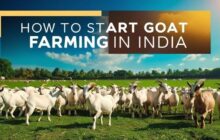
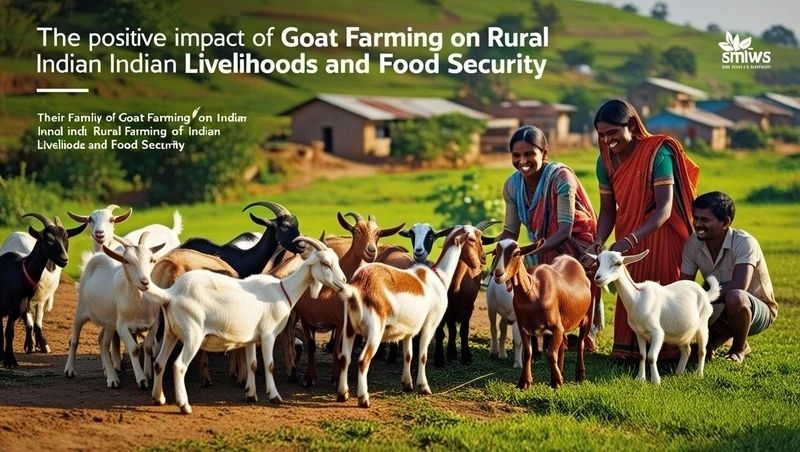
India, a global leader in goat production, is witnessing a revolution in its livestock sector, with goats playing a pivotal role in enhancing food security and rural economies. With Asia hosting 90% of the world’s 1 billion goats, India’s vast goat population is a cornerstone of its agricultural landscape. Various survey highlights a significant increase in goat populations across South Asia, particularly in countries like Nepal and Bangladesh, and India is no exception, driven by the animals’ adaptability to diverse agro-climatic regions.
Economic and Social Impact
Goats are often called the “poor man’s cow” in India due to their low maintenance and high returns. They provide meat, milk, fibre, and manure, directly supporting millions of resource-poor farmers. In arid and semi-arid regions, such as Rajasthan and Gujarat, nomadic and agropastoralist systems thrive, where goats are integral to livelihoods. The document notes that goats contribute to capital accumulation and sustainability, with India’s goat meat and skin finding strong local and export markets. This aligns with the country’s push for rural empowerment through schemes like the National Livestock Mission.
Chelated minerals
Pyromin
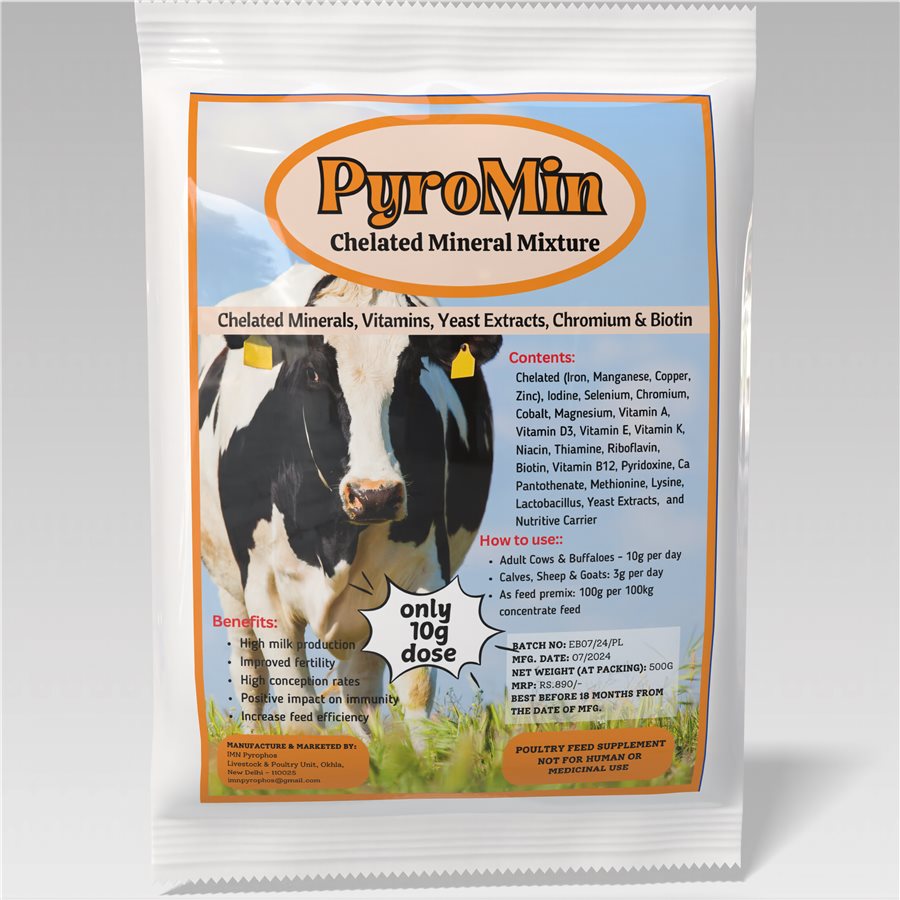
Chelated mineral mixture with iron, manganese, copper, zinc, iodine, selenium, chromium, cobalt and magnesium, vitamins A, D3, E, K and B vitamins, biotin, methionine, lysine, lactobacillus and yeast extract. Supports milk production, fertility, conception, immunity and feed efficiency.
Dose: Adult cow or buffalo 10 g per day; calves, sheep and goats 3 g per day. As a premix, 100 g per 100 kg of concentrate.
1 kg ₹655MRP ₹1,190
Challenges in Scaling Up
Despite the growth, challenges persist. Overgrazing in range-based systems, common in India’s drought-prone areas, strains natural resources. Health management is another hurdle—diseases like brucellosis and peste des petits ruminants threaten herds. The document emphasizes herd health monitoring, including vaccination and nutrition management, which Indian farmers must adopt to boost productivity. Access to markets and skilled labor also remains limited in remote areas.
Path Forward
To sustain this revolution, India needs targeted interventions. Training local farmers in modern breeding and disease control, as suggested in the document, can enhance yields. Government subsidies for feed and infrastructure, coupled with cooperative farming models, can further strengthen the sector. By leveraging its goat farming potential, India can ensure food security and uplift rural communities.
Starting or running a goat farm? Ask Dr. Ibne Ali on WhatsApp about feeding, minerals and health.
WhatsApp: 98715 84101मुख्य शब्द (Keywords): भारत में बकरी पालन, ग्रामीण रोज़गार, खाद्य सुरक्षा, टिकाऊ खेती, पशुधन प्रबंधन
परिचय
भारत, जो बकरी उत्पादन में दुनिया में सबसे आगे है, अपने पशुधन क्षेत्र में एक क्रांति देख रहा है, जिसमें बकरियाँ खाद्य सुरक्षा और गाँव की अर्थव्यवस्था को मज़बूत करने में अहम भूमिका निभा रही हैं। दुनिया की 1 अरब बकरियों में से 90% एशिया में हैं, और भारत की बड़ी बकरी आबादी उसकी खेती का एक मज़बूत आधार है। कई सर्वे बताते हैं कि दक्षिण एशिया में, खासकर नेपाल और बांग्लादेश जैसे देशों में, बकरियों की संख्या काफी बढ़ी है, और भारत भी इससे अलग नहीं है। इसकी वजह है बकरियों का अलग-अलग जलवायु वाले इलाकों में आसानी से ढल जाना।
आर्थिक और सामाजिक असर
भारत में बकरी को अक्सर “गरीब की गाय” कहा जाता है, क्योंकि इसका रख-रखाव कम खर्च वाला है और कमाई अच्छी होती है। बकरियाँ मांस, दूध, रेशा और खाद देती हैं, जिससे लाखों कम साधन वाले किसानों को सीधा सहारा मिलता है। राजस्थान और गुजरात जैसे सूखे और कम बारिश वाले इलाकों में घुमंतू और खेती-के-साथ-पशुपालन करने वाले समुदाय फलते-फूलते हैं, जहाँ बकरियाँ रोज़ी-रोटी का अहम हिस्सा हैं। दस्तावेज़ बताता है कि बकरियाँ पूँजी जमा करने और टिकाऊपन में योगदान देती हैं, और भारत के बकरी मांस और खाल को देश के बाज़ार और निर्यात दोनों में अच्छी माँग मिलती है। यह National Livestock Mission जैसी योजनाओं के ज़रिए ग्रामीण सशक्तिकरण की देश की कोशिश से मेल खाता है।
चिलेटेड मिनरल
Pyromin
चिलेटेड आयरन, मैंगनीज़, कॉपर, ज़िंक, आयोडीन, सेलेनियम, क्रोमियम, कोबाल्ट और मैग्नीशियम, विटामिन A, D3, E, K और B विटामिन, बायोटिन, मेथियोनीन, लाइसीन, लैक्टोबैसिलस और यीस्ट एक्सट्रैक्ट वाला मिनरल मिक्सचर। दूध उत्पादन, प्रजनन, गर्भधारण, इम्युनिटी और चारे के बेहतर उपयोग में सहायक।
मात्रा: वयस्क गाय या भैंस को 10 ग्राम प्रति दिन; बछड़े, भेड़ और बकरी को 3 ग्राम प्रति दिन। प्रीमिक्स के रूप में 100 ग्राम प्रति 100 किलो दाना।
1 kg ₹655MRP ₹1,190
बढ़ाने में आने वाली चुनौतियाँ
बढ़त के बावजूद चुनौतियाँ बनी हुई हैं। भारत के सूखा-प्रभावित इलाकों में आम चराई-आधारित सिस्टम में ज़रूरत से ज़्यादा चराई (overgrazing) से प्राकृतिक संसाधनों पर दबाव पड़ता है। स्वास्थ्य प्रबंधन एक और रुकावट है—brucellosis और peste des petits ruminants (PPR) जैसी बीमारियाँ झुंड के लिए खतरा हैं। दस्तावेज़ झुंड के स्वास्थ्य की निगरानी पर ज़ोर देता है, जिसमें vaccination और पोषण प्रबंधन शामिल हैं, जिन्हें उत्पादन बढ़ाने के लिए भारतीय किसानों को अपनाना चाहिए। दूर-दराज़ इलाकों में बाज़ार तक पहुँच और कुशल मज़दूर भी अभी सीमित हैं।
आगे का रास्ता
इस क्रांति को बनाए रखने के लिए भारत को लक्ष्य बनाकर कदम उठाने होंगे। जैसा दस्तावेज़ में सुझाया गया है, स्थानीय किसानों को आधुनिक प्रजनन (breeding) और बीमारी नियंत्रण की ट्रेनिंग देने से उत्पादन बढ़ सकता है। Feed और बुनियादी ढाँचे के लिए सरकारी सब्सिडी, साथ में सहकारी खेती के मॉडल, इस क्षेत्र को और मज़बूत कर सकते हैं। अपनी बकरी पालन की क्षमता का फायदा उठाकर भारत खाद्य सुरक्षा पक्की कर सकता है और ग्रामीण समुदायों को ऊपर उठा सकता है।
बकरी फ़ार्म शुरू कर रहे हैं या चला रहे हैं? दाना, मिनरल और सेहत के बारे में डॉ. इब्ने अली से WhatsApp पर पूछिए।
WhatsApp: 98715 84101Keywords: India me bakri palan, gaon ki rozi-roti, food security, sustainable kheti, livestock management
Introduction
India, jo goat production me duniya me sabse aage hai, apne livestock sector me ek revolution dekh raha hai, jisme bakriyan food security aur gaon ki economy ko mazboot karne me bada role nibha rahi hain. Duniya ki 1 billion (1 arab) bakriyon me se 90% Asia me hain, aur India ki badi bakri aabadi uski kheti ka ek mazboot aadhaar hai. Kai survey batate hain ki South Asia me, khaaskar Nepal aur Bangladesh jaise deshon me, bakriyon ki sankhya kaafi badhi hai, aur India bhi isse alag nahi hai. Iski wajah hai bakriyon ka alag-alag climate wale ilaakon me aasani se dhal jana.
Economic aur Social Asar
India me bakri ko aksar “gareeb ki gaay” kaha jata hai, kyunki iska rakh-rakhaav kam kharche wala hai aur kamai achhi hoti hai. Bakriyan meat, doodh, fibre aur khaad deti hain, jisse laakhon kam saadhan wale farmers ko seedha sahara milta hai. Rajasthan aur Gujarat jaise sookhe aur kam baarish wale ilaakon me nomadic aur kheti-ke-saath-pashupalan karne wale log khoob chalte hain, jahan bakriyan rozi-roti ka zaroori hissa hain. Document batata hai ki bakriyan poonji jama karne aur sustainability me madad karti hain, aur India ke bakri meat aur khaal ko desh ke market aur export dono me achhi maang milti hai. Ye National Livestock Mission jaisi schemes ke through gaon ke empowerment ki desh ki koshish se match karta hai.
Chelated mineral
Pyromin
Chelated iron, manganese, copper, zinc, iodine, selenium, chromium, cobalt aur magnesium, vitamin A, D3, E, K aur B vitamin, biotin, methionine, lysine, lactobacillus aur yeast extract wala mineral mixture. Doodh utpadan, prajanan, garbh thaharne, immunity aur chaare ke behtar upyog me sahayak.
Matra: Vayask gaay ya bhains ko 10 g prati din; bachhde, bhed aur bakri ko 3 g prati din. Premix ke roop me 100 g prati 100 kg daana.
1 kg ₹655MRP ₹1,190
Scale Up karne me Challenges
Growth ke bawajood challenges bane hue hain. India ke sookha-prabhavit ilaakon me aam charai-based system me zarurat se zyada charai (overgrazing) se natural resources par dabaav padta hai. Health management ek aur rukawat hai—brucellosis aur peste des petits ruminants (PPR) jaisi bimariyan herd ke liye khatra hain. Document herd health monitoring par zor deta hai, jisme vaccination aur nutrition management shaamil hain, jinhe productivity badhane ke liye Indian farmers ko apnana chahiye. Door-daraaz ilaakon me market tak pahunch aur skilled labour bhi abhi kam hai.
Aage ka Raasta
Is revolution ko banaye rakhne ke liye India ko target banakar kadam uthane honge. Jaisa document me suggest kiya gaya hai, local farmers ko modern breeding aur disease control ki training dene se production badh sakta hai. Feed aur infrastructure ke liye sarkari subsidy, saath me cooperative farming models, is sector ko aur mazboot kar sakte hain. Apni bakri palan ki capacity ka fayda uthakar India food security pakki kar sakta hai aur gaon ke logon ko upar utha sakta hai.
Bakri farm shuru kar rahe hain ya chala rahe hain? Daana, mineral aur sehat ke baare me Dr. Ibne Ali se WhatsApp par poochiye.
WhatsApp: 98715 84101