Notes on Dry Matter Intake in Cows – Simple Points for Dairy Animal Nutritionists
Lactating Cows (cow dry matter intake)
- Earlier guidelines for predicting dry matter intake (DMI) in lactating cows were based on energy requirements and body weight, with adjustments for moisture content in the diet.
- The current DMI prediction equation incorporates empirical data from a large dataset of Holstein cows, focusing on easily measurable animal factors rather than dietary components.
- The best prediction equation for dry matter intake of dairy cows accounts for fat-corrected milk, body weight, and week of lactation, showing high accuracy for early lactation but slight underprediction later on.
Growing Heifers
- Initial evaluations of DMI equations for growing heifers indicated that those based solely on animal parameters had larger prediction errors compared to those including dietary energy content.
- A validation study using a substantial dataset confirmed the accuracy of the National Research Council's equation for predicting DMI in growing heifers.
- Adjustments for gestation days were proposed to improve DMI predictions, although data for breeds other than Holstein and environmental factors were lacking.
Moisture
- Increased moisture content in diets above 50% leads to a decrease in DMI, particularly when fermented feeds are included.
- Studies have shown conflicting results regarding the optimal dry matter (DM) content for maximizing DMI, with some indicating that DMI increases as DM percentage rises.
- The relationship between dietary moisture and DMI is complex, with fermentation end products likely influencing intake more than water content itself.
Neutral Detergent Fiber
- Higher concentrations of neutral detergent fiber (NDF) in diets generally restrict DMI due to increased bulkiness and rumen fill, particularly when NDF exceeds 25%.
- Variability in DMI at specific NDF levels suggests that factors like particle size and digestibility significantly influence intake.
- Including dietary NDF in DMI prediction models improves accuracy, especially when combined with other factors like body weight and milk production.
Forage to Concentrate Ratio
- The amount and digestibility of forage fiber, rather than a specific forage-to-concentrate ratio, likely influence DMI in dairy cows.
- Increasing concentrate levels in diets has been shown to enhance DMI and digestible DM, with optimal intake observed at around 60% concentrate.
- Studies indicate that cows fed higher concentrate diets tend to gain weight, while those on lower concentrate diets may lose weight.
Fat
- The addition of fats to dairy diets can negatively impact DMI, influenced by the type of fatty acids and their interaction with the basal diet.
- While some studies report a decrease in DMI with increased fat content, others suggest potential increases due to lower heat increment during heat stress.
- The effects of fat on DMI are complex, with ruminally active fats having a more pronounced negative impact on intake when diets are high in corn silage.
Eating Habits and Cow Behavior
- High-producing cows consume more DMI per meal compared to lower-producing cows, despite similar eating times and meal frequency.
- Social dynamics within herds affect DMI, with dominant cows often consuming more feed, highlighting the importance of grouping cows by nutrient requirements.
- Providing adequate feed bunk space is crucial, as limited space can reduce eating time and overall DMI.
Weather
- Extreme temperatures can significantly affect DMI, with heat stress leading to a more pronounced decrease in intake among multiparous cows compared to primiparous cows.
- Cattle's water consumption and DMI are influenced by ambient temperature, with high temperatures leading to decreased intake and activity.
- The negative energy balance during cold conditions can also impact DMI, as metabolism increases without a corresponding rise in intake.
Feeding Method-Total Mixed Ration vs. Individual Ingredient
- Total mixed rations (TMR) promote more consistent nutrient utilization compared to feeding individual ingredients, reducing sorting behavior.
- Studies show no significant difference in milk production or DMI between cows fed TMR and those fed concentrates via computerized feeders.
- Effective management of concentrate allocation can optimize feeding efficiency without compromising milk production.
Feeding Frequency
- Increasing feeding frequency from one or two times to four times per day has been shown to improve average daily gain and feed utilization in cattle.
- While some studies indicate benefits in milk production and composition with increased feeding frequency, others find minimal effects on ruminal fermentation.
- The act of offering fresh feed may stimulate eating behavior, suggesting that the method of feeding can influence DMI.
Sequence of Feeding
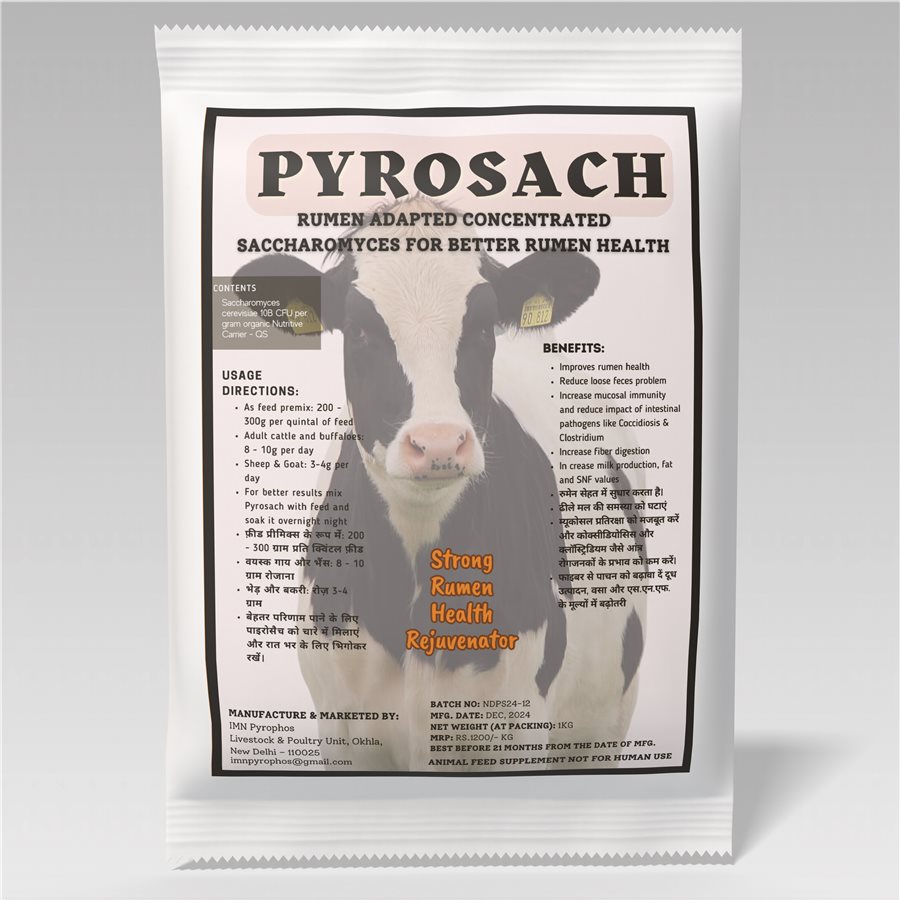
Rumen health
Pyrosach
Rumen-adapted Saccharomyces cerevisiae (10 billion CFU per gram). Improves fibre digestion and rumen health, reduces loose dung, and supports milk, fat and SNF.
Dose: 8–10 g per adult cow or buffalo per day; 3–4 g per sheep or goat; or 200–300 g per quintal of feed. Mix with feed and soak overnight for best results.
1 kg ₹700MRP ₹1,200
- Feeding forage first can help establish a fiber mat in the rumen, potentially improving rumen health and buffering capacity.
- Evidence supporting the benefits of feeding sequence on DMI and rumen fermentation is limited, with some studies showing no significant effects.
- The timing and order of feed offerings may play a role in optimizing DMI and preventing digestive issues.
Access to Feed
- Cows typically engage in multiple eating bouts throughout the day, with access to feed significantly impacting their DMI.
- Limiting feed access to a shorter duration can lead to decreased milk production, emphasizing the importance of free-choice feeding.
- The study highlights the behavioral differences in feed intake between competitive and non-competitive environments, affecting overall DMI.
Practical Implications of the Researches (NRC) 2001 Document
- Optimizing Dry Matter Intake (DMI): The paper emphasizes the importance of accurately predicting DMI in lactating cows. By using a prediction equation that incorporates factors like fat-corrected milk and body weight, farmers can better manage feeding strategies to ensure cows meet their nutritional needs, ultimately enhancing milk production and cow health.
- Feeding Frequency: Increasing the frequency of feed offerings from one or two times to four times per day can lead to improved average daily gain and feed utilization in cattle. This suggests that dairy farmers should consider adjusting their feeding schedules to maximize milk production and overall herd performance.
- Access to Feed: The study highlights the critical role of feed access in determining DMI. Cows that have free-choice access to feed tend to consume more, which can lead to higher milk production. Farmers should ensure that cows have ample time and space to eat, as limiting access can negatively impact their intake and productivity.
- Impact of Diet Composition: The paper discusses how the composition of the diet, particularly the ratio of forage to concentrate and the neutral detergent fiber (NDF) content, affects DMI. Farmers should carefully balance these components to optimize intake and prevent issues related to rumen fill and digestion.
- Behavioral Considerations: Understanding cow behavior, such as their preference for eating positions and social dynamics within the herd, can inform better management practices. Providing appropriate feeding environments and minimizing competition can enhance DMI and overall herd health.
- Environmental Factors: The paper notes that extreme weather conditions can significantly affect DMI. Farmers should be aware of how temperature and humidity impact cow behavior and intake, and they may need to adjust feeding strategies accordingly during hot or cold weather.
- Feeding Methods: The use of total mixed rations (TMR) can promote more consistent nutrient utilization and reduce sorting behavior among cows. This method may be beneficial for maintaining optimal DMI and improving milk production.
By implementing these practical implications, dairy farmers can enhance the health and productivity of their herds, leading to more efficient operations and better economic outcomes.
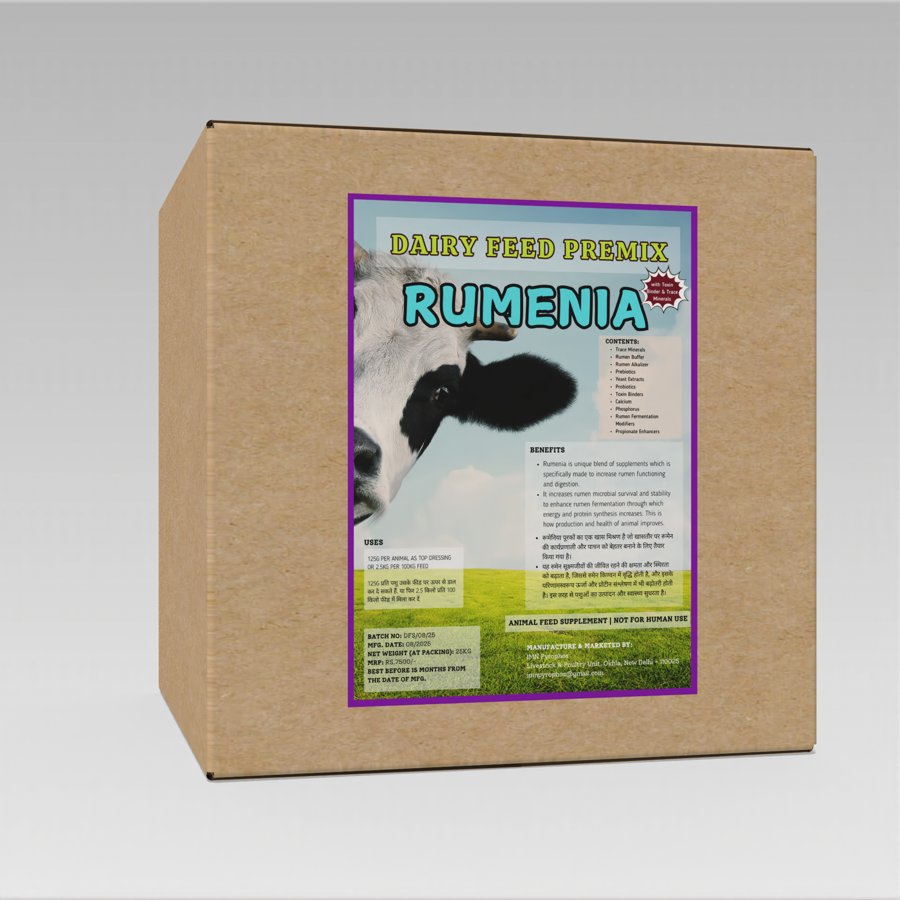
Dairy feed premix · top seller
Rumenia
Trace minerals, rumen buffer, prebiotics, yeast extracts, probiotics, toxin binders, calcium, phosphorus and rumen fermentation modifiers. Improves rumen function, microbial stability, fermentation and energy and protein synthesis. 25 kg bag ₹5,625.
Dose: 2.5 kg per 100 kg feed.
5 kg ₹1,400MRP ₹1,800
What role does diet composition play in DMI?
The Role of Diet Composition in DMI
- Fatty Acid Content: The composition of fatty acids in the diet significantly influences dry matter intake (DMI). Diets with higher unsaturated fatty acids generally lead to a decrease in DMI. This is particularly relevant when considering the source of added fatty acids, as the type and saturation level can affect how much the cows eat. For instance, diets high in corn silage are more negatively impacted by ruminally active fats compared to those high in alfalfa hay.
- Neutral Detergent Fiber (NDF): The concentration of NDF in the diet is crucial for determining DMI. High NDF diets can limit intake due to increased rumen fill, while lower NDF concentrations allow for greater DMI. Studies have shown that when diets exceed 25% NDF, there is a general decline in DMI, indicating that the bulkiness and digestibility of the feed affect how much cows can consume.
- Moisture Content: The moisture level in the diet also plays a significant role in DMI. High moisture feeds can lead to a decrease in DMI, primarily due to fermentation end products rather than the water content itself. Research indicates that as moisture content increases above 50%, DMI tends to decrease, highlighting the need for careful management of feed moisture levels.
- Fermented Feeds: The inclusion of fermented feeds in the diet can further complicate the relationship between diet composition and DMI. While these feeds can be beneficial, they may also lead to reduced DMI due to the effects of fermentation products. Therefore, understanding the balance of fermented versus non-fermented feeds is essential for optimizing intake.
- Overall Diet Balance: The overall balance of forages and concentrates in the diet is critical. A well-balanced diet that meets the nutritional needs of lactating cows can enhance DMI, while imbalances can lead to reduced intake and subsequent health issues. Farmers should aim for a diet that maximizes nutrient availability while minimizing factors that could inhibit DMI.
In summary, diet composition, including fatty acid content, NDF levels, moisture content, and the balance of feed types, plays a vital role in influencing DMI in lactating cows. Understanding these factors can help farmers optimize feeding strategies for better herd health and productivity.
Need help with feeding or a health problem in your cows or buffaloes? Message Dr. Ibne Ali on WhatsApp.
WhatsApp: 98715 84101गायों में Dry Matter Intake पर नोट्स – डेयरी पशु न्यूट्रिशनिस्ट के लिए आसान बातें
दूध देने वाली गायें (गाय का dry matter intake)
- दूध देने वाली गायों में dry matter intake (DMI) का अंदाज़ा लगाने के पुराने निर्देश ऊर्जा की ज़रूरत और शरीर के वज़न पर आधारित थे, और डाइट में नमी के हिसाब से उनमें बदलाव किया जाता था।
- अभी का DMI अंदाज़ा लगाने वाला फ़ॉर्मूला (equation) Holstein गायों के एक बड़े डेटा पर आधारित है, और इसमें डाइट के हिस्सों की जगह पशु से जुड़ी उन बातों पर ध्यान दिया गया है जिन्हें आसानी से मापा जा सके।
- डेयरी गायों के dry matter intake का सबसे अच्छा फ़ॉर्मूला fat-corrected milk, शरीर का वज़न और ब्यांत (lactation) का हफ़्ता ध्यान में रखता है; यह ब्यांत की शुरुआत में बहुत सटीक है, लेकिन बाद में थोड़ा कम अंदाज़ा लगाता है।
बढ़ती बछड़ियाँ (Growing Heifers)
- बढ़ती बछड़ियों के DMI फ़ॉर्मूलों की शुरुआती जाँच में पाया गया कि जो फ़ॉर्मूले सिर्फ़ पशु से जुड़ी बातों पर आधारित थे, उनमें गलती ज़्यादा थी, उन फ़ॉर्मूलों के मुकाबले जिनमें डाइट की ऊर्जा भी शामिल थी।
- एक बड़े डेटा से की गई जाँच (validation study) ने बढ़ती बछड़ियों में DMI के अंदाज़े के लिए National Research Council के फ़ॉर्मूले को सही पाया।
- DMI का अंदाज़ा बेहतर करने के लिए गर्भ के दिनों के हिसाब से बदलाव सुझाए गए, हालाँकि Holstein के अलावा दूसरी नस्लों और माहौल से जुड़े कारणों का डेटा नहीं था।
नमी (Moisture)
- डाइट में नमी 50% से ज़्यादा होने पर DMI कम हो जाता है, ख़ासकर जब fermented feed (जैसे silage) शामिल हो।
- ज़्यादा से ज़्यादा DMI के लिए dry matter (DM) कितना होना चाहिए, इस पर स्टडीज़ के नतीजे अलग-अलग हैं; कुछ में पाया गया कि DM प्रतिशत बढ़ने के साथ DMI बढ़ता है।
- डाइट की नमी और DMI का रिश्ता जटिल है; शायद पानी से ज़्यादा fermentation से बनने वाली चीज़ें खाने की मात्रा पर असर डालती हैं।
Neutral Detergent Fiber
- डाइट में neutral detergent fiber (NDF) ज़्यादा होने से आमतौर पर DMI कम होता है, क्योंकि चारा भारी-भरकम होता है और rumen जल्दी भर जाता है, ख़ासकर जब NDF 25% से ज़्यादा हो।
- एक ही NDF लेवल पर DMI में फ़र्क दिखाता है कि कणों का साइज़ (particle size) और digestibility जैसी बातें खाने की मात्रा पर बड़ा असर डालती हैं।
- DMI के फ़ॉर्मूलों में डाइट का NDF शामिल करने से अंदाज़ा ज़्यादा सटीक होता है, ख़ासकर जब इसे शरीर के वज़न और दूध उत्पादन जैसी दूसरी बातों के साथ जोड़ा जाए।
चारा और दाना (Forage to Concentrate) का अनुपात
- डेयरी गायों में DMI पर किसी तय चारा-दाना अनुपात से ज़्यादा, चारे के fiber की मात्रा और digestibility का असर होता है।
- डाइट में दाना (concentrate) बढ़ाने से DMI और पचने लायक DM बढ़ता पाया गया है, और सबसे अच्छा intake लगभग 60% concentrate पर देखा गया।
- स्टडीज़ बताती हैं कि ज़्यादा दाने वाली डाइट पर गायें वज़न बढ़ाती हैं, जबकि कम दाने वाली डाइट पर वज़न घट सकता है।
फ़ैट (Fat)
- डेयरी डाइट में फ़ैट मिलाने से DMI पर बुरा असर पड़ सकता है, जो fatty acids की किस्म और बेसिक डाइट के साथ उनके तालमेल पर निर्भर करता है।
- कुछ स्टडीज़ में फ़ैट बढ़ने पर DMI घटता है, जबकि कुछ बताती हैं कि गर्मी के stress में कम heat increment की वजह से DMI बढ़ भी सकता है।
- DMI पर फ़ैट का असर जटिल है; जब डाइट में corn silage ज़्यादा हो तो rumen में active फ़ैट का खाने की मात्रा पर ज़्यादा बुरा असर होता है।
खाने की आदतें और गाय का व्यवहार
- ज़्यादा दूध देने वाली गायें, कम दूध देने वाली गायों के मुकाबले हर बार में ज़्यादा DMI खाती हैं, जबकि खाने का समय और बार एक जैसे होते हैं।
- झुंड के अंदर का सामाजिक माहौल DMI पर असर डालता है; दबंग गायें अक्सर ज़्यादा feed खा जाती हैं, इसलिए पोषण की ज़रूरत के हिसाब से गायों के ग्रुप बनाना ज़रूरी है।
- खाने की नाँद (feed bunk) में पूरी जगह देना ज़रूरी है, क्योंकि कम जगह से खाने का समय और कुल DMI घट सकता है।
मौसम
- बहुत ज़्यादा गर्मी या सर्दी DMI पर बड़ा असर डाल सकती है; गर्मी के stress में कई बार ब्याई गायों (multiparous) का intake पहली बार ब्याई गायों (primiparous) से ज़्यादा घटता है।
- पशुओं के पानी पीने और DMI पर आसपास के तापमान का असर होता है; ज़्यादा तापमान से intake और चहल-पहल दोनों घटते हैं।
- ठंड में negative energy balance भी DMI पर असर डाल सकता है, क्योंकि metabolism तो बढ़ता है पर उसी हिसाब से intake नहीं बढ़ता।
खिलाने का तरीका – Total Mixed Ration बनाम अलग-अलग सामग्री
- Total mixed ration (TMR) से, अलग-अलग सामग्री खिलाने के मुकाबले, पोषक तत्वों का इस्तेमाल ज़्यादा एक जैसा होता है और गायों का चुन-चुनकर खाना (sorting) कम होता है।
- स्टडीज़ में TMR खाने वाली गायों और computerized feeder से दाना खाने वाली गायों के दूध उत्पादन या DMI में कोई ख़ास फ़र्क नहीं मिला।
- दाने का बँटवारा सही तरीके से मैनेज करके दूध उत्पादन घटाए बिना खिलाने की क्षमता बढ़ाई जा सकती है।
दिन में कितनी बार खिलाएँ (Feeding Frequency)
रुमेन की सेहत
Pyrosach
रुमेन के अनुकूल Saccharomyces cerevisiae (1000 करोड़ CFU प्रति ग्राम)। रेशे का पाचन और रुमेन की सेहत सुधारता है, पतला गोबर घटाता है, दूध, फैट और SNF में सहायक।
मात्रा: 8–10 ग्राम प्रति वयस्क गाय या भैंस प्रति दिन; भेड़ या बकरी को 3–4 ग्राम; या 200–300 ग्राम प्रति क्विंटल दाना। अच्छे नतीजे के लिए दाने में मिलाकर रात भर भिगोएँ।
1 kg ₹700MRP ₹1,200
- दिन में एक या दो बार की जगह चार बार खिलाने से पशुओं में औसत रोज़ाना वज़न बढ़त (average daily gain) और feed का इस्तेमाल बेहतर पाया गया है।
- कुछ स्टडीज़ में ज़्यादा बार खिलाने से दूध उत्पादन और दूध की बनावट में फ़ायदा दिखा, जबकि कुछ में rumen fermentation पर बहुत कम असर मिला।
- ताज़ा feed डालने से ही खाने की इच्छा बढ़ सकती है, यानी खिलाने का तरीका DMI पर असर डाल सकता है।
खिलाने का क्रम (Sequence of Feeding)
- पहले चारा खिलाने से rumen में fiber की परत (fiber mat) बन सकती है, जिससे rumen की सेहत और buffering क्षमता बेहतर हो सकती है।
- खिलाने के क्रम का DMI और rumen fermentation पर फ़ायदा साबित करने वाले सबूत कम हैं; कुछ स्टडीज़ में कोई ख़ास असर नहीं मिला।
- Feed देने का समय और क्रम DMI को सबसे अच्छा रखने और पाचन की समस्याएँ रोकने में भूमिका निभा सकता है।
Feed तक पहुँच (Access to Feed)
- गायें आमतौर पर दिन भर में कई बार खाती हैं, और feed तक पहुँच का उनके DMI पर बड़ा असर होता है।
- Feed तक पहुँच का समय कम करने से दूध उत्पादन घट सकता है, इसलिए free-choice (जब मर्ज़ी खाएँ) feeding ज़रूरी है।
- स्टडी में मुकाबले वाले (competitive) और बिना मुकाबले वाले माहौल में feed खाने के व्यवहार का फ़र्क दिखाया गया है, जो कुल DMI पर असर डालता है।
रिसर्च (NRC) 2001 दस्तावेज़ की व्यावहारिक बातें
- Dry Matter Intake (DMI) को सबसे अच्छा बनाना: पेपर में दूध देने वाली गायों में DMI का सही अंदाज़ा लगाने की अहमियत पर ज़ोर दिया गया है। ऐसा फ़ॉर्मूला (prediction equation) इस्तेमाल करके जिसमें fat-corrected milk और शरीर का वज़न जैसी बातें शामिल हों, किसान खिलाने का तरीका बेहतर मैनेज कर सकते हैं ताकि गायों की पोषण की ज़रूरत पूरी हो, और आख़िर में दूध उत्पादन और गाय की सेहत दोनों बेहतर हों।
- दिन में कितनी बार खिलाएँ: Feed देने की बार बढ़ाकर दिन में एक या दो बार से चार बार करने से पशुओं में औसत रोज़ाना वज़न बढ़त और feed का इस्तेमाल बेहतर हो सकता है। इसका मतलब है कि डेयरी किसानों को दूध उत्पादन और पूरे झुंड की परफ़ॉर्मेंस बढ़ाने के लिए खिलाने का शेड्यूल बदलने पर विचार करना चाहिए।
- Feed तक पहुँच: स्टडी बताती है कि DMI तय करने में feed तक पहुँच की बहुत बड़ी भूमिका है। जिन गायों को जब मर्ज़ी feed खाने की छूट होती है, वे ज़्यादा खाती हैं, जिससे दूध ज़्यादा हो सकता है। किसान पक्का करें कि गायों को खाने के लिए पूरा समय और जगह मिले, क्योंकि पहुँच सीमित करने से intake और उत्पादन पर बुरा असर पड़ सकता है।
- डाइट की बनावट का असर: पेपर में बताया गया है कि डाइट की बनावट, ख़ासकर चारा और दाने का अनुपात और neutral detergent fiber (NDF) की मात्रा, DMI पर कैसे असर डालती है। किसान इन हिस्सों को ध्यान से संतुलित करें ताकि intake सबसे अच्छा रहे और rumen भरने और पाचन से जुड़ी समस्याएँ न हों।
- व्यवहार से जुड़ी बातें: गायों के व्यवहार को समझना, जैसे खाने की जगह को लेकर उनकी पसंद और झुंड के अंदर का सामाजिक माहौल, बेहतर मैनेजमेंट में मदद करता है। खाने का सही माहौल देना और आपसी मुकाबला कम करना DMI और पूरे झुंड की सेहत बढ़ा सकता है।
- माहौल से जुड़े कारण: पेपर बताता है कि बहुत ज़्यादा गर्मी या सर्दी जैसा मौसम DMI पर बड़ा असर डाल सकता है। किसानों को पता होना चाहिए कि तापमान और ह्यूमिडिटी गाय के व्यवहार और intake पर कैसे असर डालते हैं, और गर्म या ठंडे मौसम में उन्हें उसी हिसाब से खिलाने का तरीका बदलना पड़ सकता है।
- खिलाने के तरीके: Total mixed ration (TMR) से पोषक तत्वों का इस्तेमाल ज़्यादा एक जैसा होता है और गायों का चुन-चुनकर खाना कम होता है। यह तरीका DMI को सही बनाए रखने और दूध उत्पादन बढ़ाने में फ़ायदेमंद हो सकता है।
इन व्यावहारिक बातों को लागू करके डेयरी किसान अपने झुंड की सेहत और उत्पादन बढ़ा सकते हैं, जिससे काम ज़्यादा कुशल होगा और कमाई भी बेहतर होगी।
डेयरी फीड प्रीमिक्स · टॉप सेलर
Rumenia
ट्रेस मिनरल, रुमेन बफर, प्रीबायोटिक, यीस्ट एक्सट्रैक्ट, प्रोबायोटिक, टॉक्सिन बाइंडर, कैल्शियम, फॉस्फोरस और रुमेन फर्मेंटेशन मॉडिफायर। रुमेन का काम, माइक्रोब की स्थिरता, फर्मेंटेशन और ऊर्जा व प्रोटीन बनना सुधारता है। 25 किलो बैग ₹5,625।
मात्रा: 2.5 किलो प्रति 100 किलो दाना।
5 kg ₹1,400MRP ₹1,800
DMI में डाइट की बनावट की क्या भूमिका है?
DMI में डाइट की बनावट की भूमिका
- Fatty Acid की मात्रा: डाइट में fatty acids की बनावट dry matter intake (DMI) पर बड़ा असर डालती है। ज़्यादा unsaturated fatty acids वाली डाइट से आमतौर पर DMI घटता है। यह बात ख़ासकर तब ज़रूरी है जब मिलाए गए fatty acids के स्रोत पर विचार किया जाए, क्योंकि उनकी किस्म और saturation लेवल से तय होता है कि गायें कितना खाएँगी। जैसे, corn silage ज़्यादा वाली डाइट पर rumen में active फ़ैट का बुरा असर, alfalfa hay ज़्यादा वाली डाइट के मुकाबले ज़्यादा होता है।
- Neutral Detergent Fiber (NDF): डाइट में NDF की मात्रा DMI तय करने में बहुत ज़रूरी है। ज़्यादा NDF वाली डाइट से rumen जल्दी भरता है और intake सीमित होता है, जबकि कम NDF से ज़्यादा DMI हो सकता है। स्टडीज़ में पाया गया कि जब डाइट में NDF 25% से ज़्यादा हो तो आमतौर पर DMI घटता है, यानी feed का भारी-भरकम होना और उसकी digestibility तय करते हैं कि गायें कितना खा सकती हैं।
- नमी की मात्रा: डाइट में नमी का लेवल भी DMI में बड़ी भूमिका निभाता है। ज़्यादा नमी वाले feed से DMI घट सकता है, जिसकी मुख्य वजह पानी नहीं बल्कि fermentation से बनी चीज़ें हैं। रिसर्च बताती है कि नमी 50% से ऊपर जाने पर DMI घटने लगता है, इसलिए feed की नमी को ध्यान से मैनेज करना ज़रूरी है।
- Fermented Feeds: डाइट में fermented feed शामिल करने से डाइट की बनावट और DMI का रिश्ता और जटिल हो सकता है। ये feed फ़ायदेमंद हो सकते हैं, लेकिन fermentation से बनी चीज़ों के असर से DMI घट भी सकता है। इसलिए intake सबसे अच्छा रखने के लिए fermented और non-fermented feed का संतुलन समझना ज़रूरी है।
- डाइट का कुल संतुलन: डाइट में चारे और दाने का कुल संतुलन बहुत ज़रूरी है। दूध देने वाली गायों की पोषण की ज़रूरत पूरी करने वाली संतुलित डाइट DMI बढ़ा सकती है, जबकि असंतुलन से intake घट सकता है और फिर सेहत की समस्याएँ हो सकती हैं। किसानों का लक्ष्य ऐसी डाइट होनी चाहिए जिसमें पोषक तत्व ज़्यादा से ज़्यादा मिलें और DMI रोकने वाली बातें कम से कम हों।
कुल मिलाकर, डाइट की बनावट, जिसमें fatty acid की मात्रा, NDF लेवल, नमी और feed की किस्मों का संतुलन शामिल है, दूध देने वाली गायों के DMI पर असर डालने में बहुत अहम भूमिका निभाती है। इन बातों को समझकर किसान झुंड की बेहतर सेहत और उत्पादन के लिए खिलाने के तरीके सुधार सकते हैं।
गाय-भैंस के दाने या बीमारी में मदद चाहिए? डॉ. इब्ने अली को WhatsApp कीजिए।
WhatsApp: 98715 84101Gaayon me Dry Matter Intake par notes – Dairy animal nutritionists ke liye aasan baatein
Doodh dene wali gaay (cow dry matter intake)
- Doodh dene wali gaayon me dry matter intake (DMI) ka andaza lagane ki purani guidelines energy ki zaroorat aur body weight par based thi, aur diet me nami ke hisaab se unme badlav kiya jata tha.
- Abhi ka DMI prediction equation Holstein gaayon ke ek bade dataset par based hai, aur isme diet ke components ki jagah pashu se judi un baaton par dhyan diya gaya hai jinhe aasani se napa ja sake.
- Dairy gaayon ke dry matter intake ka sabse achha equation fat-corrected milk, body weight aur byant (lactation) ka hafta dhyan me rakhta hai; ye byant ki shuruaat me bahut sahi hai, lekin baad me thoda kam andaza lagata hai.
Badhti bachhiyan (Growing Heifers)
- Badhti bachhiyon ke DMI equations ki shuruaati jaanch me paya gaya ki jo equations sirf pashu se judi baaton par based the, unme galti zyada thi, un equations ke mukable jinme diet ki energy bhi shamil thi.
- Ek bade dataset se ki gayi validation study ne badhti bachhiyon me DMI ke andaze ke liye National Research Council ke equation ko sahi paya.
- DMI ka andaza behtar karne ke liye garbh ke dinon ke hisaab se badlav suggest kiye gaye, haalanki Holstein ke alawa doosri nasl aur mahaul se jude kaaranon ka data nahi tha.
Nami (Moisture)
- Diet me nami 50% se zyada hone par DMI kam ho jata hai, khaas kar jab fermented feed (jaise silage) shamil ho.
- Zyada se zyada DMI ke liye dry matter (DM) kitna hona chahiye, is par studies ke results alag-alag hain; kuch me paya gaya ki DM percentage badhne ke saath DMI badhta hai.
- Diet ki nami aur DMI ka rishta complex hai; shayad paani se zyada fermentation se banne wali cheezein khane ki matra par asar dalti hain.
Neutral Detergent Fiber
- Diet me neutral detergent fiber (NDF) zyada hone se aam taur par DMI kam hota hai, kyunki chara bhari-bharkam hota hai aur rumen jaldi bhar jata hai, khaas kar jab NDF 25% se zyada ho.
- Ek hi NDF level par DMI me farak dikhata hai ki particle size aur digestibility jaisi baatein khane ki matra par bada asar dalti hain.
- DMI prediction models me diet ka NDF shamil karne se andaza zyada sahi hota hai, khaas kar jab ise body weight aur doodh production jaisi doosri baaton ke saath joda jaye.
Chara aur dana (Forage to Concentrate) ka ratio
- Dairy gaayon me DMI par kisi tay chara-dana ratio se zyada, chare ke fiber ki matra aur digestibility ka asar hota hai.
- Diet me dana (concentrate) badhane se DMI aur pachne layak DM badhta paya gaya hai, aur sabse achha intake lagbhag 60% concentrate par dekha gaya.
- Studies batati hain ki zyada dane wali diet par gaayein weight badhati hain, jabki kam dane wali diet par weight ghat sakta hai.
Fat
- Dairy diet me fat milane se DMI par bura asar pad sakta hai, jo fatty acids ki kism aur basic diet ke saath unke taalmel par depend karta hai.
- Kuch studies me fat badhne par DMI ghatta hai, jabki kuch batati hain ki garmi ke stress me kam heat increment ki wajah se DMI badh bhi sakta hai.
- DMI par fat ka asar complex hai; jab diet me corn silage zyada ho to rumen me active fat ka khane ki matra par zyada bura asar hota hai.
Khane ki aadatein aur gaay ka vyavhar
- Zyada doodh dene wali gaayein, kam doodh dene wali gaayon ke mukable har baar me zyada DMI khati hain, jabki khane ka time aur baar ek jaise hote hain.
- Jhund ke andar ka social mahaul DMI par asar dalta hai; dabang gaayein aksar zyada feed kha jati hain, isliye nutrition ki zaroorat ke hisaab se gaayon ke group banana zaroori hai.
- Khane ki naand (feed bunk) me puri jagah dena zaroori hai, kyunki kam jagah se khane ka time aur kul DMI ghat sakta hai.
Mausam
- Bahut zyada garmi ya sardi DMI par bada asar dal sakti hai; garmi ke stress me kai baar byayi gaayon (multiparous) ka intake pehli baar byayi gaayon (primiparous) se zyada ghatta hai.
- Pashuon ke paani peene aur DMI par aas-paas ke temperature ka asar hota hai; zyada temperature se intake aur chal-phir dono ghatte hain.
- Thand me negative energy balance bhi DMI par asar dal sakta hai, kyunki metabolism to badhta hai par usi hisaab se intake nahi badhta.
Khilane ka tareeka – Total Mixed Ration vs alag-alag ingredient
- Total mixed ration (TMR) se, alag-alag ingredient khilane ke mukable, nutrients ka use zyada ek jaisa hota hai aur gaayon ka chun-chunkar khana (sorting) kam hota hai.
- Studies me TMR khane wali gaayon aur computerized feeder se dana khane wali gaayon ke doodh production ya DMI me koi khaas farak nahi mila.
- Dane ka batwara sahi tareeke se manage karke doodh production ghataye bina feeding efficiency badhayi ja sakti hai.
Din me kitni baar khilayein (Feeding Frequency)
- Din me ek ya do baar ki jagah chaar baar khilane se pashuon me average daily gain aur feed ka use behtar paya gaya hai.
- Kuch studies me zyada baar khilane se doodh production aur doodh ki banawat me fayda dikha, jabki kuch me rumen fermentation par bahut kam asar mila.
- Taaza feed dalne se hi khane ki ichha badh sakti hai, yani khilane ka tareeka DMI par asar dal sakta hai.
Khilane ka kram (Sequence of Feeding)
Rumen ki sehat
Pyrosach
Rumen ke anukool Saccharomyces cerevisiae (1000 crore CFU prati gram). Reshe ka pachan aur rumen ki sehat sudharta hai, patla gobar ghatata hai, doodh, fat aur SNF me sahayak.
Matra: 8–10 g prati vayask gaay ya bhains prati din; bhed ya bakri ko 3–4 g; ya 200–300 g prati quintal daana. Achhe natije ke liye daane me mila kar raat bhar bhigoiye.
1 kg ₹700MRP ₹1,200
- Pehle chara khilane se rumen me fiber ki parat (fiber mat) ban sakti hai, jisse rumen ki health aur buffering capacity behtar ho sakti hai.
- Khilane ke kram ka DMI aur rumen fermentation par fayda sabit karne wale saboot kam hain; kuch studies me koi khaas asar nahi mila.
- Feed dene ka time aur kram DMI ko sabse achha rakhne aur digestion ki problems rokne me role nibha sakta hai.
Feed tak pahunch (Access to Feed)
- Gaayein aam taur par din bhar me kai baar khati hain, aur feed tak pahunch ka unke DMI par bada asar hota hai.
- Feed tak pahunch ka time kam karne se doodh production ghat sakta hai, isliye free-choice (jab marzi khayein) feeding zaroori hai.
- Study me competitive aur non-competitive mahaul me feed khane ke vyavhar ka farak dikhaya gaya hai, jo kul DMI par asar dalta hai.
Research (NRC) 2001 document ki practical baatein
- Dry Matter Intake (DMI) ko sabse achha banana: Paper me doodh dene wali gaayon me DMI ka sahi andaza lagane ki importance par zor diya gaya hai. Aisa prediction equation use karke jisme fat-corrected milk aur body weight jaisi baatein shamil hon, farmer khilane ka tareeka behtar manage kar sakte hain taaki gaayon ki nutrition ki zaroorat puri ho, aur aakhir me doodh production aur gaay ki health dono behtar hon.
- Din me kitni baar khilayein: Feed dene ki baar badhakar din me ek ya do baar se chaar baar karne se pashuon me average daily gain aur feed ka use behtar ho sakta hai. Iska matlab hai ki dairy farmers ko doodh production aur pure jhund ki performance badhane ke liye khilane ka schedule badalne ke baare me sochna chahiye.
- Feed tak pahunch: Study batati hai ki DMI tay karne me feed tak pahunch ka bahut bada role hai. Jin gaayon ko jab marzi feed khane ki chhoot hoti hai, wo zyada khati hain, jisse doodh zyada ho sakta hai. Farmer pakka karein ki gaayon ko khane ke liye pura time aur jagah mile, kyunki pahunch limit karne se intake aur production par bura asar pad sakta hai.
- Diet ki banawat ka asar: Paper me bataya gaya hai ki diet ki banawat, khaas kar chare aur dane ka ratio aur neutral detergent fiber (NDF) ki matra, DMI par kaise asar dalti hai. Farmer in components ko dhyan se balance karein taaki intake sabse achha rahe aur rumen bharne aur digestion se judi problems na hon.
- Vyavhar se judi baatein: Gaayon ke vyavhar ko samajhna, jaise khane ki jagah ko lekar unki pasand aur jhund ke andar ka social mahaul, behtar management me madad karta hai. Khane ka sahi mahaul dena aur aapsi competition kam karna DMI aur pure jhund ki health badha sakta hai.
- Mahaul se jude kaaran: Paper batata hai ki bahut zyada garmi ya sardi jaisa mausam DMI par bada asar dal sakta hai. Farmers ko pata hona chahiye ki temperature aur humidity gaay ke vyavhar aur intake par kaise asar dalte hain, aur garam ya thande mausam me unhe usi hisaab se khilane ka tareeka badalna pad sakta hai.
- Khilane ke tareeke: Total mixed ration (TMR) se nutrients ka use zyada ek jaisa hota hai aur gaayon ka chun-chunkar khana kam hota hai. Ye tareeka DMI ko sahi banaye rakhne aur doodh production badhane me faydemand ho sakta hai.
In practical baaton ko lagu karke dairy farmer apne jhund ki health aur production badha sakte hain, jisse kaam zyada efficient hoga aur kamai bhi behtar hogi.
Dairy feed premix · top seller
Rumenia
Trace mineral, rumen buffer, prebiotic, yeast extract, probiotic, toxin binder, calcium, phosphorus aur rumen fermentation modifier. Rumen ka kaam, microbes ki sthirta, fermentation aur urja va protein banna sudharta hai. 25 kg bag ₹5,625.
Matra: 2.5 kg prati 100 kg daana.
5 kg ₹1,400MRP ₹1,800
DMI me diet ki banawat ka kya role hai?
DMI me diet ki banawat ka role
- Fatty acid ki matra: Diet me fatty acids ki banawat dry matter intake (DMI) par bada asar dalti hai. Zyada unsaturated fatty acids wali diet se aam taur par DMI ghatta hai. Ye baat khaas kar tab zaroori hai jab milaye gaye fatty acids ke source par socha jaye, kyunki unki kism aur saturation level se tay hota hai ki gaayein kitna khayengi. Jaise, corn silage zyada wali diet par rumen me active fat ka bura asar, alfalfa hay zyada wali diet ke mukable zyada hota hai.
- Neutral Detergent Fiber (NDF): Diet me NDF ki matra DMI tay karne me bahut zaroori hai. Zyada NDF wali diet se rumen jaldi bharta hai aur intake limit hota hai, jabki kam NDF se zyada DMI ho sakta hai. Studies me paya gaya ki jab diet me NDF 25% se zyada ho to aam taur par DMI ghatta hai, yani feed ka bhari-bharkam hona aur uski digestibility tay karte hain ki gaayein kitna kha sakti hain.
- Nami ki matra: Diet me nami ka level bhi DMI me bada role nibhata hai. Zyada nami wale feed se DMI ghat sakta hai, jiski main wajah paani nahi balki fermentation se bani cheezein hain. Research batati hai ki nami 50% se upar jane par DMI ghatne lagta hai, isliye feed ki nami ko dhyan se manage karna zaroori hai.
- Fermented Feeds: Diet me fermented feed shamil karne se diet ki banawat aur DMI ka rishta aur complex ho sakta hai. Ye feed faydemand ho sakte hain, lekin fermentation se bani cheezon ke asar se DMI ghat bhi sakta hai. Isliye intake sabse achha rakhne ke liye fermented aur non-fermented feed ka balance samajhna zaroori hai.
- Diet ka kul balance: Diet me chare aur dane ka kul balance bahut zaroori hai. Doodh dene wali gaayon ki nutrition ki zaroorat puri karne wali balanced diet DMI badha sakti hai, jabki imbalance se intake ghat sakta hai aur phir health problems ho sakti hain. Farmers ka target aisi diet honi chahiye jisme nutrients zyada se zyada milein aur DMI rokne wali baatein kam se kam hon.
Kul milakar, diet ki banawat, jisme fatty acid ki matra, NDF level, nami aur feed ki kismon ka balance shamil hai, doodh dene wali gaayon ke DMI par asar dalne me bahut important role nibhati hai. In baaton ko samajhkar farmer jhund ki behtar health aur production ke liye khilane ke tareeke sudhar sakte hain.
Gaay-bhains ke daane ya bimari me madad chahiye? Dr. Ibne Ali ko WhatsApp kijiye.
WhatsApp: 98715 84101