Deworming in Buffaloes, Cattle and Goats
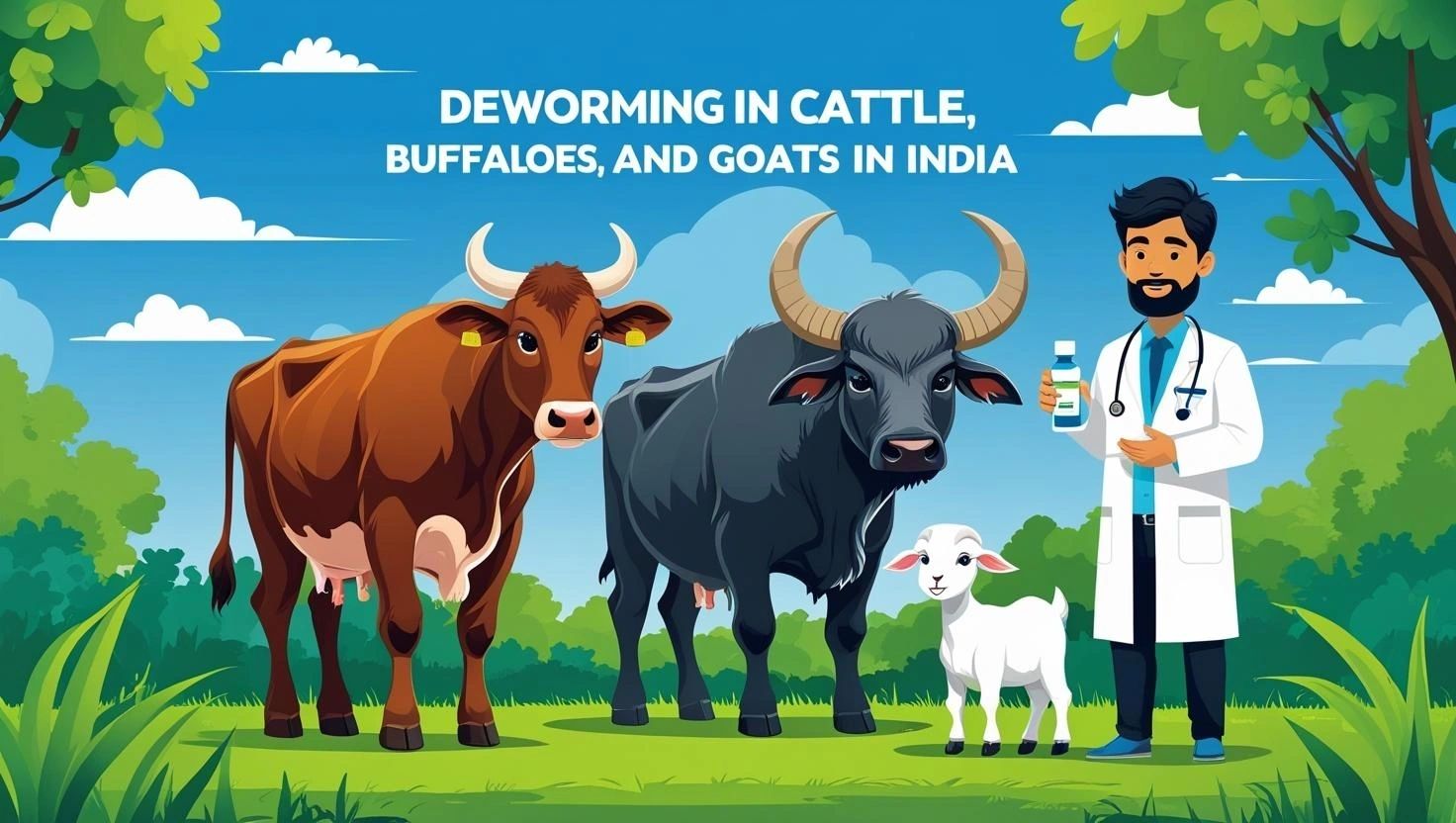
Deworming, that is, removing worms, is very important in livestock management, especially in India for cattle, buffaloes and goats. Internal parasites such as gastrointestinal nematodes, flukes and protozoa threaten animal health, productivity and farm profitability. In this article we give complete information about deworming, including the losses caused by internal parasites, the regional epidemiology of different worms, and the brands of drugs available for deworming.
1. Losses Caused by Internal Parasites
Internal parasites, such as stomach worms, flukes and protozoa, cause major losses in livestock farming. These parasites affect animals in the following ways:
- Reduced growth rates: Parasites prevent nutrients from being absorbed, which stunts the growth of young animals.
- Reduced milk production: In dairy cattle and buffaloes, parasitic infections can reduce milk yield by up to 20%, because energy goes into fighting the infection.
- Reduced reproductive efficiency: Parasites cause poor body condition, which lowers conception rates and lengthens calving intervals.
- Increased mortality: Severe infestations can be fatal, especially in young or weak animals.
In India, the economic impact is very large:
- In dairy cattle and buffaloes, internal parasites can reduce milk yield by 10-20%.
- In goats, weight gain can fall by 30% or more, and mortality rates can rise, especially in kids, for example from heavy infestations of Haemonchus contortus.
These losses highlight the importance of regular deworming.
2. Regional Epidemiology of Internal Parasites
India’s diverse climate and management practices influence the prevalence and types of internal parasites. Understanding regional epidemiology is essential for effective deworming strategies.
Cattle and Buffaloes
- Gastrointestinal Nematodes: Common parasites include Haemonchus contortus (barber’s pole worm), Ostertagia ostertagi and Cooperia species. These worms thrive in warm, humid conditions, such as the Northeast, coastal areas (Kerala, West Bengal) and central India (Madhya Pradesh).
- Liver Flukes: Fasciola hepatica and Fasciola gigantica are more common in regions with standing water or prone to floods, such as the Gangetic plains and coastal areas.
- Coccidia: Protozoan parasites such as Eimeria species are common in intensive farming systems, especially in calves and young stock.
Goats
- Haemonchus contortus: This is the most significant parasite in goats, especially in humid and sub-humid regions. Goats are more susceptible because of their browsing behaviour.
- Other Nematodes: Trichostrongylus, Oesophagostomum and Strongyloides species are also common, especially in communal grazing areas.
- Coccidia: Coccidiosis is a concern in young goats, especially on crowded or poorly managed farms.
Because of regional differences, tailored deworming programmes are necessary. High-humidity areas may need frequent deworming, while in drier regions strategic deworming in specific seasons may be enough.
3. Deworming Strategies
Effective deworming requires understanding the parasite life cycle, regional epidemiology and the animal’s production stage. The key strategies are:
Timing of Deworming
- Rainy Season: Parasite transmission peaks during the monsoon. It is important to deworm before and after the rainy season.
- Pre-breeding and Pre-parturition: Deworming cows and buffaloes before breeding or calving ensures better reproductive efficiency and healthier offspring.
- Young Animals: Calves, kids and lambs are more susceptible and may need more frequent deworming.
Targeted Deworming
- FAMACHA System: Especially for goats, this system assesses anaemia levels by checking the colour of the conjunctiva. Only animals with heavy infestation are dewormed.
- Fecal Egg Count (FEC): Regular FEC monitoring determines the parasite load and guides deworming decisions.
Rotational Deworming
- To prevent drug resistance, it is necessary to rotate dewormers with different modes of action.
4. Available Deworming Drugs and Brands
Many deworming drugs are available in India, each targeting specific parasites. The choice of drug depends on the parasite species, the type of animal and regional resistance patterns.
Common Dewormers
- Benzimidazoles:
- Albendazole: Effective against roundworms, tapeworms and some flukes.
- Fenbendazole: Broad-spectrum, against gastrointestinal nematodes and lungworms.
- Brands: Alzol by Virbac, Fentas by Intas, Panacur by Zoetis.
- Macrocyclic Lactones:
- Ivermectin: Effective against nematodes and ectoparasites.
- Moxidectin: Longer-acting than ivermectin.
- Brands: Ivomec by Virbac, Hitek by Intas, Cydectin by Zoetis.
- Imidazothiazoles:
- Levamisole: Effective against gastrointestinal and lung nematodes.
- Brands: Levamisole by Intas, Levasole by Virbac.
- Combination Drugs:
- Albendazole + Ivermectin: Targets a broader range of parasites.
- Brands: Albomar Plus by Virbac, Fentas Plus by Intas.
Drug Administration
- Oral Drench: Common for small ruminants such as goats and sheep.
- Injectable: Preferred for cattle and buffaloes, especially for macrocyclic lactones.
- Bolus: For slow-release formulations in large animals.
It is important to follow veterinary advice to avoid underdosing, which can increase drug resistance.
5. Challenges and Recommendations
- Drug Resistance: Overuse and misuse have increased resistance, especially in goats. To combat this:
- Rotate dewormers with different modes of action.
- Use targeted deworming based on FAMACHA or FEC.
- Ensure accurate weight-based dosing.
- Regional Variability: Farmers should work with local veterinarians to understand specific parasite risks.
- Integrated Parasite Management (IPM): Combine deworming with pasture management, rotational grazing and nutritional support.
6. Conclusion
Deworming is essential for maintaining the health and productivity of cattle, buffaloes and goats. Internal parasites cause significant economic losses, especially in high-risk regions. By understanding regional parasite epidemiology and using appropriate deworming strategies—such as targeted treatment, rotational deworming and proper drug selection—farmers can reduce losses and improve farm profitability. Collaboration with veterinarians and regular monitoring of parasite burden are key to sustainable parasite management.
Discover our technical videos on dairy farming
Need help with feeding or a health problem in your cows or buffaloes? Message Dr. Ibne Ali on WhatsApp.
WhatsApp: 98715 84101भैंस, गाय और बकरियों में कीड़े निकालने (Deworming) का विषय
Deworming, यानी कीड़े निकालना, पशुपालन में बहुत ज़रूरी है, खासकर भारत में गाय, भैंस और बकरियों के लिए। पेट के अंदर के परजीवी (internal parasites) जैसे gastrointestinal nematodes, flukes और protozoa पशु की सेहत, उत्पादन और farm के मुनाफे के लिए खतरा हैं। इस लेख में हम deworming के बारे में पूरी जानकारी देंगे, जिसमें internal parasites से होने वाले नुकसान, अलग-अलग कीड़ों की इलाके के हिसाब से epidemiology, और deworming के लिए उपलब्ध दवाओं के brands शामिल हैं।
1. Internal Parasites से होने वाले नुकसान
Internal parasites, जैसे पेट के कीड़े, flukes और protozoa, पशुपालन में बड़े नुकसान का कारण हैं। ये परजीवी पशुओं पर इस तरह असर करते हैं:
- बढ़वार कम करना: परजीवी पोषक तत्वों को शरीर में सोखने से रोक देते हैं, जिससे छोटे पशुओं की बढ़वार रुक जाती है।
- दूध उत्पादन कम करना: दुधारू गाय और भैंसों में परजीवी संक्रमण दूध को 20% तक कम कर सकता है, क्योंकि शरीर की ताकत संक्रमण से लड़ने में लग जाती है।
- प्रजनन क्षमता कम करना: परजीवी शरीर की हालत खराब कर देते हैं, जिससे गर्भ ठहरने की दर कम हो जाती है और ब्यांत के बीच का अंतर (calving interval) बढ़ जाता है।
- मृत्यु दर बढ़ाना: गंभीर संक्रमण, खासकर छोटे या कमज़ोर पशुओं में, जानलेवा हो सकता है।
भारत में इसका आर्थिक असर बहुत ज़्यादा है:
- दुधारू गाय और भैंसों में internal parasites दूध को 10-20% तक कम कर सकते हैं।
- बकरियों में वज़न बढ़ना 30% या उससे ज़्यादा कम हो सकता है, और मृत्यु दर बढ़ सकती है, खासकर मेमनों (kids) में, जैसे Haemonchus contortus के भारी संक्रमण से।
ये नुकसान नियमित deworming की अहमियत को दिखाते हैं।
2. Internal Parasites की इलाके के हिसाब से Epidemiology
भारत का अलग-अलग मौसम और पशुपालन के तरीके internal parasites के फैलाव और प्रकारों पर असर डालते हैं। असरदार deworming के लिए इलाके के हिसाब से epidemiology समझना ज़रूरी है।
गाय और भैंस
- Gastrointestinal Nematodes: आम परजीवियों में Haemonchus contortus (barber’s pole worm), Ostertagia ostertagi और Cooperia species शामिल हैं। ये कीड़े गर्म और नम माहौल में खूब पनपते हैं, जैसे पूर्वोत्तर, तटीय इलाके (केरल, पश्चिम बंगाल) और मध्य भारत (मध्य प्रदेश)।
- Liver Flukes: Fasciola hepatica और Fasciola gigantica रुके हुए पानी वाले या बाढ़ वाले इलाकों में ज़्यादा होते हैं, जैसे गंगा के मैदान और तटीय इलाके।
- Coccidia: Eimeria species जैसे protozoa परजीवी intensive farming में आम हैं, खासकर बछड़ों और छोटे पशुओं में।
बकरियाँ
- Haemonchus contortus: यह बकरियों में सबसे महत्वपूर्ण परजीवी है, खासकर नम और कम-नम इलाकों में। झाड़ियाँ-पत्ते चरने की आदत की वजह से बकरियाँ इससे ज़्यादा प्रभावित होती हैं।
- दूसरे Nematodes: Trichostrongylus, Oesophagostomum और Strongyloides species भी आम हैं, खासकर साझा चरागाहों में।
- Coccidia: छोटी बकरियों में coccidiosis एक चिंता है, खासकर भीड़ वाले या ठीक से न संभाले गए farms में।
इलाकों के अंतर की वजह से हर जगह के हिसाब से अलग deworming कार्यक्रम ज़रूरी हैं। ज़्यादा नमी वाले इलाकों में बार-बार deworming की ज़रूरत हो सकती है, जबकि सूखे इलाकों में खास मौसमों में सोच-समझकर की गई deworming काफी हो सकती है।
3. Deworming की रणनीतियाँ
असरदार deworming के लिए परजीवी का जीवन चक्र, इलाके की epidemiology और पशु के उत्पादन की stage समझना ज़रूरी है। मुख्य रणनीतियाँ हैं:
Deworming का समय
- बरसात का मौसम: मानसून के दौरान परजीवियों का फैलाव सबसे ज़्यादा होता है। बरसात से पहले और बाद में deworming करना ज़रूरी है।
- गर्भधारण से पहले और ब्यांत से पहले: गाय और भैंसों को गर्भधारण (breeding) या ब्यांत (calving) से पहले deworm करने से प्रजनन क्षमता अच्छी रहती है और बच्चे स्वस्थ होते हैं।
- छोटे पशु: बछड़े, बकरी के बच्चे (kids) और मेमने (lambs) ज़्यादा प्रभावित होते हैं और उन्हें बार-बार deworming की ज़रूरत हो सकती है।
Targeted Deworming (चुनिंदा पशुओं की deworming)
- FAMACHA System: खासकर बकरियों के लिए, यह तरीका आँख की झिल्ली (conjunctiva) का रंग देखकर खून की कमी (anemia) का स्तर जाँचता है। सिर्फ भारी संक्रमण वाले पशुओं को deworm किया जाता है।
- Fecal Egg Count (FEC): नियमित FEC जाँच से परजीवियों का बोझ पता चलता है और deworming के फैसले लेने में मदद मिलती है।
Rotational Deworming (दवा बदल-बदलकर देना)
- दवा के खिलाफ resistance रोकने के लिए, अलग-अलग तरीके से काम करने वाले (different modes of action) dewormers को बदल-बदलकर देना ज़रूरी है।
4. उपलब्ध Deworming दवाएँ और Brands
भारत में कई deworming दवाएँ उपलब्ध हैं, और हर दवा खास परजीवियों पर काम करती है। दवा का चुनाव परजीवी की species, पशु के प्रकार और इलाके में resistance के पैटर्न पर निर्भर करता है।
आम Dewormers
- Benzimidazoles:
- Albendazole: गोल कृमि (roundworms), फीता कृमि (tapeworms) और कुछ flukes के खिलाफ असरदार।
- Fenbendazole: Broad-spectrum, gastrointestinal nematodes और lungworms के खिलाफ।
- Brands: Virbac का Alzol, Intas का Fentas, Zoetis का Panacur।
- Macrocyclic Lactones:
- Ivermectin: Nematodes और बाहरी परजीवियों (ectoparasites) के खिलाफ असरदार।
- Moxidectin: Ivermectin से ज़्यादा लंबे समय तक असर करने वाली।
- Brands: Virbac का Ivomec, Intas का Hitek, Zoetis का Cydectin।
- Imidazothiazoles:
- Levamisole: पेट और फेफड़ों के nematodes के खिलाफ असरदार।
- Brands: Intas का Levamisole, Virbac का Levasole।
- Combination दवाएँ:
- Albendazole + Ivermectin: ज़्यादा तरह के परजीवियों पर काम करती है।
- Brands: Virbac का Albomar Plus, Intas का Fentas Plus।
दवा देने के तरीके
- Oral Drench (मुँह से पिलाना): बकरी और भेड़ जैसे छोटे जुगाली करने वाले पशुओं के लिए आम।
- Injectable (इंजेक्शन): गाय और भैंसों के लिए पसंद किया जाता है, खासकर macrocyclic lactones के लिए।
- Bolus: बड़े पशुओं में धीरे-धीरे असर छोड़ने वाली (slow-release) दवाओं के लिए।
पशु चिकित्सक की सलाह मानना ज़रूरी है ताकि कम dose (underdosing) से बचा जा सके, क्योंकि इससे दवा के खिलाफ resistance बढ़ सकता है।
5. चुनौतियाँ और सुझाव
- Drug Resistance: दवाओं के ज़्यादा और गलत इस्तेमाल से resistance बढ़ गया है, खासकर बकरियों में। इससे निपटने के लिए:
- अलग-अलग तरीके से काम करने वाले dewormers बदल-बदलकर दें।
- FAMACHA या FEC के आधार पर targeted deworming करें।
- पशु के सही वज़न के हिसाब से dose दें।
- इलाकों का अंतर: किसानों को अपने इलाके के पशु चिकित्सकों के साथ मिलकर काम करना चाहिए ताकि वहाँ के खास परजीवी खतरों को समझ सकें।
- Integrated Parasite Management (IPM): Deworming को चरागाह प्रबंधन, चरागाह बदल-बदलकर चराने (rotational grazing) और पोषण सहायता के साथ जोड़ें।
6. निष्कर्ष
गाय, भैंस और बकरियों की सेहत और उत्पादन बनाए रखने के लिए deworming बहुत ज़रूरी है। Internal parasites बड़े आर्थिक नुकसान का कारण हैं, खासकर ज़्यादा खतरे वाले इलाकों में। इलाके की परजीवी epidemiology समझकर और सही deworming रणनीतियाँ अपनाकर—जैसे targeted इलाज, rotational deworming और सही दवा का चुनाव—किसान नुकसान कम कर सकते हैं और farm का मुनाफा बढ़ा सकते हैं। पशु चिकित्सकों के साथ मिलकर काम करना और परजीवियों के बोझ की नियमित जाँच, लंबे समय तक परजीवी नियंत्रण की कुंजी है।
डेयरी फार्मिंग पर हमारे technical videos देखें
गाय-भैंस के दाने या बीमारी में मदद चाहिए? डॉ. इब्ने अली को WhatsApp कीजिए।
WhatsApp: 98715 84101Bhains, Gai aur Bakriyon me Keede Nikaalne (Deworming) ka Vishay
Deworming, yaani keede nikaalna, pashupalan me bahut zaroori hai, khaas kar India me gai, bhains aur bakriyon ke liye. Pet ke andar ke parasites jaise gastrointestinal nematodes, flukes aur protozoa pashu ki sehat, production aur farm ke munafe ke liye khatra hain. Is article me hum deworming ke baare me poori jaankari denge, jisme internal parasites se hone wale nuksan, alag-alag keedon ki ilaake ke hisaab se epidemiology, aur deworming ke liye milne wali dawaon ke brands shamil hain.
1. Internal Parasites se Hone Wale Nuksan
Internal parasites, jaise pet ke keede, flukes aur protozoa, pashupalan me bade nuksan ka karan hain. Ye parasites pashuon par is tarah asar karte hain:
- Growth kam karna: Parasites poshak tatvon ko body me sokhne se rok dete hain, jisse chhote pashuon ki growth ruk jaati hai.
- Doodh kam karna: Dudharu gai aur bhainson me parasite infection doodh ko 20% tak kam kar sakta hai, kyunki body ki taakat infection se ladne me lag jaati hai.
- Prajanan kshamta kam karna: Parasites body ki haalat kharab kar dete hain, jisse garbh theharne ki dar kam ho jaati hai aur do byaant ke beech ka gap (calving interval) badh jata hai.
- Mortality badhana: Serious infestation, khaas kar chhote ya kamzor pashuon me, jaanleva ho sakta hai.
India me iska aarthik asar bahut zyada hai:
- Dudharu gai aur bhainson me internal parasites doodh ko 10-20% tak kam kar sakte hain.
- Bakriyon me weight badhna 30% ya usse zyada kam ho sakta hai, aur mortality badh sakti hai, khaas kar bachchon (kids) me, jaise Haemonchus contortus ke bhari infestation se.
Ye nuksan regular deworming ki ahmiyat dikhate hain.
2. Internal Parasites ki Ilaake ke hisaab se Epidemiology
India ka alag-alag mausam aur pashupalan ke tareeke internal parasites ke failav aur types par asar daalte hain. Asardar deworming ke liye ilaake ke hisaab se epidemiology samajhna zaroori hai.
Gai aur Bhains
- Gastrointestinal Nematodes: Common parasites me Haemonchus contortus (barber’s pole worm), Ostertagia ostertagi aur Cooperia species shamil hain. Ye keede garam aur nam mahaul me khoob panapte hain, jaise Northeast, coastal ilaake (Kerala, West Bengal) aur central India (Madhya Pradesh).
- Liver Flukes: Fasciola hepatica aur Fasciola gigantica ruke hue paani wale ya baadh wale ilaakon me zyada hote hain, jaise Ganga ke maidan aur coastal ilaake.
- Coccidia: Eimeria species jaise protozoa parasites intensive farming me common hain, khaas kar bachhdon aur chhote pashuon me.
Bakriyan
- Haemonchus contortus: Ye bakriyon me sabse important parasite hai, khaas kar nam aur kam-nam ilaakon me. Jhaadiyan-patte charne ki aadat ki wajah se bakriyan isse zyada affect hoti hain.
- Doosre Nematodes: Trichostrongylus, Oesophagostomum aur Strongyloides species bhi common hain, khaas kar saanjhe charagah (communal grazing) wale ilaakon me.
- Coccidia: Chhoti bakriyon me coccidiosis ek chinta hai, khaas kar bheed wale ya theek se na sambhale gaye farms me.
Ilaakon ke fark ki wajah se har jagah ke hisaab se alag deworming program zaroori hain. Zyada nami wale ilaakon me baar-baar deworming ki zaroorat ho sakti hai, jabki sookhe ilaakon me khaas mausam me soch-samajh kar ki gayi deworming kaafi ho sakti hai.
3. Deworming ki Strategies
Asardar deworming ke liye parasite ka life cycle, ilaake ki epidemiology aur pashu ki production stage samajhna zaroori hai. Main strategies ye hain:
Deworming ka Samay
- Baarish ka mausam: Monsoon ke dauran parasites ka failav sabse zyada hota hai. Baarish se pehle aur baad me deworming karna zaroori hai.
- Breeding se pehle aur byaant se pehle: Gai aur bhainson ko breeding ya calving se pehle deworm karne se prajanan kshamta achhi rehti hai aur bachche healthy hote hain.
- Chhote pashu: Bachhde, bakri ke bachche (kids) aur memne (lambs) zyada affect hote hain aur unhe baar-baar deworming ki zaroorat ho sakti hai.
Targeted Deworming
- FAMACHA System: Khaas kar bakriyon ke liye, ye tareeka aankh ki jhilli (conjunctiva) ka rang dekh kar khoon ki kami (anemia) ka level check karta hai. Sirf bhari infestation wale pashuon ko deworm kiya jata hai.
- Fecal Egg Count (FEC): Regular FEC jaanch se parasite load ka pata chalta hai aur deworming ke faisle lene me madad milti hai.
Rotational Deworming
- Dawa ke khilaf resistance rokne ke liye, alag-alag tareeke se kaam karne wale (different modes of action) dewormers ko badal-badal kar dena zaroori hai.
4. Available Deworming Dawayein aur Brands
India me kai deworming dawayein milti hain, aur har dawa khaas parasites par kaam karti hai. Dawa ka chunav parasite species, pashu ke type aur ilaake me resistance ke pattern par depend karta hai.
Common Dewormers
- Benzimidazoles:
- Albendazole: Roundworms, tapeworms aur kuch flukes ke khilaf asardar.
- Fenbendazole: Broad-spectrum, gastrointestinal nematodes aur lungworms ke khilaf.
- Brands: Virbac ka Alzol, Intas ka Fentas, Zoetis ka Panacur.
- Macrocyclic Lactones:
- Ivermectin: Nematodes aur bahari parasites (ectoparasites) ke khilaf asardar.
- Moxidectin: Ivermectin se zyada lambe samay tak asar karne wali.
- Brands: Virbac ka Ivomec, Intas ka Hitek, Zoetis ka Cydectin.
- Imidazothiazoles:
- Levamisole: Pet aur lungs ke nematodes ke khilaf asardar.
- Brands: Intas ka Levamisole, Virbac ka Levasole.
- Combination Dawayein:
- Albendazole + Ivermectin: Zyada tarah ke parasites par kaam karti hai.
- Brands: Virbac ka Albomar Plus, Intas ka Fentas Plus.
Dawa Dene ke Tareeke
- Oral Drench (munh se pilana): Bakri aur bhed jaise chhote jugaali karne wale pashuon ke liye common.
- Injectable: Gai aur bhainson ke liye pasand kiya jata hai, khaas kar macrocyclic lactones ke liye.
- Bolus: Bade pashuon me dheere-dheere asar chhodne wali (slow-release) dawaon ke liye.
Vet ki salah maanna zaroori hai taaki kam dose (underdosing) se bacha ja sake, kyunki isse dawa ke khilaf resistance badh sakta hai.
5. Challenges aur Sujhav
- Drug Resistance: Dawaon ke zyada aur galat use se resistance badh gaya hai, khaas kar bakriyon me. Isse nipatne ke liye:
- Alag-alag tareeke se kaam karne wale dewormers badal-badal kar dein.
- FAMACHA ya FEC ke hisaab se targeted deworming karein.
- Pashu ke sahi weight ke hisaab se dose dein.
- Ilaakon ka Fark: Farmers ko apne ilaake ke vets ke saath milkar kaam karna chahiye taaki wahan ke khaas parasite risks samajh sakein.
- Integrated Parasite Management (IPM): Deworming ko charagah management, rotational grazing aur nutrition support ke saath jodein.
6. Conclusion
Gai, bhains aur bakriyon ki sehat aur production banaye rakhne ke liye deworming bahut zaroori hai. Internal parasites bade aarthik nuksan ka karan hain, khaas kar zyada risk wale ilaakon me. Ilaake ki parasite epidemiology samajh kar aur sahi deworming strategies apna kar—jaise targeted treatment, rotational deworming aur sahi dawa ka chunav—farmers nuksan kam kar sakte hain aur farm ka munafa badha sakte hain. Vets ke saath milkar kaam karna aur parasite load ki regular jaanch, lambe samay tak parasite control ki chaabi hai.
Dairy farming par hamare technical videos dekhein
Gaay-bhains ke daane ya bimari me madad chahiye? Dr. Ibne Ali ko WhatsApp kijiye.
WhatsApp: 98715 84101