October and November are the busiest months in a goat shed in North India. Many does are heavily pregnant or kidding, green fodder is getting less, and the herd moves onto dry straw and stubble. This is exactly when mineral shortage shows up: weak or stiff kids, does that do not come into heat again, rough coats, goats licking walls and eating soil. A good mineral mixture, given every day in a goat dose, is one of the cheapest ways to prevent this. Here is why goats need it, how to spot a shortage, how much to give, and how to choose the right one.
Why goats need a mineral mixture
Grazing, browsing on leaves and a little grain do not give a goat every mineral she needs, and the gap is biggest in winter on dry fodder. Goats also have a few needs of their own:
- Twins and triplets: a doe carrying two or three kids, then feeding them, needs far more calcium, phosphorus, selenium and iodine than her body can store.
- Fast growth: kids grow quickly, and slow growth or weak legs is often the first sign of a shortage.
- Breeding: phosphorus, copper, zinc, manganese and iodine are needed for regular heat, conception and holding the pregnancy.
- Immunity: zinc, selenium and vitamin E help goats resist infections, including the pneumonia that kills many kids in winter.
Remember that a goat is not a small cow. Use a dose written for goats, not a guess from the cow dose.
Signs your goats are short of minerals
| What you see | Mineral often involved |
|---|---|
| Licking walls, eating soil, cloth, plastic or bones | Phosphorus, salt |
| Rough, dull coat, faded hair colour, hair loss at the tail tip | Copper, zinc, cobalt |
| Newborn kids weak, stiff, unable to stand or suck | Selenium, vitamin E |
| Kids born weak with a swollen neck, or with thin hair | Iodine |
| Does not coming into heat, repeat breeding, early abortions | Phosphorus, copper, zinc, manganese, iodine, selenium |
| Scaly skin, cracked hooves, slow wound healing | Zinc |
| Poor appetite, slow growth, weakness | Cobalt, phosphorus |
Many of these signs can also come from worms, especially pale eyes, weakness and a rough coat. If several goats in the herd show them, deworm first and start daily minerals together. See how to deworm goats, cows and buffaloes.
How much mineral mixture to give a goat
Always follow the goat dose written on the pack, because strength differs a lot between brands. As a rough guide:
| Type of mineral mixture | Usual daily amount per adult goat |
|---|---|
| Ordinary (non-chelated) mineral mixture | about 5–10 g, as per pack |
| Chelated mineral mixture (for example Pyromin) | 3 g |
| Kids eating grain, pregnant and milking does | as written on the pack for goats; do not double it |
A chelated mineral is bound to amino acids, so much more of it is absorbed. That is why the dose is so small. Small dose does not mean weak.
- Mix it into the daana or a handful of soaked chokar. Measure it with a small spoon. Do not sprinkle it on dry fodder; most of it falls off.
- For a big herd, mix it into the whole batch of concentrate so every goat gets her share.
- Give it every day, all year, to milking, dry and pregnant does, bucks and growing kids. A short course once in a while does not work.
- Keep salt available separately. A mineral mixture does not replace salt.
- Do not give extra “for quick results”. Too much copper or selenium can harm goats.
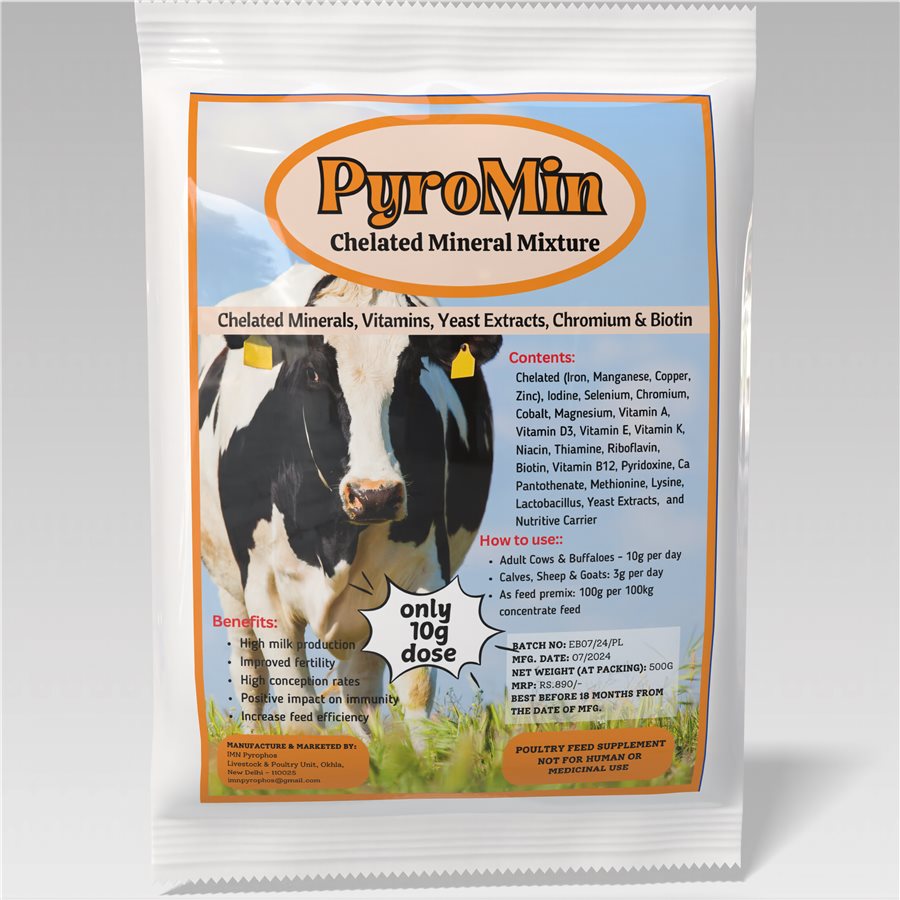
Chelated minerals · 3 g per goat
Pyromin
Chelated iron, manganese, copper, zinc, iodine, selenium, chromium, cobalt and magnesium, with vitamins A, D3, E, K and B vitamins, biotin, methionine, lysine, lactobacillus and yeast extract. Supports milk production, fertility, conception, immunity and feed efficiency.
Dose: 3 g per goat or sheep per day (calves also 3 g; adult cow or buffalo 10 g). As a premix, 100 g per 100 kg of concentrate.
1 kg ₹655MRP ₹1,190
At 3 g a day, one 1 kg pack of Pyromin gives about 330 goat-days: roughly a month for 10 goats, at about ₹2 per goat per day.
Winter and kidding season: where minerals matter most
In North India a large share of kids are born between October and February. The last 6 weeks of pregnancy and the first weeks after kidding are when a doe’s mineral stores run down fastest.
- Pregnant does: keep the daily mineral going right through pregnancy at the normal goat dose. Selenium, vitamin E and iodine in the doe’s feed reach the kids before birth and help them be born strong.
- Do not load extra calcium powder or chuna just before kidding. Give the balanced mineral mixture, good fodder and a little extra grain instead.
- After kidding: a doe feeding twins needs her mineral, salt, clean lukewarm water and good feed every day. If she is weak, trembling or off feed in the days around kidding, call the vet quickly.
- Kids: make sure each kid gets colostrum (khees) within the first hour. Once kids start nibbling grain at a few weeks old, add a little mineral to their creep feed as per pack.
For shelter, bedding, water and pneumonia in the cold, read our full winter care of goats guide.
Rumen health on dry winter fodder
When the ration shifts to straw and stubble, the rumen has to work harder to digest fibre. Minerals feed the rumen bugs, and a rumen-specific yeast can help them further, especially in does that are milking or carrying twins.
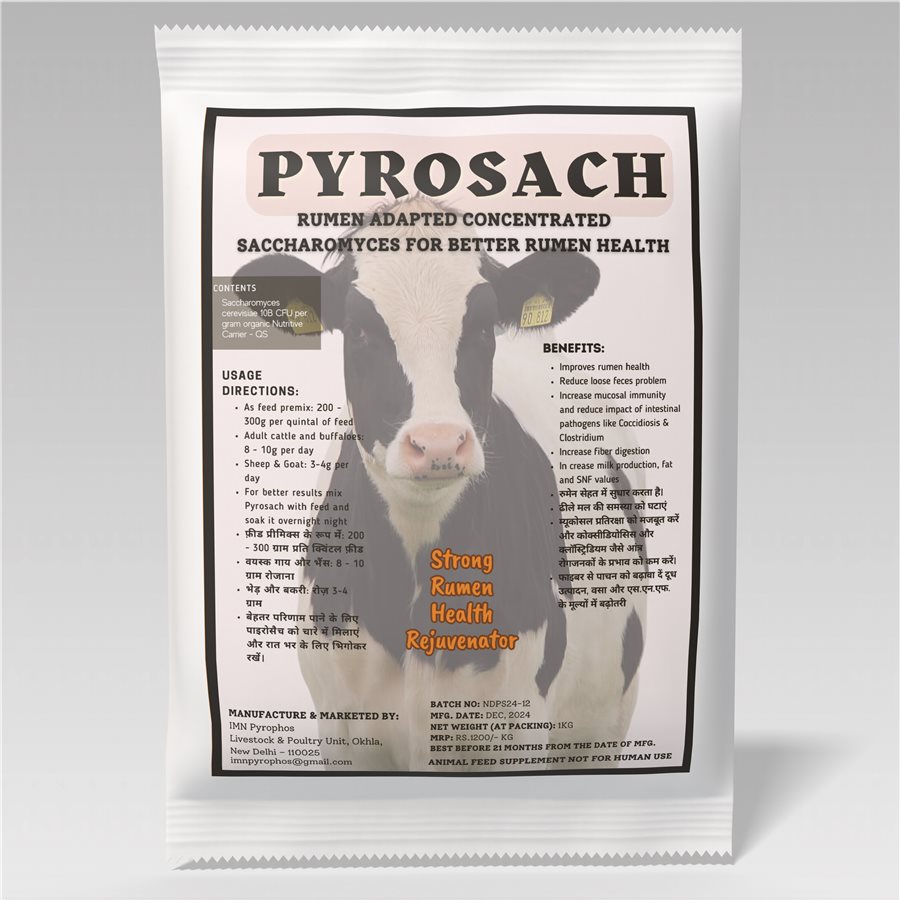
Rumen health
Pyrosach
Rumen adapted Saccharomyces cerevisiae (10 billion CFU per gram). Supports rumen health and fibre digestion, reduces loose dung and pellets, and supports mucosal immunity and milk.
Dose: 3–4 g per sheep or goat per day (adult cow or buffalo 8–10 g), or 200–300 g per quintal of feed. Mix in feed and soak overnight.
1 kg ₹700MRP ₹1,200
Bucks and castrated males: watch for urinary stones
Male goats fed a lot of grain or bran and too little roughage can get urinary stones (pathri). The trouble is a ration with too much phosphorus and too little calcium, plus low water intake in the cold.
- Give males mostly fodder, not heavy grain. Do not add extra bran or extra phosphorus on top of the mineral mixture.
- Keep salt available and offer lukewarm water in winter so they drink enough.
- A male straining to pass urine, passing drops, kicking at the belly or crying is an emergency. Call the vet the same day.
Goats and sheep together? Be careful with copper
Goats handle copper much better than sheep do. Sheep are easily poisoned by copper. If you keep both, do not leave a high-copper cattle or goat mineral where sheep can eat it freely. Measure each animal’s dose into the feed, and only use a product whose label gives a sheep dose for your sheep.
Milking does: Beetal, Jamunapari, Barbari
Dairy breeds giving 1–3 litres a day lose a lot of minerals in milk. Keep the daily mineral going, give enough energy in winter, and if milk stays low despite good feeding, an energy and yeast-based milk support can help. Not sure which breed you have? See goat breeds in India.
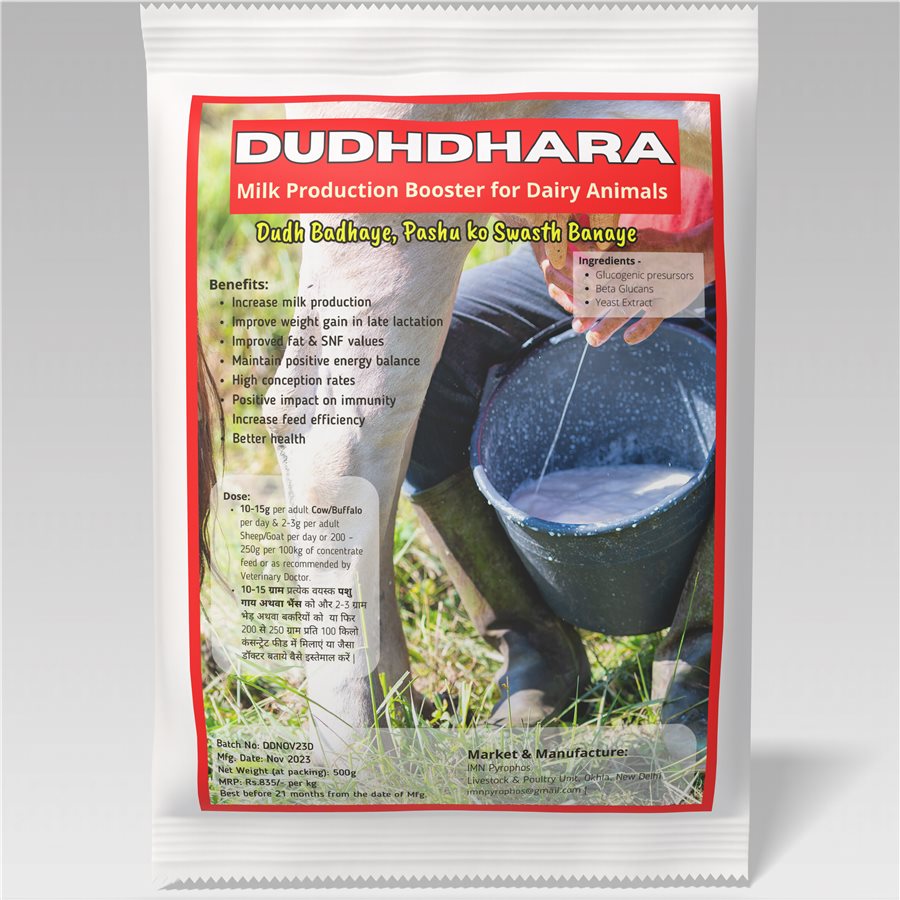
Milk support
Dudh Dhara
Milk production booster with glucogenic precursors, beta glucans and yeast extract. Supports milk, fat and SNF, positive energy balance, conception and immunity.
Dose: 2–3 g per sheep or goat per day (adult cow or buffalo 10–15 g), or 200–250 g per 100 kg concentrate.
1 kg ₹1,150MRP ₹1,410
How to choose a good mineral mixture for goats
- Look for a goat dose on the label. If the pack only talks about cows and buffaloes, ask the company for the goat dose before you use it.
- Read the ingredients: phosphorus, zinc, copper, manganese, cobalt, iodine and selenium should be listed, not just calcium and salt.
- Loose powder or block? Loose mineral mixed into feed gives a measured dose to every goat. With licking blocks some goats take too much and others almost none.
- Compare the cost per goat per day, not the price per kg.
- Batch number and expiry date should be printed on the pack.
- Want to make your own? See how to make mineral mixture at home; the same principles apply, with a much smaller dose for goats.
Common mistakes
- Giving the cow dose to goats, or guessing the dose by hand
- Giving minerals only to milking does, and skipping pregnant does, bucks and kids
- Stopping after a few days because “nothing changed”
- Thinking “my goats graze all day, so they don’t need minerals”
- Using salt or chuna in place of a mineral mixture
- Not deworming. Worms eat up the benefit of good feed and minerals.
Frequently asked questions
Can I give my cow’s mineral mixture to goats? Yes, if the label gives a goat dose and you give that goat dose, not the cow dose. Keep it away from sheep if it is high in copper.
How many days before I see results? Coat, appetite and soil-eating usually improve within a few weeks. Heat, conception and stronger kids take 2–3 months of daily feeding, because the body has to rebuild its stores.
Can a pregnant doe get a mineral mixture? Yes, every day through pregnancy at the normal goat dose. Avoid loading extra calcium powder just before kidding.
From what age can kids get minerals? Once they start eating grain or creep feed, mix a small amount into it, as per the pack.
Can I mix it in water? Most mineral mixtures are made to be mixed in feed. Follow the pack.
My goats graze outside all day. Do they still need it? Yes. Grazing quality falls sharply in winter, and soils in many areas are short of phosphorus, zinc, copper and selenium.
Also read: winter care of goats · mineral mixture benefits for cows and buffaloes · homemade mineral mixture · deworming goats · goat breeds in India · IMN dairy and goat products
बकरी के लिए मिनरल मिक्सचर: कितना दें, कब दें और कौन सा चुनें
उत्तर भारत में अक्टूबर और नवंबर बकरी फार्म के सबसे व्यस्त महीने होते हैं। बहुत सी बकरियाँ पूरे गाभिन हैं या ब्या रही हैं, हरा चारा कम हो रहा है और रेवड़ सूखे भूसे और खेत की ठूँठ पर आ जाता है। ठीक इसी समय मिनरल की कमी दिखती है: कमज़ोर या अकड़े हुए बच्चे, बकरी दोबारा हीट में नहीं आती, रूखे बाल, दीवार चाटना और मिट्टी खाना। रोज़ बकरी की मात्रा में दिया गया अच्छा मिनरल मिक्सचर इससे बचने का सबसे सस्ता तरीका है। बकरी को इसकी ज़रूरत क्यों है, कमी कैसे पहचानें, कितना दें और कौन सा चुनें, सब यहाँ पढ़ें।
बकरी को मिनरल मिक्सचर क्यों चाहिए
चराई, पेड़ों की पत्तियाँ और थोड़ा दाना बकरी को सारे मिनरल नहीं देते, और सर्दी में सूखे चारे पर यह कमी सबसे ज़्यादा होती है। बकरी की कुछ अपनी ज़रूरतें भी हैं:
- जुड़वाँ और तीन बच्चे: दो-तीन बच्चे पेट में लेकर चल रही, फिर उन्हें दूध पिला रही बकरी को कैल्शियम, फॉस्फोरस, सेलेनियम और आयोडीन उसके शरीर के भंडार से कहीं ज़्यादा चाहिए।
- तेज़ बढ़वार: बच्चे जल्दी बढ़ते हैं, और धीमी बढ़त या कमज़ोर पैर अक्सर कमी का पहला संकेत होते हैं।
- प्रजनन: नियमित हीट, गाभिन होने और गर्भ टिकने के लिए फॉस्फोरस, कॉपर, ज़िंक, मैंगनीज़ और आयोडीन ज़रूरी हैं।
- रोग प्रतिरोधक क्षमता: ज़िंक, सेलेनियम और विटामिन E बकरी को इन्फेक्शन से लड़ने में मदद करते हैं, उस निमोनिया से भी जो सर्दी में बहुत से बच्चों की जान लेता है।
याद रखें, बकरी छोटी गाय नहीं है। बकरी के लिए लिखी मात्रा दें, गाय की मात्रा से अंदाज़ा न लगाएँ।
बकरियों में मिनरल की कमी के लक्षण
| क्या दिखता है | अक्सर किसकी कमी |
|---|---|
| दीवार चाटना, मिट्टी, कपड़ा, प्लास्टिक या हड्डी खाना | फॉस्फोरस, नमक |
| रूखे-बेजान बाल, बालों का रंग उड़ना, पूँछ के सिरे के बाल झड़ना | कॉपर, ज़िंक, कोबाल्ट |
| नवजात बच्चे कमज़ोर, अकड़े हुए, खड़े न हो पाएँ या दूध न खींच पाएँ | सेलेनियम, विटामिन E |
| बच्चे कमज़ोर, गर्दन सूजी हुई, या बहुत कम बालों के साथ पैदा हों | आयोडीन |
| बकरी हीट में न आए, बार-बार फिरे, शुरू में ही गर्भ गिर जाए | फॉस्फोरस, कॉपर, ज़िंक, मैंगनीज़, आयोडीन, सेलेनियम |
| खाल पर पपड़ी, फटे खुर, घाव देर से भरना | ज़िंक |
| भूख कम, धीमी बढ़त, कमज़ोरी | कोबाल्ट, फॉस्फोरस |
इनमें से कई लक्षण पेट के कीड़ों से भी होते हैं, खासकर पीली आँखें, कमज़ोरी और रूखे बाल। अगर रेवड़ की कई बकरियों में ये दिखें, तो पहले कीड़ों की दवा दें और साथ में रोज़ मिनरल शुरू करें। पढ़ें: बकरी, गाय और भैंस में डीवर्मिंग कैसे करें।
बकरी को रोज़ कितना मिनरल मिक्सचर दें
हमेशा पैकेट पर बकरी के लिए लिखी मात्रा ही दें, क्योंकि हर ब्रांड की ताकत अलग होती है। मोटा अंदाज़ा:
| मिनरल मिक्सचर का प्रकार | एक वयस्क बकरी को आम तौर पर रोज़ |
|---|---|
| साधारण (नॉन-चिलेटेड) मिनरल मिक्सचर | लगभग 5–10 ग्राम, पैकेट के अनुसार |
| चिलेटेड मिनरल मिक्सचर (जैसे Pyromin) | 3 ग्राम |
| दाना खाने वाले बच्चे, गाभिन और दूध देने वाली बकरियाँ | पैकेट पर बकरी के लिए लिखी मात्रा; दोगुना न करें |
चिलेटेड मिनरल अमीनो एसिड से जुड़ा होता है, इसलिए शरीर उसे कहीं ज़्यादा सोखता है। इसी वजह से उसकी मात्रा इतनी कम होती है। कम मात्रा का मतलब कमज़ोर नहीं है।
- दाने या मुट्ठी भर भीगे चोकर में मिलाकर दें। छोटी चम्मच से नाप कर दें। सूखे चारे पर ऊपर से न छिड़कें, ज़्यादातर नीचे गिर जाता है।
- बड़े रेवड़ में पूरे दाने के बैच में मिला दें, ताकि हर बकरी को उसका हिस्सा मिले।
- रोज़ दें, पूरे साल: दूध वाली, सूखी और गाभिन बकरियों, बकरों और बढ़ते बच्चों, सबको। कभी-कभार का छोटा कोर्स काम नहीं करता।
- नमक अलग से रखें। मिनरल मिक्सचर नमक की जगह नहीं लेता।
- “जल्दी असर” के लिए ज़्यादा न दें। ज़्यादा कॉपर या सेलेनियम बकरी को नुकसान पहुँचा सकता है।
चिलेटेड मिनरल
Pyromin
चिलेटेड आयरन, मैंगनीज़, कॉपर, ज़िंक, आयोडीन, सेलेनियम, क्रोमियम, कोबाल्ट और मैग्नीशियम, विटामिन A, D3, E, K और B विटामिन, बायोटिन, मेथियोनीन, लाइसीन, लैक्टोबैसिलस और यीस्ट एक्सट्रैक्ट वाला मिनरल मिक्सचर। दूध उत्पादन, प्रजनन, गर्भधारण, इम्युनिटी और चारे के बेहतर उपयोग में सहायक।
मात्रा: बकरी या भेड़ को 3 ग्राम प्रति दिन (बछड़ों को भी 3 ग्राम; वयस्क गाय या भैंस को 10 ग्राम)। प्रीमिक्स के रूप में 100 ग्राम प्रति 100 किलो दाना।
1 kg ₹655MRP ₹1,190
3 ग्राम रोज़ के हिसाब से Pyromin का 1 किलो पैक लगभग 330 बकरी-दिन चलता है: 10 बकरियों के लिए करीब एक महीना, यानी लगभग ₹2 प्रति बकरी प्रति दिन।
सर्दी और ब्यांत का मौसम: जब मिनरल सबसे ज़रूरी है
उत्तर भारत में बहुत से बच्चे अक्टूबर से फरवरी के बीच पैदा होते हैं। गर्भ के आखिरी 6 हफ्ते और ब्याने के बाद के पहले हफ्ते वह समय है जब बकरी के शरीर का मिनरल भंडार सबसे तेज़ी से खाली होता है।
- गाभिन बकरी: पूरे गर्भकाल में बकरी की सामान्य मात्रा में रोज़ मिनरल जारी रखें। बकरी के दाने में मौजूद सेलेनियम, विटामिन E और आयोडीन जन्म से पहले ही बच्चों तक पहुँचते हैं और उन्हें मज़बूत पैदा होने में मदद करते हैं।
- ब्याने से ठीक पहले ऊपर से कैल्शियम पाउडर या चूना न भरें। इसकी जगह संतुलित मिनरल मिक्सचर, अच्छा चारा और थोड़ा ज़्यादा दाना दें।
- ब्याने के बाद: जुड़वाँ बच्चों को दूध पिलाने वाली बकरी को रोज़ मिनरल, नमक, साफ गुनगुना पानी और अच्छी खुराक चाहिए। अगर ब्याने के आसपास वह कमज़ोर हो, काँपे या खाना छोड़ दे, तो तुरंत डॉक्टर को बुलाएँ।
- बच्चे: हर बच्चे को पहले घंटे के अंदर खीस (कोलोस्ट्रम) ज़रूर मिले। कुछ हफ्ते का होकर जब बच्चा दाना कुतरने लगे, तो उसके दाने में पैकेट के अनुसार थोड़ा मिनरल मिलाएँ।
ठंड में बाड़ा, बिछावन, पानी और निमोनिया के लिए हमारी पूरी सर्दी में बकरियों की देखभाल गाइड पढ़ें।
सूखे सर्दी के चारे पर रुमेन की सेहत
जब खुराक भूसे और ठूँठ पर आ जाती है, तो रुमेन को रेशा पचाने में ज़्यादा मेहनत करनी पड़ती है। मिनरल रुमेन के जीवाणुओं को खुराक देते हैं, और रुमेन के लिए बना यीस्ट उनकी और मदद कर सकता है, खासकर दूध देने वाली या जुड़वाँ लेकर चल रही बकरियों में।
रुमेन की सेहत
Pyrosach
रुमेन के अनुकूल Saccharomyces cerevisiae (1000 करोड़ CFU प्रति ग्राम)। रुमेन की सेहत और रेशे के पाचन में सहायक, पतला गोबर/मेंगनी घटाता है, म्यूकोसल इम्युनिटी और दूध में सहायक।
मात्रा: भेड़ या बकरी को 3–4 ग्राम (वयस्क गाय या भैंस को 8–10 ग्राम प्रति दिन), या 200–300 ग्राम प्रति क्विंटल दाना। दाने में मिलाकर रात भर भिगोएँ।
1 kg ₹700MRP ₹1,200
बकरे और खस्सी: पेशाब की पथरी से सावधान
जिन नर बकरों को बहुत दाना या चोकर और कम सूखा-हरा चारा मिलता है, उन्हें पेशाब की पथरी हो सकती है। वजह है खुराक में फॉस्फोरस ज़्यादा और कैल्शियम कम होना, साथ में ठंड में कम पानी पीना।
- नर को ज़्यादातर चारा दें, भारी दाना नहीं। मिनरल मिक्सचर के ऊपर से अलग चोकर या फॉस्फोरस न जोड़ें।
- नमक रखें और सर्दी में गुनगुना पानी दें, ताकि वह पूरा पानी पिए।
- अगर नर पेशाब के लिए ज़ोर लगाए, बूँद-बूँद पेशाब करे, पेट पर लात मारे या चिल्लाए, तो यह इमरजेंसी है। उसी दिन डॉक्टर को बुलाएँ।
बकरी और भेड़ साथ में? कॉपर से सावधान
बकरी कॉपर को भेड़ से कहीं बेहतर झेल लेती है। भेड़ को कॉपर से आसानी से ज़हर हो जाता है। अगर दोनों पालते हैं, तो ज़्यादा कॉपर वाला गाय या बकरी का मिनरल ऐसी जगह न रखें जहाँ भेड़ उसे खुला खा सके। हर पशु की मात्रा नाप कर दाने में दें, और भेड़ को सिर्फ वही प्रोडक्ट दें जिसके लेबल पर भेड़ की मात्रा लिखी हो।
दूध वाली बकरियाँ: बीटल, जमुनापारी, बरबरी
रोज़ 1–3 लीटर दूध देने वाली नस्लें दूध के साथ बहुत सा मिनरल खो देती हैं। रोज़ का मिनरल जारी रखें, सर्दी में पूरी ऊर्जा दें, और अगर अच्छी खुराक के बाद भी दूध कम रहे तो ऊर्जा और यीस्ट वाला दूध सहायक मदद कर सकता है। आपकी बकरी कौन सी नस्ल है? पढ़ें भारत की बकरी नस्लें।
दूध में सहायक
Dudh Dhara
ग्लूकोजेनिक प्रीकर्सर, बीटा ग्लूकन और यीस्ट एक्सट्रैक्ट वाला दूध बढ़ाने वाला सप्लीमेंट। दूध, फैट और SNF, पॉज़िटिव एनर्जी बैलेंस, गाभिन ठहरने और रोग प्रतिरोधक क्षमता में सहायक।
मात्रा: भेड़ या बकरी को 2–3 ग्राम प्रति दिन (वयस्क गाय या भैंस को 10–15 ग्राम), या 200–250 ग्राम प्रति 100 किलो दाना।
1 kg ₹1,150MRP ₹1,410
बकरी के लिए अच्छा मिनरल मिक्सचर कैसे चुनें
- लेबल पर बकरी की मात्रा देखें। अगर पैक पर सिर्फ गाय-भैंस की बात है, तो इस्तेमाल से पहले कंपनी से बकरी की मात्रा पूछें।
- सामग्री पढ़ें: फॉस्फोरस, ज़िंक, कॉपर, मैंगनीज़, कोबाल्ट, आयोडीन और सेलेनियम लिखा हो, सिर्फ कैल्शियम और नमक नहीं।
- पाउडर या ईंट (ब्लॉक)? दाने में मिलाया गया पाउडर हर बकरी को नपी हुई मात्रा देता है। चाटने वाली ईंट से कुछ बकरियाँ बहुत ज़्यादा ले लेती हैं और कुछ लगभग कुछ नहीं।
- प्रति बकरी प्रति दिन का खर्च देखें, प्रति किलो दाम नहीं।
- बैच नंबर और एक्सपायरी डेट पैक पर छपी हो।
- घर पर बनाना चाहते हैं? पढ़ें घर पर मिनरल मिक्सचर कैसे बनाएँ; वही नियम लागू होते हैं, बस बकरी की मात्रा बहुत कम होती है।
आम गलतियाँ
- बकरी को गाय की मात्रा देना, या हाथ से अंदाज़े से डालना
- सिर्फ दूध वाली बकरियों को देना, गाभिन बकरियों, बकरों और बच्चों को छोड़ देना
- “कुछ नहीं बदला” सोचकर कुछ दिन बाद बंद कर देना
- यह सोचना कि “मेरी बकरियाँ दिन भर चरती हैं, उन्हें मिनरल की ज़रूरत नहीं”
- मिनरल मिक्सचर की जगह नमक या चूना देना
- कीड़ों की दवा न देना। पेट के कीड़े अच्छी खुराक और मिनरल का फायदा खा जाते हैं।
अक्सर पूछे जाने वाले सवाल
क्या गाय वाला मिनरल मिक्सचर बकरी को दे सकते हैं? हाँ, अगर लेबल पर बकरी की मात्रा लिखी है और आप वही बकरी वाली मात्रा देते हैं, गाय वाली नहीं। ज़्यादा कॉपर वाला हो तो भेड़ से दूर रखें।
असर कितने दिन में दिखेगा? बाल, भूख और मिट्टी खाना आम तौर पर कुछ हफ्तों में सुधर जाते हैं। हीट, गाभिन होना और मज़बूत बच्चे 2–3 महीने रोज़ खिलाने पर दिखते हैं, क्योंकि शरीर को अपना भंडार फिर से भरना होता है।
क्या गाभिन बकरी को मिनरल दे सकते हैं? हाँ, पूरे गर्भकाल में रोज़, बकरी की सामान्य मात्रा में। बस ब्याने से ठीक पहले ऊपर से कैल्शियम पाउडर न भरें।
बच्चों को किस उम्र से मिनरल दें? जब वे दाना या क्रीप फीड खाने लगें, तो उसमें पैकेट के अनुसार थोड़ा मिलाएँ।
क्या पानी में घोल सकते हैं? ज़्यादातर मिनरल मिक्सचर दाने में मिलाने के लिए बने होते हैं। पैकेट पर लिखा तरीका अपनाएँ।
मेरी बकरियाँ दिन भर बाहर चरती हैं। क्या फिर भी चाहिए? हाँ। सर्दी में चराई की गुणवत्ता बहुत गिर जाती है, और कई इलाकों की मिट्टी में फॉस्फोरस, ज़िंक, कॉपर और सेलेनियम कम होता है।
यह भी पढ़ें: सर्दी में बकरियों की देखभाल · गाय-भैंस के लिए मिनरल मिक्सचर के फायदे · घर पर मिनरल मिक्सचर · बकरियों की डीवर्मिंग · भारत की बकरी नस्लें · IMN डेयरी और बकरी प्रोडक्ट
Bakri ke liye mineral mixture: kitna dein, kab dein aur kaunsa chunein
Uttar Bharat me October aur November bakri farm ke sabse vyast mahine hote hain. Bahut si bakriyan poori gaabhin hain ya byaa rahi hain, hara chaara kam ho raha hai aur rewad sookhe bhoose aur khet ki thoonth par aa jaata hai. Theek isi samay mineral ki kami dikhti hai: kamzor ya akde hue bachche, bakri dobara heat me nahi aati, rookhe baal, deewar chaatna aur mitti khaana. Roz bakri ki matra me diya gaya achha mineral mixture isse bachne ka sabse sasta tareeka hai. Bakri ko iski zaroorat kyon hai, kami kaise pehchaanein, kitna dein aur kaunsa chunein, sab yahan padhiye.
Bakri ko mineral mixture kyon chahiye
Charaai, pedon ki pattiyan aur thoda daana bakri ko saare mineral nahi dete, aur sardi me sookhe chaare par ye kami sabse zyada hoti hai. Bakri ki kuch apni zarooratein bhi hain:
- Judwaan aur teen bachche: do-teen bachche pet me le kar chal rahi, phir unhe doodh pila rahi bakri ko calcium, phosphorus, selenium aur iodine uske sharir ke bhandaar se kahin zyada chahiye.
- Tez badhwaar: bachche jaldi badhte hain, aur dheemi badhat ya kamzor pair aksar kami ka pehla sanket hote hain.
- Prajanan: niyamit heat, gaabhin hone aur garbh tikne ke liye phosphorus, copper, zinc, manganese aur iodine zaroori hain.
- Immunity: zinc, selenium aur vitamin E bakri ko infection se ladne me madad karte hain, us pneumonia se bhi jo sardi me bahut se bachchon ki jaan leta hai.
Yaad rakhiye, bakri chhoti gaay nahi hai. Bakri ke liye likhi matra dijiye, gaay ki matra se andaaza mat lagaiye.
Bakriyon me mineral ki kami ke lakshan
| Kya dikhta hai | Aksar kiski kami |
|---|---|
| Deewar chaatna, mitti, kapda, plastic ya haddi khaana | Phosphorus, namak |
| Rookhe-bejaan baal, baalon ka rang udna, poonchh ke sire ke baal jhadna | Copper, zinc, cobalt |
| Navjaat bachche kamzor, akde hue, khade na ho paayein ya doodh na kheench paayein | Selenium, vitamin E |
| Bachche kamzor, gardan sooji hui, ya bahut kam baalon ke saath paida hon | Iodine |
| Bakri heat me na aaye, baar-baar phire, shuru me hi garbh gir jaaye | Phosphorus, copper, zinc, manganese, iodine, selenium |
| Khaal par papdi, phate khur, ghaav der se bharna | Zinc |
| Bhookh kam, dheemi badhat, kamzori | Cobalt, phosphorus |
Inme se kai lakshan pet ke keedon se bhi hote hain, khaas kar peeli aankhein, kamzori aur rookhe baal. Agar rewad ki kai bakriyon me ye dikhein, to pehle keede ki dawa dijiye aur saath me roz mineral shuru kijiye. Padhiye: bakri, gaay aur bhains me deworming kaise karein.
Bakri ko roz kitna mineral mixture dein
Hamesha packet par bakri ke liye likhi matra hi dijiye, kyonki har brand ki taakat alag hoti hai. Mota andaaza:
| Mineral mixture ka prakaar | Ek vayask bakri ko aam taur par roz |
|---|---|
| Saadharan (non-chelated) mineral mixture | lagbhag 5–10 g, packet ke anusaar |
| Chelated mineral mixture (jaise Pyromin) | 3 g |
| Daana khaane wale bachche, gaabhin aur doodh dene wali bakriyan | packet par bakri ke liye likhi matra; dugna na karein |
Chelated mineral amino acid se juda hota hai, isliye sharir use kahin zyada sokhta hai. Isi vajah se uski matra itni kam hoti hai. Kam matra ka matlab kamzor nahi hai.
- Daane ya mutthi bhar bheege chokar me mila kar dijiye. Chhoti chammach se naap kar dijiye. Sookhe chaare par upar se mat chhidkiye, zyadatar neeche gir jaata hai.
- Bade rewad me poore daane ke batch me mila dijiye, taaki har bakri ko uska hissa mile.
- Roz dijiye, poore saal: doodh wali, sookhi aur gaabhin bakriyon, bakron aur badhte bachchon, sabko. Kabhi-kabhaar ka chhota course kaam nahi karta.
- Namak alag se rakhiye. Mineral mixture namak ki jagah nahi leta.
- “Jaldi asar” ke liye zyada mat dijiye. Zyada copper ya selenium bakri ko nuksaan pahuncha sakta hai.
Chelated mineral
Pyromin
Chelated iron, manganese, copper, zinc, iodine, selenium, chromium, cobalt aur magnesium, vitamin A, D3, E, K aur B vitamin, biotin, methionine, lysine, lactobacillus aur yeast extract wala mineral mixture. Doodh utpadan, prajanan, garbh thaharne, immunity aur chaare ke behtar upyog me sahayak.
Matra: Bakri ya bhed ko 3 g prati din (bachhdon ko bhi 3 g; vayask gaay ya bhains ko 10 g). Premix ke roop me 100 g prati 100 kg daana.
1 kg ₹655MRP ₹1,190
3 g roz ke hisaab se Pyromin ka 1 kg pack lagbhag 330 bakri-din chalta hai: 10 bakriyon ke liye kareeb ek mahina, yaani lagbhag ₹2 prati bakri prati din.
Sardi aur byaant ka mausam: jab mineral sabse zaroori hai
Uttar Bharat me bahut se bachche October se February ke beech paida hote hain. Garbh ke aakhri 6 hafte aur byaane ke baad ke pehle hafte wo samay hai jab bakri ke sharir ka mineral bhandaar sabse tezi se khaali hota hai.
- Gaabhin bakri: poore garbhkaal me bakri ki saamaanya matra me roz mineral jaari rakhiye. Bakri ke daane me maujood selenium, vitamin E aur iodine janm se pehle hi bachchon tak pahunchte hain aur unhe mazboot paida hone me madad karte hain.
- Byaane se theek pehle upar se calcium powder ya chuna mat bhariye. Iski jagah santulit mineral mixture, achha chaara aur thoda zyada daana dijiye.
- Byaane ke baad: judwaan bachchon ko doodh pilaane wali bakri ko roz mineral, namak, saaf gunguna paani aur achhi khuraak chahiye. Agar byaane ke aaspaas wo kamzor ho, kaanpe ya khaana chhod de, to turant doctor ko bulaiye.
- Bachche: har bachche ko pehle ghante ke andar khees (colostrum) zaroor mile. Kuch hafte ka ho kar jab bachcha daana kutarne lage, to uske daane me packet ke anusaar thoda mineral milaiye.
Thand me baada, bichhaawan, paani aur pneumonia ke liye hamari poori sardi me bakriyon ki dekhbhaal guide padhiye.
Sookhe sardi ke chaare par rumen ki sehat
Jab khuraak bhoose aur thoonth par aa jaati hai, to rumen ko resha pachaane me zyada mehnat karni padti hai. Mineral rumen ke jeevaanuon ko khuraak dete hain, aur rumen ke liye bana yeast unki aur madad kar sakta hai, khaas kar doodh dene wali ya judwaan le kar chal rahi bakriyon me.
Rumen ki sehat
Pyrosach
Rumen ke anukool Saccharomyces cerevisiae (1000 crore CFU prati gram). Rumen ki sehat aur reshe ke pachan me sahayak, patla gobar/mengni ghatata hai, mucosal immunity aur doodh me sahayak.
Matra: Bhed ya bakri ko 3–4 g (vayask gaay ya bhains ko 8–10 g prati din), ya 200–300 g prati quintal daana. Daane me mila kar raat bhar bhigoiye.
1 kg ₹700MRP ₹1,200
Bakre aur khassi: peshaab ki pathri se saavdhaan
Jin nar bakron ko bahut daana ya chokar aur kam sookha-hara chaara milta hai, unhe peshaab ki pathri ho sakti hai. Vajah hai khuraak me phosphorus zyada aur calcium kam hona, saath me thand me kam paani peena.
- Nar ko zyadatar chaara dijiye, bhaari daana nahi. Mineral mixture ke upar se alag chokar ya phosphorus mat jodiye.
- Namak rakhiye aur sardi me gunguna paani dijiye, taaki wo poora paani piye.
- Agar nar peshaab ke liye zor lagaye, boond-boond peshaab kare, pet par laat maare ya chillaye, to ye emergency hai. Usi din doctor ko bulaiye.
Bakri aur bhed saath me? Copper se saavdhaan
Bakri copper ko bhed se kahin behtar jhel leti hai. Bhed ko copper se aasaani se zeher ho jaata hai. Agar dono paalte hain, to zyada copper wala gaay ya bakri ka mineral aisi jagah mat rakhiye jahan bhed use khula kha sake. Har pashu ki matra naap kar daane me dijiye, aur bhed ko sirf wahi product dijiye jiske label par bhed ki matra likhi ho.
Doodh wali bakriyan: Beetal, Jamunapari, Barbari
Roz 1–3 litre doodh dene wali nasle doodh ke saath bahut sa mineral kho deti hain. Roz ka mineral jaari rakhiye, sardi me poori urja dijiye, aur agar achhi khuraak ke baad bhi doodh kam rahe to urja aur yeast wala doodh sahayak madad kar sakta hai. Aapki bakri kaunsi nasl hai? Padhiye Bharat ki bakri nasle.
Doodh me sahayak
Dudh Dhara
Glucogenic precursor, beta glucan aur yeast extract wala doodh badhane wala supplement. Doodh, fat aur SNF, positive energy balance, gaabhin theharne aur immunity me sahayak.
Matra: Bhed ya bakri ko 2–3 g prati din (vayask gaay ya bhains ko 10–15 g), ya 200–250 g prati 100 kg daana.
1 kg ₹1,150MRP ₹1,410
Bakri ke liye achha mineral mixture kaise chunein
- Label par bakri ki matra dekhiye. Agar pack par sirf gaay-bhains ki baat hai, to istemaal se pehle company se bakri ki matra poochhiye.
- Saamagri padhiye: phosphorus, zinc, copper, manganese, cobalt, iodine aur selenium likha ho, sirf calcium aur namak nahi.
- Powder ya eent (block)? Daane me milaya gaya powder har bakri ko napi hui matra deta hai. Chaatne wali eent se kuch bakriyan bahut zyada le leti hain aur kuch lagbhag kuch nahi.
- Prati bakri prati din ka kharch dekhiye, prati kg daam nahi.
- Batch number aur expiry date pack par chhapi ho.
- Ghar par banana chahte hain? Padhiye ghar par mineral mixture kaise banayein; wahi niyam laagu hote hain, bas bakri ki matra bahut kam hoti hai.
Aam galtiyan
- Bakri ko gaay ki matra dena, ya haath se andaaze se daalna
- Sirf doodh wali bakriyon ko dena, gaabhin bakriyon, bakron aur bachchon ko chhod dena
- “Kuch nahi badla” soch kar kuch din baad band kar dena
- Ye sochna ki “meri bakriyan din bhar charti hain, unhe mineral ki zaroorat nahi”
- Mineral mixture ki jagah namak ya chuna dena
- Keede ki dawa na dena. Pet ke keede achhi khuraak aur mineral ka fayda kha jaate hain.
Aksar poochhe jaane wale sawaal
Kya gaay wala mineral mixture bakri ko de sakte hain? Haan, agar label par bakri ki matra likhi hai aur aap wahi bakri wali matra dete hain, gaay wali nahi. Zyada copper wala ho to bhed se door rakhiye.
Asar kitne din me dikhega? Baal, bhookh aur mitti khaana aam taur par kuch hafton me sudhar jaate hain. Heat, gaabhin hona aur mazboot bachche 2–3 mahine roz khilane par dikhte hain, kyonki sharir ko apna bhandaar phir se bharna hota hai.
Kya gaabhin bakri ko mineral de sakte hain? Haan, poore garbhkaal me roz, bakri ki saamaanya matra me. Bas byaane se theek pehle upar se calcium powder mat bhariye.
Bachchon ko kis umar se mineral dein? Jab wo daana ya creep feed khaane lagein, to usme packet ke anusaar thoda milaiye.
Kya paani me ghol sakte hain? Zyadatar mineral mixture daane me milane ke liye bane hote hain. Packet par likha tareeka apnaiye.
Meri bakriyan din bhar bahar charti hain. Kya phir bhi chahiye? Haan. Sardi me charaai ki gunvatta bahut gir jaati hai, aur kai ilaakon ki mitti me phosphorus, zinc, copper aur selenium kam hota hai.
Ye bhi padhiye: sardi me bakriyon ki dekhbhaal · gaay-bhains ke liye mineral mixture ke fayde · ghar par mineral mixture · bakriyon ki deworming · Bharat ki bakri nasle · IMN dairy aur bakri products