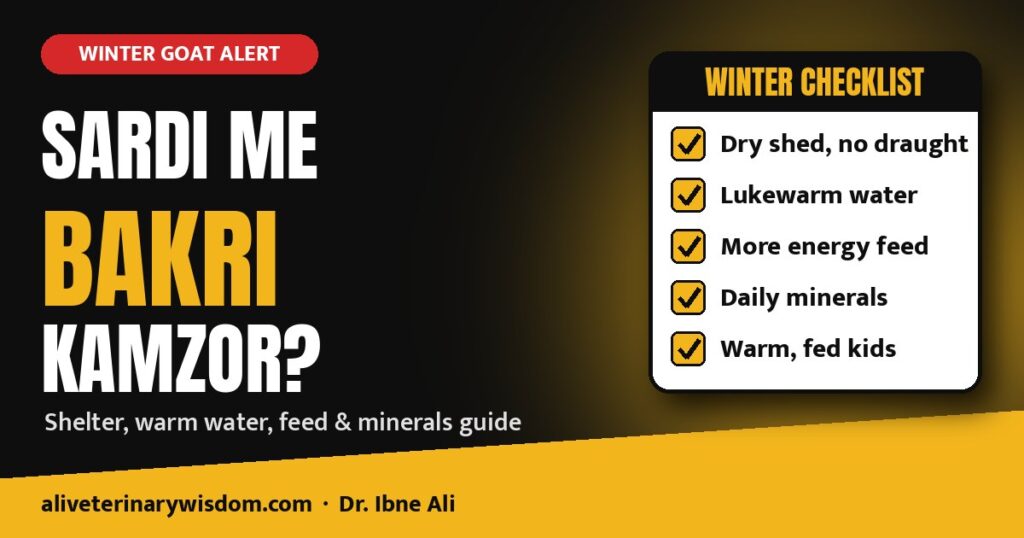
From October to February, many goat keepers in India lose weight, milk and even kids to the cold, often in goats that looked healthy in summer. A goat has a thinner fat layer than a cow or buffalo, kids lose body heat very fast, and the biggest winter killer, pneumonia, usually starts in a damp, draughty shed. The good news: most winter losses can be prevented with simple management. Here is what to do for shelter, water, feed, minerals and kids, and when to call the vet.
First, are your goats feeling the cold?
Look at your herd early in the morning, before the sun is up.
- Goats huddle together in one corner and do not get up to eat.
- Hair stands up and the goat shivers, with its back hunched.
- They drink less and leave feed, and dung becomes hard and dry.
- Kids are dull, cry often or feel cold in the mouth.
If you see two or more of these, the shed and feeding need attention today.
1. Shelter: dry and draught-free, not airtight
Goats tolerate dry cold far better than wet cold and cold wind. The aim is to stop the draught at goat level while letting stale air out at the top.
- Cover the windward side (usually north and west) with gunny bags, tarpaulin or bamboo mats at night, and roll them up in the sunny afternoon.
- Keep a small opening near the roof. A fully closed shed traps moisture and ammonia from urine, and that is what sets up pneumonia.
- Do not let goats sleep on a cold, damp floor. A raised wooden or bamboo platform (machan) keeps them dry and warm. Read our goat farming setup guide for shed layout.
- Fix roof leaks before winter rain, and let goats out into the sun in the late morning.
2. Bedding: keep it dry every day
Spread a thick layer of dry paddy straw, wheat straw or dry leaves where the goats rest, especially if the floor is kacha or cement. Remove wet, dirty patches every morning and add fresh dry bedding. Wet bedding pulls heat out of the body, and kids lying on it chill quickly.
3. Give lukewarm, clean water
In winter, goats drink much less ice-cold water, and a goat that drinks less also eats less. Offer fresh, lukewarm water in the morning and evening, and do not let water sit overnight in the trough. Milking and pregnant goats need plenty of water even in winter.
4. Feed more energy in the cold
A goat burns extra energy just to stay warm. If feed stays the same as in summer, it slowly loses body condition, and a thin goat gets sick more easily.
- Give good dry fodder in the evening. Digesting roughage in the rumen produces heat through the night.
- Add a little concentrate (crushed maize, barley, wheat bran or a goat feed) for milking goats, pregnant does and growing kids. Increase slowly over a week, never suddenly.
- Do not feed frost-covered or wet green fodder early in the morning. Let it dry, and do not give a large amount of lush berseem on an empty stomach, as it can cause bloat.
- Pregnant does in the last 6 weeks need the best feed in the herd. Find more in our goat feeding and nutrition guide.
5. Minerals and rumen health
Winter fodder, especially dry straw, is low in minerals and vitamins. Mineral shortage shows up as rough hair, weak kids, repeat heat and low immunity. Keep salt available and give a mineral mixture every day. Remember that a goat is not a small cow, so use a goat dose, not a guess from the cow dose.
Chelated minerals
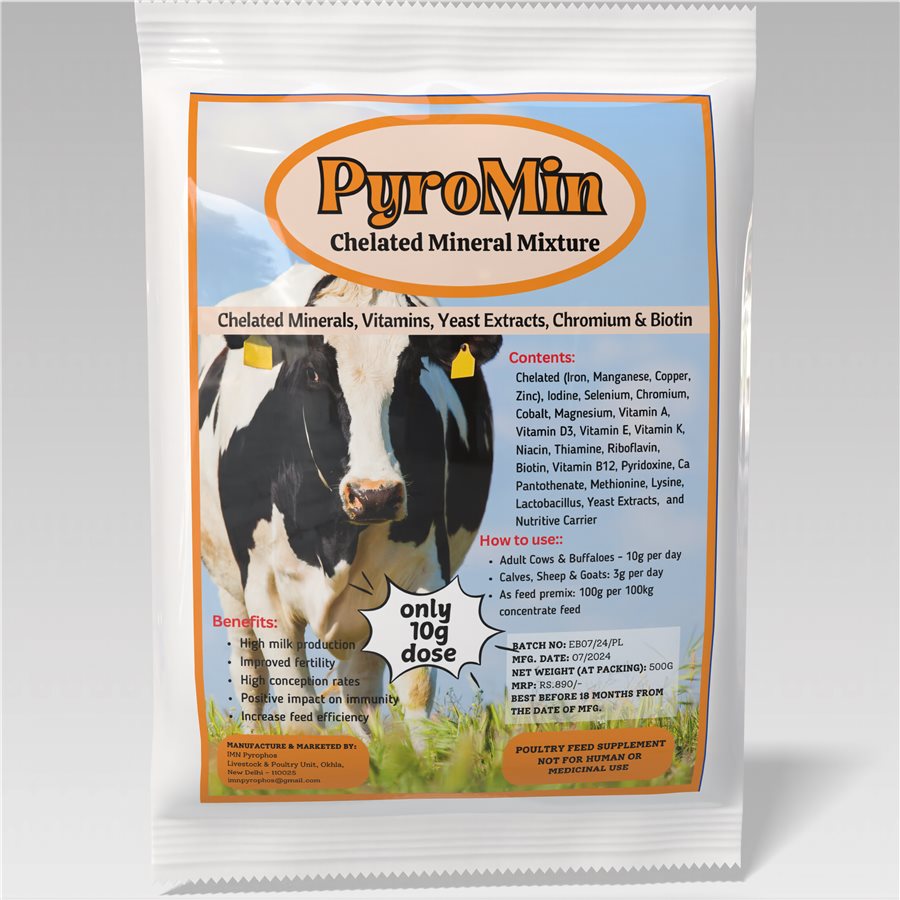
Pyromin
Chelated mineral mixture with iron, manganese, copper, zinc, iodine, selenium, chromium, cobalt and magnesium, vitamins A, D3, E, K and B vitamins, biotin, methionine, lysine, lactobacillus and yeast extract. Supports milk production, fertility, conception, immunity and feed efficiency.
Dose: 3 g per goat or sheep per day (calves also 3 g; adult cow or buffalo 10 g). As a premix, 100 g per 100 kg of concentrate.
1 kg ₹655MRP ₹1,190
When feed changes in winter, the rumen needs time to adjust, and goats may pass loose dung or digest fibre poorly. A rumen-adapted live yeast supports fibre digestion and rumen health.
Rumen health
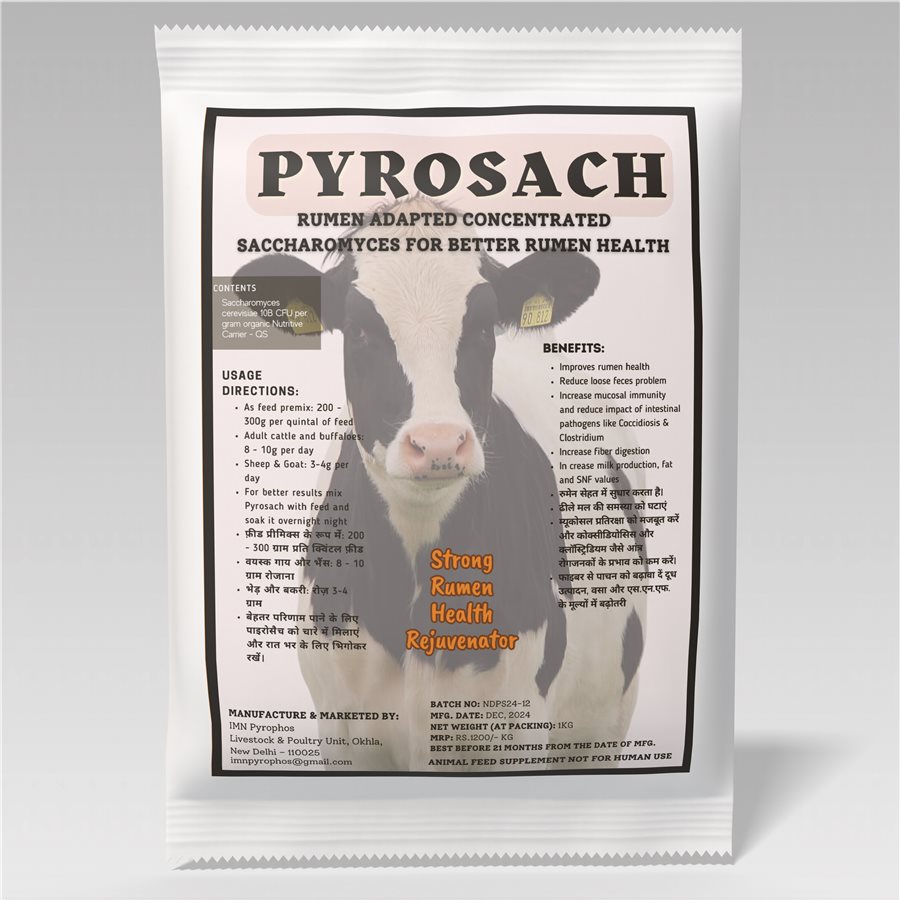
Pyrosach
Rumen-adapted Saccharomyces cerevisiae (10 billion CFU per gram). Supports rumen health and fibre digestion, reduces loose dung, and supports mucosal immunity and milk.
Dose: 3–4 g per sheep or goat (adult cow or buffalo 8–10 g per day), or 200–300 g per quintal of feed. Mix with feed and soak overnight.
1 kg ₹700MRP ₹1,200
Want to understand what goes into a good mineral mixture? See how to make mineral mixture at home; the same principles apply, with a smaller dose for goats.
6. Protect kids (bachche) from the cold
Most winter kid deaths happen in the first two weeks, from chilling, hunger and pneumonia.
- Dry the newborn at once with a clean cloth or straw, especially on cold nights, and let the mother lick it.
- Make sure the kid drinks colostrum (khees) within the first hour. It gives both energy and protection.
- A chilled kid cannot digest milk. If it is cold and weak, warm it first (warm room, cloth wrap, warm water bottle wrapped in cloth), then feed.
- Keep mother and kids in a closed, bedded corner at night, away from the draught. A gunny-bag coat helps very young kids.
- Do not bathe kids in winter, and keep them off wet floors.
7. Prepare the herd before peak cold
Worms and lice make a goat lose condition fast in winter, and a weak goat catches cold easily. Ask your vet about deworming and the vaccination schedule for your area before December, check for lice and mites in the thick winter coat, and trim overgrown hooves. Separate any coughing goat from the herd.
When to call the vet
Pneumonia in goats can kill within a day or two, so do not wait. Call your vet if you see:
- Coughing, fast or noisy breathing
- Thick white, yellow or green nasal discharge
- Not eating or not chewing the cud for a day
- Fever, droopy ears, or a goat that stays lying down away from the herd
- Diarrhoea in kids, or a kid that cannot stand or suckle
- Swollen left belly (bloat) after green fodder
Do not give medicines on guesswork. Diagnosis comes first, then treatment.
Daily winter goat checklist
| Morning | Evening |
|---|---|
| Look for huddling, cough or nasal discharge | Close draught side of the shed, keep top opening |
| Remove wet bedding, add dry straw | Give good dry fodder for the night |
| Offer fresh lukewarm water | Offer lukewarm water again |
| Check every kid suckles and is warm | Put mothers and kids in the warm corner |
Also read: goat breeds in India · goat farming setup · goat feeding and nutrition · a goat is not a small cow · all goat articles
सर्दी में बकरी की देखभाल: शेड, चारा और मिनरल
अक्टूबर से फरवरी तक कई बकरी पालक ठंड की वजह से बकरी का वज़न, दूध और बच्चे तक खो देते हैं, अक्सर उन बकरियों में जो गर्मी में बिल्कुल ठीक थीं। बकरी के शरीर में गाय-भैंस से कम चर्बी होती है, बच्चे बहुत जल्दी ठंडे हो जाते हैं, और सर्दी का सबसे बड़ा खतरा, निमोनिया, ज़्यादातर गीले और हवादार शेड से शुरू होता है। अच्छी बात यह है कि सर्दी का ज़्यादातर नुकसान साधारण देखभाल से बच सकता है। शेड, पानी, चारा, मिनरल और बच्चों के लिए क्या करें, और डॉक्टर को कब बुलाएँ, यहाँ पढ़ें।
पहले देखें: क्या बकरी को ठंड लग रही है?
सुबह धूप निकलने से पहले अपनी बकरियों को देखिए।
- बकरियाँ एक कोने में सट कर बैठी हैं और खाने के लिए नहीं उठतीं।
- बाल खड़े हैं और बकरी काँप रही है, पीठ झुकी हुई है।
- पानी कम पीती है, चारा छोड़ देती है, और मेंगनी सख्त और सूखी हो जाती है।
- बच्चे सुस्त हैं, बार-बार चिल्लाते हैं या मुँह ठंडा लगता है।
इनमें से दो या ज़्यादा बातें दिखें, तो आज ही शेड और खुराक पर ध्यान दें।
1. शेड: सूखा और ठंडी हवा से बचा हुआ, पर पूरा बंद नहीं
बकरी सूखी ठंड तो झेल लेती है, पर गीली ठंड और ठंडी हवा नहीं। बकरी की ऊँचाई पर हवा रोकें, और ऊपर से गंदी हवा निकलने दें।
- हवा वाली तरफ (अक्सर उत्तर और पश्चिम) रात को बोरी, तिरपाल या बाँस की चटाई लगाएँ, और दोपहर की धूप में ऊपर लपेट दें।
- छत के पास थोड़ी जगह खुली रखें। पूरा बंद शेड पेशाब की नमी और अमोनिया रोक लेता है, और यही निमोनिया की जड़ है।
- बकरी को ठंडे, गीले फर्श पर न सुलाएँ। लकड़ी या बाँस का ऊँचा मचान बकरी को सूखा और गर्म रखता है। शेड का डिज़ाइन हमारे लेख बकरी फार्म सेटअप में देखें।
- सर्दी की बारिश से पहले छत का टपकना ठीक करें, और दिन में देर सुबह बकरियों को धूप में निकालें।
2. बिछावन: रोज़ सूखा रखें
जहाँ बकरियाँ बैठती हैं वहाँ सूखी पराली, गेहूँ का भूसा या सूखे पत्तों की मोटी परत बिछाएँ, खासकर कच्चे या सीमेंट के फर्श पर। हर सुबह गीला, गंदा हिस्सा निकालें और नया सूखा बिछावन डालें। गीला बिछावन शरीर की गर्मी खींच लेता है, और उस पर लेटे बच्चे जल्दी ठंडे हो जाते हैं।
3. गुनगुना, साफ पानी दें
सर्दी में बकरी बर्फ जैसा ठंडा पानी बहुत कम पीती है, और जो बकरी कम पीती है वह कम खाती भी है। सुबह-शाम ताज़ा गुनगुना पानी दें, और रात भर का रखा पानी नाँद में न छोड़ें। दूध वाली और गाभिन बकरी को सर्दी में भी भरपूर पानी चाहिए।
4. ठंड में ऊर्जा वाला चारा बढ़ाएँ
बकरी सिर्फ गर्म रहने में ही अतिरिक्त ऊर्जा खर्च करती है। अगर खुराक गर्मी जैसी ही रहे, तो बकरी धीरे-धीरे कमज़ोर होती है, और कमज़ोर बकरी जल्दी बीमार पड़ती है।
- शाम को अच्छा सूखा चारा दें। रुमेन में सूखा चारा पचने से रात भर गर्मी बनती है।
- थोड़ा दाना मिलाएँ (दली मक्का, जौ, चोकर या बकरी का फीड) दूध वाली, गाभिन बकरी और बढ़ते बच्चों के लिए। एक हफ्ते में धीरे-धीरे बढ़ाएँ, अचानक नहीं।
- सुबह ओस या पाला पड़ा गीला हरा चारा न दें। पहले सूखने दें, और खाली पेट ज़्यादा बरसीम न खिलाएँ, पेट फूल सकता है।
- ब्याने से पहले आखिरी 6 हफ्ते गाभिन बकरी को सबसे अच्छा चारा चाहिए। ज़्यादा जानकारी: बकरी का चारा और पोषण।
5. मिनरल और रुमेन की सेहत
सर्दी का चारा, खासकर सूखा भूसा, मिनरल और विटामिन में कम होता है। मिनरल की कमी से बाल रूखे, बच्चे कमज़ोर, बार-बार गर्मी में आना और कम इम्युनिटी दिखती है। नमक हमेशा रखें और रोज़ मिनरल मिक्सचर दें। याद रखें, बकरी छोटी गाय नहीं है, इसलिए बकरी वाली मात्रा दें, गाय की मात्रा से अंदाज़ा न लगाएँ।
चिलेटेड मिनरल
Pyromin
चिलेटेड आयरन, मैंगनीज़, कॉपर, ज़िंक, आयोडीन, सेलेनियम, क्रोमियम, कोबाल्ट और मैग्नीशियम, विटामिन A, D3, E, K और B विटामिन, बायोटिन, मेथियोनीन, लाइसीन, लैक्टोबैसिलस और यीस्ट एक्सट्रैक्ट वाला मिनरल मिक्सचर। दूध उत्पादन, प्रजनन, गर्भधारण, इम्युनिटी और चारे के बेहतर उपयोग में सहायक।
मात्रा: बकरी या भेड़ को 3 ग्राम प्रति दिन (बछड़ों को भी 3 ग्राम; वयस्क गाय या भैंस को 10 ग्राम)। प्रीमिक्स के रूप में 100 ग्राम प्रति 100 किलो दाना।
1 kg ₹655MRP ₹1,190
सर्दी में चारा बदलता है तो रुमेन को संभलने में समय लगता है, और बकरी पतली मेंगनी कर सकती है या रेशा ठीक से नहीं पचा पाती। रुमेन के अनुकूल ज़िंदा यीस्ट रेशा पचाने और रुमेन की सेहत में मदद करता है।
रुमेन की सेहत
Pyrosach
रुमेन के अनुकूल Saccharomyces cerevisiae (1000 करोड़ CFU प्रति ग्राम)। रुमेन की सेहत और रेशे के पाचन में सहायक, पतला गोबर/मेंगनी घटाता है, म्यूकोसल इम्युनिटी और दूध में सहायक।
मात्रा: भेड़ या बकरी को 3–4 ग्राम (वयस्क गाय या भैंस को 8–10 ग्राम प्रति दिन), या 200–300 ग्राम प्रति क्विंटल दाना। दाने में मिलाकर रात भर भिगोएँ।
1 kg ₹700MRP ₹1,200
अच्छे मिनरल मिक्सचर में क्या होता है, यह समझना है? पढ़ें घर पर मिनरल मिक्सचर कैसे बनाएँ; बकरी के लिए भी वही बातें लागू होती हैं, बस मात्रा कम।
6. बच्चों को ठंड से बचाएँ
सर्दी में ज़्यादातर बच्चे पहले दो हफ्ते में मरते हैं, ठंड, भूख और निमोनिया से।
- पैदा होते ही बच्चे को साफ कपड़े या पराली से सुखाएँ, खासकर ठंडी रात में, और माँ को चाटने दें।
- पहले घंटे में बच्चा खीस ज़रूर पिए। इससे ऊर्जा भी मिलती है और बचाव भी।
- ठंडा पड़ा बच्चा दूध नहीं पचा सकता। ठंडा और कमज़ोर हो तो पहले गर्म करें (गर्म कमरा, कपड़े में लपेटना, कपड़े में लिपटी गर्म पानी की बोतल), फिर दूध पिलाएँ।
- रात को माँ और बच्चों को बंद, बिछावन वाले कोने में रखें, ठंडी हवा से दूर। बहुत छोटे बच्चों को बोरी का कोट पहनाएँ।
- सर्दी में बच्चों को न नहलाएँ, और गीले फर्श से दूर रखें।
7. कड़ी ठंड से पहले तैयारी
पेट के कीड़े और जूँ सर्दी में बकरी को जल्दी कमज़ोर करते हैं, और कमज़ोर बकरी को जल्दी ठंड लगती है। दिसंबर से पहले अपने डॉक्टर से पेट के कीड़ों की दवा और अपने इलाके के टीकों का शेड्यूल पूछें, मोटे बालों में जूँ और किलनी देखें, और बढ़े हुए खुर काटें। खाँसती बकरी को झुंड से अलग रखें।
डॉक्टर को कब बुलाएँ
बकरी में निमोनिया एक-दो दिन में जान ले सकता है, इसलिए इंतज़ार न करें। ये दिखें तो डॉक्टर को बुलाइए:
- खाँसी, तेज़ या आवाज़ के साथ साँस
- नाक से गाढ़ा सफेद, पीला या हरा पानी
- एक दिन से चारा न खाना या जुगाली न करना
- बुखार, लटके कान, या झुंड से अलग लेटी रहने वाली बकरी
- बच्चों में दस्त, या बच्चा खड़ा न हो पाए या दूध न पिए
- हरा चारा खाने के बाद बाईं तरफ पेट फूलना
अंदाज़े से दवा न दें। पहले जाँच, फिर इलाज।
सर्दी में बकरी की रोज़ की चेकलिस्ट
| सुबह | शाम |
|---|---|
| सट कर बैठना, खाँसी या नाक बहना देखें | शेड की हवा वाली तरफ बंद करें, ऊपर जगह रखें |
| गीला बिछावन निकालें, सूखी पराली डालें | रात के लिए अच्छा सूखा चारा दें |
| ताज़ा गुनगुना पानी दें | फिर से गुनगुना पानी दें |
| हर बच्चा दूध पी रहा है और गर्म है, देखें | माँ और बच्चों को गर्म कोने में रखें |
यह भी पढ़ें: भारत की बकरी नस्लें · बकरी फार्म सेटअप · बकरी का चारा और पोषण · बकरी छोटी गाय नहीं है · बकरी के सारे लेख
Sardi me bakri ki dekhbhal: shed, chaara aur mineral
October se February tak kai bakri palak thand ki wajah se bakri ka wazan, doodh aur bachche tak kho dete hain, aksar un bakriyon me jo garmi me bilkul theek thi. Bakri ke sharir me gaay-bhains se kam charbi hoti hai, bachche bahut jaldi thande ho jaate hain, aur sardi ka sabse bada khatra, nimoniya, zyadatar geele aur hawadaar shed se shuru hota hai. Achhi baat ye hai ki sardi ka zyadatar nuksaan saadhaaran dekhbhal se bach sakta hai. Shed, paani, chaara, mineral aur bachchon ke liye kya karein, aur doctor ko kab bulayein, yahan padhiye.
Pehle dekhiye: kya bakri ko thand lag rahi hai?
Subah dhoop nikalne se pehle apni bakriyon ko dekhiye.
- Bakriyan ek kone me sat kar baithi hain aur khane ke liye nahi uthti.
- Baal khade hain aur bakri kaanp rahi hai, peeth jhuki hui hai.
- Paani kam peeti hai, chaara chhod deti hai, aur mengni sakht aur sookhi ho jaati hai.
- Bachche sust hain, baar-baar chillate hain ya munh thanda lagta hai.
Inme se do ya zyada baatein dikhein, to aaj hi shed aur khuraak par dhyan dijiye.
1. Shed: sookha aur thandi hawa se bacha hua, par poora band nahi
Bakri sookhi thand to jhel leti hai, par geeli thand aur thandi hawa nahi. Bakri ki unchai par hawa roko, aur upar se gandi hawa nikalne do.
- Hawa wali taraf (aksar uttar aur paschim) raat ko bori, tirpal ya baans ki chatai lagaiye, aur dopahar ki dhoop me upar lapet dijiye.
- Chhat ke paas thodi jagah khuli rakhiye. Poora band shed peshab ki nami aur ammonia rok leta hai, aur yahi nimoniya ki jad hai.
- Bakri ko thande, geele farsh par mat sulaiye. Lakdi ya baans ka uncha machan bakri ko sookha aur garam rakhta hai. Shed ka design hamare lekh bakri farm setup me dekhiye.
- Sardi ki baarish se pehle chhat ka tapakna theek kariye, aur din me der subah bakriyon ko dhoop me nikaliye.
2. Bichhawan: roz sookha rakhiye
Jahan bakriyan baithti hain wahan sookhi paraali, gehun ka bhoosa ya sookhe patte ki moti parat bichhaiye, khaas kar kachche ya cement ke farsh par. Har subah geela, ganda hissa nikaliye aur naya sookha bichhawan daaliye. Geela bichhawan sharir ki garmi kheench leta hai, aur us par lete bachche jaldi thande ho jaate hain.
3. Gunguna, saaf paani dijiye
Sardi me bakri barf jaisa thanda paani bahut kam peeti hai, aur jo bakri kam peeti hai wo kam khaati bhi hai. Subah-shaam taaza gunguna paani dijiye, aur raat bhar ka rakha paani naand me mat chhodiye. Doodh wali aur gabhin bakri ko sardi me bhi bharpoor paani chahiye.
4. Thand me urja wala chaara badhaiye
Bakri sirf garam rehne me hi extra urja kharch karti hai. Agar khuraak garmi jaisi hi rahe, to bakri dheere-dheere kamzor hoti hai, aur kamzor bakri jaldi beemar padti hai.
- Shaam ko achha sookha chaara dijiye. Rumen me sookha chaara pachne se raat bhar garmi banti hai.
- Thoda daana milaiye (dali makka, jau, chokar ya bakri ka feed) doodh wali, gabhin bakri aur badhte bachchon ke liye. Ek hafte me dheere-dheere badhaiye, achanak nahi.
- Subah os ya pala pada geela hara chaara mat dijiye. Pehle sookhne dijiye, aur khaali pet zyada berseem mat khilaiye, pet phool sakta hai.
- Byaane se pehle aakhri 6 hafte gabhin bakri ko sabse achha chaara chahiye. Zyada jaankari: bakri ka chaara aur poshan.
5. Mineral aur rumen ki sehat
Sardi ka chaara, khaas kar sookha bhoosa, mineral aur vitamin me kam hota hai. Mineral ki kami se baal rukhe, bachche kamzor, baar-baar garmi me aana aur kam immunity dikhti hai. Namak hamesha rakhiye aur roz mineral mixture dijiye. Yaad rakhiye, bakri chhoti gaay nahi hai, isliye bakri wali matra dijiye, gaay ki matra se andaaza mat lagaiye.
Chelated mineral
Pyromin
Chelated iron, manganese, copper, zinc, iodine, selenium, chromium, cobalt aur magnesium, vitamin A, D3, E, K aur B vitamin, biotin, methionine, lysine, lactobacillus aur yeast extract wala mineral mixture. Doodh utpadan, prajanan, garbh thaharne, immunity aur chaare ke behtar upyog me sahayak.
Matra: Bakri ya bhed ko 3 g prati din (bachhdon ko bhi 3 g; vayask gaay ya bhains ko 10 g). Premix ke roop me 100 g prati 100 kg daana.
1 kg ₹655MRP ₹1,190
Sardi me chaara badalta hai to rumen ko sambhalne me samay lagta hai, aur bakri patli mengni kar sakti hai ya resha theek se nahi pacha paati. Rumen ke anukool zinda yeast resha pachane aur rumen ki sehat me madad karta hai.
Rumen ki sehat
Pyrosach
Rumen ke anukool Saccharomyces cerevisiae (1000 crore CFU prati gram). Rumen ki sehat aur reshe ke pachan me sahayak, patla gobar/mengni ghatata hai, mucosal immunity aur doodh me sahayak.
Matra: Bhed ya bakri ko 3–4 g (vayask gaay ya bhains ko 8–10 g prati din), ya 200–300 g prati quintal daana. Daane me mila kar raat bhar bhigoiye.
1 kg ₹700MRP ₹1,200
Achhe mineral mixture me kya hota hai, ye samajhna hai? Padhiye ghar par mineral mixture kaise banayein; bakri ke liye bhi wahi baatein lagti hain, bas matra kam.
6. Bachchon ko thand se bachaiye
Sardi me zyadatar bachche pehle do hafte me marte hain, thand, bhookh aur nimoniya se.
- Paida hote hi bachche ko saaf kapde ya paraali se sukhaiye, khaas kar thandi raat me, aur maa ko chaatne dijiye.
- Pehle ghante me bachcha khees zaroor piye. Isse urja bhi milti hai aur bachav bhi.
- Thanda pada bachcha doodh nahi pacha sakta. Thanda aur kamzor ho to pehle garam kariye (garam kamra, kapde me lapetna, kapde me lipti garam paani ki bottle), phir doodh pilaiye.
- Raat ko maa aur bachchon ko band, bichhawan wale kone me rakhiye, thandi hawa se door. Bahut chhote bachchon ko bori ka coat pehnaiye.
- Sardi me bachchon ko nehlaiye mat, aur geele farsh se door rakhiye.
7. Kadi thand se pehle taiyaari
Pet ke keede aur jooyein sardi me bakri ko jaldi kamzor karti hain, aur kamzor bakri ko jaldi thand lagti hai. December se pehle apne doctor se pet ke keede ki dawa aur apne ilaake ke tike ka schedule poochhiye, mote baalon me jooyein aur kilni dekhiye, aur badhe hue khur kaatiye. Khaansti bakri ko jhund se alag rakhiye.
Doctor ko kab bulayein
Bakri me nimoniya ek-do din me jaan le sakta hai, isliye intezaar mat kariye. Ye dikhe to doctor ko bulaiye:
- Khaansi, tez ya awaaz ke saath saans
- Naak se gaadha safed, peela ya hara paani
- Ek din se chaara na khana ya jugaali na karna
- Bukhaar, latke kaan, ya jhund se alag leti rehne wali bakri
- Bachchon me dast, ya bachcha khada na ho paye ya doodh na peeye
- Hara chaara khane ke baad baayein taraf pet phoolna
Andaaze se dawa mat dijiye. Pehle jaanch, phir ilaaj.
Sardi me bakri ki roz ki checklist
| Subah | Shaam |
|---|---|
| Sat kar baithna, khaansi ya naak behna dekhiye | Shed ki hawa wali taraf band kariye, upar jagah rakhiye |
| Geela bichhawan nikaliye, sookhi paraali daaliye | Raat ke liye achha sookha chaara dijiye |
| Taaza gunguna paani dijiye | Phir se gunguna paani dijiye |
| Har bachcha doodh pi raha hai aur garam hai, dekhiye | Maa aur bachchon ko garam kone me rakhiye |
Ye bhi padhiye: bakri ki nasle · bakri farm setup · bakri ka chaara aur poshan · bakri chhoti gaay nahi hai · bakri ke saare lekh