Drought in Marathwada has turned into a fodder crisis for livestock keepers, with the price of jowar fodder (kadbi) climbing from a top rate of about ₹2,500 for 100 bundles last year to nearly ₹4,000 now, Kisan Tak reported on 16 October 2026, citing PTI. Weak monsoon rain has hit kharif crops across the region’s eight districts, and traders at the Jafar Gate fodder market in Chhatrapati Sambhajinagar say they now have to go to five or six villages just to load one truck. The Maharashtra government has declared drought in 305 of the state’s 358 talukas, promised an initial relief of ₹5,000 into farmers’ bank accounts before Diwali, and said it will buy fodder from farmers at the minimum support price (MSP).
Key facts
| Point | Detail |
|---|---|
| Region | Marathwada, Maharashtra (eight districts hit by weak monsoon) |
| Jowar fodder price, last year | Up to about ₹2,500 per 100 bundles |
| Jowar fodder price, now | Close to ₹4,000 per 100 bundles (about ₹1,500 more) |
| Where traders are buying | Mantha and Jintur in Parbhani district |
| Drought-declared talukas | 305 out of 358 in Maharashtra |
| Initial relief | ₹5,000 into farmers’ bank accounts before Diwali (announced by CM Devendra Fadnavis) |
| Fodder purchase | State says it will buy fodder from farmers at MSP |
| Fodder stock left | From about 90 days to seven months, depending on the area |
| Reported | 16 October 2026 |
Why kadbi has become so scarce
In Marathwada, cattle and buffaloes live mainly on dry kadbi, the stalks left after the jowar harvest. This year poor rain cut jowar and bajra yields, so far less stalk came out of the fields, and farmers are selling only what they can spare.
Sheikh Salim, a trader over 70 years old who has been linked to the Jafar Gate market since childhood, said this year is harder than the 1972 drought, as there are many more animals now. Samad Sheikh, 30 years in the trade, said he had never seen anything like it. Traders are now bringing fodder from Parbhani district, adding transport cost to every load.
What the government has announced
Chief Minister Devendra Fadnavis has said an initial relief amount of ₹5,000 will reach farmers’ bank accounts before Diwali. The state has also said it will purchase fodder from farmers at MSP, giving growers with spare fodder a fair outlet. In Nanded, Latur and Chhatrapati Sambhajinagar, farmers are being urged to grow fodder crops, and those with irrigation to sow fodder this rabi. Existing stocks range from about 90 days to seven months by area, so some pockets could run short before the next harvest.
What it means for dairy farmers in Marathwada
A jump from ₹2,500 to ₹4,000 per 100 bundles is a rise of roughly 60 percent in the cost of the region’s main roughage. That money comes straight out of milk income, since the milk rate does not rise with fodder cost. A thin ration cuts milk, and a cow that loses condition now may come into heat and calve late.
Where stocks may last only around 90 days, farmers risk paying even more in summer or selling good animals cheaply. Acting early on relief, MSP sales and fodder planning softens that blow.
What farmers should do now
- Make sure the ₹5,000 relief reaches you. Check that your bank account is active and Aadhaar-linked, and your details are correct with the talathi or tehsil office.
- Ask about MSP fodder purchase and fodder seed. If you have spare fodder, ask the taluka agriculture or animal husbandry office how the MSP purchase will work. If you have water, ask about fodder seed and sow a rabi fodder crop such as jowar or maize.
- Store kadbi properly. Stack it on a raised base, off wet ground, and cover the top so rain and dew do not cause mould. Never feed mouldy fodder.
- Chop before feeding. A chaff cutter cuts waste sharply, as animals eat chopped kadbi fully.
- Turn any green fodder into silage or hay. Chop green maize or jowar, press it airtight in a pit or bag and seal it; it keeps for months. Sun-dry thin grasses as hay.
- Plan your stock. Count how many days your fodder will last, and cut unproductive animals early.
- Add mineral mixture to dry rations. A kadbi-based diet is low in minerals and vitamins, so give mineral mixture daily. See our mineral mixture guide and dairy feeding guide.
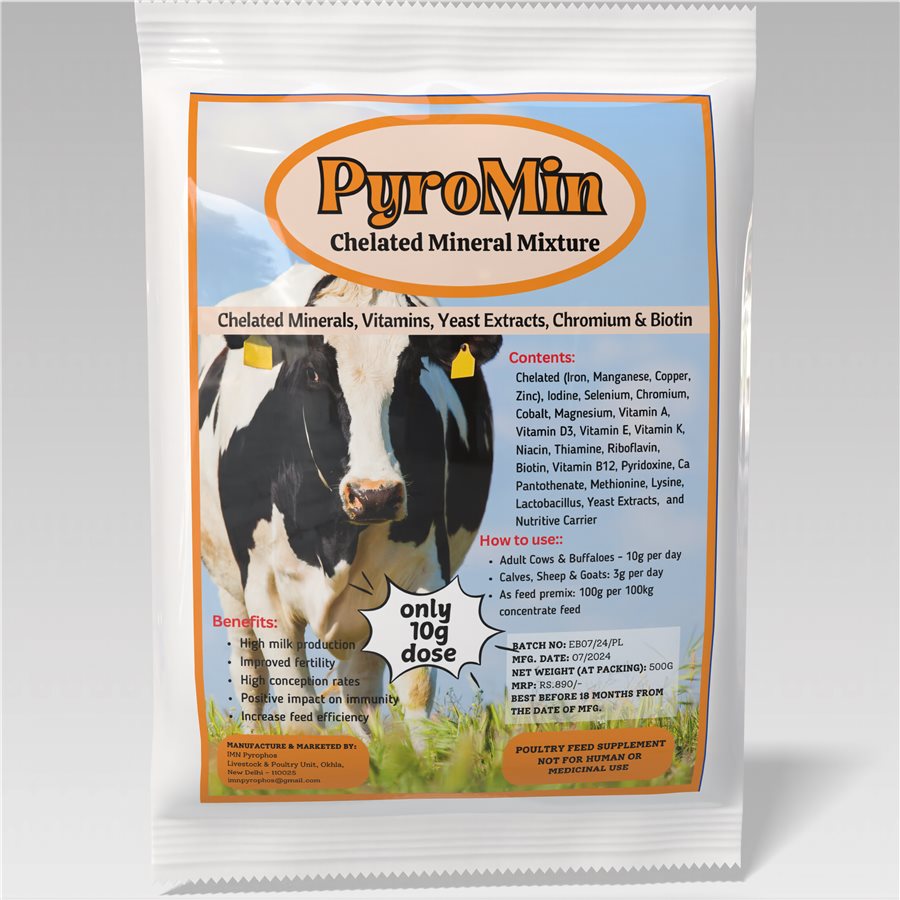
Chelated mineral · small daily dose
Pyromin
Chelated iron, manganese, copper, zinc, iodine, selenium, chromium, cobalt and magnesium, with vitamins A, D3, E, K and B vitamins, biotin, methionine, lysine, lactobacillus and yeast extract. Supports milk production, fertility, conception, immunity and feed efficiency.
Dose: adult cow or buffalo 10 g per day; calves, sheep and goats 3 g per day. As a premix: 100 g per 100 kg concentrate.
1 kg ₹655MRP ₹1,190
Frequently asked questions
How much has jowar fodder become costlier in Marathwada?
100 bundles of jowar fodder cost up to about ₹2,500 last year and close to ₹4,000 now.
How many talukas in Maharashtra are under drought?
The state government has declared drought in 305 of its 358 talukas.
What help has the Maharashtra government announced?
₹5,000 initial relief before Diwali, fodder purchase from farmers at MSP, and a push to sow fodder where irrigation exists.
Source: Kisan Tak, 16 Oct 2026. Written by the IMN Pyrophos team in our own words.
मराठवाड़ा में चारा संकट: ज्वार की कड़बी 100 बंडल करीब ₹4,000, सरकार MSP पर खरीदेगी चारा (अक्टूबर 2026)
मराठवाड़ा में सूखा अब पशुपालकों के लिए चारा संकट बन गया है। ज्वार के चारे (कड़बी) के 100 बंडल का भाव पिछले साल अधिकतम करीब ₹2,500 था, जो अब लगभग ₹4,000 तक पहुँच गया है। किसान तक ने PTI के हवाले से 16 अक्टूबर 2026 को यह खबर दी। कमज़ोर मॉनसून ने इलाके के आठों जिलों में खरीफ फसलों को नुकसान पहुँचाया है, और छत्रपति संभाजीनगर की जाफर गेट चारा मंडी के व्यापारियों का कहना है कि एक ट्रक भरने के लिए उन्हें अब 5-6 गाँवों के चक्कर लगाने पड़ रहे हैं। महाराष्ट्र सरकार ने राज्य के 358 में से 305 तालुकों में सूखा घोषित किया है, दिवाली से पहले किसानों के बैंक खाते में ₹5,000 की शुरुआती राहत देने का वादा किया है, और कहा है कि वह किसानों से न्यूनतम समर्थन मूल्य (MSP) पर चारा खरीदेगी।
मुख्य तथ्य
| बिंदु | विवरण |
|---|---|
| इलाका | मराठवाड़ा, महाराष्ट्र (कमज़ोर मॉनसून से आठ जिले प्रभावित) |
| ज्वार चारे का भाव, पिछले साल | 100 बंडल अधिकतम करीब ₹2,500 |
| ज्वार चारे का भाव, अब | 100 बंडल करीब ₹4,000 (लगभग ₹1,500 ज़्यादा) |
| व्यापारी कहाँ से ला रहे हैं | परभणी जिले के मंठा और जिंतूर से |
| सूखाग्रस्त तालुके | महाराष्ट्र के 358 में से 305 |
| शुरुआती राहत | दिवाली से पहले किसानों के बैंक खाते में ₹5,000 (मुख्यमंत्री देवेंद्र फडणवीस की घोषणा) |
| चारा खरीद | राज्य सरकार किसानों से MSP पर चारा खरीदेगी |
| बचा हुआ चारा स्टॉक | इलाके के हिसाब से करीब 90 दिन से सात महीने तक |
| खबर की तारीख | 16 अक्टूबर 2026 |
कड़बी इतनी कम क्यों पड़ गई
मराठवाड़ा में गाय-भैंस मुख्य रूप से सूखी कड़बी पर पलती हैं, यानी ज्वार की कटाई के बाद बचे डंठल। इस साल कम बारिश से ज्वार और बाजरे की पैदावार घटी, इसलिए खेतों से बहुत कम डंठल निकले, और किसान सिर्फ उतना ही चारा बेच रहे हैं जितना वे अपने पशुओं के बाद बचा पा रहे हैं।
जाफर गेट मंडी से बचपन से जुड़े, 70 साल से अधिक उम्र के व्यापारी शेख सलीम का कहना है कि इस साल हालात 1972 के सूखे से भी कठिन हैं, क्योंकि अब पशु पहले से कहीं ज़्यादा हैं। 30 साल से इस कारोबार में लगे समद शेख ने कहा कि उन्होंने ऐसी स्थिति पहले कभी नहीं देखी। व्यापारी अब परभणी जिले से चारा ला रहे हैं, जिससे हर खेप पर ढुलाई का खर्च भी जुड़ रहा है।
सरकार ने क्या घोषणा की है
मुख्यमंत्री देवेंद्र फडणवीस ने कहा है कि ₹5,000 की शुरुआती राहत राशि दिवाली से पहले किसानों के बैंक खातों में पहुँचेगी। राज्य सरकार ने यह भी कहा है कि वह किसानों से MSP पर चारा खरीदेगी, जिससे जिन किसानों के पास अतिरिक्त चारा है उन्हें सही दाम मिल सके। नांदेड़, लातूर और छत्रपति संभाजीनगर में किसानों को चारे की फसलें उगाने के लिए प्रेरित किया जा रहा है, और जहाँ सिंचाई है वहाँ इस रबी में चारा बोने को कहा जा रहा है। अलग-अलग इलाकों में मौजूदा चारा करीब 90 दिन से सात महीने तक का है, इसलिए कुछ जगहों पर अगली फसल से पहले ही कमी पड़ सकती है।
मराठवाड़ा के डेयरी किसानों पर क्या असर
100 बंडल का भाव ₹2,500 से ₹4,000 होना, इलाके के मुख्य सूखे चारे की लागत में लगभग 60 प्रतिशत की बढ़ोतरी है। यह पैसा सीधे दूध की कमाई से कटता है, क्योंकि चारा महंगा होने से दूध का रेट नहीं बढ़ता। कम खुराक से दूध घटता है, और जो गाय अभी कमज़ोर हो जाती है वह देर से हीट में आ सकती है और देर से ब्याती है।
जहाँ स्टॉक सिर्फ करीब 90 दिन का है, वहाँ किसानों को गर्मियों में और महंगा चारा खरीदना पड़ सकता है या अच्छे पशु सस्ते में बेचने पड़ सकते हैं। राहत, MSP बिक्री और चारे की योजना पर जल्दी कदम उठाने से यह मार कम होगी।
किसान अभी क्या करें
- पक्का करें कि ₹5,000 की राहत आप तक पहुँचे। देखें कि आपका बैंक खाता चालू है और आधार से जुड़ा है, और तलाठी या तहसील कार्यालय में आपकी जानकारी सही दर्ज है।
- MSP चारा खरीद और चारे के बीज के बारे में पूछें। अगर आपके पास अतिरिक्त चारा है, तो तालुका कृषि या पशुपालन कार्यालय से पूछें कि MSP खरीद कैसे होगी। अगर पानी है, तो चारे का बीज माँगें और ज्वार या मक्का जैसी रबी चारा फसल बोएँ।
- कड़बी ठीक से रखें। इसे ऊँचे आधार पर, गीली ज़मीन से ऊपर रखें और ऊपर से ढक दें ताकि बारिश और ओस से फफूंद न लगे। फफूंद लगा चारा कभी न खिलाएँ।
- खिलाने से पहले कुट्टी करें। चारा काटने की मशीन से बर्बादी बहुत घटती है, क्योंकि पशु कटी हुई कड़बी पूरी खा लेते हैं।
- हरे चारे से साइलेज या हे बनाएँ। हरी मक्का या ज्वार को काटकर गड्ढे या बैग में हवा निकालकर दबाएँ और सील कर दें; यह महीनों चलता है। पतली घास को धूप में सुखाकर हे बना लें।
- स्टॉक का हिसाब रखें। गिनें कि आपका चारा कितने दिन चलेगा, और कम उपयोगी पशुओं की संख्या समय रहते घटाएँ।
- सूखे राशन में मिनरल मिक्सचर दें। कड़बी वाली खुराक में मिनरल और विटामिन कम होते हैं, इसलिए रोज़ मिनरल मिक्सचर दें। हमारी मिनरल मिक्सचर गाइड और डेयरी फीडिंग गाइड पढ़ें।
चिलेटेड मिनरल · रोज़ थोड़ी मात्रा
Pyromin
चिलेटेड आयरन, मैंगनीज़, कॉपर, ज़िंक, आयोडीन, सेलेनियम, क्रोमियम, कोबाल्ट और मैग्नीशियम, साथ में विटामिन A, D3, E, K और B विटामिन, बायोटिन, मेथियोनीन, लाइसीन, लैक्टोबैसिलस और यीस्ट एक्सट्रैक्ट। दूध उत्पादन, प्रजनन, गाभिन ठहरने, रोग प्रतिरोधक क्षमता और चारे के बेहतर उपयोग में सहायक।
मात्रा: वयस्क गाय या भैंस को 10 ग्राम प्रति दिन; बछड़े, भेड़ और बकरी को 3 ग्राम प्रति दिन। प्रीमिक्स के रूप में 100 ग्राम प्रति 100 किलो दाना।
1 kg ₹655MRP ₹1,190
अक्सर पूछे जाने वाले सवाल
मराठवाड़ा में ज्वार का चारा कितना महंगा हुआ है?
ज्वार चारे के 100 बंडल पिछले साल अधिकतम करीब ₹2,500 में मिलते थे, अब करीब ₹4,000 के हो गए हैं।
महाराष्ट्र में कितने तालुके सूखाग्रस्त हैं?
राज्य सरकार ने 358 में से 305 तालुकों में सूखा घोषित किया है।
महाराष्ट्र सरकार ने क्या मदद घोषित की है?
दिवाली से पहले ₹5,000 की शुरुआती राहत, किसानों से MSP पर चारा खरीद, और जहाँ सिंचाई है वहाँ चारा फसल बोने पर ज़ोर।
स्रोत: किसान तक, 16 अक्टूबर 2026। IMN Pyrophos टीम ने अपने शब्दों में लिखा।
Marathwada me chaara sankat: jowar ki kadbi 100 bundle kareeb ₹4,000, sarkar MSP par kharidegi chaara (October 2026)
Marathwada me sookha ab pashupalakon ke liye chaara sankat ban gaya hai. Jowar ke chaare (kadbi) ke 100 bundle ka bhav pichhle saal zyada se zyada kareeb ₹2,500 tha, jo ab lagbhag ₹4,000 tak pahunch gaya hai. Kisan Tak ne PTI ke hawale se 16 October 2026 ko ye khabar di. Kamzor monsoon ne ilaake ke aathon zilon me kharif faslon ko nuksaan pahunchaya hai, aur Chhatrapati Sambhajinagar ki Jafar Gate chaara mandi ke vyapariyon ka kehna hai ki ek truck bharne ke liye unhe ab 5-6 gaon ke chakkar lagane pad rahe hain. Maharashtra sarkar ne rajya ke 358 me se 305 talukon me sookha ghoshit kiya hai, Diwali se pehle kisanon ke bank khaate me ₹5,000 ki shuruaati rahat dene ka vaada kiya hai, aur kaha hai ki wo kisanon se nyuntam samarthan mulya (MSP) par chaara kharidegi.
Mukhya tathya
| Baat | Detail |
|---|---|
| Ilaaka | Marathwada, Maharashtra (kamzor monsoon se aath zile prabhavit) |
| Jowar chaare ka bhav, pichhle saal | 100 bundle zyada se zyada kareeb ₹2,500 |
| Jowar chaare ka bhav, ab | 100 bundle kareeb ₹4,000 (lagbhag ₹1,500 zyada) |
| Vyapari kahan se la rahe hain | Parbhani zile ke Mantha aur Jintur se |
| Sookhagrast taluke | Maharashtra ke 358 me se 305 |
| Shuruaati rahat | Diwali se pehle kisanon ke bank khaate me ₹5,000 (CM Devendra Fadnavis ki ghoshna) |
| Chaara kharid | Rajya sarkar kisanon se MSP par chaara kharidegi |
| Bacha hua chaara stock | Ilaake ke hisaab se kareeb 90 din se saat mahine tak |
| Khabar ki tareekh | 16 October 2026 |
Kadbi itni kam kyon pad gayi
Marathwada me gaay-bhains mukhya roop se sookhi kadbi par palti hain, yaani jowar ki katai ke baad bache danthal. Is saal kam baarish se jowar aur bajre ki paidavaar ghati, isliye kheton se bahut kam danthal nikle, aur kisan sirf utna hi chaara bech rahe hain jitna apne pashuon ke baad bacha pa rahe hain.
Jafar Gate mandi se bachpan se jude, 70 saal se zyada umar ke vyapari Sheikh Salim ka kehna hai ki is saal halaat 1972 ke sookhe se bhi kathin hain, kyonki ab pashu pehle se kahin zyada hain. 30 saal se is kaarobar me lage Samad Sheikh ne kaha ki unhone aisi sthiti pehle kabhi nahi dekhi. Vyapari ab Parbhani zile se chaara la rahe hain, jisse har khep par dhulai ka kharcha bhi jud raha hai.
Sarkar ne kya ghoshna ki hai
Mukhyamantri Devendra Fadnavis ne kaha hai ki ₹5,000 ki shuruaati rahat rashi Diwali se pehle kisanon ke bank khaaton me pahunchegi. Rajya sarkar ne ye bhi kaha hai ki wo kisanon se MSP par chaara kharidegi, jisse jin kisanon ke paas extra chaara hai unhe sahi daam mil sake. Nanded, Latur aur Chhatrapati Sambhajinagar me kisanon ko chaare ki faslein ugane ke liye prerit kiya ja raha hai, aur jahan sinchai hai wahan is rabi me chaara bone ko kaha ja raha hai. Alag-alag ilaakon me maujooda chaara kareeb 90 din se saat mahine tak ka hai, isliye kuch jagah agli fasal se pehle hi kami pad sakti hai.
Marathwada ke dairy kisanon par kya asar
100 bundle ka bhav ₹2,500 se ₹4,000 hona, ilaake ke mukhya sookhe chaare ki laagat me lagbhag 60 pratishat ki badhotri hai. Ye paisa seedha doodh ki kamai se katta hai, kyonki chaara mehenga hone se doodh ka rate nahi badhta. Kam khuraak se doodh ghatta hai, aur jo gaay abhi kamzor ho jaati hai wo der se heat me aa sakti hai aur der se byaati hai.
Jahan stock sirf kareeb 90 din ka hai, wahan kisanon ko garmiyon me aur mehenga chaara kharidna pad sakta hai ya achhe pashu saste me bechne pad sakte hain. Rahat, MSP bikri aur chaare ki yojana par jaldi kadam uthane se ye maar kam hogi.
Kisan abhi kya karein
- Pakka karein ki ₹5,000 ki rahat aap tak pahunche. Dekhein ki aapka bank khaata chaalu hai aur Aadhaar se juda hai, aur talathi ya tehsil office me aapki jaankari sahi darj hai.
- MSP chaara kharid aur chaare ke beej ke baare me poochhein. Agar aapke paas extra chaara hai, to taluka krishi ya pashupalan office se poochhein ki MSP kharid kaise hogi. Agar paani hai, to chaare ka beej maangein aur jowar ya makka jaisi rabi chaara fasal boyein.
- Kadbi theek se rakhein. Ise oonche aadhaar par, geeli zameen se upar rakhein aur upar se dhak dein taaki baarish aur os se fafoond na lage. Fafoond laga chaara kabhi na khilayein.
- Khilane se pehle kutti karein. Chaara kaatne ki machine se barbaadi bahut ghatti hai, kyonki pashu kati hui kadbi poori kha lete hain.
- Hare chaare se silage ya hay banayein. Hari makka ya jowar ko kaatkar gaddhe ya bag me hawa nikalkar dabayein aur seal kar dein; ye mahinon chalta hai. Patli ghaas ko dhoop me sukhakar hay bana lein.
- Stock ka hisaab rakhein. Ginein ki aapka chaara kitne din chalega, aur kam upyogi pashuon ki sankhya samay rehte ghatayein.
- Sookhe raashan me mineral mixture dein. Kadbi wali khuraak me mineral aur vitamin kam hote hain, isliye roz mineral mixture dein. Hamari mineral mixture guide aur dairy feeding guide padhein.
Chelated mineral · roz thodi matra
Pyromin
Chelated iron, manganese, copper, zinc, iodine, selenium, chromium, cobalt aur magnesium, saath me vitamin A, D3, E, K aur B vitamin, biotin, methionine, lysine, lactobacillus aur yeast extract. Doodh utpadan, prajanan, gaabhin theharne, immunity aur chaare ke behtar upyog me sahayak.
Matra: Vayask gaay ya bhains ko 10 g prati din; bachhde, bhed aur bakri ko 3 g prati din. Premix ke roop me 100 g prati 100 kg daana.
1 kg ₹655MRP ₹1,190
Aksar poochhe jaane wale sawaal
Marathwada me jowar ka chaara kitna mehenga hua hai?
Jowar chaare ke 100 bundle pichhle saal zyada se zyada kareeb ₹2,500 me milte the, ab kareeb ₹4,000 ke ho gaye hain.
Maharashtra me kitne taluke sookhagrast hain?
Rajya sarkar ne 358 me se 305 talukon me sookha ghoshit kiya hai.
Maharashtra sarkar ne kya madad ghoshit ki hai?
Diwali se pehle ₹5,000 ki shuruaati rahat, kisanon se MSP par chaara kharid, aur jahan sinchai hai wahan chaara fasal bone par zor.
Source: Kisan Tak, 16 Oct 2026. IMN Pyrophos team ne apne shabdon me likha.