Dairy farmers in Andhra Pradesh’s Palnadu district are now paying roughly three times as much for fodder as before, as an El Niño-linked drought dries up grazing land and crop residue, eDairy News India reported on 13 October 2026, based on field reports by The Times of India. The worst-hit areas named are the Macherla, Veldurthi and Durgi mandals, which together hold well over 1.8 lakh cattle and buffaloes. Underfed animals are giving much less milk, and the fat and SNF in that milk are falling too. Andhra Pradesh has declared 388 mandals drought-hit this kharif season, and Palnadu is among the affected districts.
Key facts
| Point | Detail |
|---|---|
| Where | Palnadu district, Andhra Pradesh |
| Worst-hit mandals | Macherla, Veldurthi, Durgi |
| Fodder prices | Roughly tripled |
| Cattle and buffaloes | Macherla over 1,01,000; Veldurthi over 56,000; Durgi over 26,000 |
| Milk | Daily yields down sharply; fat and SNF falling in underfed animals |
| Crop residue | Shortage of paddy straw |
| Contract rearing fee | About ₹600 per animal per month, now no longer viable for herders |
| Drought-hit mandals in Andhra Pradesh | 388 |
| Reported | 13 October 2026 |
Why fodder has become so costly
Most small dairy farmers in Palnadu depend on three things to feed their animals: open grazing, green fodder from their own fields, and dry crop residue such as paddy straw. A weak, El Niño-affected monsoon has hit all three at once. Grazing land has dried up, there is little water to grow green fodder, and poor crops have meant less straw. With supply short and demand unchanged, the price of whatever fodder is available has shot up to about three times its usual level.
The squeeze is also hitting herders. Many farmers hand their animals to contract herders for a monthly fee, typically about ₹600 per animal. With no grazing left and fodder this costly, that fee no longer covers the herder’s costs. Pastoralists have started moving their herds months earlier than usual, some as far as Tenali. In a normal year they head towards the Nagarjuna Sagar Right Canal area only later in winter.
What it means for dairy farmers
Feed is a dairy farmer’s biggest running cost, so a threefold jump in fodder prices hits the margin on every litre. Income is hit from a second side too: an underfed animal gives less milk, and because fat and SNF are dropping as well, the rate paid per litre at the society can fall too.
There is a longer-term risk too. An animal that loses condition in a drought often takes months to recover, and poor nutrition can delay heat and conception, pushing back the next calving. Selling good animals cheaply in a panic loses an asset that took years to build.
Farmer groups have asked the government for subsidised fodder depots, emergency cattle camps, fodder banks spread across villages, fodder cultivation on spare public land, and drinking water points for livestock along migration routes. For the longer run, they suggest commercial silage networks, drought-tolerant fodder crops such as sorghum and bajra, and distribution of total mixed ration (TMR) blocks.
What farmers should do now: coping with fodder shortage
- Keep your best animals, cull the unproductive ones. Dry animals that are not pregnant, old animals and those with repeated breeding problems eat the same scarce fodder. Selling or shifting them early saves feed for the animals that pay for it.
- Make silage or hay whenever green fodder is available. If you get any maize, sorghum or bajra, chop and pack it airtight as silage, or dry surplus grass as hay, so you have stock for the leanest weeks.
- Use crop residue carefully. Chop straw and stalks to reduce waste. Straw can be treated with urea to improve its value, but only learn the method from your veterinary officer or a trained person and follow it exactly, because wrong use of urea can poison animals.
- Do not skip mineral mixture. Straw-heavy drought rations are low in minerals, which can affect milk and fertility. Give a good mineral mixture daily in small amounts. Read our mineral mixture guide.
- Feed concentrate to milking animals first. When daana is limited, give it to animals in early and peak lactation, and keep the ration consistent so the rumen is not upset. See our dairy feeding guide.
- Ask about government help. Contact your veterinary dispensary or the animal husbandry department about subsidised fodder, fodder seed, fodder depots or cattle camps in your mandal, and register early if a scheme opens.
- Keep clean water available. Animals in heat and drought need plenty of drinking water, and water shortage cuts milk faster than you might expect.
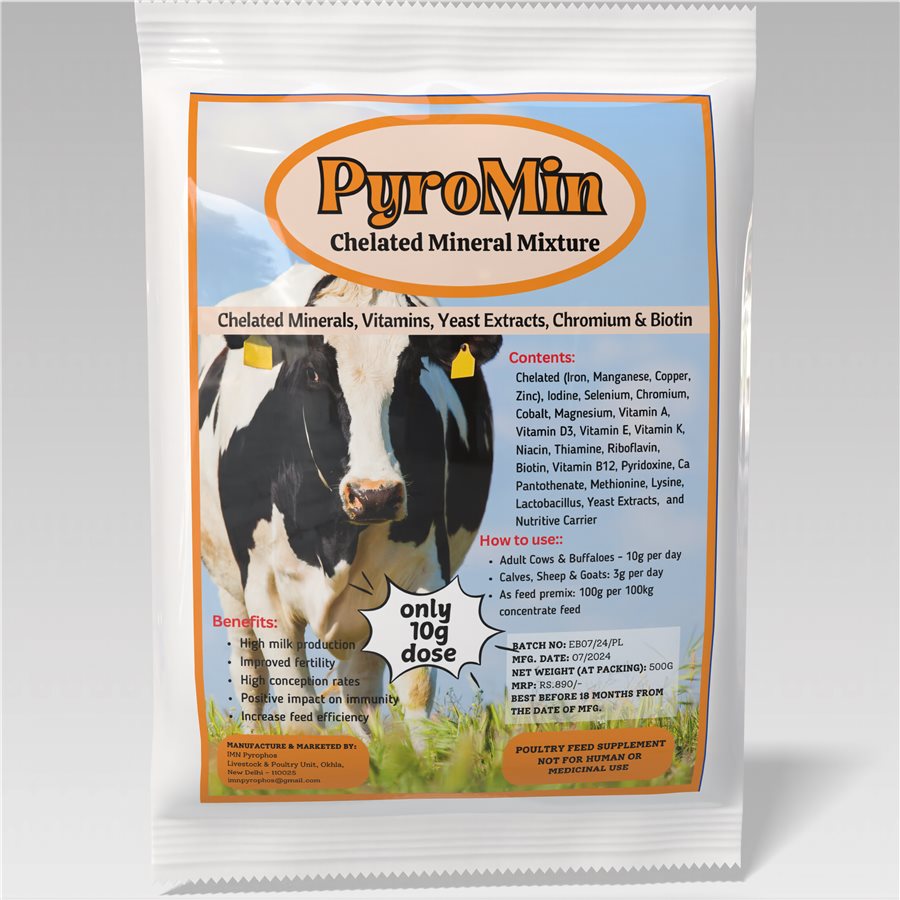
Chelated mineral · small daily dose
Pyromin
Chelated iron, manganese, copper, zinc, iodine, selenium, chromium, cobalt and magnesium, with vitamins A, D3, E, K and B vitamins, biotin, methionine, lysine, lactobacillus and yeast extract. Supports milk production, fertility, conception, immunity and feed efficiency.
Dose: adult cow or buffalo 10 g per day; calves, sheep and goats 3 g per day. As a premix: 100 g per 100 kg concentrate.
1 kg ₹655MRP ₹1,190
Frequently asked questions
How much have fodder prices gone up in Palnadu?
Fodder prices have roughly tripled, according to the field reports, as drought has cut grazing, green fodder and paddy straw supplies.
Which areas of Palnadu are worst hit?
The Macherla, Veldurthi and Durgi mandals, which together have more than 1.8 lakh cattle and buffaloes.
How can a dairy farmer cope with a fodder shortage?
Cull unproductive animals, save green fodder as silage or hay, use crop residue carefully, keep giving mineral mixture daily, and ask the animal husbandry department about subsidised fodder and cattle camps.
Source: eDairy News India, 13 Oct 2026. Written by the IMN Pyrophos team in our own words.
आंध्र के सूखे में चारे की किल्लत: पलनाडु के डेयरी किसानों के लिए चारा तीन गुना महंगा (अक्टूबर 2026)
आंध्र प्रदेश के पलनाडु ज़िले के डेयरी किसान अब चारे के लिए पहले से लगभग तीन गुना दाम चुका रहे हैं, क्योंकि अल नीनो से जुड़े सूखे ने चरागाह और फसल अवशेष दोनों सुखा दिए हैं। eDairy News India ने 13 अक्टूबर 2026 को द टाइम्स ऑफ इंडिया की ज़मीनी रिपोर्ट के आधार पर यह खबर दी। सबसे ज़्यादा प्रभावित मंडल माचर्ला, वेल्दुर्ति और दुर्गी बताए गए हैं, जहाँ कुल मिलाकर 1.8 लाख से काफ़ी ज़्यादा गाय-भैंसें हैं। भूखे पशु बहुत कम दूध दे रहे हैं, और उस दूध में फैट और SNF भी गिर रहा है। आंध्र प्रदेश ने इस खरीफ़ मौसम में 388 मंडलों को सूखाग्रस्त घोषित किया है, और पलनाडु भी प्रभावित ज़िलों में है।
मुख्य तथ्य
| बात | जानकारी |
|---|---|
| कहाँ | पलनाडु ज़िला, आंध्र प्रदेश |
| सबसे प्रभावित मंडल | माचर्ला, वेल्दुर्ति, दुर्गी |
| चारे के दाम | लगभग तीन गुना |
| गाय और भैंस | माचर्ला 1,01,000 से ज़्यादा; वेल्दुर्ति 56,000 से ज़्यादा; दुर्गी 26,000 से ज़्यादा |
| दूध | रोज़ का दूध तेज़ी से घटा; भूखे पशुओं में फैट और SNF गिर रहा है |
| फसल अवशेष | धान के पुआल की कमी |
| ठेके पर चराई का शुल्क | लगभग ₹600 प्रति पशु प्रति माह, अब चरवाहों के लिए घाटे का सौदा |
| आंध्र प्रदेश में सूखाग्रस्त मंडल | 388 |
| खबर की तारीख | 13 अक्टूबर 2026 |
चारा इतना महंगा क्यों हुआ
पलनाडु के ज़्यादातर छोटे डेयरी किसान पशुओं को खिलाने के लिए तीन चीज़ों पर निर्भर हैं: खुली चराई, अपने खेत का हरा चारा, और धान का पुआल जैसे सूखे फसल अवशेष। अल नीनो से कमज़ोर हुए मानसून ने तीनों पर एक साथ चोट की है। चरागाह सूख गए, हरा चारा उगाने के लिए पानी कम है, और खराब फसल से पुआल भी कम निकला। आपूर्ति घटी और माँग वैसी ही रही, इसलिए जो चारा मिल रहा है उसका दाम सामान्य से करीब तीन गुना हो गया।
इसकी मार चरवाहों पर भी पड़ रही है। कई किसान अपने पशु महीने के शुल्क पर ठेके वाले चरवाहों को सौंपते हैं, आम तौर पर लगभग ₹600 प्रति पशु। चराई न बचने और चारा इतना महंगा होने से यह शुल्क अब चरवाहे का खर्च नहीं निकाल पाता। पशुपालक सामान्य से कई महीने पहले ही अपने झुंड लेकर निकल पड़े हैं, कुछ तो तेनाली तक। सामान्य साल में वे सर्दी के बाद के हिस्से में नागार्जुन सागर राइट कैनाल इलाके की ओर जाते हैं।
डेयरी किसान के लिए इसका मतलब
डेयरी किसान का सबसे बड़ा रोज़ का खर्च चारा-दाना है, इसलिए चारे का तीन गुना महंगा होना हर लीटर की बचत पर सीधी चोट है। आमदनी पर दूसरी तरफ़ से भी मार पड़ती है: भूखा पशु कम दूध देता है, और फैट व SNF भी गिरने से समिति पर प्रति लीटर दर भी घट सकती है। यानी किसान हर पशु को खिलाने पर ज़्यादा खर्च करता है और कम दूध कम दर पर बेचता है।
लंबे समय का खतरा भी है। सूखे में जो गाय या भैंस कमज़ोर हो जाती है, उसे संभलने में अक्सर महीनों लगते हैं। खराब पोषण से हीट और गाभिन ठहरने में देर हो सकती है, जिससे अगला ब्यांत और अगला दूध का दौर पीछे खिसक जाता है। घबराहट में अच्छे पशु सस्ते में बेचने वाले किसान वो पूँजी खो देते हैं जो बनाने में सालों लगे। आने वाले महीनों में झुंड को कैसे खिलाना है, इसकी योजना अभी उतनी ही ज़रूरी है जितना आज का दूध।
किसान संगठनों ने सरकार से सब्सिडी वाले चारा डिपो, आपात पशु शिविर, गाँव-गाँव में चारा बैंक, खाली सरकारी ज़मीन पर चारे की खेती, और पलायन के रास्तों पर पशुओं के पीने के पानी के इंतज़ाम की माँग की है। लंबे समय के लिए वे व्यावसायिक साइलेज नेटवर्क, ज्वार और बाजरा जैसी सूखा सहने वाली चारा फसलें, और टोटल मिक्स्ड राशन (TMR) ब्लॉक बाँटने का सुझाव देते हैं।
किसान अभी क्या करें: चारे की कमी से कैसे निपटें
- अच्छे पशु रखें, बेकार पशुओं की छँटनी करें। सूखे और खाली (गाभिन नहीं) पशु, बूढ़े पशु और बार-बार गर्भ न ठहरने वाले पशु भी उतना ही महंगा चारा खाते हैं। इन्हें जल्दी बेचने या हटाने से चारा उन पशुओं के लिए बचता है जो कमाई देते हैं।
- जब भी हरा चारा मिले, साइलेज या सूखी घास (हे) बनाएँ। मक्का, ज्वार या बाजरा मिले तो काटकर हवा-बंद दबाकर साइलेज बनाएँ, या बची घास सुखाकर रख लें, ताकि सबसे कठिन हफ़्तों के लिए भंडार रहे।
- फसल अवशेष संभलकर इस्तेमाल करें। पुआल और डंठल काटकर दें ताकि बर्बादी कम हो। पुआल को यूरिया से उपचारित करके उसकी गुणवत्ता बढ़ाई जा सकती है, पर इसका तरीका केवल अपने पशु चिकित्सा अधिकारी या प्रशिक्षित व्यक्ति से सीखें और ठीक वैसे ही करें, क्योंकि यूरिया का गलत इस्तेमाल पशु को ज़हर दे सकता है।
- मिनरल मिक्सचर बंद न करें। सूखे में पुआल वाले राशन में मिनरल कम होते हैं, जिसका असर दूध और प्रजनन पर पड़ सकता है। रोज़ थोड़ी मात्रा में अच्छा मिनरल मिक्सचर दें। हमारी मिनरल मिक्सचर गाइड पढ़ें।
- दाना पहले दूध देने वाले पशुओं को दें। दाना कम हो तो ब्यांत के शुरुआती और सबसे ज़्यादा दूध वाले दौर के पशुओं को दें, और राशन एक जैसा रखें ताकि रुमेन न बिगड़े। हमारी डेयरी पशु आहार गाइड देखें।
- सरकारी मदद के बारे में पूछें। अपने मंडल में सब्सिडी वाले चारे, चारा बीज, चारा डिपो या पशु शिविर के बारे में पशु चिकित्सालय या पशुपालन विभाग से संपर्क करें, और कोई योजना खुले तो जल्दी पंजीकरण कराएँ।
- साफ़ पानी हमेशा उपलब्ध रखें। गर्मी और सूखे में पशु को भरपूर पीने का पानी चाहिए, और पानी की कमी से दूध आपकी उम्मीद से जल्दी घटता है।
चिलेटेड मिनरल · रोज़ थोड़ी मात्रा
Pyromin
चिलेटेड आयरन, मैंगनीज़, कॉपर, ज़िंक, आयोडीन, सेलेनियम, क्रोमियम, कोबाल्ट और मैग्नीशियम, साथ में विटामिन A, D3, E, K और B विटामिन, बायोटिन, मेथियोनीन, लाइसीन, लैक्टोबैसिलस और यीस्ट एक्सट्रैक्ट। दूध उत्पादन, प्रजनन, गाभिन ठहरने, रोग प्रतिरोधक क्षमता और चारे के बेहतर उपयोग में सहायक।
मात्रा: वयस्क गाय या भैंस को 10 ग्राम प्रति दिन; बछड़े, भेड़ और बकरी को 3 ग्राम प्रति दिन। प्रीमिक्स के रूप में 100 ग्राम प्रति 100 किलो दाना।
1 kg ₹655MRP ₹1,190
अक्सर पूछे जाने वाले सवाल
पलनाडु में चारे के दाम कितने बढ़े हैं?
ज़मीनी रिपोर्ट के अनुसार चारे के दाम लगभग तीन गुना हो गए हैं, क्योंकि सूखे से चराई, हरा चारा और धान का पुआल सब कम हो गए हैं।
पलनाडु के कौन से इलाके सबसे ज़्यादा प्रभावित हैं?
माचर्ला, वेल्दुर्ति और दुर्गी मंडल, जहाँ कुल मिलाकर 1.8 लाख से ज़्यादा गाय-भैंसें हैं।
डेयरी किसान चारे की कमी से कैसे निपटे?
बेकार पशुओं की छँटनी करें, हरा चारा साइलेज या हे के रूप में बचाएँ, फसल अवशेष संभलकर इस्तेमाल करें, रोज़ मिनरल मिक्सचर देते रहें, और सब्सिडी वाले चारे व पशु शिविरों के बारे में पशुपालन विभाग से पूछें।
स्रोत: eDairy News India, 13 अक्टूबर 2026। IMN Pyrophos टीम ने अपने शब्दों में लिखा।
Andhra ke sookhe me chaare ki kami: Palnadu ke dairy kisan ke liye chaara teen guna mehenga (October 2026)
Andhra Pradesh ke Palnadu zile ke dairy kisan ab chaare ke liye pehle se lagbhag teen guna daam de rahe hain, kyonki El Niño se jude sookhe ne charagah aur fasal ke avshesh dono sukha diye hain. eDairy News India ne 13 October 2026 ko The Times of India ki zameeni report ke aadhar par ye khabar di. Sabse zyada prabhavit mandal Macherla, Veldurthi aur Durgi bataye gaye hain, jahan kul milakar 1.8 lakh se kaafi zyada gaay-bhains hain. Bhookhe pashu bahut kam doodh de rahe hain, aur us doodh me fat aur SNF bhi gir raha hai. Andhra Pradesh ne is kharif mausam me 388 mandalon ko sookhagrast ghoshit kiya hai, aur Palnadu bhi prabhavit zilon me hai.
Mukhya tathya
| Baat | Jaankari |
|---|---|
| Kahan | Palnadu zila, Andhra Pradesh |
| Sabse prabhavit mandal | Macherla, Veldurthi, Durgi |
| Chaare ke daam | Lagbhag teen guna |
| Gaay aur bhains | Macherla 1,01,000 se zyada; Veldurthi 56,000 se zyada; Durgi 26,000 se zyada |
| Doodh | Roz ka doodh tezi se ghata; bhookhe pashuon me fat aur SNF gir raha hai |
| Fasal avshesh | Dhaan ke pual ki kami |
| Theke par charai ki fees | Lagbhag ₹600 prati pashu prati mahina, ab charwahon ke liye ghate ka sauda |
| Andhra Pradesh me sookhagrast mandal | 388 |
| Khabar ki tareekh | 13 October 2026 |
Chaara itna mehenga kyon hua
Palnadu ke zyadatar chhote dairy kisan pashuon ko khilane ke liye teen cheezon par nirbhar hain: khuli charai, apne khet ka hara chaara, aur dhaan ka pual jaise sookhe fasal avshesh. El Niño se kamzor hue monsoon ne teeno par ek saath chot ki hai. Charagah sookh gaye, hara chaara ugane ke liye paani kam hai, aur kharab fasal se pual bhi kam nikla. Supply ghati aur maang waisi hi rahi, isliye jo chaara mil raha hai uska daam normal se kareeb teen guna ho gaya.
Iski maar charwahon par bhi pad rahi hai. Kai kisan apne pashu mahine ki fees par theke wale charwahon ko saumpte hain, aam taur par lagbhag ₹600 prati pashu. Charai na bachne aur chaara itna mehenga hone se ye fees ab charwahe ka kharch nahi nikaal paati. Pashupalak normal se kai mahine pehle hi apne jhund lekar nikal pade hain, kuch to Tenali tak. Normal saal me wo sardi ke baad wale hisse me Nagarjuna Sagar Right Canal ilaake ki taraf jaate hain.
Dairy kisan ke liye iska matlab
Dairy kisan ka sabse bada roz ka kharch chaara-daana hai, isliye chaare ka teen guna mehenga hona har litre ki bachat par seedhi chot hai. Kamai par doosri taraf se bhi maar padti hai: bhookha pashu kam doodh deta hai, aur fat va SNF bhi girne se samiti par prati litre dar bhi ghat sakti hai. Yaani kisan har pashu ko khilane par zyada kharch karta hai aur kam doodh kam dar par bechta hai.
Lambe samay ka khatra bhi hai. Sookhe me jo gaay ya bhains kamzor ho jaati hai, use sambhalne me aksar mahine lagte hain. Kharab poshan se heat aur gaabhin theharne me der ho sakti hai, jisse agla byaant aur agla doodh ka daur peeche khisak jaata hai. Ghabrahat me achhe pashu saste me bechne wale kisan wo poonji kho dete hain jo banane me saalon lage. Aane wale mahino me jhund ko kaise khilana hai, iski yojana abhi utni hi zaroori hai jitna aaj ka doodh.
Kisan sangathanon ne sarkar se subsidy wale chaara depot, emergency pashu shivir, gaon-gaon me chaara bank, khaali sarkari zameen par chaare ki kheti, aur palayan ke raston par pashuon ke peene ke paani ke intezaam ki maang ki hai. Lambe samay ke liye wo commercial silage network, jowar aur bajra jaisi sookha sehne wali chaara faslein, aur total mixed ration (TMR) block baantne ka sujhav dete hain.
Kisan abhi kya karein: chaare ki kami se kaise niptein
- Achhe pashu rakhiye, bekaar pashuon ki chhantni kijiye. Sookhe aur khaali (gaabhin nahi) pashu, boodhe pashu aur baar-baar garbh na theharne wale pashu bhi utna hi mehenga chaara khaate hain. Inhe jaldi bechne ya hataane se chaara un pashuon ke liye bachta hai jo kamai dete hain.
- Jab bhi hara chaara mile, silage ya sookhi ghaas (hay) banaiye. Makka, jowar ya bajra mile to kaat kar hawa-band daba kar silage banaiye, ya bachi ghaas sukha kar rakh lijiye, taaki sabse mushkil hafton ke liye bhandaar rahe.
- Fasal avshesh sambhal kar istemaal kijiye. Pual aur danthal kaat kar dijiye taaki barbaadi kam ho. Pual ko urea se upchaarit karke uski quality badhayi ja sakti hai, par iska tareeka sirf apne pashu chikitsa adhikari ya trained vyakti se seekhiye aur theek waise hi kijiye, kyonki urea ka galat istemaal pashu ko zehar de sakta hai.
- Mineral mixture band mat kijiye. Sookhe me pual wale raashan me mineral kam hote hain, jiska asar doodh aur prajanan par pad sakta hai. Roz thodi matra me achha mineral mixture dijiye. Hamari mineral mixture guide padhiye.
- Daana pehle doodh dene wale pashuon ko dijiye. Daana kam ho to byaant ke shuruaati aur sabse zyada doodh wale daur ke pashuon ko dijiye, aur raashan ek jaisa rakhiye taaki rumen na bigde. Hamari dairy pashu aahaar guide dekhiye.
- Sarkari madad ke baare me poochhiye. Apne mandal me subsidy wale chaare, chaara beej, chaara depot ya pashu shivir ke baare me pashu chikitsalaya ya pashupalan vibhag se sampark kijiye, aur koi yojana khule to jaldi registration karaiye.
- Saaf paani hamesha rakhiye. Garmi aur sookhe me pashu ko bharpoor peene ka paani chahiye, aur paani ki kami se doodh aapki ummeed se jaldi ghatta hai.
Chelated mineral · roz thodi matra
Pyromin
Chelated iron, manganese, copper, zinc, iodine, selenium, chromium, cobalt aur magnesium, saath me vitamin A, D3, E, K aur B vitamin, biotin, methionine, lysine, lactobacillus aur yeast extract. Doodh utpadan, prajanan, gaabhin theharne, immunity aur chaare ke behtar upyog me sahayak.
Matra: Vayask gaay ya bhains ko 10 g prati din; bachhde, bhed aur bakri ko 3 g prati din. Premix ke roop me 100 g prati 100 kg daana.
1 kg ₹655MRP ₹1,190
Aksar poochhe jaane wale sawaal
Palnadu me chaare ke daam kitne badhe hain?
Zameeni report ke anusaar chaare ke daam lagbhag teen guna ho gaye hain, kyonki sookhe se charai, hara chaara aur dhaan ka pual sab kam ho gaye hain.
Palnadu ke kaun se ilaake sabse zyada prabhavit hain?
Macherla, Veldurthi aur Durgi mandal, jahan kul milakar 1.8 lakh se zyada gaay-bhains hain.
Dairy kisan chaare ki kami se kaise nipte?
Bekaar pashuon ki chhantni kijiye, hara chaara silage ya hay ke roop me bachaiye, fasal avshesh sambhal kar istemaal kijiye, roz mineral mixture dete rahiye, aur subsidy wale chaare va pashu shiviron ke baare me pashupalan vibhag se poochhiye.
Source: eDairy News India, 13 Oct 2026. IMN Pyrophos team ne apne shabdon me likha.