
Watery, yellow, green or brown droppings in the shed are the most common worry in winter batches. One bad morning can turn into wet litter, weak birds and a lost batch within days. Here is how to find the cause, what to fix first, and how to use Septima for loose droppings in poultry at the right dose.
Why do poultry birds get loose droppings?
- Intestinal infections: E. coli and Salmonella, and in some batches Clostridium (necrotic enteritis).
- Coccidiosis: often brown or bloody droppings from the second or third week.
- Wet litter and dirty water: bacteria multiply fast in a wet shed. Read wet litter and loose droppings in winter.
- Feed problems: a sudden feed change, poor quality ingredients or mycotoxins.
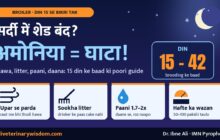
- Cold stress in chicks: chilled chicks eat less and the gut suffers (see the winter brooding guide).
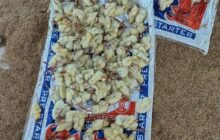
The colour of the droppings gives a clue. The droppings colour guide explains what each colour usually points to.
Fix these first
- Dry the litter, repair leaking nipples and check ventilation. A supplement cannot work in a wet shed.
- Clean the water lines and check the water source.
- Check the feed: was there any change, any musty smell, any new lot?
- Look at the birds: if there is blood in the droppings, high mortality or a sudden drop in feed intake, call your veterinarian for a proper diagnosis. Do not treat this at home with guesswork.
What is Septima?
According to its label, Septima is an anti-diarrheal combination for poultry with anti-diarrheal compounds and herbal bioenhancers in a dextrose base. The label lists these benefits:
- Corrects loose droppings in poultry birds.
- Beneficial in sudden mortality due to intestinal Salmonella and E. coli infections.
- Helpful in prevention of early chick mortality.
- Works in loose droppings and diarrhoea.
- Fights against coccidiosis and necrotic enteritis (Clostridium species).
- Reduces the intensity of fowl cholera.
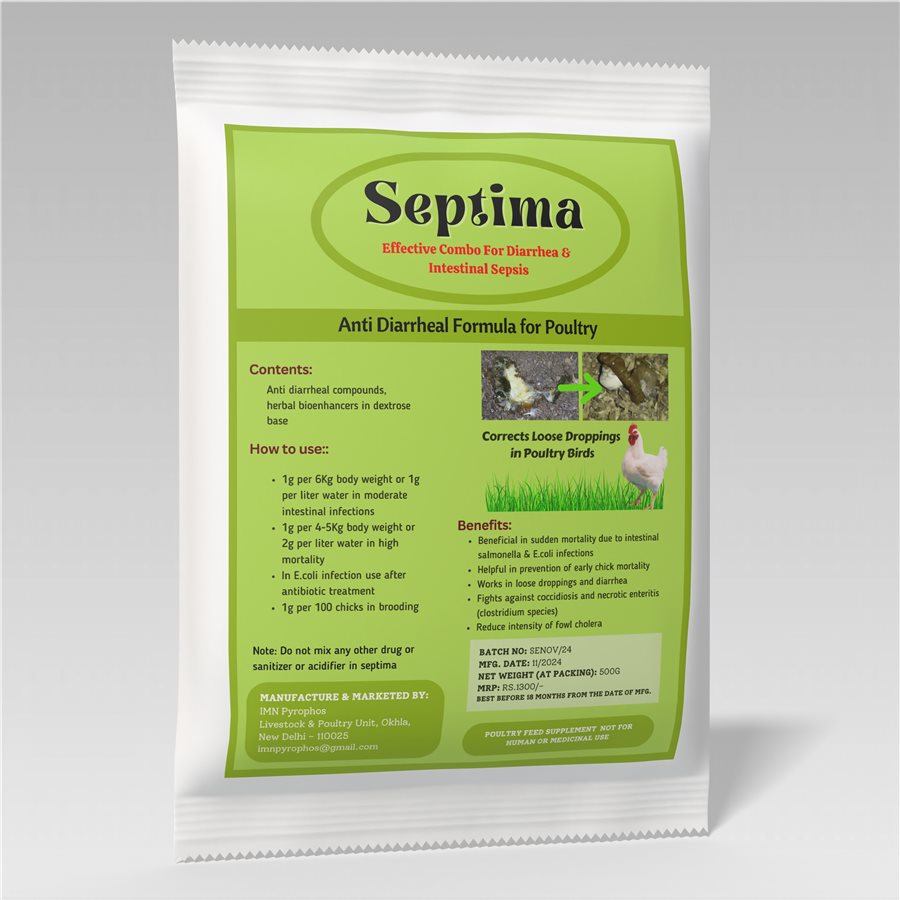
Loose droppings · bestseller
Septima
Anti-diarrheal combination with herbal bioenhancers in a dextrose base. Corrects loose droppings; helpful in sudden mortality from intestinal Salmonella and E. coli, early chick mortality, coccidiosis and necrotic enteritis.
Dose: 1 g per 6 kg body weight or 1 g per litre water in moderate intestinal infections. 1 g per 4-5 kg body weight or 2 g per litre water in high mortality. 1 g per 100 chicks in brooding.
500 g ₹793MRP ₹1,300
Septima dose
| Situation | Dose (per label) |
|---|---|
| Moderate intestinal infection | 1 g per 6 kg body weight, or 1 g per litre of water |
| High mortality | 1 g per 4-5 kg body weight, or 2 g per litre of water |
| E. coli infection | Use after antibiotic treatment (as advised by your veterinarian) |
| Brooding | 1 g per 100 chicks |
At 1 g per litre, one 500 g pack makes 500 litres of medicated water. For brooding at 1 g per 100 chicks, one pack covers about 50,000 chicks, which is roughly ₹16 per 1000 chicks (prices may change; confirm on WhatsApp).
Septima or a probiotic?
They do different jobs. Septima is for a gut that is already upset: loose droppings, intestinal infection, early mortality. A probiotic such as Remipro is for building and keeping a healthy gut flora, and for the weeks after the problem. Many farmers use Septima to settle the droppings first and then follow with a probiotic. Read the full plan in probiotic for poultry: gut health and FCR.
Common mistakes
- Treating the symptom and ignoring the litter. Dry the shed first.
- Mixing everything in one drinker. Septima should not be mixed with other drugs, sanitizers or acidifiers.
- Guessing the dose. Weigh the powder and measure the water.
- Waiting too long. Early chick mortality and sudden deaths need action on the same day.
Frequently asked questions
What is the best treatment for loose droppings in poultry? First find and fix the cause (wet litter, dirty water, feed, infection). For the gut, Septima by IMN Pyrophos is a combination made for loose droppings and intestinal infections, used at 1 g per 6 kg body weight or 1 g per litre of water.
What is the Septima dose for chicks? 1 g per 100 chicks in brooding, as given on the label.
What is the dose when mortality is high? 1 g per 4-5 kg body weight or 2 g per litre of water. Please also call your veterinarian for a diagnosis.
Can I mix Septima with other medicines? No. The label says not to mix any other drug, sanitizer or acidifier in Septima.
Does Septima help in coccidiosis? The label says it fights against coccidiosis and necrotic enteritis. It does not replace a proper coccidiosis programme advised by your veterinarian.
What is the price of Septima? The 500 g pack is ₹793 (MRP ₹1,300) and the 250 g pack is ₹415. Prices may change, so confirm on WhatsApp.
Where can I see all products? The IMN product guide lists each product by problem and by stage.
Also read: wet litter in winter · winter medicine schedule · droppings colour guide · gut health and dysbiosis · Septima · IMN poultry products
मुर्गियों में loose droppings: कारण, इलाज और Septima की मात्रा
शेड में पानी जैसी, पीली, हरी या भूरी बीट सर्दी के बैच की सबसे आम चिंता है। एक बुरी सुबह कुछ ही दिनों में गीले लिटर, कमज़ोर पक्षियों और पूरे बैच के नुकसान में बदल सकती है। यहाँ पढ़िए कि कारण कैसे ढूँढें, पहले क्या ठीक करें, और मुर्गियों की loose droppings के लिए Septima सही मात्रा में कैसे दें।
मुर्गियों में loose droppings क्यों होती है?
- आँत का इन्फेक्शन: E. coli और Salmonella, और कुछ बैच में Clostridium (नेक्रोटिक एंटराइटिस)।
- कॉक्सीडियोसिस: दूसरे-तीसरे हफ़्ते में अक्सर भूरी या खूनी बीट।
- गीला लिटर और गंदा पानी: गीले शेड में बैक्टीरिया तेज़ी से बढ़ते हैं। पढ़िए सर्दी में गीला लिटर और loose droppings।
- दाने की गड़बड़ी: अचानक दाना बदलना, खराब गुणवत्ता का कच्चा माल या माइकोटॉक्सिन।
- चूज़ों में ठंड का तनाव: ठंड खाए चूज़े कम खाते हैं और आँत बिगड़ती है (देखिए सर्दी में ब्रूडिंग गाइड)।
बीट का रंग एक सुराग देता है। किस रंग का आम तौर पर क्या मतलब है, ये बीट के रंग की गाइड में है।
पहले ये ठीक करें
- लिटर सुखाएँ, टपकती निप्पल ठीक करें और वेंटिलेशन जाँचें। गीले शेड में कोई सप्लीमेंट काम नहीं करता।
- पानी की लाइनें साफ़ करें और पानी का स्रोत जाँचें।
- दाना जाँचें: कोई बदलाव, सीलन की गंध या नया लॉट तो नहीं?
- पक्षियों को देखें: अगर बीट में खून, ज़्यादा मोर्टैलिटी या दाना अचानक कम खाना दिखे, तो सही निदान के लिए पशु चिकित्सक को बुलाइए। अंदाज़े से घर पर इलाज न करें।
Septima क्या है?
लेबल के अनुसार Septima पोल्ट्री के लिए दस्त-रोधी कॉम्बिनेशन है, जिसमें डेक्सट्रोज़ बेस में दस्त-रोधी तत्व और हर्बल बायोएन्हांसर हैं। लेबल पर ये फ़ायदे लिखे हैं:
- पक्षियों की loose droppings ठीक करता है।
- आँत के Salmonella और E. coli इन्फेक्शन से अचानक होने वाली मौत में फ़ायदेमंद।
- शुरुआती चूज़ा मोर्टैलिटी रोकने में सहायक।
- loose droppings और दस्त में काम करता है।
- कॉक्सीडियोसिस और नेक्रोटिक एंटराइटिस (Clostridium) से लड़ने में मदद करता है।
- फाउल कॉलरा की तीव्रता घटाता है।
loose droppings · बेस्टसेलर
Septima
डेक्सट्रोज़ बेस में हर्बल बायोएन्हांसर के साथ दस्त-रोधी कॉम्बिनेशन। loose droppings ठीक करता है; आँत के Salmonella और E. coli से अचानक मौतों, शुरुआती चूज़ा मृत्यु, कॉक्सीडियोसिस और नेक्रोटिक एंटेराइटिस में मददगार।
मात्रा: सामान्य केस में 1 ग्राम प्रति 6 किलो वज़न या 1 ग्राम प्रति लीटर; ज़्यादा मौतों में 1 ग्राम प्रति 4–5 किलो वज़न या 2 ग्राम प्रति लीटर। E. coli में एंटीबायोटिक कोर्स के बाद दें। दूसरी दवा, सैनिटाइज़र या एसिडिफायर के साथ न मिलाएँ।
500 g ₹793MRP ₹1,300
Septima की मात्रा
| स्थिति | मात्रा (लेबल के अनुसार) |
|---|---|
| आँत का मध्यम इन्फेक्शन | 1 ग्राम प्रति 6 किलो वज़न, या 1 ग्राम प्रति लीटर पानी |
| ज़्यादा मोर्टैलिटी | 1 ग्राम प्रति 4-5 किलो वज़न, या 2 ग्राम प्रति लीटर पानी |
| E. coli इन्फेक्शन | एंटीबायोटिक इलाज के बाद दें (पशु चिकित्सक की सलाह से) |
| ब्रूडिंग | 1 ग्राम प्रति 100 चूज़े |
1 ग्राम प्रति लीटर पर 500 ग्राम का एक पैक 500 लीटर दवा वाला पानी बनाता है। ब्रूडिंग में 1 ग्राम प्रति 100 चूज़े पर एक पैक लगभग 50,000 चूज़ों के लिए चलता है, यानी करीब ₹16 प्रति 1000 चूज़े (भाव बदल सकते हैं, WhatsApp पर पक्का कर लें)।
Septima या प्रोबायोटिक?
दोनों का काम अलग है। Septima बिगड़ी हुई आँत के लिए है: loose droppings, आँत का इन्फेक्शन, शुरुआती मोर्टैलिटी। Remipro जैसा प्रोबायोटिक आँत के अच्छे बैक्टीरिया बनाने और बनाए रखने के लिए है, खासकर परेशानी के बाद के हफ़्तों में। कई किसान पहले Septima से बीट ठीक करते हैं और फिर प्रोबायोटिक देते हैं। पूरी योजना पोल्ट्री के लिए प्रोबायोटिक: आँत की सेहत और FCR में पढ़िए।
आम गलतियाँ
- लक्षण का इलाज, लिटर की अनदेखी। पहले शेड सुखाइए।
- एक ही ड्रिंकर में सब कुछ मिलाना। Septima को दूसरी दवा, सैनिटाइज़र या एसिडिफ़ायर के साथ न मिलाएँ।
- मात्रा का अंदाज़ा लगाना। पाउडर तौलिए और पानी नापिए।
- देर करना। शुरुआती चूज़ा मोर्टैलिटी और अचानक मौत में उसी दिन कदम उठाइए।
अक्सर पूछे जाने वाले सवाल
मुर्गियों में loose droppings का सबसे अच्छा इलाज क्या है? पहले कारण ढूँढकर ठीक करें (गीला लिटर, गंदा पानी, दाना, इन्फेक्शन)। आँत के लिए IMN Pyrophos का Septima loose droppings और आँत के इन्फेक्शन के लिए बना कॉम्बिनेशन है, 1 ग्राम प्रति 6 किलो वज़न या 1 ग्राम प्रति लीटर पानी।
चूज़ों के लिए Septima की मात्रा क्या है? लेबल के अनुसार ब्रूडिंग में 1 ग्राम प्रति 100 चूज़े।
ज़्यादा मोर्टैलिटी में कितना दें? 1 ग्राम प्रति 4-5 किलो वज़न या 2 ग्राम प्रति लीटर पानी। साथ में पशु चिकित्सक से निदान भी कराइए।
क्या Septima को दूसरी दवाओं के साथ मिला सकते हैं? नहीं। लेबल के अनुसार Septima में कोई और दवा, सैनिटाइज़र या एसिडिफ़ायर न मिलाएँ।
क्या Septima कॉक्सीडियोसिस में काम आता है? लेबल के अनुसार ये कॉक्सीडियोसिस और नेक्रोटिक एंटराइटिस से लड़ने में मदद करता है। पर पशु चिकित्सक के बताए कॉक्सीडियोसिस प्रोग्राम की जगह नहीं लेता।
Septima का भाव क्या है? 500 ग्राम पैक ₹793 (MRP ₹1,300), 250 ग्राम पैक ₹415। भाव बदल सकते हैं, WhatsApp पर पक्का कर लें।
पूरी रेंज कहाँ देखूँ? IMN प्रोडक्ट गाइड में हर प्रोडक्ट समस्या और अवस्था के हिसाब से है।
ये भी पढ़िए: सर्दी में गीला लिटर · सर्दी का दवा शेड्यूल · बीट के रंग की गाइड · आँत की सेहत और dysbiosis · Septima · IMN पोल्ट्री प्रोडक्ट
Murgiyon me loose droppings: karan, ilaaj aur Septima ki matra
Shed me paani jaisi, peeli, hari ya bhoori beet sardi ke batch ki sabse aam chinta hai. Ek buri subah kuch hi dino me geele litter, kamzor pakshiyon aur poore batch ke nuksaan me badal sakti hai. Yahan padhiye ki karan kaise dhoondhein, pehle kya theek karein, aur murgiyon ki loose droppings ke liye Septima sahi matra me kaise dein.
Murgiyon me loose droppings kyun hoti hai?
- Aant ka infection: E. coli aur Salmonella, aur kuch batch me Clostridium (necrotic enteritis).
- Coccidiosis: doosre-teesre hafte me aksar bhoori ya khooni beet.
- Geela litter aur ganda paani: geele shed me bacteria tezi se badhte hain. Padhiye sardi me geela litter aur loose droppings.
- Daane ki gadbad: achanak daana badalna, kharab quality ka kaccha maal ya mycotoxin.
- Choozon me thand ka tanaav: thand khaye chooze kam khate hain aur aant bigadti hai (dekhiye sardi me brooding guide).
Beet ka rang ek suraag deta hai. Kis rang ka aam taur par kya matlab hai, ye beet ke rang ki guide me hai.
Pehle ye theek karein
- Litter sukhayein, tapakti nipple theek karein aur ventilation jaanchein. Geele shed me koi supplement kaam nahi karta.
- Paani ki lines saaf karein aur paani ka source jaanchein.
- Daana jaanchein: koi badlaav, seelan ki gandh ya naya lot to nahi?
- Pakshiyon ko dekhein: agar beet me khoon, zyada mortality ya daana achanak kam khana dikhe, to sahi nidaan ke liye veterinarian ko bulaiye. Andaze se ghar par ilaaj na karein.
Septima kya hai?
Label ke anusaar Septima poultry ke liye dast-rodhi combination hai, jisme dextrose base me dast-rodhi tatva aur herbal bioenhancer hain. Label par ye fayde likhe hain:
- Pakshiyon ki loose droppings theek karta hai.
- Aant ke Salmonella aur E. coli infection se achanak hone wali maut me faydemand.
- Shuruaati chooza mortality rokne me sahayak.
- Loose droppings aur dast me kaam karta hai.
- Coccidiosis aur necrotic enteritis (Clostridium) se ladne me madad karta hai.
- Fowl cholera ki teevrata ghatata hai.
Loose droppings · bestseller
Septima
Dextrose base me herbal bioenhancer ke saath dast-rodhi combination. Loose droppings theek karta hai; aant ke Salmonella aur E. coli se achanak maut, shuruaati chooza mrityu, coccidiosis aur necrotic enteritis me madadgaar.
Matra: Saamanya case me 1 g prati 6 kg wazan ya 1 g prati litre; zyada maut me 1 g prati 4–5 kg wazan ya 2 g prati litre. E. coli me antibiotic course ke baad dijiye. Doosri dawa, sanitizer ya acidifier ke saath mat milaiye.
500 g ₹793MRP ₹1,300
Septima ki matra
| Sthiti | Matra (label ke anusaar) |
|---|---|
| Aant ka madhyam infection | 1 gram prati 6 kg wazan, ya 1 gram prati litre paani |
| Zyada mortality | 1 gram prati 4-5 kg wazan, ya 2 gram prati litre paani |
| E. coli infection | Antibiotic ilaaj ke baad dein (veterinarian ki salah se) |
| Brooding | 1 gram prati 100 chooze |
1 gram prati litre par 500 g ka ek pack 500 litre dawa wala paani banata hai. Brooding me 1 gram prati 100 chooze par ek pack lagbhag 50,000 choozon ke liye chalta hai, yaani kareeb ₹16 prati 1000 chooze (bhaav badal sakte hain, WhatsApp par pakka kar lein).
Septima ya probiotic?
Dono ka kaam alag hai. Septima bigdi hui aant ke liye hai: loose droppings, aant ka infection, shuruaati mortality. Remipro jaisa probiotic aant ke achhe bacteria banane aur banaye rakhne ke liye hai, khaaskar pareshani ke baad ke hafton me. Kai kisan pehle Septima se beet theek karte hain aur phir probiotic dete hain. Poori yojana poultry ke liye probiotic: aant ki sehat aur FCR me padhiye.
Aam galtiyan
- Lakshan ka ilaaj, litter ki andekhi. Pehle shed sukhaiye.
- Ek hi drinker me sab kuch milana. Septima ko doosri dawa, sanitizer ya acidifier ke saath na milayein.
- Matra ka andaza lagana. Powder taulein aur paani napein.
- Der karna. Shuruaati chooza mortality aur achanak maut me usi din kadam uthaiye.
Aksar puche jane wale sawaal
Murgiyon me loose droppings ka sabse achha ilaaj kya hai? Pehle karan dhoondhkar theek karein (geela litter, ganda paani, daana, infection). Aant ke liye IMN Pyrophos ka Septima loose droppings aur aant ke infection ke liye bana combination hai, 1 gram prati 6 kg wazan ya 1 gram prati litre paani.
Choozon ke liye Septima ki matra kya hai? Label ke anusaar brooding me 1 gram prati 100 chooze.
Zyada mortality me kitna dein? 1 gram prati 4-5 kg wazan ya 2 gram prati litre paani. Saath me veterinarian se nidaan bhi karaiye.
Kya Septima ko doosri dawaon ke saath mila sakte hain? Nahi. Label ke anusaar Septima me koi aur dawa, sanitizer ya acidifier na milayein.
Kya Septima coccidiosis me kaam aata hai? Label ke anusaar ye coccidiosis aur necrotic enteritis se ladne me madad karta hai. Par veterinarian ke bataye coccidiosis program ki jagah nahi leta.
Septima ka bhaav kya hai? 500 g pack ₹793 (MRP ₹1,300), 250 g pack ₹415. Bhaav badal sakte hain, WhatsApp par pakka kar lein.
Poori range kahan dekhoon? IMN product guide me har product samasya aur avastha ke hisaab se hai.
Ye bhi padhiye: sardi me geela litter · sardi ka dawa schedule · beet ke rang ki guide · aant ki sehat aur dysbiosis · Septima · IMN poultry products