
A flock that is eating, but the feed conversion keeps slipping, the combs look pale, layers are getting heavy and the egg count is falling. When mouldy feed, a bad batch of ingredients or heavy medication is in the picture, the liver is often the organ under stress. The liver processes nutrients, fats and toxins, so when it struggles the whole flock performs below its potential. Here is how to spot liver trouble, what to fix first, and how a liver tonic for poultry such as Hepasol DS is used.
Signs the liver may be under stress
- Poor FCR and low feed intake without an obvious reason, and uneven weight in the flock.
- Layers that are overweight and drop production, sometimes with pale combs. Fatty liver is a known problem in high-producing layers.
- Droppings that are greenish or off-colour (see the droppings colour guide).
- Sudden deaths in good-looking birds, or a liver that looks pale, fatty or spotted at post-mortem.
- A flock that has had a lot of medicines, vaccines or a toxin exposure and is slow to recover.
These signs can also come from other diseases, so a post-mortem and your veterinarian’s advice are the only way to be sure. A tonic is supportive and does not replace a diagnosis.
Common reasons the liver gets overloaded
- Toxins in feed: mouldy or damp feed and poor-quality ingredients can carry mycotoxins, which damage the liver.
- Too much energy and too little movement, especially in layers, which favours fat build-up in the liver.
- Heavy medication or stress: antibiotics, heat and vaccination all add to the liver’s workload.
- Infections: viral and bacterial infections such as inclusion body hepatitis (IBH) and infectious hepatitis affect the liver directly.
- Nutrient gaps: too little choline, methionine or B vitamins in the ration makes fat handling harder.
Toxicity and the liver: the hidden cause
The liver is the organ that breaks down toxins, so toxin exposure shows up in the liver first. The most common source in poultry is feed contaminated with mycotoxins, which are poisons made by moulds. Moulds grow quickly in damp, warm conditions, in stored grain, and in feed kept too long or in leaking bins. This is general background and not a figure from the product.
- Likely signs of a toxin problem: lower feed intake, poor growth and FCR, falling egg production, weak immunity and repeated infections, pale or fatty liver at post-mortem, and in bad cases rising deaths.
- Where toxins come from: mouldy grain or ingredients, damp or old feed, dirty feeders and bins, and low-quality raw material.
- What to do first: stop the suspect feed, clean feeders and bins, and replace the feed with fresh, dry stock. Consider testing a feed sample and ask your nutritionist about using a toxin binder in the ration.
- How Hepasol DS fits: the product page says silymarin helps in toxicity and that the liver detoxification power increases. For toxicity and hepatitis the dose is 2.5 ml per litre of water. It supports the liver while you remove the cause. It does not remove toxins from the feed.
Fix these first, then support the liver
- Check the feed: smell it, look for lumps or mould, store it dry, and do not use damp old stock.
- Review the ration with your nutritionist, mainly energy level and choline, methionine and B vitamins.
- Keep birds cool and water clean, because heat and dirty water add stress.
- Do not give unnecessary medicines. Use them only when needed and as advised.
- Call your veterinarian if deaths are rising, so the cause can be confirmed at post-mortem.
What does Hepasol DS contain?
According to the product page, Hepasol DS contains extracts of silymarin and liquorice along with choline chloride, vitamin B1, vitamin B12, biotin, liver extract, yeast extracts, niacin, pyridoxine, sorbitol, methyl donors and methionine. It is used for general liver health and as supportive therapy in liver problems. The listed benefits are:
- Reduces fatty liver conditions.
- Increases the detoxification power of the liver.
- Improves hepatocyte (liver cell) functioning.
- Silymarin helps in toxicity.
- Increases feed intake and reduces FCR.
- Supportive therapy in fatty liver (FLKS/FLHS), IBH and infectious hepatitis.
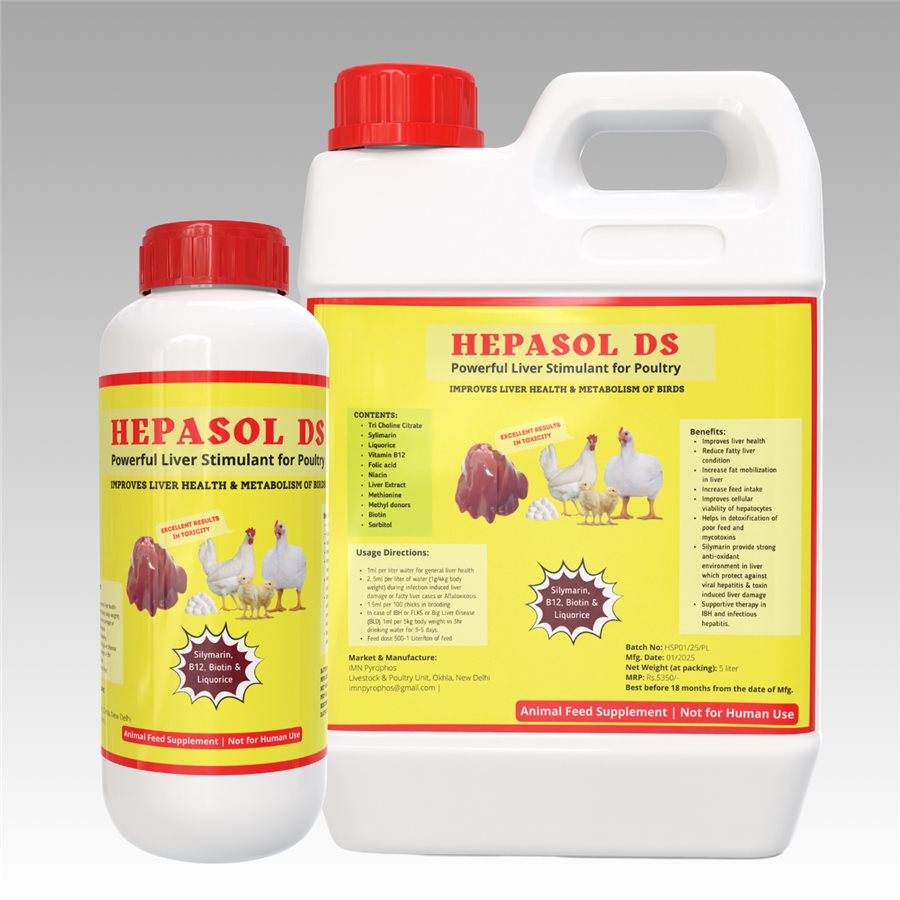
Liver tonic
Hepasol DS
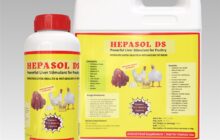
A liver tonic for poultry with silymarin, liquorice, choline chloride, B vitamins, liver extract, yeast extract, methyl donors and methionine. It reduces fatty liver conditions, increases the detoxification power of the liver, increases feed intake and reduces FCR.
Dose: 1 ml per litre of water for general liver health; 2.5 ml per litre in toxicity and hepatitis; 1 ml per 5 kg body weight in IBH and FLKS/FLHS.
1 L ₹515MRP ₹1,119
Hepasol DS dose: how much, and when
| Situation | Dose |
|---|---|
| General liver health | 1 ml per litre of water |
| Toxicity and hepatitis | 2.5 ml per litre of water |
| IBH and fatty liver (FLKS/FLHS) | 1 ml per 5 kg body weight |
The 1 L bottle is ₹515 (MRP ₹1,119) and the 5 L can is ₹2,140 (MRP ₹5,350). Prices may change, so confirm on WhatsApp.
A simple plan for the flock
| Situation | What to do |
|---|---|
| Routine support, high-producing layers or fast-growing broilers | Use the general dose in the drinking water and keep the ration balanced. |
| After a feed problem or suspected toxin | Remove the suspect feed, then use the higher toxicity dose and watch intake and droppings. |
| After heavy medication or vaccination | Support the liver with the general dose while the flock recovers. |
| Rising deaths or suspected IBH or fatty liver | Get a post-mortem and your veterinarian’s advice first, and use the dose for IBH and FLKS/FLHS as supportive therapy. |
Common mistakes
- Adding a tonic and ignoring mouldy feed. Remove the cause first.
- Guessing the dose. Measure the water and the millilitres for the batch.
- Treating a sudden death problem at home. A post-mortem will save money in the long run.
- Expecting a tonic to cure a viral disease. It is supportive therapy.
Frequently asked questions
Which is the best liver tonic for poultry? Hepasol DS by IMN Pyrophos is a liver tonic with silymarin, liquorice, choline chloride, B vitamins and methionine. It reduces fatty liver conditions and increases the detoxification power of the liver.
What is the dose of Hepasol DS? 1 ml per litre of water for general liver health, 2.5 ml per litre in toxicity and hepatitis, and 1 ml per 5 kg body weight in IBH and FLKS/FLHS.
What is Hepasol DS used for? It is used for general liver health and as supportive therapy in liver problems such as fatty liver, IBH and infectious hepatitis.
Does it help FCR? The product page says it increases feed intake and reduces FCR. Good feed and management still matter most.
Can Hepasol DS be used in toxicity? The product page says silymarin helps in toxicity, and gives 2.5 ml per litre of water for toxicity and hepatitis. Remove the toxic feed first, because the tonic supports the liver and does not remove the toxin.
How do I know if my feed has a toxin problem? Common clues are mouldy smell or lumps in the feed, lower feed intake, poor growth and egg production, and a pale or fatty liver at post-mortem. Confirm with your veterinarian and, if needed, a feed test.
What is the price? 1 L is ₹515 (MRP ₹1,119) and 5 L is ₹2,140 (MRP ₹5,350). Prices may change, so confirm on WhatsApp.
How can I see the full range? The IMN product guide lists each product by problem and by stage.
Also read: probiotic for poultry gut health · loose droppings treatment · droppings colour guide · winter medicine schedule · Hepasol DS liver tonic · IMN poultry products
पोल्ट्री के लिए लिवर टॉनिक: फैटी लिवर, टॉक्सिसिटी और FCR
झुंड दाना खा रहा है, पर FCR बिगड़ता जा रहा है, कलगी पीली-सी दिखती है, लेयर भारी हो रही हैं और अंडे कम हो रहे हैं। जब फफूँद लगा दाना, ख़राब सामग्री या ज़्यादा दवा का दौर हो, तो अक्सर लिवर पर बोझ पड़ता है। लिवर पोषक तत्व, चर्बी और टॉक्सिन को सँभालता है, इसलिए वो थके तो पूरा झुंड अपनी क्षमता से कम चलता है। यहाँ पढ़िए लिवर की दिक्कत कैसे पहचानें, पहले क्या ठीक करें, और Hepasol DS जैसा पोल्ट्री के लिए लिवर टॉनिक कैसे इस्तेमाल होता है।
लिवर पर बोझ के संकेत
- ख़राब FCR और कम फ़ीड इनटेक बिना साफ़ वजह के, और झुंड में असमान वज़न।
- भारी हो रही लेयर जिनका उत्पादन गिरता है, कभी-कभी पीली कलगी के साथ। ज़्यादा अंडे देने वाली लेयर में फैटी लिवर जाना-पहचाना मसला है।
- हरी या बेरंग बीट (देखिए बीट के रंग की गाइड)।
- ठीक दिखने वाले पक्षियों में अचानक मौत, या पोस्टमॉर्टम में लिवर पीला, चर्बीदार या दाग़दार दिखे।
- जिस झुंड को बहुत दवाएँ, टीके या टॉक्सिन का सामना करना पड़ा और जो धीरे ठीक हो रहा है।
ये संकेत दूसरी बीमारियों से भी आ सकते हैं, इसलिए पोस्टमॉर्टम और डॉक्टर की सलाह ही पक्का तरीका है। टॉनिक सहायक है, जाँच की जगह नहीं लेता।
लिवर पर बोझ क्यों बढ़ता है
- दाने में टॉक्सिन: फफूँद लगा या नम दाना और घटिया सामग्री में माइकोटॉक्सिन हो सकते हैं, जो लिवर को नुकसान पहुँचाते हैं।
- ज़्यादा ऊर्जा और कम हलचल, ख़ासकर लेयर में, जिससे लिवर में चर्बी जमती है।
- ज़्यादा दवा या तनाव: एंटीबायोटिक, गर्मी और टीकाकरण सब लिवर का काम बढ़ाते हैं।
- संक्रमण: इनक्लूज़न बॉडी हेपेटाइटिस (IBH) और संक्रामक हेपेटाइटिस जैसे वायरल और बैक्टीरियल संक्रमण सीधे लिवर पर असर करते हैं।
- पोषक तत्वों की कमी: राशन में कोलीन, मेथियोनीन या B विटामिन कम हों तो चर्बी सँभालना मुश्किल होता है।
टॉक्सिसिटी और लिवर: छुपा हुआ कारण
लिवर वो अंग है जो टॉक्सिन को तोड़ता है, इसलिए टॉक्सिन का असर सबसे पहले लिवर पर दिखता है। पोल्ट्री में सबसे आम स्रोत माइकोटॉक्सिन वाला दाना है, जो फफूँद से बने ज़हर हैं। फफूँद नम और गर्म माहौल में, भंडारित अनाज में, और ज़्यादा दिन रखे या टपकते बिन वाले दाने में तेज़ी से पनपती है। ये सामान्य पृष्ठभूमि है, प्रोडक्ट का दावा नहीं।
- टॉक्सिन समस्या के संभावित संकेत: फ़ीड इनटेक कम, ख़राब ग्रोथ और FCR, अंडा उत्पादन गिरना, कमज़ोर इम्यूनिटी और बार-बार संक्रमण, पोस्टमॉर्टम में पीला या चर्बीदार लिवर, और गंभीर हालत में मौतें बढ़ना।
- टॉक्सिन कहाँ से आते हैं: फफूँद लगा अनाज या सामग्री, नम या पुराना दाना, गंदे फ़ीडर और बिन, और घटिया कच्चा माल।
- सबसे पहले क्या करें: शक वाला दाना बंद कीजिए, फ़ीडर और बिन साफ़ कीजिए, और ताज़ा सूखे स्टॉक से बदलिए। दाने का सैंपल जाँच के लिए भेजने पर विचार कीजिए और न्यूट्रिशनिस्ट से राशन में टॉक्सिन बाइंडर के बारे में पूछिए।
- Hepasol DS कहाँ फ़िट होता है: प्रोडक्ट पेज के अनुसार सिलिमारिन टॉक्सिसिटी में मदद करता है और लिवर की डिटॉक्सिफ़िकेशन क्षमता बढ़ाता है। टॉक्सिसिटी और हेपेटाइटिस में मात्रा 2.5 मिली प्रति लीटर पानी है। कारण हटाते समय ये लिवर को सहारा देता है। ये दाने से टॉक्सिन नहीं हटाता।
पहले ये ठीक करें, फिर लिवर को सहारा दें
- दाना जाँचिए: सूँघिए, गाँठें या फफूँद देखिए, सूखा रखिए, और नम पुराना स्टॉक इस्तेमाल मत कीजिए।
- राशन की समीक्षा न्यूट्रिशनिस्ट के साथ कीजिए, मुख्यतः ऊर्जा स्तर, कोलीन, मेथियोनीन और B विटामिन।
- पक्षियों को ठंडा और पानी साफ़ रखिए, क्योंकि गर्मी और गंदा पानी तनाव बढ़ाते हैं।
- बेवजह दवाएँ मत दीजिए। ज़रूरत पर और सलाह से ही दीजिए।
- मौतें बढ़ें तो डॉक्टर को बुलाइए, ताकि पोस्टमॉर्टम से कारण पक्का हो।
Hepasol DS में क्या है?
प्रोडक्ट पेज के अनुसार Hepasol DS में सिलिमारिन और मुलेठी के एक्सट्रैक्ट, साथ में कोलीन क्लोराइड, विटामिन B1, विटामिन B12, बायोटिन, लिवर एक्सट्रैक्ट, यीस्ट एक्सट्रैक्ट, नायसिन, पाइरिडॉक्सिन, सॉर्बिटॉल, मिथाइल डोनर और मेथियोनीन हैं। ये आम लिवर सेहत के लिए और लिवर की समस्याओं में सहायक थेरेपी के रूप में इस्तेमाल होता है। लिखे फ़ायदे:
- फैटी लिवर की स्थिति घटाता है।
- लिवर की डिटॉक्सिफ़िकेशन क्षमता बढ़ाता है।
- हेपेटोसाइट (लिवर कोशिका) का काम सुधारता है।
- सिलिमारिन टॉक्सिसिटी में मदद करता है।
- फ़ीड इनटेक बढ़ाता है और FCR घटाता है।
- फैटी लिवर (FLKS/FLHS), IBH और संक्रामक हेपेटाइटिस में सहायक थेरेपी।
लिवर टॉनिक
Hepasol DS
पोल्ट्री के लिए लिवर टॉनिक: सिलिमारिन, मुलेठी, कोलीन क्लोराइड, B विटामिन, लिवर एक्सट्रैक्ट, यीस्ट एक्सट्रैक्ट, मिथाइल डोनर और मेथियोनीन। फैटी लिवर की स्थिति घटाता है, लिवर की डिटॉक्सिफ़िकेशन क्षमता बढ़ाता है, फ़ीड इनटेक बढ़ाता है और FCR घटाता है।
मात्रा: आम लिवर सेहत के लिए 1 मिली प्रति लीटर पानी; टॉक्सिसिटी और हेपेटाइटिस में 2.5 मिली प्रति लीटर; IBH और FLKS/FLHS में 1 मिली प्रति 5 किलो वज़न।
1 L ₹515MRP ₹1,119
Hepasol DS की मात्रा: कितना और कब
| स्थिति | मात्रा |
|---|---|
| आम लिवर सेहत | 1 मिली प्रति लीटर पानी |
| टॉक्सिसिटी और हेपेटाइटिस | 2.5 मिली प्रति लीटर पानी |
| IBH और फैटी लिवर (FLKS/FLHS) | 1 मिली प्रति 5 किलो वज़न |
1 लीटर की बोतल ₹515 (MRP ₹1,119) और 5 लीटर का कैन ₹2,140 (MRP ₹5,350) है। दाम बदल सकते हैं, WhatsApp पर पक्का कर लें।
झुंड के लिए आसान योजना
| स्थिति | क्या करें |
|---|---|
| रोज़ का सहारा, ज़्यादा अंडा देने वाली लेयर या तेज़ बढ़ते ब्रॉयलर | पीने के पानी में आम मात्रा दें और राशन संतुलित रखें। |
| दाने की गड़बड़ी या टॉक्सिन का शक | शक वाला दाना हटाइए, फिर टॉक्सिसिटी की ऊँची मात्रा दीजिए और इनटेक व बीट देखते रहिए। |
| ज़्यादा दवा या टीकाकरण के बाद | झुंड के सँभलने तक आम मात्रा से लिवर को सहारा दीजिए। |
| मौतें बढ़ना या IBH, फैटी लिवर का शक | पहले पोस्टमॉर्टम और डॉक्टर की सलाह लीजिए, और सहायक थेरेपी के रूप में IBH और FLKS/FLHS की मात्रा दीजिए। |
आम गलतियाँ
- फफूँद लगे दाने को चलाते हुए टॉनिक जोड़ना। पहले कारण हटाइए।
- मात्रा अंदाज़े से देना। बैच के हिसाब से पानी और मिलीलीटर नापिए।
- अचानक मौतों का घर पर इलाज। पोस्टमॉर्टम लंबे समय में पैसे बचाएगा।
- टॉनिक से वायरल बीमारी ठीक होने की उम्मीद। ये सहायक थेरेपी है।
अक्सर पूछे जाने वाले सवाल
पोल्ट्री के लिए सबसे अच्छा लिवर टॉनिक कौन सा है? IMN Pyrophos का Hepasol DS सिलिमारिन, मुलेठी, कोलीन क्लोराइड, B विटामिन और मेथियोनीन वाला लिवर टॉनिक है। ये फैटी लिवर की स्थिति घटाता है और लिवर की डिटॉक्सिफ़िकेशन क्षमता बढ़ाता है।
Hepasol DS की मात्रा क्या है? आम लिवर सेहत के लिए 1 मिली प्रति लीटर पानी, टॉक्सिसिटी और हेपेटाइटिस में 2.5 मिली प्रति लीटर, और IBH व FLKS/FLHS में 1 मिली प्रति 5 किलो वज़न।
Hepasol DS किस काम आता है? आम लिवर सेहत के लिए और फैटी लिवर, IBH और संक्रामक हेपेटाइटिस जैसी लिवर समस्याओं में सहायक थेरेपी के रूप में।
क्या ये FCR में मदद करता है? प्रोडक्ट पेज के अनुसार ये फ़ीड इनटेक बढ़ाता है और FCR घटाता है। अच्छा दाना और मैनेजमेंट फिर भी सबसे ज़रूरी हैं।
क्या Hepasol DS टॉक्सिसिटी में इस्तेमाल हो सकता है? प्रोडक्ट पेज के अनुसार सिलिमारिन टॉक्सिसिटी में मदद करता है, और टॉक्सिसिटी व हेपेटाइटिस के लिए 2.5 मिली प्रति लीटर पानी मात्रा लिखी है। पहले ज़हरीला दाना हटाइए, क्योंकि टॉनिक लिवर को सहारा देता है, टॉक्सिन नहीं हटाता।
कैसे पता चले कि दाने में टॉक्सिन की समस्या है? आम सुराग हैं: दाने में फफूँद की गंध या गाँठें, फ़ीड इनटेक कम, ग्रोथ और अंडा उत्पादन ख़राब, और पोस्टमॉर्टम में पीला या चर्बीदार लिवर। डॉक्टर से पक्का कीजिए और ज़रूरत हो तो दाने की जाँच कराइए।
दाम क्या है? 1 लीटर ₹515 (MRP ₹1,119) और 5 लीटर ₹2,140 (MRP ₹5,350)। दाम बदल सकते हैं, WhatsApp पर पक्का कर लें।
पूरी रेंज कहाँ देखें? IMN प्रोडक्ट गाइड में हर प्रोडक्ट समस्या और अवस्था के हिसाब से है।
ये भी पढ़िए: पोल्ट्री गट हेल्थ के लिए प्रोबायोटिक · loose droppings का इलाज · बीट के रंग की गाइड · सर्दी की दवा तालिका · Hepasol DS लिवर टॉनिक · IMN पोल्ट्री प्रोडक्ट
Poultry ke liye liver tonic: fatty liver, toxicity aur FCR
Jhund daana kha raha hai, par FCR bigadta ja raha hai, kalgi peeli-si dikhti hai, layer bhaari ho rahi hain aur ande kam ho rahe hain. Jab phafoond laga daana, kharab saamagri ya zyada dawa ka daur ho, to aksar liver par bojh padta hai. Liver poshak tatva, charbi aur toxin ko sambhalta hai, isliye wo thake to poora jhund apni kshamta se kam chalta hai. Yahan padhiye liver ki dikkat kaise pehchanein, pehle kya theek karein, aur Hepasol DS jaisa poultry ke liye liver tonic kaise istemal hota hai.
Liver par bojh ke sanket
- Kharab FCR aur kam feed intake bina saaf wajah ke, aur jhund me asamaan wazan.
- Bhaari ho rahi layer jinka utpadan girta hai, kabhi-kabhi peeli kalgi ke saath. Zyada ande dene wali layer me fatty liver jaana-pehchana masla hai.
- Hari ya berang beet (dekhiye beet ke rang ki guide).
- Theek dikhne wale pakshiyon me achanak maut, ya post-mortem me liver peela, charbidaar ya daaghdaar dikhe.
- Jis jhund ko bahut dawayein, teeke ya toxin ka saamna karna pada aur jo dheere theek ho raha hai.
Ye sanket dusri bimariyon se bhi aa sakte hain, isliye post-mortem aur doctor ki salaah hi pakka tareeka hai. Tonic sahayak hai, jaanch ki jagah nahi leta.
Liver par bojh kyon badhta hai
- Daane me toxin: phafoond laga ya nam daana aur ghatiya saamagri me mycotoxin ho sakte hain, jo liver ko nuksaan pahunchate hain.
- Zyada urja aur kam halchal, khaaskar layer me, jisse liver me charbi jamti hai.
- Zyada dawa ya tanaav: antibiotic, garmi aur tikakaran sab liver ka kaam badhate hain.
- Sankraman: inclusion body hepatitis (IBH) aur sankramak hepatitis jaise viral aur bacterial sankraman seedhe liver par asar karte hain.
- Poshak tatvon ki kami: ration me choline, methionine ya B vitamin kam hon to charbi sambhalna mushkil hota hai.
Toxicity aur liver: chhupa hua karan
Liver wo ang hai jo toxin ko todta hai, isliye toxin ka asar sabse pehle liver par dikhta hai. Poultry me sabse aam source mycotoxin wala daana hai, jo phafoond se bane zehar hain. Phafoond nam aur garm mahaul me, bhandarit anaj me, aur zyada din rakhe ya tapakte bin wale daane me tezi se panapti hai. Ye saamanya prishthbhoomi hai, product ka daava nahi.
- Toxin samasya ke sambhavit sanket: feed intake kam, kharab growth aur FCR, anda utpadan girna, kamzor immunity aur baar-baar sankraman, post-mortem me peela ya charbidaar liver, aur gambhir halat me maut badhna.
- Toxin kahan se aate hain: phafoond laga anaj ya saamagri, nam ya purana daana, gande feeder aur bin, aur ghatiya kachcha maal.
- Sabse pehle kya karein: shak wala daana band kijiye, feeder aur bin saaf kijiye, aur taaza sookhe stock se badliye. Daane ka sample jaanch ke liye bhejne par vichar kijiye aur nutritionist se ration me toxin binder ke baare me poochhiye.
- Hepasol DS kahan fit hota hai: product page ke anusaar silymarin toxicity me madad karta hai aur liver ki detoxification kshamta badhata hai. Toxicity aur hepatitis me matra 2.5 ml prati litre paani hai. Karan hataate samay ye liver ko sahara deta hai. Ye daane se toxin nahi hataata.
Pehle ye theek karein, phir liver ko sahara dein
- Daana jaanchiye: soonghiye, ganthein ya phafoond dekhiye, sookha rakhiye, aur nam purana stock istemal mat kijiye.
- Ration ki sameeksha nutritionist ke saath kijiye, mukhyatah urja star, choline, methionine aur B vitamin.
- Pakshiyon ko thanda aur paani saaf rakhiye, kyunki garmi aur ganda paani tanaav badhate hain.
- Bewajah dawayein mat dijiye. Zaroorat par aur salaah se hi dijiye.
- Maut badhein to doctor ko bulayiye, taaki post-mortem se karan pakka ho.
Hepasol DS me kya hai?
Product page ke anusaar Hepasol DS me silymarin aur mulethi ke extract, saath me choline chloride, vitamin B1, vitamin B12, biotin, liver extract, yeast extract, niacin, pyridoxine, sorbitol, methyl donor aur methionine hain. Ye aam liver sehat ke liye aur liver ki samasyaon me sahayak therapy ke roop me istemal hota hai. Likhe fayde:
- Fatty liver ki sthiti ghatata hai.
- Liver ki detoxification kshamta badhata hai.
- Hepatocyte (liver koshika) ka kaam sudharta hai.
- Silymarin toxicity me madad karta hai.
- Feed intake badhata hai aur FCR ghatata hai.
- Fatty liver (FLKS/FLHS), IBH aur sankramak hepatitis me sahayak therapy.
Liver tonic
Hepasol DS
Poultry ke liye liver tonic: silymarin, mulethi, choline chloride, B vitamin, liver extract, yeast extract, methyl donor aur methionine. Fatty liver ki sthiti ghatata hai, liver ki detoxification kshamta badhata hai, feed intake badhata hai aur FCR ghatata hai.
Matra: Aam liver sehat ke liye 1 ml prati litre paani; toxicity aur hepatitis me 2.5 ml prati litre; IBH aur FLKS/FLHS me 1 ml prati 5 kg wazan.
1 L ₹515MRP ₹1,119
Hepasol DS ki matra: kitna aur kab
| Sthiti | Matra |
|---|---|
| Aam liver sehat | 1 ml prati litre paani |
| Toxicity aur hepatitis | 2.5 ml prati litre paani |
| IBH aur fatty liver (FLKS/FLHS) | 1 ml prati 5 kg wazan |
1 litre ki bottle ₹515 (MRP ₹1,119) aur 5 litre ka can ₹2,140 (MRP ₹5,350) hai. Daam badal sakte hain, WhatsApp par pakka kar lein.
Jhund ke liye aasaan yojana
| Sthiti | Kya karein |
|---|---|
| Roz ka sahara, zyada anda dene wali layer ya tez badhte broiler | Peene ke paani me aam matra dein aur ration santulit rakhein. |
| Daane ki gadbad ya toxin ka shak | Shak wala daana hataiye, phir toxicity ki oonchi matra dijiye aur intake va beet dekhte rahiye. |
| Zyada dawa ya tikakaran ke baad | Jhund ke sambhalne tak aam matra se liver ko sahara dijiye. |
| Maut badhna ya IBH, fatty liver ka shak | Pehle post-mortem aur doctor ki salaah lijiye, aur sahayak therapy ke roop me IBH aur FLKS/FLHS ki matra dijiye. |
Aam galtiyan
- Phafoond lage daane ko chalate hue tonic jodna. Pehle karan hataiye.
- Matra andaze se dena. Batch ke hisaab se paani aur millilitre naapiye.
- Achanak maut ka ghar par ilaaj. Post-mortem lambe samay me paise bachayega.
- Tonic se viral bimari theek hone ki ummeed. Ye sahayak therapy hai.
Aksar puchhe jaane wale sawaal
Poultry ke liye sabse achha liver tonic kaun sa hai? IMN Pyrophos ka Hepasol DS silymarin, mulethi, choline chloride, B vitamin aur methionine wala liver tonic hai. Ye fatty liver ki sthiti ghatata hai aur liver ki detoxification kshamta badhata hai.
Hepasol DS ki matra kya hai? Aam liver sehat ke liye 1 ml prati litre paani, toxicity aur hepatitis me 2.5 ml prati litre, aur IBH va FLKS/FLHS me 1 ml prati 5 kg wazan.
Hepasol DS kis kaam aata hai? Aam liver sehat ke liye aur fatty liver, IBH aur sankramak hepatitis jaisi liver samasyaon me sahayak therapy ke roop me.
Kya ye FCR me madad karta hai? Product page ke anusaar ye feed intake badhata hai aur FCR ghatata hai. Achha daana aur management phir bhi sabse zaroori hain.
Kya Hepasol DS toxicity me istemal ho sakta hai? Product page ke anusaar silymarin toxicity me madad karta hai, aur toxicity va hepatitis ke liye 2.5 ml prati litre paani matra likhi hai. Pehle zehreela daana hataiye, kyunki tonic liver ko sahara deta hai, toxin nahi hataata.
Kaise pata chale ki daane me toxin ki samasya hai? Aam suraag hain: daane me phafoond ki gandh ya ganthein, feed intake kam, growth aur anda utpadan kharab, aur post-mortem me peela ya charbidaar liver. Doctor se pakka kijiye aur zaroorat ho to daane ki jaanch karayiye.
Daam kya hai? 1 litre ₹515 (MRP ₹1,119) aur 5 litre ₹2,140 (MRP ₹5,350). Daam badal sakte hain, WhatsApp par pakka kar lein.
Poori range kahan dekhein? IMN product guide me har product samasya aur avastha ke hisaab se hai.
Ye bhi padhiye: poultry gut health ke liye probiotic · loose droppings ka ilaaj · beet ke rang ki guide · sardi ki dawa taalika · Hepasol DS liver tonic · IMN poultry products