

Goat fattening feed decides whether a meat-goat farm makes money or only keeps busy. In commercial goat fattening, feed is usually the biggest running cost, so a planned ration, a healthy gut and regular weighing matter more than any single trick. This guide, written for Indian farmers, covers the business view, breed choice, housing, a stage-wise goat fattening feed plan, a sample concentrate mix, roughage, deworming and vaccination timing, kid management, cost per kg of gain and a 6-month plan. All numbers are typical ranges. Please adjust them with your own vet or nutritionist for your breed, climate and feed.
Why a feed plan decides profit in goat fattening
A fattening goat is bought, grown and sold within a few months. You earn on the live weight you add, so the real question is not “how much does the feed cost” but “what does each extra kilo of live weight cost me”. If feed is wasted, if animals get diarrhoea, bloat or worms, or if animals are kept after they stop gaining efficiently, the cost per kg of gain climbs and the margin disappears.
Good management often gives 100 to 150 g of gain per day in meat breeds, but this varies a lot by breed, age, feed quality, season and health. Do not plan your business on a fixed gain. Plan on measured gain from your own monthly weighing.
Choosing a breed for meat in India
The best breed is the one that suits your region, your buyers and your feed supply. A short guide to the common choices:
- Jamunapari: tall, long-legged, fast-growing, large final size. Needs good feed and more space. Popular in north and central India.
- Beetal: large Punjab-type goat, good growth and also a decent milker. Good for farmers who want both meat and some milk.
- Sirohi: hardy Rajasthan breed, adapts well to dry areas and browsing, medium to large size, good meat quality.
- Barbari: small to medium, compact, prolific (often twins), suited to stall feeding and small spaces; matures early.
- Black Bengal: small body but very prolific and hardy, with tasty meat and good skin; strong demand in the east. Lower final weight, so feed must be economical.
- Osmanabadi: hardy Deccan meat breed, does well in semi-arid areas and on mixed browsing plus concentrate.
- Boer crosses: crossbreeding local does with Boer bucks can give faster growth and better carcass, but crossbreds usually need better feed, better housing and closer health care. Local hardiness may drop.
Pick breeds that local traders already buy, and check what weight and colour your market prefers. A breed that grows well but has no local buyer is a risk.
Buying kids: age and weight
- Typically farmers buy weaned kids of about 3 to 5 months, often 12 to 18 kg depending on breed. Smaller breeds start lighter.
- Prefer animals from one source, of similar age and size, so they can be fed and sold as a group.
- Check for bright eyes, clean nose, dry droppings, good hooves and a well-filled body. Avoid kids with cough, loose motions, swollen joints or sores around the mouth.
- Weigh every animal on arrival and give an ear tag or number.
- Keep new arrivals separate (quarantine) for about 2 to 3 weeks, treat for worms and vaccinate as advised by your vet.
- Buy at a fair price per kg of live weight. A cheap, sick kid usually costs more in the end.
Housing for fattening goats
Goats do not like wet, muddy or damp floors. Dry, airy housing prevents pneumonia, foot problems and worm load.
- Space: typically about 1 to 1.5 square metres of covered floor per growing goat, with an open yard of roughly 2 to 3 times that area. Overcrowding causes fights, stress and slow growth.
- Floor: a raised slatted floor (around 3 to 4 feet above ground, slats with small gaps) lets droppings and urine fall through and keeps animals dry. If using a ground floor, keep it sloped, dry and clean, with dry bedding.
- Ventilation: plenty of airflow without direct cold draught on the animals. A sloping roof with an overhang, and protection from rain and hot sun, are important.
- Feeders and drinkers: a raised manger or feeder keeps feed off the ground and reduces worm infection. Fix feeders at a height the goats can reach comfortably, with enough feeding space per animal so that shy animals also eat. Use clean, shaded water troughs and wash them often.
- Grouping: separate by size and age so small animals are not bullied.
- Winter: protect against cold wind and wet floors. See winter care of goats.
Stage-wise goat fattening feed plan
The table below shows typical feeding guidance. These are broad ranges, not fixed rules. Concentrate and roughage amounts vary with breed, body weight, quality of fodder and season. Always adjust with your nutritionist or vet.
| Stage | Roughage (typical) | Concentrate (typical) | Key points |
|---|---|---|---|
| Kid, birth to about 3 months | Tender green leaves and soft hay from the 2nd week, to encourage rumen development | Milk first; a small amount of kid starter from the 2nd to 3rd week, increased slowly | Colostrum within the first hours, clean feeding, early gut support, protect from diarrhoea |
| Weaned kid, about 3 to 5 months | Good green fodder plus tree leaves and some dry fodder, free choice | Typically about 0.75 to 1 percent of body weight per day | Weaning stress is the risk period; keep the feed familiar, watch droppings |
| Growing, about 5 to 8 months | Roughage dry matter typically about 2 to 3 percent of body weight | Typically about 1 to 1.5 percent of body weight, raised step by step | Weigh monthly; move animals that gain slowly to a separate group |
| Finisher, last 6 to 10 weeks | Keep roughage always available; never cut it fully | Typically about 1.5 to 2 percent of body weight, split in 2 feeds | Raise slowly to avoid acidosis; sell when target weight is reached |
As a thumb rule, a growing goat typically eats dry matter equal to about 3 to 4 percent of its body weight per day, and the roughage share is rarely less than about a third of the ration even in finishing. Green fodder is mostly water, so its weight is much more than its dry matter. Please confirm the plan with your own vet or nutritionist.
Roughage: the base of every good ration
- Green fodder: berseem, lucerne, cowpea, maize or sorghum fodder (young), napier, and other legumes and grasses. Legumes give more protein. Do not feed wilted sorghum or frost-affected green fodder, which can be risky.
- Tree leaves: subabul, moringa, ber, neem, khejri, mulberry and other local leaves. Goats naturally prefer browsing, and tree leaves are a cheap source of protein and minerals. Introduce them gradually and mix with other feed.
- Dry fodder and hay: wheat straw, paddy straw (low quality; improve with supplements), groundnut haulms, good legume hay, jowar and bajra stover. Chop and offer clean, dry roughage.
- Silage: well-made maize or sorghum silage is useful in dry months. Silage must be properly fermented; mouldy silage should never be fed.
- Feed roughage in a raised rack or manger, little and often, so that less is wasted and stepped on.
Sample concentrate mix by percentage
Below are two sample mixes by weight. These are examples, not a prescription. Ingredient quality and price change by region, so ask your nutritionist to adjust the mix.
| Ingredient | Growing mix (%) | Finisher mix (%) |
|---|---|---|
| Crushed maize (or other grain) | 35 | 40 |
| Wheat bran or rice polish | 25 | 20 |
| Oil cake: soya, groundnut or mustard cake | 25 | 25 |
| Chuni or pulse husk | 12 | 12 |
| Mineral mixture | 2 | 2 |
| Common salt | 1 | 1 |
| Total | 100 | 100 |
- Use fresh, dry feed. Moulds and aflatoxin, especially in old groundnut cake and damp maize, harm growth and the liver.
- Crush grain coarsely rather than into fine flour; very fine feed raises the risk of acidosis.
- Feed concentrate in 2 portions a day, after some roughage has been eaten.
- Pellets or a pelleted complete feed can reduce selection and waste, if the price suits you.
Transition rules, acidosis and bloat
The goat rumen is full of microbes that are adapted to the feed it gets. Sudden changes upset them. Too much grain too fast leads to acidosis: the rumen becomes acidic, the animal goes off feed, has loose droppings, may be dull, and in severe cases can die. Frothy bloat can occur with wet young legumes or heavy grain feeding.
- Change any feed over 7 to 10 days, mixing old and new in rising proportions.
- Raise concentrate in small steps every 3 to 4 days, never in one jump.
- Always offer roughage before or with concentrate, never grain alone on an empty stomach.
- Do not give a large grain meal after a fasting spell or after transport.
- Avoid very wet, young legume fodder in large amounts; wilt it a little or mix it with dry fodder.
- Keep feeding times regular and give feed in small portions.
- Watch for left-over feed, dullness, swollen left flank, grinding teeth or loose droppings, and call your vet at once if you see these.
Water, salt and minerals
Water is the cheapest and most ignored nutrient. A fattening goat typically drinks several litres a day, more in summer. Provide clean, cool water at all times and wash troughs often. Dirty water lowers feed intake and spreads disease.
Salt (a lick block or 1 percent in the concentrate) and a good mineral mixture are needed daily because crops and fodder rarely supply everything. See also mineral mixture for goats. Calcium and phosphorus need to be in balance when much grain is fed. Trace minerals such as zinc, copper, selenium and iodine support growth, immunity and skin and hoof health. Avoid giving cattle mineral mixes that have too much copper to goats and sheep unless your vet says it is suitable.
Deworming and vaccination calendar in general terms
Worms steal feed and slow growth, and common goat diseases can wipe out a batch. Medicine names and doses must come from your vet. The outline below is only a general timeline, to be set as advised by your vet for your area.
- On arrival: quarantine, check for illness, and deworm as advised by your vet.
- Within the first 2 to 3 weeks: vaccinate as advised. Core diseases for goats in India are PPR, enterotoxaemia, FMD and goat pox. Boosters follow the schedule your vet sets, and some areas also need other vaccines.
- Every 2 to 3 months: repeat deworming as advised, based on worm load, faecal egg count if available, and season. Rotating or reusing the same dewormer without advice can create resistance.
- Before the rainy season: review worm control and the foot hygiene routine.
- Anytime: remove sick animals early, record deaths and illness, and ask your vet to check the flock if more than one animal falls ill.
Kid management: colostrum, rumen and diarrhoea
If you raise your own kids or buy very young ones, these first weeks decide their future growth.
- Colostrum: give within the first few hours after birth, typically about 10 percent of body weight over the first 24 hours. It provides the antibodies the kid needs.
- Clean feeding: keep bottles, buckets and pens clean; wet bedding and dirty feeders cause diarrhoea.
- Early rumen development: offer a little tender green leaf, good hay and a small amount of kid starter from the 2nd week. Dry solid feed is what builds a working rumen.
- Diarrhoea control: hygiene, dry pens, correct milk quantity, and early veterinary help for scouring kids. Dehydration is the main danger, so act on the first loose motion.
- Weaning: typically around 3 months, or when the kid eats concentrate and roughage well and has reached a suitable weight (for example about 2.5 to 3 times its birth weight, varying by breed). Wean gradually over a week or two, keeping the feed and pen familiar.
Where IMN products fit
These products support a good plan; they do not replace roughage, housing, vaccination or deworming. Use the doses given in each box.
Rumenia is a feed premix mixed into the ration to support rumen function, digestion, energy and protein synthesis; read more in the Rumenia guide.
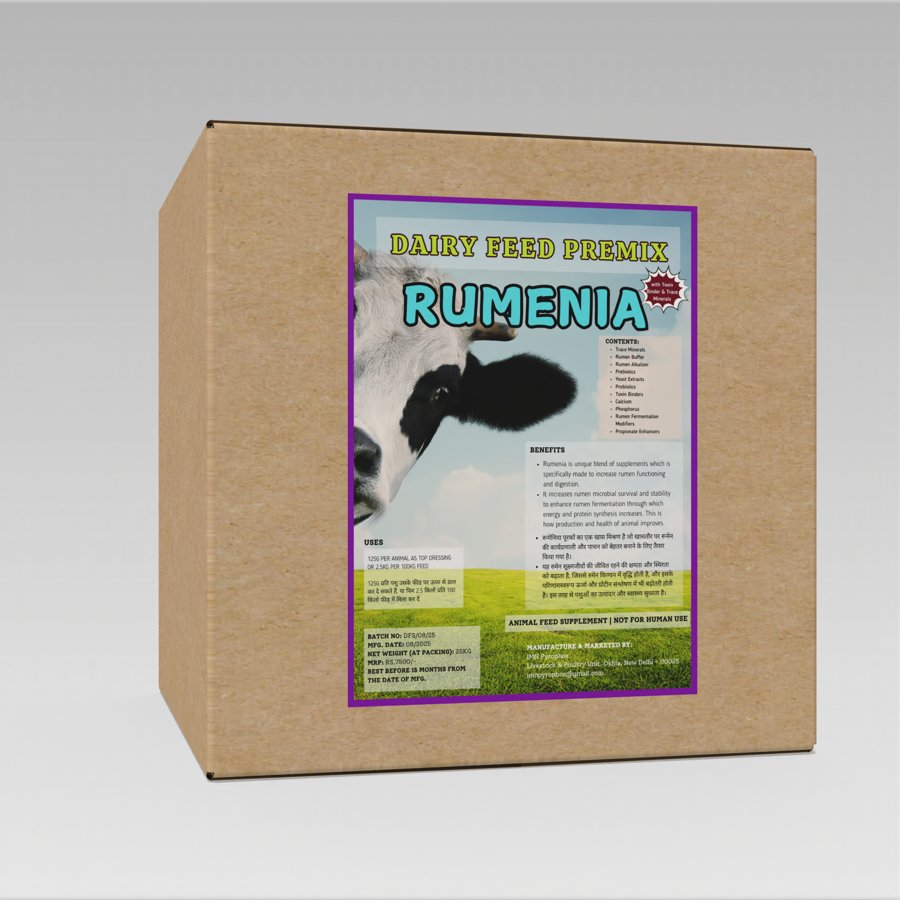
Rumen premix
Rumenia
Feed premix with trace minerals, rumen buffer, prebiotics, yeast extracts, probiotics, toxin binders, calcium and phosphorus. Improves rumen function, digestion, energy and protein synthesis.
Dose: 2.5 to 3 kg per ton of feed (2.5 to 3 g per kg feed).
5 kg ₹1,400 · 25 kg ₹5,625MRP ₹1,800 / ₹7,500
Pyrosach is a rumen-adapted yeast for rumen health and fibre digestion, which matters most when goats eat a lot of straw and grain. See Pyrosach.
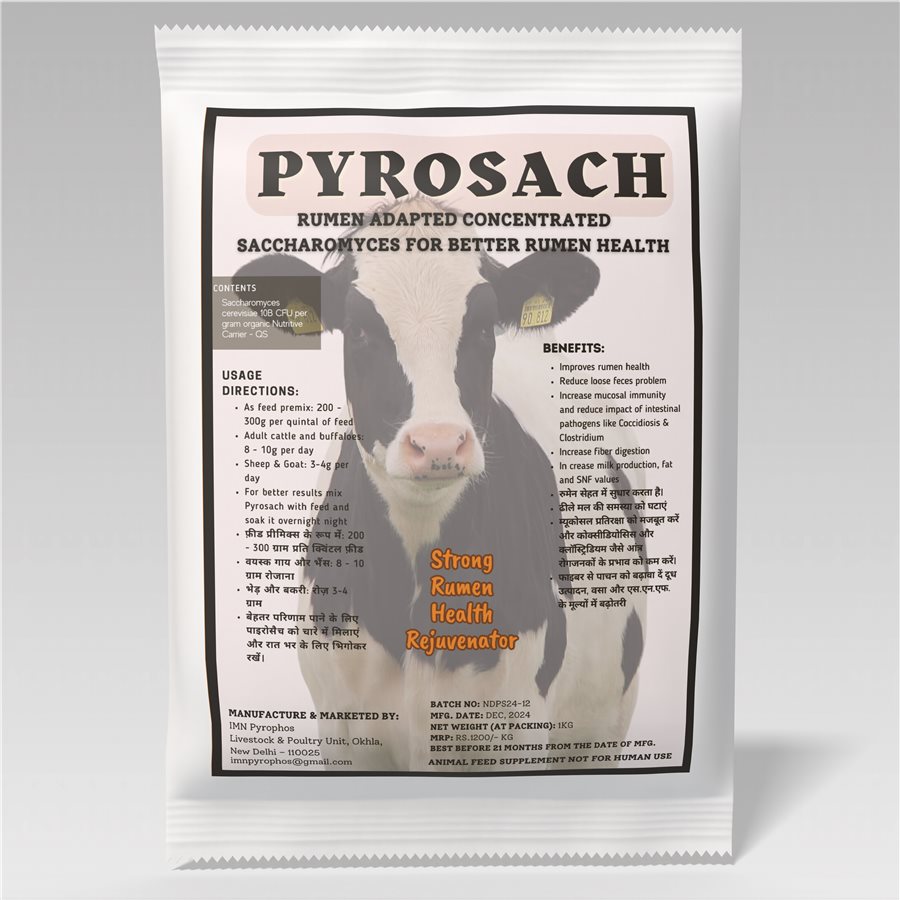
Rumen health
Pyrosach
Rumen adapted Saccharomyces cerevisiae (10 billion CFU per gram). Supports rumen health and fibre digestion, reduces loose droppings and supports milk and mucosal immunity.
Dose: Sheep or goat 3 to 4 g per day; mix in feed.
1 kg ₹700MRP ₹1,200
Pyromin is a chelated mineral mixture with vitamins, for growth, immunity and fertility. Ask your vet whether to use it together with, or in place of, a plain mineral mixture, so that minerals are not doubled. See Pyromin.
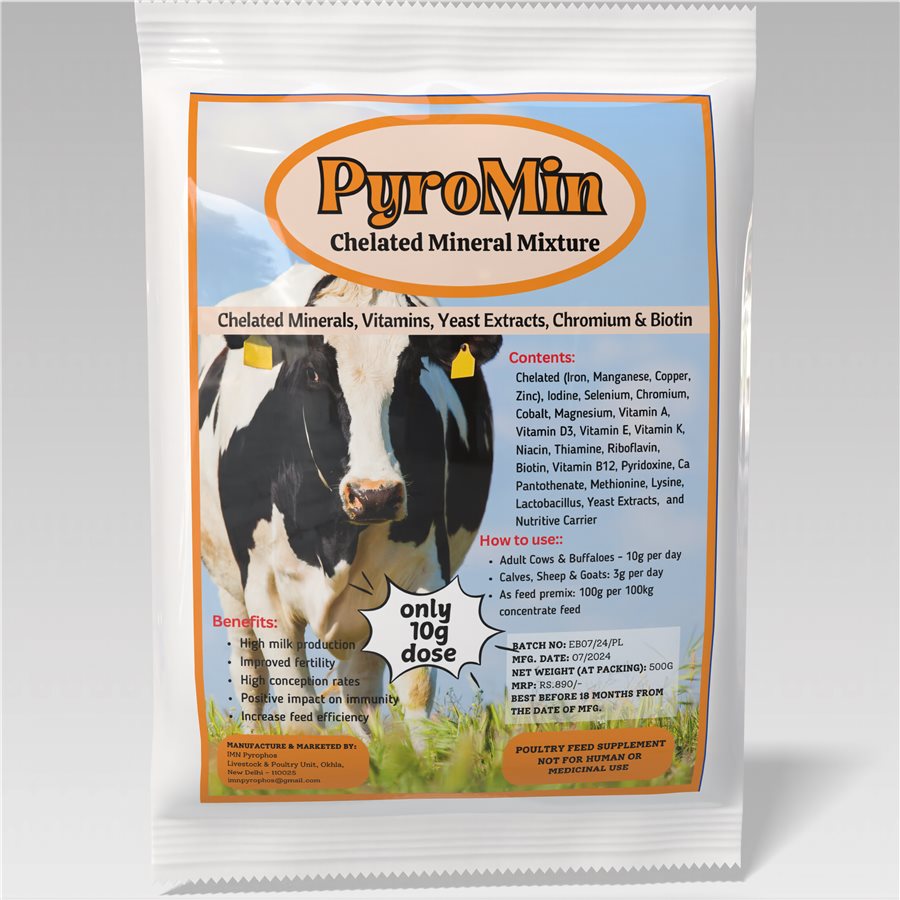
Chelated mineral
Pyromin
Chelated iron, manganese, copper, zinc, iodine, selenium, chromium, cobalt, magnesium, vitamins A, D3, E, K, B vitamins, biotin, methionine, lysine, lactobacillus and yeast extract. Helps milk production, fertility, conception and immunity.
Dose: Goat, sheep and calves 3 g per day (adult cow or buffalo 10 g).
1 kg ₹655MRP ₹1,190
Probium Probiotek is for kids, to protect the gut and support early rumen development. See Probium Probiotek, and the Probium Probiotek guide for more on diarrhoea in young stock.
Probiotic for kids and calves
Probium Probiotek
Probiotic for rumen health and diarrhoea control in calves, goat kids and lambs, with prebiotics, oligosaccharides and niacinamide. Supports early rumen development, digestion, appetite, weight gain and immunity.
Dose: From day 3 of age: 5 g per kid or lamb daily in the 1st month (10 g for calves); same dose 4 days a week in month 2 and 3 days a week in month 3.
1 kg ₹930MRP ₹1,450
Monthly weighing and cost per kg of gain
Weigh every goat (or a fair sample of at least 10 percent of the group in a large flock) on the same day each month, in the morning before feeding, using a hanging scale or a platform scale. Record the weight, the gain, the feed given and the cost. A goat that gains well in the first two months but then flattens may be ready to sell. A goat that gains poorly from the start needs a health check, not more feed.
The table below is an illustrative example for one goat over 6 months. All numbers are illustrative only; use your own prices and measured weights.
| Month | Weight at month end (kg) | Gain in month (kg) | Concentrate per day (g) | Concentrate cost (₹) |
|---|---|---|---|---|
| Start | 15.0 | – | – | – |
| 1 | 18.0 | 3.0 | 150 | 135 |
| 2 | 21.5 | 3.5 | 250 | 225 |
| 3 | 25.0 | 3.5 | 350 | 315 |
| 4 | 28.5 | 3.5 | 450 | 405 |
| 5 | 32.0 | 3.5 | 500 | 450 |
| 6 | 35.0 | 3.0 | 550 | 495 |
Illustrative cost per kg of gain. Assuming concentrate at about ₹30 per kg, the 6 months cost about ₹2,025 for concentrate. Add an assumed ₹720 for green and dry fodder, ₹450 for vaccines, deworming, minerals and supplements, and ₹700 for labour, electricity and shed share. The total is about ₹3,895 for 20 kg of gain, which is roughly ₹195 per kg of gain. This excludes the cost of buying the kid, mortality and interest. Compare this figure with the price you get for each extra kg of live weight. If one group costs much more per kg gained, find out why: feed waste, sickness, poor feed quality or keeping animals too long.
Market timing and festivals
Goat prices are seasonal. Demand peaks around Eid-ul-Adha (Bakrid) and other festival and wedding seasons, and it varies by region. Note that demand can also dip in some fasting periods. Plan backwards: if you want to sell for a festival, count back 5 to 6 months and buy the kids then. Do not rush kids to sell below target weight, and do not hold them well past it. Animals that are overfed in the last weeks without gaining are costing you money. Check what your local trader pays per kg live weight and per head, and keep two or three buyers in touch.
Common mistakes in goat fattening
- Feeding only grain or only straw.
- Changing the ration suddenly or raising concentrate too fast.
- Buying mixed-age, mixed-source kids and skipping quarantine.
- Overcrowding and wet floors.
- Skipping deworming and vaccines, or repeating the same dewormer without advice.
- No salt, minerals or clean water.
- No weighing and no records, so nobody knows the cost per kg.
- Keeping animals too long after they stop gaining efficiently.
- Using mouldy feed or cake.
A 6-month fattening plan timeline
- Before you buy: prepare the shed, feeders, drinkers and a fodder plan; fix buyers and sale month.
- Week 0 to 3: arrival weight, tags, quarantine, deworming and first vaccines as advised by your vet; start with roughage and a small amount of familiar feed.
- Month 1: bring concentrate up in small steps; support the gut; weigh at the end of the month.
- Month 2 to 3: growing mix; regular minerals; repeat deworming as advised; check droppings and appetite daily.
- Month 4 to 5: finisher mix introduced slowly; roughage remains; weigh; sort slow gainers.
- Month 6: reach target weight; confirm market and sale date; calculate cost per kg of gain; plan the next batch.
Myths and facts
- Myth: more grain means faster growth. Fact: too much grain causes acidosis and wastes money; roughage and a slow rise are key.
- Myth: goats can live on anything. Fact: goats browse selectively, but fattening needs planned feed, minerals and water.
- Myth: deworming once is enough. Fact: worm pressure comes back; follow your vet’s schedule.
- Myth: the biggest breed always earns the most. Fact: margin depends on cost per kg gain, local demand and survival.
- Myth: weighing is a waste of time. Fact: weighing is the only way to know if feed is paying.
Frequently asked questions
What is the best goat fattening feed? There is no single best feed. A good plan is quality roughage (green, tree leaves and dry fodder) plus a balanced concentrate, with minerals, salt and clean water, increased slowly and adjusted to the breed and the feed you have locally.
How much concentrate should a fattening goat get? Typically about 1 to 2 percent of body weight per day, depending on stage, raised slowly. Your vet or nutritionist can fine-tune this for your breed and fodder quality.
How much weight will a goat gain per day? Good management often gives 100 to 150 g per day in meat breeds, but it varies by breed, age, feed and health. Measure it yourself every month.
How long does goat fattening take? Typically 4 to 6 months from a weaned kid, depending on the starting weight, the breed and the weight your market wants.
Which breed is best for fattening? Sirohi, Beetal, Jamunapari, Barbari, Osmanabadi and Black Bengal are all used; Boer crosses can grow faster but need better care. Choose by local conditions and buyer demand.
Can I feed only green fodder? Green fodder alone is bulky and may not give enough energy for fast gain. Add concentrate and minerals in a controlled way, and keep some dry fodder for rumen function.
How do I prevent acidosis and bloat? Change feed over 7 to 10 days, raise concentrate step by step, always give roughage, and avoid large wet legume meals. Call your vet if a goat shows a swollen left flank or goes off feed.
Which vaccines do fattening goats need? Commonly PPR, enterotoxaemia, FMD and goat pox, as advised by your vet for your area and timing.
When should I weigh and sell? Weigh monthly. Sell when the goat reaches the weight your market wants and before the cost per kg of gain starts to rise.
What are the prices of the IMN products? See the boxes above. Prices may change, so confirm on WhatsApp.
Also read: Mineral mixture for goats · Probium Probiotek guide · Rumenia guide · IMN product guide
बकरी फैटनिंग फीड तय करता है कि मीट-बकरी फार्म से कमाई होगी या सिर्फ़ मेहनत। कमर्शियल बकरी फैटनिंग में चारा-दाना सबसे बड़ा रोज़ का खर्च होता है, इसलिए सोची-समझी राशन योजना, स्वस्थ आँत और नियमित वज़न किसी भी एक नुस्ख़े से ज़्यादा काम आते हैं। यह गाइड भारतीय किसानों के लिए है: इसमें कारोबार का नज़रिया, नस्ल का चुनाव, शेड, चरण-वार बकरी फैटनिंग फीड प्लान, दाने का नमूना मिश्रण, रौघेज, कीड़ों की दवा और टीकों का समय, बच्चों की देखभाल, प्रति किलो बढ़त का खर्च और 6 महीने की योजना है। सारे आँकड़े आम तौर पर लागू होने वाले दायरे हैं। अपनी नस्ल, मौसम और चारे के हिसाब से अपने वेट या न्यूट्रिशनिस्ट से ज़रूर बदलवाएँ।
बकरी फैटनिंग में मुनाफ़ा फीड प्लान से तय होता है
फैटनिंग वाली बकरी कुछ महीनों में ख़रीदी जाती है, पाली जाती है और बेची जाती है। कमाई उस वज़न पर होती है जो आप जोड़ते हैं। असली सवाल यह नहीं कि चारे पर कितना खर्च हुआ, बल्कि यह कि हर एक किलो अतिरिक्त वज़न की लागत कितनी पड़ी। चारा बर्बाद हो, पशु को दस्त, अफारा या कीड़े हों, या पशु तब तक रखा जाए जब बढ़त की कुशलता घट चुकी हो, तो प्रति किलो बढ़त की लागत बढ़ जाती है और मुनाफ़ा ग़ायब हो जाता है।
अच्छे प्रबंधन में मीट वाली नस्लों में अक्सर रोज़ 100 से 150 ग्राम बढ़त मिलती है, लेकिन यह नस्ल, उम्र, चारे की क्वालिटी, मौसम और सेहत पर बहुत निर्भर है। कारोबार किसी तय बढ़त पर न बनाएँ। अपने महीने के वज़न से नापी हुई बढ़त पर योजना बनाएँ।
भारत में मीट के लिए नस्ल का चुनाव
सबसे अच्छी नस्ल वही है जो आपके इलाक़े, ख़रीदार और चारे की उपलब्धता के हिसाब से ठीक बैठे। आम नस्लें:
- जमुनापारी: ऊँची, लंबी टाँगों वाली, तेज़ बढ़ने वाली, बड़ा अंतिम आकार। अच्छा चारा और ज़्यादा जगह चाहिए। उत्तर और मध्य भारत में लोकप्रिय।
- बीटल: पंजाब की बड़ी बकरी, अच्छी बढ़त और ठीक-ठाक दूध भी। जिन्हें मीट के साथ कुछ दूध भी चाहिए, उनके लिए अच्छी।
- सिरोही: राजस्थान की सख़्तजान नस्ल, सूखे इलाक़ों और चराई में अच्छा चलती है, मध्यम से बड़ा आकार, मीट अच्छा।
- बरबरी: छोटी से मध्यम, गठीली, अक्सर जुड़वाँ बच्चे देती है, स्टॉल-फीडिंग और कम जगह के लिए ठीक; जल्दी तैयार होती है।
- ब्लैक बंगाल: शरीर छोटा पर बहुत बच्चे देने वाली और सख़्तजान, स्वादिष्ट मीट और अच्छी खाल; पूर्वी भारत में माँग ज़्यादा। अंतिम वज़न कम, इसलिए चारा सस्ता रखना होगा।
- उस्मानाबादी: दक्कन की सख़्तजान मीट नस्ल, अर्ध-शुष्क इलाक़ों में और चराई के साथ दाने में अच्छा चलती है।
- बोअर क्रॉस: देसी बकरी को बोअर बकरे से क्रॉस करने पर तेज़ बढ़त और बेहतर कार्कस मिल सकता है, पर क्रॉसब्रेड को आम तौर पर बेहतर चारा, बेहतर शेड और ज़्यादा नज़दीकी देखभाल चाहिए। देसी सख़्तजानी घट सकती है।
वही नस्ल चुनें जिसे आपके यहाँ के व्यापारी पहले से ख़रीदते हैं, और देखें कि आपका बाज़ार कितना वज़न और कैसा रंग पसंद करता है। जो नस्ल बढ़ती तो अच्छा है पर स्थानीय ख़रीदार नहीं है, वह जोखिम है।
बच्चे ख़रीदते समय उम्र और वज़न
- आम तौर पर किसान लगभग 3 से 5 महीने के दूध छुड़ाए बच्चे ख़रीदते हैं, नस्ल के हिसाब से अक्सर 12 से 18 किलो। छोटी नस्लें हल्की शुरू होती हैं।
- एक ही जगह से, एक जैसी उम्र और आकार के पशु लें, ताकि समूह में खिलाना और बेचना आसान हो।
- चमकती आँखें, साफ़ नाक, सूखी मेंगनी, अच्छे खुर और भरा हुआ शरीर देखें। खाँसी, पतले दस्त, सूजे जोड़ या मुँह के आसपास घाव वाले बच्चे न लें।
- पहुँचते ही हर पशु का वज़न करें और कान में टैग या नंबर लगाएँ।
- नए पशुओं को लगभग 2 से 3 हफ़्ते अलग रखें (क्वारंटीन), कीड़ों की दवा और टीके वेट की सलाह से दें।
- वज़न के हिसाब से सही दाम पर ख़रीदें। सस्ता पर बीमार बच्चा अंत में महँगा पड़ता है।
फैटनिंग बकरियों का शेड
बकरी को गीला, कीचड़ वाला या सीलन वाला फ़र्श पसंद नहीं। सूखा और हवादार शेड निमोनिया, खुर की बीमारी और कीड़ों के बोझ से बचाता है।
- जगह: आम तौर पर बढ़ती बकरी के लिए ढका हुआ लगभग 1 से 1.5 वर्ग मीटर, और खुला बाड़ा उससे लगभग 2 से 3 गुना। भीड़ से लड़ाई, तनाव और धीमी बढ़त होती है।
- फ़र्श: ज़मीन से लगभग 3 से 4 फ़ीट ऊँचा स्लैटेड (पट्टीदार) फ़र्श, जिसमें पट्टियों के बीच छोटा गैप हो, मेंगनी और पेशाब नीचे गिरा देता है और पशु सूखे रहते हैं। ज़मीन का फ़र्श हो तो ढलान, सूखा और साफ़ रखें, सूखी बिछावन के साथ।
- हवा: भरपूर हवा, पर पशुओं पर सीधी ठंडी हवा नहीं। ढलवाँ छत, ओवरहैंग, बारिश और तेज़ धूप से बचाव ज़रूरी है।
- फीडर और पानी: ऊँचा मैंजर ज़मीन से चारा उठा देता है और कीड़ों का संक्रमण घटाता है। फीडर ऐसी ऊँचाई पर लगाएँ जहाँ बकरी आराम से पहुँचे, और हर पशु के लिए पर्याप्त जगह रखें ताकि डरपोक पशु भी खा सकें। पानी की टंकी साफ़ और छाँव में रखें और अक्सर धोएँ।
- समूह: आकार और उम्र के हिसाब से अलग रखें ताकि छोटे पशु दबें नहीं।
- सर्दी: ठंडी हवा और गीले फ़र्श से बचाएँ। देखें सर्दी में बकरी की देखभाल।
चरण-वार बकरी फैटनिंग फीड प्लान
नीचे की तालिका में आम तौर पर दी जाने वाली मार्गदर्शिका है। ये मोटे दायरे हैं, पक्के नियम नहीं। दाना और रौघेज की मात्रा नस्ल, शरीर के वज़न, चारे की क्वालिटी और मौसम से बदलती है। हमेशा अपने न्यूट्रिशनिस्ट या वेट के साथ तय करें।
| चरण | रौघेज (आम तौर पर) | दाना (आम तौर पर) | मुख्य बातें |
|---|---|---|---|
| मेमना, जन्म से लगभग 3 महीने | दूसरे हफ़्ते से कोमल हरी पत्तियाँ और मुलायम सूखा चारा, रुमेन के विकास के लिए | पहले दूध; दूसरे से तीसरे हफ़्ते से थोड़ा किड स्टार्टर, धीरे-धीरे बढ़ाएँ | पहले कुछ घंटों में खीस, साफ़ खिलाई, आँत को जल्दी सहारा, दस्त से बचाव |
| दूध छुड़ाया बच्चा, लगभग 3 से 5 महीने | अच्छा हरा चारा, पेड़ की पत्तियाँ और कुछ सूखा चारा, अपनी मर्ज़ी से | आम तौर पर शरीर के वज़न का लगभग 0.75 से 1 प्रतिशत रोज़ | दूध छुड़ाने का तनाव जोखिम का समय है; पहचाना हुआ चारा दें, मेंगनी देखें |
| बढ़ता पशु, लगभग 5 से 8 महीने | रौघेज का सूखा पदार्थ आम तौर पर शरीर के वज़न का लगभग 2 से 3 प्रतिशत | आम तौर पर शरीर के वज़न का लगभग 1 से 1.5 प्रतिशत, कदम दर कदम बढ़ाकर | हर महीने वज़न करें; धीमे बढ़ने वाले पशु अलग समूह में रखें |
| फिनिशर, आख़िरी 6 से 10 हफ़्ते | रौघेज हमेशा उपलब्ध रखें; पूरी तरह न काटें | आम तौर पर शरीर के वज़न का लगभग 1.5 से 2 प्रतिशत, 2 बार में बाँटकर | एसिडोसिस से बचने के लिए धीरे बढ़ाएँ; लक्ष्य वज़न पर बेच दें |
मोटे नियम से, बढ़ती बकरी आम तौर पर शरीर के वज़न का लगभग 3 से 4 प्रतिशत सूखा पदार्थ रोज़ खाती है, और फिनिशिंग में भी रौघेज का हिस्सा आम तौर पर राशन के लगभग एक तिहाई से कम नहीं होना चाहिए। हरे चारे में ज़्यादातर पानी होता है, इसलिए उसका वज़न सूखे पदार्थ से कहीं ज़्यादा होता है। योजना अपने वेट या न्यूट्रिशनिस्ट से पक्की करें।
रौघेज: हर अच्छे राशन की नींव
- हरा चारा: बरसीम, रिजका, लोबिया, मक्का या ज्वार का चारा (छोटी अवस्था में), नेपियर और अन्य दलहनी व घास वाले चारे। दलहनी चारे में प्रोटीन ज़्यादा। मुरझाई हुई ज्वार या पाले से मारा हरा चारा न खिलाएँ, यह जोखिम भरा हो सकता है।
- पेड़ की पत्तियाँ: सुबबूल, सहजन (मोरिंगा), बेर, नीम, खेजड़ी, शहतूत और स्थानीय पत्तियाँ। बकरी स्वभाव से पत्तियाँ चरना पसंद करती है और ये प्रोटीन व मिनरल का सस्ता स्रोत हैं। धीरे-धीरे शुरू करें और बाक़ी चारे में मिलाएँ।
- सूखा चारा और हे: गेहूँ का भूसा, धान की पराली (कम क्वालिटी, सप्लीमेंट से सुधारें), मूँगफली की बेल, अच्छा दलहनी हे, ज्वार-बाजरे का कड़वी। काटकर साफ़ और सूखा दें।
- साइलेज: अच्छी तरह बना मक्का या ज्वार का साइलेज सूखे महीनों में काम आता है। साइलेज ठीक से फर्मेंट हुआ हो; फफूँद वाला साइलेज कभी न खिलाएँ।
- रौघेज ऊँचे रैक या मैंजर में थोड़ा-थोड़ा और बार-बार दें, ताकि बर्बादी और पैरों तले रौंदना कम हो।
दाने का नमूना मिश्रण, प्रतिशत में
नीचे वज़न के हिसाब से दो नमूना मिश्रण हैं। ये उदाहरण हैं, नुस्ख़ा नहीं। सामग्री की क्वालिटी और दाम इलाक़े के हिसाब से बदलते हैं, इसलिए अपने न्यूट्रिशनिस्ट से मिश्रण ठीक करवाएँ।
| सामग्री | बढ़ते पशु का मिश्रण (%) | फिनिशर मिश्रण (%) |
|---|---|---|
| कुटी मक्का (या अन्य अनाज) | 35 | 40 |
| गेहूँ का चोकर या राइस पॉलिश | 25 | 20 |
| खली: सोयाबीन, मूँगफली या सरसों की खली | 25 | 25 |
| चुन्नी या दाल का छिलका | 12 | 12 |
| मिनरल मिक्सचर | 2 | 2 |
| सादा नमक | 1 | 1 |
| कुल | 100 | 100 |
- ताज़ा और सूखा चारा-दाना इस्तेमाल करें। फफूँद और एफ़्लाटॉक्सिन, ख़ासकर पुरानी मूँगफली की खली और नम मक्का में, बढ़त और लिवर को नुकसान पहुँचाते हैं।
- अनाज को मोटा कूटें, बारीक आटे जैसा नहीं; बहुत बारीक दाने से एसिडोसिस का ख़तरा बढ़ता है।
- दाना दिन में 2 बार दें, कुछ रौघेज खाने के बाद।
- दाम सही बैठे तो पेलेट या पेलेट वाला कम्प्लीट फीड छँटाई और बर्बादी घटा सकता है।
बदलाव के नियम, एसिडोसिस और अफारा
बकरी के रुमेन में जो जीवाणु हैं वे उसी चारे के आदी होते हैं जो पशु को मिलता है। अचानक बदलाव से वे बिगड़ जाते हैं। बहुत जल्दी बहुत ज़्यादा अनाज देने से एसिडोसिस होता है: रुमेन अम्लीय हो जाता है, पशु खाना छोड़ देता है, पतली मेंगनी करता है, सुस्त दिखता है, और गंभीर हालत में मर भी सकता है। गीले कोमल दलहनी चारे या ज़्यादा अनाज से झागदार अफारा हो सकता है।
- कोई भी चारा 7 से 10 दिन में बदलें, पुराने और नए को बढ़ते अनुपात में मिलाकर।
- दाना हर 3 से 4 दिन में थोड़ा-थोड़ा बढ़ाएँ, एक बार में छलाँग नहीं।
- दाने से पहले या साथ में रौघेज ज़रूर दें, ख़ाली पेट सिर्फ़ अनाज कभी नहीं।
- उपवास या ढुलाई के बाद एकदम बड़ा अनाज का भोजन न दें।
- बहुत गीला कोमल दलहनी चारा ज़्यादा मात्रा में न दें; थोड़ा मुरझाने दें या सूखे चारे में मिलाएँ।
- खिलाने का समय तय रखें और भोजन छोटे हिस्सों में दें।
- बचा हुआ चारा, सुस्ती, बाएँ पेट की सूजन, दाँत पीसना या पतली मेंगनी दिखे तो तुरंत वेट को बुलाएँ।
पानी, नमक और मिनरल
पानी सबसे सस्ता और सबसे ज़्यादा अनदेखा पोषक है। फैटनिंग बकरी आम तौर पर रोज़ कई लीटर पानी पीती है, गर्मी में और ज़्यादा। हर समय साफ़, ठंडा पानी रखें और टंकी अक्सर धोएँ। गंदा पानी चारा खाना घटाता है और बीमारी फैलाता है।
नमक (चाट का ब्लॉक या दाने में 1 प्रतिशत) और अच्छा मिनरल मिक्सचर रोज़ चाहिए, क्योंकि फ़सल और चारा सब कुछ नहीं देते। देखें बकरी का मिनरल मिक्सचर। ज़्यादा अनाज खिलाने पर कैल्शियम और फ़ॉस्फ़ोरस का संतुलन ज़रूरी है। ज़िंक, कॉपर, सेलेनियम और आयोडीन जैसे ट्रेस मिनरल बढ़त, इम्युनिटी और खाल-खुर की सेहत में मदद करते हैं। गाय के मिनरल मिक्स में कॉपर ज़्यादा हो सकता है; बकरी-भेड़ को वह तभी दें जब वेट कहे कि ठीक है।
कीड़ों की दवा और टीकों का कैलेंडर, मोटे तौर पर
कीड़े चारा चुराते हैं और बढ़त रोकते हैं, और आम बकरी बीमारियाँ पूरी खेप साफ़ कर सकती हैं। दवा के नाम और मात्रा वेट से ही लें। नीचे सिर्फ़ मोटा समय-क्रम है, जिसे अपने इलाक़े के लिए वेट की सलाह से तय करें।
- पहुँचते ही: क्वारंटीन, बीमारी की जाँच, और वेट की सलाह से कीड़ों की दवा।
- पहले 2 से 3 हफ़्ते में: सलाह के अनुसार टीके। भारत में बकरी की मुख्य बीमारियाँ हैं PPR, एंटेरोटॉक्सीमिया, FMD और माता (गोट पॉक्स)। बूस्टर वेट के शेड्यूल से लगते हैं, और कुछ इलाक़ों में और टीके भी लगते हैं।
- हर 2 से 3 महीने में: कीड़ों की दवा दोहराएँ, वेट की सलाह से, कीड़ों के बोझ, उपलब्ध हो तो गोबर जाँच और मौसम के आधार पर। बिना सलाह एक ही दवा बार-बार देने से रेज़िस्टेंस बन सकता है।
- बरसात से पहले: कीड़ों की रोकथाम और खुर की सफ़ाई की समीक्षा करें।
- कभी भी: बीमार पशु को जल्दी अलग करें, मौत और बीमारी का रिकॉर्ड रखें, और एक से ज़्यादा पशु बीमार हों तो वेट से पूरे झुंड की जाँच कराएँ।
बच्चों की देखभाल: खीस, रुमेन और दस्त
अपने बच्चे पालें या बहुत छोटे ख़रीदें, शुरू के कुछ हफ़्ते आगे की बढ़त तय करते हैं।
- खीस: जन्म के पहले कुछ घंटों में दें, आम तौर पर पहले 24 घंटों में शरीर के वज़न का लगभग 10 प्रतिशत। इसमें वे एंटीबॉडी होती हैं जो बच्चे को चाहिए।
- साफ़ खिलाई: बोतल, बाल्टी और बाड़ा साफ़ रखें; गीली बिछावन और गंदे फीडर से दस्त होते हैं।
- रुमेन का जल्दी विकास: दूसरे हफ़्ते से थोड़ी कोमल हरी पत्ती, अच्छा हे और थोड़ा किड स्टार्टर दें। सूखा ठोस चारा ही चालू रुमेन बनाता है।
- दस्त पर क़ाबू: सफ़ाई, सूखा बाड़ा, दूध की सही मात्रा, और दस्त वाले बच्चे के लिए जल्दी वेट की मदद। मुख्य ख़तरा पानी की कमी है, इसलिए पहली पतली मेंगनी पर ही ध्यान दें।
- दूध छुड़ाना: आम तौर पर लगभग 3 महीने पर, या जब बच्चा दाना और रौघेज अच्छे से खाने लगे और ठीक वज़न पर पहुँच जाए (जैसे जन्म वज़न का लगभग 2.5 से 3 गुना, नस्ल के हिसाब से बदलता है)। एक-दो हफ़्ते में धीरे-धीरे छुड़ाएँ, चारा और बाड़ा पहचाना हुआ रखें।
IMN प्रोडक्ट कहाँ फ़िट होते हैं
ये प्रोडक्ट अच्छी योजना को सहारा देते हैं; रौघेज, शेड, टीकों या कीड़ों की दवा की जगह नहीं लेते। हर बॉक्स में दी गई मात्रा ही इस्तेमाल करें।
Rumenia फ़ीड प्रीमिक्स है जो राशन में मिलाया जाता है, रुमेन के काम, पाचन, ऊर्जा और प्रोटीन बनने के लिए; अधिक जानकारी Rumenia पेज पर।
रुमेन प्रीमिक्स
Rumenia
फ़ीड प्रीमिक्स (ट्रेस मिनरल, रुमेन बफ़र, प्रीबायोटिक, यीस्ट एक्सट्रैक्ट, प्रोबायोटिक, टॉक्सिन बाइंडर, कैल्शियम, फॉस्फोरस)। रुमेन का काम, पाचन, ऊर्जा और प्रोटीन संश्लेषण बेहतर करता है।
मात्रा: दाने में 2.5 से 3 किलो प्रति टन (2.5–3 ग्राम प्रति किलो दाना)।
5 kg ₹1,400 · 25 kg ₹5,625MRP ₹1,800 / ₹7,500
Pyrosach रुमेन के अनुकूल यीस्ट है, रुमेन की सेहत और रेशे के पाचन के लिए, ख़ासकर तब जब बकरी भूसा और अनाज ज़्यादा खाती है। देखें Pyrosach।
रुमेन की सेहत
Pyrosach
रुमेन के अनुकूल Saccharomyces cerevisiae (1000 करोड़ CFU प्रति ग्राम)। रुमेन की सेहत और रेशे के पाचन में सहायक, पतला गोबर/मेंगनी घटाता है, म्यूकोसल इम्युनिटी और दूध में सहायक।
मात्रा: भेड़ या बकरी को 3–4 ग्राम (वयस्क गाय या भैंस को 8–10 ग्राम प्रति दिन), या 200–300 ग्राम प्रति क्विंटल दाना। दाने में मिलाकर रात भर भिगोएँ।
1 kg ₹700MRP ₹1,200
Pyromin विटामिन वाला चिलेटेड मिनरल मिक्सचर है, बढ़त, इम्युनिटी और प्रजनन के लिए। वेट से पूछ लें कि इसे सादे मिनरल मिक्सचर के साथ देना है या उसकी जगह, ताकि मिनरल दोहरे न हों। देखें Pyromin।
चिलेटेड मिनरल
Pyromin
चिलेटेड आयरन, मैंगनीज़, कॉपर, ज़िंक, आयोडीन, सेलेनियम, क्रोमियम, कोबाल्ट और मैग्नीशियम, विटामिन A, D3, E, K और B विटामिन, बायोटिन, मेथियोनीन, लाइसीन, लैक्टोबैसिलस और यीस्ट एक्सट्रैक्ट वाला मिनरल मिक्सचर। दूध उत्पादन, प्रजनन, गर्भधारण, इम्युनिटी और चारे के बेहतर उपयोग में सहायक।
मात्रा: बकरी या भेड़ को 3 ग्राम प्रति दिन (बछड़ों को भी 3 ग्राम; वयस्क गाय या भैंस को 10 ग्राम)। प्रीमिक्स के रूप में 100 ग्राम प्रति 100 किलो दाना।
1 kg ₹655MRP ₹1,190
Probium Probiotek बच्चों के लिए है, आँत की सुरक्षा और रुमेन के जल्दी विकास के लिए। देखें Probium Probiotek, और छोटे पशुओं के दस्त के लिए Probium Probiotek गाइड।
बछड़ों के दस्त और rumen विकास
Probium Probiotek
बछड़ों, बकरी के बच्चों और मेमनों के लिए probiotic, prebiotic, oligosaccharides और niacinamide। दस्त रोकने-नियंत्रित करने, जल्दी rumen विकास और ग्रोथ में सहारा देता है।
मात्रा: मात्रा WhatsApp पर पूछें। Schedule उम्र के तीसरे दिन से: पहला महीना रोज़; दूसरा महीना हफ़्ते में 4 दिन; तीसरा महीना हफ़्ते में 3 दिन।
1 kg ₹930MRP ₹1,450
मासिक वज़न और प्रति किलो बढ़त की लागत
हर बकरी का (बड़े झुंड में कम से कम 10 प्रतिशत पशुओं का सही नमूना) हर महीने एक ही दिन, सुबह खिलाने से पहले, हैंगिंग या प्लेटफ़ॉर्म तराज़ू पर वज़न करें। वज़न, बढ़त, दिया गया चारा और खर्च लिखें। जो बकरी पहले दो महीने अच्छा बढ़े पर फिर रुक जाए, वह बिकने लायक हो सकती है। जो शुरू से कम बढ़े, उसे ज़्यादा चारे की नहीं, सेहत की जाँच की ज़रूरत है।
नीचे की तालिका एक बकरी का 6 महीने का काल्पनिक (illustrative) उदाहरण है। सारे आँकड़े सिर्फ़ उदाहरण के लिए हैं; अपने दाम और नापे हुए वज़न इस्तेमाल करें।
| महीना | महीने के अंत में वज़न (किलो) | महीने की बढ़त (किलो) | रोज़ का दाना (ग्राम) | दाने का खर्च (₹) |
|---|---|---|---|---|
| शुरू | 15.0 | – | – | – |
| 1 | 18.0 | 3.0 | 150 | 135 |
| 2 | 21.5 | 3.5 | 250 | 225 |
| 3 | 25.0 | 3.5 | 350 | 315 |
| 4 | 28.5 | 3.5 | 450 | 405 |
| 5 | 32.0 | 3.5 | 500 | 450 |
| 6 | 35.0 | 3.0 | 550 | 495 |
प्रति किलो बढ़त की काल्पनिक लागत। दाना लगभग ₹30 प्रति किलो मानें तो 6 महीने में दाने पर लगभग ₹2,025 लगे। इसमें हरे और सूखे चारे के मान लिए ₹720, टीके, कीड़ों की दवा, मिनरल और सप्लीमेंट के ₹450, और मज़दूरी, बिजली व शेड के हिस्से के ₹700 जोड़ें। कुल लगभग ₹3,895, 20 किलो बढ़त के लिए, यानी क़रीब ₹195 प्रति किलो बढ़त। इसमें बच्चा ख़रीदने की क़ीमत, मृत्यु और ब्याज शामिल नहीं हैं। इस आँकड़े की तुलना उस दाम से करें जो आपको हर अतिरिक्त किलो जीवित वज़न पर मिलता है। कोई समूह प्रति किलो बहुत महँगा पड़े तो कारण खोजें: चारे की बर्बादी, बीमारी, घटिया चारा, या पशु को ज़्यादा दिन रखना।
बाज़ार का समय और त्योहार
बकरी के दाम मौसमी होते हैं। माँग ईद-उल-अज़हा (बकरीद) और अन्य त्योहार व शादी के मौसम में चरम पर होती है, और यह इलाक़े के हिसाब से बदलती है। कुछ व्रत के दिनों में माँग घट भी सकती है। उलटी गिनती से योजना बनाएँ: त्योहार पर बेचना हो तो 5 से 6 महीने पीछे गिनकर तभी बच्चे ख़रीदें। लक्ष्य वज़न से कम पर जल्दी न बेचें, और उससे बहुत आगे तक न रोकें। आख़िरी हफ़्तों में जो पशु खिलाए जा रहे हैं पर बढ़ नहीं रहे, वे पैसा खा रहे हैं। अपने स्थानीय व्यापारी का प्रति किलो जीवित वज़न और प्रति नग भाव पूछते रहें, और दो-तीन ख़रीदारों से संपर्क रखें।
बकरी फैटनिंग में आम ग़लतियाँ
- सिर्फ़ अनाज या सिर्फ़ भूसा खिलाना।
- राशन अचानक बदलना या दाना बहुत जल्दी बढ़ाना।
- अलग उम्र और अलग जगह के बच्चे ख़रीदना और क्वारंटीन छोड़ना।
- भीड़ और गीला फ़र्श।
- कीड़ों की दवा और टीके छोड़ना, या बिना सलाह एक ही दवा दोहराना।
- नमक, मिनरल या साफ़ पानी न देना।
- न वज़न, न रिकॉर्ड, इसलिए प्रति किलो लागत पता नहीं।
- बढ़त की कुशलता घटने के बाद भी पशु को ज़्यादा रखना।
- फफूँद वाला चारा या खली खिलाना।
6 महीने की फैटनिंग योजना की समय-रेखा
- ख़रीदने से पहले: शेड, फीडर, पानी और चारे की योजना तैयार करें; ख़रीदार और बिक्री का महीना तय करें।
- हफ़्ता 0 से 3: आने पर वज़न, टैग, क्वारंटीन, कीड़ों की दवा और पहले टीके वेट की सलाह से; रौघेज और थोड़े पहचाने हुए दाने से शुरुआत।
- महीना 1: दाना छोटे कदमों में बढ़ाएँ; आँत को सहारा दें; महीने के अंत में वज़न।
- महीना 2 से 3: बढ़ते पशु का मिश्रण; नियमित मिनरल; सलाह से कीड़ों की दवा दोहराएँ; रोज़ मेंगनी और भूख देखें।
- महीना 4 से 5: फिनिशर मिश्रण धीरे शुरू करें; रौघेज बना रहे; वज़न करें; धीमे बढ़ने वाले अलग करें।
- महीना 6: लक्ष्य वज़न पर पहुँचें; बाज़ार और बिक्री की तारीख़ पक्की करें; प्रति किलो बढ़त की लागत निकालें; अगली खेप की योजना बनाएँ।
मिथक और सच
- मिथक: ज़्यादा अनाज यानी तेज़ बढ़त। सच: ज़्यादा अनाज एसिडोसिस करता है और पैसा बर्बाद करता है; रौघेज और धीमी बढ़ोतरी ज़रूरी है।
- मिथक: बकरी कुछ भी खाकर जी लेती है। सच: बकरी चुन-चुनकर चरती है, पर फैटनिंग में योजना वाला चारा, मिनरल और पानी चाहिए।
- मिथक: एक बार कीड़ों की दवा काफ़ी है। सच: कीड़ों का दबाव लौटता है; वेट का शेड्यूल मानें।
- मिथक: सबसे बड़ी नस्ल हमेशा ज़्यादा कमाती है। सच: मुनाफ़ा प्रति किलो बढ़त की लागत, स्थानीय माँग और बचाव पर निर्भर है।
- मिथक: वज़न करना समय की बर्बादी है। सच: वज़न ही बताता है कि चारा कमाई दे रहा है या नहीं।
अक्सर पूछे जाने वाले सवाल
बकरी फैटनिंग के लिए सबसे अच्छा फीड कौन सा है? कोई एक सबसे अच्छा फीड नहीं है। अच्छी योजना है अच्छा रौघेज (हरा, पेड़ की पत्तियाँ और सूखा चारा) और संतुलित दाना, मिनरल, नमक और साफ़ पानी के साथ, धीरे-धीरे बढ़ाकर और नस्ल व स्थानीय चारे के हिसाब से बदलकर।
फैटनिंग बकरी को कितना दाना दें? आम तौर पर चरण के अनुसार शरीर के वज़न का लगभग 1 से 2 प्रतिशत रोज़, धीरे-धीरे बढ़ाकर। आपकी नस्ल और चारे के हिसाब से वेट या न्यूट्रिशनिस्ट इसे ठीक कर देंगे।
बकरी रोज़ कितना वज़न बढ़ाएगी? अच्छे प्रबंधन में मीट वाली नस्लों में अक्सर रोज़ 100 से 150 ग्राम, पर नस्ल, उम्र, चारे और सेहत से बदलता है। हर महीने ख़ुद नापें।
बकरी फैटनिंग में कितना समय लगता है? दूध छुड़ाए बच्चे से आम तौर पर 4 से 6 महीने, शुरुआती वज़न, नस्ल और बाज़ार को चाहिए वज़न पर निर्भर।
फैटनिंग के लिए कौन सी नस्ल सबसे अच्छी है? सिरोही, बीटल, जमुनापारी, बरबरी, उस्मानाबादी और ब्लैक बंगाल सब इस्तेमाल होती हैं; बोअर क्रॉस तेज़ बढ़ सकते हैं पर बेहतर देखभाल माँगते हैं। स्थानीय हालात और ख़रीदार की माँग से चुनें।
क्या सिर्फ़ हरा चारा खिला सकते हैं? सिर्फ़ हरा चारा भारी होता है और तेज़ बढ़त के लिए ऊर्जा कम पड़ सकती है। नियंत्रित मात्रा में दाना और मिनरल जोड़ें, और रुमेन के लिए कुछ सूखा चारा रखें।
एसिडोसिस और अफारा से कैसे बचें? चारा 7 से 10 दिन में बदलें, दाना कदम दर कदम बढ़ाएँ, रौघेज हमेशा दें, और बड़े गीले दलहनी भोजन से बचें। बाएँ पेट में सूजन हो या पशु खाना छोड़े तो वेट को बुलाएँ।
फैटनिंग बकरियों को कौन से टीके चाहिए? आम तौर पर PPR, एंटेरोटॉक्सीमिया, FMD और माता (गोट पॉक्स), अपने इलाक़े और समय के हिसाब से वेट की सलाह से।
वज़न कब करें और कब बेचें? हर महीने वज़न करें। जब बकरी बाज़ार का चाहा वज़न पा ले और प्रति किलो बढ़त की लागत बढ़ने लगे, उससे पहले बेच दें।
IMN प्रोडक्ट की कीमत क्या है? ऊपर बॉक्स देखें। कीमत बदल सकती है, WhatsApp पर पक्की कर लें।
यह भी पढ़ें: बकरी का मिनरल मिक्सचर · Probium Probiotek गाइड · Rumenia गाइड · IMN प्रोडक्ट गाइड
Bakri fattening feed tay karta hai ki meat-bakri farm se kamai hogi ya sirf mehnat. Commercial bakri fattening me chaara-daana sabse bada roz ka kharch hota hai, isliye soch-samajhkar banaya ration, swasth aant aur niyamit wazan kisi bhi ek nuskhe se zyada kaam aate hain. Ye guide Bharatiya kisanon ke liye hai: isme karobaar ka nazariya, nasl ka chunav, shed, charan-war bakri fattening feed plan, daane ka namuna mishran, roughage, keedon ki dawai aur teekon ka samay, bachchon ki dekhbhaal, per kilo badhat ka kharch aur 6 mahine ki yojana hai. Saare aankde aam taur par lagu hone wale dayre hain. Apni nasl, mausam aur chaare ke hisaab se apne vet ya nutritionist se zaroor badalwayein.
Bakri fattening me munafa feed plan se tay hota hai
Fattening wali bakri kuch mahinon me kharidi jati hai, pali jati hai aur bechi jati hai. Kamai us wazan par hoti hai jo aap jodte hain. Asli sawal ye nahi ki chaare par kitna kharch hua, balki ye ki har ek kilo atirikt wazan ki laagat kitni padi. Chaara barbaad ho, pashu ko dast, afara ya keede hon, ya pashu tab tak rakha jaye jab badhat ki kushalta ghat chuki ho, to per kilo badhat ki laagat badh jati hai aur munafa gayab ho jata hai.
Achhe prabandhan me meat wali nasl me aksar roz 100 se 150 gram badhat milti hai, lekin ye nasl, umar, chaare ki quality, mausam aur sehat par bahut nirbhar hai. Karobaar kisi tay badhat par na banayein. Apne mahine ke wazan se naapi hui badhat par yojana banayein.
Bharat me meat ke liye nasl ka chunav
Sabse achhi nasl wahi hai jo aapke ilaake, kharidaar aur chaare ki uplabdhta ke hisaab se theek baithe. Aam nasl:
- Jamunapari: unchi, lambi taangon wali, tez badhne wali, bada antim aakar. Achha chaara aur zyada jagah chahiye. Uttar aur madhya Bharat me lokpriya.
- Beetal: Punjab ki badi bakri, achhi badhat aur theek-thaak doodh bhi. Jinhe meat ke saath kuch doodh bhi chahiye, unke liye achhi.
- Sirohi: Rajasthan ki sakhtjaan nasl, sookhe ilaakon aur charai me achha chalti hai, madhyam se bada aakar, meat achha.
- Barbari: chhoti se madhyam, gathili, aksar judwa bachche deti hai, stall-feeding aur kam jagah ke liye theek; jaldi taiyar hoti hai.
- Black Bengal: sharir chhota par bahut bachche dene wali aur sakhtjaan, swadisht meat aur achhi khaal; purvi Bharat me maang zyada. Antim wazan kam, isliye chaara sasta rakhna hoga.
- Osmanabadi: Deccan ki sakhtjaan meat nasl, ardh-shushk ilaakon me aur charai ke saath daane me achha chalti hai.
- Boer cross: desi bakri ko Boer bakre se cross karne par tez badhat aur behtar carcass mil sakta hai, par crossbred ko aam taur par behtar chaara, behtar shed aur zyada nazdeeki dekhbhaal chahiye. Desi sakhtjaani ghat sakti hai.
Wahi nasl chunein jise aapke yahan ke vyapari pehle se kharidte hain, aur dekhein ki aapka bazaar kitna wazan aur kaisa rang pasand karta hai. Jo nasl badhti to achha hai par sthaniya kharidaar nahi hai, wo jokhim hai.
Bachche kharidte samay umar aur wazan
- Aam taur par kisan lagbhag 3 se 5 mahine ke doodh chhudaye bachche kharidte hain, nasl ke hisaab se aksar 12 se 18 kilo. Chhoti nasl halki shuru hoti hain.
- Ek hi jagah se, ek jaisi umar aur aakar ke pashu lein, taaki samooh me khilana aur bechna aasaan ho.
- Chamakti aankhein, saaf naak, sookhi menhgi, achhe khur aur bhara hua sharir dekhein. Khaansi, patle dast, sooje jod ya munh ke aaspaas ghaav wale bachche na lein.
- Pahunchte hi har pashu ka wazan karein aur kaan me tag ya number lagayein.
- Naye pashuon ko lagbhag 2 se 3 hafte alag rakhein (quarantine), keedon ki dawai aur teeke vet ki salah se dein.
- Wazan ke hisaab se sahi daam par kharidein. Sasta par beemar bachcha ant me mahnga padta hai.
Fattening bakriyon ka shed
Bakri ko geela, keechad wala ya seelan wala farsh pasand nahi. Sookha aur hawadar shed pneumonia, khur ki beemari aur keedon ke bojh se bachata hai.
- Jagah: aam taur par badhti bakri ke liye dhaka hua lagbhag 1 se 1.5 varg meter, aur khula baada usse lagbhag 2 se 3 guna. Bheed se ladai, tanav aur dheemi badhat hoti hai.
- Farsh: zameen se lagbhag 3 se 4 feet ooncha slatted (pattidar) farsh, jisme pattiyon ke beech chhota gap ho, menhgi aur peshab neeche gira deta hai aur pashu sookhe rehte hain. Zameen ka farsh ho to dhalan, sookha aur saaf rakhein, sookhi bichhawan ke saath.
- Hawa: bharpoor hawa, par pashuon par seedhi thandi hawa nahi. Dhalwan chhat, overhang, baarish aur tez dhoop se bachav zaroori hai.
- Feeder aur paani: ooncha manger zameen se chaara utha deta hai aur keedon ka sankraman ghatata hai. Feeder aisi oonchai par lagayein jahan bakri aaram se pahunche, aur har pashu ke liye paryapt jagah rakhein taaki darpok pashu bhi kha sakein. Paani ki tanki saaf aur chhaanv me rakhein aur aksar dhoyein.
- Samooh: aakar aur umar ke hisaab se alag rakhein taaki chhote pashu dabein nahi.
- Sardi: thandi hawa aur geele farsh se bachayein. Dekhein sardi me bakri ki dekhbhaal.
Charan-war bakri fattening feed plan
Neeche ki talika me aam taur par di jane wali margdarshika hai. Ye mote dayre hain, pakke niyam nahi. Daana aur roughage ki matra nasl, sharir ke wazan, chaare ki quality aur mausam se badalti hai. Hamesha apne nutritionist ya vet ke saath tay karein.
| Charan | Roughage (aam taur par) | Daana (aam taur par) | Mukhya baatein |
|---|---|---|---|
| Memna, janm se lagbhag 3 mahine | Doosre hafte se komal hari pattiyan aur mulayam sookha chaara, rumen ke vikas ke liye | Pehle doodh; doosre se teesre hafte se thoda kid starter, dheere-dheere badhayein | Pehle kuch ghanton me kheece (colostrum), saaf khilai, aant ko jaldi sahara, dast se bachav |
| Doodh chhudaya bachcha, lagbhag 3 se 5 mahine | Achha hara chaara, ped ki pattiyan aur kuch sookha chaara, apni marzi se | Aam taur par sharir ke wazan ka lagbhag 0.75 se 1 pratishat roz | Doodh chhudane ka tanav jokhim ka samay hai; pehchana hua chaara dein, menhgi dekhein |
| Badhta pashu, lagbhag 5 se 8 mahine | Roughage ka sookha padarth aam taur par sharir ke wazan ka lagbhag 2 se 3 pratishat | Aam taur par sharir ke wazan ka lagbhag 1 se 1.5 pratishat, kadam dar kadam badhakar | Har mahine wazan karein; dheemi badhne wale pashu alag samooh me rakhein |
| Finisher, aakhri 6 se 10 hafte | Roughage hamesha uplabdh rakhein; poori tarah na kaatein | Aam taur par sharir ke wazan ka lagbhag 1.5 se 2 pratishat, 2 baar me baantkar | Acidosis se bachne ke liye dheere badhayein; lakshya wazan par bech dein |
Mote niyam se, badhti bakri aam taur par sharir ke wazan ka lagbhag 3 se 4 pratishat sookha padarth roz khati hai, aur finishing me bhi roughage ka hissa aam taur par ration ke lagbhag ek tihai se kam nahi hona chahiye. Hare chaare me zyadatar paani hota hai, isliye uska wazan sookhe padarth se kahin zyada hota hai. Yojana apne vet ya nutritionist se pakki karein.
Roughage: har achhe ration ki neenv
- Hara chaara: berseem, rijka, lobia, makka ya jwar ka chaara (chhoti avastha me), napier aur anya dalhani va ghaas wale chaare. Dalhani chaare me protein zyada. Murjhai hui jwar ya paale se maara hara chaara na khilayein, ye jokhim bhara ho sakta hai.
- Ped ki pattiyan: subabul, sahjan (moringa), ber, neem, khejri, shahtoot aur sthaniya pattiyan. Bakri swabhav se pattiyan charna pasand karti hai aur ye protein va mineral ka sasta srot hain. Dheere-dheere shuru karein aur baaki chaare me milayein.
- Sookha chaara aur hay: gehun ka bhusa, dhaan ki parali (kam quality, supplement se sudharein), moongfali ki bel, achha dalhani hay, jwar-bajre ki kadbi. Kaatkar saaf aur sookha dein.
- Silage: achhi tarah bana makka ya jwar ka silage sookhe mahinon me kaam aata hai. Silage theek se ferment hua ho; fafoond wala silage kabhi na khilayein.
- Roughage ooche rack ya manger me thoda-thoda aur baar-baar dein, taaki barbadi aur pairon tale raundna kam ho.
Daane ka namuna mishran, pratishat me
Neeche wazan ke hisaab se do namuna mishran hain. Ye udaharan hain, nuskha nahi. Samagri ki quality aur daam ilaake ke hisaab se badalte hain, isliye apne nutritionist se mishran theek karwayein.
| Samagri | Badhte pashu ka mishran (%) | Finisher mishran (%) |
|---|---|---|
| Kuti makka (ya anya anaaj) | 35 | 40 |
| Gehun ka chokar ya rice polish | 25 | 20 |
| Khali: soyabean, moongfali ya sarson ki khali | 25 | 25 |
| Chunni ya daal ka chhilka | 12 | 12 |
| Mineral mixture | 2 | 2 |
| Saada namak | 1 | 1 |
| Kul | 100 | 100 |
- Taza aur sookha chaara-daana istemal karein. Fafoond aur aflatoxin, khaaskar purani moongfali ki khali aur nam makka me, badhat aur liver ko nuksan pahunchate hain.
- Anaaj ko mota kootein, barik aate jaisa nahi; bahut barik daane se acidosis ka khatra badhta hai.
- Daana din me 2 baar dein, kuch roughage khane ke baad.
- Daam sahi baithe to pellet ya pellet wala complete feed chhantai aur barbadi ghata sakta hai.
Badlaav ke niyam, acidosis aur afara
Bakri ke rumen me jo jeevanu hain ve usi chaare ke aadi hote hain jo pashu ko milta hai. Achanak badlaav se ve bigad jate hain. Bahut jaldi bahut zyada anaaj dene se acidosis hota hai: rumen amliya ho jata hai, pashu khana chhod deta hai, patli menhgi karta hai, sust dikhta hai, aur gambhir halat me mar bhi sakta hai. Geele komal dalhani chaare ya zyada anaaj se jhaagdaar afara ho sakta hai.
- Koi bhi chaara 7 se 10 din me badlein, purane aur naye ko badhte anupaat me milakar.
- Daana har 3 se 4 din me thoda-thoda badhayein, ek baar me chhalaang nahi.
- Daane se pehle ya saath me roughage zaroor dein, khali pet sirf anaaj kabhi nahi.
- Upvaas ya dhulai ke baad ekdam bada anaaj ka bhojan na dein.
- Bahut geela komal dalhani chaara zyada matra me na dein; thoda murjhane dein ya sookhe chaare me milayein.
- Khilane ka samay tay rakhein aur bhojan chhote hisson me dein.
- Bacha hua chaara, susti, baayein pet ki sujan, daant peesna ya patli menhgi dikhe to turant vet ko bulayein.
Paani, namak aur mineral
Paani sabse sasta aur sabse zyada andekha poshak hai. Fattening bakri aam taur par roz kai litre paani peeti hai, garmi me aur zyada. Har samay saaf, thanda paani rakhein aur tanki aksar dhoyein. Ganda paani chaara khana ghatata hai aur beemari phailata hai.
Namak (chaat ka block ya daane me 1 pratishat) aur achha mineral mixture roz chahiye, kyunki fasal aur chaara sab kuch nahi dete. Dekhein bakri ka mineral mixture. Zyada anaaj khilane par calcium aur phosphorus ka santulan zaroori hai. Zinc, copper, selenium aur iodine jaise trace mineral badhat, immunity aur khaal-khur ki sehat me madad karte hain. Gaay ke mineral mix me copper zyada ho sakta hai; bakri-bhed ko wo tabhi dein jab vet kahe ki theek hai.
Keedon ki dawai aur teekon ka calendar, mote taur par
Keede chaara churate hain aur badhat rokte hain, aur aam bakri beemariyan poori khep saaf kar sakti hain. Dawai ke naam aur matra vet se hi lein. Neeche sirf mota samay-kram hai, jise apne ilaake ke liye vet ki salah se tay karein.
- Pahunchte hi: quarantine, beemari ki jaanch, aur vet ki salah se keedon ki dawai.
- Pehle 2 se 3 hafte me: salah ke anusaar teeke. Bharat me bakri ki mukhya beemariyan hain PPR, enterotoxaemia, FMD aur mata (goat pox). Booster vet ke schedule se lagte hain, aur kuch ilaakon me aur teeke bhi lagte hain.
- Har 2 se 3 mahine me: keedon ki dawai dohrayein, vet ki salah se, keedon ke bojh, uplabdh ho to gobar jaanch aur mausam ke aadhaar par. Bina salah ek hi dawai baar-baar dene se resistance ban sakta hai.
- Barsaat se pehle: keedon ki roktham aur khur ki safai ki samiksha karein.
- Kabhi bhi: beemar pashu ko jaldi alag karein, maut aur beemari ka record rakhein, aur ek se zyada pashu beemar hon to vet se poore jhund ki jaanch karayein.
Bachchon ki dekhbhaal: kheece, rumen aur dast
Apne bachche palein ya bahut chhote kharidein, shuru ke kuch hafte aage ki badhat tay karte hain.
- Kheece (colostrum): janm ke pehle kuch ghanton me dein, aam taur par pehle 24 ghanton me sharir ke wazan ka lagbhag 10 pratishat. Isme ve antibody hoti hain jo bachche ko chahiye.
- Saaf khilai: bottle, balti aur baada saaf rakhein; geeli bichhawan aur gande feeder se dast hote hain.
- Rumen ka jaldi vikas: doosre hafte se thodi komal hari patti, achha hay aur thoda kid starter dein. Sookha thos chaara hi chalu rumen banata hai.
- Dast par kaabu: safai, sookha baada, doodh ki sahi matra, aur dast wale bachche ke liye jaldi vet ki madad. Mukhya khatra paani ki kami hai, isliye pehli patli menhgi par hi dhyan dein.
- Doodh chhudana: aam taur par lagbhag 3 mahine par, ya jab bachcha daana aur roughage achhe se khane lage aur theek wazan par pahunch jaye (jaise janm wazan ka lagbhag 2.5 se 3 guna, nasl ke hisaab se badalta hai). Ek-do hafte me dheere-dheere chhudayein, chaara aur baada pehchana hua rakhein.
IMN products kahan fit hote hain
Ye products achhi yojana ko sahara dete hain; roughage, shed, teekon ya keedon ki dawai ki jagah nahi lete. Har box me di gayi matra hi istemal karein.
Rumenia feed premix hai jo ration me milaya jata hai, rumen ke kaam, pachan, urja aur protein banne ke liye; adhik jaankari Rumenia page par.
Rumen premix
Rumenia
Feed premix (trace mineral, rumen buffer, prebiotic, yeast extract, probiotic, toxin binder, calcium, phosphorus). Rumen ka kaam, pachan, urja aur protein sanshleshan behtar karta hai.
Matra: Daane me 2.5 se 3 kg prati ton (2.5–3 g prati kg daana).
5 kg ₹1,400 · 25 kg ₹5,625MRP ₹1,800 / ₹7,500
Pyrosach rumen ke anukool yeast hai, rumen ki sehat aur reshe ke pachan ke liye, khaaskar tab jab bakri bhusa aur anaaj zyada khati hai. Dekhein Pyrosach.
Rumen ki sehat
Pyrosach
Rumen ke anukool Saccharomyces cerevisiae (1000 crore CFU prati gram). Rumen ki sehat aur reshe ke pachan me sahayak, patla gobar/mengni ghatata hai, mucosal immunity aur doodh me sahayak.
Matra: Bhed ya bakri ko 3–4 g (vayask gaay ya bhains ko 8–10 g prati din), ya 200–300 g prati quintal daana. Daane me mila kar raat bhar bhigoiye.
1 kg ₹700MRP ₹1,200
Pyromin vitamin wala chelated mineral mixture hai, badhat, immunity aur prajanan ke liye. Vet se poochh lein ki ise saade mineral mixture ke saath dena hai ya uski jagah, taaki mineral dohre na hon. Dekhein Pyromin.
Chelated mineral
Pyromin
Chelated iron, manganese, copper, zinc, iodine, selenium, chromium, cobalt aur magnesium, vitamin A, D3, E, K aur B vitamin, biotin, methionine, lysine, lactobacillus aur yeast extract wala mineral mixture. Doodh utpadan, prajanan, garbh thaharne, immunity aur chaare ke behtar upyog me sahayak.
Matra: Bakri ya bhed ko 3 g prati din (bachhdon ko bhi 3 g; vayask gaay ya bhains ko 10 g). Premix ke roop me 100 g prati 100 kg daana.
1 kg ₹655MRP ₹1,190
Probium Probiotek bachchon ke liye hai, aant ki suraksha aur rumen ke jaldi vikas ke liye. Dekhein Probium Probiotek, aur chhote pashuon ke dast ke liye Probium Probiotek guide.
Bachhdon ke dast aur rumen vikas
Probium Probiotek
Bachhdon, bakri ke bachchon aur memnon ke liye probiotic, prebiotic, oligosaccharides aur niacinamide. Dast rokne-niyantrit karne, jaldi rumen vikas aur growth me sahara deta hai.
Matra: Matra WhatsApp par poochhein. Schedule umar ke teesre din se: pehla mahina roz; doosra mahina hafte me 4 din; teesra mahina hafte me 3 din.
1 kg ₹930MRP ₹1,450
Masik wazan aur per kilo badhat ki laagat
Har bakri ka (bade jhund me kam se kam 10 pratishat pashuon ka sahi namuna) har mahine ek hi din, subah khilane se pehle, hanging ya platform taraazu par wazan karein. Wazan, badhat, diya gaya chaara aur kharch likhein. Jo bakri pehle do mahine achha badhe par phir ruk jaye, wo bikne layak ho sakti hai. Jo shuru se kam badhe, use zyada chaare ki nahi, sehat ki jaanch ki zaroorat hai.
Neeche ki talika ek bakri ka 6 mahine ka kalpanik (illustrative) udaharan hai. Saare aankde sirf udaharan ke liye hain; apne daam aur naape hue wazan istemal karein.
| Mahina | Mahine ke ant me wazan (kilo) | Mahine ki badhat (kilo) | Roz ka daana (gram) | Daane ka kharch (₹) |
|---|---|---|---|---|
| Shuru | 15.0 | – | – | – |
| 1 | 18.0 | 3.0 | 150 | 135 |
| 2 | 21.5 | 3.5 | 250 | 225 |
| 3 | 25.0 | 3.5 | 350 | 315 |
| 4 | 28.5 | 3.5 | 450 | 405 |
| 5 | 32.0 | 3.5 | 500 | 450 |
| 6 | 35.0 | 3.0 | 550 | 495 |
Per kilo badhat ki kalpanik laagat. Daana lagbhag ₹30 per kilo maanein to 6 mahine me daane par lagbhag ₹2,025 lage. Isme hare aur sookhe chaare ke maan liye ₹720, teeke, keedon ki dawai, mineral aur supplement ke ₹450, aur mazdoori, bijli va shed ke hisse ke ₹700 jodein. Kul lagbhag ₹3,895, 20 kilo badhat ke liye, yaani kareeb ₹195 per kilo badhat. Isme bachcha kharidne ki keemat, mrityu aur byaaj shamil nahi hain. Is aankde ki tulna us daam se karein jo aapko har atirikt kilo jeevit wazan par milta hai. Koi samooh per kilo bahut mahnga pade to kaaran khojein: chaare ki barbadi, beemari, ghatiya chaara, ya pashu ko zyada din rakhna.
Bazaar ka samay aur tyohar
Bakri ke daam mausmi hote hain. Maang Eid-ul-Adha (Bakrid) aur anya tyohar va shaadi ke mausam me charam par hoti hai, aur ye ilaake ke hisaab se badalti hai. Kuch vrat ke dinon me maang ghat bhi sakti hai. Ulti ginti se yojana banayein: tyohar par bechna ho to 5 se 6 mahine peeche ginkar tabhi bachche kharidein. Lakshya wazan se kam par jaldi na bechein, aur usse bahut aage tak na rokein. Aakhri hafton me jo pashu khilaye ja rahe hain par badh nahi rahe, ve paisa kha rahe hain. Apne sthaniya vyapari ka per kilo jeevit wazan aur per nag bhaav poochhte rahein, aur do-teen kharidaron se sampark rakhein.
Bakri fattening me aam galtiyan
- Sirf anaaj ya sirf bhusa khilana.
- Ration achanak badalna ya daana bahut jaldi badhana.
- Alag umar aur alag jagah ke bachche kharidna aur quarantine chhodna.
- Bheed aur geela farsh.
- Keedon ki dawai aur teeke chhodna, ya bina salah ek hi dawai dohrana.
- Namak, mineral ya saaf paani na dena.
- Na wazan, na record, isliye per kilo laagat pata nahi.
- Badhat ki kushalta ghatne ke baad bhi pashu ko zyada rakhna.
- Fafoond wala chaara ya khali khilana.
6 mahine ki fattening yojana ki samay-rekha
- Kharidne se pehle: shed, feeder, paani aur chaare ki yojana taiyar karein; kharidaar aur bikri ka mahina tay karein.
- Hafta 0 se 3: aane par wazan, tag, quarantine, keedon ki dawai aur pehle teeke vet ki salah se; roughage aur thode pehchane hue daane se shuruat.
- Mahina 1: daana chhote kadmon me badhayein; aant ko sahara dein; mahine ke ant me wazan.
- Mahina 2 se 3: badhte pashu ka mishran; niyamit mineral; salah se keedon ki dawai dohrayein; roz menhgi aur bhookh dekhein.
- Mahina 4 se 5: finisher mishran dheere shuru karein; roughage bana rahe; wazan karein; dheemi badhne wale alag karein.
- Mahina 6: lakshya wazan par pahunchein; bazaar aur bikri ki tareekh pakki karein; per kilo badhat ki laagat nikalein; agli khep ki yojana banayein.
Mithak aur sach
- Mithak: zyada anaaj yaani tez badhat. Sach: zyada anaaj acidosis karta hai aur paisa barbaad karta hai; roughage aur dheemi badhottari zaroori hai.
- Mithak: bakri kuch bhi khakar jee leti hai. Sach: bakri chun-chunkar charti hai, par fattening me yojana wala chaara, mineral aur paani chahiye.
- Mithak: ek baar keedon ki dawai kaafi hai. Sach: keedon ka dabaav lautta hai; vet ka schedule maanein.
- Mithak: sabse badi nasl hamesha zyada kamati hai. Sach: munafa per kilo badhat ki laagat, sthaniya maang aur bachav par nirbhar hai.
- Mithak: wazan karna samay ki barbadi hai. Sach: wazan hi batata hai ki chaara kamai de raha hai ya nahi.
Aksar puche jaane wale sawal
Bakri fattening ke liye sabse achha feed kaun sa hai? Koi ek sabse achha feed nahi hai. Achhi yojana hai achha roughage (hara, ped ki pattiyan aur sookha chaara) aur santulit daana, mineral, namak aur saaf paani ke saath, dheere-dheere badhakar aur nasl va sthaniya chaare ke hisaab se badalkar.
Fattening bakri ko kitna daana dein? Aam taur par charan ke anusaar sharir ke wazan ka lagbhag 1 se 2 pratishat roz, dheere-dheere badhakar. Aapki nasl aur chaare ke hisaab se vet ya nutritionist ise theek kar denge.
Bakri roz kitna wazan badhayegi? Achhe prabandhan me meat wali nasl me aksar roz 100 se 150 gram, par nasl, umar, chaare aur sehat se badalta hai. Har mahine khud naapein.
Bakri fattening me kitna samay lagta hai? Doodh chhudaye bachche se aam taur par 4 se 6 mahine, shuruati wazan, nasl aur bazaar ko chahiye wazan par nirbhar.
Fattening ke liye kaun si nasl sabse achhi hai? Sirohi, Beetal, Jamunapari, Barbari, Osmanabadi aur Black Bengal sab istemal hoti hain; Boer cross tez badh sakte hain par behtar dekhbhaal maangte hain. Sthaniya halaat aur kharidaar ki maang se chunein.
Kya sirf hara chaara khila sakte hain? Sirf hara chaara bhaari hota hai aur tez badhat ke liye urja kam pad sakti hai. Niyantrit matra me daana aur mineral jodein, aur rumen ke liye kuch sookha chaara rakhein.
Acidosis aur afara se kaise bachein? Chaara 7 se 10 din me badlein, daana kadam dar kadam badhayein, roughage hamesha dein, aur bade geele dalhani bhojan se bachein. Baayein pet me sujan ho ya pashu khana chhode to vet ko bulayein.
Fattening bakriyon ko kaun se teeke chahiye? Aam taur par PPR, enterotoxaemia, FMD aur mata (goat pox), apne ilaake aur samay ke hisaab se vet ki salah se.
Wazan kab karein aur kab bechein? Har mahine wazan karein. Jab bakri bazaar ka chaha wazan pa le aur per kilo badhat ki laagat badhne lage, usse pehle bech dein.
IMN products ki keemat kya hai? Upar box dekhein. Keemat badal sakti hai, WhatsApp par pakki kar lein.
Ye bhi padhein: Bakri ka mineral mixture · Probium Probiotek guide · Rumenia guide · IMN product guide