
Mid-October is when North Indian broiler farmers start pulling the curtains down. The nights get cold, the brooders go on, and the shed fills with a sharp smell that stings your eyes when you walk in. That smell is ammonia, and in a closed winter shed it is one of the most common hidden reasons for watery eyes, coughing, burnt feet, poor weight and a higher FCR. Here is why ammonia builds up, how to check it without a meter, how to dry the litter first, and where an ammonia binder for poultry litter fits in.
Why ammonia builds up in winter sheds
Ammonia is made when bacteria in the litter break down uric acid in the droppings. This happens faster when the litter is wet and warm, and a winter shed is exactly that. Three things come together from October:
- Closed curtains. To keep the chicks warm you cut the air exchange, so the gas stays in the shed instead of leaving it.
- Wet litter. Cold air holds little moisture, so water from the drinkers and from the birds’ breathing and droppings ends up in the litter. See wet litter and loose droppings in winter for the causes.
- Heat from brooders. Warm, damp litter is the best place for the bacteria that make ammonia.
The gas is strongest right next to the litter, which is exactly where the birds live. You stand higher than your birds, so what you smell is less than what they breathe.
What ammonia does to your birds
Birds that live in ammonia for days do not usually die from it. They just pay for it every day, and the bill is bigger than most farmers expect:
- Eyes: watery, red, half-closed eyes and keratoconjunctivitis.
- Windpipe and lungs: tracheitis and damaged airways, which open the door to respiratory infections such as IB, ND and Mycoplasma. Read about infectious bronchitis in poultry.
- Feet: wet, ammonia-soaked litter burns the foot pads and hocks (foot burn), which hurts the bird and cuts the walk to the feeder.
- Performance: less feed eaten, lighter birds at the same age, poorer FCR and more culls.
Birds with damaged airways also cope worse when a closed shed has too little fresh air, so poor air in winter is a risk factor for ascites too.
How to check ammonia without a meter
A proper ammonia meter is best, but your own nose and eyes at bird height are a good first test. Bend down and breathe near the litter, not standing upright.
| What you notice at bird height | What it means |
|---|---|
| No smell, litter dry and crumbly | Fine. Keep up the routine. |
| A light smell you can only just notice | Ammonia is starting. Time to act. |
| Strong smell, your eyes sting or water | Too high for the birds too. Act the same day. |
| Caked, wet litter under drinkers, birds sneezing, wet eyes | The litter problem is already serious. |
As a rough rule, if you can clearly smell ammonia, the birds are already suffering. Also check the birds’ feet and hocks at day 20 and later. Dark, burnt patches on the foot pad show the litter has been wet and full of ammonia for several days.
Step 1: Fix the litter first, then add a binder
An ammonia binder works on the litter you have. It does not make up for leaking nipples or a shed with no air. Do these first or together:
- Stop water leaks. Fix drinkers, set the nipple height to the bird’s back and remove wet patches.
- Give minimum ventilation. Even in winter, change some air. Open the curtains a little on the side away from the wind, or run exhaust fans for short periods, enough to clear the smell without chilling the chicks. Our winter broiler management guide shows ventilation by age.
- Stir and top up. Turn the litter once or twice a week, break the cakes and replace wet patches with dry husk or sawdust.
- Check the droppings. Loose, watery droppings wet the litter from the inside. Look for causes in the feed, water and gut health.
- Use an ammonia binder in the litter. It lowers the ammonia that the wet and warm litter keeps making.
What is an ammonia binder, and how does Ammobond work?
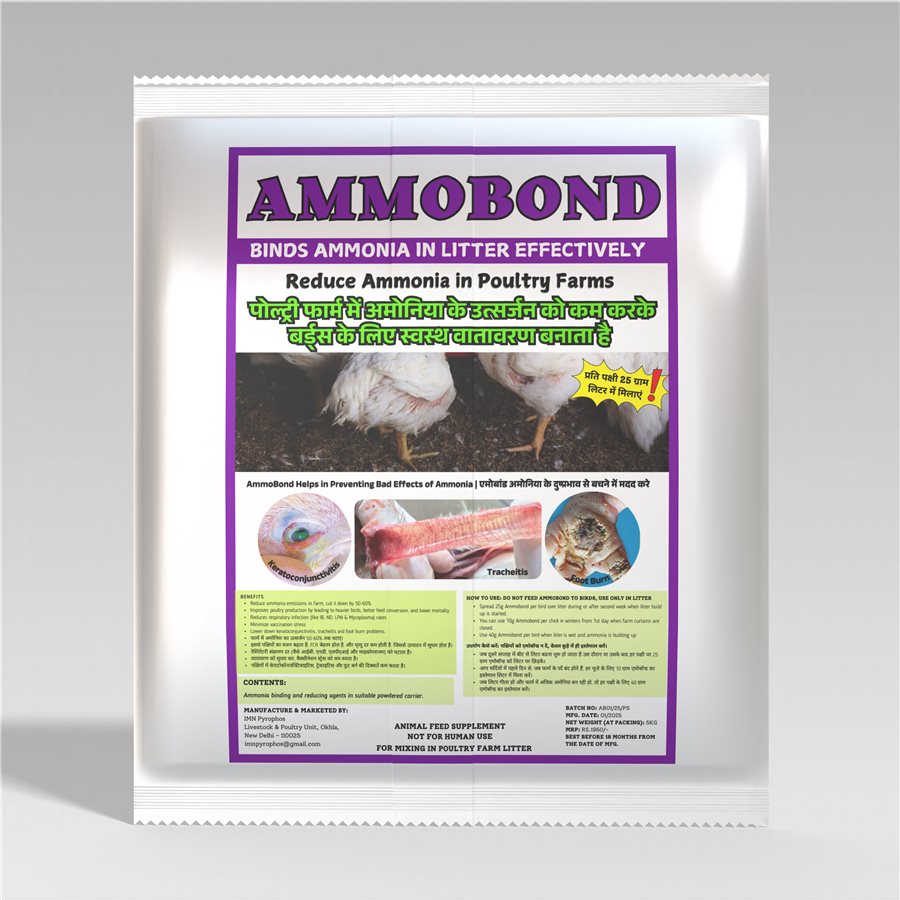
An ammonia binder is a powder spread on the litter that binds ammonia and reduces its release into the shed air. According to its label, Ammobond contains ammonia binding and reducing agents in a powdered carrier, and it is used only in the litter. Never feed it to the birds. The label says it cuts ammonia emissions in the farm by 50–60%, helps birds grow heavier with better FCR and lower mortality, reduces respiratory infection rates (like IB, ND, LPAI and Mycoplasma), and lowers keratoconjunctivitis, tracheitis and foot burn problems.
Ammonia binder · litter only
Ammobond
Ammonia binding and reducing agents in a powdered carrier. Cuts ammonia emissions in the farm by 50–60%. Helps heavier birds, better FCR and lower mortality, and lowers keratoconjunctivitis, tracheitis and foot burn problems. Do not feed to birds; use only in litter.
Dose: 10 g per chick in winter from day 1 when curtains are closed; 25 g per bird during or after the 2nd week when litter build-up starts; 40 g per bird when litter is wet and ammonia is building up.
5 kg ₹1,655MRP ₹1,950
Ammobond dose: how much per bird, and when
The label gives three doses, depending on the situation. Measure by weight and not by eye, because under- or over-dosing both waste money.
| Situation | Dose (per label) | Cost per bird* |
|---|---|---|
| Winter, curtains closed, from day 1 | 10 g per chick | about ₹3.3 |
| During or after the 2nd week, when litter build-up starts | 25 g per bird spread over the litter | about ₹8.3 |
| Litter is wet and ammonia is building up | 40 g per bird | about ₹13.2 |
*Based on the 5 kg pack at ₹1,655 (MRP ₹1,950), about ₹0.33 per gram. Prices may change; confirm on WhatsApp.
For a 1,000-chick batch, the winter day-1 dose is 10 kg, which is two 5 kg packs. At 25 g per bird it is 25 kg, or five packs. The label does not say how to combine the three doses in one batch, so tell us your shed and we will plan the use with you on WhatsApp.
How to spread the binder
- Spread it evenly over the litter with a hand scoop or a sieve. Do not leave it in heaps.
- Put a little more where the litter is wettest: under drinkers, near the curtains and at the corners.
- Stand away from the birds while you spread it and wear a mask, since any powder is dusty. Do it at a calm time, when the birds are not rushing around.
- After spreading, lightly turn the top layer of litter so the powder mixes in.
- Keep it out of feed and water. It is for litter only.
A simple winter plan for the batch
| Stage | What to do |
|---|---|
| Day 1, curtains closed | Spread the winter dose (10 g per chick) on the fresh litter. |
| Days 1 to 14 | Keep litter dry, give a little fresh air daily, fix leaks. |
| Week 2 to 3 | Spread the 25 g per bird dose as the litter starts to build up. Stir the litter. |
| Any time litter turns wet and smelly | Remove the wet cakes, ventilate, and use the 40 g per bird dose as per label. |
| Day 20 onwards | Check hocks and foot pads. Smell at bird height every morning. |
Read the winter brooding guide for temperature by day, and plan your sale around today’s broiler rate.
If the litter is wet because of loose droppings
Sometimes the water is not from the drinkers but from the birds themselves. Loose, sticky droppings wet the litter even when the drinkers are fine. A gut conditioner helps the gut get back to normal, so the droppings firm up and the litter stays drier.
Gut health · bestseller
Remipro
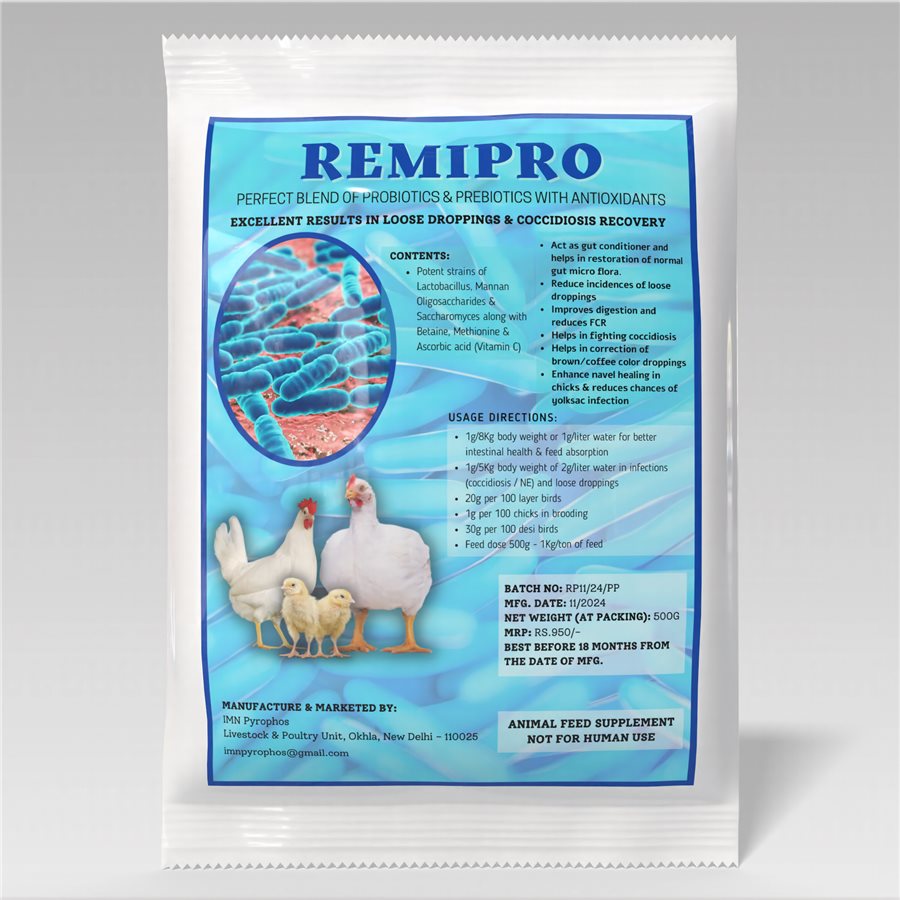
Probiotic, prebiotic (MOS) and Saccharomyces with betaine, methionine and vitamin C. Restores gut flora, reduces loose droppings, improves digestion and FCR, and helps in recovery from coccidiosis.
Dose: 1 g per 8 kg body weight or 1 g per litre of water for routine gut health; 1 g per 5 kg body weight or 2 g per litre in infections and loose droppings; 1 g per 100 chicks in brooding.
500 g ₹626MRP ₹950
When the shed is closed and birds are breathless
Closed sheds mean less fresh air, and fast-growing broilers under that stress can develop ascites (water in the belly). Fixing the air in the shed comes first. If your earlier batches had ascites, prevention can start early in the batch.
Prevention of ascites and SDS
Ascitox Q10
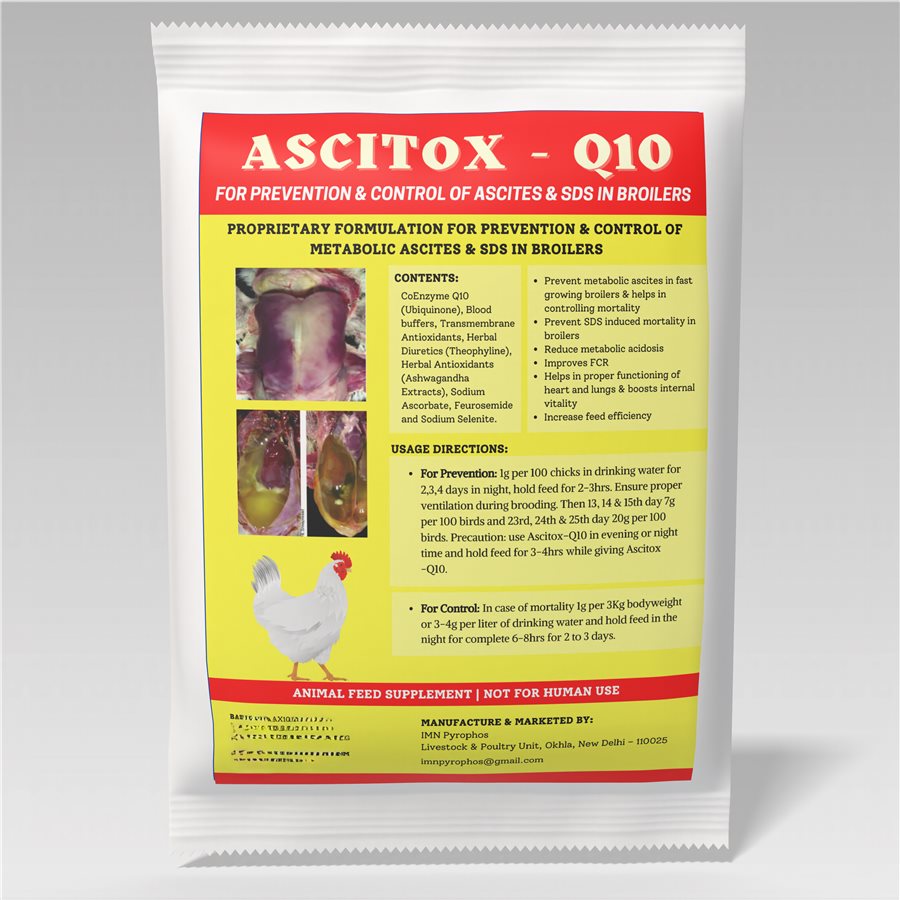
CoQ10, blood buffers, antioxidants, herbal diuretics, sodium ascorbate and selenite. Helps prevent and control metabolic ascites (water in the belly) and SDS (sudden death) in broilers.
Dose: Prevention: 1 g per 100 chicks on day 2–4 at night (hold feed 2–3 hours), 7 g per 100 birds on day 13–15, 20 g per 100 birds on day 23–25; give in the evening or at night. Control: 1 g per 3 kg body weight or 3–4 g per litre of water, holding feed at night for 6–8 hours for 2–3 days.
1 kg ₹698MRP ₹1,080
Common mistakes
- Closing every curtain fully and leaving it closed for the whole night
- Letting drinkers drip, then trying to fix the wet litter with powder alone
- Feeding the binder to the birds, or mixing it in water. The label says litter only.
- Spreading it in heaps instead of evenly
- Checking the smell standing up, instead of at bird height
- Waiting until the litter is caked and the birds are coughing, instead of starting on day 1 in winter
Frequently asked questions
What is an ammonia binder for poultry litter? It is a powder spread on the litter that binds ammonia, so less of it escapes into the shed air. Ammobond is an ammonia binder from IMN Pyrophos and is used only in litter.
How much Ammobond per bird? As per the label: 10 g per chick in winter from day 1 when curtains are closed; 25 g per bird during or after the second week when litter build-up starts; 40 g per bird when the litter is wet and ammonia is building up.
Can I mix Ammobond in the feed or water? No. The label says do not feed it to birds. Use only in litter.
What is the price of Ammobond? The 5 kg pack is ₹1,655 (MRP ₹1,950). Prices may change, so confirm on WhatsApp.
Will a binder replace ventilation? No. A binder helps with the ammonia coming from the litter. You still need dry litter and some fresh air in every shed. Use all three together.
Does ammonia cause respiratory disease? High ammonia damages the airways and eyes, and birds with damaged airways catch respiratory infections more easily. Lowering ammonia reduces that risk. It does not replace vaccination.
How can I see the full range? The IMN product guide lists each product by problem and by stage.
Also read: winter broiler management · winter brooding guide · wet litter in winter · infectious bronchitis · Ammobond ammonia binder · IMN poultry products
पोल्ट्री लिटर के लिए अमोनिया बाइंडर: सर्दी में शेड की अमोनिया कैसे घटाएँ
अक्टूबर के बीच से उत्तर भारत के ब्रॉयलर फार्मर पर्दे गिराने लगते हैं। रातें ठंडी होती हैं, ब्रूडर चलते हैं, और शेड में घुसते ही आँखों में चुभने वाली तेज़ गंध आती है। यह गंध अमोनिया की है, और बंद सर्दी के शेड में यह आँखों से पानी, खाँसी, पैर जलने, कम वज़न और ऊँचे FCR की सबसे आम छिपी वजहों में से एक है। यहाँ पढ़ें कि अमोनिया क्यों बनती है, बिना मीटर के कैसे जाँचें, पहले लिटर को सूखा कैसे रखें, और पोल्ट्री लिटर के लिए अमोनिया बाइंडर कहाँ काम आता है।
सर्दी के शेड में अमोनिया क्यों बढ़ती है
लिटर में मौजूद बैक्टीरिया बीट के यूरिक एसिड को तोड़ते हैं तो अमोनिया बनती है। लिटर गीला और गर्म हो तो यह और तेज़ होता है, और सर्दी का शेड ठीक ऐसा ही होता है। अक्टूबर से तीन चीज़ें एक साथ आती हैं:
- बंद पर्दे। चूज़ों को गर्म रखने के लिए हवा का आना-जाना कम करते हैं, तो गैस शेड में ही रुक जाती है।
- गीला लिटर। ठंडी हवा में नमी कम सोखी जाती है, इसलिए ड्रिंकर, साँस और बीट का पानी लिटर में जमा होता है। कारण जानने के लिए पढ़ें सर्दी में गीला लिटर और पतली बीट।
- ब्रूडर की गर्मी। गर्म और नम लिटर अमोनिया बनाने वाले बैक्टीरिया के लिए सबसे अच्छी जगह है।
गैस सबसे ज़्यादा लिटर के पास होती है, यानी ठीक वहाँ जहाँ पक्षी रहते हैं। आप पक्षियों से ऊँचे खड़े होते हैं, इसलिए आपको जितनी गंध आती है, पक्षी उससे ज़्यादा साँस में लेते हैं।
अमोनिया पक्षियों का क्या बिगाड़ती है
जो पक्षी कई दिन अमोनिया में रहते हैं, वे आमतौर पर उससे मरते नहीं, पर हर दिन उसकी कीमत चुकाते हैं, और बिल अक्सर सोच से बड़ा होता है:
- आँखें: पानी भरी, लाल, आधी बंद आँखें और केराटोकंजंक्टिवाइटिस।
- श्वासनली और फेफड़े: ट्रेकाइटिस और साँस की नली को नुकसान, जिससे IB, ND और माइकोप्लाज़्मा जैसे श्वसन संक्रमण आसानी से लगते हैं। पढ़ें पोल्ट्री में इन्फेक्शियस ब्रोंकाइटिस।
- पैर: अमोनिया से भीगा गीला लिटर पंजों और हॉक को जला देता है (फुट बर्न), जिससे पक्षी को दर्द होता है और वह दाने तक कम जाता है।
- परफ़ॉर्मेंस: दाना कम खाना, उसी उम्र में कम वज़न, ख़राब FCR और ज़्यादा कल्ज़।
जिन पक्षियों की साँस की नली ख़राब होती है, वे बंद शेड में ताज़ी हवा कम होने पर और ज़्यादा परेशान होते हैं, इसलिए सर्दी में ख़राब हवा एसाइटिस का भी एक जोखिम है।
बिना मीटर के अमोनिया कैसे जाँचें
अमोनिया मीटर सबसे अच्छा है, पर पक्षी की ऊँचाई पर आपकी नाक और आँखें भी अच्छी पहली जाँच हैं। सीधे खड़े होकर नहीं, झुककर लिटर के पास साँस लेकर देखें।
| पक्षी की ऊँचाई पर क्या महसूस हो | मतलब |
|---|---|
| कोई गंध नहीं, लिटर सूखा और भुरभुरा | ठीक है। यही रूटीन रखें। |
| हल्की गंध, मुश्किल से पता चले | अमोनिया बननी शुरू हो गई है। अब कदम उठाएँ। |
| तेज़ गंध, आपकी आँखें चुभें या पानी आए | पक्षियों के लिए भी बहुत ज़्यादा है। उसी दिन कदम उठाएँ। |
| ड्रिंकर के नीचे जमा गीला लिटर, पक्षी छींकें, आँखों में पानी | लिटर की समस्या पहले से गंभीर है। |
मोटा नियम: अगर आपको अमोनिया साफ़ सूँघ में आती है, तो पक्षी पहले से तकलीफ़ में हैं। दिन 20 के बाद पक्षियों के पंजे और हॉक भी देखें। पंजे पर काले, जले निशान बताते हैं कि लिटर कई दिनों से गीला और अमोनिया से भरा है।
पहला कदम: पहले लिटर ठीक करें, फिर बाइंडर डालें
अमोनिया बाइंडर उसी लिटर पर काम करता है जो आपके पास है। यह टपकती निप्पल या हवा-बंद शेड की भरपाई नहीं करता। ये काम पहले या साथ में करें:
- पानी का रिसाव रोकें। ड्रिंकर ठीक करें, निप्पल की ऊँचाई पक्षी की पीठ के बराबर रखें और गीली जगहें हटाएँ।
- न्यूनतम वेंटिलेशन दें। सर्दी में भी थोड़ी हवा बदलें। हवा के उलटी तरफ़ पर्दे थोड़े खोलें या एग्ज़ॉस्ट फ़ैन थोड़ी देर चलाएँ, इतना कि गंध निकले पर चूज़ों को ठंड न लगे। उम्र के हिसाब से वेंटिलेशन के लिए पढ़ें सर्दी में ब्रॉयलर मैनेजमेंट गाइड।
- पलटें और ऊपर से डालें। हफ़्ते में एक-दो बार लिटर पलटें, गाँठें तोड़ें और गीली जगह पर सूखी भूसी या बुरादा डालें।
- बीट देखें। पतली, पानी जैसी बीट लिटर को अंदर से गीला करती है। दाने, पानी और आँत की सेहत में कारण खोजें।
- लिटर में अमोनिया बाइंडर डालें। गीला और गर्म लिटर जो अमोनिया बनाता रहता है, यह उसे घटाता है।
अमोनिया बाइंडर क्या है और Ammobond कैसे काम करता है
अमोनिया बाइंडर लिटर पर बुरका जाने वाला पाउडर है जो अमोनिया को बाँधता है और शेड की हवा में उसका निकलना घटाता है। लेबल के अनुसार Ammobond में पाउडर कैरियर में अमोनिया बाँधने और घटाने वाले तत्व हैं, और इसे सिर्फ़ लिटर में इस्तेमाल करना है। पक्षियों को कभी न खिलाएँ। लेबल के अनुसार यह फार्म में अमोनिया का उत्सर्जन 50–60% तक घटाता है, पक्षियों के भारी वज़न, बेहतर FCR और कम मृत्यु दर में मदद करता है, श्वसन संक्रमण (जैसे IB, ND, LPAI और माइकोप्लाज़्मा) की दर घटाता है, और केराटोकंजंक्टिवाइटिस, ट्रेकाइटिस और फुट बर्न की समस्या कम करता है।
लिटर में अमोनिया बाँधता है
Ammobond
लिटर में अमोनिया को बाँधने और घटाने वाले तत्व, पाउडर कैरियर में। फार्म में अमोनिया का उत्सर्जन 50–60% तक घटाता है। पक्षियों का वज़न, FCR और मृत्यु दर बेहतर करने में मदद करता है, और केराटोकंजंक्टिवाइटिस, ट्रेकाइटिस और पैर जलने की समस्या घटाता है। पक्षियों को खिलाना नहीं है, सिर्फ़ लिटर में इस्तेमाल करें।
मात्रा: सर्दी में पर्दे बंद होने पर पहले दिन से 10 ग्राम प्रति चूज़ा; दूसरे हफ़्ते के दौरान या बाद में, जब लिटर बनने लगे, 25 ग्राम प्रति पक्षी लिटर पर बुरकें; लिटर गीला हो और अमोनिया बन रही हो तो 40 ग्राम प्रति पक्षी।
5 kg ₹1,655MRP ₹1,950
Ammobond की मात्रा: प्रति पक्षी कितना और कब
लेबल पर हालात के हिसाब से तीन मात्राएँ हैं। तौलकर डालें, अंदाज़े से नहीं, क्योंकि कम या ज़्यादा दोनों से पैसा बेकार जाता है।
| हालात | मात्रा (लेबल के अनुसार) | प्रति पक्षी लागत* |
|---|---|---|
| सर्दी, पर्दे बंद, पहले दिन से | 10 ग्राम प्रति चूज़ा | लगभग ₹3.3 |
| दूसरे हफ़्ते के दौरान या बाद में, जब लिटर बनने लगे | 25 ग्राम प्रति पक्षी, लिटर पर बुरकें | लगभग ₹8.3 |
| लिटर गीला हो और अमोनिया बन रही हो | 40 ग्राम प्रति पक्षी | लगभग ₹13.2 |
*5 किलो पैक ₹1,655 (MRP ₹1,950) के हिसाब से, यानी लगभग ₹0.33 प्रति ग्राम। भाव बदल सकते हैं, WhatsApp पर पक्का कर लें।
1,000 चूज़ों के बैच में सर्दी की पहले दिन की मात्रा 10 किलो है, यानी 5 किलो के दो पैक। 25 ग्राम प्रति पक्षी पर यह 25 किलो, यानी पाँच पैक। लेबल पर यह नहीं लिखा कि एक बैच में तीनों मात्राएँ कैसे जोड़ें, इसलिए अपने शेड की जानकारी WhatsApp पर भेजें, हम साथ में प्लान बना देंगे।
बाइंडर कैसे बुरकें
- हाथ के स्कूप या छलनी से लिटर पर बराबर फैलाएँ। ढेर न लगाएँ।
- जहाँ लिटर सबसे गीला है वहाँ थोड़ा ज़्यादा डालें: ड्रिंकर के नीचे, पर्दों के पास और कोनों में।
- बुरकते समय पक्षियों से दूर रहें और मास्क लगाएँ, क्योंकि कोई भी पाउडर धूल उड़ाता है। शांत समय पर करें, जब पक्षी दौड़-भाग न कर रहे हों।
- बुरकने के बाद ऊपर की परत हल्के से पलट दें ताकि पाउडर मिल जाए।
- दाने और पानी से दूर रखें। यह सिर्फ़ लिटर के लिए है।
बैच के लिए सर्दी की आसान योजना
| चरण | क्या करें |
|---|---|
| दिन 1, पर्दे बंद | ताज़े लिटर पर सर्दी की मात्रा (10 ग्राम प्रति चूज़ा) डालें। |
| दिन 1 से 14 | लिटर सूखा रखें, रोज़ थोड़ी ताज़ी हवा दें, रिसाव ठीक करें। |
| हफ़्ता 2 से 3 | लिटर बनना शुरू होते ही 25 ग्राम प्रति पक्षी डालें। लिटर पलटें। |
| जब भी लिटर गीला और बदबूदार हो | गीली गाँठें निकालें, हवा दें, और लेबल के अनुसार 40 ग्राम प्रति पक्षी डालें। |
| दिन 20 के बाद | हॉक और पंजे देखें। रोज़ सुबह पक्षी की ऊँचाई पर गंध जाँचें। |
रोज़ के तापमान के लिए पढ़ें सर्दी में ब्रूडिंग गाइड, और बिक्री की योजना आज के ब्रॉयलर रेट के हिसाब से बनाएँ।
अगर लिटर पतली बीट की वजह से गीला है
कभी-कभी पानी ड्रिंकर से नहीं, पक्षियों से ही आता है। पतली, चिपचिपी बीट ड्रिंकर ठीक होने पर भी लिटर को गीला कर देती है। आँत कंडीशनर आँत को सामान्य करने में मदद करता है, जिससे बीट कसती है और लिटर सूखा रहता है।
आँत की सेहत · बेस्टसेलर
Remipro
प्रोबायोटिक, प्रीबायोटिक (MOS) और Saccharomyces, साथ में बीटेन, मेथियोनीन और विटामिन C। आँत के अच्छे बैक्टीरिया लौटाता है, पतली बीट घटाता है, पाचन और FCR सुधारता है, कॉक्सीडियोसिस से उबरने में मदद करता है और भूरी/कॉफी रंग की बीट ठीक करता है।
मात्रा: रोज़ की आँत सेहत के लिए 1 ग्राम प्रति 8 किलो वज़न या 1 ग्राम प्रति लीटर पानी; पतली बीट और इन्फेक्शन में 1 ग्राम प्रति 5 किलो वज़न या 2 ग्राम प्रति लीटर; ब्रूडिंग में 1 ग्राम प्रति 100 चूज़े।
500 g ₹626MRP ₹950
जब शेड बंद हो और पक्षी हाँफें
बंद शेड का मतलब कम ताज़ी हवा, और तेज़ बढ़ने वाले ब्रॉयलर इस तनाव में एसाइटिस (पेट में पानी) की चपेट में आ सकते हैं। सबसे पहले शेड की हवा ठीक करें। पिछले बैचों में एसाइटिस आई हो तो बैच की शुरुआत से ही बचाव कर सकते हैं।
एसाइटिस और SDS से बचाव
Ascitox Q10
CoQ10, ब्लड बफ़र, एंटीऑक्सीडेंट, हर्बल मूत्रवर्धक (diuretic), सोडियम एस्कॉर्बेट और सेलेनाइट वाला मिश्रण। ब्रॉयलर में मेटाबॉलिक एसाइटिस (पेट में पानी भरना) और SDS (अचानक मौत) की रोकथाम और नियंत्रण में मदद करता है।
मात्रा: बचाव: दिन 2–4 में 1 ग्राम प्रति 100 चूज़े (रात में, 2–3 घंटे दाना रोक कर), दिन 13–15 में 7 ग्राम प्रति 100 पक्षी, दिन 23–25 में 20 ग्राम प्रति 100 पक्षी; शाम या रात में दें। नियंत्रण: 1 ग्राम प्रति 3 किलो वज़न या 3–4 ग्राम प्रति लीटर पानी, 2–3 दिन तक रात में 6–8 घंटे दाना रोक कर।
1 kg ₹698MRP ₹1,080
आम गलतियाँ
- सारे पर्दे पूरी तरह बंद कर पूरी रात बंद रखना
- ड्रिंकर टपकने देना और फिर सिर्फ़ पाउडर से गीला लिटर ठीक करने की कोशिश
- बाइंडर को पक्षियों को खिलाना या पानी में मिलाना। लेबल कहता है सिर्फ़ लिटर में।
- पाउडर को ढेर में डालना, बराबर न फैलाना
- सीधे खड़े होकर गंध जाँचना, पक्षी की ऊँचाई पर नहीं
- सर्दी में पहले दिन से शुरू करने की जगह तब इंतज़ार करना जब लिटर जम जाए और पक्षी खाँसने लगें
अक्सर पूछे जाने वाले सवाल
पोल्ट्री लिटर के लिए अमोनिया बाइंडर क्या है? यह लिटर पर बुरका जाने वाला पाउडर है जो अमोनिया को बाँधता है ताकि शेड की हवा में कम निकले। Ammobond IMN Pyrophos का अमोनिया बाइंडर है और सिर्फ़ लिटर में इस्तेमाल होता है।
Ammobond प्रति पक्षी कितना डालें? लेबल के अनुसार: सर्दी में पर्दे बंद होने पर पहले दिन से 10 ग्राम प्रति चूज़ा; दूसरे हफ़्ते के दौरान या बाद में, जब लिटर बनने लगे, 25 ग्राम प्रति पक्षी; लिटर गीला हो और अमोनिया बन रही हो तो 40 ग्राम प्रति पक्षी।
क्या Ammobond दाने या पानी में मिला सकते हैं? नहीं। लेबल कहता है पक्षियों को न खिलाएँ। सिर्फ़ लिटर में इस्तेमाल करें।
Ammobond का भाव क्या है? 5 किलो पैक ₹1,655 (MRP ₹1,950)। भाव बदल सकते हैं, WhatsApp पर पक्का कर लें।
क्या बाइंडर वेंटिलेशन की जगह ले सकता है? नहीं। बाइंडर लिटर से आने वाली अमोनिया में मदद करता है। हर शेड में सूखा लिटर और थोड़ी ताज़ी हवा फिर भी चाहिए। तीनों साथ करें।
क्या अमोनिया से साँस की बीमारी होती है? ज़्यादा अमोनिया साँस की नली और आँखों को नुकसान पहुँचाती है, और ख़राब नली वाले पक्षियों को श्वसन संक्रमण जल्दी लगते हैं। अमोनिया घटाने से यह जोखिम कम होता है। यह टीकाकरण की जगह नहीं लेता।
पूरी रेंज कहाँ देखें? IMN प्रोडक्ट गाइड में हर प्रोडक्ट समस्या और उम्र के हिसाब से दिया है।
यह भी पढ़ें: सर्दी में ब्रॉयलर मैनेजमेंट · सर्दी में ब्रूडिंग गाइड · सर्दी में गीला लिटर · इन्फेक्शियस ब्रोंकाइटिस · Ammobond अमोनिया बाइंडर · IMN पोल्ट्री प्रोडक्ट
Poultry litter ke liye ammonia binder: sardi me shed ki ammonia kaise ghatayein
October ke beech se Uttar Bharat ke broiler farmer parde girane lagte hain. Raatein thandi hoti hain, brooder chalte hain, aur shed me ghuste hi aankhon me chubhne wali tez gandh aati hai. Ye gandh ammonia ki hai, aur band sardi ke shed me ye aankhon se paani, khaansi, pair jalne, kam wazan aur ooche FCR ki sabse aam chhipi wajahon me se ek hai. Yahan padhiye ki ammonia kyon banti hai, bina meter ke kaise jaanchein, pehle litter ko sookha kaise rakhein, aur poultry litter ke liye ammonia binder kahan kaam aata hai.
Sardi ke shed me ammonia kyon badhti hai
Litter me maujood bacteria beet ke uric acid ko todte hain to ammonia banti hai. Litter geela aur garm ho to ye aur tez hota hai, aur sardi ka shed theek aisa hi hota hai. October se teen cheezein ek saath aati hain:
- Band parde. Choozon ko garm rakhne ke liye hawa ka aana-jaana kam karte hain, to gas shed me hi ruk jaati hai.
- Geela litter. Thandi hawa me nami kam sokhi jaati hai, isliye drinker, saans aur beet ka paani litter me jama hota hai. Karan jaanne ke liye padhiye sardi me geela litter aur patli beet.
- Brooder ki garmi. Garm aur nam litter ammonia banane wale bacteria ke liye sabse achhi jagah hai.
Gas sabse zyada litter ke paas hoti hai, yaani theek wahan jahan pakshi rehte hain. Aap pakshiyon se oonche khade hote hain, isliye aapko jitni gandh aati hai, pakshi usse zyada saans me lete hain.
Ammonia pakshiyon ka kya bigaadti hai
Jo pakshi kai din ammonia me rehte hain, wo aamtaur par usse marte nahi, par har din uski keemat chukate hain, aur bill aksar soch se bada hota hai:
- Aankhein: paani bhari, laal, aadhi band aankhein aur keratoconjunctivitis.
- Shwaasnali aur phephde: tracheitis aur saans ki nali ko nuksaan, jisse IB, ND aur Mycoplasma jaise shwasan sankraman aasaani se lagte hain. Padhiye poultry me infectious bronchitis.
- Pair: ammonia se bheega geela litter panjon aur hock ko jala deta hai (foot burn), jisse pakshi ko dard hota hai aur wo daane tak kam jaata hai.
- Performance: daana kam khana, usi umr me kam wazan, kharab FCR aur zyada cull.
Jin pakshiyon ki saans ki nali kharab hoti hai, wo band shed me taazi hawa kam hone par aur zyada pareshan hote hain, isliye sardi me kharab hawa ascites ka bhi ek jokhim hai.
Bina meter ke ammonia kaise jaanchein
Ammonia meter sabse achha hai, par pakshi ki oonchai par aapki naak aur aankhein bhi achhi pehli jaanch hain. Seedhe khade hokar nahi, jhukkar litter ke paas saans lekar dekhiye.
| Pakshi ki oonchai par kya mehsoos ho | Matlab |
|---|---|
| Koi gandh nahi, litter sookha aur bhurbhura | Theek hai. Yahi routine rakhein. |
| Halki gandh, mushkil se pata chale | Ammonia banni shuru ho gayi hai. Ab kadam uthayein. |
| Tez gandh, aapki aankhein chubhein ya paani aaye | Pakshiyon ke liye bhi bahut zyada hai. Usi din kadam uthayein. |
| Drinker ke neeche jama geela litter, pakshi chheenkein, aankhon me paani | Litter ki samasya pehle se gambhir hai. |
Mota niyam: agar aapko ammonia saaf soongh me aati hai, to pakshi pehle se takleef me hain. Din 20 ke baad pakshiyon ke panje aur hock bhi dekhiye. Panje par kaale, jale nishan batate hain ki litter kai dino se geela aur ammonia se bhara hai.
Pehla kadam: pehle litter theek karein, phir binder daalein
Ammonia binder usi litter par kaam karta hai jo aapke paas hai. Ye tapakti nipple ya hawa-band shed ki bharpai nahi karta. Ye kaam pehle ya saath me karein:
- Paani ka risaav rokein. Drinker theek karein, nipple ki oonchai pakshi ki peeth ke barabar rakhein aur geeli jagahein hataiye.
- Nyoontam ventilation dein. Sardi me bhi thodi hawa badlein. Hawa ki ulti taraf parde thode kholein ya exhaust fan thodi der chalayein, itna ki gandh nikle par choozon ko thand na lage. Umr ke hisaab se ventilation ke liye padhiye sardi me broiler management guide.
- Palten aur upar se daalein. Hafte me ek-do baar litter palten, gaanthein todein aur geeli jagah par sookhi bhoosi ya buraada daalein.
- Beet dekhein. Patli, paani jaisi beet litter ko andar se geela karti hai. Daane, paani aur aant ki sehat me karan khojein.
- Litter me ammonia binder daalein. Geela aur garm litter jo ammonia banata rehta hai, ye use ghatata hai.
Ammonia binder kya hai aur Ammobond kaise kaam karta hai
Ammonia binder litter par burka jaane wala powder hai jo ammonia ko bandhta hai aur shed ki hawa me uska nikalna ghatata hai. Label ke anusaar Ammobond me powder carrier me ammonia bandhne aur ghatane wale tatva hain, aur ise sirf litter me istemal karna hai. Pakshiyon ko kabhi na khilayein. Label ke anusaar ye farm me ammonia ka utsarjan 50–60% tak ghatata hai, pakshiyon ke bhaari wazan, behtar FCR aur kam mrityu dar me madad karta hai, shwasan sankraman (jaise IB, ND, LPAI aur Mycoplasma) ki dar ghatata hai, aur keratoconjunctivitis, tracheitis aur foot burn ki samasya kam karta hai.
Litter me ammonia bandhta hai
Ammobond
Litter me ammonia ko bandhne aur ghatane wale tatva, powder carrier me. Farm me ammonia ka utsarjan 50–60% tak ghatata hai. Pakshiyon ka wazan, FCR aur mrityu dar behtar karne me madad karta hai, aur keratoconjunctivitis, tracheitis aur pair jalne ki samasya ghatata hai. Pakshiyon ko khilana nahi hai, sirf litter me istemal karein.
Matra: Sardi me parde band hone par pehle din se 10 g prati chooza; doosre hafte ke dauran ya baad me, jab litter banne lage, 25 g prati pakshi litter par burken; litter geela ho aur ammonia ban rahi ho to 40 g prati pakshi.
5 kg ₹1,655MRP ₹1,950
Ammobond ki matra: prati pakshi kitna aur kab
Label par halaat ke hisaab se teen matrayein hain. Tolkar daalein, andaze se nahi, kyonki kam ya zyada dono se paisa bekaar jaata hai.
| Halaat | Matra (label ke anusaar) | Prati pakshi laagat* |
|---|---|---|
| Sardi, parde band, pehle din se | 10 g prati chooza | lagbhag ₹3.3 |
| Doosre hafte ke dauran ya baad me, jab litter banne lage | 25 g prati pakshi, litter par burken | lagbhag ₹8.3 |
| Litter geela ho aur ammonia ban rahi ho | 40 g prati pakshi | lagbhag ₹13.2 |
*5 kg pack ₹1,655 (MRP ₹1,950) ke hisaab se, yaani lagbhag ₹0.33 prati gram. Bhaav badal sakte hain, WhatsApp par pakka kar lein.
1,000 chooze ke batch me sardi ki pehle din ki matra 10 kg hai, yaani 5 kg ke do pack. 25 g prati pakshi par ye 25 kg, yaani paanch pack. Label par ye nahi likha ki ek batch me teenon matrayein kaise jodein, isliye apne shed ki jaankari WhatsApp par bhejiye, hum saath me plan bana denge.
Binder kaise burken
- Haath ke scoop ya chhalni se litter par barabar phailayein. Dher na lagayein.
- Jahan litter sabse geela hai wahan thoda zyada daalein: drinker ke neeche, pardon ke paas aur konon me.
- Burkte samay pakshiyon se door rahein aur mask lagayein, kyonki koi bhi powder dhool udaata hai. Shant samay par karein, jab pakshi daud-bhaag na kar rahe hon.
- Burkne ke baad upar ki parat halke se palat dein taaki powder mil jaaye.
- Daane aur paani se door rakhein. Ye sirf litter ke liye hai.
Batch ke liye sardi ki aasaan yojana
| Charan | Kya karein |
|---|---|
| Din 1, parde band | Taaze litter par sardi ki matra (10 g prati chooza) daalein. |
| Din 1 se 14 | Litter sookha rakhein, roz thodi taazi hawa dein, risaav theek karein. |
| Hafta 2 se 3 | Litter banna shuru hote hi 25 g prati pakshi daalein. Litter palten. |
| Jab bhi litter geela aur badboodar ho | Geeli gaanthein nikalein, hawa dein, aur label ke anusaar 40 g prati pakshi daalein. |
| Din 20 ke baad | Hock aur panje dekhein. Roz subah pakshi ki oonchai par gandh jaanchein. |
Roz ke temperature ke liye padhiye sardi me brooding guide, aur bikri ki yojana aaj ke broiler rate ke hisaab se banayein.
Agar litter patli beet ki wajah se geela hai
Kabhi-kabhi paani drinker se nahi, pakshiyon se hi aata hai. Patli, chipchipi beet drinker theek hone par bhi litter ko geela kar deti hai. Aant conditioner aant ko saamanya karne me madad karta hai, jisse beet kasti hai aur litter sookha rehta hai.
Aant ki sehat · bestseller
Remipro
Probiotic, prebiotic (MOS) aur Saccharomyces, saath me betaine, methionine aur vitamin C. Aant ke achhe bacteria lautata hai, patli beet ghatata hai, pachan aur FCR sudharta hai, coccidiosis se ubharne me madad karta hai aur bhoori/coffee rang ki beet theek karta hai.
Matra: Roz ki aant sehat ke liye 1 g prati 8 kg wazan ya 1 g prati litre paani; patli beet aur infection me 1 g prati 5 kg wazan ya 2 g prati litre; brooding me 1 g prati 100 chooze.
500 g ₹626MRP ₹950
Jab shed band ho aur pakshi haanfein
Band shed ka matlab kam taazi hawa, aur tez badhne wale broiler is tanaav me ascites (pet me paani) ki chapet me aa sakte hain. Sabse pehle shed ki hawa theek karein. Pichhle batch me ascites aayi ho to batch ki shuruaat se hi bachav kar sakte hain.
Ascites aur SDS se bachav
Ascitox Q10
CoQ10, blood buffer, antioxidant, herbal diuretic (peshab badhane wali jadi-booti), sodium ascorbate aur selenite wala mishran. Broiler me metabolic ascites (pet me paani bharna) aur SDS (achanak maut) ki rokthaam aur niyantran me madad karta hai.
Matra: Bachav: din 2–4 me 1 g prati 100 chooze (raat me, 2–3 ghante daana rok kar), din 13–15 me 7 g prati 100 pakshi, din 23–25 me 20 g prati 100 pakshi; shaam ya raat me dijiye. Niyantran: 1 g prati 3 kg wazan ya 3–4 g prati litre paani, 2–3 din tak raat me 6–8 ghante daana rok kar.
1 kg ₹698MRP ₹1,080
Aam galtiyan
- Saare parde poori tarah band kar poori raat band rakhna
- Drinker tapakne dena aur phir sirf powder se geela litter theek karne ki koshish
- Binder ko pakshiyon ko khilana ya paani me milana. Label kehta hai sirf litter me.
- Powder ko dher me daalna, barabar na phailana
- Seedhe khade hokar gandh jaanchna, pakshi ki oonchai par nahi
- Sardi me pehle din se shuru karne ki jagah tab intezaar karna jab litter jam jaaye aur pakshi khaansne lagein
Aksar puchhe jaane wale sawal
Poultry litter ke liye ammonia binder kya hai? Ye litter par burka jaane wala powder hai jo ammonia ko bandhta hai taaki shed ki hawa me kam nikle. Ammobond IMN Pyrophos ka ammonia binder hai aur sirf litter me istemal hota hai.
Ammobond prati pakshi kitna daalein? Label ke anusaar: sardi me parde band hone par pehle din se 10 g prati chooza; doosre hafte ke dauran ya baad me, jab litter banne lage, 25 g prati pakshi; litter geela ho aur ammonia ban rahi ho to 40 g prati pakshi.
Kya Ammobond daane ya paani me mila sakte hain? Nahi. Label kehta hai pakshiyon ko na khilayein. Sirf litter me istemal karein.
Ammobond ka bhaav kya hai? 5 kg pack ₹1,655 (MRP ₹1,950). Bhaav badal sakte hain, WhatsApp par pakka kar lein.
Kya binder ventilation ki jagah le sakta hai? Nahi. Binder litter se aane wali ammonia me madad karta hai. Har shed me sookha litter aur thodi taazi hawa phir bhi chahiye. Teenon saath karein.
Kya ammonia se saans ki bimari hoti hai? Zyada ammonia saans ki nali aur aankhon ko nuksaan pahunchati hai, aur kharab nali wale pakshiyon ko shwasan sankraman jaldi lagte hain. Ammonia ghatane se ye jokhim kam hota hai. Ye teekakaran ki jagah nahi leta.
Poori range kahan dekhein? IMN product guide me har product samasya aur umr ke hisaab se diya hai.
Ye bhi padhiye: sardi me broiler management · sardi me brooding guide · sardi me geela litter · infectious bronchitis · Ammobond ammonia binder · IMN poultry products