
Coccidiosis is one of the most common gut problems in broilers and growing birds, and wet litter in winter gives it the best chance to spread. The parasite lives in the litter, the bird picks it up with feed and water, and within days the gut wall is damaged, droppings turn loose or bloody and the chicks go dull. This guide explains how to recognise coccidiosis, what to fix in the shed first, and where Coxieraze, a herbal anti-coccidial product from IMN Pyrophos, is used as support. If you are searching for coccidiosis in poultry treatment, start with the shed checklist and the signs table below.
What is coccidiosis?
Coccidiosis is caused by Eimeria, a microscopic parasite. Birds swallow oocysts (the egg-like stage) that are lying in the litter. Inside the gut the parasite multiplies in several stages and damages the lining, so the bird absorbs less feed and loses blood and fluid. Once the damage is done, bacteria such as Clostridium can step in, so a coccidiosis problem often ends in necrotic enteritis or a poor FCR. Many flocks carry a low level of infection without clear signs; this is called subclinical coccidiosis, and it quietly reduces weight gain.
Why wet litter makes it worse
Oocysts need warmth and moisture to become infective. Caked, damp litter under drinkers, heavy stocking, leaking nipples and poor ventilation in a closed winter shed all help them. Read how litter, ammonia and moisture go together in our winter broiler management guide and how an ammonia binder for poultry litter fits into the plan.
Signs to look for
| What you see | What it can point to |
|---|---|
| Bloody or brown, mucus-filled droppings, huddled chicks with ruffled feathers | Coccidiosis is likely; confirm with a post-mortem of the gut |
| Watery or loose droppings, wet litter, low feed intake | Could be coccidiosis, but also feed or water problems; read loose droppings in poultry |
| Sudden deaths with a swollen, ballooned gut | Needs an urgent post-mortem; coccidiosis and necrotic enteritis often go together |
| Flock looks normal but weight and FCR lag | Subclinical coccidiosis is possible; ask your vet about a litter or gut check |
Do not treat from droppings alone. Bloody droppings can also come from other causes, so a post-mortem by your vet is the safest way to be sure.
A step-by-step plan for the shed
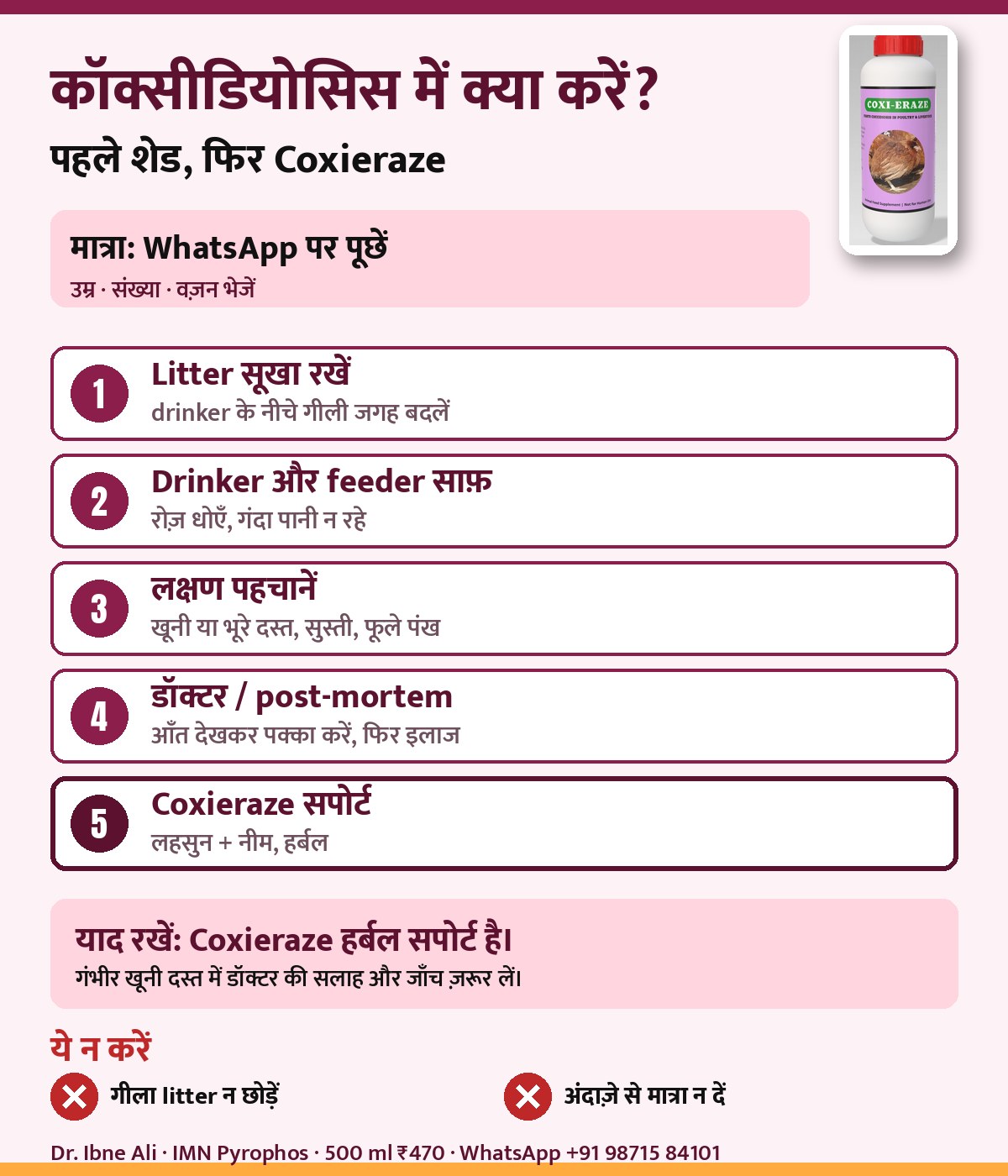
- Dry the litter first. Replace caked patches, fix leaking drinkers and raise the drinker height as the chicks grow.
- Keep drinkers and feeders clean. Wash daily so that droppings do not mix with feed and water.
- Control stocking and ventilation. Over-crowding and still, humid air keep the litter wet.
- Confirm the problem. Ask your vet for a post-mortem or a litter and gut check, and follow the anticoccidial or vaccination programme your vet has set.
- Add herbal support. Give Coxieraze alongside the programme, as described below, and note the date and flock condition.
What is Coxieraze?
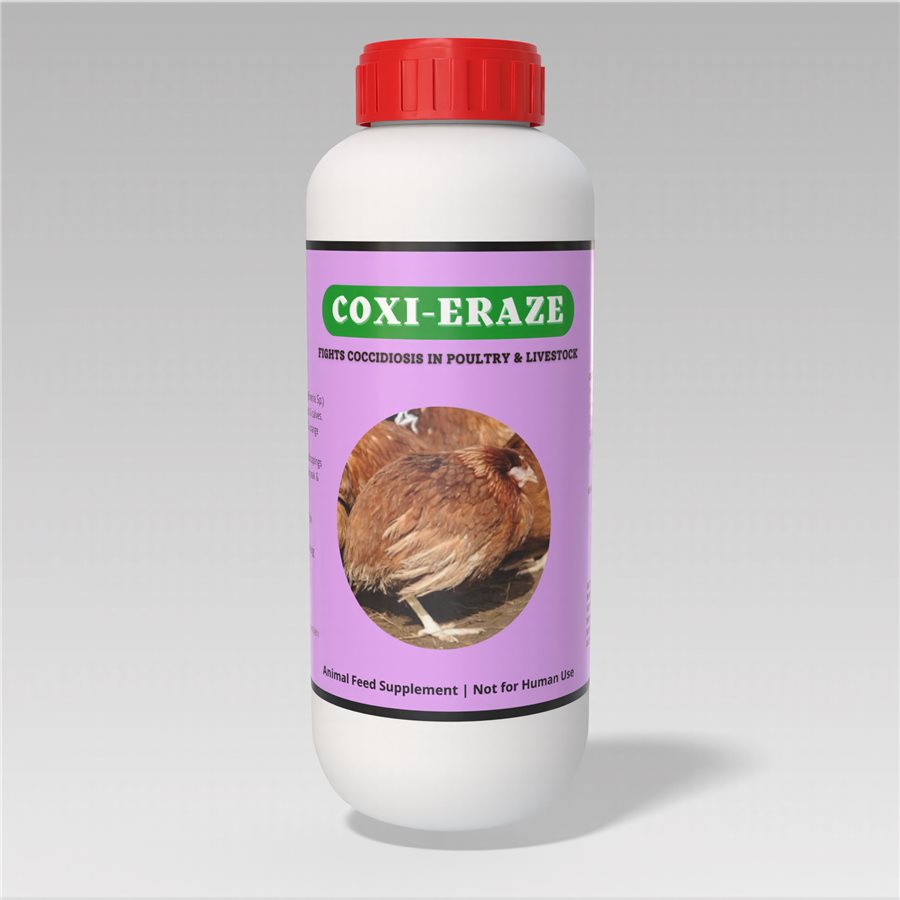
Coxieraze (written Coxi-Eraze on the pack) is a herbal anti-coccidial product for poultry made from garlic and neem extracts. The pack says it fights coccidiosis in poultry and livestock. The product page lists these benefits:
- Acts on several stages of the coccidia life cycle.
- Reduces oocyst shedding and lowers the risk of re-infection.
- Helps control clinical and subclinical coccidiosis.
- Supports weight gain and feed conversion.
- Does not add to antibiotic resistance, so it suits antibiotic-free poultry farming.
- Supports gut health.
Herbal anti-coccidial
Coxieraze
Herbal coccidiosis support with garlic and neem extracts. Acts on several stages of the Eimeria life cycle, reduces oocyst shedding, lowers the risk of re-infection and supports gut health. Pack: fights coccidiosis.
Dose: ask on WhatsApp with your flock’s age, number and weight.
500 ml ₹470MRP ₹800 1 L ₹910MRP ₹1,550
About the dose
The dose is not printed on the pack photo or the product page we hold, and the right amount depends on age, number of birds and how bad the problem is. So we do not guess it here. Send your flock’s age, number, weight and droppings photo on WhatsApp and Dr. Ibne Ali’s team will tell you the dose and the number of days.
Where Coxieraze fits
- Wet-litter weeks: as herbal support when litter is damp and loose droppings start, along with the shed fixes above.
- After a coccidiosis problem: to help gut recovery, together with a probiotic such as Remipro.
- Antibiotic-free farms: as a plant-based option inside your vet’s programme.
What not to do
- Do not treat bloody droppings without confirming the cause.
- Do not expect a herbal product to fix wet litter. Management comes first.
- Do not stop your vet’s anticoccidial or vaccination programme because you added Coxieraze.
- Do not guess the dose. Ask first.
- Do not keep sick birds mixed with healthy ones; separate the weak chicks.
Common mistakes
- Treating late. By the time droppings are bloody the gut is already damaged. Watch litter and droppings early.
- Ignoring subclinical cases. A flock that looks normal but gains slowly may still carry coccidiosis.
- Cleaning only after the batch. Wet spots must be fixed during the batch, not after it.
- Using the same plan every batch. Check litter condition and weather and adjust.
Frequently asked questions
What causes coccidiosis in poultry? A parasite called Eimeria, picked up from litter, feed and water. Wet, warm litter helps it spread.
What are the symptoms of coccidiosis in chickens? Bloody or brown droppings, ruffled feathers, huddling, less feed intake, weight loss and sometimes sudden deaths. A post-mortem confirms it.
What does Coxieraze contain? Garlic (Allium sativum) extract and neem (Azadirachta indica) extract.
What is the Coxieraze dose? It is not printed on our pack photo or page, so please ask on WhatsApp with your flock details.
What is the price of Coxieraze? 500 ml is ₹470 (MRP ₹800) and 1 L is ₹910 (MRP ₹1,550). Prices may change, so confirm on WhatsApp.
Is Coxieraze an antibiotic? No. It is a herbal feed supplement made from garlic and neem extracts.
Can Coxieraze replace my vet’s programme? No. It is used as support alongside litter management and the programme your vet has set.
Also read: Coxieraze · Loose droppings in poultry · Winter broiler management guide · CRD solution for poultry
मुर्गियों में कॉक्सीडियोसिस: लक्षण, गीले litter का कंट्रोल और Coxieraze हर्बल सपोर्ट
कॉक्सीडियोसिस broiler और बढ़ते पक्षियों की सबसे आम आँत की समस्याओं में से एक है, और सर्दी का गीला litter इसे फैलने का सबसे अच्छा मौका देता है। परजीवी litter में रहता है, पक्षी उसे दाने और पानी के साथ निगल लेता है, और कुछ ही दिनों में आँत की दीवार खराब हो जाती है, दस्त पतले या खून वाले हो जाते हैं और चूज़े सुस्त पड़ जाते हैं। इस गाइड में कॉक्सीडियोसिस पहचानने का तरीका, शेड में पहले क्या ठीक करें और IMN Pyrophos का हर्बल anti-coccidial Coxieraze सपोर्ट के रूप में कहाँ इस्तेमाल होता है, यह बताया है। अगर आप coccidiosis in poultry का इलाज खोज रहे हैं तो नीचे की शेड checklist और लक्षण वाली तालिका से शुरू करें।
कॉक्सीडियोसिस क्या है?
कॉक्सीडियोसिस Eimeria नाम के सूक्ष्म परजीवी से होता है। पक्षी litter में पड़े oocyst (परजीवी की अंडे जैसी अवस्था) निगल लेते हैं। आँत के अंदर परजीवी कई चरणों में बढ़ता है और आँत की परत को नुकसान पहुँचाता है, इसलिए पक्षी दाना कम absorb करता है और खून व पानी खोता है। नुकसान होने के बाद Clostridium जैसे बैक्टीरिया घुस सकते हैं, इसलिए कॉक्सीडियोसिस की समस्या अक्सर necrotic enteritis या खराब FCR पर खत्म होती है। कई फ़्लॉक में हल्का इन्फ़ेक्शन बिना साफ़ लक्षण के रहता है; इसे subclinical कॉक्सीडियोसिस कहते हैं, जो चुपके से वज़न बढ़ना कम कर देता है।
गीला litter क्यों हालत बिगाड़ता है
Oocyst को infective बनने के लिए गर्मी और नमी चाहिए। Drinker के नीचे जमा गीला litter, ज़्यादा भीड़, टपकते nipple और बंद सर्दी के शेड में खराब ventilation, ये सब उसकी मदद करते हैं। Litter, ammonia और नमी का रिश्ता हमारी सर्दी में broiler management गाइड में पढ़ें और देखें कि पोल्ट्री litter का ammonia binder प्लान में कहाँ बैठता है।
ध्यान देने वाले लक्षण
| आप क्या देखते हैं | इसका मतलब हो सकता है |
|---|---|
| खून वाले या भूरे, mucus वाले दस्त, पंख फूले हुए, चूज़े एक जगह सिमटे | कॉक्सीडियोसिस की संभावना ज़्यादा; आँत के post-mortem से पक्का करें |
| पतले या ढीले दस्त, गीला litter, दाना कम खाना | कॉक्सीडियोसिस हो सकता है, पर दाने या पानी की समस्या भी; पढ़ें पोल्ट्री में loose droppings |
| अचानक मौत, आँत फूली हुई | तुरंत post-mortem ज़रूरी; कॉक्सीडियोसिस और necrotic enteritis अक्सर साथ चलते हैं |
| फ़्लॉक ठीक दिखता है पर वज़न और FCR पीछे | Subclinical कॉक्सीडियोसिस हो सकता है; डॉक्टर से litter या आँत की जाँच के बारे में पूछें |
सिर्फ़ दस्त देखकर इलाज शुरू न करें। खूनी दस्त दूसरे कारणों से भी आ सकते हैं, इसलिए डॉक्टर से post-mortem करवाना सबसे सुरक्षित तरीका है।
शेड के लिए कदम दर कदम प्लान
- पहले litter सूखा करें। जमे हुए हिस्से बदलें, टपकते drinker ठीक करें और चूज़े बड़े होने पर drinker की ऊँचाई बढ़ाएँ।
- Drinker और feeder साफ़ रखें। रोज़ धोएँ ताकि दस्त दाने और पानी में न मिले।
- भीड़ और ventilation संभालें। ज़्यादा भीड़ और स्थिर, नम हवा litter को गीला रखती है।
- समस्या पक्की करें। डॉक्टर से post-mortem या litter और आँत की जाँच करवाएँ और डॉक्टर का तय किया anticoccidial या vaccination programme मानें।
- हर्बल सपोर्ट जोड़ें। Programme के साथ Coxieraze दें, और तारीख व फ़्लॉक की हालत लिखें।
Coxieraze क्या है?
Coxieraze (पैक पर Coxi-Eraze लिखा है) लहसुन और नीम के extracts से बना पोल्ट्री के लिए हर्बल anti-coccidial प्रोडक्ट है। पैक पर लिखा है कि यह पोल्ट्री और livestock में कॉक्सीडियोसिस से लड़ता है। प्रोडक्ट पेज पर ये फ़ायदे लिखे हैं:
- Coccidia के जीवन चक्र के कई चरणों पर असर करता है।
- Oocyst निकलना कम करता है और दोबारा इन्फ़ेक्शन का खतरा घटाता है।
- Clinical और subclinical कॉक्सीडियोसिस को कंट्रोल करने में मदद करता है।
- वज़न बढ़ने और feed conversion में सहायक।
- Antibiotic resistance नहीं बढ़ाता, इसलिए antibiotic-free पोल्ट्री पालन के लिए ठीक है।
- आँत की सेहत को सपोर्ट करता है।
हर्बल एंटी-कॉक्सीडियल
Coxieraze
लहसुन और नीम के extracts से बना हर्बल कॉक्सीडियोसिस सपोर्ट। Eimeria के जीवन चक्र के कई चरणों पर असर करता है, oocyst निकलना घटाता है, दोबारा संक्रमण का खतरा कम करता है और आंतों की सेहत को सपोर्ट करता है। पैक पर: कॉक्सीडियोसिस से लड़ता है।
मात्रा: मात्रा पैक फ़ोटो पर नहीं छपी है। उम्र, पक्षियों की संख्या और वज़न WhatsApp पर भेजें, हमारी टीम बताएगी।
500 ml ₹470 · 1 L ₹910MRP ₹800 / ₹1,550
मात्रा के बारे में
मात्रा हमारे पास के पैक फ़ोटो या प्रोडक्ट पेज पर छपी नहीं है, और सही मात्रा उम्र, पक्षियों की संख्या और समस्या कितनी बड़ी है उस पर निर्भर करती है। इसलिए हम यहाँ अंदाज़ा नहीं लगाते। अपने फ़्लॉक की उम्र, संख्या, वज़न और दस्त की फ़ोटो WhatsApp पर भेजें, Dr. Ibne Ali की टीम मात्रा और दिनों की संख्या बताएगी।
Coxieraze कहाँ फ़िट होता है
- गीले litter के हफ़्ते: जब litter नम हो और ढीले दस्त शुरू हों, ऊपर के शेड उपायों के साथ हर्बल सपोर्ट के रूप में।
- कॉक्सीडियोसिस के बाद: आँत की recovery में मदद के लिए, Remipro जैसे प्रोबायोटिक के साथ।
- Antibiotic-free फ़ार्म: डॉक्टर के programme के अंदर पौधों पर आधारित विकल्प के रूप में।
क्या न करें
- कारण पक्का किए बिना खूनी दस्त का इलाज न करें।
- हर्बल प्रोडक्ट से गीले litter के ठीक होने की उम्मीद न रखें। Management पहले आता है।
- Coxieraze जोड़ने की वजह से डॉक्टर का anticoccidial या vaccination programme न रोकें।
- मात्रा का अंदाज़ा न लगाएँ। पहले पूछें।
- बीमार पक्षियों को स्वस्थ के साथ न रखें; कमज़ोर चूज़ों को अलग करें।
आम गलतियाँ
- देर से इलाज। खूनी दस्त आने तक आँत खराब हो चुकी होती है। Litter और दस्त पर शुरू से नज़र रखें।
- Subclinical को नज़रअंदाज़ करना। नॉर्मल दिखने वाला पर धीरे बढ़ने वाला फ़्लॉक भी कॉक्सीडियोसिस रख सकता है।
- Batch के बाद सफ़ाई। गीले हिस्से batch के दौरान ठीक होने चाहिए, बाद में नहीं।
- हर batch में एक जैसा प्लान। Litter की हालत और मौसम देखकर बदलाव करें।
अक्सर पूछे जाने वाले सवाल
पोल्ट्री में कॉक्सीडियोसिस क्यों होता है? Eimeria नाम के परजीवी से, जो litter, दाने और पानी से आता है। गीला, गर्म litter इसे फैलने में मदद करता है।
मुर्गियों में कॉक्सीडियोसिस के लक्षण क्या हैं? खून वाले या भूरे दस्त, फूले पंख, सिमटना, दाना कम खाना, वज़न गिरना और कभी अचानक मौत। Post-mortem से पक्का होता है।
Coxieraze में क्या है? लहसुन (Allium sativum) का अर्क और नीम (Azadirachta indica) का अर्क।
Coxieraze की मात्रा क्या है? यह हमारे पैक फ़ोटो या पेज पर नहीं है, इसलिए अपने फ़्लॉक की जानकारी के साथ WhatsApp पर पूछें।
Coxieraze की कीमत क्या है? 500 ml ₹470 (MRP ₹800) और 1 L ₹910 (MRP ₹1,550)। कीमत बदल सकती है, WhatsApp पर पक्का करें।
क्या Coxieraze antibiotic है? नहीं। यह लहसुन और नीम के extracts से बना हर्बल feed supplement है।
क्या Coxieraze डॉक्टर के programme की जगह ले सकता है? नहीं। यह litter management और डॉक्टर के तय programme के साथ सपोर्ट के रूप में इस्तेमाल होता है।
ये भी पढ़ें: Coxieraze · पोल्ट्री में loose droppings · सर्दी में broiler management गाइड · IMN product guide
Murgiyon me coccidiosis: lakshan, geele litter ka control aur Coxieraze herbal support
Coccidiosis broiler aur badhte pakshiyon ki sabse aam aant ki samasyaon me se ek hai, aur sardi ka geela litter ise failne ka sabse achha mauka deta hai. Parasite litter me rehta hai, pakshi use daane aur paani ke saath nigal leta hai, aur kuch hi dino me aant ki deewar kharab ho jaati hai, dast patle ya khoon wale ho jaate hain aur chooze susth pad jaate hain. Is guide me coccidiosis pehchanne ka tareeka, shed me pehle kya theek karein aur IMN Pyrophos ka herbal anti-coccidial Coxieraze support ke roop me kahan istemaal hota hai, ye bataya hai. Agar aap coccidiosis in poultry ka ilaaj dhoondh rahe hain to neeche ki shed checklist aur lakshan wali talika se shuru karein.
Coccidiosis kya hai?
Coccidiosis Eimeria naam ke sookshm parasite se hota hai. Pakshi litter me padhe oocyst (parasite ki ande jaisi avastha) nigal lete hain. Aant ke andar parasite kai charanon me badhta hai aur aant ki parat ko nuksan pahunchata hai, isliye pakshi daana kam absorb karta hai aur khoon va paani khota hai. Nuksan hone ke baad Clostridium jaise bacteria ghus sakte hain, isliye coccidiosis ki samasya aksar necrotic enteritis ya kharab FCR par khatam hoti hai. Kai flock me halka infection bina saaf lakshan ke rehta hai; ise subclinical coccidiosis kehte hain, jo chupke se wazan badhna kam kar deta hai.
Geela litter kyon halat bigadta hai
Oocyst ko infective banne ke liye garmi aur nami chahiye. Drinker ke neeche jama geela litter, zyada bhid, tapakte nipple aur band sardi ke shed me kharab ventilation, ye sab uski madad karte hain. Litter, ammonia aur nami ka rishta hamari sardi me broiler management guide me padhein aur dekhein ki poultry litter ka ammonia binder plan me kahan baithta hai.
Dhyan dene wale lakshan
| Aap kya dekhte hain | Iska matlab ho sakta hai |
|---|---|
| Khoon wale ya bhoore, mucus wale dast, pankh phoole hue, chooze ek jagah simte | Coccidiosis ki sambhavna zyada; aant ke post-mortem se pakka karein |
| Patle ya dheele dast, geela litter, daana kam khana | Coccidiosis ho sakta hai, par daane ya paani ki samasya bhi; padhein poultry me loose droppings |
| Achanak maut, aant phooli hui | Turant post-mortem zaroori; coccidiosis aur necrotic enteritis aksar saath chalte hain |
| Flock theek dikhta hai par wazan aur FCR peeche | Subclinical coccidiosis ho sakta hai; doctor se litter ya aant ki jaanch ke baare me poochhein |
Sirf dast dekhkar ilaaj shuru na karein. Khooni dast doosre karanon se bhi aa sakte hain, isliye doctor se post-mortem karwana sabse surakshit tareeka hai.
Shed ke liye kadam dar kadam plan
- Pehle litter sookha karein. Jame hue hisse badlein, tapakte drinker theek karein aur chooze bade hone par drinker ki unchai badhayein.
- Drinker aur feeder saaf rakhein. Roz dhoyein taaki dast daane aur paani me na mile.
- Bhid aur ventilation sambhalein. Zyada bhid aur sthir, nam hawa litter ko geela rakhti hai.
- Samasya pakki karein. Doctor se post-mortem ya litter aur aant ki jaanch karwayein aur doctor ka tay kiya anticoccidial ya vaccination programme maanein.
- Herbal support jodein. Programme ke saath Coxieraze dein, aur taareekh va flock ki haalat likhein.
Coxieraze kya hai?
Coxieraze (pack par Coxi-Eraze likha hai) lahsun aur neem ke extract se bana poultry ke liye herbal anti-coccidial product hai. Pack par likha hai ki ye poultry aur livestock me coccidiosis se ladta hai. Product page par ye fayde likhe hain:
- Coccidia ke life cycle ke kai charanon par asar karta hai.
- Oocyst nikalna kam karta hai aur dobara infection ka khatra ghatata hai.
- Clinical aur subclinical coccidiosis ko control karne me madad karta hai.
- Wazan badhne aur feed conversion me sahayak.
- Antibiotic resistance nahi badhata, isliye antibiotic-free poultry palan ke liye theek hai.
- Aant ki sehat ko support karta hai.
Herbal anti-coccidial
Coxieraze
Lehsun aur neem ke extract se bana herbal coccidiosis support. Eimeria ke life cycle ke kai charanon par asar karta hai, oocyst nikalna ghatata hai, dobara infection ka khatra kam karta hai aur aant ki sehat ko support karta hai. Pack par: coccidiosis se ladta hai.
Matra: Matra pack photo par chhapi nahi hai. Umr, pakshiyon ki sankhya aur wazan WhatsApp par bhejein, hamari team batayegi.
500 ml ₹470 · 1 L ₹910MRP ₹800 / ₹1,550
Matra ke baare me
Matra hamare paas ke pack photo ya product page par chhapi nahi hai, aur sahi matra umr, pakshiyon ki sankhya aur samasya kitni badi hai us par nirbhar karti hai. Isliye hum yahan andaza nahi lagate. Apne flock ki umr, sankhya, wazan aur dast ki photo WhatsApp par bhejein, Dr. Ibne Ali ki team matra aur dinon ki sankhya batayegi.
Coxieraze kahan fit hota hai
- Geele litter ke hafte: jab litter nam ho aur dheele dast shuru hon, upar ke shed upayon ke saath herbal support ke roop me.
- Coccidiosis ke baad: aant ki recovery me madad ke liye, Remipro jaise probiotic ke saath.
- Antibiotic-free farm: doctor ke programme ke andar paudhon par aadharit vikalp ke roop me.
Kya na karein
- Karan pakka kiye bina khooni dast ka ilaaj na karein.
- Herbal product se geele litter ke theek hone ki ummeed na rakhein. Management pehle aata hai.
- Coxieraze jodne ki wajah se doctor ka anticoccidial ya vaccination programme na rokein.
- Matra ka andaza na lagayein. Pehle poochhein.
- Beemar pakshiyon ko swasth ke saath na rakhein; kamzor choozon ko alag karein.
Aam galtiyan
- Der se ilaaj. Khooni dast aane tak aant kharab ho chuki hoti hai. Litter aur dast par shuru se nazar rakhein.
- Subclinical ko nazarandaz karna. Normal dikhne wala par dheere badhne wala flock bhi coccidiosis rakh sakta hai.
- Batch ke baad safai. Geele hisse batch ke dauran theek hone chahiye, baad me nahi.
- Har batch me ek jaisa plan. Litter ki haalat aur mausam dekhkar badlaav karein.
Aksar poochhe jaane wale sawal
Poultry me coccidiosis kyon hota hai? Eimeria naam ke parasite se, jo litter, daane aur paani se aata hai. Geela, garam litter ise failne me madad karta hai.
Murgiyon me coccidiosis ke lakshan kya hain? Khoon wale ya bhoore dast, phoole pankh, simatna, daana kam khana, wazan girna aur kabhi achanak maut. Post-mortem se pakka hota hai.
Coxieraze me kya hai? Lahsun (Allium sativum) ka extract aur neem (Azadirachta indica) ka extract.
Coxieraze ki matra kya hai? Ye hamare pack photo ya page par nahi hai, isliye apne flock ki jaankari ke saath WhatsApp par poochhein.
Coxieraze ki keemat kya hai? 500 ml ₹470 (MRP ₹800) aur 1 L ₹910 (MRP ₹1,550). Keemat badal sakti hai, WhatsApp par pakka karein.
Kya Coxieraze antibiotic hai? Nahi. Ye lahsun aur neem ke extract se bana herbal feed supplement hai.
Kya Coxieraze doctor ke programme ki jagah le sakta hai? Nahi. Ye litter management aur doctor ke tay programme ke saath support ke roop me istemaal hota hai.
Ye bhi padhein: Coxieraze · Poultry me loose droppings · Sardi me broiler management guide · IMN product guide