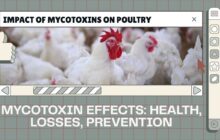

Slow growth, poor FCR, pale or fatty livers, weak immunity and vaccines that do not “take”: when these show up together, feed toxins should be on your list. Mycotoxins are poisons made by moulds in grain and feed, and they hit the liver first. This guide explains what mycotoxicosis looks like in poultry, what to fix in feed and storage, and where Carnitek F, a liver support from IMN Pyrophos with carnitine and folic acid, fits in as a toxicity solution for poultry. If you are searching for a toxicity solution for poultry, read the section on what to do before any tonic, because no bottle can replace clean feed.
What is mycotoxicosis in poultry?
Moulds such as Aspergillus, Fusarium and Penicillium grow on maize, soybean meal, rice bran, groundnut cake and other ingredients when they are damp and warm. They produce toxins such as aflatoxin, ochratoxin, T-2, fumonisin and DON. Even at low levels these toxins damage the liver, weaken the immune system and cut growth. Because the effect is slow and mixed with other problems, many farmers blame the chicks or the medicine instead of the feed.
Signs of toxicity in a flock
- Poor growth, uneven flock and a worse FCR than your usual lots. See our guide on how to maintain FCR in broilers in winter.
- Pale, fatty or enlarged livers and sometimes swollen kidneys at post-mortem.
- Loose or discoloured droppings and low feed intake.
- Weak response to vaccines, and more secondary infections.
- In layers, a drop in production and thin shells.
- Mouth or feet lesions with some toxins, and more deaths than usual.
These signs also fit other diseases, so a post-mortem and a feed check are important.
What to do first: the feed and the shed
- Look at the feed. Check smell, colour, clumps, mould and insects. Change the lot if you doubt it.
- Check storage. Keep feed dry, off the floor, in a clean store with air movement. Do not keep feed too long in summer or in the monsoon.
- Clean bins, feeders and lines. Old feed in corners grows mould.
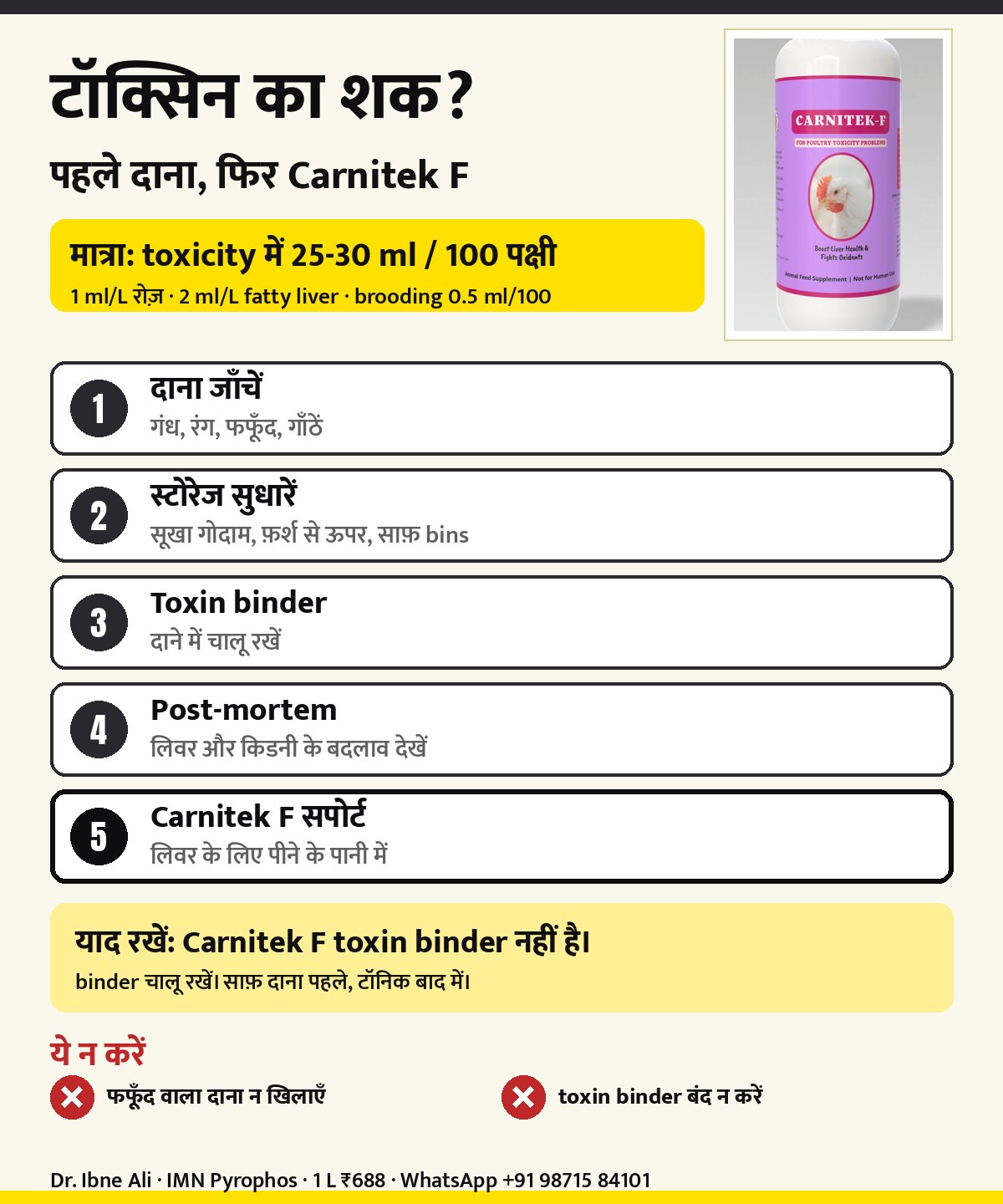
- Use a toxin binder in feed as your nutritionist advises. A binder works in the gut, so it stays part of the plan.
- Get a post-mortem and, if possible, a feed test.
- Support the liver while the cause is removed. Our guide on liver tonic for poultry and fatty liver covers the liver side in detail.
What is Carnitek F?
Carnitek F is a liquid supplement given in drinking water for poultry toxicity problems, with carnitine and folic acid. The product page describes it as liver support during toxicity, mycotoxicosis and fatty liver, suitable for broilers, layers and breeders. The label lists carnitine, glutathione peroxidase, folic acid, sorbitol, magnesium sulphate, magnesium glycinate, choline citrate, DL methionine, betaine, lysine and protease. It is a supplement, not an antibiotic and not a toxin binder.
What does the label say Carnitek F does?
| What the label says | What it means in the shed |
|---|---|
| Supports detoxification and improves liver health in the presence of mycotoxins | Helps the liver cope while you remove the toxin |
| Promotes optimal growth and development | Supports weight gain with DL methionine, lysine and carnitine |
| Enhances feed efficiency and nutrient absorption | Protease and sorbitol help digestion and feed conversion |
| Strengthens the immune system and helps birds cope with the immunosuppressive effects of mycotoxins | Folic acid supports immunity and liver cell repair |
| Reduces the impact of oxidative stress | Less damage from free radicals made by toxins |
| Carnitine aids fat metabolism and boosts energy production | Helps prevent fatty liver; birds stay active |
The product page is clear that Carnitek F helps the liver and other organs deal with toxins that escape the toxin binder in feed. It is not a substitute for toxin binders, so keep using them.
Carnitek F dose (label)
| Situation | Dose (label) |
|---|---|
| Liver health and digestion | 1 ml per litre of water, or 15 ml per 100 birds |
| During toxicity, to support liver metabolism | 25 to 30 ml per 100 birds |
| When toxicity, fatty liver or other liver issues are seen | 2 ml per litre of water |
| During brooding | 0.5 ml per 100 chicks |
Cost example (calculated from the 1 L price of ₹688, about ₹0.69 per ml). For 1,000 birds at 15 ml per 100 birds you need 150 ml, about ₹103. During toxicity at 25 to 30 ml per 100 birds you need 250 to 300 ml, about ₹172 to ₹206. For 1,000 chicks in brooding at 0.5 ml per 100 chicks you need 5 ml, about ₹3. The label does not state the number of days, so confirm the course with your vet or on WhatsApp. Store it in a cool, dry place away from direct sunlight.
How to give Carnitek F, step by step
- Pick the situation: routine liver support, suspected toxicity, or brooding.
- Measure the liquid with a syringe or measuring cup. Do not pour by eye.
- Mix it in drinking water that the birds will finish, with clean drinkers.
- Remove the suspect feed and keep the toxin binder going.
- Record feed intake, droppings and deaths each day, so you can see the trend.
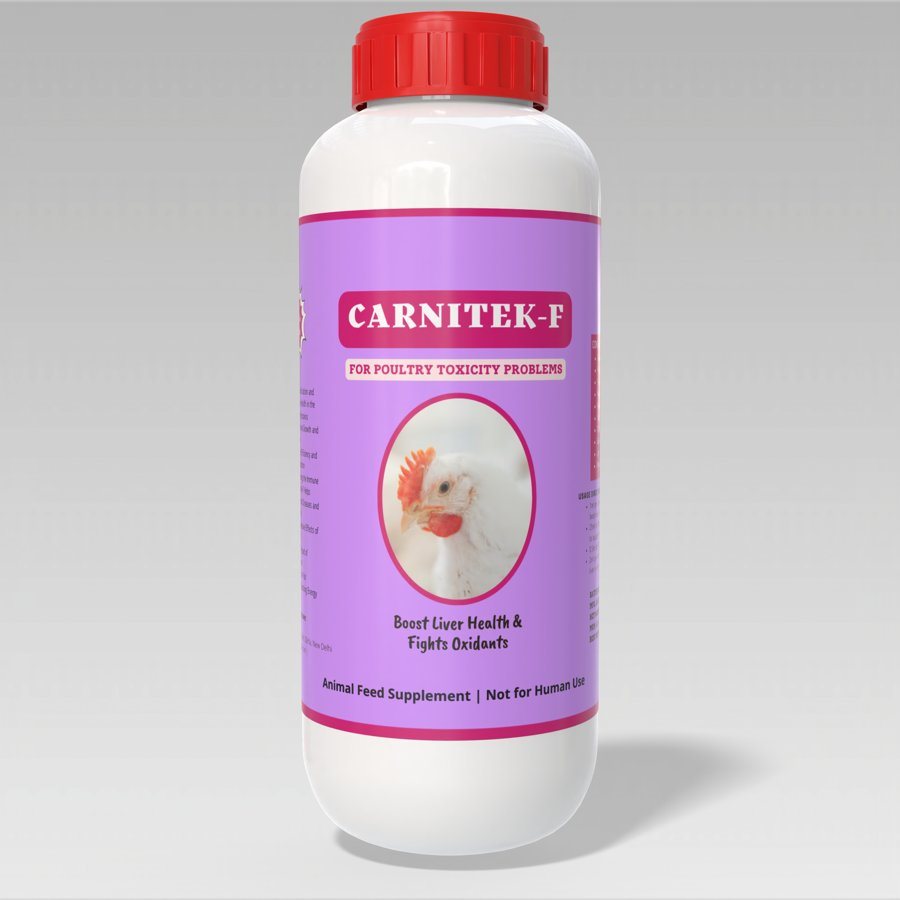
Toxicity · liver support
Carnitek F
Liver support for poultry during toxicity, mycotoxicosis and fatty liver, with carnitine and folic acid. Supports detoxification and liver health in the presence of mycotoxins, feed efficiency and immunity.
Dose (label): 1 ml per litre or 15 ml per 100 birds; 25 to 30 ml per 100 birds during toxicity; 2 ml per litre when toxicity or liver problems are seen; 0.5 ml per 100 chicks in brooding.
1 L ₹688MRP ₹1,310 5 L ₹3,370MRP ₹6,500
Carnitek F or a liver tonic?
Both support the liver. Hepasol DS is a liver tonic built around silymarin and choline, used for fatty liver, hepatitis and IBH. Carnitek F adds carnitine, folic acid, amino acids and protease, and is positioned for toxicity and mycotoxicosis, growth and feed efficiency. Your vet or our team can tell you which suits your flock, and some farms plan both at different times.
A simple plan when you suspect toxins
- Day 1: change or remove the suspect feed lot and clean feeders.
- Day 1: get a post-mortem and note liver and kidney changes.
- From day 1: start Carnitek F at the label dose for toxicity and keep the toxin binder in feed.
- Next days: watch feed intake, droppings and deaths.
- Afterwards: fix storage and ingredient quality so the problem does not return.
What not to do
- Do not feed mouldy or caked feed and hope a tonic will fix it.
- Do not stop the toxin binder because you are giving Carnitek F.
- Do not guess the dose. Use the label dose for your situation.
- Do not use an antibiotic without your vet’s advice.
Common mistakes
- Treating only the liver. If the feed stays bad, the toxins keep coming.
- Using the toxicity dose every day. Doses on the label are for different situations.
- Storing feed too long in a damp godown.
- No records. Without daily notes it is hard to judge improvement.
Frequently asked questions
What is the best toxicity solution for poultry? Clean, dry feed first, then a toxin binder in feed, and liver support such as Carnitek F in water while the flock recovers.
What is Carnitek F used for? It supports the liver during toxicity, mycotoxicosis and fatty liver, and helps growth and feed efficiency.
What does Carnitek F contain? Carnitine, glutathione peroxidase, folic acid, sorbitol, magnesium sulphate, magnesium glycinate, choline citrate, DL methionine, betaine, lysine and protease.
What is the Carnitek F dose? 1 ml per litre or 15 ml per 100 birds for liver health; 25 to 30 ml per 100 birds during toxicity; 2 ml per litre when toxicity or fatty liver is seen; 0.5 ml per 100 chicks in brooding.
What is the price of Carnitek F? 1 L is ₹688 (MRP ₹1,310) and 5 L is ₹3,370 (MRP ₹6,500). Prices may change, so confirm on WhatsApp.
Does it replace a toxin binder? No. The binder works in the gut and Carnitek F supports the liver, so both have a place.
Can it be used in layers and breeders? The product page says it is suitable for broilers, layers and breeders.
Where can I see all IMN products? The IMN product guide lists each product by problem and stage.
Also read: Carnitek F · Liver tonic for poultry · Maintain FCR in winter · Probiotic for poultry · IMN product guide
पोल्ट्री में toxicity (माइकोटॉक्सिन) का उपाय: दाने के टॉक्सिन और Carnitek F
धीमी बढ़त, ख़राब FCR, पीले या चर्बी वाले लिवर, कमज़ोर इम्यूनिटी और टीके जो “लगते” नहीं: जब ये सब साथ दिखें तो दाने के टॉक्सिन को सूची में रखना चाहिए। Mycotoxins फफूँद से बने ज़हर हैं जो अनाज और दाने में पनपते हैं, और असर सबसे पहले लिवर पर पड़ता है। इस गाइड में बताया है कि पोल्ट्री में mycotoxicosis कैसी दिखती है, दाने और स्टोरेज में क्या ठीक करें और IMN Pyrophos का लिवर सपोर्ट Carnitek F, जिसमें carnitine और folic acid है, toxicity solution के रूप में कहाँ फ़िट बैठता है। अगर आप toxicity solution for poultry खोज रहे हैं तो टॉनिक से पहले “पहले क्या करें” वाला हिस्सा पढ़ें, क्योंकि कोई बोतल साफ़ दाने की जगह नहीं ले सकती।
पोल्ट्री में mycotoxicosis क्या है?
Aspergillus, Fusarium और Penicillium जैसी फफूँद मक्का, सोयाबीन मील, चावल की चोकर, मूँगफली की खली और दूसरी चीज़ों पर तब पनपती है जब वे नम और गर्म हों। ये aflatoxin, ochratoxin, T-2, fumonisin और DON जैसे टॉक्सिन बनाती हैं। कम मात्रा में भी ये लिवर को नुकसान करते हैं, इम्यून सिस्टम कमज़ोर करते हैं और बढ़त घटाते हैं। असर धीमा और दूसरी समस्याओं में मिला होने से कई किसान चूज़ों या दवा को दोष देते हैं, दाने को नहीं।
झुंड में toxicity के लक्षण
- धीमी बढ़त, असमान झुंड और आपके आम lots से ख़राब FCR। हमारी गाइड सर्दी में broiler का FCR कैसे बनाए रखें देखें।
- post-mortem में पीला, चर्बी वाला या बड़ा लिवर, और कभी-कभी सूजी किडनी।
- पतली या रंग बदली बीट और कम दाना खाना।
- टीकों का कमज़ोर असर और ज़्यादा secondary infections।
- लेयर में उत्पादन गिरना और पतले खोल।
- कुछ टॉक्सिन से मुँह या पंजों में घाव, और सामान्य से ज़्यादा मौतें।
ये लक्षण दूसरी बीमारियों से भी मिलते हैं, इसलिए post-mortem और दाने की जाँच ज़रूरी है।
पहले क्या करें: दाना और शेड
- दाना देखें। गंध, रंग, गाँठें, फफूँद और कीड़े जाँचें। शक हो तो lot बदलें।
- स्टोरेज जाँचें। दाना सूखा, फ़र्श से ऊपर, हवादार साफ़ गोदाम में रखें। गर्मी और बरसात में दाना बहुत दिन न रखें।
- Bins, feeders और lines साफ़ करें। कोनों में पड़ा पुराना दाना फफूँद उगाता है।
- दाने में toxin binder दें जैसा आपका nutritionist कहे। binder आँत में काम करता है, इसलिए वह प्लान का हिस्सा रहता है।
- Post-mortem कराएँ और हो सके तो दाने की जाँच।
- लिवर को सहारा दें जब तक कारण हटे। लिवर पक्ष की पूरी जानकारी हमारी गाइड पोल्ट्री के लिए लिवर टॉनिक और fatty liver में है।
Carnitek F क्या है?
Carnitek F पीने के पानी में दिया जाने वाला liquid supplement है, जो पोल्ट्री की toxicity समस्याओं के लिए carnitine और folic acid के साथ बना है। प्रोडक्ट पेज इसे toxicity, mycotoxicosis और fatty liver में लिवर सपोर्ट बताता है, जो broilers, layers और breeders के लिए ठीक है। Label में carnitine, glutathione peroxidase, folic acid, sorbitol, magnesium sulphate, magnesium glycinate, choline citrate, DL methionine, betaine, lysine और protease लिखे हैं। यह supplement है, antibiotic या toxin binder नहीं।
Label के अनुसार Carnitek F क्या करता है?
| Label क्या कहता है | शेड में इसका मतलब |
|---|---|
| mycotoxins की मौजूदगी में detoxification में मदद और लिवर की सेहत सुधारना | टॉक्सिन हटाने के दौरान लिवर को सहारा |
| सही बढ़त और विकास | DL methionine, lysine और carnitine से वज़न बढ़त में सहारा |
| feed efficiency और पोषक तत्वों का absorption बढ़ाना | Protease और sorbitol पाचन और feed conversion में मदद करते हैं |
| इम्यून सिस्टम मज़बूत करना और mycotoxins के immunosuppressive असर से निपटने में मदद | Folic acid इम्यूनिटी और लिवर कोशिका की मरम्मत में सहारा देता है |
| oxidative stress का असर घटाना | टॉक्सिन से बनने वाले free radicals का नुकसान कम |
| Carnitine fat metabolism में मदद करता है और energy बढ़ाता है | fatty liver रोकने में मदद, पक्षी सक्रिय रहते हैं |
प्रोडक्ट पेज साफ़ कहता है कि Carnitek F उन टॉक्सिन से निपटने में लिवर और दूसरे अंगों की मदद करता है जो दाने के toxin binder से बच निकलते हैं। यह toxin binder की जगह नहीं लेता, इसलिए binder चलाते रहें।
Carnitek F की मात्रा (label)
| स्थिति | मात्रा (label) |
|---|---|
| लिवर की सेहत और पाचन | 1 मिली प्रति लीटर पानी, या 15 मिली प्रति 100 पक्षी |
| toxicity के दौरान, लिवर metabolism को सहारा देने के लिए | 25 से 30 मिली प्रति 100 पक्षी |
| जब toxicity, fatty liver या दूसरी लिवर समस्या दिखे | 2 मिली प्रति लीटर पानी |
| Brooding में | 0.5 मिली प्रति 100 चूज़े |
खर्च का उदाहरण (1 L की कीमत ₹688, यानी लगभग ₹0.69 प्रति मिली के हिसाब से)। 1,000 पक्षियों के लिए 15 मिली प्रति 100 पक्षी पर 150 मिली लगते हैं, यानी लगभग ₹103। toxicity में 25 से 30 मिली प्रति 100 पक्षी पर 250 से 300 मिली लगते हैं, यानी लगभग ₹172 से ₹206। brooding में 1,000 चूज़ों के लिए 0.5 मिली प्रति 100 चूज़े पर 5 मिली लगते हैं, यानी लगभग ₹3। Label पर दिनों की संख्या नहीं लिखी, इसलिए course डॉक्टर से या WhatsApp पर पक्का करें। इसे ठंडी, सूखी जगह पर सीधी धूप से दूर रखें।
Carnitek F कैसे दें, कदम दर कदम
- स्थिति चुनें: रोज़ का लिवर सपोर्ट, toxicity का शक, या brooding।
- दवा नापें syringe या measuring cup से। आँख से न डालें।
- पीने के पानी में मिलाएँ जो पक्षी ख़त्म कर लें, और drinkers साफ़ रखें।
- शक वाला दाना हटाएँ और toxin binder चालू रखें।
- रिकॉर्ड रखें: दाने की खपत, बीट और मौतें रोज़ लिखें, ताकि रुझान दिखे।
Toxicity · लिवर सपोर्ट
Carnitek F
toxicity, mycotoxicosis और fatty liver में पोल्ट्री के लिए लिवर सपोर्ट, carnitine और folic acid के साथ। mycotoxins की मौजूदगी में detoxification और लिवर की सेहत, feed efficiency और इम्यूनिटी में मदद। toxin binder की जगह नहीं।
मात्रा: label: 1 मिली प्रति लीटर या 15 मिली प्रति 100 पक्षी; toxicity में 25 से 30 मिली प्रति 100 पक्षी; toxicity या लिवर की समस्या दिखे तो 2 मिली प्रति लीटर; brooding में 0.5 मिली प्रति 100 चूज़े।
1 L ₹688 · 5 L ₹3,370MRP ₹1,310 / ₹6,500
Carnitek F या लिवर टॉनिक?
दोनों लिवर को सहारा देते हैं। Hepasol DS silymarin और choline पर बना लिवर टॉनिक है, जो fatty liver, hepatitis और IBH में काम आता है। Carnitek F में carnitine, folic acid, amino acids और protease जुड़े हैं और यह toxicity व mycotoxicosis, बढ़त और feed efficiency के लिए रखा गया है। आपके झुंड के लिए कौन सा ठीक है यह डॉक्टर या हमारी टीम बता सकती है, और कुछ फ़ार्म अलग-अलग समय पर दोनों रखते हैं।
टॉक्सिन का शक हो तो आसान प्लान
- दिन 1: शक वाला दाने का lot बदलें या हटाएँ और feeders साफ़ करें।
- दिन 1: post-mortem कराएँ और लिवर व किडनी के बदलाव लिखें।
- दिन 1 से: Carnitek F label की toxicity वाली मात्रा में शुरू करें और दाने में toxin binder चालू रखें।
- अगले दिन: दाने की खपत, बीट और मौतें देखें।
- उसके बाद: स्टोरेज और कच्चे माल की quality ठीक करें ताकि समस्या वापस न आए।
क्या न करें
- फफूँद वाला या जमा हुआ दाना न खिलाएँ और टॉनिक से ठीक होने की उम्मीद न रखें।
- Carnitek F देने की वजह से toxin binder बंद न करें।
- अंदाज़े से मात्रा न दें। अपनी स्थिति की label मात्रा लें।
- डॉक्टर की सलाह के बिना antibiotic न दें।
आम गलतियाँ
- सिर्फ़ लिवर का इलाज करना। अगर दाना ख़राब रहा तो टॉक्सिन आते रहेंगे।
- रोज़ toxicity वाली मात्रा देना। Label की मात्राएँ अलग-अलग स्थितियों के लिए हैं।
- नम गोदाम में दाना बहुत दिन रखना।
- रिकॉर्ड न रखना। रोज़ के नोट के बिना सुधार का अंदाज़ा मुश्किल है।
अक्सर पूछे जाने वाले सवाल
पोल्ट्री में toxicity का सबसे अच्छा उपाय क्या है? पहले साफ़, सूखा दाना, फिर दाने में toxin binder, और झुंड के उबरने तक पानी में Carnitek F जैसा लिवर सपोर्ट।
Carnitek F किसलिए इस्तेमाल होता है? यह toxicity, mycotoxicosis और fatty liver में लिवर को सहारा देता है और बढ़त तथा feed efficiency में मदद करता है।
Carnitek F में क्या है? Carnitine, glutathione peroxidase, folic acid, sorbitol, magnesium sulphate, magnesium glycinate, choline citrate, DL methionine, betaine, lysine और protease।
Carnitek F की मात्रा क्या है? लिवर की सेहत के लिए 1 मिली प्रति लीटर या 15 मिली प्रति 100 पक्षी; toxicity में 25 से 30 मिली प्रति 100 पक्षी; toxicity या fatty liver दिखे तो 2 मिली प्रति लीटर; brooding में 0.5 मिली प्रति 100 चूज़े।
Carnitek F की कीमत क्या है? 1 L ₹688 (MRP ₹1,310) और 5 L ₹3,370 (MRP ₹6,500)। कीमत बदल सकती है, WhatsApp पर पक्की करें।
क्या यह toxin binder की जगह लेता है? नहीं। binder आँत में काम करता है और Carnitek F लिवर को सहारा देता है, इसलिए दोनों की जगह है।
क्या इसे लेयर और breeders में दे सकते हैं? प्रोडक्ट पेज के अनुसार यह broilers, layers और breeders के लिए ठीक है।
सारे IMN प्रोडक्ट कहाँ देखूँ? IMN product guide में हर प्रोडक्ट समस्या और stage के हिसाब से है।
यह भी पढ़ें: Carnitek F · पोल्ट्री के लिए लिवर टॉनिक · सर्दी में FCR बनाए रखें · पोल्ट्री के लिए प्रोबायोटिक · IMN product guide
Poultry me toxicity (mycotoxin) ka upay: daane ke toxin aur Carnitek F
Dheemi badhat, kharab FCR, peele ya charbi wale liver, kamzor immunity aur teeke jo “lagte” nahi: jab ye sab saath dikhein to daane ke toxin ko suchi me rakhna chahiye. Mycotoxins fafoond se bane zehar hain jo anaaj aur daane me panapte hain, aur asar sabse pehle liver par padta hai. Is guide me bataya hai ki poultry me mycotoxicosis kaisi dikhti hai, daane aur storage me kya theek karein aur IMN Pyrophos ka liver support Carnitek F, jisme carnitine aur folic acid hai, toxicity solution ke roop me kahan fit baithta hai. Agar aap toxicity solution for poultry dhoondh rahe hain to tonic se pehle “pehle kya karein” wala hissa padhein, kyunki koi bottle saaf daane ki jagah nahi le sakti.
Poultry me mycotoxicosis kya hai?
Aspergillus, Fusarium aur Penicillium jaisi fafoond makka, soybean meal, chawal ki chokar, moongfali ki khali aur doosri cheezon par tab panapti hai jab wo nam aur garam hon. Ye aflatoxin, ochratoxin, T-2, fumonisin aur DON jaise toxin banati hain. Kam matra me bhi ye liver ko nuksaan karte hain, immune system kamzor karte hain aur badhat ghatate hain. Asar dheema aur doosri samasyaon me mila hone se kai kisan choozon ya dawa ko dosh dete hain, daane ko nahi.
Jhund me toxicity ke lakshan
- Dheemi badhat, asamaan jhund aur aapke aam lots se kharab FCR. Hamari guide sardi me broiler ka FCR kaise banaye rakhein dekhein.
- Post-mortem me peela, charbi wala ya bada liver, aur kabhi-kabhi soojhi kidney.
- Patli ya rang badli beet aur kam daana khana.
- Teekon ka kamzor asar aur zyada secondary infections.
- Layer me utpadan girna aur patle khol.
- Kuch toxin se munh ya panjon me ghaav, aur saamanya se zyada mautein.
Ye lakshan doosri beemariyon se bhi milte hain, isliye post-mortem aur daane ki jaanch zaroori hai.
Pehle kya karein: daana aur shed
- Daana dekhein. Gandh, rang, gaanthein, fafoond aur keede jaanchein. Shak ho to lot badlein.
- Storage jaanchein. Daana sookha, farsh se upar, hawadaar saaf godam me rakhein. Garmi aur barsaat me daana bahut din na rakhein.
- Bins, feeders aur lines saaf karein. Konon me pada purana daana fafoond ugata hai.
- Daane me toxin binder dein jaisa aapka nutritionist kahe. Binder aant me kaam karta hai, isliye wo plan ka hissa rehta hai.
- Post-mortem karayein aur ho sake to daane ki jaanch.
- Liver ko sahara dein jab tak karan hate. Liver pehlu ki poori jaankari hamari guide poultry ke liye liver tonic aur fatty liver me hai.
Carnitek F kya hai?
Carnitek F peene ke paani me diya jaane wala liquid supplement hai, jo poultry ki toxicity samasyaon ke liye carnitine aur folic acid ke saath bana hai. Product page ise toxicity, mycotoxicosis aur fatty liver me liver support batata hai, jo broilers, layers aur breeders ke liye theek hai. Label me carnitine, glutathione peroxidase, folic acid, sorbitol, magnesium sulphate, magnesium glycinate, choline citrate, DL methionine, betaine, lysine aur protease likhe hain. Ye supplement hai, antibiotic ya toxin binder nahi.
Label ke anusaar Carnitek F kya karta hai?
| Label kya kehta hai | Shed me iska matlab |
|---|---|
| Mycotoxins ki maujoodgi me detoxification me madad aur liver ki sehat sudharna | Toxin hatane ke dauran liver ko sahara |
| Sahi badhat aur vikas | DL methionine, lysine aur carnitine se wazan badhat me sahara |
| Feed efficiency aur poshak tatvon ka absorption badhana | Protease aur sorbitol paachan aur feed conversion me madad karte hain |
| Immune system majboot karna aur mycotoxins ke immunosuppressive asar se nipatne me madad | Folic acid immunity aur liver koshika ki marammat me sahara deta hai |
| Oxidative stress ka asar ghatana | Toxin se bane free radicals ka nuksaan kam |
| Carnitine fat metabolism me madad karta hai aur energy badhata hai | Fatty liver rokne me madad, pakshi sakriya rehte hain |
Product page saaf kehta hai ki Carnitek F un toxin se nipatne me liver aur doosre angon ki madad karta hai jo daane ke toxin binder se bach nikalte hain. Ye toxin binder ki jagah nahi leta, isliye binder chalate rahein.
Carnitek F ki matra (label)
| Sthiti | Matra (label) |
|---|---|
| Liver ki sehat aur paachan | 1 ml prati litre paani, ya 15 ml prati 100 pakshi |
| Toxicity ke dauran, liver metabolism ko sahara dene ke liye | 25 se 30 ml prati 100 pakshi |
| Jab toxicity, fatty liver ya doosri liver samasya dikhe | 2 ml prati litre paani |
| Brooding me | 0.5 ml prati 100 chooze |
Kharch ka udaharan (1 L ki keemat ₹688, yaani lagbhag ₹0.69 prati ml ke hisaab se). 1,000 pakshiyon ke liye 15 ml prati 100 pakshi par 150 ml lagte hain, yaani lagbhag ₹103. Toxicity me 25 se 30 ml prati 100 pakshi par 250 se 300 ml lagte hain, yaani lagbhag ₹172 se ₹206. Brooding me 1,000 choozon ke liye 0.5 ml prati 100 chooze par 5 ml lagte hain, yaani lagbhag ₹3. Label par dinon ki sankhya nahi likhi, isliye course doctor se ya WhatsApp par pakka karein. Ise thandi, sookhi jagah par seedhi dhoop se door rakhein.
Carnitek F kaise dein, kadam dar kadam
- Sthiti chunein: roz ka liver support, toxicity ka shak, ya brooding.
- Dawa naapein syringe ya measuring cup se. Aankh se na daalein.
- Peene ke paani me milayein jo pakshi khatam kar lein, aur drinkers saaf rakhein.
- Shak wala daana hatayein aur toxin binder chalu rakhein.
- Record rakhein: daane ki khapat, beet aur mautein roz likhein, taaki rujhan dikhe.
Toxicity · liver support
Carnitek F
Toxicity, mycotoxicosis aur fatty liver me poultry ke liye liver support, carnitine aur folic acid ke saath. Mycotoxins ki maujoodgi me detoxification aur liver ki sehat, feed efficiency aur immunity me madad. Toxin binder ki jagah nahi.
Matra: Label: 1 ml prati litre ya 15 ml prati 100 pakshi; toxicity me 25 se 30 ml prati 100 pakshi; toxicity ya liver ki samasya dikhe to 2 ml prati litre; brooding me 0.5 ml prati 100 chooze.
1 L ₹688 · 5 L ₹3,370MRP ₹1,310 / ₹6,500
Carnitek F ya liver tonic?
Dono liver ko sahara dete hain. Hepasol DS silymarin aur choline par bana liver tonic hai, jo fatty liver, hepatitis aur IBH me kaam aata hai. Carnitek F me carnitine, folic acid, amino acids aur protease jude hain aur ye toxicity va mycotoxicosis, badhat aur feed efficiency ke liye rakha gaya hai. Aapke jhund ke liye kaun sa theek hai ye doctor ya hamari team bata sakti hai, aur kuch farm alag-alag samay par dono rakhte hain.
Toxin ka shak ho to aasan plan
- Din 1: shak wala daane ka lot badlein ya hatayein aur feeders saaf karein.
- Din 1: post-mortem karayein aur liver va kidney ke badlav likhein.
- Din 1 se: Carnitek F label ki toxicity wali matra me shuru karein aur daane me toxin binder chalu rakhein.
- Agle din: daane ki khapat, beet aur mautein dekhein.
- Uske baad: storage aur kachche maal ki quality theek karein taaki samasya wapas na aaye.
Kya na karein
- Fafoond wala ya jama hua daana na khilayein aur tonic se theek hone ki ummeed na rakhein.
- Carnitek F dene ki wajah se toxin binder band na karein.
- Andaze se matra na dein. Apni sthiti ki label matra lein.
- Doctor ki salah ke bina antibiotic na dein.
Aam galtiyan
- Sirf liver ka ilaaj karna. Agar daana kharab raha to toxin aate rahenge.
- Roz toxicity wali matra dena. Label ki matrayein alag-alag sthitiyon ke liye hain.
- Nam godam me daana bahut din rakhna.
- Record na rakhna. Roz ke note ke bina sudhar ka andaza mushkil hai.
Aksar poochhe jaane wale sawaal
Poultry me toxicity ka sabse achha upay kya hai? Pehle saaf, sookha daana, phir daane me toxin binder, aur jhund ke ubarne tak paani me Carnitek F jaisa liver support.
Carnitek F kisliye istemal hota hai? Ye toxicity, mycotoxicosis aur fatty liver me liver ko sahara deta hai aur badhat tatha feed efficiency me madad karta hai.
Carnitek F me kya hai? Carnitine, glutathione peroxidase, folic acid, sorbitol, magnesium sulphate, magnesium glycinate, choline citrate, DL methionine, betaine, lysine aur protease.
Carnitek F ki matra kya hai? Liver ki sehat ke liye 1 ml prati litre ya 15 ml prati 100 pakshi; toxicity me 25 se 30 ml prati 100 pakshi; toxicity ya fatty liver dikhe to 2 ml prati litre; brooding me 0.5 ml prati 100 chooze.
Carnitek F ki keemat kya hai? 1 L ₹688 (MRP ₹1,310) aur 5 L ₹3,370 (MRP ₹6,500). Keemat badal sakti hai, WhatsApp par pakki karein.
Kya ye toxin binder ki jagah leta hai? Nahi. Binder aant me kaam karta hai aur Carnitek F liver ko sahara deta hai, isliye dono ki jagah hai.
Kya ise layer aur breeders me de sakte hain? Product page ke anusaar ye broilers, layers aur breeders ke liye theek hai.
Saare IMN products kahan dekhun? IMN product guide me har product samasya aur stage ke hisaab se hai.
Ye bhi padhein: Carnitek F · Poultry ke liye liver tonic · Sardi me FCR banaye rakhein · Poultry ke liye probiotic · IMN product guide