
Winter is the season of rattling sounds. When sheds are closed to keep chicks warm, ammonia, dust and humidity build up, and birds start to cough, sneeze and make a “khar-khar” sound at night. This guide is a shed-by-shed checklist to bring respiratory sounds down in broilers, and it says clearly when you must call your vet.
Why respiratory sounds rise in winter
- Ammonia: wet litter in a closed shed releases ammonia that burns the airways and opens the door to germs.
- Dust and humidity: dry dust irritates, damp air carries germs.
- Cold stress and draughts: chilled chicks have weaker defence.
- Infections: CRD (Mycoplasma with E. coli), IB and other diseases can show the same sound. Only your vet can tell them apart, see infectious bronchitis in poultry.
Management checklist, step by step
- Listen at night. Walk the shed after lights are dimmed and note the day and the flock age when sounds begin.
- Smell test: if you can smell ammonia at bird height, it is too high for the birds.
- Ventilation: give minimum fresh air every hour even in cold weather, with no draught on the chicks. See the winter broiler management guide.
- Litter: keep it dry and loose. Remove wet patches near drinkers and fix leaking nipples.
- Brooding temperature: follow the age-wise temperature so chicks are not chilled. See the winter brooding guide.
- Water: clean tanks and lines, see water sanitizer for poultry.
- Call your vet if the sound comes with sudden mortality, swollen face or a drop in feed intake. Do not start medicines on guesswork.
Where IMN products fit
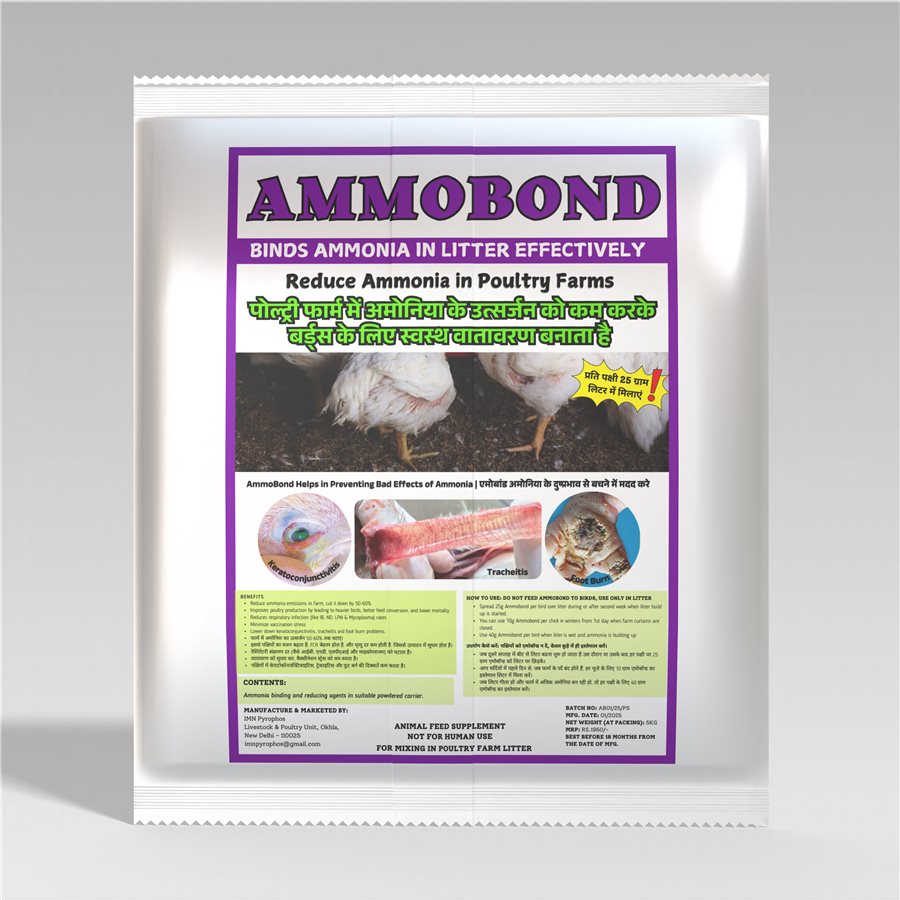
Ammobond is used only in the litter, never fed to birds. The label says it binds ammonia and reduces it by 50 to 60 per cent, and that it helps reduce respiratory infection rates. The dose we advise is 5 kg per 2500 birds, sprinkled on the litter by the broadcast method. In closed or EC-house brooding mix it into the litter on day 1, repeat the same dose on day 16 to 17, and on day 32 to 34 if needed. It does not dry the litter, and after applying do not rake or add lime or bleaching powder.
Binds ammonia in litter
Ammobond
Ammonia binding and reducing agents in a powder carrier. Cuts ammonia emission on the farm by 50 to 60 per cent and helps reduce respiratory infection rates, keratoconjunctivitis, tracheitis and foot burn problems. For litter only, do not feed to birds.
Dose: Sprinkle 5 kg per 2500 birds on the litter (broadcast method). Day 1 in closed or EC-house brooding, again on day 16 to 17, and day 32 to 34 if needed.
5 kg ₹1,655MRP ₹1,950
Respoze is a herbal sounds tonic (ginger, tulsi, thyme, garlic extracts and camphor). The pack says it is an effective solution for sound in poultry birds with excellent results in CRD. It is a supportive tonic, not a replacement for your vet’s diagnosis. Dose: low to moderate disease 1 ml per 7 kg body weight or 1 ml per 2 litres of water for 15 to 36 hours; heavy disease 1 ml per 5 kg body weight or 1 ml per 2 litres of water for 15 to 24 hours. Send bird age, flock size and weight on WhatsApp if you need help.
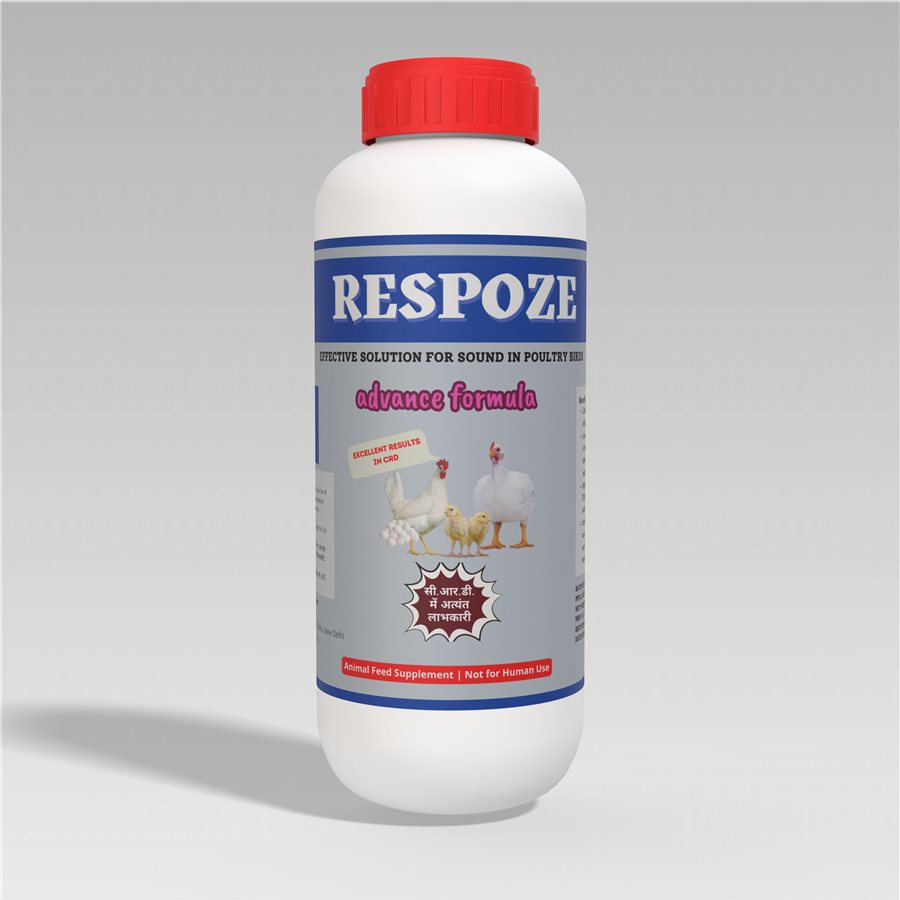
Herbal respiratory tonic · CRD
Respoze
Herbal sounds tonic with ginger, tulsi, thyme and garlic extracts and camphor. Helps with respiratory sound problems, widens the airway and thins phlegm so that medicines can reach respiratory germs better. Pack: excellent results in CRD.
Dose: Low to moderate disease: 1 ml per 7 kg body weight or 1 ml per 2 litres of water, for 15 to 36 hours. Intense or heavy disease: 1 ml per 5 kg body weight or 1 ml per 2 litres of water, for 15 to 24 hours.
500 ml ₹610 · 1 L ₹920MRP ₹820 / ₹1,760
For immunity support around vaccination, read the Nexamune guide. For the full CRD story see CRD solution for poultry.
What not to do
- Do not close the shed fully to save heat. Fresh air matters as much as warmth.
- Do not use any tonic instead of fixing litter and ventilation.
- Do not start antibiotics without your vet.
- Do not mix sick and healthy flocks or share equipment between sheds.
Frequently asked questions
Why do my broilers make a rattling sound at night in winter? Usually ammonia, dust, humidity or cold stress, sometimes CRD or IB. Fix the shed first and get your vet to confirm the disease.
What is CRD in broilers? Chronic respiratory disease, caused by Mycoplasma with secondary bacteria such as E. coli, made worse by poor air quality.
Does Ammobond dry the litter? No. It chemically binds ammonia in the litter.
Can Respoze be used with other medicines? Ask your vet and our team on WhatsApp for your flock.
What are the prices? See the product boxes above. Prices may change, so confirm on WhatsApp.
Also read: Respoze · Ammobond litter guide · Maintain FCR in winter · IMN product guide
सर्दी खर्र-खर्र की आवाज़ का मौसम है। चूज़ों को गर्म रखने के लिए शेड बंद करते हैं तो अमोनिया, धूल और नमी बढ़ती है और रात में पक्षी खाँसने, छींकने और “खर-खर” करने लगते हैं। यह शेड की चेकलिस्ट है जिससे ब्रॉयलर में साँस की आवाज़ घटाई जा सकती है, और साफ़ बताया है कि डॉक्टर को कब बुलाना है।
सर्दी में साँस की आवाज़ क्यों बढ़ती है
- अमोनिया: बंद शेड में गीली लिटर अमोनिया छोड़ती है जो साँस की नली जलाती है और कीटाणुओं को रास्ता देती है।
- धूल और नमी: सूखी धूल चुभती है, नम हवा कीटाणु लाती है।
- ठंड और सीधी हवा: ठिठुरे चूज़ों की रोग प्रतिरोधक क्षमता कम होती है।
- संक्रमण: CRD (माइकोप्लाज़्मा के साथ E. coli), IB और दूसरी बीमारियों में भी यही आवाज़ आ सकती है। फ़र्क़ सिर्फ़ डॉक्टर बता सकता है, देखें पोल्ट्री में IB।
चेकलिस्ट, कदम दर कदम
- रात में सुनें। लाइट धीमी होने के बाद शेड में चलें और आवाज़ शुरू होने का दिन और उम्र लिख लें।
- सूँघकर देखें: पक्षी की ऊँचाई पर अमोनिया की गंध आए तो वह बहुत ज़्यादा है।
- वेंटिलेशन: ठंड में भी हर घंटे थोड़ी ताज़ी हवा दें, चूज़ों पर सीधी हवा न पड़े। देखें सर्दी में ब्रॉयलर प्रबंधन।
- लिटर: सूखी और ढीली रखें। ड्रिंकर के पास की गीली जगह हटाएँ और टपकते निप्पल ठीक करें।
- ब्रूडिंग तापमान: उम्र के हिसाब से तापमान रखें ताकि चूज़े ठिठुरें नहीं। देखें सर्दी की ब्रूडिंग गाइड।
- पानी: टंकी और पाइप साफ़ रखें, देखें पोल्ट्री का वॉटर सैनिटाइज़र।
- डॉक्टर को बुलाएँ अगर आवाज़ के साथ अचानक मौत, सूजा चेहरा या दाना कम खाना हो। अंदाज़े से दवा शुरू न करें।
IMN प्रोडक्ट कहाँ फ़िट होते हैं
Ammobond सिर्फ़ लिटर में इस्तेमाल होता है, पक्षियों को खिलाना नहीं है। पैक के अनुसार यह अमोनिया को बाँधकर 50 से 60 प्रतिशत घटाता है और साँस के संक्रमण की दर घटाने में मदद करता है। हमारी बताई मात्रा: हर 2500 पक्षियों पर 5 किलो, लिटर के ऊपर बुआई की तरह छिड़कें। बंद या EC हाउस ब्रूडिंग में पहले दिन लिटर में मिला दें, 16-17वें दिन वही मात्रा दोबारा, और ज़रूरत हो तो 32-34वें दिन। यह लिटर को सुखाता नहीं है, और डालने के बाद रेकिंग या चूना/ब्लीचिंग पाउडर न डालें।
लिटर में अमोनिया बाँधता है
Ammobond
लिटर में अमोनिया को बाँधने और घटाने वाले तत्व, पाउडर कैरियर में। फार्म में अमोनिया का उत्सर्जन 50–60% तक घटाता है। पक्षियों का वज़न, FCR और मृत्यु दर बेहतर करने में मदद करता है, और केराटोकंजंक्टिवाइटिस, ट्रेकाइटिस और पैर जलने की समस्या घटाता है। पक्षियों को खिलाना नहीं है, सिर्फ़ लिटर में इस्तेमाल करें।
मात्रा: Ammobond को दस्ताने पहनकर लिटर के ऊपर छिड़कें (ब्रॉडकास्ट तरीका, जैसे खेत में बीज बिखेरते हैं): हर 2500 पक्षियों पर 5 kg। क्लोज़्ड ब्रूडिंग / EC फार्म ब्रूडिंग में पहले दिन लिटर में मिला दें, फिर 16-17वें दिन उसी मात्रा में दोबारा, और ज़रूरत हो तो 32-34वें दिन। डालने के बाद रेकिंग न करें और चूना या ब्लीचिंग पाउडर न डालें।
5 kg ₹1,655MRP ₹1,950
Respoze एक हर्बल साउंड टॉनिक है (अदरक, तुलसी, thyme, लहसुन के extracts और कपूर)। पैक पर लिखा है कि यह पक्षियों की आवाज़ की समस्या का असरदार उपाय है और CRD में बेहतरीन नतीजे देता है। यह सहायक टॉनिक है, डॉक्टर की जाँच का विकल्प नहीं। मात्रा: हल्की से मध्यम बीमारी में 1 ml प्रति 7 किलो वज़न या 1 ml प्रति 2 लीटर पानी, 15 से 36 घंटे; तेज़ बीमारी में 1 ml प्रति 5 किलो वज़न या 1 ml प्रति 2 लीटर पानी, 15 से 24 घंटे। मदद चाहिए तो पक्षियों की उम्र, संख्या और वज़न WhatsApp पर भेजें।
हर्बल respiratory टॉनिक · CRD
Respoze
अदरक, तुलसी, thyme और लहसुन के extracts और कपूर वाला हर्बल साउंड टॉनिक। साँस की आवाज़ की समस्या घटाता है, श्वास नली चौड़ी करता है और बलगम पतला करता है, ताकि antibiotic साँस के germs तक बेहतर पहुँचे। पैक पर: CRD में बेहतरीन नतीजे।
मात्रा: हल्की से मध्यम बीमारी में 1 ml प्रति 7 किलो वज़न या 1 ml प्रति 2 लीटर पानी, 15 से 36 घंटे; तेज़ बीमारी में 1 ml प्रति 5 किलो वज़न या 1 ml प्रति 2 लीटर पानी, 15 से 24 घंटे।
500 ml ₹610 · 1 L ₹920MRP ₹820 / ₹1,760
टीकाकरण के आसपास रोग प्रतिरोधक सहारे के लिए पढ़ें Nexamune गाइड। CRD की पूरी जानकारी के लिए पोल्ट्री में CRD का समाधान।
क्या न करें
- गर्मी बचाने के लिए शेड पूरा बंद न करें। ताज़ी हवा भी गर्मी जितनी ज़रूरी है।
- लिटर और वेंटिलेशन ठीक किए बिना सिर्फ़ टॉनिक पर भरोसा न करें।
- डॉक्टर के बिना एंटीबायोटिक शुरू न करें।
- बीमार और स्वस्थ झुंड न मिलाएँ, शेडों के बीच सामान साझा न करें।
अक्सर पूछे जाने वाले सवाल
सर्दी में रात को ब्रॉयलर खर-खर क्यों करते हैं? ज़्यादातर अमोनिया, धूल, नमी या ठंड से, कभी CRD या IB से। पहले शेड ठीक करें और बीमारी डॉक्टर से पक्की करवाएँ।
ब्रॉयलर में CRD क्या है? क्रॉनिक रेस्पिरेटरी डिज़ीज़, जो माइकोप्लाज़्मा और E. coli जैसे बैक्टीरिया से होती है और खराब हवा से बढ़ती है।
क्या Ammobond लिटर सुखाता है? नहीं। यह लिटर में अमोनिया को रासायनिक रूप से बाँधता है।
कीमत क्या है? ऊपर प्रोडक्ट बॉक्स देखें। कीमत बदल सकती है, WhatsApp पर पक्का कर लें।
यह भी पढ़ें: Respoze · Ammobond लिटर गाइड · सर्दी में FCR · IMN प्रोडक्ट गाइड
Sardi khar-khar ki awaaz ka mausam hai. Chuzon ko garm rakhne ke liye shed band karte hain to ammonia, dhool aur nami badhti hai aur raat me pakshi khaansne, chheenkne aur “khar-khar” karne lagte hain. Ye shed ki checklist hai jisse broiler me saans ki awaaz ghatai ja sakti hai, aur saaf bataya hai ki doctor ko kab bulana hai.
Sardi me saans ki awaaz kyun badhti hai
- Ammonia: band shed me geeli litter ammonia chhodti hai jo saans ki nali jalati hai aur keetanuon ko raasta deti hai.
- Dhool aur nami: sookhi dhool chubhti hai, nam hawa keetanu laati hai.
- Thand aur seedhi hawa: thithure chuzon ki rog pratirodhak kshamta kam hoti hai.
- Sankraman: CRD (Mycoplasma ke saath E. coli), IB aur doosri bimariyon me bhi yahi awaaz aa sakti hai. Fark sirf doctor bata sakta hai, dekhein poultry me IB.
Checklist, kadam dar kadam
- Raat me sunein. Light dheemi hone ke baad shed me chalein aur awaaz shuru hone ka din aur umr likh lein.
- Soonghkar dekhein: pakshi ki oonchai par ammonia ki gandh aaye to wo bahut zyada hai.
- Ventilation: thand me bhi har ghante thodi taazi hawa dein, chuzon par seedhi hawa na pade. Dekhein sardi me broiler management.
- Litter: sookhi aur dheeli rakhein. Drinker ke paas ki geeli jagah hatayein aur tapakte nipple theek karein.
- Brooding temperature: umr ke hisaab se temperature rakhein taaki chuze thithurein nahi. Dekhein sardi ki brooding guide.
- Paani: tanki aur pipe saaf rakhein, dekhein poultry ka water sanitizer.
- Doctor ko bulayein agar awaaz ke saath achanak maut, soojha chehra ya daana kam khana ho. Andaze se dawai shuru na karein.
IMN products kahan fit hote hain
Ammobond sirf litter me istemal hota hai, pakshiyon ko khilana nahi hai. Pack ke anusaar ye ammonia ko bandhkar 50 se 60 pratishat ghatata hai aur saans ke sankraman ki dar ghatane me madad karta hai. Hamari batayi matra: har 2500 pakshiyon par 5 kg, litter ke upar beej ki tarah chhidkein. Band ya EC house brooding me pehle din litter me mila dein, 16-17wein din wahi matra dobara, aur zarurat ho to 32-34wein din. Ye litter ko sukhata nahi hai, aur daalne ke baad raking ya chuna/bleaching powder na daalein.
Litter me ammonia bandhta hai
Ammobond
Litter me ammonia ko bandhne aur ghatane wale tatva, powder carrier me. Farm me ammonia ka utsarjan 50–60% tak ghatata hai. Pakshiyon ka wazan, FCR aur mrityu dar behtar karne me madad karta hai, aur keratoconjunctivitis, tracheitis aur pair jalne ki samasya ghatata hai. Pakshiyon ko khilana nahi hai, sirf litter me istemal karein.
Matra: Ammobond ko gloves pehankar litter ke upar chhidkein (broadcast tareeka, jaise khet me beej bikherte hain): har 2500 pakshiyon par 5 kg. Closed brooding / EC farm brooding me pehle din litter me mila dein, phir 16-17wein din same dose par dobara, aur zarurat ho to 32-34wein din. Daalne ke baad raking na karein aur chuna ya bleaching powder na daalein.
5 kg ₹1,655MRP ₹1,950
Respoze ek herbal sounds tonic hai (adrak, tulsi, thyme, lehsun ke extract aur kapoor). Pack par likha hai ki ye pakshiyon ki awaaz ki samasya ka asardaar upay hai aur CRD me behtareen nateeje deta hai. Ye sahayak tonic hai, doctor ki jaanch ka vikalp nahi. Matra: halki se madhyam beemari me 1 ml prati 7 kg wazan ya 1 ml prati 2 litre paani, 15 se 36 ghante; tez beemari me 1 ml prati 5 kg wazan ya 1 ml prati 2 litre paani, 15 se 24 ghante. Madad chahiye to pakshiyon ki umr, sankhya aur wazan WhatsApp par bhejein.
Herbal respiratory tonic · CRD
Respoze
Adrak, tulsi, thyme aur lehsun ke extract aur kapoor wala herbal sound tonic. Saans ki awaaz ki samasya ghatata hai, saans ki nali chaudi karta hai aur balgam patla karta hai, taaki antibiotic saans ke germs tak behtar pahunche. Pack par: CRD me behtareen nateeje.
Matra: Halki se madhyam beemari me 1 ml prati 7 kg wazan ya 1 ml prati 2 litre paani, 15 se 36 ghante; tez beemari me 1 ml prati 5 kg wazan ya 1 ml prati 2 litre paani, 15 se 24 ghante.
500 ml ₹610 · 1 L ₹920MRP ₹820 / ₹1,760
Tikakaran ke aaspaas rog pratirodhak sahare ke liye padhein Nexamune guide. CRD ki poori jaankari ke liye poultry me CRD ka samadhan.
Kya na karein
- Garmi bachane ke liye shed poora band na karein. Taazi hawa bhi garmi jitni zaroori hai.
- Litter aur ventilation theek kiye bina sirf tonic par bharosa na karein.
- Doctor ke bina antibiotic shuru na karein.
- Beemar aur swasth jhund na milayein, shedon ke beech saamaan saajha na karein.
Aksar puche jaane wale sawal
Sardi me raat ko broiler khar-khar kyun karte hain? Zyadatar ammonia, dhool, nami ya thand se, kabhi CRD ya IB se. Pehle shed theek karein aur bimari doctor se pakki karwayein.
Broiler me CRD kya hai? Chronic respiratory disease, jo Mycoplasma aur E. coli jaise bacteria se hoti hai aur kharab hawa se badhti hai.
Kya Ammobond litter sukhata hai? Nahi. Ye litter me ammonia ko rasayanik roop se bandhta hai.
Keemat kya hai? Upar product box dekhein. Keemat badal sakti hai, WhatsApp par pakki kar lein.
Ye bhi padhein: Respoze · Ammobond litter guide · Sardi me FCR · IMN product guide