
Flies and larvae are a litter problem first. Maggots (fly larvae) and beetle larvae grow in wet, dirty litter and spilled feed. They worry the birds, spread germs and bring complaints from neighbours. Killing adult flies alone does not help if the litter keeps breeding new ones. This guide gives a management plan, then where IMN products fit.
Why larvae grow in poultry litter
- Wet litter: leaking drinkers, rain, high humidity and wet droppings.
- Manure heaps: old droppings stored near the shed.
- Spilled feed and dead birds: food for maggots.
- Warm weather and poor drainage: standing water and bushes near the shed.
Management plan, step by step
- Stop the leaks: fix drinkers and nipples, raise drinker height as birds grow.
- Keep litter dry and loose: remove wet cake near drinkers and top up with dry litter. See wet litter in broilers.
- Clean spilled feed every day.
- Dispose of dead birds in a covered pit or incinerator, the same day.
- Move manure away: do not stack it next to the shed; keep it covered and dry.
- Drains and bushes: clear drains, remove standing water, cut grass and bushes around the shed.
- Clean out fully between batches and let the shed dry before new litter.
Where IMN products fit
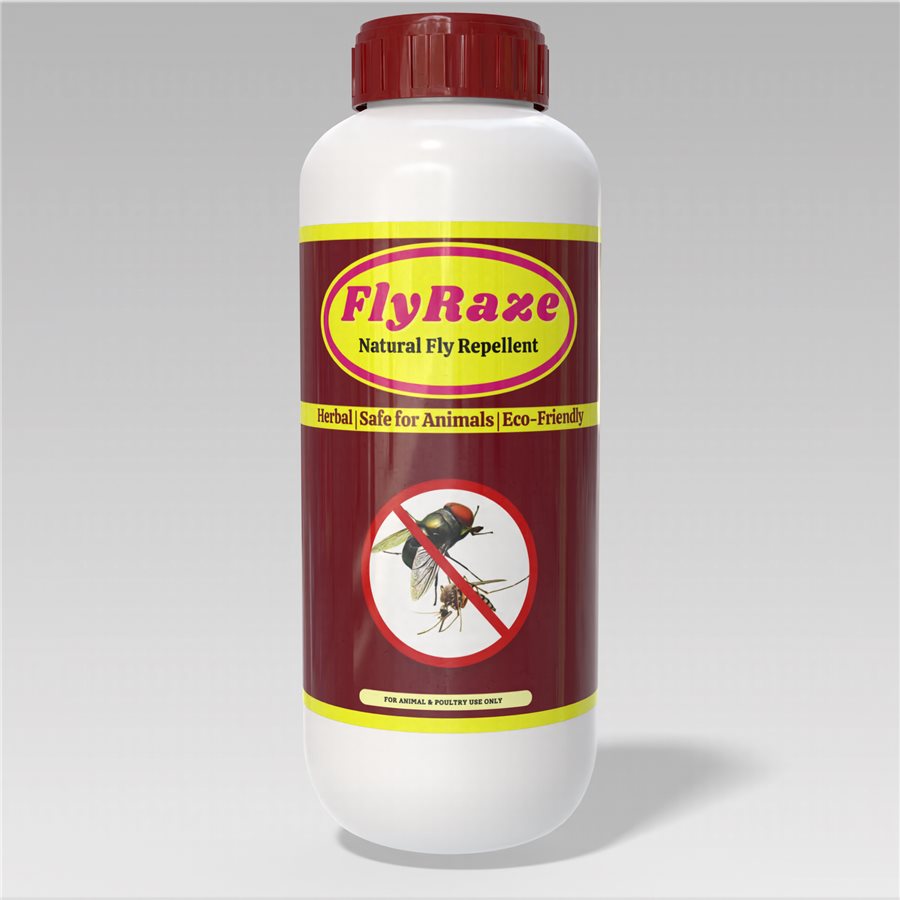
Flyraze is a herbal fly repellent. Flies find animals by smell, and the oils of citronella, lemongrass and peppermint mask these smells and keep flies away. It is herbal and it repels flies, so flies do not build resistance to it, and it does not cause the population boom that often follows chemical fly products. It is not a replacement for dry litter and clean-out.
Herbal fly repellent
Flyraze
Herbal fly repellent spray for dairy and poultry farms with citronella, lemongrass, peppermint and other essential oils. Repels flies without harmful chemicals, safe for animals, humans and the environment, and can be used with animals and birds present.
Dose: 20 ml per litre of water over 125 sq ft in moderate fly infestation; 30 ml per litre over 125 sq ft if heavy. Apply twice daily at peak fly activity.
1 L ₹935MRP ₹1,410
Ammobond is used on litter to bind ammonia. It does not dry the litter, so fix leaks first.
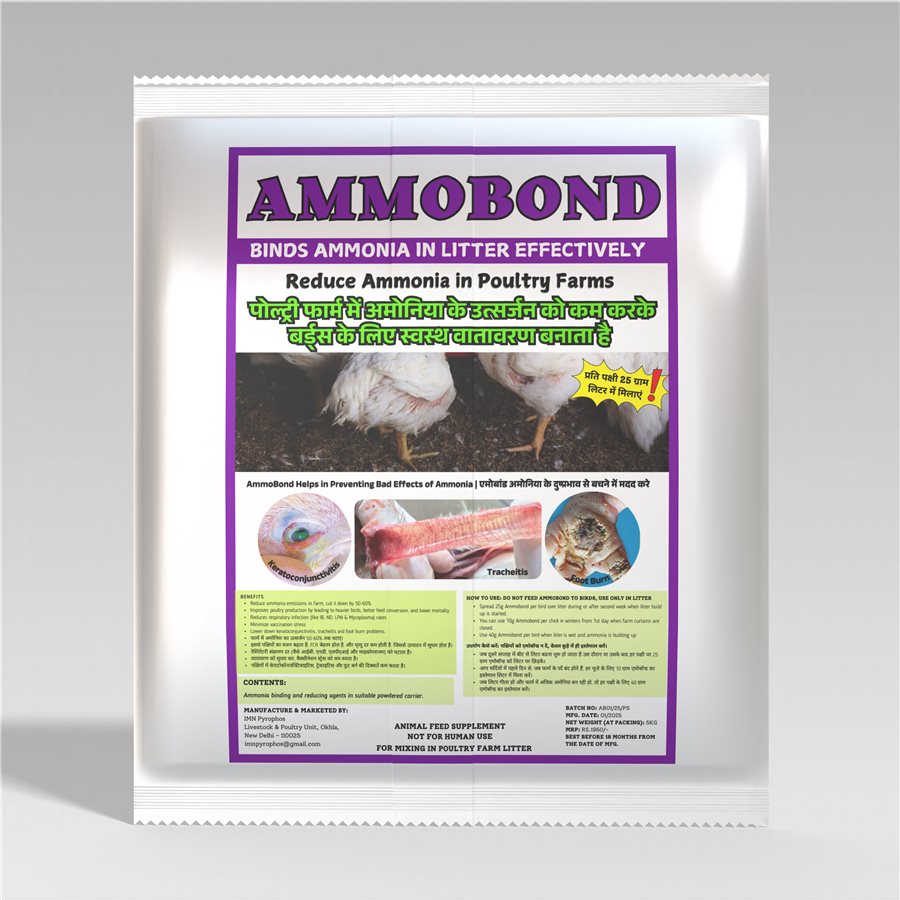
Binds ammonia in litter
Ammobond
Ammonia binding and reducing agents in a powder carrier. Cuts ammonia emission on the farm by 50 to 60 per cent. For litter only, do not feed to birds.
Dose: 5 kg per 2500 birds sprinkled on the litter (broadcast). Day 1 in closed or EC-house brooding, again on day 16 to 17, and day 32 to 34 if needed. It does not dry the litter.
5 kg ₹1,655MRP ₹1,950
What not to do
- Do not depend on chemical sprays, which flies can become resistant to.
- Do not rely on spray alone while litter is wet.
- Do not stack manure near the shed or water source.
- Do not leave dead birds uncovered.
Frequently asked questions
Why do maggots grow in my poultry litter? Wet litter, spilled feed, dead birds and warm weather give flies the place to lay eggs.
What is the best fly control for a poultry farm? A combination: dry litter, clean-out, manure management and a repellent such as Flyraze.
Can Flyraze be used with birds in the shed? Yes, the product page says it can be used indoors and outdoors with animals and birds present.
Will flies become resistant to Flyraze? Flyraze is herbal and works by repelling, so the resistance problem seen with chemical products does not arise, and it does not cause a rebound in the fly population.
Does Flyraze work on dairy farms? Yes, it is made for dairy and poultry farms.
What are the prices? See the boxes above. Prices may change, so confirm on WhatsApp.
Also read: Flyraze · Ammobond litter guide · Wet litter guide · IMN product guide
मक्खी और लार्वा पहले लिटर की समस्या हैं। मैगट (मक्खी के लार्वा) और भृंग के लार्वा गीली, गंदी लिटर और गिरे हुए दाने में पनपते हैं। ये पक्षियों को परेशान करते हैं, कीटाणु फैलाते हैं और पड़ोसियों की शिकायत लाते हैं। अगर लिटर नई मक्खियाँ पैदा करती रहे तो सिर्फ़ बड़ी मक्खियाँ मारने से फ़ायदा नहीं। यहाँ प्रबंधन योजना और फिर IMN प्रोडक्ट की जगह बताई है।
पोल्ट्री लिटर में लार्वा क्यों पनपते हैं
- गीली लिटर: टपकते ड्रिंकर, बारिश, ज़्यादा नमी और गीली बीट।
- खाद का ढेर: शेड के पास रखी पुरानी बीट।
- गिरा दाना और मरे पक्षी: मैगट का खाना।
- गर्मी और खराब निकासी: रुका पानी और शेड के पास झाड़ियाँ।
प्रबंधन योजना, कदम दर कदम
- टपकना रोकें: ड्रिंकर और निप्पल ठीक करें, पक्षी बढ़ने पर ड्रिंकर की ऊँचाई बढ़ाएँ।
- लिटर सूखी और ढीली रखें: ड्रिंकर के पास की गीली परत हटाएँ और सूखी लिटर डालें। देखें ब्रॉयलर में गीली लिटर।
- गिरा दाना रोज़ साफ़ करें।
- मरे पक्षी ढके गड्ढे या इन्सिनरेटर में उसी दिन निपटाएँ।
- खाद दूर रखें: शेड के पास ढेर न लगाएँ; ढककर और सूखी रखें।
- नालियाँ और झाड़ियाँ: नालियाँ साफ़ करें, रुका पानी हटाएँ, शेड के चारों ओर घास और झाड़ियाँ काटें।
- बैच के बीच पूरी सफ़ाई करें और नई लिटर से पहले शेड सूखने दें।
IMN प्रोडक्ट कहाँ फ़िट होते हैं
Flyraze हर्बल फ्लाई रिपेलेंट है। मक्खियाँ जानवर को गंध से ढूँढती हैं, और सिट्रोनेला, लेमनग्रास और पिपरमिंट के तेल इन गंधों को ढककर मक्खियों को दूर रखते हैं। यह हर्बल है और मक्खियों को दूर भगाता (repel करता) है, इसलिए मक्खियों में इसके प्रति रेज़िस्टेंस नहीं बनता, और केमिकल प्रोडक्ट के बाद अक्सर दिखने वाली मक्खियों की आबादी बढ़ने की समस्या भी नहीं होती। यह सूखी लिटर और सफ़ाई का विकल्प नहीं है।
हर्बल फ्लाई रिपेलेंट
Flyraze
डेयरी और पोल्ट्री फार्म के लिए हर्बल मक्खी भगाने वाला स्प्रे (सिट्रोनेला, लेमनग्रास, पिपरमिंट और दूसरे एसेंशियल ऑयल)। मक्खियों को बिना हानिकारक केमिकल के दूर रखता है, जानवरों, इंसानों और पर्यावरण के लिए सुरक्षित। पक्षी और पशु मौजूद हों तब भी इस्तेमाल हो सकता है।
मात्रा: मध्यम मक्खी प्रकोप में 20 ml प्रति लीटर पानी, 125 वर्ग फ़ुट पर छिड़कें; ज़्यादा हो तो 30 ml प्रति लीटर। मक्खियों की चरम गतिविधि के समय दिन में दो बार।
1 L ₹935MRP ₹1,410
Ammobond लिटर पर अमोनिया बाँधने के लिए है। यह लिटर को सुखाता नहीं है, इसलिए पहले टपकना ठीक करें।
लिटर में अमोनिया बाँधता है
Ammobond
लिटर में अमोनिया को बाँधने और घटाने वाले तत्व, पाउडर कैरियर में। फार्म में अमोनिया का उत्सर्जन 50–60% तक घटाता है। पक्षियों का वज़न, FCR और मृत्यु दर बेहतर करने में मदद करता है, और केराटोकंजंक्टिवाइटिस, ट्रेकाइटिस और पैर जलने की समस्या घटाता है। पक्षियों को खिलाना नहीं है, सिर्फ़ लिटर में इस्तेमाल करें।
मात्रा: Ammobond को दस्ताने पहनकर लिटर के ऊपर छिड़कें (ब्रॉडकास्ट तरीका, जैसे खेत में बीज बिखेरते हैं): हर 2500 पक्षियों पर 5 kg। क्लोज़्ड ब्रूडिंग / EC फार्म ब्रूडिंग में पहले दिन लिटर में मिला दें, फिर 16-17वें दिन उसी मात्रा में दोबारा, और ज़रूरत हो तो 32-34वें दिन। डालने के बाद रेकिंग न करें और चूना या ब्लीचिंग पाउडर न डालें।
5 kg ₹1,655MRP ₹1,950
क्या न करें
- केमिकल स्प्रे पर निर्भर न रहें, मक्खियाँ उनके प्रति रेज़िस्टेंट हो जाती हैं।
- लिटर गीली हो तो सिर्फ़ स्प्रे पर भरोसा न करें।
- खाद शेड या पानी के स्रोत के पास न रखें।
- मरे पक्षी खुले न छोड़ें।
अक्सर पूछे जाने वाले सवाल
लिटर में मैगट क्यों पनपते हैं? गीली लिटर, गिरा दाना, मरे पक्षी और गर्मी मक्खियों को अंडे देने की जगह देते हैं।
पोल्ट्री फार्म में मक्खी नियंत्रण का सबसे अच्छा तरीका? मिला-जुला: सूखी लिटर, पूरी सफ़ाई, खाद प्रबंधन और Flyraze जैसा रिपेलेंट।
क्या मक्खियाँ Flyraze के प्रति रेज़िस्टेंट हो जाती हैं? Flyraze हर्बल है और दूर भगाकर काम करता है, इसलिए केमिकल प्रोडक्ट वाली रेज़िस्टेंस की समस्या नहीं आती और मक्खियों की आबादी भी नहीं बढ़ती।
क्या शेड में पक्षी हों तब Flyraze चल सकता है? हाँ, प्रोडक्ट पेज के अनुसार पशु और पक्षी मौजूद हों तब भी अंदर और बाहर इस्तेमाल हो सकता है।
कीमत क्या है? ऊपर बॉक्स देखें। कीमत बदल सकती है, WhatsApp पर पक्की कर लें।
यह भी पढ़ें: Flyraze · Ammobond लिटर गाइड · गीली लिटर गाइड · IMN प्रोडक्ट गाइड
Makkhi aur larva pehle litter ki samasya hain. Maggot (makkhi ke larva) aur bhring ke larva geeli, ganda litter aur gire hue daane me panapte hain. Ye pakshiyon ko pareshan karte hain, keetanu failate hain aur padosiyon ki shikayat laate hain. Agar litter nayi makkhiyan paida karti rahe to sirf badi makkhiyan maarne se fayda nahi. Yahan prabandhan yojana aur phir IMN product ki jagah batayi hai.
Poultry litter me larva kyun panapte hain
- Geeli litter: tapakte drinker, baarish, zyada nami aur geeli beet.
- Khaad ka dher: shed ke paas rakhi purani beet.
- Gira daana aur mare pakshi: maggot ka khana.
- Garmi aur kharab nikasi: ruka paani aur shed ke paas jhadiyan.
Prabandhan yojana, kadam dar kadam
- Tapakna rokein: drinker aur nipple theek karein, pakshi badhne par drinker ki oonchai badhayein.
- Litter sookhi aur dheeli rakhein: drinker ke paas ki geeli parat hatayein aur sookhi litter daalein. Dekhein broiler me geeli litter.
- Gira daana roz saaf karein.
- Mare pakshi dhake gaddhe ya incinerator me usi din nipatayein.
- Khaad door rakhein: shed ke paas dher na lagayein; dhakkar aur sookhi rakhein.
- Naaliyan aur jhadiyan: naaliyan saaf karein, ruka paani hatayein, shed ke charon or ghaas aur jhadiyan kaatein.
- Batch ke beech poori safai karein aur nayi litter se pehle shed sookhne dein.
IMN products kahan fit hote hain
Flyraze herbal fly repellent hai. Makkhiyan janwar ko gandh se dhoondhti hain, aur citronella, lemongrass aur peppermint ke tel in gandhon ko dhakkar makkhiyon ko door rakhte hain. Ye herbal hai aur makkhiyon ko door bhagata (repel karta) hai, isliye makkhiyon me iske prati resistance nahi banta, aur chemical product ke baad aksar dikhne wali makkhiyon ki aabadi badhne ki samasya bhi nahi hoti. Ye sookhi litter aur safai ka vikalp nahi hai.
Herbal fly repellent
Flyraze
Dairy aur poultry farm ke liye herbal makkhi bhagane wala spray (citronella, lemongrass, peppermint aur doosre essential oil). Makkhiyon ko bina harmful chemical ke door rakhta hai, janwaron, insaanon aur paryavaran ke liye surakshit. Pakshi aur pashu maujood hon tab bhi istemal ho sakta hai.
Matra: Madhyam makkhi prakop me 20 ml prati litre paani, 125 sq ft par chhidkein; zyada ho to 30 ml prati litre. Makkhiyon ki charam gatividhi ke samay din me do baar.
1 L ₹935MRP ₹1,410
Ammobond litter par ammonia bandhne ke liye hai. Ye litter ko sukhata nahi hai, isliye pehle tapakna theek karein.
Litter me ammonia bandhta hai
Ammobond
Litter me ammonia ko bandhne aur ghatane wale tatva, powder carrier me. Farm me ammonia ka utsarjan 50–60% tak ghatata hai. Pakshiyon ka wazan, FCR aur mrityu dar behtar karne me madad karta hai, aur keratoconjunctivitis, tracheitis aur pair jalne ki samasya ghatata hai. Pakshiyon ko khilana nahi hai, sirf litter me istemal karein.
Matra: Ammobond ko gloves pehankar litter ke upar chhidkein (broadcast tareeka, jaise khet me beej bikherte hain): har 2500 pakshiyon par 5 kg. Closed brooding / EC farm brooding me pehle din litter me mila dein, phir 16-17wein din same dose par dobara, aur zarurat ho to 32-34wein din. Daalne ke baad raking na karein aur chuna ya bleaching powder na daalein.
5 kg ₹1,655MRP ₹1,950
Kya na karein
- Chemical spray par nirbhar na rahein, makkhiyan unke prati resistant ho jaati hain.
- Litter geeli ho to sirf spray par bharosa na karein.
- Khaad shed ya paani ke source ke paas na rakhein.
- Mare pakshi khule na chhodein.
Aksar puche jaane wale sawal
Litter me maggot kyun panapte hain? Geeli litter, gira daana, mare pakshi aur garmi makkhiyon ko ande dene ki jagah dete hain.
Poultry farm me makkhi niyantran ka sabse achha tareeka? Mila-jula: sookhi litter, poori safai, khaad prabandhan aur Flyraze jaisa repellent.
Kya makkhiyan Flyraze ke prati resistant ho jaati hain? Flyraze herbal hai aur door bhagakar kaam karta hai, isliye chemical product wali resistance ki samasya nahi aati aur makkhiyon ki aabadi bhi nahi badhti.
Kya shed me pakshi hon tab Flyraze chal sakta hai? Haan, product page ke anusaar pashu aur pakshi maujood hon tab bhi andar aur bahar istemal ho sakta hai.
Keemat kya hai? Upar box dekhein. Keemat badal sakti hai, WhatsApp par pakki kar lein.
Ye bhi padhein: Flyraze · Ammobond litter guide · Geeli litter guide · IMN product guide