
Nandini milk and curd became costlier in Karnataka from 1 November 2026. The Karnataka Cooperative Milk Producers’ Federation (KMF) and its milk unions raised the base milk price by ₹8 per litre. Of this, ₹7 goes to dairy farmers, so the procurement price rises from ₹35 to ₹42 per litre. With the existing ₹5 per litre government incentive, a farmer now realises about ₹47 per litre. The report appeared on 1 November 2026, citing The New Indian Express.
Key facts
| Item | Detail |
|---|---|
| Effective date | 1 November 2026 |
| Base milk price increase | ₹8 per litre (actual rise ₹8 to ₹12 depending on fat content) |
| Toned milk | ₹46 to ₹54 per litre |
| Homogenised toned milk | ₹47 to ₹56 per litre |
| Homogenised cow’s milk | ₹50 to ₹58 per litre |
| Special toned and Shubham milk | ₹52 to ₹64 per litre |
| Homogenised Shubham milk | ₹53 to ₹65 per litre |
| Curd | 500 ml ₹28 to ₹34; 1 litre ₹54 to ₹68 |
| Share to farmers | ₹7 of the ₹8; the other ₹1 goes to milk unions |
| Farmer procurement price | ₹35 to ₹42 per litre; about ₹47 with the ₹5 incentive |
| Fall in daily procurement | About 10 lakh litres |
Why the price was raised
The report gives three reasons: dearer cattle feed and fodder, higher fuel and packaging costs, and falling milk procurement linked to drought. KMF’s daily procurement has reportedly dropped by about 10 lakh litres. When milk is short and feed is expensive, a dairy has to pay farmers more to keep the milk coming in.
The ₹1 per litre kept by the unions is meant for running costs such as packaging and transport. The report also says the state has about 26.89 lakh dairy farmer members, and about 8.9 lakh farmers supply milk to cooperative societies each day. KMF’s average daily payment to producers is about ₹28.60 crore.
How this differs from the earlier report
An earlier October report on this hike had said the farmer share would be ₹6 per litre. The latest report says ₹7 per litre, with the procurement price at ₹42. Use the latest figures, and confirm the rate on your own society’s slip, because the final rate can differ by fat and SNF.
What it means for dairy farmers
For a Karnataka farmer, ₹7 more per litre is a real gain. A farmer delivering 20 litres a day would receive ₹140 more each day at the base rate, if the full amount reaches the milk slip. That is a simple illustration, not a promise, because payment depends on fat and SNF testing. At the same time, drought is making green and dry fodder expensive, so part of the gain will be spent on feed.
Farmers in nearby states will also compare their own rates. A higher Karnataka price can pull milk across borders towards better bidders, which can raise procurement competition elsewhere. For buyers such as tea shops and hotels, costs go up too, and some consumers may buy less.
What farmers should do now
- Check your milk slip from 1 November. Compare the new rate with the old one and ask your society secretary if the ₹7 share is not reflected.
- Track fat and SNF daily. The rate follows quality. Even a small rise in fat and SNF adds to income.
- Plan your feed budget. Fodder is dear in drought. Write down daily green fodder, dry fodder and concentrate cost per litre of milk.
- Do not cut the mineral and ration balance to save money. Poor nutrition lowers milk, fat and fertility, which costs more than it saves.
- Keep animals healthy and clean. High-priced milk should not be lost to mastitis or heat stress.
- Keep a simple record. Daily litres, payment date and feed cost help you see the real margin.
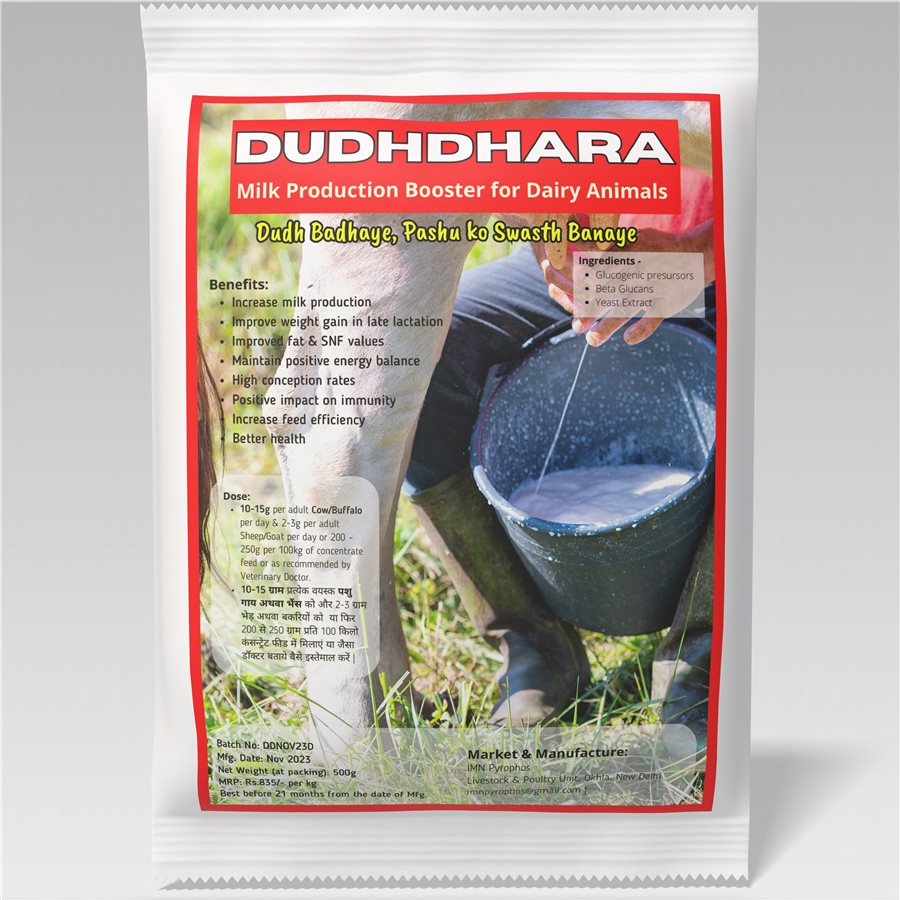
Milk booster
Dudh Dhara
Milk production booster with glucogenic precursors, beta glucans and yeast extract. Supports milk, fat and SNF, positive energy balance, conception and immunity.
Dose: 10 to 15 g per adult cow or buffalo per day, or 200 to 250 g per 100 kg of concentrate.
1 kg ₹1,150MRP ₹1,410
Frequently asked questions
How much more will Karnataka dairy farmers get?
According to the report, ₹7 of the ₹8 increase goes to farmers. The procurement price rises from ₹35 to ₹42 per litre, and about ₹47 with the ₹5 government incentive.
What is the new price of toned milk?
Nandini toned milk goes from ₹46 to ₹54 per litre. Other variants rise by ₹8 to ₹12 depending on fat content.
Why did the price go up?
The report cites higher feed, fodder, fuel and packaging costs, and a fall in procurement linked to drought.
Source: Dairy News 7×7, citing The New Indian Express, 1 Nov 2026. Written by the IMN Pyrophos team in our own words.
कर्नाटक में 1 नवंबर 2026 से Nandini दूध और दही महँगे हो गए। Karnataka Cooperative Milk Producers’ Federation (KMF) और उसके दूध संघों ने बेस दूध का दाम ₹8 प्रति लीटर बढ़ाया है। इसमें से ₹7 डेयरी किसानों को मिलेंगे, यानी खरीद का दाम ₹35 से बढ़कर ₹42 प्रति लीटर हो गया। सरकार के ₹5 प्रति लीटर के मौजूदा इंसेंटिव के साथ किसान को अब करीब ₹47 प्रति लीटर मिलता है। यह खबर 1 नवंबर 2026 की है और The New Indian Express की रिपोर्ट पर आधारित है।
मुख्य तथ्य
| बात | विवरण |
|---|---|
| लागू होने की तारीख | 1 नवंबर 2026 |
| बेस दूध में बढ़ोतरी | ₹8 प्रति लीटर (फैट के हिसाब से असल बढ़ोतरी ₹8 से ₹12) |
| टोंड दूध | ₹46 से ₹54 प्रति लीटर |
| होमोजिनाइज़्ड टोंड दूध | ₹47 से ₹56 प्रति लीटर |
| होमोजिनाइज़्ड गाय का दूध | ₹50 से ₹58 प्रति लीटर |
| स्पेशल टोंड और शुभम दूध | ₹52 से ₹64 प्रति लीटर |
| होमोजिनाइज़्ड शुभम दूध | ₹53 से ₹65 प्रति लीटर |
| दही | 500 ml ₹28 से ₹34; 1 लीटर ₹54 से ₹68 |
| किसानों का हिस्सा | ₹8 में से ₹7; बाकी ₹1 दूध संघों को |
| किसान को खरीद का दाम | ₹35 से ₹42 प्रति लीटर; ₹5 इंसेंटिव के साथ करीब ₹47 |
| रोज़ की खरीद में कमी | करीब 10 लाख लीटर |
दाम क्यों बढ़ाया गया
रिपोर्ट तीन कारण बताती है: पशु आहार और चारे की महँगाई, ईंधन और पैकेजिंग का बढ़ा खर्च, और सूखे के कारण दूध की खरीद में गिरावट। बताया गया है कि KMF की रोज़ की खरीद करीब 10 लाख लीटर घट गई है। जब दूध कम हो और आहार महँगा, तो डेयरी को दूध बनाए रखने के लिए किसान को ज़्यादा दाम देना पड़ता है।
संघों को मिलने वाला ₹1 प्रति लीटर पैकेजिंग और ढुलाई जैसे खर्च के लिए है। रिपोर्ट के अनुसार राज्य में करीब 26.89 लाख डेयरी किसान सदस्य हैं और रोज़ करीब 8.9 लाख किसान सहकारी समितियों को दूध देते हैं। KMF का उत्पादकों को औसत दैनिक भुगतान करीब ₹28.60 करोड़ है।
पहले की रिपोर्ट से फ़र्क़
अक्टूबर की एक पुरानी रिपोर्ट में किसान का हिस्सा ₹6 प्रति लीटर बताया गया था। ताज़ा रिपोर्ट में यह ₹7 प्रति लीटर है और खरीद का दाम ₹42। ताज़ा आँकड़े ही मानें, और अपनी सोसायटी की पर्ची पर दाम ज़रूर जाँचें, क्योंकि फैट और SNF के हिसाब से अंतिम दाम अलग हो सकता है।
डेयरी किसानों के लिए इसका मतलब
कर्नाटक के किसान के लिए प्रति लीटर ₹7 ज़्यादा मिलना सच में फ़ायदा है। रोज़ 20 लीटर देने वाले किसान को बेस रेट पर रोज़ ₹140 ज़्यादा मिलेंगे, अगर पूरी रकम दूध की पर्ची में पहुँचे। यह सिर्फ़ एक सरल उदाहरण है, वादा नहीं, क्योंकि भुगतान फैट और SNF की जाँच पर निर्भर है। साथ ही सूखे से हरा और सूखा चारा महँगा हो रहा है, इसलिए फ़ायदे का कुछ हिस्सा आहार में चला जाएगा।
पड़ोसी राज्यों के किसान भी अपने दाम की तुलना करेंगे। कर्नाटक में ऊँचा दाम दूध को बेहतर बोली वाली जगह की ओर खींच सकता है, जिससे दूसरी जगह खरीद की होड़ बढ़ सकती है। चाय की दुकान और होटल जैसे खरीदारों का खर्च भी बढ़ेगा और कुछ उपभोक्ता कम खरीद सकते हैं।
किसान अभी क्या करें
- 1 नवंबर के बाद अपनी दूध की पर्ची जाँचें। नया दाम पुराने से मिलाएँ और अगर ₹7 का हिस्सा न दिखे तो सोसायटी सचिव से पूछें।
- रोज़ फैट और SNF लिखें। दाम गुणवत्ता के हिसाब से चलता है। फैट और SNF में थोड़ा सुधार भी आमदनी बढ़ाता है।
- आहार का बजट बनाएँ। सूखे में चारा महँगा है। रोज़ का हरा चारा, सूखा चारा और दाना खर्च प्रति लीटर दूध लिखें।
- पैसे बचाने के लिए मिनरल और राशन का संतुलन न घटाएँ। कमज़ोर पोषण से दूध, फैट और फर्टिलिटी घटती है, जिसका नुकसान बचत से ज़्यादा होता है।
- पशु को स्वस्थ और साफ़ रखें। ऊँचे दाम का दूध थनैला या गर्मी के तनाव में न गँवाएँ।
- सादा रिकॉर्ड रखें। रोज़ के लीटर, भुगतान की तारीख और आहार खर्च से असली मुनाफ़ा दिखता है।
दूध बढ़ाने वाला
Dudh Dhara
ग्लूकोजेनिक प्रीकर्सर, बीटा ग्लूकन और यीस्ट एक्सट्रैक्ट वाला दूध बढ़ाने वाला सप्लीमेंट। दूध, फैट और SNF, पॉज़िटिव एनर्जी बैलेंस, गाभिन ठहरने और रोग प्रतिरोधक क्षमता में सहायक।
मात्रा: 10–15 ग्राम प्रति वयस्क गाय या भैंस प्रति दिन, या 200–250 ग्राम प्रति 100 किलो दाना।
1 kg ₹1,150MRP ₹1,410
अक्सर पूछे जाने वाले सवाल
कर्नाटक के डेयरी किसानों को कितना ज़्यादा मिलेगा?
रिपोर्ट के अनुसार ₹8 की बढ़ोतरी में से ₹7 किसानों को जाते हैं। खरीद का दाम ₹35 से ₹42 प्रति लीटर हो गया है और ₹5 सरकारी इंसेंटिव के साथ करीब ₹47।
टोंड दूध का नया दाम क्या है?
Nandini टोंड दूध ₹46 से ₹54 प्रति लीटर हो गया है। बाकी किस्में फैट के हिसाब से ₹8 से ₹12 बढ़ी हैं।
दाम क्यों बढ़ा?
रिपोर्ट के अनुसार आहार, चारा, ईंधन और पैकेजिंग की लागत बढ़ी है और सूखे के कारण खरीद घटी है।
स्रोत: Dairy News 7×7, citing The New Indian Express, 1 नवंबर 2026। IMN Pyrophos टीम ने अपने शब्दों में लिखा।
Karnataka me 1 November 2026 se Nandini doodh aur dahi mahange ho gaye. Karnataka Cooperative Milk Producers’ Federation (KMF) aur uske doodh sanghon ne base doodh ka daam ₹8 prati litre badhaya hai. Isme se ₹7 dairy kisanon ko milenge, yaani kharid ka daam ₹35 se badhkar ₹42 prati litre ho gaya. Sarkar ke ₹5 prati litre ke maujooda incentive ke saath kisan ko ab lagbhag ₹47 prati litre milta hai. Yeh khabar 1 November 2026 ki hai aur The New Indian Express ki report par aadharit hai.
Mukhya tathya
| Baat | Vivaran |
|---|---|
| Lagu hone ki tareekh | 1 November 2026 |
| Base doodh me badhotri | ₹8 prati litre (fat ke hisaab se asal badhotri ₹8 se ₹12) |
| Toned doodh | ₹46 se ₹54 prati litre |
| Homogenised toned doodh | ₹47 se ₹56 prati litre |
| Homogenised gaay ka doodh | ₹50 se ₹58 prati litre |
| Special toned aur Shubham doodh | ₹52 se ₹64 prati litre |
| Homogenised Shubham doodh | ₹53 se ₹65 prati litre |
| Dahi | 500 ml ₹28 se ₹34; 1 litre ₹54 se ₹68 |
| Kisanon ka hissa | ₹8 me se ₹7; baaki ₹1 doodh sanghon ko |
| Kisan ko kharid ka daam | ₹35 se ₹42 prati litre; ₹5 incentive ke saath lagbhag ₹47 |
| Roz ki kharid me kami | Lagbhag 10 lakh litre |
Daam kyon badhaya gaya
Report teen kaaran batati hai: pashu aahar aur chaare ki mehngai, eendhan aur packaging ka badha kharch, aur sookhe ke kaaran doodh ki kharid me girawat. Bataya gaya hai ki KMF ki roz ki kharid lagbhag 10 lakh litre ghat gayi hai. Jab doodh kam ho aur aahar mehnga, to dairy ko doodh banaye rakhne ke liye kisan ko zyada daam dena padta hai.
Sanghon ko milne wala ₹1 prati litre packaging aur dhulai jaise kharch ke liye hai. Report ke anusaar rajya me lagbhag 26.89 lakh dairy kisan sadasya hain aur roz lagbhag 8.9 lakh kisan sahkari samitiyon ko doodh dete hain. KMF ka utpadakon ko ausat dainik bhugtan lagbhag ₹28.60 crore hai.
Pehle ki report se farq
October ki ek purani report me kisan ka hissa ₹6 prati litre bataya gaya tha. Taaza report me yeh ₹7 prati litre hai aur kharid ka daam ₹42. Taaza aankde hi maanein, aur apni society ki parchi par daam zaroor jaanchein, kyonki fat aur SNF ke hisaab se antim daam alag ho sakta hai.
Dairy kisanon ke liye iska matlab
Karnataka ke kisan ke liye prati litre ₹7 zyada milna sach me faayda hai. Roz 20 litre dene wale kisan ko base rate par roz ₹140 zyada milenge, agar poori rakam doodh ki parchi me pahunche. Yeh sirf ek saral udaharan hai, vaada nahi, kyonki bhugtan fat aur SNF ki jaanch par nirbhar hai. Saath hi sookhe se hara aur sookha chaara mehnga ho raha hai, isliye faayde ka kuch hissa aahar me chala jayega.
Padosi rajyon ke kisan bhi apne daam ki tulna karenge. Karnataka me ooncha daam doodh ko behtar boli wali jagah ki or kheench sakta hai, jisse doosri jagah kharid ki hod badh sakti hai. Chai ki dukaan aur hotel jaise kharidaaron ka kharch bhi badhega aur kuch upbhokta kam khareed sakte hain.
Kisan abhi kya karein
- 1 November ke baad apni doodh ki parchi jaanchein. Naya daam purane se milayein aur agar ₹7 ka hissa na dikhe to society sachiv se poochhein.
- Roz fat aur SNF likhein. Daam gunvatta ke hisaab se chalta hai. Fat aur SNF me thoda sudhar bhi aamdani badhata hai.
- Aahar ka budget banayein. Sookhe me chaara mehnga hai. Roz ka hara chaara, sookha chaara aur daana kharch prati litre doodh likhein.
- Paise bachane ke liye mineral aur ration ka santulan na ghatayein. Kamzor poshan se doodh, fat aur fertility ghatti hai, jiska nuksan bachat se zyada hota hai.
- Pashu ko swasth aur saaf rakhein. Ooncha daam ka doodh thanela ya garmi ke tanav me na ganvayein.
- Saada record rakhein. Roz ke litre, bhugtan ki tareekh aur aahar kharch se asli munafa dikhta hai.
Doodh badhane wala
Dudh Dhara
Glucogenic precursor, beta glucan aur yeast extract wala doodh badhane wala supplement. Doodh, fat aur SNF, positive energy balance, gaabhin theharne aur immunity me sahayak.
Matra: 10–15 g prati vayask gaay ya bhains prati din, ya 200–250 g prati 100 kg daana.
1 kg ₹1,150MRP ₹1,410
Aksar poochhe jaane wale sawal
Karnataka ke dairy kisanon ko kitna zyada milega?
Report ke anusaar ₹8 ki badhotri me se ₹7 kisanon ko jaate hain. Kharid ka daam ₹35 se ₹42 prati litre ho gaya hai aur ₹5 sarkari incentive ke saath lagbhag ₹47.
Toned doodh ka naya daam kya hai?
Nandini toned doodh ₹46 se ₹54 prati litre ho gaya hai. Baaki kisme fat ke hisaab se ₹8 se ₹12 badhi hain.
Daam kyon badha?
Report ke anusaar aahar, chaara, eendhan aur packaging ki laagat badhi hai aur sookhe ke kaaran kharid ghati hai.
Source: Dairy News 7×7, citing The New Indian Express, 1 November 2026. IMN Pyrophos team ne apne shabdon me likha.