
India’s milk production growth is expected to slow to 2% in 2027, mainly because of El Niño-linked drought. The forecast comes from the US Department of Agriculture’s Foreign Agricultural Service (FAS) in New Delhi, as reported on 1 November 2026. It projects India’s milk output at 226.5 million tonnes in calendar year 2027. Growth for 2026 is estimated at 2.5%. Drought can cut green and dry fodder and push feed costs up, which would hit small dairy farmers hardest.
Key facts
| Item | Detail |
|---|---|
| Forecast body | USDA Foreign Agricultural Service, New Delhi |
| Milk production 2027 | 226.5 million tonnes, growth about 2% |
| Growth estimate for 2026 | 2.5% |
| Cows in milk 2027 | Up 1.3% to 63.3 million |
| Fluid milk consumption | Up slightly more than 2% to 95 million tonnes |
| Milk to processing | Up just under 2% to 131.5 million tonnes |
| Butter | 7.6 million tonnes, up 2.2% |
| Skimmed milk powder (SMP) | 810,000 tonnes, up 2.5% |
| SMP exports | Down about 50% to roughly 7,000 tonnes |
| Top milk states | UP, Rajasthan, MP, Gujarat, Maharashtra, Punjab (over 60% of output) |
The report is a forecast, not a measured result. Treat the numbers as expectations that can change with rain and fodder conditions.
Why growth is slowing
The main driver named in the report is drought linked to El Niño. Poor rain reduces the area and yield of green fodder, and dry fodder such as straw also becomes scarce. Higher feed costs and heat stress can then limit what even a good animal gives. The report says the cattle numbers and breeding gains will help, but may not fully offset weather and feed pressure.
On the supply side, the report expects a shift towards higher-yielding crossbred cows and indigenous buffaloes, along with better breeding, husbandry and disease control. Cows in milk are projected to rise 1.3% to 63.3 million.
What it means for dairy farmers
For farmers, the message is that fodder, not demand, will be the pinch point. Six states produce more than 60% of India’s milk, and drought in any of them tightens supply. Slower supply growth can mean more competition among dairies to buy milk, which may support farm-gate prices, but a farmer only gains if feed costs do not eat the margin.
The report also says processors may see squeezed margins. For the farmer, a milk price rise is useful only when the cost per litre of milk stays under control. Silage, efficient use of feed and animal health services matter more in a drought year.
SMP exports are forecast to fall about 50% to roughly 7,000 tonnes, because domestic demand absorbs more supply and domestic prices rise. That points to a tighter home market.
What farmers should do now
- Secure fodder early. Buy or store dry fodder and plan green fodder while prices are still manageable. Silage is a good way to hold green fodder.
- Use feed efficiently. Weigh concentrate, balance the ration and avoid waste. Wasting expensive feed hurts more in a drought.
- Keep water and shade ready. Heat stress lowers intake and milk. Cool, clean water and shade protect yield.
- Protect rumen health. A stable rumen digests coarse fodder better, which matters when fodder quality is poor.
- Track cost per litre. Note daily feed cost and milk. Cull or rationalise low-yielding animals only after checking the numbers.
- Keep vaccinations and deworming on schedule. Weak, underfed animals fall sick faster.
- Check your cooperative or dairy rates often. Prices may move as supply tightens.
Chelated mineral · small daily dose
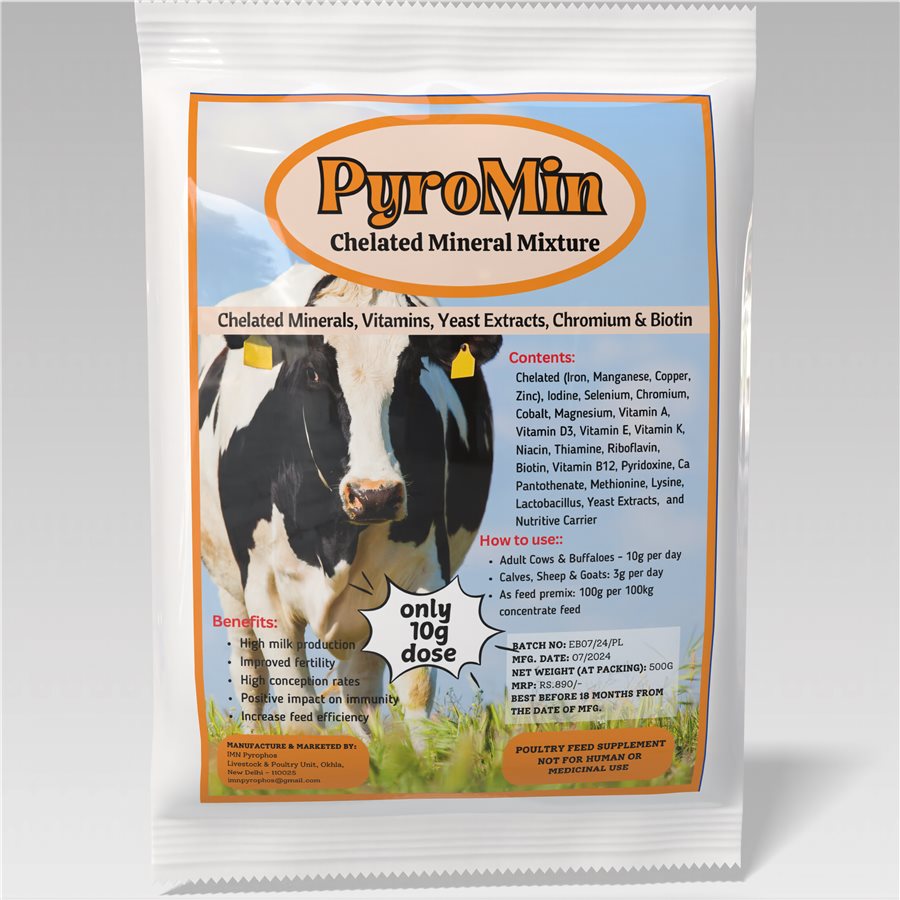
Pyromin
Chelated iron, manganese, copper, zinc, iodine, selenium, chromium, cobalt and magnesium, with vitamins A, D3, E, K and B vitamins, biotin, methionine, lysine, lactobacillus and yeast extract. Supports milk production, fertility, conception, immunity and feed efficiency.
Dose: adult cow or buffalo 10 g per day; calves, sheep and goats 3 g per day. As a premix: 100 g per 100 kg concentrate.
1 kg ₹655MRP ₹1,190
Frequently asked questions
What does the forecast say about India milk production in 2027?
USDA FAS projects 226.5 million tonnes, with growth slowing to about 2% from an estimated 2.5% in 2026.
Why is growth slowing?
The report points to El Niño-linked drought, which can cut fodder, raise feed costs and add heat stress.
Is this a confirmed result?
No. It is a forecast, and actual output will depend on rain, fodder and feed prices.
Source: Dairy News 7×7, citing USDA FAS, 1 Nov 2026. Written by the IMN Pyrophos team in our own words.
2027 में भारत में दूध उत्पादन की बढ़ोतरी धीमी होकर 2% रहने की उम्मीद है, मुख्य वजह El Niño से जुड़ा सूखा है। यह अनुमान अमेरिकी कृषि विभाग की Foreign Agricultural Service (FAS), नई दिल्ली का है, जिसकी खबर 1 नवंबर 2026 को आई। इसके मुताबिक कैलेंडर वर्ष 2027 में भारत का दूध उत्पादन 226.5 मिलियन टन रहेगा। 2026 की बढ़ोतरी का अनुमान 2.5% है। सूखे से हरा और सूखा चारा घट सकता है और आहार महँगा हो सकता है, जिसकी सबसे ज़्यादा मार छोटे डेयरी किसानों पर पड़ेगी।
मुख्य तथ्य
| बात | विवरण |
|---|---|
| अनुमान देने वाली संस्था | USDA Foreign Agricultural Service, नई दिल्ली |
| 2027 का दूध उत्पादन | 226.5 मिलियन टन, बढ़ोतरी करीब 2% |
| 2026 की बढ़ोतरी का अनुमान | 2.5% |
| 2027 में दुधारू गायें | 1.3% बढ़कर 6.33 करोड़ |
| तरल दूध की खपत | 2% से थोड़ा ज़्यादा बढ़कर 95 मिलियन टन |
| प्रोसेसिंग में जाने वाला दूध | 2% से थोड़ा कम बढ़कर 131.5 मिलियन टन |
| मक्खन | 7.6 मिलियन टन, 2.2% ज़्यादा |
| स्किम्ड मिल्क पाउडर (SMP) | 8,10,000 टन, 2.5% ज़्यादा |
| SMP निर्यात | करीब 50% घटकर लगभग 7,000 टन |
| दूध के बड़े राज्य | UP, राजस्थान, MP, गुजरात, महाराष्ट्र, पंजाब (60% से ज़्यादा उत्पादन) |
यह अनुमान है, मापा हुआ नतीजा नहीं। आँकड़ों को उम्मीद की तरह लें, जो बारिश और चारे के हालात से बदल सकते हैं।
बढ़ोतरी धीमी क्यों हो रही है
रिपोर्ट में मुख्य वजह El Niño से जुड़ा सूखा बताया गया है। कम बारिश से हरे चारे का रकबा और पैदावार घटती है, और भूसे जैसा सूखा चारा भी कम पड़ता है। महँगा आहार और गर्मी का तनाव अच्छे पशु के दूध पर भी असर डालते हैं। रिपोर्ट कहती है कि पशुओं की संख्या और नस्ल सुधार से मदद मिलेगी, पर मौसम और आहार का दबाव पूरी तरह नहीं भर पाएगा।
सप्लाई की तरफ़ रिपोर्ट को ज़्यादा उत्पादक क्रॉसब्रीड गायों और देसी भैंसों की ओर झुकाव, बेहतर ब्रीडिंग, पालन-पोषण और रोग नियंत्रण की उम्मीद है। दुधारू गायें 1.3% बढ़कर 6.33 करोड़ रहने का अनुमान है।
डेयरी किसानों के लिए इसका मतलब
किसानों के लिए संदेश यह है कि असली दिक़्क़त माँग की नहीं, चारे की होगी। छह राज्य भारत का 60% से ज़्यादा दूध पैदा करते हैं, और इनमें से किसी में भी सूखा पड़े तो सप्लाई तंग होती है। सप्लाई की धीमी बढ़त से दूध खरीदने में डेयरियों के बीच होड़ बढ़ सकती है, जो फ़ार्म-गेट दाम को सहारा दे सकती है, पर किसान को फ़ायदा तभी है जब आहार का खर्च मुनाफ़ा न खा जाए।
रिपोर्ट यह भी कहती है कि प्रोसेसरों का मार्जिन दबाव में आ सकता है। किसान के लिए दूध का दाम बढ़ना तभी काम का है जब प्रति लीटर दूध की लागत काबू में रहे। सूखे के साल में साइलेज, आहार का कुशल उपयोग और पशु स्वास्थ्य सेवाएँ और ज़्यादा मायने रखती हैं।
SMP का निर्यात करीब 50% घटकर लगभग 7,000 टन रहने का अनुमान है, क्योंकि घरेलू माँग ज़्यादा सप्लाई खा रही है और घरेलू दाम बढ़ रहे हैं। यह घरेलू बाज़ार के तंग होने का इशारा है।
किसान अभी क्या करें
- चारे का इंतज़ाम जल्दी करें। जब तक दाम संभलने लायक हैं, सूखा चारा खरीदें या जमा करें और हरे चारे की योजना बनाएँ। साइलेज हरा चारा रखने का अच्छा तरीक़ा है।
- आहार का कुशल उपयोग करें। दाना तौलकर दें, राशन संतुलित रखें और बर्बादी रोकें। सूखे में महँगा आहार बर्बाद करना ज़्यादा चुभता है।
- पानी और छाया तैयार रखें। गर्मी का तनाव खुराक और दूध घटाता है। ठंडा साफ़ पानी और छाया उपज बचाते हैं।
- रुमेन की सेहत सँभालें। स्थिर रुमेन मोटा चारा बेहतर पचाता है, जो खराब चारे के समय ज़रूरी है।
- प्रति लीटर लागत लिखें। रोज़ का आहार खर्च और दूध लिखें। कम दूध वाले पशुओं पर फ़ैसला आँकड़े देखकर ही करें।
- टीकाकरण और डीवॉर्मिंग समय पर रखें। कमज़ोर और कम खिलाए पशु जल्दी बीमार पड़ते हैं।
- अपनी सहकारी या डेयरी के रेट बार-बार देखें। सप्लाई तंग होने पर दाम बदल सकते हैं।
चिलेटेड मिनरल · रोज़ थोड़ी मात्रा
Pyromin
चिलेटेड आयरन, मैंगनीज़, कॉपर, ज़िंक, आयोडीन, सेलेनियम, क्रोमियम, कोबाल्ट और मैग्नीशियम, साथ में विटामिन A, D3, E, K और B विटामिन, बायोटिन, मेथियोनीन, लाइसीन, लैक्टोबैसिलस और यीस्ट एक्सट्रैक्ट। दूध उत्पादन, प्रजनन, गाभिन ठहरने, रोग प्रतिरोधक क्षमता और चारे के बेहतर उपयोग में सहायक।
मात्रा: वयस्क गाय या भैंस को 10 ग्राम प्रति दिन; बछड़े, भेड़ और बकरी को 3 ग्राम प्रति दिन। प्रीमिक्स के रूप में 100 ग्राम प्रति 100 किलो दाना।
1 kg ₹655MRP ₹1,190
अक्सर पूछे जाने वाले सवाल
2027 के लिए भारत के दूध उत्पादन पर अनुमान क्या कहता है?
USDA FAS का अनुमान 226.5 मिलियन टन है, जिसमें 2026 के अनुमानित 2.5% की तुलना में बढ़ोतरी धीमी होकर करीब 2% रहेगी।
बढ़ोतरी धीमी क्यों हो रही है?
रिपोर्ट El Niño से जुड़े सूखे की ओर इशारा करती है, जो चारा घटा सकता है, आहार महँगा कर सकता है और गर्मी का तनाव बढ़ा सकता है।
क्या यह पक्का नतीजा है?
नहीं। यह अनुमान है, असली उत्पादन बारिश, चारे और आहार के दाम पर निर्भर करेगा।
स्रोत: Dairy News 7×7, citing USDA FAS, 1 नवंबर 2026। IMN Pyrophos टीम ने अपने शब्दों में लिखा।
2027 me Bharat me doodh utpadan ki badhotri dheemi hokar 2% rehne ki ummeed hai, mukhya wajah El Niño se juda sookha hai. Yeh anumaan American krishi vibhag ki Foreign Agricultural Service (FAS), New Delhi ka hai, jiski khabar 1 November 2026 ko aayi. Iske mutabik calendar varsh 2027 me Bharat ka doodh utpadan 226.5 million ton rahega. 2026 ki badhotri ka anumaan 2.5% hai. Sookhe se hara aur sookha chaara ghat sakta hai aur aahar mehnga ho sakta hai, jiski sabse zyada maar chhote dairy kisanon par padegi.
Mukhya tathya
| Baat | Vivaran |
|---|---|
| Anumaan dene wali sanstha | USDA Foreign Agricultural Service, New Delhi |
| 2027 ka doodh utpadan | 226.5 million ton, badhotri lagbhag 2% |
| 2026 ki badhotri ka anumaan | 2.5% |
| 2027 me dudharu gaayein | 1.3% badhkar 6.33 crore |
| Taral doodh ki khapat | 2% se thoda zyada badhkar 95 million ton |
| Processing me jaane wala doodh | 2% se thoda kam badhkar 131.5 million ton |
| Makkhan | 7.6 million ton, 2.2% zyada |
| Skimmed milk powder (SMP) | 8,10,000 ton, 2.5% zyada |
| SMP niryat | Lagbhag 50% ghatkar takreeban 7,000 ton |
| Doodh ke bade rajya | UP, Rajasthan, MP, Gujarat, Maharashtra, Punjab (60% se zyada utpadan) |
Yeh anumaan hai, naapa hua nateeja nahi. Aankdon ko ummeed ki tarah lein, jo baarish aur chaare ke halaat se badal sakte hain.
Badhotri dheemi kyon ho rahi hai
Report me mukhya wajah El Niño se juda sookha bataya gaya hai. Kam baarish se hare chaare ka rakba aur paidawar ghatti hai, aur bhoose jaisa sookha chaara bhi kam padta hai. Mehnga aahar aur garmi ka tanav achhe pashu ke doodh par bhi asar daalte hain. Report kehti hai ki pashuon ki sankhya aur nasl sudhar se madad milegi, par mausam aur aahar ka dabav poori tarah nahi bhar paayega.
Supply ki taraf report ko zyada utpadak crossbred gaayon aur desi bhainson ki or jhukav, behtar breeding, palan-poshan aur rog niyantran ki ummeed hai. Dudharu gaayein 1.3% badhkar 6.33 crore rehne ka anumaan hai.
Dairy kisanon ke liye iska matlab
Kisanon ke liye sandesh yeh hai ki asli dikkat maang ki nahi, chaare ki hogi. Chhe rajya Bharat ka 60% se zyada doodh paida karte hain, aur inme se kisi me bhi sookha pade to supply tang hoti hai. Supply ki dheemi badhat se doodh kharidne me dairiyon ke beech hod badh sakti hai, jo farm-gate daam ko sahara de sakti hai, par kisan ko faayda tabhi hai jab aahar ka kharch munafa na kha jaye.
Report yeh bhi kehti hai ki processors ka margin dabav me aa sakta hai. Kisan ke liye doodh ka daam badhna tabhi kaam ka hai jab prati litre doodh ki laagat kaabu me rahe. Sookhe ke saal me silage, aahar ka kushal upyog aur pashu swasthya sevayein aur zyada mayne rakhti hain.
SMP ka niryat lagbhag 50% ghatkar takreeban 7,000 ton rehne ka anumaan hai, kyonki gharelu maang zyada supply kha rahi hai aur gharelu daam badh rahe hain. Yeh gharelu bazaar ke tang hone ka ishara hai.
Kisan abhi kya karein
- Chaare ka intezaam jaldi karein. Jab tak daam sambhalne layak hain, sookha chaara khareedein ya jama karein aur hare chaare ki yojana banayein. Silage hara chaara rakhne ka achha tareeka hai.
- Aahar ka kushal upyog karein. Daana taulkar dein, ration santulit rakhein aur barbaadi rokein. Sookhe me mehnga aahar barbaad karna zyada chubhta hai.
- Paani aur chhaya taiyaar rakhein. Garmi ka tanav khuraak aur doodh ghatata hai. Thanda saaf paani aur chhaya upaj bachate hain.
- Rumen ki sehat sambhalein. Sthir rumen mota chaara behtar pachata hai, jo kharab chaare ke samay zaroori hai.
- Prati litre laagat likhein. Roz ka aahar kharch aur doodh likhein. Kam doodh wale pashuon par faisla aankde dekhkar hi karein.
- Tikakaran aur deworming samay par rakhein. Kamzor aur kam khilaaye pashu jaldi beemar padte hain.
- Apni sahkari ya dairy ke rate baar-baar dekhein. Supply tang hone par daam badal sakte hain.
Chelated mineral · roz thodi matra
Pyromin
Chelated iron, manganese, copper, zinc, iodine, selenium, chromium, cobalt aur magnesium, saath me vitamin A, D3, E, K aur B vitamin, biotin, methionine, lysine, lactobacillus aur yeast extract. Doodh utpadan, prajanan, gaabhin theharne, immunity aur chaare ke behtar upyog me sahayak.
Matra: Vayask gaay ya bhains ko 10 g prati din; bachhde, bhed aur bakri ko 3 g prati din. Premix ke roop me 100 g prati 100 kg daana.
1 kg ₹655MRP ₹1,190
Aksar poochhe jaane wale sawal
2027 ke liye Bharat ke doodh utpadan par anumaan kya kehta hai?
USDA FAS ka anumaan 226.5 million ton hai, jisme 2026 ke anumanit 2.5% ki tulna me badhotri dheemi hokar lagbhag 2% rahegi.
Badhotri dheemi kyon ho rahi hai?
Report El Niño se jude sookhe ki or ishara karti hai, jo chaara ghata sakta hai, aahar mehnga kar sakta hai aur garmi ka tanav badha sakta hai.
Kya yeh pakka nateeja hai?
Nahi. Yeh anumaan hai, asli utpadan baarish, chaare aur aahar ke daam par nirbhar karega.
Source: Dairy News 7×7, citing USDA FAS, 1 November 2026. IMN Pyrophos team ne apne shabdon me likha.