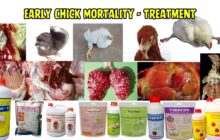
Colibacillosis is caused by E.coli and is characterized by various syndromes like colisepticemia, air sacculitis, coligranuloma, and omphalitis in birds depending on the age and type of strain of E.coli involved. It is also responsible for early chick mortality.
Reason for colibacillosis
• Escherichia coli • G- Coccobacilli • Pink colony on MLA and white colony on BGA
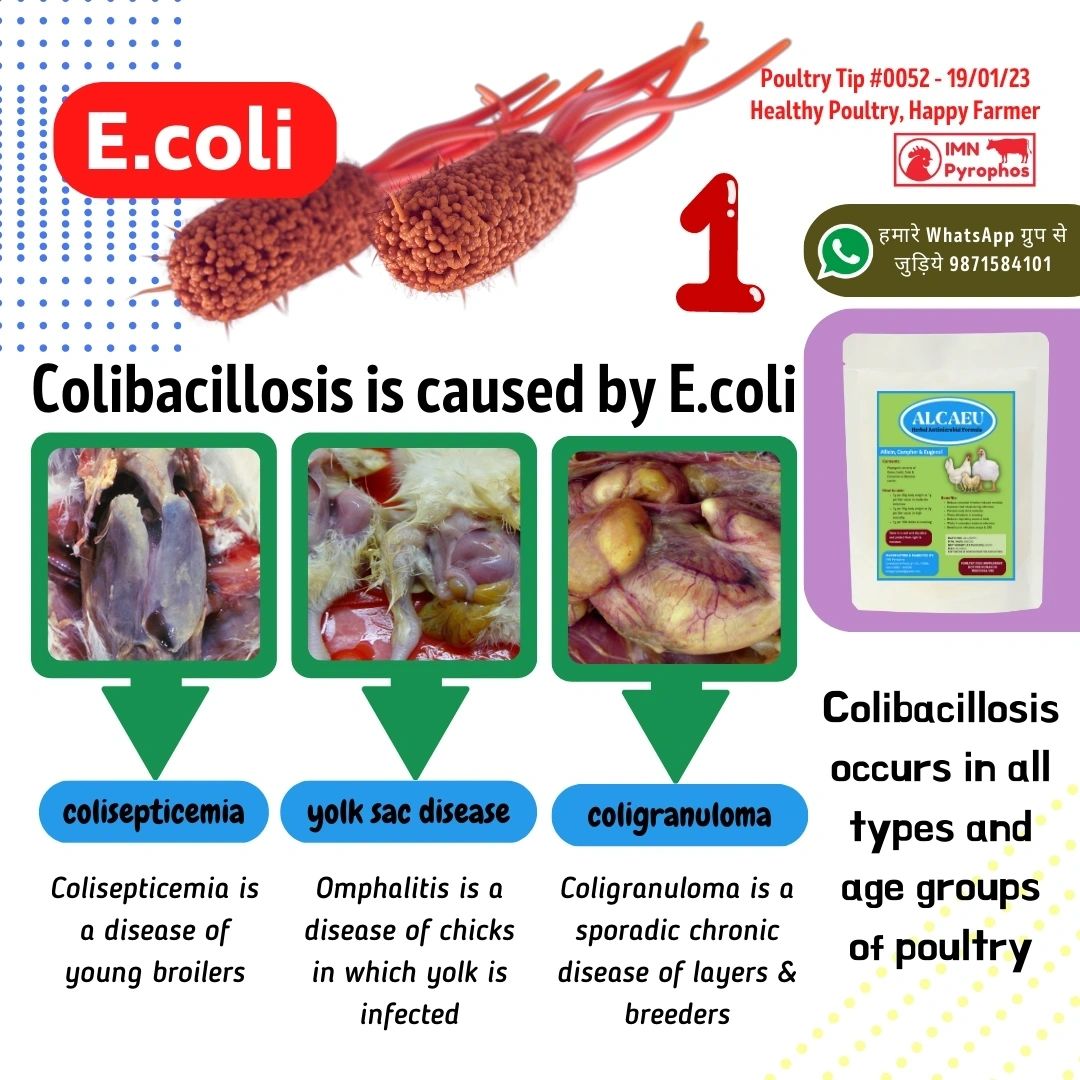
1. Colisepticemia
Colisepticemia is a disease of young broilers due to bad management and stress and is characterized by fibrinous pericarditis and hepatitis. Faecal contamination of the eggs may result in the penetration of E. coli through the shell due to the creation of negative pressure inside the eggs. This is considered the most important source of infection. Bacteria may be found in litter, dust and faecal matter. Feed is often contaminated with excreta. The bacteria is a typical inhabitant in the digestive tract of poultry. Birds with intact defence are resistant to E. coli. Still, when the defence system is compromised due to bacterial, viral, parasitic infections, toxins, poor ventilation, dust conditions etc., this infection may cause disease. Exposure to dust and ammonia results in the removal of cilia of the upper respiratory tract which permits the bacteria to colonize and cause respiratory infection. On entry, the bacteria multiply in the blood and produce septicemia.
Characteristic symptoms
• Diarrhoea
• Soiling of cloaca with a cheesy semisolid material
• Dyspnoea Macroscopic features
• Milky fluid in the pericardium
• Presence of whitish pseudo membrane over pericardium.
• Fibrinous covering over the liver.
Microscopic features
• Fibrinous pericarditis with infiltration of heterophils, macrophages and lymphocytes.
• Necrosis in the liver with a fibrinous and purulent exudate.
2. Coligranuloma (Hjarre’s Disease)
Coligranuloma is a sporadic chronic disease of adult birds characterized by the presence of nodules in the intestines. The bacteria enter the intestines through penetration and settle there to cause chronic inflammation characterized by the formation of nodules in the intestines. These nodules are composed of cheesy material and fibrosis.
Characteristic symptoms
• Diarrhoea
• Soiling of cloaca with cheesy semisolid material Macroscopic features
• Presence of nodules on the intestine.
• Small millet size or large nodule on duodenum, caecum and liver.
• Sporadic occurrence, a chronic disease seen in adults or age-old birds.
Microscopic features
• Caseous necrotic area in the centre covered by macrophages, lymphocytes and giant cells.
• Organisms can be demonstrated on Gram’s staining in the central necrotic area.
3. Air sacculitis
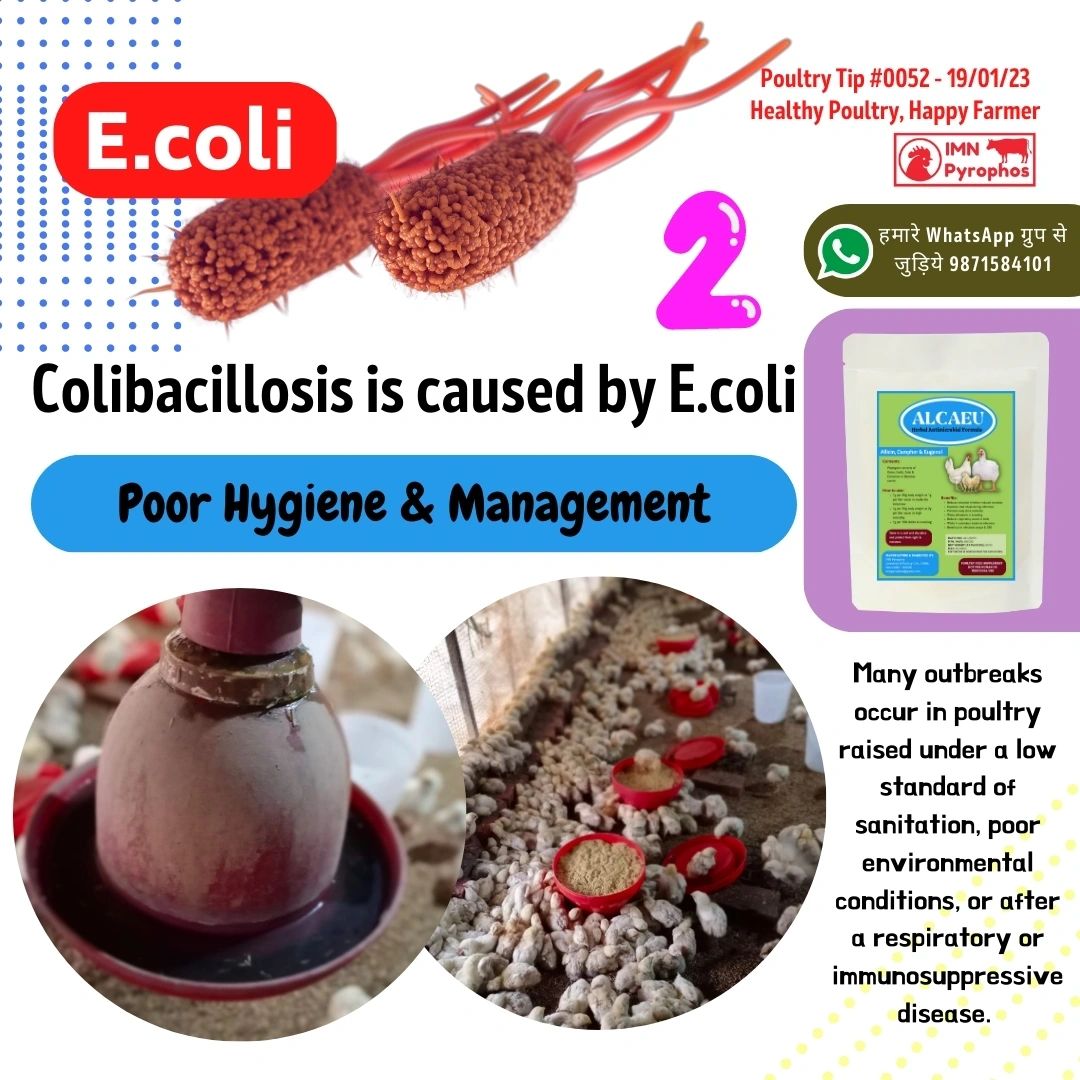
Air sacculitis is a disease of growers and adults and occurs along with Mycoplasma gallisepticum infection as Chronic Respiratory Disease. This organism is a normal inhabitant of the gut and is continuously excreted in droppings which contaminate the litter and environment of the poultry house. Adverse weather conditions and accumulation of ammonia and poor ventilation in dusty environment predisposes birds to E.coli infection as there is a loss of cilia in the upper respiratory tract that facilitates the entry of organisms to cause disease.
Characteristic symptoms
• Generally occurs in birds of 5-12 weeks of age
• Common in an overcrowded environment
• Gasping • Dyspnoea Macroscopic features
• Cloudiness in air sacs.
• Increased thickening of air sacs.
• Milky fluid in the pericardium.
Microscopic features
• Fibrinous pericarditis.
• Suppurative air sacculitis.
Loose droppings · bestseller
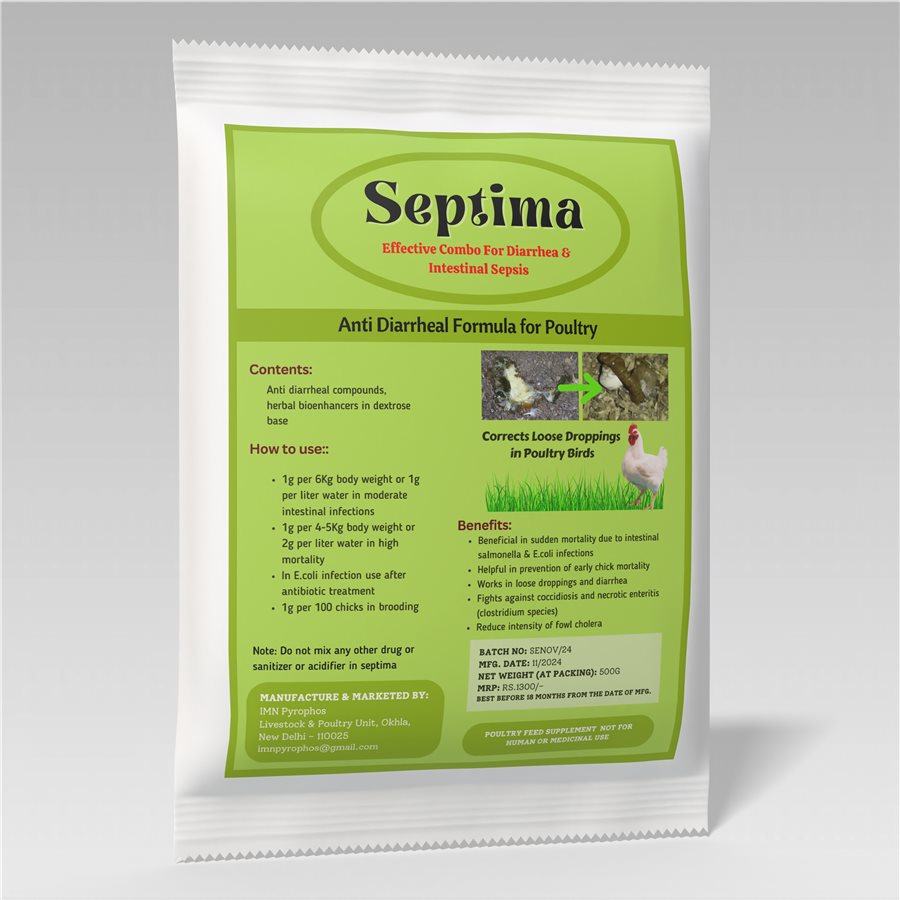
Septima
Anti-diarrhoeal combination with herbal bioenhancers in a dextrose base. Corrects loose droppings and is helpful in sudden mortality from intestinal Salmonella and E. coli, in early chick mortality, and against coccidiosis and necrotic enteritis.
Dose: 1 g per 6 kg body weight or 1 g per litre for moderate cases; 1 g per 4–5 kg body weight or 2 g per litre in high mortality. In E. coli infection, use after the antibiotic course. Do not mix with other drugs, sanitizers or acidifiers.
500 g ₹793MRP ₹1,300
4.Omphalitis (Yolk Sac Disease)
Omphalitis (also known as yolk sac disease / mushy chick disease) is a disease of newly hatched chicks and characterized by thin, watery, coagulated unabsorbed yolk. This infection is generally associated with inflamed naval or bacteria that can multiply in the hatching eggs following faecal contamination of the shell. Some other bacteria also cause yolk sac infections like staphylococcus, pseudomonas, proteus and clostridia. The bacteria rapidly multiply in the intestine of newly hatched chicks and the infection spreads from chick to chick in hatcheries and brooders.
Characteristic symptoms
• Sleepiness
• Aggregation near the source of heat Macroscopic features
• Presence of unabsorbed yolk
• Yolk becomes thin and watery with precipitates
• Yolk sac membrane becomes thickened due to congestion and exudate
• Intestines congested Microscopic features
• Focal necrotic hepatitis.
• Congestion and infiltration of heterophils in the yolk sac membrane.
Diagnosis
• Symptoms and lesions
• Isolation of E.coli from heart blood.
• Gram’s staining of impression smears made from nodules in coligranuloma.
Treatment
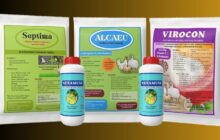
Numerous antimicrobials have been utilized for treatment. These have included tetracyclines, neomycin, sulfa drugs and others but E. coli has developed resistance to many of these commonly used antimicrobials. Antibiotic sensitivity testing is therefore strongly suggested as well as record keeping of treatment history by the farm. Alcaeu & Septima reduces the severity of disease and helps controlling mortality.
Contact our technical team for treatment plan.
Control
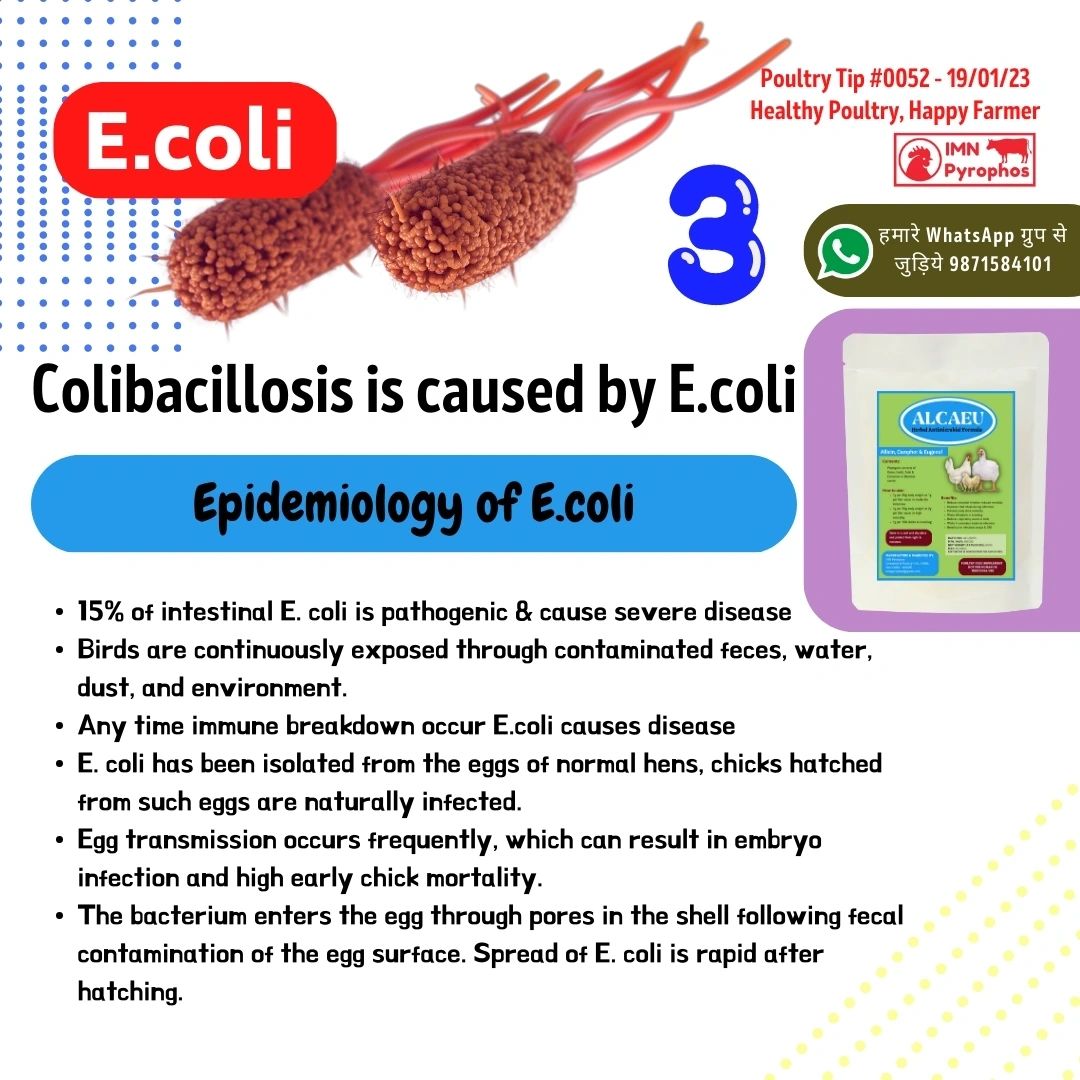
Measures should be taken to minimize eggshell contamination of newly laid hatching eggs. Eggs should be disinfected on the farm prior to storage and should be stored under ideal conditions.
Scrupulous hatchery sanitation, disinfection, and/or fumigation procedures should be practised.
A vigorous sanitation program should be followed in raising poultry. Diseases, parasitism, and other stresses on a flock should be minimized as much as possible. Dust should be controlled.
Only feeds free of faecal contaminations should be fed to poultry. Pelleted feeds are more likely to be free of contamination.
Treatment of water with halogens and related compounds as well as conversion to nipple drinkers has greatly decreased the incidence of septicemic forms of colibacillosis.
Note: Treatment without a proper sanitation plan is not much successful. Contact us to develop a proper sanitation plan. WhatsApp here.
Problem in your flock? Send photos of the birds and droppings on WhatsApp for a first opinion from Dr. Ibne Ali.
WhatsApp: 98715 84101Colibacillosis, E.coli से होने वाली बीमारी है। पक्षी की उम्र और E.coli के strain की किस्म के हिसाब से इसमें कई रूप दिखते हैं, जैसे colisepticemia, air sacculitis, coligranuloma और omphalitis। चूज़ों की शुरुआती मृत्यु (early chick mortality) के लिए भी यही ज़िम्मेदार है।
Colibacillosis का कारण
• Escherichia coli • G- Coccobacilli • MLA पर गुलाबी (pink) colony और BGA पर सफ़ेद colony
1. Colisepticemia
Colisepticemia छोटे broiler की बीमारी है, जो ख़राब मैनेजमेंट और stress की वजह से होती है, और इसमें fibrinous pericarditis (दिल की झिल्ली पर परत) और hepatitis (लीवर की सूजन) दिखते हैं। अंडों पर बीट लगने से, अंडे के अंदर negative pressure बनने के कारण E. coli छिलके के अंदर घुस सकता है। इसे इन्फेक्शन का सबसे बड़ा स्रोत माना जाता है। बैक्टीरिया litter, धूल और बीट में मिल सकते हैं। Feed अक्सर बीट से गंदा हो जाता है। यह बैक्टीरिया पोल्ट्री के पाचन तंत्र में आम तौर पर रहता है। जिन पक्षियों की रोग-प्रतिरोधक क्षमता ठीक है, उन पर E. coli असर नहीं करता। लेकिन जब बैक्टीरिया, वायरस, परजीवी (parasite) के इन्फेक्शन, toxins, ख़राब वेंटिलेशन, धूल वगैरह की वजह से यह क्षमता कमज़ोर हो जाती है, तब यह इन्फेक्शन बीमारी पैदा कर सकता है। धूल और अमोनिया के संपर्क से ऊपरी सांस की नली के cilia (बारीक रोएँ) ख़त्म हो जाते हैं, जिससे बैक्टीरिया वहाँ बस जाते हैं और सांस का इन्फेक्शन करते हैं। अंदर पहुँचकर बैक्टीरिया खून में बढ़ते हैं और septicemia (खून में ज़हर) पैदा करते हैं।
ख़ास लक्षण
• दस्त (Diarrhoea)
• Cloaca (मलद्वार) पर पनीर जैसी अधपकी गाढ़ी चीज़ लगी रहना
• सांस लेने में तकलीफ़ (Dyspnoea) पोस्टमार्टम में दिखने वाले बदलाव (Macroscopic features)
• दिल की झिल्ली (pericardium) में दूधिया पानी
• दिल की झिल्ली पर सफ़ेद सी नकली झिल्ली (pseudo membrane)।
• लीवर पर fibrin की परत।
माइक्रोस्कोप में दिखने वाले बदलाव (Microscopic features)
• Fibrinous pericarditis, जिसमें heterophils, macrophages और lymphocytes भरे होते हैं।
• लीवर में necrosis (ऊतक का मरना), साथ में fibrin और मवाद (pus) वाला रिसाव।
2. Coligranuloma (Hjarre’s Disease)
Coligranuloma बड़े पक्षियों की कभी-कभार होने वाली पुरानी (chronic) बीमारी है, जिसमें आंतों में गाँठें (nodules) बन जाती हैं। बैक्टीरिया आंतों में घुसकर वहीं बस जाते हैं और लंबी सूजन पैदा करते हैं, जिसकी पहचान आंतों में गाँठें बनना है। ये गाँठें पनीर जैसी चीज़ और fibrosis (सख़्त रेशेदार ऊतक) से बनी होती हैं।
ख़ास लक्षण
• दस्त (Diarrhoea)
• Cloaca पर पनीर जैसी अधपकी गाढ़ी चीज़ लगी रहना पोस्टमार्टम में दिखने वाले बदलाव (Macroscopic features)
• आंत पर गाँठें।
• Duodenum, caecum और लीवर पर बाजरे के दाने जितनी छोटी या बड़ी गाँठें।
• कभी-कभार होती है; यह पुरानी बीमारी बड़े या उम्रदराज़ पक्षियों में दिखती है।
माइक्रोस्कोप में दिखने वाले बदलाव (Microscopic features)
• बीच में पनीर जैसा मरा हुआ (caseous necrotic) हिस्सा, जो macrophages, lymphocytes और giant cells से ढका होता है।
• Gram’s staining करने पर बीच के मरे हुए हिस्से में बैक्टीरिया दिखाए जा सकते हैं।
3. Air sacculitis
Air sacculitis बढ़ते (grower) और बड़े पक्षियों की बीमारी है, और यह Mycoplasma gallisepticum इन्फेक्शन के साथ मिलकर Chronic Respiratory Disease (CRD) के रूप में होती है। यह बैक्टीरिया आंत में आम तौर पर रहता है और बीट के साथ लगातार बाहर निकलता है, जिससे पोल्ट्री हाउस का litter और माहौल गंदा होता है। ख़राब मौसम, अमोनिया जमा होना और धूल भरे माहौल में ख़राब वेंटिलेशन पक्षियों को E.coli इन्फेक्शन के लिए कमज़ोर बना देते हैं, क्योंकि ऊपरी सांस की नली के cilia ख़त्म हो जाते हैं और बैक्टीरिया आसानी से अंदर घुसकर बीमारी करते हैं।
ख़ास लक्षण
• आम तौर पर 5-12 हफ़्ते की उम्र के पक्षियों में होती है
• ज़्यादा भीड़ वाले माहौल में आम है
• मुँह खोलकर सांस लेना (Gasping) • सांस लेने में तकलीफ़ (Dyspnoea) पोस्टमार्टम में दिखने वाले बदलाव (Macroscopic features)
• Air sacs में धुंधलापन।
• Air sacs का मोटा हो जाना।
• दिल की झिल्ली (pericardium) में दूधिया पानी।
माइक्रोस्कोप में दिखने वाले बदलाव (Microscopic features)
• Fibrinous pericarditis।
• मवाद वाली (suppurative) air sacculitis।
पतली बीट · बेस्टसेलर
Septima
डेक्सट्रोज़ बेस में हर्बल बायोएन्हांसर के साथ दस्त-रोधी कॉम्बिनेशन। पतली बीट ठीक करता है; आँत के Salmonella और E. coli से अचानक मौतों, शुरुआती चूज़ा मृत्यु, कॉक्सीडियोसिस और नेक्रोटिक एंटेराइटिस में मददगार।
मात्रा: सामान्य केस में 1 ग्राम प्रति 6 किलो वज़न या 1 ग्राम प्रति लीटर; ज़्यादा मौतों में 1 ग्राम प्रति 4–5 किलो वज़न या 2 ग्राम प्रति लीटर। E. coli में एंटीबायोटिक कोर्स के बाद दें। दूसरी दवा, सैनिटाइज़र या एसिडिफायर के साथ न मिलाएँ।
500 g ₹793MRP ₹1,300
4.Omphalitis (Yolk Sac Disease)
Omphalitis (जिसे yolk sac disease / mushy chick disease भी कहते हैं) अभी-अभी निकले चूज़ों की बीमारी है, जिसमें पतला, पानी जैसा, जमा हुआ और बिना सोखा yolk दिखता है। यह इन्फेक्शन आम तौर पर सूजी हुई नाभि से जुड़ा होता है, या उन बैक्टीरिया से जो छिलके पर बीट लगने के बाद hatching अंडों में बढ़ सकते हैं। कुछ दूसरे बैक्टीरिया भी yolk sac इन्फेक्शन करते हैं, जैसे staphylococcus, pseudomonas, proteus और clostridia। बैक्टीरिया नए चूज़ों की आंत में तेज़ी से बढ़ते हैं और hatchery और brooder में इन्फेक्शन एक चूज़े से दूसरे चूज़े में फैलता है।
ख़ास लक्षण
• सुस्ती / ऊँघना
• गर्मी के स्रोत (brooder) के पास इकट्ठा होना पोस्टमार्टम में दिखने वाले बदलाव (Macroscopic features)
• बिना सोखा yolk मौजूद होना
• Yolk पतला और पानी जैसा हो जाता है, जिसमें कण तैरते हैं
• खून जमने (congestion) और रिसाव की वजह से yolk sac की झिल्ली मोटी हो जाती है
• आंतों में खून जमा (congested) माइक्रोस्कोप में दिखने वाले बदलाव (Microscopic features)
• लीवर में जगह-जगह necrosis वाली hepatitis।
• Yolk sac की झिल्ली में congestion और heterophils भरे होना।
जाँच (Diagnosis)
• लक्षण और पोस्टमार्टम के घाव (lesions)
• दिल के खून (heart blood) से E.coli अलग करना (isolation)।
• Coligranuloma में गाँठों से बने impression smear की Gram’s staining।
इलाज (Treatment)
इलाज के लिए कई antimicrobials इस्तेमाल किए गए हैं। इनमें tetracyclines, neomycin, sulfa दवाइयाँ और दूसरी दवाइयाँ शामिल हैं, लेकिन E. coli ने इनमें से कई आम दवाइयों के ख़िलाफ़ resistance बना लिया है। इसलिए antibiotic sensitivity test कराने की और फ़ार्म पर इलाज का पूरा रिकॉर्ड रखने की पक्की सलाह दी जाती है। Alcaeu और Septima बीमारी की गंभीरता कम करते हैं और मृत्यु (mortality) कंट्रोल करने में मदद करते हैं।
इलाज का प्लान जानने के लिए हमारी तकनीकी टीम से संपर्क करें।
बचाव और कंट्रोल (Control)
नए दिए गए hatching अंडों के छिलके गंदे न हों, इसके लिए कदम उठाने चाहिए। अंडों को स्टोर करने से पहले फ़ार्म पर ही disinfect करना चाहिए और सही हालात में स्टोर करना चाहिए।
Hatchery में पूरी सफ़ाई, disinfection और/या fumigation के तरीकों का सख़्ती से पालन करना चाहिए।
पोल्ट्री पालते समय सफ़ाई का मज़बूत प्रोग्राम अपनाना चाहिए। फ्लॉक पर बीमारियाँ, परजीवी और दूसरे stress जितना हो सके कम रखने चाहिए। धूल को कंट्रोल करना चाहिए।
पोल्ट्री को सिर्फ़ बीट की गंदगी से मुक्त feed ही खिलाना चाहिए। Pellet feed में गंदगी होने की संभावना कम होती है।
पानी को halogens और उनसे जुड़े compounds से treat करने और nipple drinker अपनाने से colibacillosis के septicemic रूप के मामले बहुत कम हुए हैं।
नोट: सही सफ़ाई प्लान के बिना इलाज ज़्यादा सफल नहीं होता। सही सफ़ाई प्लान बनाने के लिए हमसे संपर्क करें। यहाँ WhatsApp करें।
फ़ार्म में कोई दिक्कत? पक्षियों और बीट की फ़ोटो WhatsApp पर भेजिए, डॉ. इब्ने अली से पहली राय लीजिए।
WhatsApp: 98715 84101Colibacillosis, E.coli se hone wali bimari hai. Bird ki umar aur E.coli ke strain ki kism ke hisaab se isme kai roop dikhte hain, jaise colisepticemia, air sacculitis, coligranuloma aur omphalitis. Early chick mortality (chuzon ki shuruaati maut) ke liye bhi yahi zimmedar hai.
Colibacillosis ka kaaran
• Escherichia coli • G- Coccobacilli • MLA par pink colony aur BGA par safed colony
1. Colisepticemia
Colisepticemia chhote broiler ki bimari hai, jo kharab management aur stress ki wajah se hoti hai, aur isme fibrinous pericarditis (dil ki jhilli par parat) aur hepatitis (liver ki sujan) dikhte hain. Andon par beet lagne se, ande ke andar negative pressure banne ke kaaran E. coli chhilke ke andar ghus sakta hai. Ise infection ka sabse bada source mana jata hai. Bacteria litter, dhool aur beet me mil sakte hain. Feed aksar beet se ganda ho jata hai. Ye bacteria poultry ke digestive tract me aam taur par rehta hai. Jin birds ki immunity theek hai, un par E. coli asar nahi karta. Lekin jab bacteria, virus, parasite ke infection, toxins, kharab ventilation, dhool wagairah ki wajah se immunity kamzor ho jati hai, tab ye infection bimari paida kar sakta hai. Dhool aur ammonia ke sampark se upar ki saans nali ke cilia (bareek roye) khatam ho jate hain, jisse bacteria wahan bas jate hain aur saans ka infection karte hain. Andar pahunchkar bacteria khoon me badhte hain aur septicemia paida karte hain.
Khaas lakshan
• Dast (Diarrhoea)
• Cloaca (maldwar) par paneer jaisi adhpaki gaadhi cheez lagi rehna
• Saans lene me taklif (Dyspnoea) Postmortem me dikhne wale badlav (Macroscopic features)
• Dil ki jhilli (pericardium) me doodhiya paani
• Dil ki jhilli par safed si nakli jhilli (pseudo membrane).
• Liver par fibrin ki parat.
Microscope me dikhne wale badlav (Microscopic features)
• Fibrinous pericarditis, jisme heterophils, macrophages aur lymphocytes bhare hote hain.
• Liver me necrosis (tissue ka marna), saath me fibrin aur pus (mawad) wala risav.
2. Coligranuloma (Hjarre’s Disease)
Coligranuloma bade birds ki kabhi-kabhar hone wali purani (chronic) bimari hai, jisme aanton me gaanthein (nodules) ban jati hain. Bacteria aanton me ghuskar wahin bas jate hain aur lambi sujan paida karte hain, jiski pehchan aanton me gaanthein banna hai. Ye gaanthein paneer jaisi cheez aur fibrosis (sakht reshedar tissue) se bani hoti hain.
Khaas lakshan
• Dast (Diarrhoea)
• Cloaca par paneer jaisi adhpaki gaadhi cheez lagi rehna Postmortem me dikhne wale badlav (Macroscopic features)
• Aant par gaanthein.
• Duodenum, caecum aur liver par bajre ke daane jitni chhoti ya badi gaanthein.
• Kabhi-kabhar hoti hai; ye purani bimari bade ya umardaraz birds me dikhti hai.
Microscope me dikhne wale badlav (Microscopic features)
• Beech me paneer jaisa mara hua (caseous necrotic) hissa, jo macrophages, lymphocytes aur giant cells se dhaka hota hai.
• Gram’s staining karne par beech ke mare hue hisse me bacteria dikhaye ja sakte hain.
3. Air sacculitis
Air sacculitis grower aur bade birds ki bimari hai, aur ye Mycoplasma gallisepticum infection ke saath milkar Chronic Respiratory Disease (CRD) ke roop me hoti hai. Ye bacteria aant me aam taur par rehta hai aur beet ke saath lagatar bahar nikalta hai, jisse poultry house ka litter aur mahaul ganda hota hai. Kharab mausam, ammonia jama hona aur dhool bhare mahaul me kharab ventilation birds ko E.coli infection ke liye kamzor bana dete hain, kyunki upar ki saans nali ke cilia khatam ho jate hain aur bacteria aasani se andar ghuskar bimari karte hain.
Khaas lakshan
• Aam taur par 5-12 hafte ki umar ke birds me hoti hai
• Zyada bheed wale mahaul me common hai
• Munh kholkar saans lena (Gasping) • Saans lene me taklif (Dyspnoea) Postmortem me dikhne wale badlav (Macroscopic features)
• Air sacs me dhundhlapan.
• Air sacs ka mota ho jana.
• Dil ki jhilli (pericardium) me doodhiya paani.
Microscope me dikhne wale badlav (Microscopic features)
• Fibrinous pericarditis.
• Mawad wali (suppurative) air sacculitis.
Patli beet · bestseller
Septima
Dextrose base me herbal bioenhancer ke saath dast-rodhi combination. Patli beet theek karta hai; aant ke Salmonella aur E. coli se achanak maut, shuruaati chooza mrityu, coccidiosis aur necrotic enteritis me madadgaar.
Matra: Saamanya case me 1 g prati 6 kg wazan ya 1 g prati litre; zyada maut me 1 g prati 4–5 kg wazan ya 2 g prati litre. E. coli me antibiotic course ke baad dijiye. Doosri dawa, sanitizer ya acidifier ke saath mat milaiye.
500 g ₹793MRP ₹1,300
4.Omphalitis (Yolk Sac Disease)
Omphalitis (jise yolk sac disease / mushy chick disease bhi kehte hain) abhi-abhi nikle chuzon ki bimari hai, jisme patla, paani jaisa, jama hua aur bina absorb hua yolk dikhta hai. Ye infection aam taur par suji hui naabhi se juda hota hai, ya un bacteria se jo chhilke par beet lagne ke baad hatching andon me badh sakte hain. Kuch doosre bacteria bhi yolk sac infection karte hain, jaise staphylococcus, pseudomonas, proteus aur clostridia. Bacteria naye chuzon ki aant me tezi se badhte hain aur hatchery aur brooder me infection ek chuze se doosre chuze me failta hai.
Khaas lakshan
• Susti / oonghna
• Garmi ke source (brooder) ke paas ikattha hona Postmortem me dikhne wale badlav (Macroscopic features)
• Bina absorb hua yolk hona
• Yolk patla aur paani jaisa ho jata hai, jisme kan tairte hain
• Congestion (khoon jamna) aur risav ki wajah se yolk sac ki jhilli moti ho jati hai
• Aanton me khoon jama (congested) Microscope me dikhne wale badlav (Microscopic features)
• Liver me jagah-jagah necrosis wali hepatitis.
• Yolk sac ki jhilli me congestion aur heterophils bhare hona.
Jaanch (Diagnosis)
• Lakshan aur postmortem ke ghaav (lesions)
• Heart blood (dil ke khoon) se E.coli alag karna (isolation).
• Coligranuloma me gaanthon se bane impression smear ki Gram’s staining.
Ilaj (Treatment)
Ilaj ke liye kai antimicrobials use kiye gaye hain. Inme tetracyclines, neomycin, sulfa dawaiyan aur doosri dawaiyan shamil hain, lekin E. coli ne inme se kai aam dawaiyon ke khilaf resistance bana liya hai. Isliye antibiotic sensitivity test karane ki aur farm par ilaj ka pura record rakhne ki pakki salah di jati hai. Alcaeu aur Septima bimari ki gambhirta kam karte hain aur mortality control karne me madad karte hain.
Ilaj ka plan jaanne ke liye hamari technical team se contact karo.
Bachav aur Control
Naye diye gaye hatching andon ke chhilke gande na hon, iske liye kadam uthane chahiye. Andon ko store karne se pehle farm par hi disinfect karna chahiye aur sahi halat me store karna chahiye.
Hatchery me puri safai, disinfection aur/ya fumigation ke tareekon ka sakhti se palan karna chahiye.
Poultry palte time safai ka mazboot program apnana chahiye. Flock par bimariyan, parasites aur doosre stress jitna ho sake kam rakhne chahiye. Dhool ko control karna chahiye.
Poultry ko sirf beet ki gandagi se mukt feed hi khilana chahiye. Pellet feed me gandagi hone ke chance kam hote hain.
Paani ko halogens aur unse jude compounds se treat karne aur nipple drinker apnane se colibacillosis ke septicemic roop ke cases bahut kam hue hain.
Note: Sahi safai plan ke bina ilaj zyada successful nahi hota. Sahi safai plan banane ke liye humse contact karo. Yahan WhatsApp karo.
Farm me koi dikkat? Pakshiyon aur beet ki photo WhatsApp par bhejiye, Dr. Ibne Ali se pehli raay lijiye.
WhatsApp: 98715 84101