

Tamil Nadu’s state dairy cooperative Aavin is short of roughly 1 million litres of milk every day. According to a Dairy News Today report dated 17 November 2026, Aavin collects about 2.7 million litres a day against a need of about 3.7 million, and Chennai deliveries have been cut. For dairy farmers the shortage has a bright side, because buyers are competing for milk and the farm-gate price has gone up. The real question is how to use the moment: keep cows yielding steadily and keep fodder and feed costs under control.
Key facts
| Item | What the report says |
|---|---|
| Aavin raw milk collection | About 2.7 million litres a day |
| Aavin requirement | About 3.7 million litres a day (gap of roughly 1 million litres) |
| Tamil Nadu milk production | About 30 million litres a day |
| Chennai normal Aavin supply | About 1.65 million litres a day |
| Chennai deliveries | Down about 25% in recent months, with a further 10% cut from 15 September |
| Farmer purchase price | Raised by up to ₹6, to ₹44 per litre; private processors matched |
| Agents’ figures | Booth network needs about 3.3 million litres, but purchases are 2.2 to 2.4 million litres |
| Disputed claim | About 500,000 litres a day said to go to online platforms and corporates |
| Official outlook | Seasonal output and better fodder expected to restore supply |
The shortage is reported in Chennai, Tiruvallur, Kancheepuram, Villupuram, Kanyakumari, Tirunelveli and Cuddalore. Local outlets also report that some value-added products are available in quantities 100 to 200 litres lower each day.
Why it is happening
Aavin is the Tamil Nadu Co-operative Milk Producers’ Federation. Its collection is well below its need even though the state as a whole produces about 30 million litres a day, which means most of the milk is handled outside Aavin. When private processors raised prices, Aavin’s packets became much cheaper than private milk, and urban consumers shifted towards Aavin. That raised demand just as procurement fell short.
To hold on to village suppliers, Aavin raised its farmer purchase price by up to ₹6 per litre, to ₹44, and private processors matched the increases.
There is also an argument over numbers. Milk agents’ associations say the traditional booth network alone needs about 3.3 million litres a day but receives only 2.2 to 2.4 million, and they allege that about 500,000 litres a day are diverted to online platforms, private corporations and supermarkets. This allegation is disputed by the cooperative side and is part of a wider disagreement over how stock is shared between sales channels.
What it means for dairy farmers
- Better bargaining position. When both Aavin and private processors need milk, a farmer who supplies steady quantity and quality is valued more. A purchase price of ₹44 per litre is the reference to compare against your own society or buyer.
- Fodder and steady yield. Officials expect seasonal output and better fodder to restore supply. A cow on enough green and dry fodder holds a steady yield, while a short fodder season pushes milk down just when buyers want more.
- Price rises can reverse. Higher purchase prices came from a supply gap. If seasonal milk comes back strongly, the pressure may ease, so a profit plan should not depend on one price level.
- Costs still matter. Measure your feed cost per litre, not just your price per litre.
What farmers should do now
- Check your rate. Ask your society or buyer exactly what price applies to you, on what fat and SNF basis, and from when.
- Compare buyers. Where you have a choice, compare Aavin and private rates along with payment timing, not only the headline price.
- Secure fodder early. Plan green fodder, and store dry fodder and silage before the lean period, so yield does not dip.
- Keep the ration balanced. Match concentrate to each cow’s milk, and give daily minerals and clean water to protect yield and fertility.
- Keep daily records. Note milk, feed, fodder and calving dates so you can see which animals pay for their feed.
- Do not over-expand on today’s price. Add animals only if your fodder and feed supply can support them through the year.
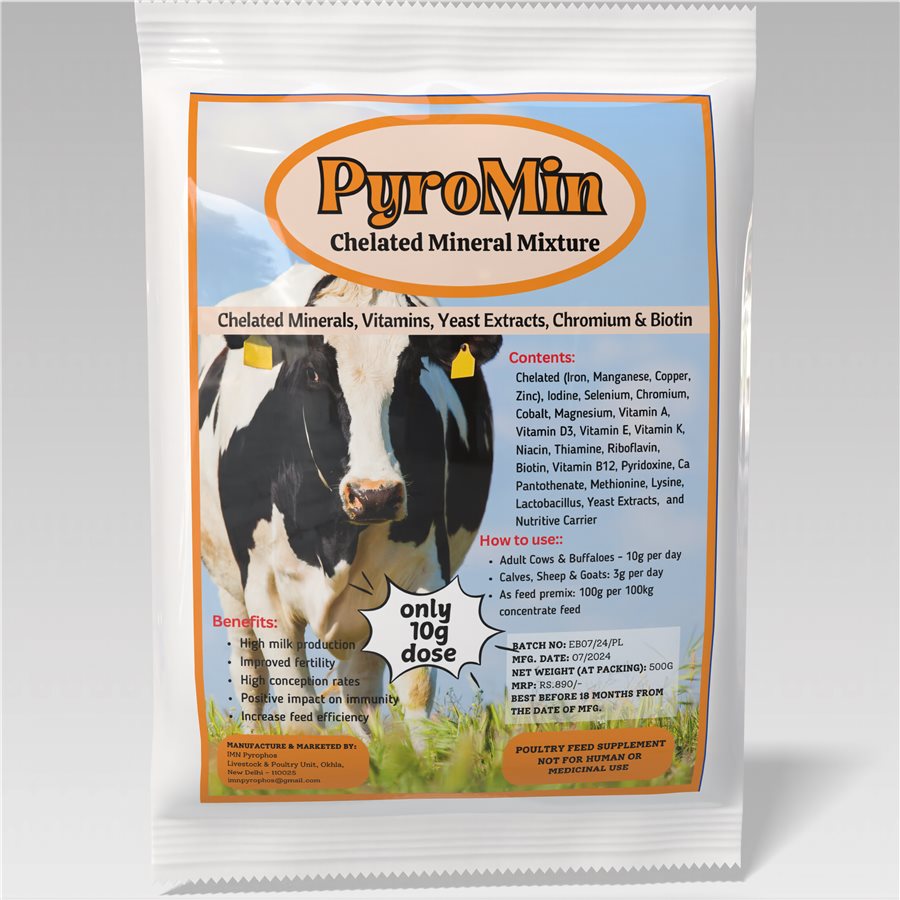
Chelated mineral · small daily dose
Pyromin
Chelated iron, manganese, copper, zinc, iodine, selenium, chromium, cobalt and magnesium, with vitamins A, D3, E, K and B vitamins, biotin, methionine, lysine, lactobacillus and yeast extract. Supports milk production, fertility, conception, immunity and feed efficiency.
Dose: adult cow or buffalo 10 g per day; calves, sheep and goats 3 g per day. As a premix: 100 g per 100 kg concentrate.
1 kg ₹655MRP ₹1,190
Frequently asked questions
How big is Aavin’s milk shortage?
The report puts Aavin’s collection at about 2.7 million litres a day against a need of about 3.7 million, a gap of roughly 1 million litres.
Will farmers get a higher price for milk?
Aavin’s purchase price has already risen by up to ₹6 per litre, to ₹44, and private processors matched it. Your own rate depends on your society or buyer, so confirm it with them.
Will the shortage end soon?
Cooperative officials expect seasonal rises in rural output, helped by better fodder, to restore supply. The report gives no firm date.
Source: Dairy News Today, 17 Nov 2026. Written by the IMN Pyrophos team in our own words.
तमिलनाडु की सरकारी डेयरी सहकारी संस्था Aavin को हर दिन लगभग 10 लाख लीटर दूध की कमी झेलनी पड़ रही है। Dairy News Today की 17 नवंबर 2026 की रिपोर्ट के अनुसार Aavin रोज़ लगभग 27 लाख लीटर दूध इकट्ठा करती है, जबकि ज़रूरत लगभग 37 लाख लीटर की है, और चेन्नई की सप्लाई घटाई गई है। डेयरी किसानों के लिए इसका एक अच्छा पहलू है: दूध के लिए खरीदारों में होड़ है और फ़ार्म पर दाम बढ़ गया है। असली सवाल यह है कि इस मौके का फ़ायदा कैसे उठाएँ: पशुओं की पैदावार स्थिर रखें और चारे व फ़ीड का खर्च क़ाबू में रखें।
मुख्य तथ्य
| मद | रिपोर्ट क्या कहती है |
|---|---|
| Aavin का कच्चे दूध का संग्रह | रोज़ लगभग 27 लाख लीटर |
| Aavin की ज़रूरत | रोज़ लगभग 37 लाख लीटर (लगभग 10 लाख लीटर की कमी) |
| तमिलनाडु का दूध उत्पादन | रोज़ लगभग 3 करोड़ लीटर |
| चेन्नई में सामान्य Aavin सप्लाई | रोज़ लगभग 16.5 लाख लीटर |
| चेन्नई की डिलीवरी | हाल के महीनों में लगभग 25% कम, और 15 सितंबर से 10% की और कटौती |
| किसान से ख़रीद का दाम | अधिकतम ₹6 बढ़कर ₹44 प्रति लीटर; निजी प्रोसेसरों ने बराबरी की |
| एजेंटों के आँकड़े | बूथ नेटवर्क को लगभग 33 लाख लीटर चाहिए, पर ख़रीद 22 से 24 लाख लीटर है |
| विवादित दावा | रोज़ लगभग 5 लाख लीटर ऑनलाइन प्लेटफ़ॉर्म और कॉर्पोरेट को जाने का आरोप |
| अधिकारियों की उम्मीद | मौसमी उत्पादन और बेहतर चारे से सप्लाई लौटेगी |
कमी की रिपोर्ट चेन्नई, तिरुवल्लूर, कांचीपुरम, विल्लुपुरम, कन्याकुमारी, तिरुनेलवेली और कुड्डालोर से है। स्थानीय दुकानों के अनुसार कुछ वैल्यू-एडेड उत्पाद रोज़ 100 से 200 लीटर कम उपलब्ध हैं।
ऐसा क्यों हो रहा है
Aavin तमिलनाडु कोऑपरेटिव मिल्क प्रोड्यूसर्स फ़ेडरेशन है। राज्य में कुल उत्पादन लगभग 3 करोड़ लीटर रोज़ है, फिर भी Aavin का संग्रह उसकी ज़रूरत से काफ़ी कम है, यानी ज़्यादातर दूध Aavin के बाहर संभाला जाता है। जब निजी प्रोसेसरों ने दाम बढ़ाए तो Aavin के पैकेट निजी दूध से काफ़ी सस्ते हो गए और शहरी उपभोक्ता Aavin की ओर झुक गए। इससे माँग बढ़ी, ठीक तब जब ख़रीद कम पड़ी।
गाँव के सप्लायरों को रोकने के लिए Aavin ने किसान से ख़रीद का दाम अधिकतम ₹6 प्रति लीटर बढ़ाकर ₹44 किया, और निजी प्रोसेसरों ने भी उतनी ही बढ़ोतरी कर दी।
आँकड़ों पर बहस भी है। दूध एजेंटों के संघ कहते हैं कि सिर्फ़ पारंपरिक बूथ नेटवर्क को रोज़ लगभग 33 लाख लीटर चाहिए पर मिलता सिर्फ़ 22 से 24 लाख लीटर है, और उनका आरोप है कि रोज़ लगभग 5 लाख लीटर ऑनलाइन प्लेटफ़ॉर्म, निजी कंपनियों और सुपरमार्केट को भेजा जा रहा है। यह आरोप विवादित है और स्टॉक को बिक्री के अलग-अलग माध्यमों में बाँटने पर चल रहे बड़े विवाद का हिस्सा है।
डेयरी किसानों के लिए इसका मतलब
- मोलभाव की बेहतर स्थिति। जब Aavin और निजी प्रोसेसर दोनों को दूध चाहिए, तो नियमित मात्रा और अच्छी गुणवत्ता देने वाले किसान की क़द्र बढ़ती है। ₹44 प्रति लीटर का ख़रीद दाम अपनी सोसाइटी या ख़रीदार के रेट से तुलना का पैमाना है।
- चारा और स्थिर पैदावार। अधिकारियों को उम्मीद है कि मौसमी उत्पादन और बेहतर चारे से सप्लाई लौटेगी। जिस गाय को हरा और सूखा चारा भरपूर मिलता है उसकी पैदावार स्थिर रहती है, जबकि चारे की तंगी दूध ठीक तब घटाती है जब ख़रीदार ज़्यादा माँग रहे हों।
- बढ़ा दाम पलट भी सकता है। ऊँचे ख़रीद दाम सप्लाई की कमी से आए हैं। अगर मौसमी दूध ज़ोर से लौटा तो दबाव घट सकता है, इसलिए मुनाफ़े की योजना किसी एक दाम पर टिकी न हो।
- लागत अब भी मायने रखती है। सिर्फ़ प्रति लीटर दाम नहीं, अपना feed cost per litre भी नापें।
किसान अभी क्या करें
- अपना रेट पक्का करें। अपनी सोसाइटी या ख़रीदार से पूछें कि आपको कौन सा दाम, किस फ़ैट और SNF पर, और कब से मिलेगा।
- ख़रीदारों की तुलना करें। जहाँ विकल्प हो, Aavin और निजी रेट की तुलना भुगतान के समय के साथ करें, सिर्फ़ ऊपरी दाम से नहीं।
- चारा पहले से जुटाएँ। हरे चारे की योजना बनाएँ और कमी के मौसम से पहले सूखा चारा और साइलेज रख लें, ताकि पैदावार न गिरे।
- राशन संतुलित रखें। हर गाय के दूध के हिसाब से दाना दें, और पैदावार व प्रजनन बचाने के लिए रोज़ मिनरल और साफ़ पानी दें।
- रोज़ रिकॉर्ड रखें। दूध, फ़ीड, चारा और ब्याने की तारीख़ें लिखें, ताकि पता चले कौन सा पशु अपना ख़र्च निकाल रहा है।
- आज के दाम पर ज़्यादा न फैलें। पशु तभी बढ़ाएँ जब आपका चारा और फ़ीड पूरे साल उन्हें संभाल सके।
चिलेटेड मिनरल · रोज़ थोड़ी मात्रा
Pyromin
चिलेटेड आयरन, मैंगनीज़, कॉपर, ज़िंक, आयोडीन, सेलेनियम, क्रोमियम, कोबाल्ट और मैग्नीशियम, साथ में विटामिन A, D3, E, K और B विटामिन, बायोटिन, मेथियोनीन, लाइसीन, लैक्टोबैसिलस और यीस्ट एक्सट्रैक्ट। दूध उत्पादन, प्रजनन, गाभिन ठहरने, रोग प्रतिरोधक क्षमता और चारे के बेहतर उपयोग में सहायक।
मात्रा: वयस्क गाय या भैंस को 10 ग्राम प्रति दिन; बछड़े, भेड़ और बकरी को 3 ग्राम प्रति दिन। प्रीमिक्स के रूप में 100 ग्राम प्रति 100 किलो दाना।
1 kg ₹655MRP ₹1,190
अक्सर पूछे जाने वाले सवाल
Aavin के दूध की कमी कितनी बड़ी है?
रिपोर्ट के अनुसार Aavin का संग्रह रोज़ लगभग 27 लाख लीटर है जबकि ज़रूरत लगभग 37 लाख लीटर की है, यानी लगभग 10 लाख लीटर की कमी।
क्या किसानों को दूध का ज़्यादा दाम मिलेगा?
Aavin का ख़रीद दाम अधिकतम ₹6 बढ़कर ₹44 प्रति लीटर हो चुका है और निजी प्रोसेसरों ने बराबरी की है। आपका अपना रेट आपकी सोसाइटी या ख़रीदार पर निर्भर है, इसलिए उनसे पक्का कर लें।
क्या कमी जल्द ख़त्म होगी?
सहकारी संस्था के अधिकारियों को उम्मीद है कि गाँवों में मौसमी उत्पादन बढ़ने और बेहतर चारे से सप्लाई लौट आएगी। रिपोर्ट में कोई पक्की तारीख़ नहीं दी गई।
स्रोत: Dairy News Today, 17 नवंबर 2026। IMN Pyrophos टीम ने अपने शब्दों में लिखा।
Tamil Nadu ki sarkari dairy sahkari sanstha Aavin ko har din lagbhag 10 lakh litre doodh ki kami jhelni pad rahi hai. Dairy News Today ki 17 November 2026 ki report ke anusaar Aavin roz lagbhag 27 lakh litre doodh ikattha karti hai, jabki zaroorat lagbhag 37 lakh litre ki hai, aur Chennai ki supply ghatayi gayi hai. Dairy kisanon ke liye iska ek achha pehlu hai: doodh ke liye kharidaron me hod hai aur farm par daam badh gaya hai. Asli sawaal yeh hai ki is mauke ka fayda kaise uthayen: pashuon ki paidawar sthir rakhen aur chaare va feed ka kharch kaabu me rakhen.
Mukhya tathya
| Mad | Report kya kehti hai |
|---|---|
| Aavin ka kachche doodh ka sangrah | Roz lagbhag 27 lakh litre |
| Aavin ki zaroorat | Roz lagbhag 37 lakh litre (lagbhag 10 lakh litre ki kami) |
| Tamil Nadu ka doodh utpadan | Roz lagbhag 3 crore litre |
| Chennai me saamanya Aavin supply | Roz lagbhag 16.5 lakh litre |
| Chennai ki delivery | Haal ke mahino me lagbhag 25% kam, aur 15 September se 10% ki aur katauti |
| Kisan se kharid ka daam | Adhiktam ₹6 badhkar ₹44 prati litre; nijee processors ne barabari ki |
| Agents ke aankde | Booth network ko lagbhag 33 lakh litre chahiye, par kharid 22 se 24 lakh litre hai |
| Vivadit daava | Roz lagbhag 5 lakh litre online platform aur corporate ko jaane ka aarop |
| Adhikaariyon ki ummeed | Mausmi utpadan aur behtar chaare se supply lautegi |
Kami ki report Chennai, Tiruvallur, Kancheepuram, Villupuram, Kanyakumari, Tirunelveli aur Cuddalore se hai. Sthaniya dukanon ke anusaar kuch value-added products roz 100 se 200 litre kam uplabdh hain.
Aisa kyon ho raha hai
Aavin Tamil Nadu Co-operative Milk Producers’ Federation hai. Rajya me kul utpadan lagbhag 3 crore litre roz hai, phir bhi Aavin ka sangrah uski zaroorat se kaafi kam hai, yaani zyadatar doodh Aavin ke bahar sambhala jata hai. Jab nijee processors ne daam badhaye to Aavin ke packet nijee doodh se kaafi sasta ho gaye aur shehri upbhokta Aavin ki taraf jhuk gaye. Isse maang badhi, theek tab jab kharid kam padi.
Gaon ke suppliers ko rokne ke liye Aavin ne kisan se kharid ka daam adhiktam ₹6 prati litre badhakar ₹44 kiya, aur nijee processors ne bhi utni hi badhotri kar di.
Aankdon par bahas bhi hai. Doodh agents ke sangh kehte hain ki sirf paramparagat booth network ko roz lagbhag 33 lakh litre chahiye par milta sirf 22 se 24 lakh litre hai, aur unka aarop hai ki roz lagbhag 5 lakh litre online platform, nijee companies aur supermarket ko bheja ja raha hai. Yeh aarop vivadit hai aur stock ko bikri ke alag-alag madhyamon me baantne par chal rahe bade vivad ka hissa hai.
Dairy kisanon ke liye iska matlab
- Molbhaav ki behtar sthiti. Jab Aavin aur nijee processor dono ko doodh chahiye, to niyamit matra aur achhi gunvatta dene wale kisan ki kadar badhti hai. ₹44 prati litre ka kharid daam apni society ya kharidar ke rate se tulna ka paimana hai.
- Chaara aur sthir paidawar. Adhikaariyon ko ummeed hai ki mausmi utpadan aur behtar chaare se supply lautegi. Jis gaay ko hara aur sookha chaara bharpoor milta hai uski paidawar sthir rehti hai, jabki chaare ki tangi doodh theek tab ghatati hai jab kharidar zyada maang rahe ho.
- Badha daam palat bhi sakta hai. Unche kharid daam supply ki kami se aaye hain. Agar mausmi doodh zor se lauta to dabav ghat sakta hai, isliye munafe ki yojana kisi ek daam par tiki na ho.
- Lagat ab bhi maayne rakhti hai. Sirf prati litre daam nahi, apna feed cost per litre bhi napen.
Kisan abhi kya karen
- Apna rate pakka karen. Apni society ya kharidar se poochhen ki aapko kaun sa daam, kis fat aur SNF par, aur kab se milega.
- Kharidaron ki tulna karen. Jahan vikalp ho, Aavin aur nijee rate ki tulna bhugtan ke samay ke saath karen, sirf upari daam se nahi.
- Chaara pehle se jutayen. Hare chaare ki yojana banayen aur kami ke mausam se pehle sookha chaara aur silage rakh len, taaki paidawar na gire.
- Ration santulit rakhen. Har gaay ke doodh ke hisaab se daana den, aur paidawar va prajanan bachane ke liye roz mineral aur saaf paani den.
- Roz record rakhen. Doodh, feed, chaara aur byane ki tarikhen likhen, taaki pata chale kaun sa pashu apna kharch nikal raha hai.
- Aaj ke daam par zyada na phailen. Pashu tabhi badhayen jab aapka chaara aur feed poore saal unhe sambhal sake.
Chelated mineral · roz thodi matra
Pyromin
Chelated iron, manganese, copper, zinc, iodine, selenium, chromium, cobalt aur magnesium, saath me vitamin A, D3, E, K aur B vitamin, biotin, methionine, lysine, lactobacillus aur yeast extract. Doodh utpadan, prajanan, gaabhin theharne, immunity aur chaare ke behtar upyog me sahayak.
Matra: Vayask gaay ya bhains ko 10 g prati din; bachhde, bhed aur bakri ko 3 g prati din. Premix ke roop me 100 g prati 100 kg daana.
1 kg ₹655MRP ₹1,190
Aksar poochhe jaane wale sawaal
Aavin ke doodh ki kami kitni badi hai?
Report ke anusaar Aavin ka sangrah roz lagbhag 27 lakh litre hai jabki zaroorat lagbhag 37 lakh litre ki hai, yaani lagbhag 10 lakh litre ki kami.
Kya kisanon ko doodh ka zyada daam milega?
Aavin ka kharid daam adhiktam ₹6 badhkar ₹44 prati litre ho chuka hai aur nijee processors ne barabari ki hai. Aapka apna rate aapki society ya kharidar par nirbhar hai, isliye unse pakka kar len.
Kya kami jaldi khatam hogi?
Sahkari sanstha ke adhikaariyon ko ummeed hai ki gaon me mausmi utpadan badhne aur behtar chaare se supply laut aayegi. Report me koi pakki tarikh nahi di gayi.
Source: Dairy News Today, 17 Nov 2026. IMN Pyrophos team ne apne shabdon me likha.