

Amul and Mother Dairy raised fresh milk prices from Thursday, 12 November 2026, with Amul pouch milk up by roughly 4-5 percent and Mother Dairy adding ₹2 to ₹4 a litre in Delhi-NCR. Both blame costlier fodder, cattle feed and packaging. For a dairy farmer the real question is different: milk price is up, but is your profit up? That depends on one number, your feed cost per litre, and on how much milk each rupee of feed turns into.
Key facts: who raised the price, and by how much
| Company | Variant | Old price | New price | Change |
|---|---|---|---|---|
| Amul (GCMMF) | Taaza toned milk (3% fat) | Not stated | Not stated | +₹2 per litre (3.3%) |
| Amul (GCMMF) | Gold milk (6% fat) | Not stated | Not stated | +₹4 per litre (5.5%) |
| Mother Dairy, Delhi-NCR | Full cream, 1 litre | ₹72 | ₹76 | +₹4 |
| Mother Dairy, Delhi-NCR | Toned, pouched, 1 litre | ₹60 | ₹62 | +₹2 |
| Mother Dairy, Delhi-NCR | Toned, bulk | ₹58 | ₹60 | +₹2 |
| Mother Dairy, Delhi-NCR | Double toned, 1 litre | ₹54 | ₹56 | +₹2 |
| Mother Dairy, Delhi-NCR | Cow milk, 1 litre | ₹62 | ₹65 | +₹3 |
| Nandini (Karnataka), earlier | Toned | ₹46 | ₹54 | +₹8 from 1 Nov 2026 |
The new Amul prices were not given in the reports we read, only the increase. Amul’s rise applies to pouch milk across India, and the effective date for both Amul and Mother Dairy was 12 November 2026. Mother Dairy sells about 35 lakh litres a day in Delhi-NCR, and over 50 lakh litres a day in total. For Nandini, the ₹8 rise is split as ₹7 to farmers and ₹1 to the cooperatives.
Why milk prices rose: feed, fodder and rain
The companies list the same pressures. Green and dry fodder have become dearer. The ingredients of cattle feed, such as oil cake, maize and molasses, cost more. Packaging film and fuel are costlier, and rainfall in Gujarat and some other regions has been low and uneven, which hurts fodder growth. Jayen Mehta, Managing Director of GCMMF, told Business Today that the rise reflects a “steep increase in input cost” of production and processing. Nandini cited feed, fodder, medicine, transport and packaging for its own rise.
Notice what is on that list: most of it is what a farmer buys every day for the animal. The pressure that pushed the retail price up is the same pressure sitting in your feed bill.
A retail hike is not a farmer hike
When a packet of milk gets ₹2 dearer, that ₹2 does not go to the farmer in full. Amul says its member unions raised farmer procurement prices by 4-5 percent over the past year, and that about 80 percent of what consumers pay goes back to 36 lakh producers. Mother Dairy says it passes 75-80 percent of its milk sales realisation to farmers. These are the companies’ own statements, and they describe the share of total revenue over time, not the extra rupees from this particular rise.
What a particular farmer actually gets depends on the society or union he supplies, on fat and SNF, and on when the union decides to revise the rate. The reports do not say the farmer rate changed on 12 November. So the honest advice is: ask your society or union whether the procurement price is changing, from when, and on what basis, and do not assume that a retail rise has reached your milk cheque.
The real equation: feed cost per litre
Feed and fodder together are commonly cited as the largest single cost of producing milk, often roughly 60 to 70 percent of the total cost. That makes feed cost per litre the number that decides your margin. It is simple:
Feed cost per litre = daily feed and fodder cost ÷ litres of milk per day.
Two things move it. If feed gets dearer, the top of the fraction rises. If the cow gives more milk on the same ration, the bottom rises. A price hike helps you only if feed cost per litre does not rise faster than your milk price. The part you can control is the bottom of the fraction: how many litres you get from each kilogram of feed.
A worked milk-economics example (illustrative)
These are illustrative numbers, not market data and not a promise. Replace them with your own. We assume one cow giving 15 litres a day, a farm-gate milk price of ₹40 per litre, and this daily ration:
| Ration item | Quantity | Rate | Cost per day |
|---|---|---|---|
| Concentrate | 6 kg | ₹30 per kg | ₹180 |
| Green fodder | 20 kg | ₹2 per kg | ₹40 |
| Dry fodder (straw) | 5 kg | ₹8 per kg | ₹40 |
| Total feed and fodder | ₹260 |
Base case: income is 15 × ₹40 = ₹600. Feed cost per litre is ₹260 ÷ 15 = ₹17.33. Profit over feed cost is ₹600 − ₹260 = ₹340 a day. Labour, medicine, housing and the animal’s own cost are left out to keep the example clear. Now four scenarios:
| Scenario | Milk (L/day) | Milk price | Income | Feed + extra cost | Feed cost per litre | Profit over feed cost |
|---|---|---|---|---|---|---|
| Base | 15 | ₹40 | ₹600 | ₹260 | ₹17.33 | ₹340 |
| (a) Feed price +10% | 15 | ₹40 | ₹600 | ₹286 | ₹19.07 | ₹314 (−₹26) |
| (b) Milk price +₹3 at the farm | 15 | ₹43 | ₹645 | ₹260 | ₹17.33 | ₹385 (+₹45) |
| (a) + (b) together | 15 | ₹43 | ₹645 | ₹286 | ₹19.07 | ₹359 (+₹19) |
| (c) Same feed price, +1.5 L/day from a better ration | 16.5 | ₹40 | ₹660 | ₹264 (₹260 + ₹4) | ₹16.00 | ₹396 (+₹56) |
| (a) + (c): feed +10% but +1.5 L/day | 16.5 | ₹40 | ₹660 | ₹290 (₹286 + ₹4) | ₹17.58 | ₹370 (+₹30) |
How the numbers work: a 10 percent rise on ₹260 is ₹26, so the feed bill becomes ₹286. A ₹3 rise on 15 litres is ₹45. In scenario (c), 16.5 litres at ₹40 is ₹660, and we added ₹4 a day for rumen-support inputs, about what a premix costs at the label rate on 6 kg of concentrate (₹3.4 to ₹4.1). The extra 1.5 litres is an assumption for the example, not a guaranteed result; real response depends on the cow, the ration and management.
What the table says. A ₹3 hike at the farm gate would add ₹45 a day, but a 10 percent rise in feed takes back ₹26 of it, so the net gain is only ₹19. If the farm price does not rise at all and feed gets dearer, you lose ₹26 a day, about ₹780 a month on one cow. The extra 1.5 litres, in contrast, adds ₹56 a day on its own and more than cancels the feed rise in the last row. The price is decided by the market. Efficiency is decided in your shed.
Efficiency levers that move feed cost per litre
- Ration balance and TMR. The right split of energy, protein, fibre and minerals wastes less feed. A TMR (total mixed ration) stops cows from sorting out the tasty part and leaving the rest.
- Rumen buffer and fermentation. A stable rumen digests fibre and grain better and avoids the dips that follow acid load. Rumenia, a dairy feed premix, is dosed at 2.5-3 kg per ton of feed, which is 12.5-15 g per cow per day on 5 kg of concentrate. On the 25 kg pack (₹5,625) that works out to about ₹2.8 to ₹3.4 per cow per day. Read more in our guide to dairy feed premix.
- Yeast and rumen function. Pyrosach (rumen-adapted Saccharomyces cerevisiae) is given at 8-10 g per adult cow or buffalo per day and supports fibre digestion, milk, fat and SNF.
- Trace minerals for fertility. A cow that does not conceive is a cow that does not make milk next year. Pyromin (chelated trace minerals) supports fertility, conception and feed efficiency at 10 g per adult animal per day.
- Early lactation energy and liver. The first weeks after calving decide the lactation. Bionice (biotin, niacin, chelated zinc, chromium and glucose precursors) is used 40-50 g a day for 7-10 days after calving as support for energy balance and liver health.
- Cut wastage. Chaff the fodder, keep feed dry and covered, feed in clean mangers, and stop mouldy feed from going in at all.
- Water and heat stress. A milking cow needs plenty of clean water. Heat stress cuts intake and milk, so shade, fans and cooler feeding times pay back.
- Calving interval and repeat breeding. Every extra month open is a month of feed with little milk. See our guide on repeat breeding and metestrus bleeding.
- Mastitis. Sub-clinical mastitis quietly lowers yield and fat. Clean milking and early checks protect the litres you have already paid to produce.
These products support the animal; they do not replace a sound ration, clean water and good management, and the results on your farm will depend on all of these.
What to do this week
- Measure your cost per litre. Add up one day of feed and fodder for a cow and divide by her milk.
- Record milk, fat and SNF for each cow for at least a week, so you know which animals earn their feed.
- Check the ration. Is the concentrate matched to the milk each cow gives? Overfeeding wastes money, underfeeding wastes milk.
- Compare feed on cost per unit of nutrient, not per bag. Check protein and energy on the label and divide the price by them.
- Negotiate. Ask for a rate on bulk or advance orders, and compare at least three suppliers.
- Cull or reduce the low earners. A cow that cannot cover her feed cost is a loss, however friendly she is.
- Keep records every day in a notebook or phone: milk, feed, medicine, heat and calving dates.
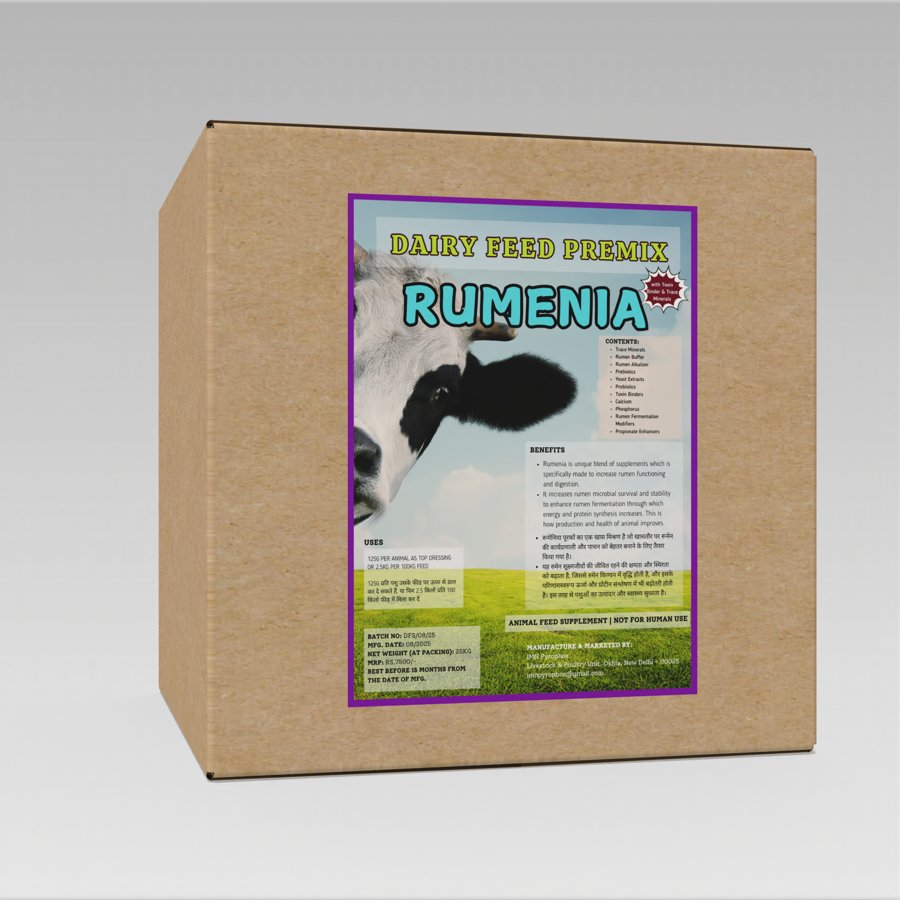
Dairy feed premix
Rumenia
Dairy feed premix with trace minerals, rumen buffer, prebiotics, yeast extracts, probiotics, toxin binders, calcium and phosphorus. Supports rumen function, microbe stability and fermentation, so energy and protein synthesis increase.
Dose: 2.5-3 kg per ton of feed (2.5-3 g per kg feed).
5 kg ₹1,400MRP ₹1,800 25 kg ₹5,625MRP ₹7,500
Frequently asked questions
Does the Amul and Mother Dairy price hike mean farmers will get more for their milk?
Not automatically. The companies say 75-80 percent of milk revenue goes to farmers, but the reports do not say the farmer rate changed on 12 November. Ask your society or union.
What is feed cost per litre and how do I calculate it?
Add up the cost of all feed and fodder a cow eats in a day, then divide by her milk in litres for that day. Do it for a few days and take the average.
If feed gets 10 percent dearer, how much must milk go up to stay even?
It depends on your share of feed in income. In our illustrative example, a 10 percent rise in feed costs ₹26 a day on one cow, so the farm price would need to rise by about ₹1.73 per litre (₹26 ÷ 15) just to break even.
What is the cheapest way to lower feed cost per litre?
Usually not the cheapest feed, but better use of the feed you buy: a balanced ration, less wastage, clean water, a healthy rumen and a short calving interval. Records show where to start.
Source: Business Today, Free Press Journal, National Herald, 12 Nov 2026. Written by the IMN Pyrophos team in our own words.
Amul और Mother Dairy ने गुरुवार, 12 नवंबर 2026 से ताज़ा दूध के दाम बढ़ा दिए हैं। Amul के पाउच दूध में लगभग 4-5 प्रतिशत की बढ़ोतरी हुई है और Mother Dairy ने दिल्ली-NCR में ₹2 से ₹4 प्रति लीटर बढ़ाए हैं। दोनों ने चारा, पशु आहार और पैकेजिंग का महंगा होना कारण बताया है। डेयरी किसान के लिए असली सवाल दूसरा है: दूध का दाम बढ़ा, पर क्या आपका मुनाफ़ा बढ़ा? यह एक संख्या पर निर्भर करता है, यानी आपका feed cost per litre, और इस पर कि फ़ीड का हर रुपया कितना दूध बनाता है।
मुख्य तथ्य: किसने कितना दाम बढ़ाया
| कंपनी | वैरिएंट | पुराना दाम | नया दाम | बदलाव |
|---|---|---|---|---|
| Amul (GCMMF) | Taaza टोंड दूध (3% फ़ैट) | बताया नहीं | बताया नहीं | +₹2 प्रति लीटर (3.3%) |
| Amul (GCMMF) | Gold दूध (6% फ़ैट) | बताया नहीं | बताया नहीं | +₹4 प्रति लीटर (5.5%) |
| Mother Dairy, दिल्ली-NCR | फ़ुल क्रीम, 1 लीटर | ₹72 | ₹76 | +₹4 |
| Mother Dairy, दिल्ली-NCR | टोंड, पाउच, 1 लीटर | ₹60 | ₹62 | +₹2 |
| Mother Dairy, दिल्ली-NCR | टोंड, बल्क | ₹58 | ₹60 | +₹2 |
| Mother Dairy, दिल्ली-NCR | डबल टोंड, 1 लीटर | ₹54 | ₹56 | +₹2 |
| Mother Dairy, दिल्ली-NCR | गाय का दूध, 1 लीटर | ₹62 | ₹65 | +₹3 |
| Nandini (कर्नाटक), पहले | टोंड | ₹46 | ₹54 | +₹8, 1 नवंबर 2026 से |
जो रिपोर्ट हमने पढ़ीं उनमें Amul के नए दाम नहीं दिए गए, सिर्फ़ बढ़ोतरी बताई गई है। Amul की बढ़ोतरी पूरे भारत में पाउच दूध पर लागू है, और Amul व Mother Dairy दोनों के लिए प्रभावी तारीख़ 12 नवंबर 2026 है। Mother Dairy दिल्ली-NCR में रोज़ लगभग 35 लाख लीटर बेचती है और कुल मिलाकर 50 लाख लीटर प्रतिदिन से ज़्यादा। Nandini की ₹8 की बढ़ोतरी में ₹7 किसानों को और ₹1 सहकारी संस्थाओं को जाता है।
दूध के दाम क्यों बढ़े: फ़ीड, चारा और बारिश
कंपनियाँ एक जैसे दबाव गिनाती हैं। हरा और सूखा चारा महंगा हुआ है। पशु आहार के कच्चे माल, जैसे खली, मक्का और शीरा, महंगे हैं। पैकेजिंग फ़िल्म और ईंधन का खर्च बढ़ा है, और गुजरात व कुछ अन्य इलाक़ों में बारिश कम और असमान रही है, जिससे चारे की पैदावार पर असर पड़ता है। GCMMF के MD जयेन मेहता ने Business Today से कहा कि यह बढ़ोतरी उत्पादन और प्रोसेसिंग की “input cost में तेज़ बढ़ोतरी” को दिखाती है। Nandini ने फ़ीड, चारा, दवा, ढुलाई और पैकेजिंग को कारण बताया।
इस सूची पर ग़ौर कीजिए: इसमें से ज़्यादातर वही चीज़ें हैं जो किसान रोज़ पशु के लिए ख़रीदता है। जो दबाव खुदरा दाम को ऊपर ले गया, वही आपके फ़ीड बिल में भी बैठा है।
खुदरा बढ़ोतरी किसान की बढ़ोतरी नहीं है
जब दूध का पैकेट ₹2 महंगा होता है, तो वह पूरा ₹2 किसान को नहीं मिलता। Amul के अनुसार उसकी सदस्य यूनियनों ने पिछले एक साल में किसानों के ख़रीद भाव 4-5 प्रतिशत बढ़ाए हैं, और उपभोक्ता जो देते हैं उसका लगभग 80 प्रतिशत 36 लाख उत्पादकों तक लौटता है। Mother Dairy के अनुसार वह दूध की बिक्री से मिली रकम का 75-80 प्रतिशत किसानों को देती है। ये कंपनियों के अपने बयान हैं, और ये कुल आमदनी में हिस्से की बात करते हैं, इस खास बढ़ोतरी के अतिरिक्त रुपयों की नहीं।
किसी किसान को असल में कितना मिलेगा, यह इस पर निर्भर है कि वह किस सोसाइटी या यूनियन को दूध देता है, फ़ैट और SNF कितना है, और यूनियन रेट कब बदलती है। रिपोर्ट में नहीं कहा गया कि 12 नवंबर को किसान का रेट बदला। इसलिए सही सलाह यह है: अपनी सोसाइटी या यूनियन से पूछें कि ख़रीद भाव बदल रहा है या नहीं, कब से और किस आधार पर, और यह मानकर न चलें कि खुदरा बढ़ोतरी आपके दूध के पैसे तक पहुँच गई है।
असली समीकरण: feed cost per litre
दूध उत्पादन की सबसे बड़ी अकेली लागत फ़ीड और चारा को माना जाता है, अक्सर कुल लागत का लगभग 60 से 70 प्रतिशत बताया जाता है। इसलिए feed cost per litre वह संख्या है जो आपका मार्जिन तय करती है। यह सीधा है:
Feed cost per litre = रोज़ का फ़ीड और चारे का खर्च ÷ रोज़ का दूध (लीटर में)।
इसे दो चीज़ें हिलाती हैं। फ़ीड महंगा हो तो ऊपर वाला हिस्सा बढ़ता है। गाय उसी राशन पर ज़्यादा दूध दे तो नीचे वाला हिस्सा बढ़ता है। दाम बढ़ने से आपको तभी फ़ायदा है जब feed cost per litre आपके दूध के दाम से तेज़ न बढ़े। जो हिस्सा आपके हाथ में है वह नीचे वाला है: फ़ीड के हर किलो से कितने लीटर दूध मिलता है।
एक हल किया हुआ milk-economics उदाहरण (उदाहरण के लिए)
ये उदाहरण के लिए मान ली गई संख्याएँ हैं, बाज़ार के आँकड़े नहीं और कोई वादा नहीं। इन्हें अपनी संख्याओं से बदल लें। हम मानते हैं: एक गाय रोज़ 15 लीटर दूध दे रही है, फ़ार्म पर दूध का भाव ₹40 प्रति लीटर है, और रोज़ का राशन यह है:
| राशन की चीज़ | मात्रा | रेट | रोज़ का खर्च |
|---|---|---|---|
| Concentrate (दाना) | 6 kg | ₹30 प्रति kg | ₹180 |
| हरा चारा | 20 kg | ₹2 प्रति kg | ₹40 |
| सूखा चारा (भूसा) | 5 kg | ₹8 प्रति kg | ₹40 |
| कुल फ़ीड और चारा | ₹260 |
बेस केस: आमदनी 15 × ₹40 = ₹600। Feed cost per litre ₹260 ÷ 15 = ₹17.33। Profit over feed cost ₹600 − ₹260 = ₹340 रोज़। उदाहरण को साफ़ रखने के लिए मज़दूरी, दवा, शेड और पशु की अपनी लागत छोड़ दी है। अब चार स्थितियाँ:
| स्थिति | दूध (L/दिन) | दूध का भाव | आमदनी | फ़ीड + अतिरिक्त खर्च | Feed cost per litre | Profit over feed cost |
|---|---|---|---|---|---|---|
| बेस | 15 | ₹40 | ₹600 | ₹260 | ₹17.33 | ₹340 |
| (a) फ़ीड का दाम +10% | 15 | ₹40 | ₹600 | ₹286 | ₹19.07 | ₹314 (−₹26) |
| (b) फ़ार्म पर दूध का भाव +₹3 | 15 | ₹43 | ₹645 | ₹260 | ₹17.33 | ₹385 (+₹45) |
| (a) + (b) दोनों | 15 | ₹43 | ₹645 | ₹286 | ₹19.07 | ₹359 (+₹19) |
| (c) फ़ीड का दाम वही, बेहतर राशन से +1.5 L/दिन | 16.5 | ₹40 | ₹660 | ₹264 (₹260 + ₹4) | ₹16.00 | ₹396 (+₹56) |
| (a) + (c): फ़ीड +10% पर +1.5 L/दिन | 16.5 | ₹40 | ₹660 | ₹290 (₹286 + ₹4) | ₹17.58 | ₹370 (+₹30) |
हिसाब कैसे बना: ₹260 पर 10 प्रतिशत यानी ₹26, तो फ़ीड बिल ₹286 हो गया। 15 लीटर पर ₹3 का मतलब ₹45। स्थिति (c) में 16.5 लीटर × ₹40 = ₹660, और rumen सपोर्ट के लिए ₹4 रोज़ जोड़े हैं, जो 6 kg concentrate पर लेबल की मात्रा से premix की लगभग लागत (₹3.4 से ₹4.1) है। अतिरिक्त 1.5 लीटर उदाहरण की मान्यता है, पक्का नतीजा नहीं; असल असर गाय, राशन और मैनेजमेंट पर निर्भर करता है।
तालिका क्या कहती है। फ़ार्म पर ₹3 की बढ़ोतरी से रोज़ ₹45 जुड़ते, पर फ़ीड में 10 प्रतिशत की बढ़त उसमें से ₹26 वापस ले जाती है, यानी असल फ़ायदा सिर्फ़ ₹19। अगर फ़ार्म का भाव बिल्कुल न बढ़े और फ़ीड महंगा हो जाए, तो एक गाय पर रोज़ ₹26 का नुक़सान है, यानी महीने में लगभग ₹780। इसके उलट, अकेले 1.5 लीटर ज़्यादा दूध रोज़ ₹56 जोड़ता है और आख़िरी पंक्ति में फ़ीड की बढ़त से ज़्यादा भरपाई कर देता है। दाम बाज़ार तय करता है। Efficiency आपके शेड में तय होती है।
वे efficiency लीवर जो feed cost per litre घटाते हैं
- राशन का संतुलन और TMR। ऊर्जा, प्रोटीन, रेशे और मिनरल का सही बँटवारा फ़ीड की बर्बादी घटाता है। TMR (total mixed ration) में गाय स्वादिष्ट हिस्सा छाँटकर बाक़ी छोड़ नहीं पाती।
- Rumen buffer और fermentation। स्थिर rumen रेशे और दाने को बेहतर पचाता है और एसिड लोड के बाद आने वाले उतार-चढ़ाव से बचता है। Rumenia, एक dairy feed premix, की मात्रा 2.5-3 kg प्रति टन फ़ीड है, यानी 5 kg दाने पर 12.5-15 g प्रति गाय प्रति दिन। 25 kg पैक (₹5,625) पर यह लगभग ₹2.8 से ₹3.4 प्रति गाय प्रति दिन बैठता है। अधिक जानकारी हमारी dairy feed premix गाइड में पढ़ें।
- यीस्ट और rumen function। Pyrosach (rumen के अनुकूल Saccharomyces cerevisiae) वयस्क गाय या भैंस को 8-10 g प्रति दिन दिया जाता है और रेशे के पाचन, दूध, फ़ैट व SNF में सहायक है।
- प्रजनन के लिए trace minerals। जो गाय गाभिन नहीं होती वह अगले साल दूध नहीं देती। Pyromin (chelated trace minerals) वयस्क पशु को 10 g प्रति दिन की मात्रा पर प्रजनन, गाभिन होने और फ़ीड efficiency में सहायक है।
- ब्याने के बाद की ऊर्जा और लिवर। ब्याने के बाद के पहले हफ़्ते पूरे ब्यांत की दिशा तय करते हैं। Bionice (biotin, niacin, chelated zinc, chromium और glucose precursors) ब्याने के बाद 7-10 दिन तक 40-50 g प्रति दिन ऊर्जा संतुलन और लिवर की सेहत के सहयोग के लिए दिया जाता है।
- बर्बादी घटाएँ। चारा कुट्टी करके दें, फ़ीड सूखा और ढका रखें, साफ़ नाँद में खिलाएँ, और फफूंद लगा फ़ीड बिल्कुल न दें।
- पानी और heat stress। दुधारू गाय को खूब साफ़ पानी चाहिए। Heat stress से खुराक और दूध घटता है, इसलिए छाया, पंखे और ठंडे समय पर खिलाना फ़ायदा देता है।
- Calving interval और repeat breeding। हर अतिरिक्त खाली महीना फ़ीड खाने का महीना है जिसमें दूध कम मिलता है। हमारी गाइड repeat breeding और metestrus bleeding देखें।
- थनैला (mastitis)। Sub-clinical mastitis चुपचाप दूध और फ़ैट घटाता है। साफ़ दुहाई और जल्दी जाँच उन लीटरों को बचाती है जिन्हें बनाने का खर्च आप कर चुके हैं।
ये उत्पाद पशु को सहारा देते हैं; ये सही राशन, साफ़ पानी और अच्छे मैनेजमेंट की जगह नहीं लेते, और आपके फ़ार्म पर नतीजा इन सब पर निर्भर करेगा।
इस हफ़्ते क्या करें
- अपना cost per litre नापें। एक गाय का एक दिन का फ़ीड और चारा जोड़ें और उसके दूध से भाग दें।
- दूध, फ़ैट और SNF दर्ज करें हर गाय का कम से कम एक हफ़्ते, ताकि पता चले कौन सी गाय अपना फ़ीड कमा रही है।
- राशन जाँचें। क्या दाना हर गाय के दूध के हिसाब से है? ज़्यादा खिलाना पैसा बर्बाद करता है, कम खिलाना दूध।
- फ़ीड की तुलना प्रति बोरी नहीं, प्रति यूनिट पोषक तत्व के दाम पर करें। लेबल पर प्रोटीन और ऊर्जा देखें और दाम को उनसे भाग दें।
- मोलभाव करें। थोक या अग्रिम ऑर्डर पर रेट माँगें और कम से कम तीन सप्लायर की तुलना करें।
- कम कमाने वाले पशु छाँटें या घटाएँ। जो गाय अपना फ़ीड खर्च नहीं निकालती वह घाटा है, चाहे कितनी भी सीधी हो।
- रोज़ रिकॉर्ड रखें कॉपी या फ़ोन में: दूध, फ़ीड, दवा, heat और ब्याने की तारीख़ें।
डेयरी फीड प्रीमिक्स · बेस्टसेलर
Rumenia
Trace minerals, rumen buffer, prebiotics, yeast extracts, probiotics, toxin binders, कैल्शियम और फॉस्फोरस वाला डेयरी फीड प्रीमिक्स। rumen का काम, microbes की स्थिरता और fermentation बढ़ाता है, जिससे ऊर्जा और प्रोटीन का संश्लेषण बढ़ता है।
मात्रा: 2.5-3 किलो प्रति टन फ़ीड (2.5-3 ग्राम प्रति किलो फ़ीड)।
5 kg ₹1,400 · 25 kg ₹5,625MRP ₹1,800 / ₹7,500
अक्सर पूछे जाने वाले सवाल
क्या Amul और Mother Dairy की बढ़ोतरी का मतलब है कि किसानों को दूध का ज़्यादा दाम मिलेगा?
अपने आप नहीं। कंपनियाँ कहती हैं कि दूध की आमदनी का 75-80 प्रतिशत किसानों को जाता है, पर रिपोर्ट में नहीं कहा गया कि 12 नवंबर को किसान का रेट बदला। अपनी सोसाइटी या यूनियन से पूछें।
Feed cost per litre क्या है और कैसे निकालें?
एक गाय एक दिन में जितना फ़ीड और चारा खाती है उसका कुल खर्च जोड़ें, फिर उस दिन के दूध (लीटर) से भाग दें। कुछ दिन करके औसत निकालें।
अगर फ़ीड 10 प्रतिशत महंगा हो जाए तो बराबरी पर रहने के लिए दूध कितना बढ़ना चाहिए?
यह आमदनी में फ़ीड के हिस्से पर निर्भर है। हमारे उदाहरण में फ़ीड में 10 प्रतिशत की बढ़त एक गाय पर रोज़ ₹26 का खर्च है, इसलिए सिर्फ़ बराबरी के लिए फ़ार्म का भाव लगभग ₹1.73 प्रति लीटर (₹26 ÷ 15) बढ़ना चाहिए।
Feed cost per litre घटाने का सबसे सस्ता तरीक़ा क्या है?
आमतौर पर सबसे सस्ता फ़ीड नहीं, बल्कि जो फ़ीड ख़रीदते हैं उसका बेहतर इस्तेमाल: संतुलित राशन, कम बर्बादी, साफ़ पानी, स्वस्थ rumen और छोटा calving interval। रिकॉर्ड बताते हैं कहाँ से शुरू करें।
स्रोत: Business Today, Free Press Journal, National Herald, 12 नवंबर 2026। IMN Pyrophos टीम ने अपने शब्दों में लिखा।
Amul aur Mother Dairy ne guruvaar, 12 November 2026 se taaza doodh ke daam badha diye hain. Amul ke pouch doodh me lagbhag 4-5 pratishat ki badhotri hui hai aur Mother Dairy ne Delhi-NCR me ₹2 se ₹4 prati litre badhaye hain. Dono ne chaara, pashu aahaar aur packaging ke mehnge hone ko karan bataya hai. Dairy kisan ke liye asli sawaal alag hai: doodh ka daam badha, par kya aapka munaafa badha? Ye ek sankhya par nirbhar karta hai, yaani aapka feed cost per litre, aur is par ki feed ka har rupaya kitna doodh banata hai.
Mukhya tathya: kisne kitna daam badhaya
| Company | Variant | Purana daam | Naya daam | Badlaav |
|---|---|---|---|---|
| Amul (GCMMF) | Taaza toned doodh (3% fat) | Bataya nahi | Bataya nahi | +₹2 prati litre (3.3%) |
| Amul (GCMMF) | Gold doodh (6% fat) | Bataya nahi | Bataya nahi | +₹4 prati litre (5.5%) |
| Mother Dairy, Delhi-NCR | Full cream, 1 litre | ₹72 | ₹76 | +₹4 |
| Mother Dairy, Delhi-NCR | Toned, pouch, 1 litre | ₹60 | ₹62 | +₹2 |
| Mother Dairy, Delhi-NCR | Toned, bulk | ₹58 | ₹60 | +₹2 |
| Mother Dairy, Delhi-NCR | Double toned, 1 litre | ₹54 | ₹56 | +₹2 |
| Mother Dairy, Delhi-NCR | Gaay ka doodh, 1 litre | ₹62 | ₹65 | +₹3 |
| Nandini (Karnataka), pehle | Toned | ₹46 | ₹54 | +₹8, 1 November 2026 se |
Jo reports humne padhi unme Amul ke naye daam nahi diye gaye, sirf badhotri batayi gayi hai. Amul ki badhotri poore India me pouch doodh par lagu hai, aur Amul va Mother Dairy dono ke liye prabhavi tareekh 12 November 2026 hai. Mother Dairy Delhi-NCR me roz lagbhag 35 lakh litre bechti hai aur kul milakar 50 lakh litre prati din se zyada. Nandini ki ₹8 ki badhotri me ₹7 kisanon ko aur ₹1 sahkari sansthaon ko jaata hai.
Doodh ke daam kyon badhe: feed, chaara aur baarish
Companies ek jaise dabaav ginati hain. Hara aur sookha chaara mehnga hua hai. Pashu aahaar ke kachche maal, jaise khali, makka aur sheera, mehnge hain. Packaging film aur eendhan ka kharch badha hai, aur Gujarat va kuch anya ilaakon me baarish kam aur asamaan rahi hai, jisse chaare ki paidaavaar par asar padta hai. GCMMF ke MD Jayen Mehta ne Business Today se kaha ki ye badhotri utpaadan aur processing ki “input cost me tez badhotri” ko dikhati hai. Nandini ne feed, chaara, dawa, dhulaayi aur packaging ko karan bataya.
Is list par gaur kijiye: isme se zyadatar wahi cheezein hain jo kisan roz pashu ke liye khareedta hai. Jo dabaav khudra daam ko upar le gaya, wahi aapke feed bill me bhi baitha hai.
Khudra badhotri kisan ki badhotri nahi hai
Jab doodh ka packet ₹2 mehnga hota hai, to wo poora ₹2 kisan ko nahi milta. Amul ke anusaar uski sadasya unions ne pichhle ek saal me kisanon ke kharid bhaav 4-5 pratishat badhaye hain, aur upbhokta jo dete hain uska lagbhag 80 pratishat 36 lakh utpaadakon tak lautta hai. Mother Dairy ke anusaar wo doodh ki bikri se mili raqam ka 75-80 pratishat kisanon ko deti hai. Ye companies ke apne bayaan hain, aur ye kul aamdani me hisse ki baat karte hain, is khaas badhotri ke atirikt rupayon ki nahi.
Kisi kisan ko asal me kitna milega, ye is par nirbhar hai ki wo kis society ya union ko doodh deta hai, fat aur SNF kitna hai, aur union rate kab badalti hai. Report me nahi kaha gaya ki 12 November ko kisan ka rate badla. Isliye sahi salaah ye hai: apni society ya union se poochhein ki kharid bhaav badal raha hai ya nahi, kab se aur kis aadhaar par, aur ye maan kar na chalein ki khudra badhotri aapke doodh ke paise tak pahunch gayi hai.
Asli sameekaran: feed cost per litre
Doodh utpaadan ki sabse badi akeli laagat feed aur chaara ko maana jaata hai, aksar kul laagat ka lagbhag 60 se 70 pratishat bataya jaata hai. Isliye feed cost per litre wo sankhya hai jo aapka margin tay karti hai. Ye seedha hai:
Feed cost per litre = roz ka feed aur chaare ka kharch ÷ roz ka doodh (litre me).
Ise do cheezein hilati hain. Feed mehnga ho to upar wala hissa badhta hai. Gaay usi ration par zyada doodh de to neeche wala hissa badhta hai. Daam badhne se aapko tabhi faayda hai jab feed cost per litre aapke doodh ke daam se tez na badhe. Jo hissa aapke haath me hai wo neeche wala hai: feed ke har kilo se kitne litre doodh milta hai.
Ek hal kiya hua milk-economics udaaharan (udaaharan ke liye)
Ye udaaharan ke liye maani gayi sankhyaayein hain, bazaar ke aankde nahi aur koi vaada nahi. Inhe apni sankhyaon se badal lein. Hum maante hain: ek gaay roz 15 litre doodh de rahi hai, farm par doodh ka bhaav ₹40 prati litre hai, aur roz ka ration ye hai:
| Ration ki cheez | Maatra | Rate | Roz ka kharch |
|---|---|---|---|
| Concentrate (daana) | 6 kg | ₹30 prati kg | ₹180 |
| Hara chaara | 20 kg | ₹2 prati kg | ₹40 |
| Sookha chaara (bhoosa) | 5 kg | ₹8 prati kg | ₹40 |
| Kul feed aur chaara | ₹260 |
Base case: aamdani 15 × ₹40 = ₹600. Feed cost per litre ₹260 ÷ 15 = ₹17.33. Profit over feed cost ₹600 − ₹260 = ₹340 roz. Udaaharan ko saaf rakhne ke liye majdoori, dawa, shed aur pashu ki apni laagat chhod di hai. Ab chaar sthitiyaan:
| Sthiti | Doodh (L/din) | Doodh ka bhaav | Aamdani | Feed + atirikt kharch | Feed cost per litre | Profit over feed cost |
|---|---|---|---|---|---|---|
| Base | 15 | ₹40 | ₹600 | ₹260 | ₹17.33 | ₹340 |
| (a) Feed ka daam +10% | 15 | ₹40 | ₹600 | ₹286 | ₹19.07 | ₹314 (−₹26) |
| (b) Farm par doodh ka bhaav +₹3 | 15 | ₹43 | ₹645 | ₹260 | ₹17.33 | ₹385 (+₹45) |
| (a) + (b) dono | 15 | ₹43 | ₹645 | ₹286 | ₹19.07 | ₹359 (+₹19) |
| (c) Feed ka daam wahi, behtar ration se +1.5 L/din | 16.5 | ₹40 | ₹660 | ₹264 (₹260 + ₹4) | ₹16.00 | ₹396 (+₹56) |
| (a) + (c): feed +10% par +1.5 L/din | 16.5 | ₹40 | ₹660 | ₹290 (₹286 + ₹4) | ₹17.58 | ₹370 (+₹30) |
Hisaab kaise bana: ₹260 par 10 pratishat yaani ₹26, to feed bill ₹286 ho gaya. 15 litre par ₹3 ka matlab ₹45. Sthiti (c) me 16.5 litre × ₹40 = ₹660, aur rumen support ke liye ₹4 roz jode hain, jo 6 kg concentrate par label ki maatra se premix ki lagbhag laagat (₹3.4 se ₹4.1) hai. Atirikt 1.5 litre udaaharan ki manyata hai, pakka nateeja nahi; asal asar gaay, ration aur management par nirbhar karta hai.
Table kya kehti hai. Farm par ₹3 ki badhotri se roz ₹45 judte, par feed me 10 pratishat ki badhat usme se ₹26 wapas le jaati hai, yaani asal faayda sirf ₹19. Agar farm ka bhaav bilkul na badhe aur feed mehnga ho jaye, to ek gaay par roz ₹26 ka nuksaan hai, yaani mahine me lagbhag ₹780. Iske ulat, akele 1.5 litre zyada doodh roz ₹56 jodta hai aur aakhri pankti me feed ki badhat se zyada bharpaayi kar deta hai. Daam bazaar tay karta hai. Efficiency aapke shed me tay hoti hai.
Wo efficiency lever jo feed cost per litre ghataate hain
- Ration ka santulan aur TMR. Oorja, protein, resha aur mineral ka sahi bantwaara feed ki barbaadi ghataata hai. TMR (total mixed ration) me gaay swaadisht hissa chhaant kar baaki chhod nahi paati.
- Rumen buffer aur fermentation. Sthir rumen resha aur daana behtar pachaata hai aur acid load ke baad aane wale utaar-chadhaav se bachta hai. Rumenia, ek dairy feed premix, ki maatra 2.5-3 kg prati ton feed hai, yaani 5 kg daane par 12.5-15 g prati gaay prati din. 25 kg pack (₹5,625) par ye lagbhag ₹2.8 se ₹3.4 prati gaay prati din baithta hai. Adhik jaankari hamari dairy feed premix guide me padhein.
- Yeast aur rumen function. Pyrosach (rumen ke anukool Saccharomyces cerevisiae) vayask gaay ya bhains ko 8-10 g prati din diya jaata hai aur resha ke paachan, doodh, fat va SNF me sahayak hai.
- Prajanan ke liye trace minerals. Jo gaay gaabhin nahi hoti wo agle saal doodh nahi deti. Pyromin (chelated trace minerals) vayask pashu ko 10 g prati din ki maatra par prajanan, gaabhin hone aur feed efficiency me sahayak hai.
- Byaane ke baad ki oorja aur liver. Byaane ke baad ke pehle hafte poore byaant ki disha tay karte hain. Bionice (biotin, niacin, chelated zinc, chromium aur glucose precursors) byaane ke baad 7-10 din tak 40-50 g prati din oorja santulan aur liver ki sehat ke sahyog ke liye diya jaata hai.
- Barbaadi ghataayein. Chaara kutti karke dein, feed sookha aur dhaka rakhein, saaf naand me khilayein, aur fafoond laga feed bilkul na dein.
- Paani aur heat stress. Doodharu gaay ko khoob saaf paani chahiye. Heat stress se khuraak aur doodh ghatta hai, isliye chhaaya, pankhe aur thande samay par khilana faayda deta hai.
- Calving interval aur repeat breeding. Har atirikt khaali mahina feed khane ka mahina hai jisme doodh kam milta hai. Hamari guide repeat breeding aur metestrus bleeding dekhein.
- Thanaila (mastitis). Sub-clinical mastitis chupchaap doodh aur fat ghataata hai. Saaf duhaai aur jaldi jaanch un litre ko bachati hai jinhe banane ka kharch aap kar chuke hain.
Ye products pashu ko sahaara dete hain; ye sahi ration, saaf paani aur achhe management ki jagah nahi lete, aur aapke farm par nateeja in sab par nirbhar karega.
Is hafte kya karein
- Apna cost per litre naapein. Ek gaay ka ek din ka feed aur chaara jodein aur uske doodh se bhaag dein.
- Doodh, fat aur SNF darj karein har gaay ka kam se kam ek hafte, taaki pata chale kaun si gaay apna feed kama rahi hai.
- Ration jaanchein. Kya daana har gaay ke doodh ke hisaab se hai? Zyada khilana paisa barbaad karta hai, kam khilana doodh.
- Feed ki tulna prati bori nahi, prati unit poshak tatva ke daam par karein. Label par protein aur oorja dekhein aur daam ko unse bhaag dein.
- Molbhaav karein. Thok ya agrim order par rate maangein aur kam se kam teen supplier ki tulna karein.
- Kam kamaane wale pashu chhaantein ya ghataayein. Jo gaay apna feed kharch nahi nikaalti wo ghaata hai, chahe kitni bhi seedhi ho.
- Roz record rakhein copy ya phone me: doodh, feed, dawa, heat aur byaane ki tareekhein.
Dairy feed premix · bestseller
Rumenia
Trace minerals, rumen buffer, prebiotics, yeast extracts, probiotics, toxin binders, calcium aur phosphorus wala dairy feed premix. Rumen ka kaam, microbes ki sthirta aur fermentation badhata hai, jisse urja aur protein ka sanshleshan badhta hai.
Matra: 2.5-3 kg prati ton feed (2.5-3 g prati kg feed).
5 kg ₹1,400 · 25 kg ₹5,625MRP ₹1,800 / ₹7,500
Aksar poochhe jaane wale sawaal
Kya Amul aur Mother Dairy ki badhotri ka matlab hai ki kisanon ko doodh ka zyada daam milega?
Apne aap nahi. Companies kehti hain ki doodh ki aamdani ka 75-80 pratishat kisanon ko jaata hai, par report me nahi kaha gaya ki 12 November ko kisan ka rate badla. Apni society ya union se poochhein.
Feed cost per litre kya hai aur kaise nikaalein?
Ek gaay ek din me jitna feed aur chaara khaati hai uska kul kharch jodein, phir us din ke doodh (litre) se bhaag dein. Kuch din karke ausat nikaalein.
Agar feed 10 pratishat mehnga ho jaye to barabari par rehne ke liye doodh kitna badhna chahiye?
Ye aamdani me feed ke hisse par nirbhar hai. Hamare udaaharan me feed me 10 pratishat ki badhat ek gaay par roz ₹26 ka kharch hai, isliye sirf barabari ke liye farm ka bhaav lagbhag ₹1.73 prati litre (₹26 ÷ 15) badhna chahiye.
Feed cost per litre ghataane ka sabse sasta tareeka kya hai?
Aam taur par sabse sasta feed nahi, balki jo feed khareedte hain uska behtar istemaal: santulit ration, kam barbaadi, saaf paani, swasth rumen aur chhota calving interval. Record batate hain kahaan se shuru karein.
Source: Business Today, Free Press Journal, National Herald, 12 November 2026. IMN Pyrophos team ne apne shabdon me likha.