
The cow comes in heat, you do AI, and she is back in heat again. That is repeat breeding in cows and buffaloes, one of the most expensive problems on a dairy farm, because every empty cycle adds about 21 days to the calving interval and costs milk, feed and patience. A drop of blood a day or two after heat often makes farmers panic as well. This guide explains the heat cycle, what metestrus bleeding really means, the usual reasons for repeat breeding and what you can fix on the farm, so that you and your vet can find the cause instead of repeating AI blindly.
Understanding the heat cycle first
You cannot fix repeat breeding without knowing what a normal cycle looks like. Cows and buffaloes are polyestrous, which means they cycle again and again through the year if they are healthy and well fed. The cycle has four phases:
- Proestrus (1 to 3 days): the follicle grows and the animal becomes restless.
- Estrus or heat (about 12 to 18 hours in cows, and often shorter or weaker in buffaloes): the animal accepts mounting.
- Metestrus (about 3 to 5 days): ovulation is over and the corpus luteum starts forming. This is when the small bleeding may appear.
- Diestrus (about 10 to 14 days): the corpus luteum is fully active and the uterus is preparing for pregnancy. If the animal does not conceive, the cycle starts again.
| Feature | Cow | Buffalo |
|---|---|---|
| Cycle length | About 21 days (18 to 24) | About 21 days (18 to 24), often a little longer |
| Heat duration | About 12 to 18 hours | About 10 to 24 hours, often short and weak |
| Main signs | Standing to be mounted, mounting others, mucus, bellowing | Restlessness, frequent urination, swollen vulva, reduced milk, bellowing; mounting is less common |
| Ovulation | About 24 to 30 hours after heat starts, roughly 10 to 14 hours after heat ends | About 24 to 36 hours after heat starts |
| Silent heat | Seen in high yielders | Very common, especially in summer and in poorly fed animals |
Because the egg lives only a few hours after ovulation and sperm need some time in the genital tract, the practical rule is simple. An animal seen in standing heat in the morning is inseminated in the evening, and one seen in the evening is inseminated next morning. This is often called the AM-PM rule. AI too early or too late is one of the commonest hidden reasons for failed services.
What is metestrus bleeding?
Metestrus bleeding is a small amount of blood-stained mucus seen from the vulva about 1 to 3 days after heat, mostly in heifers and young cows, and sometimes in buffaloes. It happens because the hormone changes after ovulation make tiny blood vessels in the lining of the uterus and cervix leak a little, and the blood comes out with the clear mucus. It is normal. It does not mean the animal has conceived or lost a pregnancy, and it does not mean the AI failed or that the semen was bad.
Do not use bleeding as a pregnancy test. Its real use is as a record: write the date, because bleeding tells you that heat has just passed and the next heat can be expected about 18 to 24 days from the heat date, so you can watch closely from day 18. Call the vet if the discharge is heavy, continues for many days, has a foul smell, is thick or pus-like, or if the animal is dull and off feed.
What is repeat breeding in cows and buffaloes?
A cow or buffalo that has regular heat cycles of normal length, a normal-looking heat discharge and no visible disease, but does not conceive after three or more services (inseminations), is called a repeat breeder. Some herds use a slightly different cut-off such as failure to conceive within about 100 days after calving even after several services, but the idea is the same: the animal cycles well, yet the pregnancy is not established or is lost very early. Remember that repeat breeding is not a single disease. It is a result with many possible causes, and the cause is often on the management side. In a herd, more than about 10 to 15 per cent of animals repeating should make you look at the system, not only at the individual animal.
Causes of repeat breeding in cows and buffaloes: a quick table
| Cause | How it shows | What to do on the farm | When to call the vet |
|---|---|---|---|
| Missed or silent heat, wrong AI timing | Services done on the wrong day, irregular returns, no one watching heat | Watch heat 2 to 3 times a day, keep records, follow the AM-PM rule | If timing is right and she still fails |
| Negative energy balance, thin cow | Body condition below about 2.5 after calving, weight loss, long gap to first heat | Raise energy and protein, good green fodder, avoid sudden ration change | If no heat even after 60 to 70 days post-calving |
| Mineral and vitamin deficiency | Weak heat, retained placenta in the past, poor coat, licking soil | Balanced mineral mixture daily, vitamin A and E from green fodder | If problems continue despite correct feeding |
| Uterine infection (endometritis) | Cloudy or pus-like discharge, foul smell, discharge at heat | Keep calving area clean, avoid rough handling at AI | Always, treatment only by the vet |
| Heat stress | Panting, drooling, poor heat signs, more returns in hot months | Shade, fans, sprinklers, cool water, feed at cooler hours | If returns continue after the weather cools |
| Ovulation or ovary problems | Regular heat but no conception, cysts suspected | Nothing safe to do yourself | Rectal or ultrasound check |
| Semen and AI technique | Many animals failing with the same batch or technician | Use proper semen storage and thawing, a trained technician | If many animals fail together |
| Early embryo loss | Return to heat later than 25 days, or irregular intervals | Reduce stress, handle gently, keep records | Pregnancy check by the vet at 30 to 45 days |
Nutrition: the biggest lever you control
After calving, a high-yielding cow gives milk faster than she can eat, so she goes into negative energy balance and burns body fat. This delays the return to heat, weakens the heat, reduces the quality of the egg and makes conception harder. A useful farm target is body condition score (BCS) of about 3.0 to 3.5 on a 5-point scale at calving, without losing more than about 0.5 to 1 point in early lactation, and about 2.75 to 3.25 at the time of AI. Very fat cows at calving are also a problem, because they eat less and mobilise more fat after calving.
Practical feeding points that support fertility:
- Feed enough energy and protein in the first 60 days of lactation, with good-quality green fodder and dry roughage in balance, and increase concentrate gradually, not suddenly.
- Give clean water at all times and keep the ration free of mould and spoiled feed.
- Do not overfeed protein without energy; very high protein with poor energy can also upset fertility.
- Give a good area-specific mineral mixture daily through the year, not only during problems. See the best mineral mixture for cow and buffalo and mineral mixture benefits.
- In the dry period, ask your vet or nutritionist about transition feeding; see the transition cow guide on negative DCAD premix to reduce calving-time problems that later affect fertility.
Key nutrients for reproduction. Zinc supports healing of the uterus and hoof and skin health. Copper and selenium are linked to ovarian activity, immunity and lower retained placenta. Vitamin A and beta-carotene, found in fresh green fodder, support the lining of the genital tract and the corpus luteum. Vitamin E works with selenium as an antioxidant. Iodine supports thyroid function and metabolism. A chelated mixture with vitamins, such as Pyromin chelated mineral mixture, is designed to supply these trace minerals and vitamins in an easily absorbed form, along with biotin, methionine, lysine and yeast. It supports, but does not replace, good feeding and heat detection.
Where IMN products fit
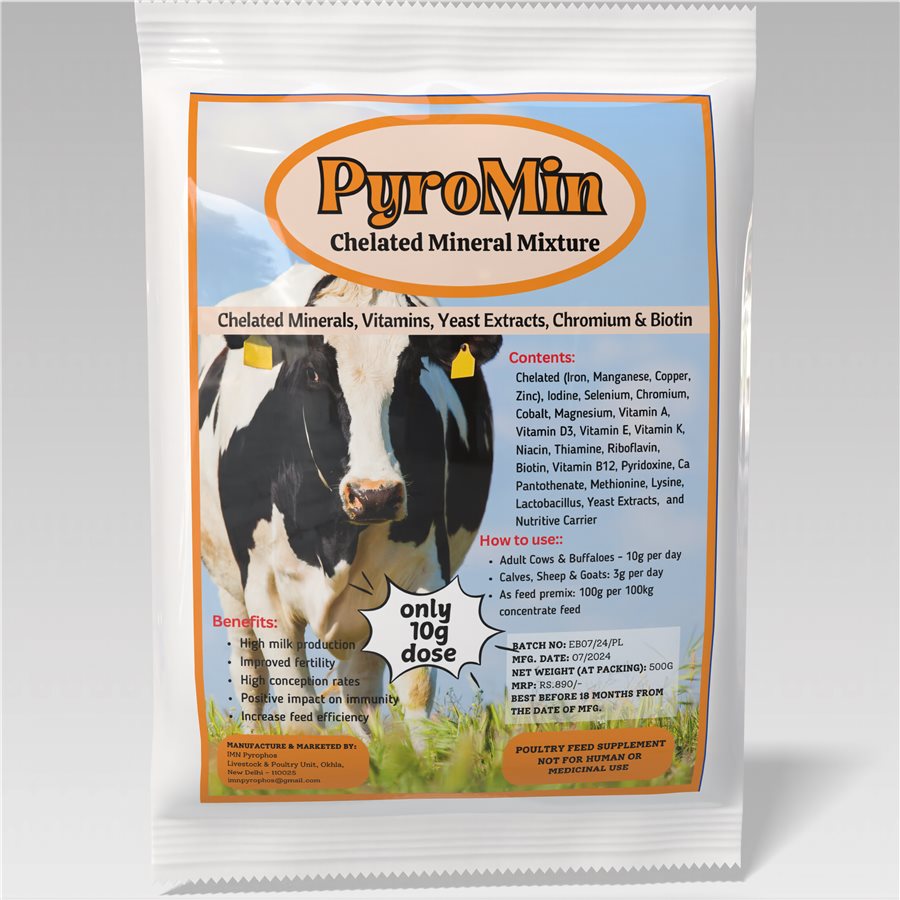
Pyromin is a chelated mineral mixture with vitamins, for fertility, conception and immunity in cows and buffaloes. In repeat breeding, the dose given by Dr. Ibne Ali is a loading dose for 10 days, followed by the regular dose, as in the box below.
Chelated mineral · fertility
Pyromin
Chelated iron, manganese, copper, zinc, iodine, selenium, chromium, cobalt, magnesium, vitamins A, D3, E, K, B vitamins, biotin, methionine, lysine, lactobacillus and yeast extract. Helps milk production, fertility, conception and immunity.
Dose: In repeat breeding: 15 to 20 g per animal per day for 10 days (loading dose), then 10 g per day regularly.
1 kg ₹655MRP ₹1,190
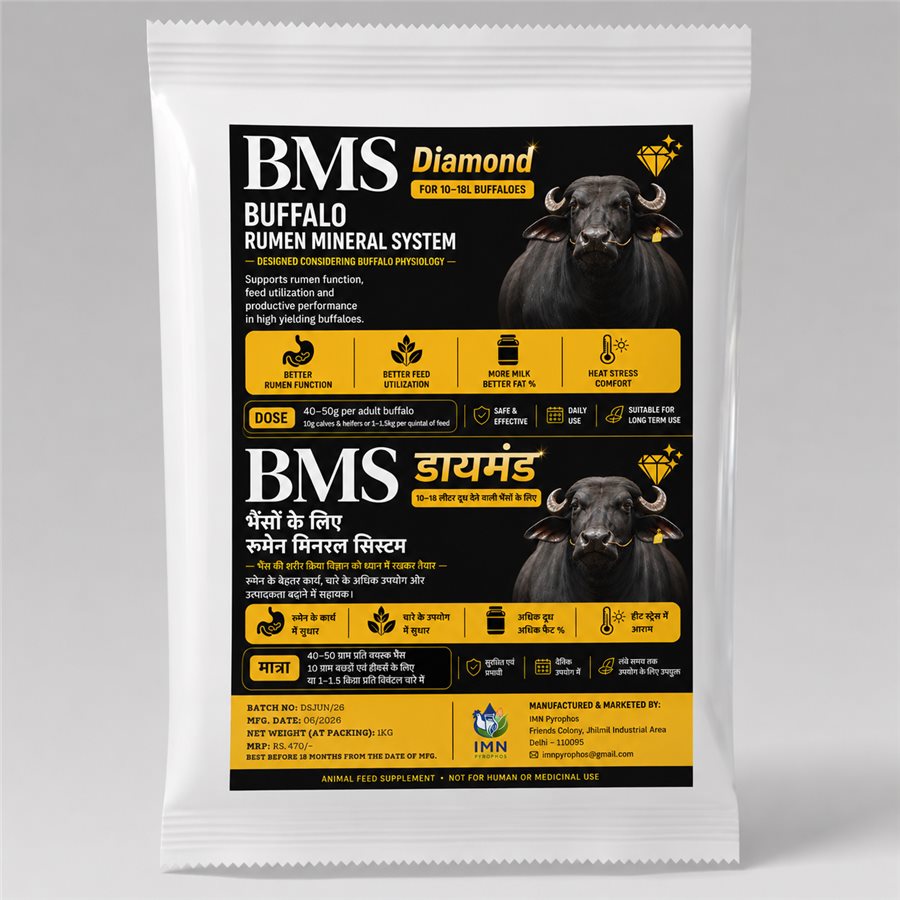
BMS Buffalo Mineral Mixture is made for buffaloes and is also recommended in buffalo repeat breeding. It can be used with the right feeding plan and your vet’s check.
For buffaloes
BMS Buffalo Mineral Mixture
Rumen mineral system for buffaloes giving 10 to 18 litres of milk. Helps rumen function, feed utilization, milk and fat per cent. Safe for long daily use.
Dose: In buffalo repeat breeding: 75 g per animal per day for 10 days, then 50 g per day regularly.
5 kg ₹1,700MRP ₹3,150
Remember that a mineral mixture supports the animal’s body. It does not treat infection, correct wrong AI timing or fix a blocked tube. Use it together with the steps in this guide, and ask Dr. Ibne Ali’s team for ration help.
Uterine health and endometritis
A clean uterus is needed for the embryo to survive. After a difficult calving, retained placenta, twins, dirty calving area or rough handling, bacteria can stay in the uterus and cause endometritis, a low-grade inflammation that stops the embryo from implanting. Signs you may notice include cloudy, whitish or pus-like discharge at heat or between heats, a foul smell, a dirty tail head, and heat cycles that are irregular or short. Many cows with this problem look healthy, and the discharge is seen only when the animal is in heat, so watch what comes out at heat carefully.
Diagnosis needs a proper genital examination by the vet. Treatment, including any medicines, flushing or injections, must be decided by the vet only. Please do not push home remedies, herbal solutions or random antibiotics into the uterus yourself, because wrong products can damage the lining and make things worse. What you can do is prevention: clean and dry calving place, hygienic help at calving, timely vet help for retained placenta, clean hands and clean equipment at AI.
Heat detection routines and record keeping
Poor heat detection is the most common reason for apparent repeat breeding in many herds. A good routine looks like this:
- Watch the animals quietly for 20 to 30 minutes, 2 to 3 times a day: early morning, mid-day or late afternoon and late evening, when the herd is calm and not busy with feeding.
- Look for standing to be mounted, mounting others, clear stringy mucus, swollen vulva, restlessness, bellowing, reduced feed and milk, and a dirty or rubbed tail head.
- In buffaloes, silent heat is common, so also watch for reduced milk, frequent urination, restlessness and the company of a teaser if available. Use a trained person, a heat marker or tail paint to improve detection.
- Check cows again from about day 18 after the last heat or AI, and keep a pregnancy check by the vet at about 30 to 45 days after AI.
Records turn guesses into facts. Use a simple register or a mobile note, like this:
| Animal no. | Calving date | Heat date and signs | AI date and time | Semen or bull | Next heat check | Result |
|---|---|---|---|---|---|---|
| Cow 12 | 1 Aug | 25 Sep, standing, mucus | 25 Sep, 6 pm | Bull code A | 13 Oct | Pregnant at 40 days |
| Buffalo 7 | 10 Jul | Silent, milk dropped | 3 Oct, 8 am | Bull code B | 21 Oct | Returned, call vet at 3rd failure |
Buffalo-specific issues
Buffaloes are more difficult to read than cows. Their heat is shorter and less visible, which is why silent heat is common, and AI is often done at the wrong time. They are also seasonal breeders in many regions, with better cycling in the cooler months, and more anoestrus (no visible heat) in the hot, dry months from about April to July. High heat load, poor green fodder in summer and a long calving interval make it worse. A buffalo that calves in the wrong season may take much longer to show heat again.
Practical points: give wallowing, a pond or cool showers in summer, shade and fans; shift feeding to cool hours; keep good-quality green fodder; use a buffalo-specific mineral mixture daily; plan calvings so that more animals calve in the autumn and winter; and watch carefully for heat in the evening and night as well. If the buffalo shows no heat for a long time after calving, ask your vet to check the ovaries. See also winter care of dairy cows, since winter is the best season to rebuild condition before breeding.
Heat stress and comfort
When body temperature rises, the animal eats less, the heat becomes weaker and shorter, and the early embryo is more likely to be lost. Conception rates fall in hot, humid weather. Provide shade with good air movement, fans and sprinklers over the feeding area, clean cool water at all times, and feed the larger part of the ration in cooler hours. Avoid overcrowding and long walks in the heat. Do not do AI in an animal that is panting heavily; wait for a cooler hour.
Semen, AI technique and handling
A good semen dose can still fail if it is handled wrongly. Use semen only from a reliable source, with the right bull code and fertility record. Check that the liquid nitrogen container is topped up and always keep straws below the neck of the container. Thaw each straw properly, as per the instructions of your AI provider, protect it from sunlight and cold shock, and use it within a few minutes. The semen should be deposited at the correct site in the uterus by a trained and gentle technician using clean and disposable materials. Rough handling, wrong site of deposition, dirty gloves and long delays after thawing can all cause failure. If most animals fail with the same technician or batch, change the technician or the semen batch before blaming the animals.
A 90-day action plan
- Days 1 to 7: start a record register for every animal in the herd, check body condition, and list all animals with three or more failed services.
- Days 1 to 10: ask the vet to examine all repeat breeders for uterine and ovarian problems and follow his treatment advice only.
- Days 1 to 30: correct the ration: enough energy, protein and green fodder, a daily mineral mixture, clean water. For a chelated option see Pyromin for cow and buffalo fertility and use the repeat-breeding dose given above.
- Days 1 to 90: watch heat 2 to 3 times a day, use the AM-PM rule and write every sign and AI time.
- Days 30 to 60: improve comfort: shade, fans, cool water, a clean calving and resting area.
- Days 45 to 90: review the records. If many animals fail together, check the semen, the technician and the ration. Get pregnancy confirmation at about 30 to 45 days after AI.
- At day 90: compare your conception rate with day 1 and decide with your vet which animals still need work-up. For high milk fat targets also see how to increase milk fat percentage.
When to call the vet
- Three or more failed services, even if heat looks normal.
- No heat seen by about 60 to 70 days after calving.
- Pus-like, cloudy or foul-smelling discharge, or discharge at heat.
- Heavy or prolonged bleeding, or bleeding with fever, dullness or off feed.
- Retained placenta, difficult calving, twins or any calving problem.
- Heat intervals that are very short or very irregular, or constant heat signs.
- Many animals in the herd failing together.
Myths and facts
| Myth | Fact |
|---|---|
| Bleeding after heat means she has conceived. | It is normal metestrus bleeding and is not a pregnancy sign. |
| Bleeding means the AI failed. | No. It only shows heat has passed. |
| More AI will finally work. | Repeating AI without finding the cause only wastes semen, money and time. |
| The semen is always the problem. | Nutrition, heat timing, infection and heat stress are more common causes. |
| Buffaloes without visible heat are not cycling. | Many are in silent heat and need careful watching or a vet check. |
| Hormone injections fix everything. | Hormones are for the vet to judge, and they do not solve feeding or timing mistakes. |
What not to do
- Do not panic about a little blood a day or two after heat.
- Do not do AI repeatedly without finding the cause.
- Do not give hormones, antibiotics or injections without your vet.
- Do not blame the semen alone before checking nutrition and heat detection.
- Do not put anything into the uterus at home.
Frequently asked questions
Is bleeding after heat a problem? A little blood-stained mucus 1 to 3 days after heat (metestrus bleeding) is normal. Call the vet only if it is heavy, long-lasting, foul-smelling or the animal looks sick.
How many failed services make a repeat breeder? Three or more services with normal heat and no visible disease.
What is the best time for AI in cows and buffaloes? Usually about 12 hours after the start of standing heat. Morning heat is inseminated in the evening and evening heat the next morning. Buffaloes need extra care, as heat is short.
Can minerals help repeat breeding? Balanced trace minerals and vitamins support fertility and conception, along with correct management and your vet’s check. They are not a guaranteed solution.
How long after calving should I do AI? Usually when the uterus has recovered, often at about 60 to 80 days after calving, if the animal is in good condition and shows normal heat. Your vet can advise for your herd.
Why is my buffalo not showing heat? Common reasons are silent heat, poor body condition, heat stress, the hot season and mineral deficiency. A vet check of the ovaries is advisable if it continues.
Can a repeat breeder become pregnant? Many do once the cause is found and corrected, but results vary by animal and cause, and no one can promise it.
How long should I give a mineral supplement? Use it regularly as part of the daily ration, with the loading dose in the boxes for 10 days in repeat breeding and then the regular dose, as suggested by Dr. Ibne Ali.
Does the bull or semen matter? Yes, but check the other points first. Use good-quality semen from a reliable source with proper handling.
What are the prices? See the boxes above. Prices may change, so confirm on WhatsApp.
Also read: Pyromin · Mineral mixture benefits · IMN product guide
गाय हीट में आई, AI कराया, और वह फिर हीट में आ गई। यही गाय-भैंस में रिपीट ब्रीडिंग है, और डेयरी फार्म की सबसे महँगी समस्याओं में से एक, क्योंकि हर खाली चक्र से ब्याने का अंतर लगभग 21 दिन बढ़ जाता है और दूध, चारे और मेहनत का नुकसान होता है। हीट के एक-दो दिन बाद खून की बूँद देखकर भी किसान घबरा जाते हैं। यहाँ हीट चक्र, मेटेस्ट्रस ब्लीडिंग का असली मतलब, रिपीट ब्रीडिंग के आम कारण और फार्म पर क्या ठीक किया जा सकता है, यह समझाया है, ताकि आप और आपके डॉक्टर कारण ढूँढें, आँख बंद करके बार-बार AI न कराएँ।
पहले हीट चक्र को समझें
सामान्य चक्र जाने बिना रिपीट ब्रीडिंग ठीक नहीं हो सकती। गाय-भैंस पूरे साल बार-बार हीट में आने वाले पशु हैं, बशर्ते वे स्वस्थ हों और ठीक से खा रहे हों। चक्र के चार चरण हैं:
- प्रो-एस्ट्रस (1 से 3 दिन): फॉलिकल बढ़ता है और पशु बेचैन होता है।
- एस्ट्रस या हीट (गाय में लगभग 12 से 18 घंटे, भैंस में अक्सर कम और कमज़ोर): पशु दूसरे को चढ़ने देता है।
- मेटेस्ट्रस (लगभग 3 से 5 दिन): अंडा छूट चुका होता है और कॉर्पस ल्यूटियम बनना शुरू होता है। इसी समय हल्का खून दिख सकता है।
- डाइस्ट्रस (लगभग 10 से 14 दिन): कॉर्पस ल्यूटियम पूरी तरह सक्रिय रहता है और बच्चेदानी गर्भ के लिए तैयार होती है। गाभिन न हो तो चक्र फिर शुरू हो जाता है।
| बात | गाय | भैंस |
|---|---|---|
| चक्र की लंबाई | लगभग 21 दिन (18 से 24) | लगभग 21 दिन (18 से 24), कई बार थोड़ा ज़्यादा |
| हीट की अवधि | लगभग 12 से 18 घंटे | लगभग 10 से 24 घंटे, अक्सर छोटी और कमज़ोर |
| मुख्य लक्षण | चढ़ने देना, दूसरों पर चढ़ना, म्यूकस, रंभाना | बेचैनी, बार-बार पेशाब, योनि में सूजन, दूध कम होना, रंभाना; चढ़ना कम दिखता है |
| अंडा छूटना | हीट शुरू होने के लगभग 24 से 30 घंटे बाद, यानी हीट खत्म होने के करीब 10 से 14 घंटे बाद | हीट शुरू होने के लगभग 24 से 36 घंटे बाद |
| साइलेंट हीट | ज़्यादा दूध वाली गायों में दिखती है | बहुत आम, खासकर गर्मी में और कमज़ोर पशुओं में |
अंडा छूटने के बाद कुछ ही घंटे जीवित रहता है और शुक्राणुओं को भी जननांग में थोड़ा समय चाहिए, इसलिए व्यावहारिक नियम सीधा है। सुबह चढ़ने देने वाली हीट में पशु का AI शाम को कराएँ, और शाम की हीट में अगली सुबह। इसे AM-PM नियम कहते हैं। बहुत जल्दी या बहुत देर से AI, फेल सर्विस का सबसे आम छुपा कारण है।
मेटेस्ट्रस ब्लीडिंग क्या है?
हीट के लगभग 1 से 3 दिन बाद योनि से थोड़ा खून मिला म्यूकस दिखना, ज़्यादातर बछिया और जवान गायों में, और कभी-कभी भैंसों में। अंडा छूटने के बाद हार्मोन बदलते हैं तो बच्चेदानी और सर्विक्स की अंदरूनी परत की बारीक नसें थोड़ा रिस जाती हैं, और खून साफ़ म्यूकस के साथ बाहर आ जाता है। यह सामान्य है। इसका मतलब यह नहीं कि पशु गाभिन हुआ या गर्भ गिरा, और न ही यह कि AI फेल हुआ या सीमन खराब था।
खून को गर्भ की जाँच न समझें। इसका असली उपयोग रिकॉर्ड में है: तारीख लिखें, क्योंकि इसका मतलब है कि हीट अभी गुज़री है और अगली हीट हीट की तारीख से लगभग 18 से 24 दिन बाद आएगी, इसलिए 18वें दिन से ध्यान रखें। अगर खून ज़्यादा हो, कई दिन चले, बदबू हो, गाढ़ा या मवाद जैसा हो, या पशु सुस्त हो और चारा छोड़ दे, तो डॉक्टर को बुलाएँ।
गाय-भैंस में रिपीट ब्रीडिंग क्या है?
जिस गाय या भैंस की हीट नियमित और सामान्य लंबाई के चक्र में आती है, हीट का स्राव सामान्य दिखता है और कोई बीमारी नहीं दिखती, फिर भी तीन या ज़्यादा सर्विस (AI) के बाद गाभिन नहीं होती, उसे रिपीट ब्रीडर कहते हैं। कुछ फार्म ब्याने के लगभग 100 दिन तक कई सर्विस के बाद भी गाभिन न होने को भी यही मानते हैं, पर बात वही है: पशु ठीक से चक्र में आता है, फिर भी गर्भ ठहरता नहीं या बहुत जल्दी गिर जाता है। याद रखें कि रिपीट ब्रीडिंग अपने आप में एक बीमारी नहीं है, यह एक नतीजा है जिसके कई कारण हो सकते हैं, और कारण अक्सर प्रबंधन में होता है। अगर झुंड के लगभग 10 से 15 प्रतिशत से ज़्यादा पशु बार-बार लौट रहे हैं, तो सिर्फ़ एक पशु नहीं, पूरी व्यवस्था देखें।
गाय-भैंस में रिपीट ब्रीडिंग के कारण: एक नज़र में
| कारण | कैसे दिखता है | फार्म पर क्या करें | डॉक्टर कब |
|---|---|---|---|
| हीट छूटना, साइलेंट हीट, AI गलत समय | गलत दिन सर्विस, अनियमित वापसी, हीट देखने वाला कोई नहीं | दिन में 2 से 3 बार हीट देखें, रिकॉर्ड रखें, AM-PM नियम अपनाएँ | समय सही हो फिर भी फेल हो |
| ऊर्जा की कमी, दुबली गाय | ब्याने के बाद BCS लगभग 2.5 से कम, वज़न गिरना, पहली हीट देर से | ऊर्जा और प्रोटीन बढ़ाएँ, हरा चारा दें, राशन अचानक न बदलें | ब्याने के 60 से 70 दिन बाद भी हीट न आए |
| मिनरल और विटामिन की कमी | कमज़ोर हीट, पहले जेर रुकना, खुरदरी खाल, मिट्टी चाटना | रोज़ संतुलित मिनरल मिक्सचर, हरे चारे से विटामिन A और E | सही खुराक के बाद भी समस्या रहे |
| बच्चेदानी का इन्फ़ेक्शन (एंडोमेट्राइटिस) | गंदला या मवाद जैसा स्राव, बदबू, हीट में स्राव | ब्याने की जगह साफ़ रखें, AI में सख्ती न करें | हमेशा, इलाज सिर्फ़ डॉक्टर करे |
| गर्मी का तनाव | हाँफना, लार, कमज़ोर हीट, गर्म महीनों में ज़्यादा वापसी | छाँव, पंखे, फव्वारे, ठंडा पानी, ठंडे समय में दाना | मौसम ठंडा होने पर भी वापसी जारी रहे |
| अंडा छूटने या अंडाशय की समस्या | हीट नियमित पर गर्भ नहीं, सिस्ट की आशंका | अपने आप कुछ सुरक्षित नहीं है | रेक्टल या अल्ट्रासाउंड जाँच |
| सीमन और AI की तकनीक | एक ही बैच या टेक्नीशियन से कई पशु फेल | सीमन का सही भंडारण और थॉइंग, प्रशिक्षित टेक्नीशियन | कई पशु साथ फेल हों |
| शुरुआती गर्भ हानि | 25 दिन के बाद या अनियमित समय पर वापसी | तनाव घटाएँ, शांति से सँभालें, रिकॉर्ड रखें | 30 से 45 दिन पर डॉक्टर से गर्भ जाँच |
पोषण: सबसे बड़ा हिस्सा आपके हाथ में
ब्याने के बाद ज़्यादा दूध देने वाली गाय खाने से तेज़ दूध देती है, इसलिए वह ऊर्जा की कमी (नेगेटिव एनर्जी बैलेंस) में चली जाती है और शरीर की चर्बी जलाती है। इससे हीट देर से आती है, कमज़ोर होती है, अंडे की गुणवत्ता घटती है और गाभिन ठहरना कठिन होता है। फार्म के लिए अच्छा लक्ष्य है: ब्याने के समय बॉडी कंडीशन स्कोर (BCS) 5 अंक के पैमाने पर लगभग 3.0 से 3.5, शुरुआती दूध में आधे से एक अंक से ज़्यादा न गिरे, और AI के समय लगभग 2.75 से 3.25। ब्याने के समय बहुत मोटी गाय भी समस्या है, क्योंकि वह कम खाती है और ब्याने के बाद ज़्यादा चर्बी गलाती है।
प्रजनन में मदद करने वाली खुराक की मुख्य बातें:
- ब्याने के पहले 60 दिन ऊर्जा और प्रोटीन पर्याप्त दें, अच्छा हरा चारा और सूखा चारा संतुलन में रखें, और दाना धीरे-धीरे बढ़ाएँ, अचानक नहीं।
- साफ़ पानी हर समय उपलब्ध रखें और राशन को फफूँद व सड़े चारे से बचाएँ।
- ऊर्जा के बिना सिर्फ़ प्रोटीन न बढ़ाएँ; बहुत ज़्यादा प्रोटीन और कम ऊर्जा भी प्रजनन बिगाड़ सकती है।
- अपने इलाके के हिसाब से अच्छा मिनरल मिक्सचर रोज़ दें, पूरे साल, सिर्फ़ समस्या में नहीं। देखें गाय-भैंस का सबसे अच्छा मिनरल मिक्सचर और मिनरल मिक्सचर के फ़ायदे।
- ड्राई पीरियड में ट्रांज़िशन फीडिंग के बारे में डॉक्टर या न्यूट्रिशनिस्ट से पूछें; ब्याने के समय की समस्याएँ घटाने के लिए देखें नेगेटिव DCAD प्रीमिक्स की गाइड, क्योंकि ये समस्याएँ आगे चलकर प्रजनन को प्रभावित करती हैं।
प्रजनन के मुख्य पोषक तत्व। ज़िंक बच्चेदानी के घाव भरने और खुर-खाल के स्वास्थ्य में सहायक है। कॉपर और सेलेनियम का संबंध अंडाशय की सक्रियता, इम्युनिटी और जेर रुकने की कमी से है। विटामिन A और बीटा-कैरोटीन, जो ताज़े हरे चारे में मिलते हैं, जननांग की परत और कॉर्पस ल्यूटियम के लिए ज़रूरी हैं। विटामिन E, सेलेनियम के साथ एंटीऑक्सीडेंट का काम करता है। आयोडीन थायरॉइड और मेटाबॉलिज़्म में सहायक है। विटामिन वाला चिलेटेड मिक्सचर, जैसे Pyromin चिलेटेड मिनरल मिक्सचर, इन ट्रेस मिनरल और विटामिन को आसानी से सोखने लायक रूप में देने के लिए बना है, बायोटिन, मेथियोनिन, लाइसिन और यीस्ट के साथ। यह अच्छे चारे-दाने और हीट देखने का सहारा है, विकल्प नहीं।
IMN प्रोडक्ट कहाँ फ़िट होते हैं
Pyromin विटामिन वाला चिलेटेड मिनरल मिक्सचर है, गाय-भैंस में प्रजनन, गाभिन ठहरने और इम्युनिटी के लिए। रिपीट ब्रीडिंग में डॉ. इब्ने अली की बताई खुराक पहले 10 दिन की लोडिंग डोज़ और फिर रोज़ की सामान्य खुराक है, जैसा नीचे बॉक्स में है।
चिलेटेड मिनरल · प्रजनन
Pyromin
चिलेटेड आयरन, मैंगनीज़, कॉपर, ज़िंक, आयोडीन, सेलेनियम, क्रोमियम, कोबाल्ट, मैग्नीशियम, विटामिन A, D3, E, K, B विटामिन, बायोटिन, मेथियोनीन, लाइसीन, लैक्टोबैसिलस और यीस्ट एक्सट्रैक्ट। दूध उत्पादन, प्रजनन, गाभिन ठहरने और इम्युनिटी में सहायक।
मात्रा: रिपीट ब्रीडिंग में: 10 दिन तक 15–20 ग्राम प्रति पशु प्रति दिन (लोडिंग डोज़), फिर रोज़ 10 ग्राम।
1 kg ₹655MRP ₹1,190
BMS Buffalo Mineral Mixture भैंसों के लिए बना है और भैंस की रिपीट ब्रीडिंग में भी सुझाया जाता है। इसे सही खुराक योजना और डॉक्टर की जाँच के साथ इस्तेमाल करें।
भैंसों के लिए
BMS Buffalo Mineral Mixture
10–18 लीटर दूध देने वाली भैंसों के लिए रुमेन मिनरल सिस्टम। रुमेन के काम, चारे के उपयोग, दूध और फैट % में सहायक। रोज़ लंबे समय तक देने के लिए सुरक्षित।
मात्रा: भैंस में रिपीट ब्रीडिंग में: 10 दिन तक 75 ग्राम प्रति पशु प्रति दिन, फिर रोज़ 50 ग्राम।
5 kg ₹1,700MRP ₹3,150
याद रखें, मिनरल मिक्सचर पशु के शरीर को सहारा देता है। यह इन्फ़ेक्शन का इलाज नहीं करता, AI का गलत समय नहीं सुधारता और बंद नली नहीं खोलता। इसे इस गाइड के बाकी कदमों के साथ इस्तेमाल करें, और राशन में मदद के लिए डॉ. इब्ने अली की टीम से पूछें।
बच्चेदानी की सेहत और एंडोमेट्राइटिस
भ्रूण के टिकने के लिए बच्चेदानी साफ़ चाहिए। मुश्किल ब्यांत, जेर रुकना, जुड़वाँ बच्चे, गंदी ब्याने की जगह या सख्ती से हाथ डालने के बाद बैक्टीरिया बच्चेदानी में रह सकते हैं और एंडोमेट्राइटिस कर सकते हैं, एक हल्की सूजन जो भ्रूण को टिकने नहीं देती। आपको दिख सकते हैं: हीट में या बीच में गंदला, सफ़ेद या मवाद जैसा स्राव, बदबू, पूँछ की जड़ गंदी, और अनियमित या छोटे चक्र। ऐसी कई गायें स्वस्थ दिखती हैं और स्राव सिर्फ़ हीट में दिखता है, इसलिए हीट के समय क्या बाहर आ रहा है, ध्यान से देखें।
निदान के लिए डॉक्टर द्वारा सही जननांग जाँच चाहिए। दवा, धुलाई या इंजेक्शन सहित सारा इलाज सिर्फ़ डॉक्टर तय करे। घरेलू नुस्खे, जड़ी-बूटी के घोल या कोई भी एंटीबायोटिक खुद बच्चेदानी में न डालें, क्योंकि गलत चीज़ें परत को नुकसान पहुँचाकर बात बिगाड़ देती हैं। आप बचाव कर सकते हैं: साफ़ और सूखी ब्याने की जगह, ब्याने में साफ़-सुथरी मदद, जेर रुकने पर समय पर डॉक्टर और AI में साफ़ हाथ व साफ़ सामान।
हीट देखने की दिनचर्या और रिकॉर्ड
कई फार्म में रिपीट ब्रीडिंग का सबसे आम कारण असल में हीट ठीक से न देखना होता है। अच्छी दिनचर्या ऐसी है:
- पशुओं को चुपचाप दिन में 2 से 3 बार, 20 से 30 मिनट देखें: सुबह जल्दी, दोपहर या देर दोपहर और देर शाम, जब झुंड शांत हो और चारा खाने में व्यस्त न हो।
- देखें: चढ़ने देना, दूसरों पर चढ़ना, साफ़ तार जैसा म्यूकस, योनि की सूजन, बेचैनी, रंभाना, चारा और दूध कम होना, और पूँछ की जड़ पर गंदगी या रगड़।
- भैंस में साइलेंट हीट आम है, इसलिए दूध कम होना, बार-बार पेशाब, बेचैनी भी देखें और हो सके तो टीज़र पशु का सहारा लें। प्रशिक्षित व्यक्ति, हीट मार्कर या टेल पेंट से पहचान बेहतर होती है।
- पिछली हीट या AI के लगभग 18वें दिन से दोबारा ध्यान रखें, और AI के लगभग 30 से 45 दिन बाद डॉक्टर से गर्भ जाँच कराएँ।
रिकॉर्ड अंदाज़े को तथ्य बनाते हैं। सरल रजिस्टर या मोबाइल नोट इस तरह रखें:
| पशु नंबर | ब्याने की तारीख | हीट की तारीख और लक्षण | AI की तारीख और समय | सीमन या सांड | अगली हीट जाँच | नतीजा |
|---|---|---|---|---|---|---|
| गाय 12 | 1 अगस्त | 25 सितंबर, चढ़ने दिया, म्यूकस | 25 सितंबर, शाम 6 बजे | सांड कोड A | 13 अक्टूबर | 40 दिन पर गाभिन |
| भैंस 7 | 10 जुलाई | साइलेंट, दूध घटा | 3 अक्टूबर, सुबह 8 बजे | सांड कोड B | 21 अक्टूबर | लौटी, तीसरे फेल पर डॉक्टर |
भैंस की खास समस्याएँ
भैंस की हीट गाय से पढ़ना कठिन है। हीट छोटी और कम दिखने वाली होती है, इसीलिए साइलेंट हीट आम है और AI अक्सर गलत समय पर हो जाता है। कई इलाकों में भैंस मौसमी भी होती है: ठंडे महीनों में चक्र बेहतर और गर्म, सूखे महीनों में लगभग अप्रैल से जुलाई तक एनेस्ट्रस (हीट न दिखना) ज़्यादा। गर्मी का बोझ, गर्मी में हरे चारे की कमी और लंबा ब्यांत अंतर इसे और बिगाड़ते हैं। गलत मौसम में ब्याई भैंस को दोबारा हीट में आने में काफ़ी समय लग सकता है।
व्यावहारिक बातें: गर्मी में तालाब या ठंडे फव्वारे से नहलाना, छाँव और पंखे; दाना ठंडे समय में; अच्छा हरा चारा; रोज़ भैंस के लिए बना मिनरल मिक्सचर; और योजना ऐसी बनाएँ कि ज़्यादा भैंसें शरद और सर्दी में ब्याएँ; शाम और रात में भी हीट ध्यान से देखें। अगर ब्याने के बाद लंबे समय तक हीट न दिखे तो डॉक्टर से अंडाशय की जाँच कराएँ। यह भी देखें दुधारू गायों की सर्दी में देखभाल, क्योंकि प्रजनन से पहले कंडीशन बनाने के लिए सर्दी सबसे अच्छा मौसम है।
गर्मी का तनाव और आराम
शरीर का तापमान बढ़ने पर पशु कम खाता है, हीट कमज़ोर और छोटी हो जाती है और शुरुआती भ्रूण के गिरने की आशंका बढ़ती है। गर्म और उमस भरे मौसम में गाभिन होने की दर गिरती है। हवादार छाँव, चारे वाली जगह पर पंखे और फव्वारे, हर समय साफ़ ठंडा पानी दें, और ज़्यादा दाना ठंडे समय में खिलाएँ। भीड़ और गर्मी में लंबी दूरी चलाने से बचें। जो पशु ज़ोर से हाँफ रहा हो, उसका AI न कराएँ, ठंडे समय का इंतज़ार करें।
सीमन, AI की तकनीक और रखरखाव
सही सीमन भी गलत रखरखाव से फेल हो सकता है। सीमन भरोसेमंद जगह से लें, सही सांड कोड और फर्टिलिटी रिकॉर्ड के साथ। देखें कि तरल नाइट्रोजन का कंटेनर भरा है और स्ट्रॉ हमेशा कंटेनर की गर्दन से नीचे रहें। हर स्ट्रॉ को AI देने वाले की हिदायत के अनुसार ठीक से थॉ करें, धूप और अचानक ठंड से बचाएँ और कुछ ही मिनट में उपयोग करें। सीमन को बच्चेदानी में सही जगह प्रशिक्षित और नरम हाथ वाले टेक्नीशियन द्वारा, साफ़ और एक बार उपयोग वाली सामग्री से रखवाएँ। सख्ती, गलत जगह, गंदे दस्ताने और थॉ के बाद देरी, सब फेल कर सकते हैं। अगर ज़्यादातर पशु एक ही टेक्नीशियन या बैच से फेल हों, तो पशुओं को दोष देने से पहले टेक्नीशियन या सीमन बैच बदलकर देखें।
90 दिन की कार्ययोजना
- दिन 1 से 7: झुंड के हर पशु का रिकॉर्ड रजिस्टर शुरू करें, बॉडी कंडीशन देखें, और तीन या ज़्यादा फेल सर्विस वाले पशुओं की सूची बनाएँ।
- दिन 1 से 10: सभी रिपीट ब्रीडर की बच्चेदानी और अंडाशय की जाँच डॉक्टर से कराएँ और सिर्फ़ उसकी सलाह मानें।
- दिन 1 से 30: राशन ठीक करें: पर्याप्त ऊर्जा, प्रोटीन और हरा चारा, रोज़ मिनरल मिक्सचर, साफ़ पानी। चिलेटेड विकल्प के लिए देखें गाय-भैंस की फर्टिलिटी के लिए Pyromin और ऊपर बताई रिपीट ब्रीडिंग की खुराक इस्तेमाल करें।
- दिन 1 से 90: दिन में 2 से 3 बार हीट देखें, AM-PM नियम अपनाएँ और हर लक्षण व AI का समय लिखें।
- दिन 30 से 60: आराम सुधारें: छाँव, पंखे, ठंडा पानी, साफ़ ब्याने और आराम की जगह।
- दिन 45 से 90: रिकॉर्ड की समीक्षा करें। अगर कई पशु साथ फेल हों तो सीमन, टेक्नीशियन और राशन जाँचें। AI के लगभग 30 से 45 दिन बाद गर्भ की पुष्टि कराएँ।
- दिन 90 पर: अपनी गाभिन होने की दर पहले दिन से मिलाएँ और डॉक्टर के साथ तय करें कि किन पशुओं की और जाँच चाहिए। दूध में फैट बढ़ाने के लिए यह भी देखें दूध में फैट प्रतिशत कैसे बढ़ाएँ।
डॉक्टर को कब बुलाएँ
- तीन या ज़्यादा फेल सर्विस, चाहे हीट सामान्य दिखे।
- ब्याने के लगभग 60 से 70 दिन बाद भी हीट न दिखे।
- मवाद जैसा, गंदला या बदबूदार स्राव, या हीट में स्राव।
- ज़्यादा या लंबा खून, या खून के साथ बुखार, सुस्ती या चारा छोड़ना।
- जेर रुकना, मुश्किल ब्यांत, जुड़वाँ या ब्याने की कोई भी समस्या।
- हीट का अंतर बहुत छोटा या बहुत अनियमित, या लगातार हीट के लक्षण।
- झुंड में कई पशु साथ फेल हो रहे हों।
भ्रांतियाँ और सच्चाई
| भ्रांति | सच्चाई |
|---|---|
| हीट के बाद खून मतलब गाभिन हो गई। | यह सामान्य मेटेस्ट्रस ब्लीडिंग है, गर्भ का लक्षण नहीं। |
| खून आया तो AI फेल हो गया। | नहीं। यह सिर्फ़ बताता है कि हीट गुज़र चुकी है। |
| और AI कराएँगे तो आखिर में ठहर जाएगी। | कारण ढूँढे बिना AI दोहराने से सीमन, पैसा और समय ही बर्बाद होता है। |
| गलती हमेशा सीमन की होती है। | पोषण, हीट का समय, इन्फ़ेक्शन और गर्मी का तनाव ज़्यादा आम कारण हैं। |
| जिस भैंस की हीट नहीं दिखती वह चक्र में नहीं है। | कई साइलेंट हीट में होती हैं और उन्हें ध्यान से देखना या डॉक्टर से जाँच चाहिए। |
| हार्मोन के इंजेक्शन सब ठीक कर देते हैं। | हार्मोन का फ़ैसला डॉक्टर का है और ये खान-पान या समय की गलती नहीं सुधारते। |
क्या न करें
- हीट के एक-दो दिन बाद थोड़े खून से घबराएँ नहीं।
- कारण ढूँढे बिना बार-बार AI न कराएँ।
- डॉक्टर के बिना हार्मोन, एंटीबायोटिक या इंजेक्शन न दें।
- पोषण और हीट देखने की जाँच से पहले सिर्फ़ सीमन को दोष न दें।
- घर पर बच्चेदानी में कुछ न डालें।
अक्सर पूछे जाने वाले सवाल
हीट के बाद खून आना समस्या है? हीट के 1 से 3 दिन बाद थोड़ा खून मिला म्यूकस (मेटेस्ट्रस ब्लीडिंग) सामान्य है। डॉक्टर को तभी बुलाएँ जब खून ज़्यादा हो, लंबा चले, बदबू हो या पशु बीमार लगे।
कितने फेल सर्विस पर रिपीट ब्रीडर कहते हैं? सामान्य हीट और कोई बीमारी न दिखने पर तीन या ज़्यादा सर्विस।
गाय-भैंस में AI का सबसे अच्छा समय क्या है? आमतौर पर चढ़ने देने वाली हीट शुरू होने के लगभग 12 घंटे बाद। सुबह की हीट में शाम को और शाम की हीट में अगली सुबह। भैंस में ज़्यादा ध्यान चाहिए, क्योंकि हीट छोटी होती है।
क्या मिनरल से रिपीट ब्रीडिंग में मदद मिलती है? संतुलित ट्रेस मिनरल और विटामिन प्रजनन और गाभिन ठहरने में सहायक हैं, सही प्रबंधन और डॉक्टर की जाँच के साथ। यह पक्का समाधान नहीं है।
ब्याने के कितने दिन बाद AI कराएँ? आमतौर पर जब बच्चेदानी ठीक हो जाए, अक्सर ब्याने के लगभग 60 से 80 दिन बाद, अगर पशु की हालत अच्छी हो और हीट सामान्य दिखे। आपके झुंड के लिए डॉक्टर सलाह दे सकते हैं।
मेरी भैंस हीट में क्यों नहीं आ रही? आम कारण: साइलेंट हीट, कमज़ोर शरीर, गर्मी का तनाव, गर्म मौसम और मिनरल की कमी। अगर यह जारी रहे तो डॉक्टर से अंडाशय की जाँच कराना ठीक रहता है।
क्या रिपीट ब्रीडर गाभिन हो सकती है? कई पशु कारण मिलने और सुधारने के बाद गाभिन हो जाते हैं, पर नतीजा पशु और कारण पर निर्भर है और कोई इसका वादा नहीं कर सकता।
मिनरल सप्लीमेंट कितने दिन दें? इसे रोज़ के राशन का हिस्सा बनाएँ, रिपीट ब्रीडिंग में बॉक्स में दी 10 दिन की लोडिंग डोज़ और फिर सामान्य खुराक, जैसा डॉ. इब्ने अली ने बताया है।
क्या सांड या सीमन मायने रखता है? हाँ, पर पहले बाकी बातें जाँचें। भरोसेमंद जगह का अच्छा सीमन सही रखरखाव के साथ इस्तेमाल करें।
कीमत क्या है? ऊपर बॉक्स देखें। कीमत बदल सकती है, WhatsApp पर पक्की कर लें।
यह भी पढ़ें: Pyromin · मिनरल मिक्सचर के फ़ायदे · IMN प्रोडक्ट गाइड
Gaay heat me aayi, AI karaya, aur wo phir heat me aa gayi. Yahi gaay-bhains me repeat breeding hai, aur dairy farm ki sabse mehngi samasyaon me se ek, kyunki har khaali chakra se byaane ka antar lagbhag 21 din badh jaata hai aur doodh, chaare aur mehnat ka nuksaan hota hai. Heat ke ek-do din baad khoon ki boond dekhkar bhi kisan ghabra jaate hain. Yahan heat chakra, metestrus bleeding ka asli matlab, repeat breeding ke aam karan aur farm par kya theek kiya ja sakta hai, ye samjhaya hai, taaki aap aur aapke doctor karan dhoondhein, aankh band karke baar-baar AI na karayein.
Pehle heat chakra ko samjhein
Saamanya chakra jaane bina repeat breeding theek nahi ho sakti. Gaay-bhains poore saal baar-baar heat me aane wale pashu hain, bashart ve swasth hon aur theek se kha rahe hon. Chakra ke chaar charan hain:
- Pro-estrus (1 se 3 din): follicle badhta hai aur pashu bechain hota hai.
- Estrus ya heat (gaay me lagbhag 12 se 18 ghante, bhains me aksar kam aur kamzor): pashu doosre ko chadhne deta hai.
- Metestrus (lagbhag 3 se 5 din): anda chhoot chuka hota hai aur corpus luteum banna shuru hota hai. Isi samay halka khoon dikh sakta hai.
- Diestrus (lagbhag 10 se 14 din): corpus luteum poori tarah sakriya rehta hai aur bachhedani garbh ke liye taiyaar hoti hai. Gaabhin na ho to chakra phir shuru ho jaata hai.
| Baat | Gaay | Bhains |
|---|---|---|
| Chakra ki lambai | Lagbhag 21 din (18 se 24) | Lagbhag 21 din (18 se 24), kai baar thoda zyada |
| Heat ki avadhi | Lagbhag 12 se 18 ghante | Lagbhag 10 se 24 ghante, aksar chhoti aur kamzor |
| Mukhya lakshan | Chadhne dena, doosron par chadhna, mucus, rambhana | Bechaini, baar-baar peshab, yoni me sujan, doodh kam hona, rambhana; chadhna kam dikhta hai |
| Anda chhootna | Heat shuru hone ke lagbhag 24 se 30 ghante baad, yaani heat khatam hone ke kareeb 10 se 14 ghante baad | Heat shuru hone ke lagbhag 24 se 36 ghante baad |
| Silent heat | Zyada doodh wali gaayon me dikhti hai | Bahut aam, khaaskar garmi me aur kamzor pashuon me |
Anda chhootne ke baad kuch hi ghante jeevit rehta hai aur shukranuon ko bhi jananang me thoda samay chahiye, isliye vyavaharik niyam seedha hai. Subah chadhne dene wali heat me pashu ka AI shaam ko karayein, aur shaam ki heat me agli subah. Ise AM-PM niyam kehte hain. Bahut jaldi ya bahut der se AI, fail service ka sabse aam chhupa karan hai.
Metestrus bleeding kya hai?
Heat ke lagbhag 1 se 3 din baad yoni se thoda khoon mila mucus dikhna, zyadatar bachhiya aur jawan gaayon me, aur kabhi-kabhi bhainson me. Anda chhootne ke baad hormone badalte hain to bachhedani aur cervix ki andruni parat ki baareek nasein thoda ris jaati hain, aur khoon saaf mucus ke saath bahar aa jaata hai. Ye saamanya hai. Iska matlab ye nahi ki pashu gaabhin hua ya garbh gira, aur na hi ye ki AI fail hua ya semen kharab tha.
Khoon ko garbh ki jaanch na samjhein. Iska asli upyog record me hai: tareekh likhein, kyunki iska matlab hai ki heat abhi guzri hai aur agli heat, heat ki tareekh se lagbhag 18 se 24 din baad aayegi, isliye 18ve din se dhyaan rakhein. Agar khoon zyada ho, kai din chale, badboo ho, gaadha ya mawaad jaisa ho, ya pashu sust ho aur chaara chhod de, to doctor ko bulayein.
Gaay-bhains me repeat breeding kya hai?
Jis gaay ya bhains ki heat niyamit aur saamanya lambai ke chakra me aati hai, heat ka sraav saamanya dikhta hai aur koi beemari nahi dikhti, phir bhi teen ya zyada service (AI) ke baad gaabhin nahi hoti, use repeat breeder kehte hain. Kuch farm byaane ke lagbhag 100 din tak kai service ke baad bhi gaabhin na hone ko bhi yahi maante hain, par baat wahi hai: pashu theek se chakra me aata hai, phir bhi garbh thaharta nahi ya bahut jaldi gir jaata hai. Yaad rakhein ki repeat breeding apne aap me ek beemari nahi hai, ye ek nateeja hai jiske kai karan ho sakte hain, aur karan aksar prabandhan me hota hai. Agar jhund ke lagbhag 10 se 15 pratishat se zyada pashu baar-baar laut rahe hain, to sirf ek pashu nahi, poori vyavastha dekhein.
Gaay-bhains me repeat breeding ke karan: ek nazar me
| Karan | Kaise dikhta hai | Farm par kya karein | Doctor kab |
|---|---|---|---|
| Heat chhootna, silent heat, AI galat samay | Galat din service, aniyamit wapsi, heat dekhne wala koi nahi | Din me 2 se 3 baar heat dekhein, record rakhein, AM-PM niyam apnayein | Samay sahi ho phir bhi fail ho |
| Urja ki kami, dubli gaay | Byaane ke baad BCS lagbhag 2.5 se kam, wazan girna, pehli heat der se | Urja aur protein badhayein, hara chaara dein, ration achanak na badlein | Byaane ke 60 se 70 din baad bhi heat na aaye |
| Mineral aur vitamin ki kami | Kamzor heat, pehle jer rukna, khurdari khaal, mitti chaatna | Roz santulit mineral mixture, hare chaare se vitamin A aur E | Sahi khuraak ke baad bhi samasya rahe |
| Bachhedani ka infection (endometritis) | Gandla ya mawaad jaisa sraav, badboo, heat me sraav | Byaane ki jagah saaf rakhein, AI me sakhti na karein | Hamesha, ilaaj sirf doctor kare |
| Garmi ka tanav | Haanfna, laar, kamzor heat, garm mahino me zyada wapsi | Chhaanv, pankhe, fuvvare, thanda paani, thande samay me daana | Mausam thanda hone par bhi wapsi jaari rahe |
| Anda chhootne ya andashay ki samasya | Heat niyamit par garbh nahi, cyst ki aashanka | Apne aap kuch surakshit nahi hai | Rectal ya ultrasound jaanch |
| Semen aur AI ki technique | Ek hi batch ya technician se kai pashu fail | Semen ka sahi bhandaran aur thawing, prashikshit technician | Kai pashu saath fail hon |
| Shuruati garbh haani | 25 din ke baad ya aniyamit samay par wapsi | Tanav ghatayein, shanti se sambhalein, record rakhein | 30 se 45 din par doctor se garbh jaanch |
Poshan: sabse bada hissa aapke haath me
Byaane ke baad zyada doodh dene wali gaay khaane se tez doodh deti hai, isliye wo urja ki kami (negative energy balance) me chali jaati hai aur sharir ki charbi jalati hai. Isse heat der se aati hai, kamzor hoti hai, ande ki gunvatta ghatti hai aur gaabhin thaharna kathin hota hai. Farm ke liye achha lakshya hai: byaane ke samay body condition score (BCS) 5 ank ke paimane par lagbhag 3.0 se 3.5, shuruati doodh me aadhe se ek ank se zyada na gire, aur AI ke samay lagbhag 2.75 se 3.25. Byaane ke samay bahut moti gaay bhi samasya hai, kyunki wo kam khaati hai aur byaane ke baad zyada charbi galati hai.
Prajanan me madad karne wali khuraak ki mukhya baatein:
- Byaane ke pehle 60 din urja aur protein paryapt dein, achha hara chaara aur sookha chaara santulan me rakhein, aur daana dheere-dheere badhayein, achanak nahi.
- Saaf paani har samay uplabdh rakhein aur ration ko fafund aur sade chaare se bachayein.
- Urja ke bina sirf protein na badhayein; bahut zyada protein aur kam urja bhi prajanan bigaad sakti hai.
- Apne ilaake ke hisaab se achha mineral mixture roz dein, poore saal, sirf samasya me nahi. Dekhein gaay-bhains ka sabse achha mineral mixture aur mineral mixture ke fayde.
- Dry period me transition feeding ke baare me doctor ya nutritionist se poochhein; byaane ke samay ki samasyayein ghatane ke liye dekhein negative DCAD premix ki guide, kyunki ye samasyayein aage chalkar prajanan ko prabhavit karti hain.
Prajanan ke mukhya poshak tatva. Zinc bachhedani ke ghaav bharne aur khur-khaal ke swasthya me sahayak hai. Copper aur selenium ka sambandh andashay ki sakriyata, immunity aur jer rukne ki kami se hai. Vitamin A aur beta-carotene, jo taaze hare chaare me milte hain, jananang ki parat aur corpus luteum ke liye zaroori hain. Vitamin E, selenium ke saath antioxidant ka kaam karta hai. Iodine thyroid aur metabolism me sahayak hai. Vitamin wala chelated mixture, jaise Pyromin chelated mineral mixture, in trace mineral aur vitamin ko aasani se sokhne laayak roop me dene ke liye bana hai, biotin, methionine, lysine aur yeast ke saath. Ye achhe chaare-daane aur heat dekhne ka sahara hai, vikalp nahi.
IMN products kahan fit hote hain
Pyromin vitamin wala chelated mineral mixture hai, gaay-bhains me prajanan, gaabhin thaharne aur immunity ke liye. Repeat breeding me Dr. Ibne Ali ki batayi khuraak pehle 10 din ki loading dose aur phir roz ki saamanya khuraak hai, jaisa neeche box me hai.
Chelated mineral · prajanan
Pyromin
Chelated iron, manganese, copper, zinc, iodine, selenium, chromium, cobalt, magnesium, vitamin A, D3, E, K, B vitamin, biotin, methionine, lysine, lactobacillus aur yeast extract. Doodh utpadan, prajanan, garbh thaharne aur immunity me sahayak.
Matra: Repeat breeding me: 10 din tak 15–20 g prati pashu prati din (loading dose), phir roz 10 g.
1 kg ₹655MRP ₹1,190
BMS Buffalo Mineral Mixture bhainson ke liye bana hai aur bhains ki repeat breeding me bhi sujhaya jata hai. Ise sahi khuraak yojana aur doctor ki jaanch ke saath istemaal karein.
Bhainson ke liye
BMS Buffalo Mineral Mixture
10–18 litre doodh dene wali bhainson ke liye rumen mineral system. Rumen ke kaam, chaare ke upyog, doodh aur fat % me sahayak. Roz lambe samay tak dene ke liye surakshit.
Matra: Bhains me repeat breeding me: 10 din tak 75 g prati pashu prati din, phir roz 50 g.
5 kg ₹1,700MRP ₹3,150
Yaad rakhein, mineral mixture pashu ke sharir ko sahara deta hai. Ye infection ka ilaaj nahi karta, AI ka galat samay nahi sudharta aur band nali nahi kholta. Ise is guide ke baaki kadmon ke saath istemaal karein, aur ration me madad ke liye Dr. Ibne Ali ki team se poochhein.
Bachhedani ki sehat aur endometritis
Bhrun ke tikne ke liye bachhedani saaf chahiye. Mushkil byaant, jer rukna, judwa bachhe, gandi byaane ki jagah ya sakhti se haath daalne ke baad bacteria bachhedani me reh sakte hain aur endometritis kar sakte hain, ek halki sujan jo bhrun ko tikne nahi deti. Aapko dikh sakte hain: heat me ya beech me gandla, safed ya mawaad jaisa sraav, badboo, poonchh ki jad gandi, aur aniyamit ya chhote chakra. Aisi kai gaayen swasth dikhti hain aur sraav sirf heat me dikhta hai, isliye heat ke samay kya bahar aa raha hai, dhyaan se dekhein.
Nidaan ke liye doctor dwara sahi jananang jaanch chahiye. Dawa, dhulai ya injection sahit saara ilaaj sirf doctor tay kare. Gharelu nuskhe, jadi-booti ke ghol ya koi bhi antibiotic khud bachhedani me na daalein, kyunki galat cheezein parat ko nuksaan pahunchakar baat bigaad deti hain. Aap bachav kar sakte hain: saaf aur sookhi byaane ki jagah, byaane me saaf-suthri madad, jer rukne par samay par doctor aur AI me saaf haath va saaf saamaan.
Heat dekhne ki dincharya aur record
Kai farm me repeat breeding ka sabse aam karan asal me heat theek se na dekhna hota hai. Achhi dincharya aisi hai:
- Pashuon ko chupchaap din me 2 se 3 baar, 20 se 30 minute dekhein: subah jaldi, dopahar ya der dopahar aur der shaam, jab jhund shaant ho aur chaara khaane me vyast na ho.
- Dekhein: chadhne dena, doosron par chadhna, saaf taar jaisa mucus, yoni ki sujan, bechaini, rambhana, chaara aur doodh kam hona, aur poonchh ki jad par gandagi ya ragad.
- Bhains me silent heat aam hai, isliye doodh kam hona, baar-baar peshab, bechaini bhi dekhein aur ho sake to teaser pashu ka sahara lein. Prashikshit vyakti, heat marker ya tail paint se pehchaan behtar hoti hai.
- Pichhli heat ya AI ke lagbhag 18ve din se dobara dhyaan rakhein, aur AI ke lagbhag 30 se 45 din baad doctor se garbh jaanch karayein.
Record andaze ko tathya banate hain. Saral register ya mobile note is tarah rakhein:
| Pashu number | Byaane ki tareekh | Heat ki tareekh aur lakshan | AI ki tareekh aur samay | Semen ya saand | Agli heat jaanch | Nateeja |
|---|---|---|---|---|---|---|
| Gaay 12 | 1 August | 25 September, chadhne diya, mucus | 25 September, shaam 6 baje | Saand code A | 13 October | 40 din par gaabhin |
| Bhains 7 | 10 July | Silent, doodh ghata | 3 October, subah 8 baje | Saand code B | 21 October | Lauti, teesre fail par doctor |
Bhains ki khaas samasyayein
Bhains ki heat gaay se padhna kathin hai. Heat chhoti aur kam dikhne wali hoti hai, isiliye silent heat aam hai aur AI aksar galat samay par ho jaata hai. Kai ilaakon me bhains mausmi bhi hoti hai: thande mahino me chakra behtar aur garm, sookhe mahino me lagbhag April se July tak anestrus (heat na dikhna) zyada. Garmi ka bojh, garmi me hare chaare ki kami aur lamba byaant antar ise aur bigaadte hain. Galat mausam me byaayi bhains ko dobara heat me aane me kaafi samay lag sakta hai.
Vyavaharik baatein: garmi me talaab ya thande fuvvare se nahlana, chhaanv aur pankhe; daana thande samay me; achha hara chaara; roz bhains ke liye bana mineral mixture; aur yojana aisi banayein ki zyada bhainsein sharad aur sardi me byayein; shaam aur raat me bhi heat dhyaan se dekhein. Agar byaane ke baad lambe samay tak heat na dikhe to doctor se andashay ki jaanch karayein. Ye bhi dekhein duhdharu gaayon ki sardi me dekhbhal, kyunki prajanan se pehle condition banane ke liye sardi sabse achha mausam hai.
Garmi ka tanav aur aaram
Sharir ka taapmaan badhne par pashu kam khaata hai, heat kamzor aur chhoti ho jaati hai aur shuruati bhrun ke girne ki aashanka badhti hai. Garm aur umas bhare mausam me gaabhin hone ki dar girti hai. Hawadaar chhaanv, chaare wali jagah par pankhe aur fuvvare, har samay saaf thanda paani dein, aur zyada daana thande samay me khilayein. Bheed aur garmi me lambi doori chalane se bachein. Jo pashu zor se haanf raha ho, uska AI na karayein, thande samay ka intezaar karein.
Semen, AI ki technique aur rakhrakhav
Sahi semen bhi galat rakhrakhav se fail ho sakta hai. Semen bharosemand jagah se lein, sahi saand code aur fertility record ke saath. Dekhein ki taral nitrogen ka container bhara hai aur straw hamesha container ki gardan se neeche rahein. Har straw ko AI dene wale ki hidayat ke anusaar theek se thaw karein, dhoop aur achanak thand se bachayein aur kuch hi minute me upyog karein. Semen ko bachhedani me sahi jagah prashikshit aur naram haath wale technician dwara, saaf aur ek baar upyog wali saamagri se rakhwayein. Sakhti, galat jagah, gande dastane aur thaw ke baad deri, sab fail kar sakte hain. Agar zyadatar pashu ek hi technician ya batch se fail hon, to pashuon ko dosh dene se pehle technician ya semen batch badalkar dekhein.
90 din ki karyayojana
- Din 1 se 7: jhund ke har pashu ka record register shuru karein, body condition dekhein, aur teen ya zyada fail service wale pashuon ki suchi banayein.
- Din 1 se 10: sabhi repeat breeder ki bachhedani aur andashay ki jaanch doctor se karayein aur sirf uski salah maanein.
- Din 1 se 30: ration theek karein: paryapt urja, protein aur hara chaara, roz mineral mixture, saaf paani. Chelated vikalp ke liye dekhein gaay-bhains ki fertility ke liye Pyromin aur upar batayi repeat breeding ki khuraak istemaal karein.
- Din 1 se 90: din me 2 se 3 baar heat dekhein, AM-PM niyam apnayein aur har lakshan va AI ka samay likhein.
- Din 30 se 60: aaram sudharein: chhaanv, pankhe, thanda paani, saaf byaane aur aaram ki jagah.
- Din 45 se 90: record ki samiksha karein. Agar kai pashu saath fail hon to semen, technician aur ration jaanchein. AI ke lagbhag 30 se 45 din baad garbh ki pushti karayein.
- Din 90 par: apni gaabhin hone ki dar pehle din se milayein aur doctor ke saath tay karein ki kin pashuon ki aur jaanch chahiye. Doodh me fat badhane ke liye ye bhi dekhein doodh me fat pratishat kaise badhayein.
Doctor ko kab bulayein
- Teen ya zyada fail service, chahe heat saamanya dikhe.
- Byaane ke lagbhag 60 se 70 din baad bhi heat na dikhe.
- Mawaad jaisa, gandla ya badboodaar sraav, ya heat me sraav.
- Zyada ya lamba khoon, ya khoon ke saath bukhaar, sustee ya chaara chhodna.
- Jer rukna, mushkil byaant, judwa ya byaane ki koi bhi samasya.
- Heat ka antar bahut chhota ya bahut aniyamit, ya lagataar heat ke lakshan.
- Jhund me kai pashu saath fail ho rahe hon.
Bhraantiyan aur sachchai
| Bhranti | Sachchai |
|---|---|
| Heat ke baad khoon matlab gaabhin ho gayi. | Ye saamanya metestrus bleeding hai, garbh ka lakshan nahi. |
| Khoon aaya to AI fail ho gaya. | Nahi. Ye sirf batata hai ki heat guzar chuki hai. |
| Aur AI karayenge to aakhir me thahar jayegi. | Karan dhoondhe bina AI dohrane se semen, paisa aur samay hi barbaad hota hai. |
| Galti hamesha semen ki hoti hai. | Poshan, heat ka samay, infection aur garmi ka tanav zyada aam karan hain. |
| Jis bhains ki heat nahi dikhti wo chakra me nahi hai. | Kai silent heat me hoti hain aur unhe dhyaan se dekhna ya doctor se jaanch chahiye. |
| Hormone ke injection sab theek kar dete hain. | Hormone ka faisla doctor ka hai aur ye khaan-paan ya samay ki galti nahi sudharte. |
Kya na karein
- Heat ke ek-do din baad thode khoon se ghabrayein nahi.
- Karan dhoondhe bina baar-baar AI na karayein.
- Doctor ke bina hormone, antibiotic ya injection na dein.
- Poshan aur heat dekhne ki jaanch se pehle sirf semen ko dosh na dein.
- Ghar par bachhedani me kuch na daalein.
Aksar puche jaane wale sawal
Heat ke baad khoon aana samasya hai? Heat ke 1 se 3 din baad thoda khoon mila mucus (metestrus bleeding) saamanya hai. Doctor ko tabhi bulayein jab khoon zyada ho, lamba chale, badboo ho ya pashu beemar lage.
Kitne fail service par repeat breeder kehte hain? Saamanya heat aur koi beemari na dikhne par teen ya zyada service.
Gaay-bhains me AI ka sabse achha samay kya hai? Aamtaur par chadhne dene wali heat shuru hone ke lagbhag 12 ghante baad. Subah ki heat me shaam ko aur shaam ki heat me agli subah. Bhains me zyada dhyaan chahiye, kyunki heat chhoti hoti hai.
Kya mineral se repeat breeding me madad milti hai? Santulit trace mineral aur vitamin prajanan aur gaabhin thaharne me sahayak hain, sahi prabandhan aur doctor ki jaanch ke saath. Ye pakka samadhan nahi hai.
Byaane ke kitne din baad AI karayein? Aamtaur par jab bachhedani theek ho jaye, aksar byaane ke lagbhag 60 se 80 din baad, agar pashu ki halat achhi ho aur heat saamanya dikhe. Aapke jhund ke liye doctor salah de sakte hain.
Meri bhains heat me kyon nahi aa rahi? Aam karan: silent heat, kamzor sharir, garmi ka tanav, garm mausam aur mineral ki kami. Agar ye jaari rahe to doctor se andashay ki jaanch karana theek rehta hai.
Kya repeat breeder gaabhin ho sakti hai? Kai pashu karan milne aur sudharne ke baad gaabhin ho jaate hain, par nateeja pashu aur karan par nirbhar hai aur koi iska vaada nahi kar sakta.
Mineral supplement kitne din dein? Ise roz ke ration ka hissa banayein, repeat breeding me box me di 10 din ki loading dose aur phir saamanya khuraak, jaisa Dr. Ibne Ali ne bataya hai.
Kya saand ya semen maayne rakhta hai? Haan, par pehle baaki baatein jaanchein. Bharosemand jagah ka achha semen sahi rakhrakhav ke saath istemaal karein.
Keemat kya hai? Upar box dekhein. Keemat badal sakti hai, WhatsApp par pakki kar lein.
Ye bhi padhein: Pyromin · Mineral mixture ke fayde · IMN product guide