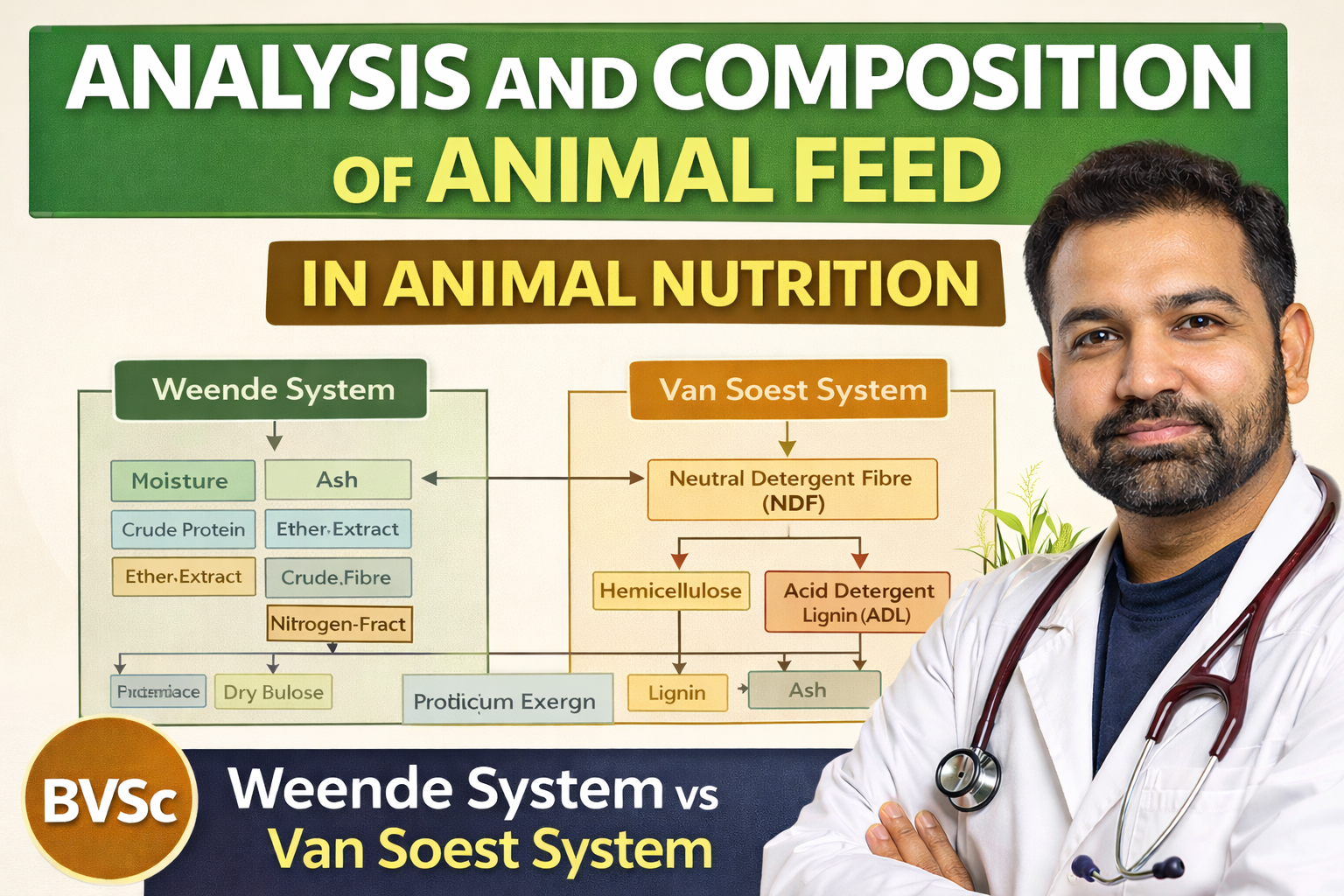

Fibre is the part of a dairy cow’s ration that keeps the rumen working. Too little effective fibre means less chewing, less saliva and a higher risk of acidosis; too much poor fibre means low intake and low milk. The aim is adequate, digestible fibre in the right particle size, mostly from good forage. This guide explains NDF in simple words and gives practical steps for Indian dairy farms: chaff length, TMR, the concentrate to roughage balance and rumen buffering.
Key facts at a glance
| Item | Practical reference |
|---|---|
| Best fibre measures | NDF, ADF and lignin on a lab report; crude fibre is less precise |
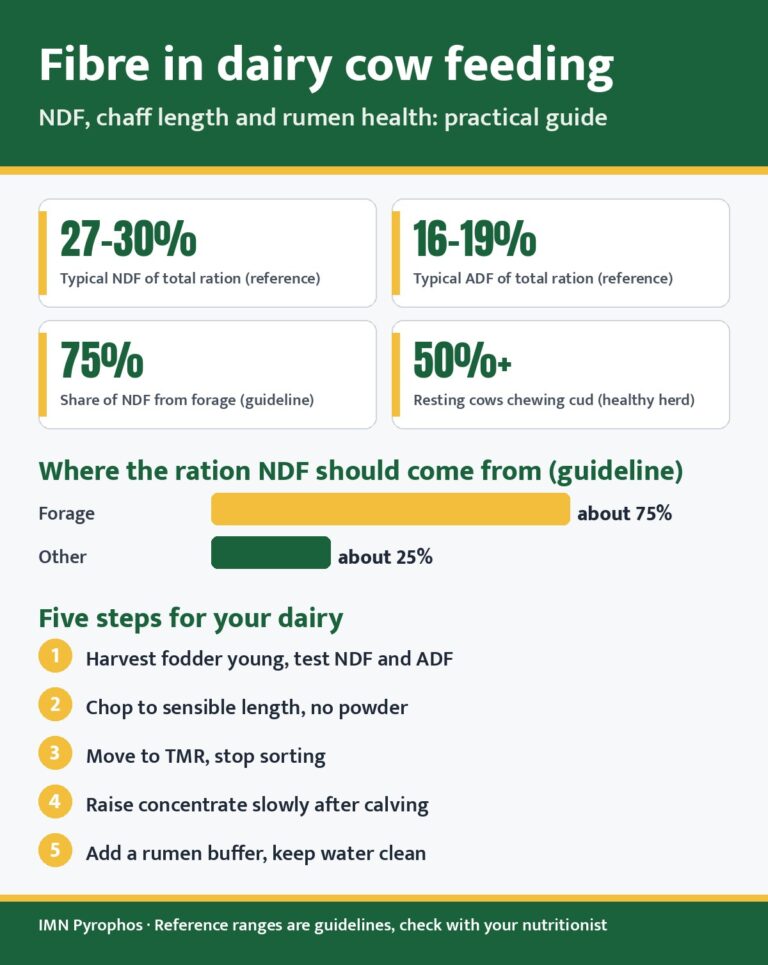
| NDF of the total ration | Often quoted around 27 to 30% for many programmes |
| ADF of the total ration | Often quoted around 16 to 19%; higher ADF means lower digestibility |
| Forage share of NDF | About 75% of dietary NDF from forage is a common guideline |
| Cud chewing check | At least half of the healthy resting cows should be ruminating |
| Concentrate rule of thumb | About 500 g per litre of milk in some systems; not a universal formula |
These are guidelines, not fixed limits. Your nutritionist should set targets for your own herd.
Why fibre matters for the rumen
Plant cell walls are made of cellulose, hemicellulose and lignin. Rumen microbes digest most of the first two, but lignin cannot be digested and it locks up the rest. That is why late-cut, stemmy fodder gives less energy and protein even though it gives more bulk per acre.
Fibre also works as a physical tool. Long enough particles make the cow chew and ruminate, and chewing makes saliva. Saliva carries bicarbonate, the cow’s own natural buffer against the acids produced when grain ferments. When the ration is too fine or too rich in grain, chewing falls, rumen pH drops and the cow slides toward ruminal acidosis: off feed, loose dung, falling milk fat and sometimes lameness later.
The opposite problem is real too. If NDF is too high because the forage is poor, the rumen stays full and intake drops, which hurts high yielders most. So both extremes cost money.
What this means for Indian dairy farms
- Straw-heavy diets are high in fibre but low in energy and protein. The cow is full yet underfed.
- Grain-heavy diets to chase milk can starve the rumen of effective fibre and cut fat percentage.
- Very fine chaff looks tidy but gives little chewing. Very long pieces let cows sort and leave stems behind.
- Early lactation is the danger window: demand rises sharply while intake lags, so farmers add concentrate fast.
What farmers should do now
- Grow and cut forage on time. Harvest green fodder young and soft. Delay raises tonnes per acre but lowers digestibility. Dry fodder and silage need proper drying, compaction and sealing to avoid mould.
- Get forage tested for dry matter, NDF, ADF and crude protein at least once a season, then balance for body weight, milk yield, fat, stage of lactation and body condition.
- Chop to a sensible length. Not powder, not long stems. Check the trough: holes and a pile of refused stems mean cows are sorting.
- Move to TMR where you can. Mixing chopped forage with concentrate gives every bite the same nutrition and lowers the risk of acidosis, indigestion and bloat.
- Raise concentrate gradually after calving and split it into several meals instead of one heavy feed.
- Watch the cows. Count how many resting cows are chewing cud, check dung consistency and milk fat, and note feed refusal every day.
- Always keep clean, fresh water in front of the cows. It is the most overlooked nutrient.
Dairy feed premix · rumen support
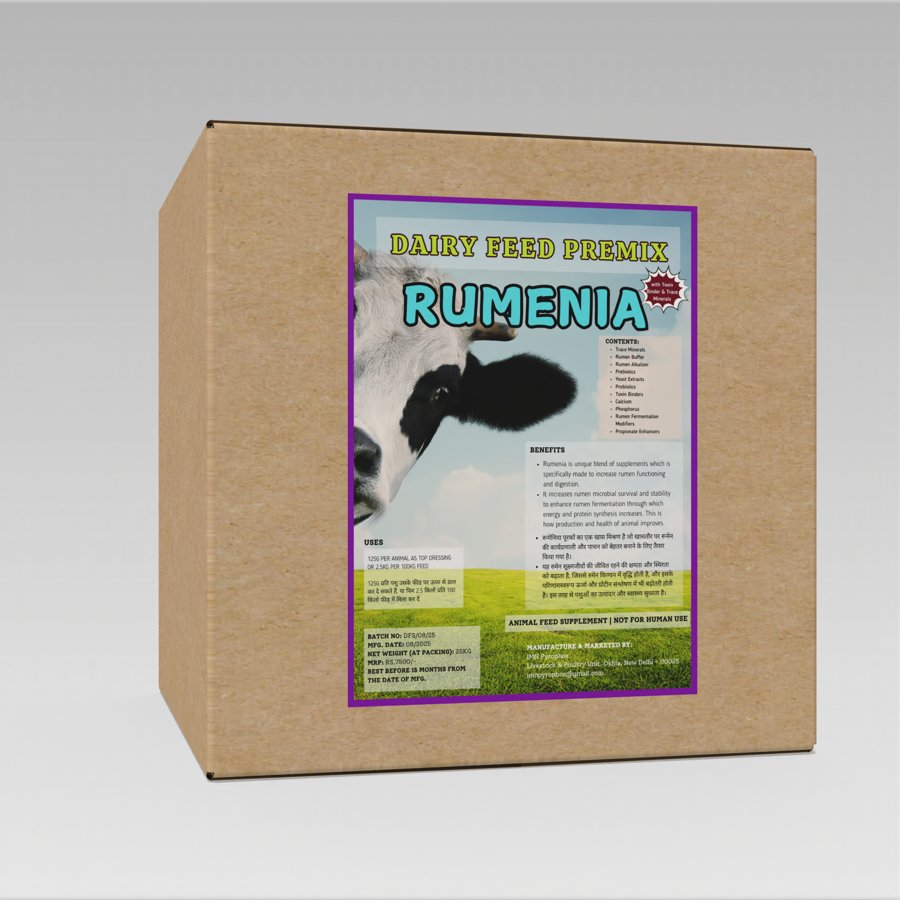
Rumenia
Dairy feed premix with toxin binder and trace minerals, containing rumen buffer, rumen alkalizer, prebiotics, yeast extracts, probiotics, calcium, phosphorus and rumen fermentation modifiers. It supports rumen function, microbial stability and fermentation on high-energy feed. It supports good forage and chaff management and does not replace them.
Dose: 2.5 to 3 kg per ton of feed.
25 kg ₹5,625 (₹225/kg)MRP ₹7,500
Frequently asked questions
What is NDF in cattle feed?
NDF (neutral detergent fibre) is the total cell-wall part of the feed. It controls how much a cow can eat, how long she chews and how well the rumen works.
Can I feed only straw to save money?
Straw gives fibre but very little protein and energy. Cheap feed that cuts milk, fertility and immunity can cost more in the end. Pair it with good green fodder and a balanced concentrate.
How do I know my cows are getting enough effective fibre?
Look for steady cud chewing in at least half of the resting cows, normal dung, stable milk fat and no sorting in the trough. A low cud count can have other causes too, so involve your vet if it persists.
Written by the IMN Pyrophos team in our own words.
फ़ाइबर गाय के राशन का वह हिस्सा है जो rumen को चालू रखता है। effective फ़ाइबर कम हो तो चबाना और लार कम होती है और acidosis का ख़तरा बढ़ता है; घटिया फ़ाइबर ज़्यादा हो तो intake और दूध दोनों गिरते हैं। लक्ष्य है सही particle size में पर्याप्त, पचने लायक़ फ़ाइबर, जो ज़्यादातर अच्छे forage से आए। यह गाइड NDF को सरल भाषा में समझाती है और भारतीय डेयरी फ़ार्मों के लिए व्यावहारिक कदम बताती है: chaff की लंबाई, TMR, concentrate और roughage का संतुलन और rumen buffer।
मुख्य बातें एक नज़र में
| बिंदु | व्यावहारिक संदर्भ |
|---|---|
| फ़ाइबर नापने के बेहतर पैमाने | लैब रिपोर्ट में NDF, ADF और lignin; crude fibre कम सटीक है |
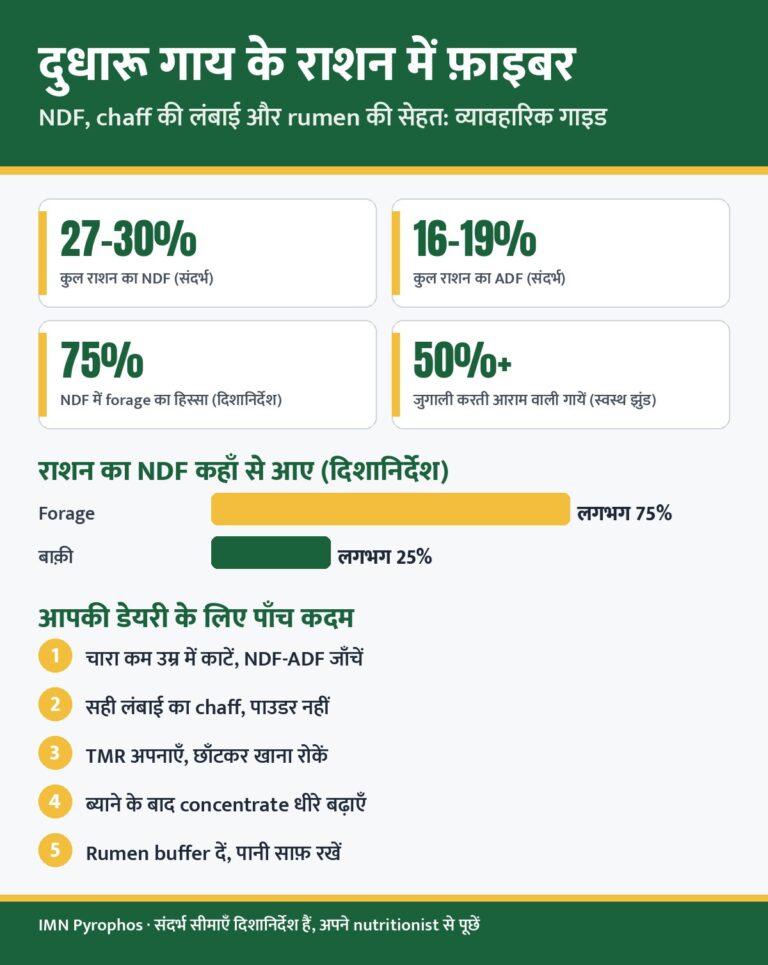
| कुल राशन का NDF | कई कार्यक्रमों में लगभग 27 से 30% बताया जाता है |
| कुल राशन का ADF | लगभग 16 से 19% बताया जाता है; ADF ज़्यादा यानी digestibility कम |
| NDF में forage का हिस्सा | खुराक के NDF का लगभग 75% forage से आए, यह आम दिशानिर्देश है |
| जुगाली की जाँच | आराम कर रही स्वस्थ गायों में कम से कम आधी जुगाली करती दिखें |
| Concentrate का मोटा नियम | कुछ प्रणालियों में लगभग 500 ग्राम प्रति लीटर दूध; यह सार्वभौमिक फ़ॉर्मूला नहीं है |
ये दिशानिर्देश हैं, तय सीमाएँ नहीं। अपने झुंड के लक्ष्य अपने nutritionist से तय करवाएँ।
rumen के लिए फ़ाइबर क्यों ज़रूरी है
पौधे की कोशिका-दीवार cellulose, hemicellulose और lignin से बनती है। rumen के microbes पहले दो का ज़्यादातर हिस्सा पचा लेते हैं, पर lignin नहीं पचता और बाक़ी को भी जकड़ लेता है। इसीलिए देर से काटा गया, डंठल वाला चारा प्रति एकड़ ज़्यादा मात्रा देता है, पर ऊर्जा और प्रोटीन कम।
फ़ाइबर एक भौतिक औज़ार भी है। पर्याप्त लंबे टुकड़े गाय को चबाने और जुगाली करने पर मजबूर करते हैं, और चबाने से लार बनती है। लार में bicarbonate होता है, जो दाना fermentation से बने एसिड के ख़िलाफ़ गाय का अपना प्राकृतिक buffer है। राशन बहुत महीन या दाने में बहुत भारी हो तो चबाना घटता है, rumen pH गिरता है और गाय ruminal acidosis की तरफ़ जाती है: खाना कम, पतला गोबर, दूध में फ़ैट गिरना और बाद में कभी-कभी लँगड़ापन।
उलटी समस्या भी असली है। चारा घटिया हो और NDF बहुत ज़्यादा हो तो rumen भरा रहता है और intake घटता है, जिसका नुकसान ज़्यादा दूध देने वाली गायों को सबसे ज़्यादा होता है। यानी दोनों छोर महँगे पड़ते हैं।
भारतीय डेयरी फ़ार्मों के लिए इसका मतलब
- भूसा-प्रधान राशन में फ़ाइबर ज़्यादा पर ऊर्जा और प्रोटीन कम होते हैं। गाय का पेट भरा है, पर पोषण अधूरा।
- दाना-प्रधान राशन दूध बढ़ाने की होड़ में rumen को effective फ़ाइबर से वंचित कर सकता है और फ़ैट प्रतिशत घटा सकता है।
- बहुत महीन chaff सलीक़ेदार दिखता है पर चबाना कम कराता है। बहुत लंबे टुकड़े गायों को छाँटकर खाने देते हैं और डंठल पीछे छूट जाते हैं।
- शुरुआती दुग्धकाल सबसे ख़तरनाक समय है: माँग तेज़ी से बढ़ती है, intake पीछे रहता है और किसान जल्दी में concentrate बढ़ा देते हैं।
किसान अभी क्या करें
- चारा समय पर उगाएँ और काटें। हरा चारा कम उम्र में, नरम रहते काटें। देर करने से प्रति एकड़ टन बढ़ते हैं पर digestibility घटती है। सूखे चारे और साइलेज को फफूँद से बचाने के लिए सही सुखाई, दबाई और सीलिंग चाहिए।
- चारे की जाँच करवाएँ: dry matter, NDF, ADF और crude protein, कम से कम हर सीज़न में एक बार। फिर शरीर के वज़न, दूध, फ़ैट, दुग्धकाल की अवस्था और body condition के हिसाब से राशन संतुलित करें।
- chaff सही लंबाई में काटें। न पाउडर, न लंबे डंठल। नाँद देखें: गड्ढे और बचे हुए डंठलों का ढेर बताता है कि गायें छाँटकर खा रही हैं।
- जहाँ हो सके TMR अपनाएँ। कटा चारा और concentrate मिलाने से हर निवाले में एक जैसा पोषण मिलता है और acidosis, अपच और bloat का ख़तरा घटता है।
- ब्याने के बाद concentrate धीरे-धीरे बढ़ाएँ और एक भारी खुराक की जगह कई बार में बाँटें।
- गायों को देखते रहें। आराम कर रही कितनी गायें जुगाली कर रही हैं, गोबर कैसा है, दूध का फ़ैट कैसा है और चारा कितना बच रहा है, रोज़ नोट करें।
- साफ़, ताज़ा पानी हमेशा सामने रखें। यह सबसे अनदेखा पोषक तत्व है।
डेयरी फ़ीड प्रीमिक्स · rumen सपोर्ट
Rumenia
Toxin binder और trace minerals वाला डेयरी फ़ीड प्रीमिक्स, जिसमें rumen buffer, rumen alkalizer, prebiotics, yeast extracts, probiotics, कैल्शियम, फॉस्फोरस और rumen fermentation modifiers हैं। यह high-energy फ़ीड पर rumen function, microbes की स्थिरता और fermentation में सहारा देता है। यह अच्छे forage और chaff प्रबंधन का साथ देता है, उनकी जगह नहीं लेता।
मात्रा: 2.5 से 3 किलो प्रति टन फ़ीड।
25 किलो ₹5,625 (₹225/किलो)MRP ₹7,500
अक्सर पूछे जाने वाले सवाल
पशु आहार में NDF क्या है?
NDF (neutral detergent fibre) फ़ीड का पूरा कोशिका-दीवार वाला हिस्सा है। यह तय करता है कि गाय कितना खा सकती है, कितना चबाती है और rumen कितना अच्छा चलता है।
क्या पैसे बचाने के लिए सिर्फ़ भूसा खिला सकते हैं?
भूसा फ़ाइबर देता है, पर प्रोटीन और ऊर्जा बहुत कम। ऐसा सस्ता चारा जो दूध, fertility और immunity घटाए, आख़िर में महँगा पड़ता है। इसे अच्छे हरे चारे और संतुलित concentrate के साथ जोड़ें।
कैसे पता चले कि गायों को पर्याप्त effective फ़ाइबर मिल रहा है?
आराम कर रही कम से कम आधी गायों में लगातार जुगाली, सामान्य गोबर, स्थिर दूध फ़ैट और नाँद में छाँटकर खाना न दिखे। जुगाली कम होने के दूसरे कारण भी हो सकते हैं, इसलिए बनी रहे तो पशु-चिकित्सक को दिखाएँ।
IMN Pyrophos टीम द्वारा अपने शब्दों में लिखा गया।
Fibre gaay ke ration ka woh hissa hai jo rumen ko chalu rakhta hai. Effective fibre kam ho to chabana aur laar kam hoti hai aur acidosis ka khatra badhta hai; ghatiya fibre zyada ho to intake aur doodh dono girte hain. Lakshya hai sahi particle size me paryapt, pachne layak fibre, jo zyadatar achhe forage se aaye. Yeh guide NDF ko saral bhasha me samjhati hai aur Bharatiya dairy farms ke liye vyavaharik kadam batati hai: chaff ki lambai, TMR, concentrate aur roughage ka santulan aur rumen buffer.
Mukhya baatein ek nazar me
| Bindu | Vyavaharik sandarbh |
|---|---|
| Fibre naapne ke behtar paimane | Lab report me NDF, ADF aur lignin; crude fibre kam sateek hai |
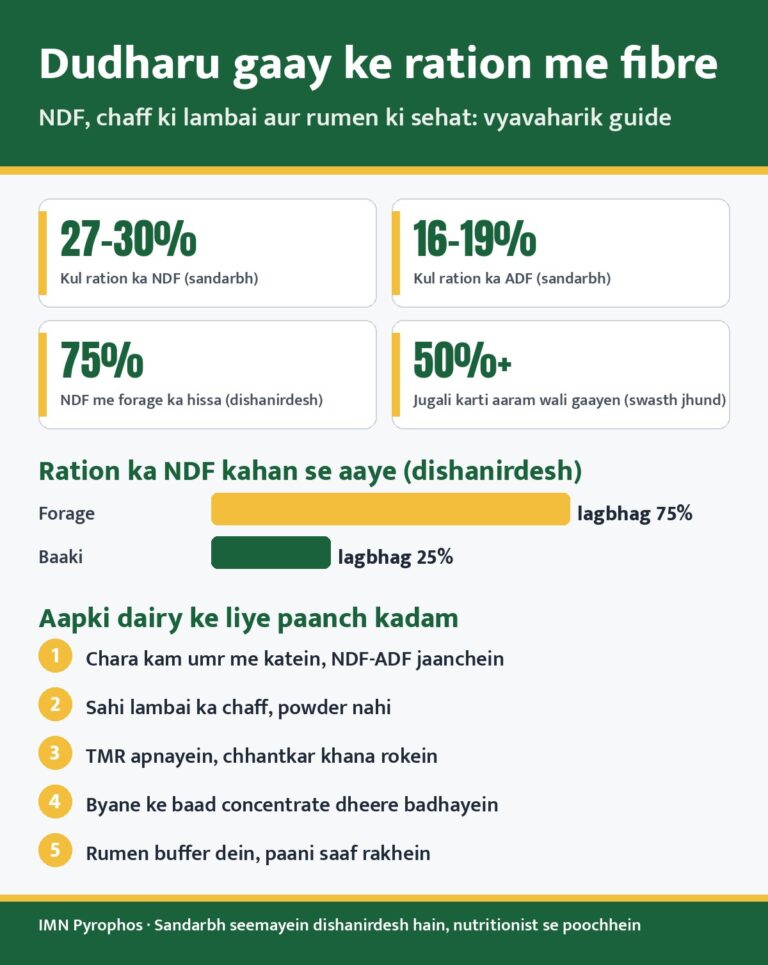
| Kul ration ka NDF | Kai karyakramon me lagbhag 27 se 30% bataya jaata hai |
| Kul ration ka ADF | Lagbhag 16 se 19% bataya jaata hai; ADF zyada matlab digestibility kam |
| NDF me forage ka hissa | Khurak ke NDF ka lagbhag 75% forage se aaye, yeh aam dishanirdesh hai |
| Jugali ki jaanch | Aaram kar rahi swasth gaayon me kam se kam aadhi jugali karti dikhein |
| Concentrate ka mota niyam | Kuch pranaaliyon me lagbhag 500 g prati litre doodh; yeh sarvabhaumik formula nahi hai |
Yeh dishanirdesh hain, tay seemayein nahi. Apne jhund ke lakshya apne nutritionist se tay karwayein.
Rumen ke liye fibre kyon zaroori hai
Paudhe ki koshika-deewar cellulose, hemicellulose aur lignin se banti hai. Rumen ke microbes pehle do ka zyadatar hissa pacha lete hain, par lignin nahi pachta aur baaki ko bhi jakad leta hai. Isiliye der se kata gaya, danthal wala chara prati acre zyada matra deta hai, par urja aur protein kam.
Fibre ek bhautik auzaar bhi hai. Paryapt lambe tukde gaay ko chabane aur jugali karne par majboor karte hain, aur chabane se laar banti hai. Laar me bicarbonate hota hai, jo daana fermentation se bane acid ke khilaf gaay ka apna prakritik buffer hai. Ration bahut mahin ya daane me bahut bhaari ho to chabana ghatta hai, rumen pH girta hai aur gaay ruminal acidosis ki taraf jaati hai: khana kam, patla gobar, doodh me fat girna aur baad me kabhi-kabhi langdapan.
Ulti samasya bhi asli hai. Chara ghatiya ho aur NDF bahut zyada ho to rumen bhara rehta hai aur intake ghatta hai, jiska nuksan zyada doodh dene wali gaayon ko sabse zyada hota hai. Yaani dono chhor mehange padte hain.
Bharatiya dairy farms ke liye iska matlab
- Bhusa-pradhan ration me fibre zyada par urja aur protein kam hote hain. Gaay ka pet bhara hai, par poshan adhura.
- Daana-pradhan ration doodh badhane ki hod me rumen ko effective fibre se vanchit kar sakta hai aur fat percentage ghata sakta hai.
- Bahut mahin chaff saleekedar dikhta hai par chabana kam karata hai. Bahut lambe tukde gaayon ko chhantkar khane dete hain aur danthal peeche chhoot jaate hain.
- Shuruaati dugdhkal sabse khatarnak samay hai: maang tezi se badhti hai, intake peeche rehta hai aur kisan jaldi me concentrate badha dete hain.
Kisan abhi kya karein
- Chara samay par ugayein aur katein. Hara chara kam umr me, naram rehte katein. Der karne se prati acre ton badhte hain par digestibility ghatti hai. Sookhe chare aur silage ko fafoond se bachane ke liye sahi sukhai, dabai aur sealing chahiye.
- Chare ki jaanch karwayein: dry matter, NDF, ADF aur crude protein, kam se kam har season me ek baar. Phir sharir ke vajan, doodh, fat, dugdhkal ki avastha aur body condition ke hisab se ration santulit karein.
- Chaff sahi lambai me katein. Na powder, na lambe danthal. Naand dekhein: gadde aur bache hue danthalon ka dher batata hai ki gaayen chhantkar kha rahi hain.
- Jahan ho sake TMR apnayein. Kata chara aur concentrate milane se har niwale me ek jaisa poshan milta hai aur acidosis, apach aur bloat ka khatra ghatta hai.
- Byane ke baad concentrate dheere-dheere badhayein aur ek bhaari khurak ki jagah kai baar me baantein.
- Gaayon ko dekhte rahein. Aaram kar rahi kitni gaayen jugali kar rahi hain, gobar kaisa hai, doodh ka fat kaisa hai aur chara kitna bach raha hai, roz note karein.
- Saaf, taaza paani hamesha saamne rakhein. Yeh sabse andekha poshak tatva hai.
Dairy feed premix · rumen support
Rumenia
Toxin binder aur trace minerals wala dairy feed premix, jisme rumen buffer, rumen alkalizer, prebiotics, yeast extracts, probiotics, calcium, phosphorus aur rumen fermentation modifiers hain. Yeh high-energy feed par rumen function, microbes ki sthirta aur fermentation me sahara deta hai. Yeh achhe forage aur chaff prabandhan ka saath deta hai, unki jagah nahi leta.
Matra: 2.5 se 3 kg prati ton feed.
25 kg ₹5,625 (₹225/kg)MRP ₹7,500
Aksar poochhe jaane wale sawal
Pashu aahar me NDF kya hai?
NDF (neutral detergent fibre) feed ka poora koshika-deewar wala hissa hai. Yeh tay karta hai ki gaay kitna kha sakti hai, kitna chabati hai aur rumen kitna achha chalta hai.
Kya paise bachane ke liye sirf bhusa khila sakte hain?
Bhusa fibre deta hai, par protein aur urja bahut kam. Aisa sasta chara jo doodh, fertility aur immunity ghataye, aakhir me mehnga padta hai. Ise achhe hare chare aur santulit concentrate ke saath jodein.
Kaise pata chale ki gaayon ko paryapt effective fibre mil raha hai?
Aaram kar rahi kam se kam aadhi gaayon me lagataar jugali, saamanya gobar, sthir doodh fat aur naand me chhantkar khana na dikhe. Jugali kam hone ke doosre karan bhi ho sakte hain, isliye bani rahe to pashu-chikitsak ko dikhayein.
IMN Pyrophos team dwara apne shabdon me likha gaya.