
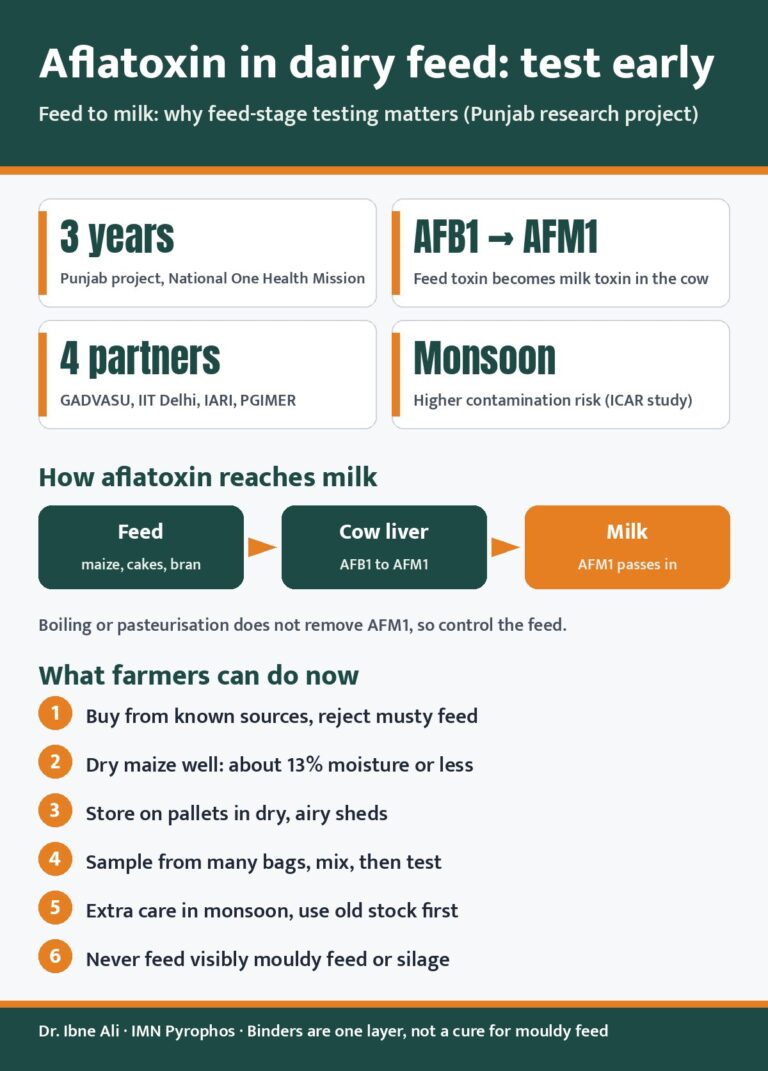
Aflatoxin that gets into dairy feed does not stay in the feed: a cow turns it into aflatoxin M1 (AFM1), and it leaves the animal in her milk. That is why scientists in Punjab, working with IIT Delhi, IARI and PGIMER Chandigarh, are building a portable aflatoxin detection device so that feed and fodder can be checked close to the farm instead of only in a distant laboratory. This explainer covers what the project aims to do, why testing at the feed stage is the smartest place to catch the problem, and what a dairy farmer or small dairy can do today without any special device.
Key facts
| Item | Detail |
|---|---|
| Who | Guru Angad Dev Veterinary and Animal Sciences University (GADVASU), Ludhiana, with IIT Delhi, IARI and PGIMER Chandigarh |
| Project | Three-year project under the National One Health Mission on aflatoxin surveillance in dairy feed and fodder |
| Two parts | A portable detection device for testing near the farm or point of sale, and a map of contamination across Punjab to find high-risk areas |
| Also planned | A laboratory-on-wheels to test feed, fodder, silage, aflatoxin and milk |
| Main toxin | Aflatoxin B1 (AFB1), made mainly by Aspergillus fungi, a concern in maize and groundnut cake |
| Milk link | In the cow’s liver AFB1 becomes AFM1, which is passed into milk |
| Risk pattern | An ICAR study found higher contamination in the monsoon and differences by region and season |
The reports we reviewed give no detection limit, accuracy, test time or price for the device, so we do not quote any. It is a research project, not a product you can buy today.
Why aflatoxin is a dairy problem
Aflatoxins are poisons made by moulds that grow on grain, oilseed cakes and fodder when they are damp and warm. They cannot be seen or smelt, and grain can look fine and still carry them. Earlier Indian research has found AFB1 in cottonseed cake, groundnut cake, soybean cake, sunflower cake, maize and wheat bran. Almost every dairy ration is built from these, so one bad lot can reach many animals.
The special worry in dairy is milk. AFM1 in milk is not removed by boiling or pasteurisation, so the clean-up has to happen before the feed is eaten. That makes feed the control point, not the milk can.
Why test at the feed stage
A laboratory test is accurate but slow and costly, so most feed lots are never tested. A portable screening tool could change that by letting a dairy check incoming maize and cake, stored lots and finished feed on the spot, and stop a suspect batch before it reaches the cows. The scientists describe the aim as moving from occasional testing to a more proactive, risk-based system, backed by lab confirmation, proper storage, moisture control, traceability and mitigation methods that have been validated.
What it means for dairy farmers
Aflatoxin in feed can lower intake and milk yield and weaken animals, and it can put milk quality at risk. Small farmers and village dairies who buy cake and concentrate in bulk, or who store maize through the monsoon, are most exposed, and they are also the ones least able to afford repeated lab tests. Until portable testing reaches them, good handling is the best protection.
What farmers and small dairies can do now
- Buy from known sources and ask about storage. Reject feed that smells musty, feels damp, is caked or shows green, grey or black mould.
- Keep moisture low. Dry maize well before storage; around 13% moisture or below is the usual safe target. Use a moisture meter if you can.
- Store smart. Use raised pallets, dry sheds with air flow, no leaking roofs, and keep bags away from walls. Use old stock first.
- Take proper samples. Mould is patchy, so draw small portions from many bags and mix them before sending a sample to a lab or testing it. One handful from the top is not enough.
- Take extra care in the monsoon, when risk is higher. Buy smaller quantities and check lots more often.
- Do not feed visibly mouldy feed or silage. Throw it out; dilution is not a safe plan.
- Consider a toxin binder as one layer, not a cure. Binders do not make mouldy feed safe. Ask us on WhatsApp which of our feed products suit your species and feed type.
Frequently asked questions
Can I buy the portable aflatoxin device now?
No. It is being developed under a research project, and the reports do not give a launch date or price.
Does boiling milk remove AFM1?
No. AFM1 is not destroyed by boiling or pasteurisation, which is why controlling aflatoxin in feed matters most.
Which dairy feed ingredients are most at risk?
Research has found AFB1 in maize, groundnut cake, cottonseed cake, soybean cake, sunflower cake and wheat bran, with higher risk in the monsoon.
Written by the IMN Pyrophos team in our own words.
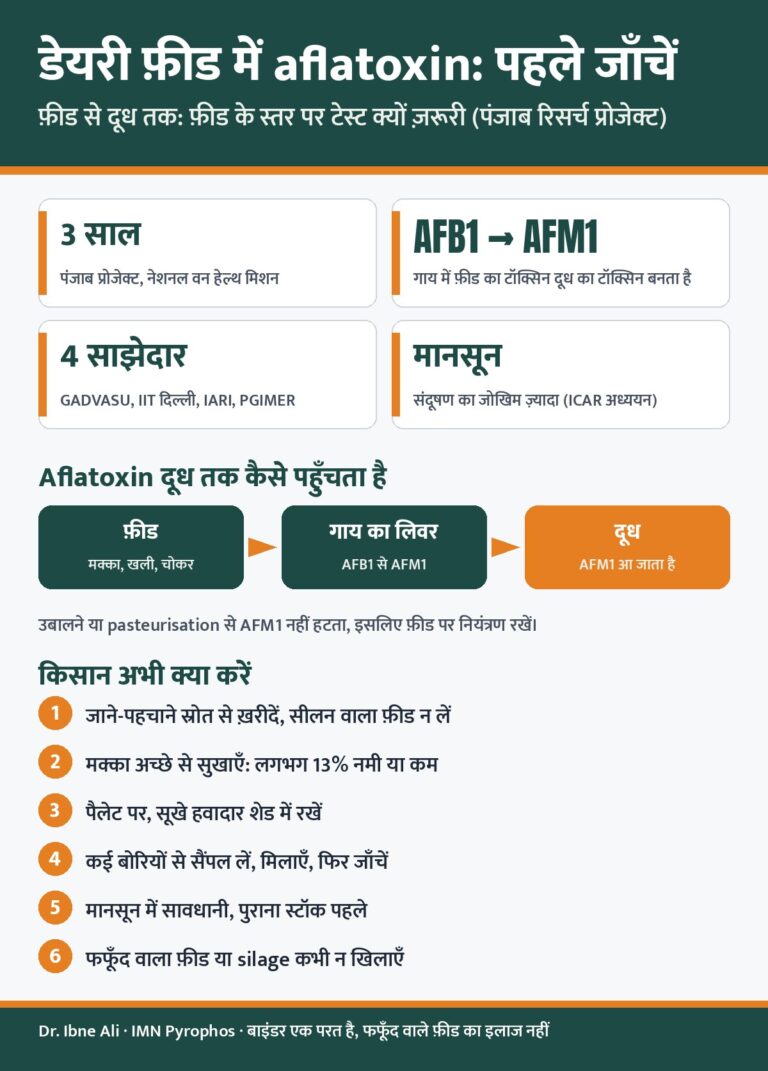
डेयरी फ़ीड में गया aflatoxin फ़ीड में ही नहीं रुकता: गाय उसे aflatoxin M1 (AFM1) में बदल देती है और वह दूध के ज़रिये बाहर आता है। इसीलिए पंजाब के वैज्ञानिक, IIT दिल्ली, IARI और PGIMER चंडीगढ़ के साथ मिलकर, एक पोर्टेबल aflatoxin डिटेक्शन डिवाइस बना रहे हैं, ताकि फ़ीड और चारे की जाँच दूर की लैब के बजाय खेत के पास हो सके। इस लेख में बताया गया है कि प्रोजेक्ट क्या करना चाहता है, फ़ीड के स्तर पर टेस्टिंग सबसे समझदारी की जगह क्यों है, और डेयरी किसान या छोटी डेयरी बिना किसी ख़ास डिवाइस के आज क्या कर सकते हैं।
मुख्य तथ्य
| बिंदु | विवरण |
|---|---|
| कौन | गुरु अंगद देव वेटरनरी एंड एनिमल साइंसेज़ यूनिवर्सिटी (GADVASU), लुधियाना; साथ में IIT दिल्ली, IARI और PGIMER चंडीगढ़ |
| प्रोजेक्ट | नेशनल वन हेल्थ मिशन के तहत तीन साल का प्रोजेक्ट, डेयरी फ़ीड और चारे में aflatoxin की निगरानी |
| दो हिस्से | खेत या बिक्री स्थल के पास जाँच के लिए पोर्टेबल डिवाइस, और पंजाब में संदूषण का नक्शा ताकि ज़्यादा जोखिम वाले इलाके पता चलें |
| साथ में योजना | फ़ीड, चारा, साइलेज, aflatoxin और दूध की जाँच के लिए चलती-फिरती लैब |
| मुख्य टॉक्सिन | Aflatoxin B1 (AFB1), मुख्यतः Aspergillus फफूँद से बनता है; मक्का और मूंगफली खली में बड़ी चिंता |
| दूध से संबंध | गाय के लिवर में AFB1, AFM1 बन जाता है, जो दूध में जाता है |
| जोखिम का पैटर्न | ICAR के अध्ययन में मानसून में संदूषण ज़्यादा मिला, और क्षेत्र व मौसम के हिसाब से फ़र्क़ दिखा |
जो रिपोर्ट हमने देखीं, उनमें डिवाइस की detection limit, सटीकता, टेस्ट का समय या क़ीमत नहीं दी गई है, इसलिए हम कोई आँकड़ा नहीं लिख रहे। यह रिसर्च प्रोजेक्ट है, आज ख़रीदा जा सकने वाला प्रोडक्ट नहीं।
Aflatoxin डेयरी की समस्या क्यों है
Aflatoxin फफूँद से बनने वाले ज़हर हैं, जो नम और गर्म हालत में अनाज, तेल की खली और चारे पर पनपते हैं। ये न दिखते हैं, न सूँघने में आते हैं; अनाज ठीक दिखकर भी इनसे भरा हो सकता है। पहले के भारतीय शोध में AFB1 कपास खली, मूंगफली खली, सोयाबीन खली, सूरजमुखी खली, मक्का और गेहूँ के चोकर में मिला है। लगभग हर डेयरी राशन इन्हीं से बनता है, इसलिए एक ख़राब लॉट कई पशुओं तक पहुँच सकता है।
डेयरी में ख़ास चिंता दूध की है। दूध में मौजूद AFM1 उबालने या pasteurisation से ख़त्म नहीं होता, इसलिए सफ़ाई फ़ीड खिलाने से पहले ही करनी होगी। यानी नियंत्रण का बिंदु दूध का कैन नहीं, फ़ीड है।
फ़ीड के स्तर पर टेस्ट क्यों
लैब टेस्ट सटीक है पर धीमा और महँगा, इसलिए ज़्यादातर फ़ीड लॉट कभी जाँचे ही नहीं जाते। पोर्टेबल screening टूल से डेयरी आने वाला मक्का और खली, भंडारित लॉट और तैयार फ़ीड मौके पर जाँच सकेगी और शक वाला बैच गायों तक पहुँचने से पहले रोक सकेगी। वैज्ञानिकों का लक्ष्य कभी-कभार की टेस्टिंग से आगे बढ़कर ज़्यादा सक्रिय, जोखिम-आधारित व्यवस्था बनाना है, जिसमें लैब पुष्टि, सही भंडारण, नमी नियंत्रण, ट्रेसेबिलिटी और परखी हुई mitigation विधियाँ साथ चलें।
डेयरी किसानों के लिए मतलब
फ़ीड में aflatoxin से खुराक और दूध उत्पादन घट सकता है, पशु कमज़ोर हो सकते हैं और दूध की गुणवत्ता पर जोखिम बन सकता है। जो छोटे किसान और गाँव की डेयरियाँ थोक में खली और कंसन्ट्रेट ख़रीदती हैं, या मानसून भर मक्का रखती हैं, वे सबसे ज़्यादा जोखिम में हैं, और वही बार-बार लैब टेस्ट का ख़र्च कम उठा पाते हैं। पोर्टेबल टेस्टिंग उन तक पहुँचने तक सही रखरखाव ही सबसे अच्छा बचाव है।
किसान और छोटी डेयरियाँ अभी क्या करें
- जाने-पहचाने स्रोत से ख़रीदें और भंडारण के बारे में पूछें। जिस फ़ीड से सीलन की गंध आए, जो नम या जमी हो, या जिस पर हरी, भूरी या काली फफूँद दिखे, उसे न लें।
- नमी कम रखें। मक्का को भंडारण से पहले अच्छी तरह सुखाएँ; आमतौर पर लगभग 13% नमी या उससे कम सुरक्षित लक्ष्य माना जाता है। हो सके तो moisture meter रखें।
- स्मार्ट भंडारण करें। ऊँचे पैलेट, हवादार सूखे शेड, टपकती छत नहीं, और बोरियाँ दीवार से दूर। पुराना स्टॉक पहले इस्तेमाल करें।
- सही सैंपल लें। फफूँद टुकड़ों में होती है, इसलिए कई बोरियों से थोड़ा-थोड़ा लेकर मिलाएँ, फिर लैब भेजें या जाँचें। ऊपर से एक मुट्ठी काफ़ी नहीं।
- मानसून में ज़्यादा सावधानी रखें, जब जोखिम ज़्यादा होता है। कम मात्रा में ख़रीदें और लॉट बार-बार जाँचें।
- साफ़ फफूँद वाला फ़ीड या silage न खिलाएँ। उसे फेंक दें; पतला करके खिलाना सुरक्षित तरीक़ा नहीं।
- टॉक्सिन बाइंडर को एक परत मानें, इलाज नहीं। बाइंडर फफूँद लगे फ़ीड को सुरक्षित नहीं बनाते। आपके पशु और फ़ीड के लिए हमारे कौन से फ़ीड प्रोडक्ट ठीक हैं, यह WhatsApp पर हमसे पूछें।
अक्सर पूछे जाने वाले सवाल
क्या पोर्टेबल aflatoxin डिवाइस अभी ख़रीद सकते हैं?
नहीं। यह रिसर्च प्रोजेक्ट में बन रहा है, और रिपोर्टों में लॉन्च की तारीख़ या क़ीमत नहीं दी गई।
क्या दूध उबालने से AFM1 निकल जाता है?
नहीं। AFM1 उबालने या pasteurisation से नष्ट नहीं होता, इसीलिए फ़ीड में aflatoxin पर नियंत्रण सबसे ज़रूरी है।
डेयरी फ़ीड की कौन सी सामग्री सबसे ज़्यादा जोखिम में है?
शोध में AFB1 मक्का, मूंगफली खली, कपास खली, सोयाबीन खली, सूरजमुखी खली और गेहूँ के चोकर में मिला है, और मानसून में जोखिम ज़्यादा रहता है।
IMN Pyrophos टीम द्वारा अपने शब्दों में लिखा गया।
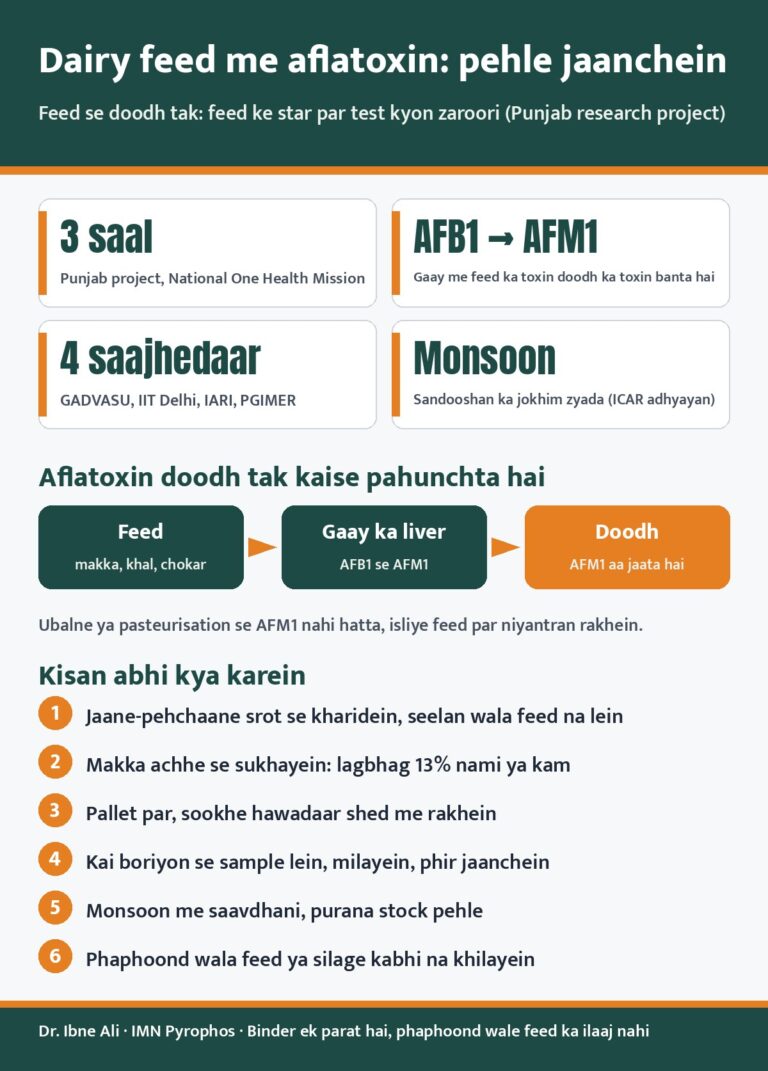
Dairy feed me gaya aflatoxin feed me hi nahi rukta: gaay use aflatoxin M1 (AFM1) me badal deti hai aur wo doodh ke zariye bahar aata hai. Isi liye Punjab ke scientist, IIT Delhi, IARI aur PGIMER Chandigarh ke saath mil kar, ek portable aflatoxin detection device bana rahe hain, taaki feed aur chaare ki jaanch door ki lab ke bajay khet ke paas ho sake. Is lekh me bataya gaya hai ki project kya karna chahta hai, feed ke star par testing sabse samajhdaari ki jagah kyon hai, aur dairy kisan ya chhoti dairy bina kisi khaas device ke aaj kya kar sakte hain.
Mukhya tathya
| Bindu | Vivaran |
|---|---|
| Kaun | Guru Angad Dev Veterinary and Animal Sciences University (GADVASU), Ludhiana; saath me IIT Delhi, IARI aur PGIMER Chandigarh |
| Project | National One Health Mission ke tahat teen saal ka project, dairy feed aur chaare me aflatoxin ki nigraani |
| Do hisse | Khet ya bikri sthal ke paas jaanch ke liye portable device, aur Punjab me sandooshan ka naksha taaki zyada jokhim wale ilaake pata chalein |
| Saath me yojana | Feed, chaara, silage, aflatoxin aur doodh ki jaanch ke liye chalti-phirti lab |
| Mukhya toxin | Aflatoxin B1 (AFB1), mukhyatah Aspergillus phaphoond se banta hai; makka aur moongfali khal me badi chinta |
| Doodh se sambandh | Gaay ke liver me AFB1, AFM1 ban jaata hai, jo doodh me jaata hai |
| Jokhim ka pattern | ICAR ke adhyayan me monsoon me sandooshan zyada mila, aur kshetra va mausam ke hisaab se fark dikha |
Jo report humne dekhi, unme device ki detection limit, sateekta, test ka samay ya keemat nahi di gayi hai, isliye hum koi aankda nahi likh rahe. Ye research project hai, aaj kharida ja sakne wala product nahi.
Aflatoxin dairy ki samasya kyon hai
Aflatoxin phaphoond se bane zehar hain, jo nam aur garm halat me anaaj, tel ki khal aur chaare par panapte hain. Ye na dikhte hain, na soonghne me aate hain; anaaj theek dikh kar bhi inse bhara ho sakta hai. Pehle ke Bharatiya shodh me AFB1 kapas khal, moongfali khal, soybean khal, surajmukhi khal, makka aur gehun ke chokar me mila hai. Lagbhag har dairy ration inhi se banta hai, isliye ek kharab lot kai pashuon tak pahunch sakta hai.
Dairy me khaas chinta doodh ki hai. Doodh me maujood AFM1 ubalne ya pasteurisation se khatam nahi hota, isliye safai feed khilane se pehle hi karni hogi. Yaani niyantran ka bindu doodh ka can nahi, feed hai.
Feed ke star par test kyon
Lab test sateek hai par dheema aur mehnga, isliye zyadatar feed lot kabhi jaanche hi nahi jaate. Portable screening tool se dairy aane wala makka aur khal, bhandarit lot aur taiyar feed mauke par jaanch sakegi aur shak wala batch gaayon tak pahunchne se pehle rok sakegi. Scientists ka lakshya kabhi-kabhaar ki testing se aage badh kar zyada sakriya, jokhim-aadharit vyavastha banana hai, jisme lab pushti, sahi bhandaran, nami niyantran, traceability aur parkhi hui mitigation vidhiyan saath chalein.
Dairy kisanon ke liye matlab
Feed me aflatoxin se khurak aur doodh utpadan ghat sakta hai, pashu kamzor ho sakte hain aur doodh ki gunvatta par jokhim ban sakta hai. Jo chhote kisan aur gaon ki dairiyan thok me khal aur concentrate kharidti hain, ya monsoon bhar makka rakhti hain, ve sabse zyada jokhim me hain, aur wahi baar-baar lab test ka kharch kam utha paate hain. Portable testing untak pahunchne tak sahi rakhrakhav hi sabse achha bachav hai.
Kisan aur chhoti dairiyan abhi kya karein
- Jaane-pehchaane srot se kharidein aur bhandaran ke baare me poochhein. Jis feed se seelan ki gandh aaye, jo nam ya jami ho, ya jis par hari, bhoori ya kaali phaphoond dikhe, use na lein.
- Nami kam rakhein. Makka ko bhandaran se pehle achhi tarah sukhayein; aamtaur par lagbhag 13% nami ya usse kam surakshit lakshya mana jaata hai. Ho sake to moisture meter rakhein.
- Smart bhandaran karein. Oonche pallet, hawadaar sookhe shed, tapakti chhat nahi, aur boriyan deewar se door. Purana stock pehle istemal karein.
- Sahi sample lein. Phaphoond tukdon me hoti hai, isliye kai boriyon se thoda-thoda le kar milayein, phir lab bhejein ya jaanchein. Upar se ek mutthi kaafi nahi.
- Monsoon me zyada saavdhani rakhein, jab jokhim zyada hota hai. Kam matra me kharidein aur lot baar-baar jaanchein.
- Saaf phaphoond wala feed ya silage na khilayein. Use phenk dein; patla karke khilana surakshit tareeka nahi.
- Toxin binder ko ek parat maanein, ilaaj nahi. Binder phaphoond lage feed ko surakshit nahi banate. Aapke pashu aur feed ke liye hamare kaun se feed products theek hain, ye WhatsApp par humse poochhein.
Aksar pooche jaane wale sawaal
Kya portable aflatoxin device abhi kharid sakte hain?
Nahi. Ye research project me ban raha hai, aur reports me launch ki tarikh ya keemat nahi di gayi.
Kya doodh ubalne se AFM1 nikal jaata hai?
Nahi. AFM1 ubalne ya pasteurisation se nasht nahi hota, isi liye feed me aflatoxin par niyantran sabse zaroori hai.
Dairy feed ki kaun si samagri sabse zyada jokhim me hai?
Shodh me AFB1 makka, moongfali khal, kapas khal, soybean khal, surajmukhi khal aur gehun ke chokar me mila hai, aur monsoon me jokhim zyada rehta hai.
IMN Pyrophos team ne apne shabdon me likha.