
Egg production slips by a few points and the shed owner starts to worry. A fall in the laying percentage is a signal, not a diagnosis. It can come from short day length in winter, a drop in feed intake, a calcium gap, stress, water problems or disease. This guide shows what to check first, and where Egg Up and Pyrocal B fit in.
First, measure the drop
Note the daily hen-day production for a week and compare it with the breed standard for the same age. A slow, small slide is usually management or nutrition. A sudden drop of several points in two or three days points to stress, a disease challenge or a feed or water fault, so call your vet early.
Common reasons for a drop
- Short day length. Layers need steady light. As the days shorten, production can fall if the lighting programme is not adjusted. Never reduce the light hours in a laying flock.
- Low feed intake. A change in feed, a heavy or powdery mash, empty feeders or a cold shed can cut intake, and with it the nutrients for the egg.
- Calcium and phosphorus gap. Thin or soft shells, more breakage and tired hens often point to calcium. Offer a good calcium source, and check the coarse grit or limestone share in the feed.
- Water problems. A hen drinks about twice as much water as feed by weight, so a blocked line, dirty water or an icy morning cuts production.
- Stress. Vaccination, handling, noise, shifting, extreme temperature and sudden feed changes all show up as a dip.
- Disease. Respiratory disease and some viral infections can lower production and shell quality. Watch for cough, loose droppings, pale eggs or misshapen shells.
- Flock age and body weight. Production naturally declines as the flock ages. Underweight pullets also never reach their peak.
- Parasites. Lice, mites or worms drain the hen and reduce laying.
A simple checklist
| What to check | What to do |
|---|---|
| Light | Keep a steady lighting programme and never cut the hours in lay. |
| Feed intake | Check feed every day, keep feeders full, avoid sudden feed changes. |
| Calcium and shell | Check shell quality and breakage; confirm calcium and grit in the feed. |
| Water | Clean lines and tanks; keep water cool in summer and not icy in winter. |
| Stress | Plan vaccination and handling calmly; keep the routine fixed. |
| Health | Look for cough, loose droppings and egg quality changes; call your vet early. |
| Parasites | Inspect birds and shed for mites and lice; deworm on schedule. |
Fix these basics first. A supplement works best on a flock that gets light, feed and water right, and cannot cover for a management fault.
Egg Up: support for production and shell
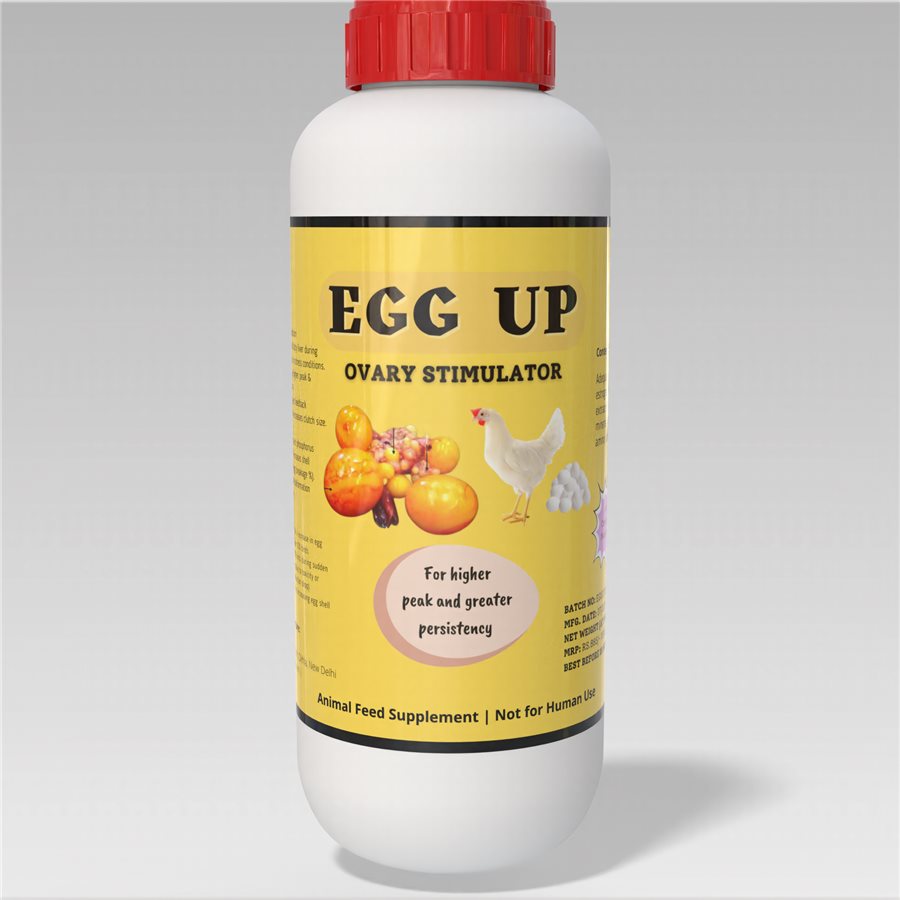
Egg Up is an egg production booster for laying hens, made with natural phytogenic components and supplemental nutrients. According to its label it increases egg production, reduces FCR and improves calcium and phosphorus use for stronger shells and less breakage.
Layer · egg production
Egg Up
An egg production booster for laying hens, made with natural phytogenic components and supplemental nutrients. It increases egg production, reduces FCR, improves calcium and phosphorus use for stronger shells and less breakage.
Dose: 1 g per litre water or 20 g per 100 birds for a moderate increase; 2 g per litre for a high increase; 30 to 35 g per 100 birds during a sudden production drop; 15 g per 100 birds for shell strength.
1 L ₹468MRP ₹885
Pyrocal B: calcium for shell and lameness
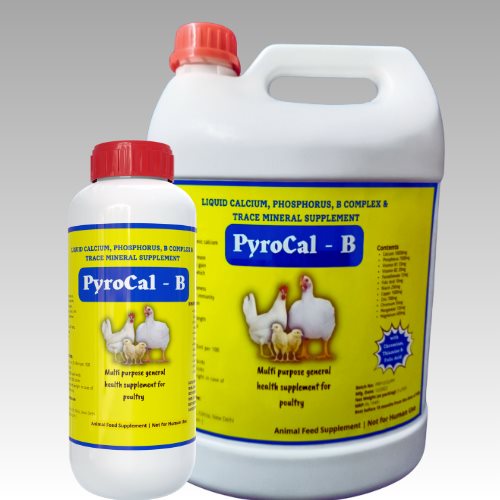
Pyrocal B is a liquid calcium tonic with phosphorus, trace minerals and B complex. It provides ionic calcium and phosphorus, reduces the chance of lameness, improves egg production and helps bring uniformity in the flock.
Calcium tonic
Pyrocal B
Liquid calcium, phosphorus, trace minerals and B complex. It provides ionic calcium and phosphorus, reduces the chance of lameness, improves egg production and helps bring uniformity in the flock.
Dose: 3 ml per litre of water or 40 ml per 100 birds.
1 L ₹468MRP ₹680
Which one should you use?
| Your situation | Start with |
|---|---|
| Production slipping, FCR rising, shell and breakage fine | Egg Up, with the basics fixed |
| Thin shells, breakage, lameness or tired hens | Pyrocal B |
| Sudden drop in production | Find the cause with your vet first; Egg Up at the production-drop dose can support recovery |
Prices and pack sizes may change, so confirm on WhatsApp before you order.
Common mistakes
- Cutting light hours in a laying flock. Production falls quickly.
- Changing feed suddenly. Intake and egg count both dip.
- Using a tonic instead of fixing the cause. Check light, feed, water and health first.
- Ignoring shell quality. Breakage is a loss and an early warning.
- Waiting too long on a sudden drop. Call your vet in the first two or three days.
Frequently asked questions
Why is egg production dropping in my layers? The common causes are short light hours, low feed intake, a calcium gap, water problems, stress, disease, age and parasites. Check them in that order.
How can I increase egg production in layers? Keep steady light, feed and water, give enough calcium, reduce stress and vaccinate on schedule. A supplement such as Egg Up can support production on top of that.
What is the dose of Egg Up? 1 g per litre of water or 20 g per 100 birds for a moderate increase; 2 g per litre for a high increase; 30 to 35 g per 100 birds during a sudden production drop; 15 g per 100 birds for shell strength.
What is the dose of Pyrocal B? 3 ml per litre of water or 40 ml per 100 birds.
What is the price? Egg Up 1 L is ₹468 (MRP ₹885) and Pyrocal B 1 L is ₹468 (MRP ₹680). Prices may change, so confirm on WhatsApp.
How can I see the full range? The IMN product guide lists each product by problem and by stage.
Also read: Egg Up · Pyrocal B · IMN product guide
सर्दी में लेयर में अंडा उत्पादन गिरना: कारण और उपाय
अंडा उत्पादन कुछ प्रतिशत गिर जाता है और फार्म मालिक चिंता में पड़ जाता है। लेइंग प्रतिशत गिरना एक संकेत है, निदान नहीं। इसके कारण सर्दी में दिन छोटे होना, फ़ीड इनटेक घटना, कैल्शियम की कमी, तनाव, पानी की समस्या या बीमारी हो सकते हैं। यह गाइड बताती है कि पहले क्या जाँचें और Egg Up व Pyrocal B कहाँ काम आते हैं।
पहले गिरावट को नापें
एक हफ़्ते का रोज़ का हेन-डे उत्पादन लिखें और उसी उम्र के ब्रीड स्टैंडर्ड से मिलाएँ। धीमी और छोटी गिरावट आम तौर पर मैनेजमेंट या न्यूट्रिशन की होती है। दो-तीन दिन में कई प्वाइंट की अचानक गिरावट तनाव, बीमारी या फ़ीड-पानी की गड़बड़ी बताती है, इसलिए पशु चिकित्सक को जल्दी बुलाएँ।
गिरावट के आम कारण
- छोटा दिन। लेयर को लगातार रोशनी चाहिए। दिन छोटे होने पर लाइटिंग प्रोग्राम न बदलें तो उत्पादन गिर सकता है। लेइंग फ़्लॉक में रोशनी के घंटे कभी कम न करें।
- कम फ़ीड इनटेक। फ़ीड बदलना, भारी या पाउडर जैसा मैश, खाली फ़ीडर या ठंडा शेड इनटेक घटा देते हैं, और साथ में अंडे के लिए न्यूट्रिएंट भी।
- कैल्शियम और फ़ॉस्फ़ोरस की कमी। पतला या नरम छिलका, ज़्यादा टूट-फूट और थकी मुर्गियाँ अक्सर कैल्शियम की ओर इशारा करती हैं। अच्छा कैल्शियम स्रोत दें और फ़ीड में मोटे ग्रिट या लाइमस्टोन का हिस्सा जाँचें।
- पानी की समस्या। मुर्गी वज़न में फ़ीड से लगभग दोगुना पानी पीती है, इसलिए बंद लाइन, गंदा पानी या बर्फ़ जैसी ठंडी सुबह उत्पादन घटा देती है।
- तनाव। वैक्सीनेशन, हैंडलिंग, शोर, शिफ़्टिंग, तापमान की अति और अचानक फ़ीड बदलना, सब उत्पादन में गिरावट के रूप में दिखते हैं।
- बीमारी। रेस्पिरेटरी बीमारी और कुछ वायरल इन्फ़ेक्शन उत्पादन और छिलके की गुणवत्ता घटा सकते हैं। खाँसी, लूज़ ड्रॉपिंग्स, फीके अंडे या बेडौल छिलके पर नज़र रखें।
- फ़्लॉक की उम्र और बॉडी वेट। उम्र के साथ उत्पादन स्वाभाविक रूप से घटता है। कम वज़न की पुलेट अपनी पीक तक नहीं पहुँचती।
- परजीवी। जूँ, माइट या कीड़े मुर्गी को कमज़ोर करते हैं और लेइंग घटाते हैं।
सरल चेकलिस्ट
| क्या देखें | क्या करें |
|---|---|
| रोशनी | लाइटिंग प्रोग्राम स्थिर रखें, लेइंग में घंटे कम न करें। |
| फ़ीड इनटेक | रोज़ फ़ीड जाँचें, फ़ीडर भरे रखें, फ़ीड अचानक न बदलें। |
| कैल्शियम और छिलका | छिलके की गुणवत्ता और टूट-फूट देखें, फ़ीड में कैल्शियम और ग्रिट पक्का करें। |
| पानी | लाइन और टंकी साफ़ रखें, गरमी में ठंडा और सर्दी में बर्फ़ जैसा नहीं। |
| तनाव | वैक्सीनेशन और हैंडलिंग शांति से करें, रूटीन तय रखें। |
| सेहत | खाँसी, लूज़ ड्रॉपिंग्स और अंडे की गुणवत्ता देखें, डॉक्टर को जल्दी बुलाएँ। |
| परजीवी | पक्षी और शेड में माइट और जूँ देखें, समय पर डीवर्मिंग करें। |
पहले बुनियादी चीज़ें ठीक करें। सप्लीमेंट वहीं सबसे अच्छा चलता है जहाँ रोशनी, फ़ीड और पानी सही हों, वह मैनेजमेंट की गलती नहीं ढक सकता।
Egg Up: उत्पादन और छिलके के लिए सहारा
Egg Up लेयर के लिए अंडा उत्पादन बढ़ाने वाला सप्लीमेंट है, जो प्राकृतिक फ़ाइटोजेनिक घटकों और पूरक पोषक तत्वों से बना है। लेबल के अनुसार यह अंडा उत्पादन बढ़ाता है, FCR घटाता है और कैल्शियम व फ़ॉस्फ़ोरस का बेहतर उपयोग कराकर छिलका मज़बूत और टूट-फूट कम करता है।
लेयर · अंडा उत्पादन
Egg Up
लेयर मुर्गियों के लिए अंडा उत्पादन बढ़ाने वाला प्रोडक्ट: प्राकृतिक phytogenic तत्वों और पोषक तत्वों के साथ। अंडा उत्पादन बढ़ाता है, FCR घटाता है, कैल्शियम और फॉस्फोरस का बेहतर उपयोग कर खोल मज़बूत करता है और अंडा टूटना घटाता है।
मात्रा: मध्यम बढ़त के लिए 1 ग्राम प्रति लीटर पानी या 20 ग्राम प्रति 100 पक्षी; ज़्यादा बढ़त के लिए 2 ग्राम प्रति लीटर; अचानक उत्पादन गिरने पर 30 से 35 ग्राम प्रति 100 पक्षी; खोल की मज़बूती के लिए 15 ग्राम प्रति 100 पक्षी।
1 L ₹468MRP ₹885
Pyrocal B: छिलके और लंगड़ेपन के लिए कैल्शियम
Pyrocal B लिक्विड कैल्शियम टॉनिक है, जिसमें फ़ॉस्फ़ोरस, ट्रेस मिनरल और B कॉम्प्लेक्स हैं। यह आयनिक कैल्शियम और फ़ॉस्फ़ोरस देता है, लंगड़ेपन की संभावना घटाता है, अंडा उत्पादन सुधारता है और फ़्लॉक में एकरूपता लाने में मदद करता है।
कैल्शियम टॉनिक
Pyrocal B
लिक्विड कैल्शियम, फॉस्फोरस, ट्रेस मिनरल और B कॉम्प्लेक्स। आयनिक कैल्शियम और फॉस्फोरस देता है, लंगड़ापन का ख़तरा घटाता है, अंडा उत्पादन सुधारता है और झुंड में एकरूपता लाने में मदद करता है।
मात्रा: 3 मिली प्रति लीटर पानी या 40 मिली प्रति 100 पक्षी।
1 L ₹468MRP ₹680
कौन सा चुनें?
| आपकी स्थिति | शुरू करें |
|---|---|
| उत्पादन घट रहा है, FCR बढ़ रहा है, छिलका और टूट-फूट ठीक | Egg Up, बुनियादी बातें ठीक करके |
| पतला छिलका, टूट-फूट, लंगड़ापन या थकी मुर्गियाँ | Pyrocal B |
| अचानक गिरावट | पहले डॉक्टर से कारण पता करें; Egg Up का उत्पादन गिरावट वाला डोज़ रिकवरी में सहायक हो सकता है |
कीमत और पैक बदल सकते हैं, इसलिए ऑर्डर से पहले WhatsApp पर पक्का कर लें।
आम गलतियाँ
- लेइंग फ़्लॉक में रोशनी के घंटे घटाना। उत्पादन तेज़ी से गिरता है।
- फ़ीड अचानक बदलना। इनटेक और अंडे दोनों गिरते हैं।
- कारण ठीक करने की जगह टॉनिक देना। पहले रोशनी, फ़ीड, पानी और सेहत जाँचें।
- छिलके की गुणवत्ता अनदेखी करना। टूट-फूट नुकसान भी है और शुरुआती चेतावनी भी।
- अचानक गिरावट पर देर करना। पहले दो-तीन दिन में डॉक्टर को बुलाएँ।
अक्सर पूछे जाने वाले सवाल
मेरी लेयर में अंडा उत्पादन क्यों गिर रहा है? आम कारण हैं रोशनी के कम घंटे, कम फ़ीड इनटेक, कैल्शियम की कमी, पानी की समस्या, तनाव, बीमारी, उम्र और परजीवी। इन्हें इसी क्रम में जाँचें।
लेयर में अंडा उत्पादन कैसे बढ़ाएँ? रोशनी, फ़ीड और पानी स्थिर रखें, पर्याप्त कैल्शियम दें, तनाव घटाएँ और समय पर वैक्सीनेशन करें। इसके ऊपर Egg Up जैसा सप्लीमेंट उत्पादन में सहायक हो सकता है।
Egg Up की मात्रा क्या है? सामान्य बढ़ोतरी के लिए 1 ग्राम प्रति लीटर पानी या 20 ग्राम प्रति 100 पक्षी; ज़्यादा बढ़ोतरी के लिए 2 ग्राम प्रति लीटर; अचानक उत्पादन गिरने पर 30 से 35 ग्राम प्रति 100 पक्षी; छिलके की मज़बूती के लिए 15 ग्राम प्रति 100 पक्षी।
Pyrocal B की मात्रा क्या है? 3 मिली प्रति लीटर पानी या 40 मिली प्रति 100 पक्षी।
कीमत क्या है? Egg Up 1 लीटर ₹468 (MRP ₹885) और Pyrocal B 1 लीटर ₹468 (MRP ₹680)। कीमत बदल सकती है, WhatsApp पर पक्का करें।
पूरी रेंज कहाँ देखें? IMN प्रोडक्ट गाइड में हर प्रोडक्ट समस्या और अवस्था के हिसाब से है।
यह भी पढ़ें: Egg Up · Pyrocal B · IMN प्रोडक्ट गाइड
Sardi me layer me anda utpadan girna: karan aur upay
Anda utpadan kuch percent gir jaata hai aur farm malik chinta me pad jaata hai. Laying percentage girna ek sanket hai, nidan nahi. Iske karan sardi me din chhote hona, feed intake ghatna, calcium ki kami, tanav, paani ki samasya ya bimari ho sakte hain. Yeh guide batati hai ki pehle kya jaanchein aur Egg Up va Pyrocal B kahan kaam aate hain.
Pehle girawat ko naapein
Ek hafte ka roz ka hen-day utpadan likhein aur usi umr ke breed standard se milayein. Dheemi aur chhoti girawat aam taur par management ya nutrition ki hoti hai. Do-teen din me kai point ki achanak girawat tanav, bimari ya feed-paani ki gadbadi batati hai, isliye pashu chikitsak ko jaldi bulayein.
Girawat ke aam karan
- Chhota din. Layer ko lagatar roshni chahiye. Din chhote hone par lighting program na badlein to utpadan gir sakta hai. Laying flock me roshni ke ghante kabhi kam na karein.
- Kam feed intake. Feed badalna, bhaari ya powder jaisa mash, khali feeder ya thanda shed intake ghata dete hain, aur saath me ande ke liye nutrient bhi.
- Calcium aur phosphorus ki kami. Patla ya naram chhilka, zyada toot-phoot aur thaki murgiyan aksar calcium ki taraf ishara karti hain. Achha calcium source dein aur feed me mote grit ya limestone ka hissa jaanchein.
- Paani ki samasya. Murgi wazan me feed se lagbhag dugna paani peeti hai, isliye band line, ganda paani ya baraf jaisi thandi subah utpadan ghata deti hai.
- Tanav. Vaccination, handling, shor, shifting, tapman ki ati aur achanak feed badalna, sab utpadan me girawat ke roop me dikhte hain.
- Bimari. Respiratory bimari aur kuch viral infection utpadan aur chhilke ki gunvatta ghata sakte hain. Khansi, loose droppings, feeke ande ya bedaul chhilke par nazar rakhein.
- Flock ki umr aur body weight. Umr ke saath utpadan swabhavik roop se ghatta hai. Kam wazan ki pullet apni peak tak nahi pahunchti.
- Parjeevi. Joon, mite ya keede murgi ko kamzor karte hain aur laying ghatate hain.
Saral checklist
| Kya dekhein | Kya karein |
|---|---|
| Roshni | Lighting program sthir rakhein, laying me ghante kam na karein. |
| Feed intake | Roz feed jaanchein, feeder bhare rakhein, feed achanak na badlein. |
| Calcium aur chhilka | Chhilke ki gunvatta aur toot-phoot dekhein, feed me calcium aur grit pakka karein. |
| Paani | Line aur tanki saaf rakhein, garmi me thanda aur sardi me baraf jaisa nahi. |
| Tanav | Vaccination aur handling shanti se karein, routine tay rakhein. |
| Sehat | Khansi, loose droppings aur ande ki gunvatta dekhein, doctor ko jaldi bulayein. |
| Parjeevi | Pakshi aur shed me mite aur joon dekhein, samay par deworming karein. |
Pehle buniyadi cheezein theek karein. Supplement wahin sabse achha chalta hai jahan roshni, feed aur paani sahi hon, woh management ki galti nahi dhak sakta.
Egg Up: utpadan aur chhilke ke liye sahara
Egg Up layer ke liye anda utpadan badhane wala supplement hai, jo prakritik phytogenic ghatkon aur poorak poshak tatvon se bana hai. Label ke anusaar yeh anda utpadan badhata hai, FCR ghatata hai aur calcium va phosphorus ka behtar upyog karakar chhilka majboot aur toot-phoot kam karta hai.
Layer · ande ka utpadan
Egg Up
Layer murgiyon ke liye ande ka utpadan badhane wala product: prakritik phytogenic tatvon aur poshak tatvon ke saath. Ande ka utpadan badhata hai, FCR ghatata hai, calcium aur phosphorus ka behtar upyog kar khol majboot karta hai aur anda tootna ghatata hai.
Matra: Madhyam badhat ke liye 1 g prati litre paani ya 20 g prati 100 pakshi; zyada badhat ke liye 2 g prati litre; achanak utpadan girne par 30 se 35 g prati 100 pakshi; khol ki majbooti ke liye 15 g prati 100 pakshi.
1 L ₹468MRP ₹885
Pyrocal B: chhilke aur langdepan ke liye calcium
Pyrocal B liquid calcium tonic hai, jisme phosphorus, trace mineral aur B complex hain. Yeh ionic calcium aur phosphorus deta hai, langdepan ki sambhavna ghatata hai, anda utpadan sudharta hai aur flock me ekroopta laane me madad karta hai.
Calcium tonic
Pyrocal B
Liquid calcium, phosphorus, trace mineral aur B complex. Ionic calcium aur phosphorus deta hai, langdapan ka khatra ghatata hai, ande ka utpadan sudharta hai aur jhund me ekrupta laane me madad karta hai.
Matra: 3 ml prati litre paani ya 40 ml prati 100 pakshi.
1 L ₹468MRP ₹680
Kaun sa chunein?
| Aapki sthiti | Shuru karein |
|---|---|
| Utpadan ghat raha hai, FCR badh raha hai, chhilka aur toot-phoot theek | Egg Up, buniyadi baatein theek karke |
| Patla chhilka, toot-phoot, langdapan ya thaki murgiyan | Pyrocal B |
| Achanak girawat | Pehle doctor se karan pata karein; Egg Up ka utpadan girawat wala dose recovery me sahayak ho sakta hai |
Keemat aur pack badal sakte hain, isliye order se pehle WhatsApp par pakka kar lein.
Aam galtiyan
- Laying flock me roshni ke ghante ghatana. Utpadan tezi se girta hai.
- Feed achanak badalna. Intake aur ande dono girte hain.
- Karan theek karne ki jagah tonic dena. Pehle roshni, feed, paani aur sehat jaanchein.
- Chhilke ki gunvatta andekhi karna. Toot-phoot nuksan bhi hai aur shuruaati chetavani bhi.
- Achanak girawat par der karna. Pehle do-teen din me doctor ko bulayein.
Aksar puchhe jaane wale sawaal
Meri layer me anda utpadan kyun gir raha hai? Aam karan hain roshni ke kam ghante, kam feed intake, calcium ki kami, paani ki samasya, tanav, bimari, umr aur parjeevi. Inhe isi kram me jaanchein.
Layer me anda utpadan kaise badhayein? Roshni, feed aur paani sthir rakhein, paryapt calcium dein, tanav ghatayein aur samay par vaccination karein. Iske upar Egg Up jaisa supplement utpadan me sahayak ho sakta hai.
Egg Up ki matra kya hai? Saamanya badhottari ke liye 1 gram prati litre paani ya 20 gram prati 100 pakshi; zyada badhottari ke liye 2 gram prati litre; achanak utpadan girne par 30 se 35 gram prati 100 pakshi; chhilke ki majbooti ke liye 15 gram prati 100 pakshi.
Pyrocal B ki matra kya hai? 3 ml prati litre paani ya 40 ml prati 100 pakshi.
Keemat kya hai? Egg Up 1 litre ₹468 (MRP ₹885) aur Pyrocal B 1 litre ₹468 (MRP ₹680). Keemat badal sakti hai, WhatsApp par pakka karein.
Poori range kahan dekhein? IMN product guide me har product samasya aur avastha ke hisaab se hai.
Yeh bhi padhiye: Egg Up · Pyrocal B · IMN product guide