A woman farmer from Shikarpura village in the Nalchha block of Dhar district, Madhya Pradesh, has turned Kadaknath chicken rearing into a steady source of income. ETV Bharat reported on 14 October 2026 that Durgabai raises the black native birds for about six months and sells each one for ₹1,500 to ₹2,000. She says the money helped her buy a tractor and pay for her children’s education. She has been keeping Kadaknath for about 10 years, with chicks and feed from Krishi Vigyan Kendra (KVK) Dhar.
Key facts
| Item | What the report says |
|---|---|
| Farmer | Durgabai, Shikarpura village, Nalchha block, Dhar district, Madhya Pradesh |
| Years rearing Kadaknath | About 10 years (she reared goats before that) |
| Source of chicks and feed | Krishi Vigyan Kendra (KVK) Dhar |
| Rearing period before sale | About 6 months |
| Selling price | ₹1,500 to ₹2,000 per bird |
| What the income paid for | A tractor and her children’s education |
| Recognition | Honoured at events in Bhopal, Gwalior and elsewhere |
| Expert quoted | Dr. S.S. Chauhan, senior scientist and head, KVK Dhar |
Why Kadaknath is catching on in Dhar
Kadaknath is a native Indian breed linked to the tribal belt of Jhabua and Dhar in western Madhya Pradesh, where families have kept it for generations. Its feathers, skin, flesh and even bones are dark, and buyers value its distinct taste. The breed is widely believed to have lower fat and good iron in its meat, though the report notes that proper scientific data is needed to back such comparisons. “Jhabua Kadaknath” also carries a Geographical Indication (GI) tag.
According to the report, more farmers in Dhar villages near Jhabua are now keeping Kadaknath alongside their crops. Dr. S.S. Chauhan of KVK Dhar says interest in the breed is growing. The KVK trains farmers in goat rearing, poultry and other activities so they can build extra income next to farming, and earlier efforts under the ARYA scheme also aimed to link farmers to such livelihoods.
What it means for small poultry farmers
- Premium price per bird: a Kadaknath sells for far more than an ordinary broiler, so even a small flock can bring useful cash.
- Slow growth, longer wait: the birds take months, not weeks, to reach sale. Your money and feed are tied up longer, and losses from disease or predators hurt more.
- Market is the real risk: the report itself says that breed protection, reliable chick supply, a proper market and a clear look at farmers’ real profit are needed before this can grow at scale. A high price only helps if you have a buyer.
How to start Kadaknath or desi bird rearing: what to do now
- Get trained first. Visit your nearest KVK or the district veterinary office. Many run short courses on backyard poultry and can tell you about current government schemes.
- Buy chicks from a trusted source. Get pure Kadaknath chicks from a KVK, a government hatchery or a veterinary university farm. Market birds sold as “Kadaknath” are often crosses. Ask whether the chicks got Marek’s vaccine at the hatchery.
- Housing: a simple, dry, well-ventilated shed with a raised or well-drained floor and clean litter. Close the birds in at night with wire mesh to keep out dogs, cats, snakes and wild animals. Give young chicks warmth (brooding) in the first weeks.
- Feed and water: birds can scavenge in the yard, but they still need regular grain or a balanced desi bird feed, plus clean water at all times. Growing chicks need starter feed until they are strong.
- Vaccination basics: follow your vet’s schedule. The main ones are Marek’s (day one at the hatchery), Ranikhet (Newcastle disease, ND) with boosters, and fowl pox. Deworm regularly and keep sick birds apart.
- Keep records: write down chick cost, feed, medicine and deaths, so you know your real profit per bird.
- Plan your market before you buy: line up local buyers, hotels and dhabas, fairs, and farmer groups or cooperatives. Sell live birds directly where you can, and consider selling eggs and chicks too.
Immunity booster
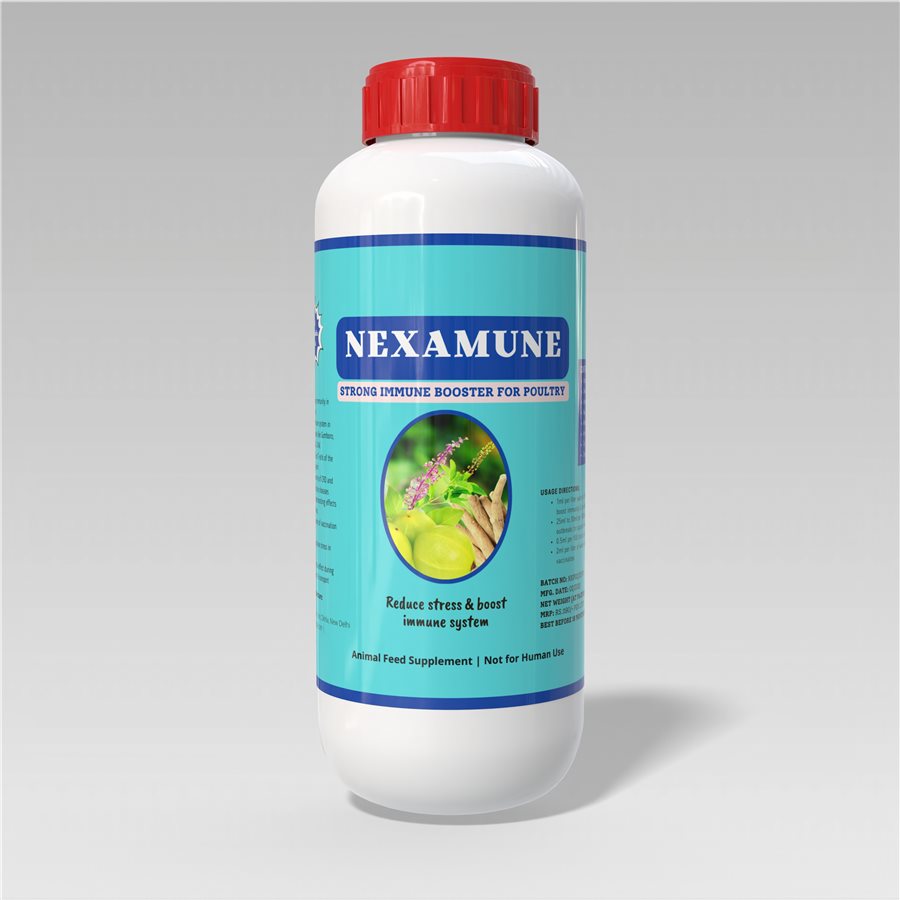
Nexamune
Vitamin E, selenium, amla, tulsi and ashwagandha extracts, vitamin C, vitamin D and niacin: an antioxidant shield that supports immunity. Supports the immune system against diseases such as IB, ND, Gumboro, IBH and LPAI, reduces the severity of CRD and other breathing problems, and helps lower the chance of vaccine failure.
Dose: for immunity and stress, 1 ml per litre of water or 15 ml per 100 birds; before and after vaccination, 2 ml per litre of water; during a viral disease outbreak, 25-30 ml per 100 birds.
1 L ₹644MRP ₹1,190
FAQ
How much did Durgabai get for each Kadaknath bird?
The report says she sells each bird for ₹1,500 to ₹2,000 after rearing it for about six months.
Where can I get genuine Kadaknath chicks?
Durgabai got her chicks and feed from KVK Dhar. Ask your nearest KVK, government hatchery or animal husbandry department for pure chicks and training.
Does Kadaknath need vaccination like other chickens?
Yes. Desi birds also get Marek’s disease and Ranikhet. Vaccinate as your vet advises and keep the shed clean and dry.
Source: ETV Bharat (Hindi), 14 Oct 2026. Written by the IMN Pyrophos team in our own words.
कड़कनाथ पालन से कामयाबी: धार की महिला किसान एक मुर्गा ₹1,500-2,000 में बेचती हैं, ट्रैक्टर खरीदा (अक्टूबर 2026)
मध्य प्रदेश के धार ज़िले के नालछा ब्लॉक के शिकारपुरा गाँव की एक महिला किसान ने कड़कनाथ मुर्गी पालन को कमाई का पक्का ज़रिया बना लिया है। ETV Bharat की 14 अक्टूबर 2026 की रिपोर्ट के अनुसार दुर्गाबाई इन काले देसी पक्षियों को करीब छह महीने पालती हैं और हर पक्षी ₹1,500 से ₹2,000 में बेचती हैं। उनका कहना है कि इसी कमाई से उन्होंने ट्रैक्टर खरीदा और बच्चों की पढ़ाई का खर्च उठाया। वे लगभग 10 साल से कड़कनाथ पाल रही हैं, और चूज़े व दाना उन्हें कृषि विज्ञान केंद्र (KVK) धार से मिला।
मुख्य बातें
| विषय | रिपोर्ट क्या कहती है |
|---|---|
| किसान | दुर्गाबाई, गाँव शिकारपुरा, ब्लॉक नालछा, ज़िला धार, मध्य प्रदेश |
| कड़कनाथ पालन कितने साल से | लगभग 10 साल (इससे पहले बकरी पालन करती थीं) |
| चूज़े और दाना कहाँ से | कृषि विज्ञान केंद्र (KVK) धार |
| बेचने से पहले पालने का समय | लगभग 6 महीने |
| बिक्री भाव | ₹1,500 से ₹2,000 प्रति पक्षी |
| कमाई का इस्तेमाल | ट्रैक्टर और बच्चों की पढ़ाई |
| सम्मान | भोपाल, ग्वालियर और दूसरी जगहों के कार्यक्रमों में सम्मानित |
| विशेषज्ञ | डॉ. एस.एस. चौहान, वरिष्ठ वैज्ञानिक एवं प्रमुख, KVK धार |
धार में कड़कनाथ क्यों बढ़ रहा है
कड़कनाथ एक देसी भारतीय नस्ल है, जो पश्चिमी मध्य प्रदेश के झाबुआ और धार के आदिवासी इलाके से जुड़ी है, जहाँ परिवार पीढ़ियों से इसे पालते आए हैं। इसके पंख, चमड़ी, मांस और हड्डियाँ तक काली होती हैं, और खरीदार इसके अलग स्वाद को पसंद करते हैं। आम धारणा है कि इसके मांस में चर्बी कम और आयरन अच्छा होता है, हालाँकि रिपोर्ट कहती है कि ऐसी तुलना के लिए ठोस वैज्ञानिक आँकड़ों की ज़रूरत है। “झाबुआ कड़कनाथ” को भौगोलिक संकेत (GI) टैग भी मिला हुआ है।
रिपोर्ट के अनुसार झाबुआ से लगे धार के गाँवों में अब ज़्यादा किसान खेती के साथ कड़कनाथ पाल रहे हैं। KVK धार के डॉ. एस.एस. चौहान कहते हैं कि इस नस्ल में किसानों की रुचि बढ़ रही है। KVK किसानों को बकरी पालन, मुर्गी पालन और दूसरे कामों की ट्रेनिंग देता है, ताकि खेती के साथ अतिरिक्त आमदनी बने। पहले आर्या (ARYA) योजना के तहत भी किसानों को ऐसी आजीविका से जोड़ने की कोशिश हुई थी।
छोटे मुर्गी पालकों के लिए इसका मतलब
- हर पक्षी का ऊँचा दाम: कड़कनाथ आम ब्रॉयलर से कहीं ज़्यादा दाम में बिकता है, इसलिए छोटा झुंड भी अच्छी नकदी दे सकता है।
- धीमी बढ़त, लंबा इंतज़ार: पक्षी बिकने लायक होने में हफ़्ते नहीं, महीने लेते हैं। पैसा और दाना ज़्यादा दिन फँसा रहता है, और बीमारी या जंगली जानवरों से नुकसान ज़्यादा चुभता है।
- असली जोखिम बाज़ार का है: रिपोर्ट खुद कहती है कि इसे बड़े पैमाने पर ले जाने के लिए नस्ल का संरक्षण, चूज़ों की भरोसेमंद उपलब्धता, सही बाज़ार और किसानों के असली मुनाफ़े पर ध्यान ज़रूरी है। ऊँचा दाम तभी काम का है जब खरीदार मिले।
कड़कनाथ या देसी मुर्गी पालन कैसे शुरू करें: अभी क्या करें
- पहले ट्रेनिंग लें। नज़दीकी KVK या ज़िला पशु चिकित्सा कार्यालय जाएँ। कई जगह बैकयार्ड मुर्गी पालन के छोटे कोर्स होते हैं, और वहीं मौजूदा सरकारी योजनाओं की जानकारी भी मिलती है।
- भरोसेमंद जगह से चूज़े लें। शुद्ध कड़कनाथ चूज़े KVK, सरकारी हैचरी या पशु चिकित्सा विश्वविद्यालय के फ़ार्म से लें। बाज़ार में “कड़कनाथ” के नाम पर अक्सर क्रॉस पक्षी बिकते हैं। पूछें कि हैचरी में चूज़ों को मारेक्स का टीका लगा है या नहीं।
- आवास: सादा, सूखा, हवादार शेड, ऊँचा या पानी न रुकने वाला फ़र्श और साफ़ बिछावन। रात में पक्षियों को जाली वाले बाड़े में बंद करें, ताकि कुत्ते, बिल्ली, साँप और जंगली जानवर न पहुँचें। शुरुआती हफ़्तों में छोटे चूज़ों को गर्मी (ब्रूडिंग) दें।
- दाना और पानी: पक्षी आँगन में चुग लेते हैं, फिर भी उन्हें नियमित अनाज या संतुलित देसी मुर्गी दाना और हर समय साफ़ पानी चाहिए। बढ़ते चूज़ों को मज़बूत होने तक स्टार्टर दाना दें।
- टीकाकरण की बुनियादी बातें: अपने पशु चिकित्सक का शेड्यूल मानें। मुख्य टीके हैं मारेक्स (हैचरी में पहले दिन), रानीखेत (न्यूकैसल डिज़ीज़, ND) बूस्टर के साथ, और फाउल पॉक्स। समय-समय पर पेट के कीड़ों की दवा दें और बीमार पक्षी अलग रखें।
- हिसाब लिखें: चूज़े, दाने, दवा का खर्च और मौतें लिखें, ताकि हर पक्षी पर असली मुनाफ़ा पता चले।
- खरीदने से पहले बाज़ार तय करें: स्थानीय खरीदार, होटल-ढाबे, मेले, और किसान समूह या सहकारी समितियों से बात कर लें। जहाँ हो सके ज़िंदा पक्षी सीधे बेचें, और अंडे व चूज़े बेचने के बारे में भी सोचें।
इम्यूनिटी बूस्टर
Nexamune
विटामिन E, सेलेनियम, आँवला, तुलसी और अश्वगंधा एक्सट्रैक्ट, विटामिन C, विटामिन D और नियासिन: इम्यूनिटी को सहारा देने वाली एंटीऑक्सीडेंट ढाल। IB, ND, गम्बोरो, IBH और LPAI जैसी बीमारियों में इम्यून सिस्टम को सहारा, CRD और साँस की दूसरी दिक्कतों की गंभीरता कम करता है, और टीका फेल होने की संभावना घटाने में मदद करता है।
मात्रा: इम्यूनिटी और तनाव के लिए 1 ml प्रति लीटर पानी या 15 ml प्रति 100 पक्षी; टीके से पहले और बाद 2 ml प्रति लीटर पानी; वायरल बीमारी फैलने पर 25–30 ml प्रति 100 पक्षी।
1 L ₹644MRP ₹1,190
अक्सर पूछे जाने वाले सवाल
दुर्गाबाई को एक कड़कनाथ का कितना दाम मिला?
रिपोर्ट के अनुसार वे करीब छह महीने पालने के बाद हर पक्षी ₹1,500 से ₹2,000 में बेचती हैं।
असली कड़कनाथ चूज़े कहाँ मिलेंगे?
दुर्गाबाई को चूज़े और दाना KVK धार से मिला। शुद्ध चूज़ों और ट्रेनिंग के लिए अपने नज़दीकी KVK, सरकारी हैचरी या पशुपालन विभाग से पूछें।
क्या कड़कनाथ को भी दूसरी मुर्गियों की तरह टीके चाहिए?
हाँ। देसी पक्षियों को भी मारेक्स और रानीखेत होता है। पशु चिकित्सक की सलाह से टीके लगवाएँ और शेड साफ़-सूखा रखें।
स्रोत: ETV Bharat (हिंदी), 14 अक्टूबर 2026। IMN Pyrophos टीम ने अपने शब्दों में लिखा।
Kadaknath palan se kamyabi: Dhar ki mahila kisan ek murga ₹1,500-2,000 me bechti hain, tractor kharida (October 2026)
Madhya Pradesh ke Dhar zile ke Nalchha block ke Shikarpura gaon ki ek mahila kisan ne Kadaknath murgi palan ko kamai ka pakka zariya bana liya hai. ETV Bharat ki 14 October 2026 ki report ke mutabik Durgabai in kaale desi pakshiyon ko kareeb chhah mahine paalti hain aur har pakshi ₹1,500 se ₹2,000 me bechti hain. Unka kehna hai ki isi kamai se unhone tractor kharida aur bachchon ki padhai ka kharcha uthaya. Wo lagbhag 10 saal se Kadaknath paal rahi hain, aur chooze aur daana unhe Krishi Vigyan Kendra (KVK) Dhar se mila.
Mukhya baatein
| Vishay | Report kya kehti hai |
|---|---|
| Kisan | Durgabai, gaon Shikarpura, block Nalchha, zila Dhar, Madhya Pradesh |
| Kadaknath palan kitne saal se | Lagbhag 10 saal (isse pehle bakri palan karti thin) |
| Chooze aur daana kahan se | Krishi Vigyan Kendra (KVK) Dhar |
| Bechne se pehle paalne ka samay | Lagbhag 6 mahine |
| Bikri bhaav | ₹1,500 se ₹2,000 prati pakshi |
| Kamai ka istemaal | Tractor aur bachchon ki padhai |
| Samman | Bhopal, Gwalior aur doosri jagahon ke karyakramon me sammanit |
| Visheshagya | Dr. S.S. Chauhan, senior vaigyanik aur pramukh, KVK Dhar |
Dhar me Kadaknath kyon badh raha hai
Kadaknath ek desi Bharatiya nasl hai, jo pashchimi Madhya Pradesh ke Jhabua aur Dhar ke adivasi ilaake se judi hai, jahan parivaar peedhiyon se ise paalte aaye hain. Iske pankh, chamdi, maans aur haddiyan tak kaali hoti hain, aur kharidaar iska alag swaad pasand karte hain. Aam dharna hai ki iske maans me charbi kam aur iron achha hota hai, halaanki report kehti hai ki aisi tulna ke liye thos vaigyanik aankdon ki zaroorat hai. “Jhabua Kadaknath” ko GI (bhaugolik sanket) tag bhi mila hua hai.
Report ke mutabik Jhabua se lage Dhar ke gaon me ab zyada kisan kheti ke saath Kadaknath paal rahe hain. KVK Dhar ke Dr. S.S. Chauhan kehte hain ki is nasl me kisanon ki ruchi badh rahi hai. KVK kisanon ko bakri palan, murgi palan aur doosre kaamon ki training deta hai, taaki kheti ke saath extra aamdani bane. Pehle ARYA yojana ke tahat bhi kisanon ko aisi aajeevika se jodne ki koshish hui thi.
Chhote murgi paalakon ke liye iska matlab
- Har pakshi ka ooncha daam: Kadaknath aam broiler se kahin zyada daam me bikta hai, isliye chhota jhund bhi achhi nakdi de sakta hai.
- Dheemi badhat, lamba intezaar: pakshi bikne laayak hone me hafte nahi, mahine lete hain. Paisa aur daana zyada din phansa rehta hai, aur beemari ya jangli jaanwaron se nuksaan zyada chubhta hai.
- Asli jokhim bazaar ka hai: report khud kehti hai ki ise bade paimaane par le jaane ke liye nasl ka sanrakshan, choozon ki bharosemand uplabdhta, sahi bazaar aur kisanon ke asli munafe par dhyaan zaroori hai. Ooncha daam tabhi kaam ka hai jab kharidaar mile.
Kadaknath ya desi murgi palan kaise shuru karein: abhi kya karein
- Pehle training lein. Nazdeeki KVK ya zila pashu chikitsa karyalay jaiye. Kai jagah backyard murgi palan ke chhote course hote hain, aur wahin maujooda sarkari yojanaon ki jaankari bhi milti hai.
- Bharosemand jagah se chooze lein. Shuddh Kadaknath chooze KVK, sarkari hatchery ya pashu chikitsa vishwavidyalaya ke farm se lein. Bazaar me “Kadaknath” ke naam par aksar cross pakshi bikte hain. Poochhiye ki hatchery me choozon ko Marek’s ka teeka laga hai ya nahi.
- Rehne ki jagah: saada, sookha, hawadaar shed, ooncha ya paani na rukne wala farsh aur saaf bichhawan. Raat me pakshiyon ko jaali wale baade me band karein, taaki kutte, billi, saanp aur jangli jaanwar na pahunchein. Shuru ke hafton me chhote choozon ko garmi (brooding) dein.
- Daana aur paani: pakshi aangan me chug lete hain, phir bhi unhe niyamit anaaj ya santulit desi murgi daana aur har samay saaf paani chahiye. Badhte choozon ko mazboot hone tak starter daana dein.
- Teekakaran ki buniyaadi baatein: apne pashu doctor ka schedule maaniye. Mukhya teeke hain Marek’s (hatchery me pehle din), Ranikhet (Newcastle disease, ND) booster ke saath, aur fowl pox. Samay-samay par pet ke keedon ki dawa dein aur beemar pakshi alag rakhein.
- Hisaab likhein: chooze, daane, dawa ka kharcha aur mautein likhein, taaki har pakshi par asli munafa pata chale.
- Kharidne se pehle bazaar tay karein: local kharidaar, hotel-dhaabe, mele, aur kisan samooh ya sahkari samitiyon se baat kar lein. Jahan ho sake zinda pakshi seedhe bechein, aur ande aur chooze bechne ke baare me bhi sochein.
Immunity booster
Nexamune
Vitamin E, selenium, amla, tulsi aur ashwagandha extract, vitamin C, vitamin D aur niacin: immunity ko sahara dene wali antioxidant dhaal. IB, ND, Gumboro, IBH aur LPAI jaisi beemariyon me immune system ko sahara, CRD aur saans ki doosri dikkaton ki gambhirta kam karta hai, aur teeka fail hone ki sambhavna ghatane me madad karta hai.
Matra: Immunity aur tanav ke liye 1 ml prati litre paani ya 15 ml prati 100 pakshi; teeke se pehle aur baad 2 ml prati litre paani; viral beemari failne par 25–30 ml prati 100 pakshi.
1 L ₹644MRP ₹1,190
Aksar poochhe jaane wale sawaal
Durgabai ko ek Kadaknath ka kitna daam mila?
Report ke mutabik wo kareeb chhah mahine paalne ke baad har pakshi ₹1,500 se ₹2,000 me bechti hain.
Asli Kadaknath chooze kahan milenge?
Durgabai ko chooze aur daana KVK Dhar se mila. Shuddh choozon aur training ke liye apne nazdeeki KVK, sarkari hatchery ya pashupalan vibhag se poochhiye.
Kya Kadaknath ko bhi doosri murgiyon ki tarah teeke chahiye?
Haan. Desi pakshiyon ko bhi Marek’s aur Ranikhet hota hai. Pashu doctor ki salah se teeke lagwaiye aur shed saaf-sookha rakhiye.
Srot: ETV Bharat (Hindi), 14 October 2026. IMN Pyrophos team ne apne shabdon me likha.