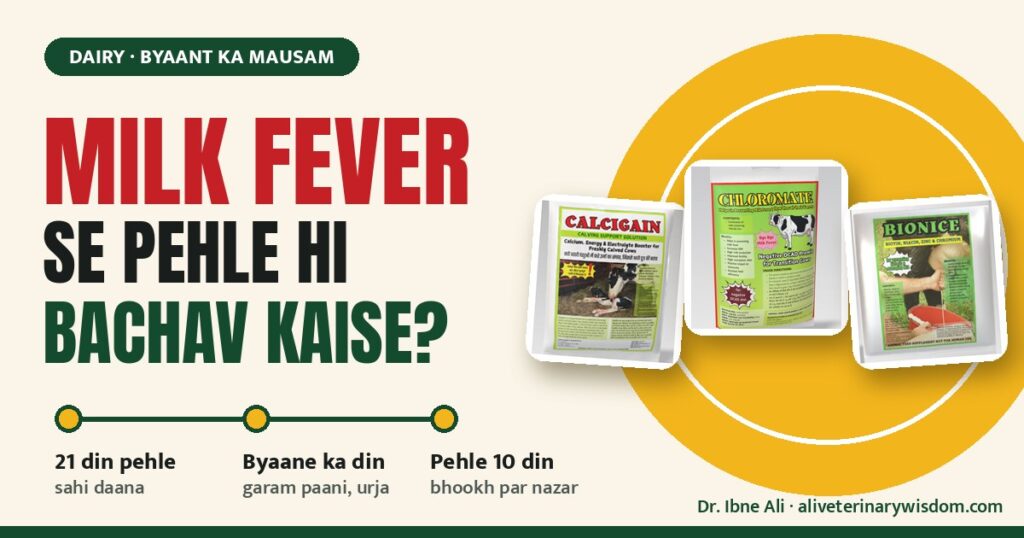
October to January is the main calving season on many Indian dairy farms, and it is also when farmers find a good cow or buffalo lying down a day after calving, unable to get up. In most cases this is milk fever (hypocalcaemia): a sudden fall of calcium in the blood. It is common, it can kill within hours if left alone, and it also leads to retained placenta, mastitis, ketosis and a poor lactation. The good news: most milk fever can be prevented with the right feeding in the last 3 weeks before calving and good care on calving day. Here is the plan, and when to call the vet urgently.
What is milk fever and why does it happen at calving?
Despite the name, milk fever is not a fever. Body temperature is usually normal or below normal. When a cow or buffalo starts making colostrum (khees) and milk, a large amount of calcium suddenly leaves the blood into the udder. Calcium is what muscles need to work, including the heart, the rumen and the uterus. If the body cannot pull calcium out of the bones and gut fast enough, blood calcium drops and the animal becomes weak and falls down.
It usually happens from a day before to 3 days after calving. The risk is higher in:
- High-yielding animals and those in their 3rd calving or later
- Crossbred cows such as HF and Jersey (see dairy breeds in India), and high-yielding buffaloes
- Animals that are too fat at calving
- Animals that had milk fever in the last calving
- Animals fed a lot of calcium in the dry period (more on this below)
Signs of milk fever: catch it early
Watch every animal closely for the first 72 hours after calving, including at night.
- Early: the animal is restless or excited, unsteady on its legs, trembling, and stops eating. It may shift weight from one hind leg to the other.
- Cold ears and cold legs, dry muzzle, and no dung passed.
- Lying down on the chest with the head turned back towards the flank, as if sleeping. This is the classic milk fever posture.
- Dull, sunken eyes, and the animal does not respond much to you.
- Late: the animal falls flat on its side, the belly swells (bloat), and it may go into a coma. Without treatment it can die within hours.
Some animals show only a mild form: slow eating, weak contractions, a retained placenta or a slow start to milk. This hidden low calcium also sets up later problems.
1. The dry period: do not overload calcium
This is the part most farmers get backwards. Many feed extra calcium, lime (chuna) or a calcium-heavy mineral mix in the last weeks, thinking it will prevent milk fever. In the dry period it does the opposite: when there is plenty of calcium in the feed, the body switches off its own system for drawing calcium from the bones. On calving day, when demand suddenly jumps, that system is asleep and blood calcium crashes.
- In the last 3 weeks, do not give extra calcium powders, lime or calcium tonics by mouth unless your vet says so.
- Do not feed only lush legume fodder like berseem or lucerne to dry animals in the last weeks. These are high in calcium and potassium. Mix them with dry fodder and other green fodder.
- Keep the dry animal in moderate body condition, not fat. A fat cow eats less after calving and is at more risk of milk fever and ketosis.
- Keep a balanced mineral mixture with a sensible dose, not a heavy calcium load. See what goes into a good mineral mixture and the buffalo mineral mixture guide.
- Do not starve the dry animal either. It still needs good fodder, clean water and a little concentrate in the last 3 weeks so the rumen is ready for the milking ration.
More on dry-period rations in our dairy feeding and nutrition guide.
2. Negative DCAD in simple words
DCAD means the balance between “salty” minerals that make the blood slightly alkaline (mainly potassium and sodium) and minerals that make it slightly acidic (mainly chloride and sulphur). Green fodder in winter is often high in potassium, which pushes the balance the wrong way.
A negative DCAD diet in the last 3 weeks tilts the blood a little to the acidic side. This wakes up the body’s calcium system, so the animal is already pulling calcium from its bones and gut before calving. On calving day it can keep up with the sudden demand. This is done with a special premix mixed in the feed, not with a home remedy.
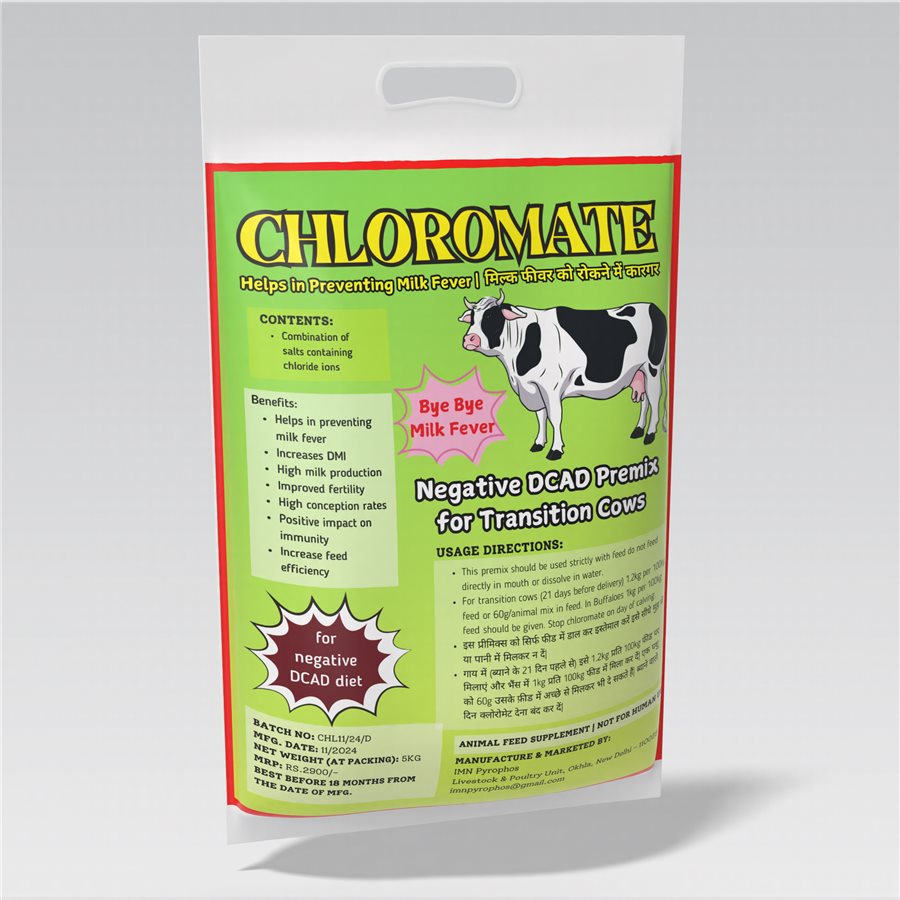
Before calving · last 21 days
Chloromate
Negative DCAD premix that helps prevent milk fever when fed in the last 21 days before calving.
Dose: cow: 60 g per animal per day in the close-up period (last 21 days), or 1.2 kg per 100 kg feed; buffalo: 1 kg per 100 kg feed. Mix it well into the feed only, never in water or by mouth. Stop on the day of calving. Chloromate does not mix with pellet feed, so mix it into wheat bran (chokar), maize, or crushed pellets. The best way is in a TMR.
1 kg ₹600MRP ₹800
Also available in a 5 kg pack (₹2,900) for larger farms. Mark the expected calving date on the wall or in your phone, and start 21 days before it.
3. Calving day: warmth, water, energy
- Keep the animal in a clean, dry, well-bedded calving pen with a non-slippery floor, away from cold wind. A good pen layout is in our dairy farm setup guide.
- Offer lukewarm water right after calving. A freshly calved animal is thirsty and tired, and in winter it will drink far more if the water is not ice-cold.
- Give energy and electrolytes to drink so appetite and rumen restart quickly.
- Offer good fodder that the animal likes, and let the calf drink colostrum within the first hour.
- Check on the animal every 2–3 hours for the first day and night. Milk fever often starts at night.
At calving
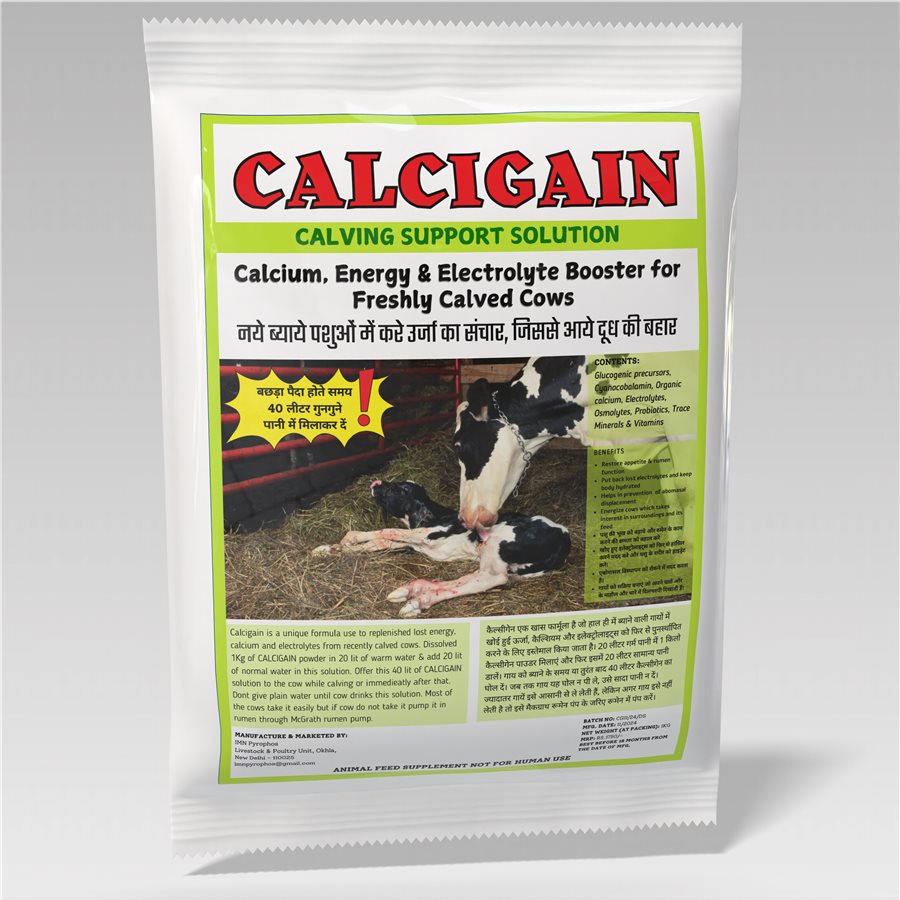
Calcigain
Energy, organic calcium and electrolyte drink for freshly calved cows and buffaloes, with B12, probiotics, trace minerals and vitamins. Restores appetite and rumen function, restores electrolytes and helps prevent abomasal displacement.
Use: dissolve 1 kg in 20 L warm water, add 20 L normal water, and offer the 40 L at or right after calving.
1 kg ₹850MRP ₹1,750
Important: offer any drink only to an animal that is standing and drinking on its own. Never pour liquid into the mouth of an animal that is down or cannot swallow. It can go into the lungs.
4. The first 10 days after calving: appetite and energy
After calving, milk rises faster than appetite. For the first weeks the animal gives out more energy in milk than it eats, and it burns body fat to fill the gap. If this goes too far, it gets ketosis (energy shortage) and fatty liver. Animals that had milk fever, retained placenta or were fat at calving are most at risk.
Signs of ketosis to watch for:
- Eats fodder but leaves the concentrate (daana)
- Milk drops suddenly after a good start
- Dull, losing weight fast, dung firm and dry
- A sweet, fruity smell on the breath or milk
What to do:
- Check feed intake every morning: did the animal finish its feed? Did it chew the cud?
- Increase concentrate slowly over 2–3 weeks, not all at once on calving day, so the rumen can adjust.
- Keep good fodder, fresh lukewarm water and a balanced mineral mixture in front of the animal all the time.
- Check the placenta has come out within about 12 hours, and watch for bad-smelling discharge.
After calving · early lactation
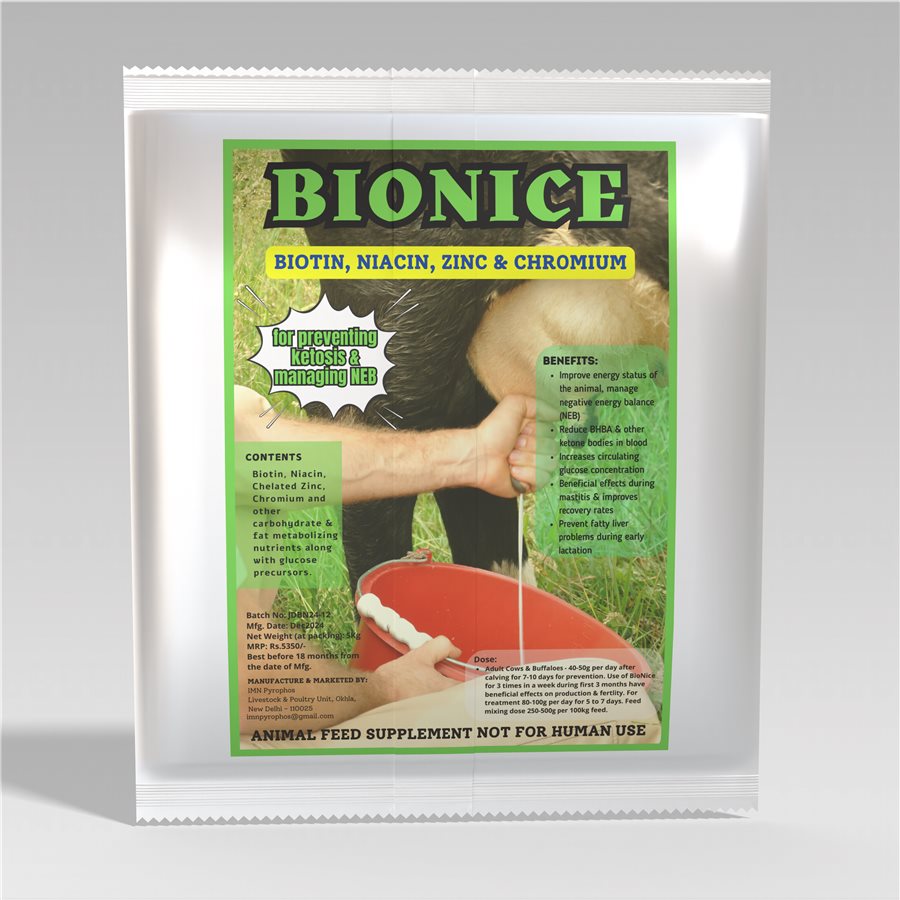
Bionice
Biotin, niacin, chelated zinc and chromium with glucose precursors. Supports cows and buffaloes in ketosis and negative energy balance and against fatty liver in early lactation, and helps in mastitis recovery.
Dose: prevention: 40–50 g per day for 7–10 days after calving. Treatment: 80–100 g per day for 5–7 days. In feed: 250–500 g per 100 kg feed.
1 kg ₹768MRP ₹1,100
For buffaloes calving in winter, also read how to increase buffalo milk in winter.
When to call the vet urgently
Call the vet straight away if:
- The animal cannot get up, or is lying with its head turned to its flank
- It is lying flat on its side, or the belly is swelling
- It is trembling, staggering or has cold ears and has stopped eating in the first 3 days after calving
- It got up after treatment but went down again
- The placenta has not come out, or there is fever and a bad-smelling discharge
- It stops eating or milk drops sharply in the first 2–3 weeks
While you wait for the vet: keep the animal resting on its chest, propped with straw bales or sacks, not flat on its side. Put soft dry bedding under it, keep it warm, and give nothing by mouth.
Do not give medicines or injections on guesswork. Diagnosis first, then treatment.
Milk fever prevention checklist
| When | What to do |
|---|---|
| Dry period | Moderate body condition, no extra calcium or lime, mixed fodder, balanced minerals |
| Last 21 days | Negative DCAD premix in feed, a little concentrate, mark the calving date |
| Calving day | Clean dry pen, lukewarm water, energy and electrolyte drink, colostrum to calf |
| First 3 days | Check every 2–3 hours, including night: standing, eating, cold ears? |
| Days 1–10 | Check appetite and cud every morning, raise concentrate slowly, energy support |
Also read: dairy feeding and nutrition · dairy farm setup · mineral mixture for cows · buffalo mineral mixture · buffalo milk in winter · dairy breeds in India
गाय-भैंस में मिल्क फीवर: ब्याने के समय बचाव कैसे करें
अक्टूबर से जनवरी तक कई डेयरी फार्मों पर ब्यांत का मुख्य मौसम होता है, और इसी समय किसान अक्सर देखते हैं कि अच्छी-भली गाय या भैंस ब्याने के एक दिन बाद बैठ गई और उठ नहीं पा रही। ज़्यादातर मामलों में यह मिल्क फीवर (सूतक ज्वर, हाइपोकैल्सीमिया) है: खून में कैल्शियम का अचानक गिर जाना। यह आम बीमारी है, बिना इलाज के कुछ घंटों में जान ले सकती है, और इसके बाद जेर न गिरना, थनैला, कीटोसिस और पूरे ब्यांत में कम दूध जैसी परेशानियाँ आती हैं। अच्छी बात यह है कि ब्याने से पहले आखिरी 3 हफ्ते सही खुराक और ब्याने के दिन अच्छी देखभाल से ज़्यादातर मिल्क फीवर रोका जा सकता है। पूरा प्लान, और डॉक्टर को तुरंत कब बुलाएँ, यहाँ पढ़ें।
मिल्क फीवर क्या है और ब्याने के समय ही क्यों होता है?
नाम में फीवर है, पर यह बुखार नहीं है। शरीर का तापमान आमतौर पर सामान्य या सामान्य से कम होता है। जब गाय-भैंस खीस और दूध बनाना शुरू करती है, तो खून का बहुत सारा कैल्शियम अचानक थन में चला जाता है। मांसपेशियों को काम करने के लिए कैल्शियम चाहिए, दिल, रुमेन और बच्चेदानी को भी। अगर शरीर हड्डियों और आँतों से जल्दी कैल्शियम नहीं खींच पाता, तो खून में कैल्शियम गिर जाता है और पशु कमज़ोर होकर गिर जाता है।
यह आमतौर पर ब्याने से एक दिन पहले से लेकर ब्याने के 3 दिन बाद तक होता है। खतरा ज़्यादा है:
- ज़्यादा दूध देने वाले पशुओं में और तीसरे या उसके बाद के ब्यांत में
- HF और जर्सी जैसी संकर गायों में (देखें भारत की डेयरी नस्लें), और ज़्यादा दूध वाली भैंसों में
- जो पशु ब्याने के समय बहुत मोटे हों
- जिन्हें पिछले ब्यांत में मिल्क फीवर हुआ हो
- जिन्हें सूखे समय में बहुत ज़्यादा कैल्शियम खिलाया गया हो (नीचे पढ़ें)
मिल्क फीवर के लक्षण: जल्दी पहचानें
ब्याने के बाद पहले 72 घंटे हर पशु पर कड़ी नज़र रखें, रात में भी।
- शुरुआत में: पशु बेचैन या उत्तेजित, पैरों पर लड़खड़ाता है, काँपता है और खाना छोड़ देता है। पिछले पैरों पर बार-बार वज़न बदलता है।
- कान और पैर ठंडे, थूथन सूखा, और गोबर नहीं करता।
- छाती के बल बैठा है और गर्दन मोड़ कर सिर पेट की तरफ (कोख की ओर) रखा है, जैसे सो रहा हो। यह मिल्क फीवर की खास पहचान है।
- आँखें सुस्त और धँसी हुई, पशु आपकी आवाज़ पर ज़्यादा ध्यान नहीं देता।
- आखिर में: पशु करवट लेकर पूरा लेट जाता है, पेट फूलने लगता है, और बेहोश हो सकता है। इलाज न मिले तो कुछ घंटों में मौत हो सकती है।
कुछ पशुओं में हल्का रूप ही दिखता है: धीरे खाना, ब्याते समय कमज़ोर ज़ोर, जेर न गिरना या दूध धीरे बढ़ना। यह छुपी हुई कैल्शियम की कमी भी बाद की परेशानियों की जड़ बनती है।
1. सूखा समय: कैल्शियम ज़्यादा न दें
यहीं ज़्यादातर किसान उल्टा कर बैठते हैं। आखिरी हफ्तों में मिल्क फीवर से बचाने के लिए ज़्यादा कैल्शियम, चूना या भारी कैल्शियम वाला मिनरल खिला देते हैं। सूखे समय में इसका उल्टा असर होता है: जब खुराक में भरपूर कैल्शियम मिलता है, तो शरीर हड्डियों से कैल्शियम निकालने का अपना सिस्टम बंद कर देता है। ब्याने के दिन जब ज़रूरत अचानक बढ़ती है, तब वह सिस्टम सोया रहता है और खून का कैल्शियम गिर जाता है।
- आखिरी 3 हफ्ते ऊपर से कैल्शियम पाउडर, चूना या कैल्शियम टॉनिक मुँह से न दें, जब तक डॉक्टर न कहे।
- सूखे पशु को आखिरी हफ्तों में सिर्फ बरसीम या ल्यूसर्न जैसा फलीदार हरा चारा न खिलाएँ। इनमें कैल्शियम और पोटैशियम ज़्यादा होता है। सूखे चारे और दूसरे हरे चारे के साथ मिलाकर दें।
- सूखे पशु को मध्यम शरीर में रखें, मोटा नहीं। मोटी गाय ब्याने के बाद कम खाती है और उसे मिल्क फीवर व कीटोसिस का खतरा ज़्यादा होता है।
- संतुलित मिनरल मिक्सचर सही मात्रा में दें, कैल्शियम का भारी बोझ नहीं। पढ़ें अच्छे मिनरल मिक्सचर में क्या होता है और भैंस का मिनरल मिक्सचर।
- सूखे पशु को भूखा भी न रखें। आखिरी 3 हफ्ते उसे अच्छा चारा, साफ पानी और थोड़ा दाना चाहिए, ताकि रुमेन दूध वाली खुराक के लिए तैयार रहे।
सूखे समय की खुराक के बारे में और जानकारी: डेयरी पशुओं का चारा और पोषण।
2. नेगेटिव DCAD आसान भाषा में
DCAD का मतलब है उन मिनरल का संतुलन जो खून को थोड़ा क्षारीय बनाते हैं (मुख्य रूप से पोटैशियम और सोडियम) और जो थोड़ा अम्लीय बनाते हैं (मुख्य रूप से क्लोराइड और सल्फर)। सर्दी के हरे चारे में अक्सर पोटैशियम ज़्यादा होता है, जो संतुलन को गलत तरफ ले जाता है।
आखिरी 3 हफ्ते नेगेटिव DCAD खुराक खून को थोड़ा अम्लीय तरफ झुका देती है। इससे शरीर का कैल्शियम सिस्टम जाग जाता है, और पशु ब्याने से पहले ही हड्डियों और आँतों से कैल्शियम लेने लगता है। ब्याने के दिन वह अचानक बढ़ी ज़रूरत पूरी कर पाता है। यह काम दाने में मिलाए जाने वाले खास प्रीमिक्स से होता है, घरेलू नुस्खे से नहीं।
ब्याने से पहले · आखिरी 21 दिन
Chloromate
नेगेटिव DCAD प्रीमिक्स, जो ब्याने से पहले आखिरी 21 दिन दाने में देने पर मिल्क फीवर से बचाव में मदद करता है। 5 किलो पैक ₹2,900।
मात्रा: गाय: क्लोज़-अप समय (ब्याने से पहले आखिरी 21 दिन) में रोज़ 60 ग्राम प्रति पशु, या 1.2 किलो प्रति 100 किलो दाना; भैंस: 1 किलो प्रति 100 किलो दाना। सिर्फ दाने में अच्छी तरह मिला कर खिलाएँ, पानी में या मुँह से कभी नहीं। ब्याने के दिन बंद कर दें। पैलेट फ़ीड में Chloromate नहीं मिलता, इसलिए चोकर, मक्का या चूरा किए हुए पैलेट में मिला कर दें। सबसे अच्छा तरीका TMR में देना है।
1 kg ₹600MRP ₹800
ब्याने की संभावित तारीख दीवार पर या फोन में लिख लें, और उससे 21 दिन पहले शुरू करें।
3. ब्याने का दिन: गर्मी, पानी, ऊर्जा
- पशु को साफ, सूखे, अच्छे बिछावन वाले ब्याने के बाड़े में रखें, फर्श फिसलन वाला न हो, ठंडी हवा से दूर। बाड़े का अच्छा डिज़ाइन हमारे लेख डेयरी फार्म सेटअप में देखें।
- ब्याने के तुरंत बाद गुनगुना पानी दें। ताज़ा ब्याया पशु प्यासा और थका होता है, और सर्दी में पानी बर्फ जैसा ठंडा न हो तो कहीं ज़्यादा पीता है।
- ऊर्जा और इलेक्ट्रोलाइट वाला घोल पिलाएँ, ताकि भूख और रुमेन जल्दी चालू हों।
- पशु को पसंद आने वाला अच्छा चारा दें, और बच्चे को पहले घंटे में खीस पिलाएँ।
- पहले दिन और रात हर 2–3 घंटे में पशु को देखें। मिल्क फीवर अक्सर रात में शुरू होता है।
ब्याने के समय सहारा
Calcigain
ताज़ा ब्याई गाय-भैंस के लिए ऊर्जा, ऑर्गेनिक कैल्शियम और इलेक्ट्रोलाइट का घोल। भूख और रुमेन का काम लौटाता है और जामा खिसकने (abomasal displacement) से बचाव में मदद करता है।
मात्रा: 1 किलो को 20 लीटर गर्म पानी में घोलें, 20 लीटर सादा पानी मिलाएँ, और 40 लीटर घोल ब्याते समय या तुरंत बाद दें।
1 kg ₹850MRP ₹1,750
ज़रूरी: कोई भी घोल सिर्फ उसी पशु को दें जो खड़ा है और खुद पी रहा है। जो पशु गिरा हुआ है या निगल नहीं पा रहा, उसके मुँह में कभी तरल न उड़ेलें। यह फेफड़ों में जा सकता है।
4. ब्याने के बाद पहले 10 दिन: भूख और ऊर्जा
ब्याने के बाद दूध, भूख से तेज़ी से बढ़ता है। पहले कुछ हफ्ते पशु जितनी ऊर्जा खाता है उससे ज़्यादा दूध में दे देता है, और कमी पूरी करने के लिए शरीर की चर्बी जलाता है। यह ज़्यादा हो जाए तो कीटोसिस (ऊर्जा की कमी) और फैटी लिवर हो जाता है। जिन्हें मिल्क फीवर हुआ, जेर रुकी या जो ब्याने पर मोटे थे, उन्हें सबसे ज़्यादा खतरा है।
कीटोसिस के लक्षण:
- चारा खाता है पर दाना छोड़ देता है
- अच्छी शुरुआत के बाद दूध अचानक गिर जाता है
- सुस्त, तेज़ी से वज़न घटना, गोबर सख्त और सूखा
- साँस या दूध में मीठी, फल जैसी गंध
क्या करें:
- हर सुबह खुराक देखें: पशु ने अपना दाना खत्म किया? जुगाली की?
- दाना 2–3 हफ्ते में धीरे-धीरे बढ़ाएँ, ब्याने के दिन एकदम नहीं, ताकि रुमेन संभल सके।
- अच्छा चारा, ताज़ा गुनगुना पानी और संतुलित मिनरल मिक्सचर हमेशा सामने रखें।
- देखें कि जेर लगभग 12 घंटे में गिर गई है, और बदबूदार स्राव पर नज़र रखें।
ब्याने के बाद · शुरुआती दूध
Bionice
बायोटिन, नियासिन, चिलेटेड ज़िंक और क्रोमियम, साथ में ग्लूकोज़ बनाने वाले तत्व। शुरुआती दूध के समय कीटोसिस (ऊर्जा की कमी) और फैटी लिवर में सहायक, और थनैला से उबरने में मदद करता है।
मात्रा: बचाव के लिए ब्याने के बाद 7–10 दिन तक 40–50 ग्राम प्रति दिन; इलाज में 80–100 ग्राम प्रति दिन 5–7 दिन; दाने में 250–500 ग्राम प्रति 100 किलो दाना।
1 kg ₹768MRP ₹1,100
सर्दी में ब्याने वाली भैंसों के लिए यह भी पढ़ें: सर्दी में भैंस का दूध कैसे बढ़ाएँ।
डॉक्टर को तुरंत कब बुलाएँ
तुरंत डॉक्टर को बुलाएँ अगर:
- पशु उठ नहीं पा रहा, या गर्दन मोड़ कर सिर कोख की तरफ रखे बैठा है
- करवट लेकर पूरा लेट गया है, या पेट फूल रहा है
- ब्याने के पहले 3 दिन में काँप रहा है, लड़खड़ा रहा है या कान ठंडे हैं और खाना छोड़ दिया है
- इलाज के बाद उठ गया था पर फिर गिर गया
- जेर नहीं गिरी, या बुखार और बदबूदार स्राव है
- पहले 2–3 हफ्ते में खाना छोड़ दे या दूध तेज़ी से गिर जाए
डॉक्टर के आने तक: पशु को छाती के बल बिठाए रखें, भूसे की गठरी या बोरी के सहारे, करवट पर पूरा न लेटने दें। नीचे नरम सूखा बिछावन रखें, गर्म रखें, और मुँह से कुछ न दें।
अंदाज़े से दवा या इंजेक्शन न दें। पहले जाँच, फिर इलाज।
मिल्क फीवर से बचाव की चेकलिस्ट
| कब | क्या करें |
|---|---|
| सूखा समय | मध्यम शरीर, ऊपर से कैल्शियम या चूना नहीं, मिला-जुला चारा, संतुलित मिनरल |
| आखिरी 21 दिन | दाने में नेगेटिव DCAD प्रीमिक्स, थोड़ा दाना, ब्याने की तारीख लिखें |
| ब्याने का दिन | साफ सूखा बाड़ा, गुनगुना पानी, ऊर्जा और इलेक्ट्रोलाइट घोल, बच्चे को खीस |
| पहले 3 दिन | हर 2–3 घंटे देखें, रात में भी: खड़ा है, खा रहा है, कान ठंडे तो नहीं? |
| दिन 1–10 | हर सुबह भूख और जुगाली देखें, दाना धीरे बढ़ाएँ, ऊर्जा का सहारा |
यह भी पढ़ें: डेयरी चारा और पोषण · डेयरी फार्म सेटअप · गाय का मिनरल मिक्सचर · भैंस का मिनरल मिक्सचर · सर्दी में भैंस का दूध · भारत की डेयरी नस्लें
Gaay-bhains me milk fever: byaane ke samay bachav kaise karein
October se January tak kai dairy farm par byaant ka mukhya mausam hota hai, aur isi samay kisan aksar dekhte hain ki achhi-bhali gaay ya bhains byaane ke ek din baad baith gayi aur uth nahi pa rahi. Zyadatar maamlon me ye milk fever (sootak jwar, hypocalcaemia) hai: khoon me calcium ka achanak gir jaana. Ye aam beemari hai, bina ilaaj ke kuch ghanton me jaan le sakti hai, aur iske baad jer na girna, thanaila, ketosis aur poore byaant me kam doodh jaisi pareshaniyan aati hain. Achhi baat ye hai ki byaane se pehle aakhri 3 hafte sahi khuraak aur byaane ke din achhi dekhbhal se zyadatar milk fever roka ja sakta hai. Poora plan, aur doctor ko turant kab bulayein, yahan padhiye.
Milk fever kya hai aur byaane ke samay hi kyon hota hai?
Naam me fever hai, par ye bukhaar nahi hai. Sharir ka taapmaan aam taur par normal ya normal se kam hota hai. Jab gaay-bhains khees aur doodh banana shuru karti hai, to khoon ka bahut saara calcium achanak than me chala jaata hai. Maaspeshiyon ko kaam karne ke liye calcium chahiye, dil, rumen aur bachchedaani ko bhi. Agar sharir haddiyon aur aanton se jaldi calcium nahi kheench paata, to khoon me calcium gir jaata hai aur pashu kamzor ho kar gir jaata hai.
Ye aam taur par byaane se ek din pehle se le kar byaane ke 3 din baad tak hota hai. Khatra zyada hai:
- Zyada doodh dene wale pashuon me aur teesre ya uske baad ke byaant me
- HF aur Jersey jaisi sankar gaayon me (dekhiye Bharat ki dairy nasle), aur zyada doodh wali bhainson me
- Jo pashu byaane ke samay bahut mote hon
- Jinhe pichhle byaant me milk fever hua ho
- Jinhe sookhe samay me bahut zyada calcium khilaya gaya ho (neeche padhiye)
Milk fever ke lakshan: jaldi pehchaniye
Byaane ke baad pehle 72 ghante har pashu par kadi nazar rakhiye, raat me bhi.
- Shuruaat me: pashu bechain ya uttejit, pairon par ladkhadata hai, kaanpta hai aur khana chhod deta hai. Pichhle pairon par baar-baar wazan badalta hai.
- Kaan aur pair thande, thoothan sookha, aur gobar nahi karta.
- Chhaati ke bal baitha hai aur gardan mod kar sir pet ki taraf (kokh ki or) rakha hai, jaise so raha ho. Ye milk fever ki khaas pehchaan hai.
- Aankhein sust aur dhansi hui, pashu aapki awaaz par zyada dhyan nahi deta.
- Aakhir me: pashu karwat le kar poora let jaata hai, pet phoolne lagta hai, aur behosh ho sakta hai. Ilaaj na mile to kuch ghanton me maut ho sakti hai.
Kuch pashuon me halka roop hi dikhta hai: dheere khana, byaate samay kamzor zor, jer na girna ya doodh dheere badhna. Ye chhupi hui calcium ki kami bhi baad ki pareshaniyon ki jad banti hai.
1. Sookha samay: calcium zyada mat dijiye
Yahin zyadatar kisan ulta kar baithte hain. Aakhri hafton me milk fever se bachane ke liye zyada calcium, choona ya bhaari calcium wala mineral khila dete hain. Sookhe samay me iska ulta asar hota hai: jab khuraak me bharpoor calcium milta hai, to sharir haddiyon se calcium nikalne ka apna system band kar deta hai. Byaane ke din jab zaroorat achanak badhti hai, tab wo system soya rehta hai aur khoon ka calcium gir jaata hai.
- Aakhri 3 hafte upar se calcium powder, choona ya calcium tonic munh se mat dijiye, jab tak doctor na kahe.
- Sookhe pashu ko aakhri hafton me sirf berseem ya lucerne jaisa phalidaar hara chaara mat khilaiye. Inme calcium aur potassium zyada hota hai. Sookhe chaare aur doosre hare chaare ke saath mila kar dijiye.
- Sookhe pashu ko madhyam sharir me rakhiye, mota nahi. Moti gaay byaane ke baad kam khaati hai aur use milk fever aur ketosis ka khatra zyada hota hai.
- Santulit mineral mixture sahi matra me dijiye, calcium ka bhaari bojh nahi. Padhiye achhe mineral mixture me kya hota hai aur bhains ka mineral mixture.
- Sookhe pashu ko bhookha bhi mat rakhiye. Aakhri 3 hafte use achha chaara, saaf paani aur thoda daana chahiye, taaki rumen doodh wali khuraak ke liye taiyaar rahe.
Sookhe samay ki khuraak ke baare me aur jaankari: dairy pashuon ka chaara aur poshan.
2. Negative DCAD aasaan bhasha me
DCAD ka matlab hai un mineral ka santulan jo khoon ko thoda kshaariya (alkaline) banate hain (mukhya roop se potassium aur sodium) aur jo thoda amliya (acidic) banate hain (mukhya roop se chloride aur sulphur). Sardi ke hare chaare me aksar potassium zyada hota hai, jo santulan ko galat taraf le jaata hai.
Aakhri 3 hafte negative DCAD khuraak khoon ko thoda acidic taraf jhuka deti hai. Isse sharir ka calcium system jaag jaata hai, aur pashu byaane se pehle hi haddiyon aur aanton se calcium lene lagta hai. Byaane ke din wo achanak badhi zaroorat poori kar paata hai. Ye kaam daane me milaye jaane wale khaas premix se hota hai, gharelu nuskhe se nahi.
Byaane se pehle · aakhri 21 din
Chloromate
Negative DCAD premix, jo byaane se pehle aakhri 21 din daane me dene par milk fever se bachav me madad karta hai. 5 kg pack ₹2,900.
Matra: Gaay: close-up period (byaane se pehle aakhri 21 din) me roz 60 g prati pashu, ya 1.2 kg prati 100 kg daana; bhains: 1 kg prati 100 kg daana. Sirf daane me achhe se mila kar khilaiye, paani me ya munh se kabhi nahi. Byaane ke din band kar dijiye. Pellet feed me Chloromate mix nahi hota, isliye chokar, makka ya chura kiye hue pellet me mila kar dijiye. Sabse achha tareeka TMR me dena hai.
1 kg ₹600MRP ₹800
Byaane ki sambhavit taareekh deewar par ya phone me likh lijiye, aur usse 21 din pehle shuru kariye.
3. Byaane ka din: garmi, paani, urja
- Pashu ko saaf, sookhe, achhe bichhawan wale byaane ke baade me rakhiye, farsh phislan wala na ho, thandi hawa se door. Baade ka achha design hamare lekh dairy farm setup me dekhiye.
- Byaane ke turant baad gunguna paani dijiye. Taaza byaaya pashu pyaasa aur thaka hota hai, aur sardi me paani barf jaisa thanda na ho to kahin zyada peeta hai.
- Urja aur electrolyte wala ghol pilaiye, taaki bhookh aur rumen jaldi chaalu hon.
- Pashu ko pasand aane wala achha chaara dijiye, aur bachche ko pehle ghante me khees pilaiye.
- Pehle din aur raat har 2–3 ghante me pashu ko dekhiye. Milk fever aksar raat me shuru hota hai.
Byane ke samay sahara
Calcigain
Taaza byaai gaay-bhains ke liye urja, organic calcium aur electrolyte ka ghol. Bhookh aur rumen ka kaam lautata hai aur abomasal displacement se bachav me madad karta hai.
Matra: 1 kg ko 20 litre garam paani me gholiye, 20 litre saada paani milaiye, aur 40 litre ghol byaate samay ya turant baad dijiye.
1 kg ₹850MRP ₹1,750
Zaroori: koi bhi ghol sirf usi pashu ko dijiye jo khada hai aur khud pee raha hai. Jo pashu gira hua hai ya nigal nahi pa raha, uske munh me kabhi liquid mat udeliye. Ye phephdon me ja sakta hai.
4. Byaane ke baad pehle 10 din: bhookh aur urja
Byaane ke baad doodh, bhookh se tezi se badhta hai. Pehle kuch hafte pashu jitni urja khaata hai usse zyada doodh me de deta hai, aur kami poori karne ke liye sharir ki charbi jalata hai. Ye zyada ho jaaye to ketosis (urja ki kami) aur fatty liver ho jaata hai. Jinhe milk fever hua, jer ruki ya jo byaane par mote the, unhe sabse zyada khatra hai.
Ketosis ke lakshan:
- Chaara khaata hai par daana chhod deta hai
- Achhi shuruaat ke baad doodh achanak gir jaata hai
- Sust, tezi se wazan ghatna, gobar sakht aur sookha
- Saans ya doodh me meethi, phal jaisi gandh
Kya karein:
- Har subah khuraak dekhiye: pashu ne apna daana khatam kiya? Jugaali ki?
- Daana 2–3 hafte me dheere-dheere badhaiye, byaane ke din ekdam nahi, taaki rumen sambhal sake.
- Achha chaara, taaza gunguna paani aur santulit mineral mixture hamesha saamne rakhiye.
- Dekhiye ki jer lagbhag 12 ghante me gir gayi hai, aur badboodaar srav par nazar rakhiye.
Byaane ke baad · shuruaati doodh
Bionice
Biotin, niacin, chelated zinc aur chromium, saath me glucose banane wale tatva. Shuruaati doodh ke samay ketosis (urja ki kami) aur fatty liver me sahayak, aur thanaila se ubharne me madad karta hai.
Matra: Bachav ke liye byaane ke baad 7–10 din tak 40–50 g prati din; ilaaj me 80–100 g prati din 5–7 din; daane me 250–500 g prati 100 kg daana.
1 kg ₹768MRP ₹1,100
Sardi me byaane wali bhainson ke liye ye bhi padhiye: sardi me bhains ka doodh kaise badhayein.
Doctor ko turant kab bulayein
Turant doctor ko bulaiye agar:
- Pashu uth nahi pa raha, ya gardan mod kar sir kokh ki taraf rakhe baitha hai
- Karwat le kar poora let gaya hai, ya pet phool raha hai
- Byaane ke pehle 3 din me kaanp raha hai, ladkhada raha hai ya kaan thande hain aur khana chhod diya hai
- Ilaaj ke baad uth gaya tha par phir gir gaya
- Jer nahi giri, ya bukhaar aur badboodaar srav hai
- Pehle 2–3 hafte me khana chhod de ya doodh tezi se gir jaaye
Doctor ke aane tak: pashu ko chhaati ke bal bithaye rakhiye, bhoose ki gathri ya bori ke sahare, karwat par poora mat letne dijiye. Neeche naram sookha bichhawan rakhiye, garam rakhiye, aur munh se kuch mat dijiye.
Andaaze se dawa ya injection mat dijiye. Pehle jaanch, phir ilaaj.
Milk fever se bachav ki checklist
| Kab | Kya karein |
|---|---|
| Sookha samay | Madhyam sharir, upar se calcium ya choona nahi, mila-jula chaara, santulit mineral |
| Aakhri 21 din | Daane me negative DCAD premix, thoda daana, byaane ki taareekh likhiye |
| Byaane ka din | Saaf sookha baada, gunguna paani, urja aur electrolyte ghol, bachche ko khees |
| Pehle 3 din | Har 2–3 ghante dekhiye, raat me bhi: khada hai, kha raha hai, kaan thande to nahi? |
| Din 1–10 | Har subah bhookh aur jugaali dekhiye, daana dheere badhaiye, urja ka sahara |
Ye bhi padhiye: dairy chaara aur poshan · dairy farm setup · gaay ka mineral mixture · bhains ka mineral mixture · sardi me bhains ka doodh · Bharat ki dairy nasle