Poultry farmers in India are now paying about ₹27-28 for a kilo of maize, roughly double the ₹12-14 they paid in 2019. A report published by ChiniMandi on 12 October 2026 says two forces are behind the jump: more maize going to ethanol distilleries, and a drought-damaged crop in Karnataka. Maize is the biggest ingredient in broiler feed, so every rupee added to its price shows up in the cost of each kilo of chicken produced.
Key facts
| Item | What the report says |
|---|---|
| Maize price paid by poultry farmers (late September 2026) | ₹27-28 per kg |
| Maize price in 2019 | ₹12-14 per kg |
| Maize share of broiler feed | About 55-65% by weight |
| Karnataka maize output this season | Down about 25% (industry estimate) |
| Where buyers are now sourcing maize | Bihar, Uttar Pradesh and Maharashtra |
| Zappfresh (DSM Fresh Foods) | Procurement cost up 10%; chicken prices raised about 5% |
| Home-cooked non-veg thali, September 2026 | ₹59.50, up 6% on a year earlier (Crisil) |
Why maize has become so expensive
India’s ethanol programme has grown quickly, and distilleries now use large volumes of maize. That puts them in direct competition with feed mills for the same grain, and the price goes up for everyone.
The weather has made it worse. Narendra Pasuparthy, founder and CEO of Nandu’s, estimates that Karnataka’s maize production fell by about 25% this season after drought damage. He blames the shortage on both ethanol diversion and crop losses, and says supplies are now being brought in from Bihar, Uttar Pradesh and Maharashtra.
The pressure is reaching the meat counter. DSM Fresh Foods, which sells under the Zappfresh brand, says its procurement costs rose 10%. It raised chicken prices by about 5% and absorbed the rest, which has hit its margins.
Drought adds pressure
A second report adds to the worry. On 1 October 2026, Asian Agribiz reported that Maharashtra, an important soybean-growing state, is going through a severe drought. A long dry spell in several regions has caused heavy crop losses. The feed manufacturers’ body CLFMA has urged action to safeguard India’s feed security, as feed makers fear smaller corn and soybean harvests will tighten ingredient supply and push prices higher.
This matters twice over: maize gives the energy in the ration and soybean meal most of the protein, so a poor season for both hits the two biggest parts of the feed bill. Maharashtra is also one of the states buyers are now turning to for maize, so a weak harvest there narrows the options further.
What it means for poultry and dairy farmers
- Higher cost per kg of feed: with maize at 55-65% of broiler feed, every ₹1 rise in the price of a kilo of maize adds roughly 55-65 paise to a kilo of feed, before any change in soya or other ingredients.
- Thinner margins on each batch: feed is the largest single cost in broiler and layer farming. Farm-gate bird and egg prices move with supply and demand, so they do not always rise when feed does.
- Contract farmers: integrators supply the feed, but high feed cost makes them stricter on FCR and mortality, which affects your growing charges.
- Dairy farmers: maize is also a common energy source in cattle feed, so compound feed prices can rise too.
What farmers should do now
- Buy early if you can store safely. Book maize or feed ahead when you have a dry, clean, rat-proof store. Mouldy grain carries aflatoxin.
- Track FCR every batch. Weigh a sample of birds every week and write down feed used.
- Stop feed wastage. Keep feeders at the birds’ back height, do not fill them to the brim, and fix leaking or tilted feeders.
- Ask about alternative grains. Where broken rice, bajra or jowar are cheaper locally, ask your feed supplier or nutritionist about part replacement. Change the ration slowly and only with a proper formula.
- Keep birds healthy. Clean water, good ventilation, dry litter and strict biosecurity matter more when feed is costly: sick birds eat but do not grow.
- Avoid overstocking. Crowded sheds give poor weights and worse FCR.
- Recalculate your cost per kg live weight before placing the next batch, and discuss rates with your integrator or buyer.
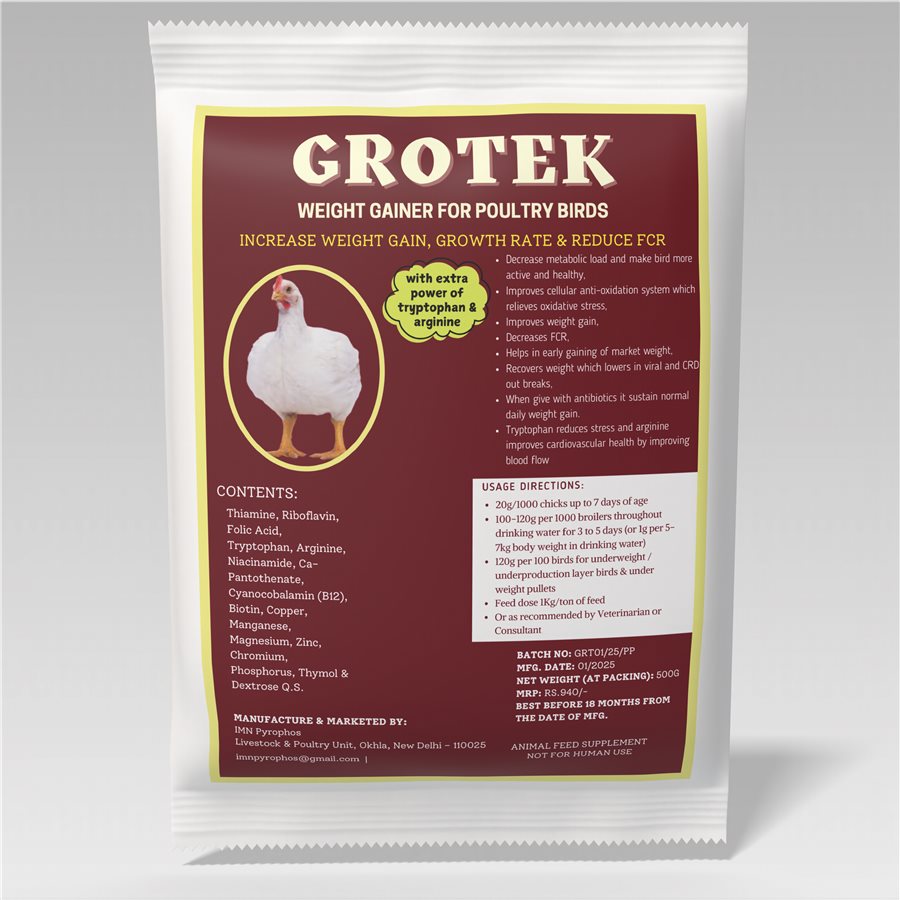
Weight gain · lower FCR
Grotek
B group vitamins, minerals and herbal antioxidants (amla, ashwagandha, tulsi). Improves feed intake and lowers FCR, speeds up growth so birds reach market weight sooner, supports the liver, and helps protect weight during infection and antibiotic treatment. Contains no iron.
Dose: 1-2 g per litre of drinking water, 15-18 hours a day, for 5 days; during or after infection, 1 g per 5 kg body weight.
500 g ₹679MRP ₹940
FAQ
Why is maize so costly in 2026?
Ethanol distilleries are buying large amounts of maize, and drought has cut Karnataka’s crop by an estimated 25%.
Will feed prices come down soon?
The reports give no forecast. With ethanol demand still strong and drought hitting both maize and soybean, it is safer to plan for high feed prices in the coming months.
Can I replace maize completely in poultry feed?
No. Maize is the main energy source. Other grains can replace part of it, but only with a balanced formula from a nutritionist.
Sources: ChiniMandi, 12 Oct 2026; Asian Agribiz, 1 Oct 2026. Written by the IMN Pyrophos team in our own words.
मक्का ₹27-28 किलो: पोल्ट्री दाने की लागत क्यों बढ़ रही है (अक्टूबर 2026)
भारत में पोल्ट्री किसान अब एक किलो मक्का के लिए लगभग ₹27-28 दे रहे हैं, जो 2019 के ₹12-14 का करीब दोगुना है। 12 अक्टूबर 2026 को ChiniMandi में छपी रिपोर्ट के अनुसार इस उछाल की दो बड़ी वजहें हैं: एथेनॉल डिस्टिलरियों में ज़्यादा मक्का जाना, और कर्नाटक में सूखे से फसल का नुकसान। ब्रॉयलर दाने में सबसे बड़ा हिस्सा मक्का का होता है, इसलिए इसके दाम में हर एक रुपये की बढ़ोतरी हर किलो चिकन की लागत में दिखती है।
मुख्य तथ्य
| बात | रिपोर्ट क्या कहती है |
|---|---|
| पोल्ट्री किसानों द्वारा दिया गया मक्का का दाम (सितंबर 2026 के आखिर में) | ₹27-28 प्रति किलो |
| 2019 में मक्का का दाम | ₹12-14 प्रति किलो |
| ब्रॉयलर दाने में मक्का का हिस्सा | वज़न के हिसाब से लगभग 55-65% |
| इस सीज़न कर्नाटक में मक्का उत्पादन | लगभग 25% कम (उद्योग का अनुमान) |
| खरीदार अब मक्का कहाँ से ला रहे हैं | बिहार, उत्तर प्रदेश और महाराष्ट्र |
| Zappfresh (DSM Fresh Foods) | खरीद लागत 10% बढ़ी; चिकन के दाम लगभग 5% बढ़ाए |
| घर की नॉन-वेज थाली, सितंबर 2026 | ₹59.50, पिछले साल से 6% ज़्यादा (Crisil) |
मक्का इतना महँगा क्यों हुआ
भारत का एथेनॉल कार्यक्रम तेज़ी से बढ़ा है और डिस्टिलरियाँ अब बड़ी मात्रा में मक्का इस्तेमाल करती हैं। इससे वे उसी अनाज के लिए फ़ीड मिलों से सीधी होड़ में हैं, और दाम सबके लिए बढ़ जाता है।
मौसम ने हालत और बिगाड़ी। Nandu’s के संस्थापक और CEO नरेंद्र पसुपर्ती का अनुमान है कि इस सीज़न सूखे के नुकसान के बाद कर्नाटक में मक्का उत्पादन लगभग 25% गिरा है। वे इस कमी के लिए एथेनॉल में मक्का जाने और फसल नुकसान, दोनों को ज़िम्मेदार मानते हैं, और बताते हैं कि अब सप्लाई बिहार, उत्तर प्रदेश और महाराष्ट्र से मँगाई जा रही है।
इसका असर मीट की दुकान तक पहुँच गया है। Zappfresh ब्रांड से बेचने वाली DSM Fresh Foods का कहना है कि उसकी खरीद लागत 10% बढ़ी। उसने चिकन के दाम लगभग 5% बढ़ाए और बाकी बोझ खुद उठाया, जिससे उसका मुनाफ़ा घटा।
सूखे से दबाव और बढ़ा
एक दूसरी रिपोर्ट चिंता बढ़ाती है। 1 अक्टूबर 2026 को Asian Agribiz ने बताया कि सोयाबीन उगाने वाला अहम राज्य महाराष्ट्र भीषण सूखे से गुज़र रहा है। कई इलाकों में लंबे सूखे से फसलों को भारी नुकसान हुआ है। पशु आहार बनाने वालों की संस्था CLFMA ने भारत की फ़ीड सुरक्षा बचाने के लिए कदम उठाने की माँग की है, क्योंकि फ़ीड कंपनियों को डर है कि मक्का और सोयाबीन की कम फसल से कच्चे माल की सप्लाई घटेगी और दाम बढ़ेंगे।
यह दोहरी मार है: राशन में ऊर्जा मक्का से आती है और ज़्यादातर प्रोटीन सोयाबीन खली से, इसलिए दोनों फसलें खराब हों तो दाने के बिल के दो सबसे बड़े हिस्से एक साथ महँगे होते हैं। महाराष्ट्र उन राज्यों में भी है जहाँ से खरीदार अब मक्का ला रहे हैं, इसलिए वहाँ कमज़ोर फसल से विकल्प और कम हो जाते हैं।
पोल्ट्री और डेयरी किसानों के लिए इसका मतलब
- हर किलो दाना महँगा: ब्रॉयलर दाने में मक्का 55-65% है, इसलिए मक्का में ₹1 प्रति किलो की बढ़ोतरी से एक किलो दाने की लागत लगभग 55-65 पैसे बढ़ती है, सोया या दूसरी चीज़ों के दाम बदलने से पहले ही।
- हर बैच में कम मुनाफ़ा: ब्रॉयलर और लेयर पालन में दाना सबसे बड़ा खर्च है। फ़ार्म पर पक्षी और अंडे का भाव माँग और सप्लाई से चलता है, इसलिए दाना महँगा होने पर वह हमेशा नहीं बढ़ता।
- कॉन्ट्रैक्ट किसान: इंटीग्रेटर दाना देते हैं, पर दाना महँगा होने पर वे FCR और मृत्यु दर पर ज़्यादा सख्त हो जाते हैं, जिसका असर आपके ग्रोइंग चार्ज पर पड़ता है।
- डेयरी किसान: पशु आहार में भी मक्का ऊर्जा का आम स्रोत है, इसलिए कंपाउंड फ़ीड के दाम भी बढ़ सकते हैं।
किसान अभी क्या करें
- सुरक्षित भंडारण हो तो पहले खरीदें। अगर सूखा, साफ़ और चूहों से बचा गोदाम है, तो मक्का या दाना पहले से बुक करें। फफूंद लगे अनाज में एफ़्लाटॉक्सिन होता है।
- हर बैच में FCR नापें। हर हफ्ते कुछ पक्षियों का वज़न करें और खर्च हुआ दाना लिखें।
- दाने की बर्बादी रोकें। फ़ीडर पक्षी की पीठ की ऊँचाई पर रखें, ऊपर तक न भरें, और टपकते या टेढ़े फ़ीडर ठीक करें।
- दूसरे अनाज के बारे में पूछें। जहाँ टूटा चावल, बाजरा या ज्वार सस्ता मिले, वहाँ अपने फ़ीड सप्लायर या न्यूट्रिशनिस्ट से आंशिक बदलाव के बारे में पूछें। राशन धीरे-धीरे और सही फ़ॉर्मूले से ही बदलें।
- पक्षियों को स्वस्थ रखें। दाना महँगा हो तो साफ़ पानी, अच्छी हवा, सूखा बिछावन और सख्त बायोसिक्योरिटी और ज़रूरी हो जाते हैं: बीमार पक्षी खाता है पर बढ़ता नहीं।
- ज़्यादा भीड़ न करें। भरे हुए शेड में वज़न कम आता है और FCR खराब होता है।
- अगला बैच डालने से पहले प्रति किलो ज़िंदा वज़न की लागत दोबारा निकालें और अपने इंटीग्रेटर या खरीदार से रेट पर बात करें।
वज़न बढ़ाए · FCR घटाए
Grotek
B ग्रुप विटामिन, मिनरल और हर्बल एंटीऑक्सीडेंट (आँवला, अश्वगंधा, तुलसी)। दाना खाना बढ़ाता है और FCR घटाता है, बढ़वार तेज़ करता है ताकि बाज़ार का वज़न जल्दी आए, लिवर को सहारा देता है, और इन्फेक्शन व एंटीबायोटिक के दौरान वज़न बचाने में मदद करता है। इसमें आयरन नहीं है।
मात्रा: 1–2 ग्राम प्रति लीटर पानी, रोज़ 15–18 घंटे, 5 दिन; इन्फेक्शन के दौरान या बाद 1 ग्राम प्रति 5 किलो वज़न।
500 g ₹679MRP ₹940
अक्सर पूछे जाने वाले सवाल
2026 में मक्का इतना महँगा क्यों है?
एथेनॉल डिस्टिलरियाँ बड़ी मात्रा में मक्का खरीद रही हैं, और सूखे ने कर्नाटक की फसल अनुमानित 25% घटा दी है।
क्या दाने के दाम जल्दी कम होंगे?
रिपोर्टों में कोई अनुमान नहीं दिया गया है। एथेनॉल की माँग अभी मज़बूत है और सूखा मक्का व सोयाबीन दोनों पर पड़ा है, इसलिए आने वाले महीनों में ऊँचे दाम मानकर योजना बनाना सुरक्षित है।
क्या पोल्ट्री दाने से मक्का पूरी तरह हटा सकते हैं?
नहीं। मक्का ऊर्जा का मुख्य स्रोत है। दूसरे अनाज उसका कुछ हिस्सा बदल सकते हैं, पर सिर्फ़ न्यूट्रिशनिस्ट के संतुलित फ़ॉर्मूले से।
स्रोत: ChiniMandi, 12 अक्टूबर 2026; Asian Agribiz, 1 अक्टूबर 2026। IMN Pyrophos टीम ने अपने शब्दों में लिखा।
Makka ₹27-28 kilo: poultry daane ki laagat kyon badh rahi hai (October 2026)
Bharat me poultry kisan ab ek kilo makka ke liye lagbhag ₹27-28 de rahe hain, jo 2019 ke ₹12-14 ka kareeb dugna hai. 12 October 2026 ko ChiniMandi me chhapi report ke mutabik is uchhaal ki do badi vajah hain: ethanol distillery me zyada makka jaana, aur Karnataka me sookhe se fasal ka nuksaan. Broiler daane me sabse bada hissa makka ka hota hai, isliye iske daam me har ek rupaye ki badhotri har kilo chicken ki laagat me dikhti hai.
Mukhya baatein
| Baat | Report kya kehti hai |
|---|---|
| Poultry kisanon ka makka ka daam (September 2026 ke aakhir me) | ₹27-28 prati kilo |
| 2019 me makka ka daam | ₹12-14 prati kilo |
| Broiler daane me makka ka hissa | Wazan ke hisaab se lagbhag 55-65% |
| Is season Karnataka me makka utpadan | Lagbhag 25% kam (udyog ka andaaza) |
| Khareedaar ab makka kahan se la rahe hain | Bihar, Uttar Pradesh aur Maharashtra |
| Zappfresh (DSM Fresh Foods) | Khareed laagat 10% badhi; chicken ke daam lagbhag 5% badhaye |
| Ghar ki non-veg thali, September 2026 | ₹59.50, pichhle saal se 6% zyada (Crisil) |
Makka itna mehenga kyon hua
Bharat ka ethanol programme tezi se badha hai aur distillery ab badi matra me makka istemaal karti hain. Isse wo usi anaaj ke liye feed mill se seedhi hod me hain, aur daam sabke liye badh jaata hai.
Mausam ne haalat aur bigaadi. Nandu’s ke founder aur CEO Narendra Pasuparthy ka andaaza hai ki is season sookhe ke nuksaan ke baad Karnataka me makka utpadan lagbhag 25% gira hai. Wo is kami ke liye ethanol me makka jaane aur fasal nuksaan, dono ko zimmedaar maante hain, aur batate hain ki ab supply Bihar, Uttar Pradesh aur Maharashtra se mangaayi ja rahi hai.
Iska asar meat ki dukaan tak pahunch gaya hai. Zappfresh brand se bechne wali DSM Fresh Foods ka kehna hai ki uski khareed laagat 10% badhi. Usne chicken ke daam lagbhag 5% badhaye aur baaki bojh khud uthaya, jisse uska munafa ghata.
Sookhe se dabaav aur badha
Ek doosri report chinta badhati hai. 1 October 2026 ko Asian Agribiz ne bataya ki soybean ugaane wala aham rajya Maharashtra bhayanak sookhe se guzar raha hai. Kai ilaakon me lambe sookhe se faslon ko bhaari nuksaan hua hai. Pashu aahar banane walon ki sanstha CLFMA ne Bharat ki feed suraksha bachane ke liye kadam uthaane ki maang ki hai, kyonki feed companies ko darr hai ki makka aur soybean ki kam fasal se kachche maal ki supply ghategi aur daam badhenge.
Ye dohri maar hai: ration me urja makka se aati hai aur zyadatar protein soybean khal se, isliye dono faslein kharab hon to daane ke bill ke do sabse bade hisse ek saath mehenge hote hain. Maharashtra un rajyon me bhi hai jahan se khareedaar ab makka la rahe hain, isliye wahan kamzor fasal se vikalp aur kam ho jaate hain.
Poultry aur dairy kisanon ke liye iska matlab
- Har kilo daana mehenga: broiler daane me makka 55-65% hai, isliye makka me ₹1 prati kilo ki badhotri se ek kilo daane ki laagat lagbhag 55-65 paise badhti hai, soya ya doosri cheezon ke daam badalne se pehle hi.
- Har batch me kam munafa: broiler aur layer paalan me daana sabse bada kharch hai. Farm par pakshi aur ande ka bhaav maang aur supply se chalta hai, isliye daana mehenga hone par wo hamesha nahi badhta.
- Contract kisan: integrator daana dete hain, par daana mehenga hone par wo FCR aur mortality par zyada sakht ho jaate hain, jiska asar aapke growing charge par padta hai.
- Dairy kisan: pashu aahar me bhi makka urja ka aam srot hai, isliye compound feed ke daam bhi badh sakte hain.
Kisan abhi kya karein
- Surakshit bhandaaran ho to pehle khareedein. Agar sookha, saaf aur chuhon se bacha godaam hai, to makka ya daana pehle se book karein. Phaphoond lage anaaj me aflatoxin hota hai.
- Har batch me FCR naapein. Har hafte kuch pakshiyon ka wazan karein aur kharch hua daana likhein.
- Daane ki barbaadi rokein. Feeder pakshi ki peeth ki oonchai par rakhein, upar tak na bharein, aur tapakte ya tedhe feeder theek karein.
- Doosre anaaj ke baare me poochhein. Jahan toota chawal, bajra ya jowar sasta mile, wahan apne feed supplier ya nutritionist se thoda badlaav karne ke baare me poochhein. Ration dheere-dheere aur sahi formula se hi badlein.
- Pakshiyon ko swasth rakhein. Daana mehenga ho to saaf paani, achhi hawa, sookha bichhaavan aur sakht biosecurity aur zaroori ho jaate hain: beemar pakshi khaata hai par badhta nahi.
- Zyada bheed na karein. Bhare hue shed me wazan kam aata hai aur FCR kharab hota hai.
- Agla batch daalne se pehle prati kilo zinda wazan ki laagat dobara nikaalein aur apne integrator ya khareedaar se rate par baat karein.
Wazan badhaye · FCR ghataye
Grotek
B group vitamin, mineral aur herbal antioxidant (amla, ashwagandha, tulsi). Daana khana badhata hai aur FCR ghatata hai, badhwar tez karta hai taaki bazaar ka wazan jaldi aaye, liver ko sahara deta hai, aur infection va antibiotic ke dauran wazan bachane me madad karta hai. Isme iron nahi hai.
Matra: 1–2 g prati litre paani, roz 15–18 ghante, 5 din; infection ke dauran ya baad 1 g prati 5 kg wazan.
500 g ₹679MRP ₹940
Aksar poochhe jaane wale sawaal
2026 me makka itna mehenga kyon hai?
Ethanol distillery badi matra me makka khareed rahi hain, aur sookhe ne Karnataka ki fasal andaazan 25% ghata di hai.
Kya daane ke daam jaldi kam honge?
Reports me koi andaaza nahi diya gaya hai. Ethanol ki maang abhi mazboot hai aur sookha makka va soybean dono par pada hai, isliye aane wale mahinon me oonche daam maan kar yojana banana surakshit hai.
Kya poultry daane se makka poori tarah hata sakte hain?
Nahi. Makka urja ka mukhya srot hai. Doosre anaaj uska kuch hissa badal sakte hain, par sirf nutritionist ke santulit formula se.
Srot: ChiniMandi, 12 October 2026; Asian Agribiz, 1 October 2026. IMN Pyrophos team ne apne shabdon me likha.