On Wednesday, 14 October 2026, a team from the Union Department of Animal Husbandry and Dairying visited lumpy skin disease (LSD) hit villages in Jammu, Samba and Kathua districts of Jammu and Kashmir. The team checked the health of local cattle, reviewed control measures, had samples taken from sick animals for lab testing, and handed farmers mineral mixture, wound-dressing material and disinfectants. No case or death figures were released. For dairy farmers in the region, this is a clear signal to act on prevention now.
Key facts
| Item | Detail |
|---|---|
| Date of visit | Wednesday, 14 October 2026 |
| Districts visited | Jammu, Samba and Kathua (J&K) |
| Team leader | Dr Sudam Bagh, Deputy Commissioner (Livestock Health), Department of Animal Husbandry and Dairying |
| Also present | Dr Sandeep Pandita, M S Institute of Animal Health and Biological Production, R S Pura; Dr Muddassir Nazar, Livestock Development Officer, R S Pura |
| Sampling (Samba, Kathua) | DDR&P team led by Lab Officer Dr Abhimanyu Chauhan |
| Sampling (Jammu) | District Investigation Office team led by Lab Officer Dr Ravinder Singh Thakur |
| Given to farmers | Mineral mixture, wound-dressing material, disinfectants |
| Case numbers | Not released |
Why it is happening: what lumpy skin disease is
Lumpy skin disease is a viral disease of cattle and buffaloes, caused by a capripox virus (the same family as goat pox and sheep pox). It does not spread to people. India saw a large outbreak in 2022, and the disease keeps returning in warm, humid months when biting insects are plentiful.
How it spreads: mainly through blood-sucking flies, mosquitoes and ticks that carry the virus from a sick animal to a healthy one. Moving infected animals between villages and markets, shared needles and contaminated equipment can also carry it.
Signs to watch for: high fever, firm round lumps (nodules) on the skin of the neck, body, udder and legs, swollen glands in front of the shoulder, watery eyes and nose, drooling, swollen legs or lameness, poor appetite and a sharp drop in milk. Some pregnant animals may abort. Most animals recover, but recovery can take weeks.
During its visit, the central team also ran awareness sessions on prevention, biosecurity, hygiene and good livestock management, and later held a review meeting with Jammu district officers that stressed surveillance and farmer awareness.
What it means for dairy farmers
- Milk loss: an infected cow can lose much of her milk for weeks, and some do not return to full yield in that lactation.
- Treatment cost: fever control, wound care and fly control add up, and skin wounds can get secondary infection and maggots.
- Fertility and value: abortion, delayed heat and damaged hides lower an animal’s value.
- Movement limits: when LSD is active, local authorities may restrict cattle fairs and trade, which affects buying and selling.
What farmers should do now
- Vaccinate healthy animals. In India, goat pox vaccine has been used against LSD, and Lumpi-ProVacInd is India’s own indigenous LSD vaccine. Ask your government vet which vaccine is available and when to give it.
- Isolate any animal with fever or skin lumps at once, and keep it under a net if possible. Use separate buckets and feeding tools for it.
- Control flies, mosquitoes and ticks: clean dung and standing water daily, use vet-advised insect sprays or tick treatment, and use smoke or nets in the evening.
- Disinfect the shed regularly and keep wounds clean and covered, as advised by your vet.
- Milk hygiene: milk sick animals last, wash hands and utensils well, and always boil milk before use at home.
- Do not buy or move cattle from affected areas until the outbreak settles.
- Call your nearest government veterinary hospital or Animal Husbandry Department office as soon as you see signs. Do not self-medicate.
Good daily nutrition, including minerals and vitamins, helps animals stay strong and recover faster. This is supportive care, not a cure or a replacement for vaccination.
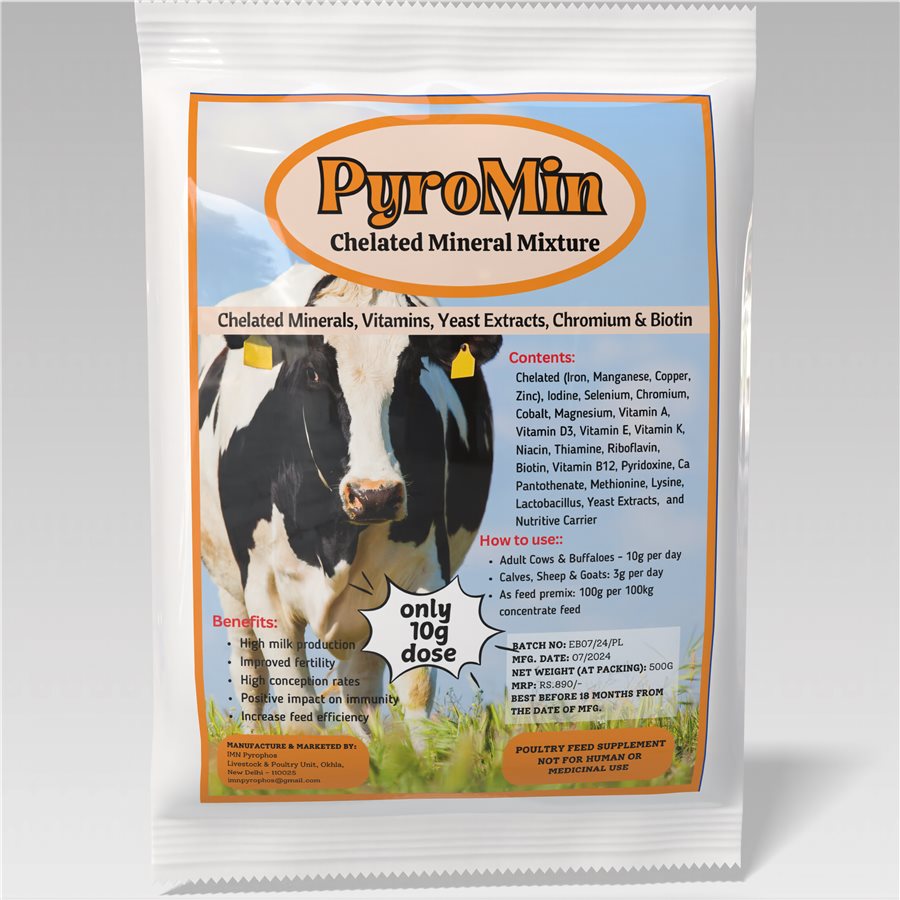
Chelated mineral · small daily dose
Pyromin
Chelated iron, manganese, copper, zinc, iodine, selenium, chromium, cobalt and magnesium, with vitamins A, D3, E, K and B vitamins, biotin, methionine, lysine, lactobacillus and yeast extract. Supports milk production, fertility, conception, immunity and feed efficiency.
Dose: adult cow or buffalo 10 g per day; calves, sheep and goats 3 g per day. As a premix: 100 g per 100 kg concentrate.
1 kg ₹655MRP ₹1,190
FAQ
Can people get lumpy skin disease from milk?
LSD is not known to infect humans. Still, always boil milk before drinking, and follow your vet’s advice on milk from sick animals.
Is there a vaccine for lumpy skin disease in India?
Yes. Goat pox vaccine has been widely used, and Lumpi-ProVacInd is India’s indigenous LSD vaccine. Your government vet can tell you what is available in your area.
Can a cow with LSD recover?
Most animals recover with good care, clean wounds, fever control and rest, though milk may stay low for weeks. Early treatment by a vet gives the best chance.
Also read: mineral mixture for cows · dairy feeding and nutrition · IMN dairy products
Source: Kashmir Observer (PTI), 14 Oct 2026. Written by the IMN Pyrophos team in our own words.
जम्मू में लम्पी स्किन रोग: केंद्रीय टीम ने सांबा, कठुआ के गाँवों का जायज़ा लिया (अक्टूबर 2026)
बुधवार, 14 अक्टूबर 2026 को केंद्र सरकार के पशुपालन और डेयरी विभाग की एक टीम ने जम्मू-कश्मीर के जम्मू, सांबा और कठुआ ज़िलों के लम्पी स्किन रोग (LSD) से प्रभावित गाँवों का दौरा किया। टीम ने पशुओं की सेहत देखी, रोकथाम के इंतज़ामों की समीक्षा की, बीमार पशुओं के सैंपल लैब जाँच के लिए लिए गए, और किसानों को मिनरल मिक्सचर, घाव की पट्टी का सामान और कीटाणुनाशक दिए। मामलों या मौतों की कोई संख्या जारी नहीं की गई। इलाके के डेयरी किसानों के लिए यह साफ़ संकेत है कि बचाव के कदम अभी उठाएँ।
मुख्य तथ्य
| विषय | जानकारी |
|---|---|
| दौरे की तारीख | बुधवार, 14 अक्टूबर 2026 |
| ज़िले | जम्मू, सांबा और कठुआ (J&K) |
| टीम प्रमुख | डॉ. सुदाम बाग, डिप्टी कमिश्नर (पशु स्वास्थ्य), पशुपालन और डेयरी विभाग |
| साथ में | डॉ. संदीप पंडिता, एम एस इंस्टिट्यूट ऑफ़ एनिमल हेल्थ एंड बायोलॉजिकल प्रोडक्शन, आर एस पुरा; डॉ. मुदस्सिर नज़र, पशुधन विकास अधिकारी, आर एस पुरा |
| सैंपल (सांबा, कठुआ) | DDR&P टीम, प्रमुख लैब ऑफ़िसर डॉ. अभिमन्यु चौहान |
| सैंपल (जम्मू) | ज़िला जाँच कार्यालय (DIO) टीम, प्रमुख लैब ऑफ़िसर डॉ. रविंदर सिंह ठाकुर |
| किसानों को दिया गया | मिनरल मिक्सचर, घाव की पट्टी का सामान, कीटाणुनाशक |
| मामलों की संख्या | जारी नहीं |
ऐसा क्यों हो रहा है: लम्पी स्किन रोग क्या है
लम्पी स्किन रोग गाय और भैंस की एक वायरल बीमारी है, जो कैप्रीपॉक्स वायरस से होती है (बकरी चेचक और भेड़ चेचक वाले परिवार का वायरस)। यह इंसानों में नहीं फैलती। 2022 में भारत में इसका बड़ा प्रकोप हुआ था, और गर्म, नमी वाले महीनों में जब काटने वाले कीड़े ज़्यादा होते हैं, यह बार-बार लौटती है।
कैसे फैलता है: मुख्य रूप से खून चूसने वाली मक्खियों, मच्छरों और किलनी (चिचड़ी) से, जो बीमार पशु से वायरस स्वस्थ पशु तक ले जाती हैं। संक्रमित पशुओं को गाँवों और मंडियों में ले जाने, एक ही सुई इस्तेमाल करने और गंदे औज़ारों से भी यह फैल सकता है।
किन लक्षणों पर ध्यान दें: तेज़ बुखार, गर्दन, शरीर, थन और पैरों की चमड़ी पर सख्त गोल गाँठें, कंधे के आगे की गिल्टियों में सूजन, आँख और नाक से पानी, लार गिरना, पैरों में सूजन या लंगड़ापन, भूख कम होना और दूध में तेज़ गिरावट। कुछ गाभिन पशुओं में गर्भ गिर सकता है। ज़्यादातर पशु ठीक हो जाते हैं, पर ठीक होने में कई हफ़्ते लग सकते हैं।
दौरे के दौरान केंद्रीय टीम ने बचाव, जैव-सुरक्षा, साफ़-सफ़ाई और अच्छे पशु प्रबंधन पर जागरूकता सत्र भी किए, और बाद में जम्मू ज़िले के अधिकारियों के साथ समीक्षा बैठक की, जिसमें निगरानी और किसान जागरूकता पर ज़ोर दिया गया।
डेयरी किसानों के लिए इसका मतलब
- दूध का नुकसान: बीमार गाय का दूध कई हफ़्तों तक बहुत घट सकता है, और कुछ उस ब्यांत में पूरा दूध नहीं लौटा पातीं।
- इलाज का खर्च: बुखार, घाव और मक्खियों पर काबू का खर्च बढ़ता है, और चमड़ी के घावों में दूसरा इन्फ़ेक्शन और कीड़े पड़ सकते हैं।
- प्रजनन और कीमत: गर्भ गिरना, देर से हीट में आना और खराब चमड़ी पशु की कीमत घटाते हैं।
- आवाजाही पर रोक: LSD फैलने पर प्रशासन पशु मेलों और खरीद-बिक्री पर रोक लगा सकता है।
किसान अभी क्या करें
- स्वस्थ पशुओं को टीका लगवाएँ। भारत में LSD के खिलाफ़ बकरी चेचक (गोट पॉक्स) का टीका इस्तेमाल होता रहा है, और लम्पी-प्रोवैकइंड (Lumpi-ProVacInd) भारत का अपना स्वदेशी LSD टीका है। सरकारी पशु डॉक्टर से पूछें कि कौन सा टीका उपलब्ध है और कब लगवाना है।
- बुखार या गाँठ वाले पशु को तुरंत अलग करें, और हो सके तो मच्छरदानी में रखें। उसकी बाल्टी और खिलाने के बर्तन अलग रखें।
- मक्खी, मच्छर और किलनी पर काबू करें: रोज़ गोबर और रुका पानी साफ़ करें, डॉक्टर की बताई कीटनाशक स्प्रे या किलनी की दवा लगाएँ, और शाम को धुआँ या जाली इस्तेमाल करें।
- बाड़े को नियमित कीटाणुरहित करें और घावों को डॉक्टर की सलाह से साफ़ और ढककर रखें।
- दूध की साफ़-सफ़ाई: बीमार पशु को सबसे आखिर में दुहें, हाथ और बर्तन अच्छी तरह धोएँ, और घर में दूध हमेशा उबालकर ही इस्तेमाल करें।
- प्रभावित इलाकों से पशु न खरीदें और न लाएँ-ले जाएँ, जब तक प्रकोप शांत न हो।
- लक्षण दिखते ही नज़दीकी सरकारी पशु अस्पताल या पशुपालन विभाग कार्यालय से संपर्क करें। खुद से दवा न दें।
रोज़ का अच्छा पोषण, जिसमें मिनरल और विटामिन शामिल हैं, पशु को मज़बूत रखने और जल्दी उबरने में मदद करता है। यह सहायक देखभाल है, इलाज या टीके का विकल्प नहीं।
चिलेटेड मिनरल · रोज़ थोड़ी मात्रा
Pyromin
चिलेटेड आयरन, मैंगनीज़, कॉपर, ज़िंक, आयोडीन, सेलेनियम, क्रोमियम, कोबाल्ट और मैग्नीशियम, साथ में विटामिन A, D3, E, K और B विटामिन, बायोटिन, मेथियोनीन, लाइसीन, लैक्टोबैसिलस और यीस्ट एक्सट्रैक्ट। दूध उत्पादन, प्रजनन, गाभिन ठहरने, रोग प्रतिरोधक क्षमता और चारे के बेहतर उपयोग में सहायक।
मात्रा: वयस्क गाय या भैंस को 10 ग्राम प्रति दिन; बछड़े, भेड़ और बकरी को 3 ग्राम प्रति दिन। प्रीमिक्स के रूप में 100 ग्राम प्रति 100 किलो दाना।
1 kg ₹655MRP ₹1,190
अक्सर पूछे जाने वाले सवाल
क्या दूध से इंसानों को लम्पी स्किन रोग हो सकता है?
LSD इंसानों को संक्रमित करने के लिए नहीं जाना जाता। फिर भी दूध हमेशा उबालकर पिएँ, और बीमार पशु के दूध के बारे में डॉक्टर की सलाह मानें।
क्या भारत में लम्पी स्किन रोग का टीका है?
हाँ। बकरी चेचक का टीका बड़े पैमाने पर इस्तेमाल हुआ है, और लम्पी-प्रोवैकइंड भारत का स्वदेशी LSD टीका है। आपके इलाके में क्या उपलब्ध है, यह सरकारी पशु डॉक्टर बताएँगे।
क्या LSD वाली गाय ठीक हो सकती है?
अच्छी देखभाल, साफ़ घाव, बुखार पर काबू और आराम से ज़्यादातर पशु ठीक हो जाते हैं, हालाँकि दूध कई हफ़्ते कम रह सकता है। डॉक्टर से जल्दी इलाज सबसे अच्छा मौका देता है।
ये भी पढ़िए: गाय के लिए मिनरल मिक्सचर · डेयरी पशु आहार · IMN डेयरी प्रोडक्ट
स्रोत: Kashmir Observer (PTI), 14 अक्टूबर 2026। IMN Pyrophos टीम द्वारा अपने शब्दों में लिखा गया।
Jammu me lumpy skin bimari: Kendriya team ne Samba, Kathua ke gaon dekhe (October 2026)
Budhwar, 14 October 2026 ko Kendra sarkar ke Pashupalan aur Dairy Vibhag ki ek team ne Jammu-Kashmir ke Jammu, Samba aur Kathua zilon ke lumpy skin bimari (LSD) wale gaon ka daura kiya. Team ne pashuon ki sehat dekhi, rokthaam ke intezaam jaanche, bimar pashuon ke sample lab jaanch ke liye liye gaye, aur kisanon ko mineral mixture, ghaav ki patti ka saamaan aur disinfectant diye. Case ya maut ki koi ginti jaari nahi ki gayi. Is ilaake ke dairy kisanon ke liye ye saaf ishaara hai ki bachav ke kadam abhi uthaiye.
Mukhya baatein
| Vishay | Jaankari |
|---|---|
| Daure ki tareekh | Budhwar, 14 October 2026 |
| Zile | Jammu, Samba aur Kathua (J&K) |
| Team pramukh | Dr Sudam Bagh, Deputy Commissioner (Livestock Health), Pashupalan aur Dairy Vibhag |
| Saath me | Dr Sandeep Pandita, M S Institute of Animal Health and Biological Production, R S Pura; Dr Muddassir Nazar, Livestock Development Officer, R S Pura |
| Sample (Samba, Kathua) | DDR&P team, pramukh Lab Officer Dr Abhimanyu Chauhan |
| Sample (Jammu) | District Investigation Office (DIO) team, pramukh Lab Officer Dr Ravinder Singh Thakur |
| Kisanon ko diya gaya | Mineral mixture, ghaav ki patti ka saamaan, disinfectant |
| Case ki ginti | Jaari nahi |
Aisa kyon ho raha hai: lumpy skin bimari kya hai
Lumpy skin bimari gaay aur bhains ki ek viral bimari hai, jo capripox virus se hoti hai (bakri chechak aur bhed chechak wale parivaar ka virus). Ye insaanon me nahi failti. 2022 me Bharat me iska bada prakop hua tha, aur garam, nami wale mahino me jab kaatne wale keede zyada hote hain, ye baar-baar lautti hai.
Kaise failti hai: mukhya roop se khoon choosne wali makkhi, machchhar aur kilni (chichdi) se, jo bimar pashu se virus swasth pashu tak le jaate hain. Bimar pashuon ko gaon aur mandi me le jaane, ek hi sui lagane aur gande auzaron se bhi ye fail sakti hai.
Kin lakshano par dhyaan dein: tez bukhaar, gardan, sharir, than aur pairon ki chamdi par sakht gol gaanthein, kandhe ke aage ki gilti me soojan, aankh aur naak se paani, laar girna, pairon me soojan ya langdapan, bhookh kam hona aur doodh me tez giraavat. Kuch gaabhin pashuon me garbh gir sakta hai. Zyadatar pashu theek ho jaate hain, par theek hone me kai hafte lag sakte hain.
Daure me Kendriya team ne bachav, biosecurity, saaf-safai aur achhe pashu prabandhan par jaagrukta session bhi kiye, aur baad me Jammu zile ke adhikariyon ke saath review meeting ki, jisme nigraani aur kisan jaagrukta par zor diya gaya.
Dairy kisanon ke liye iska matlab
- Doodh ka nuksaan: bimar gaay ka doodh kai hafton tak bahut ghat sakta hai, aur kuch us byaant me poora doodh nahi lauta paatin.
- Ilaaj ka kharch: bukhaar, ghaav aur makkhiyon par kaabu ka kharch badhta hai, aur chamdi ke ghaavon me doosra infection aur keede pad sakte hain.
- Prajanan aur keemat: garbh girna, der se heat me aana aur kharab chamdi pashu ki keemat ghatate hain.
- Aane-jaane par rok: LSD failne par prashasan pashu melon aur khareed-bikri par rok laga sakta hai.
Kisan abhi kya karein
- Swasth pashuon ko teeka lagwaiye. Bharat me LSD ke khilaaf goat pox (bakri chechak) ka teeka istemaal hota raha hai, aur Lumpi-ProVacInd Bharat ka apna swadeshi LSD teeka hai. Sarkari pashu doctor se poochhiye kaunsa teeka milega aur kab lagwana hai.
- Bukhaar ya gaanth wale pashu ko turant alag kijiye, aur ho sake to machchhardani me rakhiye. Uski baalti aur khilane ke bartan alag rakhiye.
- Makkhi, machchhar aur kilni par kaabu kijiye: roz gobar aur ruka paani saaf kijiye, doctor ki batayi keetnashak spray ya kilni ki dawa lagaiye, aur shaam ko dhuaan ya jaali istemaal kijiye.
- Baade ko niyamit disinfect kijiye aur ghaavon ko doctor ki salaah se saaf aur dhak kar rakhiye.
- Doodh ki saaf-safai: bimar pashu ko sabse aakhir me duhiye, haath aur bartan achhe se dhoiye, aur ghar me doodh hamesha ubaal kar hi istemaal kijiye.
- Prabhavit ilaakon se pashu na khareediye aur na laaiye-le jaaiye, jab tak prakop shaant na ho.
- Lakshan dikhte hi nazdeeki sarkari pashu aspatal ya Pashupalan Vibhag ke daftar se sampark kijiye. Khud se dawa mat dijiye.
Roz ka achha poshan, jisme mineral aur vitamin shaamil hain, pashu ko mazboot rakhne aur jaldi ubharne me madad karta hai. Ye sahayak dekhbhal hai, ilaaj ya teeke ki jagah nahi.
Chelated mineral · roz thodi matra
Pyromin
Chelated iron, manganese, copper, zinc, iodine, selenium, chromium, cobalt aur magnesium, saath me vitamin A, D3, E, K aur B vitamin, biotin, methionine, lysine, lactobacillus aur yeast extract. Doodh utpadan, prajanan, gaabhin theharne, immunity aur chaare ke behtar upyog me sahayak.
Matra: Vayask gaay ya bhains ko 10 g prati din; bachhde, bhed aur bakri ko 3 g prati din. Premix ke roop me 100 g prati 100 kg daana.
1 kg ₹655MRP ₹1,190
Aksar poochhe jaane wale sawaal
Kya doodh se insaanon ko lumpy skin bimari ho sakti hai?
LSD insaanon ko sankramit karne ke liye nahi jaani jaati. Phir bhi doodh hamesha ubaal kar peejiye, aur bimar pashu ke doodh ke baare me doctor ki salaah maaniye.
Kya Bharat me lumpy skin bimari ka teeka hai?
Haan. Goat pox ka teeka bade paimaane par istemaal hua hai, aur Lumpi-ProVacInd Bharat ka swadeshi LSD teeka hai. Aapke ilaake me kya milta hai, ye sarkari pashu doctor batayenge.
Kya LSD wali gaay theek ho sakti hai?
Achhi dekhbhal, saaf ghaav, bukhaar par kaabu aur aaram se zyadatar pashu theek ho jaate hain, haalaanki doodh kai hafte kam reh sakta hai. Doctor se jaldi ilaaj sabse achha mauka deta hai.
Ye bhi padhiye: gaay ke liye mineral mixture · dairy pashu aahaar · IMN dairy products
Source: Kashmir Observer (PTI), 14 Oct 2026. IMN Pyrophos team ne apne shabdon me likha.