
Andhra Pradesh produced 2,739 crore eggs (27.39 billion) in FY25, the highest of any state in India, according to a Business Line report. The state’s share of the national total is about 18.4%. For layer farmers across the country the message is clear: egg supply is growing, competition is tough, and the farms that earn well are the ones that keep production high, shells strong and feed cost under control.
Key facts
| Item | Figure |
|---|---|
| Andhra Pradesh, FY25 | 2,739 crore eggs, number one in India (Business Line) |
| India’s total egg production, 2024-25 | 149.11 billion eggs, up 4.44% on the previous year (PIB) |
| Per capita availability | 106 eggs a year in 2024-25, up from 62 in 2014-15 (PIB) |
| Share: Andhra Pradesh | 18.37% |
| Share: Tamil Nadu | 15.63% |
| Share: Telangana | 12.98% |
| Share: West Bengal | 10.72% |
| Share: Karnataka | 6.67% |
| Top five states together | 64.37% of national production (PIB) |
One crore is 10 million, so 2,739 crore eggs is 27.39 billion, which matches the 18.37% share of the national total reported by PIB.
Why does Andhra Pradesh lead?
Andhra Pradesh has long been a major layer state, with large commercial layer farms in its coastal districts and a strong feed, chick and marketing network around them. Southern states together dominate egg production: the top five states, all in the south and east, produce almost two thirds of India’s eggs. This is general background, not a figure from the report.
India’s egg numbers in context
India’s 149.11 billion eggs in 2024-25 work out to roughly 14,911 crore eggs, which is about 41 crore eggs every day. Production grew 4.44% in one year, and per capita availability rose from 62 eggs in 2014-15 to 106 in 2024-25, a rise of 44 eggs per person in ten years. Even at 106, availability is below the 180 eggs a year that is often quoted as a nutritional target, so there is still room for demand to grow as incomes rise and more people turn to eggs as cheap protein. The five biggest states together hold 64.37% of production, which also means that egg rates in the rest of the country are strongly influenced by what these states send out and by their feed and weather conditions.
What it means for layer farmers
- Demand is rising: eggs per person have gone from 62 to 106 a year in a decade, so the market keeps growing.
- Supply is rising too, so the egg rate in your area depends on how much the nearest big producing states send. Farms with higher output per bird and lower cost per egg stay profitable.
- Cost per egg is the real game: feed is the biggest cost, so small gains in laying percentage, FCR and egg weight add up quickly.
- Quality sells: broken and thin-shelled eggs lose money at every step, from the shed to the shop.
- Older flocks need support: as hens age the gap between ovulations grows and production falls, so management in the second half of the cycle matters most.
Why calcium and shell quality decide profit
A laying hen makes almost a whole egg every day and each shell needs a large amount of calcium. As a hen ages, her ability to use calcium from the diet and from her bones falls, shells become thinner and more eggs crack on the way to the shop. Thin or broken eggs cannot be sold at full price, and a small rise in breakage on a big farm can cost more than a small rise in feed price. The practical points are: enough calcium in coarse particle form in the ration, balanced phosphorus and vitamin D, clean cool water, and no sudden stress from heat, noise, lighting changes or disease. This is general layer-management background.
Cost per egg: a simple worked example
This is an illustration with assumed numbers, not a forecast. A layer commonly eats around 110 g of feed a day. If feed costs ₹30 per kg, feed cost is about ₹3.30 per bird per day. At 90% laying, the feed cost per egg is about ₹3.67. If laying slips to 80%, the same ₹3.30 feed bill is spread over fewer eggs and the feed cost per egg rises to about ₹4.13, which is 46 paise more per egg. On a flock of 10,000 birds laying 80%, that is about ₹3,700 more every day. This is why a few points of laying percentage matter so much, and why checking your own numbers every week is worth the effort.
To address such issues
Two IMN Pyrophos products speak to the points above. Egg Up is for production and FCR, and Pyrocal B is the calcium and phosphorus tonic. Details are as given on the product pages.
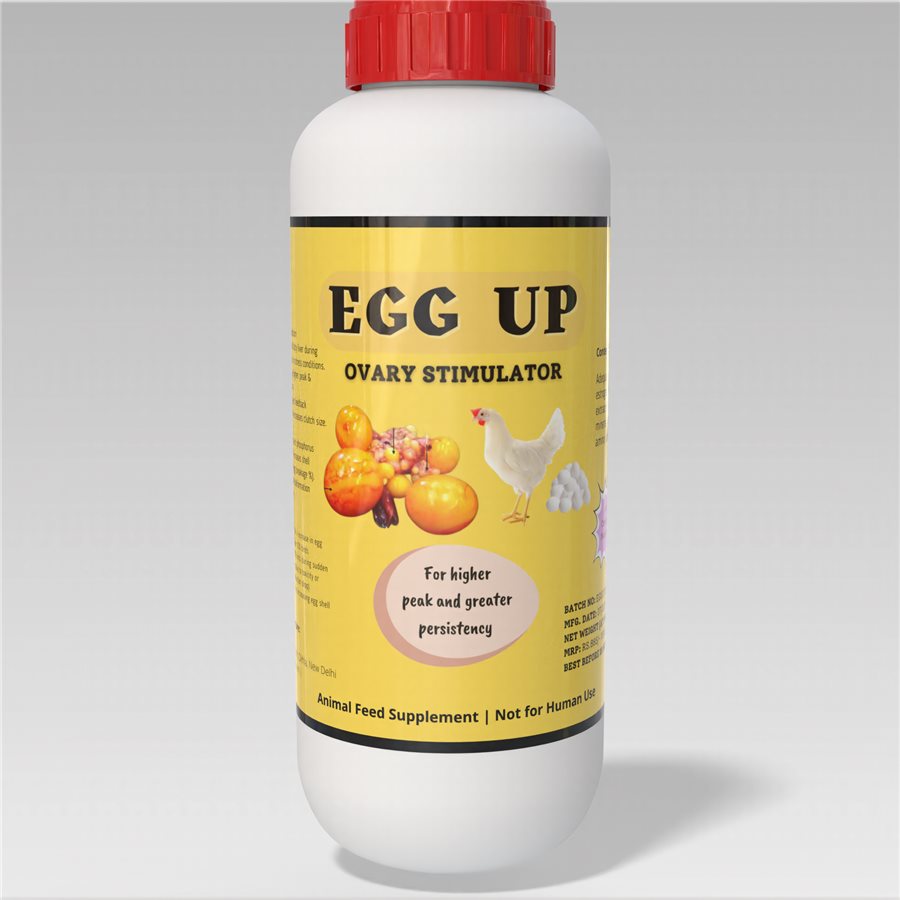
Layer · egg production
Egg Up
An egg production booster for laying hens, made with natural phytogenic components and supplemental nutrients. It increases egg production, reduces FCR, improves calcium and phosphorus use for stronger shells and less breakage.
Dose: 1 g per litre water or 20 g per 100 birds for a moderate increase; 2 g per litre for a high increase; 30 to 35 g per 100 birds during a sudden production drop; 15 g per 100 birds for shell strength.
1 L ₹468MRP ₹885
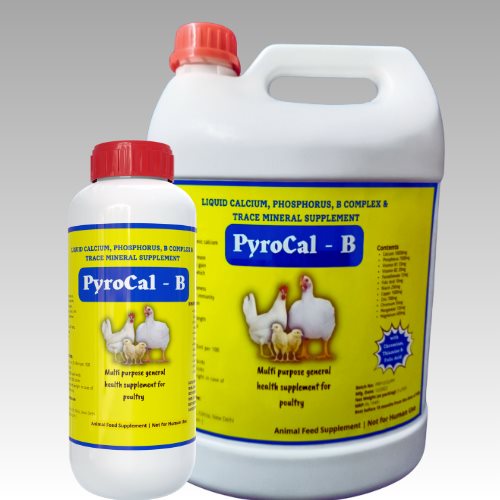
Calcium tonic
Pyrocal B
Liquid calcium, phosphorus, trace minerals and B complex. It provides ionic calcium and phosphorus, reduces the chance of lameness, improves egg production and helps bring uniformity in the flock.
Dose: 3 ml per litre of water or 40 ml per 100 birds.
1 L ₹468MRP ₹680
Use the dose that matches your problem, and talk to your veterinarian if production drops suddenly, since the cause can be disease or toxicity and not only nutrition.
What layer farmers should do now
- Record daily: laying percentage, feed per bird, egg weight and broken eggs. You cannot improve what you do not measure.
- Check calcium and phosphorus in the ration, and the particle size of the limestone, before adding anything else.
- Keep water clean and cool, since layers drink more than the feed plan assumes.
- Watch for a sudden drop: if production falls fast, look at feed, water, heat, lighting and disease, and call your veterinarian.
- Do not skip vaccination and biosecurity. A production drop from disease costs far more than any supplement.
- Compare your cost per egg with your selling rate every month, not only when rates fall.
FAQ
Which state produces the most eggs in India?
Andhra Pradesh. It produced 2,739 crore eggs in FY25, about 18.4% of India’s 149.11 billion eggs.
How many eggs does India produce?
149.11 billion eggs in 2024-25, up 4.44% from the year before, with 106 eggs available per person per year.
What is the dose of Egg Up?
1 g per litre of water or 20 g per 100 birds for a moderate increase in production, 2 g per litre for a high increase, and 15 g per 100 birds to support shell strength. See the product page for the full dose chart.
Source: Business Line; national and state share figures from the Press Information Bureau (Basic Animal Husbandry Statistics 2025). Written by the IMN Pyrophos team in our own words.
Business Line की रिपोर्ट के अनुसार आंध्र प्रदेश ने FY25 में 2,739 करोड़ अंडे (27.39 अरब) बनाए, जो देश के किसी भी राज्य से सबसे ज़्यादा है। राष्ट्रीय उत्पादन में राज्य का हिस्सा करीब 18.4% है। देश के लेयर किसानों के लिए संदेश साफ़ है: अंडे की आपूर्ति बढ़ रही है, मुक़ाबला कड़ा है, और कमाई वही फ़ार्म करते हैं जो उत्पादन ऊँचा, खोल मज़बूत और फ़ीड लागत क़ाबू में रखते हैं।
मुख्य तथ्य
| बिंदु | आँकड़ा |
|---|---|
| आंध्र प्रदेश, FY25 | 2,739 करोड़ अंडे, भारत में पहले नंबर पर (Business Line) |
| भारत का कुल अंडा उत्पादन, 2024-25 | 149.11 अरब अंडे, पिछले साल से 4.44% ज़्यादा (PIB) |
| प्रति व्यक्ति उपलब्धता | 2024-25 में साल में 106 अंडे, 2014-15 में 62 थे (PIB) |
| हिस्सा: आंध्र प्रदेश | 18.37% |
| हिस्सा: तमिलनाडु | 15.63% |
| हिस्सा: तेलंगाना | 12.98% |
| हिस्सा: पश्चिम बंगाल | 10.72% |
| हिस्सा: कर्नाटक | 6.67% |
| शीर्ष पाँच राज्य मिलाकर | राष्ट्रीय उत्पादन का 64.37% (PIB) |
1 करोड़ = 10 मिलियन, इसलिए 2,739 करोड़ अंडे 27.39 अरब होते हैं, जो PIB के बताए 18.37% हिस्से से मेल खाता है।
आंध्र प्रदेश आगे क्यों है?
आंध्र प्रदेश लंबे समय से बड़ा लेयर राज्य है, जहाँ तटीय ज़िलों में बड़े व्यावसायिक लेयर फ़ार्म हैं और उनके आसपास फ़ीड, चूज़े और मार्केटिंग का मज़बूत नेटवर्क है। शीर्ष पाँच राज्य, जो सभी दक्षिण और पूर्व के हैं, देश के लगभग दो तिहाई अंडे बनाते हैं। ये सामान्य पृष्ठभूमि है, रिपोर्ट का आँकड़ा नहीं।
संदर्भ में भारत के अंडे के आँकड़े
2024-25 के 149.11 अरब अंडे यानी लगभग 14,911 करोड़ अंडे हैं, जो रोज़ करीब 41 करोड़ अंडे बैठते हैं। एक साल में उत्पादन 4.44% बढ़ा, और प्रति व्यक्ति उपलब्धता 2014-15 के 62 अंडों से 2024-25 में 106 हो गई, यानी दस साल में 44 अंडे प्रति व्यक्ति की बढ़त। 106 पर भी उपलब्धता उस 180 अंडे प्रति वर्ष से कम है, जो अक्सर पोषण लक्ष्य के रूप में बताया जाता है, इसलिए आय बढ़ने और सस्ते प्रोटीन के रूप में अंडे की ओर लोगों के आने से माँग बढ़ने की गुंजाइश है। पाँच सबसे बड़े राज्यों का हिस्सा 64.37% है, यानी देश के बाक़ी हिस्सों के अंडा रेट पर इन राज्यों के भेजे माल और उनकी फ़ीड व मौसम की स्थितियों का बड़ा असर पड़ता है।
लेयर किसानों के लिए इसका मतलब
- माँग बढ़ रही है: एक दशक में प्रति व्यक्ति अंडे साल में 62 से 106 हो गए, इसलिए बाज़ार बढ़ता रहता है।
- आपूर्ति भी बढ़ रही है, इसलिए आपके इलाक़े का अंडा रेट इस पर निर्भर है कि सबसे नज़दीकी बड़े उत्पादक राज्य कितना भेजते हैं। जिन फ़ार्मों में प्रति पक्षी उत्पादन ज़्यादा और प्रति अंडा लागत कम है, वही मुनाफ़े में रहते हैं।
- असली खेल प्रति अंडा लागत का है: फ़ीड सबसे बड़ा खर्च है, इसलिए लेइंग प्रतिशत, FCR और अंडे के वज़न में छोटी बढ़त भी जल्दी जुड़ जाती है।
- क्वालिटी बिकती है: टूटे और पतले खोल वाले अंडे शेड से दुकान तक हर क़दम पर नुकसान कराते हैं।
- पुरानी फ़्लॉक को सहारा चाहिए: मुर्गी की उम्र बढ़ने पर ओव्यूलेशन का अंतर बढ़ता है और उत्पादन गिरता है, इसलिए चक्र के दूसरे हिस्से में मैनेजमेंट सबसे ज़रूरी है।
कैल्शियम और खोल की क्वालिटी मुनाफ़ा तय करती है
लेयर मुर्गी लगभग रोज़ एक पूरा अंडा बनाती है और हर खोल को काफ़ी कैल्शियम चाहिए। उम्र बढ़ने पर मुर्गी की आहार और हड्डियों से कैल्शियम इस्तेमाल करने की क्षमता घटती है, खोल पतला होता है और दुकान तक पहुँचते-पहुँचते ज़्यादा अंडे चटकते हैं। पतले या टूटे अंडे पूरे दाम पर नहीं बिकते, और बड़े फ़ार्म पर टूट-फूट में थोड़ी बढ़त फ़ीड के दाम में थोड़ी बढ़त से ज़्यादा महँगी पड़ सकती है। व्यावहारिक बातें: राशन में पर्याप्त कैल्शियम मोटे कण के रूप में, संतुलित फॉस्फोरस और विटामिन D, साफ़ ठंडा पानी, और गर्मी, शोर, रोशनी में बदलाव या बीमारी से अचानक तनाव न हो। ये लेयर मैनेजमेंट की सामान्य पृष्ठभूमि है।
प्रति अंडा लागत: एक आसान उदाहरण
ये मान लिए गए आँकड़ों वाला उदाहरण है, पूर्वानुमान नहीं। लेयर आम तौर पर रोज़ करीब 110 ग्राम फ़ीड खाती है। फ़ीड ₹30 प्रति किलो हो तो फ़ीड लागत करीब ₹3.30 प्रति पक्षी प्रति दिन है। 90% लेइंग पर प्रति अंडा फ़ीड लागत करीब ₹3.67 है। लेइंग 80% पर आ जाए तो वही ₹3.30 का फ़ीड बिल कम अंडों पर बँटता है और प्रति अंडा फ़ीड लागत करीब ₹4.13 हो जाती है, यानी प्रति अंडा 46 पैसे ज़्यादा। 80% लेइंग वाली 10,000 पक्षियों की फ़्लॉक पर ये रोज़ करीब ₹3,700 ज़्यादा है। इसीलिए लेइंग प्रतिशत के कुछ अंक इतना मायने रखते हैं, और हर हफ़्ते अपने आँकड़े देखना सार्थक है।
ऐसी समस्याओं के समाधान के लिए
IMN Pyrophos के दो प्रोडक्ट ऊपर की बातों से जुड़ते हैं। Egg Up उत्पादन और FCR के लिए है, और Pyrocal B कैल्शियम और फॉस्फोरस टॉनिक है। जानकारी प्रोडक्ट पेज के अनुसार है।
लेयर · अंडा उत्पादन
Egg Up
लेयर मुर्गियों के लिए अंडा उत्पादन बढ़ाने वाला प्रोडक्ट: प्राकृतिक phytogenic तत्वों और पोषक तत्वों के साथ। अंडा उत्पादन बढ़ाता है, FCR घटाता है, कैल्शियम और फॉस्फोरस का बेहतर उपयोग कर खोल मज़बूत करता है और अंडा टूटना घटाता है।
मात्रा: मध्यम बढ़त के लिए 1 ग्राम प्रति लीटर पानी या 20 ग्राम प्रति 100 पक्षी; ज़्यादा बढ़त के लिए 2 ग्राम प्रति लीटर; अचानक उत्पादन गिरने पर 30 से 35 ग्राम प्रति 100 पक्षी; खोल की मज़बूती के लिए 15 ग्राम प्रति 100 पक्षी।
1 L ₹468MRP ₹885
कैल्शियम टॉनिक
Pyrocal B
लिक्विड कैल्शियम, फॉस्फोरस, ट्रेस मिनरल और B कॉम्प्लेक्स। आयनिक कैल्शियम और फॉस्फोरस देता है, लंगड़ापन का ख़तरा घटाता है, अंडा उत्पादन सुधारता है और झुंड में एकरूपता लाने में मदद करता है।
मात्रा: 3 मिली प्रति लीटर पानी या 40 मिली प्रति 100 पक्षी।
1 L ₹468MRP ₹680
अपनी समस्या के हिसाब से मात्रा लीजिए, और अगर उत्पादन अचानक गिरे तो डॉक्टर से बात कीजिए, क्योंकि कारण बीमारी या टॉक्सिसिटी भी हो सकता है, सिर्फ़ पोषण नहीं।
लेयर किसान अभी क्या करें
- रोज़ रिकॉर्ड रखिए: लेइंग प्रतिशत, प्रति पक्षी फ़ीड, अंडे का वज़न और टूटे अंडे। जो नापा नहीं जाता, वो सुधरता नहीं।
- राशन में कैल्शियम और फॉस्फोरस जाँचिए, और चूना पत्थर के कण का आकार भी, कुछ और जोड़ने से पहले।
- पानी साफ़ और ठंडा रखिए, क्योंकि लेयर फ़ीड योजना से ज़्यादा पानी पीती है।
- अचानक गिरावट पर नज़र रखिए: उत्पादन तेज़ी से गिरे तो फ़ीड, पानी, गर्मी, लाइटिंग और बीमारी देखिए और डॉक्टर को बुलाइए।
- टीकाकरण और बायोसिक्योरिटी न छोड़िए। बीमारी से उत्पादन गिरना किसी भी सप्लीमेंट से कहीं महँगा पड़ता है।
- हर महीने प्रति अंडा लागत की बिक्री रेट से तुलना कीजिए, सिर्फ़ रेट गिरने पर नहीं।
अक्सर पूछे जाने वाले सवाल
भारत में सबसे ज़्यादा अंडे कौन सा राज्य बनाता है?
आंध्र प्रदेश। FY25 में उसने 2,739 करोड़ अंडे बनाए, जो भारत के 149.11 अरब अंडों का करीब 18.4% है।
भारत कितने अंडे बनाता है?
2024-25 में 149.11 अरब अंडे, पिछले साल से 4.44% ज़्यादा, और प्रति व्यक्ति साल में 106 अंडे उपलब्ध।
Egg Up की मात्रा क्या है?
मध्यम बढ़त के लिए 1 ग्राम प्रति लीटर पानी या 20 ग्राम प्रति 100 पक्षी, ज़्यादा बढ़त के लिए 2 ग्राम प्रति लीटर, और खोल की मज़बूती के लिए 15 ग्राम प्रति 100 पक्षी। पूरी मात्रा तालिका प्रोडक्ट पेज पर देखिए।
स्रोत: Business Line; राष्ट्रीय और राज्यवार हिस्से के आँकड़े प्रेस इन्फ़ॉर्मेशन ब्यूरो (Basic Animal Husbandry Statistics 2025) से। IMN Pyrophos टीम ने अपने शब्दों में लिखा।
Business Line ki report ke anusaar Andhra Pradesh ne FY25 me 2,739 crore ande (27.39 arab) banaye, jo desh ke kisi bhi rajya se sabse zyada hai. Rashtriya utpadan me rajya ka hissa lagbhag 18.4% hai. Desh ke layer kisanon ke liye sandesh saaf hai: ande ki aapoorti badh rahi hai, muqabla kadaa hai, aur kamai wahi farm karte hain jo utpadan ooncha, khol majboot aur feed lagat kaboo me rakhte hain.
Mukhya tathya
| Bindu | Aankda |
|---|---|
| Andhra Pradesh, FY25 | 2,739 crore ande, India me pehle number par (Business Line) |
| India ka kul anda utpadan, 2024-25 | 149.11 arab ande, pichhle saal se 4.44% zyada (PIB) |
| Prati vyakti uplabdhta | 2024-25 me saal me 106 ande, 2014-15 me 62 the (PIB) |
| Hissa: Andhra Pradesh | 18.37% |
| Hissa: Tamil Nadu | 15.63% |
| Hissa: Telangana | 12.98% |
| Hissa: West Bengal | 10.72% |
| Hissa: Karnataka | 6.67% |
| Top paanch rajya milakar | Rashtriya utpadan ka 64.37% (PIB) |
1 crore = 10 million, isliye 2,739 crore ande 27.39 arab hote hain, jo PIB ke bataye 18.37% hisse se mel khata hai.
Andhra Pradesh aage kyon hai?
Andhra Pradesh lambe samay se bada layer rajya hai, jahan tatiya zilon me bade vyavsayik layer farm hain aur unke aaspaas feed, chooze aur marketing ka majboot network hai. Top paanch rajya, jo sabhi dakshin aur poorv ke hain, desh ke lagbhag do tihai ande banate hain. Ye saamanya prishthbhoomi hai, report ka aankda nahi.
Sandarbh me India ke ande ke aankde
2024-25 ke 149.11 arab ande yaani lagbhag 14,911 crore ande hain, jo roz kareeb 41 crore ande baithte hain. Ek saal me utpadan 4.44% badha, aur prati vyakti uplabdhta 2014-15 ke 62 andon se 2024-25 me 106 ho gayi, yaani das saal me 44 ande prati vyakti ki badhat. 106 par bhi uplabdhta us 180 ande prati varsh se kam hai, jo aksar poshan lakshya ke roop me bataya jata hai, isliye aay badhne aur sasta protein maankar ande ki taraf logon ke aane se maang badhne ki gunjaish hai. Paanch sabse bade rajyon ka hissa 64.37% hai, yaani desh ke baaki hisson ke anda rate par in rajyon ke bheje maal aur unki feed va mausam ki sthitiyon ka bada asar padta hai.
Layer kisanon ke liye iska matlab
- Maang badh rahi hai: ek dashak me prati vyakti ande saal me 62 se 106 ho gaye, isliye bazaar badhta rehta hai.
- Aapoorti bhi badh rahi hai, isliye aapke ilaake ka anda rate is par nirbhar hai ki sabse nazdeeki bade utpadak rajya kitna bhejte hain. Jin farmon me prati pakshi utpadan zyada aur prati anda lagat kam hai, wahi munafe me rehte hain.
- Asli khel prati anda lagat ka hai: feed sabse bada kharch hai, isliye laying percentage, FCR aur ande ke wazan me chhoti badhat bhi jaldi jud jati hai.
- Quality bikti hai: toote aur patle khol wale ande shed se dukaan tak har kadam par nuksaan karate hain.
- Purani flock ko sahara chahiye: murgi ki umr badhne par ovulation ka antar badhta hai aur utpadan girta hai, isliye chakra ke doosre hisse me management sabse zaroori hai.
Calcium aur khol ki quality munafa tay karti hai
Layer murgi lagbhag roz ek poora anda banati hai aur har khol ko kaafi calcium chahiye. Umr badhne par murgi ki aahaar aur haddiyon se calcium istemal karne ki kshamta ghatati hai, khol patla hota hai aur dukaan tak pahunchte-pahunchte zyada ande chatakte hain. Patle ya toote ande poore daam par nahi bikte, aur bade farm par toot-phoot me thodi badhat feed ke daam me thodi badhat se zyada mehngi pad sakti hai. Vyavaharik baatein: ration me paryapt calcium mote kan ke roop me, santulit phosphorus aur vitamin D, saaf thanda paani, aur garmi, shor, roshni me badlaav ya bimari se achanak tanaav na ho. Ye layer management ki saamanya prishthbhoomi hai.
Prati anda lagat: ek aasaan udaharan
Ye maan liye gaye aankdon wala udaharan hai, poorvanumaan nahi. Layer aam taur par roz kareeb 110 g feed khati hai. Feed ₹30 prati kg ho to feed lagat kareeb ₹3.30 prati pakshi prati din hai. 90% laying par prati anda feed lagat kareeb ₹3.67 hai. Laying 80% par aa jaye to wahi ₹3.30 ka feed bill kam andon par bantata hai aur prati anda feed lagat kareeb ₹4.13 ho jati hai, yaani prati anda 46 paise zyada. 80% laying wali 10,000 pakshiyon ki flock par ye roz kareeb ₹3,700 zyada hai. Isiliye laying percentage ke kuch ank itna maayne rakhte hain, aur har hafte apne aankde dekhna saarthak hai.
Aisi samasyaon ke samadhan ke liye
IMN Pyrophos ke do product upar ki baaton se jude hain. Egg Up utpadan aur FCR ke liye hai, aur Pyrocal B calcium aur phosphorus tonic hai. Jaankari product page ke anusaar hai.
Layer · ande ka utpadan
Egg Up
Layer murgiyon ke liye ande ka utpadan badhane wala product: prakritik phytogenic tatvon aur poshak tatvon ke saath. Ande ka utpadan badhata hai, FCR ghatata hai, calcium aur phosphorus ka behtar upyog kar khol majboot karta hai aur anda tootna ghatata hai.
Matra: Madhyam badhat ke liye 1 g prati litre paani ya 20 g prati 100 pakshi; zyada badhat ke liye 2 g prati litre; achanak utpadan girne par 30 se 35 g prati 100 pakshi; khol ki majbooti ke liye 15 g prati 100 pakshi.
1 L ₹468MRP ₹885
Calcium tonic
Pyrocal B
Liquid calcium, phosphorus, trace mineral aur B complex. Ionic calcium aur phosphorus deta hai, langdapan ka khatra ghatata hai, ande ka utpadan sudharta hai aur jhund me ekrupta laane me madad karta hai.
Matra: 3 ml prati litre paani ya 40 ml prati 100 pakshi.
1 L ₹468MRP ₹680
Apni samasya ke hisaab se matra lein, aur agar utpadan achanak gire to doctor se baat karein, kyunki karan bimari ya toxicity bhi ho sakta hai, sirf poshan nahi.
Layer kisan abhi kya karein
- Roz record rakhiye: laying percentage, prati pakshi feed, ande ka wazan aur toote ande. Jo naapa nahi jata, wo sudharta nahi.
- Ration me calcium aur phosphorus jaanchiye, aur chuna patthar ke kan ka aakaar bhi, kuch aur jodne se pehle.
- Paani saaf aur thanda rakhiye, kyunki layer feed yojana se zyada paani peeti hai.
- Achanak girawat par nazar rakhiye: utpadan tezi se gire to feed, paani, garmi, lighting aur bimari dekhiye aur doctor ko bulayiye.
- Tikakaran aur biosecurity na chhodiye. Bimari se utpadan girna kisi bhi supplement se kahin mehnga padta hai.
- Har mahine prati anda lagat ki bikri rate se tulna kijiye, sirf rate girne par nahi.
Aksar puchhe jaane wale sawaal
India me sabse zyada ande kaun sa rajya banata hai?
Andhra Pradesh. FY25 me usne 2,739 crore ande banaye, jo India ke 149.11 arab andon ka lagbhag 18.4% hai.
India kitne ande banata hai?
2024-25 me 149.11 arab ande, pichhle saal se 4.44% zyada, aur prati vyakti saal me 106 ande uplabdh.
Egg Up ki matra kya hai?
Madhyam badhat ke liye 1 g prati litre paani ya 20 g prati 100 pakshi, zyada badhat ke liye 2 g prati litre, aur khol ki majbooti ke liye 15 g prati 100 pakshi. Poori matra taalika product page par dekhiye.
Source: Business Line; rashtriya aur rajyawar hisse ke aankde Press Information Bureau (Basic Animal Husbandry Statistics 2025) se. IMN Pyrophos team ne apne shabdon me likha.