Heritage Foods, one of India’s large private dairy companies, paid an average of ₹47.73 per litre for the milk it bought from farmers in the second quarter of FY2027, which is 11% more than in the same quarter a year earlier. The figure comes from the company’s Q2 FY27 results, reported by Dairy Dimension on 16 October 2026. Heritage linked the higher milk cost to a gap between demand and supply, low farm productivity, weather disruptions and rising feed and fodder expenses. The company’s revenue grew strongly in the quarter, but its profit fell compared with last year, largely because milk became so much dearer to buy.
Key facts
| Point | Detail |
|---|---|
| Company | Heritage Foods (private dairy) |
| Period | Q2 of FY2027 (results reported 16 October 2026) |
| Average milk procurement price | ₹47.73 per litre |
| Change in procurement price | Up 11% year-on-year |
| Reasons given | Demand-supply imbalance, low farm productivity, weather disruptions, higher feed and fodder costs |
| Consolidated revenue | ₹1,320 crore, up 19% year-on-year |
| Sales volume | Up 7% year-on-year |
| EBITDA | ₹74 crore; down 4% year-on-year, up 20% over Q1 |
| Profit after tax | Down 39% year-on-year |
| Value-added products | 42.5% of revenue in Q2 (37.9% a year earlier) |
Why the milk procurement price is rising
A dairy company’s procurement price is simply what it pays at the collection centre or village chilling point for raw milk. When companies need more milk than farmers can supply, they have to pay more to secure it. Heritage named that demand-supply imbalance first, and it is easy to see why: the company’s sales volume grew 7% and its curd, paneer, buttermilk, lassi and ice cream lines grew much faster. All of these need a steady flow of raw milk.
On the supply side, the company pointed to low productivity on farms, weather disruptions and costlier feed and fodder. When an animal gives less milk and every bag of daana costs more, farmers need a higher rate just to stay in business, and dairies that want to keep their suppliers have to respond.
The squeeze shows in Heritage’s own numbers. Revenue rose 19%, yet profit after tax fell 39% from last year. In other words, a bigger share of every rupee the company earned went back to buying milk. By our own rough calculation, an 11% rise to ₹47.73 means the average a year earlier was close to ₹43 per litre.
What it means for dairy farmers
A higher procurement price is good news for anyone pouring milk, but read it carefully. ₹47.73 is an average across all the milk Heritage bought. It mixes high-fat buffalo milk with lower-fat cow milk, and good samples with poor ones. Your own slip can be well above or below this figure.
That is because most dairies, private and cooperative, do not pay a flat rate. They pay on fat and SNF (solids-not-fat: protein, lactose and minerals). At the collection point, your sample is tested and the rate is read from a chart: more fat and more SNF mean more rupees per litre. Buffalo milk usually earns more per litre than cow milk because it is naturally richer in fat. Milk that fails the test, smells sour or shows signs of added water can earn less or be rejected.
The same pressures Heritage named also hit farmers directly. Costlier feed and fodder can eat most of a higher milk rate if you do not watch your cost per litre. Competition between dairies for milk, though, gives careful farmers a chance to earn more by supplying consistent, good-quality milk.
What farmers should do now
- Read your test slip every time. Note fat, SNF and the rate per litre. If the numbers look wrong, ask for a retest in front of you.
- Feed for fat and SNF. Enough good green and dry fodder supports fat; a balanced daana with protein supports SNF. Sudden feed changes often drop both.
- Give mineral mixture daily. Mineral shortage commonly shows up as lower milk and poorer solids. See our dairy feeding and nutrition guide.
- Produce clean milk. Wash and dry the udder, use a clean steel bucket, keep sick animals’ milk separate and never add water. Clean milk keeps better and tests better.
- Deliver fast and cool. Milk left warm for hours turns sour. Take it to the collection centre or chiller quickly after milking.
- Track your cost per litre each month (feed, fodder, labour, vet), so you know if a better rate is really improving your margin.
- Compare rate charts. Where more than one dairy collects in your area, ask each for its fat/SNF chart and payment terms before switching.
Made for buffaloes
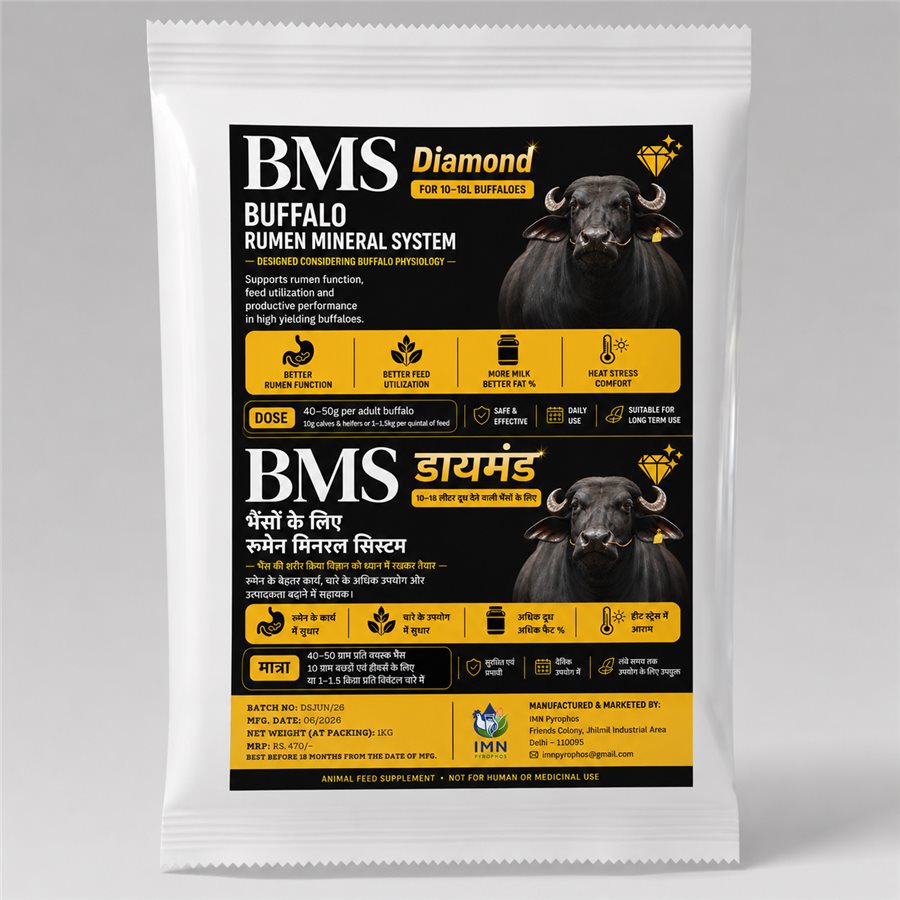
BMS Buffalo Mineral Mixture
A rumen mineral system designed for buffaloes giving 10–18 litres. Supports rumen function, feed utilization, milk and fat %, with comfort in heat stress. Safe for long-term daily use.
Dose: 40–50 g per adult buffalo per day, 10 g for calves and heifers, or 1–1.5 kg per quintal of feed.
5 kg ₹1,700MRP ₹3,150
FAQ
What milk procurement price did Heritage Foods pay in Q2 FY27?
An average of ₹47.73 per litre, 11% higher than in the same quarter last year.
Will every farmer supplying Heritage get ₹47.73 a litre?
No. It is an average. Each farmer’s rate depends on the fat and SNF of their milk and on the dairy’s rate chart.
Why did the price go up?
Heritage cited demand-supply imbalance, low farm productivity, weather disruptions and rising feed and fodder costs.
Source: Dairy Dimension, 16 Oct 2026. Written by the IMN Pyrophos team in our own words.
हेरिटेज फूड्स का दूध खरीद भाव 11% बढ़कर ₹47.73 प्रति लीटर: डेयरी किसानों के लिए इसका मतलब (अक्टूबर 2026)
देश की बड़ी प्राइवेट डेयरी कंपनियों में से एक, हेरिटेज फूड्स (Heritage Foods) ने वित्त वर्ष 2027 की दूसरी तिमाही में किसानों से खरीदे गए दूध के लिए औसतन ₹47.73 प्रति लीटर दिए, जो पिछले साल की इसी तिमाही से 11% ज़्यादा है। यह आँकड़ा कंपनी के Q2 FY27 नतीजों से आया है, जिसकी खबर Dairy Dimension ने 16 अक्टूबर 2026 को दी। हेरिटेज ने दूध महँगा होने की वजह माँग और सप्लाई का अंतर, फार्म पर कम उत्पादकता, मौसम की गड़बड़ी और दाना-चारे का बढ़ता खर्च बताई। इस तिमाही में कंपनी की आमदनी तेज़ी से बढ़ी, लेकिन पिछले साल के मुकाबले मुनाफा घटा, जिसकी बड़ी वजह दूध का इतना महँगा होना है।
मुख्य तथ्य
| बात | जानकारी |
|---|---|
| कंपनी | हेरिटेज फूड्स (प्राइवेट डेयरी) |
| अवधि | वित्त वर्ष 2027 की दूसरी तिमाही (नतीजे 16 अक्टूबर 2026 को छपे) |
| औसत दूध खरीद भाव | ₹47.73 प्रति लीटर |
| खरीद भाव में बदलाव | पिछले साल से 11% ज़्यादा |
| बताई गई वजहें | माँग-सप्लाई का अंतर, फार्म पर कम उत्पादकता, मौसम की गड़बड़ी, दाना-चारे का बढ़ता खर्च |
| कुल आमदनी (कंसॉलिडेटेड) | ₹1,320 करोड़, पिछले साल से 19% ज़्यादा |
| बिक्री की मात्रा | पिछले साल से 7% ज़्यादा |
| EBITDA | ₹74 करोड़; पिछले साल से 4% कम, पहली तिमाही से 20% ज़्यादा |
| टैक्स के बाद मुनाफा | पिछले साल से 39% कम |
| वैल्यू-एडेड प्रोडक्ट | Q2 की आमदनी का 42.5% (एक साल पहले 37.9%) |
दूध का खरीद भाव क्यों बढ़ रहा है
डेयरी कंपनी का खरीद भाव वह रकम है जो वह कलेक्शन सेंटर या गाँव के चिलिंग पॉइंट पर कच्चे दूध के लिए देती है। जब कंपनियों को किसानों की सप्लाई से ज़्यादा दूध चाहिए होता है, तो दूध पक्का करने के लिए उन्हें ज़्यादा दाम देना पड़ता है। हेरिटेज ने सबसे पहले यही माँग-सप्लाई का अंतर बताया, और वजह समझना आसान है: कंपनी की बिक्री की मात्रा 7% बढ़ी, और दही, पनीर, छाछ, लस्सी और आइसक्रीम इससे भी तेज़ी से बढ़े। इन सबके लिए कच्चे दूध की लगातार सप्लाई चाहिए।
सप्लाई की तरफ, कंपनी ने फार्म पर कम उत्पादकता, मौसम की गड़बड़ी और महँगे दाना-चारे की बात कही। जब पशु कम दूध दे और दाने की हर बोरी महँगी हो, तो किसान को टिके रहने के लिए ही ऊँचा भाव चाहिए, और जो डेयरी अपने सप्लायर बनाए रखना चाहती है उसे भाव बढ़ाना पड़ता है।
यह दबाव हेरिटेज के अपने आँकड़ों में दिखता है। आमदनी 19% बढ़ी, फिर भी टैक्स के बाद मुनाफा पिछले साल से 39% गिरा। यानी कंपनी की कमाई के हर रुपये का बड़ा हिस्सा दूध खरीदने में वापस गया। हमारे अपने मोटे हिसाब से, 11% बढ़कर ₹47.73 होने का मतलब है कि एक साल पहले औसत भाव लगभग ₹43 प्रति लीटर था।
डेयरी किसानों के लिए इसका मतलब
ऊँचा खरीद भाव दूध डालने वाले हर किसान के लिए अच्छी खबर है, पर इसे ध्यान से समझें। ₹47.73 हेरिटेज के खरीदे गए सारे दूध का औसत है। इसमें ज़्यादा फैट वाला भैंस का दूध और कम फैट वाला गाय का दूध, अच्छे और कमज़ोर सैंपल, सब मिले हुए हैं। आपकी अपनी पर्ची इससे काफी ऊपर या नीचे हो सकती है।
ऐसा इसलिए क्योंकि ज़्यादातर डेयरियाँ, प्राइवेट हों या सहकारी, एक जैसा भाव नहीं देतीं। वे फैट और SNF (सॉलिड्स-नॉट-फैट: प्रोटीन, लैक्टोज़ और मिनरल) पर भुगतान करती हैं। कलेक्शन पॉइंट पर आपके सैंपल की जाँच होती है और भाव एक चार्ट से पढ़ा जाता है: ज़्यादा फैट और ज़्यादा SNF यानी प्रति लीटर ज़्यादा रुपये। भैंस का दूध आम तौर पर गाय के दूध से प्रति लीटर ज़्यादा कमाता है क्योंकि उसमें कुदरती तौर पर फैट ज़्यादा होता है। जो दूध जाँच में फेल हो, खट्टा हो या जिसमें पानी मिलाने के निशान दिखें, उसका भाव कम मिल सकता है या वह लौटाया जा सकता है।
हेरिटेज ने जो दबाव बताए, वे किसान पर सीधे भी पड़ते हैं। अगर आप प्रति लीटर लागत पर नज़र नहीं रखते, तो महँगा दाना-चारा बढ़े हुए भाव का ज़्यादातर हिस्सा खा सकता है। लेकिन दूध के लिए डेयरियों के बीच होड़ उन किसानों को ज़्यादा कमाने का मौका देती है जो लगातार अच्छी क्वालिटी का दूध देते हैं।
किसान अभी क्या करें
- हर बार जाँच की पर्ची पढ़ें। फैट, SNF और प्रति लीटर भाव लिखें। आँकड़े गलत लगें तो अपने सामने दोबारा जाँच करवाएँ।
- फैट और SNF के लिए खिलाएँ। पर्याप्त अच्छा हरा और सूखा चारा फैट को सहारा देता है; प्रोटीन वाला संतुलित दाना SNF को। अचानक दाना बदलने से अक्सर दोनों गिरते हैं।
- रोज़ मिनरल मिक्सचर दें। मिनरल की कमी अक्सर कम दूध और कमज़ोर सॉलिड्स के रूप में दिखती है। हमारी डेयरी खिलाई और पोषण गाइड देखें।
- साफ दूध निकालें। थन धोकर सुखाएँ, साफ स्टील की बाल्टी इस्तेमाल करें, बीमार पशु का दूध अलग रखें और पानी कभी न मिलाएँ। साफ दूध ज़्यादा देर टिकता है और जाँच में बेहतर आता है।
- जल्दी और ठंडा पहुँचाएँ। घंटों गर्म पड़ा दूध खट्टा हो जाता है। दुहने के बाद दूध जल्दी कलेक्शन सेंटर या चिलर तक ले जाएँ।
- हर महीने प्रति लीटर लागत निकालें (दाना, चारा, मज़दूरी, डॉक्टर), ताकि पता चले कि बेहतर भाव सच में आपका मार्जिन बढ़ा रहा है या नहीं।
- रेट चार्ट मिलाएँ। जहाँ आपके इलाके में एक से ज़्यादा डेयरी दूध लेती हो, वहाँ बदलने से पहले हर एक से फैट/SNF चार्ट और भुगतान की शर्तें पूछें।
भैंसों के लिए बना
BMS Buffalo Mineral Mixture
10–18 लीटर दूध देने वाली भैंसों के लिए रुमेन मिनरल सिस्टम। रुमेन के काम, चारे के उपयोग, दूध और फैट % में सहायक, गर्मी के तनाव में आराम। रोज़ लंबे समय तक देने के लिए सुरक्षित।
मात्रा: 40–50 ग्राम प्रति वयस्क भैंस प्रति दिन, बछड़ों और बछियों को 10 ग्राम, या 1–1.5 किलो प्रति क्विंटल दाना।
5 kg ₹1,700MRP ₹3,150
अक्सर पूछे जाने वाले सवाल
हेरिटेज फूड्स ने Q2 FY27 में दूध का खरीद भाव कितना दिया?
औसतन ₹47.73 प्रति लीटर, जो पिछले साल की इसी तिमाही से 11% ज़्यादा है।
क्या हेरिटेज को दूध देने वाले हर किसान को ₹47.73 प्रति लीटर मिलेगा?
नहीं। यह औसत है। हर किसान का भाव उसके दूध के फैट और SNF और डेयरी के रेट चार्ट पर निर्भर करता है।
भाव क्यों बढ़ा?
हेरिटेज ने माँग-सप्लाई का अंतर, फार्म पर कम उत्पादकता, मौसम की गड़बड़ी और दाना-चारे का बढ़ता खर्च बताया।
स्रोत: Dairy Dimension, 16 अक्टूबर 2026। IMN Pyrophos टीम ने अपने शब्दों में लिखा।
Heritage Foods ka doodh kharid bhaav 11% badh kar ₹47.73 prati litre: dairy kisan ke liye iska matlab (October 2026)
Desh ki badi private dairy companiyon me se ek, Heritage Foods ne financial year 2027 ki doosri timahi (Q2) me kisanon se kharide doodh ke liye ausatan ₹47.73 prati litre diye, jo pichhle saal ki isi timahi se 11% zyada hai. Yeh aankda company ke Q2 FY27 nateejon se aaya hai, jiski khabar Dairy Dimension ne 16 October 2026 ko di. Heritage ne doodh mehenga hone ki wajah maang aur supply ka antar, farm par kam utpadakta, mausam ki gadbadi aur daana-chaare ka badhta kharcha batayi. Is timahi me company ki aamdani tezi se badhi, lekin pichhle saal ke mukable munafa ghata, jiski badi wajah doodh ka itna mehenga hona hai.
Mukhya tathya
| Baat | Jaankari |
|---|---|
| Company | Heritage Foods (private dairy) |
| Samay | FY2027 ki doosri timahi (nateeje 16 October 2026 ko chhape) |
| Ausat doodh kharid bhaav | ₹47.73 prati litre |
| Kharid bhaav me badlav | Pichhle saal se 11% zyada |
| Batayi gayi wajah | Maang-supply ka antar, farm par kam utpadakta, mausam ki gadbadi, daana-chaare ka badhta kharcha |
| Kul aamdani (consolidated) | ₹1,320 crore, pichhle saal se 19% zyada |
| Bikri ki matra | Pichhle saal se 7% zyada |
| EBITDA | ₹74 crore; pichhle saal se 4% kam, pehli timahi se 20% zyada |
| Tax ke baad munafa | Pichhle saal se 39% kam |
| Value-added products | Q2 ki aamdani ka 42.5% (ek saal pehle 37.9%) |
Doodh ka kharid bhaav kyon badh raha hai
Dairy company ka kharid bhaav woh rakam hai jo woh collection centre ya gaon ke chilling point par kachche doodh ke liye deti hai. Jab companiyon ko kisanon ki supply se zyada doodh chahiye hota hai, to doodh pakka karne ke liye unhe zyada daam dena padta hai. Heritage ne sabse pehle yahi maang-supply ka antar bataya, aur wajah samajhna aasaan hai: company ki bikri ki matra 7% badhi, aur dahi, paneer, chhachh, lassi aur ice cream isse bhi tezi se badhe. In sab ke liye kachche doodh ki lagaatar supply chahiye.
Supply ki taraf, company ne farm par kam utpadakta, mausam ki gadbadi aur mehenge daana-chaare ki baat kahi. Jab pashu kam doodh de aur daane ki har bori mehengi ho, to kisan ko tike rehne ke liye hi ooncha bhaav chahiye, aur jo dairy apne supplier banaye rakhna chahti hai use bhaav badhana padta hai.
Yeh dabav Heritage ke apne aankdon me dikhta hai. Aamdani 19% badhi, phir bhi tax ke baad munafa pichhle saal se 39% gira. Yaani company ki kamai ke har rupaye ka bada hissa doodh kharidne me wapas gaya. Hamare apne mote hisaab se, 11% badh kar ₹47.73 hone ka matlab hai ki ek saal pehle ausat bhaav lagbhag ₹43 prati litre tha.
Dairy kisan ke liye iska matlab
Ooncha kharid bhaav doodh daalne wale har kisan ke liye achhi khabar hai, par ise dhyan se samjhiye. ₹47.73 Heritage ke kharide saare doodh ka ausat hai. Isme zyada fat wala bhains ka doodh aur kam fat wala gaay ka doodh, achhe aur kamzor sample, sab mile hue hain. Aapki apni parchi isse kaafi upar ya neeche ho sakti hai.
Aisa isliye kyonki zyadatar dairy, private ho ya sahkari, ek jaisa bhaav nahi deti. Woh fat aur SNF (solids-not-fat: protein, lactose aur mineral) par payment karti hain. Collection point par aapke sample ki jaanch hoti hai aur bhaav ek chart se padha jaata hai: zyada fat aur zyada SNF yaani prati litre zyada rupaye. Bhains ka doodh aam taur par gaay ke doodh se prati litre zyada kamata hai kyonki usme kudrati taur par fat zyada hota hai. Jo doodh jaanch me fail ho, khatta ho ya jisme paani milane ke nishaan dikhein, uska bhaav kam mil sakta hai ya woh lautaya ja sakta hai.
Heritage ne jo dabav bataye, woh kisan par seedhe bhi padte hain. Agar aap prati litre laagat par nazar nahi rakhte, to mehenga daana-chaara badhe hue bhaav ka zyadatar hissa kha sakta hai. Lekin doodh ke liye dairy companiyon ke beech hod un kisanon ko zyada kamane ka mauka deti hai jo lagaatar achhi quality ka doodh dete hain.
Kisan abhi kya karein
- Har baar jaanch ki parchi padhiye. Fat, SNF aur prati litre bhaav likhiye. Aankde galat lagein to apne saamne dobara jaanch karwaiye.
- Fat aur SNF ke liye khilaiye. Bharpoor achha hara aur sookha chaara fat ko sahara deta hai; protein wala santulit daana SNF ko. Achanak daana badalne se aksar dono girte hain.
- Roz mineral mixture dijiye. Mineral ki kami aksar kam doodh aur kamzor solids ke roop me dikhti hai. Hamari dairy khilai aur poshan guide dekhiye.
- Saaf doodh nikaliye. Thann dho kar sukhaiye, saaf steel ki balti use kijiye, beemar pashu ka doodh alag rakhiye aur paani kabhi mat milaiye. Saaf doodh zyada der tikta hai aur jaanch me behtar aata hai.
- Jaldi aur thanda pahunchaiye. Ghanton garam pada doodh khatta ho jaata hai. Duhne ke baad doodh jaldi collection centre ya chiller tak le jaiye.
- Har mahine prati litre laagat nikaliye (daana, chaara, mazdoori, doctor), taaki pata chale ki behtar bhaav sach me aapka margin badha raha hai ya nahi.
- Rate chart milaiye. Jahan aapke ilaake me ek se zyada dairy doodh leti ho, wahan badalne se pehle har ek se fat/SNF chart aur payment ki sharten poochhiye.
Bhainson ke liye bana
BMS Buffalo Mineral Mixture
10–18 litre doodh dene wali bhainson ke liye rumen mineral system. Rumen ke kaam, chaare ke upyog, doodh aur fat % me sahayak, garmi ke tanaav me aaram. Roz lambe samay tak dene ke liye surakshit.
Matra: 40–50 g prati vayask bhains prati din, bachhdon aur bachhiyon ko 10 g, ya 1–1.5 kg prati quintal daana.
5 kg ₹1,700MRP ₹3,150
Aksar poochhe jaane wale sawaal
Heritage Foods ne Q2 FY27 me doodh ka kharid bhaav kitna diya?
Ausatan ₹47.73 prati litre, jo pichhle saal ki isi timahi se 11% zyada hai.
Kya Heritage ko doodh dene wale har kisan ko ₹47.73 prati litre milega?
Nahi. Yeh ausat hai. Har kisan ka bhaav uske doodh ke fat aur SNF aur dairy ke rate chart par nirbhar karta hai.
Bhaav kyon badha?
Heritage ne maang-supply ka antar, farm par kam utpadakta, mausam ki gadbadi aur daana-chaare ka badhta kharcha bataya.
Source: Dairy Dimension, 16 Oct 2026. IMN Pyrophos team ne apne shabdon me likha.