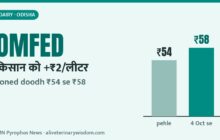
On 9 October 2026, the Karnataka cabinet approved a Nandini milk price hike of up to ₹8 per litre, and ₹6 of every litre of that increase is meant for the dairy farmers who supply the milk. If the decision goes through, blue-packet toned milk sold by the Karnataka Milk Federation (KMF) under the Nandini brand will cost ₹54 a litre instead of ₹46. The government is aiming for the new rates to start on 1 November. They cannot be announced yet, though: the Model Code of Conduct is in force for the coming Legislative Council elections, so the Election Commission of India has to clear the move first. The cabinet has left the final rollout to Chief Minister D.K. Shivakumar.
Key facts
| Point | Detail |
|---|---|
| Decision | Karnataka cabinet, 9 October 2026 |
| Retail increase | Up to ₹8 per litre on Nandini packet milk |
| Blue-packet toned milk | From ₹46 to ₹54 per litre |
| Share for milk producers | ₹6 per litre |
| Share for district milk unions | ₹2 per litre |
| Target start date | 1 November, after Election Commission clearance |
| KMF procurement rate now | About ₹35 per litre (toned milk base rate) |
| Farmgate rates nearby | Tamil Nadu ₹42.2, Kerala ₹41.8, Andhra Pradesh ₹41.5, Maharashtra ₹41 |
| KMF network | 16 district unions, more than 9 million litres of raw milk a day |
| Earlier hikes since Nov 2022 | ₹3 (late 2022), ₹3 (mid-2023), ₹2 (mid-2024), ₹4 (March 2025) |
Why Nandini milk prices are going up
This would be the fifth time Nandini prices have been revised since November 2022. Two pressures sit behind it.
The first is the cost of running the dairy network. KMF’s district unions say electricity, diesel, veterinary supplies and packaging have all become dearer. The ₹2 per litre they keep from this hike is meant for cold-chain compliance, upkeep of packaging lines and working capital.
The second, and the bigger one for farmers, is the price paid at the village society. KMF’s base procurement rate for toned milk is around ₹35 a litre, while farmers in Andhra Pradesh, Maharashtra, Kerala and Tamil Nadu get between ₹41 and ₹42.2. At the same time, drought in Karnataka has left many smallholders short of fodder and paying more for feed. A milk rate that lags neighbouring states while feed bills climb squeezes the margin on every litre.
Karnataka is not alone. Amul and Mother Dairy each raised retail milk prices by ₹2 per litre earlier in 2026.
What it means for dairy farmers
If the full ₹6 reaches the society rate, a farmer who pours 10 litres a day would earn about ₹60 more per day, or roughly ₹1,800 a month. On paper, a ₹35 base rate plus ₹6 would bring Karnataka close to the ₹41-42 paid in neighbouring states, though the actual payment on your slip will depend on your union’s rate chart, which is usually linked to fat and SNF.
There are three cautions. First, nothing changes until the hike is formally notified, and a delay is possible. Second, drought-driven fodder and feed costs may eat part of the gain, so the real benefit depends on how well you control feed spending. Third, a higher retail price can slow packet milk sales for a while, which in some seasons affects how much milk unions want to buy.
What farmers should do now
- Wait for the official notice from your union or society before planning on the extra money.
- Check your milk slip once the new rate starts: rate per litre, fat and SNF. Ask the society secretary if the ₹6 is not visible.
- Push fat and SNF up, since payment follows quality. A balanced daana, daily mineral mixture and clean water help. See our dairy feeding and nutrition guide.
- Put part of the extra income into fodder security for the dry months: buy dry fodder early, or make silage if you have green maize or sorghum.
- Work out your cost per litre (feed, fodder, labour, vet) every month, so you know whether the hike really improves your margin.
- Review low yielders. An animal that gives little milk still eats costly feed every day.
Rumen health
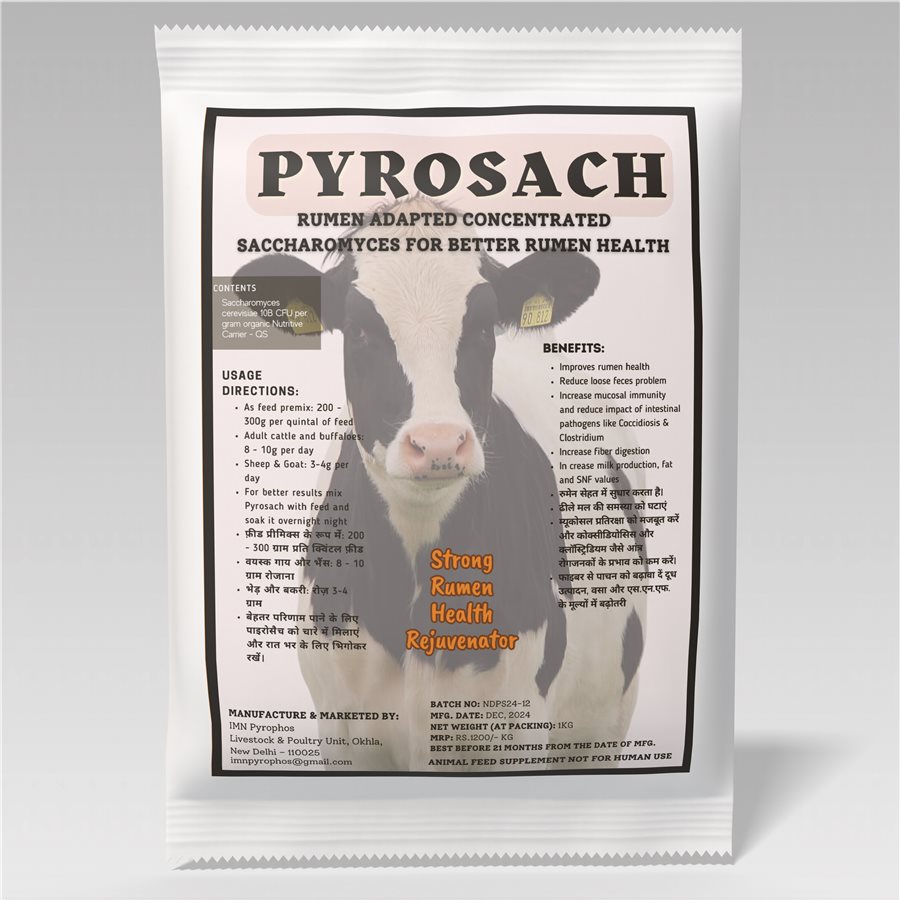
Pyrosach
Rumen-friendly Saccharomyces cerevisiae (1000 crore CFU per gram). Improves fibre digestion and rumen health, reduces loose dung, and supports milk, fat and SNF.
Dose: 8–10 g per adult cow or buffalo per day, or 200–300 g per quintal of feed. For best results, mix into the feed and soak overnight.
1 kg ₹700MRP ₹1,200
FAQ
When will the new Nandini milk price start?
The target date is 1 November. It can start only after the Election Commission of India clears it, and the Chief Minister will decide the final rollout.
How much more will Karnataka dairy farmers get?
Of the hike of up to ₹8 per litre, ₹6 is set aside for milk producers. The remaining ₹2 goes to the district milk unions.
Why are Karnataka farmers paid less than farmers in nearby states?
KMF’s base rate is about ₹35 per litre, against ₹41 to ₹42.2 in Andhra Pradesh, Maharashtra, Kerala and Tamil Nadu. The ₹6 producer share would narrow that gap.
Source: eDairy News India, 09 Oct 2026. Written by the IMN Pyrophos team in our own words.
नंदिनी दूध ₹8 प्रति लीटर तक महंगा होगा: कर्नाटक के डेयरी किसानों को ₹6 ज़्यादा (अक्टूबर 2026)
9 अक्टूबर 2026 को कर्नाटक कैबिनेट ने नंदिनी दूध के दाम ₹8 प्रति लीटर तक बढ़ाने को मंज़ूरी दी, और इस बढ़ोतरी में से हर लीटर पर ₹6 दूध देने वाले किसानों के लिए रखे गए हैं। फैसला लागू हुआ तो कर्नाटक मिल्क फेडरेशन (KMF) का नंदिनी ब्रांड वाला नीला पैकेट टोंड दूध ₹46 की जगह ₹54 प्रति लीटर मिलेगा। सरकार नई दरें 1 नवंबर से शुरू करना चाहती है। लेकिन अभी इनकी घोषणा नहीं हो सकती: आने वाले विधान परिषद चुनावों के कारण आचार संहिता लागू है, इसलिए पहले भारत निर्वाचन आयोग की मंज़ूरी चाहिए। कैबिनेट ने इसे लागू करने का अंतिम फैसला मुख्यमंत्री डी.के. शिवकुमार पर छोड़ा है।
मुख्य तथ्य
| बिंदु | जानकारी |
|---|---|
| फैसला | कर्नाटक कैबिनेट, 9 अक्टूबर 2026 |
| खुदरा बढ़ोतरी | नंदिनी पैकेट दूध पर ₹8 प्रति लीटर तक |
| नीला पैकेट टोंड दूध | ₹46 से ₹54 प्रति लीटर |
| दूध उत्पादकों का हिस्सा | ₹6 प्रति लीटर |
| ज़िला दुग्ध संघों का हिस्सा | ₹2 प्रति लीटर |
| शुरू करने की लक्ष्य तारीख | 1 नवंबर, निर्वाचन आयोग की मंज़ूरी के बाद |
| KMF की अभी की खरीद दर | लगभग ₹35 प्रति लीटर (टोंड दूध की बेस दर) |
| पड़ोसी राज्यों में किसान को दाम | तमिलनाडु ₹42.2, केरल ₹41.8, आंध्र प्रदेश ₹41.5, महाराष्ट्र ₹41 |
| KMF का नेटवर्क | 16 ज़िला संघ, रोज़ 90 लाख लीटर से ज़्यादा कच्चा दूध |
| नवंबर 2022 से पिछली बढ़ोतरी | ₹3 (2022 के आखिर में), ₹3 (2023 के बीच), ₹2 (2024 के बीच), ₹4 (मार्च 2025) |
नंदिनी दूध के दाम क्यों बढ़ रहे हैं
नवंबर 2022 के बाद यह नंदिनी के दामों में पाँचवाँ बदलाव होगा। इसके पीछे दो दबाव हैं।
पहला, डेयरी नेटवर्क चलाने का खर्च। KMF के ज़िला संघों का कहना है कि बिजली, डीज़ल, पशु चिकित्सा सामान और पैकेजिंग सब महंगे हो गए हैं। इस बढ़ोतरी में से जो ₹2 प्रति लीटर संघ रखेंगे, वह कोल्ड-चेन के नियमों के पालन, पैकेजिंग लाइनों की देखभाल और कार्यशील पूंजी के लिए है।
दूसरा, और किसानों के लिए ज़्यादा बड़ा, गाँव की समिति पर मिलने वाला दाम। KMF टोंड दूध के लिए लगभग ₹35 प्रति लीटर की बेस दर देता है, जबकि आंध्र प्रदेश, महाराष्ट्र, केरल और तमिलनाडु में किसानों को ₹41 से ₹42.2 मिलते हैं। साथ ही कर्नाटक में सूखे के कारण कई छोटे किसानों के पास चारा कम है और दाने पर खर्च बढ़ गया है। जब दूध का दाम पड़ोसी राज्यों से पीछे हो और दाने का बिल बढ़ता जाए, तो हर लीटर पर बचत घट जाती है।
ऐसा सिर्फ कर्नाटक में नहीं हो रहा। अमूल और मदर डेयरी ने भी 2026 में पहले ही दूध के खुदरा दाम ₹2-₹2 प्रति लीटर बढ़ाए थे।
डेयरी किसानों के लिए इसका मतलब
अगर पूरे ₹6 समिति की दर तक पहुँचते हैं, तो रोज़ 10 लीटर दूध डालने वाले किसान को रोज़ लगभग ₹60 ज़्यादा, यानी महीने में करीब ₹1,800 ज़्यादा मिलेंगे। कागज़ पर ₹35 की बेस दर में ₹6 जुड़ने से कर्नाटक पड़ोसी राज्यों के ₹41-42 के करीब आ जाएगा, पर आपकी पर्ची पर असली भुगतान आपके संघ के रेट चार्ट पर निर्भर करेगा, जो आमतौर पर फैट और SNF से जुड़ा होता है।
तीन सावधानियाँ ज़रूरी हैं। पहली, जब तक बढ़ोतरी की औपचारिक अधिसूचना नहीं आती, कुछ नहीं बदलेगा, और इसमें देर भी हो सकती है। दूसरी, सूखे से बढ़ा चारे और दाने का खर्च इस फायदे का कुछ हिस्सा खा सकता है, इसलिए असली लाभ इस पर निर्भर है कि आप दाने का खर्च कितना संभालते हैं। तीसरी, खुदरा दाम बढ़ने से कुछ समय के लिए पैकेट दूध की बिक्री धीमी हो सकती है, जिसका असर कुछ मौसमों में इस पर पड़ता है कि संघ कितना दूध खरीदना चाहते हैं।
किसान अभी क्या करें
- आधिकारिक सूचना का इंतज़ार करें। अपने संघ या समिति की घोषणा से पहले अतिरिक्त पैसे का हिसाब न जोड़ें।
- दूध की पर्ची जाँचें जब नई दर शुरू हो: प्रति लीटर दर, फैट और SNF। अगर ₹6 नहीं दिखे तो समिति के सचिव से पूछें।
- फैट और SNF बढ़ाएँ, क्योंकि भुगतान गुणवत्ता से जुड़ा है। संतुलित दाना, रोज़ मिनरल मिक्सचर और साफ़ पानी मदद करते हैं। हमारी डेयरी पशु आहार गाइड देखें।
- अतिरिक्त कमाई का कुछ हिस्सा चारे की सुरक्षा में लगाएँ, सूखे महीनों के लिए: सूखा चारा जल्दी खरीदें, या हरी मक्का या ज्वार हो तो साइलेज बनाएँ।
- हर महीने प्रति लीटर लागत निकालें (दाना, चारा, मज़दूरी, इलाज), ताकि पता चले कि बढ़ोतरी से सच में बचत बढ़ी या नहीं।
- कम दूध वाले पशुओं पर विचार करें। कम दूध देने वाला पशु भी रोज़ महंगा दाना खाता है।
रुमेन की सेहत
Pyrosach
रुमेन के अनुकूल Saccharomyces cerevisiae (1000 करोड़ CFU प्रति ग्राम)। रेशे का पाचन और रुमेन की सेहत सुधारता है, पतला गोबर घटाता है, दूध, फैट और SNF में सहायक।
मात्रा: 8–10 ग्राम प्रति वयस्क गाय या भैंस प्रति दिन, या 200–300 ग्राम प्रति क्विंटल दाना। अच्छे नतीजे के लिए दाने में मिलाकर रात भर भिगोएँ।
1 kg ₹700MRP ₹1,200
अक्सर पूछे जाने वाले सवाल
नंदिनी दूध का नया दाम कब से लागू होगा?
लक्ष्य तारीख 1 नवंबर है। यह भारत निर्वाचन आयोग की मंज़ूरी के बाद ही शुरू होगा, और अंतिम फैसला मुख्यमंत्री करेंगे।
कर्नाटक के डेयरी किसानों को कितना ज़्यादा मिलेगा?
₹8 प्रति लीटर तक की बढ़ोतरी में से ₹6 दूध उत्पादकों के लिए तय हैं। बाकी ₹2 ज़िला दुग्ध संघों को जाएँगे।
कर्नाटक के किसानों को पड़ोसी राज्यों से कम दाम क्यों मिलता है?
KMF की बेस दर लगभग ₹35 प्रति लीटर है, जबकि आंध्र प्रदेश, महाराष्ट्र, केरल और तमिलनाडु में ₹41 से ₹42.2 मिलते हैं। उत्पादकों का ₹6 का हिस्सा यह अंतर कम करेगा।
स्रोत: eDairy News India, 09 अक्टूबर 2026। IMN Pyrophos टीम ने अपने शब्दों में लिखा।
Nandini doodh ₹8 prati litre tak mehenga hoga: Karnataka ke dairy kisan ko ₹6 zyada (October 2026)
9 October 2026 ko Karnataka cabinet ne Nandini doodh ke daam ₹8 prati litre tak badhane ko manzoori di, aur is badhotri me se har litre par ₹6 doodh dene wale kisan ke liye rakhe gaye hain. Faisla laagu hua to Karnataka Milk Federation (KMF) ka Nandini brand wala neela packet toned doodh ₹46 ki jagah ₹54 prati litre milega. Sarkar nayi dar 1 November se shuru karna chahti hai. Lekin abhi iski ghoshna nahi ho sakti: aane wale Vidhan Parishad chunav ki wajah se aachar sanhita laagu hai, isliye pehle Bharat Nirvachan Aayog (Election Commission) ki manzoori chahiye. Cabinet ne ise laagu karne ka aakhri faisla Mukhyamantri D.K. Shivakumar par chhoda hai.
Mukhya tathya
| Baat | Jaankari |
|---|---|
| Faisla | Karnataka cabinet, 9 October 2026 |
| Retail badhotri | Nandini packet doodh par ₹8 prati litre tak |
| Neela packet toned doodh | ₹46 se ₹54 prati litre |
| Doodh utpadak (kisan) ka hissa | ₹6 prati litre |
| District milk union ka hissa | ₹2 prati litre |
| Shuru karne ki target date | 1 November, Election Commission ki manzoori ke baad |
| KMF ki abhi ki kharid dar | Lagbhag ₹35 prati litre (toned doodh ki base dar) |
| Padosi rajyon me kisan ko daam | Tamil Nadu ₹42.2, Kerala ₹41.8, Andhra Pradesh ₹41.5, Maharashtra ₹41 |
| KMF ka network | 16 district union, roz 90 lakh litre se zyada kachcha doodh |
| November 2022 se pichhli badhotri | ₹3 (2022 ke aakhir me), ₹3 (2023 ke beech), ₹2 (2024 ke beech), ₹4 (March 2025) |
Nandini doodh ke daam kyon badh rahe hain
November 2022 ke baad ye Nandini ke daam me paanchva badlav hoga. Iske peeche do dabav hain.
Pehla, dairy network chalane ka kharch. KMF ke district union kehte hain ki bijli, diesel, pashu dawa ka samaan aur packing sab mehenge ho gaye hain. Is badhotri me se jo ₹2 prati litre union rakhenge, wo cold-chain ke niyam, packing line ki dekhbhal aur working capital ke liye hai.
Doosra, aur kisan ke liye zyada bada, gaon ki samiti par milne wala daam. KMF toned doodh ke liye lagbhag ₹35 prati litre ki base dar deta hai, jabki Andhra Pradesh, Maharashtra, Kerala aur Tamil Nadu me kisan ko ₹41 se ₹42.2 milte hain. Saath hi Karnataka me sookhe ki wajah se kai chhote kisanon ke paas chaara kam hai aur daane ka kharch badh gaya hai. Jab doodh ka daam padosi rajyon se peeche ho aur daane ka bill badhta jaye, to har litre par bachat ghat jaati hai.
Aisa sirf Karnataka me nahi ho raha. Amul aur Mother Dairy ne bhi 2026 me pehle hi doodh ke retail daam ₹2-₹2 prati litre badhaye the.
Dairy kisan ke liye iska matlab
Agar poore ₹6 samiti ki dar tak pahunchte hain, to roz 10 litre doodh daalne wale kisan ko roz lagbhag ₹60 zyada, yaani mahine me kareeb ₹1,800 zyada milenge. Kagaz par ₹35 ki base dar me ₹6 judne se Karnataka padosi rajyon ke ₹41-42 ke kareeb aa jayega, par aapki parchi par asli bhugtan aapke union ke rate chart par nirbhar karega, jo aam taur par fat aur SNF se juda hota hai.
Teen saavdhaniyan zaroori hain. Pehli, jab tak badhotri ki official suchna nahi aati, kuch nahi badlega, aur isme der bhi ho sakti hai. Doosri, sookhe se badha chaare aur daane ka kharch is fayde ka kuch hissa kha sakta hai, isliye asli laabh is par nirbhar hai ki aap daane ka kharch kitna sambhalte hain. Teesri, retail daam badhne se kuch samay ke liye packet doodh ki bikri dheemi ho sakti hai, jiska asar kuch mausam me is par padta hai ki union kitna doodh kharidna chahte hain.
Kisan abhi kya karein
- Official suchna ka intezaar kijiye. Apne union ya samiti ki ghoshna se pehle extra paise ka hisaab mat jodiye.
- Doodh ki parchi jaanchiye jab nayi dar shuru ho: prati litre dar, fat aur SNF. Agar ₹6 na dikhe to samiti ke sachiv se poochhiye.
- Fat aur SNF badhaiye, kyonki bhugtan quality se juda hai. Santulit daana, roz mineral mixture aur saaf paani madad karte hain. Hamari dairy pashu aahaar guide dekhiye.
- Extra kamai ka kuch hissa chaare ki suraksha me lagaiye, sookhe mahino ke liye: sookha chaara jaldi kharidiye, ya hari makka ya jowar ho to silage banaiye.
- Har mahine prati litre laagat nikaliye (daana, chaara, mazdoori, ilaaj), taaki pata chale ki badhotri se sach me bachat badhi ya nahi.
- Kam doodh wale pashuon par vichaar kijiye. Kam doodh dene wala pashu bhi roz mehenga daana khaata hai.
Rumen ki sehat
Pyrosach
Rumen ke anukool Saccharomyces cerevisiae (1000 crore CFU prati gram). Reshe ka pachan aur rumen ki sehat sudharta hai, patla gobar ghatata hai, doodh, fat aur SNF me sahayak.
Matra: 8–10 g prati vayask gaay ya bhains prati din, ya 200–300 g prati quintal daana. Achhe natije ke liye daane me mila kar raat bhar bhigoiye.
1 kg ₹700MRP ₹1,200
Aksar poochhe jaane wale sawaal
Nandini doodh ka naya daam kab se laagu hoga?
Target date 1 November hai. Ye Election Commission ki manzoori ke baad hi shuru hoga, aur aakhri faisla Mukhyamantri karenge.
Karnataka ke dairy kisan ko kitna zyada milega?
₹8 prati litre tak ki badhotri me se ₹6 doodh utpadakon ke liye tay hain. Baaki ₹2 district milk union ko jayenge.
Karnataka ke kisan ko padosi rajyon se kam daam kyon milta hai?
KMF ki base dar lagbhag ₹35 prati litre hai, jabki Andhra Pradesh, Maharashtra, Kerala aur Tamil Nadu me ₹41 se ₹42.2 milte hain. Utpadakon ka ₹6 ka hissa ye antar kam karega.
Source: eDairy News India, 09 Oct 2026. IMN Pyrophos team ne apne shabdon me likha.