
Toxicity Problem in Poultry – Case Study
Silent Killer in Poultry Farms: Toxicity-Induced Gizzard Erosion, Sound Problem & Mortality – A Veterinary Perspective
When Poultry Mortality Is Not an Infection
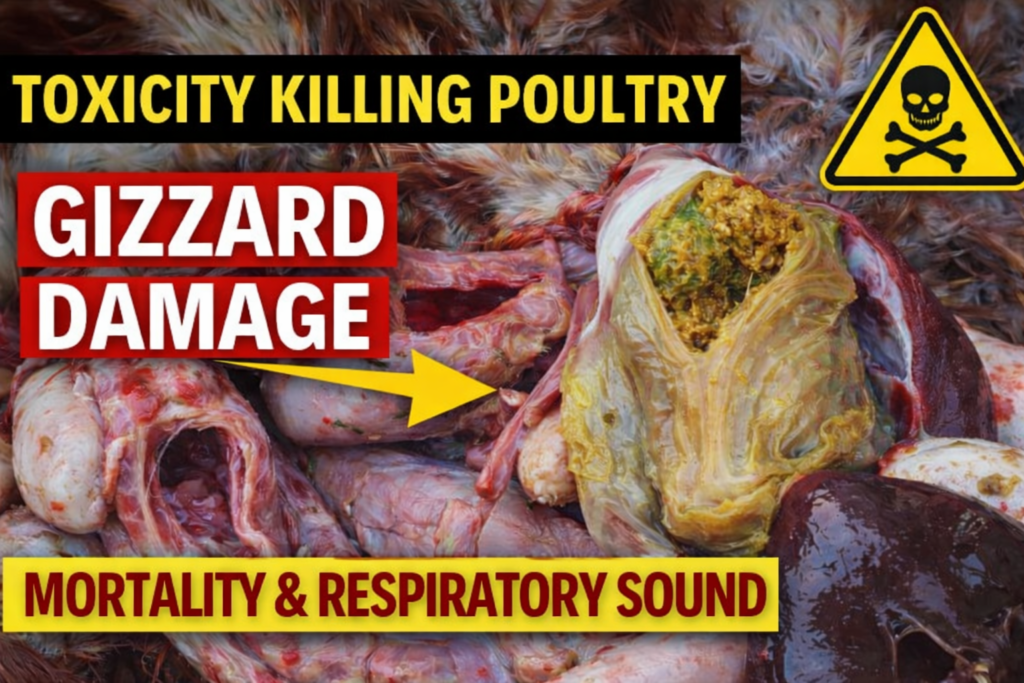
Poultry farms frequently report mortality associated with respiratory sound, loose droppings, poor feed response, and sudden decline—especially in male birds. These cases are often treated aggressively with antibiotics, yet mortality continues.
I have recieved a case about mortalilty by one farmer who is regularly took my consultancy and follow my prescriptions. In last I have also shared gizzard erosion treatment.
Detailed post-mortem examination reveals a consistent pattern:
- Severe gizzard erosion
- Blackish or congested liver
- Watery diarrhea
- Tracheal mucus with respiratory distress
These findings strongly indicate a toxicity problem in poultry, rather than a primary infectious disease. Immune break down in poultry flock is also seen.
Har respiratory sound infection nahi hota. Kai baar asli problem feed se aane wali toxicity hoti hai, jo pehle digestion ko kharab karti hai aur baad me immune system ko depress karke infection ko mauka deti hai.
Understanding Toxicity in Poultry Feed
What Is Poultry Toxicity?
Poultry toxicity occurs when birds consume feed contaminated with harmful substances that damage organs, suppress immunity, and disrupt metabolism. Mycotoxins in poultry feed are considered primary toxic substances which causes toxicity in poultry.
Common causes:
- Mycotoxins (T-2 toxin, DON, Ochratoxin)
- Oxidized or rancid fats
- Chemical residues (excess copper, formalin contamination)
- Poor-quality or improperly stored feed ingredients
This leads to toxicity symptoms in poultry that are often slow, progressive, and misleading.
Case ke postmortem pics ko dekhne ke liye ye video dekhiye. Watch this video to see poultry postmortem pics
📺 Watch Detailed Case Explanation (YouTube)
This video explains:
- PM lesions
- Feed toxicity diagnosis
- Why antibiotics fail
- Correct field-level strategy
Toxicity Symptoms in Poultry (Field Observations)
Early symptoms:
- Reduced feed intake – birds left feeding and start eating litter or not eat at all
- Loose droppings – digestion is often impaired in toxicity cases due to liver damage
- Wet litter – mycotoxins and other toxic materials irritate digestive system lining which causes expulsion of fluids from the body into the intestine
- Mild respiratory noise (especially at night) – suppression of immune system and weaking of intestine lining causes leak of harmful bacteria like E.coli into the blood which causes respiratory problems. Wet litter indirectly increases ammonia realease which enhnace respiratory disease.
Advanced symptoms:
- Sound problem in poultry
- Severe diarrhea
- Dehydration
- Males dying earlier than females
- Poor response to antibiotics
Toxicity me bird pehle dheere-dheere weak hota hai. Gizzard ka kaam kharab hota hai, feed properly grind nahi hota, phir loose motion start hota hai. Is stage par agar sirf antibiotic diya jaye, to recovery nahi hoti.
Pathological Explanation (Organ-Wise)
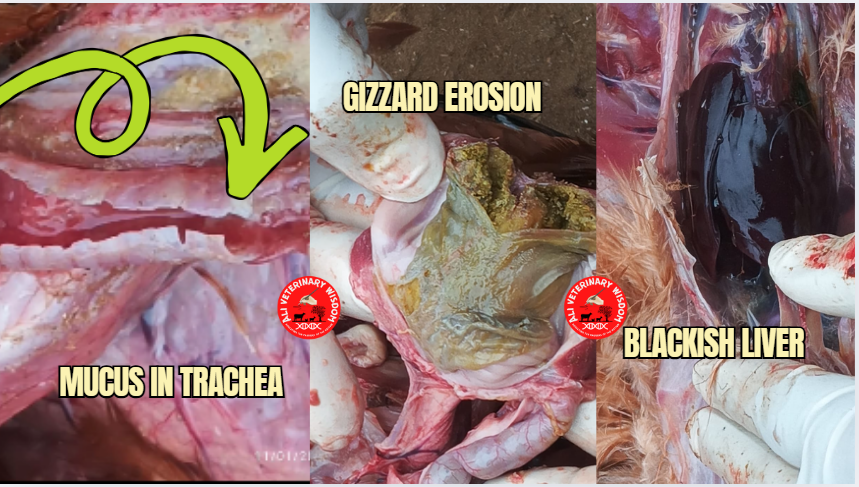
Gizzard Damage – The Primary Lesion
PM findings:
- Koilin layer peeling
- Gizzard erosion and ulceration
- Yellow-green cheesy material inside gizzard
Pathogenesis:
Mycotoxins directly damage the gizzard mucosa → koilin layer separates → digestion fails → undigested feed enters intestine.
This explains why toxicity problem in poultry feed almost always starts with digestive disturbance.
Supportive nutritional logic
At this stage, energy metabolism and cellular repair become critical.
Formulations containing L-carnitine, antioxidants, and hepatoprotective nutrients help restore fat metabolism and protect cells from oxidative damage.
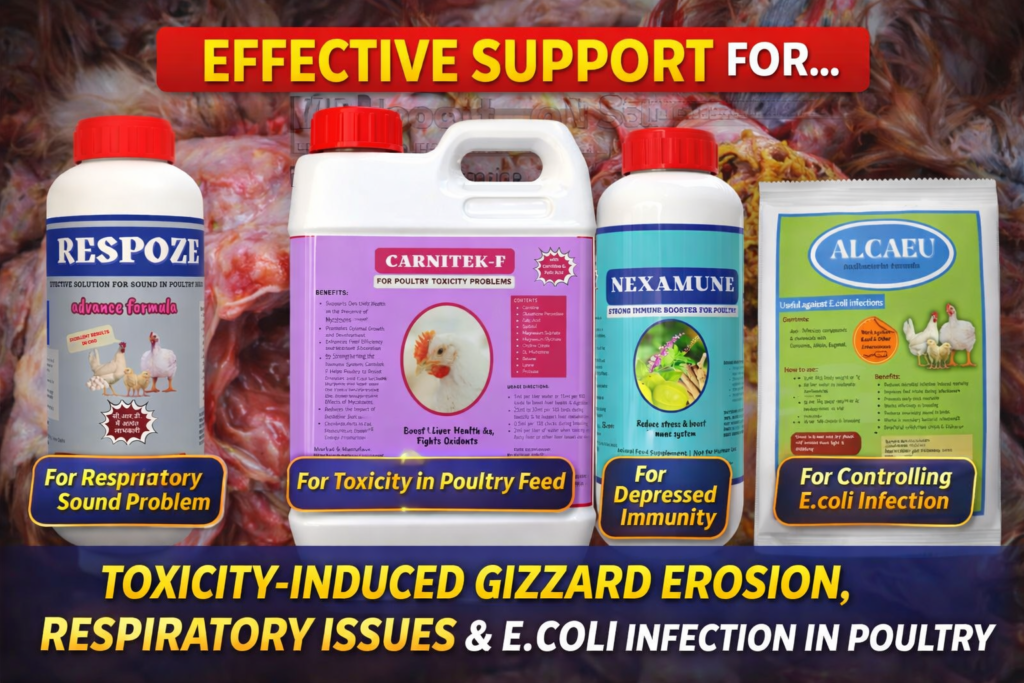
This is where Carnitek-F plays a role by supporting:
- Mitochondrial energy production
- Fat metabolism
- Cellular recovery during toxicity stress
Carnitine ka role energy ko revive karna hota hai. Jab bird toxicity se stress me hota hai, to uski cells energy bana nahi paati. Carnitine metabolism ko support karta hai, jisse bird recover karne lagta hai.
Liver – Blackish, Congested, Toxic
Findings:
- Dark or blackish liver
- Congestion
- Reduced detox capacity – liver is overwhelmed with oxidative stress
This indicates toxic hepatitis, not classic bacterial hepatitis.
Mycotoxins overwhelm the liver’s detoxification pathways, allowing toxins to circulate longer in the body.
Nutritional-immunological support
During this phase, antioxidant shield + immune revival is essential.
Nexamune supports:
- Antioxidant defense
- Cellular immunity
- Stress tolerance during toxicity
Toxicity me liver sabse zyada affected hota hai. Antioxidant bina diye agar hum sirf antibiotic denge, to liver aur immune system aur weak ho jaata hai.
Intestinal Damage & Diarrhea
Findings:
- Watery, greenish content
- Undigested feed
- Inflamed mucosa
Mechanism:
- Gizzard damage → poor grinding
- Intestinal irritation → osmotic diarrhea
- Increased toxin absorption → dehydration
This stage accelerates mortality, especially in male birds due to higher feed intake.
Respiratory Tract – Secondary Involvement
One of the most confusing signs is sound problem in poultry.
PM findings:
- Catarrhal tracheitis
- Sticky mucus
- No diphtheritic plugs
Interpretation:
This is secondary respiratory distress, not a primary respiratory disease.
Causes include:
- Immunosuppression due to toxicity
- Ammonia irritation
- Opportunistic infections
Respoze is useful here because it:
- Helps liquefy tracheal mucus
- Supports airway clearance
- Reduces respiratory distress
Respiratory sound tab aata hai jab trachea me mucus jam jaata hai. Agar sirf antibiotic diya jaye bina mucus clear kiye, to sound kam nahi hota.
Secondary E. coli & Infection Pressure
Toxicity weakens:
- Gut barrier
- Local immunity
- Respiratory defense
This allows E. coli to proliferate, worsening septic load.
Alcaeu supports:
- Control of E. coli load
- Reduction of endotoxin pressure
- Gut–respiratory axis stability
E. coli primary disease nahi hoti, ye toxicity ke baad activate hoti hai. Isliye infection control ke saath toxicity correction zaroori hai.
Disease Progression (Simplified)
Contaminated feed
⬇
Gizzard erosion
⬇
Diarrhea & dehydration
⬇
Liver toxicity
⬇
Immune suppression
⬇
Respiratory sound + secondary infection
⬇
Mortality
Common Field Mistakes
- Treating every sound problem as viral disease
- Ignoring feed quality
- No antioxidant or immune correction
- Overuse of antibiotics
Final Veterinary Diagnosis
Toxicity problem in poultry feed causing gizzard erosion, toxic hepatitis, immune depression, secondary respiratory involvement and mortality
Key Takeaway for Poultry Professionals
- Not all respiratory sounds are infections
- Not all diarrhea is bacterial
- Toxicity poultry medicine must focus on detox, immunity, and organ support
Agar toxicity ko time par identify karke digestion, liver aur immune system ko support kiya jaye, to mortality control ho sakti hai bina unnecessary antibiotic pressure ke.
Ap hamse jud kar apni poultry farming me aane wali sasmasyaon ka samna confidence ke sath kar sakte, ham apne anubhav aur technical knowledge se solve karne ki koshish karte hain.
Hamse judne ke liye 9871584101 par call ya whatsapp karein..