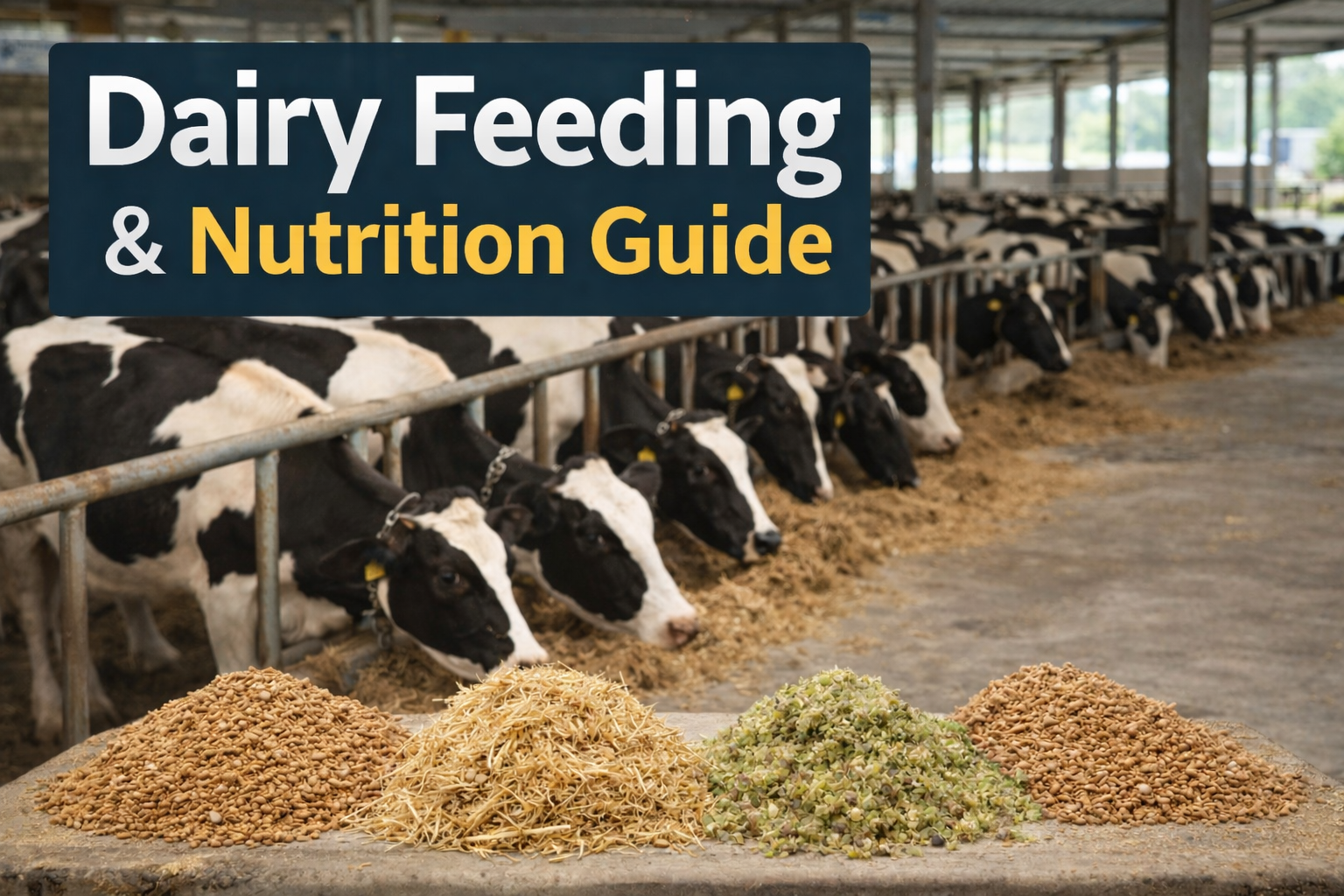

Sorghum Fodder Nutritional Value for Cattle

Cultivation Practices, Yield, Nutritional Value and Feeding Significance
1. Introduction
Sorghum (Sorghum bicolor (L.) Moench), popularly known as jowar or chari, is one of the most important fodder cereal crops cultivated in India. It occupies a significant place in livestock feeding systems, particularly in semi-arid, arid, and drought-prone regions, where availability of green fodder remains a major constraint. Sorghum is valued for its high biomass production, rapid growth, adaptability to adverse climatic conditions, and low input requirement.
From a veterinary nutrition perspective, sorghum fodder serves primarily as a source of bulk roughage and energy for ruminants. However, its feeding value is influenced by agronomic practices, stage of harvest, fertilization, and the presence of certain anti-nutritional factors, particularly prussic acid (hydrogen cyanide). Therefore, an integrated understanding of cultivation practices, fodder yield, nutritional composition, and safe feeding is essential for veterinarians, dairy consultants, and livestock producers.
2. Botanical Description and Classification
- Scientific name: Sorghum bicolor (L.) Moench
- Family: Poaceae
- Chromosome number: 2n = 20
Sorghum is an erect, annual grass with solid stems, broad leaves, and a well-developed fibrous root system. Based on its use in livestock feeding, fodder sorghum is classified as follows:
Types of Fodder Sorghum
| Type | Characteristics | Importance |
|---|---|---|
| Single-cut sorghum | One harvest, high biomass | Green fodder, silage |
| Multi-cut sorghum | 2–3 cuts, fast regeneration | Continuous fodder supply |
| Dual-purpose sorghum | Grain + fodder | Mixed farming systems |
3. Agro-Climatic Requirements
Sorghum is a warm-season C4 crop, making it highly efficient in photosynthesis and water use.
Climatic Requirements
- Optimal temperature: 25–35°C
- Rainfall: 400–750 mm
- High tolerance to drought and heat stress
- Sensitive to frost
Soil Requirements
- Best suited to loamy to clay loam soils
- Can tolerate moderately saline and alkaline soils
- Ideal soil pH: 6.0–8.0
- Poorly drained soils should be avoided
4. Soil Preparation
Proper soil preparation ensures good germination and early establishment.
Recommended Practices:
- One deep ploughing to break hard pans
- Two to three harrowings to obtain fine tilth
- Removal of weeds and stubbles
- Application of 8–10 tonnes/ha of well-decomposed FYM
Good soil aeration and moisture conservation improve nutrient uptake and fodder yield.
5. Varieties of Fodder Sorghum in India
Important Varieties
| Category | Varieties |
|---|---|
| Single-cut | Pusa Chari-1, Pusa Chari-6, MP Chari, UP Chari-1 |
| Multi-cut | COFS-29, COFS-31, Pusa Chari-615 |
| Dual-purpose | SPV 669, K-11, SSG 988, CSH 24 MF |
Variety selection should be based on irrigation availability, cutting frequency, and feeding purpose.
6. Time of Sowing and Seed Rate
Time of Sowing
- Kharif season: June–July
- Summer (irrigated): March–April
Seed Rate and Spacing
| Crop Type | Seed Rate | Row Spacing |
|---|---|---|
| Single-cut | 40 kg/ha | 25–30 cm |
| Multi-cut | 10–15 kg/ha | 30 cm |
Line sowing is preferred for uniform plant population and easier intercultural operations.
7. Fertilizer and Nutrient Management
Sorghum is responsive to nitrogen fertilization, which directly influences yield and crude protein content.
Recommended Fertilizer Dose (kg/ha)
| Nutrient | Quantity |
|---|---|
| Nitrogen (N) | 80–100 |
| Phosphorus (P₂O₅) | 40–50 |
| Potassium (K₂O) | 40–50 |
Application Schedule:
- Basal: Full P & K + 50% N
- Top dressing: Remaining N after first cut (multi-cut)
Balanced fertilization improves regrowth, palatability, and nutritive value.
8. Irrigation and Crop Management
- Rainfed sorghum: Generally no irrigation required
- Irrigated sorghum: 2–4 irrigations depending on season
- Critical stages:
- Germination
- Tillering
- Regrowth after cutting
Weed management during the first 3–4 weeks is crucial to avoid yield loss.
9. Harvesting Stage and Fodder Yield
Harvesting Stage
- Single-cut: 50% flowering stage (60–75 days)
- Multi-cut: First cut at 50–55 days; subsequent cuts at 40–45 days interval
Green Fodder Yield
| Crop Type | Yield (tonnes/ha/year) |
|---|---|
| Single-cut | 35–40 |
| Multi-cut | 100–150 |
Delayed harvesting reduces digestibility due to increased lignification.
10. Nutritional Composition of Sorghum Fodder
The nutritive value depends on maturity, fertilization, and variety.
Average Nutrient Composition (DM basis)
| Nutrient | Value |
|---|---|
| Dry Matter | 20–25% |
| Crude Protein | 6–9% |
| NDF | 60–65% |
| ADF | 35–40% |
| TDN | 55–60% |
| Calcium | Low |
| Phosphorus | Moderate |
Sorghum fodder is energy-rich but protein and calcium deficient, necessitating supplementation.
11. Anti-Nutritional Factors: Prussic Acid (HCN)
Sorghum contains cyanogenic glycosides that can release hydrogen cyanide.
Conditions Increasing HCN Risk:
- Young plants (<40 days)
- Drought stress
- Frost injury
- Excess nitrogen fertilization
Preventive Measures:
- Harvest at flowering stage
- Avoid feeding immature crop
- Wilting reduces HCN content
- Avoid feeding immediately after drought-breaking rains
12. Feeding Value in Livestock
Dairy Cattle & Buffalo
- Excellent bulk roughage
- Supports milk production when balanced with protein and minerals
Sheep & Goats
- Feed in chopped form
- Avoid exclusive feeding
Role in Balanced Ration
- Combine with legume fodder (berseem, lucerne)
- Supplement mineral mixture and concentrates
13. Advantages and Limitations
Advantages
- Drought tolerant
- High biomass yield
- Low cultivation cost
- Suitable for silage
Limitations
- Low protein
- Low calcium
- Risk of HCN toxicity if mismanaged
14. Conclusion
Sorghum fodder plays a strategic role in Indian livestock production systems, particularly under water-limited conditions. Proper agronomic management, timely harvesting, and balanced feeding can maximise its benefits while minimising risks. From a veterinary nutrition standpoint, sorghum fodder should always be viewed as a component of a balanced ration, not a sole feed.
Objective Type Questions (MCQs)
Q1. Scientific name of sorghum is:
A. Zea mays
B. Pennisetum glaucum
C. Sorghum bicolor
D. Avena sativa
Q2. Sorghum is best harvested for fodder at:
A. Tillering stage
B. Booting stage
C. 50% flowering stage
D. Grain hardening stage
Q3. Major anti-nutritional factor in sorghum fodder is:
A. Oxalate
B. Tannin
C. Hydrogen cyanide
D. Saponin
Q4. Sorghum is primarily classified as:
A. Legume fodder
B. Root fodder
C. Cereal fodder
D. Tree fodder
Q5. Average crude protein content of sorghum fodder is:
A. 3–4%
B. 6–9%
C. 12–15%
D. 18–20%
Q6. Multi-cut sorghum first cut is taken at:
A. 25–30 days
B. 40–45 days
C. 50–55 days
D. 70–75 days
Q7. Sorghum is deficient mainly in:
A. Phosphorus
B. Magnesium
C. Calcium
D. Potassium
Q8. Optimal temperature for sorghum growth is:
A. 10–15°C
B. 15–20°C
C. 25–35°C
D. 40–45°C
Q9. Excess nitrogen fertilization increases the risk of:
A. Protein deficiency
B. Prussic acid toxicity
C. Mineral imbalance
D. Fungal infection
Q10. Sorghum fodder is best supplemented with:
A. Straw
B. Leguminous fodder
C. Root crops
D. Silage only
Q11. NDF content of sorghum fodder is approximately:
A. 30–35%
B. 40–45%
C. 60–65%
D. 75–80%
Q12. Sorghum belongs to which family?
A. Fabaceae
B. Poaceae
C. Solanaceae
D. Cruciferae
Q13. Best method to reduce HCN content before feeding is:
A. Boiling
B. Grinding
C. Wilting
D. Soaking
Q14. Sorghum is most suitable for:
A. High rainfall areas
B. Flood-prone areas
C. Drought-prone areas
D. Cold regions
Q15. Sorghum fodder is mainly a source of:
A. Protein
B. Minerals
C. Energy and bulk
D. Vitamins
Answer Key
C
C
C
C
C
B
C
C
C
B
B
C
B
C
C
About Ali Veterinary Wisdom
Ali Veterinary Wisdom is a veterinarian-led platform dedicated to addressing nutritional and metabolic challenges in poultry and livestock through scientific understanding and field-based insights. The focus lies on explaining why problems occur at the physiological level, enabling sustainable solutions rather than temporary symptom control.