
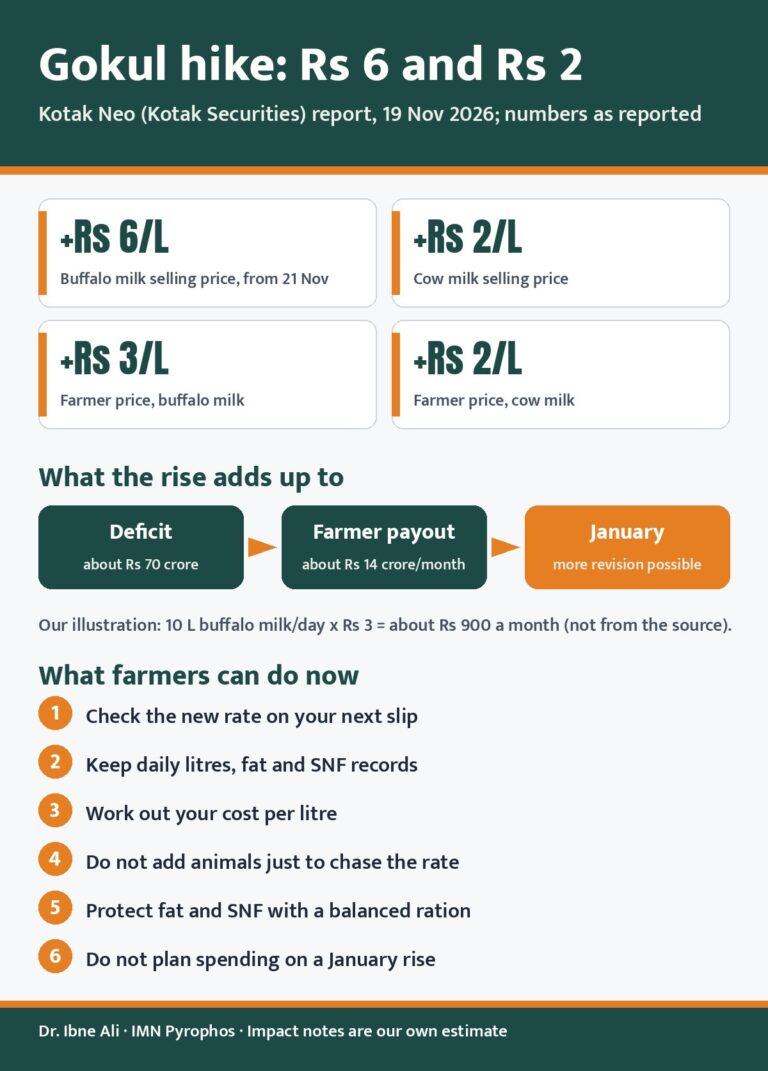
Gokul Dairy, the Kolhapur-based cooperative in Maharashtra, has raised its buffalo milk selling price by Rs 6 per litre and its cow milk price by Rs 2 per litre, effective Saturday 21 November 2026, in what it called its biggest-ever hike. According to a Kotak Neo (Kotak Securities) report dated 19 November 2026, the move follows a reported deficit of about Rs 70 crore. The dairy has also raised what it pays farmers, by Rs 3 per litre for buffalo milk and Rs 2 per litre for cow milk. All figures below are as reported by the source.
Key facts
| Item | What was reported |
|---|---|
| Buffalo milk selling price | Up Rs 6 per litre |
| Cow milk selling price | Up Rs 2 per litre |
| Effective from | Saturday, 21 November 2026 |
| Farmer procurement price | Buffalo milk up Rs 3 per litre, cow milk up Rs 2 per litre |
| Extra payout to farmers | About Rs 14 crore a month, per chairman Rajesh Patil |
| Reported deficit | About Rs 70 crore |
| Next step | Another retail revision in January is possible but unconfirmed |
Why did Gokul raise prices?
The report says the board met after requests from distributors and the administration, and linked the decision to the deficit of about Rs 70 crore. Our earlier news item, Gokul Dairy puts off its milk price rise, covered the board deferring the vote so it could consult distributors. This is the follow-up decision. That earlier report quoted a smaller loss figure (Rs 24 crore); the new report gives about Rs 70 crore, and we show each as its source stated it.
The report also places the move against the wider market: Amul raised prices by Rs 2 to Rs 4 per litre earlier in November, citing higher input costs. Gokul’s rise on buffalo milk is larger than that range, which is why it was described as the biggest in its history.
What it means for dairy farmers
Gokul suppliers: the procurement price is the number that decides your monthly payment. A rise of Rs 3 per litre on buffalo milk and Rs 2 on cow milk is a direct gain on every litre you deliver, and the chairman’s estimate of about Rs 14 crore a month shows the scale across the whole supplier base.
Illustrative example (our own arithmetic, not from the source): a small farmer delivering 10 litres of buffalo milk a day gains Rs 3 x 10 = Rs 30 a day, or about Rs 900 over a 30-day month. A farmer delivering 8 litres of cow milk a day gains Rs 2 x 8 = Rs 16 a day, or about Rs 480 a month. Your own gain depends on your real daily litres and on fat and SNF, which set the rate you are paid.
Other farmers: when a large cooperative raises prices, nearby private dairies often face pressure to follow. This is our own estimate and not a reported fact, so check actual rates with your own collection centre.
Costs still matter. The retail rise helps payments, but it does not lower feed, fodder or medicine bills. A higher milk price is most useful when the cost per litre stays under control.
What farmers should do now
- Check your next payment slip. Confirm that the new Rs 3 (buffalo) or Rs 2 (cow) per litre is applied from the date your society says.
- Keep daily milk records. Note litres, fat and SNF for every delivery so you can verify the payment.
- Work out your cost per litre. Add feed, fodder, minerals, labour and treatment, then divide by litres. Only then is the price rise meaningful.
- Do not stretch the herd to chase the rate. Extra animals raise feed and fodder cost; improve yield per animal first.
- Protect fat and SNF. Balanced ration, clean water and heat or cold comfort keep quality up, and quality sets your rate.
- Watch for January. A further retail revision is possible but not confirmed, so do not plan spending on it.
FAQ
Does the Rs 6 rise go to farmers?
No. Rs 6 per litre is on the selling price of buffalo milk. The reported farmer procurement rise is Rs 3 per litre for buffalo milk and Rs 2 for cow milk.
Will there be another increase?
The report says another retail revision in January is possible, depending on availability, but it is not confirmed.
Are the farmer examples official?
No. The worked example above is our own illustration of the reported per-litre rise. Your real figures depend on your litres and quality.
Source: Kotak Neo (Kotak Securities), 19 Nov 2026. Written by the IMN Pyrophos team in our own words.
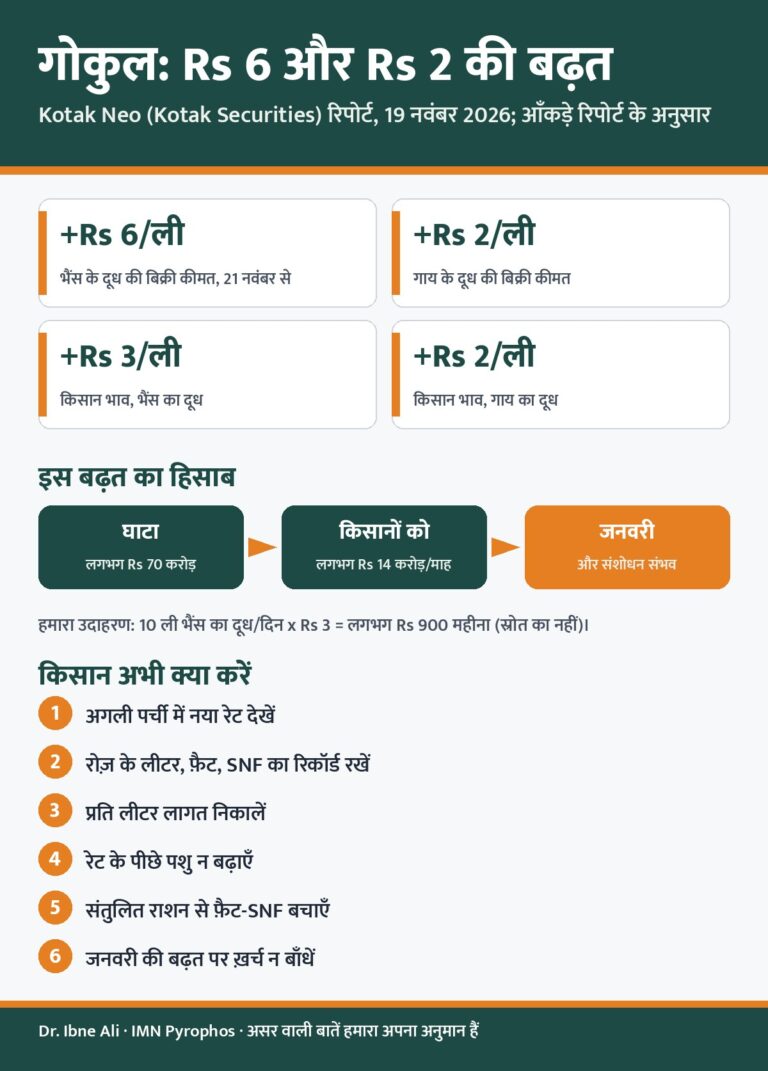
महाराष्ट्र के कोल्हापुर की सहकारी संस्था गोकुल डेयरी ने भैंस के दूध की बिक्री कीमत Rs 6 प्रति लीटर और गाय के दूध की Rs 2 प्रति लीटर बढ़ा दी है। यह शनिवार 21 नवंबर 2026 से लागू है और डेयरी ने इसे अपनी अब तक की सबसे बड़ी बढ़ोतरी बताया है। Kotak Neo (Kotak Securities) की 19 नवंबर 2026 की रिपोर्ट के अनुसार यह क़दम लगभग Rs 70 करोड़ के बताए गए घाटे के बाद आया है। डेयरी ने किसानों को दिया जाने वाला भाव भी बढ़ाया है: भैंस के दूध पर Rs 3 प्रति लीटर और गाय के दूध पर Rs 2 प्रति लीटर। नीचे सभी आँकड़े स्रोत के अनुसार हैं।
मुख्य तथ्य
| बिंदु | रिपोर्ट में क्या बताया गया |
|---|---|
| भैंस के दूध की बिक्री कीमत | Rs 6 प्रति लीटर बढ़ी |
| गाय के दूध की बिक्री कीमत | Rs 2 प्रति लीटर बढ़ी |
| लागू होने की तारीख़ | शनिवार, 21 नवंबर 2026 |
| किसानों का ख़रीद भाव | भैंस का दूध Rs 3 प्रति लीटर और गाय का दूध Rs 2 प्रति लीटर बढ़ा |
| किसानों को अतिरिक्त भुगतान | अध्यक्ष राजेश पाटिल के अनुसार लगभग Rs 14 करोड़ प्रति माह |
| बताया गया घाटा | लगभग Rs 70 करोड़ |
| आगे | जनवरी में एक और खुदरा संशोधन संभव, पर पक्का नहीं |
गोकुल ने दाम क्यों बढ़ाए?
रिपोर्ट के अनुसार वितरकों और प्रशासन के अनुरोध के बाद बोर्ड की बैठक हुई और फ़ैसले को लगभग Rs 70 करोड़ के घाटे से जोड़ा गया। हमारी पिछली ख़बर गोकुल डेयरी ने दूध के दाम की बढ़ोतरी टाली में बोर्ड द्वारा वितरकों से सलाह के लिए वोट टालने की बात थी। यह उसी का अगला फ़ैसला है। उस ख़बर में घाटे का छोटा आँकड़ा (Rs 24 करोड़) था; नई रिपोर्ट लगभग Rs 70 करोड़ बताती है, और हम हर आँकड़ा वैसा ही दे रहे हैं जैसा उसके स्रोत ने बताया।
रिपोर्ट इसे बाज़ार के संदर्भ में भी रखती है: नवंबर की शुरुआत में Amul ने इनपुट लागत बढ़ने का हवाला देकर दाम Rs 2 से Rs 4 प्रति लीटर बढ़ाए थे। गोकुल की भैंस के दूध पर बढ़ोतरी इस दायरे से बड़ी है, इसीलिए इसे अब तक की सबसे बड़ी कहा गया।
डेयरी किसानों के लिए इसका मतलब
गोकुल को दूध देने वाले किसान: ख़रीद भाव ही आपका मासिक भुगतान तय करता है। भैंस के दूध पर Rs 3 और गाय के दूध पर Rs 2 प्रति लीटर की बढ़त आपके हर लीटर पर सीधा फ़ायदा है, और अध्यक्ष का लगभग Rs 14 करोड़ प्रति माह का अनुमान सभी किसानों पर इसका पैमाना दिखाता है।
उदाहरण (हमारा अपना हिसाब, स्रोत का नहीं): रोज़ 10 लीटर भैंस का दूध देने वाले छोटे किसान को Rs 3 x 10 = Rs 30 प्रतिदिन, यानी 30 दिन में लगभग Rs 900 ज़्यादा मिलेंगे। रोज़ 8 लीटर गाय का दूध देने वाले को Rs 2 x 8 = Rs 16 प्रतिदिन, यानी महीने में लगभग Rs 480। आपका असली फ़ायदा आपके रोज़ के लीटर और फ़ैट व SNF पर निर्भर करेगा, जो आपका रेट तय करते हैं।
दूसरे किसान: जब कोई बड़ी सहकारी संस्था दाम बढ़ाती है तो आसपास की निजी डेयरियों पर भी बढ़ाने का दबाव आ सकता है। यह हमारा अपना अनुमान है, रिपोर्ट किया गया तथ्य नहीं, इसलिए असली रेट अपने कलेक्शन सेंटर से पूछें।
लागत फिर भी मायने रखती है। बिक्री दाम बढ़ने से भुगतान बढ़ता है, पर फ़ीड, चारे और दवा का ख़र्च कम नहीं होता। दूध का भाव तभी ज़्यादा काम आता है जब प्रति लीटर लागत क़ाबू में रहे।
किसान अभी क्या करें
- अगली भुगतान पर्ची देखें। पक्का करें कि भैंस पर Rs 3 या गाय पर Rs 2 प्रति लीटर नया भाव आपकी समिति की बताई तारीख़ से लग रहा है।
- रोज़ का दूध रिकॉर्ड रखें। हर बार के लीटर, फ़ैट और SNF लिखें ताकि भुगतान जाँच सकें।
- प्रति लीटर लागत निकालें। फ़ीड, चारा, मिनरल, मज़दूरी और इलाज जोड़कर लीटर से भाग दें। तभी दाम बढ़ने का असली मतलब दिखेगा।
- रेट के पीछे पशु न बढ़ाएँ। ज़्यादा पशु मतलब ज़्यादा फ़ीड-चारा ख़र्च; पहले प्रति पशु उत्पादन सुधारें।
- फ़ैट और SNF बचाकर रखें। संतुलित राशन, साफ़ पानी और गर्मी-सर्दी से आराम क्वालिटी बनाए रखते हैं, और क्वालिटी से रेट तय होता है।
- जनवरी पर नज़र रखें। एक और खुदरा संशोधन संभव है पर पक्का नहीं, इसलिए उसके भरोसे ख़र्च की योजना न बनाएँ।
अक्सर पूछे जाने वाले सवाल
क्या Rs 6 की बढ़ोतरी किसानों को मिलेगी?
नहीं। Rs 6 प्रति लीटर भैंस के दूध की बिक्री कीमत पर है। किसानों के ख़रीद भाव में बताई गई बढ़त भैंस के दूध पर Rs 3 और गाय के दूध पर Rs 2 प्रति लीटर है।
क्या फिर दाम बढ़ेंगे?
रिपोर्ट के अनुसार उपलब्धता के आधार पर जनवरी में एक और खुदरा संशोधन संभव है, पर यह पक्का नहीं है।
क्या किसानों वाला उदाहरण आधिकारिक है?
नहीं। ऊपर का हिसाब बताई गई प्रति लीटर बढ़त का हमारा अपना उदाहरण है। आपके असली आँकड़े आपके लीटर और क्वालिटी पर निर्भर करते हैं।
स्रोत: Kotak Neo (Kotak Securities), 19 नवंबर 2026। IMN Pyrophos टीम द्वारा अपने शब्दों में लिखा गया।
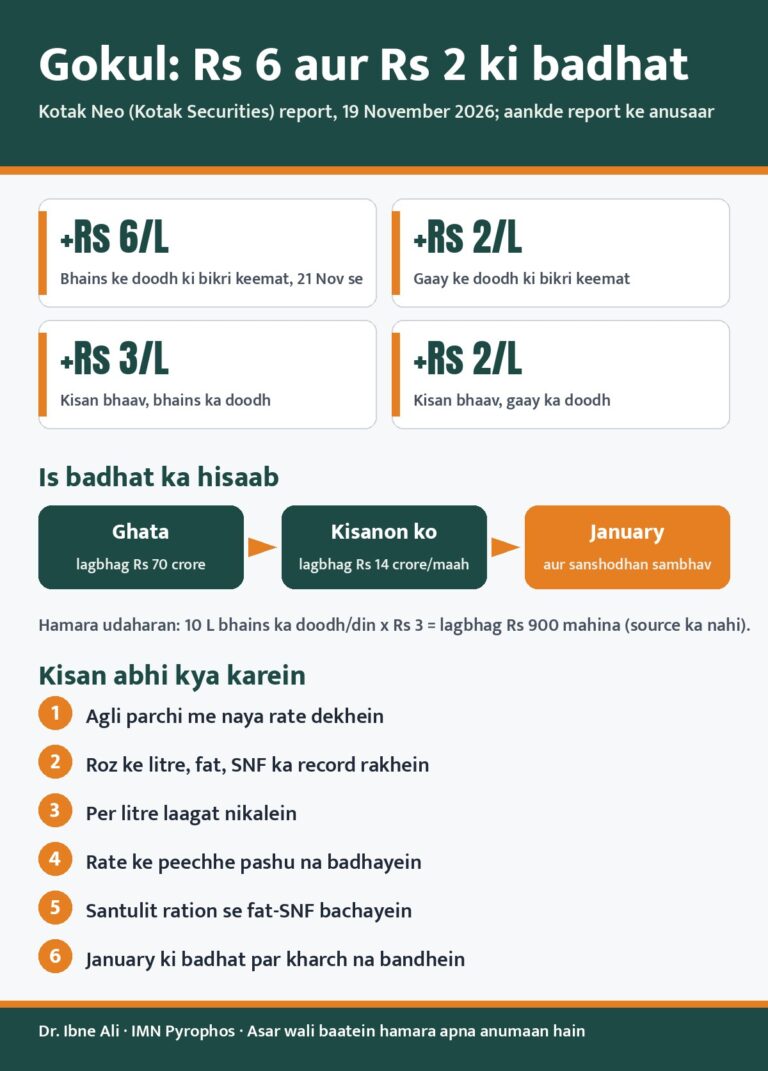
Maharashtra ke Kolhapur ki sahkari sanstha Gokul Dairy ne bhains ke doodh ki bikri keemat Rs 6 per litre aur gaay ke doodh ki Rs 2 per litre badha di hai. Ye shanivar 21 November 2026 se lagu hai aur dairy ne ise apni ab tak ki sabse badi badhottari bataya hai. Kotak Neo (Kotak Securities) ki 19 November 2026 ki report ke anusaar ye kadam lagbhag Rs 70 crore ke bataye gaye ghate ke baad aaya hai. Dairy ne kisanon ko diya jaane wala bhaav bhi badhaya hai: bhains ke doodh par Rs 3 per litre aur gaay ke doodh par Rs 2 per litre. Neeche sabhi aankde source ke anusaar hain.
Mukhya tathya
| Bindu | Report me kya bataya gaya |
|---|---|
| Bhains ke doodh ki bikri keemat | Rs 6 per litre badhi |
| Gaay ke doodh ki bikri keemat | Rs 2 per litre badhi |
| Lagu hone ki tareekh | Shanivar, 21 November 2026 |
| Kisanon ka kharid bhaav | Bhains ka doodh Rs 3 per litre aur gaay ka doodh Rs 2 per litre badha |
| Kisanon ko atirikt bhugtaan | Adhyaksh Rajesh Patil ke anusaar lagbhag Rs 14 crore per maah |
| Bataya gaya ghata | Lagbhag Rs 70 crore |
| Aage | January me ek aur retail sanshodhan sambhav, par pakka nahi |
Gokul ne daam kyon badhaye?
Report ke anusaar distributors aur prashasan ke anurodh ke baad board ki baithak hui aur faisle ko lagbhag Rs 70 crore ke ghate se joda gaya. Hamari pichhli khabar Gokul Dairy ne doodh ke daam ki badhottari taali me board ke distributors se salah ke liye vote taalne ki baat thi. Ye usi ka agla faisla hai. Us khabar me ghate ka chhota aankda (Rs 24 crore) tha; nayi report lagbhag Rs 70 crore batati hai, aur hum har aankda waisa hi de rahe hain jaisa uske source ne bataya.
Report ise bazaar ke sandarbh me bhi rakhti hai: November ki shuruat me Amul ne input laagat badhne ka hawala dekar daam Rs 2 se Rs 4 per litre badhaye the. Gokul ki bhains ke doodh par badhottari is dayre se badi hai, isiliye ise ab tak ki sabse badi kaha gaya.
Dairy kisanon ke liye iska matlab
Gokul ko doodh dene wale kisan: kharid bhaav hi aapka maasik bhugtaan tay karta hai. Bhains ke doodh par Rs 3 aur gaay ke doodh par Rs 2 per litre ki badhat aapke har litre par seedha fayda hai, aur adhyaksh ka lagbhag Rs 14 crore per maah ka anumaan sabhi kisanon par iska paimana dikhata hai.
Udaharan (hamara apna hisaab, source ka nahi): roz 10 litre bhains ka doodh dene wale chhote kisan ko Rs 3 x 10 = Rs 30 pratidin, yaani 30 din me lagbhag Rs 900 zyada milenge. Roz 8 litre gaay ka doodh dene wale ko Rs 2 x 8 = Rs 16 pratidin, yaani mahine me lagbhag Rs 480. Aapka asli fayda aapke roz ke litre aur fat va SNF par nirbhar karega, jo aapka rate tay karte hain.
Doosre kisan: jab koi badi sahkari sanstha daam badhati hai to aaspaas ki niji dairiyon par bhi badhane ka dabav aa sakta hai. Ye hamara apna anumaan hai, report kiya gaya tathya nahi, isliye asli rate apne collection centre se poochhein.
Laagat phir bhi mayne rakhti hai. Bikri daam badhne se bhugtaan badhta hai, par feed, chaare aur dawa ka kharch kam nahi hota. Doodh ka bhaav tabhi zyada kaam aata hai jab per litre laagat kaabu me rahe.
Kisan abhi kya karein
- Agli bhugtaan parchi dekhein. Pakka karein ki bhains par Rs 3 ya gaay par Rs 2 per litre naya bhaav aapki samiti ki batayi tareekh se lag raha hai.
- Roz ka doodh record rakhein. Har baar ke litre, fat aur SNF likhein taaki bhugtaan jaanch sakein.
- Per litre laagat nikalein. Feed, chaara, mineral, mazdoori aur ilaaj jodkar litre se bhaag dein. Tabhi daam badhne ka asli matlab dikhega.
- Rate ke peechhe pashu na badhayein. Zyada pashu matlab zyada feed-chaara kharch; pehle per pashu utpadan sudharein.
- Fat aur SNF bachakar rakhein. Santulit ration, saaf paani aur garmi-sardi se aaram quality banaye rakhte hain, aur quality se rate tay hota hai.
- January par nazar rakhein. Ek aur retail sanshodhan sambhav hai par pakka nahi, isliye uske bharose kharch ki yojana na banayein.
Aksar poochhe jaane wale sawaal
Kya Rs 6 ki badhottari kisanon ko milegi?
Nahi. Rs 6 per litre bhains ke doodh ki bikri keemat par hai. Kisanon ke kharid bhaav me batayi gayi badhat bhains ke doodh par Rs 3 aur gaay ke doodh par Rs 2 per litre hai.
Kya phir daam badhenge?
Report ke anusaar uplabdhta ke aadhar par January me ek aur retail sanshodhan sambhav hai, par ye pakka nahi hai.
Kya kisanon wala udaharan aadhikarik hai?
Nahi. Upar ka hisaab batayi gayi per litre badhat ka hamara apna udaharan hai. Aapke asli aankde aapke litre aur quality par nirbhar karte hain.
Srot: Kotak Neo (Kotak Securities), 19 November 2026. IMN Pyrophos team dwara apne shabdon me likha gaya.